SpaceX has unveiled plans to invest $100 billion in a vast Louisiana spaceport designed to become its largest launch complex and support thousands of Starship missions each year. The project, named Starbase Louisiana, will occupy about 125,000 acres in Vermilion Parish near Pecan Island on the Gulf Coast. Construction is expected to begin in 2027, while SpaceX is targeting its first Starship launch from the site in […]
NASA has released detailed images of a new crater carved into the Moon after a discarded SpaceX Falcon 9 upper stage struck the lunar surface on 5 August, giving scientists an unusually precise view of the effects of a large human-made object hitting another world. The crater measures about 60 feet, or 18 metres, across and is less than 10 feet deep. Images taken by the Lunar […]
HONG KONG SAR – Media OutReach Newswire – 19 August 2026 – The annual Digital Entertainment Leadership Forum 2026 (DELF 2026), organised by Cyberport, will be held from 28 to 30 August 2026 at Cyberport. Under the theme “The Dreamatic Circus” DELF 2026 brings together creators, experts and industry leaders to explore how artificial intelligence (AI) is unleashing boundless creativity and redefining digital entertainment and content creation experiences.
Over the three-day event, more than 60 distinguished leaders and professionals from the technology, entertainment and creative sectors in Hong Kong, the Chinese Mainland and around the world will discuss how AI, immersive technologies and cutting-edge innovations are reshaping content creation and entertainment experiences. As AI continues to lower the barriers to creation, the content industry is rapidly evolving from content production toward the development of the IP economy. This year’s forum will focus on how AI empowers creators and enterprises to build globally competitive original intellectual properties (IPs), while examining how Cyberport’s AI infrastructure, innovation ecosystem and international network can help transform innovative ideas into commercialised products, brands and globally recognised IPs, further strengthening Hong Kong’s position as a leading digital entertainment and IP innovation hub in Asia.
Dr Rocky Cheng, Chief Executive Officer of Cyberport, said: “Artificial intelligence is reshaping the cultural and creative industries, opening up unprecedented opportunities for creators, businesses and society. DELF 2026 brings together technology, creativity and business to foster cross-sector collaboration, advance original content creation, support IP incubation and accelerate commercial applications. Leveraging its AI infrastructure, industry ecosystem and global partnership network, Cyberport will continue to support innovative enterprises and original IP creators in seizing the opportunities of the AI era and expanding into international markets.”
Today, Cyberport also hosted a special panel discussion titled “From AI Creation to Global IP: New Opportunities for the Entertainment Industry,” bringing together industry experts to explore emerging opportunities in content creation, IP incubation and commercialisation in the age of AI. Moderated by Ir Eric Chan, Chief Public Mission Officer of Cyberport, the discussion featured Mr Frankie Tam, Creative Director of Ultra Instinct Limited; Ms Polly Yeung, Chief Executive Officer of Gudo Inc.; and Ms Louie Cheng, Director of AI Education and OPC Entrepreneurship Incubation at FizzDragon. Panellists agreed that AI is not only significantly enhancing content creation efficiency but is also accelerating the transition of the content industry into the era of the IP economy, creating broader commercial and international development opportunities for Hong Kong’s original IPs.
Ir Eric Chan, Chief Public Mission Officer of Cyberport, said: “AI is unlocking unprecedented creative possibilities and injecting fresh momentum into Hong Kong’s cultural and creative industries. As the industry enters a new phase of transformation, our focus should go beyond encouraging the creation of original content. We must also help promising IP develop long-term value, progressing from creative ideas to practical applications, and from individual works to recognised brands. Cyberport will continue to advance its public mission by connecting technology, creativity, talent and industry resources, empowering more local creators and enterprises to harness AI and turn Hong Kong’s creativity into market-ready outcomes with international potential.”
Over the three days, the forum will feature discussions on a wide range of topics, including AI collaboration, IP ecosystem development, the cultural and creative economy, smart cities, and future living. Speakers and representatives from organisations such as the University of Southern California (USC), The Hong Kong Academy for Performing Arts, TVB Plus, GGWP, Mei Ah Entertainment, and Xi’an XR Film Industry Base will share insights on how AI is driving innovation, commercialisation and globalisation across the creative industries.
In addition, the interactive experience zone will feature four themed areas and more than 35 experiential activities, showcasing diverse digital entertainment and smart living scenarios powered by AI, immersive technologies and other advanced innovations.
The four themed zones include:
Arts & Culture – featuring the immersive interactive art exhibition Another World: RADIANCE, Cyberport’s original immersive cultural exhibition The Reveries of Ancient Egypt, Hong Kong’s first XR 6D experience Harbour Dreams: Hong Kong XR Adventure, and the complete VR experience Versailles: The Lost Gardens of the Sun King VR experience.
Digital Entertainment – showcasing innovative projects including Nikopicto’s interactive skateboard experience SkateAway Circus, TVB Music Money Monster System, and the FizzDragon AI Short Drama Creation Platform.
Smart Living & Business – featuring products such as Genesis One’s 3D & AI Smart Fashion Platform, allowing visitors to experience how technology is transforming everyday life.
Robotics & Drones – presenting consumer robotics innovations such as combat robots and AI interactive smart vehicles developed by Jin Technology, alongside the “Charting the Future: eVTOL Inaugural Test Flight,” highlighting the latest developments in interactive technology, the low-altitude economy and smart mobility.
To encourage visitors to explore the diverse digital entertainment experiences, DELF 2026 will launch a special “Play-to-Earn” campaign that combines gamification and rewards. Participants can collect stamps by completing designated tasks across the four themed zones and redeem gifts, while those who complete all challenges will have a chance to receive limited-edition merchandise from the Hong Kong original animation IP Another Worlds.
The event will also feature AI interactive workshops under the Cyberport Academy: DELF 2026 – AI Cultural & Creative Micro-Academy, where participants can learn creative skills such as concept art design and video production. In addition, the event will feature a special movie screening programme showcasing a Mars-themed AIGC sci-fi short drama from Singapore, selected works from the 3rd AI-assisted animation production support scheme, and 2nd HKUST AI Film Festival. Complemented by a live performance from popular K-pop band XODIAC and an indoor drone cirque, the programme will deliver an immersive experience that brings together artificial intelligence, digital entertainment and creative technology.
For more information about DELF 2026 and the speaker lineup, please visit: https://delf.cyberport.hk.
Please click HERE to download the high-resolution press photos.
Photo 1: Dr Rocky Cheng, Chief Executive Officer of Cyberport (centre); Ir Eric Chan, Chief Public Mission Officer of Cyberport (third from right); Mr Terence Leung, Curator of the Digital Entertainment Leadership Forum at Cyberport (second from left); Mr Frankie Tam, Creative Director of Ultra Instinct Limited (second from right); Ms Polly Yeung, Chief Executive Officer of Gudo Inc. (first from right); and Ms Louie Cheng, Director of AI Education and OPC Entrepreneurship Incubation at FizzDragon (first from left), posed for a group photo at the DELF 2026 press conference, previewing the forum to be held at Cyberport from 28 to 30 August and highlighting a series of exciting upcoming programmes and activities.
Photo 2: Dr Rocky Cheng, Chief Executive Officer of Cyberport, said that AI is reshaping the cultural and creative industries, opening up unprecedented opportunities for creators, businesses and society. Leveraging its AI infrastructure, industry ecosystem and global partnership network, Cyberport will continue to support innovative enterprises and original IP creators in seizing the opportunities of the AI era and expanding into international markets.
Photo 3: Ir Eric Chan, Chief Public Mission Officer of Cyberport (first from left), moderates the panel discussion “From AI Creation to Global IP: New Opportunities for the Entertainment Industry,” joined by Mr Frankie Tam, Creative Director of Ultra Instinct Limited (second from left); Ms Polly Yeung, CEO of Gudo Inc. (second from right); and Ms Louie Cheng, Director of AI Education and OPC Entrepreneurship Incubation at FizzDragon (first from right), discussing how AI is reshaping content creation and driving the growth of the IP economy.
Photo 4: Mr Terence Leung, Project Curator, Digital Entertainment Leadership Forum,
Cyberport, introduces the key highlights of DELF 2026 to the media.
Photo 5: Mr Terence Leung, Curator of the Digital Entertainment Leadership Forum at Cyberport (second from left); Mr Frankie Tam, Creative Director of Ultra Instinct Limited (first from right); Ms Polly Yeung, Chief Executive Officer of Gudo Inc. (first from left); and Ms Louie Cheng, Director of AI Education and OPC Entrepreneurship Incubation at FizzDragon (second from right), posed for a group photo with “Gudo” (centre), a character from Another World, at the DELF 2026 press conference.
Photo 6 – 11: Multiple booths on display at the DELF 2026 press conference, including Genesis ONE (photo 6), HTC HK Limited (photo 7), Jin Technology Limited (photo 8), Gudo Inc (photo 9), FizzDragon (photo 10) and Hong Kong Blind Union (photo 11).
Hashtag: #DELF #Cyberport
The issuer is solely responsible for the content of this announcement.
About Hong Kong Cyberport
Wholly owned by the Hong Kong Special Administrative Region (HKSAR) Government, Cyberport is Hong Kong’s digital tech hub and AI accelerator, with a vision to empower industry digitalisation and intelligent transformation, to promote digital economy and AI development, and to foster Hong Kong to be an international AI, innovation and technology (I&T) hub. Cyberport gathers over 2,400 companies, including 29 listed companies and 10 unicorns. One-third of onsite companies’ founders come from 28 countries and regions, while Cyberport companies have expanded to over 35 global markets.
Cyberport, with Hong Kong’s largest AI Supercomputing Centre and AI Lab as the engine, has been building the AI ecosystem with industry-leading AI companies and over 500 AI and data science start-ups. Through development of tech clusters, namely AI, data science, blockchain and cybersecurity, Cyberport empowers industries across smart city and government, banking and finance, digital entertainment, culture and tourism, healthcare, education and training, property management, construction, transportation and logistics, green environment and more, while hosting Hong Kong’s largest FinTech community. Commissioned by the HKSAR Government, Cyberport has implemented proof-of-concept and sandbox schemes, subsidisation for digital tech adoption, industry tech training and start-up incubation, to drive technology R&D, translation and commercialisation, thus propelling digital transformation and intelligent upgrade across industry and society.
Also as “State-level Scientific and Technological Enterprise Incubator” and Hong Kong’s key incubator, Cyberport supports entrepreneurs with funding and office space, extensive networks of enterprises, investors, technology corporations and professional services for business growth and expansion to Chinese Mainland and overseas markets, all-round facilitation for landing in Hong Kong, talent attraction and cultivation, ready as a launchpad to take start-ups in any stages of development to the next level.
A Canadian hacker has pleaded guilty to taking part in a sweeping cybercrime operation that compromised accounts belonging to more than 165 organisations using cloud data platform Snowflake, exposing sensitive information belonging to at least 100 million people. Connor Riley Moucka, 26, of Kitchener, Ontario, admitted computer fraud, wire fraud, aggravated identity theft and conspiracy in federal court in Washington state. He is scheduled to be sentenced […]
UAE stargazers are preparing for one of the year’s strongest meteor displays as the Perseid shower peaks overnight on August 12 and 13, with moonless skies expected to improve visibility across desert and mountain locations. The annual shower could produce dozens of visible meteors an hour under clear, dark conditions. Observers are likely to get the best views after midnight and before dawn on August 13, when […]
Largest category marketing investment in 15 years supports Desert diamonds’ debut in Asia, opening a brilliant new chapter for natural diamonds
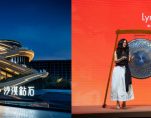
SHANGHAI, CHINA – Media OutReach Newswire – 30 July 2026 – De Beers Group hosted the Desert diamonds Asia launch event in Shanghai on 29th July, marking the official arrival of the Desert diamonds beacon in China, embodying the spirit of “authenticity, individuality and inner radiance”. This is the first new beacon launched by the Group in over a decade. Backed by its largest category marketing investment in 15 years, the campaign champions a renewed perspective for natural diamonds and aims to unite the industry, further underscoring the strategic role of China in shaping future demand for natural diamonds and supporting the industry’s long-term growth.
De Beers Group Desert diamonds Asia launch event in Shanghai.; Lynn Serfaty, General Manager of Natural Diamonds at De Beers Group, delivers an inspiring address in an interactive session with wellness coach Lear Tsui.
First unveiled in 2025 at the JCK Las Vegas Show, the Desert diamonds beacon marks a new chapter in the celebration of natural diamonds. Drawing inspiration from the desert landscapes that echo the ancient desert routes of Dunhuang and the lingering charm of the Silk Road, Desert diamonds pays tribute to the untamed authenticity of natural diamonds, celebrating a spectrum of colours from warm whites to champagne tones and amber hues. Desert diamonds jewellery has been seen on international stages – worn by celebrities such as Taylor Swift, Rihanna, Bad Bunny, Doja Cat, and Aryna Sabalenka. By bringing the beacon to China, De Beers Group aims to meet the growing consumer demand for self-reward, emotional gifting, and milestone celebrations — reaffirming the enduring desirability of natural diamonds for a new generation of consumers.
Departing from traditional jewellery marketing, De Beers Group has creatively invited “Real People” to interpret the unique allure of Desert diamonds. These “Real People” are not celebrities or professional models, but pioneering individuals from diverse fields who dare to pursue authenticity and illuminate their individuality through their own stories. They vividly embody the authenticity, individuality and inner radiance that Desert diamonds represent, through their personal journeys. This groundbreaking approach forges a deeper resonance between natural diamonds and genuine emotions, echoing today’s consumer desire for sincere and diverse narratives.
Lynn Serfaty, General Manager, Natural Diamonds, De Beers Group, said, “From red carpets to everyday life, consumers want a natural diamond that tells their personal story – a unique symbol for life’s most precious moments. Following its global success, we are confident in bringing Desert diamonds, a natural inspiration from the desert to China.”
She added: “Our research shows that Desert diamonds resonate strongly with Chinese consumers: 95% desire to own them, 94% find them distinctive, and 96% consider them innovative. Consumers increasingly see jewellery as a key expression of emotional connection and self-affirmation. The authenticity, individuality and inner radiance they seek are the soul of Desert diamonds. I’m delighted to see the industry is uniting to reignite passion for natural diamonds and shape a brilliant future.”
Desert diamond “Real People” features stand-up comedian Liu Yang, Peking Opera performer Guo Yu’ang, racing driver Shi Wei, and wellness coach Lear Tsui.
Departing from conventional advertising fronted by celebrities, De Beers Group has for the first time selected four “Real People” through authentic storytelling, breaking away from the traditional celebrity endorsement model. Each of them interprets the campaign’s theme — “Authenticity” — through their unique life stories: embracing every mark of life with truth, the singular stance of being born one of a kind, and the brilliant light that shines from deep within.
In China, consumers are increasingly drawn to jewellery that is authentic, rare, and everlasting — a clear shift toward self-expression through pieces that reflect authenticity, individuality, and inner radiance. De Beers Group observes that today’s consumers seek not only the timelessness of natural diamonds but also designs that are distinctive, personal, and value-driven — Desert diamonds perfectly embodies this exceptional realm of effortless refinement.
Chow Tai Fook, Chow Sang Sang and TSL | Tse Sui Luen present exquisite jewellery designs inspired by the colours and spirit of the desert landscape.
Leading retailers Chow Tai Fook, Chow Sang Sang and TSL | Tse Sui Luen, which are the strategic partners of the Desert diamonds campaign, have been developing collections that showcase the desert-inspired palette, underscoring the industry’s strong confidence in the campaign. The retailers will debut their Desert diamonds jewellery collections at the launch and lend their firm support to the campaign in future marketing initiatives.
Created to resonate with a new generation, this campaign targets young consumers through a holistic media and digital strategy. Today’s young consumers are proudly embracing tradition, finding meaning in their cultural roots. The creative storytelling parallels each diamond’s natural journey with the wearer’s own path, allowing the authenticity, individuality and inner radiance of Desert diamonds to strike a chord, and reinforcing that every Desert diamond and every individual is one of a kind. This narrative also echoes a timeless legacy of diamonds as the indestructible stone, a symbol of resilience and everlasting brilliance, and qualities this generation deeply admires. The campaign will steadily ramp up marketing investment, harnessing robust media and social influence to establish Desert Diamonds as the preferred choice of discerning consumers.
Beyond engaging consumers and retailers, the Desert diamonds campaign supports national efforts to drive quality consumption and product innovation. It aligns with the Shopping in China initiative, which promotes high-quality goods with strong provenance, traceability and sustainability. De Beers Group is leveraging the launch to drive natural diamond category education in China and champion premium natural diamond jewellery. With a focus on brand building, quality assurance, product innovation and sustainable development, Desert diamonds provides Chinese consumers with a trustworthy, high-quality choice, supporting the high-quality development of China’s consumer market and the initiative’s goal of stimulating domestic consumption.
Building on its global momentum, Desert diamonds has become a powerful cultural phenomenon. In the U.S., it has captured attention on red carpets and through high-profile celebrity engagements, with warm-toned diamonds growing increasingly visible across fashion, music, and entertainment. Retailers who took part in the initial U.S. campaign reported higher foot traffic and a surge in enquiries tied to life milestones – clear signs of growing consumer desire for these naturally warm diamonds at life’s defining moments. By drawing a parallel to the wearer’s own journey, the campaign positions Desert diamonds not just as gems, but as emotional keepsakes rooted in the earth and elegant symbols of true individuality and enduring meaning.
Please follow the official accounts to find more information regarding Desert diamonds.
The issuer is solely responsible for the content of this announcement.
About De Beers Group
Established in 1888, De Beers Group is the world’s leading diamond company with expertise in the exploration, mining, marketing and retailing of diamonds. Together with its joint venture partners, De Beers Group employs more than 20,000 people across the diamond pipeline and is the world’s largest diamond producer by value, with diamond mining operations in Botswana, Canada, Namibia and South Africa. Innovation sits at the heart of De Beers Group’s strategy as it develops a portfolio of offers that span the diamond value chain, including its jewellery houses, De Beers London and Forevermark, and other pioneering solutions such as diamond sourcing and traceability initiatives Tracr and GemFair. De Beers Group also provides leading services and technology to the diamond industry in the form of education and laboratory services and a wide range of diamond sorting, detection and classification technology services. De Beers Group is committed to ‘Building Forever,’ a holistic and integrated approach to sustainability that underpins our efforts to create meaningful impact for the people and places where our diamonds are discovered. Building Forever focuses on three key areas where, through collaborations and partnerships around the globe, we have an enhanced ability to drive positive impact; Livelihoods, Climate and Nature. De Beers Group is a member of the Anglo American plc group. For further information, visit www.debeersgroup.com.
Astronomers have detected a four-carbon sugar in a cloud near the centre of the Milky Way, establishing that biologically useful carbohydrates can form in space before stars and planets emerge. The molecule, erythrulose, was identified within G+0.693−0.027, a vast cloud of gas and dust in the Sagittarius B2 region, about 26,000 light-years from Earth. The finding is the first confirmed detection of a true sugar in the […]
Abu Dhabi Festival has announced its full 2026 programme, bringing leading orchestras, opera singers, ballet companies, jazz musicians and contemporary artists to the capital for a season running from October 10 to December 19. The festival’s 23rd edition will be presented under the theme “The Wisdom of Culture”, with performances staged at Etihad Arena, Louvre Abu Dhabi, Emirates Palace Mandarin Oriental, the Cultural Foundation, Sorbonne University Abu […]
Matein Khalid The revival of the US-Israel-Iran war is set to intensify the concatenation of economic, energy and geopolitical shocks facing neighbouring Iraq. Before the February 28 onset of the conflict, Iraq was Opec’s second-largest oil producer, with estimated output of 4.3-4.5 million barrels per day. By June, national production had fallen to a paltry 817,000 bpd, comparable to that of minor producers such as Azerbaijan or Oman. This is an […]
The new skincare system brings together FDA-cleared, NASA-inspired light technology, complementary formulations and award-winning patented design by Karim Rashid, following a Hong Kong launch attended by more than 2,000 guests
HONG KONG SAR – Media OutReach Newswire – 21 July 2026 – TELOSIN has introduced “The Dual Transformation,” a new approach to personalised at-home skincare built around two dedicated light-based beauty devices—the Y PRO Red and Y PRO Blue—and the complementary Lumiactive Collection.
The launch brings together advanced light-based technology, targeted skincare formulations and award-winning patented design created in collaboration with internationally acclaimed designer Karim Rashid.
Rather than incorporating multiple generalised modes within a single device, TELOSIN developed two distinct devices and two dedicated skincare pathways.
Y PRO Red is designed for a rejuvenation-focused skincare routine, supporting the appearance of firmness, texture and radiance.
Y PRO Blue is designed for routines focused on blemish-prone, oily or visibly unsettled skin.
The devices combine FDA-cleared technology with light-based innovation inspired by scientific developments associated with NASA research.
Introducing the Lumiactive Collection
The Y PRO devices are accompanied by the new Lumiactive Collection, comprising:
LUMIRED Red LED Treatment Gel
LUMIBLUE Blue LED Treatment Gel
Blue Light Defense Cream
Together, the devices and complementary formulations establish TELOSIN’s connected Prepare, Treat, Protect approach to skincare.
The dedicated Lumiactive treatment gels are designed to prepare the skin for the corresponding Y PRO routine, while Blue Light Defense Cream completes the ritual as part of the brand’s wider daily skincare approach.
By developing the devices and formulations as one connected collection, TELOSIN aims to make advanced light-based skincare easier to understand, personalise and incorporate into regular at-home routines.
The result is a complete ecosystem built around two targeted transformations: a red-light pathway focused on rejuvenation and a blue-light pathway focused on skin clarity and balance.
Scientific Insight Behind TELOSIN
TELOSIN has expanded the scientific conversation surrounding the launch through its expert video series, “The Science Behind Telosin,” available on the brand’s website.
The series features expert perspectives from two medical professionals:
Dr. Omer Wolf, MD, a specialist in plastic and reconstructive surgery and advanced facial aesthetic procedures.
Dr. Uri Berger, MD, a specialist in aesthetic medicine with extensive international medical training and experience.
Through the expert series, TELOSIN provides consumers with accessible information about the principles behind light-based skincare and the evolving relationship between professional aesthetic knowledge, beauty technology and at-home routines.
The inclusion of medical perspectives within the wider educational programme reflects TELOSIN’s commitment to supporting product innovation through informed scientific discussion and responsible consumer education.
Award-Winning Patented Design by Karim Rashid
The Y PRO Red and Y PRO Blue were created in collaboration with Karim Rashid, one of the world’s most recognised contemporary designers.
The devices feature award-winning patented design that combines Rashid’s distinctive visual language with TELOSIN’s advanced beauty technology.
Their fluid silhouettes, individual colour identities and ergonomic forms were developed not simply to contain sophisticated technology, but to transform the devices into desirable contemporary objects that can become a natural part of the user’s daily beauty environment.
The collaboration reflects TELOSIN’s belief that advanced skincare devices should deliver a sophisticated combination of performance, simplicity, comfort and emotional connection.
“The Dual Transformation” Unveiled to More Than 2,000 Guests in Hong Kong
The complete collection was officially presented on 30 June 2026 through “The Dual Transformation,” an immersive launch experience held at WTC Mall in Hong Kong.
The large-scale event welcomed more than 2,000 guests, including consumers, members of the Hong Kong media, influencers, beauty industry professionals and invited partners.
The launch featured internationally acclaimed designer Karim Rashid, MIRROR member Ian Chan, celebrated actress and singer Linda Chung, and Dr. Harvey Ho.
Karim Rashid introduced the creative thinking behind the award-winning patented design of the devices, while Dr. Harvey Ho discussed the different applications and skincare pathways associated with red and blue light technology.
Ian Chan and Linda Chung joined the launch presentation to experience the two routines and demonstrate how the Y PRO devices and complementary Lumiactive formulations can be incorporated into contemporary at-home skincare.
“The Dual Transformation demonstrates that advanced beauty technology does not need to feel clinical or complicated,” said Dr. Harvey Ho.
“By bringing together two dedicated light-based devices with complementary Lumiactive formulations, TELOSIN has created a more focused and intuitive approach to at-home skincare. The distinction between the red and blue light pathways also helps consumers better understand how different technologies can support different skincare needs.”
With more than 2,000 guests attending, the event marked a major public introduction of TELOSIN’s broader product ecosystem: two targeted devices, three complementary skincare formulations and one connected approach to personalised light-based skincare.
A Complete Dual Skincare System
With Y PRO Red, Y PRO Blue and the Lumiactive Collection, TELOSIN is introducing more than two individual beauty devices.
“The Dual Transformation” represents a complete skincare system built around clearly defined objectives, dedicated formulations and award-winning patented design.
It reflects the brand’s wider ambition to make sophisticated light-based technology more personalised, intuitive and accessible, while maintaining the premium design experience expected by contemporary beauty consumers.
The issuer is solely responsible for the content of this announcement.
About TELOSIN
TELOSIN develops premium at-home skincare devices and complementary formulations that bring together advanced light-based technology, scientific insight, award-winning patented design and an intuitive user experience.
Through continued product development and collaborations with internationally recognised designers and medical professionals, TELOSIN aims to make sophisticated beauty technology more personalised, accessible and desirable.
TELOSIN products are available online atwww.telosin.com, at The Mineral Boutique stores, through selected premium retailers and at leading clinics.
For further information, expert videos and product details, visitwww.telosin.com.
Magnet Forensics has accused a former contractor of disclosing confidential information about an undisclosed iPhone vulnerability to a rival cybersecurity company, potentially destroying the commercial value of a hacking capability used by government investigators. The Canadian digital forensics company filed a federal lawsuit against exploit engineer Mario Del Gaudio and Spain-based Paradigm Shift Technology S. L. The complaint alleges that Paradigm Shift published technical research derived from […]
Smoke from wildfires burning across Canada and northern Minnesota blanketed large parts of the United States on Thursday, pushing air pollution to dangerous levels and placing millions of people under health alerts from the Upper Midwest to the East Coast. More than 20 states were affected as dense smoke travelled south and east on north-westerly winds. The sharpest deterioration was recorded around the Great Lakes, where parts […]
New directors bring 60 years of combined capital markets and resource industry expertise
CALGARY, ALBERTA – Media OutReach Newswire – 14 July 2026 – First Energy Africa Oil Corp. (“First Energy Africa” or the “Corporation”), a Calgary-based energy corporation , today announced the appointment of Simon Akit and Frederick Kozak to its Board of Directors, effective July 13th, 2026.
Simon Akit
Mr. Akit is founder and managing partner of a resource advisory firm, bringing more than 25 years of experience in Canadian and U.S. capital markets and seven years of engineering and operations experience in the resource industry. He has held senior capital markets and leadership roles at Ventum Financial, Canaccord Genuity, among others and has raised over $5 billion in equity and debt financing for resource companies from institutional investors across Canada, the United States, Europe, and Asia. He holds an MBA from the Rotman School of Management at the University of Toronto, is a Professional Engineer (APEGA) and currently serves on the boards of several public and private companies.
Frederick Kozak
A Canaccord Genuity former oil and gas research analyst, Kozak is an award winning financial analyst and corporate executive. He brings more than 40 years of experience in the resource and capital markets sector with a focus in Africa and South America. Mr. Kozak holds an MBA from the Ivey School of Business at the University of Western Ontario. He is a Professional Engineer (APEGA) with Lifetime status in Alberta and currently serves on the boards of one public company and one private company.
“Simon and Fred are bringing complementary technical and capital markets seniority required for our complex business. We are confident their contributions will set the right approach on our strategic priorities,” said Jeff Ruskowsky, President, First Energy Africa
The Corporation remains committed to upholding the highest standards of governance and sustainability as it continues to responsibly unlock value across its resource portfolio.
Hashtag: #FirstEnergyAfricaOil
The issuer is solely responsible for the content of this announcement.
About First Energy Africa Oil
First Energy Africa Oil Corp. is a privately held Canadian corporation pursuing exploration and block acquisitions in sub-Saharan Africa. The Company is headquartered in Calgary, Alberta, Canada.
Abu Dhabi Investment Authority has joined a large group of cornerstone investors in Luxshare Precision Industry’s Hong Kong share sale, giving the Apple supplier stronger institutional backing as it seeks to raise up to $3.1 billion in what could become the city’s biggest listing of 2026. The Shenzhen-listed manufacturer is offering 383.5 million H-shares at a maximum price of HK$63.28 each, with trading expected to begin on […]
Abu Dhabi Investment Authority has emerged as a cornerstone investor in Luxshare Precision Industry’s planned $3.1 billion Hong Kong listing, giving the Apple supplier heavyweight backing as the city’s equity market stages its strongest first-half fundraising run in five years. The Shenzhen-listed electronics manufacturer opened the Hong Kong public offer on Tuesday, seeking to sell 383.5 million H shares at a maximum price of HK$63.28 each. At […]
Abu Dhabi Investment Authority and a group of institutional investors have bought a 7.3 per cent stake in Corona Remedies for ₹777 crore, marking a sizeable secondary market transaction in the Ahmedabad-based drugmaker months after its stock market debut.
The shares changed hands through block deals on the National Stock Exchange, with the transaction executed at ₹1,730 a share. The deal involved about 44.9 lakh shares, with private equity investor ChrysCapital, through its affiliate Sepia Investments, and Anchor Partners selling part of their holdings. ADIA bought 39,130 shares, while other buyers included Aberdeen Group, Factory Mutual Insurance Company, HDFC Mutual Fund, Kotak Mahindra Mutual Fund, Ashoka WhiteOak and other funds.
Corona Remedies’ shares rose nearly 3 per cent after the transaction, trading around ₹1,840 on the NSE, as the market read the entry of large domestic and overseas institutions as a vote of confidence in the company’s branded formulations business. The block deal valued the stake at a premium to the company’s public issue price band of ₹1,008-₹1,062 a share in December 2025, underlining the strong post-listing performance of the stock.
Sepia Investments sold 43.28 lakh shares, equal to about 7.07 per cent of Corona Remedies’ equity, for around ₹748.9 crore. Anchor Partners offloaded 1.61 lakh shares, or 0.26 per cent, for about ₹28 crore. Sepia’s stake fell to 12.69 per cent from 19.76 per cent after the sale, while the wider ownership base brought more institutional depth to the company’s shareholder register.
The transaction is also a partial exit for early financial investors who backed Corona Remedies before its public listing. For buyers, the attraction lies in a domestic formulations franchise with established brands across women’s healthcare, cardio-diabeto, pain management, urology and other therapeutic categories. The company has positioned itself in segments with higher repeat prescription potential and relatively stronger pricing resilience than low-margin commodity generics.
Corona Remedies reported revenue growth of about 17 per cent in the financial year ended March 2026, while profit after tax rose about 33 per cent. Its full-year revenue crossed ₹1,400 crore, supported by growth in chronic and sub-chronic therapies, brand-led marketing and wider distribution. The company’s earlier public offer was entirely an offer for sale, meaning the proceeds went to existing shareholders rather than to the company.
The drugmaker was ranked among the top 30 pharmaceutical companies in the domestic pharmaceutical market by sales before its listing. Women’s healthcare is one of its strongest verticals, followed by cardio-diabeto, pain management and urology. Its brand portfolio includes products targeted at specialist doctors, a strategy that has helped it command higher prescription visibility in selected therapies.
The stake purchase comes at a time when pharmaceutical companies with strong domestic franchises are drawing investor interest. Companies focused on branded formulations have benefited from rising healthcare consumption, deeper insurance penetration, higher diagnosis rates for chronic conditions and stronger prescription volumes in urban and semi-urban markets. The domestic pharmaceutical market has also been less exposed to some of the pricing and regulatory volatility faced by export-heavy generic drugmakers.
ADIA’s participation fits a broader pattern of Gulf sovereign capital seeking exposure to healthcare, pharmaceuticals, financial services, infrastructure and consumer platforms across growth markets. The Abu Dhabi fund has built a diversified global portfolio and has been active in private equity, listed equities, real estate and alternatives. Its entry into Corona Remedies, though modest in percentage terms, adds to institutional interest in healthcare businesses with predictable cash flows and long-term demand visibility.
For Corona Remedies, the deal improves public float quality and may support market liquidity. Greater institutional ownership can also bring closer scrutiny of margins, product concentration, compliance, capital allocation and future acquisition strategy. The company’s next phase will be measured against its ability to maintain growth while protecting profitability in a market where promotional expenses, field-force productivity and doctor engagement remain critical.
The transaction also highlights how block deals have become an important route for private equity funds to monetise stakes after listings. Rather than waiting for gradual market sales, large shareholders can exit or pare exposure through negotiated exchange transactions that allow institutional buyers to acquire sizeable positions in a single trading window. Such deals can reduce overhang when executed cleanly, though they also put focus on valuation sustainability after the initial market response.
Abu Dhabi Investment Authority has emerged among institutional buyers in a ₹777 crore open-market transaction involving a 7.3 per cent stake in Corona Remedies, marking another Gulf-linked investment in the country’s fast-growing listed pharmaceutical space. The transaction was executed through block deals on the National Stock Exchange at ₹1,730 per share, with shares sold mainly by Sepia Investments, an affiliate of ChrysCapital, and Anchor Partners. ADIA purchased […]
SpaceX plans to begin testing artificial intelligence data centres in orbit by late 2027, accelerating Elon Musk’s push to turn the company’s satellite and launch network into a new layer of global computing infrastructure. The programme would move part of the AI computing race beyond land-based data centres, where power shortages, grid constraints, cooling costs and local opposition have become major obstacles for technology companies. The first […]
Canadian University Dubai and FINTECH. TV have inaugurated a live broadcast studio at the university’s City Walk campus, creating a direct media and education link between Dubai and the New York Stock Exchange. The Global Markets Studio, opened on 1 June and announced publicly this week, is being positioned as a hands-on platform for students to produce financial news segments, podcasts, interviews and market-focused programming while engaging […]
ADNOC is exploring investment opportunities in Canada’s upstream oil and liquefied natural gas sectors through XRG, its international energy investment arm, as Abu Dhabi intensifies its search for overseas assets aligned with long-term energy security and gas demand. Musabbeh Al Kaabi, ADNOC’s chief executive for upstream, said at the Global Energy Show in Calgary on Tuesday that the company was encouraged by Canada’s renewed emphasis on energy […]
MACAU SAR – Media OutReach Newswire – 8 June 2026 – Galaxy Entertainment Group (GEG) proudly unveils “Dazzling Galaxy – Crystalline Art Exhibition” at GalaxyArt, the multipurpose arts and cultural hub at the group’s flagship luxury resort, Galaxy Macau. Centred on innovative translucent materials, the exhibition blends the richness of Eastern cultural heritage by conceptualising themes from nature, presenting a distinctive contemporary artistic style.
The exhibition brings together over 60 pieces of signature works alongside new creations, accentuating cross-disciplinary philosophy of “Technology + Art + Eastern Culture” to achieve glittering and transparent art works. Through the use of innovative, crystalline materials and immersive, accessible artistic language, Wu Daijie Art Studio redefines artistic expression to deliver avant-garde works that resonate deeply with audiences.
GalaxyArt, the artistic and cultural hub of Galaxy Macau, proudly presents the “Dazzling Galaxy – Crystalline Art Exhibition” exhibition, featuring over 60 art works. The exhibition is now open until September 13.
The Opening Ceremony was officiated by guests of honour, including Ms. Maria Helena de Senna Fernandes, Director of the Macao Government Tourism Office; Ms. Chan Lei Lei, Director of Macao Conservatory, Cultural Affairs Bureau of the Macau S.A.R. Government; Mr. Philip Cheng, Director of Galaxy Entertainment Group; and lead artist Wu Daijie.
The Opening Ceremony was held this morning, officiated by guests of honour, including Ms. Maria Helena de Senna Fernandes, Director of the Macao Government Tourism Office (2nd from right); Ms. Chan Lei Lei, Director of Macao Conservatory, Cultural Affairs Bureau of the Macau S.A.R. Government (2nd from left); Mr. Philip Cheng, Director of Galaxy Entertainment Group (1st from right); artist Wu Daijie (1st from left).
At the opening ceremony, Mr Philip Cheng, Director of Galaxy Entertainment Group, said: “Galaxy Entertainment Group continues to align with the Macao SAR Government’s “Tourism + Culture” initiative, working closely alongside the government and industry partners to create distinctive cultural and artistic experiences. Through dedicated efforts, we present a diverse range of unique events that offer fresh and exciting experiences for visitors from around the world. This exhibition bridges artistic expression with technological innovation, inspired by interpretations and imagination rooted in traditional Eastern culture. We believe that this brand-new exhibition will bring renewed vibrancy and creative energy to Macao’s arts and cultural scene this summer.”
Following the opening ceremony, the officiating guests visit the exhibition under docent introduction of lead artist Wu Daijie.
Lead artist Wu Daijie added: “Macau serves as the gateway for Chinese and Western interaction and a vital hub for cultural exchange within the Greater Bay Area. Galaxy Macau and GalaxyArt – world-class integrated resort and arts platform – continuously offer forward-thinking experiences. I am deeply honoured to present my exhibition here, which is not only a sharing of my personal artistic endeavours at this stage, but also a way to contribute to the popularisation of art.”
Structured around four thematic expressions, the exhibition unfolds a poetic journey through light, form and emotion. “Luminosity · The Spirit of Nature” captures the ethereal beauty of living beings, distilling their essence into luminous, crystallised forms that reflect the pure vibrancy of living creatures. “Luminosity · The Glow of Modernity” presents whimsical perfection and unlimited possibilities seen in fairy tales through light and shadows, creating striking, avant-garde visual narratives.
In “Luminosity – Beyond Void & Form,” the serene elegance of Zen philosophy is reinterpreted through a delicate interplay of classical and modern aesthetics, while “Luminosity – Flowing like Water” evokes fluidity and abundance, expressing grace, balance and openness.
A Vivid Transformation into Luminous Clarity
‘Ethereal Flow’, which includes a striking aerial installation and inspired by Laozi’s philosophy—evoking water’s quiet virtue of nurturing all without contention through a dazzling, immersive visual experience.
“Ethereal Flow” — a contemporary, fashion-forward series that includes a large-scale aerial installation – is the highlight in the “Luminosity · Flowing like Water” section series. Inspired by a classic passage from Laozi’s Tao Te Ching— “The highest goodness is like water; water benefits all things without contention, embodying the virtue of humility”—the work reflects the idea that true virtue, like water, nurtures and sustains all without striving. With its dynamic sense of scale and dazzling visual impact, the installation invites audiences to reflect on reality and the nature of humanity.
Ethereal Stone: A Modern Table – 4.2-metre-long and only eight pieces in the world – draws inspiration from the classic anecdote of Mi Fu reverently addressing a scholar’s rock, reflecting the deep-rooted Chinese tradition of stone appreciation and its unique cultural heritage.
“Ethereal Stone” and “Timeless Dialogue: Taihu Stone” is a collection of four pieces at the “Luminosity – Beyond Void & Form” section. The works draw inspiration from the classic anecdote of Mi Fu reverently addressing a scholar’s rock, reflecting the deep-rooted Chinese tradition of stone appreciation and its unique cultural heritage. Centred on the intricate beauty of Taihu stones, the works reinterpret their delicate, sculptural forms through a contemporary lens. By bringing traditional culture into dialogue with modern artistic expression, the series creates a poetic exchange across time. It also serves as a gentle reflection for today’s fast-paced society—encouraging a return to inner contemplation, and a rediscovery of cultural identity and humanistic spirit through the philosophies of Chinese tradition.
“Dazzling Galaxy – Crystalline Art Exhibition” – open now until September 13 at GalaxyArt – invites visitors to immerse themselves in a radiant convergence of innovation, culture and artistry, further enriching Galaxy Macau’s dynamic cultural landscape and reaffirming the award-winning luxury resort’s commitment to world-class creative experiences.
For more information about Galaxy Macau and GalaxyArt, please visit www.galaxymacau.com.
Hashtag: #GalaxyMacau
The issuer is solely responsible for the content of this announcement.
About Galaxy Macau Integrated Resort
Galaxy Macau, world-class luxury integrated resort, delivers the “Most Spectacular Entertainment and Leisure Destination in the World”. Developed at an investment of HK$43 billion, the property covers 1.1 million-square-meter of unique entertainment and leisure attractions that are unlike anything else in Macau. Nine award-winning world-class luxury hotels provide close to 5,000 rooms, suites and villas. They include Banyan Tree Macau, Galaxy Hotel™, Hotel Okura Macau, JW Marriott Hotel Macau, The Ritz-Carlton, Macau, Broadway Hotel, Raffles at Galaxy Macau, Andaz Macau, and Capella at Galaxy Macau. Unique to Galaxy Macau, the 75,000-square-meter Grand Resort Deck features the world’s longest Skytop Adventure Rapids at 575 metres, the largest Skytop Wave Pool with waves up to 1.5-metre high and 150-metre pristine white sand beach. Two five-star spas from Banyan Tree Spa Macau and The Ritz- Carlton Spa, Macau help guests relax and rejuvenate.
As the dining destination in Asia, Galaxy Macau offers a wide variety of gastronomic delights, exquisite experiences and ingredients of the finest quality with over 120 dining options from Michelin dining to authentic delicacies; Galaxy Promenade is the hottest shopping destination featuring the latest in fashion and curated experiences in Macau. Spanning over 100,000-square-meter, luxury flagship stores, lifestyle boutiques and our selection of labels are among the more than 200 world-renowned brands for a world-class shopping journey; Galaxy Cinemas, immersive thrills and luxurious comfort go hand in hand at Galaxy Cinemas. All 10 theatres are equipped with the latest audio-visual technology; CHINA ROUGE, one-of-a-kind deluxe lounge that evokes the glitz and glamor of Shanghai’s golden era with entertainment in luxury and style; and Foot Hub presents the traditional art of reflexology to make you feel more relaxed and revitalized. For Authentic Macau Flavours & Vibrant Asian Experiences, Broadway Macau – just a 90-second walk via a bridge from Galaxy Macau, has over 35 Authentic Macau & Asian Flavours at its Broadway Food Street. The 2,500-seat Broadway Theatre plays host to world-class entertainers and a diverse array of cultural events. Meeting, incentive and banquet groups are also well looked after with a portfolio of unique venues in Galaxy Macau and a professional service staff.
Galaxy International Convention Center (GICC) is the latest addition to the Group’s ever-expanding integrated resort precinct and will usher in a new era for the MICE industry in Macau. GICC is a world- class event venue featuring 40,000-square-meter of total flexible MICE, and a 16,000-seat Galaxy Arena – the largest indoor arena in Macau.
HONG KONG SAR – Media OutReach Newswire – 5 June 2026 – The 19th (2026) International Photovoltaic Power Generation and Smart Energy Exhibition & Conference (SNEC 2026) was grandly held from June 3 to 5, 2026, at the National Exhibition and Convention Center (Shanghai). Attracting over 3,000 exhibitors from 95 countries worldwide, the event stands as the largest and most influential professional grand gathering for the photovoltaic and energy storage sectors across Asia and globally.
During the exhibition, Mr. Yiu Wang Lee, Chairman of the Board of Wing Lee Development Construction Holdings Limited (“Wing Lee” or the “Group”, stock code: 9639.HK); Mr. Cai Huihui, General Manager of Wing Kai New Energy Technology Co., Limited (“Wing Kai New Energy”); Mr. Wang Yi, Key Account Manager of QIJI Energy; Mr. Xu Jun, Overseas Energy Storage Commercial Director of Contemporary Amperex Technology Co., Limited (CATL); and Mr. You Yuxian, ASEAN Regional Energy Storage Sales Director of CATL, jointly visited the exhibition booth of C&D Hi-Tech. The delegation engaged in in-depth discussions with the team led by General Manager Mr. Zhan Shengli, focusing on battery swapping station projects in Hong Kong and Southeast Asia. By integrating multi-party resources, the teams successfully finalized and signed a Strategic Cooperation Agreement.
Through this signing, the three parties will join forces to address and resolve the industry pain points of overseas markets regarding regulatory compliance, engineering infrastructure, and supply chain coordination. The collaboration represents a deep integration of QIJI Energy’s cutting-edge battery swapping solutions, Wing Kai New Energy’s localized infrastructure and operational capabilities across Hong Kong and Shenzhen, and C&D Hi-Tech’s robust global resource allocation strengths. Moving from single-project development to an ecosystem of mutual win-win, this partnership will significantly enhance the delivery efficiency of green energy across Hong Kong, Macau, and the Southeast Asian region, setting a brand-new benchmark for regional zero-carbon smart transportation.
As a subsidiary of Wing Lee, Wing Kai New Energy has been rooted in Hong Kong since its inception while radiating its presence globally, deeply cultivating sustainable clean energy solutions. Addressing the acute pain points in the Greater Bay Area and Southeast Asian markets, where rapid fluctuations in energy prices have led to surging cost pressures for logistics distribution enterprises, Wing Kai New Energy will focus on urban distribution logistics battery swapping businesses in the future. The company plans to integrate site resources, infrastructure, and operations to fill the gap in regional infrastructure. We firmly believe that this cooperation will effectively bridge the cross-border green energy eco-link, accelerate the construction of a green energy service network, and contribute solidly to the realization of the “dual carbon” goals. Meanwhile, we sincerely invite more partners to join the Zero-Carbon Smart Alliance to jointly advance sustainable development.
Hashtag: #WingLee
The issuer is solely responsible for the content of this announcement.
About Wing Lee Development Construction Holdings Limited
Deeply rooted in Hong Kong, Wing Lee is an established contractor engaged in civil engineering, electrical and mechanical engineering, and new energy businesses, and has participated in various large-scale landmark projects in Hong Kong. The Group’s civil engineering business specialized in site formation waterworks as well as road and drainage works, while its electrical and mechanical engineering business specializes in power system-related projects and emergency maintenance works. In recent years, the Group has actively expanded into the new energy sector, undertaking solar photovoltaic projects, distributing various electric commercial vehicles and electric construction machinery, and engaging in the construction and subsequent maintenance of charging piles, battery swapping, recycling, and energy storage businesses. In 2025, Wing Lee Construction, together with SANY Group Co., Ltd. and CATL, among other industry giants, founded the “Zero-Carbon Smart Alliance” to develop full-industry-chain solutions for photovoltaics, energy storage, charging and battery swapping, and smart applications in green transportation.
Scientists have identified a vast fan-shaped geological structure buried beneath East Antarctica, linking several major subglacial basins into one coherent system that may influence how the continent’s ice sheet moves and responds to warming. The structure, named the East Antarctic Fan-shaped Basin Province, lies under ice more than three kilometres thick in places. It brings together features long studied separately, including the Wilkes Basin, Aurora Basin and […]
Gas engine manufacturer Innio has raised $2.43 billion in a US initial public offering, pricing an upsized share sale at the top of its marketed range as investors continue to chase companies tied to the electricity demands of artificial intelligence. The Munich-based distributed energy group priced 90 million shares at $27 each, above the 75 million shares originally planned and at the upper end of the $24 […]



 https://www.cyberport.hk/en


 https://www.instagram.com/telosin_official/?hl=en