The World Bank Group has raised $509 million through a second loan-backed bond deal, taking its emerging-market securitisation programme past $1 billion as it seeks to draw more private capital into businesses that can expand employment across developing economies. The transaction, closed through the International Finance Corporation, packages 62 IFC-originated loans from different sectors into a collateralised loan obligation, or CLO. It follows a $510 million debut […]
Dubai WoodShow 2026 will open on June 22 with smart manufacturing technologies at the centre of a wider industry shift towards automated, data-led and materials-efficient production. The 22nd edition of the trade exhibition will run until June 24 at Dubai World Trade Centre, occupying Halls 6, 7 and 8 for a business-to-business audience spanning timber suppliers, machinery makers, furniture producers, fit-out contractors, architects, interior designers and building […]
Rise vGPU + ModelHub Power China’s AI into the Heterogeneous Orchestration Era
HONG KONG SAR – Media OutReach Newswire – 15 June 2026 – Frost & Sullivan, a globally renowned growth consulting firm, has released its “2026 AI Infrastructure Orchestration Platform White Paper”. The report recognizes Phancy Group’s Rise vGPU as a Tier 1 Leading Platform, the highest maturity tier in heterogeneous GPU orchestration. Phancy’s ModelHub also achieved the highest Overall Score in the enterprise-grade model management platform evaluation. This marks a significant endorsement of Phancy’s technological capability in heterogeneous AI infrastructure.
According to the white paper, as large model applications scale rapidly, China’s AI industry is facing structural challenges stemming from multi-chip coexistence. These include hardware heterogeneity, fragmented software stacks, persistently low GPU utilization (generally below 30%), and rising model adaptation complexity — all of which have become major bottlenecks for enterprise-scale AI deployment.
The report highlights a fundamental shift in AI infrastructure competitiveness – moving away from “single-chip performance” toward “cluster-scale system coordination.” At this critical juncture, Phancy has positioned itself as a leader in advanced orchestration through its full-stack AI infrastructure platform, offering a proven solution to heterogeneous compute challenges and helping drive China’s AI industry from “compute accumulation” into a new era of “compute orchestration.”
Phancy Rise vGPU: Tier 1 Leading Platform
In its assessment of mainstream AI infrastructure platforms, Frost & Sullivan defined Tier 1 criteria across three core dimensions: heterogeneous support, fine-grained control, and production-grade execution. Phancy Rise vGPU meets all three standards and has been recognized as a Tier 1 Leading Platform.
Rise vGPU transforms AI infrastructure from fragmented, low-efficiency device-level management to a unified software-defined control plane. Its key technology breakthroughs include:
Comprehensive Heterogeneous Management: Unified onboarding and management across more than 10 mainstream GPU/NPU vendors, including NVIDIA, Ascend, Cambricon, Hygon, and others.
Significant Utilization Improvement: Through safe oversubscription and time/space multiplexing, GPU utilization is increased from industry averages below 30% to 70%-90%.
Intelligent Precision Scheduling: Multi-dimensional scheduling algorithms based on priority, topology, load, and resource awareness to achieve optimal compute allocation.
Production-Grade SLA Assurance: The Deterministic Execution Layer delivers committed and auditable SLA guarantees for critical inference workloads.
Full Lifecycle Operability: Comprehensive monitoring, metering, and cost allocation capabilities that turn GPU resources into truly operable digital assets.
Model Hub: Highest Overall Score in Model Management Platform Evaluation
Beyond compute orchestration, the report underscores the strategic importance of enterprise-grade model management platforms. As a powerful complement to Rise vGPU, Phancy ModelHub enables enterprises to build a complete full-stack AI infrastructure — from compute to models and from resource scheduling to business delivery.
The white paper notes that Phancy ModelHub delivers leading performance in key areas such as Model & Chip Compatibility, Execution Stability & Performance, and Model-GPU Coordination & Scheduling, achieving the highest Overall Score. Through its unified model management and execution platform, ModelHub creates a seamless closed-loop process covering model onboarding, deployment optimization, inference services, and version governance — significantly lowering the barrier to model deployment and accelerating AI innovation.
Dr. Dai Wenyuan, Founder & CEO of Phancy, said: “The Frost & Sullivan white paper accurately captures the inflection point in AI infrastructure development. The recognition of Rise vGPU as a Tier 1 Leading Platform and ModelHub’s top Overall Score provide important authoritative validation of Phancy’s technology strategy and product strength. As a full-stack AI cloud service platform, Phancy believes the next wave of competitiveness in the AI industry will come from systematic improvements in compute orchestration efficiency. We will continue to focus on heterogeneous compute unified scheduling and model ecosystem operations, working closely with customers and industry partners to advance China’s AI industry from ‘compute accumulation’ to a true ‘compute orchestration’ era.”
Hashtag: #PhancyGroup
The issuer is solely responsible for the content of this announcement.
About Phancy Group
Phancy Group (6682.HK) is a leading full-stack AI cloud services platform, providing comprehensive solutions for the AI 2.0 era. Our offerings include Rise vGPU, ModelHub and SageAIOS, delivering efficient and scalable AI infrastructure with end-to-end capabilities. We provide a complete solution from heterogeneous compute resource management and optimization to the deployment of intelligent agent models. These solutions empower digital transformation across a wide range of industries, supporting our vision of building a large-scale and efficient “Token Factory.”
Guided by the mission of “AI for Everyone” and positioned as the “Navigator of AI,” Phancy Group is committed to becoming a global leader in Artificial General Intelligence.
SHANGHAI, CHINA – Media OutReach Newswire – 15 June 2026 – On June 11, the People’s Bank of China (PBOC) and Bank Indonesia held the Second Governors’ Meeting of the Joint Work Program in Shanghai, announcing a series of financial cooperation outcomes. The China-Indonesia cross-border QR payment linkage was officially launched in the presence of the governors of both central banks. With this milestone, the number of UnionPay QR merchants outside the Chinese mainland has surpassed 46 million. In attendance at the ceremony were Dong Junfeng, Chairman of China UnionPay and UnionPay International (UPI); Santoso Liem, Chairman of the Indonesian Payment System Association (ASPI); Ge Haijiao, Chairman of Bank of China; Larry Wang, CEO of UPI; and Yang Peng, CEO of Ant International.
Under the government-to-government (G2G) framework, guided by both central banks, and with participation from multiple industry stakeholders, the payment linkage has become a benchmark for digital finance cooperation between China and Indonesia, creating profound impact in the following ways.
First, the linkage delivers convenient, secure, and efficient cross-border payment services to the people of both countries, facilitating bilateral people-to-business exchanges and promoting trade relations.
Second, UnionPay has fully leveraged its role as the hub of the payment industry, collaborating with Ant International and Bank of China (Hong Kong) Jakarta Branch to set a prime example of Chinese enterprises working in concert for global expansion.
Third, the project pioneers bilateral local currency settlement, whereby transactions made by Indonesian wallets in the Chinese mainland are settled in RMB, and transactions made by Chinese wallets in Indonesia are settled in Indonesian Rupiah—effectively enhancing the acceptance and user stickiness of the RMB in international markets.
Fourth, the initiative creates a replicable, scalable framework for cross-border payment connectivity, paving the way for an expansion into more regions across the globe, such as Latin America and Europe.
With the full rollout, two-way cross-border QR code payments have achieved near-nationwide coverage. So far, payment networks in seven out of the eleven ASEAN nations are interoperable with UnionPay.
Chinese users can now use the UnionPay App, banking apps integrated with the UnionPay MobileWallet Connect, and Alipay to make QR payments at tens of millions of QRIS (Quick Response Code Indonesian Standard) merchant locations across Indonesia. Likewise, visitors from Indonesia can pay to UnionPay and Alipay QR merchants in the Chinese mainland with dozens of major Indonesian wallets, such as MyBCA, OVO, DANA, GoPay, Mandiri and ShopeePay.
In recent years, UnionPay continues to grow its global card and QR payment networks and enhance its cross-border payment ecosystem. To date, UnionPay has launched over 200 UnionPay-powered wallets in 37 countries and regions outside the Chinese mainland. Since the beginning of 2026, transactions made by these wallets in China have doubled year-on-year in both transaction count and value, while the number of QR payments made outside the mainland by the UnionPay App and Chinese partner wallets has surged over 300% year-on-year. Moving forward, UnionPay will remain committed to its strategic vision of “Trusted Ties, Shared Success”, scale up two-way payment linkages, enhance user experiences, and deliver more benefits to consumers worldwide.
Hashtag: #UnionPay
The issuer is solely responsible for the content of this announcement.
Arabian Post Staff -Dubai DMCC has rolled out a business acceleration package aimed at lowering costs, freeing cash flow and giving companies in its 26,000-plus member ecosystem more room to expand as competition for global trade and investment intensifies. The initiative offers licence renewal incentives, penalty waivers, administrative flexibility and set-up discounts for new entrants, positioning the Dubai business district to support established firms and companies weighing […]
Arabian Post Staff -Dubai Dubai has created a federal authority to steer artificial intelligence, public data and digital government policy under one national framework, marking a new phase in the country’s plan to embed autonomous systems across state services. HH Sheikh Mohammed bin Rashid Al Maktoum, Vice President, Prime Minister of the UAE and Ruler of Dubai, approved the establishment of the Artificial Intelligence and Data Authority […]
Arabian Post Staff -Dubai Abu Dhabi has denied claims that money was transferred from the UAE to Iran, rejecting allegations that frozen Iranian assets, including a reported $3bn tranche, had been released or routed through its financial system. The Ministry of Foreign Affairs said the reports were “entirely false and unfounded” and stressed that no frozen Iranian funds had been released, transferred or facilitated through the country. […]
Arabian Post Staff -Dubai Abu Dhabi’s International Holding Company has begun an AED1.8 billion share repurchase, opening the first tranche of an approved AED5 billion buyback after a sharp rise in first-quarter profit and continued expansion across its investment portfolio. The initial purchase, launched on 12 June, represents 36 per cent of the total programme approved by shareholders at the company’s annual general assembly on 16 March […]
Arabian Post Staff -Dubai The UAE has firmly rejected allegations that money was moved from the country to Iran, including claims involving as much as $3bn, saying no frozen Iranian assets have been released, transferred or facilitated through its territory. The Ministry of Foreign Affairs said reports carried by unnamed international media outlets were “entirely false and unfounded”. The statement followed accounts suggesting that funds linked to […]
The Linux Foundation has launched OpenSharing, a vendor-neutral protocol aimed at standardising how companies exchange AI agents, models and data across platforms, marking a fresh attempt to curb fragmentation as enterprises move from pilot projects to production-scale agentic AI. The project, contributed by Databricks and now hosted under Linux Foundation governance, extends the Delta Sharing protocol beyond structured data into AI-era assets such as agent skills, machine-learning […]
Russian military-linked hackers tracked as APT28 have shifted cyber operations into compromised internet routers, using the MooBot botnet and vulnerable edge devices to harvest credentials, route traffic and host malicious tools across dispersed global infrastructure. The technique marks an operational evolution for the group, also known as Fancy Bear, Sofacy, Forest Blizzard and Pawn Storm. Long associated with intelligence collection against NATO governments, Ukraine, defence contractors, political […]
Ripple has joined Mastercard’s Agent Pay for Machines programme, placing its XRP Ledger and RLUSD stablecoin within a new effort to build payment rails for AI agents and other autonomous software systems that can transact without manual intervention. The move links one of the best-known blockchain payments companies with a global card network seeking to define how machine-to-machine commerce should work as artificial intelligence systems begin buying […]
Phishing is entering a leaner but more dangerous phase, as attackers use artificial intelligence, encrypted delivery and session hijacking kits to turn fewer attempts into higher-value intrusions. Zscaler’s ThreatLabz 2026 Phishing and Initial Access Report says overall phishing volume fell by about 20% year on year for a second consecutive year, but the decline masks a shift towards campaigns built for speed, credibility and credential theft. The […]
Taiwan is moving to anchor its alliance with Paraguay through a data-centre project expected to require at least $200 million in its first phase, tying diplomatic survival to artificial intelligence, clean energy and strategic infrastructure.
The plan, centred on a sovereign AI computing facility in Paraguay, gives Taipei a rare large-scale investment platform in South America as Beijing intensifies pressure on Asunción to cut formal ties. Paraguay remains Taiwan’s only diplomatic partner on the continent and one of just 12 governments worldwide that maintain official relations with Taipei.
The project emerged from a memorandum signed in Taipei during President Santiago Peña’s visit to Taiwan, where he met President Lai Ching-te and senior technology officials. The proposed centre is intended to combine Taiwan’s computing and semiconductor expertise with Paraguay’s abundant hydroelectric power, a resource the Peña administration wants to convert into higher-value digital services.
Paraguay’s authorities have described the first stage as a 10-megawatt data centre focused largely on state use, including secure processing of public records, health data, tax systems and other sensitive government information. Investment for that phase has been estimated at between $200 million and $300 million. Officials have also outlined broader ambitions for later stages that could lift power demand to 100 megawatts and eventually 1,000 megawatts, though those targets remain politically and commercially demanding.
The initiative is being framed by both governments as a sovereign AI project rather than a conventional colocation facility. That distinction is important for Asunción, which wants to avoid being seen merely as a low-cost power host for foreign cloud companies. The official pitch is that Paraguay would retain strategic use of the computing capacity while Taiwan helps provide technology, financing channels and international credibility.
For Taiwan, the political stakes are clear. Paraguay established diplomatic relations with Taipei in 1957 and has resisted repeated calls to recognise Beijing. China claims Taiwan as part of its territory and rejects any formal state-to-state relationship with the island. Taipei rejects Beijing’s sovereignty claim and has sought to hold its remaining partners by shifting assistance from grants and symbolic diplomacy towards trade, investment, technology and education.
Peña has defended the relationship as one based on democracy, freedom and institutions, saying the partnership must produce tangible opportunities for Paraguayans. During the Taipei visit, he also reiterated support for Taiwan’s participation in international organisations and criticised pressure directed at the island. Beijing responded sharply, urging Paraguay to “stand on the right side of history” and sever ties with Taipei.
The diplomatic contest has domestic resonance in Paraguay. Agribusiness exporters and some opposition figures have long argued that formal ties with Taiwan limit access to China’s vast market, particularly for soybeans and beef. Peña’s government is trying to counter that argument by showing that the Taiwan relationship can deliver higher-value investment, technology transfer and market access, including Taiwan’s decision to open its market to Paraguayan poultry.
The data-centre proposal fits into a wider push to position Paraguay as a digital infrastructure hub. The country draws most of its electricity from major hydroelectric assets, including Itaipú and Yacyretá, giving it one of the cleanest power profiles in the region. That advantage is attracting interest from data-centre developers, crypto-mining firms and AI infrastructure companies seeking cheap, low-carbon electricity at a time when demand for computing power is rising worldwide.
Yet the plan faces serious tests. Data centres require not only electricity, but firm grid delivery, fibre connectivity, cooling systems, specialised construction, cybersecurity rules and skilled engineers. Paraguay’s digital workforce remains limited, and critics have questioned whether the country can support an AI facility on the scale described by officials. Energy planners also face pressure to balance industrial demand against future domestic consumption and export commitments.
Regional experience offers both encouragement and caution. Latin America is drawing heavier investment from cloud and AI companies because of renewable energy, growing digital markets and geopolitical diversification. Brazil, Chile, Mexico and Uruguay have advanced faster because they combine power access with deeper telecoms networks, larger technology labour pools and clearer regulatory pathways. Paraguay’s advantage lies in energy supply, but its success will depend on whether infrastructure, governance and talent can catch up.
Elon Musk is on the brink of becoming the world’s first trillionaire as SpaceX prepares to open trading on Nasdaq after pricing the largest initial public offering on record, a deal that places one of the most strategically important technology companies at the centre of a debate over wealth, markets and power. Space Exploration Technologies Corp. priced 555,555,555 Class A shares at $135 each, raising about $75bn […]
Mistral AI is in talks to raise about €3 billion at a valuation of roughly €20 billion, a potential deal that would sharply lift the Paris-based artificial intelligence company’s standing among Europe’s most valuable private technology groups. The discussions remain fluid and may still change in size, timing or investor composition. If completed near the terms being discussed, the financing would mark another significant jump for a […]
Arabian Post Staff -Dubai L’Oréal Middle East has signed the UAE Climate-Responsible Companies Pledge, placing the beauty group’s regional operations under a national framework that asks private companies to measure emissions, set reduction plans and align business decisions with the UAE’s Net Zero by 2050 pathway. The pledge was announced at the third L’Oréal For the Future Summit in Dubai, where the company positioned climate action, refillable […]
By Dr. Nilanjan Banik The Indian economy, to quote from Charles Dickens’ novel, looks like A Tale of Two Cities. Recent estimates suggest India’s real GDP expanded by 7.8%, with strong growth noted across sectors: services (9.3%), manufacturing (10.7%), and construction (7.4%). Consumption expenditure, which is the largest component of GDP explaining 58% of GDP, […]
Dubai’s property market is set for one of its largest new supply commitments as Emaar Properties prepares to unveil a Dhs200bn master-planned district designed for nearly 150,000 residents in the heart of the emirate. The project, valued at about $54.5bn, will span more than 4.5 million square metres of gross floor area and combine residential towers, villas, mansions, offices, retail centres, hotels and civic amenities. Emaar has […]
Investors have become so focused on AI software that many are overlooking the industries making the boom possible. I believe this could prove to be an expensive mistake. The dominant investment narrative has revolved around the companies building AI models, designing advanced chips and providing cloud-computing services. Investors have poured huge amounts of capital into firms such as NVIDIA, Microsoft, Amazon, Alphabet and Meta Platforms. Those businesses […]
Launches VocSageX Agent Development Platform to Accelerate Commercial Adoption of Trustworthy AI
HONG KONG SAR – Media OutReach Newswire – 12 June 2026 – Voicecomm Technology Co., Ltd. (“Voicecomm Technology” or the “Company“, Stock Code: 2495.HK), a core technology provider and ecosystem operator of trustworthy conversational AI in China, announces that it has officially signed an ecosystem cooperation agreement with Huawei Cloud during the 2026 Huawei Cloud INSPIRE. The two parties will engage in in-depth collaboration across trustworthy artificial intelligence, industry AI agents, cloud computing infrastructure, and ecosystem development, with the shared goal of accelerating the large-scale deployment of enterprise AI applications.
At the conference, Voicecomm Technology also officially unveiled its next-generation enterprise AI product, the VocSageX Agent Development Platform, further strengthening the Company’s product portfolio in the trustworthy interactive intelligence sector.
Deepening Collaboration with Huawei Cloud to Build a Trustworthy AI Ecosystem Under the agreement, both parties will leverage their respective strengths in artificial intelligence technologies, industry applications, and cloud infrastructure to jointly drive innovation in enterprise AI solutions. Together, they will explore integrated solutions centered on large language models (LLMs), the VocSageX Agent Platform, and the Company’s proprietary “Intelligent Graph” system across both domestic and international markets.
Going forward, the two companies will continue to deepen cooperation in technology, computing power, market expansion, and ecosystem development. The partnership will accelerate the nationwide rollout and overseas deployment of mature solutions in areas such as smart cities and digital government, while fostering business growth for both organizations.
This collaboration marks a natural progression of an already established relationship built on long-term mutual trust. In January 2026, Voicecomm’s self-developed “Intelligent Graph” system officially passed the technical certification of Huawei’s Ascend AI basic software and hardware platform, completing preliminary validation in platform compatibility and algorithm integration.
Launch of VocSageX: A Trustworthy Foundation for Enterprise AI Speaking at the conference, Mr. Zheng Bo, Vice General Manager of Voicecomm Technology, noted that enterprises commonly face several challenges when deploying AI, including insufficient trustworthiness, high deployment costs, fragmented systems, and hallucination issues associated with large language models.
To address these challenges, Voicecomm launched the VocSageX Agent Development Platform, a comprehensive lifecycle management system covering agent design, training, deployment, orchestration, operations, maintenance, and asset management. The platform is built around five core capabilities: Trustworthy, Dedicated, Controllable, Collaborative, and Evolvable. It enables enterprises to rapidly develop customized industry-specific AI agents and realize multi-agent collaboration at scale.
Mr. Zheng added: “VocSageX is more than a development tool—it is a comprehensive AI agent operations platform designed for medium and large enterprises. Trustworthy AI that everyone can use is the true driver of productivity.”
Demonstrating Industry AI Applications Across Multiple Sectors In addition to the platform launch, Voicecomm showcased a range of industry AI agent applications at the conference, covering smart government services, smart elderly care, intelligent manufacturing, customer service, and enterprise digital transformation.
To date, the Company’s trustworthy AI agents have been widely deployed across sectors including city management and administration, automotive and transportation, telecommunications, finance, healthcare, and energy management.
Dr. Tang Jinghua, Chairman of Voicecomm Technology, said: “The AI industry is transitioning from the era of large language models to the era of AI agents. Enterprise demand for trustworthy, secure, and sustainable AI capabilities will continue to grow. Leveraging our proprietary trustworthy intelligence technology framework and strategic partnerships with leading ecosystem players such as Huawei Cloud, Voicecomm Technology is well positioned to capture the opportunities emerging in the enterprise AI market and accelerate the commercialization and value creation of AI technologies across a broader range of industries.”Hashtag: #VoicecommTechnology
The issuer is solely responsible for the content of this announcement.
About Voicecomm Technology Co., Ltd.
Founded in 2005 and headquartered in Wuhan, Voicecomm Technology is one of the leading core technology providers and ecosystem operators of trustworthy conversational AI listed on the Main Board of the Hong Kong Stock Exchange, and obtained the qualification as National-level SRDI, Technology Little Giant and High-Tech Enterprise. Leveraging its proprietary trustworthy Agent,the Company overcomes pain points in the commercialization of large language models, such as hallucinations and compliance issues, ensuring AI is usable, manageable, and controllable in enterprise environments. For enterprise-level customers, the Company provides AI services covering the entire process of “communication –decision – execution”. Its trustworthy Agent solutions have been widely deployed across multiple scenarios, including City management and administration, Automotive and transportation, Telecommunications, Finance, Healthcare, and Energy management, and it is dedicated to empowering the intelligent transformation of diverse industries.
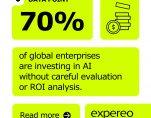
SINGAPORE – Media OutReach Newswire – 12 June 2026 – Enterprise AI spending is climbing rapidly, with boards racing to deploy the technology faster than they can measure whether it works. According to the latest IDC InfoBrief, commissioned by Expereo*, around 70% of organizations are investing in AI, motivated by its potential or by the fear of falling behind the competition, but they lag in disciplined ROI evaluation, and one in five (20%) admit they are investing aggressively in AI with little evaluation, driven by the fear of being left behind.
In Asia Pacific (APAC), that pressure is even more pronounced as 37% of organizations admit investing aggressively with little evaluation – nearly double the global average, and well ahead of the US (10%) and Europe (13%). The pressure is most acute in Australia (45%) and Vietnam (44%), while in Singapore, more than one in three organizations admit the same.
The IDC InfoBrief, based on a survey of 800 technology leaders across APAC, Europe, and the US, found that AI has become one of the most prioritized technology investments globally, with 51% of organizations planning to prioritize AI or machine learning investment over the next 12 months – rising to 61% across APAC. However, returns are failing to keep pace with the hype. Just 19% of global organizations surveyed say their AI implementations have exceeded expectations, and only 5% report they have significantly exceeded them1.
Across APAC, 40% say implementations have exceeded or significantly exceeded expectations – ahead of the global average but still leaving the majority falling short. Globally, the most-cited reasons for underperformance are inadequate or poor-quality training data (51%), higher-than-expected costs or ROI not achieved (47%), and AI not performing as well as expected (46%). For APAC specifically, the picture is broadly similar – though costs bite harder: 49% cite poor-quality training data, 54% cite cost overruns or ROI not achieved (rising to 80% in Malaysia), and 46% say AI has simply not performed as expected.
Where organizations have the right foundations in place, the results speak for themselves. Across APAC, 87% report productivity improvements in the business units most affected by AI, and 82% say quality of work has improved.
Underpinning many of these challenges is also a network and infrastructure readiness gap. Globally, 26% of organizations whose AI implementations have failed to meet expectations cite inadequate network or connectivity performance as a contributing factor. Looking ahead, 54% of organizations say they need more flexible and scalable networks to thrive in an AI-driven environment, and 51% need greater resilience and reliability to maximize uptime2. In APAC, the gap is acute as only 9% of organizations describe their network infrastructure as fully ready to support new AI, cloud, and digital initiatives, and 37% say it will need upgrading or replacing soon. The need is most acute in Thailand (74%) and Singapore (58%), both of which rank above the regional average on demand for flexible, scalable networks. In Indonesia, nearly half of all organizations (48%) say their infrastructure will need upgrading or replacing soon.
Ben Elms, CEO, Expereo, says: “Every enterprise we speak to is investing in AI, yet the data shows a clear gap opening up between AI ambition and AI outcomes. More often than not, that gap comes down to the network underneath. AI only delivers on its promise when the infrastructure carrying it is built to support it.
Without resilient, scalable, cloud-optimized networks, even the most well-funded AI programs will struggle to deliver ROI. Getting the network right is no longer an IT decision; it is one of the most important conversations happening in the boardroom today to help fulfill AI ambition.”
APAC is also leading on adoption, with 35% of organizations reporting extensive AI use across the business, against a global average of 25%3. Yet adoption alone is not enough without the right foundations beneath it.
Eric Wong, President, APAC, Expereo, says: “Asia Pacific is moving aggressively on AI adoption, but many organizations are discovering that scaling AI successfully requires more than just investment in applications and models. The underlying network, cloud connectivity, and operational readiness matter just as much. Across the region, we are seeing enterprises reassess whether their infrastructure is truly ready to support AI at scale, particularly around performance, resilience, governance, and visibility. Organizations that address those foundations early are generally seeing stronger outcomes and faster operational impact from their AI initiatives.”
Boardrooms are also waking up to the longer-term risks of unchecked AI investment. According to the survey, 54% of global tech leaders cite the creation of new security risks as a significant potential future threat for their organization’s use of AI, while 39% globally are concerned about losing track of AI-related costs and ROI once the technology is embedded across the business4. In APAC, that concern is sharper still as 41% of technology leaders in the region are worried about losing oversight of AI-related costs and ROI as adoption deepens – a figure that rises to 54% in Malaysia. Digital sovereignty is also moving up the strategic agenda, with 38% of APAC organizations rating it a high or top priority as they look to retain control over data and navigate an increasingly complex regulatory landscape.
For the full IDC InfoBrief, commissioned by Expereo, “Enterprise Horizons 2026: Where Innovation Meets Reality“ (doc #EUR154457526-IB, May 2026) please visit: [LINK]
The issuer is solely responsible for the content of this announcement.
Expereo
Expereo is a world-leading Managed Network as a Service provider that connects people, places, and things anywhere. Solutions include Global Internet, SD-WAN/SASE, and Enhanced Internet. With an extensive global reach, Expereo is the trusted partner of 60% of Fortune 500 companies. It powers enterprise and government sites in more than 190 countries, with the ability to connect to any location worldwide, working with over 2,300 partners to help customers improve productivity and empowering their networks and cloud services with the agility, flexibility, and value of the Internet, with optimal network performance.
Expereo was acquired in Feb 2021, by Vitruvian Partners which acquired a majority shareholding from Seven2.
Wall Street’s AI trade came under pressure as investors reassessed stretched technology valuations before SpaceX’s planned market debut, with Alphabet, Microsoft, Meta Platforms and Oracle losing more than $200 billion in combined market value during the session. The sell-off hit some of the largest companies tied to artificial intelligence spending, cloud infrastructure and data-centre expansion. Alphabet fell about 2.5 per cent, Microsoft lost nearly 2.7 per cent, […]
A UAE-focused tourism session in Moscow drew one of the largest audiences at the Let’s Travel International Tourism Forum, underscoring the expanding role of travel in the broader economic relationship between the Emirates and Russia. The panel, titled “UAE-Russia Tourism Dialogue: Successful Stories”, was organised by the Russia-UAE Business Council in cooperation with the Embassy of the United Arab Emirates in the Russian Federation. Held during the […]