News related to
business

Texas has sued Meta Platforms and WhatsApp, accusing the messaging service of misleading users over the strength of its encryption and privacy protections, opening a fresh legal front in the global debate over encrypted communications, consumer rights and platform accountability. The lawsuit, filed in Harrison County, alleges that WhatsApp has assured users their messages are protected by end-to-end encryption while Meta and WhatsApp retain access to “virtually […]

Arabian Post Staff -Dubai Dubai’s ports and customs authorities have opened fresh discussions with Kuwait to strengthen maritime transport, customs cooperation and trade flows, as Gulf economies push for more resilient supply chains amid shifting regional trade conditions. Abdulla bin Damithan, Chairman of the Ports, Customs and Free Zone Corporation in Dubai, met Khaled Abdulrahim Al Zaabi, Consul-General of Kuwait in Dubai and the Northern Emirates, at […]

Dubai Maritime City has opened Maritime Business Centre 2, an AED160 million commercial tower designed to add premium office capacity to DP World’s maritime, logistics and trade ecosystem at a time of sustained demand for Grade A workspace across the emirate. The new tower, located in the Commercial District of Dubai Maritime City, was completed in 20 months and had secured leasing commitments for 78 per cent […]

Abu Dhabi’s International Holding Company has completed a Dhs110m transaction using DDSC on ADI Chain, marking one of the first live institutional-scale tests of a UAE dirham-backed stablecoin on a regulated blockchain infrastructure. The transfer, valued at about $30m, was executed on ADI Chain, an institutional Layer-2 blockchain developed by ADI Foundation. DDSC is designed as a digital payment token backed one-for-one by UAE dirham reserves, positioning […]

Dubai motorists will pay more to use toll gates and public parking from June 1, with Salik and Parkin applying 5 per cent value-added tax to their services under the UAE’s federal tax framework. The change will add VAT to Salik toll gate use and tag activation charges, while Parkin will apply the tax across its public parking services, including on-street and off-street parking, seasonal cards, permits […]

State-run fuel retailers raised petrol and diesel prices on Saturday for the third time in eight days, extending a phased pass-through of higher crude costs to consumers after nearly four years of broadly frozen pump rates.

Petrol in New Delhi rose by 87 paise to ₹99.51 a litre, while diesel increased by 91 paise to ₹92.49 a litre. The latest increase takes the cumulative rise in both fuels to about ₹5 a litre this month, following the first retail fuel price increase since April 2022.

The pricing move reflects mounting pressure on oil marketing companies as international crude benchmarks remain elevated amid conflict in West Asia and supply concerns around key shipping routes. The controlled increases also point to a calibrated approach by the government, which is seeking to protect refiners’ balance sheets without delivering a sharp one-time shock to household budgets, freight operators and small businesses.

Indian Oil Corporation, Bharat Petroleum Corporation and Hindustan Petroleum Corporation dominate the retail fuel market, operating more than 90 per cent of the country’s roughly 103,000 fuel stations. Their pricing decisions carry wide implications for transport costs, food supply chains, inflation expectations and fiscal calculations.

The latest revision follows a ₹3-a-litre increase on May 15 and another smaller increase during the week, marking a clear shift from the long freeze that had shielded consumers from global volatility while pushing losses onto state-run refiners. That freeze had become harder to sustain as crude prices climbed and the rupee’s movement added to import costs.

The country imports more than four-fifths of its crude oil requirements, leaving domestic retail prices exposed to global oil markets and exchange-rate swings. Refiners have been selling petrol and diesel at discounted rates relative to landed costs, with diesel under-recoveries remaining larger because of its central role in freight, agriculture, public transport and industry.

Losses on diesel sales have been estimated at ₹25-30 a litre even after the first hike, while petrol losses have been placed at about ₹10-14 a litre. The fresh increase narrows that gap only modestly, suggesting further upward revisions could follow if crude prices stay high or the currency weakens.

Diesel is the more sensitive fuel for the broader economy. It powers trucks, buses, farm equipment, construction machinery and a large part of the country’s goods movement. Even modest increases can feed into freight rates, especially for smaller fleet operators with limited capacity to absorb higher running costs.

Petrol demand has also stayed firm, supported by urban commuting, two-wheeler use and private vehicle ownership. April consumption data showed petrol sales at about 3.7 million tonnes, up more than 6 per cent from a year earlier, while gasoil sales stood near 8.3 million tonnes, marginally higher than last year. The numbers indicate that demand has not weakened sharply despite higher living costs.

Bulk fuel demand has added another layer of pressure. Large users such as transport operators, mining companies and industrial consumers often respond quickly to price differences between retail outlets and direct industrial supply. A spike in retail buying can worsen supply imbalances and deepen losses for refiners if pump prices remain below market-linked levels.

The government has so far signalled little appetite for direct subsidies to compensate refiners for continuing under-recoveries. That stance increases the likelihood of gradual price adjustments, particularly if global crude remains above levels assumed in company projections. A sudden subsidy programme would also complicate fiscal planning at a time when public spending priorities remain stretched across infrastructure, welfare and defence.

State-level taxes mean consumers across major cities will see different pump prices even when the base increase is broadly similar. Mumbai, Kolkata, Chennai, Bengaluru and Hyderabad typically record higher retail rates than New Delhi because of local levies, dealer commissions and freight costs. That variation also affects inflation differently across regions.

Compressed natural gas prices have moved higher as well, with Delhi seeing another ₹1-per-kg increase, the third rise in ten days. The parallel increase in CNG adds pressure on taxis, autorickshaws and urban commuters who had shifted to gas-based transport as a cheaper alternative to petrol and diesel.

For oil marketing companies, the price increases may support margins but are unlikely to restore full profitability immediately. Investor attention is now focused on how quickly the companies can recover past losses, whether demand holds up, and whether policymakers allow market-linked pricing to continue if inflationary pressure grows.

Arabian Post Staff -Dubai Brazilian refiner Acelen has secured $1.5 billion to begin construction of a major biofuels refinery in Bahia, advancing Abu Dhabi’s Mubadala-backed strategy to build a large-scale renewable fuels platform in Latin America. The project, led by Acelen Renováveis, is expected to start operations in 2029 and produce up to 1 billion litres a year of sustainable aviation fuel and renewable diesel. The financing […]

Advertisements

Anthropic PBC is moving towards closing a funding round that could exceed $30 billion at a valuation above $900 billion, a transaction that would place the Claude maker among the world’s most valuable private companies and intensify the capital race reshaping artificial intelligence. The San Francisco-based company is expected to complete the round as soon as next week, though final terms could still change. The deal, if […]

Hong Kong’s competitive weekend dining market is getting a sharper culinary edge as Lobster Bar & Grill at Island Shangri-La turns its Sunday roast brunch into a guest-chef platform linking hotel dining with some of the city’s most recognisable restaurant names.

The 2026 Sunday Roast Guest Chef Series runs across selected Sundays from February to October, with further dates expected for November and December. Priced at HK$898 per guest, plus a 10 per cent service charge, the programme gives each participating restaurant one Sunday to reinterpret the classic British roast through its own cuisine, while retaining the familiar three-course structure of starter, roast or seafood main, and dessert.

The format reflects a wider shift in Hong Kong’s premium dining scene, where luxury hotels are moving beyond standard brunch buffets and using chef-led collaborations to attract diners who want novelty, scarcity and recognised culinary talent. For Lobster Bar & Grill, long associated with seafood, grills, cocktails and live jazz, the series also positions brunch as a curated dining event rather than a routine weekend offering.

The 2026 line-up began with NOI on 8 February, bringing contemporary Italian cooking shaped by Chef Paulo Airaudo’s wider culinary approach and Hong Kong-based Chef Luigi Troiano’s execution. It continued on 15 March with 22 Ships, known for modern Spanish flavours under Chef Antonio Oviedo, and on 12 April with Yong Fu Hong Kong, whose Ningbo seafood cooking added a refined Chinese coastal identity to the Sunday roast template.

The next phase brings Neighborhood on 31 May, Leela on 28 June and Cristal Room by Anne-Sophie Pic on 19 July. Neighborhood, led by Chef David Lai, enters the series with strong recognition from both Michelin and Asia’s 50 Best Restaurants, where it ranked No. 24 in the 2026 list. Its reputation rests on market-led European bistro cooking, generous sharing dishes and a style that combines technical control with an understated dining room culture.

Leela, led by Chef Manav Tuli, adds a modern interpretation of regional cooking from India, using refined technique, spice layering and tandoor-led elements. Its participation broadens the series beyond European and Chinese traditions, giving the roast format a more expansive culinary identity at a time when Hong Kong diners are showing stronger interest in regional specificity and chef-driven storytelling.

Cristal Room by Anne-Sophie Pic brings the strongest fine-dining profile in the May-to-July phase. The Landmark restaurant, guided in Hong Kong by Chef Marc Mantovani, earned two Michelin stars in the 2026 Hong Kong and Macau guide. Its contribution is expected to bring a more composed French approach to the format, with emphasis on precision, balance and luxury ingredients.

Lobster Bar & Grill’s regular Sunday roast brunch already leans towards abundance, with appetisers such as lobster bisque, smoked salmon and steak tartare, followed by individually plated roast or seafood choices. Signature sides include duck-fat roasted potatoes and honey-glazed carrots, while desserts include banoffee pie, triple chocolate mud pie and seasonal creations. The guest-chef model keeps those anchors intact while allowing each collaborator to alter the flavour profile.

Executive Sous Chef Cary Docherty remains central to the concept. His role is not merely to host outside chefs, but to co-create menus that fit the kitchen’s seafood-and-grill identity while allowing each restaurant’s style to remain visible. That balance is crucial: too much hotel polish could dilute the individuality of the guest chefs, while too much experimentation could alienate diners expecting the comfort of Sunday roast.

The commercial logic is clear. Hong Kong’s dining market remains crowded, and premium hotel restaurants face intense competition from independent restaurants, private clubs and destination bars. A one-day-only brunch creates urgency, encourages repeat visits and lets diners access high-profile kitchens in a less formal setting than full tasting menus. For visiting chefs and independent restaurants, the collaboration offers exposure to a hotel audience with strong spending power.

Located on Level 6 of Pacific Place on Supreme Court Road in Central, Lobster Bar & Grill benefits from a business-district address and the broader Island Shangri-La dining ecosystem. Its Sunday and public holiday brunch service runs from 11.45am to 3.30pm, with last orders at 2.30pm, giving the collaboration format a defined weekend window rather than an open-ended promotional run.

OKX is moving beyond digital assets into oil-linked derivatives through a partnership with Intercontinental Exchange, marking a fresh step in the convergence of crypto trading platforms and traditional commodity markets. The crypto exchange plans to introduce perpetual futures contracts tied to ICE Brent Crude and ICE WTI Crude benchmarks, giving eligible users exposure to two of the world’s most closely watched oil price references without using conventional […]

Recognition reflects TDCX’s evolution into a global firm helping clients navigate digital and AI transformation with a combination of human expertise, intelligent technology, and operational precision

SINGAPORE – Media OutReach Newswire – 22 May 2026 – TDCX, a leading global customer experience (CX) solutions firm, has been named to the Outsource Accelerator (OA) 500 2026 Index Top 50, marking its fourth consecutive year on Outsource Accelerator’s global ranking of leading business process outsourcing firms. The OA500 evaluated 3,369 BPO companies worldwide across more than 20 performance metrics over a 15-month assessment period, drawing on independent data sources including Crunchbase, Glassdoor, LinkedIn, and ZoomInfo.

TDCX named among the world’s Top 50 outsourcing firms by Outsource Accelerator for the fourth consecutive year


The recognition comes in TDCX’s 30th anniversary year and seven months after the company unveiled its refreshed brand and Enable the Future positioning. The new identity reflects TDCX’s evolution into a global firm helping clients navigate digital and AI transformation with a combination of human expertise, intelligent technology, and operational precision.

Mr. Laurent Junique, founder and CEO of TDCX, said: “Outsourcing is shifting from cost arbitrage to capability arbitrage. The companies that win in this market will be the ones that combine deep human expertise with intelligent technology, and bring them together with judgment. Four consecutive years in the OA500 Top 50 says TDCX is doing that in a way the market recognizes.”

Mr. Derek Gallimore, founder and CEO of Outsource Accelerator, said: “TDCX’s fourth consecutive year in the OA500 Top 50 reflects something rare in this industry: sustained, disciplined execution paired with real strategic evolution. They’ve moved decisively beyond traditional CX into digital and AI-enabled service for some of the world’s most demanding brands. As outsourcing shifts from headcount to outcomes, TDCX is one of the operators best placed to lead that transition.”

The OA500 Index assesses BPO firms across criteria including global delivery footprint, online presence, employee sentiment, LinkedIn engagement, third-party analyst data, and operational benchmarks. With more than 20,000 employees across 37 campuses spanning Asia, Europe, and the United States, TDCX serves clients in digital advertising and social media, e-commerce, fintech, gaming, healthtech, media, technology, and travel and hospitality.

Hashtag: #TDCX #OA500 #CX #Outsourcing #EnableTheFuture

The issuer is solely responsible for the content of this announcement.

About TDCX

Singapore-headquartered TDCX is a leading global customer experience solutions firm that provides customer experience (CX) solutions, sales and digital marketing services, and content moderation for clients across various industries. These include digital advertising and social media, e-commerce, fintech, gaming, healthtech, media, technology and, travel and hospitality.

With a focus on helping companies enable the future, TDCX’s smart, scalable approach, driven by innovation and operational precision, positions it as a key partner for companies targeting tangible outcomes. With more than 20,000 employees across 37 campuses worldwide, TDCX provides its clients with comprehensive coverage in Asia, Europe and the Americas.

For more information, please visit .

Revenue Up 35.4% Year-on-Year API Token Call Volume Surges Nearly 6 Times

HONG KONG SAR – Media OutReach Newswire – 22 May 2026 – Phancy Group Co., Ltd. (“Phancy” or “The Company”, stock code: 6682.HK), a leading general artificial intelligence company, today announced its unaudited consolidated results for the first quarter ended 31 March 2026.

During the period, Phancy achieved revenue of approximately RMB1.458 billion, representing a 35.4% year-on-year increase. Gross profit margin remained at 35.1%. Phancy leveraged its deep expertise in full-stack AI cloud services, to capitalize on the accelerating adoption of localized computing power and strong enterprise demand for AI solutions. The Company achieved robust growth in its core businesses, accelerated product innovation, and secured several major partnerships, sustaining strong operational momentum.

2026 First Quarter Business Highlights:

Unified Enterprise AI Platform Drives Explosive Core Business Growth

Global computing resources remain constrained, while demand for both private enterprise AI deployments and API-based model calls continues to grow rapidly. Phancy’s enterprise-grade AI platform is built on a unified core architecture that seamlessly supports both API calling scenarios and dedicated private deployments. This significantly boosts AI application efficiency and resource utilization. Supported by a mature computing power supply chain developed over many years, Phancy’s deployable computing power resources have increased by over 200%. This enables the Company to effectively meet surging Token demand and consistently deliver stable, high-quality AI services to its customers.

In the first quarter of 2026, API Token call volume surged nearly 6 times compared to the same period in 2025, and already accounted for nearly 40% of the full-year 2025 total. Meanwhile, the Agentic AI business expanded rapidly, with deepening commercial adoption. Orders on hand grew nearly 100% compared to the end of 2025, emerging as a major growth driver for the Company.

AI Technology Iteration Accelerates, Commercialization Beats Expectations

Building on its continued push into digital employee applications and AI empowerment across business units, Phancy has significantly shortened the product development cycle from R&D to commercialization, enhancing overall operational efficiency and customer satisfaction.

As of mid-May 2026, ModelHub XC has completed adaptation and optimization for over 70,000 AI models on domestic chips, achieving more than 70% of its full-year target – well ahead of schedule.

In May, Phancy launched PhanthyMovie, a professional-grade AI video generation platform designed to enhance creativity, control, and stability in video production, enabling standardized and large-scale content creation for the industry.

Leveraging its advanced technology and proven execution capabilities, PhanthyMovie achieved rapid commercial traction. Just days after launch, the Company entered into a strategic cooperation agreement with Huanxi Media, covering approximately US$200 million in AI Token usage. The two parties will also collaborate on the development of a next-generation AI-powered film and television content production platform, further strengthening Phancy’s position in the AI-driven cultural and creative sector.

Core Products Align Closely with Policy Trends, Strengthening Compute-Model Integration

Since May 2026, China’s AI sector has seen a series of positive policy developments focused on computing infrastructure, data element circulation, and open-source compliance governance. Phancy’s core products, including HAMi vGPU and ModelHub XC, are well-aligned with national policy directions and mainstream industry trends.

In terms of computing resource allocation, policies emphasize cross-regional collaboration and broader access to computing power. Phancy’s HAMi vGPU offers unified scheduling and fine-grained resource partitioning, effectively improving utilization rates, optimizing data center energy efficiency, and supporting unified management across multiple chips to boost single-card efficiency.

In data and model governance, the government continues to promote high-quality dataset development and compliance management. ModelHub XC supports multi-model adaptation and optimization, incorporates data traceability and security certification features to help enterprises reduce compliance risks, and uses the EngineX engine for batch adaptation of domestic chips and models. This significantly improves compatibility while enhancing Token output efficiency through targeted model tuning.

Through deep integration of its computing and model layers, Phancy has built a comprehensive “Compute–Model” integrated solution. This addresses key industry needs such as efficient computing utilization, secure data supply, enterprise compliance, and domestic substitution, while strengthening its technological moat. The Company is well positioned to capture policy dividends and industry opportunities, supporting enterprises in their digital and intelligent transformation.

Hashtag: #PhancyGroup

The issuer is solely responsible for the content of this announcement.

About Phancy Group

Phancy Group (6682.HK) is a leading full-stack AI cloud services platform, providing comprehensive solutions for the AI 2.0 era. Our offerings include SageAIOS, HAMi vGPU and ModelHub XC, delivering efficient and scalable AI infrastructure with end-to-end capabilities. We provide a complete solution from heterogeneous compute resource management and optimization to the deployment of intelligent agent models. These solutions empower digital transformation across a wide range of industries, supporting our vision of building a large-scale and efficient “Token Factory.”

Guided by the mission of “AI for Everyone” and positioned as the “Navigator of AI,” Phancy Group is committed to becoming a global leader in Artificial General Intelligence.


Dubai motorists will pay 5 per cent value-added tax on public parking and Salik toll services from June 1, 2026, in a shift that will raise daily transport costs while accelerating the emirate’s move towards digital payments. Parkin Company PJSC, Dubai’s main paid parking operator, will apply VAT across its services, including on-street parking, off-street parking, seasonal cards, permits and reservation services. Salik Company PJSC will apply […]

Companies are pushing vulnerable software into production even as artificial intelligence expands the speed, volume and complexity of application development across global supply chains. New industry findings show 75% of organisations often or sometimes deploy code they already know contains security weaknesses, underscoring a persistent gap between software delivery targets and risk controls. The figure marks only a limited improvement from last year’s 81%, suggesting that boards […]

Arabian Post Staff -Dubai Flydubai and Cyprus Airways have launched an interline partnership that gives passengers from Larnaca wider one-stop access to destinations across the Gulf, Asia, Africa and the Indian Ocean through Dubai International. The agreement allows customers to book travel on a single itinerary, with coordinated baggage handling and smoother transfers at DXB. For Cyprus Airways passengers, the arrangement opens connections beyond Dubai to flydubai […]

Cybercriminals are expanding phishing infrastructure built around the 2026 FIFA World Cup, with threat researchers mapping 222 malicious or suspicious domains to 203 unique IP addresses as fraud campaigns target fans, sponsors, travel operators and online shoppers before the tournament opens on 11 June. The findings point to a much broader operation than the first wave of 79 lookalike domains that impersonated FIFA and ticketing-related services. The […]

AMD has committed more than $10 billion to Taiwan’s semiconductor ecosystem, targeting advanced packaging and manufacturing capacity as demand for artificial intelligence infrastructure intensifies across global data centres.

The investment is designed to strengthen the chipmaker’s partnerships with foundries, packaging houses, substrate suppliers and server manufacturers that are central to its next generation of AI systems. The programme places Taiwan at the centre of AMD’s effort to scale production of high-performance processors, accelerators and rack-level systems built for increasingly complex AI workloads.

A major focus will be Elevated Fanout Bridge, or EFB, a 2.5D packaging technology intended to improve the speed and efficiency of connections between chip components. AMD plans to use the technology in its sixth-generation EPYC central processing units, codenamed “Venice”, which are being positioned for AI, cloud and high-performance computing deployments.

The move comes as AI infrastructure spending shifts from individual chips towards complete systems that combine CPUs, graphics processors, high-bandwidth memory, networking and software. Advanced packaging has become a critical bottleneck because AI workloads require large volumes of data to move quickly between processors while keeping power consumption and heat within manageable limits.

AMD Chair and Chief Executive Lisa Su said customers were rapidly expanding AI infrastructure to meet rising compute demand. The company is seeking to combine its high-performance computing portfolio with Taiwan’s manufacturing and packaging capabilities to support integrated, rack-scale AI systems.

AMD is working with partners including ASE, SPIL, Powertech Technology, Wiwynn, Wistron, Inventec, Unimicron, AIC, Nan Ya PCB and Kinsus. These companies cover key parts of the supply chain, from advanced packaging and substrates to server assembly and mechanical architecture. Sanmina is also involved in manufacturing support for the company’s Helios platform.

The investment will support both wafer-based and panel-based EFB interconnect development. AMD and Powertech Technology have qualified what they describe as the industry’s first 2.5D panel-based EFB interconnect, a step aimed at improving scalability and production economics for high-volume AI processors.

The technology is expected to help the “Venice” EPYC processors deliver higher interconnect bandwidth and better power efficiency. That matters because data centre operators are increasingly constrained by electricity availability, cooling capacity and rack density, not only by chip performance.

AMD has also begun ramping production of “Venice” CPUs using Taiwan Semiconductor Manufacturing Company’s 2-nanometre process technology in Taiwan. Future production is planned at TSMC’s Arizona facility, extending the supply chain beyond Taiwan while preserving the company’s close reliance on TSMC’s leading-edge manufacturing.

The “Venice” chips will be a central element of AMD’s Helios rack-scale platform, which also includes AMD Instinct MI450X graphics processors, advanced networking and the ROCm open software stack. The platform is scheduled for deployments beginning in the second half of 2026, with AMD describing the opportunity in terms of multi-gigawatt AI infrastructure rollouts.

The strategy puts AMD in a more direct contest with Nvidia, which dominates AI accelerator sales and has built a strong lead through its GPUs, networking, software ecosystem and full-rack systems. AMD’s challenge is not only to deliver competitive silicon but also to prove that it can scale complete AI infrastructure with dependable supply, efficient packaging and broad software support.

AMD’s data centre business has become the company’s main growth engine. First-quarter 2026 data centre revenue reached $5.8 billion, up 57 per cent from a year earlier, driven by demand for EPYC processors and the ramp-up of Instinct GPU shipments. That performance has strengthened investor expectations that AMD can capture a larger share of AI and cloud infrastructure spending.

Taiwan remains critical to that effort because of its concentration of semiconductor expertise. TSMC anchors the foundry side, while packaging, substrate and system-assembly partners provide the manufacturing depth needed to turn chip designs into deployable infrastructure. The concentration also creates geopolitical and supply-chain risks, particularly as governments and companies seek greater resilience across strategic technologies.

Russian state-backed cyber groups are broadening their entry points into targeted networks, using remote access services, stolen credentials, compromised suppliers and tailored social engineering to penetrate government, critical infrastructure and commercial systems. The pattern marks a shift from single-vector intrusions towards layered access operations designed to look like ordinary business activity. Remote Desktop Protocol, virtual private network accounts, cloud identities, internet-facing routers, edge devices and third-party service […]

HONG KONG SAR – Media OutReach Newswire – 22 May 2026 – At the International Hydrogen Development Symposium 2026 today (May 18), nine pioneering companies from Korea, the Chinese Mainland, France, and Hong Kong – including Hyundai Motor Group – signed a landmark Memorandum of Understanding (MOU) on hydrogen ecosystem building, marking a major step toward advancing the city’s green economy.

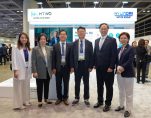
At the International Hydrogen Development Symposium 2026 today (May 18), nine pioneering companies from Korea, the Chinese Mainland, France, and Hong Kong - including Hyundai Motor Group - signed a landmark Memorandum of Understanding on hydrogen ecosystem building, marking a major step toward advancing the city's green economy. Photo shows (from left) Senior Vice President (Sustainability) for Technology, Innovation and Entrepreneurship of Invest Hong Kong (InvestHK), Ms Olivia To; the Director-General of Investment Promotion of InvestHK, Ms Alpha Lau; Executive Vice President and Head of Energy & Hydrogen Policy Sub-Division at Hyundai Motor Group, Mr Seung Kyu-shin; Deputy Minister for Territorial and Urban Policy at Ministry of Land, Infrastructure and Transport of the Republic of Korea, Mr Jeong Eui-kyung; the Global Head of Financial Services, Fintech & Sustainability of InvestHK, Mr King Leung; and Senior Vice President, Transport, Logistics and Industrials of InvestHK, Ms Bonnie Ho, at the symposium.
At the International Hydrogen Development Symposium 2026 today (May 18), nine pioneering companies from Korea, the Chinese Mainland, France, and Hong Kong – including Hyundai Motor Group – signed a landmark Memorandum of Understanding on hydrogen ecosystem building, marking a major step toward advancing the city’s green economy. Photo shows (from left) Senior Vice President (Sustainability) for Technology, Innovation and Entrepreneurship of Invest Hong Kong (InvestHK), Ms Olivia To; the Director-General of Investment Promotion of InvestHK, Ms Alpha Lau; Executive Vice President and Head of Energy & Hydrogen Policy Sub-Division at Hyundai Motor Group, Mr Seung Kyu-shin; Deputy Minister for Territorial and Urban Policy at Ministry of Land, Infrastructure and Transport of the Republic of Korea, Mr Jeong Eui-kyung; the Global Head of Financial Services, Fintech & Sustainability of InvestHK, Mr King Leung; and Senior Vice President, Transport, Logistics and Industrials of InvestHK, Ms Bonnie Ho, at the symposium.

This multi-party signing was officiated by Deputy Minister for Territorial and Urban Policy at Ministry of Land, Infrastructure and Transport of the Republic of Korea, Mr Jeong Eui-kyung; the Acting Secretary for Environment and Ecology, Miss Diane Wong; the Director of Electrical and Mechanical Services, Mr Poon Kwok-ying; and the Director-General of Investment Promotion of Invest Hong Kong (InvestHK), Ms Alpha Lau.

At the International Hydrogen Development Symposium 2026 today (May 18), nine pioneering companies from Korea, the Chinese Mainland, France, and Hong Kong - including Hyundai Motor Group - signed a landmark Memorandum of Understanding on hydrogen ecosystem building, marking a major step toward advancing the city's green economy. Photo shows the Director-General of Investment Promotion of Invest Hong Kong, Ms Alpha Lau, delivering a speech.
At the International Hydrogen Development Symposium 2026 today (May 18), nine pioneering companies from Korea, the Chinese Mainland, France, and Hong Kong – including Hyundai Motor Group – signed a landmark Memorandum of Understanding on hydrogen ecosystem building, marking a major step toward advancing the city’s green economy. Photo shows the Director-General of Investment Promotion of Invest Hong Kong, Ms Alpha Lau, delivering a speech.

Spearheaded by Hyundai Motor Group, the MOU establishes a collaborative framework to build a comprehensive, self-sustaining hydrogen ecosystem in Hong Kong, targeted to be fully operational by the end of 2030. The collaboration will prioritise the development of waste-to-hydrogen technologies to convert landfill gas into clean energy, along with an immediate focus on piloting a liquefied hydrogen refuelling infrastructure. To enable full value chain integration, it also targets the deployment of customised hydrogen fuel cell commercial vehicles, including tour and airport shuttle buses.

Through facilitating public-private partnerships and inter-governmental collaboration, InvestHK is supporting Hyundai Motor Group and its partners to implement go-to-market strategies aligned with the shared vision for hydrogen ecosystem building.

This partnership will also position Hong Kong as a strategic base for Hyundai Motor Group’s hydrogen business expansion across the Asia-Pacific region.

Miss Wong said, “This collaboration marks a significant milestone in developing tangible, on-the-ground hydrogen applications to accelerate the green transition towards carbon neutrality. By combining Korea’s world-class technological capabilities with Hong Kong’s strategic urban context, Hong Kong could serve as an exceptional international demonstration platform for showcasing green and low-carbon technologies. If these cutting-edge innovations could be applied and scaled up successfully here, it will serve as a positive model and provide highly viable options for reference by modern cities worldwide.”

Ms Lau said, “Today’s multi-party signing is both a landmark moment for Hong Kong’s green economy and a clear signal that the city’s hydrogen ecosystem is gaining real traction. Over the past three years, InvestHK has helped leading hydrogen enterprises establish themselves in Hong Kong, several of which have since listed on the Hong Kong Stock Exchange, raising over $2.5 billion in total. For businesses with global green ambitions, Hong Kong is where business growth takes shape.”

At the International Hydrogen Development Symposium 2026 today (May 18), nine pioneering companies from Korea, the Chinese Mainland, France, and Hong Kong - including Hyundai Motor Group - signed a landmark Memorandum of Understanding on hydrogen ecosystem building, marking a major step toward advancing the city's green economy. Photo shows the Acting Secretary for Environment and Ecology, Miss Diane Wong, delivering a speech.
At the International Hydrogen Development Symposium 2026 today (May 18), nine pioneering companies from Korea, the Chinese Mainland, France, and Hong Kong – including Hyundai Motor Group – signed a landmark Memorandum of Understanding on hydrogen ecosystem building, marking a major step toward advancing the city’s green economy. Photo shows the Acting Secretary for Environment and Ecology, Miss Diane Wong, delivering a speech.

Executive Vice President and Head of Energy & Hydrogen Policy Sub-Division at Hyundai Motor Group, Mr Seung Kyu-shin, said, “This MOU was signed as Hyundai Motor Group’s commitment to advancing Hong Kong’s proactive hydrogen policies and driving the acceleration of its hydrogen ecosystem utilising the Group’s hydrogen business capability and experience. Starting with Hong Kong, we look forward to expanding our collaboration and business opportunities across the broader Asia-Pacific hydrogen market.”

At the International Hydrogen Development Symposium 2026 today (May 18), nine pioneering companies from Korea, the Chinese Mainland, France, and Hong Kong - including Hyundai Motor Group - signed a landmark Memorandum of Understanding on hydrogen ecosystem building, marking a major step toward advancing the city's green economy. Photo shows Deputy Minister for Territorial and Urban Policy at Ministry of Land, Infrastructure and Transport of the Republic of Korea, Mr Jeong Eui-kyung (back row, second right); the Acting Secretary for Environment and Ecology, Miss Diane Wong (back row, second left); the Director of Electrical and Mechanical Services, Mr Poon Kwok-ying (back row, first left); and the Director-General of Investment Promotion of Invest Hong Kong, Ms Alpha Lau (back row, first right), witnessing the signing.
At the International Hydrogen Development Symposium 2026 today (May 18), nine pioneering companies from Korea, the Chinese Mainland, France, and Hong Kong – including Hyundai Motor Group – signed a landmark Memorandum of Understanding on hydrogen ecosystem building, marking a major step toward advancing the city’s green economy. Photo shows Deputy Minister for Territorial and Urban Policy at Ministry of Land, Infrastructure and Transport of the Republic of Korea, Mr Jeong Eui-kyung (back row, second right); the Acting Secretary for Environment and Ecology, Miss Diane Wong (back row, second left); the Director of Electrical and Mechanical Services, Mr Poon Kwok-ying (back row, first left); and the Director-General of Investment Promotion of Invest Hong Kong, Ms Alpha Lau (back row, first right), witnessing the signing.

Partners entering into this MOU include Hyundai Motor Company and Hyundai Engineering & Construction from Hyundai Motor Group, China Inspection Co Ltd, Chun Wo Bus Services Limited, Chun Wo Construction & Engineering Company Limited, Jiangsu Guofu Hydrogen Energy Equipment Co Ltd, JEA ENG, Templewater Limited, the Hong Kong and China Gas Company Limited, and Veolia Hong Kong Holding Limited.

This multi-party, long-term collaboration is set to establish a robust, end-to-end hydrogen industry chain – spanning production, storage, transportation, refuelling and utilisation.

New energy is vital to Hong Kong’s Climate Action Plan 2050 and the national dual-carbon goals. As set out in the Chief Executive’s 2025 Policy Address, Hong Kong will establish public hydrogen filling facilities on Hong Kong Island and in Kowloon, press ahead with more hydrogen trial projects, and develop the GBA Hydrogen Corridor in collaboration with Guangdong Province. The Hong Kong Special Administrative Region Government is actively advancing hydrogen development through technological innovation, talent cultivation, ecosystem building, and regional co-ordination. To date, over 30 hydrogen trial projects have been greenlit, paving the way not only for decarbonisation targets, but also for unlocking new quality productive forces for green economic growth.
Hashtag: #InvestHK

The issuer is solely responsible for the content of this announcement.

About InvestHK

Invest Hong Kong (InvestHK) is the investment promotion agency of the Government of the Hong Kong Special Administrative Region (HKSAR).

Singapore business leader Teo Siong Seng has been accused by US prosecutors of taking part in a multi-year conspiracy to restrict output and fix prices of standard dry shipping containers, a case that places one of the city-state’s most prominent maritime figures at the centre of a major antitrust action. The indictment names four container manufacturing companies and seven executives in an alleged scheme that prosecutors say […]

Polymarket has appointed a representative in Japan and is preparing to press policymakers for a route to authorise prediction markets, marking a significant step in its effort to turn a crypto-native trading platform into a regulated global financial venue.

The New York-founded company, led by Shayne Coplan, is seeking to open discussions around whether event-based contracts can be permitted under Japan’s financial and digital-asset framework rather than treated purely as gambling. The move comes as prediction markets draw heavier institutional interest, stronger trading volumes and sharper scrutiny from regulators over consumer protection, market integrity and the legal boundary between betting and derivatives.

People familiar with the matter said the company’s Japan strategy is at an early stage and would require engagement with officials, lawmakers and industry participants before any formal market entry. Japan does not have a dedicated framework for cash-based prediction markets, leaving platforms that allow users to trade on political, economic, sports or cultural outcomes exposed to uncertainty under gambling and financial laws.

Polymarket allows users to buy and sell contracts tied to the outcome of real-world events, with prices reflecting market-implied probabilities. Its markets have covered elections, central bank decisions, geopolitical events, sports, entertainment and cryptocurrency milestones. The platform gained global visibility during the 2024 US presidential election cycle, when trading volumes surged and its odds were widely cited as an alternative gauge of political sentiment.

Japan would offer Polymarket a large, sophisticated retail market with deep participation in equities, foreign exchange and digital assets. The country has also built one of the world’s more structured crypto regulatory regimes, requiring registration for crypto-asset exchange service providers and imposing rules on custody, anti-money laundering controls and customer protection. That framework may give the company a potential route for engagement, although prediction markets remain a separate and more politically sensitive category.

The company’s global push has accelerated after a period of regulatory pressure in the United States. Polymarket settled a case with the Commodity Futures Trading Commission in 2022 after being accused of offering off-exchange event-based binary options without proper registration. It blocked US users for several years before moving to rebuild a domestic regulatory path through acquisitions and licensing efforts. Its purchase of a derivatives exchange and clearinghouse gave it a route to pursue compliant US operations.

Institutional backing has also strengthened its position. Intercontinental Exchange, the parent of the New York Stock Exchange, agreed to invest up to $2 billion in Polymarket in a deal that valued the business at about $8 billion before the transaction. The partnership gave Polymarket a powerful market infrastructure ally and signalled that event-driven data may have value beyond retail speculation, particularly for investors seeking real-time sentiment around political, economic and corporate developments.

Competition is intensifying. Kalshi, a regulated US prediction market operator, has expanded rapidly by framing event contracts as financial instruments under commodities law. Its growth has triggered legal disputes with state regulators, some of whom argue that sports and election-linked contracts resemble gambling products. That debate is likely to influence Japan’s assessment of whether prediction markets can be supervised as finance, gaming, information markets or a hybrid category.

Polymarket’s Japan plan faces several obstacles. Gambling is tightly restricted, with permitted activity largely confined to state-authorised sectors such as horse racing, bicycle racing, motorboat racing, lotteries and pachinko-linked structures. Online betting carries heightened enforcement risks, and any product involving wagers on uncertain outcomes would need careful legal classification. A crypto-funded model could add further complexity because regulators would need to examine custody, settlement, identity checks, sanctions screening and investor suitability.

Supporters of prediction markets argue that they create useful public signals by aggregating dispersed information into tradable prices. Traders who believe a market is mispriced can buy or sell contracts, pushing prices closer to collective expectations. That model has appealed to political analysts, hedge funds, economists and technology investors seeking faster indicators than polls, surveys or conventional research.

Critics counter that thin liquidity, anonymous participation, insider access and coordinated trading can distort outcomes. Questions have intensified around markets linked to sensitive events, where participants may possess non-public information or where the existence of a market could create troubling incentives. Japan’s regulators are likely to examine whether surveillance systems, position limits, disclosure rules and dispute-resolution mechanisms are strong enough to reduce those risks.

Full oil shipments through the Strait of Hormuz are not expected to return before the first or second quarter of 2027, even if the Middle East conflict were to end immediately, ADNOC chief Sultan Ahmed Al Jaber has said, signalling that the energy shock from the Iran war could outlast any diplomatic settlement by many months. The warning from the head of the Abu Dhabi National Oil […]

Arabian Post Staff -Dubai OHO Sunshine has launched GlobeEar smart glasses as competition intensifies in AI-enabled eyewear, combining real-time translation, Bluetooth audio and everyday lens protection in a single lightweight frame aimed at travellers, commuters and multilingual users. The Cheyenne, Wyoming-based smart eyewear brand is positioning GlobeEar as a daily-use device rather than a specialist gadget. The glasses combine Bluetooth 5.2 open-ear audio, hands-free calling, an AI […]

Britain’s jobs market weakened in April as employers cut back on permanent recruitment while turning to temporary staff to manage uncertainty, rising business costs and disruption linked to the Iran conflict. Permanent staff placements fell at the sharpest pace since January, reversing part of the improvement seen earlier in the year. The permanent placements index dropped to 47.5 in April from 49.2 in March, staying below the […]

VISHNU RAJA
RYO YAMADA
HITORI GOTOH
IKUYO KITA
Just in:
The “1st Greater Bay Area Health and Longevity Summit & Awards Ceremony” concludes successfully in Macao // OpenAI identifies 948 Linux privilege escalation flaws using AI // Millions Of Indians May Soon Be Deprived Of Government Assistance // Oil and chip shares retreat after Democratic victories // Cyberport Venture & Capital Forum 2026 Grand Opening // Miss Universe Hong Kong Jen Zhou Departs for Puerto Rico to Compete in the 75th Miss Universe World Final // Kochi police detain two actors over bid to honey trap doctor // ADIA and partners establish $1.4 billion aviation venture // Asia Left Behind: Ten international companies have yet to report delivering on their cage-free egg pledges across the region // CR Longdation Aethereal Cybersecurity × Global Cybersecurity Alliance (GCSA) Join Hands to Establish the “AI and Cybersecurity Research Centre” // Dubai boat show confirms international shipyard line-up for November // e-Crime Bureau Signs Cybersecurity Partnership With Smart Africa, Reinforcing Its Global Expansion // Ousted top Kochi cop gets IG post // Xi Jinping Preparing For A Trilateral Summit With Trump And Putin At APEC Summit On Nov 18-19 // Ta’ziz finalises $1.39bn funding for Ruwais industrial facilities // Emirates Group records AED 4.1 billion half-year profit // Fast Just Got Fastest: STING Energy Boost™ Celebrates Kimi Antonelli’s Formula 1® World Championship and the Fan Energy Behind It // Utilities pursue ₹1,992 cr in unpaid bills // TVM –Mangaluru Vande Bharat claims top spot // Cloudflare unveils Zero Wire vulnerability intelligence service //