South African businesses are treating water security as a core continuity risk as unreliable municipal supply, ageing infrastructure increase operational risk across affected municipal networks and major cities. Companies are responding by expanding on-site storage, drilling boreholes where viable, installing treatment systems, recycling wastewater and improving consumption monitoring. The shift resembles the earlier move towards private power resilience, with businesses seeking alternatives to dependence on a single […]
Arabian Post Staff -Dubai Visa Direct is expanding its Saudi Arabia footprint as digital money transfers accelerate, with card-based transaction volumes in the kingdom rising by more than 50 per cent year on year, according to Visa. The growth reflects stronger demand from consumers and financial institutions for faster domestic and cross-border payments, particularly remittances, as Saudi Arabia’s payments market continues shifting towards digital channels. Visa said […]
South Korea’s central bank began a pilot of a 24-hour won settlement network on Monday, advancing preparations to give overseas investors broader access to the country’s currency market from next year.
The Bank of Korea said the Bank of Korea Won International Wire Network started trial operations at 9am local time with KB Kookmin Bank, Woori Bank, Hana Bank and Shinhan Bank participating. Two of the banks completed transactions worth about 1.4 billion won during the initial test, according to the central bank.
Full operation is scheduled for January 2027, when foreign financial institutions are expected to gain wider access to the network. The system is designed to allow won payments and settlement during the business hours of major overseas financial centres rather than limiting activity to South Korea’s domestic banking day.
Under the planned framework, offshore investors will be able to trade the won with other foreign participants using accounts opened with Registered Foreign Institutions for KRW Business, known as RFI-Ks, in their home markets. This is intended to reduce the need for investors to open and operate separate accounts directly with financial institutions in South Korea.
The network will function continuously from 9am on each business day until 9am the following day, effectively providing round-the-clock settlement on weekdays. It will remain closed on weekends and public holidays. Foreign banks are also due to participate in the trial, although the Bank of Korea has not specified when they will enter the testing phase.
The central bank said it would monitor the pilot, refine operating arrangements and expand participation before the system moves into full service. It expects the new infrastructure to improve foreign investors’ access to won settlement and support wider international use of the currency.
The trial follows South Korea’s move in July to extend onshore dollar-won trading to a 24-hour schedule. That change removed the previous gap between Seoul trading hours and active periods in major centres such as London and New York, allowing transactions to continue through the global trading day.
Authorities have paired the longer trading window with changes to settlement arrangements because extended dealing hours alone do not remove operational barriers if investors cannot complete payments outside domestic banking hours. The new network is intended to address that mismatch by keeping settlement infrastructure available while overseas markets are active.
The initiative forms part of a broader programme to open South Korea’s foreign-exchange market and make local assets easier for global institutions to access. Seoul has also been seeking improvements in market infrastructure as it pursues developed-market classification for its equities from MSCI, whose accessibility assessments examine areas including foreign-exchange convertibility, investment flows and operational arrangements.
South Korea has already introduced the RFI framework to permit eligible overseas financial institutions to participate directly in the domestic foreign-exchange market. The settlement network extends that approach by enabling those institutions to hold and transfer won through designated accounts linked to the central bank’s payment infrastructure.
The Bank of Korea has also been modernising its core settlement systems. Its 2025 payment and settlement systems report, released last week, said operating hours for BOK-Wire+ were extended in March and that work continued on the international won network and the adoption of the ISO 20022 financial messaging standard.
The central bank has said the international network will use real-time gross settlement, a structure in which transactions are settled individually and continuously rather than being netted for later settlement. That approach is intended to limit credit risk during the payment process while supporting cross-border compatibility.
Preparations have included linked-system testing and business-continuity planning before the scheduled commercial launch. The authorities have also revised foreign-exchange regulations to accommodate the wider use of overseas won accounts and settlement channels.
Ed Sheeran has said his “heart has been broken” by the scale of civilian suffering in Gaza, while apologising for mistakes made amid the dispute over rapper Macklemore’s removal from his United States tour. Addressing fans at Lincoln Financial Field in Philadelphia on Saturday, Sheeran described the situation in Gaza as “catastrophic and unjustifiable and disproportionate” and said the humanitarian toll had forced him to speak publicly […]
Greenlogue/AP Beam Middle East and Masdar City Free Zone have signed a memorandum of understanding to explore the deployment of smart-energy and clean-mobility technologies across the Masdar City ecosystem in Abu Dhabi. The agreement will allow Beam Middle East to introduce and supply advanced energy systems for potential use within the sustainable urban district, including off-grid electric-vehicle charging infrastructure, solar-integrated e-bike systems and other clean-energy mobility technologies. […]
Arabian Post Staff -Dubai GFH Bank has signed a partnership agreement with AlNassr Club Company, making the Bahrain-headquartered bank a partner of the Saudi football club for the 2026–2027 season as it seeks to strengthen its profile in key regional markets. The agreement was signed in Riyadh by GFH Bank chief executive and board member Hisham Alrayes and AlNassr chief executive José Semedo, with senior representatives of […]
SINGAPORE – Media OutReach Newswire – 21 September 2026 – Aolani, a Singapore-founded AI Cloud powering AI growth, today announced the signing of a strategic compute collaboration with NVIDIA.
A first of its scale for a Southeast Asian-founded company, the collaboration marks a major milestone that will significantly boost Southeast Asia’s profile in the global AI ecosystem. By combining Aolani’s capabilities and NVIDIA’s technology, the strategic collaboration will unlock financing that will further accelerate and democratise access to AI compute in Asia for global AI natives, sovereigns, and local enterprises and SMEs.
This collaboration brings Aolani’s total AI factory capacity to more than 100 megawatts (MW). 22,000 GPUs are expected to be deployed across two AI factories in Malaysia and the Philippines in early 2027. This will bring Aolani’s total deployment to over 48,000 GPUs.
An NVIDIA Cloud Partner since 2023, Aolani will be deploying NVIDIA Blackwell Ultra GPUs, a leading AI system designed to help organisations build and scale advanced AI workloads today.
Aolani will deliver NVIDIA-powered cloud services to AI-native companies, enterprises, startups, developers and institutions across Southeast Asia. A revenue-sharing and credit-support model will align infrastructure deployment with customer demand, helping broaden access to large-scale accelerated computing while giving Aolani a capital-efficient path to scale its AI factories across the region.
Driving Southeast Asia as a leading global powerhouse for AI innovation
Southeast Asia is one of the most robust AI markets in the world, with AI adoption rates among companies demonstrating stronger momentum than global average[1]. With more than US$50 billion invested by global hyperscalers in AI-ready data centres and cloud infrastructure[2], the region’s growth is driven by its emerging position as a global arena for cloud and AI innovation.
While Malaysia has established itself as one of Asia’s premier AI factory hubs, the Philippines represents a high-potential emerging market for AI infrastructure. Aolani’s deployment in the Philippines is expected to be among the first large-scale AI infrastructure platforms in the country, broadening access to advanced AI compute and supporting the buildout of essential AI infrastructure in Asia.
Nicholas Chia, Chief Executive Officer at Aolani said: “This collaboration with NVIDIA marks a defining moment in Aolani’s mission to deliver world-class AI compute at the speed that matches the pace of AI development, and on infrastructure that is compliant, accountable, and trusted to perform. Southeast Asia is rapidly emerging as a key global node for the next wave of global AI buildout, and we are well-positioned to lead this. We are excited to work with new partners and customers to build the Southeast Asian AI ecosystem and cement the region’s central role in the global AI landscape.”
[1] McKinsey & Company, “AI in Southeast Asia: An Era of Opportunity,” 2024, https://www.mckinsey.com/featured-insights/future-of-asia/ai-in-southeast-asia-an-era-of-opportunity
[2] Singapore Economic Development Board, “AI in Southeast Asia: An Era of Opportunity,” https://www.edb.gov.sg/en/business-insights/market-and-industry-reports/ai-in-southeast-asia-an-era-of-opportunity.html
The issuer is solely responsible for the content of this announcement.
About Aolani
Where AI gets built in Asia. Headquartered in Singapore and founded in 2023, Aolani is backed by compliant and purpose-built infrastructure to deliver the performance capabilities for next-generation AI. Aolani’s AI factories enable organisations to build with confidence, scale ambitiously, and move at hyper-speed in the world’s fastest-growing AI market.
A malware campaign using the EtherHiding technique has exploited the Polygon blockchain to conceal and dynamically rotate command-and-control infrastructure while stealing banking and cryptocurrency credentials from infected users. Security researchers tracing the operation said it has been active since at least November 2025 and has compromised at least 31 legitimate business websites across several countries and industries. The campaign has evolved from deploying a general-purpose PowerShell backdoor […]
Arabian Post Staff -Dubai Etihad Rail and AD Ports Group have launched a direct freight service linking Fujairah Terminals with the Industrial City of Abu Dhabi, creating a rail-based inland logistics route between the UAE’s East Coast and Abu Dhabi’s main industrial zone. The service combines scheduled rail freight with a customs-enabled inland cargo gateway at ICAD, allowing containers arriving at Fujairah to move directly to Abu […]
Abu Dhabi’s International Holding Company has identified Fount Trust as its ultimate parent above Royal Group Holding LLC, formalising the ownership structure that followed an earlier restructuring. IHC said on Monday that the change affects the legal ownership chain but does not alter its ultimate beneficial ownership, operations, strategy or business activities. Royal Group continues to exist and operate within the structure, while IHC remains governed by […]
HONG KONG SAR – Media OutReach Newswire – 21 September 2026 – Phancy Group Co., Ltd. (“Phancy” or “the Group”, stock code: 6682.HK), a leading full-stack enterprise-AI cloud services platform, ranked first overall in the latest 2026 China AI Computing Resource Management Platform Technology Capability Assessment, published by International Data Corporation (“IDC”), a global technology intelligence firm.
The assessment evaluated multiple leading AI computing resource management platform providers in China and noted Phancy’s industry-leading technological maturity across heterogeneous accelerator compatibility and adaptation, large-scale cluster operations, and delivery in hybrid cloud environments. Drawing on its accumulated capabilities in heterogeneous computing resource management, fine-grained GPU virtualization and agent-oriented computing services, Phancy received full scores and outperformed the industry benchmark in four out of six evaluated dimensions[1].
According to the IDC report, as AI moves into large-scale deployment, the growing adoption of AI agents is reshaping cloud infrastructure. In the meantime, AI infrastructure is evolving beyond basic computing capacity to become a core part of the enterprise technology stack, supporting digital and intelligent transformation.
Dr. Dai Wenyuan, Founder and Chief Executive Officer of Phancy, said: “The AI industry is moving beyond the ‘model race’ and entering a new phase of large-scale deployment. For enterprises, the real challenge is no longer whether they can access large language models, but about how to translate agentic AI capabilities into sustained productivity while keeping costs under control and operations stable. IDC’s assessment reflects the growing importance of unified management, flexible scheduling and fine-grained operations for heterogeneous computing resources. Phancy will continue to advance its capabilities in heterogeneous computing resource scheduling and agent infrastructure, helping more enterprises unlock the value of AI with greater efficiency, cost-effectiveness and reliability.”
Five Core Capabilities Behind Phancy’s Vendor-Neutral Unified Management Platform
At the core of Phancy’s offering is vendor-neutral unified management software that supports large-scale training and high-concurrency inference for mainstream models across chips from over ten leading vendors[2]. Its core technological capabilities include:
Code-compatible multi-chip virtualization: Phancy supports the partitioning of a single AI accelerator across multiple workloads, enabling mainstream frameworks and inference engines, including PyTorch, TensorFlow, vLLM and SGLang, to run without changes to application code. Resource quotas help maintain stability when multiple workloads run concurrently.
Three-tier resource pools and intelligent workload scheduling: Phancy’s platform provides three types of resource pools: dedicated, shared and overcommitted pool. Resources can be intelligently scheduled based on four dimensions (workload priority, hardware topology, real-time load and resource requirements), enabling large-scale training and high-concurrency inference workloads to run on the same infrastructure.
AI gateway and dual-track metering: The AI gateway provides unified management of model routing, API calls and audit activities. Usage is measured through both accelerator hours and token consumption, helping enterprises track costs and resource utilization from the perspectives of both resource consumption and model usage.
Agent-oriented computing services: Phancy’s platform turns heterogeneous computing resources into standardized services that AI agents can call on demand. These services support partitioning, reuse and elastic scaling. Combined with intelligent routing through the AI gateway, this accommodates the frequent calls and fluctuating workloads associated with AI agents, while token quotas and circuit-breaking mechanisms also help enterprises manage usage risks and costs when predefined limits are exceeded.
Operations and maintenance for heterogeneous computing resources: Phancy’s platform provides end-to-end observability spanning nodes, accelerators, workloads and model services. It supports fault isolation, workload rescheduling and private deployment in environments without public internet access, helping enterprises improve operational efficiency across complex heterogeneous computing environments.
The report highlighted a use case in which a Chinese policy bank significant improved resource utilization by using Phancy’s three-tier resource pool architecture to manage computing resources across three data centers in two locations, while also enabling a smooth business migration.
Looking ahead, Phancy will continue to advance its AI computing resource management platform as AI infrastructure shifts from traditional “cloud + AI” architectures toward greater cloud-native, agent-oriented integration. The Group will continue to help enterprises manage computing resources more efficiently, deploy AI across a wider range of production environments, and turn AI into sustainable business productivity at scale.
[1] The assessment evaluated platforms across six dimensions: computing resource management, computing service management, compute operations, Technical architecture, business scenario support, and delivery services. According to the IDC report, the findings are intended to help enterprises evaluate and select the platforms best suited to their needs.
[2] Phancy’s platform now supports accelerators from more than ten vendors, including Ascend, Hygon DCU, Cambricon, Iluvatar CoreX, MetaX, Moore Threads, Kunlunxin, Enflame, T-Head and Biren Technology.
Hashtag: #Phancy
The issuer is solely responsible for the content of this announcement.
About Phancy Group
Phancy Group (6682.HK) is a leading full-stack AI cloud services platform, providing comprehensive solutions for the AI 2.0 era. Our offerings include SageAIOS, HAMi vGPU and ModelHub XC, delivering efficient and scalable AI infrastructure with end-to-end capabilities. We provide a complete solution from heterogeneous compute resource management and optimization to the deployment of intelligent agent models. These solutions empower digital transformation across a wide range of industries, supporting our vision of building a large-scale and efficient “Token Factory.”
Guided by the mission of “AI for Everyone” and positioned as the “Navigator of AI,” Phancy Group is committed to becoming a global leader in Artificial General Intelligence.
JAKARTA, INDONESIA – Media OutReach Newswire – 20 September 2026 – Green SM, an all-electric ride-hailing platform, officially launches its 6-seat electric taxi service, Green Limo, in Indonesia, with 100% of its fleet featuring the spacious and well-equipped Limo Green, aiming to elevate the mobility experience in the premium electric taxi segment. On the occasion, the company also introduces a new vehicle rental program, “Rent a VinFast. Become a Green SM Driver. Be Your Own Boss,” offering a range of benefits for driver partners, including a low initial payment, access to brand-new VinFast vehicles, earnings of up to IDR 14 million per month, and revenue sharing of up to 92%.
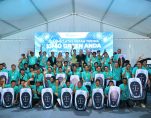
Green SM hands over the first Limo Green vehicles to driver partners in Jakarta.
Green Limo is the third four-wheel service launched by Green SM in the market, following Green Car and Green Premium, providing a mobility option specifically designed for families, larger groups, business travelers, passengers carrying more luggage, and customers who value greater space, comfort and a smooth ride throughout their journeys.
Featuring a modern exterior design and a spacious three-row cabin, the Limo Green offers the “3 Nos” advantages of an electric vehicle: no emissions, no fuel odors and no engine noise. The vehicle is also equipped with features including a multi-purpose phone charging cable, automatic air conditioning, dedicated air vents for the two rear rows, and an air filtration and deodorizing system, helping maintain a fresh, clean and comfortable cabin environment.
From September 19 to 29, 2026, Green SM will officially hand over the first batch of 500 Limo Green vehicles in Jakarta to pioneering Green SM drivers at the Green SM Kemayoran Depot. In addition to vehicle handovers to pioneer driver partners, the event features test drives, program consultations and application intake, allowing prospective partners to experience VinFast’s modern electric vehicles firsthand, learn more about the new vehicle rental program and receive valuable gifts when placing a deposit.
To celebrate the launch of the new service, Green SM is offering a special promotion for customers using Green Limo for the first time, with 20% off the trip fare, up to IDR 50,000. The promotion is valid for 15 days from September 19 through October 3, 2026, giving customers an opportunity to experience the premium 6-seat electric taxi service at a special introductory fare.
On the same day, Green SM announces its new vehicle rental program, “Rent a VinFast. Become a Green SM Driver. Be Your Own Boss,” for driver partners. With an initial payment starting from just IDR 2 million and rental fees starting from IDR 254,000 per day, the program offers a range of VinFast vehicle options to suit individual needs, including Limo Green, VF e34/Nerio Green, VF 5/Herio Green and VF 6.
Notably, to give driver partners greater confidence as they get started with Green SM, the program provides guaranteed daily earnings of up to IDR 400,000 during the first two months, depending on the applicable conditions, along with revenue sharing of up to 92%. Driver partners can also benefit from a range of incentives, including a sign-up bonus of IDR 1,000,000 per month, a brand bonus of IDR 676,000 per month, and an operating bonus of up to IDR 1,340,000 per month. In addition, driver partners receive free charging at V-Green charging stations, helping reduce operating costs and improve business efficiency.
Mr. Pham Nhat Minh Hoang, Global CEO of Green SM, said: “Green Limo not only adds a new model to Green SM’s fleet, but also offers a suitable option for journeys where space and comfort are priorities. Alongside the Green Limo service, the new vehicle rental program with flexible options gives driver partners an easier way to earn stable income with modern, cost-efficient VinFast electric vehicles. We expect the combination of suitable products, practical policies and Green SM’s 5-star service standards to deliver meaningful value to both driver partners and customers, thereby helping raise the standard of transportation services in Indonesia.”
Throughout its global development journey, Green SM has completed approximately 850 million rides covering nearly 6 billion kilometers, helping reduce more than 800,000 tons of CO₂ emissions, equivalent to the amount of carbon absorbed by approximately 36 million trees. In Indonesia, Green SM continues to expand its all-electric mobility options, increase its coverage and enhance service quality, in line with its “5 Green Promises” commitment, contributing to greener transportation and creating positive value for local communities, the environment and the local economy./.
Hashtag: #GreenSM
The issuer is solely responsible for the content of this announcement.
NANNING, CHINA – Media OutReach Newswire – 20 September 2026 – On September 16, as an international science and technology exchange platform included in the list of cooperation initiatives for the series of leaders’ meetings on East Asia cooperation, the Fourth Forum on China-ASEAN Artificial Intelligence Cooperation was successfully held in Nanning, Guangxi. With the theme of “AI for Industries, Digitalization for Shared Future”, this forum was co-hosted by the China-ASEAN Technology Transfer Center, the China-ASEAN Innovation Cooperation Center for Artificial Intelligence, the Department of Science and Technology of Guangxi Zhuang Autonomous Region, and the Guangxi Institute of Industrial Technology. More than 700 government representatives, research scholars, tech entrepreneurs, and venture capital representatives from China and ASEAN countries gathered on site, focusing on three major directions, namely embodied intelligence, AI finance, and data circulation, discussing collaborative technological innovation, jointly pursuing industrial digital transformation, and comprehensively deepening pragmatic cooperation between China and ASEAN in the field of artificial intelligence.
Fourth Forum on China-ASEAN Artificial Intelligence Cooperation Successfully Held in Nanning, Drawing Over 700 Delegates
Coinciding with the historic milestone of the Pinglu Canal being completed and navigable, a canal opens up a physical trade corridor between China and ASEAN, opening a new chapter of digital economy collaboration. “Goods Flow Across Rivers and Seas, Digital Intelligence Connects ASEAN” has become the most distinctive symbol of the era at this forum. The forum closely follows the differentiated development path of “R&D in Beijing, Shanghai, and Guangzhou + Integration in Guangxi + Application in ASEAN”, solving problems through technological breakthroughs, gathering momentum through industry-finance linkage, and promoting effectiveness through scenario implementation, to deepen and solidify China-ASEAN AI cooperation.
Technology empowers the opening, creating a new paradigm of human-machine collaboration
The forum kicked off with Guangxi’s classic ethnic song “Folk Songs like the Spring River”, where human dancers, dancing robots, accompaniment robots, and a digital crowd performing the folk song collaborated across disciplines to perform group collaborations. Relying on millisecond-level cluster scheduling technology, ethnic culture and embodied intelligence were deeply integrated to create an immersive technological audiovisual feast. This forum innovatively adopted a three-party collaborative hosting model of “human host + digital human avatar + intelligent robot”. Yang Yanqing, Professor of ShanghaiTech University, coordinated with her digital human avatar and AGIBOT Lingxi X2 to jointly host the forum, empowering the forum scene through technology, which became a major highlight of the event.
Dr. Padapxay SAYAKHOT, Director-General, Institute of Information and Communication Technology, Ministry of Technology and Communications, Lao PDR, Sun Ruijun, Director-General, China-ASEAN Technology Transfer Center, Secretary of the Party Leadership Group and Director-General, Department of Science and Technology of Guangxi Zhuang Autonomous Region, Secretary of the Party Committee, Guangxi Institute of Industrial Technology, delivered speeches in succession. Both sides stated that they will use this forum as a link to deepen the connection of scientific research and innovation, the implementation of industrial scenarios, and the coordination of policies and mechanisms, gather synergy for digital and intelligent development, and serve the building of a closer China-ASEAN community with a shared future.
Industry authorities gather, anchoring regional AI development directions
The speakers at the forum combined international breadth and professional depth, bringing together industry experts, academic and cutting-edge research forces, industrial technology, and cross-border implementation capabilities from ASEAN countries, forming a core high ground for intellectual exchange and gathering top intellectuals for China-ASEAN AI innovation and development.
Industry experts from ASEAN countries: Dr. Wasan Pattara-atikom, Vice President, National Science and Technology Development Agency, Thailand; Li Haizhou, Fellow of the Academy of Engineering, Singapore (SAEng), Dean of the School of Artificial Intelligence, the Chinese University of Hong Kong, Shenzhen; YAP Hwa Jen, Professor of Universiti Malaya, Managing Director of the UPUM Sdn. Bhd.;
Academic and cutting-edge research forces: Yang Chao, Professor of Peking University, Founder and Chief Scientist of Beijing 1011 Technology Co., Ltd.; Cui Peng, Professor of Tsinghua University and Chief Scientist of Stable AI (Xiong’an) Technology Co., Ltd.; Wang Shisong, Professor of Guangzhou University, Co-founder of Abelian (a quantum-resistant blockchain infrastructure);
Industry technology and cross-border implementation forces: Li Nan, Founder, Chairman, and CEO of Maimai Technology Group; Yao Yuan, Vice President of the Middle East Asia-Pacific Region Division, AGIBOT Innovation (Shanghai) Technology Co., Ltd.; Lyu Jun, Chief Scientist of Shanghai Noematrix Technology Co., Ltd.; Liu Liqi, General Manager of Data Strategy Department, X Square Robot Technology (Shenzhen) Co., Ltd.
The guests focused on three major directions, namely embodied intelligence, AI finance, and data circulation, exploring feasible paths for technological breakthroughs, ecosystem co-construction, and joint innovation. They covered the key stages of artificial intelligence from source research and development and technology transfer to industrial implementation and cross-border cooperation, achieving a two-way dialogue between cutting-edge academic theories and practical industry needs, and providing diverse perspectives and action ideas to bridge the regional digital divide and unlock the inclusive value of AI.
Five achievements released, strengthening the solid foundation for digital intelligence cooperation
At the forum, five scientific and technological innovation achievements were released together, constructing an AI innovation supply system oriented toward ASEAN from multiple dimensions including technology products, platform carriers, talent systems, and decision-making support.
1. The China-ASEAN Cross-Border Industrial Large Language Model: It covers multilingual capabilities and industry knowledge graph for ASEAN, integrates six major agents to collaboratively analyze business scenarios, and serves as a professional intelligent partner for Chinese enterprises to expand into the ASEAN market.
2. Achievements in AI Talent Development for ASEAN: Relying on the Guangxi Academy of Artificial Intelligence, a talent training model of “a dual-mentor system, dual-integrated teaching, dual training tracks, and an integrated master-doctoral program” has been created, achieving an international education pattern of enrolling at one university, earning credits from multiple universities, gaining practical experience in multiple countries, and strengthening talent support for cross-border AI cooperation.
3. “Guikerong” Sci-Tech Finance Digital-Intelligent Foundation Platform: Developed under the guidance of the Department of Science and Technology of Guangxi Zhuang Autonomous Region, it uses data-driven technology credit evaluation to open the value transformation chain of “technology, industry, and finance”, supporting the innovative development of technology-based enterprises.
4. Lao-Language Large Language Model (LLM) for the Energy and Power Sector: China’s first AI overseas project in the power industry, implemented on Electricite du Laos, exploring a new model of “Retaining Computing Power in Guangxi, Exporting Services Globally” for compliant token going global, providing a practical example for cross-border services in the energy sector.
5. “2026 China-ASEAN Artificial Intelligence Industry Development Study Report”: A panoramic overview of regional industrial policy environment, market scale, and application patterns, analyzing core industry development trends, and providing decision-making references for China-ASEAN AI industry cooperation.
Exhibition and negotiation are working together to build a pragmatic platform for exchange and cooperation
The forum adheres to the principles of “promoting research through exhibitions, cooperation through meetings, and implementation through business matchmaking”, simultaneously hosting the Special Session on AI: Bank-Enterprise Matchmaking and the Industry Supply-Demand Matchmaking and Technology Achievement Exhibition, achieving precise coordination between exhibition displays and business negotiations, and building a cross-border cooperation ecosystem deeply integrating industry, academia, research, and application.
The Technology Achievement Exhibition showcased high-tech products such as the General Embodied Intelligent Robot, Fingertip 3D Force Sensors, Integrated Land-Sea-Air Inspection Equipment, Smart Wall-Climbing Industrial Robot, and AI + Embodied Intelligence Teaching and Experiment Platform, covering key tracks like humanoid robots, industrial intelligent equipment, and education and training, demonstrating the innovative strength of domestic AI technology adaptation to ASEAN scenarios.
The venue also set up an immersive AI experience zone, where interactive projects such as coffee-making robots, agile robotic arms, AI customized cultural products, and unmanned retail attracted attendees to stop and experience the vivid effects of AI empowering people’s services up close, highlighting the development philosophy of technology for good and digital intelligence benefiting the people.
Focusing on collaborative win-win cooperation to jointly build a new pattern of regional development
As an international platform for scientific and technological exchange aimed at ASEAN, the Forum on China-ASEAN Artificial Intelligence Cooperation has been held consecutively for four sessions, bringing together more than 4,300 guests from China, foreign government, industry, academia, and research, facilitating the connection of over a hundred industrial projects, and becoming an important platform for the exchange of ideas, interconnection of technologies, and mutual industrial support between China and ASEAN in the field of artificial intelligence.
Looking to the future, China and ASEAN will continue to deepen cross-border joint innovation, promote the orderly flow of AI innovation elements, cultivate a vibrant and inclusive regional digital innovation ecosystem, facilitate digital intelligence benefiting regional industrial upgrading and livelihood development, and jointly build a new mutually beneficial and win-win pattern of China-ASEAN digital economy.
This forum was supported by the Ministry of Technology and Communications of Laos and the ASEAN Secretariat, and co-hosted by Guangzhou University, Guangxi Beibu Gulf Bank, Guangxi Academy of Artificial Intelligence, and Computer Academy of Guangxi.
The issuer is solely responsible for the content of this announcement.
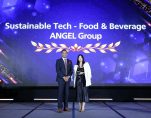
BANGKOK, THAIALND – Media OutReach Newswire – 20 September 2026 – ANGEL has been honored with the Sustainable Tech – Food & Beverage award at the Asian Technology Excellence Awards 2026. The award recognizes ANGEL’s nationwide commercial water purification deployment for KFC Indonesia, which delivers localized, sustainable water treatment solutions across the archipelago’s complex and diverse water conditions.
The Asian Technology Excellence Awards recognise groundbreaking technological projects and innovations across Asia. Presented by Asian Business Review, the programme selects one winner per technology category and industry in each market, with entries judged on uniqueness and innovation, effectiveness and impact, and dynamism.
For ANGEL, the KFC Indonesia project demonstrates a capability that matters across the food and beverage sector. The company begins with on-site water quality testing and assessment, then designs the configuration around actual inlet conditions. That approach is backed by a commercial portfolio that includes microfiltration and UV sterilization, and by local delivery and service teams. It is this combination—not a standard product alone—that allows ANGEL to serve restaurant chains operating across diverse markets.
Sustainability is built into that model in practical ways. ANGEL integrates with existing pre-filtration systems, reducing the need for equipment replacement, water supply modifications and installation waste. Treatment is selected according to actual water quality, so sites receive the configuration they need. The modular design also limits maintenance complexity and supports long-term operating efficiency. For KFC Indonesia, this meant upgrading water quality without interrupting daily operations, while keeping existing infrastructure in service.
The deployment itself follows the same logic. Restaurants with more complex water conditions receive the C11 Microfiltration System together with UV sterilization, while sites with relatively stable inlet water can use UV sterilization alone. This scenario-based approach helps KFC Indonesia maintain consistent water quality across different cities and islands, and reflects how ANGEL works with food and beverage customers more broadly.
Accepting the award, ANGEL’s Assistant Vice President Annie Guo said, “This award recognizes the work of our teams and local partners in turning technology into practical value for customers. It reinforces our approach to international growth: understand local needs, deliver the right solution, and support it properly over time. For ANGEL, the responsibility continues after installation.”
The KFC project reflects ANGEL’s broader commercial strategy. For its global food and beverage business, the project shows that water purification can move beyond a functional utility to become a strategic asset for operators. ANGEL has built a commercial portfolio spanning microfiltration, ultrafiltration, and reverse osmosis, enabling tailored solutions for local conditions and customer needs. In markets where complex water conditions could otherwise constrain expansion, these capabilities support safer operations, greater resource efficiency, and more sustainable growth.
Hashtag: #ANGELGroup
The issuer is solely responsible for the content of this announcement.
About ANGEL
Founded in 1987, ANGEL has become a global leader in water purification. For nearly four decades, the company has dedicated itself to improving drinking water quality through innovation, delivering safe, healthy, and stylish water solutions. ANGEL has earned 11 internationally recognized certifications, including NSF, UL, TUV, SGS, CSA, and HALAL, ensuring compliance with high standards of quality, safety, and environmental responsibility.
Hong Kong has laid out a five-year programme to strengthen its established economic pillars while building new growth engines, with a gold-led commodity trading ecosystem among the centrepieces of its strategy through 2030.
Chief Executive John Lee’s 2026 Policy Address and the city’s first Five-Year Plan for Economic and Social Development set out measures covering finance, trade, shipping, aviation, innovation and technology, alongside efforts to attract capital, companies and skilled workers. The government said the programme is designed to reinforce Hong Kong’s international competitiveness and support longer-term economic development.
Gold will serve as the entry point for a broader commodity trading ecosystem. Hong Kong plans to formally launch its central clearing and settlement system for gold in the first quarter of 2027, following trial operations that began in July. The system is intended to support trading that meets international standards and strengthen links among clearing, settlement, storage and physical delivery.
Hong Kong Exchanges and Clearing will announce details this year of new renminbi-denominated, physically settled gold futures contracts. The government also plans to explore tax concessions for qualifying activities across the gold and commodity trading chain, with proposals expected to be put to the Legislative Council for consultation next year.
The Hong Kong Monetary Authority is studying whether the Exchange Fund should moderately increase its gold holdings and participate in local spot and futures markets. Existing physical gold inventories could gradually be transferred to designated vaults appointed by the Hong Kong Precious Metals Central Clearing Company.
Authorities also plan to expand storage and related infrastructure. Since the London Metal Exchange added Hong Kong to its global warehousing network in 2025, approved storage space has exceeded 60,000 square metres and inventories have risen above 20,000 tonnes of metal. More LME-approved warehouses are planned for the Northern Metropolis.
A half-rate tax concession for physical commodity trading is also being pursued to encourage traders to establish or enlarge operations in the city. A joint working group led by the Secretary for Financial Services and the Treasury will examine market opportunities and possible collaboration between exchanges.
The wider financial strategy seeks to strengthen Hong Kong’s role as an offshore renminbi business hub and an international centre for asset management and risk management. The government plans to deepen green and digital finance, widen financing channels for technology companies and strengthen trade finance, supply-chain finance, clearing, settlement and risk-management services.
A proposed Innovation and Technology Industry-Oriented Fund will receive HK$10 billion in government funding and is expected to reach at least HK$40 billion when market capital is included. Priority areas include life and health technology, artificial intelligence and robotics, semiconductors and smart devices, digitalisation, and sustainable development.
The five-year plan also calls for greater emphasis on high-value maritime services rather than relying mainly on traditional port logistics. Measures include reforms to ship registration, support for ship financing and marine insurance, and further development of maritime arbitration and other professional services.
Hong Kong also intends to build a broader aviation industry ecosystem. Plans include developing aircraft-parts processing and trading, participating in research and certification connected with domestically developed aircraft, and expanding sustainable aviation fuel supply chains across the Greater Bay Area. Authorities aim for sustainable aviation fuel to account for 1% to 3% of fuel used by departing flights at Hong Kong International Airport in 2030.
Trade policy will focus on digitalisation, diversification and higher-value supply-chain services. The government wants more companies to use Hong Kong for international orders, foreign-exchange transactions, treasury operations, trade finance and supply-chain management, while attracting regional and international headquarters.
The plan places innovation alongside the traditional pillars, with support directed towards artificial intelligence, robotics, life sciences, microelectronics and advanced manufacturing. It also identifies aerospace technology, marine technology, quantum technology and embodied intelligence as fields for longer-term development.
Attackers are actively exploiting a critical vulnerability in the WooCommerce Wholesale Lead Capture plugin to upload PHP webshells onto WordPress sites, with more than 100,000 exploit attempts blocked since June, Wordfence data shows. The flaw, tracked as CVE-2026-27540, affects versions 2.0.3.1 and earlier of the premium plugin and allows unauthenticated attackers to upload arbitrary files to a vulnerable server. Wordfence rates the bug 9.8 on the CVSS […]
The European Union has urged the United States to reconsider its decision to deny visas to Palestinian President Mahmoud Abbas and other Palestinian officials seeking to attend the United Nations General Assembly in New York, intensifying diplomatic pressure on Washington before the gathering. Anouar El Anouni, a spokesman for the European External Action Service, said on Saturday that the bloc regretted the extension of the visa denial […]
Sharjah Research, Technology and Innovation Park has completed the first cohort of its BASE39 Creative Accelerator, showcasing furniture and collectible design projects developed through months of mentoring, prototyping and industry engagement. The programme ended with a gallery showcase held from September 14 to 18 at the park, where participating designers presented products shaped through research, material exploration, fabrication and commercial development. An awards ceremony recognised three projects […]
HONG KONG SAR – Media OutReach Newswire – 19 September 2026 – Hong Kong’s Chief Executive John Lee rolled out various measures to develop Hong Kong’s key economic centres when he unveiled the First Five-Year Plan for Economic and Social Development of the Hong Kong Special Administrative Region (HKSAR) (2026-2030) and his fifth Policy Address on September 16.
Under Hong Kong’s First Five-Year Plan, Hong Kong will focus on strengthening the four centres, developing the hub for high-calibre talent, consolidating and enhancing its competitive edge as an international city.
Hong Kong’s status as world-renowned international financial, maritime and trade centres as well as an international aviation hub underpin the city’s high-quality development and provide a firm foundation for the city’s long-term stability and prosperity.
“We will consolidate and enhance Hong Kong’s status as an international financial centre, and stay committed to our global positioning,” Mr Lee said. “Hong Kong will deepen the development of its global offshore Renminbi business and capital market, develop an international asset and wealth management centre and international risk management centre, enhance the securities market and expand fixed income and commodity trading.”
Hong Kong has become the world’s largest cross‑boundary wealth management centre this year, and the HKSAR Government will continue to develop a more attractive asset and wealth management ecosystem, Mr Lee said.
Hong Kong will develop a commodity trading ecosystem with gold as an entry point by driving the development of the clearing system, storage, supply, and infrastructure related to gold trading. The city’s central clearing and settlement system for gold will be officially launched in the first quarter of 2027.
“The significance of the First Five-Year Plan for Hong Kong lies in a mindset shift; we must plan Hong Kong’s financial development with a longer-term vision and broader perspective to adapt with flexibility and diversity,” said Christopher Hui, Hong Kong’s Secretary for Financial Services and the Treasury. “Each of our initiatives centres around one objective, which is to elevate Hong Kong from a ‘corridor of capital’ to a ‘destination of choice’.”
Hong Kong was ranked the world’s fifth‑largest entity in merchandise trade in 2025. The HKSAR Government announced plans to consolidate and enhance Hong Kong’s status as an international trade centre, playing a greater role in the high‑level opening up of the Chinese Mainland.
Since the Task Force on Supporting Mainland Enterprises in Going Global was established last October, it has provided assistance, including listing and raising capital in Hong Kong, aligning with overseas standards, acquiring industry certifications and fulfilling compliance requirements for more than 340 Mainland enterprises.
The Task Force will strengthen collaboration with professional organisations to train talent for the GoGlobal initiative and enhance professional services, among other areas.
“In alignment with the National 15th Five-Year Plan’s call to advocate and practise true multilateralism, the First Five-Year Plan proposes to continue expanding international economic and trade network,” said Algernon Yau, Hong Kong’s Secretary for Commerce and Economic Development.
“We will actively forge free trade agreements and investment agreements with economies that are of development potential or strategic locations. Meanwhile, we will expand our network of overseas offices, and leverage the combined networks of our overseas Economic and Trade Offices, InvestHK, and the Hong Kong Trade Development Council offices globally to deepen overseas ties and step up trade and investment promotion.”
As an international maritime centre, Hong Kong has ranked fourth globally in maritime comprehensive strength for seven consecutive years. The Five-Year Plan will drive a “volume to value” transformation of the Hong Kong Port, capitalising on its strengths in high value‑added maritime services, to develop Hong Kong into a “Global Maritime Capital”.
To promote high value-added services, the industry will develop “Finance + Shipping”.
Taking advantage of the city’s well‑established maritime finance, insurance and maritime arbitration under common law, Hong Kong will build an integrated ecosystem under which Hong Kong‑invested enterprises adopt Hong Kong law, take out Hong Kong insurance and choose for arbitration to be seated in Hong Kong.
Regarding aviation, Hong Kong’s passenger throughput recorded a year‑on‑year increase of 15% last year, to 61 million, with flights to over 220 destinations. The city’s air cargo throughput reached 5.07 million tonnes, making its airport the world’s busiest cargo airport for the 15th year since 2010.
To strengthen development as international aviation hub, Hong Kong will expand its aviation network, and diversify business opportunities.
The HKSAR Government will continue to take the initiative to visit South America, Africa, Central Asia, the Middle East and the Caucasus to expedite the conclusion of new air services agreements and the expansion of traffic rights, thereby assisting the industry in exploring new passenger and cargo sources.
As for building Hong Kong as an international innovation and technology centre, the HKSAR Government will step up its efforts to promote artificial intelligence (AI) applications across various trades, and continue to strike a balance between encouraging innovation and protecting security, thereby enhancing Hong Kong’s international competitiveness in AI development.
In alignment with the national strategic technology areas, Hong Kong will focus on core technologies such as life and health, AI and robotics, microelectronics, new energy, advanced manufacturing and new materials. It will also continue to raise the ratio of Total Domestic Expenditure on Innovation Activities to Gross Domestic Product, striving to reach 3% after 2030.
Hackers who physically removed a Flock Safety roadside camera were able to copy much of its internal storage, uncover an encryption key and access tens of thousands of video clips and data linked to about 1.6 million images generated over 21 days. The compromise involved a single camera taken from above a roadway and did not amount to a remote breach of Flock Safety’s cloud network. The […]
Arabian Post Staff -Dubai Cross-border investment in commercial property rose 56 per cent to $71.8 billion in the first half of 2026, with stronger activity in Asia and Europe helping international deals outpace the broader recovery in global real estate transactions. Data from property consultancy JLL showed overseas investment into Asian property quadrupled to $19.3 billion, while cross-border investment in Europe increased 31 per cent to $39.9 […]
Arabian Post Staff -Dubai Odisha has signed a memorandum of understanding with Abu Dhabi-based International Holding Company and the Adani Group to explore 14 projects carrying an indicative investment of ₹2.105 trillion across minerals, energy, manufacturing, healthcare, tourism and infrastructure. The agreement was concluded during Chief Minister Mohan Charan Majhi’s investment outreach in the UAE, with the state describing the portfolio as a major expansion of its […]
TypeSafe AI has released Jev, a transformer-based artificial intelligence model designed to make structured decisions for software rather than generate conversational text, drawing strong early interest from developers seeking faster and cheaper automation tools. The San Francisco start-up, founded by former OpenAI researcher Diogo Almeida, introduced Jev as its first “System One” model after two years in stealth. Almeida helped develop research behind ChatGPT and reinforcement learning […]
China-aligned threat actors are using Chinese-language casino and adult websites to conceal PeckBirdy command-and-control infrastructure, with Infoblox telemetry showing the framework touching networks across a broad range of enterprise customers. Infoblox Threat Intelligence said just over 3% of its enterprise customers resolved at least one domain associated with PeckBirdy, indicating that traffic linked to the campaign is appearing well beyond the narrow set of organisations previously connected […]



 https://www.aolani.com
 https://sg.linkedin.com/company/aolani-cloud










 https://x.com/Brand_HK/
 https://www.facebook.com/brandhk.isd
 https://www.instagram.com/brandhongkong




