News related to
business

US$10 Billion in Venture Capital Convenes to Meet Hong Kong Start-ups; Government, Business and Young Professionals Explore Opportunities in the New Economy

HONG KONG SAR – Media OutReach Newswire – 7 October 2026 – The Global Youth Powerhouse Summit 2026, organised by Hong Kong Youth Professional Global Advocacy, was held on 5 October at the Conrad Hong Kong. Now in its third edition, the Summit coincides with the release of the Hong Kong Special Administrative Region’s First Five-Year Plan for Economic and Social Development (2026–2030) and the latest Policy Address, which together set a clear blueprint for the city’s future. Anchored on these core themes and conducted entirely in English, the full-day programme focused on artificial intelligence, geopolitics, Hong Kong as an education hub, capital markets, life and health technology, and start-up financing. Government and business leaders, corporate representatives and young professionals were invited to examine Hong Kong’s strategic opportunities in the new economic landscape.

The Global Youth Powerhouse Summit 2026 brings together more than 600 young professionals, government and business leaders and corporate representatives

The Summit aims to connect young professionals with international resources, enabling participants to engage directly with industry leaders, grasp developments at the frontier of industry, and look ahead to the opportunities and challenges arising from artificial intelligence and Greater Bay Area integration. Previous editions have drawn a strong response. Across three editions, the Summit has attracted more than thousands of in-person participants and about 17,000 online participants from over 30 countries and regions, with social media reach exceeding 50 million.

This year’s Summit was the largest yet, bringing together more than 600 young professionals, government and business leaders and corporate representatives. Participants from over 60 countries and regions joined online. More than 30 distinguished speakers and moderators were invited, including officials of the Hong Kong Special Administrative Region Government and representatives of leading local and international organisations such as Huawei, the Alibaba Hong Kong Entrepreneurs Fund, Hong Kong Exchanges and Clearing Limited, Bullish and Endowus. In addition, consular representatives from up to 20 countries attended the Summit.

The Chief Executive of the Hong Kong Special Administrative Region, Mr John Lee, GBM, SBS, PDSM, PMSM, delivered a pre-recorded video speech, encouraging young professionals to seize the opportunities of the times and inject fresh momentum into Hong Kong’s high-quality development. He said: “For our young people, I firmly believe that your opportunities ahead outweigh the difficulties. The HKSAR Government will join hands with all sectors to build platforms for you to thrive in Hong Kong, in our country, and in the global arena.”

The Deputy Secretary for Justice of the Hong Kong Special Administrative Region, Dr Cheung Kwok-kwan, SBS, JP, delivered an opening keynote entitled “Opportunities for the Professional Development of Young People”, and stressed: “As the saying goes, ‘Change is the only constant’—or as our Cantopop classic famously put it, ‘變幻原是永恆’. Today, we no longer measure change in years or decades, but in months and days. For our young professionals, this fast-paced era unlocks unprecedented career horizons. By accelerating Greater Bay Area integration through our new GBA Task Force and empowering you to act as the ultimate ‘super-connectors’ and ‘super value-adders’ helping Mainland enterprises go global, we are turning rapid change into your greatest professional advantage.”

Dr Kevin Lau, MH, Founding Convenor of Hong Kong Youth Professional Global Advocacy, said: “This is more than a high-level forum. It marks a milestone in the maturing of our network of young professionals. This afternoon, venture funds managing an estimated US$10 billion in assets gathered in the room — and what they are looking at is Hong Kong’s next generation. In life and health technology, our core belief is clear: artificial intelligence can assist imaging and diagnosis, but a physician’s care, and the warmth of a human hand, can never be replaced by technology.”

Other distinguished guests included Mr Kevin Choi, JP, Permanent Secretary for Innovation, Technology and Industry; Professor Frederick Ma, GBS, JP, Chairman of the Hong Kong Trade Development Council; Ms Bonnie Y Chan, JP, Chief Executive Officer of Hong Kong Exchanges and Clearing Limited; and Mr James Chau, President of the China-United States Exchange Foundation and World Health Organization Goodwill Ambassador for Sustainable Development Goals. Mr Bryan Che, Chief Strategy Officer of Huawei, and Ms Cindy Chow, Executive Director and Chief Executive Officer of the Alibaba Hong Kong Entrepreneurs Fund, also attended in person to exchange views with young professionals.

Panel discussions

Artificial intelligence: from first-time users to advanced users
The opening session began with remarks by Mr Kevin Choi, JP, Permanent Secretary for Innovation, Technology and Industry, and was moderated by Ms Stephaine Chan, Director of the Office of the Vice Chairman of Esquel Group. Panellists included Ms Ilaria Chan, Chair of the Tech For Good Institute; Mr Bryan Che, Chief Strategy Officer of Huawei; and Ms Cindy Chow, Executive Director and Chief Executive Officer of the Alibaba Hong Kong Entrepreneurs Fund. The discussion focused on whether small and medium-sized enterprises, non-governmental organisations and schools can genuinely put artificial intelligence to use, and on the talent, trust and practical-application issues Hong Kong faces in driving “AI for all”.

Mr Kevin Choi, JP mentioned: “Every major technology shift brings uncertainty. Our theme today from entry-level shock to AI-powered users building the next talent leader.”

Ms Stephaine Chan said: “Every AI conversation ends in the same place, right? More investment, better people, better models and stronger policy.”

Ms Ilaria Chan said: “These days, Al is so powerful that they can scan the Internet and social media and find vulnerable young people or old people. They can find it instantly and have a very sophisticated way to trick them and fraud them from scamming.”

Mr Bryan Che: “One of the opportunities of Al is because the interface is much more natural for most people to interact with. On one sense, it’s a lot easier for everyone to get started.”

Ms Cindy Chow said: “So I guess some of the most damaging thing is not allowing people to use or not, you know, really have the attitude to embrace all this new technology, what this new technology has to bring to you.”

Geopolitics: the super-connector
This session was moderated by Mr James Chau, President of the China-United States Exchange Foundation and World Health Organization Goodwill Ambassador for Sustainable Development Goals. Speakers included Ms Ilaria Chan, Chair of the Tech For Good Institute; Ms Ellana Lee, Senior Vice President, Managing Editor, Asia Pacific, and Global Head of Productions at CNN; and Professor Frederick Ma, GBS, JP, Chairman of the Hong Kong Trade Development Council.

Mr James Chau said: “Against this backdrop, we often hear Hong Kong described as a super connector, typically framed in terms of trade volumes, capital markets and logistics but I think that these connections that we’re speaking of really only become very valuable and we understand and recognize the human bonds that pin these together.”

Professor Frederick Ma , GBS, JP said: “We are part of China. And yet we are under one country 2 systems connected to the rest of the world. That is the power of Hong Kong.”

Ms Ellana Lee said: “We made a very strategic decision when the times were tough to stay and remain in Hong Kong. I think that has and you know, we make these decisions not just out of a whim, but we are very calculative on why we need to stay. I have 8 cities across Asia Pacific. Hong Kong happens to be the hub for Asia Pacific. And there’s it boils down to four major reasons.”

Ms IIaria Chan: “Simple of how tech is helping people, there is an organization, WHO care for children that was founded 20 years ago that helps orphans in developing China back then Vietnam, Thailand now in Africa, Middle East to find loving permanent homes. But their bottleneck is how they train social workers and governments on how to take care of orphan welfare. Now this year we’ve actually been launching an online product that is able to scale these bottlenecks, especially in areas that are underfunded. This is a great example of Al tech.”

Education: Hong Kong as Asia’s education hub
This session was co-moderated by Mrs Jennifer Yu Cheng, JP, Founder of the Future Leaders Foundation, and Ms Jennifer Ma, Founder of JM Edu Consulting. Speakers included Ms Maggie Chau, School Partnership Advisor at the Academy for Educational Development and Innovation of The Education University of Hong Kong; Mr Dion CHEN, MH, Vice-Chairman of the Hong Kong Direct Subsidy Scheme Schools Council; and Professor Charles Ng Wang-Wai, Vice-President for Institutional Advancement of The Hong Kong University of Science and Technology.

Mrs Jennifer Yu Cheng, JP said: “An education hub is more than a place with excellent institutions. It is a place that students and families choose, where young people flourish, and connects education with research, innovation, careers and a wider community.”

Professor Charles Ng said: “With our national policy. And I think we should do better to support this great initiatives and thinking back actually 2023 and home government already in in the government policy in October, if I remember correctly to start to increase the local student quota from 20% to 40%.”

Ms Jennifer Ma said: “As a consultant we need demand to meet supply and we are definitely seeing the demand for Hong Kong education at K12 level…….The advocacy for Hong Kong to be the gateway for China Resources and talents to leave China and go into international arenas. But at the same time, we also see a lot of international people interested in what’s happening in mainland, and therefore Hong Kong is a great gateway. So, with that global education, global education philosophy, that means they really appreciate Hong Kong trilingual education by cultural mindset.”

Mr Dion CHEN, MH mentioned: “In 2026, a lot of DSS schools will work very hard to try to welcome and also promote welcome to Hong Kong and also promote Hong Kong’s education to the students in different countries.”

Ms Maggie Chau said: “Maggie: I can see that all the universities are actually implementing AI in their curriculum. Talking about teacher education, the programs we offer, I mean, not just The Education University of Hong Kong, the programs we offer in all universities implement Al in the curriculum in a way that we draw attention to the use of Al is it has to be ethical.”

Capital markets: AI listings, asset tokenisation and the new economy
This session was moderated by Ms Emily CHAN Tan, a former CNBC anchor. Speakers included Ms Bonnie Y Chan, JP; Ms Clara CHAN Ka Chai, Chief Executive Officer of the Hong Kong Investment Corporation Limited; Mr Michael Lau, Senior Vice President and Head of Group Business Development at Bullish and Chairman of Consensus; and Mr Samuel RHEE, Co-founder, Chairman and Group Chief Investment Officer of Endowus.

Ms Clara CHAN Ka Chai said: “We always say that from zero to 1 is the most challenging part. So, the patients in terms of having staying power is the core, but it has to go in hand with other qualities like being proactive, being professional.”

Mr Michael Lau said: “I think it’s an interesting proposition to consider that these types of companies that are so capital. I would start looking beyond the current horizon of where we are to see where it could go next. And so I do think that there is a demand looking to that future where this idea of a tokenized capital market could be quite interesting.”

Mr Samuel RHEE mentioned: “First of all, maybe we just take a step back and just try to understand all of the capital markets, not just equities.”

Ms Bonnie Y Chan, JP said: “I want to point out one thing. I mean, we are operating a stock exchange and I think capital markets at the end of the day, the basic function is to match capital with opportunity. So what I’m very focused on is that I’m not just focused on technology or AI.”

Ms Emily CHAN Tan said: “We are not just witnessing a cyclical recovery, but also some would call this the threshold of a capital markets renaissance.”

Life and health technology: building a health-industry hub
This session was moderated by Professor Lo Yuk-lam, BBS, Founding President of the Hong Kong Biotechnology Organisation. Speakers included Professor LI King-Chuen, Founding Dean of the School of Medicine at The Hong Kong University of Science and Technology; Dr Sarah SALVILLA, Director of Health and Strategic Partnerships at FWD Group; and Professor Anthony Wu Ting-yuk, GBS, JP, former Chairman of the Hospital Authority and Non-executive Chairman of Trinity Medical Group. The discussion focused on how AI in healthcare can strengthen the competitiveness of Hong Kong’s health industry.

Professor Lo Yuk-lam, BBS said: “Building HK’s holistic wellness hub, this year marks a defining moment for HK. With the release of our first ever five year plan and their chief executive policy address just a few weeks ago, our city’s road map for healthcare and biotechnology knowledge has never been clearer or more ambitious.”

Professor Anthony Wu Ting-yuk, GBS, JP said: “Every country every city is trying to recruit more talent and I think Hong Kong is an ideal position to attract talents.”

Professor LI King-Chuen said: “Our education system will be individualized. And we will do the factual knowledge transfer through mostly self-directed learning. So we guide them, we build an AI system with prescribed information.”

Dr Sarah SALVILLA said: “Prevention for sure in terms of how do we educate people to be much more proactive in their everyday lives, yes you know, kind of the lifestyle things.”

Start-up pitching: connecting with capital
The closing session was moderated by business journalist Ms Elaine Yu, with Mr LU Chin Yung, Senior Vice President (Start-ups) of the Sector Specialist Group at Invest Hong Kong. Representatives of 11 venture funds were present, including the Alibaba Hong Kong Entrepreneurs Fund, Clee Capital, Click Ventures, GT Healthcare Capital Partners, Gobi Partners GBA, HKSTP Ventures, MindWorks Capital, Ryoden Medical Holdings, Seveno Capital, Verge HealthTech Fund and W2 Venture Partners. Together, the funds manage an estimated US$10 billion, have invested in more than 600 start-ups across more than 30 economies, and have backed at least nine unicorns, including Airwallex, Animoca Brands, Prenetics and GoGoX. Start-ups taking part in the pitching session included CELLmeric, Entoptica, PointFit, Syngular, Kodifly, AilsynBio, EveryBaby, A-grade, Orimmune Biotech, Nordia Biotech, Oncolmmu Nostics Limited, The Harbour School (THS), VisionBridge, Eden’s Garden, and CARE CONNECT.

Ms Elaine Yu said: “We have 15 startups and I think a group of students as well, very precocious students WHO are already thinking of ideas, real businesses with commercial viability at the cutting edge of science, research, healthcare and so forth. So, this should be a fun dynamic session.”

Mr LU Chin Yung pointed out: “Hong Kong is great in a lot of rankings in the world and this is not given, this is hard earned by your parents, by some of you sitting here. But as a young founder in Hong Kong, if you come to Hong Kong, you get to enjoy all this very safe environment. You have efficiency and then you also have a very clean government. This one I can say for sure. Yeah. And and all this, it helps the the founders to focus on your business, focus on grow, growing instead of you have to deal with many, many things.”

The Summit closed amid lively exchange. Hong Kong Youth Professional Global Advocacy said it will continue to build the Summit into a platform for dialogue between young professionals and leading figures in government and business, helping Hong Kong’s young talent seize the opportunities of the new economy.

Photos and video: Selected materials can be downloaded here: https://drive.google.com/drive/folders/1XowvT4PLTkLo-Vx6k8UJ_YyuM0O0wSlQ?usp=sharing .
Official hashtag: #GYPS2026

Annex 1: Participating venture funds (in no particular order)

Venture fund Profile
Alibaba Hong Kong Entrepreneurs Fund A HK$1 billion venture fund under Alibaba Group; has invested in 84 start-ups and nurtured seven unicorns
Clee Capital A Hong Kong venture fund focused on start-up and private equity investment
Click Ventures A pioneer Hong Kong early-stage technology investor; now invests in 20 funds as a family office
W2 Venture Partners Venture fund (profile to be supplemented)
Gobi Partners GBA A pan-Asian venture platform managing about US$2 billion, with cumulative investments in more than 400 companies
GT Healthcare Capital Partners A Hong Kong healthcare investment fund with investments across North America and Europe
HKSTP Ventures The corporate venture arm of the Hong Kong Science and Technology Parks Corporation, investing directly in seed to Series A start-ups
MindWorks Capital A Hong Kong pan-Asian venture fund focused on logistics, fintech and enterprise technology
Ryoden Medical Holdings A Hong Kong healthcare family office investing in biotechnology and regenerative medicine
Seveno Capital A Singapore longevity and health-technology fund with US$70 million in committed capital over five years
Verge HealthTech Fund A Hong Kong and Singapore digital-health venture fund with investments across 17 countries


Annex 2: Attending guests (in no particular order)

Guest Title Guest Title
Ms Chan Hoi-yee Director, Office of the Vice Chairman, Esquel Group Ms Ilaria Chan Chair, Tech For Good Institute
Ms Clara Chan Chief Executive Officer, Hong Kong Investment Corporation Limited Ms Chan Nga-ying Former CNBC anchor
Ms Bonnie Y Chan, JP Chief Executive Officer, Hong Kong Exchanges and Clearing Limited Mr James Chau President, China-United States Exchange Foundation, and World Health Organization Goodwill Ambassador for Sustainable Development Goals
Ms Irene Chow School Partnership Advisor, Academy for Educational Development and Innovation (AEDI), The Education University of Hong Kong Mr Bryan Che Chief Strategy Officer, Huawei Technologies Co., Ltd.
Mr Adrian Chan, MH Vice-Chairman, Hong Kong Direct Subsidy Scheme Schools Council Mrs Carrie Cheng, JP Founder, Future Leaders Foundation
Dr Cheung Kwok-kwan, SBS, JP Deputy Secretary for Justice, Hong Kong Special Administrative Region Mr Kevin Choi, JP Permanent Secretary for Innovation, Technology and Industry
Ms Cindy Chow Executive Director and Chief Executive Officer, Alibaba Hong Kong Entrepreneurs Fund Dr Kevin Lau, MH Founding Convenor, Hong Kong Youth Professional Global Advocacy
Mr Lau Tak-ho Senior Vice President and Head of Group Business Development, Bullish, and Chairman, Consensus Ms Ellana Lee Senior Vice President, Managing Editor, Asia Pacific, and Global Head of Productions, CNN
Professor King Li Founding Dean, School of Medicine, The Hong Kong University of Science and Technology Professor Lo Yuk-lam, BBS Founding President, Hong Kong Biotechnology Organisation
Mr Raymond Lui Senior Vice President (Start-ups), Sector Specialist Group, Invest Hong Kong Ms Michelle Ma Founder, JM Edu Consulting
Professor Frederick Ma, GBS, JP Chairman, Hong Kong Trade Development Council Professor Charles Ng Vice-President for Institutional Advancement, The Hong Kong University of Science and Technology
Mr Samuel Rhee Co-founder, Chairman and Group Chief Investment Officer, Endowus Dr Sit Wai-nga Director, Health and Strategic Partnerships, FWD Group
Professor Anthony Wu, GBS, JP Former Chairman, Hospital Authority, and Non-executive Chairman, 全仁醫療集團 Ms Elaine Yu Business Journalist
Ms Jeanne Cheng, JP District Officer (Central and Western) Dr Elsie Leung, GBM, JP Former Secretary for Justice, Hong Kong Special Administrative Region
Professor Teresa Cheng, GBM, GBS, SC, JP Secretary-General, International Organization for Mediation, and former Secretary for Justice The Hon Tommy Cheung, GBM, GBS, JP Non-official Member, Executive Council
The Hon Dr Lam Ching-choi, GBS, JP Non-official Member, Executive Council The Hon Chan Hoi-fung, BBS, MH, JP Legislative Council Member
The Hon Chan Kin-por, GBM, GBS, JP Non-official Member, Executive Council The Hon Nixie Lam Legislative Council Member
Mr Andrew Yao, SBS, JP Hong Kong Deputy to the 14th National People’s Congress Professor Herman Hu, GBS, JP Hong Kong Deputy to the 14th National People’s Congress
Mr Gordon Lam Hong Kong Deputy to the 14th National People’s Congress Mr Chan Chung-ni, SBS, JP Hong Kong Deputy to the 14th National People’s Congress
Mr Ho Hon-kuen, BBS, MH Hong Kong Member, 14th National Committee of the Chinese People’s Political Consultative Conference Mr Tu Haiming, BBS Hong Kong Member, 14th National Committee of the Chinese People’s Political Consultative Conference
Mr Kung Wing-tak Hong Kong Member, 14th National Committee of the Chinese People’s Political Consultative Conference Dr Lo Kam-wing, BBS, JP Hong Kong Member, 14th National Committee of the Chinese People’s Political Consultative Conference, and President, The Chinese Manufacturers’ Association of Hong Kong
Mr Li Tai-chong, SBS, OM, JP Member, National Committee of the Chinese People’s Political Consultative Conference The Hon Lam Wai-chuen Legislative Council Member
The Hon Lau Man-kwan, JP Legislative Council Member The Hon Chong Ho-fung Legislative Council Member
The Hon Lee Kwong-yu, MH Legislative Council Member The Hon Leung Tsz-wing, MH Legislative Council Member
Mr Ng Yuk-yeung Hong Kong Member, 14th National Committee of the Chinese People’s Political Consultative Conference The Hon Fong Kwok-shan Legislative Council Member
The Hon Lau Ka-keung, BBS, MH, JP Legislative Council Member The Hon Revd Canon Peter Koon, SBS, JP Legislative Council Member
Mr Pablo Macedo Riba Consul General of Mexico in Hong Kong Dr Esteban Ramírez González Consul General of Mexico in Hong Kong
Mr Alberto Martínez Representative, Consulate General of Spain in Hong Kong Ms Silvia Civera Representative, Consulate General of Spain in Hong Kong
Mr Javier Sampedro Commercial Representative, Consulate General of Spain in Hong Kong Mr Juha Niemi Consul General of Finland in Hong Kong and Macao
Mr O’Brien Ernesto Guerra Córdova Consul General of Venezuela in Hong Kong Mr Ammala Saenchonghack Consul General of the Lao People’s Democratic Republic in Hong Kong
Mr Riaz Ahmed Shaikh Consul General of Pakistan in Hong Kong Mr Yos Sokhemrin Consul General of Cambodia in Hong Kong
Mr Maurits Ter Kulve Consul General of the Netherlands in Hong Kong Ms Lim Kim Suan Consul General of Brunei Darussalam in Hong Kong
Mr Hassan Doutaghi Consul General of Iran in Hong Kong Mr Ali Abdulla Al-Hitmi Deputy Consul General of Qatar in Hong Kong
Ms Helen Silvester British Council Mr Wilhelm Brauner Belgium-Luxembourg Chamber of Commerce
Professor Sin Kuen-fung, MH Co-Executive Director, Academy for Educational Development and Innovation, The Education University of Hong Kong Mr Lam Siu-hong, JP Commissioner for Youth, Home and Youth Affairs Bureau
Mr Arnold Lau Assistant Director-General, Invest Hong Kong Professor James Dai Associate Dean of Students, The Hong Kong Polytechnic University
Dr Chan Pui-yin Vice-President, Hong Kong Medical Association Ms Cecilia Ho Chief Executive, Lee Hysan Foundation
Mr Quentin Merour Consulate General of France in Hong Kong Ms Christine Ma Lau Founder and Principal, JEMS Character Academy
Ms Agnes Chan, BBS Senior Advisor, Office of the Chairman, Greater China, EY Ms Melissa Pang, BBS, MH, JP Former President, The Law Society of Hong Kong, and Member, National Committee of the Chinese People’s Political Consultative Conference
Mr Patrick Yeung Chief Executive Officer, Hong Kong General Chamber of Commerce Ms Kimberly Kwok Founder, Mighty Oaks
Mr Larry Chiang Founder and Chief Executive Officer, International Finance Capital Group Limited Ms Sophia Kao, GBS, JP Former Chairperson, Women’s Commission, and founding Chairperson, Financial Reporting Council
Ms Marie Mercy Consulate General of France in Hong Kong Mr Peter Shum Deputy Chairman of Federation of Hong Kong Industries
Mr Daryl Lin JCI Hong Kong Mr Jacky Chung Hong Kong Trade Development Council (represented by Mr Andrew Chui)
Mr Silas Chu Hong Kong Trade Development Council Mr Lot Chan Assistant Director of Health (Preparatory Office for Centre for Medical Products Regulation)
Dr Jeff Lee Head of the Health Informatics and Technology Office

Hashtag: #全球青年力量峰會 #GYPS2026


The issuer is solely responsible for the content of this announcement.

Hong Kong Youth Professional Global Advocacy

Hong Kong Youth Professional Global Advocacy is a community organisation founded in 2023 by young professionals in Hong Kong. It seeks to serve as a bridge between Hong Kong and the world, uniting Hong Kong young people globally through a range of exchange activities and cultivating an overseas youth network that supports “Hong Kong opportunities”. The organisation brings together more than 120 young professionals across finance, real estate, building surveying, manufacturing, environmental protection, healthcare, law, accounting and technology, and works closely with professional bodies, industry associations and the media. Through monthly salons and online exchanges with the Greater Bay Area, Southeast Asia and countries along the Belt and Road, it promotes understanding of the development of the Hong Kong Special Administrative Region and the Chinese Mainland, explores opportunities for collaboration, and ultimately aims to build a stronger network of professional youth and deepen exchange and cooperation with young people around the world.


BUSAN, SOUTH KOREA – Media OutReach Newswire – 6 October 2026 – The Department of International Trade Promotion (DITP), Ministry of Commerce, has announced its readiness to bring Thai companies in the film and content industry to the Asian Contents & Film Market (ACFM) 2026, a major marketplace for content and film in Asia, taking place in Busan, Republic of Korea, from October 10–13, 2026. This year, Thailand has been selected as ACFM’s first-ever Country of Honor, providing an important opportunity to showcase the capabilities of Thailand’s film and content industry to an international audience. DITP will also host the flagship networking event “Thai Night Busan 2026” to promote Thailand’s entertainment industry and strengthen international partnerships.

AW-FB-THAINIGHT-BUSAN-1920x1080

The Republic of Korea is one of the world’s leading countries in film and entertainment and a major hub for Asia’s content industry. Its annual content exports exceed USD 12 billion, and it plays a prominent role in global digital media and over-the-top (OTT) platforms. DITP supported Thailand’s film and entertainment industry at ACFM consistently from 2012 to 2019. However, Thai Night activities has been on hiatus since 2020 due to the COVID-19 pandemic. The return of the event reflects the growing international interest in and recognition of Thai films, series, animation, and digital content.

DITP is deeply honoured that Her Royal Highness Princess Ubolratana Rajakanya Sirivadhana Barnavadi will graciously preside over the opening ceremony of Thai Night Busan 2026. Her Royal Highness’s longstanding support has provided great encouragement to Thailand’s entertainment industry. Her gracious presence will lend great distinction to the event and further enhance its international profile. The event will take place on October 11, 2026, at Park Hyatt Busan, under the theme “Reimagining Thailand,” presenting the country’s capabilities and fresh perspectives through creativity and its content industry.

DITP and the Department of Cultural Promotion will jointly organise the Thailand Pavilion at ACFM 2026, bringing 20 Thai companies to participate in business matching alongside Thai Night Busan 2026. These activities aim to facilitate co-production discussions, sales and licensing of Thai content, expansion into overseas markets, and networking between Thai companies and international buyers, investors, creators, directors, and media representatives across film, television, series, animation, and related services.

The initiative also aims to showcase Thailand’s creative capabilities and approaches to producing quality content, while connecting business development with the country’s food, culture, lifestyle, and tourism destinations. This initiative will drive exports, strengthen Thailand’s global brand, and support the growth of Thailand’s creative economy.

Hashtag: #DITP #ThaiNightBusan2026 #ReimaginingThailand

The issuer is solely responsible for the content of this announcement.

Upgrades improve print quality, strengthen security and simplify ID card issuance

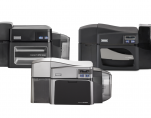
SINGAPORE – Media OutReach Newswire – 6 October 2026 – HID, a global leader in trusted identity solutions, is rolling out enhancements across its FARGO® DTC ID card printers, including the DTC1250e, DTC4500e and DTC1500 models, to help organizations issue secure, professional-quality ID cards faster, with less IT support and the ability to easily scale as needs evolve.

DTC Ext Family AUG2026

Organizations that issue ID cards — from schools and healthcare systems to government offices, corporate campuses and others — need printers that are easy to operate, produce consistently high-quality credentials and keep pace with growing security requirements. The latest enhancements address each of those priorities.

Built to Print: Faster, Sharper Output and Stronger Security
Speed and reliability are essential for high-volume credential issuance. Printing more cards in less time with fewer interruptions, these printers have been updated with newer, faster hardware and electronics platforms. Support for high-capacity ribbons also streamlines the issuance workflow and maintains high productivity, reducing reloads and lost time. For front-desk and HR staff who issue dozens of badges a day, this means shorter lines and less time waiting on a stalled print job.

“We’ve been at this for a long time. For more than three decades, organizations have trusted us to power their ID badging programs,” said Apryl Erickson, VP and Head of FARGO. “With thousands of printers in the field worldwide, we’re excited to build on that legacy by delivering enhanced solutions that provide greater value to our end users and support their mission-critical issuance processes.”

Card quality matters just as much as issuance speed. With 300 x 600 dpi resolution, an enhanced color profile and adjustable K-panel printing, organizations benefit from having professional-quality ID cards that look sharper, have crisper text, cleaner logos and more accurate color.

When an organization issues credentials, they need to enhance card security and safeguard cardholder data. As such, all DTC printers offer enhanced AES-256-GCM encryption and resin scramble data protection. On the DTC1500 and DTC4500e, a built-in, customizable watermark overlay adds a layer of security at no added cost.

Built to Last: Secure, Reliable, Sustainable Performance and Less Downtime
Reliable and sustainable, the enhancedDTC printers are backed by three-year product warranties, provide ongoing printer health monitoring and are specifically engineered for efficient energy use.

Organizations also need to keep operator maintenance low. An integrated diagnostic utility and Color Assist tool are now built directly into the printer driver, so common issues can be identified and resolved without a support call. An optional OLED SmartScreen on the DTC1250e further simplifies day-to-day operation, helping non-technical staff be productive from day one with no IT ticket required.

Built for More: Room to Grow Without Starting Over
Programs rarely remain static, and organizations need to scale as their needs grow without incurring the cost of new hardware. FARGO DTC printers offer field-upgradable dual-side printing and encoding options that let organizations start with what they need and add capabilities later, without having to buy new base hardware, as programs expand.

These upgrades build on more than 30 years of DTC printing expertise. The portfolio also integrates with HID’s broader ecosystem for access control and identity management, helping organizations expand their credentialing programs as needs evolve. The DTC1500 and DTC4500e are also compatible with FARGO Connect™, a secure, cloud-based card printing platform that provides real-time fleet visibility.

The enhanced DTC printer portfolio is commercially available now. Product availability for enhanced FARGO DTC1250e and DTC4500e printers is slated for late October/early November, varying by region. Enhanced FARGO DTC1500 units will follow later in Q4 2026.

Building on these enhancements, HID plans to further expand the FARGO DTC portfolio later this year with a streamlined, single-sided printer designed for organizations with lower-volume issuance needs. It will not be available in the United States and Canada. It will be offered only in select regions outside these markets. The new model will bring the same reliability and ease of use while providing an accessible entry point into the broader FARGO portfolio.

FARGO printers are available through HID’s partner and distributor network.

Stay Connected with HID

Visit our Media Center, read our Industry Blog, and follow us on Facebook, LinkedIn and X (Twitter).
Hashtag: #HID #FARGO #TrustedIdentity


The issuer is solely responsible for the content of this announcement.

About HID

HID powers the trusted identities of the world’s people, places and things. We make it possible for people to transact safely, work productively and travel freely. Our trusted identity solutions give people convenient access to physical and digital places and connect things that can be identified, verified and tracked digitally. Millions of people around the world use HID products and services to navigate their everyday lives, and billions of things are connected through HID technology. We work with governments, educational institutions, hospitals, financial institutions, industrial businesses and some of the most innovative companies on the planet. Headquartered in Austin, Texas, HID has over 4,500 employees worldwide and operates international offices that support more than 100 countries. HID is an ASSA ABLOY Group brand. For more information, visit .

© 2026 HID Global Corporation/ASSA ABLOY AB. All rights reserved. HID, the HID Blue Brick logo and the Chain Design are trademarks or registered trademarks of HID Global, ASSA ABLOY AB, or its affiliates(s) in the US and other countries and may not be used without permission. All other trademarks, service marks, and product or service names are trademarks or registered trademarks of their respective owners.

Combining real-time AI credit monitoring with Ethereum smart contracts and USDC settlement, Asia’s digital trade finance leader addresses a US$2.5 trillion SME trade financing funding gap opportunity.

HONG KONG SAR – Media OutReach Newswire – 6 October 2026 – Qupital, Asia’s leading AI-driven fintech platform specializing in cross-border e-commerce trade finance, today announced the official launch of the world’s first AI-driven on-chain e-commerce lending protocol. The breakthrough solution shifts day-to-day trade loan operations into an automated, highly transparent framework powered by smart contracts and proprietary AI credit monitoring.

The launch comes directly ahead of Token 2049, as Qupital positions itself at the intersection of Decentralized Finance (DeFi) and Real-World Assets (RWA). By deploying USDC via Ethereum smart contracts, Qupital eliminates legacy banking delays and manual oversight, delivering instant, 24/7 liquidity to high-growth global merchants. The protocol utilizes automated dynamic credit monitoring to continuously adjust credit exposure based on real-time sales-to-loan performance. When store metrics deviate from set parameters, smart contracts automatically invoke payment gateway APIs to intercept platform cashflows, which captures store earnings to satisfy debt obligations and revenue targets.

Key Innovations of the Protocol

  • Instant, 24/7 Global Liquidity: Complements existing banking channels by deploying USDC directly to e-commerce merchants via smart contracts, enabling real-time capital access synchronized with global e-commerce velocity.
  • AI-Guarded Risk Control: Integrates Qupital’s proprietary AI engine with automated payment gateway APIs to monitor sales performance and capture settlement cashflows directly, drastically reducing credit risk. Merging AI intelligence with on-chain execution for trade finance. Powering digital trade through automated, smart-contract-driven liquidity vaults unlocks unprecedented operational efficiency and dynamic risk control without human intervention.
  • Automated Capital Efficiency: Replaces manual back-office drawdown verification and settlement calls with smart contracts, accelerating capital turnover and reducing operational overhead.
  • Real-Time Proof of Reserves & Auditability: Every active loan is tokenized on-chain to Qupital’s Treasury Vault, providing institutional lenders and partners with 1:1 real-time balance sheet verification.

A Multi-trillion Market opportunity

B2B cross-border stablecoin settlements are projected to reach $5 trillion by 2035, with over 54% of cross-border enterprises preparing to adopt stablecoin payment infrastructure. Qupital’s protocol directly addresses this surge in institutional and merchant demand.

“Agentic commerce and instant global settlement require financing infrastructure that operates around the clock. While traditional banking channels remain a core pillar of our trade finance operations, utilizing blockchain rails allows us to streamline distribution and accelerate settlement times. Integrating our proprietary AI risk engine directly into on-chain frameworks eliminates operational friction, minimizes non-performing loans, and expands our global footprint.”

— Winston Wong, Co-Founder & CEO of Qupital

Having processed over US$9.5 billion in cumulative trade financing while maintaining industry-leading credit performance, Qupital’s move on-chain sets a new institutional standard for tokenized trade finance. The company already has an active pipeline of USD 100 million in financing to be fulfilled on-chain.

Building on its recently announced Series C financing, Qupital continues to execute on its long-term growth roadmap. The launch of the protocol further diversifies Qupital’s capital execution options and accelerates its entry into new global markets. By bringing real-world quality trade assets on-chain, Qupital directly addresses the multi-trillion-dollar SME financing gap, delivering accessible, frictionless capital to digital enterprises that are underserved by traditional banks and financial institutions worldwide.

Hashtag: #Qupital


The issuer is solely responsible for the content of this announcement.

About Qupital

Qupital is a Series C stage fintech platform and Asia’s leader in data-driven financing solutions for digital businesses. Headquartered in Hong Kong, Qupital empowers e-commerce businesses trading on global platforms including Amazon, JD.com, Tmall, TikTok Shop, and Pinduoduo. As the first platform in Asia to securitize e-commerce merchant loans, Qupital combines industry-leading credit performance and sustained profitability with backing from global financial institutions including HSBC and MUFG, as well as strategic investors including M Capital, Alibaba, MindWorks Capital, Greater Bay Area Homeland Development Fund, and the Innovation and Technology Ventures Fund of the Hong Kong SAR Government.

Qualcomm has agreed to license patents underpinning Huawei Technologies’ LogicFolding chip architecture as part of a broad multiyear intellectual-property agreement spanning 5G, artificial intelligence, computing and networking technologies.

The agreement gives Qualcomm access to technology Huawei has presented as an alternative route to higher semiconductor performance when conventional transistor shrinking becomes harder and more expensive. It also marks an important commercial endorsement of Huawei’s expanding patent portfolio as the company seeks a larger role in global AI and computing markets.

Huawei and Qualcomm said the arrangement includes cross-licences to their patent portfolios across multiple technology fields. Qualcomm will separately purchase certain Huawei patents registered in the United States covering computing, AI, networking and other technologies. That purchase remains subject to required regulatory approvals.

Financial terms and the duration of the agreement were not disclosed. Huawei said completion of the transaction would lift the cumulative value of its patent licensing agreements above $6.9 billion. The company has said its intellectual-property licensing operation has generated positive revenue since 2021.

LogicFolding forms part of Huawei’s Tau Scaling Law, a semiconductor design framework unveiled in May. Rather than depending solely on geometric scaling — making transistors progressively smaller — the approach seeks to reduce the time required for signals to travel through chips and electronic systems.

Huawei says LogicFolding can shorten critical signal paths by reorganising circuits across vertically integrated layers. The company argues that compressing signal-propagation delay can raise effective transistor density and improve performance and energy efficiency without relying entirely on successive advances in lithography.

The technology has particular strategic importance for Huawei because US export controls have restricted its access to some advanced semiconductor equipment and technologies. China-based chipmakers cannot obtain the most advanced extreme-ultraviolet lithography systems made by ASML, complicating efforts to manufacture chips using leading-edge processes through conventional methods.

Huawei has therefore increasingly emphasised architecture, packaging, interconnection and system-level optimisation as ways of extracting more computing performance from available manufacturing technology. LogicFolding is one element of that effort, although Huawei’s performance claims and longer-term projections remain subject to commercial-scale validation.

Huawei has already introduced the architecture in its latest Kirin processors. The Kirin 9050 Pro used in the Mate XT 2 foldable smartphone incorporates LogicFolding, providing an early commercial application of the design approach. Huawei has also outlined plans to extend the underlying method beyond mobile processors towards AI accelerators and other high-performance computing systems.

The patent arrangement does not mean Qualcomm is adopting Huawei’s complete chip architecture in its products. Patent licensing provides legal rights to use covered inventions under agreed terms, while individual product designs, manufacturing decisions and implementation choices remain separate. Neither company disclosed which Qualcomm products, if any, could eventually incorporate technologies covered by the LogicFolding patents.

The broader agreement also deepens a long-running intellectual-property relationship between the companies. Huawei made its first patent-licensing payment to Qualcomm in 2001, while the new pact is their first licensing agreement to encompass 5G technologies.

John Han, executive vice-president and general manager of Qualcomm Technology Licensing, said the agreement recognised Huawei’s continuing innovation and intellectual property in 5G and other technology fields. He also said it reaffirmed recognition of Qualcomm’s 5G technology and its standard-essential-patent licensing programme.

Huawei chief intellectual property officer Alan Fan said the agreement demonstrated the value of Huawei’s innovations while recognising Qualcomm’s foundational contributions to modern communications technology. Both companies said their licensing practices were intended to be consistent with fair, reasonable and non-discriminatory principles.

The deal comes as Qualcomm broadens its business beyond smartphone processors into personal computers, automotive systems, networking and data-centre computing, areas where efficient AI processing and high-speed interconnects are increasingly important.

Qualcomm’s licensing business remains central to its model, with the company saying its portfolio contains 200,000 granted and pending patents across more than 100 countries and jurisdictions, including foundational cellular and AI inventions.

By Dr. Gyan Pathak In a most significant observation, the Supreme Court of India said on Monday, October 5, if any decision taken by the Election Commission is found not to be in accordance with law, the court can annul it. The Supreme Court issued notices to and sought reply in a week from CEC […]

The article CEC’s Unlawful Decisions Will Be Annulled Observed Supreme Court appeared first on Latest India news, analysis and reports on Newspack by India Press Agency).

By Nantoo Banerjee The hand-picked 30-share sensitive index (Sensex) of Bombay Stock Exchange, which has long been seen as the country’s overall industry performance barometer, seems to be losing its reliability under profit-booking punters’ whims. The Sensex faced sharp selling pressure last week, closing down at 72,972.56 after plunging over 1,000 points earlier in the […]

The article Corporate Sector Is Growing Well Despite Iran War, Poor Monsoon appeared first on Latest India news, analysis and reports on Newspack by India Press Agency).

Advertisements

By R. Suryamurthy Nine years after GST replaced a maze of central and state indirect taxes, the most revealing measure of its success may no longer be the monthly collection number. The harder question is whether India has built a tax system in which the government can distinguish between a taxpayer who is trying to […]

The article GST 3.0 Needs A New Bargain With Taxpayers, A Climate Without Fear appeared first on Latest India news, analysis and reports on Newspack by India Press Agency).

Grade A Office Availability Rate Drops Further, High Street Leasing Activities Focus on Kowloon

  • Residential Market: Market sentiment turned more cautious in Q3, with total residential transaction numbers slipping by 40% q-o-q and 21% y-o-y to record around 13,240 cases. Home prices softened by 0.8% between July and August, yet, supported by stronger 1H performance, still recorded a cumulative rise of 7% in the first eight months of 2026.
  • Grade A Office Market: Citywide net absorption reached 412,400 sq ft in Q3, mainly driven by expansion activities by the banking, financial services and insurance (BFSI) sector. Rents in Greater Central continued to pick up, while rental level declines in non-core submarkets narrowed. The overall office market rental level is expected to rise by +5% to +7% in 2026.
  • Retail Market: Overall retail sales growth remained resilient on the back of growing tourist arrivals and stronger economic fundamentals supporting local consumption sentiment. The overall high street vacancy rate remained broadly stable in Q3, with leasing activities concentrated in Mongkok and Tsimshatsui.

HONG KONG SAR – Media OutReach Newswire – 5 October 2026 – Global real estate services firm Cushman & Wakefield today held its Hong Kong Property Markets Q3 2026 Review andOutlook press conference. The Hong Kong residential market entered a consolidation phase in Q3 amid a shift in the U.S. Federal Reserve’s interest rate outlook, increased stock market volatility, and tighter cross-border capital controls in the Chinese mainland. Against this backdrop, residential transaction numbers dropped by 40% q-o-q to record around 13,240 cases in Q3, while home prices declined by 0.8% during July and August. In the Grade A office market, the total new leased area for Q3 reached 1.4 million sq ft, the highest quarterly level since 2019, supported by expansion activities from the BFSI sector. Citywide net absorption reached +412,400 sq ft for the quarter, bringing the overall availability rate to trend further downward, while YTD rental growth recorded +6.1%. In the retail sector, total retail sales remained resilient in Q3. The overall high street vacancy rate remained broadly stable during the quarter, chiefly supported by more active leasing commitments in Mongkok. Leasing activity in Hong Kong Island districts moderated somewhat.

Grade A office leasing market:BSFI expansion demand fuels leasing momentum

The Q3 2026 period marked another active quarter for Hong Kong’s Grade A office market. Total new leased area reached 1.4 million sq ft in Q3, the highest quarterly level since 2019. The banking, financial services, and insurance (BFSI) sector, and consumer products / manufacturing sectors, were the key demand drivers, with BFSI occupiers largely expansion-led. Citywide net absorption reached +412,400 sq ft in the quarter. This performance helped pull down the overall availability rate 0.4 percentage point q-o-q to 19.1%. Core district rents continued to outperform non-core areas. Greater Central rents continued to climb by a further 3.0% q-o-q in Q3, while non-core area rental level declines further narrowed. Rents in Hong Kong East and Hong Kong South edged up slightly in Q3. The overall citywide rental level rose by 1.7% q-o-q in Q3, bringing YTD rental growth to +6.1%.

John Siu, Managing Director, Hong Kong, Cushman & Wakefield,said, “Rents in Greater Central grew by 13% YTD, reflecting strong demand for prime offices. However, mid-priced Grade A offices, particularly those with net effective rents of around HK$45-60 psf, are expected to continue facing headwinds, as abundant existing space and forthcoming supply across multiple submarkets within this price range is likely to sustain intense competition.”

Siu added, “Looking ahead, positive market momentum is likely to partly offset the scheduled 1.2 million sq ft of new supply in Q4, keeping the availability rate broadly stable at 19% to 20% at the year-end. With a decelerating supply pipeline beyond 2026, availability may have passed its cyclical peak in 2025, but non-core areas will continue to face absorption pressure. Full-year rental growth in Greater Central is now projected to grow by +12% to +14%, supporting the citywide Grade A office rental level to rise by +5% to +7% in 2026.”

Retail leasing market: Retail sales growth remains resilient, with Mongkok leading high street leasing activities

Hong Kong retail sales growth remained resilient in Q3, driven by growing tourist arrivals and stronger economic fundamentals supporting local consumption sentiment. The city’s overall retail sales for the January to August 2026 period reached HK$266 billion, up 8.5% y-o-y. Among key retail categories, the Jewellery & Watches sector recorded the strongest performance, recording y-o-y sales growth of 22.6%. Other sectors, such as Medicines & Cosmetics (+5.0%) and Fashion & Accessories (+3.2%), recorded more modest low single-digit growth.

The overall high street vacancy rate remained broadly stable at 5.4% in Q3, chiefly supported by more active leasing commitments in Mongkok, with the district’s vacancy rate dropping to 4.8% from 8.6% in Q2. In Tsimshatsui, although the vacancy rate moved up to 9.5%, notable new transactions were also recorded during the quarter. On Hong Kong Island, vacancy rates in Causeway Bay and Central increased in Q3, rising to 5.1% and 1.4%, respectively, after remaining at 0% for two consecutive quarters. With prime retail spaces in both districts fully occupied in previous quarters, leasing activity moderated in Q3.

High street retail rents in both Causeway Bay and Tsimshatsui remained unchanged in the quarter. In Mongkok, stronger leasing momentum supported a 0.4% q-o-q rise in rental levels. As for Tsimshatsui, a slowdown in the luxury segment combined with relatively high vacancy weighed on the district’s rental performance, resulting in a fall of 1.1% q-o-q. In the F&B sector, rents remained under pressure amid high availability, dropping within a 1% range q-o-q across the four key districts.

John Siu commented, “We have observed stronger leasing demand from Japanese, South Korean and Thai brands in recent months. Looking at the first-stores recorded so far this year, approximately 36% originated from Japan, South Korea and Thailand, similar to the share accounted for by Chinese mainland brands, while exceeding the 29% recorded for 2025 full-year. We expect this trend to continue through the remainder of the year. Looking ahead, the Hong Kong retail market is expected to remain supported by resilient local consumption resulting from stronger economic fundamentals, together with greater tourist spending underpinned by a stronger RMB, and a pipeline of planned mega-events. These factors will bring continued momentum to the city’s retail market. We also expect local and non-local retailers to remain selective, with demand focused on well-located retail spaces in core districts offering attractive rental packages. In turn, the city’s retail market is likely to maintain a gradual recovery trajectory. We forecast high street retail rents in Causeway Bay and Central to pick up by 2% to 3% y-o-y in 2026, with Tsimshatsui and Mongkok recording modest rental growth of 1% to 2% y-o-y.”

Residential Market: Home prices consolidate as transaction numbers cool in Q3, rate hikes remain key

The Hong Kong residential market consolidated somewhat in Q3 following the strong momentum recorded in 1H. After the sustained release of purchasing power over the past year, coupled with the shift of the U.S. Federal Reserve rate direction, increased stock market volatility and heightened uncertainties, some prospective buyers reverted to a wait-and-see stance. This resulted in a noticeable slowdown in transaction activity from July onwards. The monthly transaction number, which averaged more than 7,000 cases in Q2, fell back to around 4,000 deals between July and September. A total of 13,242 residential transactions were recorded in Q3, down 40% q-o-q, bringing cumulative transactions to reach 54,052 cases for the first nine months of the year, representing an 18% increase y-o-y.

Edgar Lai, Senior Director, Valuation and Consultancy Services, Hong Kong, Cushman & Wakefield, commented, “Housing price growth momentum decelerated in Q3 2026. Rating and Valuation Department data suggests that the overall residential price index softened by 0.8% in the two months from July to August, yet still achieved 7.0% growth for the first eight months of 2026. Meanwhile, our Cushman & Wakefield mid-and-small size units price index shows that home prices mildly dropped 0.1% q-o-q, yet still registering a cumulative increase of 7.7% year to date. Our tracking of popular housing estates shows that prices softened in Q3 across different market segments. Prices at City One Shatin, representing the mass market, declined by 5.7% q-o-q, while prices at Taikoo Shing, representing the mid-market, dropped by 0.6% q-o-q. Residence Bel-Air, representing the luxury segment, retreated by 3.8% q-o-q. Following the sustained release of purchasing power over the past year, coupled with tighter cross-border capital controls from the Chinese mainland, and the U.S. Fed rate hike of 0.25% in September, our September Verbal Enquiry Index declined by 35% compared with the peak seen in May.”

Rosanna Tang, Deputy Managing Director, Head of Research, Hong Kong, Cushman & Wakefield, added, “The city’s residential market consolidated in Q3, with monthly transactions retreating to around 4,000 cases. The slowdown reflects a more cautious stance among homebuyers amid shifting interest rate expectations and heightened external uncertainties. Looking ahead, the frequency and pace of rate hikes, together with whether local banks will follow suit, will be the key factors affecting homebuyers’ purchasing decisions and affordability. Given the slower pace of transactions in Q3, we have revised our full-year residential transaction forecast to around 67,000 to 68,000 cases.

“As for pricing, should the U.S. Fed rate further increase in Q4, the residential market is expected to remain in a consolidation phase, with 2026 annual home prices likely to fluctuate in a narrow range near +7%. The rental market, however, will be more resilient underpinned by rental demand brought by the inflow of talent, non-local students, and new entrants to the city. With rental growth of 4.9% recorded in the first eight months of the year, we project a 5% to 7% y-o-y increase for the full year of 2026.”

Hashtag: #CWK

The issuer is solely responsible for the content of this announcement.

About Cushman & Wakefield

Cushman & Wakefield (NYSE: CWK) is a leading global commercial real estate services firm for property owners and occupiers with approximately 53,000 employees in nearly 350 offices and 60 countries. In Greater China, a network of 23 offices serves local markets across the region. In 2025, the firm reported revenue of $10.3 billion across its core services of Valuation, Consulting, Project & Development Services, Capital Markets, Project & Occupier Services, Industrial & Logistics, Retail, and others. Built around the belief that Better never settles, the firm receives numerous industry and business accolades for its award-winning culture. For additional information, visit www.cushmanwakefield.com.hk or follow us on LinkedIn (https://www.linkedin.com/company/cushman-&-wakefield-greater-china).

BANGKOK, THAILAND – Media OutReach Newswire – 5 October 2026 – The Long-Term Resident (LTR) visa has attracted 12,010 high-potential foreigners to Thailand in four years, generating approximately USD 1.28 billion (THB 43 billion) in economic value, according to the Board of Investment (BOI). The visa is a key mechanism for attracting executives and highly skilled personnel for future industries while increasing purchasing power and stimulating domestic spending and economic activity. A new online system now links services from four government agencies in an integrated process.

Mr. Narit Therdsteerasukdi, Secretary General of the Thailand Board of Investment (BOI)

Introduced in September 2022 to attract high-potential foreigners to reside and conduct economic activities in Thailand, the LTR visa program has generated an average economic value of more than USD 107,000 (THB 3.6 million) per recipient, according to BOI data. The calculation covers visa fees, spending in Thailand by visa holders, direct investment, and tax revenue from highly skilled professionals.

Amid intensifying global competition for highly skilled personnel, the LTR visa is an important mechanism for bringing global talent into Thailand. This is particularly relevant as the country prepares for a new wave of investment in advanced-technology industries, including semiconductors and advanced electronics, digital technology and AI, humanoid robotics, aviation, and biotechnology.

“The LTR visa is a strategic pillar to attract global talent as Thailand absorbs a new wave of advanced technology investments,” said Narit Therdsteerasukdi, Secretary General of the Board of Investment. “Drawing top-tier executives and technical specialists from around the world is vital to strengthening our national competitiveness and securing technology transfers from international partners.”

Approved LTR visa recipients primarily come from leading economies. The United States accounts for the largest group, with more than 2,400 approvals, followed by Japan with more than 1,300 and the United Kingdom with more than 1,000. Japanese nationals comprise a notable share of the specialist bracket, aligning with Japan’s heavy footprint in Thailand’s automotive and precision-electronics supply networks.

The 12,010 approved LTR visa recipients fall into five categories: 1,779 Highly-Skilled Professionals; 1,043 Work-from-Thailand Professionals, who work from Thailand for overseas employers; 737 Wealthy Global Citizens; 4,561 Wealthy Pensioners; and 3,891 Dependents of recipients in the first four categories.

Among recipients in the Highly-Skilled Professionals and Work-from-Thailand Professionals categories, 54% hold executive-level positions and 36% are professionals in various fields; the remainder are at the technical level. Applicants in each category must meet specific criteria, such as requirements relating to assets, income, investment evidence, work experience, and health insurance, and undergo rigorous checks by the relevant agencies.

To handle rising application volumes and remove long-standing administrative bottlenecks, the BOI rolled out an integrated digital processing portal in September 2026. The platform centralizes review procedures across four primary state bodies: the Department of Consular Affairs, the Immigration Bureau, the Department of Employment, and the Revenue Department.

Complementing the portal, the Thailand Investment and Expat Services Center (TIESC), a one-stop service center, is located on floors 6-7 of the Parade Zone at One Bangkok. “The center is intended to strengthen Thailand’s competitiveness in continuously attracting high-potential talent from around the world,” said Mr. Narit.

In addition to attracting foreign talent through the LTR visa, BOI also facilitates visas and work permits for executives and personnel working in BOI-promoted businesses through the BOI Visa, and offers the Smart Visa for startups. BOI also supports the skills development of Thai personnel through the Skill Bridge measure, and helps Thai entrepreneurs adopt modern technology to enhance their competitiveness through the Business Transformation measure. These measures work hand in hand to attract international experts, develop Thai personnel, and upgrade Thai businesses, strengthening Thailand’s readiness for the transition to a new economy driven by technology and innovation.


Note: Currency conversions are based on the Bank of Thailand’s average selling rate of approximately 1 USD = 33.6 THB.

Hashtag: #Thailandboardofinvestment #BOI #FDI #Investment

The issuer is solely responsible for the content of this announcement.

Thailand Board of Investment (BOI)

Established in 1966, the Office of the Board of Investment (BOI) has played an important role for more than 60 years in promoting value-creating investment by both foreign and Thai investors, strengthening competitiveness and supporting Thailand’s sustainable economic restructuring toward the new economy.

Arabian Post Staff -Dubai Rasmal Ventures and Türkiye’s Bilişim Vadisi have signed a three-year cooperation agreement aimed at creating a structured route for startups, investors and companies between Türkiye and Gulf markets. The memorandum of understanding, signed in Istanbul, covers joint innovation programmes, investor and business-to-business matchmaking, knowledge exchange, capacity building and the movement of startups, specialists and networks between the two regions. The partnership also involves […]

HONG KONG SAR – Media OutReach Newswire – 5 October 2026 – NAMAA has announced the launch of Future Foods and Picnic, two new ventures that support restaurants, businesses and consumers across the Middle East. Together, they strengthen NAMAA’s portfolio of digital food solutions, helping restaurant operators grow their delivery business while making workplace dining simpler.

Future Foods Opens New Revenue Opportunities for Restaurant Operators

Born out of the Kitchens business, Future Foods was created to help restaurant operators generate additional revenue through virtual delivery brands. Today, it is the largest virtual brand company in the restaurant space, with more than 1,500 live locations.

The Future Foods model allows restaurants to launch established delivery brands from their existing kitchens without investing in another location or major infrastructure. With their existing kitchens, operators can optimise food costs, reach more customers and increase delivery sales.

Future Foods also provides support with storefront setup, delivery platform integration, marketing and operations, allowing restaurant teams to focus on preparing great food while strengthening their delivery business.

Restaurant partners can choose from a portfolio of nationally recognised brands across a range of cuisines, including Pasta Glory, Brooklyn Calzones, Sunny & Fine’s, Poke Picnic and Brekkie Bagels, fulfilling customer demand in the market.

Picnic Brings a Simpler Workplace Dining Experience

Alongside Future Foods, NAMAA has introduced Picnic, a workplace dining platform built around the idea of “food at work, simplified.” By combining CloudKitchens with local brick-and-mortar restaurants, Picnic gives employees a wide variety of lunch options through a digital food court experience.

Orders are delivered to a designated Picnic shelf on each office floor within a 20 to 30-minute delivery window, making lunchtime easier while reducing the need to manage individual food deliveries.

Picnic also offers a more cost-effective approach to workplace dining. With no delivery fees, tips, administrative charges, nor minimum order requirements, both employers and employees benefit from greater convenience at no extra cost.

The platform offers flexible corporate solutions, including subsidised lunch programmes, non-subsidised daily deliveries, group ordering and fee-free catering for larger corporate events, allowing businesses to tailor to their employees’ needs.

Together, Future Foods and Picnic reflect NAMAA’s commitment to supporting restaurant growth while making workplace dining easier. As food delivery continues to evolve across the Middle East, both platforms give restaurants, businesses and consumers more flexibility and choice.

Hashtag: #NAMAA

The issuer is solely responsible for the content of this announcement.

About NAMAA

is a leader in driving the growth of digital food solutions, quick commerce, and the underlying real estate foundations. The founding members have been laying the groundwork since 2019, guided by a philosophy centred on developing infrastructures that give consumers fast and dependable access to meals, groceries, and essentials. Part of the wider ATOMS Group, the company has since grown into a multi-sector network with operations spanning the Middle East.

HONG KONG SAR – Media OutReach Newswire – 5 October 2026 – Amid rising operating costs and accelerating digital transformation, many small and medium-sized enterprises (SMEs) in Hong Kong are facing increasing pressure from equipment investment, limited manpower resources, and the growing complexity of print management across multiple departments. For organizations with multiple teams, office locations, or hybrid work arrangements, maintaining a reliable and efficient printing environment at a reasonable cost has become an important operational challenge.

MPS A4 Banner

Most businesses primarily print A4 documents such as contracts, invoices, reports, and administrative paperwork. When A4 printing is sufficient to meet the majority of daily business requirements, investing in larger and more expensive printing equipment may not be necessary. Brother’s Managed Print Service (MPS) allows businesses to flexibly deploy printing resources according to actual operational needs without incurring substantial upfront capital expenditure. The service also provides comprehensive consumables management, maintenance, and professional technical support, making print management simpler and more efficient.

Comprehensive Print Management That Reduces Administrative and IT Workloads

Traditional printer ownership often involves purchasing equipment, replenishing consumables, arranging repairs, and managing technical support, all of which can increase administrative efforts and hidden operating costs, particularly for SMEs without dedicated IT or administrative teams.

Brother’s Managed Print Service includes printer usage, consumables supply, maintenance services, and technical support. This enables businesses to enjoy a reliable printing experience without spending additional time managing day-to-day printing operations, allowing resources to be redirected toward core business development.

Eliminate Large Capital Expenditure and Improve Cash Flow Management

For growing businesses and startups, major investments in office equipment can significantly impact cash flow planning.

Under the monthly subscription model, businesses pay a fixed monthly fee to access professional-grade Brother printing equipment without making a substantial upfront investment. The service also does not impose a fixed monthly print volume limit, enabling organizations to adjust printing usage and device deployment according to operational needs. This flexibility helps businesses control costs more effectively while minimizing resource underutilization and wastage.

Flexible Multi-Device Deployment for Greater Departmental Productivity

For organizations with multiple departments or work teams, relying on a single shared printer can often result in wait times and reduced document processing efficiency.

Brother’s Managed Print Service solution enables businesses to deploy multiple printers according to actual operational requirements. For example, administrative, human resources, finance, and sales departments can each be equipped with printers tailored to their specific needs. This helps minimize waiting time, reduce cross-department disruptions, improve workflow efficiency, and enhance document confidentiality.

The solution is also well-suited for organizations with multiple offices, retail outlets, or distributed business teams, providing centralized management of multiple devices while ensuring consistent technical support and after-sales service.

Proactive Consumables Replenishment Minimizes Business Disruptions

Many businesses have experienced workflow interruptions caused by depleted toner or consumables, potentially delaying important document production, customer service, and internal operations.

Brother’s Managed Print Service automatically monitors printer performance and consumables usage, proactively arranging replenishment before supplies run low. For industries with high printing demands, such as insurance, financial services, logistics, professional services, and education, this not only reduces administrative workload but also minimizes inventory management and procurement-related tasks.

Designed for Hong Kong Offices and Hybrid Work Environments

As hybrid working becomes increasingly common, businesses require more flexible approaches to printer deployment.

Brother offers a range of compact yet feature-rich printers that are particularly suitable for Hong Kong’s space-constrained office environments, departmental workspaces, and shared offices. With a smaller footprint while still meeting everyday business printing requirements, these devices help organizations make better use of valuable office space.

In addition, Brother provides remote technical support services to assist with device setup, network connectivity, and other technical issues, reducing the day-to-day support burden on IT teams.

Five Key Benefits of Choosing Brother “Managed Print Service”

  • Reduce large upfront procurement costs and adapt flexibly to changing business needs
  • Proactive consumables replenishment to minimize inventory management and purchasing efforts
  • Maintenance and professional technical support to reduce equipment downtime risks
  • Automated usage monitoring to lower administrative and management workload
  • Compact printer design ideal for Hong Kong’s limited office space

Focus on Growing Your Core Business

Through its monthly subscription model, flexible device deployment, automated consumables management, and professional technical support, Brother’s Managed Print Service helps businesses simplify print management, reduce overall operating costs, and improve productivity across departments and locations.

When most printing requirements consist primarily of A4 documents, businesses can select the most suitable device configuration based on their actual operational needs without allocating additional resources to infrequent printing demands. By adopting a more flexible and streamlined print management approach, organizations can focus on growing their business, serving customers, and driving innovation, ultimately strengthening their competitive advantage.

Learn more about Brother “Managed Print Service” and limited-time offers:
Website: https://www.brother.com.hk/en/solutions/mps
WhatsApp Enquiries
Email: [email protected]

Information contained in this release is accurate at the time of publication and is subject to change without prior notice.
Hashtag: #BrotherHK #BrotherMPS #BusinessSolutions #OfficeSolutions #PrintManagement #PrinterRental #OfficeSolutions #Sustainability


The issuer is solely responsible for the content of this announcement.

About Brother International (HK) Limited

Founded in Japan in 1908, Brother has over 110 years of history. It has developed into an international brand with 16 production facilities and 51 sales points worldwide, spanning 44 countries. Brother produces high-quality and innovative products for the printing and imaging, labelling, and sewing markets, maintaining a leading position in the industry. Its main products include a variety of inkjet and laser printers, multifunction printers, fax machines, scanners, label printers, and a range of home sewing machines and commercial embroidery machines.
As a trusted brand, Brother adheres to a “customer-first” philosophy in all aspects of its business, continually meeting diverse customer needs and market challenges with comprehensive and high-quality solutions.
Brother International (Hong Kong) is one of the leading suppliers of home, office, and industrial products in Hong Kong. Established in 1994, it has been serving customers in Hong Kong and Macau for over 30 years. According to IDC’s Global Hardware Peripheral Tracker report, Brother’s A3 multifunction colour inkjet printer has been the number one in shipment volume in the world for 18 consecutive years from 2008 to 2025, reaffirming Brother’s business success in the region.
For more information about Brother Hong Kong, contact our WhatsApp at (852) 3187 0505 or visit the website www.brother.com.hk。
NOTE: All brand and products names are trademarks or registered trademarks of their respective companies.

A US federal judge has dismissed with prejudice a proposed class action over the LIBRA and M3M3 token launches, rejecting claims against Kelsier Ventures, its principals, Meteora and former Meteora chief executive Benjamin Chow. US District Judge Jennifer L. Rochon of the Southern District of New York granted the defendants’ dismissal motions and denied plaintiffs Omar Hurlock and Anuj Mehta permission to file a second amended complaint. […]

X Internet Unlimited Company and X Corp have launched High Court proceedings against two Bitcoin-focused content creators and unidentified account operators, alleging they fraudulently obtained at least £207,384 through the social platform’s former Creator Revenue Sharing programme. The claim, filed on September 17 in the Business and Property Courts of England and Wales, names Vivek Kumar Sen and Zamyang Sherpa, both described in court papers as residents […]

Coinbase has expanded Coinbase for Agents to US stocks and exchange-traded funds while activating x402 micropayments, allowing artificial-intelligence agents to trade across more asset classes and buy data or services needed to inform their actions. The September 22 expansion extends a platform launched in June that connected AI agents directly to customers’ Coinbase accounts for trading, payments and automated financial workflows. Coinbase said its Model Context Protocol, […]

Transforming QS Practice in a New Era: Integrating Digital Construction, Collaborative Contracting and Payment Security

HONG KONG, CHINA – Media OutReach Newswire – 3 October 2026 – The Hong Kong Institute of Surveyors (HKIS) Quantity Surveying Division hosted the HKIS Quantity Surveying Division Conference 2026 (the Conference) today at the CIC-Zero Carbon Park.

This year’s theme, “Transforming QS Practice in a New Era: Integrating Digital Construction, Collaborative Contracting and Payment Security”, reflects the evolving role of Quantity Surveyors during a time of economic restructuring.

The Conference brought together around 200 participants both in person and online, including government officials, industry leaders, professionals, academics, and young practitioners.

Mr LAU Chun Kit, Ricky, JP, Permanent Secretary for Development (Works) for Development Bureau of the HKSAR Government, attended as the Guest of Honour and delivered a keynote speech.

Quantity Surveyors are trained professionals with expert knowledge of construction costs and contracts who play a crucial role throughout the project development cycle, from investment feasibility studies and procurement strategy to commercial governance, contract administration, and dispute management. The seminar aims to explore how, amidst the ever-changing landscape of the digital revolution and the implementation of new legislation, quantity surveyors can evolve from their traditional roles in contract and cost management into enablers who drive successful value creation in construction projects.

Mr. LAU Chun Kit, Ricky, JP, Permanent Secretary for Development (Works), Development Bureau, said: “The theme of this year’s conference is both timely and visionary. The Conference serves as a strategic platform for surveying practitioners and professionals to exchange insights, explore best practices, and formulate a collective vision for the future of the surveying profession. The insights and best practices generated will not only contribute in advancing the role of surveying profession in the new era, but also reinforcing Hong Kong’s position as a leader in construction excellence.”

The conference featured 20 distinguished speakers from Hong Kong Government bureaux and departments, the private sector, academia, professional institutions, and law firms to share their insights and best practices in the quantity surveying field. Through thought-provoking discussions, the event not only enhanced participants’ technical knowledge but also catalyzed long-term cross-sector collaboration, empowering the industry to continuously deliver highly efficient and resilient built assets in the future.”

Sr WAN Wai Ming, Tony, President of the Hong Kong Institute of Surveyors, noted in his welcome speech, “As the construction landscape undergoes profound shifts, quantity surveyors are evolving from traditional cost guardians into strategic value architects. Under this year’s theme, we gather to explore emerging challenges, tackle critical issues, and seize new opportunities. Together, we redefine our professional identity, share actionable insights, and shape a forward-looking roadmap for the quantity surveying industry in Hong Kong.”

Sr TING Yuen Chun, Eric, Chairman of the HKIS Quantity Surveying Division, acknowledged that the built environment is facing increasingly complex social and economic pressures. He emphasised that these challenges serve as an important reminder that, while technology is a vital enabler of progress, built-environment professionals must continue to apply their expertise and professional judgement, while strengthening collaboration across disciplines, to navigate change and deliver sustainable value to society.

Sr WONG Kin Yan, Winnie, Organising Committee Chair of the Conference stated in her closing remarks, “Developments in Collaborative Contracting, Digital Construction, and Payment Security present an opportunity for our profession to evolve beyond traditional cost management.

Today’s quantity surveyors are increasingly called upon to serve as trusted advisers, driving collaboration, leading digital transformation, and championing transparency and fairness across the entire project lifecycle. By embracing these changes, we can continue to play a pivotal role in delivering sustainable, resilient and high-performing built assets for our community.”

List of Speakers (in order of presentation delivery)

Keynote Speech by Guest of Honour

  1. Mr LAU Chun Kit, Ricky, JP, Permanent Secretary for Development (Works), Development Bureau, HKSARG

Session 1: Collaborative Contracting

  1. Mr LEUNG Lap Ki, Francis, Team Leader (Trade & Procurement), Development Bureau, HKSARG
  2. Sr CHOI Wing Chung, Hayman, Project Strategy and Delivery Leader (Asia), Mott MacDonald Hong Kong Limited
  3. Ir LEUNG Cheuk Lun, NEC Strategic Advisor, Civil Engineering and Development Department, HKSARG
  4. Ir WANG Yan Hua, Chairman and Managing Director, China Road and Bridge Corporation (Hong Kong)
  5. Sr Yau Wan Fong, Deputy Director, WT Partnership (HK) Limited

Session 2: Digital Construction

  1. Mr WU Jin Ying, Technical Officer, Glodon (Hong Kong) Software Limited
  2. Mr Elvis LI, CEO, isBIM Limited
  3. Ir NG Chun Keung, CEO, dRoW Limited
  4. Mr Put HUI, Senior Digital Transformation Lead, Innovative Technology, Gammon Construction Limited
  5. Mr Ronald CHAN, Head of Sustainability for APAC, Currie & Brown
  6. Sr Sunny CHOI, Chairman of Digitalisation Sub-committee, Quantity Surveying Division, The Hong Kong Institute of Surveyors; Past Chairman of Quantity Surveying Division, The Hong Kong Institute of Surveyors (2021-2023)
  7. Sr Dr Paul HO, Past Chairman of Quantity Surveying Division, The Hong Kong Institute of Surveyors (2005-2006)

Session 3: Payment Security

  1. Sr Tommy CHAN, Executive Director, Arcadis Hong Kong Limited
  2. Cr Sr Ir ZA Wai Gin, Tony, Executive Director, Hip Hing Construction Co., Ltd.
  3. Sr Hinson CHEUNG, Partner, Pinsent Masons
  4. Sr Terry CHAK, Director of North Asia Region, Rider Levett Bucknall Limited
  5. Sr TT CHEUNG, BBS, JP, Past President, The Hong Kong Institute of Surveyors
  6. Sr CHONG Lui Chuen, Executive Committee Member, CSHK Professional Committee
  7. Mr Eric CHUNG, Barrister-at-Law, Pacific Chambers
  8. Sr Prof LEUNG Hing Fung, Professor and Head, Department of Law and Business, Hong Kong Shue Yan University; Adjunct Professor, Department of Real Estate and Construction, University of Hong Kong; Barrister-at-law, Arbitrator and Mediator

List of speakers and topics are downloadable here

Conference booklet is downloadable here

High-resolution event photos are downloadable here

Photo Caption:

001 Mr Ricky LAU, JP, Permanent Secretary for Development (Works), Development Bureau, HKSARG, was invited as the Guest of Honour.
002 Sr Tony WAN, President of the Hong Kong Institute of Surveyors, delivered the welcome speech.
003 Sr Eric TING, Chairman of the HKIS Quantity Surveying Division, delivered the opening speech.
004 Mr LEUNG Lap Ki, Francis, Team Leader (Trade & Procurement), Development Bureau, HKSARG, delivered a keynote speech.
005 Ir LEUNG Cheuk Lun, NEC Strategic Advisor, Civil Engineering and Development Department, HKSARG, delivered a speech.
006 The event received extensive support from the government and industry.

Second Row: From left to right:

Dr Ada TSANG, Lecturer, Department of Construction and Quality Management, Hong Kong Metropolitan University;

Cr Amanda WONG, Council Member, Hong Kong Institute of Construction Managers;

Ar Stephen HO, Honorary Secretary, The Hong Kong Institute of Architects;

Prof Ling Kar-kan, SBS, Chairman, Hong Kong Housing Society;

Mr Kelvin NG, Assistant Director/Technical, Highways Department;

Sr Andrew LAM, Assistant Director (Project) 2, Housing Department, HKSARG;

Sr Winnie WONG, Organising Committee Chair of the HKIS Quantity Surveying Division Conference 2026;

Sr Tony WAN, President of the Hong Kong Institute of Surveyors;

Mr Ricky LAU, JP, Permanent Secretary for Development (Works), Development Bureau, HKSARG;

Sr Eric TING, Chairman of the HKIS Quantity Surveying Division;

Mr Arthur LEE, Deputy Director/Regulatory Services, Electrical & Mechanical Services Department, HKSARG;

Mr Samson LAM, Assistant Director/Sewage Services, Drainage Services Department, HKSARG;

Ir Prof Thomas HO, JP, Chairman, Construction Industry Council;

Sr Amelia FOK, Chairman, The Association of Consultant Quantity Surveyors;

Ir Prof Michael YAM, Head of Department and Professor, Department of Construction Management and Intelligence, The Hong Kong Polytechnic University;

Sr Renee CHAN, Senior Lecturer, Department of Design and Architecture, Technological and Higher Education Institute of Hong Kong

First Row: Past Presidents of the Hong Kong Institute of Surveyors, Executive Committee of the Hong Kong Institute of Surveyors, and Council Member of the Quantity Surveying Division, the Hong Kong Institute of Surveyors

007 Sr Winnie WONG, Organising Committee Chair of the HKIS Quantity Surveying Division Conference 2026, delivered closing remarks.
008 The Conference gathered around 200 industry professionals, participating in person and online.

Hashtag: #surveyor #QS #quantitysurveying


Wechat: HKIS-Official

The issuer is solely responsible for the content of this announcement.

About the Hong Kong Institute of Surveyors

Established in 1984, The Hong Kong Institute of Surveyors (HKIS) is the only surveying professional body incorporated by ordinance in Hong Kong. As of 30 September 2026, the number of members reached 11248, of which 8301 (FHKIS: 579, MHKIS: 7722) were corporate members, 49 were associate members and 2898 were probationers and students.

HKIS work includes setting standards for professional services and performance, establishing codes of ethics, determining requirements for admission as professional surveyors, and encouraging members to upgrade skills through continuing professional development.

The Institute has an important consultative role in government policy making and on issues affecting the profession. We have advised the government on issues such as building safety and unauthorized building works, problems of property management, town planning and development strategies, construction quality, construction costs and housing problems. We have also issued guidance notes on floor area measurement, real estates valuation and land boundary survey, etc.

We have an established presence in the international arenas, have overseas connections, and have entered into reciprocal agreements with professional surveying and valuation institutes in Australia, Canada, Japan, New Zealand, Singapore, the United Kingdom, and Mainland China recognizing the counterpart’s member’s qualifications. In addition, HKIS is a member of various leading international surveying organisations.

SHENZHEN, CHINA – Media OutReach Newswire – 3 October 2026 – Huawei hosted an international media roundtable today featuring Richard Yu, Executive Director, Chairman of the Investment Review Board, and Chairman of the Board of Directors of the Consumer BG. Yu shared comprehensive insights into Huawei’s consumer business and HarmonyOS ecosystem.

IMG 8638

Richard Yu joined Huawei in 1993, working on early developments like the first-generation program-controlled switch and participating in the establishment of Huawei’s wireless communications business, which started with GSM. Over the past decade, Yu has led Huawei’s consumer business with the vision to deliver a seamless AI life experience to all consumers across five key scenarios: HIMA-powered Smart Travel, HarmonyOS Office, Smart Home, Fitness & Health, and Entertainment, which he said is also the long-term strategy for Huawei’s consumer business over the next 10 years.

Between 2007 and 2025, Huawei invested more than CNY1.8 trillion into R&D shifting from roughly 10% of annual revenue in early years to over 20% recently. Huawei has continued to increase investment into the core technologies of the ICT domain and basic research, which has translated into robust core capabilities, extensive intellectual property, and a vast patent portfolio, and helped with achieving a series of breakthroughs in technological innovation.

The Mate 90 series smartphones Huawei just launched come with the latest Kirin 9050 Pro chip. The overall device performance is 31% higher than the previous generation. The Balong modem, image sensor processor (ISP), mobile security processor (MSP), Lingxi CPU, Maleoon GPU, and the NPU that adopts Huawei’s Da Vinci architecture for AI processing are all designed by Huawei. They offer higher energy efficiency and deliver much-improved overall system-level performance.

Even though Yu admitted that Huawei has limited access to advanced semiconductor processes, Huawei recently made a new breakthrough in the semiconductor domain – the LogicFolding technology under the Tau Scaling Law. Unveiled by He Tingbo, head of Huawei’s Semiconductor Business Department this May, this technology vertically stacks the logic layers of chips and restructures the circuit layout through inter-layer high-density interconnect to shorten critical paths and reduce latency. This technology was adopted on Kirin 9050 Pro chip, which shows very strong AI processing power. The Mate 90 series powered by this chip can run a 30B MoE on-device AI model.

In the AI domain, Yu talked about the Ascend compute foundation that Huawei provides, by remarking Huawei’s large models called openPangu, AI capabilities for intelligent driving, and HarmonyOS Celia, which is similar to Gemini in the Google Android ecosystem. Huawei is also using AI to improve the O&M of communications network equipment. By combining AI computing power with domestic open-source large models, Huawei’s vision is to help enterprises and industries around the world to become more productive and bringing more convenience to everyone.

In the past years, Huawei has launched a broad series of products and solutions, including smartphones, PCs, tablets, wearables, TWS audio products, Smart TVs, home routers, smart home control solutions, as well as intelligent electric vehicles together with partners. Underlying these products and solutions are Huawei’s chip hardware platform and HarmonyOS – another OS ecosystem after iOS from Apple and Android from Google that Huawei developed to support all the smart devices and smart hardware across all scenarios.

Development of HarmonyOS began in 2019. Before that, Huawei was a major contributor to the Android community as well as the entire Android ecosystem. Now, more than 90 million devices, including smartphones, PCs, and tablets, currently run on HarmonyOS 6 and HarmonyOS 7. This figure is expected to hit the 100 million mark by the end of this year. The number of apps and services in the HarmonyOS ecosystem has already exceeded 450,000. Its global registered developer count has reached 11 million, and Huawei now has over 23,000 app innovation partners. Expressing his special thanks to all partners and developers for their trust and support, Yu also pointed out that Huawei is considering gradually bringing HarmonyOS to the global market in the future.

Globalization is another topic of the conversation. Yu mentioned that Huawei had very good collaboration with many companies from the US, Europe, Japan, South Korea, and Taiwan, delivering huge business value and benefits to those partners. When it comes to the difficulties that Huawei overcame since 2019, Yu said that relying on homegrown technologies and capabilities, Huawei gradually designed its own operating system and developed basic tools and software by themselves, putting a domestic supply chain in place. In 2023, Huawei started to manufacture the chips used by smartphones domestically again. With these chips and HarmonyOS, and by relying on China’s domestic supply chain, materials, and process nodes, Huawei has basically gotten rid of the dependence on US technologies.

While Huawei’s global market share was once No. 1, nowadays it only sells several million units of smartphones outside China every year. However, Yu revealed that Huawei is trying to return to the overseas market step by step.

Taking wearables as an example, Huawei is No. 1 in terms of the market share both in China and globally. Other innovative products such as TWS earphones, are also growing fast and have reached No. 1 in many countries. While Huawei’s tablet and PC business was greatly affected after it was denied access to Windows and Intel x86 chips, the HarmonyOS-based tablets are now performing strongly. Another example would be CPE, which is a mobile router that provides connectivity to the unconnected in remote and rural areas. These products are also very well received across many regions outside China, helping more people connect to the rest of the world and live better lives.

Question: Both the Huawei XT 2 and the two most advanced models of the Mate 90 series use a LogicFolding chip. Will LogicFolding chips be used for more phones in the future? We understand that Huawei’s chip production capacity is still limited. Huawei has launched SuperPoDs, and AI infrastructure is a huge business. They are both very important in China. How do you secure a larger share of the chip supply internally?

Richard Yu: We started introducing the chip that adopts the LogicFolding technology powered by the Tau Scaling Law to the Mate XT 2 tri-fold phone. To answer your question, yes, more of our phones will definitely use these LogicFolding chips in the future.

Currently, the production capacity for advanced semiconductors in China still cannot meet the rapidly growing demand. Huawei’s Ascend chips for the AI domain also use such capacity. But we have developed a requirement plan, which also covers the chip requirements of smartphones.

The sharp price increase for memory components over the past two years has somewhat limited the smartphone sales volume. Even though the production capacity remains tight right now, generally it is sufficient to meet our market shipment needs.

We hope that production capacity will ramp up in China’s semiconductor industry so that we can manufacture more advanced products for consumers in the Chinese market as well as the overseas market in the future.

To read the full Q&A session:
https://www.apmultimedianewsroom.com/multimedia-newsroom/continuous-innovation-securing-our-competitive-edge-through-technological-breakthroughs

Hashtag: #Huawei

The issuer is solely responsible for the content of this announcement.

Etihad Rail has added six passenger train services between Abu Dhabi and Dubai this weekend after exceptionally strong early demand, releasing more than 2,000 additional seats on the newly opened route. The operator said more than 1,000 extra seats were made available across three services on Saturday, October 3, with a further 1,000-plus seats offered on three additional services on Sunday, October 4. The move follows the […]

AD Ports Group has completed its Dhs3.1 billion acquisition of Brazilian agri-bulk terminal operator Corredor Logística e Infraestrutura, marking the Abu Dhabi group’s largest takeover and its first strategic entry into South America. The financial closing follows regulatory and antitrust clearances in Brazil, including approvals from the National Waterway Transportation Agency, known as ANTAQ, and the Administrative Council for Economic Defense, or CADE. The transaction was first […]

Google executive James Manyika has said artificial intelligence companies cannot be solely responsible for policing systems, arguing that regulation and public oversight are necessary alongside industry safeguards. Manyika, Google’s senior vice-president for Research, Labs, Technology & Society, said responsibility for managing AI’s risks must be shared among developers, governments and society. His comments come as debate intensifies in the United States over whether voluntary commitments by leading […]

BEIJING, CHINA – Media OutReach Newswire – 2 October 2026 – People’s Daily’s video series Decoding Rural China’s Governance, which explores grassroots governance and rural development in different parts of China, follows this six-village tourism cluster in its latest episode One Green Haven, Six Linked Villages, exploring how the six villages are turning online attention into a shared opportunity for rural development.

image-1.jpeg

Xixinan village first went viral in 2023, when photos of its fairy-tale greenery spread on Chinese platforms. But the tourism boom also raised new questions: How could the village generate revenue without charging an entrance fee? And how could it share the benefits with neighboring villages rather than compete with them?

The video looks beyond Xixinan to five nearby villages that, together with Xixinan, form a six-village tourism network. The villages have developed a range of experiences, including bamboo raft rides, a sightseeing train, homestays and nighttime fish-lantern tours. By connecting these attractions into a complete travel route, the network encourages visitors to stay longer and spend more time in the town, allowing more local businesses to benefit from growing tourist traffic.

Rather than competing for visitors, the villages have embraced a cluster development approach, developing complementary businesses, connecting tourism resources and sharing opportunities.

At the heart of this cooperation is the villages’ revenue-sharing model: 70 percent goes to the village where a business operates, 20 percent is distributed according to the original equity ratio (Xixinan village takes 5 percent and the other five villages take 3 percent each) and 10 percent is retained by the town’s operating company as working capital. The mechanism allows different villages to benefit from shared tourism resources while encouraging each to develop its own distinctive businesses.

More than 70 percent of residents in this town work in tourism. In 2025, each village generated more than 1 million yuan (about $140,000) in revenue, helping ensure that the benefits of tourism are shared across the town.

This video follows the journey from Xixinan’s viral rise to the broader transformation of the six villages, showing how natural scenery, connected tourism routes and a shared-interest mechanism can turn visitor traffic into broader rural development.

By linking six villages into a development cluster, the model offers a glimpse of how rural communities in China are exploring new ways to share opportunities and prosperity.

Hashtag: #PeoplesDaily #DecodingRuralChinasGovernance #RuralChina

The issuer is solely responsible for the content of this announcement.

HONG KONG SAR – Media OutReach Newswire – 2 October 2026 – UstarPay announced that it will co-host “Token2049 Networking Event with BitGo, HashKey & UstarPay” with BitGo and HashKey Cloud during TOKEN2049 Singapore. The event will take place in Singapore and will be subject to registration approval. The exact venue address will be provided to approved participants after registration.

The event will bring together industry participants from digital assets, fintech, payments, Web3 infrastructure, institutional services, and cross-border finance. It aims to provide a face-to-face networking platform for institutions, project teams, infrastructure providers, investors, and professionals. Discussions will focus on digital asset infrastructure, compliant payments, stablecoin use cases, wallet and card services, and how digital assets can enter real-world payment scenarios.

Event Details

Event Name: Token2049 Networking Event with BitGo, HashKey & UstarPay
Date & Time: Wednesday, 7 October, 18:00–21:00 GMT+8
Event Partners: BitGo, HashKey Cloud, UstarPay
Registration: Submit an application through the official Luma event page
Registration Link: https://luma.com/qjgwthvg
Entry: Approved participants may enter with a valid QR code

Please note that this event requires registration approval. All participants must submit an application through the official Luma event page. The hosts will review applications based on applicant background, industry relevance, and event capacity. Once approved, participants will receive an event QR code. Only approved participants with a valid QR code will be admitted to the event. An invitation or shared event information does not constitute official admission credentials.

Stablecoins Enter the Next Stage: From On-Chain Assets to Real-World Payments

In recent years, stablecoins have evolved from a funding tool primarily used in crypto trading into a payment and settlement medium within the global digital economy. As cross-border work, global freelancing, online subscriptions, e-commerce, and international trade continue to grow, the market demand for faster, more flexible, and geographically accessible payment methods has continued to increase.

However, for digital assets to truly enter everyday life, one core question remains: how can the speed of on-chain transactions be connected with the trust, compliance, and settlement systems required by the real world?

In traditional financial and payment networks, every movement of funds must address fundamental questions: who the user is, where the funds come from, whether the transaction is compliant, whether risk can be identified, and whether the settlement trail can be audited. For digital asset payments, these questions do not disappear simply because technology becomes faster. Instead, they become essential conditions for digital assets to move toward broader, scalable adoption.

UstarPay’s role is to build the infrastructure that connects on-chain assets with real-world payment scenarios during this transition.

About UstarPay’s Role in Real-World Digital Asset Use

UstarPay is a PayFi-focused infrastructure platform connecting supported digital assets with real-world spending and transaction use cases. Its core vision is to help digital assets move beyond trading, holding, or investment and become more practical for everyday and commercial use, subject to applicable requirements.

By connecting wallet, card, and related technology infrastructure, UstarPay helps eligible individuals and businesses access card and transaction solutions using supported digital assets. In applicable markets, and subject to supported assets, product settings, and relevant requirements, users may explore stablecoins and other supported digital assets for online shopping, travel and hotel spending, subscription services, cross-border purchases, in-store purchases, and, where applicable, ATM withdrawals.

For enterprises, UstarPay explores modular technology support connected to card applications, risk management, and settlement workflows. Relevant use cases may be considered for eligible platforms and businesses, subject to applicable laws, partner requirements, product scope, and case-by-case assessment.

UstarPay believes the future of digital asset use is not only about whether a transaction can be completed, but also whether relevant activity can be verified, monitored, risk-assessed, reviewed, and settled. Based on this view, UstarPay is exploring “Proof-of-Spend” as part of its digital asset application narrative. By connecting identity verification, AML processes, asset custody, on-chain risk assessment, transaction records, and settlement workflows, UstarPay is exploring how digital asset applications can be supported by more verifiable, monitorable, and traceable process foundations.

From a risk management and traceability perspective, UstarPay considers identity verification, on-chain transaction monitoring, asset custody, and settlement records as relevant components where applicable. The company may work with relevant technical service providers in these areas. This registration does not mean that all products, services, or markets are authorized or available. Relevant services remain subject to applicable laws and regulations, user eligibility, supported assets, product settings, partner requirements, and jurisdictional restrictions.

Guided by “Real Crypto, Real Life,” UstarPay’s long-term direction is to help supported digital assets move from on-chain holdings toward card and transaction applications that can be used in everyday and commercial contexts, subject to product configuration, applicable requirements, supported assets, and regional availability.

Event Significance: Connecting PayFi, Stablecoin Payments, and Institutional Infrastructure

The co-hosts of this event span digital asset custody, institutional infrastructure, PayFi, stablecoin payments, and on-chain yield. This reflects the digital asset industry’s ongoing evolution from single-purpose trading scenarios toward more mature financial and payment infrastructure.

As stablecoins continue to become an important tool for value movement in the global digital economy, the market demand for compliant payment access, secure asset custody, risk control infrastructure, and cross-border settlement capabilities continues to grow. Through this event, UstarPay hopes to engage with more industry participants to discuss how digital assets can enter the real world in a safer, more compliant, and more practical way.

Hashtag: #UstarPay

The issuer is solely responsible for the content of this announcement.

About BitGo

BitGo (NYSE: BTGO) is the digital asset infrastructure company delivering custody, wallets, staking, trading, financing, stablecoins, and settlement services from regulated cold storage. Since 2013, BitGo has focused on accelerating the transition of the financial system to a digital asset economy. BitGo maintains a global presence and multiple regulated entities, including BitGo Bank & Trust, National Association, the first federally chartered digital asset trust bank owned by a publicly traded company. Today, BitGo serves thousands of institutions, including many of the industry’s top brands, financial institutions, exchanges, and platforms, and millions of investors worldwide. For more information, visit .

About UstarPay

UstarPay is a PayFi-focused infrastructure platform designed to connect digital assets with real-world spending and transaction use cases. By connecting wallet, card, and related technology infrastructure, UstarPay helps eligible users and businesses access convenient card and transaction solutions using supported digital assets.

With a focus on compliance, transparency, and risk management, UstarPay is developing digital asset experiences designed to support traceability and transparency in supported markets. Guided by “Real Crypto, Real Life,” the company is focused on making supported digital assets more practical and relevant to everyday life, subject to applicable requirements and availability. Relevant services remain subject to applicable laws and regulations, user eligibility, supported assets, product settings, and regional availability.

For more information, please visit .

About HashKey Cloud

HashKey Cloud is the institutional staking and yield infrastructure of HashKey Group (HKEX: 3887). It focuses on providing secure, auditable multi-chain staking and yield services for global institutions, asset managers, and professional investors. Our services include ETF/DAT staking, prime VIP staking, API staking, and prime yield, empowering institutions to manage on-chain assets and returns with efficiency and confidence.

Disclaimer: Relevant services are subject to applicable laws and regulations, user eligibility, supported assets, partner requirements, and geographic restrictions. Not all services are available in all markets.

Houston-based Alpha Energy forms Alpha Energy International to acquire and modernise mature oil fields; Tennor provides $500 million funding facility

HOUSTON, US – Media OutReach Newswire – 2 October 2026 – Alpha Energy, the Houston-based oil and gas upstream company, has formed Alpha Energy International to lead its expansion outside the United States and has sold a 65% stake in the new company to Tennor Global LLC.

Tennor has agreed to arrange Alpha Energy International with a $500 million funding facility, allowing the venture to move quickly on acquisitions in selected countries, including Venezuela. Alpha Energy International will be responsible for all of Alpha Energy’s future activities and investments outside the USA.

The new company will initially target mature producing fields and difficult-to-recover reserves. Alpha’s leadership team will develop the assets and run operations, while Tennor, as majority shareholder, will support the venture through its network of relationships in the target countries.

Lars Windhorst, Founder of Tennor Global, said: “Alpha’s team has a rare track record of turning around mature fields at scale, and we believe that expertise is exactly what many producing countries need today. Tennor’s role is to open doors and provide the capital to move quickly. Together, we intend to build an international oil company focused on getting more from existing fields, working in partnership with host governments and national oil companies.”

Thomas Reed, CEO of Alpha Energy International and founder of Alpha Energy, said: “The combination of Alpha’s technical and operating expertise with Tennor’s financial support and deep knowledge of key international markets provides the basis for a new type of international oil company.

“Our strategy is simple. More oil remains in existing conventional fields than has ever been produced, and since the late 1980s, improvements in technology and engineering have added more recoverable barrels from existing fields than the industry’s total greenfield exploration success. Alpha is on a mission to acquire and modernise these legacy fields. Better recovery of the world’s existing oil and gas resources is Alpha’s fundamental value proposition, and with Tennor we have the reach and resources to act.”

A team built on the Yukos turnaround

Alpha Energy has a thirty-year history of conventional reservoir development and operations across more than sixty fields, primarily on the US Gulf Coast and the shallow-water shelf of the Gulf of America. Its principals have also operated at scale internationally. The company’s COO spent more than a decade in Venezuela, including operatorship of a producing joint venture on Lake Maracaibo at over 100,000 barrels of oil per day.

Mr Reed, who will run Alpha Energy International from Houston, has 35 years of oil and gas experience with Yukos, RusPetro, JKX and Texas Petroleum Investment Company. The COO has 35 years of operations experience with Yukos and Gazprom, among others, most recently with the Venezuelan joint venture. Chris Hopkinson, CTO, has 38 years in the upstream business, including senior positions at Shell, Yukos, BG Group and KazMunayGas.

All three built Alpha’s proprietary Alpha Technical Center on their experience at Yukos, where the same performance engineering techniques added nearly one million barrels per day of production in four years with a net reduction in the total well count. The Technical Center covers subsurface evaluation, reservoir engineering, well design and facilities design.

Alpha Energy International will recover production by optimising asset performance from the wells up, using a value-driven technical limit approach and current technologies. The company works alongside national oil companies, training and handing over to local engineers as it goes.

Hashtag: #AlphaEnergy

The issuer is solely responsible for the content of this announcement.

About Alpha Energy

Alpha Energy is a Houston, Texas based oil and gas upstream company specialising in conventional reservoir development and operations. Over thirty years it has operated in more than sixty fields, primarily on the US Gulf Coast and the shallow-water shelf of the Gulf of America. Alpha Energy International, its majority-owned international arm, is responsible for all of the company’s activities and investments outside the USA.

About Tennor Global

Tennor Global is a holding and private equity company focused on energy, energy technology and artificial intelligence. It takes majority and minority stakes in public and private companies and invests in public and private debt, targeting special situations where its entrepreneurial approach and sector expertise can create value quickly. Its diversified portfolio also spans technology, industrials, natural resources, media, entertainment and sports, retail and real estate.

VISHNU RAJA
RYO YAMADA
HITORI GOTOH
IKUYO KITA