News related to
energy

Shares of Premier Energies, a Hyderabad-based renewable energy company, surged on their debut in the Indian stock market, marking a successful listing fueled by substantial backing from the Abu Dhabi Investment Authority (ADIA). Opening at a price significantly above its initial public offering (IPO) price, the stock quickly doubled, reflecting strong investor confidence in the company’s prospects.

Premier Energies, which has been in the spotlight for its aggressive expansion in the solar energy sector, made its stock market debut amid considerable anticipation. The company’s IPO, which was oversubscribed multiple times, raised significant capital intended to bolster its capacity and expand its footprint in the renewable energy sector, particularly in the manufacturing of solar photovoltaic (PV) cells and modules. The robust performance of the stock on its first day of trading highlights the growing investor appetite for green energy investments in India, driven by both governmental policies and global environmental commitments.

Premier Energies has been recognized as one of the fastest-growing companies in the renewable energy space, particularly in solar manufacturing. The company’s strategic partnerships and technological advancements have positioned it as a key player in India’s renewable energy transition. Its collaboration with ADIA has provided it with the financial muscle to scale its operations, including the establishment of new manufacturing facilities and research centers focused on innovation in solar technology.

ADIA, one of the world’s largest sovereign wealth funds, has increasingly turned its attention towards sustainable and renewable energy investments, aligning with global trends favoring environmentally responsible projects. Its investment in Premier Energies is part of a broader strategy to capitalize on the rapid growth of the renewable energy market in emerging economies like India. The success of Premier Energies’ IPO and subsequent stock performance underscores the effectiveness of this strategy, as well as the growing market opportunities in the green energy sector.

The listing comes at a time when India is aggressively pushing for renewable energy expansion to meet its ambitious climate goals. The country aims to achieve 500 GW of non-fossil fuel-based capacity by 2030, with solar energy expected to play a pivotal role. Premier Energies, with its advanced manufacturing capabilities and strategic partnerships, is well-positioned to contribute significantly to this target.

Market analysts have noted that the stellar debut of Premier Energies’ stock is indicative of a broader trend where companies in the renewable energy sector are increasingly favored by investors. This shift is driven by several factors, including government incentives, the decreasing cost of renewable technologies, and rising awareness of environmental issues among both consumers and investors. The company’s strong fundamentals, combined with its strategic alliances and future growth potential, have made it a highly attractive proposition in the eyes of investors.

The doubling of Premier Energies’ share price on its first day of trading also reflects the broader confidence in the Indian stock market, particularly in sectors aligned with the government’s long-term vision of sustainable development. The success of this IPO could pave the way for more renewable energy companies to tap into the public markets, further fueling the sector’s growth and contributing to India’s renewable energy goals.

Premier Energies has announced plans to use the funds raised from the IPO to enhance its manufacturing capacity, including setting up new facilities and upgrading existing ones to incorporate the latest technologies in solar PV manufacturing. The company is also exploring opportunities to expand its product portfolio and enter new markets, both within India and internationally. This expansion strategy is expected to drive further growth and consolidate its position as a leader in the renewable energy sector.

The stock’s performance on its debut is seen as a positive indicator of the market’s confidence in Premier Energies’ business model and growth prospects. Analysts have highlighted the company’s strong order book, experienced management team, and strategic partnerships as key factors contributing to its successful listing. As the company continues to execute its expansion plans, it is expected to attract further interest from institutional and retail investors alike.

The Arab Energy Fund (TAEF), previously known as APICORP, has reported a significant 37% increase in net income for the first half of 2024, reaching $121 million compared to $88 million in the same period the previous year. This impressive growth underscores the institution’s successful strategic investments and value-enhancing acquisitions. TAEF’s financial performance reflects robust expansion in its investment portfolio, which grew to $1.44 billion. This surge […]

MicroStrategy, a prominent business intelligence firm with a substantial Bitcoin investment, has emerged as the top performer among Bitcoin-related equities in 2024. The company’s shares have shown significant resilience and growth, reflecting its strategic commitment to the cryptocurrency market. MicroStrategy’s impressive performance can be attributed to its continued investment in Bitcoin and its ability to leverage these holdings as a core part of its business model. The […]

Libya’s National Oil Corporation (NOC) has declared force majeure on operations at the El Sharara oil field, a critical asset in the country’s oil production infrastructure. This decision comes as tensions escalate between various factions within the Libyan government, further complicating the nation’s already turbulent political landscape. El Sharara, one of Libya’s largest oil fields, has been a focal point in the ongoing struggle for control over […]

NMDC Energy’s initial public offering (IPO) has experienced a robust demand surge, with the subscription level hitting 14 times the available shares within just four days. This overwhelming response underscores strong investor confidence in the company, which is poised to expand its footprint in the energy sector. The IPO, which began its subscription period on August 30, 2024, offers a total of 50 million shares at a […]

The Saudi Fund for Development (SFD) has finalized a $25 million agreement to support a new renewable energy initiative aimed at enhancing sustainable energy infrastructure. The deal, announced this week, is part of the Kingdom’s broader strategy to diversify its energy portfolio and reduce reliance on fossil fuels. The project, located in an emerging market region, will focus on the development and implementation of solar energy technologies. […]

Adnoc Drilling, the leading oilfield services provider in the Middle East, will be incorporated into MSCI’s flagship indexes, marking a significant milestone for the company and the broader market. This inclusion reflects the company’s robust performance and growing influence in the global energy sector.

The decision by MSCI to add Adnoc Drilling to its indexes highlights the company’s solid financial standing and market position. This move is expected to enhance the visibility of Adnoc Drilling among international investors and potentially increase its stock liquidity. MSCI, a prominent global index provider, bases its selections on a variety of criteria, including market capitalization, liquidity, and sector representation.

Adnoc Drilling’s inclusion in MSCI’s flagship indexes comes as part of a broader rebalancing that MSCI undertakes periodically. The company’s strong financial results and strategic initiatives have positioned it well within the index’s criteria. Recent performance metrics indicate a steady revenue growth and operational efficiency, underscoring the company’s pivotal role in the oil and gas sector.

The company has demonstrated impressive operational capabilities and a commitment to expanding its service offerings. Its diverse portfolio of drilling services and strategic partnerships have been instrumental in its growth trajectory. Analysts have noted that Adnoc Drilling’s inclusion could attract a broader range of institutional investors who rely on MSCI indexes for their investment decisions.

In recent developments, Adnoc Drilling has been focusing on enhancing its technological capabilities and expanding its geographic reach. Investments in cutting-edge drilling technology and sustainable practices have been key components of its growth strategy. This emphasis on innovation aligns with MSCI’s criteria for inclusion, which favors companies with a forward-looking approach and strong market presence.

The impact of Adnoc Drilling’s entry into MSCI’s flagship indexes is likely to be multifaceted. Increased visibility could lead to greater investor interest and potentially boost the company’s stock performance. Moreover, as MSCI indexes are widely followed by global investment funds, Adnoc Drilling’s inclusion could result in a shift in portfolio allocations towards the company.

Industry experts suggest that this development reflects a broader trend of growing investor confidence in companies operating within the oil and gas sector, particularly those demonstrating strong financial health and a commitment to innovation. Adnoc Drilling’s successful integration into MSCI’s indexes positions it as a key player on the international stage, further solidifying its role in the global energy market.

Adnoc Drilling’s addition to MSCI’s flagship indexes is a noteworthy achievement that underscores the company’s strategic importance and operational success. This move is anticipated to have a significant impact on the company’s market presence and investor relations, highlighting its continued growth and influence within the industry.

Advertisements

OPEC’s crude oil production in August plummeted to its lowest level since January, primarily driven by a significant drop in output from Libya. According to a recent survey, Libya’s ongoing conflict and operational disruptions have sharply curtailed its oil production, contributing to the overall decrease in the organization’s output.

The survey, conducted by an industry analysis firm, reveals that OPEC’s total crude oil production averaged approximately 28.3 million barrels per day (bpd) in August. This marks a notable decline from the 29.1 million bpd recorded in July. Libya, a member of OPEC, saw its production fall by about 300,000 bpd to just over 800,000 bpd due to severe disruptions in its oil infrastructure. These disruptions are attributed to ongoing internal conflicts and blockades affecting key oil fields and export terminals.

The decrease in Libya’s output has had a ripple effect on OPEC’s overall production levels. The survey highlights that other OPEC members have maintained relatively stable production levels or have experienced only minor fluctuations. For instance, Saudi Arabia, the organization’s largest producer, and Iraq, the second-largest, have continued their production commitments in line with previous agreements. Saudi Arabia’s output remains close to 10.5 million bpd, while Iraq produces around 4.4 million bpd.

The impact of Libya’s reduced output is compounded by broader market dynamics. Global oil prices have shown volatility, influenced by fluctuating demand and geopolitical uncertainties. The drop in OPEC’s production underscores the challenges facing the organization as it navigates a complex global oil market characterized by varying national interests and economic pressures.

Analysts suggest that the production decline could influence global oil prices, potentially pushing them higher in response to the reduced supply. However, the extent of this impact will depend on several factors, including the pace at which Libya can restore its oil output and the response of other major oil producers outside OPEC.

The situation in Libya has been a critical factor in the organization’s production dynamics. Ongoing conflict and political instability have disrupted the country’s oil industry, which has historically been a significant contributor to OPEC’s total output. Efforts to stabilize the region and restore production are ongoing, but progress remains slow.

Additionally, the survey highlights that non-OPEC countries, including major producers like the United States and Russia, continue to influence global oil supply and demand trends. The production strategies of these countries play a crucial role in shaping the broader oil market, often counterbalancing the fluctuations within OPEC.

The August production data reflects the complexities of managing a global oil supply amid geopolitical uncertainties and market fluctuations. As OPEC seeks to address the challenges posed by Libya’s output and other external factors, the organization will likely continue to adapt its strategies in response to evolving global conditions.

The future outlook for OPEC’s production levels and global oil prices will depend on several factors, including geopolitical developments, market demand, and the effectiveness of stabilization efforts in Libya and other key regions. The ongoing monitoring of these dynamics will be essential for understanding the broader implications for the global oil market and the energy sector as a whole.

The United Arab Emirates has introduced its inaugural passenger railway stations, marking a significant milestone in the nation’s transportation infrastructure. The stations are part of the UAE’s ambitious plan to develop a comprehensive railway network that will enhance connectivity and support economic growth.

Located in key urban centers, the new railway stations are designed to facilitate seamless travel within the country. They feature state-of-the-art facilities aimed at improving passenger comfort and convenience, including modern waiting areas, advanced ticketing systems, and real-time travel updates. This initiative is expected to address increasing demand for efficient and sustainable transportation options.

The railway project, spearheaded by the UAE’s national transport authorities, aligns with the country’s broader strategy to diversify its economy and reduce reliance on road transport. The railway network is poised to play a crucial role in connecting major cities and industrial hubs, thereby supporting trade and business activities across the region.

This development also reflects the UAE’s commitment to sustainability. The railway system is designed to offer an environmentally friendly alternative to road travel, reducing carbon emissions and promoting the use of renewable energy sources. The stations are equipped with energy-efficient systems and are constructed using sustainable materials.

The unveiling of these stations has been met with positive feedback from both residents and experts. Local officials highlight that the new infrastructure will not only ease traffic congestion but also provide a boost to the tourism sector by facilitating easier access to key destinations within the country.

International observers note that the UAE’s railway initiative is part of a broader trend in the Middle East, where several countries are investing heavily in transportation infrastructure to support economic development and improve regional connectivity. The UAE’s project stands out due to its scale and the integration of advanced technologies.

As the new railway stations become operational, they are expected to significantly impact the UAE’s transportation landscape. The introduction of passenger services will pave the way for further expansion of the railway network, including future projects aimed at linking the UAE with neighboring countries.

The launch of the UAE’s first passenger railway stations represents a major step forward in the country’s transportation evolution. It underscores the UAE’s strategic vision for modernizing its infrastructure and promoting sustainable development, positioning the nation as a leader in regional transport innovation.

Gulf Cooperation Council (GCC) companies are fortifying their strategies to address a range of economic challenges as investor confidence in the region soars to unprecedented levels. This optimism is driven by the GCC’s robust economic diversification efforts and increasing stability in key markets.

The GCC, consisting of Saudi Arabia, the United Arab Emirates, Qatar, Kuwait, Oman, and Bahrain, has been actively pursuing economic reforms aimed at reducing reliance on oil revenues and fostering sustainable growth. This shift is becoming evident as regional corporates enhance their focus on non-oil sectors, including technology, renewable energy, and healthcare.

Saudi Arabia, the largest economy in the GCC, continues to make significant strides under its Vision 2030 program. Recent developments include the expansion of its non-oil industries and increased foreign direct investment (FDI). The Saudi government is leveraging its fiscal policies to attract global investors and stimulate private sector growth. Key projects such as the Red Sea Development and NEOM are expected to further bolster investor sentiment by showcasing the country’s commitment to innovation and sustainability.

The United Arab Emirates (UAE) is also experiencing a surge in investor confidence, driven by its strategic economic initiatives. The UAE’s efforts to enhance its financial markets, coupled with reforms aimed at improving the ease of doing business, have strengthened its position as a regional investment hub. Initiatives such as the introduction of new visa categories and regulatory adjustments are designed to attract talent and capital, further enhancing the UAE’s appeal to international investors.

Qatar has similarly seen a positive shift in investor sentiment, supported by its ongoing investments in infrastructure and diversification away from hydrocarbons. The country’s emphasis on developing sectors like education, health, and sports has been instrumental in driving economic growth and attracting foreign interest. Qatar’s robust economic policies and strategic investments are poised to sustain its upward trajectory in investor confidence.

Kuwait, Oman, and Bahrain are also adapting to evolving economic landscapes by focusing on fiscal reforms and diversification strategies. Kuwait’s economic plans include substantial investments in infrastructure and the development of its financial sector. Oman is enhancing its economic resilience through initiatives aimed at boosting tourism and small-to-medium enterprises. Bahrain’s economic reforms and investment in financial services are expected to foster a conducive environment for investors.

The overall trend in investor sentiment within the GCC reflects a growing confidence in the region’s economic stability and potential for growth. This shift is attributed to the GCC’s proactive approach in addressing economic challenges, enhancing business environments, and diversifying away from oil dependence. The positive outlook among investors is further supported by strong economic fundamentals and a commitment to long-term development goals.

As GCC corporates navigate these headwinds, they are increasingly focusing on strategic investments and innovation to maintain competitive advantage. The region’s evolving economic landscape presents both opportunities and challenges, requiring companies to adapt to changing market dynamics and leverage emerging trends.

The surge in investor confidence underscores the GCC’s successful efforts in transforming its economies and positioning itself as a global investment destination. With continued focus on diversification and strategic growth, the region is set to maintain its momentum and attract further investment in the coming years.

Honeybee Robotics, a Colorado-based technology company, has developed a cutting-edge power and communication solution for NASA’s Artemis program, aiming to facilitate human exploration of the Moon. The Lunar Surface Autonomous Beaming and Energy Relay (LunarSABER) towers, designed by Honeybee, are set to play a critical role in establishing a sustainable presence on the lunar surface.

The LunarSABER towers are designed to operate independently or as part of a larger network, providing a robust infrastructure for energy distribution and communication on the Moon. Each tower is equipped with photovoltaic cells that capture solar energy, which is then converted into electricity and transmitted wirelessly to various lunar assets, including habitats, rovers, and scientific instruments. Additionally, these towers are capable of beaming communication signals across long distances, ensuring continuous contact between lunar explorers and mission control.

The primary objective of the LunarSABER system is to support NASA’s ambitious goal of creating a permanent human presence on the Moon by the end of this decade. With the ability to deliver power and communication services over vast distances, the towers are expected to overcome one of the most significant challenges of lunar exploration: the harsh and variable environment of the Moon, which includes long periods of darkness, extreme temperatures, and difficult terrain.

Honeybee Robotics has a long-standing history of collaboration with NASA, contributing to several high-profile missions, including the Mars rovers and the OSIRIS-REx asteroid mission. The company’s expertise in developing robust, reliable technologies for space exploration has positioned it as a key player in the Artemis program. The LunarSABER towers are a testament to Honeybee’s innovative approach to solving complex engineering challenges in space.

The LunarSABER system is currently undergoing rigorous testing and validation to ensure its reliability and performance in the harsh conditions of the lunar surface. NASA plans to deploy the first set of towers during the Artemis III mission, scheduled for later this decade. This mission will be the first crewed lunar landing since the Apollo program, and it will mark a significant milestone in humanity’s return to the Moon.

The towers’ modular design allows for flexibility in deployment, enabling NASA to expand the network as needed. This adaptability is crucial for supporting the growing infrastructure required for long-term lunar exploration and eventual human settlement. In addition to supporting NASA’s missions, the LunarSABER technology has the potential to be adapted for use in other space exploration endeavors, including missions to Mars and beyond.

As NASA continues to advance its lunar exploration plans, the partnership with Honeybee Robotics highlights the importance of collaboration between government agencies and private industry in achieving space exploration goals. The success of the LunarSABER system will not only contribute to the Artemis program but also pave the way for future exploration of other celestial bodies.

The development of the LunarSABER towers represents a significant step forward in the quest to establish a sustainable human presence on the Moon. By providing reliable power and communication infrastructure, these towers will enable astronauts to conduct scientific research, explore new territories, and ultimately lay the groundwork for a permanent lunar colony. As the Artemis program progresses, the contributions of companies like Honeybee Robotics will be instrumental in turning the vision of lunar exploration into reality.

UAE and Kuwait have reinforced their diplomatic and economic ties by signing several memoranda of understanding (MoUs) aimed at enhancing cooperation across various strategic sectors. The agreements were finalized during the fifth session of the UAE-Kuwait Joint Higher Committee, held in Abu Dhabi and chaired by UAE Deputy Prime Minister and Minister of Foreign Affairs, Sheikh Abdullah bin Zayed Al Nahyan.

The discussions underscored the significance of deepening collaboration in areas such as industry, trade, renewable energy, transportation, and infrastructure development. Both countries highlighted the importance of these sectors in driving economic growth and diversifying their economies, particularly in the context of shifting global energy dynamics.

Sheikh Abdullah emphasized the strong historical relationship between the two nations and the mutual benefits of the agreements. He noted that the partnership between UAE and Kuwait has always been a cornerstone of stability and progress in the Gulf region. The MoUs, he added, are not just symbolic but represent actionable plans that will have a tangible impact on the economic and social development of both countries.

The Kuwaiti delegation, led by Foreign Minister Sheikh Salem Abdullah Al-Jaber Al-Sabah, echoed these sentiments, stressing the strategic importance of the agreements in fostering long-term cooperation. Sheikh Salem highlighted that these MoUs are aligned with Kuwait’s Vision 2035, which aims to transform the country into a financial and trade hub, with a sustainable and diversified economy.

One of the key areas of focus during the talks was the renewable energy sector. Both UAE and Kuwait have committed to increasing investments in this area, recognizing the critical role of renewable energy in achieving energy security and environmental sustainability. The UAE, with its ambitious clean energy targets, is expected to share its expertise and technological advancements with Kuwait, which is also exploring ways to reduce its dependency on fossil fuels.

Trade and industry were also central to the discussions, with both sides agreeing to enhance bilateral trade relations. The MoUs are expected to facilitate easier access to markets, remove trade barriers, and encourage joint ventures in key industries. This move is anticipated to boost economic activity and create new opportunities for businesses in both countries.

Transportation and infrastructure development were other major topics on the agenda. The two countries plan to collaborate on large-scale infrastructure projects, including the expansion of transportation networks and the development of smart cities. These initiatives are part of broader efforts to modernize infrastructure and improve connectivity within the Gulf region, which is vital for sustaining economic growth and enhancing regional integration.

The UAE-Kuwait Joint Higher Committee has been a key platform for strengthening bilateral relations since its establishment. The committee meets periodically to review the progress of joint initiatives and explore new areas of cooperation. This latest session marked a significant step forward in UAE-Kuwait relations, with both sides expressing optimism about the future of their partnership.

As the global landscape continues to evolve, UAE and Kuwait are positioning themselves as key players in the Gulf region by building on their strong diplomatic ties and expanding their cooperation in critical sectors. The MoUs signed at the fifth session of the Joint Higher Committee are expected to pave the way for further collaboration and contribute to the economic and social development of both countries.

A joint venture between ADNOC Drilling and Alpha Dhabi has secured an expanded stake in Gordon Technologies, marking a significant development in the energy sector. This acquisition comes as part of an ongoing effort to enhance the technological capabilities of ADNOC’s oilfield services, reflecting a broader strategy to strengthen the company’s global presence. Gordon Technologies, a Texas-based firm specializing in Measurement While Drilling (MWD) technology, has been […]

BEIJING, CHINA – Media OutReach Newswire – 2 September 2024 – From August 23rd to August 28th, the “I Show ASEAN” China-ASEAN Youth Story Collection, initiated by CICG Center for Cultural Communication, embarked on a field visit to Laos and Vietnam. Focusing on overseas projects in ASEAN of China Southern Power Grid, this endeavor encouraged youth groups to actively engage in China-ASEAN industrial collaboration and cultural exchanges […]

As the market frenzy surrounding Nvidia’s meteoric rise and subsequent volatility begins to wane, investors should take a moment to appreciate the broader health of the US stock market. While the chipmaker has captivated headlines with its spectacular gains, fuelled by AI hype, the real story may lie in the solid, albeit less glamorous, performance of the broader market. Recent data suggests that US equities are in […]

SINGAPORE – Media OutReach Newswire – 2 September 2024 – Ontech Group, a global leader in electromagnetic field sensor technology, today announced a significant breakthrough with the launch of a new family of 128-channel Application-Specific Integrated Circuits (ASICs), designed to significantly enhance the technical capabilities and commercial benefits of its revolutionary Controlled Electromagnetic Field (CEMF) sensor. Designed to meet market demands in growth industries such as health […]

Armacell, a leading player in the flexible foam and engineered foams sector, has fully acquired JIOS Aerogel shares from its joint venture partner JIOS. This move marks a significant shift as JIOS refocuses on the electric vehicle market, while Armacell aims to enhance its aerogel production capabilities.

The acquisition of JIOS’s stake in Armacell JIOS Aerogels Limited (AJA) follows the joint venture’s notable success since its establishment in 2016. Initially set up to leverage JIOS’s patented silica aerogel technology, AJA has thrived under Armacell’s global sales and marketing network. The joint venture has become renowned for its ArmaGel® product line, which serves high-temperature and cryogenic insulation needs in the energy industry.

Armacell’s move to acquire full ownership of AJA aligns with its strategy to expand its presence in the aerogel market. The company’s investment aims to boost its production capabilities at AJA’s facility in Cheonan, South Korea. This plant is currently capable of producing over 700 tonnes of aerogel powder annually, with immediate plans for expansion to meet growing market demands.

The acquisition underscores a broader trend of specialized material companies realigning their business strategies. As JIOS channels its resources toward the burgeoning electric vehicle sector, Armacell is reinforcing its position in the aerogel segment, known for its unparalleled insulation properties. Aerogel, recognized as the world’s lightest solid material, offers superior thermal insulation, making it a valuable asset in various industrial applications.

Armacell’s expansion into a fully integrated aerogel producer highlights the company’s commitment to innovation and market growth. The full acquisition of AJA will enable Armacell to consolidate its position as a leading manufacturer of advanced insulation materials, leveraging the synergies of its established global network and JIOS’s technological expertise.

The move also reflects an increasing focus on strategic partnerships and acquisitions within the industrial materials sector. Companies are adapting to evolving market demands by reconfiguring their portfolios and capabilities to maintain competitive advantage.

The evolution of Armacell’s involvement in the aerogel market signifies a pivotal moment in its growth strategy, setting the stage for new developments in the field of high-performance insulation materials.

Dr. Amna bint Abdullah Al Dahak Al Shamsi, UAE’s Minister of Climate Change and the Environment, underscored the UAE’s commitment to climate collaboration during the BRICS High-Level Dialogue on Climate Change held in Moscow. This international summit, a key event in global environmental policy, focused on enhancing cooperative efforts to address climate change and promote sustainable development. The BRICS dialogue, involving Brazil, Russia, India, China, and South […]

AD Ports Group has ascended to the top 20 global port operators, according to the latest survey by a leading maritime research firm. This notable achievement reflects a significant leap for the Abu Dhabi-based company, which has rapidly expanded its operations and infrastructure to enhance its global footprint. The survey, which assesses port operators based on various metrics including cargo throughput, operational efficiency, and service diversity, highlighted […]

Egypt has given the green light to a major investment by Masdar, the UAE-based renewable energy company, for a substantial solar power project valued at $900 million. This significant move underscores Egypt’s commitment to bolstering its renewable energy sector and transitioning away from fossil fuels. The project, situated in the Benban Solar Park in Aswan, is expected to be one of the largest solar installations in the […]

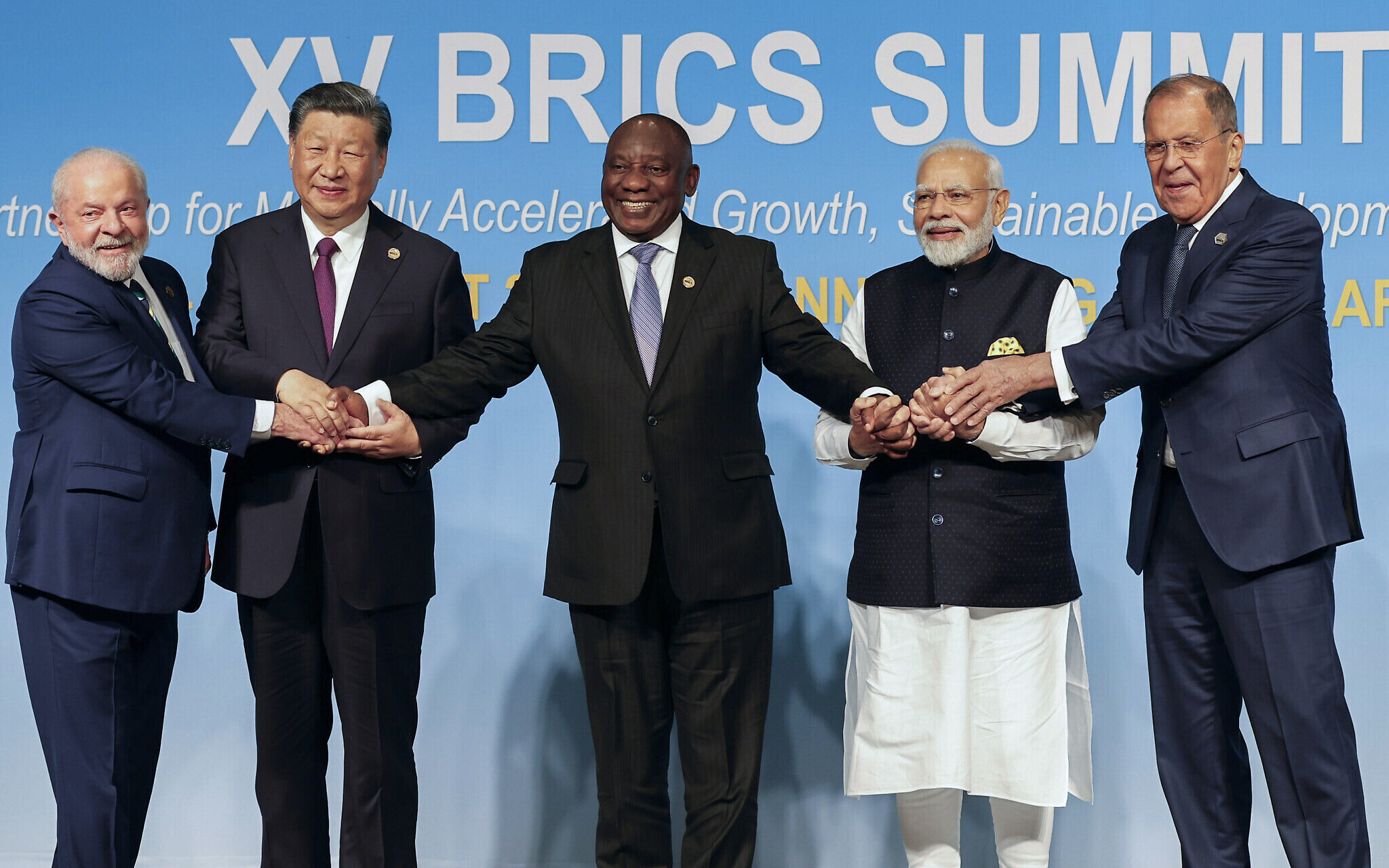
The United Arab Emirates (UAE) is expanding its global influence by deepening its relationship with the BRICS group, comprised of Brazil, Russia, India, China, and South Africa. This initiative underscores the UAE’s strategic efforts to bolster its economic competitiveness and tap into new growth avenues through international collaboration. The partnership with BRICS is poised to strengthen economic ties and foster mutual prosperity on a global scale.

The UAE’s involvement with BRICS is part of a broader strategy to diversify its economic base and enhance its role in global trade and investment. By aligning with BRICS, the UAE seeks to leverage the collective economic power of these emerging markets, which represent a significant portion of global economic activity. This partnership is expected to open new avenues for trade, investment, and technology exchange.

The UAE’s engagement with BRICS reflects its ongoing commitment to building robust partnerships that drive economic growth and sustainability. The country has consistently pursued international collaborations to enhance its economic resilience and competitiveness. This latest move with BRICS represents a continuation of this strategic approach, aimed at positioning the UAE as a key player in the evolving global economic landscape.

The BRICS group itself is undergoing significant transformations, with its members focusing on deepening economic cooperation and expanding their influence in global affairs. For the UAE, this partnership offers an opportunity to access new markets and investment opportunities, particularly in sectors such as technology, energy, and infrastructure. The collaboration is anticipated to yield benefits not only for the UAE but also for the BRICS countries, fostering a more integrated and dynamic global economy.

The UAE’s alignment with BRICS also highlights its role in advocating for a multipolar world order, where diverse economic centers contribute to global development. This approach is consistent with the UAE’s vision of being a bridge between different regions and fostering international cooperation. By working closely with BRICS, the UAE aims to contribute to a more balanced and equitable global economic system.

The partnership is set to explore joint initiatives that could include collaborative projects in technology innovation, sustainable development, and infrastructure development. These areas are crucial for driving long-term economic growth and addressing global challenges such as climate change and resource management. The UAE’s proactive stance in these domains aligns with its broader goals of advancing global sustainability and technological advancement.

In addition to economic benefits, the UAE’s partnership with BRICS could enhance cultural and educational exchanges. Such interactions are expected to foster mutual understanding and strengthen ties between the UAE and the BRICS nations. This aspect of the partnership underscores the UAE’s commitment to building comprehensive and multifaceted relationships on the global stage.

The UAE’s strategic partnership with BRICS represents a significant step in its quest to enhance global development and prosperity. This move aligns with its longstanding approach of forging international partnerships to drive economic growth and explore new opportunities. As the UAE continues to build on its relationships with key global players, the collaboration with BRICS is poised to play a pivotal role in shaping the future of international economic relations.

KUALA LUMPUR, MALAYSIA – Media OutReach Newswire – 2 September 2024 – The influence of presidential elections on financial markets is often temporary. Still, the psychological effect of elections on traders and investors can cause emotional and illogical behaviour, contributing to increased market swings. Apart from the White House, the Senate is also up for grabs this fall, and the balance of power inside the legislative branch […]

ACWA Power has successfully secured $2.6 billion in financing to advance three major solar projects in Saudi Arabia, underscoring the Kingdom’s commitment to expanding its renewable energy portfolio. The projects, expected to significantly boost the country’s solar power capacity, align with Saudi Arabia’s Vision 2030 initiative, which aims to reduce reliance on fossil fuels and increase the share of renewable energy in its energy mix. The deal, […]

Saudi Arabia and Ethiopia have launched a new business council to deepen economic cooperation and boost trade between the two nations. The Federation of Saudi Chambers made the announcement following the approval by the General Authority for Foreign Trade, underscoring the growing importance of bilateral ties between Riyadh and Addis Ababa. The newly established Saudi-Ethiopian Business Council is set to operate for the 2024-2028 term and will […]

VISHNU RAJA
RYO YAMADA
HITORI GOTOH
IKUYO KITA