News related to
global

Greenlogue/AP Federal climate forecasters say the strengthening El Niño has a greater than 90 per cent chance of becoming very strong during the Northern Hemisphere autumn and winter, increasing risks of disruptive rainfall, drought and heat across several regions. The US Climate Prediction Center said in its September assessment that El Niño had intensified during August, with sea-surface temperature anomalies exceeding 3C in the eastern equatorial Pacific. […]

By Nantoo Banerjee The hand-picked 30-share sensitive index (Sensex) of Bombay Stock Exchange, which has long been seen as the country’s overall industry performance barometer, seems to be losing its reliability under profit-booking punters’ whims. The Sensex faced sharp selling pressure last week, closing down at 72,972.56 after plunging over 1,000 points earlier in the […]

The article Corporate Sector Is Growing Well Despite Iran War, Poor Monsoon appeared first on Latest India news, analysis and reports on Newspack by India Press Agency).

Grade A Office Availability Rate Drops Further, High Street Leasing Activities Focus on Kowloon

  • Residential Market: Market sentiment turned more cautious in Q3, with total residential transaction numbers slipping by 40% q-o-q and 21% y-o-y to record around 13,240 cases. Home prices softened by 0.8% between July and August, yet, supported by stronger 1H performance, still recorded a cumulative rise of 7% in the first eight months of 2026.
  • Grade A Office Market: Citywide net absorption reached 412,400 sq ft in Q3, mainly driven by expansion activities by the banking, financial services and insurance (BFSI) sector. Rents in Greater Central continued to pick up, while rental level declines in non-core submarkets narrowed. The overall office market rental level is expected to rise by +5% to +7% in 2026.
  • Retail Market: Overall retail sales growth remained resilient on the back of growing tourist arrivals and stronger economic fundamentals supporting local consumption sentiment. The overall high street vacancy rate remained broadly stable in Q3, with leasing activities concentrated in Mongkok and Tsimshatsui.

HONG KONG SAR – Media OutReach Newswire – 5 October 2026 – Global real estate services firm Cushman & Wakefield today held its Hong Kong Property Markets Q3 2026 Review andOutlook press conference. The Hong Kong residential market entered a consolidation phase in Q3 amid a shift in the U.S. Federal Reserve’s interest rate outlook, increased stock market volatility, and tighter cross-border capital controls in the Chinese mainland. Against this backdrop, residential transaction numbers dropped by 40% q-o-q to record around 13,240 cases in Q3, while home prices declined by 0.8% during July and August. In the Grade A office market, the total new leased area for Q3 reached 1.4 million sq ft, the highest quarterly level since 2019, supported by expansion activities from the BFSI sector. Citywide net absorption reached +412,400 sq ft for the quarter, bringing the overall availability rate to trend further downward, while YTD rental growth recorded +6.1%. In the retail sector, total retail sales remained resilient in Q3. The overall high street vacancy rate remained broadly stable during the quarter, chiefly supported by more active leasing commitments in Mongkok. Leasing activity in Hong Kong Island districts moderated somewhat.

Grade A office leasing market:BSFI expansion demand fuels leasing momentum

The Q3 2026 period marked another active quarter for Hong Kong’s Grade A office market. Total new leased area reached 1.4 million sq ft in Q3, the highest quarterly level since 2019. The banking, financial services, and insurance (BFSI) sector, and consumer products / manufacturing sectors, were the key demand drivers, with BFSI occupiers largely expansion-led. Citywide net absorption reached +412,400 sq ft in the quarter. This performance helped pull down the overall availability rate 0.4 percentage point q-o-q to 19.1%. Core district rents continued to outperform non-core areas. Greater Central rents continued to climb by a further 3.0% q-o-q in Q3, while non-core area rental level declines further narrowed. Rents in Hong Kong East and Hong Kong South edged up slightly in Q3. The overall citywide rental level rose by 1.7% q-o-q in Q3, bringing YTD rental growth to +6.1%.

John Siu, Managing Director, Hong Kong, Cushman & Wakefield,said, “Rents in Greater Central grew by 13% YTD, reflecting strong demand for prime offices. However, mid-priced Grade A offices, particularly those with net effective rents of around HK$45-60 psf, are expected to continue facing headwinds, as abundant existing space and forthcoming supply across multiple submarkets within this price range is likely to sustain intense competition.”

Siu added, “Looking ahead, positive market momentum is likely to partly offset the scheduled 1.2 million sq ft of new supply in Q4, keeping the availability rate broadly stable at 19% to 20% at the year-end. With a decelerating supply pipeline beyond 2026, availability may have passed its cyclical peak in 2025, but non-core areas will continue to face absorption pressure. Full-year rental growth in Greater Central is now projected to grow by +12% to +14%, supporting the citywide Grade A office rental level to rise by +5% to +7% in 2026.”

Retail leasing market: Retail sales growth remains resilient, with Mongkok leading high street leasing activities

Hong Kong retail sales growth remained resilient in Q3, driven by growing tourist arrivals and stronger economic fundamentals supporting local consumption sentiment. The city’s overall retail sales for the January to August 2026 period reached HK$266 billion, up 8.5% y-o-y. Among key retail categories, the Jewellery & Watches sector recorded the strongest performance, recording y-o-y sales growth of 22.6%. Other sectors, such as Medicines & Cosmetics (+5.0%) and Fashion & Accessories (+3.2%), recorded more modest low single-digit growth.

The overall high street vacancy rate remained broadly stable at 5.4% in Q3, chiefly supported by more active leasing commitments in Mongkok, with the district’s vacancy rate dropping to 4.8% from 8.6% in Q2. In Tsimshatsui, although the vacancy rate moved up to 9.5%, notable new transactions were also recorded during the quarter. On Hong Kong Island, vacancy rates in Causeway Bay and Central increased in Q3, rising to 5.1% and 1.4%, respectively, after remaining at 0% for two consecutive quarters. With prime retail spaces in both districts fully occupied in previous quarters, leasing activity moderated in Q3.

High street retail rents in both Causeway Bay and Tsimshatsui remained unchanged in the quarter. In Mongkok, stronger leasing momentum supported a 0.4% q-o-q rise in rental levels. As for Tsimshatsui, a slowdown in the luxury segment combined with relatively high vacancy weighed on the district’s rental performance, resulting in a fall of 1.1% q-o-q. In the F&B sector, rents remained under pressure amid high availability, dropping within a 1% range q-o-q across the four key districts.

John Siu commented, “We have observed stronger leasing demand from Japanese, South Korean and Thai brands in recent months. Looking at the first-stores recorded so far this year, approximately 36% originated from Japan, South Korea and Thailand, similar to the share accounted for by Chinese mainland brands, while exceeding the 29% recorded for 2025 full-year. We expect this trend to continue through the remainder of the year. Looking ahead, the Hong Kong retail market is expected to remain supported by resilient local consumption resulting from stronger economic fundamentals, together with greater tourist spending underpinned by a stronger RMB, and a pipeline of planned mega-events. These factors will bring continued momentum to the city’s retail market. We also expect local and non-local retailers to remain selective, with demand focused on well-located retail spaces in core districts offering attractive rental packages. In turn, the city’s retail market is likely to maintain a gradual recovery trajectory. We forecast high street retail rents in Causeway Bay and Central to pick up by 2% to 3% y-o-y in 2026, with Tsimshatsui and Mongkok recording modest rental growth of 1% to 2% y-o-y.”

Residential Market: Home prices consolidate as transaction numbers cool in Q3, rate hikes remain key

The Hong Kong residential market consolidated somewhat in Q3 following the strong momentum recorded in 1H. After the sustained release of purchasing power over the past year, coupled with the shift of the U.S. Federal Reserve rate direction, increased stock market volatility and heightened uncertainties, some prospective buyers reverted to a wait-and-see stance. This resulted in a noticeable slowdown in transaction activity from July onwards. The monthly transaction number, which averaged more than 7,000 cases in Q2, fell back to around 4,000 deals between July and September. A total of 13,242 residential transactions were recorded in Q3, down 40% q-o-q, bringing cumulative transactions to reach 54,052 cases for the first nine months of the year, representing an 18% increase y-o-y.

Edgar Lai, Senior Director, Valuation and Consultancy Services, Hong Kong, Cushman & Wakefield, commented, “Housing price growth momentum decelerated in Q3 2026. Rating and Valuation Department data suggests that the overall residential price index softened by 0.8% in the two months from July to August, yet still achieved 7.0% growth for the first eight months of 2026. Meanwhile, our Cushman & Wakefield mid-and-small size units price index shows that home prices mildly dropped 0.1% q-o-q, yet still registering a cumulative increase of 7.7% year to date. Our tracking of popular housing estates shows that prices softened in Q3 across different market segments. Prices at City One Shatin, representing the mass market, declined by 5.7% q-o-q, while prices at Taikoo Shing, representing the mid-market, dropped by 0.6% q-o-q. Residence Bel-Air, representing the luxury segment, retreated by 3.8% q-o-q. Following the sustained release of purchasing power over the past year, coupled with tighter cross-border capital controls from the Chinese mainland, and the U.S. Fed rate hike of 0.25% in September, our September Verbal Enquiry Index declined by 35% compared with the peak seen in May.”

Rosanna Tang, Deputy Managing Director, Head of Research, Hong Kong, Cushman & Wakefield, added, “The city’s residential market consolidated in Q3, with monthly transactions retreating to around 4,000 cases. The slowdown reflects a more cautious stance among homebuyers amid shifting interest rate expectations and heightened external uncertainties. Looking ahead, the frequency and pace of rate hikes, together with whether local banks will follow suit, will be the key factors affecting homebuyers’ purchasing decisions and affordability. Given the slower pace of transactions in Q3, we have revised our full-year residential transaction forecast to around 67,000 to 68,000 cases.

“As for pricing, should the U.S. Fed rate further increase in Q4, the residential market is expected to remain in a consolidation phase, with 2026 annual home prices likely to fluctuate in a narrow range near +7%. The rental market, however, will be more resilient underpinned by rental demand brought by the inflow of talent, non-local students, and new entrants to the city. With rental growth of 4.9% recorded in the first eight months of the year, we project a 5% to 7% y-o-y increase for the full year of 2026.”

Hashtag: #CWK

The issuer is solely responsible for the content of this announcement.

About Cushman & Wakefield

Cushman & Wakefield (NYSE: CWK) is a leading global commercial real estate services firm for property owners and occupiers with approximately 53,000 employees in nearly 350 offices and 60 countries. In Greater China, a network of 23 offices serves local markets across the region. In 2025, the firm reported revenue of $10.3 billion across its core services of Valuation, Consulting, Project & Development Services, Capital Markets, Project & Occupier Services, Industrial & Logistics, Retail, and others. Built around the belief that Better never settles, the firm receives numerous industry and business accolades for its award-winning culture. For additional information, visit www.cushmanwakefield.com.hk or follow us on LinkedIn (https://www.linkedin.com/company/cushman-&-wakefield-greater-china).

BANGKOK, THAILAND – Media OutReach Newswire – 5 October 2026 – The Long-Term Resident (LTR) visa has attracted 12,010 high-potential foreigners to Thailand in four years, generating approximately USD 1.28 billion (THB 43 billion) in economic value, according to the Board of Investment (BOI). The visa is a key mechanism for attracting executives and highly skilled personnel for future industries while increasing purchasing power and stimulating domestic spending and economic activity. A new online system now links services from four government agencies in an integrated process.

Mr. Narit Therdsteerasukdi, Secretary General of the Thailand Board of Investment (BOI)

Introduced in September 2022 to attract high-potential foreigners to reside and conduct economic activities in Thailand, the LTR visa program has generated an average economic value of more than USD 107,000 (THB 3.6 million) per recipient, according to BOI data. The calculation covers visa fees, spending in Thailand by visa holders, direct investment, and tax revenue from highly skilled professionals.

Amid intensifying global competition for highly skilled personnel, the LTR visa is an important mechanism for bringing global talent into Thailand. This is particularly relevant as the country prepares for a new wave of investment in advanced-technology industries, including semiconductors and advanced electronics, digital technology and AI, humanoid robotics, aviation, and biotechnology.

“The LTR visa is a strategic pillar to attract global talent as Thailand absorbs a new wave of advanced technology investments,” said Narit Therdsteerasukdi, Secretary General of the Board of Investment. “Drawing top-tier executives and technical specialists from around the world is vital to strengthening our national competitiveness and securing technology transfers from international partners.”

Approved LTR visa recipients primarily come from leading economies. The United States accounts for the largest group, with more than 2,400 approvals, followed by Japan with more than 1,300 and the United Kingdom with more than 1,000. Japanese nationals comprise a notable share of the specialist bracket, aligning with Japan’s heavy footprint in Thailand’s automotive and precision-electronics supply networks.

The 12,010 approved LTR visa recipients fall into five categories: 1,779 Highly-Skilled Professionals; 1,043 Work-from-Thailand Professionals, who work from Thailand for overseas employers; 737 Wealthy Global Citizens; 4,561 Wealthy Pensioners; and 3,891 Dependents of recipients in the first four categories.

Among recipients in the Highly-Skilled Professionals and Work-from-Thailand Professionals categories, 54% hold executive-level positions and 36% are professionals in various fields; the remainder are at the technical level. Applicants in each category must meet specific criteria, such as requirements relating to assets, income, investment evidence, work experience, and health insurance, and undergo rigorous checks by the relevant agencies.

To handle rising application volumes and remove long-standing administrative bottlenecks, the BOI rolled out an integrated digital processing portal in September 2026. The platform centralizes review procedures across four primary state bodies: the Department of Consular Affairs, the Immigration Bureau, the Department of Employment, and the Revenue Department.

Complementing the portal, the Thailand Investment and Expat Services Center (TIESC), a one-stop service center, is located on floors 6-7 of the Parade Zone at One Bangkok. “The center is intended to strengthen Thailand’s competitiveness in continuously attracting high-potential talent from around the world,” said Mr. Narit.

In addition to attracting foreign talent through the LTR visa, BOI also facilitates visas and work permits for executives and personnel working in BOI-promoted businesses through the BOI Visa, and offers the Smart Visa for startups. BOI also supports the skills development of Thai personnel through the Skill Bridge measure, and helps Thai entrepreneurs adopt modern technology to enhance their competitiveness through the Business Transformation measure. These measures work hand in hand to attract international experts, develop Thai personnel, and upgrade Thai businesses, strengthening Thailand’s readiness for the transition to a new economy driven by technology and innovation.


Note: Currency conversions are based on the Bank of Thailand’s average selling rate of approximately 1 USD = 33.6 THB.

Hashtag: #Thailandboardofinvestment #BOI #FDI #Investment

The issuer is solely responsible for the content of this announcement.

Thailand Board of Investment (BOI)

Established in 1966, the Office of the Board of Investment (BOI) has played an important role for more than 60 years in promoting value-creating investment by both foreign and Thai investors, strengthening competitiveness and supporting Thailand’s sustainable economic restructuring toward the new economy.

Crude oil exports from the Middle East climbed above pre-war levels on four days during the final week of September, underscoring a recovery in energy flows despite attacks on commercial shipping around the Strait of Hormuz. Provisional vessel-tracking data from Kpler showed regional crude exports exceeded the pre-war benchmark on September 24 and from September 27 to September 29. Daily shipments ranged between 19.5 million and 22.5 […]

HONG KONG SAR – Media OutReach Newswire – 5 October 2026 – Amid rising operating costs and accelerating digital transformation, many small and medium-sized enterprises (SMEs) in Hong Kong are facing increasing pressure from equipment investment, limited manpower resources, and the growing complexity of print management across multiple departments. For organizations with multiple teams, office locations, or hybrid work arrangements, maintaining a reliable and efficient printing environment at a reasonable cost has become an important operational challenge.

MPS A4 Banner

Most businesses primarily print A4 documents such as contracts, invoices, reports, and administrative paperwork. When A4 printing is sufficient to meet the majority of daily business requirements, investing in larger and more expensive printing equipment may not be necessary. Brother’s Managed Print Service (MPS) allows businesses to flexibly deploy printing resources according to actual operational needs without incurring substantial upfront capital expenditure. The service also provides comprehensive consumables management, maintenance, and professional technical support, making print management simpler and more efficient.

Comprehensive Print Management That Reduces Administrative and IT Workloads

Traditional printer ownership often involves purchasing equipment, replenishing consumables, arranging repairs, and managing technical support, all of which can increase administrative efforts and hidden operating costs, particularly for SMEs without dedicated IT or administrative teams.

Brother’s Managed Print Service includes printer usage, consumables supply, maintenance services, and technical support. This enables businesses to enjoy a reliable printing experience without spending additional time managing day-to-day printing operations, allowing resources to be redirected toward core business development.

Eliminate Large Capital Expenditure and Improve Cash Flow Management

For growing businesses and startups, major investments in office equipment can significantly impact cash flow planning.

Under the monthly subscription model, businesses pay a fixed monthly fee to access professional-grade Brother printing equipment without making a substantial upfront investment. The service also does not impose a fixed monthly print volume limit, enabling organizations to adjust printing usage and device deployment according to operational needs. This flexibility helps businesses control costs more effectively while minimizing resource underutilization and wastage.

Flexible Multi-Device Deployment for Greater Departmental Productivity

For organizations with multiple departments or work teams, relying on a single shared printer can often result in wait times and reduced document processing efficiency.

Brother’s Managed Print Service solution enables businesses to deploy multiple printers according to actual operational requirements. For example, administrative, human resources, finance, and sales departments can each be equipped with printers tailored to their specific needs. This helps minimize waiting time, reduce cross-department disruptions, improve workflow efficiency, and enhance document confidentiality.

The solution is also well-suited for organizations with multiple offices, retail outlets, or distributed business teams, providing centralized management of multiple devices while ensuring consistent technical support and after-sales service.

Proactive Consumables Replenishment Minimizes Business Disruptions

Many businesses have experienced workflow interruptions caused by depleted toner or consumables, potentially delaying important document production, customer service, and internal operations.

Brother’s Managed Print Service automatically monitors printer performance and consumables usage, proactively arranging replenishment before supplies run low. For industries with high printing demands, such as insurance, financial services, logistics, professional services, and education, this not only reduces administrative workload but also minimizes inventory management and procurement-related tasks.

Designed for Hong Kong Offices and Hybrid Work Environments

As hybrid working becomes increasingly common, businesses require more flexible approaches to printer deployment.

Brother offers a range of compact yet feature-rich printers that are particularly suitable for Hong Kong’s space-constrained office environments, departmental workspaces, and shared offices. With a smaller footprint while still meeting everyday business printing requirements, these devices help organizations make better use of valuable office space.

In addition, Brother provides remote technical support services to assist with device setup, network connectivity, and other technical issues, reducing the day-to-day support burden on IT teams.

Five Key Benefits of Choosing Brother “Managed Print Service”

  • Reduce large upfront procurement costs and adapt flexibly to changing business needs
  • Proactive consumables replenishment to minimize inventory management and purchasing efforts
  • Maintenance and professional technical support to reduce equipment downtime risks
  • Automated usage monitoring to lower administrative and management workload
  • Compact printer design ideal for Hong Kong’s limited office space

Focus on Growing Your Core Business

Through its monthly subscription model, flexible device deployment, automated consumables management, and professional technical support, Brother’s Managed Print Service helps businesses simplify print management, reduce overall operating costs, and improve productivity across departments and locations.

When most printing requirements consist primarily of A4 documents, businesses can select the most suitable device configuration based on their actual operational needs without allocating additional resources to infrequent printing demands. By adopting a more flexible and streamlined print management approach, organizations can focus on growing their business, serving customers, and driving innovation, ultimately strengthening their competitive advantage.

Learn more about Brother “Managed Print Service” and limited-time offers:
Website: https://www.brother.com.hk/en/solutions/mps
WhatsApp Enquiries
Email: mpssales@brother.com.hk

Information contained in this release is accurate at the time of publication and is subject to change without prior notice.
Hashtag: #BrotherHK #BrotherMPS #BusinessSolutions #OfficeSolutions #PrintManagement #PrinterRental #OfficeSolutions #Sustainability


The issuer is solely responsible for the content of this announcement.

About Brother International (HK) Limited

Founded in Japan in 1908, Brother has over 110 years of history. It has developed into an international brand with 16 production facilities and 51 sales points worldwide, spanning 44 countries. Brother produces high-quality and innovative products for the printing and imaging, labelling, and sewing markets, maintaining a leading position in the industry. Its main products include a variety of inkjet and laser printers, multifunction printers, fax machines, scanners, label printers, and a range of home sewing machines and commercial embroidery machines.
As a trusted brand, Brother adheres to a “customer-first” philosophy in all aspects of its business, continually meeting diverse customer needs and market challenges with comprehensive and high-quality solutions.
Brother International (Hong Kong) is one of the leading suppliers of home, office, and industrial products in Hong Kong. Established in 1994, it has been serving customers in Hong Kong and Macau for over 30 years. According to IDC’s Global Hardware Peripheral Tracker report, Brother’s A3 multifunction colour inkjet printer has been the number one in shipment volume in the world for 18 consecutive years from 2008 to 2025, reaffirming Brother’s business success in the region.
For more information about Brother Hong Kong, contact our WhatsApp at (852) 3187 0505 or visit the website www.brother.com.hk。
NOTE: All brand and products names are trademarks or registered trademarks of their respective companies.

Shares perspectives on leadership, resilience and legacy with nearly 1,000 customers, young professionals, and aspiring leaders

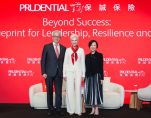
HONG KONG SAR – Media OutReach Newswire – 4 October 2026 – Prudential Hong Kong Limited (“Prudential”) welcomed Dr Maye Musk, a globally renowned author, supermodel and dietitian, to the Prudential Leadership Forum, titled Beyond Success: The Blueprint for Leadership, Resilience and Legacy, held on 3 October 2026.

(From left) Lawrence Lam, Chief Executive Officer, Prudential Hong Kong Limited; Dr Maye Musk; and Angel Ng, Regional CEO, Greater China; Group Customer and Wealth, Prudential plc, at the Prudential Leadership Forum, where they shared perspectives on leadership, resilience and legacy planning across generations.

Nearly 1,000 VIP customers, young professionals, aspiring leaders and top-performing financial consultants came together for a conversation on resilience, reinvention and the values that shape lasting family legacies.

Opening the forum, Lawrence Lam, Chief Executive Officer, Prudential Hong Kong Limited, highlighted Prudential’s commitment to customers: “Prudential has earned enduring trust with families by actively listening to their evolving needs across generations. Sustaining that trust requires a forward-looking vision, creating meaningful opportunities for customers to connect with visionary leaders and fresh perspectives. Dr Maye Musk’s journey is a powerful reminder that experience, resilience and ambition can open new possibilities at every stage of life. ”

The centerpiece of the day was an engaging fireside chat between Dr Musk and Angel Ng, Regional CEO, Greater China; Group Customer and Wealth, Prudential plc. Through the exchange, Dr Musk shared candid reflections on rebuilding her career across life stages and countries, empowering her three children to pursue their distinct ambitions, and wealth succession.

Reflecting on her journey, Dr Musk said: “Success is rarely a straight line. Throughout my life, I have had to start over, adapt and embrace new opportunities, often when others thought it was too late. What I have learned is that resilience is built through action, not certainty. Whether as a parent, a professional or a leader, our role is not to create a perfect path for the next generation, but to give them the confidence, values and independence to create their own. Lasting legacies are built not by removing challenges, but by helping others develop the strength to navigate them.”

Angel highlighted Prudential’s vision for legacy: “In today’s rapidly evolving world, planning for the next generation is about more than passing on financial wealth. It is also about passing on the values and judgement that help them make informed decisions and pursue their aspirations. When families pair clear principles with the confidence to make their own choices, they can protect what they have built while creating a stronger foundation for generations to come. Prudential supports families in planning ahead, passing on their wealth with confidence, and building a brighter tomorrow.”

Building on the theme of preparing for the future, the forum then turned to the city’s distinctive advantages and emerging opportunities for talent through a panel discussion titled Hong Kong: Where Global Wealth and Talent Converge. Felix Chan, the Director of Hong Kong Talent Engage; and Jason Fong, Global Head of Family Office at Invest Hong Kong shared perspectives on how the leaders of tomorrow can learn, grow and thrive in Hong Kong.

By bringing together forward-looking perspectives and opportunities to engage with global leaders, Prudential continues to support customers at every stage of life, helping them plan for their health and financial wellbeing, protect what matters most, and build resilience for the future. This commitment is also reflected in value-added platforms such as PruNextGen, through which we support families in planning early for their children’s future, broadening their horizons and laying the foundations for lifelong success.

Hashtag: #PrudentialLeadershipForum

The issuer is solely responsible for the content of this announcement.

About Prudential Hong Kong Limited

Prudential has been serving the people of Hong Kong since 1964. Through Prudential Hong Kong Limited and Prudential General Insurance Hong Kong Limited, the Company provides a range of financial planning services and products, including individual life insurance, investment-linked insurance, retirement solutions, health and medical protection, general insurance, and employee benefits to protect over 1.41 million customers in Hong Kong. Beyond Hong Kong, Prudential serves the Macau community through its branch, offering health insurance and financial solutions to complete its footprint in the Greater Bay Area. Visit for more information.

Advertisements
SHENZHEN, CHINA – Media OutReach Newswire – 3 October 2026 – Huawei hosted an international media roundtable today featuring Richard Yu, Executive Director, Chairman of the Investment Review Board, and Chairman of the Board of Directors of the Consumer BG. Yu shared comprehensive insights into Huawei’s consumer business and HarmonyOS ecosystem.

IMG 8638

Richard Yu joined Huawei in 1993, working on early developments like the first-generation program-controlled switch and participating in the establishment of Huawei’s wireless communications business, which started with GSM. Over the past decade, Yu has led Huawei’s consumer business with the vision to deliver a seamless AI life experience to all consumers across five key scenarios: HIMA-powered Smart Travel, HarmonyOS Office, Smart Home, Fitness & Health, and Entertainment, which he said is also the long-term strategy for Huawei’s consumer business over the next 10 years.

Between 2007 and 2025, Huawei invested more than CNY1.8 trillion into R&D shifting from roughly 10% of annual revenue in early years to over 20% recently. Huawei has continued to increase investment into the core technologies of the ICT domain and basic research, which has translated into robust core capabilities, extensive intellectual property, and a vast patent portfolio, and helped with achieving a series of breakthroughs in technological innovation.

The Mate 90 series smartphones Huawei just launched come with the latest Kirin 9050 Pro chip. The overall device performance is 31% higher than the previous generation. The Balong modem, image sensor processor (ISP), mobile security processor (MSP), Lingxi CPU, Maleoon GPU, and the NPU that adopts Huawei’s Da Vinci architecture for AI processing are all designed by Huawei. They offer higher energy efficiency and deliver much-improved overall system-level performance.

Even though Yu admitted that Huawei has limited access to advanced semiconductor processes, Huawei recently made a new breakthrough in the semiconductor domain – the LogicFolding technology under the Tau Scaling Law. Unveiled by He Tingbo, head of Huawei’s Semiconductor Business Department this May, this technology vertically stacks the logic layers of chips and restructures the circuit layout through inter-layer high-density interconnect to shorten critical paths and reduce latency. This technology was adopted on Kirin 9050 Pro chip, which shows very strong AI processing power. The Mate 90 series powered by this chip can run a 30B MoE on-device AI model.

In the AI domain, Yu talked about the Ascend compute foundation that Huawei provides, by remarking Huawei’s large models called openPangu, AI capabilities for intelligent driving, and HarmonyOS Celia, which is similar to Gemini in the Google Android ecosystem. Huawei is also using AI to improve the O&M of communications network equipment. By combining AI computing power with domestic open-source large models, Huawei’s vision is to help enterprises and industries around the world to become more productive and bringing more convenience to everyone.

In the past years, Huawei has launched a broad series of products and solutions, including smartphones, PCs, tablets, wearables, TWS audio products, Smart TVs, home routers, smart home control solutions, as well as intelligent electric vehicles together with partners. Underlying these products and solutions are Huawei’s chip hardware platform and HarmonyOS – another OS ecosystem after iOS from Apple and Android from Google that Huawei developed to support all the smart devices and smart hardware across all scenarios.

Development of HarmonyOS began in 2019. Before that, Huawei was a major contributor to the Android community as well as the entire Android ecosystem. Now, more than 90 million devices, including smartphones, PCs, and tablets, currently run on HarmonyOS 6 and HarmonyOS 7. This figure is expected to hit the 100 million mark by the end of this year. The number of apps and services in the HarmonyOS ecosystem has already exceeded 450,000. Its global registered developer count has reached 11 million, and Huawei now has over 23,000 app innovation partners. Expressing his special thanks to all partners and developers for their trust and support, Yu also pointed out that Huawei is considering gradually bringing HarmonyOS to the global market in the future.

Globalization is another topic of the conversation. Yu mentioned that Huawei had very good collaboration with many companies from the US, Europe, Japan, South Korea, and Taiwan, delivering huge business value and benefits to those partners. When it comes to the difficulties that Huawei overcame since 2019, Yu said that relying on homegrown technologies and capabilities, Huawei gradually designed its own operating system and developed basic tools and software by themselves, putting a domestic supply chain in place. In 2023, Huawei started to manufacture the chips used by smartphones domestically again. With these chips and HarmonyOS, and by relying on China’s domestic supply chain, materials, and process nodes, Huawei has basically gotten rid of the dependence on US technologies.

While Huawei’s global market share was once No. 1, nowadays it only sells several million units of smartphones outside China every year. However, Yu revealed that Huawei is trying to return to the overseas market step by step.

Taking wearables as an example, Huawei is No. 1 in terms of the market share both in China and globally. Other innovative products such as TWS earphones, are also growing fast and have reached No. 1 in many countries. While Huawei’s tablet and PC business was greatly affected after it was denied access to Windows and Intel x86 chips, the HarmonyOS-based tablets are now performing strongly. Another example would be CPE, which is a mobile router that provides connectivity to the unconnected in remote and rural areas. These products are also very well received across many regions outside China, helping more people connect to the rest of the world and live better lives.

Question: Both the Huawei XT 2 and the two most advanced models of the Mate 90 series use a LogicFolding chip. Will LogicFolding chips be used for more phones in the future? We understand that Huawei’s chip production capacity is still limited. Huawei has launched SuperPoDs, and AI infrastructure is a huge business. They are both very important in China. How do you secure a larger share of the chip supply internally?

Richard Yu: We started introducing the chip that adopts the LogicFolding technology powered by the Tau Scaling Law to the Mate XT 2 tri-fold phone. To answer your question, yes, more of our phones will definitely use these LogicFolding chips in the future.

Currently, the production capacity for advanced semiconductors in China still cannot meet the rapidly growing demand. Huawei’s Ascend chips for the AI domain also use such capacity. But we have developed a requirement plan, which also covers the chip requirements of smartphones.

The sharp price increase for memory components over the past two years has somewhat limited the smartphone sales volume. Even though the production capacity remains tight right now, generally it is sufficient to meet our market shipment needs.

We hope that production capacity will ramp up in China’s semiconductor industry so that we can manufacture more advanced products for consumers in the Chinese market as well as the overseas market in the future.

To read the full Q&A session:
https://www.apmultimedianewsroom.com/multimedia-newsroom/continuous-innovation-securing-our-competitive-edge-through-technological-breakthroughs

Hashtag: #Huawei

The issuer is solely responsible for the content of this announcement.

AD Ports Group has completed its Dhs3.1 billion acquisition of Brazilian agri-bulk terminal operator Corredor Logística e Infraestrutura, marking the Abu Dhabi group’s largest takeover and its first strategic entry into South America. The financial closing follows regulatory and antitrust clearances in Brazil, including approvals from the National Waterway Transportation Agency, known as ANTAQ, and the Administrative Council for Economic Defense, or CADE. The transaction was first […]

Arabian Post Staff -Dubai Abu Dhabi’s Mubadala Investment Company was the most active sovereign wealth fund among the Gulf’s leading state investors during the first nine months of 2026, deploying $26.2 billion, according to data released by Global SWF. Saudi Arabia’s Public Investment Fund ranked second with $14 billion of investments between January and September, followed by Abu Dhabi Investment Authority at $12.2 billion, Abu Dhabi’s L’imad […]

HONG KONG SAR – Media OutReach Newswire – 2 October 2026 – UstarPay announced that it will co-host “Token2049 Networking Event with BitGo, HashKey & UstarPay” with BitGo and HashKey Cloud during TOKEN2049 Singapore. The event will take place in Singapore and will be subject to registration approval. The exact venue address will be provided to approved participants after registration.

The event will bring together industry participants from digital assets, fintech, payments, Web3 infrastructure, institutional services, and cross-border finance. It aims to provide a face-to-face networking platform for institutions, project teams, infrastructure providers, investors, and professionals. Discussions will focus on digital asset infrastructure, compliant payments, stablecoin use cases, wallet and card services, and how digital assets can enter real-world payment scenarios.

Event Details

Event Name: Token2049 Networking Event with BitGo, HashKey & UstarPay
Date & Time: Wednesday, 7 October, 18:00–21:00 GMT+8
Event Partners: BitGo, HashKey Cloud, UstarPay
Registration: Submit an application through the official Luma event page
Registration Link: https://luma.com/qjgwthvg
Entry: Approved participants may enter with a valid QR code

Please note that this event requires registration approval. All participants must submit an application through the official Luma event page. The hosts will review applications based on applicant background, industry relevance, and event capacity. Once approved, participants will receive an event QR code. Only approved participants with a valid QR code will be admitted to the event. An invitation or shared event information does not constitute official admission credentials.

Stablecoins Enter the Next Stage: From On-Chain Assets to Real-World Payments

In recent years, stablecoins have evolved from a funding tool primarily used in crypto trading into a payment and settlement medium within the global digital economy. As cross-border work, global freelancing, online subscriptions, e-commerce, and international trade continue to grow, the market demand for faster, more flexible, and geographically accessible payment methods has continued to increase.

However, for digital assets to truly enter everyday life, one core question remains: how can the speed of on-chain transactions be connected with the trust, compliance, and settlement systems required by the real world?

In traditional financial and payment networks, every movement of funds must address fundamental questions: who the user is, where the funds come from, whether the transaction is compliant, whether risk can be identified, and whether the settlement trail can be audited. For digital asset payments, these questions do not disappear simply because technology becomes faster. Instead, they become essential conditions for digital assets to move toward broader, scalable adoption.

UstarPay’s role is to build the infrastructure that connects on-chain assets with real-world payment scenarios during this transition.

About UstarPay’s Role in Real-World Digital Asset Use

UstarPay is a PayFi-focused infrastructure platform connecting supported digital assets with real-world spending and transaction use cases. Its core vision is to help digital assets move beyond trading, holding, or investment and become more practical for everyday and commercial use, subject to applicable requirements.

By connecting wallet, card, and related technology infrastructure, UstarPay helps eligible individuals and businesses access card and transaction solutions using supported digital assets. In applicable markets, and subject to supported assets, product settings, and relevant requirements, users may explore stablecoins and other supported digital assets for online shopping, travel and hotel spending, subscription services, cross-border purchases, in-store purchases, and, where applicable, ATM withdrawals.

For enterprises, UstarPay explores modular technology support connected to card applications, risk management, and settlement workflows. Relevant use cases may be considered for eligible platforms and businesses, subject to applicable laws, partner requirements, product scope, and case-by-case assessment.

UstarPay believes the future of digital asset use is not only about whether a transaction can be completed, but also whether relevant activity can be verified, monitored, risk-assessed, reviewed, and settled. Based on this view, UstarPay is exploring “Proof-of-Spend” as part of its digital asset application narrative. By connecting identity verification, AML processes, asset custody, on-chain risk assessment, transaction records, and settlement workflows, UstarPay is exploring how digital asset applications can be supported by more verifiable, monitorable, and traceable process foundations.

From a risk management and traceability perspective, UstarPay considers identity verification, on-chain transaction monitoring, asset custody, and settlement records as relevant components where applicable. The company may work with relevant technical service providers in these areas. This registration does not mean that all products, services, or markets are authorized or available. Relevant services remain subject to applicable laws and regulations, user eligibility, supported assets, product settings, partner requirements, and jurisdictional restrictions.

Guided by “Real Crypto, Real Life,” UstarPay’s long-term direction is to help supported digital assets move from on-chain holdings toward card and transaction applications that can be used in everyday and commercial contexts, subject to product configuration, applicable requirements, supported assets, and regional availability.

Event Significance: Connecting PayFi, Stablecoin Payments, and Institutional Infrastructure

The co-hosts of this event span digital asset custody, institutional infrastructure, PayFi, stablecoin payments, and on-chain yield. This reflects the digital asset industry’s ongoing evolution from single-purpose trading scenarios toward more mature financial and payment infrastructure.

As stablecoins continue to become an important tool for value movement in the global digital economy, the market demand for compliant payment access, secure asset custody, risk control infrastructure, and cross-border settlement capabilities continues to grow. Through this event, UstarPay hopes to engage with more industry participants to discuss how digital assets can enter the real world in a safer, more compliant, and more practical way.

Hashtag: #UstarPay

The issuer is solely responsible for the content of this announcement.

About BitGo

BitGo (NYSE: BTGO) is the digital asset infrastructure company delivering custody, wallets, staking, trading, financing, stablecoins, and settlement services from regulated cold storage. Since 2013, BitGo has focused on accelerating the transition of the financial system to a digital asset economy. BitGo maintains a global presence and multiple regulated entities, including BitGo Bank & Trust, National Association, the first federally chartered digital asset trust bank owned by a publicly traded company. Today, BitGo serves thousands of institutions, including many of the industry’s top brands, financial institutions, exchanges, and platforms, and millions of investors worldwide. For more information, visit .

About UstarPay

UstarPay is a PayFi-focused infrastructure platform designed to connect digital assets with real-world spending and transaction use cases. By connecting wallet, card, and related technology infrastructure, UstarPay helps eligible users and businesses access convenient card and transaction solutions using supported digital assets.

With a focus on compliance, transparency, and risk management, UstarPay is developing digital asset experiences designed to support traceability and transparency in supported markets. Guided by “Real Crypto, Real Life,” the company is focused on making supported digital assets more practical and relevant to everyday life, subject to applicable requirements and availability. Relevant services remain subject to applicable laws and regulations, user eligibility, supported assets, product settings, and regional availability.

For more information, please visit .

About HashKey Cloud

HashKey Cloud is the institutional staking and yield infrastructure of HashKey Group (HKEX: 3887). It focuses on providing secure, auditable multi-chain staking and yield services for global institutions, asset managers, and professional investors. Our services include ETF/DAT staking, prime VIP staking, API staking, and prime yield, empowering institutions to manage on-chain assets and returns with efficiency and confidence.

Disclaimer: Relevant services are subject to applicable laws and regulations, user eligibility, supported assets, partner requirements, and geographic restrictions. Not all services are available in all markets.


Houston-based Alpha Energy forms Alpha Energy International to acquire and modernise mature oil fields; Tennor provides $500 million funding facility

HOUSTON, US – Media OutReach Newswire – 2 October 2026 – Alpha Energy, the Houston-based oil and gas upstream company, has formed Alpha Energy International to lead its expansion outside the United States and has sold a 65% stake in the new company to Tennor Global LLC.

Tennor has agreed to arrange Alpha Energy International with a $500 million funding facility, allowing the venture to move quickly on acquisitions in selected countries, including Venezuela. Alpha Energy International will be responsible for all of Alpha Energy’s future activities and investments outside the USA.

The new company will initially target mature producing fields and difficult-to-recover reserves. Alpha’s leadership team will develop the assets and run operations, while Tennor, as majority shareholder, will support the venture through its network of relationships in the target countries.

Lars Windhorst, Founder of Tennor Global, said: “Alpha’s team has a rare track record of turning around mature fields at scale, and we believe that expertise is exactly what many producing countries need today. Tennor’s role is to open doors and provide the capital to move quickly. Together, we intend to build an international oil company focused on getting more from existing fields, working in partnership with host governments and national oil companies.”

Thomas Reed, CEO of Alpha Energy International and founder of Alpha Energy, said: “The combination of Alpha’s technical and operating expertise with Tennor’s financial support and deep knowledge of key international markets provides the basis for a new type of international oil company.

“Our strategy is simple. More oil remains in existing conventional fields than has ever been produced, and since the late 1980s, improvements in technology and engineering have added more recoverable barrels from existing fields than the industry’s total greenfield exploration success. Alpha is on a mission to acquire and modernise these legacy fields. Better recovery of the world’s existing oil and gas resources is Alpha’s fundamental value proposition, and with Tennor we have the reach and resources to act.”

A team built on the Yukos turnaround

Alpha Energy has a thirty-year history of conventional reservoir development and operations across more than sixty fields, primarily on the US Gulf Coast and the shallow-water shelf of the Gulf of America. Its principals have also operated at scale internationally. The company’s COO spent more than a decade in Venezuela, including operatorship of a producing joint venture on Lake Maracaibo at over 100,000 barrels of oil per day.

Mr Reed, who will run Alpha Energy International from Houston, has 35 years of oil and gas experience with Yukos, RusPetro, JKX and Texas Petroleum Investment Company. The COO has 35 years of operations experience with Yukos and Gazprom, among others, most recently with the Venezuelan joint venture. Chris Hopkinson, CTO, has 38 years in the upstream business, including senior positions at Shell, Yukos, BG Group and KazMunayGas.

All three built Alpha’s proprietary Alpha Technical Center on their experience at Yukos, where the same performance engineering techniques added nearly one million barrels per day of production in four years with a net reduction in the total well count. The Technical Center covers subsurface evaluation, reservoir engineering, well design and facilities design.

Alpha Energy International will recover production by optimising asset performance from the wells up, using a value-driven technical limit approach and current technologies. The company works alongside national oil companies, training and handing over to local engineers as it goes.

Hashtag: #AlphaEnergy

The issuer is solely responsible for the content of this announcement.

About Alpha Energy

Alpha Energy is a Houston, Texas based oil and gas upstream company specialising in conventional reservoir development and operations. Over thirty years it has operated in more than sixty fields, primarily on the US Gulf Coast and the shallow-water shelf of the Gulf of America. Alpha Energy International, its majority-owned international arm, is responsible for all of the company’s activities and investments outside the USA.

About Tennor Global

Tennor Global is a holding and private equity company focused on energy, energy technology and artificial intelligence. It takes majority and minority stakes in public and private companies and invests in public and private debt, targeting special situations where its entrepreneurial approach and sector expertise can create value quickly. Its diversified portfolio also spans technology, industrials, natural resources, media, entertainment and sports, retail and real estate.

Arabian Post Staff -Dubai Oil prices were broadly steady above $102 a barrel on Friday as traders weighed China’s suspension of fuel exports and an expanding US military presence in the Middle East against signs that regional crude supplies were recovering. Brent crude slipped 3 cents, or 0.03%, to $102.28 a barrel by 0350 GMT after edging higher earlier in Asian trading. US West Texas Intermediate fell […]

PTT Oil and Retail Business Public Company Limited secured 12 awards across international, industry and consumer sectors in 2026, reflecting broad recognition of its vision to link business growth with opportunity, quality of life and a sustainable future for all stakeholders.

BANGKOK, THAILAND – Media OutReach Newswire – 2 October 2026 – PTT Oil and Retail Business Public Company Limited (OR), the retail and lifestyle arm of Thailand’s PTT Group, has received 12 awards in 2026 spanning three sectors of recognition: international capital markets, domestic industry and consumers. These include six awards from the 16th Asian Excellence Awards organised by Hong Kong-based financial magazine Corporate Governance Asia, the Thailand Top CEO of the Year 2026 by BUSINESS+ magazine and the Faculty of Commerce and Accountancy, Thammasat University, and five brand awards from Marketeer No.1 Brand Thailand 2026, each affirming a different dimension of the company’s vision: “Empowering All Toward Inclusive Growth.”

09BN or rewards 1920x1080

At the heart of OR’s vision is a commitment to ensure that business growth creates tangible value beyond financial returns, expanding opportunity, raising quality of life and building a sustainable future for investors, communities, partners and consumers alike. This vision is executed through four core missions: Seamless Mobility, All Lifestyles, Global Market and OR Innovation, each underpinned by three sustainability pillars: Economic Prosperity, Living Community and Healthy Environment. Also, OR’s Sustainability concept “OR Term Okad Dee Dee Dee” empowering opportunity for three Good Dimension, Good Community, Good Environment and Good Growth.

Under the leadership of M.L. Peekthong Thongyai, Chief Executive Officer, OR has expanded its operations across 10 countries, delivered 2025 EBITDA of 20,357 million baht (approximately USD 623 million), up 15.2% year-on-year, with net profit rising 47.8% to 11,304 million baht (approximately USD 346 million), and grown blueplus+, its lifestyle and membership application, to 9.3 million registered members. These results underpinned both the Thailand Top CEO of the Year 2026 in the retail and wholesale category and Asia’s Best CEO at the Asian Excellence Awards.

The remaining five Asian Excellence Awards reflect the financial and social dimensions of OR’s vision. Asia’s Best CFO, Best Investor Relations Company and Best Investor Relations Professional recognise OR’s structured stakeholder communication, including quarterly analyst meetings, non-deal roadshows and bilingual disclosure for domestic and international investors. The Sustainable Asia Award and Asia’s Best CSR reflect OR’s commitment to reducing greenhouse gas emissions by more than one third against a 2022 baseline by 2030, progressing towards Net Zero by 2050, alongside programmes such as Thaidet, which supports over 500 local entrepreneurs through OR’s retail network, and Café Amazon for Chance, which creates employment for people with disabilities, senior workers including underprivileged people. OR is also a constituent of the Dow Jones Sustainability Best in Class Indices in the Emerging Markets category for 2026.

At the consumer level, five brands — PTT Station, EV Station PluZ, Café Amazon, PTT LPG and PTT Lubricants — claimed top positions at the Marketeer No.1 Brand Thailand 2026, affirming the All Lifestyles mission through a network serving 3.9 million users daily, EV charging infrastructure covering all 77 provinces, and a Café Amazon footprint of 4,830 domestic outlets and 256 international locations.

“These awards reflect recognition from the people and institutions that matter most to OR — our investors, our industry peers and our customers,” said M.L. Peekthong Thongyai, Chief Executive Officer of PTT Oil and Retail Business Public Company Limited. “Each one affirms that our vision of building an integrated ecosystem, one that creates opportunity, improves quality of life and drives sustainable growth, is delivering results across every dimension of our business.”

Across all 12 awards, each recognition maps to OR’s four missions in action: Seamless Mobility and Global Market through network expansion and digital platform growth; All Lifestyles through consumer brand leadership across energy, food and beverage, and services; and OR Innovation through the digital infrastructure connecting it all. Together, they confirm that OR’s “Empowering All Toward Inclusive Growth” vision is producing measurable, multi-dimensional results across every stakeholder group the company serves.

Hashtag: #OR

The issuer is solely responsible for the content of this announcement.

Attacks targeting artificial intelligence systems have become the biggest cybersecurity preparedness gap for organisations, PwC said on Thursday, as its global survey exposed weaknesses in skills, accountability and data protection. Half of security leaders placed attacks on AI systems among the threats they were least prepared to address, ahead of cloud threats at 40%, third-party breaches at 34% and ransomware at 33%. The findings were published on […]

SHANGHAI, CHINA – Media OutReach Newswire – 1 October 2026 – Huawei today officially launched its next-generation flagship HUAWEI Mate 90 Series, featuring the powerful LogicFolding Tau Chip, the Kirin 9050 Pro. Packed with breakthrough innovations, including the XMAGE True-to-Color Portrait Camera, the Second-generation Linglong Display, full-body Kunlun Xuanwu architecture, and the HUAWEI XMAGE Z10 Modular Camera, the series sets a new benchmark for mobile technology.

Huawei Launches the HUAWEI Mate 90 Series, Equipped with the Flagship Tau Chipset Across the Entire Series

Richard Yu, Executive Director of Huawei, Director of the Investment Review Board, and Chairman of the Huawei Consumer BG, stated: “The HUAWEI Mate 90 Series is equipped with the flagship Tau chipset across the entire series. Through vertical integration of hardware, software, chips, and cloud, we have achieved a comprehensive evolution in design, performance, imaging, reliability, and smart user experience. Today, we step into a new era of brilliance.”

Between 2007 and the end of 2025, Huawei invested a total of CNY1.8 trillion into R&D. Today’s product breakthroughs are the direct result of long-term R&D investment and a foundation of core technology. Huawei is turning foundational advancements in Kirin, HarmonyOS, and beyond into tangible product experiences that consumers can truly feel.

Meticulously Crafted, Radiant at First Sight

The HUAWEI Mate 90 Series introduces a refined, seamless design, pairing a glossy mid-frame with a matte metal rear cover.

In terms of durability, the Mate 90 Pro and higher models are built on the full-body Kunlun Xuanwu architecture. The camera cover introduces the industry’s first Optical Kunlun Glass, delivering 20x better drop resistance, while the front display is protected by 3rd-gen Kunlun Glass, offering a 50% improvement in impact resistance. The Pro Max Premium Edition and RS ULTIMATE DESIGN go further with upgraded Xuanwu Kunlun Glass, cutting reflections by 70% and boosting scratch resistance by 16x. The entire lineup supports IP68 dust and water resistance up to 6 meters alongside IP69 resistance against high-temperature, high-pressure water jets.

Powered by LogicFolding Tau Chip: A Massive Leap in Performance

At the heart of the HUAWEI Mate 90 Pro Max is the LogicFolding Tau Chip, built on an innovative architecture that drastically compresses critical path latency to enable 5 million signal transmission bonds and an impressive 125 TB/s inter-die bandwidth. The Pro Max Premium Edition and RS ULTIMATE DESIGN are powered by the Kirin 9050 Pro chip, delivering a 31% increase in overall performance. Meanwhile, the Pro model’s Kirin 9035 chip brings a 20% performance boost, and the standard edition’s Kirin 9030 chip offers a 27% gain in performance.

Vertically integrated with HarmonyOS 7 across hardware, software, chips, and the cloud, the Kirin 9050 Pro CPU supports hyper-threading technology for effortless, ultra-smooth operations. Mobile gaming also reaches new heights with hardware-accelerated ray tracing, capable of rendering up to 55 million rays per second.

Second-Generation Linglong Display: A Screen That Truly Stands Out

The HUAWEI Mate 90 Pro introduces the second-generation Linglong Display, reaching an unprecedented peak brightness of 12,000 nits at 1% APL. Built on an enhanced Tandem OLED Architecture, panel lifespan is extended by 138%. The HUAWEI Mate 90 Pro Max and RS ULTIMATE DESIGN debut the Full-color Linglong Display. Leveraging its 12,000-nit ultra-high brightness and full BT.2020 end-to-end color management, over 60 mainstream apps can now upsample P3 content to vibrant, full-color BT.2020 quality. Eye care technology also receives a major upgrade, featuring industry-first ambient light detection and a 1-nit ultra-low brightness eye-comfort mode for a seamless, strain-free viewing experience.

Breakthrough Connectivity & Reliable Outdoor Utility

Connectivity gets a total overhaul. The industry-first Wi-Fi and cellular converged antenna architecture boosts signal gain by 2 dB. The entire lineup supports eSIM, with the Pro Max pioneering four-SIM, three-standby functionality. With multi-device communication sharing, photo and video upload speeds are boosted by up to 40% in congested environments like crowded concerts or remote outdoor areas.

XMAGE True-to-Color Portrait

The entire series comes equipped with True-to-Color Camera 3.0, featuring full-focal-length infrared optical coating for the first time, which advances overall color accuracy by 37% and skin-tone accuracy by 62%. The updated XMAGE True-to-Color Portrait engine introduces four versatile shooting modes: Portrait original, Soft light portrait, Dazzling fireworks, and Starburst, delivering striking, authentic portraits that speak directly to the heart.

The Pro Max features a powerful 18 EV ultra-HDR main camera, a large-sensor 200 MP RYYB telephoto camera, and CIPA 7.5-rated hardware image stabilization, guaranteeing crisp, steady shots even beyond 20x zoom. The lineup also introduces a dedicated live-streaming optimization mode, making it an ideal companion for content creators.

Additionally, the HUAWEI XMAGE Z10 Modular Camera features a 1-inch large sensor, 24–240 mm continuous optical zoom, and a maximum aperture of f/2.0 to f/4.5, providing pristine, studio-quality imagery across every focal length.

HarmonyOS AI: Smarter, Proactive, and Seamless

Powered by the 30B MoE full-modal on-device foundation model on the Pro Max and higher models, next-generation AI features come to life. Celia Memories seamlessly syncs and organizes content from over 50 mainstream apps, while the Celia navigation bar proactively suggests over 30 context-aware actions based on on-screen content. For everyday tasks, Celia Call 2.0 handles automated call answering, call summaries, and real-time translation, while the Celia Gallery Assistant enables intuitive voice- or text-driven photo editing and instant video generation. Furthermore, HarmonyOS Interconnect brings distance-free remote Huawei Share and allows one-tap sharing to multiple HarmonyOS devices simultaneously.

Committed to taking the harder but right path, Huawei provides users and developers with a powerful alternative in HarmonyOS. Today, HarmonyOS 6 and HarmonyOS 7 power over 90 million devices, including smartphones, PCs, and tablets, and are on track to pass the 100 million mark by the end of this year. At the same time, Huawei’s global registered developer community has grown to over 11 million.

ULTIMATE DESIGN: See the Extraordinary

The HUAWEI Mate 90 RS ULTIMATE DESIGN evolves the iconic Star Diamond camera module aesthetic and debuts Dynamic Lenticular Kunlun Glass, elevating high-durability materials into an expression of premium design. The rear cover showcases an all-new Ascending Texture available in Red, White, and Black. Under the hood, it packs the Kirin 9050 Pro chip, Full-color Linglong Display, Tiantong Satellite Communications, BeiDou Satellite Messaging, four-SIM three-standby, and the advanced True-to-Color Camera 3.0 with an 18 EV ultra-HDR main camera, delivering ultimate design, technology, imaging, and experience.

The series starts at CNY5,999 for the HUAWEI Mate 90, CNY6,999 for the HUAWEI Mate 90 Pro, CNY9,499 for the HUAWEI Mate 90 Pro Max, and CNY12,999 for the HUAWEI Mate 90 RS ULTIMATE DESIGN.

Hashtag: #Huawei

The issuer is solely responsible for the content of this announcement.

By Ashok Nilakantan Ayers NEW YORK: It began as a routine flight from Dubai to Tel Aviv. Within minutes, passengers were screaming, a pilot was bleeding inside the cockpit and the aircraft was plunging thousands of feet toward the darkness below.17,000 feet reportedly. For those aboard Flydubai Flight FZ1073 on Wednesday, the question was brutally […]

The article Drama In The Skies: The Flight That Nearly Became A Catastrophe appeared first on Latest India news, analysis and reports on Newspack by India Press Agency).

Arabian Post Staff -Dubai Global air passenger demand fell 0.8 per cent year-on-year in August, as a renewed contraction in Middle Eastern traffic outweighed growth across several other regions, the International Air Transport Association said. Demand, measured in revenue passenger kilometres, declined from August 2025 even as airlines increased total capacity by 0.3 per cent, measured in available seat kilometres. The global passenger load factor consequently slipped […]

Singapore’s Temasek plans to open offices in Riyadh and Abu Dhabi in the first half of 2027, establishing its first physical presence in the Middle East as it steps up investment and partnerships across the region.

The Singapore state-owned investment company said on Wednesday that the two offices, subject to statutory approvals, would operate as strategic hubs for Temasek and its portfolio companies. Some portfolio companies are expected to co-locate at the new sites, giving them a base from which to develop business and partnerships in Gulf markets.

Temasek said it sees broad opportunities in Saudi Arabia, the United Arab Emirates and Qatar. It intends to increase engagement with institutions in Qatar and other Middle Eastern markets while using the Riyadh and Abu Dhabi bases to improve access to investment opportunities across Central Asia and Africa.

“The Middle East is an important part of Temasek’s global network,” chief executive Dilhan Pillay Sandrasegara said. He cited the pace of economic transformation across the region and said its long-term fundamentals remained attractive, with strong alignment between regional priorities and Temasek’s investment focus.

Pillay said Temasek had built relationships in Saudi Arabia, the UAE and Qatar over several years through partnerships, co-investments and the activities of its portfolio companies. The planned offices represent a shift from managing those relationships remotely towards maintaining permanent teams in two of the Gulf’s principal financial and investment centres.

The expansion comes as Gulf governments continue programmes intended to diversify their economies, develop infrastructure and attract international capital. Temasek said its investment experience, global networks and partnership-led approach, together with the sector expertise of companies in its portfolio, could support opportunities created by that transformation.

Temasek said the new hubs would also give portfolio companies closer access to local partners and markets, allowing them to collaborate alongside the investor while pursuing opportunities generated by economic diversification and infrastructure spending.

Chia Song Hwee, chief executive of Temasek Global Investments, was appointed chairman for the Middle East and Africa with effect from September 1. Temasek said he would provide senior leadership and oversight for its engagement and long-term growth in the two regions.

Chia said having teams on the ground would strengthen engagement with partners and improve access to investment opportunities for Temasek and its portfolio companies. He added that the offices would allow the group to bring expertise from across its wider ecosystem into regional markets.

Ankit Khemka will remain managing director for the region and continue to lead Temasek’s strategy and expansion. The leadership arrangements put the Middle East and Africa under dedicated senior oversight as the investor increases its institutional presence beyond its established Asian, European and American locations.

The two offices will increase Temasek’s global network to 15 offices across 11 countries in 2027, from 13 offices in nine countries. Its existing locations include Singapore, Beijing, Hanoi, Mumbai, Shanghai and Shenzhen in Asia, alongside Brussels, London, Mexico City, New York, Paris, San Francisco and Washington.

Temasek’s net portfolio value reached S$518 billion for the financial year ended March 31, 2026, up from S$469 billion a year earlier. Its one-year total shareholder return was 10.5 per cent, while its 10-year and 20-year returns were 7.1 per cent and 6.8 per cent respectively.

The investor’s portfolio remains anchored in Singapore while spanning major global markets. Singapore-based portfolio companies accounted for 43 per cent of the portfolio at the end of the financial year, while direct investments in companies globally represented 38 per cent. The remaining 19 per cent was held through partnerships, funds and asset-management businesses.

Temasek has also been increasing investment activity across Europe, the Middle East and Africa. Earlier this week, it acquired a 9 per cent minority stake in the management company of Milan-based private equity group FSI and committed capital to future FSI investment vehicles targeting growing Italian companies.

Foreign investors are taking a growing role in financing North America’s artificial intelligence infrastructure build-out as technology companies tap global pools of capital to meet spending approaching $1 trillion, according to JPMorgan Asset Management. Charles Wu, head of Asia-Pacific alternatives institutional client strategy at JPMorgan Asset Management, told the SuperReturn Asia conference in Singapore on Wednesday that banks and institutional investors from Asia, the Gulf and other […]

Century-old Sauce Brand Continues Drive Toward Sustainable Packaging

HONG KONG, CHINA – Media OutReach Newswire – 30 September 2026 – Lee Kum Kee Sauce (“Lee Kum Kee”), the century-old sauce brand, has been honoured with the Gold Award in the inaugural Packaging Reduction Charter by the Environmental Protection Department (EPD) of the Government of the Hong Kong Special Administrative Region. Recognised for outstanding performance in driving packaging reduction and sustainable development, Lee Kum Kee was among the first signatories to the Charter and is one of the first cohort of food manufacturers to receive the award. The honour reflects its role as a responsible corporate citizen committed to advancing sustainable packaging.

Lee Kum Kee receives the Gold Award in the Packaging Reduction Charter.

Launched by the EPD on 31 March 2025, the Packaging Reduction Charter encourages businesses to reassess and reduce packaging usage, foster a waste-reduction culture in the commercial sector, and support Hong Kong’s long-term goal of carbon neutrality. To date, over 140 companies across sectors including retail, logistics, electronics, and food & beverage have joined, with Lee Kum Kee being one of the first. Participating companies undergo an annual professional assessment for packaging reduction, recyclability, reuse/recycling, sustainability, and promotion of packaging reduction. Lee Kum Kee demonstrated multiple packaging optimisation achievements during the assessment process, ultimately earning the Gold Award.

Jan Ling (right), Vice President - Technical Business Development at Lee Kum Kee Sauce receives the award presented by Dr. Chui Ho Kwong, Samuel (left), JP, Director of Environmental Protection Department.
Jan Ling (right), Vice President – Technical Business Development at Lee Kum Kee Sauce receives the award presented by Dr. Chui Ho Kwong, Samuel (left), JP, Director of Environmental Protection Department.

Dodie Hung, Executive Vice President – Corporate Affairs at Lee Kum Kee Sauce, said, “This award is a significant recognition of Lee Kum Kee’s long-standing commitment to sustainable packaging transformation. Guided by our value of ‘Si Li Ji Ren’ (Considering Others’ Interests), we are committed to integrating sustainable development into every aspect of our business operations. Through innovative thinking, we continuously optimise packaging design for greater efficiency and recyclability, delivering high quality, delicious and environmentally responsible products to consumers. Moving forward, we remain dedicated to collaborating with the industry to support Hong Kong’s vision of achieving carbon neutrality.”

Lee Kum Kee continuously refines its packaging with reference to the Practical Guides on Packaging Reduction and Management published by EPD and the Golden Design Rules developed by the Consumer Goods Forum (CGF), driving packaging weight reduction while enhancing recyclability and circular value. Since 2002, Lee Kum Kee has consistently reduced the weight of its glass bottles; for example, in 2025, it cut the weight of its 32-ounce oyster sauce bottles from 410 to 390 grams, saving 10 tonnes of glass throughout the year. Additionally, the company has saved more than 200 tonnes of carton material annually through improved carton designs. Over 95% of packaging materials, by weight, are recyclable.

Lee Kum Kee’s sustainable packaging was featured in the 2026 Golden Design Rules Case Study Booklet during the CGF China Day in early September, confirming that its initiatives align with both local policy directions and international best practices.

For details on Lee Kum Kee and sustainability, please refer to the Lee Kum Kee Global Sustainability Highlights 2025: https://corporate.lkk.com/en/csr
Hashtag: #LeeKumKee #LKK

The issuer is solely responsible for the content of this announcement.

About Lee Kum Kee Sauce

Lee Kum Kee Sauce is the global gateway to Asian culinary culture, dedicated to promoting Chinese culinary culture worldwide. Since 1888, it has brought people together over joyful reunions, shared traditions and memorable meals. Beloved by consumers and chefs alike, Lee Kum Kee Sauce’s range of more than 300 sauces and condiments sparks creativity in kitchens everywhere, inspiring professional and home chefs to experiment, create, and delight. Headquartered in Hong Kong, China and serving over 100 countries and regions, Lee Kum Kee Sauce’s rich heritage, unwavering commitment to quality, sustainable practices and “Constant Entrepreneurship” combine to enable superior experiences through Asian cuisine for people worldwide. For more information, please visit .

About the Packaging Reduction Charter
The Packaging Reduction Charter was launched by the Environmental Protection Department of the Hong Kong Special Administrative Region Government in 2025. The Charter aims to bring together enterprises and organisations to advance sustainable packaging solutions through collaborations, reduce packaging waste, and contribute to Hong Kong’s long-term goal of carbon neutrality. The Charter assesses signatories against five key areas, packaging reduction, packaging recyclability, packaging reuse, sustainable packaging, and promotion of packaging reduction, to recognise companies with outstanding performance. For more information, please visit:

By Ashis Biswas Nearly a month after the shocking glacial slide in the Himalayas close to the China/Nepal border that killed hundreds of people, angry Nepalis are pressing for immediate ‘climate justice’ in well attended rallies at home and abroad. Sadly international response to one of the worst natural disasters the world has seen has […]

The article Nepal Struggles After Tragedy That Killed Over A Thousand appeared first on Latest India news, analysis and reports on Newspack by India Press Agency).

Singapore households will pay 10.4 per cent less for electricity from October after lower natural gas prices cut generation costs, reversing part of the record increase imposed in the third quarter.

The regulated household tariff will fall to 28.59 Singapore cents per kilowatt-hour before goods and services tax for October to December, from 31.91 cents in the July-September quarter, grid operator SP Group said on Wednesday. The reduction amounts to 3.32 cents per kWh.

Families living in four-room Housing Board flats are expected to see their average monthly electricity bill decline by S$12.99 before GST. The overall electricity tariff, covering households and non-household users, will decrease by an average 10.6 per cent, also equivalent to 3.32 cents per kWh.

The cut follows a 17 per cent jump in the household tariff for July to September, when the rate climbed by 4.64 cents per kWh as high natural gas prices fed through to power-generation costs. That increase lifted average monthly bills for four-room Housing Board households by S$17.14 before GST.

SP Group said the fourth-quarter reduction reflects lower natural gas prices between July 1 and September 15, which moved down alongside global fuel prices. Singapore’s regulated tariffs incorporate fuel costs with a lag, meaning the impact of movements in international energy markets is not immediately reflected in household bills.

The Energy Market Authority sets the regulatory framework under which SP Group reviews tariffs every quarter. The energy-cost component is calculated using average daily natural gas prices during the first two-and-a-half months of the preceding quarter.

Imported natural gas accounts for about 95 per cent of Singapore’s electricity generation, leaving domestic power costs sensitive to movements in global fuel markets. Fuel costs are tied to oil prices through commercial gas contracts, while other parts of the tariff cover generation, grid, billing, market administration and power-system operating expenses.

The tariff decline offers some relief after energy costs contributed to stronger consumer-price pressures during the third quarter. Singapore’s overall consumer price inflation rose to 2.3 per cent year on year in August from 2.2 per cent in July, while the Monetary Authority of Singapore’s core inflation measure increased to 2.2 per cent from 2 per cent.

Electricity and gas prices were 8.7 per cent higher in August than a year earlier, according to official inflation data. Authorities said the increase reflected the earlier surge in global energy prices, whose effect was transmitted into the regulated tariff with the usual delay.

The Monetary Authority and Ministry of Trade and Industry expect both core and headline inflation to average between 1.5 per cent and 2.5 per cent in 2026. They have cautioned that the inflation outlook remains exposed to renewed disruptions in global energy supplies, alongside other imported cost pressures.

The latest tariff reduction may therefore temper household utility costs during the final three months of the year, although it does not fully reverse the preceding quarter’s increase. The fourth-quarter rate remains 1.32 cents per kWh above the 27.27-cent tariff charged from April to June.

Piped town gas prices will also decline. City Energy said the household gas tariff will fall 8.6 per cent to 21.45 cents per kWh from October 1 to December 31, compared with 23.48 cents in the third quarter, reflecting lower fuel costs.

Households have several electricity purchasing options. Consumers may remain on SP Group’s regulated tariff or buy from retailers under fixed-price, discount-off-regulated-tariff and time-of-use plans. The regulated rate remains the default option for most households.

The share of households on fixed-price plans rose from 36.6 per cent on February 1 to 38.4 per cent on September 1, while proportion buying from SP Group under the regulated tariff declined from 63.4 per cent to 61.6 per cent.

OpenAI is seeking at least $30 billion in fresh capital at a valuation of about $1.4 trillion before the new investment, as the ChatGPT maker turns again to private markets after delaying plans for an initial public offering. Discussions with prospective investors remain at an early stage and terms could change, people familiar with the fundraising have said. Investor demand is driving the potential transaction as OpenAI […]

VISHNU RAJA
RYO YAMADA
HITORI GOTOH
IKUYO KITA