News related to
global

Proposed an interim dividend of HK11.0 cents per share

Highlights:

  • Revenue increased to approximately HK$1,450.9 million.
  • Gross profit increased to approximately HK$518.8 million.
  • Profit attributable to owners of the Company amounted to approximately HK$116.2 million.
  • As at 30 June 2026, the Group operated a total of 190 chain retail stores
  • Basic earnings per share was approximately HK11.6 cents. The Board recommended the payment of interim dividend of HK11.0 cents per share.

Financial Highlights:

For the 6 months ended 30 Jun
HK$’000 2026 2025 Change
Revenue 1,450,897 1,436,576 +1.0%
Sales derived from private label products 277,194 251,203 +10.3%
Gross profit 518,758 518,177 +0.1%
Interim dividend per share (HK cents) 11.0 11.0 –

HONG KONG SAR – Media OutReach Newswire – 31 August 2026 – Best Mart 360 Holdings Limited (“Best Mart 360” or the “Company”, together with its subsidiaries, the “Group”; stock code: 2360.HK), a leading leisure food retailer in Hong Kong, announced its interim results for the six months ended 30 June 2026 (“the Period under Review”). During the Period under Review, the revenue recorded by the Group amounted to approximately HK$1,450,897,000, representing an increase of approximately 1.0% as compared to approximately HK$1,436,576,000 for the six months ended 30 June 2025 (the “Corresponding Period Last Year”).

During the Period under Review, profit attributable to owners of the Company amounted to approximately HK$116,221,000.

For the six months ended 30 June 2026, gross profit of the Group was approximately HK$518,758,000, representing an increase of approximately 0.1%, as compared to gross profit of approximately HK$518,177,000. Gross profit margin during the period was approximately 35.8%. During the Period under Review, basic earnings per share of the Group was approximately HK11.6 cents. The Board recommended the payment of interim dividend of HK11.0 cents per share.

BUSINESS REVIEW

CHAIN RETAIL STORES

As at 30 June 2026, the Group operated a total of 190 chain retail stores, including 184 chain retail stores in Hong Kong and 6 chain retail stores in Macau, respectively. During the Period under Review, the Group continued to implement its store network optimization strategy to fully showcase its diverse product portfolio, further enhance its overall brand image and provide customers with a more comfortable shopping environment.

Since 2021, the Group has launched its brand of global wine and food stores “FoodVille”, which provides mid-to-high-end, premium food products from around the globe. These include fine wines, premium chocolates, health foods, cheese, Western sauces and ingredients from around the world, aming to cater to the market’s pursuit of a quality of life and expanding the Group’s customer base. As at 30 June 2026, the Group operated a total of 8 retail stores under the brand.

During the Period under Review, the rental expenses (on a cash basis) of the Group’s retail stores accounted for approximately 9.7% of its sales revenue.

THE PRODUCTS

During the Period under Review, the Group adhered to its global procurement strategy, sourcing high-quality products from around the world to provide customers with a diversified range of choices. During the Period under Review, the Group sold over 1,045 brands and more than 3,054 stock keeping units (“SKUs“) of products in total. The Group continuously optimised its product portfolio and actively introduced a variety of new products and flavours to meet customers’ ever-changing needs.

To enrich its product mix and maintain effective control over product quality, supply stability and profit margins, the Group continued to actively develop its private label products. During the Period under Review, sales derived from private label products amounted to approximately HK$277,194,000 (six months ended 30 June 2025: approximately HK$251,203,000), which accounted for approximately 19.1% of the Group’s total revenue for the Period under Review. The Group had a total of 12 private labels covering approximately 272 SKUs of products, including masks, canned Chinese delicacies, cereals, milk, honey, nuts and dried fruits as well as a wide range of leisure food products.

MEMBERSHIP SCHEME AND MARKETING & PROMOTIONAL ACTIVITIES

As at 30 June 2026, the Group had a cumulative total of approximately 2,469,754 registered fans and members (30 June 2025: approximately 2,243,198). As at 30 June 2026, the number of mobile app members reached approximately 1,374,462 (30 June 2025: approximately 1,238,775).

During the Period under Review, the Group continued to carry out a variety of marketing activities, including “Best Price”, “Instant Redemption upon Purchase” and other promotional campaigns, which provided customers with a series of special offers on selected quality products as a way to show its appreciation for their support and effectively enhance customer loyalty. The Group also launched a new brand promotion campaign, namely “Best Mart, Always a Friendly Buy”, in 2026. By integrating online and offline promotional channels, the Group further strengthened its brand image and enhanced its interaction and connection with customers.

The Group also utilised a variety of outdoor media, such as large-scale advertisements at MTR stations and truck wraps, together with marketing strategies on digital media and social platforms, to further increase its brand exposure and market penetration, thereby attracting more new customers to shop at its stores.

In addition, the Group actively fulfilled its corporate social responsibility by partnering with the charitable foundation under China Merchants Group to launch the “Care 360˚” Neighborhood Support Programme, which aids families in need, continuously promotes community care and inclusion and actively puts into practice the core principles of corporate sustainability.

EMPLOYEES

As at 30 June 2026, the Group employed a total of 1,257 full-time and part-time employees (31 December 2025: 1,227). The increase in the total number of employees was primarily due to the Group’s recruitment of additional staff for its newly opened stores. To retain talent and provide its employees with appropriate incentives to enhance their sense of belonging and loyalty, the Group regularly reviews and updates its employee remuneration packages and benefit plans, taking into account labour market supply and remuneration trends as well as individual employee performance. During the Period under Review, the staff costs of the Group (excluding emoluments of the Directors) accounted for approximately 9.6% of its total revenue (six months ended 30 June 2025: approximately 9.7%).

OUTLOOK

Global geopolitical tensions remain high, and uncertainty persists regarding the pace of the external economic recovery. Meanwhile, the active expansion of mainland Chinese e-commerce platforms into Hong Kong has driven the popularity of cross-border online shopping, further intensifying competition in the local retail market. Amid complex and increasingly competitive market conditions, the overall business environment for the retail sector is expected to remain under pressure in the second half of 2026. However, as Hong Kong hosts a series of major international events and exhibitions as well as cultural and sports activities, the number of visitors to Hong Kong and their willingness to spend are steadily recovering. At the same time, consumption of daily necessities has demonstrated strong resilience. Market demand for value-for-money globally sourced food products and healthy snacks continues to grow, presenting the Group with solid development opportunities. Looking ahead, the Group remains cautiously optimistic about its business prospects. To address intense market competition, we are committed to refining operational management, optimizing business processes, and maintaining strict cost controls.

To further strengthen its connection with consumers, the Group officially launched a rebranding campaign in June 2026, adopting “Best Mart, Always a Friendly Buy” as its new core brand value and striving to build a more welcoming, youthful, vibrant and creative brand image. Regarding its store network management, the Group will balance strategic expansion with operational optimization. On one hand, the Group will capitalise on appropriate market opportunities and continue to expand its footprint through a “dual-brand” strategy featuring “Best Mart 360˚” and “FoodVille”, aiming to precisely meet the demand for high-quality food across different customer segments. On the other hand, the Group will adhere to strict capital-return discipline by actively negotiating with landlords for more flexible and reasonable lease terms, while regularly reviewing the operational efficiency of existing stores. Through these efforts, the Group aims to comprehensively enhance the overall profitability of its network and deepen its presence in the mass retail market.

Faced with a complex, ever-changing and highly competitive market environment, the Group is comprehensively exploring and researching the application of artificial intelligence in its business processes, aiming to enhance operational efficiency through innovative technology. The Group will further deepen its online-offline integration strategy, fully leverage the advantages provided by the extensive member database of its mobile app and implement targeted marketing through big data analysis to effectively increase member engagement and overall repeat purchase rates.

In terms of online channels, the Group will strengthen its collaboration with the foodpanda mall platform to ensure a seamless shopping experience. The Group will also remain agile in our operational strategies to optimize overall sales performance.

Guided by its core brand philosophy of “Best Quality” and “Best Price”, the Group will make every effort to expand its upstream supplier network while ramping up the development of its private label products. These initiatives will solidify our competitive pricing advantage while effectively meeting the market demand for daily necessities. The Board is confident that, through prudent yet flexible strategic planning, strong brand appeal and an optimised product portfolio, the Group will successfully enhance customer loyalty. This will steadily drive the business toward sustainable growth, thus creating long-term and robust returns for shareholders.

Hashtag: #BestMart360

The issuer is solely responsible for the content of this announcement.

About Best Mart 360 Holdings Limited

Best Mart 360 Holdings Limited, mainly operates chain retail stores under the brand “Best Mart 360˚”. It offers a wide collection of imported prepackaged leisure foods and other grocery products, principally from overseas. The Group’s business objective is to offer “Best Quality” and “Best Price” products to customers through continuous efforts on global procurement with a mission to provide comfortable shopping environment and pleasurable shopping experience to customers. As at 30 June 2026, the Group operates 190 retail stores that are strategically located across 18 districts in Hong Kong and Macau. In addition, the Group’s new global gourmet store, “FoodVille”, was officially opened in September 2021, which mainly provides globally sourced medium-to-high-end quality food products.

Partnered with CB Insights to unveil Hong Kong leads Asia and ranks fifth globally for high-potential start-ups, orchestrating the next era of global tech innovation

Key Takeaways:

  • HKSTP’s 25th Anniversary Prelude theme, “Innovation. Next by Nature.”, brings together great minds and bold ideas to inspire what comes next for Hong Kong’s innovation ecosystem.
  • The CB Insights-HKSTP white paper ranks Hong Kong first in Asia and fifth globally, with a Mosaic score of 370 — a key indicator of high-potential ventures and future unicorns.
  • The research highlights Chinese Mainland’s lead in Asia’s physical AI wave, as the region powers global growth in robotics and AI funding.

HONG KONG SAR – Media OutReach Newswire – 31 August 2026 – The Hong Kong Science and Technology Parks Corporation (HKSTP) today officially kicked off its year-long 25th anniversary celebration with a landmark event “Together to NEXT”, bringing together Innovation and Technology Partners, Park Companies, industry leaders, academia and startups to mark a quarter-century of transforming bold ideas into global impact.

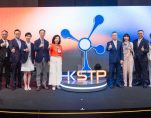
HKSTP's 25th Anniversary Prelude theme, "Innovation. Next by Nature.", brings together great minds and bold ideas to inspire what comes next for Hong Kong's innovation ecosystem. Ms Cordelia Chung, Chairman of HKSTP (6th from left), Mr Terry Wong, CEO at HKSTP (6th from right), Mr Aldous Mak, Chief Financial Officer of HKSTP (5th from left), Ms Hilda Chan, Chief Marketing Officer, HKSTP (5th from right), Ms Filla Mak, Chief Property and Asset Officer, HKSTP (4th from left), Mr Eric Or, Chief Ecosystem Development Officer, HKSTP (4th from right), Ms Fanny Wong, Chief Talent Officer, HKSTP (3rd from right), Mr Oscar Wong, Acting Chief Business Development Officer, HKSTP (2nd from right) and members from the management team officiate the event.
HKSTP’s 25th Anniversary Prelude theme, “Innovation. Next by Nature.”, brings together great minds and bold ideas to inspire what comes next for Hong Kong’s innovation ecosystem. Ms Cordelia Chung, Chairman of HKSTP (6th from left), Mr Terry Wong, CEO at HKSTP (6th from right), Mr Aldous Mak, Chief Financial Officer of HKSTP (5th from left), Ms Hilda Chan, Chief Marketing Officer, HKSTP (5th from right), Ms Filla Mak, Chief Property and Asset Officer, HKSTP (4th from left), Mr Eric Or, Chief Ecosystem Development Officer, HKSTP (4th from right), Ms Fanny Wong, Chief Talent Officer, HKSTP (3rd from right), Mr Oscar Wong, Acting Chief Business Development Officer, HKSTP (2nd from right) and members from the management team officiate the event.

To commemorate this milestone, HKSTP unveiled its anniversary theme, “Innovation. Next by Nature.”, a vision that signals its evolution from ecosystem enabler to orchestrator of the next era of global innovation. HKSTP also announced the findings of a landmark study, “Inside Asia’s Fast-Track to Global Tech Scale,” conducted in partnership with the leading technology market intelligence firm CB Insights, revealing Hong Kong ranks first in Asia and fifth globally, with a Mosaic score of 370. Mosaic score is CB Insight’s proprietary and industry-recognised indicator of high-potential ventures and future unicorns, evaluating momentum, financing, market opportunity and leadership quality. Hong Kong’s top ranking among Asian markets reflects a concentrated pool of scale-ready ventures and highly-investable innovation.

Ms Cordelia Chung, Chairman of HKSTP, said: “For 25 years, HKSTP has driven I&T as Hong Kong’s economic engine. Across our 240-hectare infrastructure and service ecosystem—comprising Science Park, InnoCentre, three InnoParks, and our Shenzhen Park—we turn research into real-world impact. Looking ahead, our ‘What’s Next’ vision is built on four dimensions, ‘Broad and Deep, Far Yet Near’: Broad means building a diverse talent ecosystem where human minds leverage technology; Deep involves advancing tech-industry convergence; Far entails expanding our global footprint; and Near focuses on drawing the future nearer with immediate action. Our community is our heartbeat. Together, we must strengthen, enhance, and collaborate, harnessing Hong Kong’s unique advantages to shape a better future for all.”

To kick off this next era, HKSTP has partnered with CB Insights to launch a white paper titled “Inside Asia‘s Fast-Track to Global Tech Scale.“ The report shows how Asia is reshaping the global innovation playbook with a network of specialist clusters, each optimised for a different stage of the innovation journey and built for today’s multipolar market landscape. CB Insights is a global tech intelligence leader and predictive data platform trusted by Fortune 500 companies.

Mr Terry Wong, CEO at HKSTP, said: “Asia’s rising innovation power is rewriting the global innovation map. While Silicon Valley grew as a single, all-in-one hub, Asia, with the Chinese Mainland as a key technology engine, is evolving an accelerated and more specialised network for global innovation. Hong Kong’s role as a super connector and value-adder has never been more important as Asia sets a new benchmark for start-up ecosystems. As HKSTP steps up as an ecosystem orchestrator, we are connecting innovators with capital, talent, deep Mainland China links and trusted pathways to global markets.”

Other Key Report Findings:

  • Chinese Mainland drives physical AI takeover
    Asia’s AI investment exploding as physical AI leads the way with robotics raising US$26.1B and AI infrastructure hit US$21.4 billion in 2025, outpacing generative AI and fintech. China dominates region with close to 100% of deals in emerging segments: robot/industrial humanoid robot foundation models, vision language and autonomous driving models.
  • Asia‘s specialist hubs as accelerators of growth across innovation lifecycle
  • Asia vies for global R&D lead to complement established manufacturing and consumer power
    The region’s global R&D expenditure surge from 24% in 2007 to 45% in 2024, according to WIPO, while already the dominant region for global manufacturing as well as driving global consumption with growing purchasing power with Asia’s GDP reaching 48.6 percent in 2025, according to Boao Forum for Asia (BFA).


HKSTP: Global
I&T Ecosystem Orchestrator and Innovation Accelerator

HKSTP’s 25th anniversary signals a renewed mission to make Hong Kong the global heartbeat of what’s next in innovation and technology (I&T). As HKSTP approaches its 25th anniversary, the new brand theme, “Innovation. Next by Nature.”, positions HKSTP as inherently built to lead the change. The year-long celebrative campaign “25 to NEXT” starts from August 2026 to July 2027 with 25 high-impact activations and cultural moments.

Anchored by three core goals — The Next Habitat (cultivating an innovation culture by connecting ecosystem stakeholders with signature events), The Next Horizon (broadening perspectives through industry-guiding insights, including the landmark study in partnership with CB Insights and 25 KOL collaborations), and The Next Pinnacle (developing overseas delegations and platforms across international markets). The campaign positions HKSTP as a more connected engine and forward-oriented convener of talent, capital, infrastructure and partnerships across sectors and borders.

Since its establishment, HKSTP has grown into Hong Kong’s largest I&T ecosystem, driving breakthroughs across Life and Health Technology, AI and Data Science, Microelectronics and Advanced Manufacturing, and GreenTech and New Energy. As the ecosystem orchestrator, HKSTP is committed to powering Hong Kong’s rise as the international I&T hub, underpinned by leading critical partnerships across Hong Kong and beyond, attracting talent, engaging stakeholders, and building a connected, forward-looking I&T community for the next era of global innovation.
Hashtag: #HongKongScienceandTechnologyParksCorporation #HKSTP

The issuer is solely responsible for the content of this announcement.

About Hong Kong Science and Technology Parks Corporation

Hong Kong Science and Technology Parks Corporation (HKSTP) was established in 2001 and has built a proven foundation as Hong Kong’s leading innovation and technology (I&T) ecosystem. Established for 25 years, HKSTP is supporting 14 unicorns, has nurtured more than 17,000 research professionals and built a community of over 2,600 technology companies from 26 countries and regions across four strategic technology clusters: Life and Health Technology, AI and Data Science, Micro-electronics, and New Energy and Green Technology.

As an ecosystem orchestrator, HKSTP provides end-to-end support to attract and nurture talent, accelerate commercialisation and help technology ventures scale. Its innovation infrastructure spans over 240 hectares covering Hong Kong Science Park in Pak Shek Kok, InnoCentre in Kowloon Tong, and three modern InnoParks in Tai Po, Tseung Kwan O and Yuen Long, advancing Hong Kong’s vision for new industrialisation and smart manufacturing.

Hong Kong Science Park Shenzhen Branch in Futian, Shenzhen, strengthens cross-border collaboration by connecting Hong Kong, the Chinese Mainland and global innovation networks and propels Chinese innovators onto the world stage, while also delivering comprehensive GBA landing support to accelerate cross-border success for local and international ventures.

As HKSTP enters its next chapter with strong foundations, it continues to deepen impact, elevate quality and create value for innovators. As an ecosystem built to lead change, HKSTP is empowering Hong Kong to define what comes next in innovation, growth and opportunity.

More information about HKSTP is available at .

By Nantoo Banerjee The Indian Space Research Organisation (ISRO) is going great guns. The country’s national space agency plans to launch its own independent orbital outpost, named the Bharatiya Antariksha Station (BAS) by 2035. If it succeeds, India will be the only country after China to have an independent space station. Neither the US nor Russia […]

The article India plans own orbital space outpost, second after China appeared first on Latest India news, analysis and reports on Newspack by India Press Agency).

SINGAPORE – Media OutReach Newswire – 31 August 2026 – Apical, through PT Sari Dumai Oleo (PT SDO), recently provided free health screenings and treatment to more than 60 residents of Lubuk Gaung, Sungai Sembilan, Dumai, Riau, helping bring basic healthcare services closer to the local community.

Held at the grounds of Pon An Kiong Temple, the initiative provided residents with medical examinations and consultations for common health conditions, including acute respiratory infections, skin conditions and diarrhea. Residents also received cholesterol, uric acid and blood sugar tests to help monitor their health and identify potential risks at an earlier stage.

Apical Dumai Head of General Affairs M. Jaya Budi Arsa said the initiative was intended to make healthcare services more accessible to residents, particularly those living in communities around Apical’s operations.

“We want to provide support that delivers real benefits and responds to the community’s needs. Through this initiative, we hope residents can access basic health services more easily and address health concerns earlier,” Jaya said.

The initiative reflects Apical’s commitment to supporting communities through programmes that address key areas of wellbeing, including health, education and economic empowerment. These efforts are guided by Apical’s 5Cs philosophy — doing what is good for the community, country, climate and customers, and only then will it be good for the company — which underpins the company’s approach to supporting communities around its operations.

Dumai Health Agency Head Dr. Syaiful welcomed the initiative, noting that collaboration between the government, private sector and communities can help expand access to healthcare and encourage greater awareness of preventive health.

“Collaboration among the government, private sector and communities is important to expanding access to health services. We hope this initiative will benefit local residents while also raising awareness of the importance of regular health checkups,” Syaiful said.

The initiative also received positive responses from local residents. Idrus, representing residents of RT 015, said the free health screenings and medical services made it easier for residents to access healthcare, particularly as the activity was held close to their homes.

Through initiatives such as this, Apical, a member of the RGE group of companies founded by Sukanto Tanoto, continues to work with local government and communities to support practical programmes that respond to local needs.
Hashtag: #RGE #Apical #community #healthcare #Riau


The issuer is solely responsible for the content of this announcement.

About Apical

Apical is a leading vegetable oil processor with an expanding global footprint. Our vertically integrated mid-stream refining and value-added downstream processing makes us an integral supplier that supports the needs of various industries namely food, feed, oleochemicals and renewable fuel, including sustainable aviation fuel (SAF) which enables a great reduction of CO2 emissions.

With integrated assets in strategic locations spanning Indonesia, China and Spain, Apical operates numerous refineries, oleochemical plants, renewable fuel plants and kernel crushing plants. Through joint ventures and strategic partnerships, Apical also has processing and distribution operations in Brazil, India, Pakistan, Philippines, Middle East, Africa, USA and Vietnam.

Apical’s growth is built on the foundations of sustainability and transparency, and motivated by our strong belief that we can contribute to a circular economy for a more meaningful impact, even as we continue to grow our business and deliver innovative solutions to our customers.

Matein Khalid Chinese fast-fashion giant Shein is set to list in Hong Kong on September 1 at a valuation of up to $27 billion. That is less than half the $64 billion valuation at which Abu Dhabi sovereign wealth fund Mubadala invested in 2023. It is a brutal comedown for a retailer once expected to be worth $100 billion. My knowledge of sartorial retailing is admittedly less than encyclopaedic. Yet I […]

Arabian Post Staff -Dubai Jordanian air defences intercepted and destroyed eight missiles early Monday as Iran launched retaliatory attacks against US military facilities in Jordan following an American strike on Iranian forces near the Strait of Hormuz. The Jordan Armed Forces said the missiles had penetrated the kingdom’s airspace and were destroyed before they could threaten civilians or property. Its statement did not identify the missiles’ origin, […]

  • Jungheinrich marks 25 years of presence in Singapore, as country’s backbone for material flow of goods and a driver of sustainable intralogistics solutions, with more than 7,000 machines in the market and over 100 warehouse solutions implemented
  • Jungheinrich Singapore established itself as one of the few full-liner suppliers of material handling equipment and solutions in the country, and the pioneer of electrification, with an estimate market share of 25% in electrified machines
  • Milestone marked with an anniversary dinner on 28 August 2026, attended by Guests of Honour: Thomas Motak, Deputy Head of Mission of the Federal Republic of Germany to Singapore, and Nadine Despineux, Member of the Board of Management, Chief Sales Officer, Jungheinrich

SINGAPORE – Media OutReach Newswire – 31 August 2026 – Jungheinrich, a global leader in sustainable material handling solutions, celebrated 25 years of presence in Singapore as country’s backbone for material flow of goods and a driver of sustainable intralogistics solutions, with more than 7,000 machines in the market and over 100 total warehouse solutions implemented.

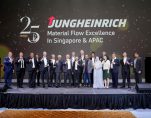
Jungheinrich Singapore celebrates 25 years of material flow excellence, marking the milestone with Managing Director, Singapore and Malaysia, Benedict Kothe; Guest of Honour Thomas Motak, Deputy Head of Mission of the Federal Republic of Germany to Singapore; Jungheinrich Chief Sales Officer Nadine Despineux; and key industry leaders and guests.

On 28 August 2026, Jungheinrich celebrated this silver jubilee with an anniversary gala dinner at Pan Pacific Orchard Singapore, graced by Guests of Honour: Thomas Motak, Deputy Head of Mission of the Federal Republic of Germany to Singapore, and Nadine Despineux, Member of the Board of Management, Chief Sales Officer, Jungheinrich, alongside key attendees such as, Manojit Acharya, Vice President – Asia Pacific & Managing Director, India, Benedict Kothe, Managing Director, Singapore and Malaysia, Jungheinrich, Jens Rübbert, President of the European Chamber of Commerce, Singapore, Soo Haw Yun, Vice President, Global Enterprises, Singapore Economic Development Board, and the various Jungheinrich teams, customers and partners in the APAC region.

A special toast was raised to mark Jungheinrich Singapore’s 25-year journey and its evolution into a strategic hub for Asia-Pacific (APAC). Established on 21 February 2001 as the first country unit in APAC, Jungheinrich Singapore is now part of a regional network spanning eight country units and 14 partner companies, supported by over 1,500 employees. The Singapore operation oversees key regional functions including training, automation, dealer management, sales, customer service and human resources, with the APAC spare parts distribution centre also based here.

Jungheinrich has also established itself as one of the few full-liner suppliers of material handling equipment and solutions in Singapore, offering warehouse trucks, racking, automation, digital solutions and customer service all under one roof. The Singapore team, comprising of 150 employees, works closely with Jungheinrich’s partners across APAC, supporting the company’s regional reach and market development.

Over the past 25 years, Jungheinrich Singapore has pioneered the adoption of electric material handling equipment in the country, with an estimated 25% share of the electrified machines market. Its team of 50 technicians strive to provide industry-benchmark service, supporting the logistics sector’s shift towards more efficient and professional operations. In recognition of its innovation and education initiatives, Jungheinrich Singapore was named Supply Chain Innovator of the Year (CSR) at the prestigious Supply Chain Asia Awards 2025, and has also achieved Great Place To Work® Certified™ status.

Notably, Jungheinrich Singapore was the first in APAC to open a Jungheinrich Experience Centre, established in May 2024, to showcase product innovation and illustrate how material flow interacts within a warehouse setting. The centre has since welcomed visitors including Kuehne & Nagel, Supply Chain Asia, the German Embassy in Singapore, and a slew of students from Republic Polytechnic (Singapore) and the University of St. Gallen (Switzerland).

Jungheinrich Singapore has also played an active role in supporting the local community, serving as the official logistics sponsor for the annual National Day Parade for 2 consecutive years in 2025 and 2026, deploying electric forklifts, pallet trucks and reach trucks to help distribute close to 250,000 fun packs to spectators. The organisation also donated warehouse trucks to support Willing Hearts and Food Bank Singapore in their operations, and provided pallet jacks and forklifts for the United Buddy Bears Exhibition at Gardens by the Bay in September 2025, which marked the 60th anniversary of diplomatic ties between Singapore and Germany.

Since 2024, Jungheinrich Singapore and Malaysia have jointly run the “The Environment Wins Twice” campaign with Animal Projects & Environmental Education (APE) Malaysia, planting a tree for every electric forklift sold, and as of 2025, 455 trees have been planted, turning each sale into a tangible contribution to reforestation while supporting Jungheinrich’s global sustainability commitments.

While Southeast Asia’s warehouse automation market is projected to nearly double from US$0.87 billion in 2025 to US$1.95 billion by 2032, and Singapore’s land and labour constraints driving to demand for smarter, space-efficient solutions, Jungheinrich sees significant opportunities for further growth in the region.

Looking ahead, Jungheinrich Singapore will focus on developing localised automation solutions, expanding the rollout of AntOn by Jungheinrich, and introducing sustainable material handling solutions tailored to customers across APAC. Building on the launch of its first electric van in July 2025, the organisation is also targeting a fully green-energy service fleet by 2030, supporting its commitment to Carbon Neutrality by 2030 for Scope 1 emissions.

“As we celebrate 25 years in Singapore, we are proud of the strong foundation we have built with 150 intralogistics experts who support our customers across industries. Our journey has been defined by innovation, partnership, and a commitment to improving material flow efficiency. Looking ahead, we remain focused on helping businesses enhance productivity, increase warehouse safety and quality, and achieve sustainable growth through advanced material handling solutions,” said Benedict Kothe, Managing Director, Singapore and Malaysia, Jungheinrich.

“We congratulate Jungheinrich on 25 years in Singapore. Over the years, Jungheinrich has grown its Singapore operations into a strategic APAC hub, driving initiatives such as automation, innovation, and sustainability. We look forward to deepening our partnership with Jungheinrich as it contributes to Singapore’s logistics sector and develops solutions for the region,” said Soo Haw Yun, Vice President, Singapore Economic Development Board.

As Jungheinrich Singapore enters its next chapter, the organisation remains committed to supporting customers’ growth with innovative, sustainable and increasingly automated material handling solutions.Hashtag: #Jungheinrich #Manufacturing #Logistics


The issuer is solely responsible for the content of this announcement.

Jungheinrich Singapore

As one of the world’s leading providers of material handling solutions, Jungheinrich has advanced the development of innovative, sustainable products and solutions for material flows for more than 70 years. The family-owned, listed business generated revenue of €5.5 billion in the 2025 financial year with a workforce of over 21,000, and service and sales companies across 42 countries. In APAC, the company has established eight country units and over 14 partner companies, supported by over 1,500 employees. Established in Singapore in 2001, Jungheinrich Singapore marks its 25th anniversary in 2026 as the company’s strategic hub for the region.

Find out more at .

Advertisements

Artificial intelligence adoption has spread across Gulf businesses, but only a small minority are converting deployments into measurable financial gains, exposing a gap between experimentation and value creation. About 84 per cent of organisations in the Gulf Cooperation Council use AI in at least one business function, up from 62 per cent in 2023, according to a McKinsey survey conducted with the GCC Board Directors Institute. Yet […]

India’s hotel industry is expected to strengthen in the second half of FY27 as robust domestic leisure travel, improving corporate demand, weddings and a seasonal recovery in international arrivals support occupancy and room rates.

A sector assessment by PhillipCapital said the April-June quarter had already shown resilience despite geopolitical disruptions, with industry occupancy rising by two to four percentage points from a year earlier. Average room rates increased 6-8 per cent, while revenue per available room, or RevPAR, advanced 11-13 per cent.

The brokerage expects business conditions to improve further during the October-March period, helped by a heavier wedding calendar, stronger meetings, incentives, conferences and exhibitions activity and higher international travel during the traditional peak season. Corporate travel, which was softer earlier in the year amid uncertainty linked to the West Asia conflict, has also shown signs of gradual recovery.

Limited additions to room supply in key markets are expected to give operators continued pricing power if demand strengthens as projected. That imbalance between demand and new capacity has been an important support for average room rates across several major destinations and is likely to remain favourable through the second half of the financial year.

The outlook is consistent with ICRA’s projection that hospitality industry revenues will rise 7-9 per cent year on year in FY27, following an estimated 9-12 per cent increase in FY26. The ratings agency expects pan-India premium hotel occupancy to remain at 72-74 per cent, broadly unchanged from FY26, while average room rates for premium hotels rise to Rs 8,600-8,800 from Rs 8,200-8,500.

Domestic travellers remain the principal source of demand and have helped cushion the industry from weaker foreign arrivals and disruptions to international air routes. ICRA estimated occupancy at 66-68 per cent during the first two months of FY27, compared with 62-64 per cent a year earlier, while average room rates were estimated at Rs 7,800-8,000 against Rs 7,500-7,700.

Leisure destinations have generally performed better than business-focused hotels during the opening months of the year. Indian Hotels Company reported strong demand across its domestic portfolio, with revenue from operations within India rising during the June quarter and leisure markets contributing significantly to growth.

Other listed hotel operators have also reported positive RevPAR trends, though performance has varied by city, customer mix and exposure to international guests. The sector’s recovery in the first quarter was more occupancy-led than in earlier periods, when sharp increases in room rates were the dominant driver of revenue growth.

Demand from corporate customers is expected to become more supportive as travel budgets normalise and business activity strengthens. Bengaluru, Hyderabad and Delhi have shown firmer room rates in parts of the second quarter, aided by technology, global capability centre and broader corporate travel demand.

International traffic remains a key variable. Foreign tourist arrivals were hit earlier by disruptions associated with the conflict in West Asia, but the Ministry of Tourism’s data portal indicates arrivals during 2026 have begun to show year-on-year improvement in available updates. A seasonal rise from October would add higher-paying international travellers to the domestic base.

Wedding demand is also expected to provide a material lift. Hotels typically benefit not only from room bookings during large celebrations but also from food and beverage, banquet and event revenue, making the wedding calendar an important contributor during the second half.

Meetings and exhibition business is another area expected to improve as companies resume travel and events. Stronger MICE demand can lift weekday occupancy at city hotels, complementing leisure traffic that is often concentrated around weekends, holidays and destination markets.

Risks to the outlook remain. A prolonged escalation in West Asia could again disrupt international travel and corporate spending, while inflation could weigh on discretionary consumption. ICRA has said these factors remain monitorable even though domestic demand has so far limited the direct impact on the sector.

Moscow is hosting more than 1,200 competitors this weekend as the Abu Dhabi Jiu-Jitsu Grand Slam brings one of its biggest international fields to the Russian capital for the 2026-2027 season. The two-day competition, running on August 29 and 30 at the Dynamo Sports Academy, has attracted 1,220 male and female athletes from 32 countries. The field includes 85 black belts, giving the Moscow stop a strong […]

By TN Ashok INDIA bloc opposition leader and Congress chairperson Mrs. Sonia Gandhi’s forthcoming memoir, Belonging: A Journey of Love, has become a focal point of political controversy before a single copy has reached an Indian bookseller. The irony is considerable: a book about a woman who spent much of her public life guarding her […]

The article Sonia Gandhi’s Belonging: Penguin demanded unfair redactions appeared first on Latest India news, analysis and reports on Newspack by India Press Agency).

The United States and Cameroon have outlined about $7 billion in American investment and trade opportunities spanning energy, infrastructure, critical minerals, technology, forestry and logistics after their first bilateral Economic and Commercial Dialogue in Yaoundé. Officials said the portfolio, valued at nearly 4 trillion CFA francs, contains new and expanding projects at different stages of development rather than a single package of committed capital. The August 27 […]

China’s data industry expanded to 6.78 trillion yuan in 2025, registering 15.7 per cent annual growth as artificial intelligence drove demand for specialised datasets, software and data-processing services.

Figures unveiled at the 2026 China International Big Data Industry Expo in Guiyang, Guizhou province, showed that data-related software products, including AI application software, and data-resource products involving token services generated a combined 4.99 trillion yuan. The two categories accounted for 73.6 per cent of the industry’s total output, underlining the growing commercial connection between data resources and AI development.

The number of data enterprises operating across China reached 482,000 by the end of 2025, an increase of 17.9 per cent from a year earlier. The eastern regions remained the largest concentration of activity, with their data industry valued at about 5.23 trillion yuan.

Growth has accelerated steadily over the past three years. China’s data industry was valued at 5.06 trillion yuan in 2023 and 5.86 trillion yuan in 2024 before climbing above 6.7 trillion yuan last year. Expansion has increasingly shifted from basic data collection and processing towards higher-value services designed for AI models, intelligent agents and industry-specific applications.

High-quality datasets have emerged as a particularly important segment. By August 2026, more than 126,000 such datasets had been established nationwide, containing more than 1,815 petabytes of data. Their combined volume has risen by more than 89 per cent since March, reflecting rapidly expanding demand from developers training and refining AI systems.

The broader supply of digital information is also growing sharply. China generated 52.26 zettabytes of data during 2025, up 27.28 per cent from the previous year and representing roughly 27.4 per cent of global data production. Enterprises accounted for about nine-tenths of the increase, with manufacturing, transport and logistics, software and information technology services recording especially strong gains.

That expansion is occurring alongside rapid growth in AI itself. China’s core AI industry exceeded 1.2 trillion yuan in 2025, with more than 6,200 specialised AI enterprises operating nationwide. More than 30 per cent of large manufacturing enterprises had adopted AI technologies by the end of the year, widening demand for industrial datasets capable of training systems for production, quality inspection, predictive maintenance and automation.

AI development is also changing the composition of the data market. Large language models initially depended heavily on publicly accessible text and image material, but developers are increasingly seeking proprietary industrial, scientific, financial, medical and operational data. The expansion of intelligent agents and embodied AI is adding demand for video, three-dimensional information, sensor readings, physical interaction records and synthetic data.

Intelligent-agent innovation has become another growth area. More than 3,400 patents associated with agent technologies were authorised during 2025, with the pace of growth more than doubling from the previous year. Commercial platforms are simultaneously combining access to multiple AI models with tools that allow companies to select, adapt and deploy systems without developing every component internally.

Policy is increasingly focused on turning China’s vast quantity of information into commercially usable AI resources. A national programme launched this year calls for high-quality industry datasets covering areas including scientific research, manufacturing, agriculture, energy, transport, financial services, healthcare, education, e-commerce, tourism, meteorology, urban governance, autonomous driving, embodied intelligence and biotechnology.

The programme is intended to expand dataset supply, improve annotation and quality assessment, encourage controlled circulation and connect dataset development more closely with practical AI applications. Authorities are targeting significant progress by the end of 2028, including industry datasets tested through real-world applications and specialised companies capable of developing tools and standards around them.

Arabian Post Staff -Dubai Gulf companies are pouring money into artificial intelligence, but many are finding that rapid adoption is not translating into measurable financial returns as weak data foundations, fragmented technology systems and governance gaps constrain deployment at scale. Around 84% of organisations across the Gulf are using AI in some form, yet only about 11% have reached a level where scaled deployments are producing clearly […]

Arabian Post Staff -Dubai Jordan’s industrial exports to the UAE jumped 29% in the first half of 2026, adding about JD45 million to their value as manufacturers expanded sales across major regional and global markets. The increase implies industrial shipments to the UAE reached roughly JD200 million during the January-June period, compared with about JD155 million a year earlier. The JD45 million gain is equivalent to about […]

Forest City Special Financial Zone has clarified that its incentive for qualifying fintech and technology-enabled financial services is a 5% corporate tax rate rather than a blanket tax exemption, drawing a distinction between the Johor-based programme and Malaysia’s separate national digital incentives.

The clarification sets out the eligibility framework for companies considering operations in Pulau 1 of Forest City, where qualifying fintech businesses, Financial Global Business Services operations and foreign-owned payment system operators can apply for the special rate. The incentive runs for 10 consecutive years of assessment and may be extended for another 10 years if the company continues to meet the stipulated conditions.

Malaysia Digital Economy Corporation, or MDEC, is the government agency appointed to process applications, while approvals are subject to the national investment assessment framework. Eligibility does not arise simply from locating a technology business within Forest City.

Qualifying activities must incorporate at least one designated technology enabler. These include artificial intelligence or big data analytics, the Internet of Things, cybersecurity, cloud computing, blockchain, creative media technology, robotics or automation, and advanced network connectivity or telecommunications technology.

The framework therefore covers AI where the technology supports an eligible financial or business-service activity. A general AI developer or technology company does not automatically qualify for the Forest City incentive merely because it uses artificial intelligence.

Applicants must be companies incorporated under Malaysia’s Companies Act and resident in the country, with minimum paid-up capital of RM50,000. The qualifying business must be conducted in Pulau 1, Forest City. Companies must also comply with requirements covering employment, knowledge workers, operating expenditure, economic substance, environmental, social and governance commitments and any regulatory approvals applicable to their activities.

The Forest City incentive is separate from Malaysia Digital Status and the Malaysia Digital tax incentive administered by MDEC. Companies do not need Malaysia Digital Status to apply for the Forest City programme, and an applicant generally cannot receive another tax incentive for the same qualifying activity.

That distinction has become important because the national Malaysia Digital scheme includes figures of up to 100%, potentially creating confusion over whether technology and AI businesses can obtain complete corporate tax exemption in Forest City.

Under the Malaysia Digital tax incentive, companies making new investments can apply for a zero per cent reduced tax rate on qualifying intellectual-property income, subject to the applicable intellectual-property nexus rules. Qualifying non-IP income may receive a 5% or 10% reduced rate for up to 10 years, depending on whether the relevant conditions are met.

Alternatively, eligible new investments can choose an investment tax allowance of 60% or 100% of qualifying capital expenditure, which can be set against up to 100% of statutory income for a period of up to five years. The 100% figure refers to the investment tax allowance and does not constitute a general declaration that all income earned by an eligible company is tax-free.

Companies undertaking qualifying expansion investments face a different structure. The national digital programme provides a 15% reduced tax rate on qualifying IP and non-IP income for up to five years, or an investment tax allowance of 30% or 60% of qualifying capital expenditure, subject to the conditions attached to the scheme.

Applications for the Malaysia Digital tax incentive remain open until December 31, 2027. Applicants for that programme must first secure Malaysia Digital Status. Forest City’s programme has a longer application window, running to December 31, 2034 under the existing guidelines.

Forest City’s financial-zone incentives were formally unveiled by the government in September 2024 as part of an effort to establish Johor as a competitive financial and services hub close to Singapore. The package also includes separate arrangements for single family offices and knowledge workers.

Qualifying single family office vehicles operating under the Forest City framework can obtain a zero per cent tax rate on chargeable income from approved holding and investment activities, subject to Securities Commission Malaysia requirements. That concession is distinct from the 5% regime covering fintech, Financial Global Business Services and foreign payment system operators.

Forest City also sits within the wider Johor-Singapore Special Economic Zone, strengthening its role in Malaysia’s strategy to attract cross-border investment, advanced financial services and digital businesses. Johor has emerged as a major destination for digital infrastructure and technology investment, supported by its proximity to Singapore, expanding data-centre capacity and improving regional connectivity.

More than 100 technology, financial and security organisations have warned that the world has only months to strengthen digital defences before increasingly capable artificial intelligence systems make sophisticated cyberattacks cheaper, faster and far easier to scale. OpenAI, Anthropic, Google, Microsoft, Amazon Web Services, Oracle and IBM are among the companies backing a global call for governments and businesses to treat cyber defence as an immediate priority. The […]

Egyptian writer, DJ and radio host Nihal El Aasar is challenging narrow definitions of Arab music by using radio, live performances and artistic collaborations to showcase underground sounds spanning electronic music, experimental composition, hip-hop, drill and regional club culture. Raised in Cairo and now based in London, El Aasar has built a multidisciplinary career that connects music with writing, politics and cultural analysis. Her approach rejects the […]

Arabian Post Staff -Dubai Abu Dhabi is strengthening international partnerships on water and energy resilience as it seeks to translate its integrated resource-management model into practical cooperation with governments, regulators, researchers and technology companies worldwide. The Abu Dhabi Department of Energy used World Water Week 2026 in Stockholm to present the emirate’s approach to protecting water supplies, improving energy efficiency and building infrastructure capable of maintaining essential […]

Arabian Post Staff -Dubai Americana Restaurants International Plc has signed an exclusive development agreement to bring Taco Bell back to the UAE, opening the way for a phased expansion of the Mexican-inspired quick-service restaurant brand into additional GCC markets. The UAE will be the first market developed under the agreement with Taco Bell UK and Europe Ltd, a subsidiary of Yum! Brands Inc. The partners have not […]

Venezuela is considering leaving OPEC as its energy relationship with the United States deepens, raising fresh questions over the producer group’s cohesion only months after the United Arab Emirates ended nearly six decades of membership. No final decision has been taken in Caracas, but the possibility of withdrawing from the Organization of the Petroleum Exporting Countries has figured in discussions involving Venezuelan and US officials. Such a […]

Forest City SFZ sets out who may qualify for its 5% special corporate tax rate, how the separate Malaysia Digital tax incentive works, and which activities and conditions apply to each scheme.

JOHOR, MALAYSIA – Media OutReach Newswire – 29 August 2026 – Forest City has, over the past decade, built a recognised track record in green-building and sustainability credentials. Since the Malaysian Government announced the Forest City Special Financial Zone (“SFZ”) incentive package on 20 September 2024, the development has added a financial-services and digital-economy dimension. The Forest City Special Financial Zone (“FC-SFZ”) Tax Incentive offers a 5% special corporate tax rate for 10 consecutive years of assessment, extendable for a second 10-year period, to eligible companies undertaking qualifying fintech, Financial Global Business Services (“FGBS”) or Foreign Payment System Operator (“FPSO”) activities in Pulau 1, Forest City. Malaysia Digital Economy Corporation (“MDEC”) is the appointed government agency to process applications, which are assessed by the National Committee on Investment (“NCI”).

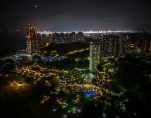
Forest City at night, looking across the Strait of Johor towards Singapore. Forest City lies approximately 2 km from Singapore at its nearest point.

The FC-SFZ Tax Incentive is separate from Malaysia Digital (“MD”) Status and the MD Tax Incentive. A company does not need MD Status to qualify for the FC-SFZ Tax Incentive. Under MDEC’s current rules, an FC-SFZ applicant must also not have been granted another tax incentive for the same qualifying activity. Eligible MD Status companies may separately apply for the MD Tax Incentive, subject to the applicable criteria and approval process.

Key Incentives at a Glance

Forest City’s first decade was defined in part by its green-building and sustainability record. Forest City reports nearly 40 international awards and certifications as at August 2026, including LEED for Core and Shell (“LEED-CS”) Gold pre-certification and GreenRE Gold ratings. On 20 September 2024, the Malaysian Government announced the Forest City SFZ incentive package, adding a financial-services and digital-economy dimension to the development.

The current incentive landscape has four main components:

  • Forest City SFZ corporate tax rate: Eligible companies undertaking qualifying fintech, FGBS or FPSO activities in Pulau 1 may receive a 5% special corporate tax rate for 10 consecutive years of assessment, extendable for a second 10-year period, subject to approval and continued compliance. The qualifying activity must use at least one promoted technology enabler specified by MDEC.
  • Single Family Office (“SFO”) Scheme: A qualifying Single Family Office Vehicle (“SFOV”) may receive a 0% tax rate on chargeable income from its qualifying holding and investment activities for an initial 10 years, with a possible extension for a further 10 years, subject to the Securities Commission Malaysia (“SC”) requirements.
  • Knowledge workers: Eligible knowledge workers working within the Johor-Singapore Special Economic Zone (“JS-SEZ”), which includes Forest City as a designated flagship area, may qualify for a special 15% personal income tax rate for 10 years, subject to the applicable conditions.
  • Malaysia Digital tax incentive: This is a separate national incentive administered by MDEC. For New Investment, eligible companies may choose between a reduced tax rate — 0% on qualifying intellectual-property (“IP”) income, subject to the modified nexus approach, and 5% or 10% on qualifying non-IP income for up to 10 years — or an Investment Tax Allowance (“ITA”) of 60% or 100% of qualifying capital expenditure for up to five years. Different rates apply to the Expansion Incentive. Applications are open until 31 December 2027.

Taken together, these measures position Forest City SFZ as a potential regional base for qualifying financial-services and technology-enabled businesses assessing Malaysia’s tax framework, proximity to Singapore and access to ASEAN markets. However, the schemes are separate and should not be treated as automatically cumulative.

Forest City Tax Framework for Fintech and Technology-Enabled Financial Services

The FC-SFZ Tax Incentive is not a blanket 100% tax exemption for fintech, AI or technology companies. It is a 5% special corporate tax rate for qualifying activities under the FC-SFZ framework. MDEC is the appointed agency to process applications, while applications are assessed by the NCI.

The 5% rate applies to qualifying fintech activities, FGBS and FPSO activities carried out in Pulau 1, Forest City. The qualifying activity must utilise at least one promoted technology enabler: artificial intelligence (“AI”) or big data analytics (“BDA”); Internet of Things (“IoT”); cybersecurity; cloud; blockchain; creative media technology, including extended reality (“XR”) or mixed reality (“MR”); robotics or automation; or advanced network connectivity or telecommunications technology. Eligibility is not automatic based on location alone; companies must also satisfy the applicable corporate, activity, substance, regulatory and compliance conditions.

The “up to 100%” figure sometimes cited in relation to Malaysia Digital refers to the ITA available under the MD New Investment Incentive. It is an allowance on qualifying capital expenditure, not a 100% income tax holiday. The MD Tax Incentive is also separate from the FC-SFZ Tax Incentive and should not be assumed to stack with it for the same qualifying activity.

Comparison table:

Scheme What it covers Headline rate / benefit Authority & key note
Forest City SFZ — fintech / FGBS / FPSO incentive Qualifying fintech, FGBS and FPSO activities in Pulau 1 using at least one promoted technology enabler 5% special corporate tax rate for 10 consecutive years of assessment; extendable for a second 10-year period MDEC processes applications; NCI assessment. Applications open 1 Sep 2024–31 Dec 2034.
Forest City SFZ — Single Family Office Qualifying SFOV holding and investment activities 0% tax rate for an initial 10 years; possible extension for a further 10 years Securities Commission Malaysia; SFO tax rules gazetted on 3 Oct 2025.
JS-SEZ — eligible knowledge workers Eligible knowledge workers working within the JS-SEZ, including qualifying roles in Forest City 15% personal income tax rate for 10 years Ministry of Finance / JS-SEZ incentive package; subject to eligibility conditions.
Malaysia Digital Tax Incentive — New Investment Eligible MD Status companies undertaking qualifying Malaysia Digital Activities 0% on qualifying IP income and 5% or 10% on qualifying non-IP income for up to 10 years; OR 60% or 100% ITA for up to 5 years MDEC; MD Status required before tax-incentive application. Applications open until 31 Dec 2027.
Malaysia Digital Tax Incentive — Expansion Eligible MD/MSC Malaysia Status companies undertaking qualifying new or expansion activities 15% reduced tax rate for up to 5 years; OR 30% or 60% ITA for up to 5 years MDEC; subject to the Expansion Incentive criteria. Applications open until 31 Dec 2027.
Malaysia standard corporate rate Companies not qualifying for a lower or special rate 24% headline corporate income tax rate Inland Revenue Board of Malaysia (LHDN); lower tiered rates may apply to qualifying SMEs.

For accurate and current policy information, companies should refer directly to official sources, including:

Malaysia Digital Status and Tax Incentive: A Separate National Framework

MD Status is granted nationally by MDEC. An MD Status company may then be eligible to apply separately for the MD Tax Incentive, subject to the relevant criteria. Under MDEC’s current framework, qualifying Malaysia Digital Activities comprise the research, development or commercialisation of solutions, or the provision of services, using promoted technology enablers such as AI or BDA, IoT, cybersecurity, cloud, blockchain, drone technology, creative media technology, integrated-circuit design with embedded software, robotics or automation, and advanced network connectivity or telecommunications technology.

Under the current MD Tax Incentive, the available options differ between New Investment and Expansion:

  • New Investment: A 0% reduced tax rate on qualifying IP income, subject to the modified nexus approach, and a 5% or 10% reduced tax rate on qualifying non-IP income, for up to 10 years; or an ITA of 60% or 100% of qualifying capital expenditure against up to 100% of statutory income, for up to five years.
  • Expansion: A 15% reduced tax rate on qualifying IP income, subject to the modified nexus approach, and non-IP income, for up to five years; or an ITA of 30% or 60% of qualifying capital expenditure against up to 100% of statutory income, for up to five years.

The “100%” figure therefore refers to the ITA rate under the New Investment Incentive. It does not mean that all company income is tax-free.

The MD Tax Incentive is open for applications until 31 December 2027. A company must first obtain MD Status before submitting an application for the MD Tax Incentive.

MD Status also provides access to non-tax benefits under the MD Bill of Guarantees, including the ability to apply for foreign knowledge-worker quotas and passes, subject to the relevant immigration requirements. MDEC’s Expats Service Centre administers the related Foreign Knowledge Worker processes for eligible companies.

Eligibility Summary: Entities, Sectors and Permitted Activities

Forest City SFZ 5% rate

  • Activity-based: Qualifying services are limited to fintech-related activities, FGBS and FPSO activities.
  • Technology condition: The qualifying activity must utilise at least one promoted technology enabler specified by MDEC, including AI or BDA, IoT, cybersecurity, cloud, blockchain, creative media technology, robotics or automation, or advanced network connectivity or telecommunications technology.
  • Location condition: The qualifying activity must be carried out in Pulau 1, Forest City.
  • Substance and compliance conditions: Approved companies must meet the conditions set out in their approval letter, including commitments relating to full-time employees, knowledge workers, annual operating expenditure, ESG requirements, relevant regulatory approvals or licences, and annual compliance reporting verified by an independent auditor.

Malaysia Digital (MD) Status and MD Tax Incentive

  • Activity-based: MD eligibility is tied to Malaysia Digital Activities that use the promoted technology enablers specified by MDEC. Merely operating an AI, cloud, fintech or digital business does not automatically confer tax-incentive eligibility.
  • Status and tax-incentive process: MD Status is granted by MDEC. The MD Tax Incentive is a separate application available to eligible MD or MSC Malaysia Status companies, depending on the relevant incentive category.
  • Geographic scope: MD Status is a national programme and does not require a company to be located in Forest City.
  • No automatic stacking: MDEC states that an FC-SFZ Tax Incentive applicant must not already have been granted a tax incentive for the same qualifying activity. MDEC also confirms that MD Status is not required to apply for the FC-SFZ Tax Incentive.

Accordingly, companies should assess the FC-SFZ and MD frameworks separately. Any proposed structure involving different activities, income streams or incentive programmes should be verified with MDEC and qualified tax advisers before any combined tax outcome is assumed.

Strategic Rationale: Proximity, Talent Incentives and Regional Access

Forest City’s location proposition is based on three interlocking factors: proximity to Singapore, targeted talent incentives and early investor interest.

  • Proximity as operational leverage: Forest City lies approximately 2 km from Singapore at its nearest point, placing qualifying operations close to one of Asia’s major financial and technology hubs. The Johor Bahru-Singapore RTS Link will connect Bukit Chagar in central Johor Bahru with Woodlands North in Singapore. MRT Corp has stated that service is targeted to commence on 31 December 2026. The RTS Link does not serve Forest City directly, so onward road transport between Forest City and central Johor Bahru will still be required.
  • Talent as a bundled enabler: Eligible knowledge workers in the JS-SEZ may qualify for a special 15% personal income tax rate for 10 years, while eligible MD Status companies may apply for foreign knowledge-worker quotas and passes through MDEC’s expatriate facilitation framework. These are separate benefits with their own eligibility and approval requirements.

By June 2026, Invest Johor reported that the Forest City SFZ had recorded 260 cumulative investor enquiries through the Invest Malaysia Facilitation Centre-Johor, against an RM2 billion investment target. Separately, the SC reported in October 2025 that six families had received conditional approval under the SFO Incentive Scheme, with indicative assets under management close to RM400 million.

This incentive framework sits alongside Johor’s rapid emergence as a major Malaysian data-centre market. JLL has highlighted strong data-centre expansion in Johor and the wider JS-SEZ, supported by major hyperscale investments and infrastructure development. This broader digital-economy momentum strengthens the regional technology narrative, but it should not be presented as a direct operating benefit or guaranteed outcome for individual Forest City SFZ companies.

Decision Framework: Two Pathways and a Diligence Caveat

The incentive structure is best assessed through two distinct pathways, with a separate due-diligence lens for investors and advisers.

  • Pathway A – FC-SFZ presence on Pulau 1: This is relevant to eligible fintech companies, FGBS providers and FPSO businesses that can satisfy the physical-location, activity, substance and compliance requirements. The 5% special corporate tax rate is available for 10 consecutive years of assessment and may be extended for a second 10-year period, subject to continued compliance and approval.

This route may suit businesses that value proximity to Singapore while maintaining qualifying operations in Pulau 1. The RTS Link is expected to improve connectivity between central Johor Bahru and Singapore, but it does not remove the requirement for companies to maintain the approved substance and qualifying activities in Forest City.

  • Pathway B – MD Status and MD Tax Incentive nationwide: This pathway may be relevant to eligible digital companies operating elsewhere in Malaysia. MD Status is granted nationally by MDEC, and eligible companies may subsequently apply for the MD Tax Incentive. The applicable reduced tax rate or ITA depends on whether the company applies under the New Investment or Expansion category and on the conditions it meets.

Investors and advisers should note that headline rates are not the same as effective tax rates. The outcome for any entity depends on qualifying activities and income, approved commitments, substance conditions and the specific incentive secured. Groups with annual consolidated revenue of EUR750 million or more may also be subject to Malaysia’s domestic top-up tax rules where the relevant effective tax rate falls below 15%. Tax outcomes should therefore be modelled only after verification against current primary sources and professional advice.

The Verdict

Forest City’s proposition to fintech and technology-enabled financial-services companies is specific and condition-based: a 5% special corporate tax rate for qualifying fintech, FGBS and FPSO activities carried out in Pulau 1 using promoted technology enablers. The incentive runs for 10 consecutive years of assessment and may be extended for a second 10-year period, subject to compliance and approval. It is neither a blanket 5% rate for all AI or technology companies nor a 100% income tax exemption.

Alongside this are the separate SFO Incentive Scheme, which may provide a 0% tax rate for up to 20 years subject to SC requirements; the JS-SEZ’s special 15% personal income tax rate for eligible knowledge workers for 10 years; and the national MD Tax Incentive, which offers different reduced tax rates or ITA options depending on whether an applicant qualifies under the New Investment or Expansion category. Applications for the MD Tax Incentive are open until 31 December 2027.

Reported traction includes 260 cumulative investor enquiries recorded by Invest Johor by June 2026 and six families granted conditional approval under the SFO Incentive Scheme, with indicative assets under management close to RM400 million as reported by the SC in October 2025. Forest City also benefits from proximity to Singapore, while the RTS Link is targeted to commence service on 31 December 2026 between central Johor Bahru and Woodlands North.

For companies and investors, the key question is not simply whether these incentives exist, but whether their exact activities, income streams, location, substance commitments and corporate structure satisfy the conditions required to access them in practice. Current official guidance and qualified tax advice should be obtained before any investment or structuringHashtag: #ForestCity

The issuer is solely responsible for the content of this announcement.

Arabian Post Staff -Dubai United States President Donald Trump has announced a landmark oil agreement with Venezuela that he says will give US interests majority control over more than 65 billion barrels of the country’s proven crude reserves, dramatically expanding Washington’s access to the world’s largest petroleum resource base. Trump described the agreement as the “biggest oil deal in world history”, saying it had been negotiated by […]

Strengthening Competitiveness via Online-to-Offline Integration and Supply Chain Agility

Results Highlights

  • Revenue reached US$301.51 million, representing a strong increase of 23.2%.
  • Gross profit grew by 28.2% to US$93.98 million, with gross profit margin expanding to 31.2%.
  • Operating profit increased by 30.1% to US$24.29 million.
  • Net profit surged by 30.0% to US$18.30 million, with net profit margin improving to 6.1%.
  • Business-to-consumer (B2C) platform YesStyle recorded revenue of US$215.07 million, up 30.5%, accounting for 71.3% of the Group’s total revenue. Offline expansion was enhanced with the opening of its first physical concept store in the US.
  • Business-to-business (B2B) platform AsianBeautyWholesale (ABW) recorded revenue of US$82.75 million, up 6.2%, accounting for 27.4% of the Group’s total revenue.

HONG KONG SAR – Media OutReach Newswire – 28 August 2026 – YesAsia Holdings Limited (“YesAsia Holdings”, together with its subsidiaries, the “Group”) (2209.HK), a leading e-commerce platform operator recognized for its expertise in curating Asian beauty and lifestyle products, announced today its interim results for the six months ended 30 June 2026 (the “Reporting Period”).

The Group continued to capture strong global demand for Korean Beauty (“K-Beauty”) products, driving revenue up by 23.2% year-on-year to US$301.51 million. Gross profit increased by 28.2% to US$93.98 million, with gross profit margin expanding by 1.2 percentage points to 31.2%. Operating profit grew by 30.1% to US$24.29 million. Benefiting from forward-looking investments in localized and tech-driven logistics infrastructure, which successfully mitigated geopolitical and freight cost pressures, profit for the period surged by 30.0% to US$18.30 million, after recognition of an one-off expense of approximately US$1.24 million in termination benefits arising from the organizational streamlining. Net profit margin improved to 6.1%. Basic earnings per share were US4.39 cents (1H 2025: US3.43 cents).

Navigating Uncertainties through Market Diversification and Logistics Agility

A global market footprint remains pivotal in mitigating geopolitical risks. The US, the Group’s largest market, has absorbed the tariff shock and delivered progressive improvement during the Reporting Period, with revenue exceeding 2H 2025 even outside the typical holiday peak season. Among non-core markets (excluding the US, the UK, Canada, and Australia), robust demand across Europe and Latin America, unlocked new growth momentum, with revenue from Europe and associated countries and Latin America growing by 22.1% and 178.4%, respectively. In the Middle East, the Group navigated the regional tensions to achieve steady revenue growth of 33.4%.

Complementing market diversification, strategic investments in logistics infrastructure spanning Hong Kong, South Korea, the US, and Europe, alongside the adoption of automation technologies like AMRs, have built a highly resilient and scalable supply chain. These capabilities enabled the Group to maintain a stable baseline for business costs and absorb freight and fuel price spikes stemming from Middle East conflicts during the Reporting Period. Consequently, the increase in operating costs remained well below revenue growth, with freight cost as a percentage of revenue dropping to 19.0%, demonstrating the Group’s robust cost control and operational agility.

Integrating O2O Experiences to Drive B2C-B2B Dual-Engine Synergy

Social media marketing remained one of the Group’s core strengths during the Reporting Period, supported by an ecosystem of over 557,000 unique influencers that generated US$85.70 million and contributed nearly 40% of YesStyle‘s revenue. To amplify this online impact, the Group strategically expanded its global offline presence to seamlessly bridge online and offline customer experiences. YesStyle debuted a 1,500 sq. ft. concept store in the San Francisco Bay Area. At the same time, the Group staged high-profile activations, including a Madrid café pop-up that generated over 2 million impressions and brand events at Seoul’s Yesful Land that accumulated over 3 million impressions. Together, these physical and digital touchpoints successfully converted customer engagement into sustained loyalty.

This heightened brand exposure across end-consumer markets directly catalyzed overseas B2B purchasing demand. During the Reporting Period, ABW consolidated its newly built partnerships with retailers in the US and Latin America. Notably, ABW Online’s average order size surged 38.6% year-on-year to US$3,590.60. This uptick reflects substantially stronger purchasing appetite and inventory confidence for K-Beauty products among retailers, underscoring the powerful synergy of the Group’s B2C-B2B dual-engine model.

Mr. Joshua Lau, Founder, Executive Director and Chief Executive Officer of YesAsia Holdings, said: “K-Beauty remains on an upward trajectory as it becomes a mainstream player in the global beauty business. Looking ahead, we believe that there is ample room for growth for YesAsia Holdings in both the retail and wholesale spheres worldwide. Amid geopolitical and supply chain uncertainties, we are continuously reinforcing our competitive moat and market leadership through AI-empowered customer services, a highly agile supply chain, and a strategy that seamlessly converts online traffic into immersive physical experiences, thereby driving long-term value for our shareholders in a fast-evolving market landscape.”

Hashtag: #YesAsia

The issuer is solely responsible for the content of this announcement.

About YesAsia Holdings Limited (02209.HK)

Established in 1997, YesAsia Holdings is a leading e‑commerce platform operator recognized for its expertise in identifying and procuring quality Asian beauty products. Headquartered in Hong Kong, the Group delivers products promptly and efficiently to a global audience through its strong ties with over 400 leading Asian beauty brand and supplier partners. The Group operates two major channels: YesStyle, a B2C e‑commerce platform serving the growing demand for Asian beauty, fashion and lifestyle products, particularly Korean beauty products; and AsianBeautyWholesale, a B2B‑oriented business for Asian beauty products via online and offline channels. YesAsia Holdings is a constituent of the MSCI Hong Kong Micro Cap Index.

For more information, please visit the Group’s official website:

VISHNU RAJA
RYO YAMADA
HITORI GOTOH
IKUYO KITA