Wall Street’s latest rally is being driven less by relief over geopolitics than by a force investors can measure more easily: earnings. Morgan Stanley strategists say the strength of US corporate profits, led by technology companies, is giving equities enough support to look beyond the market risks created by the Iran conflict and the disruption around the Strait of Hormuz. The bank’s team, led by Michael Wilson, […]
Auto China 2026 closed in Beijing on Sunday after setting new benchmarks for scale, attendance and vehicle premieres, reinforcing China’s position as the central battleground for electric vehicles, intelligent driving and next-generation automotive supply chains.
The 19th Beijing International Automotive Exhibition, held from April 24 to May 3, brought together nearly 1,000 companies from 26 countries and regions across two venues for the first time. Its 380,000 square metres of exhibition space, spread across 17 halls at the China International Exhibition Center in Shunyi and the Capital International Convention and Exhibition Center, made it the largest edition in the event’s history.
Organisers recorded 1.28 million visitors, including about 65,000 overseas attendees, underlining the show’s growing appeal beyond China’s domestic market. A total of 1,451 vehicles were displayed, including 181 world premieres and 71 concept cars, placing the event among the most active global platforms for new model launches.
The numbers told only part of the story. Auto China 2026 was dominated by a clear shift from conventional vehicle launches to software-defined mobility, artificial intelligence, battery breakthroughs and advanced driver assistance. Carmakers used the show not merely to present new models, but to demonstrate how quickly vehicles are becoming technology platforms.
China’s home-grown manufacturers were at the centre of the exhibition’s momentum. BYD, XPeng, Nio, Geely, Chery, Dongfeng and Huawei-linked brands showcased vehicles and systems aimed at defending their lead in the world’s largest car market while accelerating overseas expansion. Their focus was sharply aligned with consumer demand for longer range, faster charging, smarter cabins and more automated driving functions.
BYD highlighted fast-charging and low-temperature battery performance, including technology designed to charge under conditions as cold as minus 30 degrees Celsius. CATL drew attention with new battery systems promising ultra-fast charging and longer driving ranges, including a version of its Shenxing battery that can charge from 10 per cent to 98 per cent in about six and a half minutes. These advances added further pressure on global rivals still working to close gaps in battery cost, charging speed and supply-chain depth.
Huawei’s presence illustrated the growing power of technology suppliers inside the automotive ecosystem. Its intelligent driving systems, HarmonyOS cockpit technology and vehicle partnerships featured prominently across several brands. The company’s Qiankun advanced driving system was presented as part of a broader push into AI-assisted mobility, with claims of stronger collision avoidance and more natural in-car interaction.
XPeng used the event to promote intelligent driving features that can detect when a driver is unable to control the vehicle, pull over automatically and alert emergency services. Nio displayed its three brands, Nio, Onvo and Firefly, together at the same booth, signalling a wider product strategy covering premium, family and mass-market electric segments.
Foreign automakers also used Beijing to reset their China strategies. Volkswagen introduced China-focused electric models and AI-driven cockpit features developed with local partners, including XPeng and Horizon Robotics. BMW, Mercedes-Benz and Toyota presented products tailored to a market where customers increasingly expect high-end digital functions even in mid-priced vehicles.
The competitive pressure remains intense. China’s passenger car sales fell sharply in the first quarter from a year earlier, reflecting weaker subsidy support, cautious consumers and price competition across the sector. Exports, however, continued to expand strongly as China-made vehicles gained ground in Europe, Southeast Asia, Latin America and other growth markets.
That divergence shaped much of the discussion around the exhibition. Domestic demand is tougher, margins are thinner and consolidation risks are rising, yet China’s automakers and suppliers are moving faster on product cycles than many overseas competitors. More than 80 new models were launched in China in March alone, a pace that underscores the speed of iteration in the market.
Auto China 2026 also showed that global expansion is entering a new phase. Chinese manufacturers are no longer relying only on exports. Several are building or planning overseas production bases to reduce tariff exposure, ease regulatory concerns and strengthen local market access. Hungary, Turkey, Southeast Asia and Latin America have emerged as important destinations for investment.
Tether is sharpening its claim that USDT has become core financial plumbing for the Bitcoin economy, as chief executive Paolo Ardoino frames the world’s largest stablecoin as a long-duration infrastructure project rather than a trading token built for crypto cycles. Ardoino has compared Tether’s approach to Isaac Asimov’s Foundation universe, using the analogy to stress resilience, preparation and systems designed to outlast political and financial disruption. The […]
Google has begun construction of a $15 billion artificial intelligence hub in Visakhapatnam, placing Andhra Pradesh at the centre of one of the largest digital infrastructure investments planned in India and sharpening the country’s bid to host high-intensity AI computing at global scale.
The Google Cloud India AI Hub, being developed with AdaniConneX and Nxtra by Airtel, is designed as a gigawatt-scale private cloud and data centre network across three campuses near the port city. The investment is planned over 2026-2030 and marks Google’s biggest infrastructure commitment in the country, combining hyperscale computing, subsea cable connectivity and clean-energy-linked operations.
Andhra Pradesh Chief Minister N. Chandrababu Naidu laid the foundation stone for the project on April 28, 2026, alongside Union electronics and IT minister Ashwini Vaishnaw, state IT and HRD minister Nara Lokesh, Google global infrastructure vice-president Bikash Koley and senior representatives of Adani and Bharti Airtel. The project follows Google’s October 2025 announcement that Visakhapatnam would host its first gigawatt-scale AI hub in the country.
The development is expected to occupy about 600 acres across locations including Tarluvada, Rambilli and Adavivaram. State officials have projected the facility’s operational launch around September 2028, though large data centre campuses of this scale typically move through phased commissioning as power, cooling, network and security systems are completed.
Google’s plan goes beyond a conventional cloud facility. The hub is intended to support AI workloads for services such as enterprise cloud computing, consumer applications, advanced model deployment and data-intensive digital platforms. Its location on the east coast gives Visakhapatnam a strategic role in subsea connectivity, with plans for international cable landings that can improve bandwidth, reduce latency and strengthen links between India, Southeast Asia and global cloud regions.
AdaniConneX, the joint venture between Adani Enterprises and EdgeConneX, is expected to lead major elements of data centre construction and power-linked infrastructure. Nxtra by Airtel will support data centre development, fibre connectivity and cable landing infrastructure. Airtel’s existing telecom backbone and Adani’s energy and infrastructure capabilities give the project domestic execution partners at a time when AI infrastructure is becoming capital-intensive and geopolitically sensitive.
The project also fits into a wider policy push to reduce dependence on overseas compute capacity. Demand for AI infrastructure has expanded rapidly as startups, banks, telecom operators, public agencies and manufacturing groups test generative AI, automation and data analytics. Large language models and AI inference services require dependable access to graphics processing units, high-density power systems, liquid cooling, resilient connectivity and local data storage.
Visakhapatnam’s selection reflects Andhra Pradesh’s attempt to position itself as a technology and logistics corridor after years of competition from established hubs such as Bengaluru, Hyderabad, Chennai, Pune and the National Capital Region. The port city already has an industrial base, naval presence, road and rail connectivity and a coastline suited to cable infrastructure. The state government is banking on the Google project to attract hardware suppliers, energy providers, construction contractors, cloud specialists and AI startups.
Employment claims around the project have been ambitious, with state leaders citing the possibility of hundreds of thousands of direct and indirect jobs through construction, operations, supply chains and associated services. The more immediate employment impact is likely to come from civil works, electrical systems, fibre deployment, facility management, security and engineering support. Higher-skilled roles in cloud architecture, AI operations and chip-level systems may depend on how quickly local training pipelines are aligned with industry needs.
Power and water use will be closely watched. Gigawatt-scale data centres require enormous electricity supply and sophisticated cooling systems, making renewable energy procurement, grid stability and water stewardship critical. Google has said the project will be tied to a long-term clean energy strategy and community programmes covering water, skills, maritime trade modernisation and women-led businesses. Delivering on those commitments will be essential for public acceptance, especially as data centres worldwide face scrutiny over their environmental footprint.
Residents across Eastern Samar and nearby provinces rushed out of homes, offices and schools on Monday after a strong earthquake struck the central Philippines, shaking parts of the Visayas and renewing concern over the country’s exposure to destructive seismic activity. The quake hit at 2.09pm local time on May 4, 2026, with its epicentre traced near San Julian in Eastern Samar. Early readings placed the tremor at […]
Croatia has been thrust into Europe’s artificial intelligence infrastructure race after Pantheon Atlas LLC outlined plans for a €50 billion data centre and innovation campus in Topusko, a small town in Sisak-Moslavina County that could become one of the continent’s most ambitious compute hubs. The proposed Pantheon AI campus is designed around 1 gigawatt of total power capacity, including about 800 megawatts of usable information technology load […]
India’s electronics manufacturing drive has gained fresh momentum after Ashwini Vaishnaw said the country was positioned to become a trusted global value chain and supply chain partner, placing semiconductors, mobile phones, artificial intelligence infrastructure and component manufacturing at the centre of its industrial strategy.
The Union Minister for Electronics and Information Technology, Railways and Information and Broadcasting made the remarks at the ground-breaking ceremony of the Google Cloud India AI Hub in Visakhapatnam, a project carrying an estimated investment of $15 billion. The facility, planned with Adani ConneX and Airtel Nxtra, will include a 1GW hyperscale AI data centre, with about 600 acres allocated across Turluvada, Rambilli and Adavivaram in Andhra Pradesh.
Vaishnaw’s comments reflect a broader policy effort to shift India’s role from assembly-led electronics manufacturing to deeper participation in global technology supply chains. The government is seeking to build domestic capability across finished devices, modules, sub-modules, components, raw materials, tools and manufacturing machinery, a progression seen as essential for reducing import dependence and gaining a larger share of global production.
Mobile phones remain the strongest evidence of that transition. Electronics production has risen from about ₹1.9 lakh crore in 2014-15 to about ₹11.3 lakh crore in 2024-25, while electronics exports climbed from about ₹38,000 crore to about ₹3.3 lakh crore over the same period. Mobile phone production expanded from about ₹18,000 crore to roughly ₹5.5 lakh crore, and mobile phone exports rose from about ₹1,500 crore to nearly ₹2 lakh crore, making the category one of the country’s most visible export successes.
Smartphones have become a leading export product, with Apple, Samsung, Tata Electronics, Foxconn, Dixon Technologies and other manufacturers playing prominent roles in the production ecosystem. The shift has been supported by the Production Linked Incentive scheme for large-scale electronics manufacturing, which helped attract global brands and contract manufacturers to expand capacity. The sector’s next phase, however, will depend less on assembly incentives and more on the availability of components, precision engineering, skilled labour, predictable taxation and faster logistics.
The Google Cloud project adds a digital infrastructure dimension to this manufacturing agenda. Vaishnaw urged global technology companies, including Google, to consider manufacturing servers, GPUs and chips in the country, arguing that the domestic data centre boom could create demand for high-value electronics and advanced computing hardware. Visakhapatnam is being positioned as an artificial intelligence hub, with subsea cable links expected to improve global connectivity through routes connecting Australia, the Middle East, Europe, Africa and the United States.
Semiconductors are the most strategic part of the plan. The India Semiconductor Mission has already helped draw investment into assembly, testing, marking and packaging facilities, chip design centres and fabrication proposals. Approved projects across several states include packaging units, display driver chip capacity and compound semiconductor facilities. The sector remains capital-intensive and technologically demanding, and India is entering a field dominated by Taiwan, South Korea, the United States, Japan, the Netherlands and China. Timelines, execution quality and ecosystem depth will determine whether the country can move beyond packaging and design services into higher-value production.
The government’s target of building a $500 billion domestic electronics ecosystem by 2030-31 is ambitious. It requires not only export-led growth but also a domestic supplier base for printed circuit boards, camera modules, batteries, displays, sensors, connectors, power electronics and semiconductor materials. Without local component depth, headline export gains can mask high import content, limiting value addition and leaving manufacturers exposed to currency swings and global supply disruptions.
Industry executives have generally welcomed the policy focus but continue to point to operational challenges. High logistics costs, customs procedures, dependence on imported inputs, limited component clusters, power quality, land acquisition delays and uneven state-level implementation remain constraints. Global companies also compare India with Vietnam, Mexico, Malaysia and Thailand when allocating production, making policy certainty and execution speed critical.
Labour availability is one of India’s advantages. Electronics manufacturing has generated large-scale employment, including substantial hiring of young women in assembly lines and component facilities. This has helped states such as Tamil Nadu, Karnataka, Uttar Pradesh, Andhra Pradesh and Gujarat compete for investment. Yet sustained growth will require improvements in industrial training, factory housing, transport, safety standards and career progression, particularly as production moves from assembly to precision manufacturing.
Geopolitics has created an opening. Companies are diversifying supply chains because of trade tensions, tariff risks, pandemic-era disruptions and concerns over concentration in China. India’s democratic institutions, large market, engineering talent and improving infrastructure make it a credible candidate for “China plus one” strategies. The challenge is to convert interest into anchored manufacturing networks that include suppliers, tooling companies, testing labs, logistics providers and research partnerships.
Asian equities advanced sharply on Monday as artificial intelligence-linked chipmakers in South Korea and Taiwan drove regional benchmarks back towards record territory, erasing the losses triggered by the Iran war and restoring investor appetite for technology-heavy markets.
The MSCI Asia Pacific Index rose as much as 2.3 per cent on May 4, its strongest intraday gain since April 8, while the MSCI Asia Pacific excluding Japan Index climbed as much as 2.9 per cent. Benchmarks in South Korea and Taiwan, both heavily exposed to the semiconductor supply chain, gained more than 4 per cent each as investors moved back into companies seen as central to the global AI build-out.
The rally was led by the region’s dominant AI hardware suppliers, including Taiwan Semiconductor Manufacturing Co, Samsung Electronics and SK Hynix. These companies sit at crucial points of the AI infrastructure chain, from advanced foundry production to high-bandwidth memory chips used in data centres and graphics processors. Strong earnings from US technology groups have reinforced expectations that capital spending on AI servers, accelerators and cloud infrastructure will remain elevated through 2026.
TSMC has become the clearest symbol of that shift. The world’s largest contract chipmaker posted a 58 per cent jump in first-quarter net profit to a record level, supported by demand for AI processors, and guided second-quarter revenue to $39 billion to $40.2 billion. Its first-quarter revenue rose 35 per cent from a year earlier to about $35.7 billion, underlining the scale of orders tied to advanced computing.
Samsung’s semiconductor division also delivered a major earnings rebound, reporting 53.7 trillion won in operating profit for the first quarter on 81.7 trillion won in revenue. The group said memory sales were lifted by AI-related demand and tight supply, even as its mobile and display businesses faced margin pressure from higher component costs.
SK Hynix has benefited from its strong position in high-bandwidth memory, a category that has become central to AI accelerator performance. Demand from data centre operators and chip designers has pushed memory makers into long-term supply arrangements, with shortages expected to extend into 2027 as customers reserve capacity years ahead.
Taiwan’s broader market has also gained from the AI trade. The island’s economy expanded 13.69 per cent in the first quarter, its fastest annual pace in nearly four decades, supported by a surge in exports tied to AI hardware. Taiwan has overtaken Canada to become the world’s sixth-largest stock market by value, helped by TSMC’s rise and investor demand for companies embedded in advanced chip manufacturing.
Investor confidence has been strengthened by Nvidia’s expanding Asian supply chain. Its partners now span foundries, memory suppliers, electronics assemblers and companies linked to robotics and so-called physical AI. The shift has widened the rally beyond a handful of chip names, lifting component makers and specialist suppliers that provide substrates, packaging, power management and memory-related technologies.
The rebound also reflects a broader reassessment of geopolitical risk. The Iran war initially prompted investors to cut exposure to export-oriented and energy-importing markets, particularly those vulnerable to shipping disruptions and higher fuel costs. Yet the scale of AI-related earnings growth has helped offset those concerns, with funds favouring economies that are directly tied to semiconductor demand and less dependent on domestic consumption.
South Korea’s Kospi has been one of the year’s standout performers, supported by Samsung, SK Hynix and other technology exporters. Taiwan’s Taiex has also outperformed as investors price in continued demand for advanced nodes, AI servers and high-performance computing. The concentration of gains, however, has increased concerns that regional indices are becoming more dependent on a narrow set of semiconductor companies.
Valuations remain a key risk. Share prices in several AI-linked companies have risen faster than earnings forecasts, leaving markets exposed to any slowdown in capital expenditure by US cloud providers or delays in chip production. Memory supply shortages may support pricing in the near term, but they could also raise costs for downstream electronics makers and intensify competition among suppliers expanding capacity.
Currency movements have added another layer to the market response. A weaker won has supported earnings translation for South Korean exporters, while Taiwan’s market has drawn stronger foreign inflows on expectations that AI-linked exports will keep growth elevated. Japan’s yen strengthened during Monday’s regional trading, reflecting a mix of safe-haven demand and shifting expectations around monetary policy.
Chainlink has drawn fresh attention from digital-asset investors after a string of institutional tie-ups strengthened its claim to be a core infrastructure layer between traditional finance and blockchain-based markets. The latest push centres on the integration of market data from SIX Swiss Exchange and BME Exchange, bringing equities with a combined value of more than €2 trillion on-chain through Chainlink’s DataLink service. The move gives decentralised […]
Apple’s March-quarter sales climbed sharply as demand for the iPhone 17 line helped the company deliver its strongest quarterly revenue growth in more than four years, easing investor anxiety over a slower consumer electronics market and its uneven progress in artificial intelligence. The Cupertino-based group reported revenue of $111.2 billion for the fiscal second quarter ended March 28, up 17 per cent from a year earlier. Diluted […]
NEW DELHI, INDIA – Media OutReach Newswire – 3 May 2026 – The Indo-Pacific region continues to be the focal point of global growth dynamics and strategic competition, and relations between Vietnam and India are facing new opportunities to develop in a deeper, more substantive, and more sustainable manner. Building on the Comprehensive Strategic Partnership established in 2016, cooperation in the fields of economy, science and technology, and environment has increasingly been identified by both sides as key pillars.
In 2024, the two sides adopted an Action Plan to implement the Comprehensive Strategic Partnership for the 2024-2028 period. This document not only consolidates traditional areas of cooperation but also expands into new domains such as science and technology, innovation, digital transformation, energy and sustainable development.
Economy continues to be a bright spot in bilateral cooperation
Over the past decade, Vietnam-India economic cooperation has recorded significant positive developments. Bilateral trade turnover has maintained steady growth, increasing from over USD 14 billion in 2023 to nearly USD 16.5 billion in 2025, reflecting the increasingly close integration between the two dynamic Asian economies.
The structure of two-way trade has increasingly demonstrated complementarity. Vietnam has strengthened its exports of electronics, machinery, processed agricultural products, wood, and seafood, while India serves as an important supplier of steel, pharmaceuticals, chemicals, and textiles to Vietnam.
Amid the ongoing restructuring of global supply chains, both Vietnam and India are intensifying efforts to diversify their partners and reduce dependency risks. This creates significant room for the two countries to promote supply chain linkages in areas such as processing and manufacturing industries, supporting industries, logistics, and high-tech agriculture. Vietnam, with its strategic location in Southeast Asia, can serve as a gateway for Indian enterprises to expand their presence deeper into ASEAN, while India represents a vast market with rapidly increasing consumer demand.
Science and technology: a new driver for deeper cooperation
Scientific and technological cooperation has seen remarkable development recently, gradually shifting from exchanges to more substantive collaboration, tied to specific products and developmental needs. Priority areas of cooperation include information technology, biotechnology, clean energy, and digital transformation.
Several representative projects, such as the Satellite Data Receiving Station and Satellite Image Processing Center, the Vietnam-India Nuclear Science Center (Da Lat), the Army Software Park (Nha Trang), and the Center of Excellence in Software Development and Training (CESDT), have been contributing to enhancing Vietnam’s technological capacity. Notably, the Indian Technical and Economic Cooperation (ITEC) program continues to be an effective channel for human resource training, helping Vietnamese officials and experts access modern management knowledge and experience.
Against the backdrop of the vigorous Fourth Industrial Revolution, the potential for cooperation between the two countries remains vast. The two sides can expand their cooperation into emerging areas such as Artificial Intelligence, semiconductors, cybersecurity, fintech, and biotechnology, aiming for the goals of co-development and co-innovation.
Environmental cooperation and sustainable development are gradually expanding
In the context of increasingly complex climate change, environmental cooperation between Vietnam and India is becoming an important component of the bilateral agenda. Areas such as renewable energy, water resource management, circular economy, and disaster-resilient infrastructure are receiving growing attention and promotion from both sides.
Cooperation agreements in marine science, along with Quick Impact Projects (QIPs) supporting communities, such as clean water supply, drought mitigation, and saline intrusion prevention in the Mekong Delta, have delivered practical results. Vietnam’s participation in the Coalition for Disaster Resilient Infrastructure (CDRI), initiated by India, also opens up opportunities to strengthen cooperation in sustainable infrastructure and climate change adaptation.
In the coming period, areas encompassing solar energy, energy storage, waste management, marine pollution monitoring, and early warning systems for natural disasters are considered promising directions for cooperation.
Prospects for cooperation
The prospects for cooperation in the coming period are assessed as positive. With the economic and scientific-technological complementarity, along with strong political will from both sides, Vietnam-India relations have many favorable conditions to grow more strongly, particularly in areas such as the digital economy, green economy, innovation.
Orientations for promoting cooperation in the coming period
With a foundation of excellent relations and significant room for cooperation, the two countries have the basis to elevate the Comprehensive Strategic Partnership to a new height, making it increasingly substantive and effective in the new phase, particularly in the context of the two countries heading towards new high-level engagements with the state visit of General Secretary and President To Lam to India in May 2026.
To effectively capitalize on opportunities, both sides need to continue maintaining high-level exchanges, intergovernmental mechanisms and specialized dialogues, and further translate strategic commitments into cooperation programs and projects with clear roadmaps and resources.
In the economic field, efforts should be intensified to remove trade barriers, improve logistics connectivity, and promote the review and upgrading of the ASEAN – India Trade in Goods Agreement (AITIGA); strengthen the development of large-scale investment projects in priority areas such as pharmaceuticals, the marine economy, renewable energy, and supporting industries.
In the field of science and technology, establishing joint research cooperation mechanisms, strengthening linkages between research institutes, universities, enterprises, as well as promoting expert exchanges, technology transfer, and human resource training will play an important role.
In the environmental field, efforts should be directed toward building a comprehensive green cooperation framework, focusing on water management, marine science, plastic pollution reduction, clean energy, and disaster-resilient infrastructure, while also effectively leveraging regional initiatives such as the CDRI.
Hashtag: #MAE
The issuer is solely responsible for the content of this announcement.
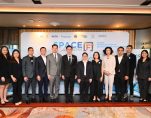
BANGKOK, THAILAND – Media OutReach Newswire – 1 May 2026 – Prof. Dr. Yodchanan Wongsawat, Deputy Prime Minister and Minister of Higher Education, Science, Research and Innovation (MHESI), led the National Innovation Agency (Public Organization) or NIA, along with Thai Union Group PCL, Mahidol University, and leading corporate partners including Thai Beverage PLC, Nestlé (Thai) Ltd., and new partner Foodland Ventures from Taiwan, to launch “SPACE-F Year 7”. This is Thailand’s first global foodtech startup incubator and accelerator program, continuing the success of solving food industry challenges through sustainable innovation.
SPACE-F Batch 7
Prof. Dr. Yodchanan spoke about elevating “SPACE-F Batch 7” to the policy level and building awareness, stating that MHESI aims to present food innovation products from the startups in this batch at the upcoming Cabinet meeting. This will allow the Prime Minister to taste them, raising awareness that FoodTech is the nation’s new future. The products will be presented to the Cabinet in the next two weeks.
Regarding the core concept of combining technology with “Thai taste,” Prof. Dr. Yodchanan emphasized that no matter how advanced the technology is, it must maintain the “Nice taste of Thailand.” He cited a “high-tech omelet” he previously tasted as an example, noting that there is still room for improvement to make it taste closer to an authentic Thai omelet so that the technology can truly win over consumers’ hearts.
The MHESI Minister continued that regarding food innovation under the Wellness Economy, this year focuses on using the Wellness Economy as a New Growth Engine. This is not limited strictly to food but includes AI, ICT, and software, aiming to push Thailand into a global Wellness Tourism Hub with support from the BOI in connecting investment opportunities.
Prof. Dr. Yodchanan further stated that regarding the use of biodiversity and quality ingredients (Biodiversity & GI), startups will be encouraged to utilize Thailand’s rich biodiversity and GI products as substitutes for imported raw materials. This will help reduce costs and create a unique identity.
“As for connecting the ‘Thinker’ with the ‘Doer,’ this program emphasizes linking startups with large industrial corporations and investors. This helps startups in the Accelerator group advance toward Series A or B funding, while helping the Incubator group learn business and pitching experiences from their seniors to cross the business ‘Death Valley.’ Furthermore, regarding food and nutrition security in the era of war: in the current global conditions facing wartime situations, Food Security and Nutrition Security are vital. This program is an opportunity for startups to create innovations that help solve problems for the whole world, with the government working closely with SPACE-F to create new services and products,” the MHESI Minister said.
However, “SPACE-F Batch 7” features 20 participating startups from 10 countries, focusing on the Proof of Concept (POC) strategy to ensure they can tangibly grow toward commercialization on an international scale.
Dr. Krithpaka Boonfueng, Executive Director of the National Innovation Agency (NIA), stated that NIA aims to strengthen the potential of startups and innovative entrepreneurs to overcome business crises and grow commercially in a tangible way. Over the past 6 years, the SPACE-F program has concretely reinforced its role as a regional food innovation hub by incubating and accelerating over 100 startups from 18 countries worldwide, generating a total funding value of over 5.1 billion THB. For the SPACE-F Year 7 program, it marks another major milestone of leapfrog growth, setting a new international record with an all-time high of 204 applicants, continuously increasing from 156 in Cohort 6 and 148 in Cohort 2, reflecting the confidence of global startups in the program’s potential. Concurrently, the program has significantly expanded its international reach, with applicants from 57 countries worldwide, up from 34 countries in the previous cohort, affirming that SPACE-F is a truly global platform connecting and driving world food innovation.
“The SPACE-F program is considered a vital mechanism in driving the development of a strong and comprehensive foodtech startup ecosystem by systematically connecting knowledge, technology, and the industrial sector together. Particularly, it provides opportunities for startups to co-develop and test real products (Proof of Concept: POC) with large corporate partners, as well as access expert networks and world-class infrastructure. This includes testing protein innovations focused on appearance, freshness, and taste with Thai Union; developing modern health and nutrition solutions with ThaiBev and Nestlé; utilizing deep-tech research laboratories from Mahidol University; and enhancing fundraising capabilities from Foodland Ventures, which plays a crucial role in reducing business risks and effectively increasing the chances of commercialization. For SPACE-F Year 7, it aims to elevate startup development through 2 main programs: the Incubator Program, which focuses on laying business foundations and developing prototypes into market-ready products, and the Accelerator Program, which focuses on accelerating business expansion through connections with strategic partners and investors. This covers 7 key areas of the food industry: 1) Personalized Nutrition, 2) Future Protein, 3) Circular Food Systems, 4) Smart Manufacturing, 5) Sustainable Production, 6) Food Safety, and 7) Novel Consumer Experience, to build high-potential startups capable of developing quality new products that directly meet market demands, ready to compete and grow sustainably on the global stage.”
Ms. Sirichit Jiraruangkiat, Senior Director – Group Innovation at Thai Union Group PCL, revealed, “As a co-founding partner of the SPACE-F program, Thai Union Group PCL continues to drive the development of Thailand’s foodtech startup ecosystem. We aim to support breakthrough growth by promoting the development and testing of innovations at the industrial level, particularly through the Proof of Concept (POC) process, to elevate the standards of future protein products to compete internationally. Thai Union prioritizes the application of modern food production and preservation technologies, covering everything from maintaining product quality and freshness and developing appealing appearances to sensory research to create textures and flavors that effectively meet the demands of global consumers. Simultaneously, the SPACE-F program remains committed to a ‘No Equity Taken’ approach, allowing startups to retain full ownership of their innovations, maintain business agility, and grow independently and sustainably in the long term.”
Assoc. Prof. Dr. Pasit Pakawatpanurut, Deputy Dean for Research and Innovation, Faculty of Science, Mahidol University, further added, “With expertise in food science, nutrition, biotechnology, and related fields, Mahidol University serves as an academic powerhouse and innovation infrastructure, providing startups with access to advanced laboratories, pilot plants, and modern research equipment. They also receive in-depth consultation from a team of expert researchers to successfully transition research into products that truly meet global market demands (Lab-to-Market). This collaboration is therefore a key mechanism in driving sustainable food innovation and enhancing Thailand’s competitiveness as a global foodtech hub. Mahidol University’s involvement in the SPACE-F program also plays a vital role in strengthening the country’s foodtech startup ecosystem in the long run.”
In addition, another key partner is Thai Beverage Public Company Limited, which places great importance on continuous research and development, believing it to be essential for startups. As a sponsor of the SPACE-F program, they are pleased to be part of an ecosystem that enhances the potential of foodtech startups and provides business and technological guidance to help startups discover solutions that truly meet the needs of the global food market.
Ms. Jenica Conde Cruz, Business Manager – Cereal Partners Worldwide & Incubator at Nestlé (Thai) Ltd., also stated, “Nestlé, a global leader in food and beverages, plays a vital role as a strategic partner of the SPACE-F program. We aim to elevate foodtech startups through the transfer of Research & Development (R&D) knowledge and product development experience under the ‘Good food, Good life’ concept. Nestlé also provides in-depth consultation to support the development of products that meet Nutrition, Health, and Wellness needs, while promoting the use of innovation to tackle global food industry challenges. In parallel, Nestlé also drives the development of innovations that align with sustainability goals by opening opportunities for startups to learn together with experts from our global research center network, in areas of food preservation technology, eco-friendly packaging, and responsible sourcing.”
Victor Chen, CEO of Foodland Ventures Co. closed with, “Foodland Ventures, a leading Venture Capital firm and Accelerator from Taiwan, has joined as a strategic partner in the SPACE-F program to push foodtech startups to expand their businesses into international markets. We aim to act as a bridge connecting innovation from Taiwan with food industry networks in Thailand and Southeast Asia. With expertise in key technologies such as Restaurant Automation, Alternative Protein, and Smart Supply Chain, Foodland Ventures is ready to support startups through access to the Taiwanese market and resources, providing investment and business strategy consultation, and connecting them with the industrial sector to test solutions in real-world environments. This collaboration marks a significant step in building a ‘FoodTech Corridor’ between Thailand and Taiwan to elevate startup potential and drive the food industry toward a sustainable global future.”
The “SPACE-F Year 7” program also introduced 20 startups from 10 countries worldwide: South Korea, Spain, Canada, USA/Argentina, Australia, Singapore, UK, Saudi Arabia, Taiwan, and Thailand, selected for this year’s program. All will have the opportunity to co-develop and test real innovations with leading industry partners, covering product development, industrial-level testing, and commercialization in the real market
Such collaboration is a key highlight of the program, providing startups the opportunity to test technology and innovations in real-world environments, reducing development limitations, and increasing the chances of creating business models that accurately meet market demands.
10 FoodTech Startups Joining the Accelerator Program
Terra Bioindustries Inc (Canada): Upcycles agricultural and food industry waste into high-value ingredients such as sugar, protein, and fiber for use in the food, biotech, and chemical industries.
Nucaps (Spain): Develops functional protein ingredients using microencapsulation technology to wrap active substances and probiotics, enhancing nutritional value, reducing costs, and improving taste to effectively promote consumer health.
BeNatureBioLab (South Korea): Develops functional ingredients using nano and microencapsulation technology from natural proteins to wrap active substances and probiotics, increasing the stability, absorption, and efficiency of substances in food, supplements, and health products.
Kinava (South Korea): Converts food waste into biofertilizer, biochar, and biogas within hours using HydroThermal Carbonization (HTC) technology, which reduces odor, energy use, and emissions.
ComexSoft (Spain): A near real-time market intelligence platform that collects and organizes retail data, matching similar products specifically developed for accurate decision-making.
PROTINOS (Thailand): High-protein noodles made from egg whites and soybeans containing complete essential amino acids, created using enzyme incubation techniques, serving as food to help care for and protect health.
SicPama (South Korea): A QR ordering and payment platform with a CRM system that links social media with actual service usage and repeat visits, helping restaurants measure returns and increase revenue.
Nourish Ingredients (Australia): High-performance animal-free fats created via precision fermentation to solve the taste and texture issues of plant-based alternative foods by mimicking the key fats found in meat and dairy products.
Kresko RNAtech (USA/Argentina): Nutrients from biological RNA found in natural foods, developed by AI and biotechnology to be more stable and better absorbed, for use in dietary supplements and health products.
Agrifreeze (Singapore): Develops freezing technology using Electromagnetic Fields (EMF) to control the formation of small ice crystals, reducing food damage and maintaining quality close to fresh products.
10 FoodTech Startups Joining the Incubator Program
Eatwellconcept (Thailand): An AI-powered personalized therapeutic diet platform for NCD patients, offering real-time nutritional guidance by dietitians to improve health and quality of life.
AmaranthLab (UK): Protein ingredients from amaranth for GLP-1 (Glucagon-Like Peptide-1) nutrition to control blood sugar levels and satiety, for use in various functional food products.
Openfarming (Saudi Arabia): An AI operating system for food distributors that converts orders from multiple channels into real-time data, enabling automated demand forecasting and dynamic inventory management without changing existing workflows.
Zuppar Reborn (Thailand): Biodegradable fruit and bakery stickers made from pineapple waste, replacing plastic labels with an alternative that can decompose into fertilizer.
VeriPura (Thailand/Singapore): An AI and Blockchain platform for automated document management and product traceability, making food exports to Europe easier and more compliant with regulations (EU).
YiXingYuan (Taiwan): A modular small-scale fruit processing factory (Factory-in-a-box) utilizing High Voltage Electric Field (HVEF) technology to process fruits directly at the source, preserving product quality while reducing energy use, costs, and spoilage.
JOLA (Thailand): Vitamin-infused jelly pet food that develops DIY treat products, such as jellies for dogs and cats, focusing on natural ingredients, good nutrition, and creating a shared experience between owners and pets.
UPLI (UK): A precision fermentation platform to create functional proteins with characteristics similar to human breast milk, used to increase nutritional value in food at an industrial scale.
Emerald Plast (Thailand): Biodegradable food materials and packaging made from starch and bioplastics to replace traditional plastics, reducing environmental impact and enhancing sustainability image.
Squizify (Thailand): A digital food safety platform integrating software and IoT devices to automatically track, monitor, and manage food business standards, complete with real-time data analysis.
Oil at $80 would once have been considered elevated. Now it would be interpreted as stability, and that shift alone reveals how fundamentally the market has changed. Brent crude moving beyond $120 this week is widely being described as a spike driven by geopolitical tension. That interpretation is too narrow. Price action reflects something deeper and more consequential: a structural reset in how energy is priced, traded, […]
Apple is turning restraint into a strategic advantage as rivals pour record sums into artificial intelligence infrastructure, betting that a narrower, device-centred approach can protect margins while keeping investors focused on earnings rather than data-centre bills. The iPhone maker’s latest quarterly performance has strengthened that argument. Apple reported March-quarter revenue of $111.2 billion, up 17 per cent from a year earlier, with diluted earnings per share rising […]
Japan’s yen rallied sharply against the dollar on Friday as traders braced for further official action from Tokyo after suspected currency intervention jolted global markets during a packed week of central bank decisions.
The dollar fell to around 155.60 yen at one point in London trading, before recovering part of the move to trade near 156.40. The rebound in the yen followed a dramatic reversal on Thursday, when the Japanese currency strengthened by about 3 per cent after the dollar briefly climbed above 160 yen, a level widely viewed in markets as politically sensitive for Tokyo.
Japan’s top currency official Atsushi Mimura said authorities remained concerned about speculative moves and were watching markets closely. Finance Minister Satsuki Katayama had already warned that Tokyo was ready to take decisive action if currency movements became disorderly. The comments reinforced market expectations that further intervention could follow, particularly during Japan’s Golden Week holiday period, when thinner trading conditions can magnify exchange-rate swings.
Bank of Japan money-market data suggested authorities may have spent about 5.48 trillion yen, or roughly $35 billion, to support the currency on Thursday. The scale would be close to the size of Japan’s July 2024 intervention, when authorities moved after the yen weakened to a 38-year low near 162 per dollar. Tokyo typically does not confirm intervention immediately, preferring to disclose monthly figures later, but unusually large projected fund flows at the central bank often provide an early signal of official activity.
The pressure on the yen has been building for months as the interest-rate gap between Japan and the United States remains wide. The Bank of Japan kept its policy rate at around 0.75 per cent this week, although three board members dissented and argued for a rise to 1 per cent. That split underlined growing concern inside the central bank that imported inflation, higher energy costs and yen weakness could feed into domestic prices.
The Federal Reserve also left rates unchanged, keeping its target range at 3.5 to 3.75 per cent. The gap between US and Japanese yields continues to encourage carry trades, in which investors borrow cheaply in yen and invest in higher-yielding dollar assets. Such positioning has made the yen vulnerable whenever markets believe Tokyo’s warnings lack force.
The intervention threat gained urgency after oil prices climbed on concerns over disruption linked to the Iran conflict and risks around the Strait of Hormuz. Japan, heavily dependent on imported energy, faces a double blow from higher crude prices and a weaker currency, which raises the local cost of fuel, food and raw materials. That dynamic complicates the Bank of Japan’s effort to normalise policy gradually without damaging a fragile recovery.
The broader central bank backdrop added to volatility. The European Central Bank kept its deposit rate at 2 per cent while signalling that inflation risks had intensified. The Bank of England held Bank Rate at 3.75 per cent in an 8-1 vote, with one policymaker favouring an increase. Across major economies, policymakers are balancing weaker growth signals against renewed price pressures from energy and supply disruptions.
Currency traders said Japan’s challenge is that intervention can slow a slide but rarely reverses a trend unless supported by monetary policy or a shift in global rates. A one-off operation may force investors to cut speculative positions, but renewed dollar strength can quickly restore pressure on the yen if US yields remain elevated and the Bank of Japan moves cautiously.
The timing of the suspected intervention was also significant. With European markets partly thinned by the May Day holiday and Japan heading into an extended holiday stretch, liquidity conditions were expected to remain fragile. Authorities have often chosen moments of thin trading to maximise the impact of currency operations, but such moves also increase the risk of sudden reversals when full market participation returns.
For households and companies in Japan, the exchange-rate battle has direct economic consequences. A weaker yen benefits exporters by raising the value of overseas earnings, but it also lifts import bills and squeezes consumers through higher costs. Large manufacturers have been able to absorb some of the pressure, while smaller businesses reliant on imported inputs face tighter margins.
Global internet reliability came under sharper pressure in the first quarter of 2026 as shutdowns, war damage, power failures and cable incidents disrupted connectivity across several regions, exposing a widening risk for enterprises that depend on cloud platforms, cross-border data flows and always-on digital services. Cloudflare’s review of disruptions from January to March showed that the most damaging incidents were not dominated by software faults alone. Political […]
Cyber literacy has become the leading global people risk as employers confront ransomware, AI-enabled fraud, technology skills gaps and fragile workforce readiness, Marsh’s 2026 People Risks survey has found. The report, based on views from 4,517 human resources and risk professionals across 26 markets and 12 industries, places inadequate cyber threat literacy at the top of the global risk list. Technology skills shortages, including cyber and artificial […]
By Nitya Chakraborty Just two weeks before the scheduled summit of U.S President Donald Trump with the Chinese President Xi Jinping in Beijing on May 14-15, the report of the World Intellectual Property Organisation (WIPO) on the status of AI related applications, has unnerved the U.S. administration as the latest Chinese supremacy in robot related […]
With Leisure Plus, Redefining Hong Kong’s Bathroom Experience Through AI Smart Toilets and Bathroom Cabinets for a New Era of Intelligent Living
HONG KONG SAR – Media OutReach Newswire – 30 April 2026 – As urban life in Hong Kong places growing emphasis on efficiency, health and space utilisation, a truly future-facing bathroom brand has officially arrived. Leisure Plus Building Products Company Limited, which has been rooted in Hong Kong for nearly three decades, has officially announced its appointment as the Hong Kong sole agent for global bathroom leader JOMOO. Together, the two companies are bringing world-renowned premium smart bathroom products to the Hong Kong market, using JOMOO’s leading AI-powered digital technology to deliver innovative bathroom solutions tailored to the city’s unique living environment. This partnership not only marks the arrival of a heavyweight international brand in Hong Kong’s bathroom market, but also signals a new AI-driven era for local homes and commercial spaces.
For Hong Kong people, the bathroom has never been a purely functional space. Within a limited footprint, it carries cleansing, grooming, care, storage, and the rhythm of how each day begins and ends. Space is compact, humidity is high, storage must be efficient, and expectations for the user experience keep rising. JOMOO’s arrival in Hong Kong answers the city’s pursuit of efficiency, comfort, health and aesthetics with world-leading AI bathroom technology. The brand is also introducing several smart toilets and innovative bathroom mirror cabinets for their Hong Kong debut, showing how bathroom AI can move from concept into daily life and become a real part of improving everyday living.
Leisure Plus Building Products said: “Bringing JOMOO to Hong Kong reflects Leisure Plus’s deep insight into the future of living. We see Hong Kong’s premium bathroom market moving beyond traditional hardware into a new stage that combines smart technology, health management, space integration and sensory experience. By partnering with JOMOO, Leisure Plus is bringing globally leading AI smart bathroom technology to Hong Kong, not only adding an international-calibre brand to the market, but also redefining daily life through technology, enabling the bathroom to evolve from a single-function space into a core living space that delivers comfort, efficiency and wellness value.”
JOMOO: Reshaping the Bathroom Experience with AI and Unrivalled Global Leadership
Founded in 1990, JOMOO has long ranked No.1 in China’s bathroom industry and among the world’s top three. With technology-driven bathroom living at its core, the brand combines R&D, intelligent manufacturing and innovative design, and is committed to redefining premium living through AI. As the pioneer behind the “AI BATH” scene-based brand, JOMOO breaks away from conventional product thinking with pioneering motorised flip-and-discharge cleansing technology that significantly improves performance while achieving library-level quietness. Combined with AI robotic self-cleaning and contact-free health sensing technologies, it deeply integrates artificial intelligence, biosensing and everyday bathroom use, delivering more proactive and thoughtful health support for users.
In this high-profile move into Hong Kong, JOMOO is guided by the strategy “Tech Bathroom, Global JOMOO”, bringing not only products but also a lifestyle upgrade powered by AI. Tailored to Hong Kong’s compact and humid living environment, the brand offers smart, space-saving and health-enhancing bathroom solutions, helping lift the overall standard of bathroom living in the city.
From Smart Toilets to Bathroom Cabinets: A Powerful New AI Bathroom Lineup Arrives in Hong Kong
G06 and G08 Smart Digital Toilets
In Hong Kong’s space-constrained homes, bathroom spaces often face multiple challenges, including limited room, humidity and restricted functionality. Tailored specifically for Hong Kong homes, JOMOO is introducing two flagship smart toilets and one smart bathroom cabinet that use AI-powered digital technology to resolve the tension between space and functionality in one stroke, bringing consumers a world-leading premium smart bathroom experience. The G06 Smart Digital Toilet is an entry choice that balances intelligence, comfort and practicality, while the G08 Smart Digital Toilet comes with an upgraded digital display and a more comprehensive smart feature set, taking comfort, convenience and technology to a new level.
To address the common problem of compact bathrooms in Hong Kong, both products are equipped with features such as “triple foot-sensing control”, “smart wireless control” and “auto-flush on departure”. Users do not need to twist sideways or make unnecessary movements, and can enjoy a freer, smoother toilet experience even in narrower bathroom spaces. With an IPX4 water-resistance rating, the products also handle Hong Kong’s humid environment with ease, delivering reassurance and durability in everyday use.
Product highlights: – Triple foot-sensing control with automatic lid opening for elegant use even in narrow spaces – AI smart temperature sensing and adjustment for lasting comfort – High-definition digital display showing water and seat temperature at a glance – Multiple cleansing modes with antibacterial nozzle and warm-air drying system – Soft-glow night light and backup flushing during power outages – IPX4 high-efficiency water resistance for humid environments
Pricing: – G06 Smart Digital Toilet: Original price HK$5,980; promotional price HK$4,980
– G08 Smart Digital Toilet: Original price HK$8,580; promotional price HK$5,980
Revolutionary Smart Bathroom Cabinet: VERA Jinci Series
Addressing the core issue of limited bathroom space in Hong Kong’s mainstream residential developments, JOMOO will soon launch the suspended VERA Jinci Series Smart Bathroom Cabinet. Powered by AI technology, it integrates three major functions – beauty-product preservation, dedicated wash care, and smart mirror features – so that every inch of space delivers greater value and daily routines become more precise, smoother and more relaxed, completely reinventing the bathroom experience.
Product highlights: – 998x532x1900mm suspended golden-ratio structure with zero hygiene blind spots – Built-in cosmetics fridge with AI-controlled constant temperature and humidity for skincare freshness – Built-in 0.8kg mini drum washer with six cleansing modes tailored for small items – Mirror with touch-control natural-light ambience and one-touch defogging – High colour-rendering mirror for true-to-tone makeup application – Moisture-resistant eco solid-wood body suited to Hong Kong’s maritime climate
The VERA Jinci Series Smart Bathroom Cabinet is scheduled to officially launch in Hong Kong in mid-2026. Consumers will be able to experience its intelligent features firsthand at JOMOO’s Hong Kong experience store. (Price to be announced)
The issuer is solely responsible for the content of this announcement.
About Leisure Plus Building Products Company Limited
Established in 1997, Leisure Plus specialises in building products and design solutions for developers, architects and designers. Its services cover the supply of bathroom and kitchen equipment, design consultancy, logistics, technical support and installation. Since entering Mainland China in 2003, the company has established subsidiaries in Shanghai and Hubei and participated in a number of landmark projects, including Vanke Zhongxing Road No.1, Shanghai Sheshan Shimao InterContinental Hotel and Wuhan Tianhe Airport Terminal 3. This sole-agency partnership with JOMOO reflects Leisure Plus’s forward-looking vision: embracing the smart home wave, understanding Hong Kong people’s living needs, and combining its extensive project experience with world-class smart bathroom technology to further enhance living quality and health experiences. (Website: https://leisureplushk.com/)
About JOMOO
Founded in 1990, JOMOO is an international fully integrated enterprise centred on smart digital bathroom solutions, firmly holding a leading global position as “No.1 in China, Top 3 in the World”. The brand has been jointly certified by Frost & Sullivan and Euromonitor as both the “World’s No.1 Smart Toilet Brand by Sales Volume” and the “No.1 Smart Toilet Brand in China”. It operates 16 R&D centres and 15 green lights-out factories worldwide, has accumulated more than 20,000 patents, and invests over 10% of annual sales revenue in R&D, continuously driving the intelligent transformation of the global bathroom industry. Its design strength has earned repeated international recognition, including the Red Dot: Best of the Best and the iF Design Award. JOMOO products are sold in more than 120 countries and regions and are installed in over 300 global landmark projects, including Emirates Palace Abu Dhabi, Burj Al Arab Dubai, The Peninsula Hong Kong and Beijing National Stadium (Bird’s Nest). JOMOO’s arrival in Hong Kong not only expands its global footprint, but also brings the market a new bathroom benchmark defined by technology, scenario-driven design and premium lifestyle quality. (Website: https://www.ejomoo.com.hk/)
Arabian Post Staff -Dubai Damac International has launched Harir Residences inside its Damac Hills Baghdad master community, adding twin premium residential towers to a capital city property market increasingly shaped by private developers, affluent buyers and demand for planned urban living. The project comprises two 12-storey towers with 210 apartments, offering one-, two- and three-bedroom units. The towers are positioned within a larger community near Baghdad International […]
Blockchain investigator ZachXBT has sharpened scrutiny of Sam Altman-linked World, accusing the biometric identity and crypto project of using a low-float token structure and incentives that placed poorer users at the centre of a controversial data-gathering model. The criticism, posted on X and amplified across crypto markets, focused on Worldcoin’s WLD token distribution, its iris-scanning sign-up system and the risk that verified accounts could be traded through […]
XRP has failed to convert its strongest exchange-traded fund inflows of 2026 into a meaningful price rally, leaving traders questioning whether institutional demand is strong enough to absorb persistent selling pressure across the token’s spot market. The token has slipped from about $1.51 to the $1.37-$1.40 range over the past two weeks, even as US-listed spot XRP ETFs drew about $81.6 million in net inflows in April […]
Conspiracy theories swept across social media after gunfire disrupted the White House Correspondents’ Association dinner at the Washington Hilton, turning a security emergency into another test of America’s fragile information system. The April 25 attack, which led to federal charges against 31-year-old Cole Tomas Allen of Torrance, California, unfolded near the main screening area outside the ballroom where President Donald Trump, Vice President JD Vance, senior officials, […]
Arabian Post Staff -Dubai Abu Dhabi’s decision to leave OPEC and the wider OPEC+ framework from May 1, 2026 has introduced a new fault line in global oil diplomacy, raising questions over the future discipline of a producer alliance that has shaped crude supply policy for decades. The move ends nearly six decades of UAE participation in OPEC and removes one of the group’s most important Gulf […]





 https://www.nia.or.th/