News related to
near

Gulf states are emerging as influential players in digital assets, with governments across the region intensifying efforts to regulate cryptocurrencies, tokenisation and Web3 innovations. A growing number of jurisdictions are introducing licensing frameworks for virtual asset service providers, stablecoin regimes and asset-tokenisation structures, signalling a shift in strategy from reactive oversight to proactive design.

The Central Bank of the United Arab Emirates has introduced a Payment Token Services Regulation that obliges issuers, distributors and custodians of payment tokens to maintain full reserve backing, undergo mandatory licensing and meet robust anti-money-laundering and cybersecurity standards, thereby positioning the UAE as a regulatory pioneer in the region. Across the region, countries such as Bahrain and Saudi Arabia have developed layered digital-asset frameworks, with Bahrain’s central bank among the earliest movers and Saudi launching fintech sandboxes and pilot token-asset schemes under its Vision 2030 plan.

Market data underline these developments. Analysis shows that between July 2023 and June 2024 the Middle East and North Africa region handled some US$338.7 billion in on-chain crypto value, accounting for approximately 7.5 per cent of global transaction volume. Institutional flows dominate: about 93 per cent of value transferred in the region came in amounts of US$10,000 or more.

Several regional platforms have obtained new licences under this regulatory push. The region’s first licensed crypto-asset service provider, Rain Financial Inc., has expanded its services under licence from both Bahrain’s regulator and Abu Dhabi’s ADGM-FSRA. In Bahrain, over 50 firms including nearly half focused on digital-assets are in discussions to establish operations under the Central Bank’s regime.

The tokenisation of real-world assets is gaining traction, with banks and global institutions exploring issuance of token-backed bonds, real estate and commodity-linked tokens. According to consultancy research, tokenisation could add as much as US$230 billion annually to MENA-region GDP. Major international exchanges and asset-managers are establishing footholds: for instance, the global exchange Binance uses the UAE as its regional base and has obtained a licence under Dubai’s Virtual Assets Regulatory Authority.

Despite this momentum, the region faces challenges. Implementation remains uneven: regulatory capacity across jurisdictions varies, local consumer-protection rules are still emerging and cybersecurity vulnerabilities in wallet providers and exchanges pose material risk. Energy-use and environmental impacts of crypto-mining have also drawn regulatory scrutiny: in one Gulf city, electricity consumption fell by over fifty per cent after enforcement of mining curbs.

Taxation and corporate-governance issues are also under development. In Saudi Arabia individuals currently pay no capital-gains tax on crypto, though businesses may face up to 15 per cent tax with corporate income taxed at 20 per cent plus a 2.5 per cent zakat levy. Given the youth-skewed demographics of Gulf markets and high smartphone penetration, regulators see digital-assets as both a diversification lever and a conduit to broader fintech innovation.

For global crypto and Web3 players the Gulf region offers a combination of clear regulation, large capital pools and government-driven ambition. However firms must navigate rigorous licensing conditions, reserve-backing rules, AML frameworks and evolving governance standards. The regulatory focus on stability and consumer protection underscores that the region expects digital-asset innovation to be embedded in mainstream finance rather than existing outside it.


A partnership between the investment firm Orion Resource Partners, the U. S. International Development Finance Corporation and sovereign investor ADQ has launched a major critical-minerals fund, mobilising an initial $1.8 billion in capital with a target of up to $5 billion to support supply-chain development of essential raw materials. The initiative, known as the Orion Critical Mineral Consortium, aims to invest in and scale near-term producing assets for minerals such as copper, cobalt and rare earths, in line with partner-government industrial and security goals. The DFC has confirmed its cornerstone commitment, matched by funds managed by Orion and ADQ, creating the foundation of the expanding pool of capital.

The fund emerges amid heightened concern in Washington over the concentration of critical-minerals processing in rival economies and the lag in Western investment, with deferred permitting, falling ore grades and decelerating mine-development pipelines cited as systemic pressures. Orion, which manages around $8 billion in assets and has global mining-finance experience, brings its platform into the consortium, while ADQ’s prior joint venture with Orion—announced earlier this year for $1.2 billion—provides a blueprint for the strategic partnership. The fresh consortium will prioritise assets capable of delivering supply within a shorter timeframe rather than frontier exploration, signalling a shift towards faster-payback, lower-development-risk opportunities.

The strategic calculus ties directly into U. S. national-security and industrial-policy ambitions. “Securing critical minerals is a paramount matter of U. S. strategic interest and economic prosperity,” said DFC CEO Ben Black. Orion founder and CEO Oskar Lewnowski described the consortium as a “bridge” between emerging-market production jurisdictions and advanced-manufacturing demand in the U. S. and among allies. The fund will focus on eligible jurisdictions for DFC investment and will integrate production, processing and offtake structures.

The $1.8 billion commitment represents the current scale of the vehicle, with Orion CMC envisaged to grow further as aligned investors join. Observers note that while the headline target is $5 billion, execution will depend on securing suitable assets, navigating permitting and securing host-nation partnerships. The model mirrors the earlier ADQ-Orion joint venture launched in January, which committed to deploy $1.2 billion over its first four years across metals-and-mining investments in Africa, Asia and Latin America.

For Orion and ADQ, this represents an expansion of their earlier alliance: the Abu Dhabi-based JV served both to secure long-term resource links and to align with ADQ’s infrastructure-and-critical-minerals cluster. For the U. S., the consortium marks one of the largest private-sector-linked initiatives in the critical-minerals domain, aligning DFC’s mandate of mobilising private capital abroad with the administration’s aim to reduce strategic vulnerabilities in supply chains.

Challenges remain. Mining projects are long-horizon endeavours, and merely committing funds does not guarantee results. Host-country regulatory regimes, permitting timelines, environmental and social governance constraints and market-price volatility all play roles in investment outcomes. Industry analysts caution that while the push for supply-chain resilience is timely, the gap between intent and delivery is sizeable. Even with $5 billion in capital, global demand for some critical minerals is projected to outstrip supply capacity.

Operationally, the consortium’s emphasis on “existing or near-term producing assets” rather than early-stage exploration is intended to accelerate results and mitigate development risk. That strategy reflects frustration in industry circles with projects that take a decade or more to bring into production. The presence of sovereign-wealth capital, allied-government backing and private-sector mining-finance expertise may create a differentiated pathway for this fund compared with earlier, traditional mining-investment funds.

The lead up to the table tennis contests at the 15th National Games of China take place next month at the Galaxy Arena, embracing the spirit of ‘National Games for All’ with the unique integration of record-breaking ‘sports-meet-art’ activations MACAU SAR – Media OutReach Newswire – 24 October 2025 – In celebration of the 15th National Games of China, which will be hosted in the Guangdong-Hong Kong-Macao […]

HANOI, VIETNAM – Media OutReach Newswire – 24 October 2025 – 8Wonder Winter 2025 officially announces its full lineup, featuring global music icon Alicia Keys, “the songbird of America” with 17 prestigious GRAMMY Awards; K-pop’s new-generation phenomenon aespa; “the limitless voice” Dimash; and top Vietnamese artists Van Mai Huong, HIEUTHUHAI, and Maydays. With a grand scale, the “Symphony of Stars” concert, taking place on December 6 at […]

The manufacturing sector in the United Arab Emirates, accounting for 15 per cent of gross domestic product, is set to become the main engine of the country’s next economic phase, according to entrepreneur Mohamed Alabbar, founder of Emaar Properties and Noon. com and chairman of Eagle Hills. Speaking at the eighth Sharjah Investment Forum–World Investment Conference 2025, he emphasised that while real estate contributes around 12 per […]

!Image!Image!Image A landmark leap in quantum computing has been announced by Google Quantum AI, which reports that its 105-qubit processor, named Willow, running the newly developed algorithm called Quantum Echoes, achieved a speed-up of approximately 13,000 times over the most advanced classical algorithms on supercomputers. According to the company, this is the first instance of a quantum algorithm that is both verifiable and out-of-reach for classical computation. […]

The International Court of Justice in The Hague issued an advisory opinion stating that Gaza Strip’s occupying power must facilitate humanitarian relief efforts by the United Nations Relief and Works Agency for Palestine Refugees in the Near East and other UN bodies, and ensure the civilian population’s essential needs for food, water, shelter, fuel and medical care are met. Presiding Judge Yuji Iwasawa declared that Israel “is […]

Advertisements

A study by the European Broadcasting Union in collaboration with the BBC has found that leading artificial-intelligence news assistants deliver flawed responses in nearly half of the cases evaluated. The analysis assessed over 3,000 replies from major tools including ChatGPT, Copilot, Gemini and Perplexity, across 14 languages and involving 22 public-service media organisations from 18 countries. According to the report, 45 per cent of all answers contained […]

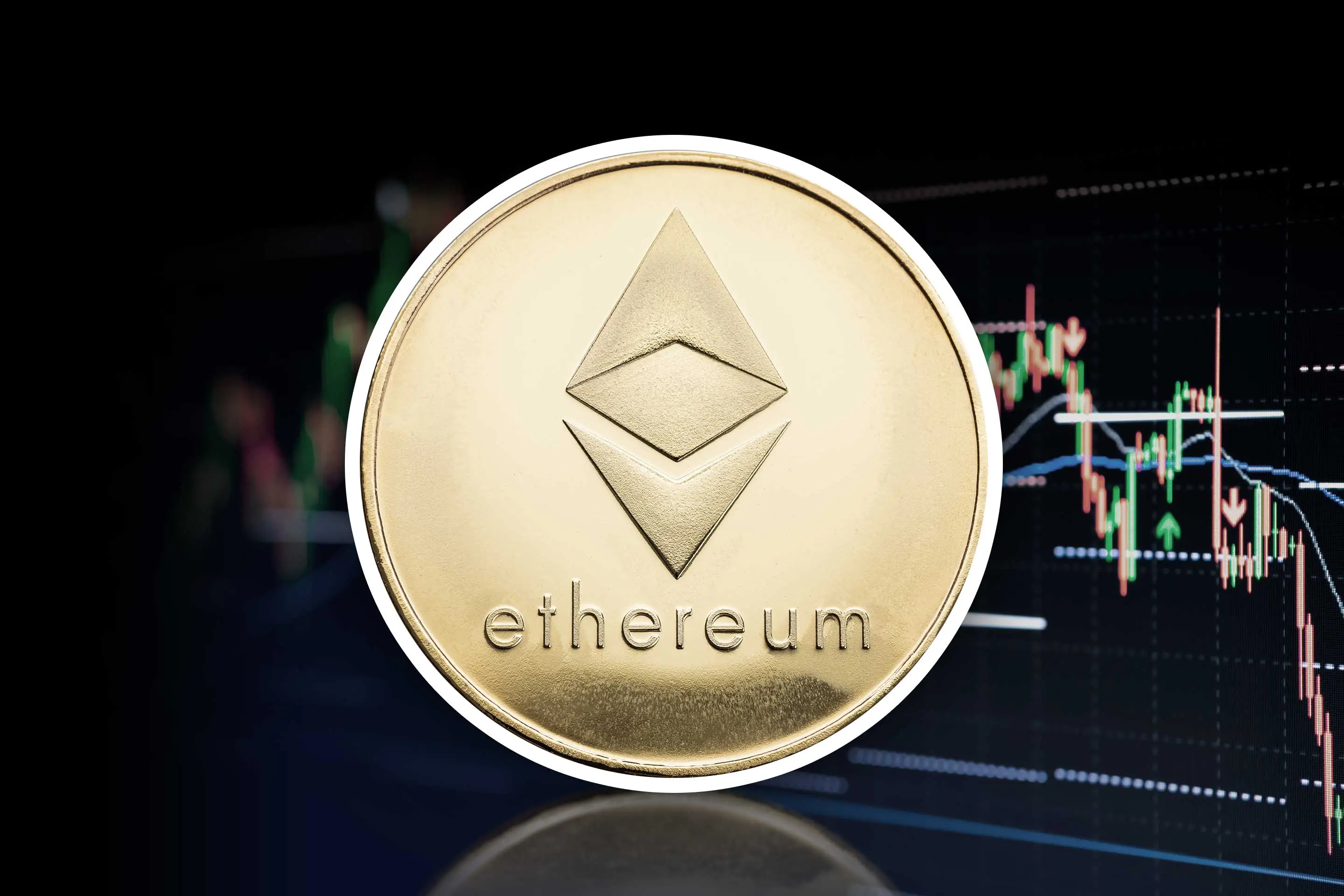
A governance storm has erupted within the Ethereum ecosystem after long-serving core developer Péter Szilágyi accused the Ethereum Foundation of operating a tightly-controlled “Vitalik-centric” inner circle that dictates project success and sidelines contributors. His public letter places co-founder Vitalik Buterin at the centre of decision-making, raising fresh concerns about decentralisation, compensation and the future of Ethereum’s governance.

Szilágyi, who led the development of the “Geth” client for nearly a decade, claims that only five to ten individuals—alongside one to three venture-capital firms—consistently influence which projects flourish within the ecosystem. He wrote: “Ethereum may be decentralised, but Vitalik absolutely has complete indirect control over it.” According to his account, the public image of his leadership role masked a reality in which he had little real influence and often found himself excluded when he challenged insiders. His letter also revealed that over six years he earned approximately US $625,000—despite Ethereum’s market capitalisation reaching US $450 billion in the same timeframe—highlighting concerns about remuneration for key infrastructure developers.

The Ethereum Foundation now finds itself under scrutiny. Critics say its funding and rewards mechanisms favour a narrow elite and neglect the broader developer community. Analysts point to the letter as sparking a wider debate about whether Ethereum’s governance is diverging from its founding ethos of open participation and merit-based outcomes.

The reaction from the ecosystem has been swift. Sandeep Nailwal, co-founder of Polygon Technology and previously closely aligned with Ethereum, echoed frustrations that “major contributors regularly face public questioning of their allegiance” and receive scant support. He questioned his own loyalty to Ethereum, citing neglect of Polygon’s contributions and reflecting broader unease among Layer-2 project leaders.

Meanwhile, Vitalik Buterin issued a public statement emphasising gratitude for Polygon’s work and the role of the broader community, but stopped short of addressing Szilágyi’s specific claims about governance and compensation. His comments were interpreted by some observers as an attempt to defuse the tension while preserving the Foundation’s preferred narrative.

The governance crisis arrives at a delicate moment for Ethereum. With the ecosystem navigating a complex architecture of Layer-2 scaling, data-availability upgrades and broader institutional adoption, questions of control, reward and direction carry more weight than ever. Governance practitioner Andre Cronje also warned that Ethereum risks losing technological and social cohesion if contributors feel disenfranchised or opt out of aligned development.

Moscow has authorised the use of cryptocurrencies in cross-border payments for trade, marking a significant departure from previous policy. The Ministry of Finance of the Russian Federation and the Bank of Russia have reached an agreement to legalise digital-asset settlements in foreign trade transactions, while simultaneously tightening regulatory oversight of the wider crypto market.

Finance Minister Anton Siluanov said the step was necessary because imports are already being paid for with crypto assets and the existing regulatory framework was inadequate. He emphasised that the legalisation would be accompanied by “proper legislative regulation” to restore order in the sector.

Under the new framework, firms engaged in exports and imports will be able to transact using cryptocurrencies—but only via authorised channels that meet stringent anti-money-laundering and know-your-customer standards. The shift builds on an earlier “experimental legal regime” that allowed limited crypto use in foreign trade and by select investors.

The Bank of Russia remains cautious. Its governor Elvira Nabiullina continues to resist full recognition of cryptocurrencies as a means of payment domestically, and proposed restricting use to cross-border trade and wealthy “qualified” investors under licensed firms.

Market analysts interpret the decision in the context of pressures from Western sanctions, which have constrained access to global payment systems. The move is seen as part of Russia’s strategy to bolster trade flows, particularly in energy and commodities, by bypassing traditional channels.

Still, legalisation is selective rather than broad. The regime applies for now only to foreign-trade transactions; the domestic use of cryptocurrency for everyday payments or retail investments remains prohibited. The Bank of Russia argues allowing wide retail access poses “financial and social” risks.

For domestic investors, the path to broader engagement remains narrow. Earlier this year the regulator proposed allowing only those with assets above 100 million roubles or annual incomes above 50 million roubles to participate in a crypto-investment experiment.

Industry players say the legalisation will create new opportunities. Top banks—such as Sberbank and Alfa‑Bank—had warned that millions of Russians hold crypto assets despite being excluded from the formal regime. They argued the grey market status of holdings was a risk for the broader financial system.

Critics caution that regulatory oversight and enforcement will be key. The Prosecutor-General’s Office, under Alexander Gutsan, highlighted that the new framework includes tools to monitor transactions linked to corruption, terrorism, extremism, and illicit financial flows.

Observers outside Russia are weighing potential ripple effects. Some suggest the policy could encourage other sanctioned or emerging-market nations to adopt crypto-based trade settlement models, challenging the dominance of traditional systems such as SWIFT.

For Russian exporters and importers, the shift may offer relief from constrained access to Western-dominated financing and payment networks. Nonetheless, firms must still operate within Bank of Russia-endorsed platforms and are subject to rigorous compliance oversight—so adoption may remain cautious in the near term.

From the government’s perspective the move attempts to draw the large informal crypto-market inside the regulatory perimeter. Holding of crypto assets by Russian users has been estimated in the hundreds of billions of roubles, according to central bank data.

The urban development landscape of the Emirate of Ras Al Khaimah is being reshaped as Marjan and RAK Hospitality Holding announced a landmark merger to form a unified entity under the Marjan brand, merging land-development and hospitality arms into one. Under the partnership, Marjan will consolidate real-estate development, hospitality operations and lifestyle offerings, effectively becoming one of the largest property developers in the United Arab Emirates. According […]

Dubai – The classifieds operator Dubizzle Group announced its decision to postpone its initial public offering on the Dubai Financial Market, citing the need to evaluate optimal timing for the listing. The company, which had filed an IPO prospectus around ten days ago, was preparing to open the book-building phase when it elected to defer the listing. The group had proposed offering approximately 30.34 % of its […]

Abu Dhabi has unveiled Hub71+ Life Sciences, a specialist platform designed to speed up the path from laboratory research to patient-ready products across biotechnology, medical technology and digital health, with the launch staged at Hub71’s Impact Event 2025 in the UAE capital. Founders are promised streamlined access to regulators, hospitals, investors and corporate partners to test, validate and scale products from the emirate. New platform powers Abu […]

Africa is entering a phase of accelerated digital inclusion, backed by substantial investment and strategic partnerships, yet persistent infrastructure and cybersecurity gaps pose growing concerns. The World Bank Group recently co-chaired the launch of the Mobilizing Access to the Digital Economy Alliance: Africa, aimed at bringing 100 million individuals and enterprises online by 2034. According to the World Bank’s data, broadband access across Africa rose from 26 […]

Visitors to the heart of Australia’s Red Centre are being drawn to Uluru‑Kata Tjuta National Park by a confluence of cultural significance, unique experiences and strategic branding that spotlight the historic destination for 2026. Plunge into the landscape and traditions of this immense sandstone formation and its neighbouring domes, and you’ll discover a land of deep meaning, geological wonder and evolving travel dynamics. Standing 348 metres tall and […]

A survey by Ipsos, sponsored by GSK, found that while 63% of adults aged 50 years or over in Singapore were aware of shingles, only 29% recognised that 1 in 3 may develop the disease in their lifetime. Less than half of respondents (44%) understood that shingles can increase the risk of stroke or heart attack; fewer (36%) knew that the risk for shingles further increases amongst […]

Travel Influencers Christy Leung and “African Prince” Kunbi Journey into the Heart of Childhood HONG KONG SAR – Media OutReach Newswire – 22 October 2025 – Hongkongers love to travel, and in recent years, more people are seeking in-depth experiences, venturing into local communities to feel the cultural pulse. Travel enables us to experience diverse traditions and build genuine connections with people. Similarly, helping to improve the […]

By Nantoo Banerjee     There is nothing to be particularly shocked about Tata Capital stocks declining 2.4 percent below the company’s IPO issue price of Rs. 326 per share a day after its debut in intraday trade on the Bombay Stock Exchange. Tata Capital, a Tata Sons subsidiary, made a flat debut on Dalal Street on […]

The article SEBI Fails To Prevent Aggressive IPO Pricing To Protect Investors appeared first on Latest India news, analysis and reports on Newspack by India Press Agency).

The Linux distribution Pop!_OS 24.04 Long-Term Support Beta from System76 introduces a ground-up rewrite of its desktop environment and enhanced hardware support, while still leaving some features unfinished and cautioning users about its beta status. Built on the foundation of Ubuntu 24.04 LTS, Pop!_OS 24.04 adopts the new Rust-based COSMIC desktop environment, moving away from the GNOME-derived shell used in previous releases. System76 describes the transition as a bid […]

Oil markets have turned once again into a supply-heavy arena as investors take note of swelling global production and a lagging demand backdrop. Prices for Brent crude slipped below $61 a barrel, while U. S. West Texas Intermediate hovered near $57, on signals that stockpiles and tanker-held quantities are climbing. Data from analytics firm Vortexa show that crude and condensate in transit rose to 1.24 billion barrels […]

Investigators have recovered an intact consumer-grade memory card from the wreckage of the submersible Titan operated by OceanGate, showing that even amid catastrophic failure some components survived. The 512 GB card, believed to be a SanDisk Extreme Pro model normally priced at around US $62, was installed in a deep-sea camera found among the debris. Despite the extreme underwater environment, the card yielded twelve still photographs and […]

Greenlogue/AP The 28th edition of the trade-fair and conference platform Ecomondo 2025 will convene from 4 to 7 November at the Rimini Expo Centre, Italy, with a reinforced international agenda that organisers expect will draw more than 1,000 exhibitors and upwards of 100,000 visitors. This year’s event is emphasising several strategic growth areas: climate-tech innovation, digitalisation in resource management, blue economy and Mediterranean-Africa partnerships. The organising body, […]

The world’s largest cryptocurrency, Bitcoin, vaulted above $111,000 after a steep dip earlier this week, triggering sharp gains across major tokens including Ethereum, XRP and Solana. On-chain metrics signalled accumulating momentum while traditional equity markets in Asia registered fresh highs, boosting risk-assets overall.

Bitcoin climbed to around $111,223, representing a gain of approximately 3.7% within 24 hours, after briefly touching a low near $103,602. Other digital assets followed: Ethereum reached roughly $4,062, XRP $2.47 and Solana approximately $193.33, with 24-hour gains of between 3% and 5%.

Analysts highlight several factors underpinning this recovery. On-chain data show the realised value-to-transaction ratio for Bitcoin has declined — a historical marker of heightened accumulation rather than passive holding. A crypto-analytics firm noted that “strong declines in the RVTS have preceded major bull phases, as they indicate that Bitcoin is being used, accumulated, and transferred — not just held.”

Broader market dynamics provided further tailwinds. In Japan, the Nikkei 225 index soared past 49,000 for the first time, advancing the year-to-date gain to 25%. The move followed media reports indicating that the country’s leading opposition party plans to join coalitions which position its fiscal-dove leader for the prime ministership — one with a policy inclination towards low interest rates and expansionary fiscal measures.

Meanwhile, China’s third-quarter gross domestic product growth of 4.8% year-on-year narrowly exceeded forecasts of 4.7%, providing support for risk assets globally.

Beyond macro-signals, institutional behaviours also deserve attention. A leading publicly listed company with large Bitcoin holdings, Strategy, has signalled fresh crypto purchases — adding a layer of institutional demand to the structural thesis.

Within the crypto space, major platforms tied to tokenisation and stable-coin activity are also part of the narrative. Analysts at Galaxy Digital emphasise three structural drivers: increased AI-capex from tokenised assets, accelerating stable-coin infrastructure, and the migration of real-world assets onto blockchain networks. These are seen as propositions that may sustain momentum beyond short-term price moves.

Yet, market participants remain cautious. Liquidity remains thin and residual risks — such as further macro headwinds, regulatory tightening or a reversal in risk appetite — continue to warrant vigilance. As one analyst put it: “The near-term message is caution — respect thinner liquidity, post-crash psychology and a ‘wall of worry’ mood. The medium-term message is resilience.”

Within altcoins, XRP is gaining renewed focus ahead of potential ETF-related developments, while Solana is benefitting from its association with on-chain tokenisation flows. Market-data platform CoinGecko shows that XRP trades at around $2.46, with volume flows increasing as sentiment rebuilds.

A team of scientists has stabilised a high-performing sodium compound that could unlock safer, cheaper and greener solid-state batteries, putting sodium one step nearer mainstream use in electromobility and grid storage. The breakthrough hinges on a metastable form of sodium hydridoborate, which the researchers heated to the brink of crystallisation and then quenched to lock in a high-conductivity phase. This novel phase exhibits ionic conductivity at least […]

VISHNU RAJA
RYO YAMADA
HITORI GOTOH
IKUYO KITA