News related to
near

MetaMask’s long-awaited native token, MASK, has received confirmation from ConsenSys CEO Joe Lubin that it is on the horizon, stoking anticipation across crypto markets. Lubin suggested the token may arrive sooner than many expect, reawakening speculation about a potential airdrop tied to user activity. Traders have already begun positioning around the move.

Parallel to the MASK buzz, derivatives activity around Aster’s native token has escalated dramatically: futures open interest has expanded by 46 per cent, reflecting aggressive speculative demand.

Bitcoin’s climb toward as high as $113,500 has added momentum to altcoin risk appetite, though analysts warn of resistance near $115,000 as a critical hurdle for sustained upside.

Momentum behind Aster has been fuelled by on‐chain flows and whale accumulation. One address spent over $1.18 million acquiring nearly 595,580 ASTER tokens in a single trade, underscoring deep-pocketed conviction in the token’s trajectory. Aster has also introduced 300x leverage trading for HYPE, drawing comparison and competition with Hyperliquid’s native token ecosystem.

Meanwhile, Hyperliquid’s own tokenomics are under pressure. A major holder transferred around 200,000 HYPE tokens—worth roughly $8.9 million—within two hours, moving the assets toward Aster platforms. The selling pressure from large holders is prompting governance discussions: one proposal suggests burning 45 per cent of HYPE supply to counterbalance impending token unlocks.

Liquidity metrics reflect the competitive dynamics among perpetual DEX platforms. While Hyperliquid historically dominated, new entrants such as Aster, Lighter and edgeX are aggressively capturing share through incentives and token distribution programmes. Some analysts caution that much of Aster’s volume is driven by incentive-seeking rather than long-term retention.

The MASK narrative adds an extra layer of complexity. Decrypt reports that prediction markets assign roughly 32 per cent odds to a token launch by November, indicating widespread uncertainty despite Lubin’s confident tone. MetaMask’s path to decentralisation is expected to involve allocation to active users—those conducting swaps or interacting with dApps—though tokenomics remain unpublished.

Traders are watching to see whether cross-correlations form between MASK speculation and derivative positioning in ASTER and HYPE. If Aster’s futures momentum continues, it may draw further capital away from incumbents, even while regulatory risk looms over token launches.


Aldar Properties has acquired Modon Holding’s full 17.45 per cent indirect stake in Aldar Estates, pushing its total ownership to 82.55 per cent. The shares had been held through Modon’s subsidiary ADNEC Group. Financial terms of the deal were not made public. With the transaction, Aldar retains its position as majority stakeholder, consolidating its influence over the real-estate services arm. Aldar Estates, launched in 2023 via a […]

China’s solar manufacturing industry is under pressure as Beijing intensifies efforts to restrain aggressive pricing tactics and eliminate surplus capacity. The National Energy Administration has signalled that firms engaging in destructive price competition will face stricter oversight, while draft regulations threaten shutdowns of plants that fail to comply with energy efficiency standards.

Wang Hongzhi, head of the NEA, published a directive ordering more balanced alignment between supply and demand, with emphasis on improving quality across the solar value chain. His message highlights that continued overcapacity and “cut-throat competition” must be contained to preserve the viability of the sector.

A key focus lies in the polysilicon segment. New standards proposed by China’s Standardization Administration would require factories to meet energy consumption thresholds—6.4 kgce/kg initially, and 5.5 kgce/kg after remediation. Facilities failing to upgrade would be shut. These rules could remove about 16.4 percent of capacity, trimming effective production to roughly 2.4 million metric tons annually.

At the same time, major polysilicon producers are planning capacity cuts via a 50 billion yuan consolidation fund. That plan aims to retire roughly one-third of low-efficiency production and impose output quotas akin to those used by oil producers. The expected cutback would reduce capacity from approximately 3.25 million tons to around 2 million.

Industry ministry meetings with solar firms have escalated in frequency, with Li Lecheng of the Ministry of Industry and Information Technology reiterating the need to phase out outdated lines, raise product standards, and enforce self-discipline among companies. The government is pushing for cleaner governance, stiffer quality controls, and curbs on unfair price undercutting. Several top-tier firms—LONGi, Trina, JA Solar, GCL, and others—attended these discussions.

Financial pressures on the solar sector have been acute. In 2024, the manufacturing chain posted losses of about US$40 billion. Many firms slashed their workforce by nearly a third. Utilisation rates in polysilicon and module production have hovered near 50 percent, constraining margins. Recent easing of pricing pressures shows polysilicon prices rebounding as the market anticipates tighter supply control.

Emerging leaders in next-generation module technology may gain an edge as the sector readjusts. N-type modules—such as TOPCon and HJT types—are being seen by some manufacturers as instruments to command premium pricing and differentiate from low-cost rivals. Companies that invest early could secure advantages in both domestic and export markets.

A longer-term obstacle is aligning central directives with local compliance. Local governments have historically defended regional solar output through subsidies, land allocation, and lax enforcement. Analysts warn that meeting the central government’s expectations may prove disruptive to local industrial planning. Enforcement is anticipated to ramp over the coming months.

OpenAI, Oracle and SoftBank have unveiled plans for five new artificial intelligence data centres across the United States under their Stargate infrastructure initiative, pushing the programme’s capacity to almost 7 gigawatts and investment to over US$400 billion over the next three years. Three of the new sites will be developed in partnership between OpenAI and Oracle, located in Shackelford County, Texas; Doña Ana County, New Mexico; and […]

SpyCloud’s 2025 Identity Exposure Report reveals that 91% of organisations reported suffering an identity-related incident in the last year, nearly double the proportion seen the year before. Data troves comprising stolen credentials, phishing logs, malware infection records and session cookies have expanded dramatically, but many firms remain overconfident in their ability to defend against evolving identity threats. The volume of distinct identity records recaptured by SpyCloud has […]

A community advisory committee denied the last Manhattan proposal for a full-service casino, ending the borough’s hopes of securing one of New York State’s three down-state gambling licences. The decision on the “Freedom Plaza” project, near the United Nations headquarters, went 4-2 against a massive bid led by the Soloviev Group in partnership with the Mohegan Tribe. The plan called for an $11 billion development including a […]

Wynn Al Marjan Island, a joint venture between Wynn Resorts, Marjan, and RAK Hospitality Holding, is poised to open in March 2027 as the UAE’s first fully integrated gaming resort. The project has breached its 61st floor on the 70‐storey tower, and developers say construction is progressing “on plan.” The resort will feature over 1,542 hotel rooms, more than 22 restaurants and lounges, and a hotel tower […]

Advertisements

Aldar Properties has increased its ownership stake in Aldar Estates to 82.55%, acquiring the 17.45% indirect share held by Modon Holding via its wholly-owned subsidiary ADNEC Group. The move solidifies Aldar’s dominance over the region’s largest integrated real-estate service platform.

Aldar Estates, formed through a merger of Aldar, IHC, and ADNEC’s property and facilities management businesses, has seen strong growth since its establishment in 2023. Aldar now holds outright control following the ADNEC-Modon exit.

Under Aldar’s direction, the platform manages roughly 155,000 residential units, and has almost doubled its prime retail and commercial leasable space to two million square metres. Contracts under management are now said to exceed AED 3 billion. These figures reflect ambitious expansion in recurring-income services.

Financially, Aldar Estates delivered revenues of about AED 2.6 billion in 2024, with EBITDA near AED 400 million, forming a growing part of Aldar’s overall strategy to emphasise stable income-streams outside pure property development. Aldar Investment oversees a broader AED 47 billion portfolio of income-generating assets.

Aldar’s Chief Executive of Aldar Investment, Jassem Salah Busaibe, said that the business is well positioned for further scale-up given increasing demand in property, facilities, and community services, along with a rising base of third-party clients. Gordons in landscaping, technical services, security, sustainability consulting and community management have been among the areas where Aldar Estates has expanded its offering.

TOKYO, JAPAN – Media OutReach Newswire – 22 September 2025 – As summer ends and autumn arrives, the mountains and valleys of Japan’s Tohoku region are transformed into vibrant landscapes of autumn foliage, resembling a breathtaking painting. With the JR EAST PASS (Tohoku Area) offered by JR East, you can enjoy Japan’s renowned autumn foliage spots at great value. This time, we would like to introduce some […]

By Nantoo Banerjee Few will disagree that India should keep investing substantially in both onshore and offshore oil search as the country is becoming increasingly dependent on the import of petroleum crude to meet its energy needs. Currently, almost 86 percent of India’s annual crude petroleum needs are being met through imports. During his recent […]

The article Higher GST Will Hurt Oil-Starved India’s Exploration Drills appeared first on Latest India news, analysis and reports on IPA Newspack.

National Industries Park, the DP World-run industrial zone in Dubai, has secured over AED 1 billion in new project investments between January and September 2025, underpinned by a major push into greenfield manufacturing. It has leased more than 7 million square feet of land during that period, with much of the allocation going to fresh build-outs rather than expansions of existing facilities. The tenant roster has grown […]

Record trade worth AED 336 billion from the Dubai Integrated Economic Zones Authority across its three free zones marked a 19% increase over 2023, with the zone authority accounting for 13.7% of Dubai’s non-oil foreign trade—the highest share recorded.

Dubai Airport Free Zone, Dubai Silicon Oasis and Dubai CommerCity together processed trade volumes of 444,300 tonnes, representing a rise of over 28% compared with 346,700 tonnes the year prior. Sector-wise, machinery, electrical and electronics led the growth, making up about 72% of total trade and increasing by approximately 17%. Precious stones, metals, jewellery and ornaments grew by 33% and contributed about 22%. Combined, both sectors accounted for nearly 94% of total trade activity.

Sheikh Hamdan bin Mohammed bin Rashid Al Maktoum, Crown Prince of Dubai and Chairman of the Executive Council, stated that these outcomes reflect Dubai’s ambition under the Economic Agenda D33, enhancing its role as a global hub through innovation and competitiveness. Sheikh Ahmed bin Saeed Al Maktoum, Chairman of DIEZ, affirmed this was the fourth year of sustained growth, noting increasing investor confidence and strengthened global trade partnerships.

Volume growth and value growth were supported by improved infrastructure and “integrated services” across the three zones, which reduced friction in supply chains. DIEZ’s performance coincided with Dubai as a whole achieving record highs in non-oil foreign trade.

While machinery, electronics and precious materials drove most of the expansion, other sectors are underrepresented, indicating a dependency on high-value goods. The focus now may turn to diversification to prevent vulnerabilities to sector-specific global headwinds. Economists suggest sustaining infrastructure investment and expanding trade ties beyond traditional markets will be critical for maintaining momentum.

BEIJING, CHINA – Media OutReach Newswire – 19 September 2025 – At the Tianwan Nuclear Power Station (TNPS), located in Lianyungang City, east China’s Jiangsu Province, eight nuclear power units are lined up, among which six operational units have a total installed capacity of over 6.6 million kilowatts, supplying approximately 158 million kilowatt-hours of clean electricity daily to the East China Power Grid. Today, the station has […]

United Arab Emirates holds between 40 and 45 per cent share of the Middle East and Africa space market, which is estimated at US$18 billion, according to a report from the Boston Consulting Group. The UAE invested approximately US$443 million in civil space activities in 2024—nearly half of all government space spending across MEA.

Saudi Arabia and Qatar follow with civil space investments of about US$220 million each. Saudi Arabia accounts for an estimated 20–25 per cent of MEA government space spending, while Qatar contributes about 5 per cent.

Downstream services—such as satellite communications, navigation, and Earth observation—comprise roughly 70 per cent of the global space industry. The UAE is positioned to capture more than half of the downstream services market within MEA, while Saudi Arabia aims for over 20 per cent. Qatar’s role remains modest in downstream services, at just under 5 per cent.

All three countries are expected to grow at or above the global space economy’s compound annual growth rate of 5 per cent through 2033.

The report identifies several flagship programmes in the UAE—MBZ-SAT, the Hope Probe, and Arab 813—that are likely to generate returns of roughly 3-4 times the investment. These initiatives illustrate how long-term strategic planning, public-private partnerships, risk-tolerant policy frameworks, and global cooperation are central to the UAE’s leadership in the sector.

Saudi Arabia is expanding its international partnerships, including with NASA and Axiom, while Qatar’s Es’hailSat is strengthening its role in regional satellite communications. Digital policy integration—especially in satellite broadband, low Earth orbit constellations, and Earth observation—is emerging as a key success factor.

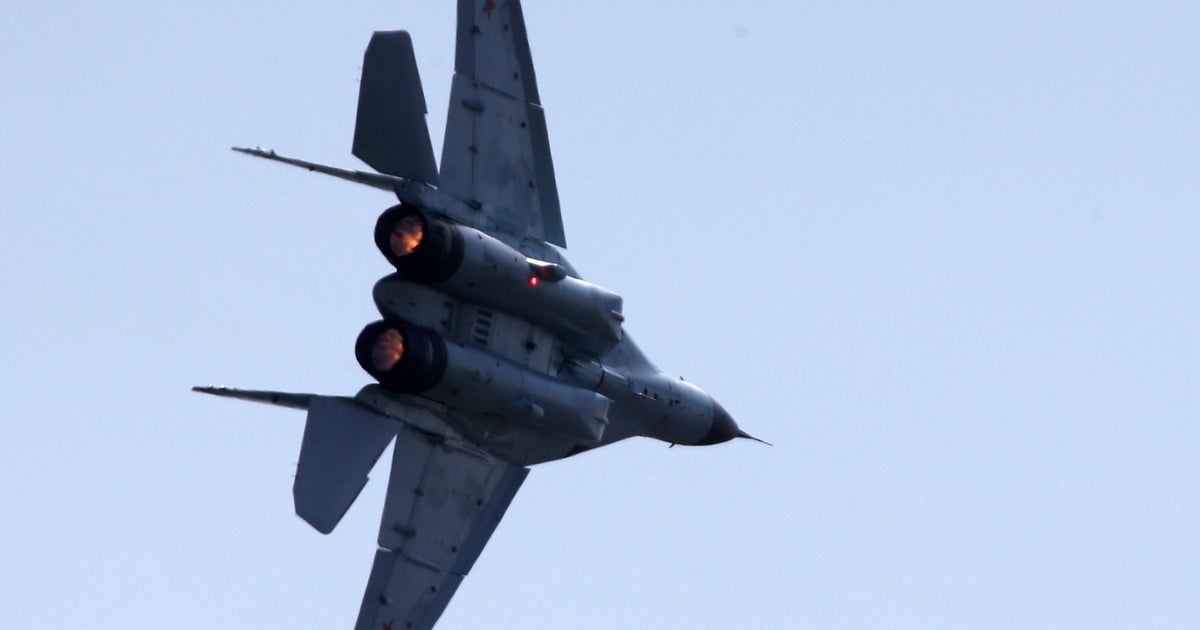
Estonia has lodged a formal diplomatic protest after three Russian MiG-31 fighters entered its airspace near Vaindloo Island, above the Gulf of Finland, without clearance for twelve minutes. The Estonian government described the incursion as “unprecedentedly brazen” and requested alliance consultations under NATO’s Article 4.

The three jets flew without flight plans, had their transponders switched off, and failed to communicate with Estonian air traffic control, according to official statements. Italian F-35s stationed under NATO’s Baltic Air Policing Mission intercepted and escorted them out. Estonia claims these flights mark the fourth known violation of its airspace by Russia this year.

Margus Tsahkna, Estonia’s Foreign Minister, stressed that while earlier violations had occurred, this one stood out in scale and coordination. He called on political and economic allies to respond forcefully to what he labelled an escalation.

Russia’s defence authorities countered that the mission was “scheduled” and followed agreed routes, asserting that the aircraft remained over neutral waters and did not cross Estonia’s borders. The claim disputes Estonia’s account, insisting no laws or flight path rules were broken.

Following the incursion, Estonia summoned the Russian chargé d’affaires and formally submitted a protest. NATO has agreed to convene under Article 4, allowing member states to discuss perceived threats to security, territorial integrity, or political independence. The North Atlantic Council is expected to deliberate early next week.

European Union officials, including EU foreign policy chief Kaja Kallas, condemned what they described as a dangerous provocation that heightens regional tensions. Estonia’s Prime Minister, Kristen Michal, echoed these concerns, saying Moscow’s actions test the limits of NATO’s resolve.

U. S. regulators have launched legal action against Live Nation Entertainment and its Ticketmaster unit, accusing them of enabling deceptive resale practices that force fans to pay well above face value for live events. The Federal Trade Commission, joined by attorneys general from seven states, filed the lawsuit in California, alleging that Ticketmaster colluded with brokers to violate ticketing limits and mislead consumers about final costs. The […]

Governments across the Gulf Co-operation Council are expanding their civil space programmes, driving the Middle East and Africa space market to a valuation of about $18 billion, with one nation commanding 40-45 per cent of regional government spending in this sector.

Boston Consulting Group’s latest analysis shows that the UAE, Saudi Arabia, and Qatar are at the heart of civil space investment across MEA. The UAE led with roughly $443 million committed for civil space in 2024, capturing nearly half of governmental spending in the region. Saudi Arabia and Qatar followed with approximately $220 million each.

The report highlights downstream services—satellite communications, earth observation—as the fastest-growing segments. UAE is projected to grab over 50 per cent of that downstream services market, while Saudi Arabia is set to hold over 20 per cent, and Qatar remains just under 5 per cent.

In the upstream sphere, where spacecraft design, launch facilities, and ground operations are concentrated, the Gulf countries are boosting capacity. Saudi Arabia has stepped up partnerships with foreign agencies such as NASA and commercial firms like Axiom, and domestic players including Neo Space Group are increasingly involved. Qatar’s Es’hailSat is cited as a key actor in satellite communications. The UAE’s Hope Mars Probe is named as an example of both international cooperation and technical achievement.

Growth rates projected through to 2033 are in line with, or exceed, the expected global compound annual growth rate for the space economy, which BCG estimates at about 5 per cent. Analysts point to policy support, institutional frameworks, public-private partnerships, and investment in human capital as enablers.

Opportunities in downstream services are being amplified by trends in artificial intelligence and cloud computing. These are reshaping data collection, processing and applications for earth sensing, environmental monitoring, agritech, and disaster response. The Gulf states are working to consolidate their roles not only as financiers but as centres of innovation and regional service provision.

The report also situates the MEA region’s space efforts within broader economic diversification agendas, particularly in the Gulf. For the UAE, Saudi Arabia and Qatar, space is not merely symbolic ambition but a sector being leveraged to build scientific ecosystems, boost high-tech employment and attract international collaboration.

Emaar Properties has confirmed that it will not sell a stake in its Indian subsidiary, instead shifting its strategy to explore joint ventures with major real estate players, including the Adani Group. The clarification was issued through a statement to the Dubai Financial Market, where Emaar is listed.

Earlier this year, Emaar acknowledged talks with Indian groups such as Adani over a possible stake sale of Emaar India. Those negotiations had garnered attention amid reports that Adani Realty was close to acquiring a majority share for around $1.4 billion.

Emaar’s latest statement emphasised that no sale is under consideration. Instead, the company is evaluating joint venture opportunities with several large real estate firms in India. Adani Group is named among those potential partners.

The real estate firm’s move comes after the earlier sale discussions faltered due to disagreements over valuation. Adani Realty and Emaar were unable to reach a consensus, leading to a stall in the effort to finalise transaction terms.

Financially, Emaar India posted net losses after tax for the fiscal year ending 31 March 2024, amounting to about ₹1,340.8 million. That compares with total revenues of approximately ₹29,137 million for the same year; in the previous year revenues had stood at roughly ₹18,319 million.

Meanwhile, Emaar Properties globally has reported strong operational performance. For 2024, it achieved property sales of nearly Dh70 billion, a rise of some 72 per cent over 2023. Revenue backlogs—sales booked but not yet recognised as revenue—exceeded Dh110 billion, providing a cushion for future earnings. Net profit before tax grew by about 25 per cent to Dh18.9 billion.

ROSHN Group, a Public Investment Fund-backed real estate developer, has launched home sales for the fifth phase of the SEDRA community in northern Riyadh, offering updated designs and expanded amenities as part of a push to meet growing demand. The new release includes more than 44 percent of the phase dedicated to open spaces and public amenities, featuring running routes, cycle paths, and landscaping built around a […]

Single-family housing starts in the United States dropped by 7.0 per cent in August to a seasonally adjusted annual rate of about 890,000 units, marking the lowest level since April 2023, according to Commerce Department data. Permits for future single-family construction fell 2.2 per cent to roughly 856,000 units, underscoring weakening builder confidence. Overall housing starts, including multifamily units, tumbled 8.5 per cent month-on-month to 1.307 million […]

HONG KONG SAR – Media OutReach Newswire – 17 September 2025 – Response to the Policy Address 2025/26 by KK Chiu, International Director, Chief Executive, Greater China of Cushman & Wakefield: Housing Supply and Land Policy Optimize land resource allocation and accelerate public housing supply Hong Kong’s land allocation policies have a profound impact on people’s lives. We are pleased to see the government actively promoting Light […]

Prosus NV has raised its holding in Urban Company Ltd to 7.35 per cent, after acquiring roughly an additional 4 percentage points by investing about $139 million, ahead of the home services startup’s Initial Public Offering. This move positions Prosus as one of Urban Company’s largest shareholders and signals strong institutional faith in the firm’s prospects.

Urban Company’s IPO drew overwhelming demand — it was subscribed over 103 times — and its shares listed at a premium of about 57.5 per cent over the issue price on the National Stock Exchange, opening at ₹162.25 versus the ₹103 issue price. The listing surged the company’s market valuation to nearly $2.8 billion.

According to Ashutosh Sharma, head of Prosus India Ecosystem, the firm increased its stake during the IPO allotment. Prosus first backed Urban Company in 2021; this latest acquisition underscores its continued appetite for stakes in Indian startups with domestic consumer and service-led business models.

Urban Company, founded in 2014 by Abhiraj Singh Bhal, Varun Khaitan, and Raghav Chandra, operates across home services such as beauty, cleaning, appliance repair and plumbing. It has expanded into over 50 cities in India and also operates in international markets including UAE and Singapore. The company reported strong financial performance in its fiscal year ending 2025, with revenue growth of around 36 per cent year-on-year and its first net profit of approximately ₹239–₹240 crore.

Investor enthusiasm was evident in the IPO process. Qualified Institutional Buyers led the subscription with particularly strong bids. The grey market premium, which reflects expectations ahead of listing, had risen to over 50 per cent above the issue price, signalling investor confidence in an upward listing trajectory.

Prosus’s move comes amid a broader trend of institutional investors increasing their exposure to Indian startups ahead of IPOs, particularly those in consumer-facing, service-oriented sectors. Earlier urban and tech-led listings have attracted robust demand, and IPOs that show solid unit economics—strong margins, revenue growth, steps toward profit—are being favoured by capital.

Urban Company’s stock market debut saw a steep rise: the shares not only opened with a 57.5 per cent premium on NSE, but trading surged further, reflecting both investor optimism and perceived underpricing in its IPO offer.

Prosus, headquartered in the Netherlands and known for its early stake in Tencent Holdings, has invested over $8-9 billion in the Indian startup ecosystem. It has backed firms such as Swiggy, Meesho, and PayU. Its amplified investment in Urban Company exemplifies a strategy of anchoring bets on firms that combine growth potential with improving financial metrics.

Security systems observed a sharp increase in API incidents in the first half of 2025, with over 40,000 security events targeting more than 4,000 environments globally. These incidents indicate that APIs — the unseen conduits connecting apps, payments and authentication — are now at the forefront of cybercriminal strategies. Thales’ API Threat Report for H1 2025, built on Imperva telemetry, shows APIs represent about 14 percent of […]

Matein Khalid Mauritius, an island archipelago state in the Indian ocean, has long maintained extensive economic and cultural ties with the GCC. Thanks to tax treaties with India, Mauritius is a favourite domicile for wealthy Indian expatriate residents of the UAE and Saudi Arabia. GCC citizens and residents are prominent investors in some of Africa’s most expensive luxury beach resorts located in the island nation, where property […]

VISHNU RAJA
RYO YAMADA
HITORI GOTOH
IKUYO KITA