News related to
near

Emergency crews are fighting a serious fire that has engulfed the upper floors of a nine-storey mixed-use building at the former BBC Television Centre on Wood Lane, White City. Around 100 firefighters attended the site by mid-morning on Saturday, joined by 15 fire engines and two 32-metre turntable ladders used as water towers. A drone team is aiding the operation by providing aerial oversight, while a rest […]

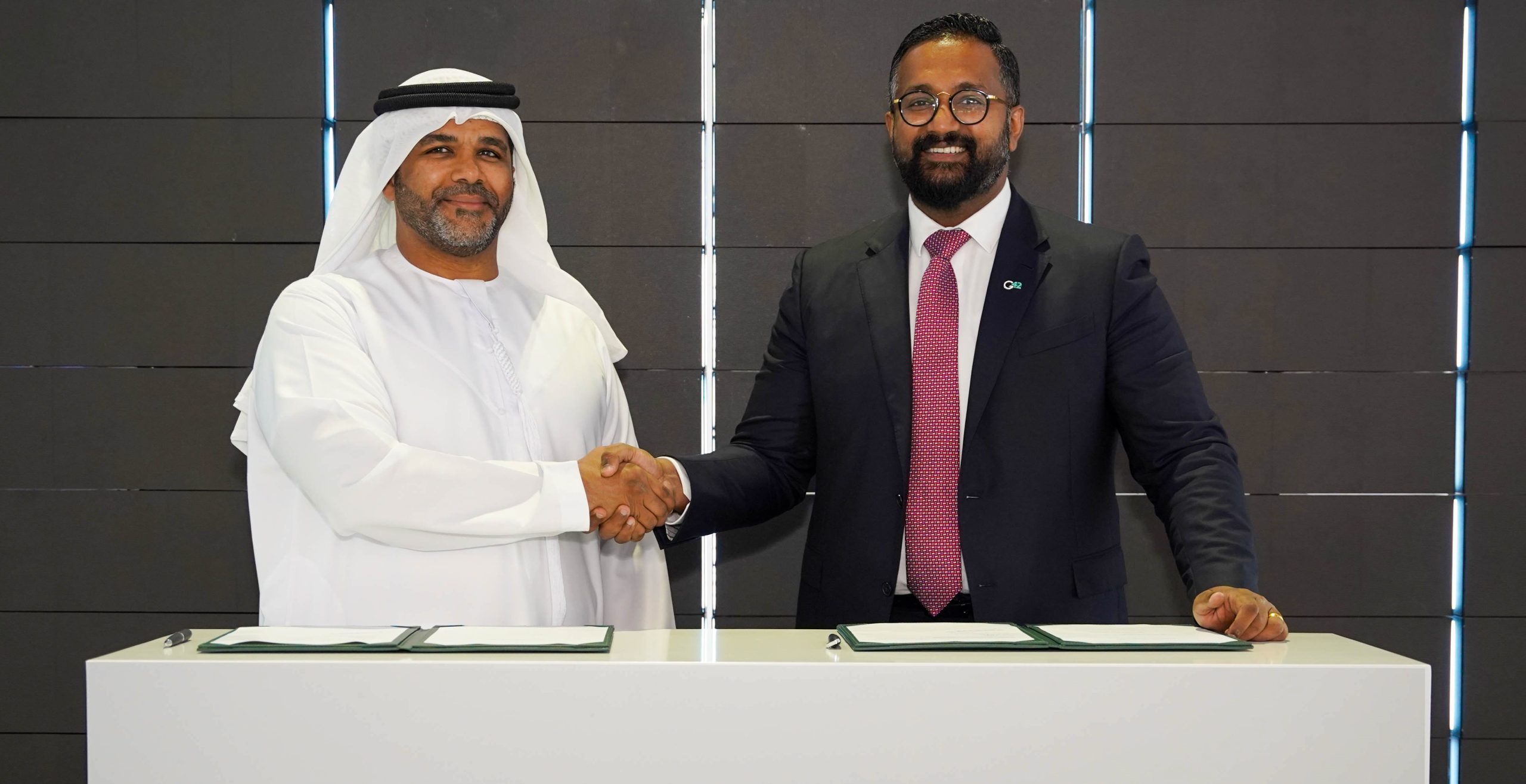
Abu Dhabi’s G42 is offering 2 % of its shareholding in its subsidiary, Presight AI, to institutional investors through an accelerated book-build, aiming to raise slightly more than $100 million. The transaction will reduce G42’s holding in the analytics group from 70.5 % to 68.5 %, while retaining majority control. First Abu Dhabi Bank and Jefferies are acting as joint global coordinators and joint bookrunners, with International Securities serving as joint bookrunner.

Demand for the placement has been strong, with books reportedly fully covered ahead of finalisation. Settlement is expected around 10 September 2025, following final terms being set by 4 September. G42 has also committed to a 180-day lock-up period before any further sale of its Presight shares.

The strategic purpose behind G42 lowers Presight AI stake via ABB is to broaden and institutionalise Presight’s investor base, enhance liquidity, and strengthen its case for inclusion in the FTSE Emerging Market Index. Greater free float and international institutional ownership would increase trading activity and appeal to passive investment funds.

Presight AI, which listed on the Abu Dhabi Securities Exchange in 2023, has posted strong financials through 2025. Its share price has risen by approximately 67 % year-to-date, closing recently at AED 3.47. In the first half of 2025, organic revenue grew by 33.5 %, supported by new domestic contracts. In the second quarter, group net profit rose by nearly 8 % to Dh77 million, with revenue up by over 53 % to Dh523.9 million. International markets now contribute 26.8 % of revenue, up from just 4.9 % a year earlier.

G42 group CFO Ricky Thirion described Presight as “a critical pillar of the G42 ecosystem and a cornerstone of our Intelligence Grid offering,” noting that its performance reflects consistent growth and strong leadership.

Regionally, secondary offerings like this one are gaining traction. In 2025, follow-on sales across the Middle East have raised roughly $3.7 billion, surpassing IPO proceeds—a sign of deepening market maturity.

The placement’s proceeds will go entirely to G42, with no dilution or impact on other shareholders or Presight’s operations.

Abu Dhabi’s G42 has therefore engineered a measured recalibration of its ownership in Presight AI—G42 lowers Presight AI stake via ABB—while securing capital, expanding its shareholder base, and positioning the company for broader market inclusion and visibility.

HONG KONG SAR – Media OutReach Newswire – 5 September 2025 – The Hainan Free Trade Port Tourism and Culture (Hong Kong) Series Promotion Events will be held from September 7 to 11 at Hong Kong’s K11 Art Mall, marking a new chapter of tropical island tourism in China for visitors from Hong Kong and beyond. The Hainan Free Trade Port Tourism and Culture (Hong Kong) Series […]

A protocol on phytosanitary standards agreed upon during President Emmerson Mnangagwa’s visit to Beijing has unlocked the possibility of Zimbabwe exporting blueberries to China, the Horticultural Development Council has announced. This agreement offers local growers access to one of the world’s fastest-growing blueberry markets, although actual export volumes will depend on their ability to meet stringent sanitary conditions and manage compliance-related costs. Zimbabwe’s blueberry production is set […]

Tether is weighing entry into the gold industry by initiating discussions with mining, refining, trading and royalty firms to channel its crypto-generated profits into bullion-linked ventures. The company holds US $8.7 billion in gold reserves stored in Zurich as collateral, and already holds a minority stake in a royalty firm, with talks underway to expand that involvement. This move marks a strategic shift toward physical assets, seeking to broaden its exposure across the gold supply chain and diversify beyond the cryptocurrency market. While CEO Paolo Ardoino has likened gold to “natural bitcoin”, the gold sector has responded to the overture with caution and scepticism.

Tether’s consideration of investments in new realms of the gold industry underscores a calculated attempt to strengthen its position beyond USDT’s dollar peg. The firm has reportedly held talks with multiple royalty companies and even mining investment vehicles—but not all discussions have yielded results. Notably, Tether’s efforts include growing its exposure via Elemental Altus, a Toronto-listed gold royalty company in which it holds a minority stake, with potential for further investment. Talks with Terranova Resources reportedly ended without agreement.

Tether already anchors its stablecoin operations with nearly US $8.7 billion in gold backing, using physical bullion to support its broader digital asset ecosystem. The gold-backed token XAU₮ remains modest in scale compared to its dollar-pegged counterpart, holding a market value of approximately US $880 million.

Parallel to these strategic talks, Tether’s gold-backed offering—Tether Gold —demonstrates measurable growth. As of the end of June 2025, around 246,524 XAU₮ tokens were in circulation, each representing one fine troy ounce of physical gold; the total backing equates to more than 7.66 metric tonnes of gold. A paraphrase of the headline above encapsulates the thrust: Tether eyes gold mining expansion.

A bitcoin wallet, untouched since 2012, has activated and realised a windfall worth $53 million from an initial investment of just $4,400 after nearly 13 years of dormancy. The wallet remained idle through multiple eras of bitcoin’s volatility before movement on 4 September 2025 triggered fresh attention.

The activation points to the investor’s decision to hold steadfast—“…patently holding their BTC holdings for over 12 years,”—a remarkable example of long-term strategic patience in the notoriously volatile cryptocurrency space.

Blockchain tracking services and on-chain analysts, while not identifying the holder, confirm that the bitcoin moved from a cold storage wallet first funded around 2012 has now matured into a substantial fortune thanks to the soaring bitcoin price. Historical price data indicates that the $4,400 stake likely purchased the bitcoin when its value was in the low-hundreds of dollars or even under $100 per coin.

This event occurs amid renewed upward momentum in bitcoin markets, where price action above the $111,000 level hints at a potential breakout to surpass $112,500. Analysts caution that maintaining momentum will be key, noting that the current ascent could falter under resistance.

While stories of dormant wallets awakening to deliver vast profits are not unprecedented, this case underscores the dramatic impact of time in cryptocurrency investing. Earlier this year, another long-term bitcoin holder netted nearly $30 million in profit after liquidating 300 BTC originally acquired in 2013 for around $60,000—a 496-fold return after more than a decade. In August 2025, yet another investor moved 300 BTC mined in 2013, transforming a $50 valuation per coin into a $30 million gain.

These developments highlight three evolving trends:

Firstly, long-term holding remains a potent strategy. The volatility of crypto is tempered by the compounding power of holding through cycles when the asset appreciates significantly over time.

Secondly, dormant wallets serve as markers of early adoption, especially during bitcoin’s infancy around 2010–2013. Their reactivation often signals profound gains to long-forgotten investors.

Thirdly, current market dynamics favour such histories. With bitcoin approaching and testing six-figure levels, such reawakenings may become more visible as early investors reclaim their positions.

The ethics of reporting such cases demand sensitivity. Without identifying individuals, disclosures should remain factual and avoid speculation about motives. What matters most is the concrete data: time-stamped transactions, verified wallet histories, and precise investment-to-return comparisons.

SHENZHEN, CHINA – Media OutReach Newswire – 5 September 2025 – On September 3, ASIA FRUIT LOGISTICA opened at AsiaWorld-Expo in Hong Kong. BGY Fruits, China’s leading fruit retail chain, participated alongside its subsidiary Jin Chengtai, continuing its annual presence at the event. Through consistent participation, BGY Fruits showcases its strengths in supply chain integration and brand development to global partners and potential clients—further advancing its strategy […]

Advertisements

SINGAPORE – Media OutReach Newswire – 5 September 2025 – Renowned lingerie brand in Singapore, XIXILI, highlights its extensive sleepwear range, designed for elegance and all-night comfort. XIXILI nighttime comfort sleepwear collection in emerald green Comprising soft nightgowns and tailored pyjama sets, each piece in XIXILI’s sleepwear collection features gentle silhouettes and breathable fabrics designed to embrace self-love and indulgence while promoting restful sleep. “At XIXILI, we […]

Private firms are allocating an average of 22 per cent of their profits into Bitcoin, as revealed by a new analysis from River, a specialist in Bitcoin financial services. The move underscores an accelerating wave of adoption from traditional companies across sectors from real estate to hospitality, driven by favourable regulation, strengthened accounting clarity, and a buoyant bull market.

River’s data shows that real estate businesses are leading this charge, with nearly 15 per cent reinvesting profits into Bitcoin, while hospitality, finance, and software firms direct between 8 per cent and 10 per cent. Even smaller, diverse businesses—including fitness studios, painting outfits, roofing contractors, and religious nonprofits—are joining the trend. By 2025, these private firms have quietly amassed 84,000 bitcoins, amounting to roughly a quarter of what institutional fund managers and corporate treasury holders combined have acquired.

The underlying conditions for this surge are clear. River attributes the shift to improved Bitcoin accounting standards, regulatory certainty, growing institutional acceptance, and a strong bull market that has seen Bitcoin’s value surge—creating an “ideal environment for widespread adoption”.

Smaller businesses, typically with fewer than 50 employees, account for 75 per cent of River’s clients, and appear to find Bitcoin adoption simpler than larger corporations. Those with complex, committee-based governance are more cautious, often awaiting peer precedent before committing—even when convinced of Bitcoin’s long-term value.

Adoption patterns also vary in scale. Over 40 per cent of the businesses allocate between 1 per cent and 10 per cent of profits to Bitcoin, while just 10 per cent invest more than half of their net income into the cryptocurrency.

This wave of grassroots participation complements broader institutional demand. River reports that public and private firms—the latter including treasury-managed corporations—are purchasing approximately 1,755 BTC per day on average in 2025. Exchange-traded funds and other investment vehicles are acquiring about 1,430 BTC per day, and governments add another 39 BTC daily. These figures stack up sharply against miner output, which is only around 450 BTC per day—raising the likelihood of a supply squeeze if exchange inventories continue to deplete.

Institution-grade buyers are also piling in. Bitcoin treasury firms accounted for 159,107 BTC acquired in the second quarter of 2025, pushing the total corporate and business-held Bitcoin to around 1.3 million BTC. Michael Saylor’s company Strategy remains the dominant corporate holder, with more than 630,000 BTC under its control.

Parallel developments illustrate the growing strategic shift toward Bitcoin within corporate finance. In the United States, investor Anthony Pompliano orchestrated a $1 billion SPAC merger to launch ProCap Financial, a new Bitcoin treasury firm with an ambition to manage up to $1 billion in cryptocurrency holdings. The firm plans to monetise its holdings through lending, derivatives, and other services, pushing the boundaries of Bitcoin treasury strategies.

Across the Atlantic, UK markets are witnessing their own momentum. At least nine London-listed companies—from technology to mining ventures—have either acquired Bitcoin or announced plans to do so, seeking similar boosts in investor appeal. Despite historical resistance from regulators concerned about money‑laundering risks, the Financial Conduct Authority appears open to easing restrictions, offering a potential regulatory tailwind to adoption in Britain.

This widespread movement mirrors and builds upon earlier corporate Bitcoin trends. As of mid‑2025, nearly 130 publicly traded companies held about $87 billion in Bitcoin, or 3.2 per cent of the total supply, driven by the ‘Bitcoin treasury’ blueprint pioneered by Strategy. Firms including Tesla, Metaplanet, Twenty One Capital, Block, GameStop, and Trump Media & Technology Group have followed suit, deploying equity issuance, bonds, and convertible debt to fund their Bitcoin accumulation.

Analysts also project an enormous potential inflow of corporate capital: Bernstein Research estimates that corporate demand could funnel as much as $330 billion into Bitcoin by 2029, with up to $124 billion attributable to Strategy alone.

BEIJING, CHINA – Media OutReach Newswire – 4 September 2025 – On August 27, Mengniu Dairy (2319.HK) released its interim results for 2025, reporting revenue of RMB 41.57 billion for the first half of the year, with operating profit reaching RMB 3.54 billion—an increase of 13.4% year-on-year. Thanks to the company’s ongoing implementation of lean management practices, Mengniu also achieved a 46.2% year-on-year growth in operating cash […]

Beautyworld Middle East will run from 27 to 29 October 2025 at the Dubai World Trade Centre, drawing an extensive global delegation of beauty professionals to explore innovations across the full spectrum of the industry. Organised by Messe Frankfurt Middle East, the event has become the region’s preeminent platform for unveiling trends, forging partnerships, and showcasing global brands and breakthrough technologies. Projected attendance data highlights the scale […]

Northern Ireland stands to benefit significantly from growing economic and technological ties with India, as boosted trade, tariff relief, and joint research initiatives begin to materialise. A free-trade agreement between India and the United Kingdom promises a settlement that could deliver a multi-million-pound boost to Northern Ireland’s economy, particularly in advanced engineering, technology, and services. At the same time, enhanced academic and innovation partnerships are expanding the region’s opportunities.

Northern Ireland’s technology, services and manufacturing sectors are especially poised for growth under the new trade agreement, which includes substantial tariff reductions and near-elimination on key exports such as medical devices and engineering goods. Analysis shows that the deal is expected to generate around £50 million in economic benefit for the province. The agreement also unlocks access to India’s growing services market, opening new pathways for Northern Irish firms to scale internationally and enhance competitiveness.

Simultaneously, India and the UK have elevated their broader strategic engagement, having signed the Comprehensive Economic and Trade Agreement on 24 July 2025. This landmark deal opened India’s government procurement market—worth £38 billion annually—to UK businesses for the first time, offering additional opportunities for Northern Ireland firms in technology, infrastructure and innovation services sectors. Negotiations had culminated in May 2025, after extensive rounds that resolved issues including visas, whisky, automobiles and pharmaceuticals.

Beyond trade, there is growing momentum in research collaboration. Imperial College London has launched a global science hub in Bengaluru, aiming to deepen its research alliances across AI, climate resilience, food security and antimicrobial resistance. Such initiatives highlight the intensifying India–UK scientific partnership, which Northern Ireland research institutions could tap into—particularly given the province’s established strengths in digital innovation and software engineering, with major global tech firms like Microsoft, Nvidia and SAP already present.

The launch of a joint India–Ireland Joint Economic Commission, as agreed by Indian External Affairs Minister S Jaishankar and Irish counterparts, further sets the stage for elevated economic and tech engagement involving Northern Ireland. The commission aims to enhance trade, investment and technology linkages; discussions have also included cybersecurity, artificial intelligence, fintech, semiconductors and higher education cooperation. Moreover, a new Indian consulate in Belfast reflects deepening diplomatic and commercial engagement with the region.

Northern Ireland benefits not only economically but also in innovation ecosystems. The UK–India Technology and Security Initiative, launched in July 2024, emphasises strategic collaboration across seven core areas including semiconductors, AI, quantum, biotech and advanced materials. The initiative is being overseen and reviewed by senior officials from both nations, reinforcing a structured framework for bilateral tech partnerships and supply-chain resilience; Northern Irish tech organisations with capabilities in cybersecurity, data analytics and smart infrastructure are well-positioned to participate.

These developments dovetail with the broader UK-wide free-trade agenda and strategic dialogues. India is the United Kingdom’s fastest-growing trade partner, with goods trade up to £17.8 billion in 2024 and services trade exceeding £24 billion—both substantial increases from pre-pandemic levels. Yet, awareness among UK firms, including in Northern Ireland, remains low, with only a small fraction actively exporting to India, despite high willingness among Indian consumers to pay premiums for UK products. Areas such as advanced engineering, manufacturing, and innovation services remain ripe for expansion.

Northern Ireland’s existing attributes further reinforce its readiness. The region hosts a cluster of world-class tech operations, supported by local firms such as Kainos and FD Technologies, and connectivity to universities and innovation centres. Access to India’s large and diverse markets—combined with policy support under the free-trade agreement—sets the scene for emerging partnerships in fintech, med-tech, smart infrastructure, and green technologies.

Finally, though not specific to Northern Ireland, institutions such as the UK India Business Council provide advisory networks and policy advocacy that can help local businesses navigate market entry, regulatory frameworks, and collaboration models with Indian partners across sectors including digital innovation, life sciences and advanced manufacturing.

A $2.62 billion, 10‑year credit facility has been secured by Khazna Data Centres, underwritten by a consortium led by Abu Dhabi Commercial Bank and First Abu Dhabi Bank, providing a substantial boost to the company’s strategy for regional and global expansion. The funds are earmarked to accelerate build‑out of high‑capacity data hubs across the Middle East and North Africa, with a clear focus on supporting high‑demand, AI‑intensive infrastructure. […]

Arabian Post Staff DP World has agreed to manage the logistics operations for Atlantis, The Palm and Atlantis The Royal, overseeing daily on‑demand delivery of perishables, dry goods and speciality items across nearly 7,000 pallets, supported by temperature‑controlled storage, inventory management and real‑time tracking systems. The transaction positions DP World to address the complexity of luxury‑hotel supply chains, enabling the resorts to uphold high service standards as they serve thousands of […]

A pivotal online gathering on Sunday will determine whether the Organisation of the Petroleum Exporting Countries and its allies proceed with further oil production increases or hold current levels. The group has already rolled back its earlier cuts by 2.5 million barrels per day, equivalent to around 2.4 per cent of global demand, and is now assessing whether to unwind the next 1.65 million bpd tranche ahead of schedule.

Markets responded to the impending meeting with cautious anticipation. Brent crude fell modestly, trading near $67 a barrel, while U. S. West Texas Intermediate hovered around $63–$64. Analysts, including those at ANZ, flagged that any additional supply could deepen the surplus during a typically weak demand season. The softening outlook has already rippled through equity markets: major oil producers and service firms such as APA, Occidental, Halliburton and Schlumberger saw their shares slip between 3 and 5 per cent.

Since April, OPEC+ has pursued an aggressive unwind of output curbs. Initial increases began with modest tranches but have since accelerated: April saw the first rise, followed by consistent monthly boosts—from 411,000 bpd in May, June and July to 548,000 bpd for August and 547,000 bpd for September. These decisions reflect strategic moves to regain market share amidst growing competition, especially from U. S. shale producers, and external pressures, including public calls from the U. S. administration to increase global supply.

Despite these ramped-up supplies, prices have retained considerable strength—hovering around the $70 mark—bolstered by low inventory levels and geopolitical constraints, particularly sanctions on Russia and Iran. Analysts at the Commonwealth Bank of Australia observe that OPEC+ now appears comfortable with Brent trading in the $60–$65 range, a level that could pressure U. S. shale operations by narrowing profit margins.

Meanwhile, data from the American Petroleum Institute indicated an unexpected rise of 622,000 barrels in U. S. crude stocks, counter to forecasts, adding another layer of downward pressure on prices. The situation reflects a delicate balance: rising supply meets lukewarm demand, particularly as global economic growth shows signs of softening in key regions like China, India and Brazil.

Executive voices within OPEC+ remain tight-lipped. No official statements were forthcoming from Riyadh or other capitals prior to the weekend meeting. Analysts remain split: some believe the group will maintain its current stance through October, exercising caution amid market saturation concerns. Others argue that continued increases are part of a calculated strategy to defend or expand market share well into next year.

Anthropic has secured a monumental US $13 billion Series F funding round, propelling its post-money valuation to approximately US $183 billion and firmly establishing itself as one of the highest valued private startups globally. The round was spearheaded by Iconiq Capital, Fidelity Management & Research, and Lightspeed Venture Partners, with the Qatar Investment Authority joining as a “significant” investor alongside an impressive roster of global financial institutions and sovereign wealth funds.

Anthropic’s valuing nearly tripled since March, climbing from US $61.5 billion, when it completed a US $3.5 billion Series E raise earlier in 2025. This leap reflects the surging investor appetite for generative AI developers, despite growing debates over tech spending sustainability.

Anthropic’s growth trajectory is underpinned by its financial performance. The company’s run-rate revenue soared from roughly US $1 billion at the start of 2025 to over US $5 billion by August. The enterprise customer base now tops 300,000, with so-called “large accounts” expanding nearly seven-fold in just one year.

The rise of Claude Code, Anthropic’s developer-centric AI tool launched fully in May 2025, has been especially impactful. It currently generates over US $500 million in run-rate revenue, and usage has surged more than ten-fold within three months.

Anthropic’s research credentials and product roadmap also underpin its valuation. In August, the company rolled out Opus 4.1, an upgrade tailored to agentic tasks, coding, and reasoning. Its rapid expansion, focus on AI safety, and growing international footprint were cited by investors as further proof of its potential.

The participation of the Qatar Investment Authority marks a notable chapter in Gulf sovereign wealth funds’ deepening role in AI financing. While Anthropic did not disclose the precise QIA investment amount, it was highlighted as a “significant” backer in the funding syndicate. QIA’s April 2025 holdings were estimated at around US $557 billion, underscoring the strategic weight that such sovereign investments carry in global tech markets.

This infusion of capital will enable Anthropic to scale its enterprise operations, intensify its AI safety research, and accelerate international growth of its Claude platform. Amazon, already a stakeholder, may deploy the funding to expand its cloud infrastructure support for Anthropic, particularly through AWS Project Rainier. Analysts note this could meaningfully boost Anthropic’s spending on cloud services, with projections suggesting an uptick to as much as US $5 billion by 2026.

Amid this whirlwind of funding and growth, some experts caution about the long-term sustainability of such capital-intensive AI ventures. Infrastructure demands for large language model development can rival those of tech giants like Google, Microsoft, or Meta.

Nigeria has secured a production-sharing contract with TotalEnergies and South Atlantic Petroleum for two deepwater offshore blocks, under a novel legal structure designed to prioritise gas development alongside oil. The agreement spans units PPL 2000 and PPL 2001—a territory of some 2,000 square kilometres in the Niger Delta Basin—and marks Nigeria’s first PSC under its transformative Petroleum Industry Act of 2021. The PIA, enacted in 2021, acknowledges the differing […]

Centrus Energy Corp has delivered 900 kilograms of high‑assay low‑enriched uranium to the Department of Energy, marking the completion of its second phase under a demonstration contract and validating the United States’ ability to produce this critical fuel domestically. This achievement opens the path for expanded reactor fuel supply amid growing demand for advanced nuclear technologies. The enrichment took place at Centrus’s American Centrifuge Plant in Piketon, Ohio, […]

Google sealed its acquisition of DeepMind in January 2014 for between $400 million and $500 million, securing a standout team of AI researchers and laying the foundation for its leadership in artificial intelligence. Right from the outset, Google’s purchase endowed it with access to DeepMind’s exceptional talent pool and pioneering work in reinforcement learning—especially its neural Turing machines and early breakthroughs in gameplay AI. This strategic move […]

A wave of profit‑taking sent the Nigerian equities market lower, with the NGX All‑Share Index falling by around 0.7 per cent to approximately 138,737 points on Tuesday—equivalent to a loss of nearly 0.67 per cent in market capitalisation, which dropped to about ₦87.8 trillion. The sell‑off was driven largely by pressure on heavyweight stocks such as Lafarge Africa and Transnational Corporation, while market breadth skewed negative, with far more declines than gains. […]

A federal district court in Virginia has ruled that Google unlawfully monopolised its publisher ad‑server and ad‑exchange markets, a decision that has now been met with a pause in Brussels, where regulators have deferred a long‑anticipated fine while awaiting developments in U. S. trade policy. A U. S. judge determined that Google secured illegal dominance in the open‑web display advertising ecosystem, by tying its ad‑server to its […]

BitMine Immersion Technologies now controls nearly 1.87 million ETH, equivalent to about 1.55 per cent of total Ether supply, along with substantial cryptocurrency and cash reserves. The Las Vegas‑based miner‑turned‑treasury manager has emerged as the largest corporate holder of Ether globally, with holdings valued at close to $9 billion. The firm’s robust position underscores its aggressive strategy in digital‑asset accumulation amid growing institutional interest in Ethereum.

The surge in holdings is underpinned by a flurry of recent purchases, including an addition of approximately 153,000 ETH—a $656 million acquisition—bringing the total to about 1.867 million ETH, valued above $8 billion at current market rates. Such moves position BitMine well on its strategic pathway toward aiming for 5 per cent of total Ether supply. The Ethereum holdings are complemented by 192 Bitcoin and roughly $635 million in unencumbered cash, contributing to a combined crypto plus cash asset base nearing $9 billion. BitMine now stands as the foremost Ethereum treasury company, and ranks second among global crypto treasuries—behind Strategy Inc., which holds significantly larger Bitcoin reserves.

BitMine’s assertive accumulation follows its ETH treasury launch in late June and has accelerated through August and early September. Institutional confidence appears to have grown in step, evidenced by continued investment from ARK Invest, whose latest injection exceeded $15 million, raising total backing above $300 million.

Chairman Tom Lee casts the company’s strategy in historical perspective, likening Ethereum’s ascendant role to financial innovation following the United States’ departure from the gold standard in 1971. He described Ether’s trajectory as a “supercycle”, with emerging regulatory frameworks such as SEC Project Crypto and the GENIUS Act unlocking transformative potential for blockchain finance.

The market response has mirrored BitMine’s bullish posture. Its stock price has jumped nearly 41 per cent over the last month, trading in the mid‑$40 range at the time of the announcement, and showing intraday gains of over 1 per cent.

BitMine’s ascent is emblematic of a broader shift among corporates toward Ethereum as a treasury asset. Firms like SharpLink Gaming, Bit Digital, GameSquare, and The Ether Machine are following suit, each holding significant ETH reserves—some exceeding $100 million. Collectively, institutional ETH treasuries now represent an ecosystem worth billions, with BitMine firmly at the forefront.

That growing interest is tied to Ethereum’s technical strength: its native support for staking, smart contracts, stablecoins, and NFTs. These features enable yield generation and diversified application, attracting corporate treasurers seeking productive digital assets. As the co‑founder of Figment observed, staking is emerging as “the centre of global banking for digital assets,” while ETH’s productive capacity makes it a strategic asset rather than speculative holding.

Still, the aggressive accumulation navigates potential risks. Scale offers liquidity and negotiating leverage, but also exposure to market volatility and custodial challenges in event of operational failures. Security lapses or market shocks could carry amplified consequences given the size of holdings.

BruteForceAI accelerates credential testing by automating form discovery and attack workflows with human‑like finesse. Security teams and penetration testers now gain a powerful tool that merges AI‑driven analysis and ethical safeguards, promising deeper insights into authentication weaknesses across web applications. BruteForceAI enables swift parsing of HTML to pinpoint login fields with near‑precise CSS selector generation— reportedly accurate in approximately 95 per cent of real‑world scenarios. Once fields are mapped, […]

Turkey’s sovereign wealth fund is pressing ahead with a planned sale of dollar‑denominated bonds on Wednesday after weighing a delay during a sharp stock‑market sell‑off triggered by a court decision affecting the main opposition party’s leadership. The Turkiye Wealth Fund is poised to issue both five‑year and ten‑year notes, guided initially at yields of approximately 7.625 per cent and 8.375 per cent, respectively. The decision to proceed […]

VISHNU RAJA
RYO YAMADA
HITORI GOTOH
IKUYO KITA