News related to
power

A colossal leap in infrastructure development is underway as OpenAI pursues the establishment of a data centre in India with a striking capacity of at least one gigawatt. The project, integral to its Stargate initiative, ushers in a new era of AI infrastructure expansion across Asia.

OpenAI is actively exploring partnerships with Indian firms to bring this gigawatt-scale facility to life, though the precise location and timeline remain unspecified. The effort aligns with its Stargate programme—an expansive, multibillion-dollar venture in collaboration with SoftBank, Oracle and MGX to develop next-generation AI infrastructure.

The planned facility stands among the largest of its kind in the region and may be formally introduced by OpenAI’s chief executive, Sam Altman, during his anticipated visit to India in September. OpenAI has already gained legal footing by registering as an entity in India and is gearing up to open its first office in New Delhi later in the year, reflecting the nation’s importance as the company’s second-largest market by user base.

Financial implications of such mega‑scale AI infrastructure are enormous. According to Jensen Huang, chief executive of Nvidia, constructing a singular gigawatt-class facility could cost around $50 billion—$35 billion directed towards Nvidia’s hardware and $15 billion for supplementary systems. OpenAI’s ambitions also include similar “AI super‑factories” in Abu Dhabi and across the United States, all under the banner of Stargate.

This enormous investment is forecast to have ripple effects across the global AI ecosystem. With Stargate estimated at up to $500 billion, it underscores OpenAI’s strategic ambition to lead in AI infrastructure and the mounting demand for AI-optimised processing capabilities. Nvidia, for example, projects AI infrastructure spending could soar to the $3‑4 trillion mark annually by 2030, bolstered by commitments like those under Stargate.

Locally, establishing such a facility in India can offer tangible advantages. A dedicated data centre promises to reduce latency for Indian users while satisfying regulatory demands for local data storage, a critical consideration for enterprise clients and government services. The endeavour complements OpenAI’s earlier move to enable local data residency for services such as ChatGPT Enterprise and its API offerings, aligning with India’s regulatory framework.

India’s data centre ecosystem is expanding rapidly. From an installed capacity of approximately 950 megawatts in 2024, projections currently estimate that figure to nearly double—approaching 2 gigawatts by 2026. However, even with such growth, the nation still accounts for just a fraction of global data centre capacity despite generating a significant portion of worldwide data streams. The arrival of a gigawatt-scale project like OpenAI’s would mark a profound increase in both capacity and technological capability.

Environmental sustainability and energy demands also emerge as critical considerations. Hyperscale data infrastructure requires vast power and cooling resources, raising pressing questions about energy sourcing, water usage, and ecological impact—matters India is progressively addressing through green data centre policies and incentives.

OpenAI’s move echoes broader trends among global tech giants expanding their Indian footprints. For instance, Reliance Industries is planning a three‑gigawatt data centre in Jamnagar; Microsoft, Amazon, and Google are investing heavily in cloud infrastructure; and India’s government continues to support initiatives through Digital India and localisation mandates.

Banque de Commerce et de Placements, the Swiss private bank based in Geneva, has elevated its presence in the Middle East by transforming its Dubai Representative Office into a fully operational branch under a Category 4 licence from the Dubai Financial Services Authority within the Dubai International Financial Centre. This development empowers BCP to offer comprehensive advisory services across the region. The move reflects BCP’s dedication to expanding […]

Chinese President Xi Jinping delivered a bold address at the Shanghai Cooperation Organisation summit in Tianjin, asserting China’s leadership role in global affairs and unveiling a series of strategic initiatives—most notably a new AI cooperation centre and a development bank—that signal an assertive pivot towards a multipolar world order. With over 20 leaders present, including Russian President Vladimir Putin and Prime Minister Narendra Modi, the summit stood […]

As the first event held at the newly inaugurated Vietnam Exposition Center in Hanoi, the exhibition titled “80 Years of Independence – Freedom – Happiness” has become a symbol of a modern, ambitious, and globally engaged Vietnam. HANOI, VIETNAM – Media OutReach Newswire – 2 September 2025 – Anyone who finds themselves in Hanoi these days can sense that history is not just something written on faded […]

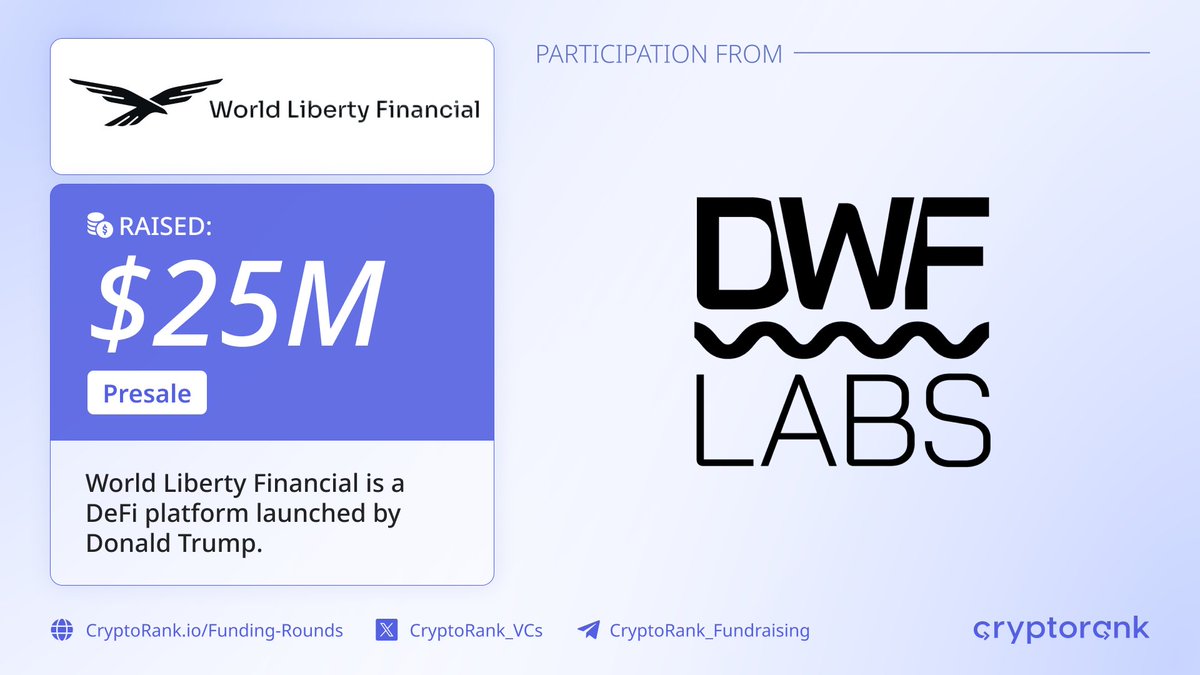
DWF Ventures, the investment arm of Web3 market‑maker DWF Labs, has delivered a detailed evaluation of $WLFI, World Liberty Financial’s newly issued utility token. Published via X, the analysis emphasises $WLFI’s integration into World Liberty’s broader ecosystem and its potential as a key enabler in connecting traditional finance with on‑chain liquidity. Unlike World Liberty’s $TRUMP memecoin, $WLFI is purpose‑built to power the upcoming “WLFI super app”, which will streamline access through web wallets and bank on‑ramps, and underpin planned lending and borrowing services.

The report highlights the success of the USD1 stablecoin—backed by short‑term US Treasuries and cash equivalents—which now commands a market capitalisation approaching $2.5 billion and enjoys listings on major exchanges such as Binance and Coinbase. These developments have significantly boosted investor attention toward the $WLFI token.

World Liberty has raised approximately $500 million across two funding rounds by selling about a quarter of its 100 billion token supply. Among its backers are DWF Labs itself and crypto figure Justin Sun, while ALT5 Sigma has outlined a $1.5 billion treasury strategy centred around $WLFI. DWF Ventures expects that the token could soon be integrated by several DeFi protocols, including Falcon Finance, Ethena and Mantle.

Importantly, DWF Ventures positions $WLFI’s launch as more than a token debut; it sees the initiative as a structural pivot that could catalyse institutional adoption and facilitate compliant capital onboarding—possibly even drawing interest from sovereign investors.

But $WLFI’s entry into the market has triggered concerns. Reports reveal technical difficulties involving the Lockbox contract, intended to unlock 20 percent of token allocations for early investors, which have left many users unable to activate the mechanism. Pre‑market trading responded with a 40 percent drop, raising doubts about launch readiness. Coupling these issues with the political profile of its founders, the token has become entangled in financial and reputational risks.

Indeed, WLFI’s connection to the family of the former president has cast a shadow over its market potential. The token’s political dimensions have already affected diplomatic engagements—such as withdrawals from the Bitcoin Asia 2025 conference—and prompted ethical criticism over conflicts of interest.

Broader scrutiny of World Liberty Financial underscores such tensions. Investigations have revealed that the Trump family commands a substantial share of revenue from token sales and that governance design reflects unusual centralisation for a DeFi project. Further concerns relate to self‑dealing practices: for instance, ALT5 Sigma—a firm acquired by World Liberty—purchased $750 million worth of WLFI tokens. As part of this arrangement, its leadership includes Eric Trump and WLFI co-founder Zach Witkoff, a structure that regulators and critics view as raising red flags.

Ethics experts warn that such close ties between ruling office, private enterprise and foreign investment could undermine democratic safeguards. The New Yorker, for one, described the venture as stretching the norms of political ethics, with World Liberty seen by some as a mechanism for influence through token‑based access channels.

The $WLFI launch is clearly more than a token generation event—it is shaping into a test case for the nexus of politics, finance and regulation in the emerging Web3 era.

HUZHOU, CHINA – Media OutReach Newswire – 2 September 2025 – A series of activities highlighting ecological progress were held on August 15th as the country embraces its third National Ecology Day. The focus is on protecting the ecological environment, addressing climate change and how China’s meteorological departments are taking action. This year it was Yucun Village, nestled in Anji County of Zhejiang Province in eastern China […]

Lunate has unveiled a new thematic ETF offering, marking the first of its kind in the region, aimed squarely at quantum computing—a field rapidly reshaping sectors from pharmaceuticals to cybersecurity. The Boreas Solactive Quantum Computing UCITS ETF, developed under Lunate’s newly introduced Boreas range, is set to debut on the Abu Dhabi Securities Exchange on 22 September under the ticker QUANTM.

The fund traces the Solactive Developed Quantum Computing Index and encompasses 25 firms spanning pure-play quantum specialists like IonQ and Rigetti, alongside technology giants at the vanguard of quantum research such as Microsoft, Nvidia, and IBM. Lunate, acting through its regulated affiliate in Abu Dhabi, is spearheading the investor-facing programme, which integrates active thematic research with transparent, index‑based selection.

Geir Espeskog, an industry veteran, heads the specialist team behind the Boreas suite, reinforcing Lunate’s intensified investment in its ETF platform. Following the addition of this thematic ETF to its portfolio, Lunate will manage a total of 19 offerings, combining traditional and thematic strategies.

ADX’s Group Chief Executive, Abdulla Salem Alnuaimi, highlighted the significance of this launch, noting that QUANTM will serve as the 17th ETF listed on the exchange. He underscored its value in granting investors direct access to global leaders in quantum computing, including Alphabet and Amazon.

Solactive, the index provider, described the collaboration as a milestone both for itself and for thematic ETFs in the region. Its ARTIS® natural language processing power plays a central role in categorising companies across hardware, software & algorithms, and communication & sensing segments—applying a rank-weighted methodology that ensures balanced exposure within the index.

Market trends underpinning this launch are compelling. The global thematic fund arena has nearly doubled in size over five years, reaching roughly $562 billion. In the U. S. and Europe, thematic ETFs have also surged; by early 2025, the U. S. counted 473 listings, while Europe hosted 748, with assets concentrated in tech-heavy strategies such as AI and digital infrastructure.

Investors may subscribe to QUANTM between 10 and 16 September via six authorised participants or the ADX eIPO portal. The fund will carry a total expense ratio of 0.49 percent.

Advertisements

HAMBURG, GERMANY – EQS Newswire – 1 September 2025 – Preferred Supply Agreements (PSAs) have been awarded for supply of monopile foundations to EEW Special Pipe Construction GmbH, transition pieces to Dajin Heavy Industry, foundation transportation and installation to Seaway7 and inter-array cable supply and installation to the consortium of Boskalis and TKF. The Gennaker project is securing employment local to the project in the Mecklenburg-Vorpommern region […]

EdgeConneX has secured a second site in the Greater Osaka–Yawata region, expanding its Japanese data centre capacity to a combined total of 350 MW of utility power. The newly acquired location is slated to deliver an additional 150 MW once fully built, complementing the 200 MW project unveiled earlier in the year.

A formal ceremony marking this milestone occurred on 7 August, in partnership with Keihan Real Estate — a subsidiary of the Keihan Group, rooted in over a century of railway heritage and now operating across transportation, property, retail and leisure sectors.

EdgeConneX’s entry into Japan began in January 2025 with the announcement of its inaugural 200 MW campus in the Greater Osaka–Kyoto area. Construction of that site is slated to commence in early 2026, with the first phase expected to be operational by the fourth quarter of 2027.

The company’s rapid expansion—achieving 350 MW in just over six months—underscores the burgeoning requirement for cloud and high‑density AI infrastructure in one of Asia’s most dynamic digital markets.

Designed to support workloads exceeding 600 kW per rack, both facilities will deploy EdgeConneX’s “Ingenuity” high-density product suite, tailored to accommodate advanced hardware from NVIDIA, AMD and Intel.

EdgeConneX has reaffirmed its commitment to sustainability, aiming for carbon, waste and water neutrality by 2030. All Japanese data centres are to be powered by renewable energy, efforts that have helped the firm earn top marks in both efficiency and transparency in Structure Research’s 2023 and 2024 Environmental Impact rankings.

Masahiko Inoue, Head of Japan for EdgeConneX, conveyed that the swift deployment demonstrates the firm’s vision taking tangible form, reinforcing Japan’s role as a global Cloud and AI frontrunner. Sam Lee, Managing Director for Market & Commercial Development, highlighted that this expansion reflects EdgeConneX’s strategy to deliver scalable, dependable and eco-conscious infrastructure in a market facing power constraints amid rising digital demand.

This development underscores Osaka’s evolving status as a critical node for digital infrastructure in Japan, aligning with national ambitions such as the “Digital Garden City Nation” vision. As the Japanese government and private sector chart pathways toward accelerated digital transformation, EdgeConneX’s presence positions it among the largest data centre operators in the Kansai region.

Novacore Innovations, based in Mumbai, has launched India’s inaugural GPU cloud platform built around NVIDIA’s Blackwell‑based B200 servers. The platform, powered by a ₹44.6 crore line of credit led by Rashi Fincorp with backing from U. S. and Abu Dhabi investors, is being deployed in Hyderabad to serve startups, researchers and enterprises across India, the U. S. and the Middle East.

This GPU‑as‑a‑service offering centres on the NVIDIA B200, an iteration of the Blackwell architecture that boasts up to 2.3× higher peak performance and double the real‑world AI speed over its predecessors. It is equipped with 192 GB of HBM3e memory, 8 TB/s bandwidth, fifth‑generation tensor cores and dual transformer engines, which collectively accelerate training by up to 3× and inference throughput by as much as 15×, while enhancing energy efficiency up to 25×.

Novacore’s co‑founders, Ranbir Badwal and Aryamaan Singhania, credit India’s low energy costs, technical workforce and Hyderabad’s robust data‑centre ecosystem for enabling this development. They emphasise that the platform offers lower hosting costs, rapid provisioning, and scalable compute for generative AI, large language models, scientific computing and real‑time analytics.

As an incentive to foster uptake, Novacore is offering trial access to qualifying startups and research labs across its target markets.

The platform also aligns with wider developments in India’s AI infrastructure. NVIDIA is collaborating with major domestic firms such as Reliance and Tata to expand locally hosted AI data‑centre capabilities powered by renewable energy, supporting India’s sustainability and net‑zero objectives. Meanwhile, the domestic AI‑as‑a‑service market is forecast to expand at a compound annual growth rate of roughly 26.4 percent, reaching an estimated $31.94 billion by 2031.

The launch of this platform by Novacore marks a significant enhancement in India’s ability to support advanced, high‑performance AI workloads locally. Transactions such as a similar move by CoreWeave in North America—deploying Blackwell Ultra GPUs commercially in July 2025—highlight a global push toward increasingly capable and efficient AI infrastructure.

A striking nebula shaped like a cosmic hand has emerged even more mysterious in a newly released composite view that blends X‑ray and radio data. At its centre lies the pulsar B1509‑58—an intensely rotating neutron star barely 12 miles across—which drives a vast nebula, MSH 15‑52, extending some 150 light‑years. Astronomers, led by Shumeng Zhang of the University of Hong Kong, have juxtaposed imagery from NASA’s Chandra X‑ray […]

Connecting thousands of community members with the annual Volunteer Day HONG KONG SAR and SHANGHAI, CHINA – Media OutReach Newswire – 1 September 2025 – Hang Lung Properties Limited (SEHK stock code: 00101) (the “Company” or “Hang Lung”) announced its kick-off of the 65th anniversary celebration month, featuring extensive promotions across Hong Kong and eight cities in mainland China. Together with its annual Nationwide Volunteer Day, the […]

Vivaldi has emphatically confirmed that it will not integrate artificial intelligence tools into its core web browser experience. Jon von Tetzchner, the company’s chief executive, made the position unequivocal: AI-driven chatbots, summarisation engines or form‑filling suggestion tools will not be added “until more rigorous ways to do those things are available”. He cautioned that such features risk turning active browsing into passive consumption, transforming users into spectators rather than […]

OKB, the native token of the OKX exchange, surged past the $200 threshold in the wake of a sweeping tokenomics overhaul and landmark ecosystem upgrades. These strategic shifts have reshaped the token’s role within the OKX ecosystem, igniting both market interest and institutional focus.

A decisive blow to token supply was delivered on 13 August 2025, when OKX executed a one‑off burn of approximately 65 million OKB—equivalent to around $7.3 billion—effectively halving circulating supply and capping total supply at 21 million tokens. The smart‑contract upgrade also eliminated future minting or discretionary burns, solidifying this deflationary model.

That scarcity shock triggered an explosive price rally. OKB vaulted from roughly $45 to a range between $135 and $200, with reported gains of 160–170% in the immediate aftermath. Trading volumes followed suit, rising sharply—in some accounts by as much as 383%, with daily turnover exceeding $1 billion.

Parallel to the token burn, OKX launched its upgraded X Layer blockchain, powered by Polygon’s CDK and zkEVM technology. This infrastructure now delivers throughput of 5,000 transactions per second, near‑zero gas fees and enhanced Ethereum compatibility, positioning OKB as the exclusive gas token across OKX Wallet, Exchange and Pay services. By migrating more than 90% of OKB tokens to X Layer and phasing out Ethereum Layer‑1 and OKTChain, OKX has consolidated liquidity and simplified its token architecture.

OKX also introduced a $100 million X Layer Ecosystem Fund to support developers and drive adoption in areas such as DeFi, payments and real‑world assets, while exploring entry into regulated markets in Europe and pursuing an IPO in the U. S..

Analysts caution that the token’s meteoric rise has pushed key technical indicators into overbought territory. Yet, many argue that OKB’s redefined scarcity model and expanded utility offer a structural foundation for sustained value, rather than a fleeting speculative euphoria.

Amid lingering regulatory uncertainties, particularly across Asian markets, investor sentiment remains firm. Continued strength may hinge on user migration to X Layer and the successful rollout of incentive initiatives and application-building support.

Tuta has added a user-controlled key verification feature that brings heightened assurance to encrypted email and calendar exchanges. The feature allows senders and receivers to confirm the authenticity of public encryption keys—either by scanning a QR code or comparing a verification code—before communication begins. Once verified, the client safeguards future exchanges by ensuring the key remains unchanged, alerting users to any unexpected alteration that might signal interception. […]

Greenlogue/AP The United Arab Emirates is elevating its contribution to the global clean‑energy shift through an ambitious expansion of solar generation capacity, backed by major state and private entities, spanning domestic projects and international initiatives. Domestically, the Al Dhafra Solar PV project near Abu Dhabi, boasting a capacity of 2 GW, remains one of the world’s largest single‑site solar power plants and significantly bolsters the UAE’s installed solar capacity […]

Choithrams Is Turning Everyday Shopping into Lifesaving Support at Choithrams.com and across outlets in UAE to support WFP’s nutrition programme for schoolchildren DUBAI, UNITED ARAB EMIRATES – EQS Newswire – 1 September 2025 – Choithrams (www.Choithrams.com), Dubai’s leading supermarket chain, and the United Nations World Food Programme (WFP) are launching the latest edition of the “End Hunger with Goodness” campaign to support school meal programmes across the […]

Borouge Plc confirmed shareholder approval at its 29 August General Assembly Meeting for an interim dividend of US$660 million, equating to 8.1 fils per share. The move underscores sustained financial strength driven by robust pricing premia, disciplined cost management and strategic inventory realisation.

The corporation reaffirmed its intention to deliver a total dividend of 16.2 fils per share for 2025—a rise from 15.88 fils in 2024—with the final instalment of 8.1 fils set to be disbursed in the first quarter of 2026. Since its IPO in June 2022, Borouge has returned US$4.24 billion in dividends, equating to a 30 per cent total shareholder return.

Chief executive Hazeem Sultan Al Suwaidi emphasised that the dividend distribution reflects the company’s “consistent track record of strong shareholder returns,” grounded in disciplined cost oversight, steady pricing margins and robust operations. He also pointed to progress toward forming Borouge Group International in early 2026 and remarked that the company remains committed to delivering resilient performance and one of the highest dividend returns on the ADX.

Financial results for the first half of the year reinforce the dividend decision. Borouge posted a net profit of US$474 million, lifted by sustained volumes, favourable pricing premia and cost efficiencies. Operationally, the pivotal Borouge 4 mega‑project has surpassed 90 per cent completion and is on target for delivery by the end of 2026. Upon completion, it will add 1.4 million tonnes of annual polyolefin capacity, unlocking substantial embedded value for shareholders.

Further details of the company’s broader strategic direction were outlined. Borouge Group International, the planned global entity, is on track for completion in the first quarter of 2026, with regulatory filings and integration processes already under way. The newly formed firm is projected to become a US$60 billion global petrochemicals powerhouse and the world’s fourth‑largest polyolefins company. Following completion, the intention is to maintain an annual minimum dividend of 16.2 fils per share through to at least 2030, subject to approval.

Earlier, Borouge had signalled its intent to distribute this interim dividend when the board proposed a US$663 million interim payout on 30 July, equivalent to 8.1 fils per share, inviting shareholders to convene on 29 August. Market commentary from the second quarter further framed the dividend rationale: net profit reached US$193 million in Q2, buoyed by the timely execution of the Borouge 3 turnaround—completed ahead of schedule and within budget. EBITDA stood at US$440 million with a margin of 34 per cent, reinforcing the company’s resilience amid asset maintenance.

SINGAPORE – Media OutReach Newswire – 1 September 2025 – Leading health insurance provider AIA Singapore today announced that it has engaged Singapore Airlines Academy, the training arm of Singapore Airlines, to develop a curated talent development program for AIA Singapore. This initiative will see AIA Singapore collaborating with Singapore Airlines Academy to create a series of workshops focused on enhancing customer experience (CX) capabilities and building […]

In Dubai, nobody’s impressed by a pair of trainers or a designer watch alone – here, your car does the talking. From Sheikh Zayed Road to Jumeirah Beach, the vehicle you roll in is your calling card, your vibe, your crown. And the beauty? You don’t need to break the bank to sit on the throne. With cheap 7 seater car rental Dubai, you can cruise the city […]

By K Raveendran There are increasing signals that Trump’s weaponised tariffs will most likely be his nemesis. A US court of appeals has thrown out his tariffs against other nations, ruling that he exceeded his authority in declaring an emergency to justify the draconian measures. The development is more than a legal setback; it strikes […]

Sui Network and Alibaba Cloud have unveiled an artificial intelligence‑powered coding assistant for the Move programming language, embedded directly within ChainIDE to enhance developer experience from the outset.

An AI assistant has been introduced into ChainIDE, Sui’s flagship development environment, enabling developers to generate Move code through natural language prompts in English, Chinese and Korean. The assistant provides intelligent autocompletion, real‑time security checks, automated documentation and readily available templates—features engineered to smooth out common roadblocks in smart contract development.

This integration aligns with the growing convergence of AI and blockchain innovation, offering a unified environment where developers can focus more on creativity and less on syntax or language barriers.

Market reception has been positive. The SUI token’s price climbed between one and 2.1 percent following the announcement, reaching approximately $3.44, signalling investor confidence despite a generally bearish crypto climate.

Behind the integration lies a broader strategy to lower entry barriers for Move developers—particularly non-English speakers, who constitute a significant portion of the global Web3 community. By offering multilingual support, the tool opens the door for wider participation across Asia and beyond.

Industry observers suggest that this could translate into increased developer engagement and boosted ecosystem activity. The intelligent tooling is expected to streamline dApp deployment, reduce development cycles and yield more robust, secure code—even for newcomers to blockchain development.

Emerging data underscores this potential. Preliminary reports indicate a possible 40 percent uplift in developer activity within the Sui ecosystem, alongside rising application deployment and on‑chain usage. When combined with enhanced tooling and cloud infrastructure from Alibaba Cloud, this surge can help catalyse a flywheel effect: more developers, more dApps, more users, stronger demand for SUI through gas fees and staking.

Alibaba Cloud contributes more than software. The alliance includes node infrastructure support and enterprise‑grade scalability capabilities, reinforcing the network’s ability to handle higher transaction volumes and support institutional use cases.

Security remains a key consideration. The assistant’s real‑time vulnerability detection helps flag potential issues such as reentrancy risks or inefficiencies before deployment. Yet concerns persist about overreliance on AI-generated code, emphasising the importance of combining automation with developer oversight.

Institutional momentum continues to build. Swiss custodial services and SUI‑centric investment vehicles have entered the ecosystem, signalling growing trust. Meanwhile, developer outreach events in financial hubs such as Hong Kong, Singapore and Dubai are helping showcase Sui’s AI‑enhanced toolkit to enterprises and Web3 innovators.

A sophisticated cyber‑espionage operation is exploiting Windows shortcut files disguised alongside seemingly genuine PDF newsletters to surreptitiously infiltrate institutions across Asia and the Middle East. This deeply orchestrated campaign has been attributed to APT‑37, a North Korean‑linked group known for precision targeting. Threat actors dispatch archives containing a PDF titled “National Intelligence Research Society Newsletter” together with a malicious companion: an LNK file that mirrors the PDF’s […]

Al Ghurair Mobility has sealed a landmark agreement with Dongfeng Motor Corporation to bring the premium electrified automotive brands MHero and Voyah into the Kingdom of Saudi Arabia. The accord positions Al Ghurair Mobility as the exclusive regional partner responsible for the brands’ launch and rollout, in line with the country’s strategic shift towards sustainable mobility.

The deal was formalised during a signing ceremony attended by John Iossifidis, Group CEO of Al Ghurair Mobility; Oscar Rivoli, CEO of Motors at Al Ghurair Mobility; and Qiu Xiaojun, CEO of Dongfeng’s Overseas Marketing Division. This collaboration underscores a union of Al Ghurair’s regional stature with Dongfeng’s technological innovations.

Voyah, launched in 2021, represents Dongfeng’s vision for luxury electric mobility. Its flagship models—Voyah FREE SUV and Voyah DREAM MPV—are distinguished by elegant aesthetics, extended range capabilities, and advanced driver-assist functions, targeting buyers seeking a refined alternative to traditional luxury marques.

Meanwhile, MHero, introduced in 2022, draws from Dongfeng’s heritage in rugged, military-grade engineering. Its models, such as the MHero 1 and MHero 2, marry off-road prowess with electrified powertrains and premium comfort, offering a distinctive proposition within luxury off-road SUVs.

Industry analysis suggests this move aligns with a broader three‑year strategic partnership between Dongfeng and Al Ghurair, aimed at establishing the brands across the Gulf region. The agreement signifies Dongfeng’s growing commitment to the Middle East market and is designed to dovetail with Saudi Arabia’s Vision 2030 agenda, which prioritises sustainable development and diversification.

For Saudi consumers, the arrival of MHero and Voyah promises a novel blend of luxury, performance, and eco‑friendly technology. Al Ghurair Mobility is expected to support these brands through not only sales and marketing infrastructure but also after‑sales service and technical support, leveraging its established regional presence.

The venture underlines both a strategic and symbolic development in Saudi Arabia’s automotive sector. The availability of high-end electric and hybrid vehicles—backed by major regional players—signals the Kingdom’s evolving consumer preferences and its commitment to transforming the mobility ecosystem.

VISHNU RAJA
RYO YAMADA
HITORI GOTOH
IKUYO KITA