Kazakhstan’s National Bank, under its chairman Timur Suleimenov, is taking steps to build a state-held cryptocurrency reserve managed by a subsidiary entity, following international sovereign fund practices. The proposal outlines funding sources that include confiscated crypto-assets and coins mined through ventures with state participation—measures aimed at enhancing governance and stability within the digital asset ecosystem.
The National Bank is developing a comprehensive framework for the reserve’s formation and administration, emphasising transparency and institutional safeguards. It plans to enshrine in law both the status of the reserve and the protocols for deposit and use, with draft legislation to be submitted to parliament for approval.
Suleimenov highlighted that the envisioned affiliate would follow global norms for sovereign funds, ensuring robust accounting, secure storage, and resilient governance structures. The legal amendments under discussion would affirm the reserve’s legal standing and empower authorities to handle crypto-assets seized under law as well as profits generated from state-linked mining operations.
The banking chief stressed the importance of centralised institutional oversight, noting the high volatility and vulnerability of crypto-assets. Centralisation, he said, is key to mitigating risks such as market fluctuations or cyber threats.
This effort is part of a wider regulatory overhaul targeting cryptocurrency flows. Under proposals by the Ministry of Digital Development, draft laws would impose criminal and administrative liability on grey‑market trades, require licences for investment advisers, and curb unlicensed exchanges and misleading crypto promoters—many of whom target younger investors.
Parliamentary deputies have endorsed the overarching concept. One lawmaker, Kuspekov, recommended creating a “national digital reserve” at the central bank to anchor confiscated digital assets and tighten financial controls. He also urged strengthened due diligence by banks, prohibition of unlicensed crypto platforms, and mandates for licensed investment coaches.
These developments follow a surge in legislative activity since May. The National Bank has proposed amendments defining legal status for digital assets, licensing for crypto exchanges outside the Astana International Financial Centre, and a regulatory sandbox for testing digital services. The objective is to restore confidence in Kazakhstan’s crypto sector after capital flight estimated at US$15 billion last year.
Timur Suleimenov, appointed as National Bank chair in September 2023 and former minister of national economy, has emphasised institutional integrity and macroeconomic resilience. He recently noted that international reserves reached US$104.7 billion at end-2024, bolstered by gains in gold and foreign-exchange holdings.
The crypto reserve initiative appears aligned with broader state efforts. Issuance of AIFC‑backed crypto payment cards was piloted in early June by major banks including Halyk Bank, Forte and Altyn Bank—allowing consumers to instantly convert digital assets into fiat currency for everyday purchases.
The Ministry of Digital Development has proposed the creation of a crypto reserve as a digital asset repository to support the national digital economy. This official endorsement underscores the government’s increasing interest in integrating digital assets within its fiscal infrastructure.
Central to this initiative are practical mechanisms that remain under review. The National Bank is working with law-enforcement agencies and other government bodies to outline operational procedures, compliance norms and asset custody arrangements.
Generative artificial intelligence is revolutionising research and innovation, empowering humans to push the boundaries of creativity and discovery. According to Innovation Endeavors, one in eight workers now engages with AI monthly—90 percent of that growth occurring in the past six months. Tools are reshaping software development by merging programming, design and product planning into unified pipelines. Meta is aggressively competing, launching a “Superintelligence” research wing, hiring top-tier talent—including […]
Copenhagen’s Parliament has approved legislation granting individuals automatic copyright over their face, body and voice, empowering them to demand takedowns and compensation for unauthorised AI-generated deepfakes. Culture Minister Jakob Engel‑Schmidt underlined the urgency of this measure, warning that “Human beings can be run through the digital copy machine and be misused for all sorts of purposes and I’m not willing to accept that.” Legislators across the political spectrum […]

Bhutan has become the first country to integrate cryptocurrency payments across its entire tourism infrastructure, enabling visitors to use Binance Pay for everything from booking flights and paying visa fees to purchasing local goods in rural areas. The system, implemented in partnership with Binance Pay and fully digital DK Bank, supports over 100 cryptocurrencies—including Bitcoin, Binance Coin and USD Coin —and is accepted at more than 100 merchants nationwide.
Tourists can complete transactions via static or dynamic QR codes, with DK Bank instantly converting crypto payments into Bhutanese ngultrum, avoiding volatility for merchants and eliminating traditional card fees. Real‑time confirmations, two‑factor authentication, encryption, and zero gas fees ensure a secure and efficient experience. Department of Tourism director Damcho Rinzin emphasised that the solution “empowers even small vendors in remote villages to participate in the tourism economy”.
The initiative aligns with Bhutan’s broader strategy of embedding digital assets into its economy, which already includes green Bitcoin mining powered by hydropower. With a cryptocurrency reserve worth over US$600 million and bitcoin holdings exceeding 12,000 BTC, Bhutan aims to leverage its carbon‑neutral energy for economic diversification and sustainable growth.
Binance CEO Richard Teng described the partnership as “setting a precedent for how technology can bridge cultures and economies”, reflecting a vision that blends tradition and digital innovation. The kingdom’s emphasis on Gross National Happiness underpins this move: by making tourism more accessible and inclusive, Bhutan hopes to reinforce community wellbeing and economic opportunity across all regions.
Bhutan’s payments infrastructure ties into existing efforts to tackle youth unemployment—estimated at between 16.5 % and 19 %—and brain drain by cultivating jobs in blockchain, AI, and fintech. Since 2019, the sovereign wealth fund Druk Holding and Investments Ltd. has mined cryptocurrencies using surplus hydropower, channelled gains into public salaries, and fostered youth training to build a future-proof economy.
Initial adoption has drawn participation from boutique hotels, tour operators, and rural artisans. By enabling markets in Thimphu and remote mountain villages to accept digital payments without traditional banking hardware, the system extends financial inclusion where it has been limited. Analysts note that reducing transaction friction and foreign‑exchange costs is likely to enhance Bhutan’s appeal to digital‑savvy travellers and boost tourism revenues.
Bhutan’s model emerges amid a global rise in crypto‑enabled travel. Nations such as Thailand and El Salvador have piloted tourism payments, but Bhutan’s national‑level implementation is unprecedented. The country also plans major future investments, including expanding hydropower from 3.5 GW to an estimated 15 GW over the next decade and exploring smart‑city projects like Gelephu Mindfulness City to further embed digital and green infrastructure.
Challenges remain. Regulatory clarity for cryptocurrencies in Bhutan is still evolving, and full infrastructure rollout in remote areas will test logistics and connectivity. Moreover, sustainability will depend on maintaining the balance between technological advancement and the country’s core value of environmental stewardship.
A new Qingdao Overseas Integrated Service Centre launched at the China‑Arab Business Forum in Qingdao is set to deepen commercial ties between China and the Gulf region by enhancing the current $400 billion trade corridor.
Abdulla Albasha Alnoaimi, UAE commercial attaché to China, and Zeng Zanrong, Qingdao’s municipal party secretary, formally unveiled the centre, established by SepcoIII Electric Power Construction Co and Hisense Group. Drawing on their extensive foothold in the UAE and the broader Middle East, the centre is intended to act as a bridge to support Chinese firms entering Arab markets.
At the forum, 40 projects worth $5.93 billion were signed, spanning high‑end equipment, new energy, advanced materials and next‑generation information technology. These agreements signal a deliberate shift towards elevating the technological content and sophistication of trade between the regions.
Bilateral trade between China and Arab countries reached more than $400 billion in 2024, compared to just $36.7 billion in 2004, marking a ten‑fold rise over two decades. Saudi Arabia and the UAE led these exchanges, recording $107.53 billion and $101.838 billion respectively in 2024, with the latter growing by 7.2 per cent year‑on‑year.
Mohammed Saqib, secretary‑general of the CHIMENA Business Council, emphasised the centre’s role in aligning public and private sectors to drive economic cooperation, cultural exchange and joint investment initiatives. He noted it will act through mechanisms such as overseas industrial parks, procurement matching and international exhibitions.
China’s expansion into the Gulf forms part of its broader geopolitical strategy to diversify trade alliances and reduce dependency on Western markets, especially the US. Chinese firms are now deeply involved in infrastructure development across the MENA region, including ports, industrial zones, and renewable energy projects.
The forum drew 465 multinational firms, including 135 from the Fortune Global 500 and 330 leading industry enterprises across 43 countries. Three focused matchmaking sessions brought together over 300 Chinese companies with counterparts in Egypt, the UAE and Saudi Arabia.
Co‑hosts of the event included the Qingdao municipal government, China’s Ministry of Commerce and the Shandong provincial department of commerce, signalling full institutional support and coordination.
With its strategic location in the UAE, the centre is expected to catalyse an export‑oriented alliance, supporting Chinese firms in sectors such as energy, manufacturing and new materials, as well as bolstering the implementation of the Belt and Road Initiative across Gulf markets.
This initiative aligns with a historical trajectory of Sino‑Arab exchange, tracing back over two millennia via the Silk Route. Contemporary developments reflect a sharpened focus on innovation‑driven partnerships.
The unfolding dynamics underscore a growing economic interdependence between China and Gulf states. The QOISC adds an institutional anchor to sustain momentum, foster deeper investment flows, and integrate advanced technology and green energy into bilateral commerce.
However, observers caution China must continue to navigate geopolitical sensitivities, particularly in managing strategic competition with the US and ensuring sustainable and balanced partnerships that benefit local economies.
Australia’s earnings from mining and energy exports are set to decline over the coming years, with rising gold revenues unable to fully offset weak demand and price falls in iron ore, liquefied natural gas and coal. Government projections show a fall from A$415 billion in 2023–24 to A$385 billion in 2024–25, and further to A$352 billion by 2026–27. The Office of the Chief Economist highlights that surplus global supply—particularly in […]
Abu Dhabi Fund for Development has advanced regional energy integration by extending AED 752 million to the Gulf Cooperation Council Interconnection Authority, supporting the expansion of the UAE’s national grid interconnection with the wider GCC electricity network. This strategic financing, signed at ADFD headquarters in Abu Dhabi, aims to enhance cross-border power exchange and reinforce regional energy reliability. The deal facilitates construction of a 96 km, 400 kV double-circuit overhead transmission […]
Sheikh Hamdan bin Mohammed bin Rashid Al Maktoum has greenlit an ambitious slate of strategic initiatives aimed at bolstering Dubai’s stature as a global epicentre for education, business, and eco‑development. The moves—from visa reforms and international academic partnerships to air‑quality drives and governance frameworks—signal a broad shift aligned with the emirate’s Education Strategy 2033 and Economic Agenda D33. At the heart of the agenda is Dubai’s higher‑education transformation. With 37 […]
Tens of thousands gathered in Belgrade on Saturday to demand early parliamentary elections and an end to President Aleksandar Vučić’s 12‑year hold on power, prompting a heavy police deployment and tense confrontations. reuters.com apnews.com apnews.com Authorities stationed riot police in full gear around government buildings and Parliament, while supporters of the president camped in Pionirski Park, bolstering the political standoff. After the main protest ended at around […]

Dubai residents can now view their personal credit report and credit score directly within the DubaiNow app following a newly launched integration with Etihad Credit Bureau. The partnership enables users to access crucial credit information with a single tap—bringing financial insights closer to everyday urban life.
Officials emphasise that this move reflects a strategic direction toward seamless digital service delivery. Marwan Ahmad Lutfi, Director General of Etihad Credit Bureau, underscored the bureau’s commitment to national digital transformation, noting the use of advanced APIs to simplify user access to credit data. Matar Al Hemeiri, CEO of Digital Dubai Government Establishment, added that the integration reinforces Dubai’s position as a hub for digital innovation and aligns with the “We the UAE 2031” vision for a connected, smart society.
DubaiNow, developed by Digital Dubai, offers over 300 services — ranging from bill payments and health records to official documentation. The inclusion of credit reports and scores builds on its role as a one-stop platform for private and government services. This feature eliminates the need for separate logins or visits to multiple platforms—credit information is now readily accessible to users seeking clarity on their financial standing.
Earlier, Etihad Credit Bureau successfully integrated with Abu Dhabi’s TAMM platform, and this step represents a widening push across emirates to bridge credit services with digital portals. Sources highlight that such integrations are part of a broader effort to promote financial literacy, transparency, and empowered decision‑making among residents. Access to credit scores supports informed borrowing and better personal finance management.
Although specific usage metrics have not been disclosed, industry analysts see significant potential. By delivering real-time credit insights directly inside an app used daily by millions, the integration might reduce friction in credit awareness, which could lead to more responsible lending and borrowing—even small improvements in payment discipline or credit visibility can have outsized impact on personal financial health.
Affordability remains a factor: Etihad Credit Bureau’s website lists the cost of a personal credit report at AED 84, with a standalone credit score costing AED 10.50. However, it is not yet clear whether these fees apply within DubaiNow or if special rates have been arranged for app users. Users should check within the app for pricing details.
Security is paramount. Etihad Credit Bureau employs stringent data encryption and authentication measures to protect sensitive credit information. DubaiNow leverages UAE Pass for identity verification, ensuring that only authorised individuals access their own financial data.
The integration occurs amid rapid digital government expansion across the Gulf, where unified platforms are central to delivering frictionless user experience. By adding credit insights to DubaiNow, authorities anticipate a future where financial and administrative services converge—expected to boost efficiency for users and public institutions alike.
Going forward, observers expect Etihad Credit Bureau to extend integration to further emirate-level services and fintech platforms, creating a comprehensive, country-wide credit information network. Proponents argue such a system would enhance economic resilience by embedding credit awareness into everyday digital interactions.
Two of Dubai’s Top 20 Real Estate Professionals Come from the Same Brokerage Dubai, UAE – June 2025: With thousands of agents competing in one of the world’s fastest-paced property markets, Dubai real estate has become as much about standing out as it is about selling. In this competitive climate, brokerages are pressured to offer more than just a desk—they must offer vision, support, and leadership. That’s […]
Claudia, a newly released open‑source graphical user interface for Anthropic’s Claude Code, brings a visually intuitive layer to the traditionally command‑line driven tool. Developed by YC‑backed Asterisk, this desktop application enables developers to manage projects, run interactive AI agents, and track progress—all through a local, privacy‑focused interface. The interface addresses growing frustrations among developers using Claude Code’s text‑only environment. Asterisk’s design employs Tauri for cross‑platform deployment, along […]
BANGKOK, THAILAND – Media OutReach Newswire – 28 June 2025 – Green SM, Southeast Asia’s first all-electric ride-hailing platform, developed by Vietnam’s Green and Smart Mobility Joint Stock Company (GSM), has been awarded Green Leadership at the prestigious Asia Responsible Enterprise Awards (AREA) 2025 held in Bangkok. The recognition celebrates Green SM’s pioneering role in shaping a sustainable transportation ecosystem in Vietnam and expanding its green mobility […]
MANILA, PHILIPPINES – Media OutReach Newswire – 27 June 2025 – The “New Technology of Power System” forum concluded today in Manila, emerging as a pivotal platform for international dialogue on energy innovation. Co-hosted by Beijing Sifang Automation Company and the Institute of Integrated Electrical Engineers of the Philippines (IIEE), the summit drew industry leaders, technical experts, to address challenges facing modern power grids. Sifang Hosts Landmark […]

Santos has granted a six‑week exclusive due‑diligence period to a consortium led by Abu Dhabi’s National Oil Company, signalling serious progress towards its A$36.5 billion takeover proposal.
The consortium, comprising ADNOC’s investment arm XRG, Abu Dhabi Development Holding Company and private equity investor Carlyle, has placed an all‑cash offer of A$8.89 per share—representing a roughly 28 per cent premium on Santos’s previous closing price. Santos’s board is prepared to endorse the deal, pending satisfactory outcomes from due diligence, no better competing bids and approval by an independent fairness expert.
Should the offer proceed, it would mark Australia’s largest-ever all‑cash corporate takeover and rank among the top three transactions nationally—holding an enterprise value near A$36.4 billion.
The acquisition targets Santos’s LNG assets, including Australia’s Gladstone and Darwin facilities, plus substantial interests in Papua New Guinea’s LNG project and the forthcoming Papua LNG development. XRG aims to build an integrated gas and LNG portfolio capable of delivering 20–25 million tonnes annually by 2035.
Adhering to regulatory requirements, the consortium has signed confidentiality agreements and secured exclusive negotiating rights for this due‑diligence phase.
Santos’s management is forecasting a binding scheme implementation agreement before enabling a shareholder vote needing at least 75 per cent support, as per Australian scheme‑of‑arrangement rules. Shareholder approval will depend on a legal and financial assessment of the offer’s fairness.
While the consortium has pledged to maintain Santos’s Adelaide headquarters, preserve local employment, and continue momentum on major projects like the Barossa LNG development and Moomba carbon‑capture initiative, significant regulatory scrutiny lies ahead.
National oversight will involve multiple bodies: Australia’s Foreign Investment Review Board, ACCC, ASIC, and National Offshore Petroleum Titles Administrator; Papua New Guinea’s Securities and Competition commissions; and the US Committee on Foreign Investment due to Santos’s cross-border interests.
Analysts caution that the central risk is FIRB rejection, given Santos’s control over critical gas infrastructure. Potential remedies, like spinning off assets, may invite legal and decommissioning complexities.
South Australian state officials, including Premier Peter Malinauskas and Energy Minister Tom Koutsantonis, have highlighted the importance of protecting domestic jobs, the company’s base, and energy security—leveraging recent legislative powers to oversee licence transfers.
The political backdrop complicates matters, with Treasurer Jim Chalmers in caretaker mode ahead of a potential election. His decision will pivot on FIRB advice and the national interest implications.
Santos has endured pressures in recent years, including a near‑16 per cent drop in annual profit and a 41 per cent dividend cut in 2024. It also abandoned merger negotiations with Woodside that would have created an A$80 billion energy entity.
The consortium’s revised offer follows an initial A$8.00 bid in March, raised to A$8.60 later that month, and now stands at A$8.89—reflecting sustained negotiations and valuation uplifts. Should the agreement proceed, final receipt of regulatory and shareholder clearances could extend into early 2026.
This transaction underscores ADNOC’s growing appetite for strategic LNG assets in the Asia‑Pacific region and exemplifies broader Middle Eastern investment trends in global energy infrastructure. The outcome will influence the balance of power in Australia’s evolving LNG market and set significant precedents for future foreign investment decisions.


Alain Robert, the daredevil climber known as the French Spiderman, has ascended the 116‑metre Meliá Barcelona Sky Hotel without any ropes or harnesses to launch TIGERSHARK—claimed as the world’s first cryptocurrency backed by real‑world extreme sports feats. Clad in Tigershark-branded gear and accompanied by his son, former French Navy marine Julien Robert, he live-streamed the stunt via X to mark what organisers call a “Mission 1: Spiderman & Son” initiative.
Organisers describe TIGERSHARK as part of an emerging “Action Economy” in which each token is tied to real adrenaline-fuelled missions spanning big‑wave surfing, wingsuit flying, motocross and parkour. Holding the token grants access to private events, exclusive behind‑the‑scenes content and athlete “drops” – an attempt to fuse thrill‑seeking with blockchain community building.
Lilly Douse, spokesperson for Tigershark, emphasised the departure from traditional token launches: “not airdrops, not smoke and mirrors, but actual real‑world extreme feats, true adrenaline”. She added that the venture is betting on “guts and grits” as the currency’s value proposition.
Robert’s legacy as an urban climber spans more than 150 structures, including the Burj Khalifa, Eiffel Tower and Petronas Towers, all scaled without safety gear. At his current age in the early 60s, he remains committed to pushing boundaries—and this stunt launches a broader strategy merging sport, entertainment and crypto technology.
Discussions are already underway with elite athletes in other high‑risk disciplines—such as base jumping, parkour, wingsuiting and motocross—to participate in future missions. Tigershark’s roadmap includes sponsorships, branded merchandise, global events and athlete plugins, positioning itself as more than a token, but a fully-fledged action-sports brand powered by cryptocurrency.
The circus‑style unveiling has caught the attention of both crypto enthusiasts and adventure-sport communities. While token offerings tied to lifestyle and entertainment have a precedent, Tigershark’s novel angle lies in monetising raw human risk and authenticity. Crypto commentators on social media have amplified the narrative, describing the stunt as “the realest launch Web3 has seen” and “the wildest crypto launch ever”.
However, critics have raised concerns. The stunt’s stunt‑token concept may attract speculative interest, but some analysts warn linking token value to unpredictable physical events could introduce heightened volatility. Moreover, regulatory scrutiny looms over crypto ventures that employ unconventional marketing tactics, especially those involving public stunts with safety or legality risks.
Tigershark’s strategic focus on live‑streamed extreme feats and token‑holder exclusives mirrors broader trends in Web3: blending content, experience and community. Yet the project must deliver consistency and transparency. Observers will scrutinise whether future missions occur as scheduled, whether token economics remain sound, and whether token-holders genuinely receive promised perks.
By embedding risk and spectacle into its founding act, TIGERSHARK sets itself apart from conventional token launches. Early investor sentiment appears buoyed by novelty and potential for real‑world engagement. But delivering a sustainable “Action Economy” will require navigating regulatory complexities and proving that this fusion of blockchain and extreme sport can transform fleeting adrenaline into long‑term value.
HONG KONG SAR – Media OutReach Newswire – 27 June 2025 – The Hong Kong Institute of Certified Public Accountants (HKICPA) is delighted to announce its renewal of Mutual Recognition Agreement (MRA) with the Association of Chartered Certified Accountants (ACCA). The two accounting bodies continue to join hands together to pave ways for career development of the accounting talents in Hong Kong, with the aim to foster […]
KUALA LUMPUR, MALAYSIA – Media OutReach Newswire – 27 June 2025 – Octa, a globally regulated and trusted broker since 2011, was recently named ‘The best CFD broker 2025’ by the AllForexRating.com portal. Having amassed more than 10 industry awards in 2025 only, Octa is recognised for its quality e-brokerage services and proprietary trading platform OctaTrader. Carried out by AllForexRating.com, the Forex Brokers Award yearly highlights brokers’ […]
Matein Khalid My generation were teenagers in the late 1970’s and thus passionate fans of Sweden since Abba dominated the Top of the Pops (God, how I hated the ghastly Dancing Queen since every girl in high school thought this syrupy pop tune was written specifically for her!) and Björn Borg dominated Centre Court at Wimbledon as the Men’s Champion until the trophy was wrested from him […]
NVIDIA Corp is a equity in the USA market. The price is 154.31 USD currently with a change of 6.45 USD from the previous close. The latest trade time is Thursday, June 26, 17:06:55 +0530. Nvidia Surpasses Microsoft to Reclaim Global Valuation Crown Nvidia has overtaken Microsoft to retake its position as the world’s most valuable publicly traded company, with a market capitalisation reaching approximately $3.77 trillion. The […]

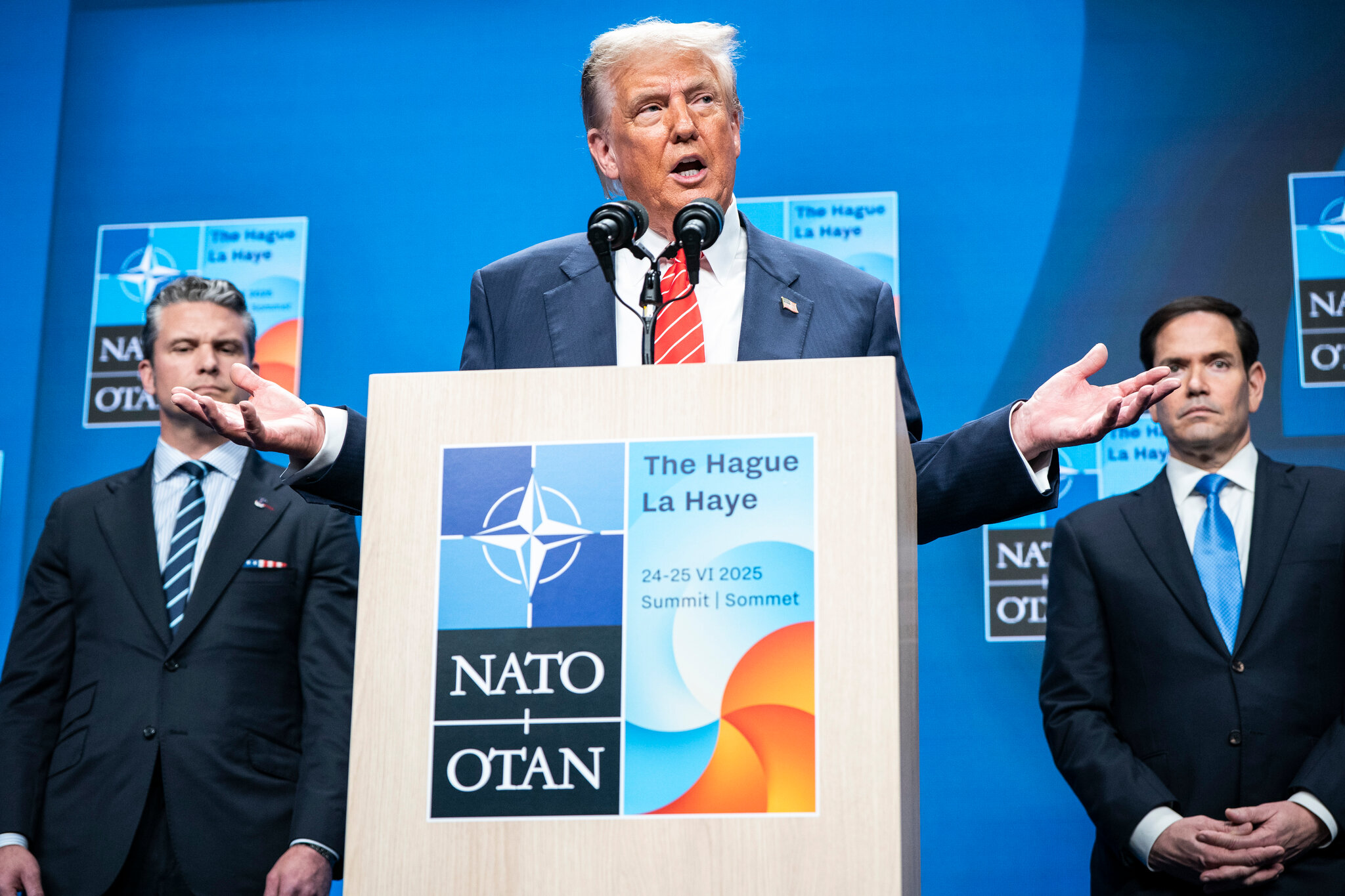
By Nitya Chakraborty The Rambo of the global diplomacy Donald Trump joined the NATO summit at Hague on June 24-25 with a triumphant smile after organizing the ceasefire between Israel and Iran in their 12 day war and strongly imparting the signal that no one matters in the world affairs now excepting the U.S. President. […]HONG KONG SAR – Media OutReach Newswire – 24 June 2025 – SiegFund, a fintech–driven proprietary trading platform, has officially completed its brand upgrade and will now operate as SiegPath, serving proprietary traders worldwide and ushering in a new chapter in global expansion. To further strengthen its rebranding, SiegPath has simultaneously launched its brand-new official website, built with a user-centric approach and equipped with a range of […]