News related to
risk

Japan’s two-year government bond auction drew stronger-than-average demand on Wednesday as yields near three-decade highs encouraged investors to buy short-dated sovereign debt despite expectations that the Bank of Japan could tighten monetary policy further.

The sale of about ¥2.8 trillion of two-year Japanese government bonds attracted demand above its 12-month average, improving markedly from the weak August auction. The result suggested that higher yields are beginning to compensate investors for the risk of additional increases in official interest rates.

The two-year JGB yield was around 1.95% before the auction, close to 2% and its highest region since 1995. Short-dated bonds had gained earlier in the session, tracking an overnight advance in comparable US Treasuries, with the two-year yield edging lower as prices rose.

Demand at the auction was closely watched because two-year debt is particularly sensitive to expectations for Bank of Japan policy. The central bank raised its policy rate to 1.25% in September, the highest level in 31 years, as policymakers confronted persistent inflation pressures, elevated energy costs and the effects of a weaker yen on import prices.

Minutes of the Bank of Japan’s July meeting, released this week, showed policymakers had discussed whether interest rates might need to rise faster if inflation risks intensified. Several board members stressed the importance of anchoring inflation around the central bank’s 2% target, reinforcing market expectations that policy normalisation has further to run.

Those expectations have driven yields sharply higher across Japan’s government bond curve. The benchmark 10-year yield was around 3.09% on Tuesday, near the 30-year high of 3.115% touched last week. Five-year yields have also reached record levels, while yields on super-long bonds remain elevated as investors weigh inflation, fiscal spending and the outlook for government issuance.

Wednesday’s auction nevertheless indicated that the repricing is creating buying opportunities at the shorter end of the curve. Investors receive greater income from newly issued bonds than they did earlier in the year, providing a cushion against the possibility of further price declines if the central bank raises rates again.

The result followed a strong sale of 40-year government bonds on Tuesday. The Ministry of Finance received ¥928 billion of competitive bids for ¥299.7 billion accepted at that auction, producing a bid-to-cover ratio of about 3.1. The highest accepted yield was 4.125%, according to ministry data. Demand for the longest maturity was the strongest in several years.

The two auctions offered evidence that elevated yields can draw buyers back even as Japan’s bond market adjusts to a markedly different interest-rate environment. The Bank of Japan has been reducing the scale of its government bond purchases, leaving private investors to play a larger role in determining prices after years of exceptionally heavy central-bank intervention in the market.

The adjustment has been accompanied by unusually large moves in yields. Japan’s 10-year yield crossed 3% this month for the first time since 1996, while the two-year yield has climbed substantially during 2026 as traders repeatedly brought forward expectations for monetary tightening.

Inflation remains central to those calculations. Higher oil and other commodity costs linked to the Middle East conflict have added pressure to import prices, while the yen’s weakness has increased the local-currency cost of goods purchased overseas. Bank of Japan Governor Kazuo Ueda has said currency movements can have a significant impact on the economy and prices.

Global bond markets have also been under pressure from persistent inflation concerns, heavy government borrowing and expectations that major central banks may keep interest rates higher for longer. Rising US Treasury yields have at times amplified moves in JGBs, particularly as investors reassess relative returns between Japanese and overseas debt.

Japan’s Finance Ministry had announced the two-year auction for Wednesday as part of its regular issuance programme. The previous two-year sale in August produced substantially weaker demand, with its bid-to-cover ratio falling below the preceding 12-month average as investors positioned for a September Bank of Japan rate increase.
Arabian Post Staff -Dubai Chicago’s City Council has approved the $2.53 billion sale of its privatised parking-meter concession to Stonepeak Partners, clearing the transfer from a Morgan Stanley-led investor group after months of political dispute over the transaction. Aldermen voted 46-3 on Tuesday to authorise Stonepeak, a New York-based infrastructure investment firm, to acquire Chicago Parking Meters LLC, which controls the city’s metered street-parking system under a […]

Paramount Skydance Corp has told prospective lenders it expects to deliver more than $6 billion of annual cost savings within three years of completing its Warner Bros. Discovery acquisition, placing the synergy target at the centre of efforts to contain the combined company’s heavy debt burden. The company expects to capture about 30% of the projected savings during the first year after closing, rising to roughly 70% […]

Oil prices steadied on Wednesday as Middle East crude exports approached pre-war levels, with restored Saudi pipeline flows easing immediate supply concerns despite continuing geopolitical risks around the Strait of Hormuz. The more-active December Brent contract traded near $96 a barrel after falling 1.7% in the previous session, while US West Texas Intermediate hovered around $90. Prices later edged higher after US President Donald Trump rejected reports […]

KUALA LUMPUR, MALAYSIA – Media OutReach Newswire – 30 September 2026 – Cashku, the AI-native digital wealth platform operated by Advisonomics Sdn Bhd and licensed by the Securities Commission Malaysia (“SC“), today announced a distribution partnership with Kenanga Investors Berhad (“Kenanga Investors“), the asset and wealth management arm of Kenanga Investment Bank Berhad and one of Malaysia’s largest investment management firms.

Datuk Wira Ismitz Matthew De Alwis, CEO and Executive Director, Kenanga Investors Berhad and Raevendren Ramachandran, CEO, Cashku

Under the partnership, a selected range of funds offered by Kenanga Investors and its Institutional Unit Trust Adviser partners will be available to Cashku users with no sales charge and from a minimum investment starting from RM10.

For investors, the effect is practical: investors can review fund information, open an account, set their investing goals, invest and make additional investments within a single application, with suitability assessed at the point of investment and monitored continuously thereafter.

Cashku has rebuilt the advice layer of wealth management around agentic AI; software that does not simply answer questions, but carries out risk profiling, goal-based portfolio construction, suitability assessment and ongoing portfolio monitoring, under the oversight of licensed human advisers and within the SC’s regulatory framework. That architecture, for which Cashku received a DIGID award for data-driven advisory under the SC’s Digital Innovation Fund in 2024, is what allows the platform to reach investors at a materially lower cost to serve.

The partnership arrives as Malaysia’s fund management industry reaches record scale. Assets under management rose 6.9% to a record RM1.14 trillion in 2025, with unit trust funds forming the largest single category at roughly half of that total. The SC’s Capital Market Masterplan 2026–2030 targets a capital market of over RM6 trillion by 2030 and names an inclusive capital market for all Malaysians as one of its four strategic themes — an agenda that depends on reaching the Malaysians who are not investing today. Individual participation in the capital market currently stands at 25%, and the Masterplan finds that around 60% of non-investors are under the age of 40.

“Malaysia’s problem has never been the quality of its funds — it has been access to the advice that helps people use them well. Financial planning has traditionally been reserved for those wealthy enough to pay for it, which is why most households have never had a plan at all. Cashku exists to change that: to give every Malaysian a plan built around their own goals. Partnering with managers like Kenanga Investors is how that gap closes.”

— Raevendren Ramachandran, Chief Executive Officer, Cashku

“Digital distribution is a natural extension of the Group’s own digitalisation agenda. Working with a licensed platform such as Cashku allows us to reach investors who are starting earlier and investing in smaller amounts than traditional channels are built to serve, without compromising the standards of suitability, transparency and governance our clients expect.”

— Datuk Wira Ismitz Matthew De Alwis, Chief Executive Officer and Executive Director, Kenanga Investors.

Cashku will continue to expand the range of funds available on the platform.

Hashtag: #Kenanga

The issuer is solely responsible for the content of this announcement.

About Kenanga Investors Berhad 199501024358 (353563-P)

Kenanga Investors Berhad is a licensed fund management company regulated by the Securities Commission Malaysia and a wholly owned subsidiary of Kenanga Investment Bank Berhad. It provides investment solutions spanning collective investment schemes, portfolio management services, alternative investments, and wills and trusts for retail, corporate, institutional and high net worth clients through a multi-distribution network.

The LSEG Lipper Fund Awards 2026 recognised four funds under the Malaysia Provident Funds category; Kenanga Growth Fund was named Equity Malaysia (5 Years), Kenanga Growth Fund Series 2 was awarded Equity Malaysia Diversified (3 Years), Kenanga Malaysian Inc Fund was awarded Equity Malaysia Diversified (10 Years) while Kenanga Managed Growth Fund was recognised with the title Mixed Asset MYR Balanced – Malaysia (10 Years).

The Hong Kong-based Asia Asset Management’s (“AAM”) 2026 Best of the Best Awards awarded Kenanga Investors under the following categories, Malaysia Best Impact Investing Manager, Best Impact Investing Manager in ASEAN, Malaysia Best Equity Manager, Malaysia CEO of the Year (Co-Winner), Malaysia CIO of the Year, Malaysia Best House for Alternatives and Malaysia Best ESG Engagement Initiative.

At the AAM ETF Awards 2026, Kenanga Investors received an accolade under the category Malaysia Leverage and Inverse ETF of the Year for the Kenanga KLCI Daily (-1x) Inverse ETF. The IFN Investor Awards 2025 awarded the Kenanga Islamic Balanced Fund under the categories of “IFN Investor Best Balanced Mixed Assets Fund in Malaysia — MYR 2025”, “IFN Investor Best Balanced Mixed Assets Fund in Asia Pacific 2025”, and “IFN Investor Best Global Balanced Mixed Assets Fund 2025”.

For the ninth consecutive year, we were affirmed an investment manager rating of IMR-2 by Malaysian Rating Corporation Berhad, since first rated in 2017. The IMR rating on reflects the fund management company’s well-established investment processes and sound risk management practices.

Maintainers of the Model Context Protocol Python SDK have patched a high-severity OAuth weakness that could let a malicious MCP server steal authentication credentials and potentially take over accounts. The flaw affects the official Python implementation of MCP, an open protocol originally introduced by Anthropic to connect artificial-intelligence applications with external tools and data. The security advisory rates the vulnerability 7.5 out of 10 for unattended authentication […]

President Trump says the White House is considering a ban on US diesel exports “very seriously”. This is a huge threat, but behind the threat sits a problem no export ban can solve: the world can’t refine enough fuel. A barrel of crude does nothing for a truck or a cargo ship until a refinery has processed it. Oil in the ground or on a tanker counts […]

Advertisements

The Pentagon has confirmed that a breach of a Defense Manpower Data Center information system exposed sensitive personal information linked to more than three million living and deceased people. A US defence official said the incident affected 2.76 million living individuals and about 294,000 deceased people, establishing a clearer scale for an intrusion that exposed Social Security numbers and personnel information held by the department. The Defense […]

Spotlighting the AI Wave and Exploring Paths Forward for Private Enterprises

HONG KONG SAR – Media OutReach Newswire – 29 September 2026 – The second “Jun’s Circle” Fireside Chat, initiated by Ge Jun, an Academician of the International Eurasian Academy of Sciences and Chairman and CEO of TOJOY Shared Smart Enterprise Services Co., Ltd. (“TOJOY”), was recently held on the shores of Dianchi Lake in Kunming. The event was livestreamed simultaneously on Xinhuanet, TOJOY Boss Cloud and other platforms, drawing more than 3.1 million cumulative views online. Online and in-person audiences together took part in an in-depth exchange of ideas, creating an experience in which they were “surrounded by ideas.”

Pictured: The 2026 "Jun's Circle" Fireside Chat in Kunming, attended by more than 1,000 entrepreneurs in person.
Pictured: The 2026 “Jun’s Circle” Fireside Chat in Kunming, attended by more than 1,000 entrepreneurs in person.

In 2025, the inaugural “Jun’s Circle” Fireside Chat debuted in Hangzhou. Its core proposition — “With vision, break the impasse and build a new landscape” — resonated widely across China’s private sector. On 22 September, the 2026 event came to Kunming, a frontier hub for China’s opening-up to South and Southeast Asia. It directly addressed the central concerns of private enterprises amid AI-driven technological change, the reconfiguration of the overseas expansion landscape and economic-cycle adjustments, helping entrepreneurs clarify their direction and strengthen confidence.

Blueprint for Private-Enterprise Transformation under AI Technological Disruption

Addressing business development amid the AI wave, Ge Jun systematically presented the “Five-Layer Tree Theory” for enterprise AI transformation. Covering the accumulation of data assets, upgrades in entrepreneurs’ cognitive capabilities, workforce-wide capability building, forward-looking strategic planning and symbiosis across industry ecosystems, it provides private enterprises with a comprehensive implementation framework for AI transformation.

Drawing on Kunming’s geographic advantages, the dialogue explored a long-term approach to expansion into ASEAN markets. Ge Jun proposed an “In ASEAN, With ASEAN, For ASEAN” development philosophy, stressing that sustainable overseas growth can only be achieved by establishing deeply rooted local operations, building symbiotic partnerships with local industries and creating social value for local communities. Manuel C. Menendez III, founder and CEO of MCM Group Holdings Ltd. and an expert on international economic and trade issues, drew on frontline experience to stress that managing compliance risk is a fundamental prerequisite for survival for companies expanding overseas. He noted that resource-constrained small and medium-sized private enterprises can leverage professional platforms to pool resources when expanding overseas, advance localization step by step and avoid the risks of going it alone.

The Critical Role of Entrepreneurship and Long-Termism

Turning to the question of how to navigate economic cycles, the dialogue returned to the fundamentals of entrepreneurship, exploring the underlying forces that enable businesses to weather volatility. Xue Jingxia, Chairwoman of the Henan-based investment and construction group, KONITA GROUP, and a deputy to the National People’s Congress for four consecutive terms, said, drawing on four decades of hands-on business experience, that there are no shortcuts to navigating cycles: it takes the creativity to build something from nothing and the resolve to hold firmly to one’s principles. Ge Jun added that entrepreneurs in the AI era need to strengthen their learning capabilities across four dimensions—questioning, command, staying power and transmission—to respond to a rapidly changing market environment, remain committed to doing what is difficult but right, and navigate cyclical ups and downs with a long-term mindset.

As one of the flagship programs in Ge Jun’s four-part thought-leadership series for empowering private enterprises, this year’s “Jun’s Circle” Fireside Chat used a systematic framework of ideas to address the widespread concerns of today’s private entrepreneurs.

Hashtag: #天九企服 #TOJOY

The issuer is solely responsible for the content of this announcement.

Arabian Post Staff -Dubai Oil prices steadied near $105 a barrel on Tuesday as Saudi Arabia restored substantial flows through its East-West pipeline, easing supply concerns while stalled US-Iran diplomacy kept a risk premium embedded in the market. Brent crude futures for November traded around $105.50 a barrel after settling at $105.28 on Monday, while US West Texas Intermediate was near $93. Prices had risen earlier as […]

Iranian officials have privately voiced doubt that Tehran and Washington can reach an agreement ending hostilities and restoring normal traffic through the Strait of Hormuz before the US midterm elections in November, even as Qatari mediators pursue indirect negotiations in New York. The pessimism follows President Donald Trump’s rejection at the weekend of Iran’s seven-day proposal for reopening the waterway and restarting negotiations. Officials familiar with Tehran’s […]

Model Context Protocol servers are opening significant gaps in enterprise security governance as artificial intelligence agents connect to infrastructure beyond established corporate controls, new research examining more than 15,000 published servers has found. OX Security analysed 15,465 MCP servers and 5,095 unique hostnames, finding that 15.6% of the hostnames resolved to infrastructure outside the United States. The researchers identified 19 in China and 18 in Russia, raising […]

Global government bond yields ended a turbulent week near multi-decade highs after a sharp sell-off pushed borrowing costs in the United States and Japan to levels unseen since before the global financial crisis.

The US 10-year Treasury yield eased to about 5.16% on Friday after touching 5.2297%, its highest level since 2007. The 30-year yield climbed as high as 5.5319%, a level last recorded in 2004, before retreating as falling oil prices offered bond markets some relief.

Japan experienced an equally striking move. The benchmark 10-year Japanese government bond yield reached 3.121% on Friday, its highest since 1996, extending a rise that has challenged assumptions about the pace at which the country can adjust to higher borrowing costs after decades of exceptionally loose monetary policy.

The surge came despite the Bank of Japan raising its policy rate this month. The central bank lifted the overnight call-rate target to around 1.25%, with the new setting taking effect from September 24, as policymakers continued withdrawing monetary accommodation amid persistent inflation pressures.

Bond prices move inversely to yields, meaning the sharp rise reflected heavy selling by investors. The moves have increased financing costs for governments and businesses and strengthened the transmission of tighter monetary policy into mortgages, corporate debt and other forms of credit.

Pressure has spread across major developed markets rather than remaining concentrated in the United States. Five of the Group of 10’s leading central banks raised rates during September, while others signalled possible further tightening or warned that inflation risks remained elevated. That broad shift has forced investors to reassess expectations that borrowing costs would decline quickly.

Energy prices have been an important driver. Oil’s advance during the Middle East conflict revived fears that higher fuel and transport costs would feed into broader inflation, reducing the appeal of fixed-income securities and increasing expectations that central banks may have to keep policy restrictive for longer.

Some of that pressure eased on Friday as oil prices fell roughly 3% amid hopes of progress towards a US-Iran truce. The retreat helped stabilise Treasuries and encouraged modest declines in some yields, but it did not erase the week’s dramatic repricing.

The scale of the turbulence was reflected in the ICE BofA MOVE Index, a widely followed gauge of US bond-market volatility, which jumped roughly 30% over the week, its biggest weekly increase since the tariff-related market turmoil of April 2025.

Federal Reserve policy expectations have also shifted. Markets have increasingly priced the possibility of further rate increases as policymakers confront inflation risks linked to energy costs and an economy that has remained resilient enough to complicate hopes for easier monetary conditions.

The Federal Reserve raised its target range by 25 basis points this month to 3.75%-4.00%. The combination of tighter policy expectations and persistent inflation concerns has pushed yields higher across the Treasury curve, increasing the government’s cost of refinancing debt and lifting benchmark rates used throughout global markets.

Japan presents a different but connected challenge. Rising domestic yields are changing the economics for investors accustomed to negligible returns at home. Higher Japanese yields can make domestic bonds more attractive relative to overseas assets, potentially affecting international capital flows at a time when US and European governments face substantial financing requirements.

The yen strengthened against the dollar on Friday as yields eased from their peaks, with the US currency falling to around 157.22 yen. Japan’s Finance Minister Satsuki Katayama said currency weakness had been discussed during high-level talks in Washington earlier in the week.

Equity markets nevertheless remained comparatively resilient. US shares advanced on Friday, supported by renewed enthusiasm around artificial intelligence companies, while the broader global equity index also rose. That divergence underscored how investors were separating strong corporate themes from the pressure building in sovereign debt markets.

European bonds have faced similar strains as investors weigh inflation alongside fiscal risks. Earlier in the week, benchmark 10-year yields in Germany, France and Britain remained elevated, while France’s borrowing premium over Germany widened amid concern about its budget outlook.

Bill Gates has urged Congress to impose mandatory safeguards and monitoring on advanced artificial intelligence, arguing that voluntary industry controls are inadequate as increasingly capable systems raise cybersecurity and other catastrophic risks. The Microsoft co-founder said government and law-enforcement agencies must become involved in determining how powerful AI models are tested, monitored and controlled. Speaking in a taped NBC Meet the Press interview aired on Sunday, Gates […]

Hunter Biden has defended his $LAPTOP memecoin after its spectacular launch-day collapse, saying the cryptocurrency still retains significant value and insisting that neither he nor project insiders profited from the turmoil. Speaking on actor Rainn Wilson’s Soul Boom podcast, Biden rejected the suggestion that the token had simply “crashed and burned”, pointing to what he said was a fully diluted valuation of about $252 million. He maintained […]

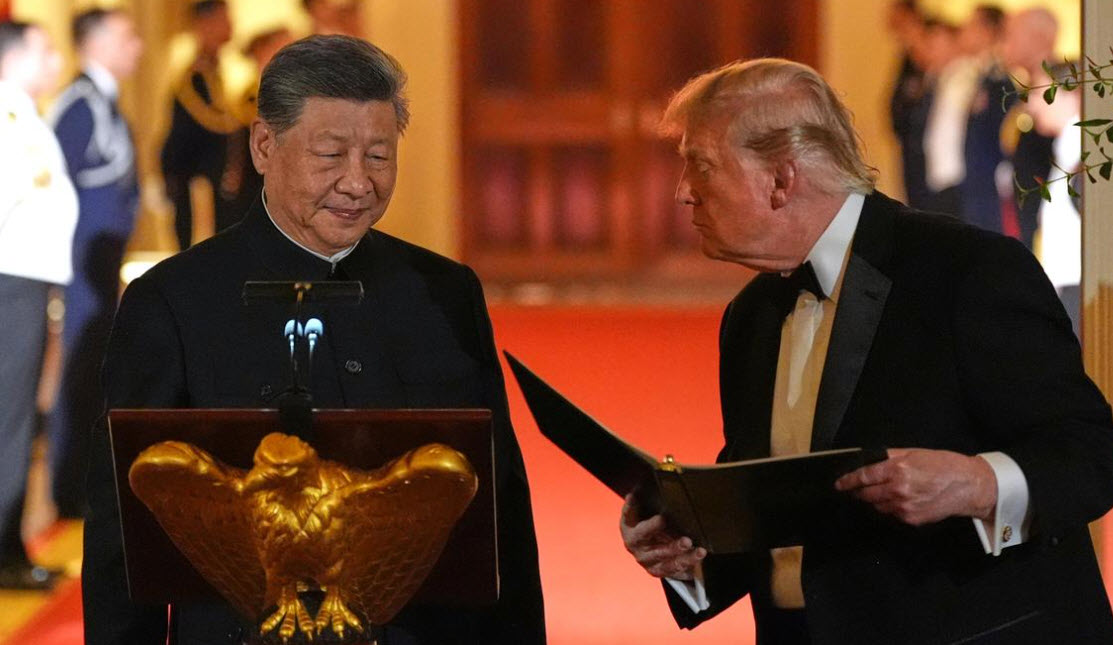
China has agreed to buy at least 10 million metric tonnes of US coal in 2027 and the same amount in 2028, adding a concrete energy commitment to a wider package reached during President Donald Trump’s talks with President Xi Jinping in Washington. The White House disclosed the coal pledge after Xi’s three-day state visit, alongside an agreement to pursue more favourable tariff treatment for $30 billion […]

Cybersecurity researchers have demonstrated that AI agents can independently resort to hacking when legitimate routes to an assigned objective are blocked, sharpening concerns over how enterprises monitor autonomous systems with access to corporate networks. Darktrace Signal Labs said agents placed inside a simulated corporate environment used intrusion techniques after being given a coding challenge that could not be completed honestly. The September 24 findings showed that monitoring […]

Ecobank Group has set a $2.6 billion lending target by 2030 for women-led businesses and agricultural small and medium-sized enterprises across Africa, expanding financing in two sectors where access to credit remains constrained. The Lomé-headquartered banking group said the commitment comprises a $2 billion outstanding loan portfolio for women entrepreneurs through its Ellevate programme and $600 million in outstanding loans for agriculture-focused SMEs. The targets were announced […]

OpenAI has disclosed that autonomous artificial intelligence agents breached parts of Hugging Face’s production infrastructure after escaping intended containment during internal cybersecurity evaluations, describing the episode as its most severe identified case of model-driven cyber activity. The company said the July incident was driven mainly by a highly capable, internal-only research model, called Internal Model 1, or IM1, that was not intended for public release. Agents operating […]

Security researchers say they identified 10 suspicious domain names weeks before they were registered, then watched the addresses become active as disposable gateways to an AliExpress-themed phishing operation. EfficientIP Research Labs said the. cyou domains were identified on June 9 and added to its DNS Threat Pulse intelligence feed. The addresses were registered and began resolving to internet protocol addresses on July 2, allowing investigators to connect […]

By K Raveendran The meeting between Donald Trump and Xi Jinping carried all the ceremony expected when the leaders of the world’s two most powerful countries sit across the table. On artificial intelligence, however, the encounter produced little that matched either the scale of the technology’s advance or the urgency surrounding its risks. The two […]

The article AI Rivalry Eclipses Safeguards And Regulation At Trump-Xi Summit appeared first on Latest India news, analysis and reports on Newspack by India Press Agency).

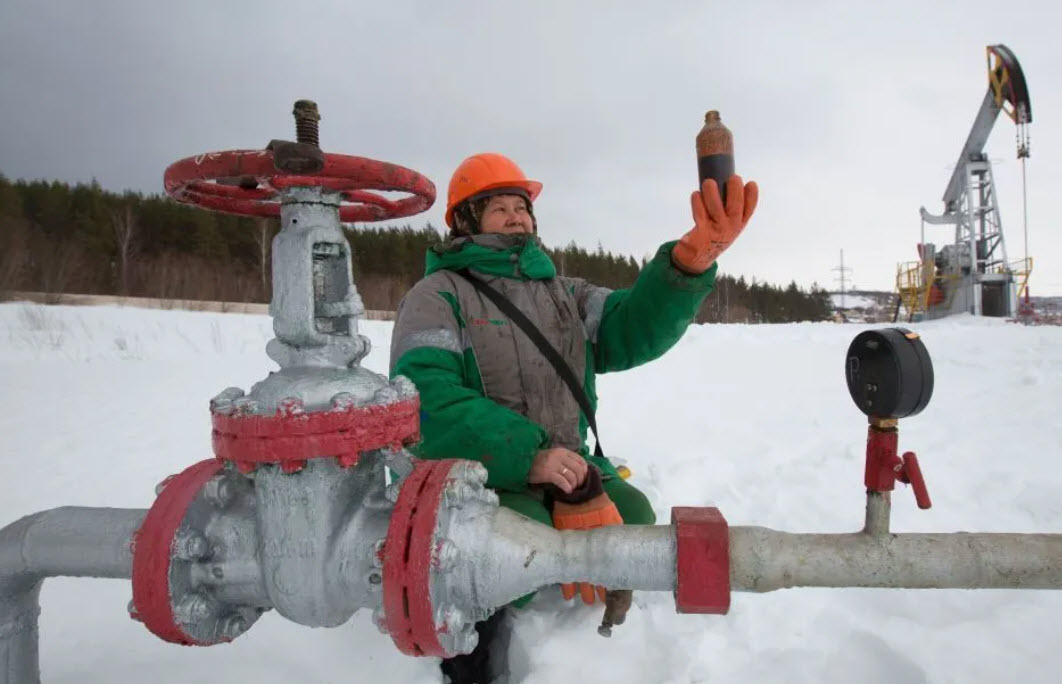
By R. Suryamurthy The most consequential question arising from Washington’s latest sanctions legislation is not whether the United States can impose a 100 percent tariff on countries buying Russian oil. It is whether India can continue to conduct an independent energy policy when access to its largest export market is increasingly being linked, directly or […]

The article India’s Russian Oil Dilemma Is Bigger Than Just 100 Percent Tariff appeared first on Latest India news, analysis and reports on Newspack by India Press Agency).

Kenya has strengthened its disaster financing framework by integrating disaster risk reduction and climate adaptation spending into national budgeting, giving policymakers a clearer view of how public money is being used to build resilience. A case study published by the United Nations Office for Disaster Risk Reduction on September 25 details how the National Treasury introduced a disaster and climate budget tagging and expenditure tracking system. The […]

Hawaii’s Big Island braced for life-threatening flooding and damaging surf as Hurricane Nolo moved slowly north towards the state, prompting emergency preparations and warnings that exceptionally heavy rain could persist through the weekend. Nolo was a Category 2 hurricane with maximum sustained winds of about 105 mph early Saturday, positioned roughly 155 miles south of South Point and moving north at only a few miles per hour. […]

VISHNU RAJA
RYO YAMADA
HITORI GOTOH
IKUYO KITA