Arabian Post Staff -Dubai Bahrain-based alternative investment manager Investcorp is joining Saudi investors in a consortium seeking a stake in a fire safety and equipment company, signalling continued private equity interest in the kingdom despite escalating Houthi attacks on strategic infrastructure. The proposed investment comes as Saudi Arabia faces mounting security pressures following attacks targeting energy facilities, airports and other installations. The transaction would provide an indication […]
Veeam Software is holding its VeeamON Tour Dubai conference on Tuesday, bringing together more than 400 technology executives, cybersecurity specialists and partners to examine the protection of corporate data used by artificial intelligence systems. The event, scheduled at Address Sky View, focuses on data security, recovery and governance as businesses increasingly deploy autonomous AI agents capable of accessing sensitive information and performing tasks across enterprise systems. Organisers […]
Arabian Post Staff -Dubai Abu Dhabi-based M42 research subsidiary IROS and 10XREVIV have announced a clinical study to test whether personalised nutrition can improve health outcomes for patients taking GLP-1 medicines for weight management. The planned research will compare 10XREVIV’s precision nutrition system combined with standard medical care against standard care alone, examining whether additional nutritional support makes a measurable difference during treatment. Insights Research Organisation and […]
SINGAPORE – Media OutReach Newswire – 27 October 2026 – Singaporeans are more active than ever, spending an average of $150 per month on fitness activities. But as sport and exercise participation hits an all-time high, so does the risk of injury, and most people are not financially prepared for what comes after.
Singapore clinics have reported a twofold increase in pickleball-related injuries as the sport’s popularity surges across all age groups. ACL injuries among young athletes are on the rise, with rehabilitation timelines stretching nine to 12 months. Cycling accidents continue to result in serious fractures requiring extended hospitalisation leave.
Whether it is a weekend football match, a morning run with a crew, or an evening game of pickleball, the risk of an injury that keeps a working adult off their feet, and off the payroll, is higher than many realise.
Staying active is one of the best things Singaporeans can do for their health, but a single sports injury can undo months of financial planning. While health insurance covers the hospital stay, it does not replace lost income during the weeks or months of recovery at home. Mortgage payments, household expenses, and rehabilitation costs do not stop just because a pay cheque does.
Allianz Accident Protect Plus, a personal accident insurance plan starting from SGD $14.25 per month, is designed to close that gap. When an accident leaves someone unable to work, the plan pays a weekly cash benefit of up to SGD $200 for up to 104 weeks, even if they are recovering at home rather than in a hospital bed.
The plan also covers medical and surgical expenses of up to SGD $7,000 per accident, including physiotherapy, Traditional Chinese Medicine, and chiropractic treatments. For those who do require hospitalisation, a daily hospital income of up to SGD $200 for up to 750 days provides additional support. And because the policy covers injuries sustained through recreational and leisure activities, and accidents beyond the sporting arena, it offers peace of mind whether you are on the court, on the road, or simply going about your day.
Allianz believes that an active lifestyle should be a source of wellbeing, not financial worry. Allianz Accident Protect Plus gives customers the confidence to stay active, knowing that if an injury sidelines them, their finances do not have to be.
Coverage is subject to the terms, conditions, and exclusions of the Allianz Accident Protect Plus policy. Please refer to the Policy Wording for full details. This policy is protected under the Policy Owners’ Protection Scheme which is administered by the Singapore Deposit Insurance Corporation (SDIC). This advertisement has not been reviewed by the Monetary Authority of Singapore. Hashtag: #AllianzInsuranceSingapore
The issuer is solely responsible for the content of this announcement.
About Allianz Insurance Singapore Pte. Ltd.
At Allianz Insurance Singapore, we aim to secure the future and create a positive impact on society and the environment by leveraging our expertise in risk management. As we work toward strengthening our position as one of Singapore’s leading risk solutions providers, we deliver innovative and customer‑focused protection solutions for individuals, SMEs, and mid‑corporate clients – spanning Motor, Home Content, Travel, Personal Accident, Cancer, Hospital Income, and a comprehensive suite of commercial insurance offerings.
300+ AI Applications Delivering Surges in Core Metrics and Annual Cost Reduction of Over CNY100 Million (Approx. US$15 Million)
NANJING, CHINA – Media OutReach Newswire – 26 October 2026 – Nanjing Iron & Steel Co., Ltd. (NISCO) has worked with Huawei and ecosystem partners to commercially deploy the world’s first steel model powered by swarm intelligence—the YuanYe Steel Large Model (YuanYe)—across multiple scenarios at scale. This helps NISCO transition its core operations from relying on experience to being powered by data and intelligence collaboration.
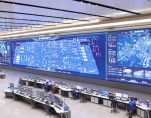
NISCO’s intelligent operations center that covers the widest business range in the industry and uses 5-dimensional digital twins to deliver integrated production and operations management across spaces, boundaries, organizations, and equipment
As a traditional manufacturer navigating the challenges of transformation and cost efficiency, NISCO has built a robust digital and intelligent foundation by adopting industry-leading products including Ascend, Kunpeng, Huawei Cloud Stack, and Pangu models. By embedding AI into every core stage of production—ironmaking, steelmaking, rolling, and quality inspection—NISCO is forging green and high-end AI-powered super steel plants.
Unlike general-purpose monolithic models, YuanYe innovatively fuses multiple AI models with the steel industry’s metallurgical mechanism models to create a dual-drive, multi-model cluster architecture. This architecture features a “right brain” for probabilistic computing and a “left brain” for precise and scientific decision-making. Powered by massive amounts of sensing data aggregated from millions of operational technology (OT) data points across 26 business domains, NISCO has achieved real-time digital twin mapping within its intelligent operations center, laying solid data and scenario foundations for YuanYe. This enables the entire steelmaking process to become not only visible, but also capable of precise control and intelligent assessment. Now 100% of NISCO’s key equipment is connected and digitally controlled and its new product R&D cycles have been shortened by 50%, reducing annual costs by over CNY100 million (approx. US$15 million).
As the model continues to iterate, NISCO had launched 25 business agents by October 2026. These agents cover a wide range of scenarios, from visual quality inspection and process optimization to production scheduling and operations management, setting a new benchmark for digital and intelligent steel transformation.
NISCO’s hot-rolling production line in its heavy plate plant
Breakthroughs in four core scenarios: YuanYe redefines traditional operations for significant safety, efficiency, and quality gains
In the ironmaking stage, AI makes traditionally invisible blast furnaces transparent. YuanYe leverages blast furnaces’ internal sensor data and metallurgical mechanism analysis to perform real-time dynamic simulations of the ironmaking process. Assisted by furnace temperature prediction and health diagnosis models, furnace operators can predict temperatures and identify issues two hours in advance, with over 90% accuracy. This shifts furnace operations from reactive post-event remediation to proactive pre-control, increasing prime-grade molten iron yield by over 10% while significantly cutting unit energy consumption.
In the rolling stage, AI drives precise predictions and codifies expert experience to enhance the operational stability of steel rolling and secure leadership in product quality. To tackle the highly dynamic and complex operating conditions during the rolling process, YuanYe’s rolling-force prediction model achieves millisecond-level response, narrowing the thickness tolerance to ±0.2 mm and reducing the steel thickness deviation to 1.9% to reach a world-leading standard. The rolling-force hit rate has jumped from 88% to 98%, supporting a steady annual output of over 2.5 million tons of steel plates and increasing the overall yield rate by 0.5%. Enhanced dimensional precision and physical-chemical stability allow NISCO’s products to meet demanding steel specifications across diverse applications, ranging from mega stadiums and oil pipelines to 10,000-ton cruise ships and LNG storage tanks.
In quality inspection, the synergy between robots and AI models serves as a discerning “eagle eye”, doubling metallographic inspection efficiency. During metallographic inspection for finished steel, the integrated smart metallographic inspection system built on YuanYe has achieved full-process automation, covering sample grinding and polishing, image acquisition, and smart grading. Inspection accuracy has risen to over 95%, while per-sample inspection time has been shortened from 10 minutes down to 3–5 minutes. This 80% increase in overall inspection efficiency frees human operators to focus on anomaly analysis and high-level decision-making.
In the energy and environmental control stage, NISCO leverages the YuanYe architecture to develop the S-Link Intelligent Agent for Gas and Flue Gas Sulfur Control. Integrating 602 process parameters alongside multi-modal image and knowledge capabilities, the agent achieves a smart closed loop across source prediction, process optimization, and end-of-pipe compliance. By combining mechanism inversion with time-series forecasting, it issues precise sulfur-risk warnings one hour in advance, achieving a sulfur prediction accuracy of over 95%. Operational optimization algorithms then calculate the optimal gas blending scheme within seconds. Finally, game-theoretic models dynamically allocate emission quotas, slashing natural gas co-firing consumption by nearly 50%. This has reduced downtime caused by emission exceedance by over 25%, and delivered more than CNY600,000 (approx. US$90,000) in annual economic benefits—securing both environmental compliance and drastic cost reduction.
From automating labor to empowering people: Defining a new paradigm of inclusive AI
Li Jinyan, General Manager of the Digital and Intelligent Integrated Development Department and Director of the AI Research Institute at NISCO, said: “Digital and intelligent transformation is inherently human-centric. Its purpose is not to replace people, but to unleash human potential. Our goal is to lift employees out of the endless sea of data, empowering them to direct their creative energy toward work of higher value.” To date, NISCO has deployed over 300 AI models across its plants, alongside more than 1,000 low-code agents and lightweight applications built independently by frontline employees.
As Cheng Yongfu, Senior Industrial Solution Expert at Huawei’s Steel & Non-ferrous BU, noted: “The real value of industrial AI can only be realized when it expands from single-point applications to comprehensive integration with production, operations, and management, which can unlock sustained, scalable empowerment.”
Looking ahead, as model deployment expands and computing demands continue to grow, NISCO will team up with Huawei and other partners to explore the construction of dedicated data centers for smart steel plants. Centered on the AI-native three-tier architecture (AI-native OS, AI-native factory, and AI-native enterprise) and powered by the YuanYe model, NISCO is accelerating high-quality steel development, aiming to provide a replicable and scalable benchmark for the digital and intelligent transformation of the global steel and manufacturing industries.
Hashtag: #Huawei #NISCO
The issuer is solely responsible for the content of this announcement.
Arabian Post Staff -Dubai Authorities in the United Arab Emirates have closed beaches across three northern emirates following an offshore tanker oil spill, as emergency teams intensify containment operations and assess pollution affecting coastal waters. The Ministry of Climate Change and Environment confirmed that its technical monitoring and environmental assessment system detected oil contamination reaching beaches in Umm Al Quwain. All beaches and coastal areas in the […]
By Nitya Chakraborty Incumbent President of Brazil Luiz Inacio Lula da Silva, better known globally as Lula made a dramatic comeback in October 25 run off Presidential elections by comfortably defeating the far right candidate Flavio Bolsonaro who was the frontrunner after the first round of elections on October 4. After 100 per cent counting […]
Arabian Post Staff -Dubai Alpha Dhabi Holding has agreed to commit $1 billion (Dh3.67 billion) to Alpha Wave III, extending the Abu Dhabi-listed investment group’s exposure to artificial intelligence and high-growth technology businesses worldwide. The agreement, announced on Monday, covers a global investment fund managed by Alpha Wave Global and remains subject to applicable approvals. Alpha Dhabi said the commitment would support diversification of its investment portfolio, […]
CoinDCX has confirmed a cryptocurrency loss of nearly $16 million after an internal transfer system failed, reversing its initial dismissal of suspicious withdrawals from wallets previously compromised in a security breach. The Mumbai-based exchange said on Sunday that it had absorbed the loss of 15.99 million USDT, a dollar-linked cryptocurrency issued by Tether, and that customer balances and active trading systems remained unaffected. Its disclosure followed questions […]
Britain has committed £100 million to establish an artificial intelligence biosecurity laboratory, supported by OpenAI, Anthropic and Google DeepMind, to strengthen defences against biological threats. The AI Biosecurity Lab will use advanced models to identify emerging dangers, improve disease surveillance and accelerate development of vaccines and treatments, the government announced on Saturday. OpenAI and Anthropic have pledged up to £200 million in computing resources, model credits and […]
Arabian Post Staff -Dubai Saudi Arabian property technology company Ghanem has secured an additional $1.5 million in pre-seed financing, lifting the size of its early-stage funding round to $8.6 million as it expands a digital platform for fractional ownership of income-generating real estate. The extension attracted property companies and strategic angel investors, the Riyadh-based business said, without identifying all participants in the new financing. Its previous $7.1 […]
Bank of America’s $1.2 billion anti-money laundering charge has intensified scrutiny of outdated compliance systems after US regulators identified extensive failures to detect and report suspicious transactions. The penalty, disclosed alongside the bank’s third-quarter results on October 14, reduced earnings by 17 cents a share and highlighted the financial consequences of weaknesses that regulators said persisted despite earlier warnings and corrective commitments. The bank reported quarterly net […]
Arabian Post Staff -Dubai Saudi Arabia intercepted and destroyed a ballistic missile heading towards Riyadh early on Saturday, while coalition forces also brought down a drone in the kingdom’s Eastern Region, military officials said. Major General Turki Al-Malki, spokesman for the Saudi-led Coalition to Restore Legitimacy in Yemen, announced the interceptions in separate statements. He attributed the missile launch to Yemen’s Houthi movement, which has intensified cross-border […]
New report sets out a method the industry can use to put a financial value on climate resilience
The Westbund Central case study shows that its resilience measures are expected to keep storm-surge and rainfall-flood losses in 2050 below the losses an unprotected building would face today
HONG KONG SAR – Media OutReach Newswire – 23 October 2026 – Hongkong Land Holdings Limited (“Hongkong Land”) today published Building Value That Lasts: Quantifying the Return on Climate Resilience in Real Estate. The report developed with Marsh puts a financial value on designing buildings for a changing climate. Its case study is Westbund Central, Hongkong Land’s mixed-use waterfront development of approximately 1.7 million sq. m. on Shanghai’s Huangpu River.
(From left to right) From left: Michael Long, Head of Group Sustainability, Hongkong Land; Stuart Grant, Chief Executive of Westbund Central, Hongkong Land; Swenja Surminski, Managing Director of Climate and Sustainability, Marsh; and Michael Li, Chairman and President, Marsh Risk China.
The report finds that the development’s resilience measures cut expected storm-surge losses by 84% and rainfall-flood losses by 88% under today’s conditions. Westbund Central’s resilience measures are expected to keep storm-surge and rainfall-flood losses in 2050 below the losses an unprotected building would face today.
Closing the resilience valuation gap
Climate risk now shapes how real estate is assessed, financed and insured. Almost every climate related disclosure acknowledges the need for adaptation, yet fewer than one in ten puts a number on it. Hongkong Land and Marsh set out to close that gap together by treating resilience as an investment with a measurable return, not a cost to be absorbed.
Resilience pays, and the reductions are large
Working with global leading insurance broker and risk advisor Marsh, Hongkong Land modelled the average annual loss (AAL) at Westbund Central from storm surge, rainfall flooding and wind. AAL is the expected yearly cost of physical damage. The modelling compared climate risks today and in 2050 for buildings with and without resilience measures beyond those required by building codes. It assumed a future in which global greenhouse-gas emissions remain high.
Without the development’s enhanced resilience measures, expected storm-surge losses would more than double and wind losses would more than triple by 2050. The measures reduce expected losses as follows:
storm-surge losses fall by 84%, both today and in 2050
rainfall-flood losses fall by 88% today and 79% in 2050
wind losses fall by 36% today and 31% in 2050
Built for the climate of 2050
Westbund Central was engineered for projected climate conditions in 2050, rather than historical conditions. These measures significantly reduce the impact of increasing climate risk:
Storm surge: with Westbund Central’s resilience measures in place, average annual losses in 2050 are projected at 0.12%, compared with 0.38% for a building without these measures today.
Rainfall flooding: with the resilience measures in place, average annual losses in 2050 are projected at 0.05%, compared with 0.19% for a building without these measures today.
Insurers are raising premiums, tightening terms and withdrawing cover from exposed locations. In that market, a lower and more stable loss profile matters.
Westbund Centrals resilience features include:
23% more drainage capacity, protecting against a 1-in-100-year rainfall event
Grade 1 waterproofed basements and the elevation of critical equipment
A “Sponge City” network of more than 12 features designed to capture and store stormwater, with capacity exceeding 2,000 m³
The figures are conservative. They count physical damage only and exclude extreme heat, the fastest-growing hazard at the site, which the development manages through design and operations.
Michael T. Smith, Group Chief Executive of Hongkong Land, said: “Climate change is a significant force reshaping real estate. At Westbund Central, climate resilience is core to all that we do because we believe resilience and commercial performance reinforce each other. This report shows the return on that investment can be measured today, with tools that already exist. The industry no longer has any excuse not to.”
Stuart Grant, Chief Executive of Westbund Central, said: “A premium destination is a seamless one. Much of the resilience work at Westbund Central is deliberately invisible to the tenants and visitors who use it every day. Its value shows in the disruption that never reaches them. Keeping the precinct open, comfortable and trading regardless of weather conditions is how resilience facilitates commercial performance.”
Michael Li, Chairman and President of Marsh Risk China, said: “Climate risk is now a balance-sheet risk. Westbund Central shows that adaptation pays back through lower loss exposure and stronger access to capital. As a risk orchestrator, Marsh matches protection needs to capital flows, helping clients quantify resilience and close the valuation gap.”
A method for the industry
The report is offered as a method others can apply, not just as an account of one development. It traces how climate risk can be assessed from site selection through to operations and linked to financial outcomes. It calls on the industry to:
quantify early, at site selection and design, when action is most cost-effective
bring insurers and lenders in from the start
build a shared standard so resilience can be benchmarked across assets, as carbon already is
For further details, please see the full report which is available for download [here].
Hashtag: #HongkongLand
The issuer is solely responsible for the content of this announcement.
Westbund Central
Hongkong Land’s Westbund Central is the Group’s largest-ever single investment. Scheduled to complete in phases up until 2028, it is an US$8 billion development encompassing approximately more than 1.7 million sq. m. of prime mixed-use property strategically located at Shanghai’s Xuhui Waterfront. It is a flagship development of Hongkong Land’s prime commercial properties’ CENTRAL Series. The ultra-premium integrated commercial property includes 240,000 sq. m of retail space, 650,000 sq. m. of premium Grade A offices, 160,000 sq. m. of high-end waterfront luxury residences, two hotels (55,000 sq. m.) and over 50,000 sq. m. of cultural and art venues.
Hongkong Land
Hongkong Land is a major listed property development, investment and management group. It focuses on developing, owning and managing premium and ultra-premium mixed-use real estate in Asian gateway cities, featuring Grade A office, luxury retail, residential and hospitality products. With over US$50 billion in assets under management, Hongkong Land’s ultra-premium mixed-use real estate footprint spans over 1.97 million sq. m. lettable area in operation and 1.43 million sq. m. lettable area under development, with flagship mixed-use projects in Hong Kong, Singapore and Shanghai. Its properties hold industry leading green building certifications and attract the world’s foremost companies and luxury brands. Established in 1889, Hongkong Land takes a long-term view, investing significantly alongside its capital partners and concentrating its portfolio where it can create the most value for tenants, customers and investors. Hongkong Land Holdings Limited has a primary listing on the London Stock Exchange, with secondary listings in Singapore and Bermuda. Hongkong Land is a member of the Jardine Matheson Group.
Marsh Marsh (NYSE: MRSH) is a global leader in risk, reinsurance and capital, people and investments, and management consulting, advising clients in 130 countries. With more than 95,000 colleagues, Marsh helps build the confidence to thrive through the power of perspective. For more information, visit marsh.com, or follow us on LinkedIn and X.
Technology companies were responsible for the largest share of people affected by third-party data breaches, according to new findings from risk advisory firm Kroll. Kroll’s 2026 Data Breach Outlook, published on Thursday, found that 69% of individuals affected in incidents it handled between June 2025 and June 2026 had been exposed through breaches involving third parties. Of that group, 79% were linked to compromises in the technology […]
By Dr. Gyan Pathak Prime Minister is entitled to criticise the Leader of the Opposition forcefully, but the dignity of the office calls for a distinction between robust political criticism and personal ridicule. Nevertheless, PM Narendra Modi ridiculed his rival LoP Rahul Gandhi on 22 October 2026 at a World Summit organised by NDTV, where […]
French health authorities have confirmed the world’s first documented human infection with Shamonda virus in a severely immunocompromised patient who died earlier this month, while emphasising that no wider public health threat has been identified. The patient was receiving treatment for a serious underlying illness at Hospices Civils de Lyon and died in early October. Officials announced the finding on Thursday, saying investigations were continuing into the […]
The partnership pairs LeapThought’s own AI with Google Cloud’s Gemini models and sovereign Cloud offering, giving infrastructure owners control of their data and connected intelligence across the full project and asset lifecycle.
SINGAPORE – Media OutReach Newswire – 23 October 2026 – LeapThought and Google Cloud today announced a strategic partnership to bring sovereign, domain-native AI to the owners and operators of critical building infrastructure, giving them control of their data and sharper decision-making across the full value chain, from delivery through operations.
Ratnakar Garikipati, Founder, Chair, and CEO of LeapThought, alongside Rahul Sharma, Google Cloud Managing Director, APAC Public Sector. The partnership combines LeapThought’s specialized AI with Google Cloud’s Gemini models and sovereign infrastructure to deliver secure data control and end-to-end intelligence for infrastructure assets.
The partnership has two priorities. The first is value chain integration, which connects everyone involved in delivering and running an asset — owners, operators, developers, consultants, contractors, and suppliers — on one governed platform. The second is security and sovereignty: owners can keep control of their data, within compliant, standardized frameworks that can be repeated from one program to the next.
FULCRUMHQ, LeapThought’s globally recognized Integrated Digital Delivery (IDD) platform, gives infrastructure owners the option to run on Google Cloud, including Google’s sovereign, air-gapped solutions for defense, public sector, and private sector environments requiring high security. At its core is GENIEHQ, LeapThought’s own Industrial AI, embedded directly into the platform and built to reason over the structured and unstructured data that defines a capital program — BIM models, GIS and geospatial data, ERP financials, schedules, contracts, reality capture, telemetry, and data from field robotics and sensors. The partnership pairs GENIEHQ with Google Cloud’s Gemini models, giving owners and their delivery teams natural-language access to that data across a project and a portfolio.
The partnership delivers on these two priorities as follows:
1. Value Chain Integration: One Governed Record, Natural-Language Insight
Major capital and building infrastructure programs span owners, operators, developers, consultants, contractors, and suppliers — each typically working in separate systems, with design, construction, and operational data fragmented across handovers. LeapThought’s FULCRUMHQ platform brings this information together into a single governed record that follows an asset from design through operation, giving owners a consistent view across their portfolio, not just a single project.
By running FULCRUMHQ — and the GENIEHQ Industrial AI embedded within it — on Google Cloud, and integrating LeapThought’s proprietary data architecture with Google’s Gemini models, the partnership enables:
Interactive Model and Portfolio Querying: Combining GENIEHQ’s deep understanding of project and portfolio data with the multimodal capabilities of Gemini, owners, engineers, project managers, and field teams can ask complex, plain-language questions directly against BIM models and portfolio data — instead of manually clicking through complex 3D CAD/BIM model trees or running predefined filter scripts — such as identifying clash detections, extracting exact material quantities, verifying regulatory code compliance, or surfacing risk trends across a program (e.g., “Show me all fire-rated doors on Level 3 that don’t match the latest spec,” or “Which contractors across our portfolio have the highest rate of non- conforming work this quarter”).
Global Scale and Reliability: Google Cloud provides the high-performance compute and elastic scalability needed to process compute-intense multi-gigabyte 3D models and point-cloud datasets, across a single project or an entire portfolio, in real time.
2. Security and Sovereignty: Full Control on Google Cloud’s Sovereign Solutions
For critical civil assets, defense installations, public sector agencies, and private sector owners where data cannot traverse the public cloud, LeapThought gives owners the choice to deploy on Google Cloud’s data residency solutions, including Google Cloud Data Boundary, Google Cloud Dedicated, and Google Distributed Cloud. In these environments, GENIEHQ, LeapThought’s Industrial AI embedded within FULCRUMHQ, runs alongside Gemini locally, within the owner’s chosen security boundary, ensuring zero cross-boundary exposure or unauthorized external telemetry.
“The value of an asset now lies as much in the intelligence around it as in its physical form. That intelligence belongs to the owner, and it must be secure, sovereign, and shared across the whole value chain. Demand for this is growing quickly, in Asia and around the world, and that is what brought us and Google Cloud together. We’re starting from Singapore and building toward a standard for critical infrastructure everywhere,” said Ratnakar Garikipati, Founder, Chairman, and CEO of LeapThought.
“Public sector and critical infrastructure agencies manage some of the most intricate engineering and regulatory datasets in the world. The partnership between Google Cloud and LeapThought enables project teams and portfolio owners to quickly surface actionable insights directly from complex BIM models and program data using everyday language. Combined with Google’s sovereign, air-gapped solutions, we’re providing agencies with the option to modernize project workflows while maintaining strict data governance, residency, and operational sovereignty,” said Rahul Sharma, Managing Director, APAC Public Sector, Google Cloud.
Hashtag: #LeapThought
The issuer is solely responsible for the content of this announcement.
About LeapThought
LeapThought is a US technology company that builds software connecting people, data, and AI across the infrastructure lifecycle. It is headquartered in Bellevue, Washington, has its Asia headquarters in Singapore, and operates across the United States, Brazil, Singapore, and New Zealand. Its FULCRUMHQ platform and embedded GENIEHQ Industrial AI serve public agencies, developers, consultants, contractors, and universities and institutes of higher learning. Clients include Singapore’s Land Transport Authority, Building and Construction Authority, and JTC. The company was founded and led by Ratnakar Garikipati.
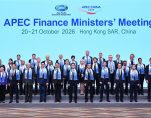
HONG KONG SAR – Media OutReach Newswire – 22 October 2026 – Finance leaders and representatives of international organisations attended the APEC (Asia-Pacific Economic Cooperation) Finance Ministers’ Meeting (FMM) 2026, successfully held in Hong Kong for the first time (October 20-21). Participants engaged in in-depth exchanges on issues concerning regional financial and economic development.
Yesterday (October 21), the FMM issued the 2026 APEC Finance Ministers’ Joint Statement, reaffirming the commitment to building an open, dynamic, resilient, and peaceful Asia-Pacific community by 2040 for the prosperity of all our people and future generations.
Representatives of the participating APEC member economies and international organisations during the meeting.
Minister of Finance and chair of the 2026 FMM, Lan Fo’an, said that all parties should firmly implement the consensus reached at the APEC Economic Leaders’ Meeting, uphold multilateralism, and deepen practical co-operation in fiscal and financial affairs, with a view to contributing to regional economic and financial stability and long-term sustainable growth.
Earlier, John Lee, Chief Executive of the Hong Kong Special Administrative Region (HKSAR) Government, welcomed participants to the FMM.
“This is a historic occasion for Hong Kong. The APEC Finance Ministers’ Meeting – part of APEC China 2026 – is taking place in our city for the very first time. We are honoured to support this significant international event, which brings together the member economies of the Asia-Pacific Economic Cooperation, representing some three billion people and accounting for over 60 per cent of global GDP,” Mr Lee said.
“Under the unique ‘one country, two systems’ principle, Hong Kong enjoys both the China advantage and the global advantage. We are the only common law jurisdiction in China, our country, and have a legal and regulatory regime similar to most of the world’s top financial hubs.”
Speaking during the discussion sessions, Paul Chan, Financial Secretary of the HKSAR, said that amid geopolitical tensions and uncertainties over trade policies, Asia-Pacific economies should strengthen co-operation to maintain the smooth flow of trade and investment, while guarding against financial risks and nurturing long-term growth drivers.
He said that Hong Kong would leverage its unique advantages under the “one country, two systems” principle, and make full use of its diverse financing channels and professional services as an international financial centre to serve as a “super connector” and “super value-adder”.
“Regionally, we need open channels for trade and investment, not new barriers. Connected markets allow capital to reach productive uses and technologies be adopted across borders,” Mr Chan said during a plenary session on Global and Regional Economic and Financial Outlook (October 20).
“Our collective task is to safeguard stability while strengthening the foundations for lasting prosperity. Hong Kong, China stands ready to work with fellow economies to seize opportunities, manage risks and support more resilient, sustainable and inclusive growth across the Asia Pacific.”
The Hong Kong Monetary Authority and the APEC Business Advisory Council (ABAC) held two thematic seminars (October 20) on “Fostering a digitalised, inclusive and sustainable supply chain ecosystem through finance” and “Mobilising capital for nature: scaling finance and regional cooperation across APEC” respectively.
In his welcoming remarks at the seminars, Christopher Hui, Secretary for Financial Services and the Treasury of the HKSAR, said: “In an era of profound economic transformation and evolving global challenges, prosperity will not be secured by any economy acting alone. It will be built through partnership, innovation and resilience. I am therefore delighted that this seminar brings together regulators, business leaders and experts from across the Asia-Pacific region for meaningful exchanges on how we can unlock new opportunities, strengthen financial resilience, and drive sustainable growth for all.”
Following the conclusion of the FMM, Mr Lee and other officials met Mr Lan at Government House to exchange views on economic and financial development of the Chinese Mainland and Hong Kong. Mr Lee expressed his heartfelt gratitude to the country for its trust in and support for Hong Kong, as well as its strong affirmation of Hong Kong’s status as an international financial centre.
During the FMM, a diverse range of tours and visits were arranged for members of delegations from participating economies and international organisations to enjoy the city’s cultural heritage and unique charm as an international metropolis.
The itineraries included visits to the Peak, Hong Kong Museum of Art, Hong Kong Palace Museum, Xiqu Centre, Chinese Culinary Institute and Ocean Park as well as a boat tour to enjoy the renowned views of Victoria Harbour.
Arabian Post Staff -Dubai Central banks are increasing gold reserves and shifting bullion between international vaults, with new industry data showing a sharp rise in purchases and growing interest in reducing dependence on individual storage centres. The World Gold Council says official institutions bought an average of approximately 1,000 tonnes annually over the four years preceding its 2026 survey, compared with roughly 500 tonnes a year during […]
Japanese banks, airlines and transport operators suspended digital services as companies rushed to install emergency security patches for critical vulnerabilities in PHP, a programming language widely used across the internet. The disruptions spread across Japan on Wednesday and Thursday, affecting online banking, airline applications, airport information systems and commercial websites. Companies temporarily disabled vulnerable services while assessing their exposure to two security flaws that could allow attackers […]
BNP Paribas Asset Management is increasing its exposure to long-dated Japanese government bonds, attracted by elevated yields, a steep yield curve and strengthening evidence that domestic institutional investors are returning to the market.
The investment strategy comes as Japan’s government bond market shows signs of recovering demand after months of volatility driven by inflation, fiscal uncertainty and expectations of further monetary tightening by the Bank of Japan.
Ryutaro Kimura, senior bond strategist at BNP Paribas Asset Management, has identified improving demand from domestic investors, particularly life insurance companies, as an important development supporting longer-maturity government securities.
The strongest indication emerged at Japan’s 20-year government bond auction on Tuesday, when demand reached a record level. The bid-to-cover ratio climbed to 5.84, compared with 4.01 at the previous auction and a 12-month average of 3.73.
The exceptionally strong bidding reflected renewed appetite for securities offering higher returns than those available during Japan’s prolonged period of exceptionally low interest rates.
Kimura attributed the favourable auction outcome to recovering domestic demand, supported by elevated interest rates and easing concerns about the government’s fiscal position.
Japanese life insurers have increased their net purchases of super-long government bonds since June, providing additional evidence that institutions with long-term liabilities are rebuilding their holdings of domestic fixed-income assets.
The auction results also showed an improvement in pricing conditions. The difference between the average accepted price and the lowest accepted price narrowed to 0.07 from 0.15 at September’s sale, indicating stronger bidding competition.
The yield on 20-year government bonds subsequently declined by as much as six basis points to 3.710%, reflecting the immediate market response to the auction.
Japan’s yield curve remains unusually steep, offering investors considerably higher returns on securities with longer maturities. That difference has encouraged asset managers to reassess the balance between income opportunities and the risks associated with holding longer-duration bonds.
Official yield data showed the benchmark 10-year government bond yielding approximately 2.93% on October 20, compared with 3.99% for the 30-year maturity. The difference exceeded one percentage point, highlighting the additional compensation available to investors extending their investment horizons.
Longer-duration bonds also carry greater sensitivity to changes in interest rates. Their prices can fall sharply when yields rise, making portfolio positioning particularly important while monetary policy expectations remain unsettled.
Japan’s central bank is expected to remain a significant influence on market conditions. Investors are awaiting its next policy meeting for indications about the pace of further interest rate increases and the outlook for inflation.
The Bank of Japan’s policy rate stood at 1.25% in October, following successive adjustments intended to address persistent inflationary pressures. Further tightening could influence borrowing costs across the maturity spectrum, although movements in longer-term yields also depend on government borrowing requirements and investor demand.
BNP Paribas Wealth Management’s October fixed-income outlook anticipates additional monetary tightening by the Japanese central bank, with approximately quarterly increases and a terminal policy rate around 2.5% in 2028. That projection represents the institution’s assessment rather than an announced central bank policy path.
Government financing requirements remain another consideration for investors. Prime Minister Sanae Takaichi’s administration faces scrutiny over fiscal proposals and their implications for future bond issuance, particularly as higher yields increase the cost of financing public debt.
Nevertheless, improved auction demand suggests that higher interest rates are attracting buyers who previously found Japanese government securities insufficiently rewarding.
The potential return of domestic capital is particularly significant because Japanese banks and insurers have substantial overseas bond investments. Rising domestic yields can encourage these institutions to reconsider foreign allocations, especially where currency hedging reduces the returns available from overseas securities.
Japanese investors sold foreign bonds for a fifth consecutive week through October 17, with cumulative net disposals reaching approximately ¥3.43 trillion over that period. The withdrawals provide further evidence of changing investment preferences as domestic fixed-income yields become more competitive.
The Ministry of Finance has also adjusted issuance arrangements for longer-maturity securities, an important consideration for investors assessing the relationship between government bond supply and institutional demand.
Market participants will continue examining auction results alongside investment plans from major insurers to assess the composition of demand. Japan’s Ministry of Finance conducted another liquidity-enhancement auction on October 22, following its 20-year government bond sale earlier in the week.
SoftBank Group shares fell sharply on Thursday, bringing the Japanese investment company’s market value close to half its June peak as investors questioned the cost of financing its expanding artificial intelligence commitments. The stock dropped more than 5% in Tokyo trading, extending a retreat that has accompanied broader selling across Asian technology markets. The decline has put renewed attention on SoftBank’s reliance on borrowing and the uncertain […]
Alibaba Group Holding Ltd shares plunged nearly 6% in Hong Kong on Thursday, leading a technology sector selloff after China’s market regulator demanded stronger product quality controls and consumer protection measures across major ecommerce platforms.
The company’s stock fell to HK$97.55 during morning trading, marking its steepest intraday decline in two months. Investors reacted to indications that Beijing could intensify scrutiny of online marketplaces, potentially increasing compliance costs for Alibaba and its competitors.
China’s State Administration for Market Regulation disclosed on Wednesday that it had convened a meeting in Beijing with representatives of leading digital commerce businesses to discuss improving product standards, strengthening consumer safeguards and addressing shortcomings in platform governance.
Shares of JD. com dropped approximately 4.7%, while Kuaishou declined more than 4%. Other technology companies, including Tencent, Meituan, Xiaomi and NetEase, also suffered losses as selling spread across the sector.
Hong Kong’s Hang Seng Index declined nearly 3%, touching a three-month low, while the Hang Seng Tech Index dropped more than 4%, reaching its weakest level since September 2024. The technology benchmark has lost more than 30% this year.
The regulatory announcement focused on persistent problems involving counterfeit merchandise, misleading advertising and products failing to match descriptions provided by online sellers. Authorities identified livestream shopping, instant retail services and social commerce as areas where product safety risks have become increasingly complex.
The regulator said platforms must strengthen their responsibilities as gatekeepers, establish comprehensive quality management systems and improve supervision throughout commercial supply chains. Companies were instructed to align their practices with existing regulatory guidance and the government’s 2026 quality improvement priorities.
Officials also emphasised greater transparency, improved aftersales services and more effective mechanisms for resolving consumer complaints. The measures seek to strengthen accountability among platform operators without necessarily introducing an entirely new regulatory framework.
Representatives from Alibaba’s Taobao and Tmall businesses attended the meeting alongside JD. com, Pinduoduo, Xiaohongshu, Kuaishou, Douyin, Vipshop and other online trading platforms.
The gathering followed guidance issued last year by ten government departments, including the market regulator, the Cyberspace Administration of China and the Ministry of Industry and Information Technology, concerning product and service standards across digital marketplaces.
Authorities acknowledged that companies had implemented improvements under those guidelines but said substantial challenges remained. Emerging business models were creating additional difficulties for regulators attempting to identify unsafe products, deceptive marketing and inadequate consumer safeguards.
For Alibaba, the renewed regulatory emphasis directly affects its domestic commerce operations, particularly Taobao and Tmall, which connect merchants with consumers across China’s vast online retail market.
Stricter monitoring requirements could oblige marketplace operators to devote additional resources to merchant verification, product inspections, complaint handling and supply chain oversight. The financial implications will depend on how existing requirements are implemented and enforced.
The announcement did not disclose fresh financial penalties against Alibaba or establish a timetable for additional enforcement measures. The market reaction therefore reflected concerns about possible regulatory consequences rather than confirmation of sanctions against the company.
Broader investor caution compounded the selling pressure. Mainland investors had reduced their exposure to Hong Kong equities during the preceding trading session, while technology valuations remained under pressure amid questions surrounding substantial expenditure on artificial intelligence infrastructure.
Alibaba has committed significant capital to expanding its computing capacity and artificial intelligence operations, making investor assessments of profitability and spending particularly important alongside regulatory developments.
The company completed an HK$80 billion share placement in August, allocating approximately 60% of net proceeds towards expanding global computing infrastructure and the remainder towards hyperscale artificial intelligence data centres and upgrades to cloud systems.
That financing underlined Alibaba’s commitment to technological investment even as its established ecommerce businesses face heightened expectations concerning operational standards and consumer safeguards.
The regulator also encouraged companies to use commercial data to improve product quality among suppliers, linking information gathered through online transactions with manufacturing improvements and better supply chain coordination.
Another proposal involved developing and publishing platform quality governance indices, intended to provide consumers with clearer information about standards maintained by different marketplaces.
Officials urged participating companies to strengthen cooperation with regulators and other stakeholders while making information about products and services more transparent.
The meeting included discussions of the ISO 9001 quality management framework and methods for businesses to assess their own governance arrangements. Platform representatives exchanged views on implementing quality improvements and addressing weaknesses identified by the authorities across online trading activities.



 https://allianz.sg/
 https://www.linkedin.com/company/allianzinsuressg/
 https://www.facebook.com/allianzsg
 https://www.instagram.com/allianz.sg/











 https://x.com/Brand_HK/





