

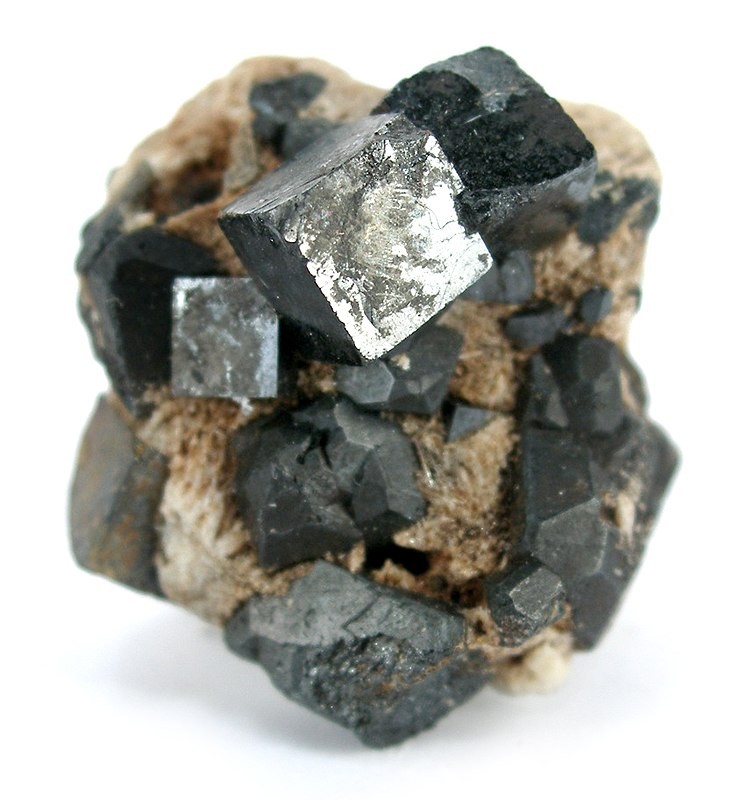
A team of scientists has developed a perovskite‐based gamma‐ray detector that delivers energy and spatial resolution on par with—or exceeding—state-of-the-art cadmium zinc telluride and sodium iodide detectors used in nuclear medicine. The prototype offers sharper imaging, faster scans and potentially lower radiation doses for patients, while promising substantial cost reductions for hospitals.
The breakthrough centres on a detector constructed from CsPbBr₃ perovskite crystals arranged in a pixelated sensor array. By optimising crystal growth, surface engineering and electronics read-out, authors report energy resolution of 2.5% at 141 keV and 1.0% at 662 keV. Spatial resolution has reached about 3.2 mm, distinguishing radioactive sources only 7 mm apart in phantom experiment tests. Charge collection efficiency at the crystal surface has approached unity, addressing a common weakness in prior perovskite devices.
Conventional detectors in Single-Photon Emission Computed Tomography either use NaI, which are cheaper but thick, bulky and blurrier, or CZT, which perform well but are expensive and fragile. The new perovskite detector matches or improves upon CZT’s energy resolution while avoiding its high cost and complex manufacturing challenges.
Tests included imaging with technetium-99m point and line sources, phantom imaging to verify spatial separation, and evaluations of signal fidelity and stability. The device maintained uniformity across its surface and stability over the measurement period. Researchers also eliminated significant charge transport losses at the surface, a frequent source of degradation in semiconductors, to improve spectral fidelity.
The perovskite detector’s sensitivity was shown to be between 0.13%–0.21% counts per second per becquerel when using technetium-99m sources. Comparison to existing technologies indicates that such sensitivity, coupled with high energy resolution, could allow shorter scan times and reduced tracer doses.
Commercialisation efforts are underway. A spin-out called Actinia Inc. is working to bring this technology from lab prototype to clinical imaging systems, partnering with medical device firms to address scalability, regulatory validation, and integration into existing imaging modalities.
Challenges remain. Perovskite materials have historically suffered from stability issues, particularly under high voltage or in contact with electrode materials. Researchers needed to ensure that long-term operation does not degrade performance, especially in clinical settings with many scans and variable environmental conditions. Also, while experiments have shown promising image quality in phantom tests, translating that into human imaging involves complexities such as tissue scatter, motion, and regulatory safety thresholds.
Follow Arabian Post
Select Arabian Post as your preferred source on Google and MSN News for trusted business news and Arab politics and updates.



