Kenya holds sufficient petroleum stocks to cushion the country and its regional partners from supply disruptions linked to conflict in the Middle East, Energy and Petroleum Cabinet Secretary Opiyo Wandayi has said, seeking to calm fears of shortages and price spikes. Wandayi stated that the country’s strategic and commercial fuel inventories remain within statutory requirements, with diesel, petrol and jet fuel volumes adequate to meet domestic consumption […]
OpenAI’s expanding work with the United States military has ignited a wave of criticism among sections of its user base, with some subscribers cancelling ChatGPT plans and shifting to rival platform Claude, citing concerns over artificial intelligence ethics and safety. The controversy follows confirmation that OpenAI is collaborating with US defence agencies on projects involving cybersecurity and the responsible deployment of advanced language models. The company has […]
Anthropic has declined to proceed with a revised artificial intelligence contract offered by the US Department of Defense, citing concerns that changes to the agreement would weaken safeguards tied to its core safety commitments and restrictions on military applications. The San Francisco-based company, founded by former OpenAI executives including Dario Amodei and Daniela Amodei, confirmed it would not accept amendments to a previously negotiated arrangement that it […]
By Ashok Nilakantan Ayers NEW YORK: When Narendra Modi walked into the Knesset and told Israel’s parliament during his visit to Israel on February 25-26, that “peace and stability in West Asia are directly linked to India’s security,” he was doing more than delivering a diplomatic courtesy. He was planting a flag. India, under its […]
Vast peatlands beneath the Congo Basin’s blackwater lakes are releasing carbon that has been locked away for millennia, according to new scientific findings that raise fresh concerns about the stability of one of the planet’s largest tropical carbon stores. Researchers studying Africa’s most extensive tropical peat complex have identified that a notable share of carbon dioxide escaping from the region’s dark, tannin-rich lakes originates from ancient peat […]
Cybersecurity analysts warn that operators linked to North Korea have expanded their assault on digital asset platforms, a year after a record-breaking breach at Dubai-based exchange Bybit exposed structural weaknesses across the sector. On 21 February 2025, attackers attributed by multiple governments and private security firms to Pyongyang stole about $1.46 billion in cryptoassets from Bybit, marking the largest confirmed theft in the history of the cryptocurrency […]
Arabian Post Staff -Dubai President Donald Trump has declared an immediate increase of the global tariff rate to 15 per cent, intensifying a high-stakes confrontation over trade policy following a ruling by the United States Supreme Court that he exceeded his authority with earlier broad tariff measures. The move comes as he invoked a different legal framework to maintain pressure on foreign producers and to limit what […]
India has joined the Pax Silica Initiative, signing the Pax Silica Declaration and a Joint Statement on the India–U. S. AI Opportunity Partnership at a special event held on the margins of the AI Impact Summit in New Delhi, marking a new phase in strategic cooperation on advanced technologies.
The twin agreements signal a coordinated push to deepen collaboration on artificial intelligence research, semiconductor supply chains and standards-setting at a time when global competition over emerging technologies is intensifying. Officials described the move as part of a broader effort to align trusted partners around open, secure and innovation-driven AI ecosystems.
The Pax Silica Initiative, framed as a platform for cooperation among governments, industry and research institutions, aims to promote responsible AI development anchored in democratic values and transparent governance. By endorsing the declaration, India has committed to work with other signatories on areas including AI safety frameworks, interoperability standards and resilient semiconductor networks. The initiative also seeks to reduce vulnerabilities in critical technology supply chains, particularly in advanced chips that underpin AI systems.
The Joint Statement on the India–U. S. AI Opportunity Partnership outlines specific areas of collaboration between New Delhi and Washington. According to officials familiar with the discussions, the partnership will prioritise joint research projects, exchanges between academic institutions and closer engagement between start-ups and venture capital ecosystems in both countries. It also envisages cooperation on workforce development, with a focus on skilling programmes to meet rising demand for AI engineers, data scientists and semiconductor specialists.
Senior representatives from both sides emphasised that the agreements build on an expanding technology agenda that has gathered pace over the past two years. The United States has identified India as a key partner in diversifying supply chains for critical technologies, while New Delhi has sought greater access to advanced know-how and investment to support its domestic manufacturing ambitions.
The semiconductor dimension is central to the Pax Silica framework. Global shortages during the pandemic exposed structural weaknesses in chip production networks, prompting governments to reassess their dependence on a limited number of manufacturing hubs. India has since launched incentive schemes to attract chipmakers and component suppliers, positioning itself as a complementary node in the global value chain. Closer coordination with U. S. firms and research laboratories is expected to support technology transfer and design capabilities.
Artificial intelligence governance is another pillar of the collaboration. Policymakers in New Delhi have been working on a regulatory architecture that balances innovation with safeguards against misuse. The partnership with the United States is expected to facilitate dialogue on standards, testing protocols and ethical guidelines. Both countries have expressed support for international cooperation to ensure AI systems are transparent, accountable and aligned with human rights principles.
Industry leaders present at the summit pointed to the commercial opportunities arising from deeper integration. India’s digital economy has expanded rapidly, driven by widespread smartphone adoption and a thriving start-up ecosystem. U. S. technology companies view the market as both a testing ground for scalable AI applications and a source of skilled talent. Joint ventures and research collaborations are likely to accelerate as policy barriers are addressed.
Analysts say the agreements also carry geopolitical significance. As rival powers invest heavily in AI and semiconductor capabilities, technology has become intertwined with national security and economic resilience. By formalising cooperation through the Pax Silica Declaration and the AI Opportunity Partnership, New Delhi and Washington are signalling intent to shape global norms rather than react to them.
The AI Impact Summit in New Delhi brought together policymakers, technologists and academics from multiple countries, underscoring the growing prominence of the city as a convening platform for debates on digital governance. Discussions ranged from generative AI applications in healthcare and education to concerns over misinformation and algorithmic bias. The signing of the declaration and joint statement provided a tangible outcome to those deliberations.
Officials indicated that working groups would be established to translate the commitments into concrete projects, with timelines and measurable targets to be announced in due course. Engagement with private sector stakeholders and research universities is expected to be formalised through memoranda of understanding and funding calls.
By T N Ashok At the center of Bharat Mandapam, the chiselled, lotus-shaped convention complex that has become the theatre for India’s global ambitions, Prime Minister Narendra Modi stood for a “family photo” that looked less like a diplomatic formality and more like a merger of Silicon Valley and the Westphalian order. To his left […]
AD Ports Group has increased its global network to 36 ports and terminals with the addition of Aqaba Multipurpose Port in Jordan, marking another step in the Abu Dhabi-based operator’s overseas expansion strategy. Ahmed Al Mutawa, Regional Chief Executive Officer of AD Ports Group, said the company’s footprint now stretches across the Middle East, Central Asia, Africa and Europe, covering the UAE, Jordan, Kazakhstan, Pakistan, Spain, […]
The United Kingdom has moved to impose legally binding obligations on technology companies to take down abusive or non-consensual intimate images within 48 hours of them being flagged, aiming to strengthen protections against online harms that disproportionately affect women and girls. Under amendments to the Crime and Policing Bill, firms that do not comply could face fines of up to 10 per cent of their global revenue […]
Washington has begun withdrawing military forces from Syria, marking a strategic recalibration as the government of President Ahmed al-Sharaa asserts control over security operations and the campaign against extremist groups. Officials in the Trump administration confirmed that the reduction in troop levels reflects a reassessment of the United States’ role in a country where American forces have operated for nearly a decade. The deployment, initially aimed at […]
Turkey has withdrawn from the 2026 Munich Security Conference, citing what it describes as the unacceptable elevation of a Syrian Kurdish commander it regards as a national security threat. Ankara’s decision follows the participation and high-level meetings of Mazloum Abdi, commander of the Syrian Democratic Forces, at the annual security gathering in Germany. Turkish officials objected to Abdi’s engagement with senior Western leaders, including French President Emmanuel […]
By K Raveendran The unfolding political narrative around the Indo-US trade treaty has done more than spark debate on tariffs, market access and diplomatic alignment: it has reshaped the contours of India’s domestic political landscape, particularly by elevating Rahul Gandhi’s stature as the principal opposition leader. The Modi government has positioned the trade agreement as […]
By Nitya Chakraborty The landslide win of the Bangladesh Nationalist Party (BNP) in the national elections in Bangladesh held on February 12 is a positive development in the geopolitics of not only South Asia, but also augurs well for the bilateral relationship between India and its eastern neighbour. BNP getting more than two-thirds of the […]
Tokyo set a fresh milestone on Thursday as the Nikkei 225 Index briefly breached the 58,000 mark, propelled by confidence in a bold economic agenda from Prime Minister Sanae Takaichi’s government. Yet while equities and the yen have rallied, a sharper debate is unfolding across Japan’s financial markets over the sustainability of fiscal policy amid expansive spending commitments and tax relief measures that lack clearly defined funding sources.
Equity markets have responded robustly since Takaichi’s emphatic landslide in the general election on 8 February, with domestic shares climbing sharply on expectations of pro-growth fiscal measures aimed at bolstering consumption and strategic sector investment. The broader Topix index also advanced, and the yen strengthened against the dollar, reflecting a sense of reduced political risk now that the ruling Liberal Democratic Party holds a commanding super-majority in the lower house of parliament. Despite these gains, bond markets have registered heightened volatility, with Japanese Government Bond yields spiking at various maturities, signalling investor unease over Japan’s already elevated public debt levels and the scale of planned fiscal support.
Takaichi’s policy blueprint encompasses an array of measures long favoured by fiscal conservatives and economic nationalists alike, including a two-year suspension of the 8 per cent consumption tax on food items and expanded public investment across sectors such as semiconductors, artificial intelligence and defence. The Prime Minister frames these interventions as critical to ending what she terms “chronic underinvestment” and galvanising growth after decades of modest performance. Economists note that this approach echoes aspects of previous reflationary strategies such as “Abenomics”, with an emphasis on proactive government involvement in crisis-management and targeted growth stimulation.
While equities have responded positively, fixed-income markets have told a more cautious story. Yields on both short- and long-dated JGBs have climbed, reflecting market pricing in potential increases in government borrowing and inflation expectations should growth accelerate faster than anticipated. Some market participants fear that expansive fiscal operations without clear revenue offsets could elevate Japan’s risk premium, potentially triggering fresh volatility or sell-offs in debt markets should confidence ebb.
The so-called “Takaichi trade” has been a defining narrative across markets, capturing the dual dynamic of optimism in equity performance and trepidation around sovereign debt issuance and currency movements. Investors have been closely monitoring the Bank of Japan’s posture, as monetary authorities navigate between maintaining ultra-low interest rates to support economic activity and addressing inflationary pressures that can be exacerbated by a weaker yen. Signals from central bankers and government advisors suggest that rate adjustments could be considered to counter imported inflation, even as policy remains broadly accommodative.
Currency markets have mirrored these conflicting forces. The yen, which initially weakened against the dollar on expectations of aggressive fiscal support and prolonged monetary easing, has later shown episodes of strengthening as risk sentiment and intervention concerns have ebbed and flowed. Japan’s top currency diplomat has emphasised that authorities remain vigilant to exchange-rate volatility and are in close communication with international counterparts, reinforcing that the policy stance is not shifting toward overt market manipulation.
Analysts and investors are also paying attention to cross-border implications. The government faces pressure to deliver on substantial trans-Pacific investment pledges, which hinge on significant capital flows and corporate involvement in overseas projects. Japanese firms have expressed both interest and caution, as logistical and regulatory complexities weigh on decision-making. These external commitments add another layer of scrutiny to Takaichi’s broader economic narrative, which seeks to balance growth ambitions with geopolitical and fiscal credibility.
Within Japan, views on Takaichi’s approach are sharply divided. Supporters argue that decisive action is necessary to break longstanding cycles of low growth and demographic headwinds, positing that strategic tax relief and investment can catalyse domestic demand and technological competitiveness. Critics caution that without robust revenue strategies and prudent debt management, the fiscal trajectory may amplify structural risks rather than alleviate them. Central to this debate is the question of policy coordination: how fiscal expansion will align with monetary oversight and long-term debt sustainability while maintaining investor confidence and macroeconomic stability. New Zealand][7])
Food queues are lengthening, blackouts are stretching into the night and petrol stations stand dry across Cuba as tighter US sanctions and a collapse in tourism compound a severe fuel shortage, pushing daily life on the island towards what many residents describe as a breaking point. Authorities in Havana have acknowledged acute constraints on diesel and petrol supplies, attributing the shortfall to tougher enforcement of US measures […]
By Nitya Chakraborty Prime Minister Narendra Modi and his ministers in the Government as also loyal experts are having a pathetic time in explaining the great benefits that the Indo-US Trade Deal are conferring to India, especially the agricultural sector which is one of the major focus area of the US President Donald Trump. Commerce […]
A growing chorus from France’s political, financial and academic establishment is warning that the country is approaching a decisive moment as the far right edges closer to power, unsettling markets and raising questions about the durability of the republic’s economic model and European commitments. The unease sharpened after confirmation that François Villeroy de Galhau, the long-serving governor of the Banque de France and a central figure in […]
HANOI, VIETNAM – Media OutReach Newswire – 10 February 2026 – VinFast and Exposure SARL announced the signing of a Memorandum of Understanding regarding the potential supply of electric vehicles for green taxi services in Kinshasa, Democratic Republic of the Congo. The agreement marks an important milestone in the Vietnamese EV maker’s international expansion strategy and a major step forward in promoting the transition to green transportation in the capital of the DRC.
Ms. Le Thi Thu Thuy – Vice Chairwoman of Vingroup and Chairwoman of VinFast, and Mr. Fely Samuna Lukwaka – CEO of Exposure SARL, together with representatives of both parties at the signing ceremony.
Under the MOU, the two parties will discuss and coordinate to develop a plan to supply the first batch of VinFast electric vehicles for Exposure to operate electric taxi services in Kinshasa. This batch is expected to include the commercial-oriented Limo Green and Herio Green models, regarded as an initial foundation for an all-electric taxi model, contributing to the formation of zero-emission transport habits in urban passenger transportation in Congo.
At the same time, Exposure has expressed its intention to become a distributor of VinFast vehicles in the Congolese market and will jointly study a business plan suited to local conditions. Both parties commit to continued cooperation in good faith, laying the groundwork for deeper collaboration in the future.
The MOU between VinFast and Exposure SARL initiates the implementation of the strategic cooperation framework established by Vingroup and the City of Kinshasa in 2025. At that time, the parties agreed to study and promote the procurement and deployment of VinFast’s electric mobility solutions, including electric buses, cars, and scooters, to serve the city’s and residents’ transportation needs.
Earlier, the Kinshasa municipal authorities and Vingroup also signed an MOU to study and develop a riverside mega urban project covering approximately 6,300 hectares. Featuring housing, villas, hospitals, schools, shopping centers, hotels, and entertainment facilities, the project is expected to become a new tourism destination and a symbol of Kinshasa’s future development.
The partnerships align with the Democratic Republic of the Congo’s long-term vision for sustainable urban development and green transition, particularly in rapidly urbanizing cities such as Kinshasa, where demand for clean, smart and efficient mobility is rising. Building on the country’s renewable energy potential and commitment to low-emission growth, the initiative supports Kinshasa’s ambition to develop an integrated green infrastructure and electric mobility ecosystem.
Ms. Duong Thi Thu Trang, Deputy CEO of Global Sales, VinFast, stated: “The cooperation with Exposure SARL reflects VinFast’s confidence in the potential for green transportation in Africa and reaffirms our commitment to delivering modern, accessible green mobility solutions tailored to each market. We believe that VinFast’s electric vehicle products, proven across multiple markets, combined with Exposure’s local expertise, will help accelerate the transition to green transportation in Congo.”
Mr. Fely Samuna Lukwaka, Chief Executive Officer of Exposure SARL, said: “We are very pleased to cooperate with VinFast toward a low emission mobility future for the Democratic Republic of the Congo in general and the capital Kinshasa in particular. With a population of more than 120 million and a strategic location bordering nine countries, forming a regional market of over 200 million people, the Democratic Republic of the Congo has strong potential to become a gateway for electric vehicle development in Central Africa. We have full confidence in VinFast’s technological capabilities and product ecosystem, and we expect this cooperation to establish a foundation for the next stages of development of the electric vehicle market not only in the DRC but across the wider region.”
VinFast is a pure-play electric vehicle automaker under Vingroup, Vietnam’s largest private conglomerate, with a vision to drive the movement of the global smart electric vehicle revolution. Over the past years, the EV maker has expanded strongly into new and promising markets such as India, the Philippines, Indonesia, and the Middle East, while continuing to strengthen its presence in key markets in Europe and North America. Strategic moves in 2025 are expected to provide strong momentum and a solid launchpad for further breakthroughs in 2026.
Hashtag: #VinFast
The issuer is solely responsible for the content of this announcement.
About VinFast
VinFast (NASDAQ: VFS), a subsidiary of Vingroup JSC, one of Vietnam’s largest conglomerates, is a pure-play electric vehicle (“EV”) manufacturer with the mission of making EVs accessible to everyone. VinFast’s product lineup today includes a wide range of electric SUVs, e-scooters, and e-buses.
VinFast is currently embarking on its next growth phase through rapid expansion of its distribution and dealership network globally and increasing its manufacturing capacities with a focus on key markets across North America, Europe and Asia.
A policy signal aimed at accelerating investment in data centres and cloud infrastructure has placed long-horizon tax certainty at the centre of India’s digital strategy, with the government outlining a framework that would allow eligible technology companies operating in designated zones to enjoy tax neutrality aligned with the national Vision 2047 roadmap.
The move, articulated through a combination of policy statements, budget-linked clarifications and regulatory guidance, is intended to draw hyperscalers, artificial intelligence firms and data infrastructure investors into large-scale, long-duration projects. Officials have framed the approach as a way to anchor capital-intensive facilities whose payback periods stretch over decades, while supporting the ambition of building a multi-trillion-dollar digital economy by the country’s centenary year.
Rather than a blanket exemption across the economy, the proposal centres on sector- and location-specific incentives. These include extended tax holidays and concessional regimes within special economic zones, international financial services hubs and approved data centre parks, alongside customs-duty relief on equipment, accelerated depreciation and stable indirect tax treatment for power, cooling and network inputs. Policy planners argue that such assurances reduce regulatory risk and make India competitive with rival hubs in Southeast Asia and the Middle East.
Data centres have emerged as a focal point of the strategy. Explosive growth in cloud computing, streaming services, digital payments and generative AI has driven demand for hyperscale facilities, each requiring billions of dollars in upfront investment and long-term commitments to energy supply. Government assessments suggest that predictable taxation over a multi-decade horizon is as critical as land and power availability when investors choose locations.
Senior policymakers have linked the tax framework to broader reforms designed to ease market entry. These include streamlined approvals through single-window systems, clarity on cross-border data flows under evolving digital governance rules, and incentives for renewable energy integration to address the sector’s heavy electricity needs. State governments are also playing a role, offering land at concessional rates and rebates on electricity duties to attract marquee projects.
Industry executives have responded cautiously but positively. Large cloud providers and colocation operators have welcomed signals of long-term stability, noting that uncertainty over future tax treatment has historically complicated investment planning. At the same time, companies are seeking detailed rules on eligibility, duration and compliance obligations, wary of policy reversals or narrow interpretations that could dilute the promised benefits.
Economists see both opportunity and risk in the approach. Supporters argue that anchoring global technology players could generate spillover benefits, from skilled employment and local supplier networks to improved digital services for domestic firms. They also note that data infrastructure underpins sectors ranging from finance and healthcare to manufacturing and logistics, amplifying its economic impact beyond headline investment numbers.
Critics caution that extended tax concessions must be carefully calibrated to avoid eroding the revenue base without delivering commensurate gains. They point to the need for clear performance benchmarks, such as minimum investment thresholds, local employment commitments and sustainability standards, to ensure public value. Questions have also been raised about competitive neutrality, with domestic firms seeking assurance that incentives will not unduly favour a handful of global giants.
The policy push comes amid intensifying global competition for data and AI infrastructure. Governments worldwide are offering combinations of tax relief, energy subsidies and regulatory flexibility to attract projects seen as strategic assets. India’s pitch emphasises scale, market growth and democratic governance, positioning the country as a long-term partner rather than a short-term tax arbitrage destination.
By K Raveendran The Union Budget’s political messaging has been read as carefully as its fiscal arithmetic, particularly in states heading into elections where expectations of targeted concessions were unusually high. Finance minister Nirmala Sitharaman arrived in Parliament draped in a Kancheepuram silk saree, a gesture that appeared designed to signal a cultural and political […]
By T N Ashok WASHINGTON: In the corridors of power, where messaging is currency and optics are everything, President Donald Trump faces a political paradox that threatens to undermine his party’s prospects in November’s midterm elections: his administration’s economic achievements are being systematically overshadowed by images of masked federal agents confronting protesters in Minneapolis. The […]
Budapest’s mayor, Gergely Karácsony, now confronts formal charges from Hungarian prosecutors for organising and leading a Pride march that defied a government-imposed ban under new assembly laws last June, officials confirmed this week. Prosecutors have proposed fining Karácsony without a full court hearing, accusing him of violating the law on freedom of association and assembly by staging a public gathering despite an explicit police prohibition. The legal […]



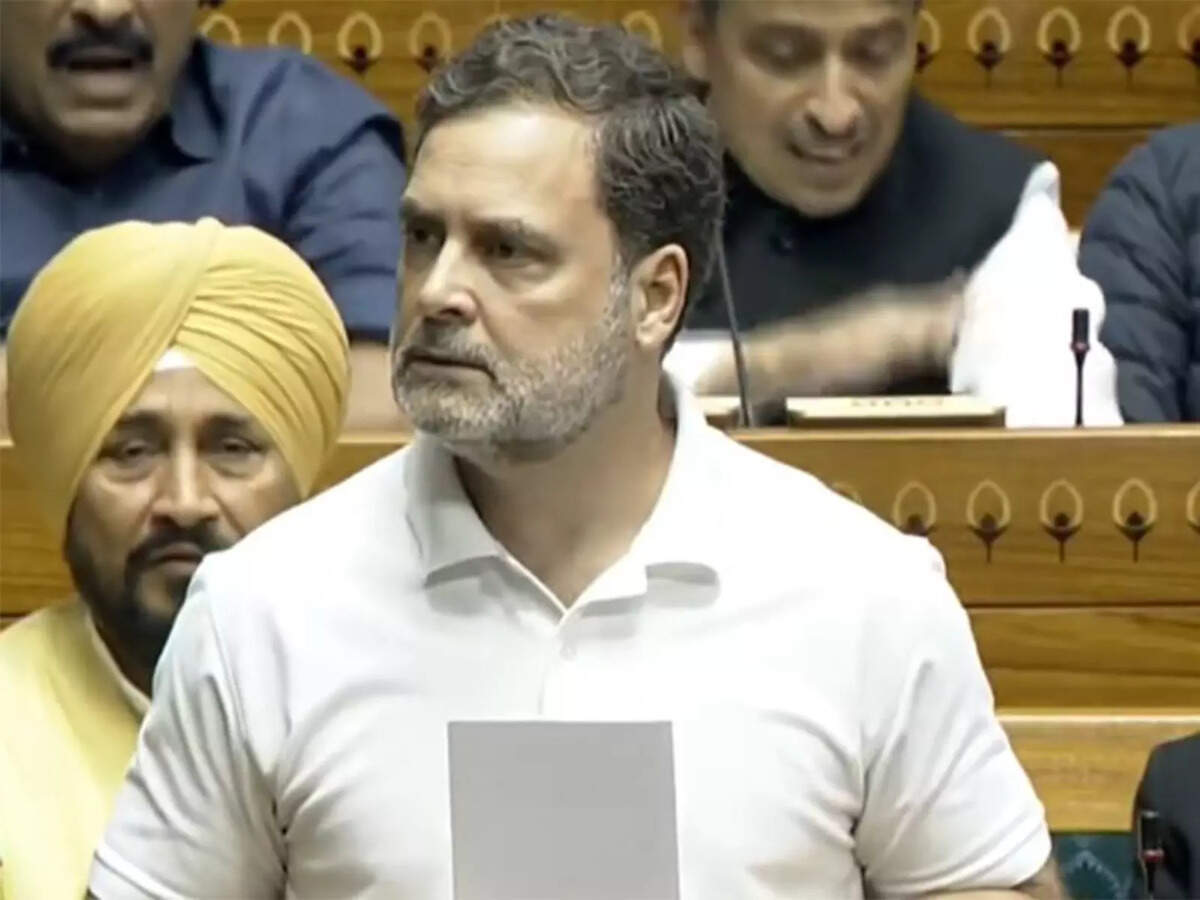
 By K Raveendran The unfolding political narrative around the Indo-US trade treaty has done more than spark debate on tariffs, market access and diplomatic alignment: it has reshaped the contours of India’s domestic political landscape, particularly by elevating Rahul Gandhi’s stature as the principal opposition leader. The Modi government has positioned the trade agreement as […]

 By Nitya Chakraborty The landslide win of the Bangladesh Nationalist Party (BNP) in the national elections in Bangladesh held on February 12 is a positive development in the geopolitics of not only South Asia, but also augurs well for the bilateral relationship between India and its eastern neighbour. BNP getting more than two-thirds of the […]
 By Nitya Chakraborty Prime Minister Narendra Modi and his ministers in the Government as also loyal experts are having a pathetic time in explaining the great benefits that the Indo-US Trade Deal are conferring to India, especially the agricultural sector which is one of the major focus area of the US President Donald Trump. Commerce […]


 https://vinfastauto.com/vn_en





