News related to
Democratic

Ubisoft employees have challenged company leadership about a possible funding partnership with Saudi Arabia tied to new downloadable content for Assassin’s Creed Mirage. Management insists it retains full creative control, but internal concerns focus on ethical and reputational risks. Workers from Ubisoft’s Social and Economic Committee posed questions after the announcement of a free expansion set in AlUla, historically significant as a UNESCO World Heritage site now […]

By D. Raja The coming to power of the BJP with an absolute majority in the 2014 general elections was not merely a routine transfer of power from one democratically elected government to another. It marked a qualitative shift in the very nature of our polity. The BJP is the political arm of the Rashtriya […]

A senior Tesla engineer has resigned, accusing Chief Executive Elon Musk of leading with what he describes as “seriously compromised” leadership. He claims the company’s mission and integrity are being undermined, citing concerns about dishonesty, manipulation of public discourse and support for climate change denial. Giorgio Balestrieri, who had spent eight years at Tesla and worked on the company’s European energy trading algorithms—specifically the Autobidder platform that […]

Kathmandu blocked access on 4 September 2025 to 26 social media and communication platforms, including Facebook, X and YouTube, after they failed to register with the Ministry of Communications and Information Technology by a government-imposed deadline. Users attempting to reach these services have found them inaccessible, while the digital move has prompted intensified debate about regulation versus censorship. The government’s action stems from a directive issued on […]

Conor McGregor has announced his intention to run for President of Ireland in the upcoming election, marking a dramatic shift from mixed martial arts to the political arena. The election is scheduled for 24 October 2025. The victory is deeply improbable, given Ireland’s strict constitutional requirements for candidacy and growing scepticism from political observers. McGregor’s campaign relies heavily on public support rather than political endorsements. On 4 […]

Canada is advancing its Arctic security and defence strategy by expanding collaborations with NATO’s newest members—Finland and Sweden. As the geopolitical landscape shifts, Ottawa is actively moving beyond traditional reliance on the United States to forge deeper military, industrial and technological ties with Nordic allies, reinforcing its sovereignty and resilience in the High North. The Honourable Anita Anand, Minister of Foreign Affairs, has formalised a Canada–Finland strategic […]

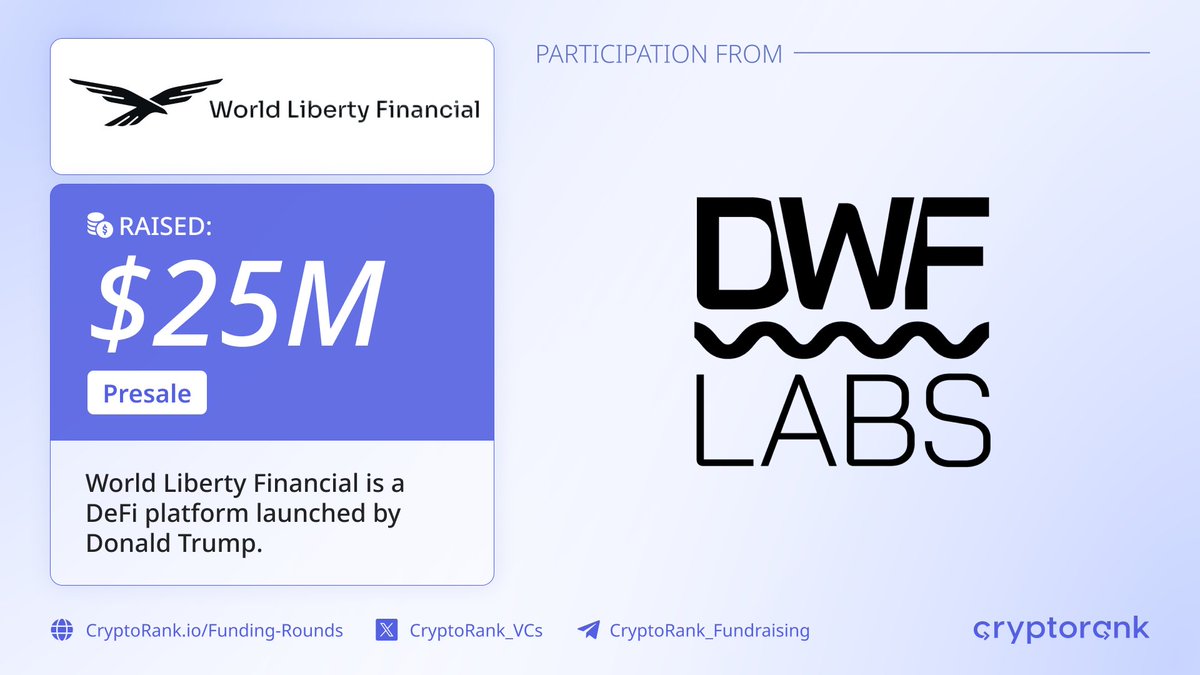
DWF Ventures, the investment arm of Web3 market‑maker DWF Labs, has delivered a detailed evaluation of $WLFI, World Liberty Financial’s newly issued utility token. Published via X, the analysis emphasises $WLFI’s integration into World Liberty’s broader ecosystem and its potential as a key enabler in connecting traditional finance with on‑chain liquidity. Unlike World Liberty’s $TRUMP memecoin, $WLFI is purpose‑built to power the upcoming “WLFI super app”, which will streamline access through web wallets and bank on‑ramps, and underpin planned lending and borrowing services.

The report highlights the success of the USD1 stablecoin—backed by short‑term US Treasuries and cash equivalents—which now commands a market capitalisation approaching $2.5 billion and enjoys listings on major exchanges such as Binance and Coinbase. These developments have significantly boosted investor attention toward the $WLFI token.

World Liberty has raised approximately $500 million across two funding rounds by selling about a quarter of its 100 billion token supply. Among its backers are DWF Labs itself and crypto figure Justin Sun, while ALT5 Sigma has outlined a $1.5 billion treasury strategy centred around $WLFI. DWF Ventures expects that the token could soon be integrated by several DeFi protocols, including Falcon Finance, Ethena and Mantle.

Importantly, DWF Ventures positions $WLFI’s launch as more than a token debut; it sees the initiative as a structural pivot that could catalyse institutional adoption and facilitate compliant capital onboarding—possibly even drawing interest from sovereign investors.

But $WLFI’s entry into the market has triggered concerns. Reports reveal technical difficulties involving the Lockbox contract, intended to unlock 20 percent of token allocations for early investors, which have left many users unable to activate the mechanism. Pre‑market trading responded with a 40 percent drop, raising doubts about launch readiness. Coupling these issues with the political profile of its founders, the token has become entangled in financial and reputational risks.

Indeed, WLFI’s connection to the family of the former president has cast a shadow over its market potential. The token’s political dimensions have already affected diplomatic engagements—such as withdrawals from the Bitcoin Asia 2025 conference—and prompted ethical criticism over conflicts of interest.

Broader scrutiny of World Liberty Financial underscores such tensions. Investigations have revealed that the Trump family commands a substantial share of revenue from token sales and that governance design reflects unusual centralisation for a DeFi project. Further concerns relate to self‑dealing practices: for instance, ALT5 Sigma—a firm acquired by World Liberty—purchased $750 million worth of WLFI tokens. As part of this arrangement, its leadership includes Eric Trump and WLFI co-founder Zach Witkoff, a structure that regulators and critics view as raising red flags.

Ethics experts warn that such close ties between ruling office, private enterprise and foreign investment could undermine democratic safeguards. The New Yorker, for one, described the venture as stretching the norms of political ethics, with World Liberty seen by some as a mechanism for influence through token‑based access channels.

The $WLFI launch is clearly more than a token generation event—it is shaping into a test case for the nexus of politics, finance and regulation in the emerging Web3 era.

Advertisements

President Samia Suluhu Hassan has secured her place on the presidential ballot for the general election slated for 29 October 2025, following approval from the Independent National Electoral Commission alongside her running mate, Emmanuel Nchimbi. At the same time, key opposition contenders—including Luhaga Mpina of ACT‑Wazalendo and the CHADEMA party—have been excluded, drawing sharp criticism from opposition groups and advocates for democratic integrity. Electoral authorities barred Luhaga […]

Tens of thousands have taken to the streets of Cote d’Ivoire in a massive show of defiance against President Alassane Ouattara’s push for a fourth consecutive term. The protests, which began in the nation’s largest cities, have sparked intense debates over the future of democracy in a country that has long been a political bellwether in West Africa. The protests erupted after Ouattara, 83, announced his decision […]

Elon Musk has reportedly suspended his ambitious plans to create a new political party, instead shifting his attention back to his array of business ventures. According to the Wall Street Journal, sources close to the billionaire entrepreneur have confirmed that Musk now intends to focus on his companies, including Tesla, SpaceX, and Twitter, which recently rebranded as X. The idea of a new political movement was first […]

Federal lawmakers are grappling with a surge of feedback following the Senate’s release of its discussion draft of the Responsible Financial Innovation Act, aimed at defining the regulatory framework for digital assets. With a compressed input window and wide-ranging submissions from banking associations, regulators and web3 groups, attention has quickly centred on stablecoin interest—an area of mounting concern.

Provisions introduced by the House’s CLARITY Act placed digital assets under Commodity Futures Trading Commission oversight, but the Senate’s RFI Act grants the Securities and Exchange Commission primary regulatory authority over so-called “ancillary assets” while still permitting CFTC consultation on specific rules. The RFI Act also empowers banks to engage in activities such as custody, lending, market-making and even operating blockchain nodes, alongside instructing the SEC to craft a new rule to determine what constitutes an investment contract, potentially supplanting the decades-old Howey Test.

While the SEC-centric approach aims to resolve ambiguity in digital asset regulation, banking groups are alarmed by what they describe as a critical loophole in the GENIUS Act—the stablecoin law recently enacted. Although the GENIUS Act forbade stablecoin issuers themselves from paying interest on token holdings, it does not explicitly block affiliated intermediaries from offering yield-like rewards. This is of particular relevance to Coinbase, which ends its joint issuance role in USDC but still enables clients to earn approximately 4.1 percent via “rewards” on their holdings.

Major banking associations, including the American Bankers Association and the Bank Policy Institute among others, have urged Congress to plug this gap. Their position is clear: yielding through affiliates risks siphoning deposits from traditional banks, potentially destabilising credit provision and triggering deposit outflows that could amount to trillions.

Coinbase disputes accusations of exploiting the loophole, characterising its model as a legitimate separation between issuers and intermediaries. Nonetheless, concerns endure that such practices undercut the intent of the GENIUS Act, which aimed to draw boundaries between stablecoin issuers and banking functions.

Meanwhile, the RFI Act has divided opinion in the Senate. Democratic senators, led by Senator Elizabeth Warren, warn that redefining digital assets as “ancillary” could erode critical investor protections and financial stability. They argue that the bill would weaken the SEC’s regulatory role and expose taxpayer-backed protections such as FDIC insurance to undue risk.

On the industry front, the GENIUS Act did usher in uniform rules for payment stablecoins, mandating full backing with low-risk assets, monthly reserve disclosures, and independent audits—including attestations from CEOs or CFOs. Yet critics caution that the law stops short of safeguarding against systemic threats or conflicts of interest, particularly noting exemptions that may benefit subsidiaries of large tech firms or powerful political figures.

Academic analysis underscores the broader implications: stablecoins are increasingly viewed as pivotal to a new era of banking, often referred to as “Banking 2.0,” given their potential to enhance global transaction speed, reduce fraud and integrate new financial mechanisms—yet they also carry real risks if regulatory gaps persist.

As the Senate culture shifts from discussion to legislation, the RFI Act’s comment deadline—set for 5 August—has crystallised the debate. The responses could shape whether a stablecoin interest ban via intermediaries is codified, and determine the future balance of power between the SEC and CFTC, between innovation and investor protection, and between crypto-enabled finance and the conventional banking system.

China has firmly defended the actions of one of its state-owned companies following a deadly mining disaster in Zambia, while indirectly rebuking the United States for its vocal criticism of the incident. The comments were made in response to mounting international scrutiny regarding the company’s handling of the situation and the safety measures at its operations. A deadly incident occurred at the mine in Zambia, operated by […]

Malian authorities have launched an extensive investigation into an alleged plot to destabilise the country, with the arrest of a French national and several high-ranking generals. The arrests come amidst mounting tension and accusations that foreign powers are attempting to undermine Mali’s stability. The government’s claims have drawn significant attention, as they allege involvement from foreign actors, raising concerns of escalating international interference in the country’s internal […]

Dr Divya Malhotra Across Europe, the United States, and even parts of Asia, Jewish communities and Israeli citizens are facing a wave of renewed hostility, not because of their religion, but because of Israeli government’s devastating actions in Gaza. What began as a war of self-defense following the October 2023 Hamas attacks has transformed into a prolonged humanitarian catastrophe. With over 50,000 Palestinians killed, Gaza is not […]

The European Union has revived a contentious proposal, “Chat Control,” which seeks to mandate the scanning of private communications on messaging platforms such as WhatsApp, Signal, and Telegram. The plan aims to detect and prevent the spread of child sexual abuse material, a move that has sparked intense debate regarding the balance between privacy rights and safeguarding vulnerable individuals. The proposal has drawn widespread opposition from privacy […]

By Mark Gruenberg NEW YORK—The Trump administration and its radical right foot-soldiers in the federal government and in the states are undertaking a comprehensive scheme to undermine future state and federal elections, in effect rigging the rolls to keep themselves in power no matter what the voters decide. So far, other than the report itself, […]

Hong Kong has escalated its pressure on pro-democracy activists based abroad by cancelling the passports of most of the 16 individuals it has accused of endangering national security. Alongside this, authorities have imposed a ban on any financial assistance reaching these individuals. This is the latest move in a series of stringent measures that aim to clamp down on critics of the Chinese government’s policies and protect what it considers its national security interests.

The activists, many of whom played significant roles in the 2019 protests against the Hong Kong government, have faced increasing challenges since Beijing’s imposition of a sweeping national security law in 2020. The law has been used to target opposition figures both inside Hong Kong and abroad, limiting free speech and expanding the scope of punishable acts under the law. These individuals have been accused of orchestrating protests, inciting unrest, and advocating for foreign intervention, charges which they and international human rights organisations have widely condemned as politically motivated.

Hong Kong’s decision to cancel passports and freeze financial channels for these exiled activists is being seen as a further attempt to suppress dissent outside its borders. The move targets individuals who had been offered bounties by the government for their arrest, as part of an ongoing effort to neutralise what it describes as threats to its sovereignty. As a result, the activists are now unable to return to Hong Kong or engage in overseas political activities openly, as their passports are deemed invalid under Hong Kong’s new restrictions.

The action is part of a broader strategy by Hong Kong authorities to deter any foreign support for their critics, both financial and moral. The decision to restrict access to funds is particularly notable, as it not only affects activists’ ability to mobilise resources for their causes but also impacts groups and individuals abroad who have supported the activists in the past. For many of the exiled activists, this move underscores the ongoing pressure they face, even when far from Hong Kong’s jurisdiction.

These measures have sparked concerns over the increasing reach of China’s policies, with many viewing the actions as an infringement on freedoms globally. Human rights groups and foreign governments have condemned Hong Kong’s national security law, arguing that it violates fundamental freedoms guaranteed under international law and erodes the autonomy promised to Hong Kong under the “one country, two systems” framework.

Hong Kong’s position is that these activists’ actions have undermined national stability and the rule of law, which the government claims it is constitutionally bound to protect. Authorities argue that those targeted have actively contributed to foreign interference in Hong Kong’s internal affairs, which they view as a direct challenge to their sovereignty.

The authorities have previously taken steps to limit the activities of exiled dissidents by pressuring foreign governments to either deport activists or bar them from entering their countries. With the new sanctions, including passport cancellations and the disruption of financial support, Hong Kong is signalling that it is willing to extend its crackdown beyond its borders, reinforcing its control over dissidents wherever they are located.

The move has raised alarm within the international community. Several countries, particularly those with a history of supporting Hong Kong’s pro-democracy movements, have voiced concerns about the long-term implications of such actions. These measures could further strain relations between Hong Kong, its international partners, and human rights organisations, which already condemn the erosion of democratic freedoms in the region.

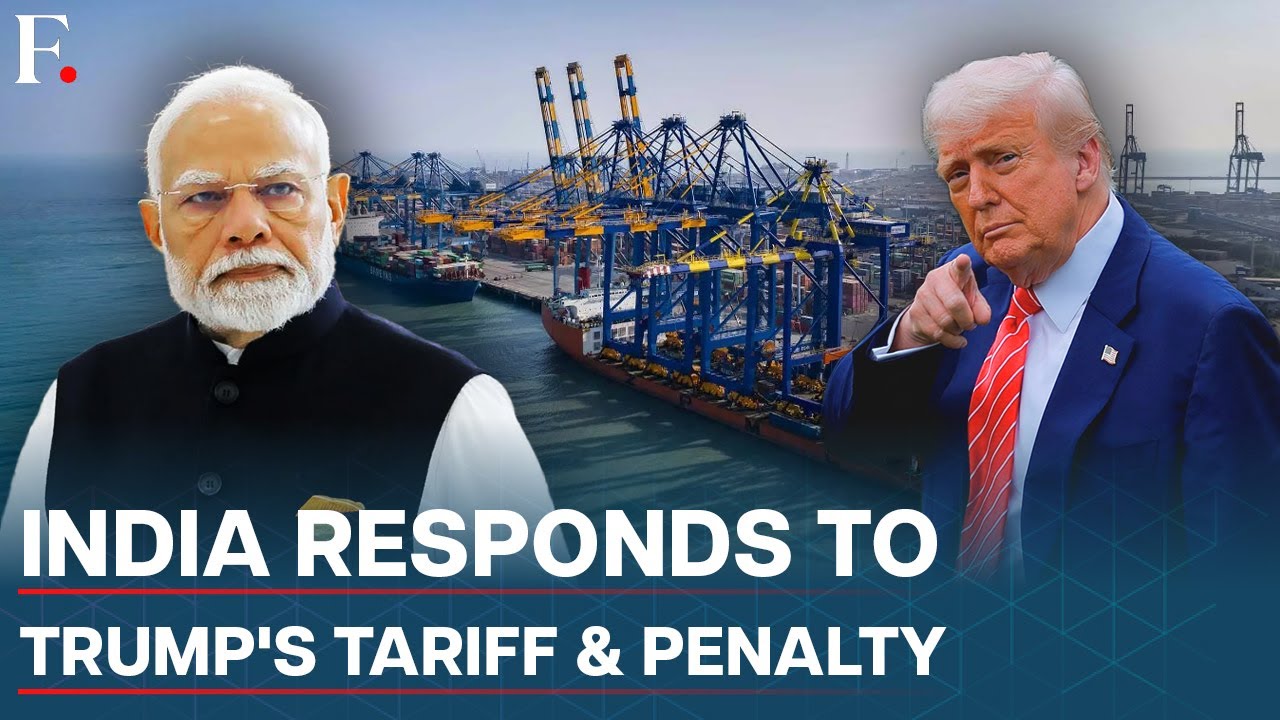
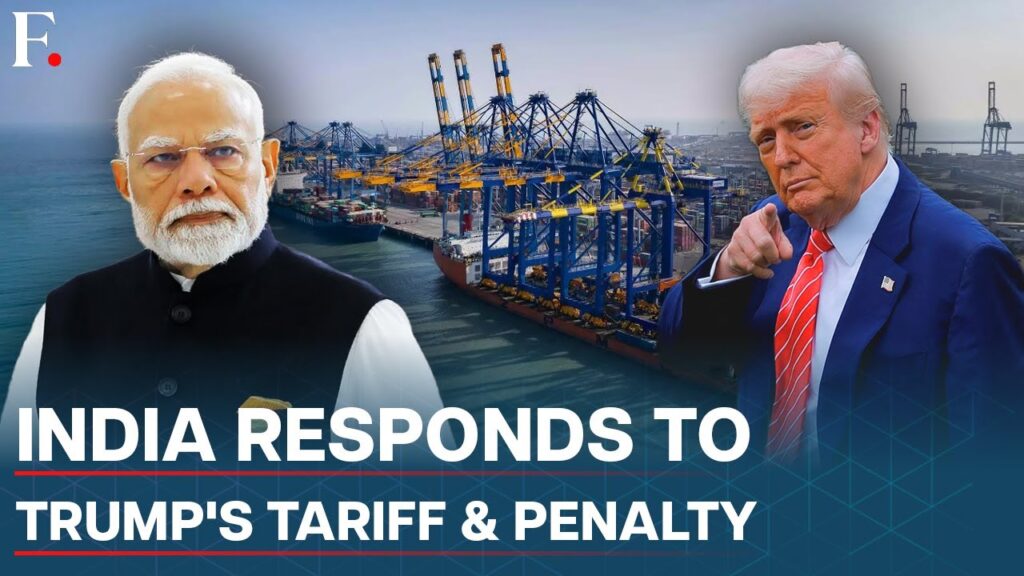
By Nantoo Banerjee US President Donald Trump is becoming increasingly unpredictable, if not crazy, with his freakish combination of styles to deal with countries and issues – from trade to diplomacy. The 25 percent import tariff on India since last Friday may not considerably hurt India’s export trade with the US, but it threatens to […]
By Nitya Chakraborty It is not a cliché to say that our powerful Prime Minister Narendra Modi’s moment truth has arrived after 11 years of ruling the country as the unchallenged leader. The 25 per cent tariff hike on Indian exports announced by the United States President Donald Trump on Wednesday and taking effect from […]

FBI Director Kash Patel has uncovered thousands of documents stored in burn bags within a previously undisclosed room at FBI headquarters. The materials, related to the 2016 Trump–Russia investigation and including a classified annex to the Durham report, are now undergoing declassification and have been submitted to the Senate Judiciary Committee Chair, Chuck Grassley. Patel asserts that the files were deliberately concealed by former FBI leadership and […]

By Manish Rai Recently, we saw large-scale violence targeting the Syrian Druze community in Sweida province in southern Syria. Druze are a small religious minority group in Syria and are around 3.20% of the total Syrian population. As per the Syrian Observatory for Human Rights (SOHR) Syrian interim President Ahmed al-Sharaa’s forces and allied militias have carried out massacres in Sweida, and approximately 600 members of the […]

By Nitya Chakraborty The Left wing section in the Democratic Party in the United States of America led by Senator Bernie Sanders is on upswing even though the party establishment seems clueless to deal effectively with the challenge thrown by the second term President Donald Trump to the very existence of its rival party. After […]
By Pinarayi Vijayan The life of Comrade VS Achuthanandan who passed away at the age of 101 on Monday is a remarkable chapter in the history of Kerala in general and the revolutionary movement here in particular. Comrade VS Achuthanandan was a symbol of a brilliant tradition of struggle, extraordinary determination and uncompromising fighting stance. […]

The U. S. House of Representatives has approved the GENIUS Act, the inaugural federal regulatory framework targeting fiat‑backed stablecoins, with a decisive 308–122 bipartisan vote on 17 July 2025. With Senate approval secured in June by a 68–30 margin, the legislation now advances to President Trump’s desk for signature, anticipated as early as tomorrow.

The GENIUS Act mandates that issuers—including banks, credit unions, fintech firms, and select non‑bank entities—maintain one‑to‑one reserves in cash or low‑risk assets such as U. S. Treasury bills, with mandatory monthly public disclosures of reserve composition. It also institutes anti‑money laundering controls, requires issuance organisations to obtain licences from federal or state financial regulators, and prohibits paying interest directly to stablecoin holders.

The legislation forms part of a broader “Crypto Week” effort in the House, which also included passage of the CLARITY Act—allocating oversight of digital asset classification between the SEC and CFTC—and the Anti‑CBDC Surveillance State Act, barring the Federal Reserve from issuing a central bank digital currency. Both now await Senate consideration.

Advocates argue that the GENIUS Act addresses long-standing regulatory uncertainty, providing market stability and consumer safeguards within a $260 billion-plus stablecoin ecosystem. Senior figures from institutions such as JPMorgan Chase, Bank of America, Citi, Walmart, and Amazon have reportedly expressed interest in issuing stablecoins under the new regime. Market sentiment reflects optimism: crypto‑linked equities and assets rose when the House vote was finalised, with Bitcoin nearing record highs above $119,000.

Nonetheless, critics highlight significant concerns. Consumer advocates emphasise that stablecoins remain outside FDIC protection and could pose redemption risks or obscure hidden fees. Others express unease over potential weak guardrails: the SEC’s Paul Atkins cautioned that regulatory innovation must still ensure sufficient market safeguards.

Ethics debates spotlight former President Trump’s extensive ties to the crypto industry, including investments in World Liberty Financial and a meme coin touted as generating over $300 million in related revenues. Opponents claim this raises conflict‑of‑interest questions and risks favouring Trump‑linked enterprises, though the White House has asserted asset segregation via a family trust.

In Congress, both Democratic and Republican proponents defended the legislation for delivering much‑needed structure. Democratic Rep. Josh Gottheimer remarked that introducing “some rules of the road” was preferable to having none. Opposing voices like Rep. Maxine Waters cautioned that the law might “signal tolerance for corruption” without closing presidential exemptions from conflict‑of‑interest prohibitions. Meanwhile, Senate Democrats, including Richard Blumenthal, criticised the bill’s failure to eliminate loopholes or demand stronger consumer protection standards.

Beyond federal oversight, the GENIUS Act introduces a layered supervisory model: federal agencies will regulate larger issuers and interstate entities, while state regulators handle smaller players—those issuing under $10 billion annually. The legislation sets out implementation timelines, including one‑year deadlines for rule‑making and an 18‑month effective date, with a three‑year transition period before enforcement on custody and transaction restrictions.

Industry stakeholders anticipate dramatic market growth. Scott Bessent, Treasury secretary, projected the stablecoin market could swell from around $195 billion to over $2 trillion following the GENIUS Act’s implementation. Christian Catalini of the MIT Cryptoeconomics Lab predicted fierce competition as banks and fintechs join traditional issuers with consumer trust bolstered by regulation.

The crypto sector, stung by past regulatory setbacks under the prior administration’s enforcement actions, now views the GENIUS Act as a turning point. Major players like Circle and Coinbase backed the measure after directing substantial lobbying resources toward lawmakers. Jennifer Nolan, head of the Blockchain Association, described it as a “defining moment in the evolution of U. S. digital asset policy”.

With presidential signature expected imminently, the GENIUS Act is poised to redefine the U. S. approach to stablecoins—ushering in regulated issuance, enhanced transparency, and heightened institutional involvement. Its progress also spotlights ongoing debates about market oversight, political influence, and financial stability in an increasingly digital economy.


VISHNU RAJA
RYO YAMADA
HITORI GOTOH
IKUYO KITA
Just in:
Lee Kum Kee Sauce-Sponsored 2026/27 Hong Kong Windsurfing Circuit – iQFOiL Championships Conclude Successfully // From Seoul to Wuzhen: Korean Celebrities and Creators Spark a Water Town Slow-Living Trend // Google patches actively exploited Chrome XML security flaw // FATF unveils measures to dismantle global scam networks // Public Protests Challenge Elected Power In Europe And India // Abu Dhabi unveils restored Porsche from royal motorcade // FinCEN identifies $8 billion in suspect overseas payments // Jailbroken AI agent targets European telecom infrastructure // Republicans Struggling To Come Out Of Nov 3 Debacle To Prepare For 2028 Prez Polls // Bank of England flags sharper AI share correction risks // LNG tanker exits through Hormuz reach wartime peak // Smart home choices widen as compatibility standards advance // Recognition under the U.S. Green Building Council’s rating system confirms the 22-residence tower is on track for full certification on completion // Trump’s Defeat In Midterm May Lead To Both Challenges And Opportunities For Indian Economy // NIA Highlights Three Exemplary Breakthroughs from National Innovation Awards, Driving Thailand Toward a Global ‘Innovation Nation’ // European refrigeration hacks expose Gulf retail security risks // Abu Dhabi court holds NMC executives liable for fraud // AutoSwift secures close to A$10 million from Singapore’s X Star Technology to scale AI WINGMAN // BJP leader condemns cyber attacks over Mammootty wedding visit // Japan’s Nikkei advances as buyers return after sell-off //