News related to
Dhabi

Dubai-based Dubizzle Group Holdings has unveiled plans to float about 30.34 % of its share capital via an initial public offering on the Dubai Financial Market. The offer comprises 1.25 billion ordinary shares, of which 196.1 million are fresh issues from the company and 1.05 billion are existing shares sold by current shareholders. Subscription will be open from 23 to 29 October, the price will be fixed on 30 October, and trading is expected to begin on 6 November 2025.

The firm has appointed Rothschild & Co. as Independent Financial Advisor and Emirates NBD Capital as Listing Advisor. The IPO will be co-managed by banks including Abu Dhabi Commercial Bank, Barclays, EFG-Hermes UAE, Emirates NBD, Goldman Sachs International, HSBC Middle East and Morgan Stanley. Dubizzle’s largest shareholder, Prosus N. V., is committing USD 100 million to the issuance, signaling continued backing after initially investing in 2011.

Dubizzle operates across two main platforms: dubizzle, which handles automotive and general classifieds, and Bayut, focused on real estate. In the 18 months leading up to the IPO, the group pursued strategic acquisitions such as Drive Arabia, Hatla2ee, and most recently Property Monitor, a UAE real estate data and analytics provider. The acquisition of Property Monitor, which delivered a revenue CAGR of 55 % from 2022 to 2024, is expected to deepen Dubizzle’s insight offering in its property vertical.

Financially, the group has improved its performance. In 2024, revenues reached USD 222 million, with the net loss narrowing. For the first half of 2025, revenue rose to USD 133 million, while adjusted profit stood at USD 14 million. The more constrained net loss of USD 8.9 million in H1 2025 marks further progress in reducing deficits.

Market conditions have played in Dubizzle’s favour. Dubai’s real estate market has surged, with prices climbing over 70 % over four years, boosting transaction activity and demand for online classifieds. Analysts view the Dubizzle IPO as one of the largest tech offerings this year in the UAE, designed to attract capital inflows into the growing digital marketplace sector.

Yet challenges lie ahead. Investor scrutiny of valuations and corporate transparency will intensify, and Dubizzle must show sustainable path to profitability beyond growth. Some analysts estimate the IPO value in the USD 500 million to USD 1 billion range, consistent with its fundraising and valuation aspirations. Liquidity and free float requirements—especially for inclusion in indices like MSCI—may pressure the group to deliver consistent operational metrics.

In preparing for the public listing, Dubizzle has restructured its syndicate. It previously engaged banks such as Emirates NBD, Goldman Sachs, HSBC, and now rotated in Morgan Stanley, replacing former links to Citigroup. The reconfiguration suggests an adaptive approach designed to secure stronger placement and institutional interest.

Dubizzle and many other UAE firms are benefiting from momentum in the IPO pipeline. According to regional capital markets observers, between 25 IPOs were recorded in the first half of 2025, generating about USD 4.5 billion. Brokers like Citi assert that the pipeline remains healthy, even amid macro and geopolitical headwinds, and highlight investor demand for exposure to unlisted technology, fintech, and real estate-adjacent sectors.
Abu Dhabi hosted the two-day Regional Sports Arbitration Seminar, drawing officials and experts from across Asia to strengthen the legal architecture in sport governance.

The event, organised by the UAE National Olympic Committee and the UAE Jiu-Jitsu Federation in coordination with the Olympic Council of Asia, featured sessions ranging from case management to institutional development in sports law.

One of the spotlight panels, led by the Court of Arbitration for Sport, addressed existential pressures on arbitration mechanisms under the title “Is Sports Arbitration Under Threat?” Participants from Qatar’s Sports Arbitration Foundation presented their evolving model, underscoring capacity building and procedural innovations.

Dr Mohammed bin Nasser Basem, chair of the Saudi Sports Arbitration Center, laid out his country’s journey in building regulatory frameworks, managing caseloads, and engaging media stakeholders. He urged the expansion of arbitration capacity at both continental and national levels. At the same time, Oman’s Salem Al Rawahi pointed to plans to set up an independent sports arbitration body in the Sultanate, and he commented that the diverse mix of Asian contributions enriched the exchange.

On the first day, Dr Abdullah Al-Hayyan of CAS guided attendees through foundational concepts of sports arbitration, and the Saudi experience was cited as a case study in governance and procedural practices. The seminar also explored cooperation between national courts, ministries of justice and sports arbitration bodies, a recurring theme as countries aim to enshrine arbitration decisions in enforceable legal frameworks.

The Olympic Council of Asia judged the programme a success, asserting that it deepened participants’ grasp of emerging trends in sports law and encouraged engagement among Asian legal and sport justice officials.

Across the two days, attendees weighed the tension between evolving global standards and region-specific contexts in structuring fair dispute resolution. Lessons from Qatar and Saudi Arabia were discussed as potential models adaptable to other national settings.

Abu Dhabi — EDGE entity FADA has completed a week-long “Space Roadshow” across six Emirati educational institutions, aiming to galvanise youth interest in space sciences and strengthen the UAE’s space ecosystem. The roadshow, conducted in collaboration with the UAE Space Agency and Space42, carried the theme “Living in Space” and comprised workshops, interactive sessions, and networking opportunities touching on Earth observation, satellite communications, CubeSat technologies and astronaut […]

Greenlogue/AP First Abu Dhabi Bank has launched its second blue bond, raising USD 20 million through a three-year issuance, to support marine conservation, wastewater recycling and renewable-powered desalination in Abu Dhabi and Al Ain. With this issuance, FAB’s cumulative blue bond volume reaches USD 70 million, following the bank’s inaugural blue bond in August. The funds are aligned with FAB’s 2023 Sustainable Finance Framework and governed by […]

Abu Dhabi’s government will lead a major showcase at GITEX Global 2025, unveiling a new era of AI-native public services under its Digital Strategy 2025–2027. The Department of Government Enablement will coordinate over 30 government and academic institutions in a pavilion displaying 55 flagship initiatives.

The event, held from 13 to 17 October at the Dubai World Trade Centre, will feature the launch of TAMM 4.0, positioning it as a flagship AI-driven government platform. Other key displays include AI Supervisor and Smart Investigator by the Abu Dhabi Police, Smart Hotel Check-In by the Department of Culture and Tourism, QMobility’s barrier-free parking pilot, the Personal AI Recruitment Companion, and Rayah, a student-parent tracking app from the Department of Education and Knowledge. The DGE expects many projects to be shown publicly for the first time, alongside immersive VR experiences aimed at portraying the impact of AI on diverse stakeholders.

Chairman of the DGE, Ahmed Tamim Hisham Al Kuttab, emphasised that public services are being designed around human needs, saying the “AI-Native by Design, Community-Driven by Purpose” approach drives a reimagined, intuitive government. DGE Director General Wesam Lootah added that over 100 high-impact AI solutions have already been deployed across the emirate, following assessments of nearly 400 options, moving toward the vision of being the world’s first fully AI-native government by 2027.

Abu Dhabi’s announcement underscores more than a display of technological ambition—it highlights strategic public sector transformation at scale. The emirate claims to have rolled out AI across more than 40 government entities, automating predictive service delivery, compliance analysis, and multilingual assistance. The upcoming pavilion will also showcase Sahatna, a health services initiative, and AI Majlis forums intended to foster public dialogue on ethical and inclusive AI adoption. Workforce transformation forms a core pillar: over 95 percent of Abu Dhabi’s 30,000 government employees have reportedly undergone extensive AI awareness and skills training, with AI leadership roles now embedded in all Abu Dhabi entities.

The Digital Strategy 2025–2027 backs this push with an investment of AED 13 billion dedicated to creating an AI-first government. Key transformation axes include lifecycle orchestration of public services, predictive governance, intelligent infrastructure, and a talent ecosystem to support long-term innovation. Abu Dhabi’s approach draws attention not only for local modernization but for its ambition to set a benchmark in government digital transformation globally.

GITEX Global 2025 is positioned as a pivotal stage for these ambitions. Now in its 45th edition, the event spans multiple intersecting tech domains—including AI, blockchain, sustainability, and digital infrastructure—and serves as a convergence point for technology, policy and innovation. Abu Dhabi’s participation marks its 14th consecutive presence, reinforcing continuity in its evolving digital narrative.

Abu Dhabi’s sovereign wealth fund ADQ has shown preliminary interest in acquiring a majority stake in SAC, the operator of Catania Airport in Sicily, sources said, as investor focus intensifies on Italy’s regional infrastructure.

The sale process is not yet formally launched; however, ENAC is evaluating a draft tender expected to receive approval by late October to set the transaction in motion. Under the plan, between 51 % and 66 % of SAC would be sold. The asset is valued at between €500 million and €600 million, underpinned by projected core earnings in excess of €30 million.

SAC, controlled by local authorities and chambers of commerce, manages both Catania–Fontanarossa—Italy’s fifth busiest airport by traffic—and Comiso Airport in southern Sicily. The operating concession runs through 2049. The Sicilian airport served over 12.3 million passengers in 2024.

Privatisation of Sicily’s airports has been under discussion since 2022, when SAC appointed Mediobanca to advise on structuring the deal. Local shareholders have recently approved calls for an international tender and adopted updated industrial plans to attract private capital, while pledging to retain a qualified minority stake.

Antonino Belcuore, special commissioner of the Chamber of Commerce of South and East Sicily, welcomed ADQ’s interest, stating that it underscores the strategic importance of the asset and aligns with the broader push for privatisation in Sicily. ADQ declined to comment; SAC and ENAC have not issued responses.

ADQ currently holds investments spanning transport and logistics, including interests in Abu Dhabi Airports and Etihad Airways, and manages a portfolio worth approximately US$251 billion. Analysts say its appearance among suitors signals growing appetite from Gulf-based capital for stable, long-term infrastructure assets in Europe.

Observers flag that the EU and Italy are increasingly receptive to foreign capital inflows into infrastructure, particularly where public budgets remain constrained. The potential deal dovetails with Prime Minister Giorgia Meloni’s agenda to deepen ties with Gulf states, exemplified by agreements under which the UAE committed to invest US$40 billion across strategic sectors in Italy.

Should ADQ or another bidder proceed to formal offers, the Catania sale could set benchmarks for airport privatisations in southern Europe. Authorities will need to balance investor returns with preserving public oversight, territorial interests, and aviation safety standards.

Local stakeholders—including regional governments and municipalities—are expected to negotiate protections within the concession framework to safeguard continuity of services, employment, and regional development. Meanwhile, potential bidders are assessing traffic trends, inflation, regulatory risk, and concession duration as they size their offers.

The sale of SAC would open a new chapter in Italy’s ongoing wave of airport privatisations, which has involved assets in the UK and across European markets. That backdrop provides precedent and comparators for valuation, regulatory design, and deal structures.

Abu Dhabi Airports, Al Hail Holding and technology partner Xare have signed a memorandum of understanding to pilot a regulated digital wallet for inbound visitors at Zayed International Airport, aiming to streamline payments and reinforce the UAE’s digital economy ambitions.

The three parties will also collaborate on smart mobility and sustainable infrastructure projects that integrate AI-driven transport systems and next-generation payment platforms. Abu Dhabi Airports will supply operational support and infrastructure, while Al Hail Holding, via its affiliates including Zand Bank and Index Exchange, will provide regulatory and financial structuring. Xare is tasked with the technological integration of wallet, merchant and partner interfaces.

Elena Sorlini, Managing Director and CEO of Abu Dhabi Airports, described the initiative as a shift in role for airports: “Airports are evolving from gateways into platforms for seamless digital commerce. Through our partnership … we will pilot cashless, next-generation payment technologies that simplify every step of the traveller journey and redefine convenience, sustainability and financial access.”

Hamad Jassim Al Darwish, CEO of Al Hail Holding, emphasised the alignment with UAE policy goals: “By combining our expertise in governance, regulatory engagement and financial services with Abu Dhabi Airports’ operational capabilities, we will deliver solutions that benefit travellers and contribute to national economic growth.”

Xare’s co-founder Milind Singh noted that the firm’s existing stack—covering instant onboarding, programmable payments and merchant connectivity—positions it to deliver monetisation options and novel traveller experiences across airports and city ecosystems.

Within the MoU, a joint steering committee will guide development and execution. Abu Dhabi Airports will integrate the wallet systems into its broader ecosystem, Al Hail Holding will coordinate with regulators and manage financial arrangements, and Xare will build the interface connecting travellers, merchants and payment rails.

The digital wallet aims to offer travellers a secure, cashless method to pay for airport services and possibly retail, while also exploring stablecoin or digital-asset payments as part of the architecture.

Beyond payments, the partnership targets smart mobility upgrades across airport operations. Anticipated efforts include AI-enabled systems, intelligent transport technologies and infrastructure enhancements to increase efficiency, safety and environmental performance across Abu Dhabi’s airport network.

The project aligns with the UAE’s Digital Economy Strategy and Abu Dhabi Economic Vision 2030, which prioritise adoption of advanced fintech, digital assets and sustainable infrastructure across sectors.

Advertisements

Having a baby is a joyful journey, but it comes with real medical costs. Maternity insurance helps cover these expenses — from prenatal checkups to delivery and newborn care. In cities like Dubai and Abu Dhabi, maternity benefits are often part of your health insurance, but the details matter. After all, not all plans offer the same level of coverage. The fine print can also make a […]

Arabian Post Staff -Dubai Nirvana Travel & Tourism has entered into a partnership with Liwa University in Abu Dhabi, marking a significant step in the expansion of educational opportunities. The Memorandum of Understanding, signed between the two entities, is aimed at fostering collaboration that will strengthen the local community’s access to high-quality education, bridging gaps in the tourism and educational sectors. The agreement outlines a shared commitment […]

The U. S. Department of Commerce has granted export licences for several billion dollars’ worth of Nvidia chips destined for the United Arab Emirates under a bilateral AI agreement struck in May, paving the way for a high-stakes test of America’s artificial intelligence diplomacy. The licences were issued through the Commerce Department’s Bureau of Industry and Security, marking the first concrete implementation of the Trump-era pact with […]

Abu Dhabi National Oil Company announced that its six publicly traded subsidiaries will distribute AED 158 billion in dividends through to 2030, nearly doubling the AED 86 billion cumulative payout since the first listing in 2017.

The announcement came during ADNOC’s inaugural Investor Majlis in Abu Dhabi, where the group underscored its commitment to shareholder returns and transparent governance. The dividend programme is subject to customary approvals and will provide long-term visibility to investors across its diversified portfolio of listed entities.

ADNOC’s six listed companies currently account for more than AED 550 billion in market capitalisation on the Abu Dhabi Securities Exchange and represent nearly 40 percent of the annual dividends distributed on the market. Under the new plan, three additional entities—ADNOC Distribution, ADNOC Gas, and ADNOC Logistics & Services—will join ADNOC Drilling in issuing quarterly dividends.

Dr Sultan Ahmed Al Jaber, ADNOC’s Managing Director and CEO, also serving as UAE Minister of Industry and Advanced Technology, described the dividend target as a “landmark step” adding clarity to the group’s capital return path. He stated the move would “enhance value” for citizens, residents, and partners, and reaffirmed ADNOC’s focus on cost discipline, efficiency and growth.

Each listed unit announced specific dividend floors and policy reforms. ADNOC Drilling set a cumulative floor of AED 25 billion by 2030, representing a 26 percent minimum return over the period. ADNOC Gas pledged a target of AED 90 billion, with dividends moving to a quarterly basis from 2025 onward. ADNOC Logistics & Services raised its guidance to AED 8.1 billion for 2025–2030 and intends to adopt quarterly distributions from the third quarter of 2025.

Other units will also tighten their dividend structures. ADNOC Distribution expanded its dividend policy through 2030 and targets cumulative returns exceeding 30 percent over the 2025–2030 period. Borouge affirmed a dividend floor for 2025 and envisaged a payout ratio of 90 percent of net profit in future years. Fertiglobe flagged interim dividend payments and share buybacks for 2025 to support yield.

Beyond dividends, ADNOC disclosed key developments across its upstream, LNG and petrochemical segments. ADNOC Gas has secured a long-term feedstock agreement worth AED 147 billion with its Ruwais LNG facility. Over 80 percent of project capacity is under contract. The group also reported that the merger of its petrochemical assets with OMV—that is, combining Borouge and Borealis into Borouge Group International —remains on course for completion in Q1 2026. Financing for the transaction, valued at AED 56.6 billion, is in place and synergies of at least AED 1.8 billion annually have been identified.

Earlier this year, ADNOC transferred its stakes in several listed subsidiaries—namely Distribution, Drilling, Gas and Logistics & Services—to its wholly owned investment arm, XRG, via off-market moves. The transfers, completed or pending regulatory clearance, were explicitly stated not to affect operations, leadership or dividend policies. Control remains with ADNOC via its 100 percent ownership of XRG.

Analysts view the dividend pledge as a strategic signal in a more competitive capital-raising environment. It strengthens the case for long-term investor confidence, especially amid global volatility in energy markets and shifting sector dynamics. Some warn, however, that such large commitments require careful balance with capital expenditure demands, especially for exploration, decarbonisation and upstream expansion to meet rising regional energy and gas demand.

Abu Dhabi’s Department of Health will present a portfolio of artificial intelligence–based healthcare solutions at the upcoming GITEX Global 2025 event in Dubai. The showcase is intended to reinforce the emirate’s ambitions to lead in digital health transformation and embed AI into clinical and public health systems.

DoH plans to display tools ranging from predictive diagnostics to personalised wellness platforms, emphasising preventive care and data-driven interventions. H. E. Dr Noura Khamis Al Ghaithi, Undersecretary of DoH, stated that leveraging AI is central to “reshaping how care is delivered” and enabling people to “live healthier, longer lives.”

The Abu Dhabi delegation will also highlight the emirate’s efforts to integrate AI across healthcare infrastructure, including hospital systems and community services. As part of the pitch, DoH intends to advance models that predict health risks, flag early disease onset, and streamline patient journeys from diagnosis to treatment.

The timing of this unveiling aligns with Abu Dhabi’s broader push into AI research and high-tech partnerships. In September 2025, Nvidia and Abu Dhabi’s Technology Innovation Institute launched a joint lab focusing on robotics and advanced AI models, including deployment of Nvidia’s “Thor” chip for robotic applications. That initiative is part of the UAE’s wider effort to become a global AI player.

At GITEX Global—a technology exhibition scheduled from 13 to 17 October at the Dubai World Trade Centre—the DigiHealth & Biotech track is expected to draw startups, tech firms and health ministries showcasing innovations across genomics, diagnostics, telemedicine and biotech. The exhibition emphasises frontier domains: physical AI, quantum computing, semiconductors and data-centre infrastructure.

Abu Dhabi is also seeking to signal that its AI investments are more than pilot projects. Through collaborations with private technology firms, academic institutions and regional health authorities, DoH aims to build a scalable, interoperable health data ecosystem. Under its strategy, AI modules would be deployed not just in tertiary hospitals, but in primary care, clinics, remote monitoring and wellness programmes.

Critics point to challenges ahead, including data privacy, algorithmic bias, regulatory oversight and integration with legacy systems. Effective AI deployment in health requires robust patient consent frameworks, transparent models and continuous validation across diverse populations. Observers note that many AI health systems falter when scaled beyond controlled environments.

Dubai Investments has revealed that its wholly owned subsidiary, Emirates Float Glass, will expand its float-glass manufacturing capacity by launching a second production line that will raise output from 600 tonnes per day to 1,200 tonnes. The upgrade is slated to introduce Ultra Clear low-iron glass—marketed as a first in the MENA region—with advanced automation and energy-efficient systems, and is scheduled for commissioning between late 2027 and early 2028.

Under the plan, the second line will incorporate next-generation process control technology to ensure consistent product quality while curbing energy consumption and lowering the environmental footprint. Dubai Investments emphasises that this aligns with its broader industrial growth strategy and the UAE’s ambitions in high-value manufacturing.

Abdulaziz Bin Yakub Al Serkal, CEO of Dubai Investments’ Industrial Platform, described the move as crucial for strengthening regional competitiveness. He said the introduction of Ultra Clear glass will allow EFG to penetrate premium markets, give clarity advantages over conventional float glass, and support growing demand from architectural, infrastructure and design sectors. The project involves a collaboration with Germany’s HORN Glass Industries, which will supply glass-melting furnaces and associated systems, while local civil-works contractors and international project teams will oversee implementation.

EFG currently operates out of its float plant in the Industrial City of Abu Dhabi, where its capacity now stands at 600 tonnes per day. The expansion marks the second phase of investment in the plant. Dubai Investments’ announcement underlines its commitment to scaling up industrial assets and achieving technological differentiation in its manufacturing portfolio.

The expanded capacity is seen as a response to rising demand across the Gulf and broader regional markets, where premium architectural glass is gaining traction, driven by growth in high-rise construction, sustainability mandates and demand for energy-efficient façades. Analysts note that the move helps EFG hedge against rising competition from international glass producers by offering higher-clarity, value-added products.

Wizz Air Hungary is reopening bookings for flights from Abu Dhabi to several European destinations, with services beginning in October and November 2025. Flight schedules show routes from Katowice and Krakow in Poland launching on 10 October. The carrier plans to resume Larnaca services from 15 November, operating four times weekly on Tuesdays, Thursdays, Saturdays and Sundays, and Sofia flights from 17 November on Mondays, Wednesdays and […]

Arabian Post Staff -Dubai Abu Dhabi-based PureHealth Holding has finalised the acquisition of a 60 percent stake in Hellenic Healthcare Group, valued at €800 million, in a move that places HHG’s full equity valuation at around €1.3 billion. This deal represents a major step in PureHealth’s plan to build a globally connected, innovation-driven healthcare platform from its base in the UAE. PureHealth will acquire its majority stake […]

Dubai Aerospace Enterprise has enlisted a consortium of international and regional banks to host a series of fixed income investor calls beginning 6 October 2025, with the aim of gauging demand for a potential benchmark 5-year senior unsecured US dollar sukuk issuance. The mandate positions Emirates NBD Capital, First Abu Dhabi Bank, Goldman Sachs International and HSBC as active bookrunners, while Abu Dhabi Commercial Bank, Ajman Bank, […]

Sammaan Capital will sharply expand its affordable housing lending operations after Abu Dhabi’s International Holding Company invested $1 billion for a controlling stake, the non-banking lender’s CEO, Gagan Banga, told Reuters. The infusion is expected to accelerate the drive toward an assets-under-management goal of ₹1 trillion by fiscal 2027. To underpin its expansion, Sammaan plans to launch about ten new branches monthly, concentrating on tier-4 and tier-5 […]

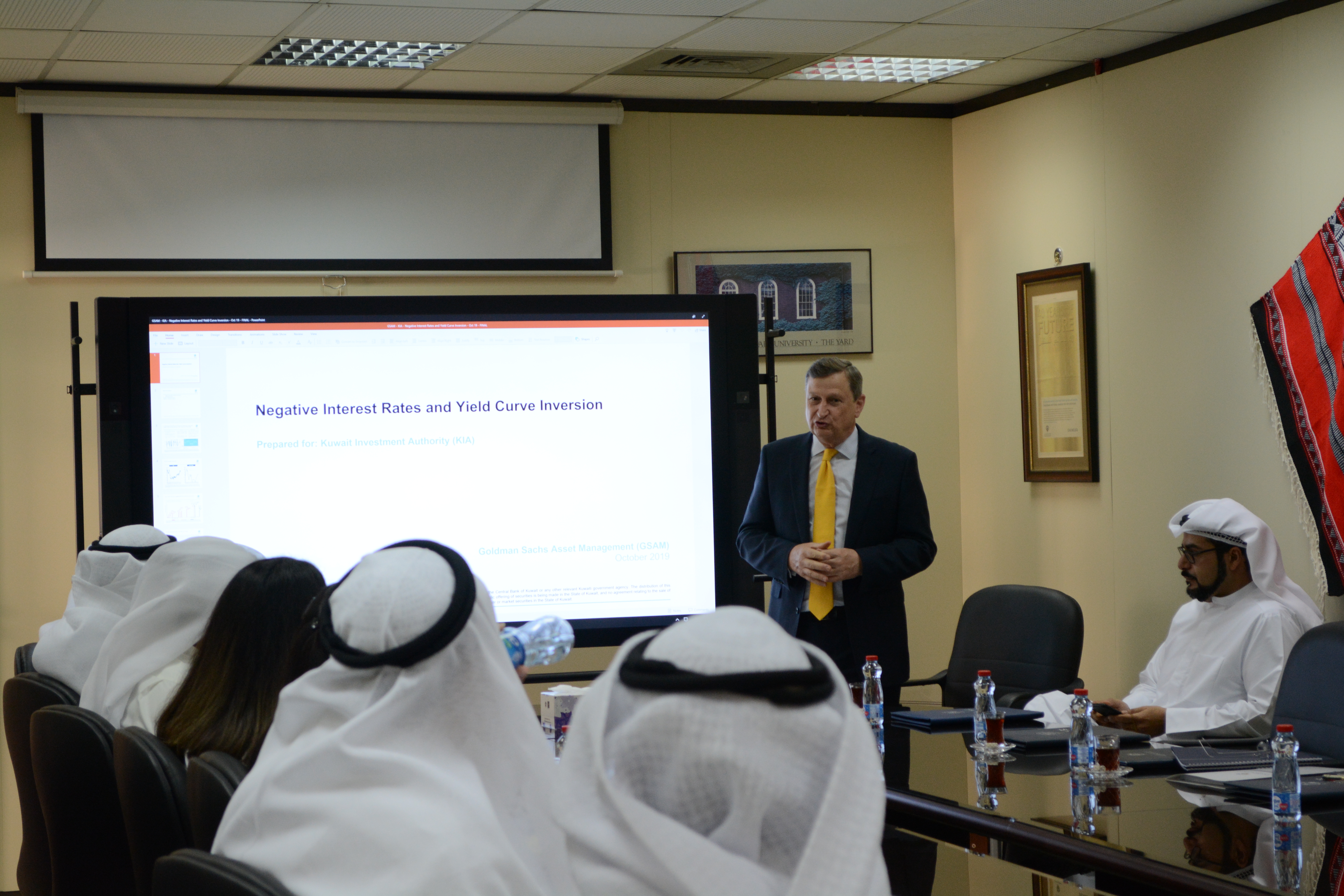
Goldman Sachs has launched a new office in Kuwait, asserting a significant push to enhance its reach across the Middle East and deepen its ties with Gulf-region clients under fresh leadership.

The New York-based investment bank said its role over five decades in Kuwait spans investment banking, capital markets and asset management. As part of its latest expansion, Goldman has tapped Mohammad Almatrouk as managing director of the Kuwait office, pending regulatory green light, while Fahad Alebrahim has been appointed managing director of the firm’s private wealth business in Kuwait.

David Solomon, Goldman Sachs’s Chairman and Chief Executive, framed the move as a commitment to “grow our capabilities across the Middle East and better serve our clients,” emphasising Kuwait’s economic vision as a catalyst for the firm’s expansion.

Goldman Sachs points to a long-standing capacity-building partnership in Kuwait that includes a professional training scheme designed to nurture talent at institutions such as the Kuwait Investment Authority, the Public Institution for Social Security and the Kuwait Fund. That programme, the bank says, will continue to play a central role in integrating local human capital into its global operations.

The choice of Kuwait underscores a growing focus on the Gulf’s institutional capital. Kuwait, host to one of the world’s largest sovereign wealth funds, has attracted global financial firms looking to align with its diversification and investment ambitions. Goldman Sachs’s decision follows earlier regional expansions, such as establishing a presence in Abu Dhabi and securing a banking licence in Saudi Arabia.

Kuwait’s Director General of the Direct Investment Promotion Authority, Sheikh Dr. Meshaal Jaber Al-Ahmad Al-Sabah, praised the move as aligned with Kuwait’s economic diversification and global integration goals. He stressed that opening the office supports national priorities including talent development and sustainable growth.

Regional analysts view Goldman’s Kuwait office as part of a broader recalibration by global banks to embed themselves closer to Gulf capital sources. Over the past two years, deal activity in sovereign and quasi-sovereign asset structures has exploded, prompting major firms including Lazard, JPMorgan and Deutsche Bank to expand in the Gulf with new leadership hires.

Inside Goldman Sachs, the timeline coincides with a leadership transition: the firm’s co-head for the Middle East and North Africa, Fadi Abuali, is slated to retire after nearly 28 years of service. His departure is expected to reshape the firm’s regional hierarchy just as Kuwait becomes a new hub.

Some observers caution the move carries execution challenges. Regulatory approvals in Kuwait must be secured, and Goldman must integrate the new office into its broader Gulf operations without duplicating functions. Success will depend on maintaining local relationships while delivering global platform advantages.

A major cross-border deal is underway as Abu Dhabi’s International Holding Company will invest about ₹8,850 crore to acquire a 43.5 per cent stake in Sammaan Capital, formerly Indiabulls Housing, making IHC the company’s key promoter and granting it control over board appointments. Sammaan Capital, a publicly listed non-bank financial company specialising in mortgage lending, will issue 330 million equity shares and 306.7 million convertible warrants to […]

Hub71, Abu Dhabi’s global technology ecosystem, has inked its first partnership in the US with the New Jersey Economic Development Authority, opening pathways for startups to scale across continents. The memorandum of understanding was signed at the Abu Dhabi Investment Forum in New York, signalling the start of reciprocal support between the two innovation hubs. The agreement enables joint programming, market visits and curated introductions to investors, […]

Abu Dhabi’s economy expanded 3.8 percent in the second quarter of 2025, with non-oil activity growing by 6.6 percent and, for the first time in a second quarter, making up 56.8 percent of total GDP, according to figures released by the Statistics Centre – Abu Dhabi. The emirate’s real gross domestic product reached AED 306.3 billion in Q2, rising from the corresponding period in 2024. The non-oil […]

World Liberty Financial, the crypto venture tied to Donald Trump’s family, has announced it will issue a debit card enabling users to spend digital assets as conventional currency, with a pilot slated next quarter and full deployment targeted by late 2025 or early 2026.

At Singapore’s TOKEN2049 conference, CEO Zach Witkoff stated that the underlying aim is to “bridge crypto assets with everyday spending,” forecasting that the card could go live in the fourth quarter or first quarter of 2026. Co-founder Donald Trump Jr. joined the presentation, underscoring the project’s ambition to integrate cryptocurrency more deeply into consumer payments.

Beyond payments, World Liberty is advancing a plan to tokenise real-world commodities, aiming to use blockchain infrastructure to trade assets like oil, gas, timber and cotton. Witkoff described these as “really interesting” domains for on-chain trading, pointing to what the company sees as excess transactional inefficiency in traditional markets. The firm also launched its governance token, WLFI, earlier this month, and has introduced USD1, a dollar-pegged stablecoin backed by U. S. Treasuries and other cash equivalents to cut dependency on conventional banking rails.

World Liberty has secured a high-profile institutional backer: the UAE-based Aqua 1 Foundation invested USD 100 million in WLFI tokens, becoming the venture’s largest public investor. The strategic pact aims to fuel World Liberty’s expansion in South America, Europe and Asia, and to jointly incubate blockchain initiatives.

The governance token WLFI currently is non-transferable, granting holders voting rights rather than direct tradeability; World Liberty has said it is “working behind the scenes” to make WLFI transferable in the future. A large portion of WLFI’s supply remains held by the Trump family and affiliated entities.

The stablecoin USD1 gained traction after a major crypto exchange deal: World Liberty was among the early adopters when the funds backed by an Abu Dhabi entity were routed through USD1 to a major crypto platform, helping to elevate USD1’s market position in the stablecoin ecosystem.

Regulatory and ethical concerns already shadow the venture. Critics argue the project blurs lines between private enterprise and public office, noting that much of the Trump family’s wealth could become entangled with policy outcomes. Donald Trump Jr. has dismissed conflict-of-interest allegations as “complete nonsense,” but scrutiny over the convergence of politics and crypto is intensifying.

WLFI has exhibited wide volatility since launch, riding speculative momentum across global exchanges. Meanwhile, competing crypto card offerings already exist, with established fintechs and digital-asset platforms offering crypto-linked cards in partnership with Visa and Mastercard. Witkoff contends World Liberty’s version will differentiate through tighter integration with its stablecoin and tokenisation strategy.

Global investment firm KKR has acquired a minority stake in ADNOC Gas Pipeline Assets LLC, reinforcing its commitment to Middle East energy infrastructure. ADNOC retains full operational control and ownership of the pipelines. KKR’s move builds on longstanding ties with Abu Dhabi’s national energy group. In 2019, KKR and BlackRock acquired a portion of ADNOC’s oil pipeline business in a landmark deal; that investment was later sold […]

The Middle East and North Africa are experiencing a wave of sovereign bond issuance as governments tap global debt markets to meet financing needs, even though oil prices have held in the mid-$60s per barrel and credit spreads remain compressed. Kuwait re-entered the international capital markets after an eight-year hiatus, successfully issuing $11.25 billion in three, five and ten-year bonds at spreads of 0.40 to 0.50 percentage […]

VISHNU RAJA
RYO YAMADA
HITORI GOTOH
IKUYO KITA