Just in:
Technology shares plunge as Nasdaq enters correction // Private varsities bill all set to face the axe // Oil and chip shares retreat after Democratic victories // Dubai details five-year visa benefits for returning visitors // Geely’s i-HEV Intelligent Hybrid Technology Offers a New Direction for Gasoline-Powered Vehicles // Oil advances towards $100 as tanker attacks persist // e-Crime Bureau Signs Cybersecurity Partnership With Smart Africa, Reinforcing Its Global Expansion // After Reaching 7 Million Users in the Philippines, Skyro Launches Transparent Cash Loans in Malaysia // Geely’s i-HEV Intelligent Hybrid Technology Offers a New Direction Vision for Gasoline-Powered Vehicles // UK air traffic outage inflicted £33m financial losses // Millions Of Indians May Soon Be Deprived Of Government Assistance // TVM –Mangaluru Vande Bharat claims top spot // Miss Universe Hong Kong Jen Zhou Departs for Puerto Rico to Compete in the 75th Miss Universe World Final // Ousted top Kochi cop gets IG post // Dubai boat show confirms international shipyard line-up for November // Asia Left Behind: Ten international companies have yet to report delivering on their cage-free egg pledges across the region // OpenAI identifies 948 Linux privilege escalation flaws using AI // Beyond the exhibition floor: How robots, AI and networks are moving into the real world // Trump’s Iran War Has A Share Of Contribution To His Midterm Debacle // Kochi police detain two actors over bid to honey trap doctor //

News related to
Dhabi

The United Arab Emirates has established itself as a leading hub for innovation and the deployment of advanced technology in the energy sector, according to George Bou Mitri, President of Honeywell for the Middle East, Türkiye and Central Asia. Speaking at the sidelines of the Abu Dhabi International Petroleum Exhibition & Conference 2025, he highlighted how the country’s digital transformation initiatives are serving as a global model for sustainable, technology-driven energy systems.

Bou Mitri said the UAE presents a distinctive example of openness, collaboration and synergy between public and private sectors in driving innovations that are making a tangible global impact in the energy industry. “The solutions created here in the UAE extend their influence far beyond its borders,” he commented. He noted that the country is actively integrating advanced technologies across its energy ecosystem, including expanding the use of LNG, hydrogen, solar and developing sustainable aviation fuel and bio-fuel as part of its emissions-reduction drive.

Honeywell is playing a significant role in this transformation. Bou Mitri pointed to the company’s participation in a landmark project with Abu Dhabi National Oil Company for the Ruwais LNG facility, expected to produce about 9.6 million tonnes annually. He also revealed that Honeywell is developing the region’s first fully autonomous control room powered by agent-based artificial intelligence in partnership with Borouge, aimed at managing petrochemical operations without direct human intervention.

Bou Mitri stressed that digital transformation forms the backbone of the sector’s future. He noted that global energy demand is projected to increase by 32 percent by 2050, while electricity demand is expected to grow by more than 75 percent in the same period, necessitating comprehensive tech solutions to balance growth with emission reduction and operational efficiency. He added that the UAE is clearly adopting that approach, emphasising that the country’s facilities are becoming important development grounds for technologies related to emissions management, artificial intelligence applications and workforce productivity improvements through digitalisation.

The autonomous control-room initiative with Borouge stands out as a practical demonstration of this strategy. According to Borouge, the project will deliver the petrochemical industry’s first AI-driven control room at its UAE plant operations and forms part of its “AIDT” programme with a targeted value generation of US$575 million. The collaboration is intended to optimise production, reduce energy use and enhance safety while lowering costs at what is set to be the world’s largest petrochemical site.

The UAE’s positioning as an innovation frontier for energy technologies comes at a time when the industry is under growing pressure to adapt. Emerging themes include the convergence of artificial intelligence, digital twins, autonomous operations, and clean-energy integration. The broader Middle East region is witnessing major energy investment momentum, with expectations of exceeding US$130 billion this year in oil and gas alone, and simultaneous major expansion in clean-energy investments including hydrogen, LNG and carbon capture projects.

For Honeywell, the UAE’s energy ecosystem is a fertile environment for deploying its digital and automation technologies, but challenges remain. Among these are workforce skills deficits — Bou Mitri pointed out that more than 50 percent of the global energy workforce is aged over 45 — and the need to transfer accumulated expertise to a younger generation. In a sector where downtime, operational safety and emissions control have high stakes, the technology must deliver in real-world conditions, not just in controlled test environments.

Critics might point to the scale of investment required, potential cybersecurity and data governance risks as operations become more connected and autonomous, and the difficulty of scaling pilot programmes into full-scale operations across multiple sites. Nonetheless, the UAE’s strategic posture — combining government backing, private-sector capability and a willingness to test and deploy cutting-edge systems — presents a compelling case study for the global energy community.

Abu Dhabi-based energy major Abu Dhabi National Oil Company has sealed three new agreements with US-based robotics specialist Gecko Robotics aimed at embedding artificial intelligence and robotics into its operations while accelerating the development of local skills for nationals. The accords were signed at the ENACT Majlis forum in Abu Dhabi and span a multi-year deployment for ADNOC Gas, a collaboration with the group’s training arm ADNOC […]

Matein Khalid Critical minerals have become a national security priority for GCC states as China has weaponised its dominance over supply chains, refining capacity and magnet production. These materials, including lithium, nickel, cobalt, tin, tungsten, vanadium and germanium, are essential for defence systems such as Lockheed’s F-35 stealth fighters, Raytheon’s hypersonic missiles and General Dynamics’ Virginia-class submarines, as well as civilian applications in advanced semiconductors, electric vehicles, […]

Shareholders of the Zurich-listed skincare company Galderma Group AG have secured approximately SFr 2.6 billion through a sale of an 8.4 per cent stake via accelerated book-building, making it the largest secondary share placement since the firm’s IPO. The sale by the consortium led by the private-equity house EQT AB along with the Abu Dhabi Investment Authority and Auba Investment Pte. Ltd. comes after the Swiss dermatology […]

Greenlogue/AP Abu Dhabi Future Energy Company PJSC – Masdar has secured two large-scale solar photovoltaic projects in Saudi Arabia, with a combined capacity of 2 gigawatts, under the country’s sixth round of the National Renewable Energy Programme. One facility, located in Najran Province, will deliver 1,400 megawatts, and the other, in Jizan Province, will provide 600 MW. Both projects will operate on a build-own-operate basis and are […]

The groundbreaking ceremony of the world’s first gigascale round-the-clock renewable energy project took place in Abu Dhabi, marking a significant milestone in the global transition to sustainable energy. Sheikh Theyab bin Mohamed bin Zayed Al Nahyan, deputy chairman of the Presidential Court for Development and Fallen Heroes’ Affairs, was present at the event, which will see the integration of solar power and cutting-edge battery storage technologies capable […]

Matein Khalid The supply glut in crude oil, the fragile geopolitics of the Levant, the Gaza wars, the thinnest sovereign credit spreads since the summer of 2006 have not ended the scramble to pick up MENA credit when the issuer is not a serial borrower/distressed credit and the bonds issue reflects improving political/economic fundamentals. The year ago, Oman and Bahrain provided some amazing opportunities for capital gains […]

Advertisements

Gulf states are emerging as influential players in digital assets, with governments across the region intensifying efforts to regulate cryptocurrencies, tokenisation and Web3 innovations. A growing number of jurisdictions are introducing licensing frameworks for virtual asset service providers, stablecoin regimes and asset-tokenisation structures, signalling a shift in strategy from reactive oversight to proactive design.

The Central Bank of the United Arab Emirates has introduced a Payment Token Services Regulation that obliges issuers, distributors and custodians of payment tokens to maintain full reserve backing, undergo mandatory licensing and meet robust anti-money-laundering and cybersecurity standards, thereby positioning the UAE as a regulatory pioneer in the region. Across the region, countries such as Bahrain and Saudi Arabia have developed layered digital-asset frameworks, with Bahrain’s central bank among the earliest movers and Saudi launching fintech sandboxes and pilot token-asset schemes under its Vision 2030 plan.

Market data underline these developments. Analysis shows that between July 2023 and June 2024 the Middle East and North Africa region handled some US$338.7 billion in on-chain crypto value, accounting for approximately 7.5 per cent of global transaction volume. Institutional flows dominate: about 93 per cent of value transferred in the region came in amounts of US$10,000 or more.

Several regional platforms have obtained new licences under this regulatory push. The region’s first licensed crypto-asset service provider, Rain Financial Inc., has expanded its services under licence from both Bahrain’s regulator and Abu Dhabi’s ADGM-FSRA. In Bahrain, over 50 firms including nearly half focused on digital-assets are in discussions to establish operations under the Central Bank’s regime.

The tokenisation of real-world assets is gaining traction, with banks and global institutions exploring issuance of token-backed bonds, real estate and commodity-linked tokens. According to consultancy research, tokenisation could add as much as US$230 billion annually to MENA-region GDP. Major international exchanges and asset-managers are establishing footholds: for instance, the global exchange Binance uses the UAE as its regional base and has obtained a licence under Dubai’s Virtual Assets Regulatory Authority.

Despite this momentum, the region faces challenges. Implementation remains uneven: regulatory capacity across jurisdictions varies, local consumer-protection rules are still emerging and cybersecurity vulnerabilities in wallet providers and exchanges pose material risk. Energy-use and environmental impacts of crypto-mining have also drawn regulatory scrutiny: in one Gulf city, electricity consumption fell by over fifty per cent after enforcement of mining curbs.

Taxation and corporate-governance issues are also under development. In Saudi Arabia individuals currently pay no capital-gains tax on crypto, though businesses may face up to 15 per cent tax with corporate income taxed at 20 per cent plus a 2.5 per cent zakat levy. Given the youth-skewed demographics of Gulf markets and high smartphone penetration, regulators see digital-assets as both a diversification lever and a conduit to broader fintech innovation.

For global crypto and Web3 players the Gulf region offers a combination of clear regulation, large capital pools and government-driven ambition. However firms must navigate rigorous licensing conditions, reserve-backing rules, AML frameworks and evolving governance standards. The regulatory focus on stability and consumer protection underscores that the region expects digital-asset innovation to be embedded in mainstream finance rather than existing outside it.

The Ministry of Finance has introduced the “Retail Sukuk” programme enabling citizens and residents to purchase government-backed Treasury Sukuk via participating banks with a minimum investment of AED 4,000. The first bank partner will be announced on 3 November 2025.

The move directly expands access to sovereign Islamic finance instruments previously reserved for institutional investors. According to the announcement, the scheme permits investment in Shariah-compliant Islamic treasury securities through fractionalised digital platforms operated by the banks. Leader Sheikh Maktoum bin Mohammed bin Rashid Al Maktoum described the initiative as “translating our leadership’s vision of empowering individuals, promoting a culture of saving and developing government investment instruments that enhance individual participation in economic growth and provide a direct opportunity to contribute to the national development journey.”

The initiative aligns with the nation’s financial-inclusion agenda and the strategy to deepen local capital markets. By lowering the threshold to AED 4,000, the scheme reduces entry barriers for retail investors and broadens the investor base for the domestic sovereign debt market. Analysts point out that universal access to such instruments represents a structural shift in how governments engage with individual savers.

Industry experts say this development reflects emerging trends in the Gulf’s Islamic finance sector, particularly the fractionalisation and tokenisation of Sukuk products. A legal-advisory report on the Gulf Cooperation Council’s Sukuk market noted that digital platforms and smaller tickets are “redefining how Sharia-compliant capital is structured, distributed and accessed.” The Abu Dhabi Islamic Bank earlier launched a “Smart Sukuk” platform allowing retail investment from about USD 1,000 in fractionalised Sukuk.

Governance stakeholders emphasise that the retail programme remains denominated in dirhams and linked to sovereign-backed Sukuk already traded in the market, ensuring exposure to high-quality government assets rather than untested structures. The Ministry reaffirmed that the rollout will follow the “highest standards of transparency and quality.”

Financial institutions stand to benefit from expanded customer-base growth and increased assets under management, while retail investors gain a compliant savings vehicle offering diversification beyond deposits and conventional investments. Yet risks remain. While sovereign-backed, Sukuk carry credit, liquidity and market-risk dimensions; beginners may require enhanced education around profit-sharing-based returns, Shariah-compliance nuances and secondary-market liquidity.

Some market participants caution that the success of the scheme will depend on the secondary-market functioning and investor confidence in digital platforms. Previous fractional-Sukuk roll-outs in the region flagged the need for robust regulatory oversight, clear smart-contract frameworks, and standardised product terms to build long-term participation.

A partnership between the investment firm Orion Resource Partners, the U. S. International Development Finance Corporation and sovereign investor ADQ has launched a major critical-minerals fund, mobilising an initial $1.8 billion in capital with a target of up to $5 billion to support supply-chain development of essential raw materials. The initiative, known as the Orion Critical Mineral Consortium, aims to invest in and scale near-term producing assets for minerals such as copper, cobalt and rare earths, in line with partner-government industrial and security goals. The DFC has confirmed its cornerstone commitment, matched by funds managed by Orion and ADQ, creating the foundation of the expanding pool of capital.

The fund emerges amid heightened concern in Washington over the concentration of critical-minerals processing in rival economies and the lag in Western investment, with deferred permitting, falling ore grades and decelerating mine-development pipelines cited as systemic pressures. Orion, which manages around $8 billion in assets and has global mining-finance experience, brings its platform into the consortium, while ADQ’s prior joint venture with Orion—announced earlier this year for $1.2 billion—provides a blueprint for the strategic partnership. The fresh consortium will prioritise assets capable of delivering supply within a shorter timeframe rather than frontier exploration, signalling a shift towards faster-payback, lower-development-risk opportunities.

The strategic calculus ties directly into U. S. national-security and industrial-policy ambitions. “Securing critical minerals is a paramount matter of U. S. strategic interest and economic prosperity,” said DFC CEO Ben Black. Orion founder and CEO Oskar Lewnowski described the consortium as a “bridge” between emerging-market production jurisdictions and advanced-manufacturing demand in the U. S. and among allies. The fund will focus on eligible jurisdictions for DFC investment and will integrate production, processing and offtake structures.

The $1.8 billion commitment represents the current scale of the vehicle, with Orion CMC envisaged to grow further as aligned investors join. Observers note that while the headline target is $5 billion, execution will depend on securing suitable assets, navigating permitting and securing host-nation partnerships. The model mirrors the earlier ADQ-Orion joint venture launched in January, which committed to deploy $1.2 billion over its first four years across metals-and-mining investments in Africa, Asia and Latin America.

For Orion and ADQ, this represents an expansion of their earlier alliance: the Abu Dhabi-based JV served both to secure long-term resource links and to align with ADQ’s infrastructure-and-critical-minerals cluster. For the U. S., the consortium marks one of the largest private-sector-linked initiatives in the critical-minerals domain, aligning DFC’s mandate of mobilising private capital abroad with the administration’s aim to reduce strategic vulnerabilities in supply chains.

Challenges remain. Mining projects are long-horizon endeavours, and merely committing funds does not guarantee results. Host-country regulatory regimes, permitting timelines, environmental and social governance constraints and market-price volatility all play roles in investment outcomes. Industry analysts caution that while the push for supply-chain resilience is timely, the gap between intent and delivery is sizeable. Even with $5 billion in capital, global demand for some critical minerals is projected to outstrip supply capacity.

Operationally, the consortium’s emphasis on “existing or near-term producing assets” rather than early-stage exploration is intended to accelerate results and mitigate development risk. That strategy reflects frustration in industry circles with projects that take a decade or more to bring into production. The presence of sovereign-wealth capital, allied-government backing and private-sector mining-finance expertise may create a differentiated pathway for this fund compared with earlier, traditional mining-investment funds.

Eight Democratic senators, led by Adam Schiff of California, have formally asked Steve Witkoff—the U. S. Special Envoy to the Middle East—for detailed explanations regarding his continued involvement with crypto assets tied to World Liberty Financial, a venture he co-founded with the family of Donald Trump. The lawmakers’ letter highlights potential conflicts of interest stemming from Witkoff’s dual role as a diplomat and investor.

Their concerns centre on Witkoff’s asset disclosures, which indicate he still holds stakes in entities tied to World Liberty and other crypto businesses as of his 13 August 2025 financial report. The senators press him to clarify whether he has divested these holdings, whether he has obtained ethics waivers, and whether his official capacities have overlapped with personal financial interests.

World Liberty Financial launched the stable-coin USD1, and in May 2025 a firm linked to the Abu Dhabi sovereign investment arm reportedly committed around US$2 billion to the venture. The same Gulf-state entity is connected to high-level U. S. export approvals of advanced semiconductor chips, a situation that lawmakers see as raising grave ethical questions.

Witkoff, a New York real-estate magnate and longtime Trump associate, was appointed envoy in early 2025 despite limited experience in diplomacy. While his defenders say he has taken steps to divest and comply with regulation, critics say he remains financially tied to ventures that stand to benefit from his government role. The administration has signalled it is reviewing his disclosures and ethics compliance.

In their letter, the senators request responses to seven key questions by 31 October 2025. They ask how Witkoff could sell off a real-estate holding of about US$120 million while retaining crypto interests; whether he or his family hold additional digital assets beyond those disclosed; when he divested, if at all; whether he holds any interests in Trump-family business ventures; whether he has obtained ethics guidance from the U. S. Office of Government Ethics; and whether any waiver was granted allowing him to participate in matters in which he had a financial interest.

Separately, lawmakers highlight the chronology of events: after World Liberty received the Gulf-state investment commitment, the White House approved export of advanced U. S. chips to the United Arab Emirates—raising the appearance of intertwined public and private interests. Ethics experts say this conflation of diplomacy and private profit may run afoul of federal rules under 18 U. S. C. § 208 and the constitutional emoluments clause, which bars public officials from participating in matters in which they have a financial interest.

The urban development landscape of the Emirate of Ras Al Khaimah is being reshaped as Marjan and RAK Hospitality Holding announced a landmark merger to form a unified entity under the Marjan brand, merging land-development and hospitality arms into one. Under the partnership, Marjan will consolidate real-estate development, hospitality operations and lifestyle offerings, effectively becoming one of the largest property developers in the United Arab Emirates. According […]

Abu Dhabi has unveiled Hub71+ Life Sciences, a specialist platform designed to speed up the path from laboratory research to patient-ready products across biotechnology, medical technology and digital health, with the launch staged at Hub71’s Impact Event 2025 in the UAE capital. Founders are promised streamlined access to regulators, hospitals, investors and corporate partners to test, validate and scale products from the emirate. New platform powers Abu […]

Abu Dhabi — Multip­ly Group PJSC’s subsidiary Emirates Driving Company PJSC has secured a 22.5 per cent shareholding in Mwasalat Holdings LLC, the Abu Dhabi-based transport operator, with an option to raise its stake to 50.6 per cent pending regulatory approval and other conditions. The acquisition reflects Multiply Group’s push into the broader mobility sector beyond its legacy in driving education and training, positioning EDC as a […]

Space42 has inked a memorandum of understanding with e& UAE to co-develop Vehicle-to-Everything systems that will underpin autonomous mobility and smart city infrastructure across the UAE. The pact seeks to marry Space42’s Sovereign Mobility Cloud and autonomous vehicle expertise with e& UAE’s 5.5G connectivity, edge computing and secure communications, forming a foundation for 6G-era applications. The collaboration will see both firms launch pilot projects, help shape regulatory […]

Abu Dhabi’s MDGH GMTN priced a one-billion dirham Reg S five-year bond at par, carrying a coupon of 4.20 per cent. The issuer tightened guidance from an initial 4.45 per cent, and book orders surpassed AED 4.7 billion, not counting joint lead manager interest, signalling strong investor demand.

The unsecured bond is guaranteed by Mamoura Diversified Global Holding, with settlement set for 23 October and a planned listing on the London Stock Exchange Main Market. Fitch is expected to assign an “AA” rating in line with Mamoura’s sovereign backing. The issuance was led by a syndicate including Abu Dhabi Commercial Bank, Bank of China, Citi, Emirates NBD Capital, First Abu Dhabi Bank, Goldman Sachs International, HSBC, Industrial and Commercial Bank of China, National Bank of Kuwait and Standard Chartered.

This city-currency issue follows a $750 million ten-year dollar bond issued less than ten days earlier by MDGH, priced at about 55 basis points over U. S. Treasuries under the same guarantee structure. That transaction underlined the group’s growing presence in global markets.

MDGH is wholly owned by Mubadala Investment Company and plays a central role in Abu Dhabi’s strategy to diversify its economic base. In its 2024 financials, the company reported revenues of AED 39,528 million and a net profit attributable to owners of AED 37,376 million, with total assets reaching AED 596,168 million.

Credit agencies currently align Mamoura’s rating with the sovereign, with Fitch affirming an “AA” rating and stable outlook in late 2023. Moody’s and S&P assign comparable ratings of Aa2 and AA respectively.

Analysts note that the new issue shows how Abu Dhabi-linked issuers are able to tap demand for high-grade Gulf debt amid tighter global credit markets. The bond’s tight pricing and oversubscription point to strong appetite among fixed-income investors for Gulf credits backed by sovereign guarantees.

Abu Dhabi’s Stargate UAE project is advancing swiftly, with G42 and its affiliate Khazna Data Centers confirming that construction has moved past preliminary stages and that the design-to-build effort is now in full execution. The first 200 MW of capacity is slated to go live in 2026, forming part of a 1 GW AI cluster within the broader 5 GW UAE–U. S. AI Campus. Civil, structural and […]

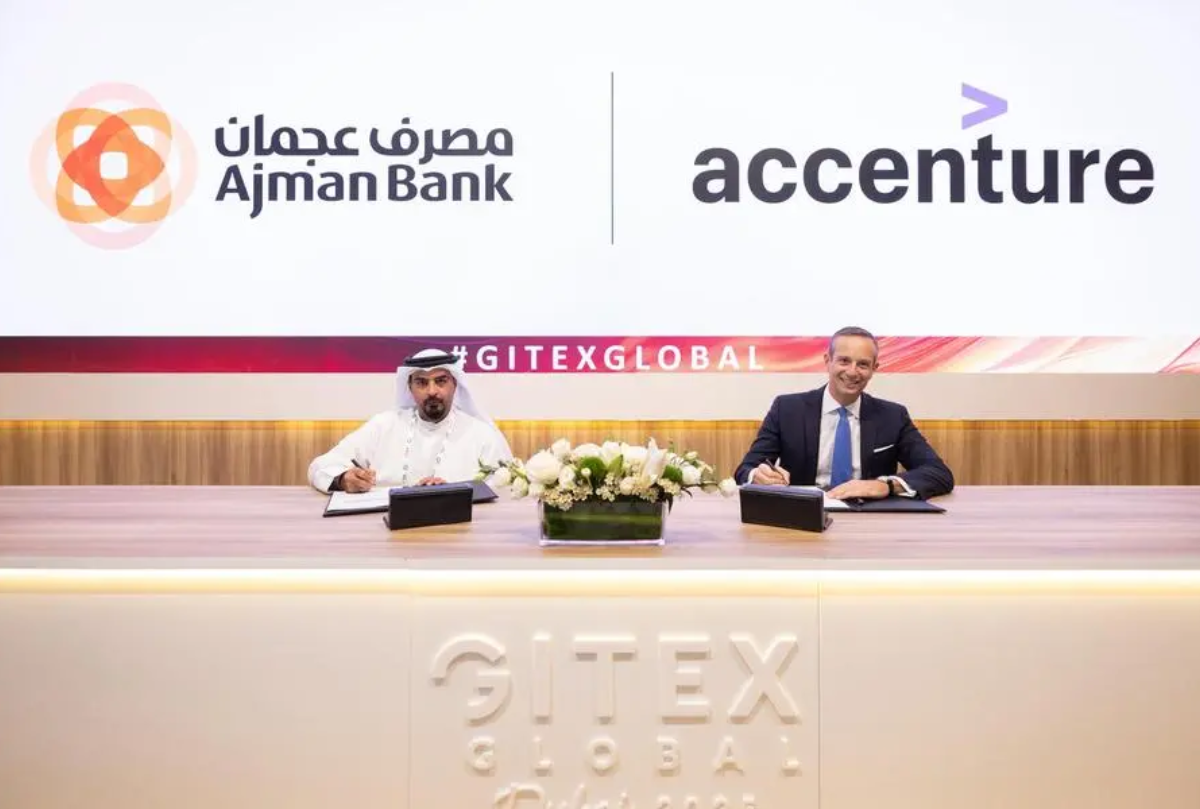
The Ajman Department of Finance unveiled a suite of smart payment services at GITEX Global 2025, signalling its bid to position the emirate at the forefront of digital government finance solutions. The offerings include integration of the UAE’s national payment card “Jaywan”, a buy-now-pay-later option via its AjmanPay portal, and a unified financial management platform dubbed “Estidama system”.

Marwan Ahmed Al Ali, Director General of the Department of Finance in Ajman, said the new services aim to provide “flexible payment options” tailored to “all segments of society” and boost the emirate’s digital transformation agenda. The launch was attended by senior government and private-sector officials during the event.

The Jaywan card—launched by the Central Bank of the UAE to reduce reliance on global card networks—has now been linked with AjmanPay, allowing users to make payments via ATMs, e-commerce platforms and point-of-sale terminals. The Department also launched a zero-interest instalment option to facilitate fee payments and transactions in instalments or deferred payments.

The Estidama system is presented as a next-generation cloud-based platform comprising four interconnected modules that manage budgeting, initiative planning, financial execution and reporting. It promises to unify financial operations across the Ajman government, enhancing transparency and control over public spending.

Officials emphasised that these steps align with broader national efforts to digitise financial infrastructure. By integrating Jaywan into Ajman’s government payments, the emirate is tapping into the UAE’s goal of financial sovereignty and reducing dependence on foreign card networks.

Partnership with First Abu Dhabi Bank underpins the linking of Jaywan with AjmanPay, showcasing public–private collaboration in driving fintech infrastructure. The Department described the move as a qualitative addition to its digital ecosystem, reflecting its commitment to “innovation in government payment systems”.

During GITEX, Ajman’s government platform is also showcasing AI, data analytics, and other advanced technologies in financial resource management. The participation underscores the emirate’s aim to benchmark itself in the regional competition over smart city and digital government credentials.

CME Group has launched its first physical base in the Middle East with an office at the Dubai International Financial Centre, to serve as its hub for the region under a licence from the Dubai Financial Services Authority. Sharif Jaghman, relocated from London, will head the new Middle East and Africa operations. The move follows a 16 per cent rise in average daily trading volumes from the […]

Multiply Group, the Abu Dhabi investment holding firm, will acquire 2PointZero and Ghitha Holding via a share-swap deal, creating a combined enterprise with an estimated valuation of AED 120 billion. The transaction involves issuing around 23.36 billion new shares, lifting Multiply’s share capital from AED 2.8 billion to AED 8.64 billion and expanding the total shares to 34.56 billion. Approval from shareholders and regulators is pending.

The decision follows board sanction and aligns with a broader move by IHC to consolidate its leading portfolio companies—Multiply, 2PointZero, and Ghitha—into a unified listed entity under the name 2PointZero Group PJSC. The merger is pitched as an effort to streamline governance, deepen synergies across sectors, and accelerate growth. The transaction is slated for completion by mid-November 2025, contingent on formal clearances.

Under the proposed structure, Multiply will absorb full ownership of 2PointZero and a majority of Ghitha Holding. The merged entity will retain its listing on the Abu Dhabi Securities Exchange. With combined operations across energy, mining, financial services, agrifood, consumer goods, media, logistics, and related verticals, the new 2PointZero Group aims to harness diversification and integrated scale.

2PointZero brings to the table AI, energy transition, mining and financial services capabilities. Its role as a facilitator in cleantech and future resource assets is central to the logic of the merger. Ghitha Holding contributes a robust agriculture, food production, processing and distribution footprint—one of the UAE’s key players in national food security. Multiply already has stakes in sectors including mobility, media & communications, retail/apparel, packaging, and beauty.

Syed Basar Shueb, Chairman of Multiply, called the deal “a natural evolution of our portfolio strategy,” emphasising the aim to “optimise scale and strengthen the platforms we have built.” Samia Bouazza, Group CEO and Managing Director, framed the merger as aligning capital with megatrends, stating the unified entity would “grow bottom line both organically and inorganically, unlock value through AI, and deliver consistent long-term returns.” The new group will operate across more than 85 countries and target service to one billion people globally.

IHC’s own communications parallel Multiply’s narrative. The parent firm describes the merger as a means to craft a “next-generation investment powerhouse” anchored in a dual focus on energy and consumer sectors, intended to enhance operational efficiency and strategic scale. Sheikh Tahnoon bin Zayed Al Nahyan, IHC Chairman, cited the move as reaffirming IHC’s role as a catalyst of transformation, leveraging AI and value networks. Sheikh Zayed bin Hamdan bin Zayed Al Nahyan, Chairman of 2PointZero, said the consolidation would further the mission of driving energy transition, enabling AI, and empowering communities.

Davidson Kempner Capital Management has inaugurated an office at the Abu Dhabi Global Market, marking its first physical presence in the Gulf and becoming the latest global hedge fund to deepen its footprint in the United Arab Emirates. The new office will be led by partner Chris Krishanthan together with managing director Naveen Sabharwal.

The firm, which manages approximately $37 billion in assets, aims to tap deeper into regional capital flows and align more closely with sovereign and institutional investors across the Gulf Cooperation Council. Tony Yoseloff, managing partner and chief investment officer, described the move as a step to “further expand our investable universe” and strengthen “local relationships in a highly dynamic market.”

For years, Abu Dhabi has steadily worked to position itself as a rival to Dubai in financial services. Its strategy has included tailoring tax incentives, loosening regulatory constraints, and courting global asset managers to relocate or open branches there. As part of this wave, major hedge funds such as Brevan Howard and Marshall Wace have already established bases in ADGM; Davidson Kempner joins their ranks in what is being viewed as a consolidation of the emirate’s appeal to global capital.

The timing dovetails with a broader uptick in cross-regional trading. The CME Group recently reported a 16 percent rise in average daily trading volumes from the Middle East, with hedge fund activity surging nearly 30 percent this year. The firm’s commercial officers noted the region has become its fastest-growing market. Many attributers point to favourable time zones, regulatory allure, and close proximity to sovereign wealth capital as key drivers.

Internally, the ADGM office is intended both as a regional sourcing hub and a local relationship engine. Krishanthan and Sabharwal have previously overseen Davidson Kempner’s Middle Eastern investment activity, so the new base is meant to formalise and deepen ongoing operations. The firm describes its core strategy as rooted in credit and event-driven investing, spanning public and private markets globally.

This expansion comes amid headwinds in certain corners of the firm. In 2024, Davidson Kempner moved to shutter its Distressed Opportunities fund — once managing around $2 billion — as evolving market conditions rendered that strategy less compelling in a constrained restructuring environment. The firm indicated it would reorient distressed allocations into closed-end and multi-strategy vehicles.

Observers see the firm’s Abu Dhabi entry as both adaptive and opportunistic. By embedding itself in ADGM, Davidson Kempner seeks proximity to capital allocators, deal flow, and regional intelligence — all of which matters in markets where local networks and relationships often play outsized roles.

Competition in the region is intensifying. Abu Dhabi’s Lunate recently acquired a minority stake in Brevan Howard, launching a joint investment platform with an initial commitment of $2 billion. Regional investors have also targeted global fund firms for partnerships or co-investment models. That push underscores Abu Dhabi’s ambition to evolve into a globally competitive asset management hub, alongside regulatory hubs like London, Singapore, and Hong Kong.

Abu Dhabi — Aldar has sold all units of its Yas Living development in just days after launch, securing more than AED 1.3 billion in sales. The development comprises 678 apartments spread across three buildings, offering configurations from studios to three-bedroom units. Owners will enjoy dedicated amenities in each building — including adult and children’s pools, a cinema, zen gardens, games rooms, children’s play spaces, and a […]

European Commission officials are poised to grant approval to Abu Dhabi’s state oil company for its €14.7 billion acquisition of Germany’s Covestro, conditional on minor adjustments to compliance measures, according to sources familiar with the process. The decision could mark one of the most significant Gulf-to-EU corporate takeovers to date.

Brussels opened a detailed investigation into the deal earlier this year under its Foreign Subsidies Regulation, citing concerns that the United Arab Emirates might have leveraged state-backed advantages—such as an unlimited state guarantee and pledged capital injections—to win the bid. The Commission’s probe, initially suspended in September pending additional information, has now resumed as ADNOC submits remedial proposals.

In its revised remedy package, ADNOC has committed to removing language referencing the unlimited guarantee from Covestro’s articles of association and to preserving Covestro’s intellectual property within Europe. Sources suggest the Commission may insist on further tweaks before final clearance, but no major restructuring is expected.

ADNOC’s international investment arm, XRG, has framed the concessions as reflective of its long-term investor stance and asserted confidence that the proposals are “robust and proportionate.” The supreme size of the deal amplifies scrutiny—a deal described by analysts as ADNOC’s largest ever and among the biggest foreign acquisitions of a European company by a Gulf state.

Opponents and industry peers have raised flags about the competitive effects of the transaction. Critics argue that ADNOC’s state backing might have deterred rival bidders, distorting the playing field in Europe’s chemicals sector. Regulators collected feedback from market participants as part of the remedy review, a standard stage in EU merger oversight.

In September, the EU paused its review, citing gaps in the information submitted by the parties. ADNOC responded by accusing the Commission of issuing “disproportionate and invasive” demands. It warned such tactics jeopardised the deal’s viability. Brussels has indicated it will reset its decision deadline after receiving all necessary material. Its previous deadline had been 2 December.

Analysts suggest that the minimal expected adjustments reflect the Commission’s confidence that the core concerns have been addressed. Some believe that failure to clear the deal now would signal strained investment relations between EU institutions and sovereign-backed acquirers. Others caution that even small remedial changes—especially on governance rights or intellectual property handling—could materially alter deal returns.

Covestro, a leader in polymer materials, chemicals, coatings and adhesives, stands to bolster its growth potential under ADNOC’s ownership. The acquisition aligns with ADNOC’s drive to diversify beyond hydrocarbons toward higher-value downstream chemical operations. Yet the deal also pits strategic ambition against regulatory sensitivity—a balancing act now unfolding in the corridors of Brussels.

Investcorp Capital, listed on the Abu Dhabi Securities Exchange, has pledged to commit $750 million to the Investcorp Golden Horizon platform, a strategic growth-stage vehicle that supports pre-IPO companies across the Gulf Cooperation Council and China. Golden Horizon was launched by Investcorp in conjunction with China Investment Corporation and is anchored by CIC as the lead institutional investor. The platform is structured to channel capital into high-growth […]

VISHNU RAJA
RYO YAMADA
HITORI GOTOH
IKUYO KITA