News related to
First

Matein Khalid It is significant that Abu Dhabi joined Opec from the moment the emirate exported its first barrel of oil in 1967, four years before the birth of the UAE itself. For 59 years the UAE was a member of Opec enduring an era of multiple shocks, wars, revolutions, recessions, banking crises, oil price wars, supply shocks, embargoes and the pandemic. Saudi Arabia has been the ultimate power […]

By Nitya Chakraborty The results of the five assembly elections available on Monday May 4 give unmistakeable signs of further consolidation of the BJP pan India and fresh setbacks for the opposition INDIA Bloc. Two stalwarts of the opposition Mamata Banerjee in West Bengal and M. K. Stalin in Tamil Nadu have been defeated. While […]

The article State Assembly Results Signal Big Pan India Consolidation Of BJP appeared first on Latest India news, analysis and reports on Newspack by India Press Agency).

Dubai has moved a new cluster of mega projects from ambition to execution, tying transport, aviation, finance, mobility and artificial intelligence into a single development push aimed at reshaping how the emirate lives, works and competes. The programme is anchored by the Dubai Metro Blue Line, the expansion of Al Maktoum International Airport, future mobility systems, a major widening of Dubai International Financial Centre and an AI-powered […]

Greenlogue/AP Ethiopia’s drive to turn abundant renewable electricity into wider power access and cheaper transport has gained fresh backing from Europe, with new UK and EU-linked investments targeting electric mobility, transmission upgrades and rural electrification. The latest financing adds momentum to Addis Ababa’s wider strategy of using hydropower-led electricity generation to cut fuel imports, expand industrial capacity and speed up the shift to electric vehicles. The UK […]

Auto China 2026 closed in Beijing on Sunday after setting new benchmarks for scale, attendance and vehicle premieres, reinforcing China’s position as the central battleground for electric vehicles, intelligent driving and next-generation automotive supply chains.

The 19th Beijing International Automotive Exhibition, held from April 24 to May 3, brought together nearly 1,000 companies from 26 countries and regions across two venues for the first time. Its 380,000 square metres of exhibition space, spread across 17 halls at the China International Exhibition Center in Shunyi and the Capital International Convention and Exhibition Center, made it the largest edition in the event’s history.

Organisers recorded 1.28 million visitors, including about 65,000 overseas attendees, underlining the show’s growing appeal beyond China’s domestic market. A total of 1,451 vehicles were displayed, including 181 world premieres and 71 concept cars, placing the event among the most active global platforms for new model launches.

The numbers told only part of the story. Auto China 2026 was dominated by a clear shift from conventional vehicle launches to software-defined mobility, artificial intelligence, battery breakthroughs and advanced driver assistance. Carmakers used the show not merely to present new models, but to demonstrate how quickly vehicles are becoming technology platforms.

China’s home-grown manufacturers were at the centre of the exhibition’s momentum. BYD, XPeng, Nio, Geely, Chery, Dongfeng and Huawei-linked brands showcased vehicles and systems aimed at defending their lead in the world’s largest car market while accelerating overseas expansion. Their focus was sharply aligned with consumer demand for longer range, faster charging, smarter cabins and more automated driving functions.

BYD highlighted fast-charging and low-temperature battery performance, including technology designed to charge under conditions as cold as minus 30 degrees Celsius. CATL drew attention with new battery systems promising ultra-fast charging and longer driving ranges, including a version of its Shenxing battery that can charge from 10 per cent to 98 per cent in about six and a half minutes. These advances added further pressure on global rivals still working to close gaps in battery cost, charging speed and supply-chain depth.

Huawei’s presence illustrated the growing power of technology suppliers inside the automotive ecosystem. Its intelligent driving systems, HarmonyOS cockpit technology and vehicle partnerships featured prominently across several brands. The company’s Qiankun advanced driving system was presented as part of a broader push into AI-assisted mobility, with claims of stronger collision avoidance and more natural in-car interaction.

XPeng used the event to promote intelligent driving features that can detect when a driver is unable to control the vehicle, pull over automatically and alert emergency services. Nio displayed its three brands, Nio, Onvo and Firefly, together at the same booth, signalling a wider product strategy covering premium, family and mass-market electric segments.

Foreign automakers also used Beijing to reset their China strategies. Volkswagen introduced China-focused electric models and AI-driven cockpit features developed with local partners, including XPeng and Horizon Robotics. BMW, Mercedes-Benz and Toyota presented products tailored to a market where customers increasingly expect high-end digital functions even in mid-priced vehicles.

The competitive pressure remains intense. China’s passenger car sales fell sharply in the first quarter from a year earlier, reflecting weaker subsidy support, cautious consumers and price competition across the sector. Exports, however, continued to expand strongly as China-made vehicles gained ground in Europe, Southeast Asia, Latin America and other growth markets.

That divergence shaped much of the discussion around the exhibition. Domestic demand is tougher, margins are thinner and consolidation risks are rising, yet China’s automakers and suppliers are moving faster on product cycles than many overseas competitors. More than 80 new models were launched in China in March alone, a pace that underscores the speed of iteration in the market.

Auto China 2026 also showed that global expansion is entering a new phase. Chinese manufacturers are no longer relying only on exports. Several are building or planning overseas production bases to reduce tariff exposure, ease regulatory concerns and strengthen local market access. Hungary, Turkey, Southeast Asia and Latin America have emerged as important destinations for investment.


Blizzard has returned Warcraft III’s legacy client to Battle. net, giving owners of the game direct access to the original The Frozen Throne 1.29 build without requiring a Warcraft III: Reforged installation to launch it. The move reopens an official route to a version of the landmark real-time strategy title that many players believed had been effectively buried after the troubled 2020 remaster. Players can now select […]

Arabian Post Staff -Dubai Dubai International is moving to rebuild flight momentum after weeks of regional airspace disruption forced airlines to redraw schedules, trim frequencies and manage passenger flows through one of the world’s most important long-haul transit corridors. Dubai Airports said UAE airspace has now been fully restored, allowing DXB to increase daily flight movements in step with available regional routing capacity. The airport operator is […]

Advertisements

Tamil Nadu’s vote count pointed to a dramatic political rupture on Monday, with actor Vijay’s Tamilaga Vettri Kazhagam emerging as the strongest challenger to the ruling DMK and threatening to redraw the balance of power in one of the country’s most important industrial states.

Trends through the afternoon showed TVK ahead in more than 100 seats in the 234-member Assembly, close to the 118-seat majority mark. The AIADMK alliance was holding second place in several tallies, while the DMK, led by Chief Minister M K Stalin, slipped sharply from its dominant position. The count remained fluid, with leads shifting by constituency and round, but the scale of TVK’s performance confirmed that Vijay’s first full electoral test had moved beyond symbolism.

The most striking signal came from Kolathur, Stalin’s long-held constituency in Chennai, where TVK candidate V S Babu established a lead during counting. Udhayanidhi Stalin also faced pressure in Chepauk-Thiruvallikeni, intensifying the perception of an anti-incumbency wave cutting through the DMK’s urban and welfare-heavy support base. Vijay himself was leading in both seats he contested, strengthening expectations that he could become central to government formation if TVK sustains its advantage.

TVK’s surge is particularly significant because Tamil Nadu has for decades been shaped by two Dravidian blocs, with the DMK and AIADMK alternating in power. Vijay entered politics with a campaign built around corruption allegations, youth unemployment, social justice language and a promise to offer an alternative to entrenched party networks. His appeal among young voters, first-time voters and urban families appears to have translated into a statewide challenge rather than a personality-driven protest vote.

The outcome carries implications well beyond party politics. Tamil Nadu is a manufacturing and export powerhouse, with deep clusters in automobiles, electronics, textiles, leather, engineering, logistics and renewable energy. Chennai and its surrounding industrial belt host major auto and component manufacturers, while Hosur, Sriperumbudur, Coimbatore, Tiruppur and Ranipet have become key nodes in supply chains tied to smartphones, electric vehicles, garments and precision manufacturing.

Investors will be watching whether a possible TVK-led government preserves policy continuity. The state has benefited from a predictable administrative culture, skilled labour, ports, highways, renewable energy capacity and sector-specific industrial policies. Major projects involving Tata Electronics, Foxconn-linked supply chains, Hyundai, Renault Nissan, Ola Electric, VinFast, Tata Motors’ Jaguar Land Rover facility and a wide network of small suppliers rely on stable land, power, logistics and labour arrangements.

Vijay’s party has promised cleaner governance and a people-focused administration, but it is yet to demonstrate how it would manage fiscal pressures, industrial incentives, welfare spending and Centre-state relations. Tamil Nadu’s welfare model is expensive, and any new government would inherit commitments on subsidies, social schemes, infrastructure projects and public-sector obligations. A sharp shift in policy could unsettle investors, while a calibrated transition could allow TVK to combine political change with economic stability.

For the DMK, the trends represent a severe test of its governance record. Stalin’s administration has promoted Tamil Nadu as a trillion-dollar economy contender, pushed investment summits, expanded electronics manufacturing and defended its welfare programmes. Yet voter fatigue, price pressures, local grievances, perceptions of dynastic control and the attraction of Vijay’s outsider image appear to have weakened the ruling party’s hold.

The AIADMK, despite remaining competitive in parts of western and southern Tamil Nadu, also faces a strategic challenge. TVK’s ability to draw votes across urban, semi-urban and rural seats threatens to disrupt the opposition space that the AIADMK had hoped to consolidate. If no party crosses the majority mark, negotiations with smaller parties and alliance partners could determine the next government.

Tether is sharpening its claim that USDT has become core financial plumbing for the Bitcoin economy, as chief executive Paolo Ardoino frames the world’s largest stablecoin as a long-duration infrastructure project rather than a trading token built for crypto cycles. Ardoino has compared Tether’s approach to Isaac Asimov’s Foundation universe, using the analogy to stress resilience, preparation and systems designed to outlast political and financial disruption. The […]

Google has begun construction of a $15 billion artificial intelligence hub in Visakhapatnam, placing Andhra Pradesh at the centre of one of the largest digital infrastructure investments planned in India and sharpening the country’s bid to host high-intensity AI computing at global scale.

The Google Cloud India AI Hub, being developed with AdaniConneX and Nxtra by Airtel, is designed as a gigawatt-scale private cloud and data centre network across three campuses near the port city. The investment is planned over 2026-2030 and marks Google’s biggest infrastructure commitment in the country, combining hyperscale computing, subsea cable connectivity and clean-energy-linked operations.

Andhra Pradesh Chief Minister N. Chandrababu Naidu laid the foundation stone for the project on April 28, 2026, alongside Union electronics and IT minister Ashwini Vaishnaw, state IT and HRD minister Nara Lokesh, Google global infrastructure vice-president Bikash Koley and senior representatives of Adani and Bharti Airtel. The project follows Google’s October 2025 announcement that Visakhapatnam would host its first gigawatt-scale AI hub in the country.

The development is expected to occupy about 600 acres across locations including Tarluvada, Rambilli and Adavivaram. State officials have projected the facility’s operational launch around September 2028, though large data centre campuses of this scale typically move through phased commissioning as power, cooling, network and security systems are completed.

Google’s plan goes beyond a conventional cloud facility. The hub is intended to support AI workloads for services such as enterprise cloud computing, consumer applications, advanced model deployment and data-intensive digital platforms. Its location on the east coast gives Visakhapatnam a strategic role in subsea connectivity, with plans for international cable landings that can improve bandwidth, reduce latency and strengthen links between India, Southeast Asia and global cloud regions.

AdaniConneX, the joint venture between Adani Enterprises and EdgeConneX, is expected to lead major elements of data centre construction and power-linked infrastructure. Nxtra by Airtel will support data centre development, fibre connectivity and cable landing infrastructure. Airtel’s existing telecom backbone and Adani’s energy and infrastructure capabilities give the project domestic execution partners at a time when AI infrastructure is becoming capital-intensive and geopolitically sensitive.

The project also fits into a wider policy push to reduce dependence on overseas compute capacity. Demand for AI infrastructure has expanded rapidly as startups, banks, telecom operators, public agencies and manufacturing groups test generative AI, automation and data analytics. Large language models and AI inference services require dependable access to graphics processing units, high-density power systems, liquid cooling, resilient connectivity and local data storage.

Visakhapatnam’s selection reflects Andhra Pradesh’s attempt to position itself as a technology and logistics corridor after years of competition from established hubs such as Bengaluru, Hyderabad, Chennai, Pune and the National Capital Region. The port city already has an industrial base, naval presence, road and rail connectivity and a coastline suited to cable infrastructure. The state government is banking on the Google project to attract hardware suppliers, energy providers, construction contractors, cloud specialists and AI startups.

Employment claims around the project have been ambitious, with state leaders citing the possibility of hundreds of thousands of direct and indirect jobs through construction, operations, supply chains and associated services. The more immediate employment impact is likely to come from civil works, electrical systems, fibre deployment, facility management, security and engineering support. Higher-skilled roles in cloud architecture, AI operations and chip-level systems may depend on how quickly local training pipelines are aligned with industry needs.

Power and water use will be closely watched. Gigawatt-scale data centres require enormous electricity supply and sophisticated cooling systems, making renewable energy procurement, grid stability and water stewardship critical. Google has said the project will be tied to a long-term clean energy strategy and community programmes covering water, skills, maritime trade modernisation and women-led businesses. Delivering on those commitments will be essential for public acceptance, especially as data centres worldwide face scrutiny over their environmental footprint.

  • US$8 billion ultra-premium integrated commercial property debuts new lifestyle destination located along Shanghai’s iconic Huangpu River waterfront
  • New “Enjoy Life” brand theme highlights premium tenant mix of designer retail and lifestyle brands

HONG KONG SAR – Media OutReach Newswire – 4 May 2026 – Hongkong Land Holdings Limited (“Hongkong Land” or the “Company”) marked a key milestone with the opening of Phase Two at Westbund Central, its flagship ultra-premium integrated commercial property in Shanghai’s Xuhui District that is one of the largest mixed-use developments in the world. This stage of the US$8 billion project’s rollout is complemented by its new “Enjoy Life” brand theme, reinforcing the district’s role as a dynamic environment for work, living and leisure.

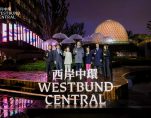
Photo 1: (From left to right) Mr. Raymond Wong, Director & Head of Property Development, Westbund Central; Mr. John Simpkins, General Counsel, Hongkong Land; Ms. Alfreda Zeng, Chief Operating Officer, Ping An Real Estate; Mr. Stuart Grant, Chief Executive, Westbund Central; Ms. Gan Jin, Vice Chairman, Shanghai West Bund Development Group; Mr. Craig Beattie, Chief Financial Officer, Hongkong Land and Ms. Vera Wu, Director & Head of Commercial Property, Westbund Central.

The Phase Two commercial launch introduces a diverse mix of global first stores, designer labels, and flagship concepts that reinforce Westbund Central’s position as a new downtown in Shanghai. New tenants include international icons such as Issey Miyake, the multi-brand boutique SND, Leica Store & Gallery, artisanal Swiss chocolatier House of Läderach, and design houses HAY and Paulmann.

With a planned total gross floor area of more than 1.7 million square metres, Westbund Central is the Company’s largest-ever single investment and brings together a diversified commercial mix that includes more than 600 international retail and lifestyle brands, 180 food and beverage operators, more than 50,000 square metres dedicated to cultural and art facilities, as well as 650,000 square metres of premium Grade A offices that will house occupiers including globally renowned companies such as adidas and lululemon.

While Phase One centred on food and beverage, cafes, and sports and leisure facilities, Phase Two enhances the district’s prestige by focusing on designer lifestyle brands. Looking ahead, Phase Three will introduce a cluster of global luxury maison flagships to further boost the district’s international appeal. Around 12,000 square metres of retail space is already open, with an additional 30,000 square metres opening within this year.

Michael T. Smith, Group Chief Executive of Hongkong Land, said: “Westbund Central is a fresh and dynamic example of our strategic focus to develop ultra-premium, integrated commercial districts in Asia’s leading gateway cities. As Hongkong Land’s largest single investment to date and our flagship China property, Westbund Central is one of the most significant projects in the company’s portfolio and designed to deliver sustained long-term value.”

Stuart Grant, Chief Executive of Westbund Central, said: “Westbund Central is being shaped as Shanghai’s new downtown and we are incredibly proud to build one of the largest mixed-use properties in the world that redefines modern urban living. We are creating a globally renowned ‘city within a city’ where the finest quality office, retail, residential and hospitality components converge in a single vibrant destination where people can truly enjoy life.”

As further phases are delivered, Westbund Central will continue to reinforce its position as one of Shanghai’s most significant integrated commercial districts and a cornerstone of the company’s long-term growth strategy in its portfolio.
Hashtag: #HongkongLand

The issuer is solely responsible for the content of this announcement.

Westbund Central

Hongkong Land’s Westbund Central is the Group’s largest-ever single investment. Scheduled to complete in phases up until 2028, it is an US$8 billion development encompassing approximately more than 1.7 million sq. m. of prime mixed-use property strategically located at Shanghai’s Xuhui Waterfront. It is a flagship development of Hongkong Land’s prime commercial properties’ CENTRAL Series. The ultra-premium integrated commercial property includes 240,000 sq. m of retail space, 650,000 sq. m. of premium Grade A offices, 160,000 sq. m. of high-end waterfront luxury residences, two hotels (55,000 sq. m.) and over 50,000 sq. m. of cultural and art venues.

Hongkong Land

Hongkong Land is a major listed property development, investment and management group. It focuses on developing, owning and managing premium and ultra-premium mixed-use real estate in Asian gateway cities, featuring Grade A office, luxury retail, residential and hospitality products. With over US$50 billion in assets under management, Hongkong Land’s ultra-premium mixed-use real estate footprint spans over 1.97 million sq. m. lettable area in operation and 1.43 million sq. m. lettable area under development, with flagship mixed-use projects in Hong Kong, Singapore and Shanghai. Its properties hold industry leading green building certifications and attract the world’s foremost companies and luxury brands. Established in 1889, Hongkong Land takes a long-term view, investing significantly alongside its capital partners and concentrating its portfolio where it can create the most value for tenants, customers and investors. Hongkong Land Holdings Limited has a primary listing on the London Stock Exchange, with secondary listings in Singapore and Bermuda. Hongkong Land is a member of the Jardine Matheson Group.

Beijing has moved from denunciation to direct legal defiance of US sanctions, ordering companies and financial institutions under its jurisdiction not to recognise or comply with American penalties imposed on five refiners accused of involvement in Iranian oil trade.

The order, issued by the Ministry of Commerce on 2 May, marks China’s first known use of a formal blocking mechanism against US sanctions on domestic companies. It targets measures against Hengli Petrochemical Refinery Co, Shandong Shouguang Luqing Petrochemical Co, Shandong Jincheng Petrochemical Group Co, Hebei Xinhai Chemical Group Co and Shandong Shengxing Chemical Co. The firms had been placed under US restrictions linked to alleged purchases or processing of Iranian crude, including asset freezes and transaction bans.

The move places banks, insurers, commodity traders and shipping intermediaries in a difficult position. Compliance with Washington’s restrictions may now expose them to legal risk in China, while compliance with Beijing’s order may expose them to penalties under the US sanctions regime. For large Chinese banks with international operations, the dilemma is particularly acute because access to dollar clearing, correspondent banking and global capital markets remains central to their business.

China has long rejected unilateral US sanctions as illegitimate, especially when they apply beyond American territory. Until now, however, Beijing had often allowed major financial institutions and state-linked enterprises to quietly reduce exposure to sanctioned entities to avoid jeopardising access to the US financial system. The latest order changes that balance by instructing domestic parties not to recognise, enforce or comply with the penalties.

The legal basis lies in China’s blocking rules against what Beijing describes as unjustified extraterritorial application of foreign laws. Those rules, introduced in 2021 and strengthened by additional countermeasure regulations, allow authorities to prohibit compliance with foreign restrictions that impair normal business with third countries. The 2 May order says the US measures against the refiners improperly restrict lawful trade and harm the rights of Chinese entities.

The immediate trigger is Washington’s renewed pressure on Iranian oil revenues. Hengli’s Dalian refinery, with capacity of about 400,000 barrels per day, is among the most prominent privately owned refining assets to be targeted. US authorities have accused it of buying large volumes of Iranian crude. Hengli’s parent has denied trading with Iran and said operations remain normal.

Other sanctioned firms are part of China’s independent refining sector, often described as “teapot” refiners, clustered mainly in Shandong and surrounding provinces. These companies have become central to China’s discounted crude imports, including oil from Iran and Russia, as state refiners have generally been more cautious in handling cargoes exposed to sanctions risk.

The financial implications extend beyond the refiners themselves. Banks processing payments, lenders providing working capital, insurers covering cargoes, shipowners transporting crude and brokers arranging trades could all face competing legal obligations. International banks are likely to adopt a more conservative stance, while smaller domestic institutions may come under pressure to maintain services to companies protected by Beijing’s order.

Hengli has already moved to limit operational disruption. Its Singapore trading unit was restructured after the US designation, with a majority stake transferred to a company linked to a local government entity in Dalian. The shift has not fully reassured counterparties, as brokers and financial institutions remain wary of dealing with entities connected to sanctioned operations.

The confrontation comes as energy markets are adjusting to tighter enforcement against Iranian crude flows. China remains Iran’s largest oil customer, with independent refiners attracted by discounted barrels at a time when domestic margins are under pressure. Traders have reported that cargoes are often routed through complex shipping arrangements, with documentation obscuring origin and payments settled through non-dollar channels.

For Beijing, the order is also a political signal. It asserts that China will not automatically absorb the costs of US secondary sanctions when strategic commodities, energy security and private industrial champions are involved. It also offers reassurance to domestic firms that the government is prepared to use legal instruments rather than limit itself to diplomatic protest.

For Washington, the step complicates enforcement. Sanctions work most effectively when banks and intermediaries avoid designated firms without needing direct prosecution. If China compels non-compliance at home, US authorities may have to decide whether to escalate against financial institutions that continue servicing the refiners, a move that could widen the dispute from energy trade into the banking system.

Croatia has been thrust into Europe’s artificial intelligence infrastructure race after Pantheon Atlas LLC outlined plans for a €50 billion data centre and innovation campus in Topusko, a small town in Sisak-Moslavina County that could become one of the continent’s most ambitious compute hubs. The proposed Pantheon AI campus is designed around 1 gigawatt of total power capacity, including about 800 megawatts of usable information technology load […]

Arabian Post Staff -Dubai OPAQUE has acquired cryptographic AI technologies developed in Abu Dhabi, expanding its confidential AI platform into model training, agentic workflows and post-quantum protection for enterprises handling highly sensitive data. The deal links OPAQUE, a San Francisco-headquartered confidential AI company founded by researchers from UC Berkeley’s RISELab, with the Technology Innovation Institute, the applied research arm of Abu Dhabi’s Advanced Technology Research Council. The […]

Swiss lawmakers are opening a politically charged debate in Bern that could determine how much capital UBS Group must hold after its takeover of Credit Suisse, setting the stage for a confrontation between financial stability concerns and fears over Switzerland’s competitiveness as a banking centre. A 13-member parliamentary panel is meeting on Monday to begin work on proposed changes to the Banking Act, a legislative package shaped […]

North Korea’s Naegohyang Women’s FC is set to travel to South Korea this month for a high-profile Asian Football Confederation Women’s Champions League semi-final, creating one of the few sporting contacts between the two sides in years. The Pyongyang-based club is scheduled to face Suwon FC Women at Suwon Stadium on May 20, with the final fixed for May 23 at the same venue. The Korea Football […]

Ooredoo has launched Smart Wi-Fi Analytics in Qatar, giving large venues and enterprises a tool to convert everyday wireless connectivity into real-time operational intelligence for business, customer experience and network management. The service has been introduced as an add-on to Ooredoo’s existing Smart Wi-Fi portfolio and is designed for high-density environments such as shopping malls, universities, large office buildings, hospitality venues and other sites where thousands of […]

Asian equities advanced sharply on Monday as artificial intelligence-linked chipmakers in South Korea and Taiwan drove regional benchmarks back towards record territory, erasing the losses triggered by the Iran war and restoring investor appetite for technology-heavy markets.

The MSCI Asia Pacific Index rose as much as 2.3 per cent on May 4, its strongest intraday gain since April 8, while the MSCI Asia Pacific excluding Japan Index climbed as much as 2.9 per cent. Benchmarks in South Korea and Taiwan, both heavily exposed to the semiconductor supply chain, gained more than 4 per cent each as investors moved back into companies seen as central to the global AI build-out.

The rally was led by the region’s dominant AI hardware suppliers, including Taiwan Semiconductor Manufacturing Co, Samsung Electronics and SK Hynix. These companies sit at crucial points of the AI infrastructure chain, from advanced foundry production to high-bandwidth memory chips used in data centres and graphics processors. Strong earnings from US technology groups have reinforced expectations that capital spending on AI servers, accelerators and cloud infrastructure will remain elevated through 2026.

TSMC has become the clearest symbol of that shift. The world’s largest contract chipmaker posted a 58 per cent jump in first-quarter net profit to a record level, supported by demand for AI processors, and guided second-quarter revenue to $39 billion to $40.2 billion. Its first-quarter revenue rose 35 per cent from a year earlier to about $35.7 billion, underlining the scale of orders tied to advanced computing.

Samsung’s semiconductor division also delivered a major earnings rebound, reporting 53.7 trillion won in operating profit for the first quarter on 81.7 trillion won in revenue. The group said memory sales were lifted by AI-related demand and tight supply, even as its mobile and display businesses faced margin pressure from higher component costs.

SK Hynix has benefited from its strong position in high-bandwidth memory, a category that has become central to AI accelerator performance. Demand from data centre operators and chip designers has pushed memory makers into long-term supply arrangements, with shortages expected to extend into 2027 as customers reserve capacity years ahead.

Taiwan’s broader market has also gained from the AI trade. The island’s economy expanded 13.69 per cent in the first quarter, its fastest annual pace in nearly four decades, supported by a surge in exports tied to AI hardware. Taiwan has overtaken Canada to become the world’s sixth-largest stock market by value, helped by TSMC’s rise and investor demand for companies embedded in advanced chip manufacturing.

Investor confidence has been strengthened by Nvidia’s expanding Asian supply chain. Its partners now span foundries, memory suppliers, electronics assemblers and companies linked to robotics and so-called physical AI. The shift has widened the rally beyond a handful of chip names, lifting component makers and specialist suppliers that provide substrates, packaging, power management and memory-related technologies.

The rebound also reflects a broader reassessment of geopolitical risk. The Iran war initially prompted investors to cut exposure to export-oriented and energy-importing markets, particularly those vulnerable to shipping disruptions and higher fuel costs. Yet the scale of AI-related earnings growth has helped offset those concerns, with funds favouring economies that are directly tied to semiconductor demand and less dependent on domestic consumption.

South Korea’s Kospi has been one of the year’s standout performers, supported by Samsung, SK Hynix and other technology exporters. Taiwan’s Taiex has also outperformed as investors price in continued demand for advanced nodes, AI servers and high-performance computing. The concentration of gains, however, has increased concerns that regional indices are becoming more dependent on a narrow set of semiconductor companies.

Valuations remain a key risk. Share prices in several AI-linked companies have risen faster than earnings forecasts, leaving markets exposed to any slowdown in capital expenditure by US cloud providers or delays in chip production. Memory supply shortages may support pricing in the near term, but they could also raise costs for downstream electronics makers and intensify competition among suppliers expanding capacity.

Currency movements have added another layer to the market response. A weaker won has supported earnings translation for South Korean exporters, while Taiwan’s market has drawn stronger foreign inflows on expectations that AI-linked exports will keep growth elevated. Japan’s yen strengthened during Monday’s regional trading, reflecting a mix of safe-haven demand and shifting expectations around monetary policy.

Arabian Post Staff -Dubai Saudi Arabia, Russia and five other Opec+ producers agreed on Sunday to raise their collective oil production quota by 188,000 barrels per day from June, pressing ahead with a planned supply increase despite severe disruption to Gulf exports and the UAE’s exit from the alliance. The decision was taken at a virtual meeting of Saudi Arabia, Russia, Iraq, Kuwait, Kazakhstan, Algeria and Oman, […]

Dubai has removed the minimum property value requirement for sole owners seeking a two-year residence visa, widening access to residency through real estate and lowering one of the main entry barriers for smaller investors. Under the revised eligibility rules, a person who owns a completed property in Dubai as the sole owner can apply for the two-year property investor residence visa regardless of the value of the […]

Arabian Post Staff -Dubai Abu Dhabi National Oil Company will award Dh200 billion worth of project contracts between 2026 and 2028, marking one of the largest new execution phases in the Gulf energy sector as Abu Dhabi moves to expand capacity, secure supply chains and deepen local manufacturing. The planned awards, equivalent to about $55 billion, form the first major tranche of ADNOC’s $150 billion capital expenditure […]

Clair Obscur: Expedition 33 has won Best Game at the BIG Festival Awards during Gamescom Latam 2026, strengthening Sandfall Interactive’s claim to one of the most striking debut successes in modern role-playing games. The French studio’s title also took Best Sound at the São Paulo ceremony, giving it two honours at a festival that has become a major showcase for Latin American and international game development. The […]

  Microsoft detected about 8.3 billion email-based phishing threats in the first quarter of 2026, exposing a sharp shift in attacker behaviour as criminal groups moved deeper into QR codes, fake CAPTCHA pages, phishing-as-a-service kits and file-based payloads to bypass conventional email defences. The volume eased from about 2.9 billion threats in January to 2.6 billion in March, but the decline in headline numbers masked a more […]

Crypto exploit losses have crossed $770 million in the first four months of 2026, intensifying concern that decentralised finance is entering a harsher phase of cyber risk as attackers combine old weaknesses with faster automation, sharper social engineering and increasingly advanced reconnaissance tools. The scale of the damage has been driven by two major breaches. Drift Protocol, a Solana-based decentralised exchange, lost about $285 million after an […]

VISHNU RAJA
RYO YAMADA
HITORI GOTOH
IKUYO KITA