News related to
First

LONDON, UK – Media OutReach Newswire – 5 DECEMBER 2025 – Family wellbeing is emerging as one of the strongest predictors of success on international assignments – yet support for families has not always kept pace with modern mobility expectations, according to new research from AXA Global Healthcare. Now in its third iteration (previously published in 2017 and 2020), the 2025 World of Work Report draws on […]

Arabian Post Staff -Dubai Dubai’s residential real estate market is being largely sustained by liquidity-driven purchases, with more than half of sales in the latter half of 2025 settled in cash, according to a report by a leading market tracker. Analysis from Elite Merit Real Estate indicates that approximately 54 per cent of all residential transactions during H2 2025 were cash-based, a pattern that market observers say […]

SINGAPORE – Media OutReach Newswire – 8 December 2025 – Payment Options Pte Ltd, a Singapore-based payment solutions provider, is pleased to announce that it has received In-Principle Approval (IPA) from the Monetary Authority of Singapore (MAS) for a Major Payment Institution (MPI) licence under the Payment Services Act 2019. Payment Options Pte Ltd office in Singapore This milestone underscores Payment Options’ commitment to supporting Singapore’s small […]

A dramatic shift in digital asset markets unfolded as one of the year’s fastest-rising crypto trades, which surged more than 2,600% at its peak, unravelled with an 86% wipeout, shaking confidence across a sector already grappling with volatility, liquidity strains, and shifting regulatory expectations. The abrupt reversal, mirrored in the steep fall of smaller token clusters linked to speculative momentum strategies, highlighted how rapidly sentiment can turn in an ecosystem vulnerable to leverage-driven cycles.

Market data from major exchanges showed that the trade, centred on a group of micro-capitalisation tokens propelled by algorithmic buying, began losing momentum after a wave of profit-taking by early entrants. Traders close to proprietary desks reported that liquidation cascades—triggered as automated systems unwound positions—accelerated the decline. The severe downturn echoed patterns seen during previous speculative surges, where liquidity gaps magnified losses within hours.

Analysts tracking blockchain activity noted that the rally’s ascent had attracted retail inflows, partly due to social-media-driven narratives framing the tokens as high-growth opportunities. As prices climbed, leverage amplified exposure, drawing in traders seeking outsized returns. Once selling pressure gained traction, that leverage turned into a critical vulnerability, forcing positions to unwind just as liquidity thinned. Several independent market researchers observed that the velocity of the downturn suggested a structural fragility, rather than a simple correction.

The collapse also revived discussion about the role of automated strategies in amplifying market instability. Many of the instruments involved were linked to quant-driven flows, where bots responded to volatility triggers rather than underlying fundamentals. As one portfolio strategist explained, these systems can cause price swings that move far beyond what traditional finance would consider tolerable, adding that crypto lacks the circuit-breaker mechanisms that help stabilise other asset classes. This dynamic, according to several fund managers, remains one of the most persistent challenges for institutions considering deeper exposure to decentralised markets.

Regulatory uncertainty added to the unease. Authorities in key jurisdictions have been scrutinising high-risk digital asset structures, and policymakers have signalled the possibility of tighter oversight for tokens driven by momentum rather than intrinsic value. Market observers said that while there is no direct link between regulatory commentary and the downturn, the broader environment has weighed on risk appetite. Investor caution intensified as questions resurfaced about transparency in the trading strategies behind the surge.

The downturn also exposed liquidity fragmentation across exchanges. Some platforms reported delays in order execution as volumes spiked, and spreads widened sharply during peak selling. Professional traders said this fragmentation remains a major impediment to maturing the sector, as it complicates price discovery and heightens vulnerability to abrupt swings. Several firms specialising in market-making suggested that the episode would likely prompt renewed calls for better liquidity management frameworks within decentralised ecosystems.

Amid the turmoil, major digital assets such as Bitcoin and Ether showed relative resilience, though both experienced elevated intraday volatility. Their ability to avoid the extreme swings seen in smaller tokens prompted commentary that the market may be entering a phase where speculative micro-caps detach from more established assets. Still, derivatives positions linked to broader sentiment recorded notable adjustments, indicating that traders remain sensitive to signs of systemic stress.

Industry insiders highlighted that the steep crash follows a pattern of momentum-driven phases that have punctuated crypto cycles since the first wave of retail adoption. A veteran analyst noted that while earlier episodes centred on initial coin offerings or meme-driven tokens, the current one underscores how algorithmic and social-media amplification have merged, producing sharper and faster boom-and-bust phases. The analyst added that such swings complicate long-term valuation models, as fundamental metrics often become secondary to speculative flows.

Venture-backed projects tied to the affected tokens faced heightened scrutiny as investors assessed whether the price collapse would impair broader ecosystem development. Some founders sought to reassure stakeholders by highlighting active user bases and ongoing technical upgrades, although several funds acknowledged that valuation resets were unavoidable. Market participants stressed that while token prices do not always reflect underlying project viability, extreme volatility can hinder funding conversations and stall adoption.

The Small Business Administration has ordered every participant in its 8 Business Development Program — all 4,300 firms — to submit detailed financial and business documentation covering the last three fiscal years. The demand, communicated in letters issued December 5, requires firms to deliver bank statements, general ledgers, payroll registers, subcontracting agreements and employment records by January 5, 2026, or risk losing their eligibility in the 8 […]

By Nitya Chakraborty The India-Russia joint statement issued on December 5 after two days of talks between President Vladimir Putin and the Indian Prime Minister Narendra Modi is more a vindication of India’s renewed exercise of its geopolitical status defying the pressure from the USA and the other western powers rather than a document on […]

The article Modi-Putin Summit Reinforces India’s Geopolitical Identity Amidst Headwinds appeared first on Latest India news, analysis and reports on Newspack by India Press Agency).

Abu Dhabi’s Mubadala Capital and Aldar have moved to establish a dedicated real estate investment platform that will pursue large-scale opportunities across the UAE and the wider GCC, marking a significant expansion of institutional-grade assets available to global investors. The new entity, Aldar Capital, is being positioned as a vehicle that will attract long-term institutional capital at a time when demand for diversified real asset exposure has […]

Advertisements

Gulf Cooperation Council sovereigns and corporates issued a record-breaking $226 billion in debt by November 11, 2025 — the highest single-year total this decade — boosted by surging investor demand and tight spreads across the region.

Issuance of bonds and sukuk vastly outpaced equity capital-market activity, which saw the weakest IPO fundraising since 2020.

Regional governments and major companies returned to debt markets, capitalising on favourable financing conditions. Notable sovereign issuance came from all six GCC states — Saudi Arabia, United Arab Emirates, Kuwait, Qatar, Bahrain and Oman. Corporations also joined, including heavyweight names such as Saudi Aramco and Abu Dhabi National Oil Company.

The rebound in debt issuance reflects a shift in financing strategies. Many issuers had stayed out of markets earlier this year, waiting for better conditions. As spreads tightened sharply, they re-entered. As HSBC’s head of MENA debt capital markets, Nour Safa, put it: the tightening spreads “convinced them to return to the market.”

By the third quarter of 2025, total outstanding debt on GCC debt capital markets reached $1.1 trillion — a 12.7 per cent increase year-on-year. Sukuk issuances led the growth, rising nearly 22 per cent and now accounting for more than 40 per cent of overall debt issuance volume.

The strength emanates largely from the two biggest markets: Saudi Arabia and the UAE. As per recent analysis, these two nations comprise 46 per cent and 30 per cent respectively of total outstanding GCC debt.

Meanwhile, IPO funding has stalled. Across the GCC, 2025 saw a dramatic slump in equity issuance: a total of only 40 IPOs raised about $5.8 billion, down markedly from 2024’s 52 listings which raised $12.9 billion — the lowest fundraising level since 2020.

In the first half of 2025, IPO activity had shown modest resilience: 27 listings raised $4.10 billion, up from $3.57 billion a year earlier. But the second half slowdown reversed much of that progress.

Analysts say the divergence between bond and equity markets has several drivers. Doubts over global macroeconomic stability and trade-policy uncertainty have suppressed investor appetite for riskier equity. At the same time, Gulf issuers found debt markets more attractive: high-quality issuers, deep dollar-denominated bond markets, and relatively higher yields compared with many emerging-market alternatives.

Banks across the region added to the surge: by mid-2025 they had issued over $60 billion of debt — surpassing 2024 levels — much of it Tier-2 or hybrid debt aimed at bolstering capital under evolving regulations and funding growth tied to national development plans.

Greenlogue/AP Backed by British International Investment, Egypt’s first utility-scale hybrid solar and battery development has taken a decisive step forward as the country works to accelerate its transition towards a more resilient renewable power system. The 1.1-gigawatt Obelisk project, led by Norway’s Scatec, is positioned to become one of the largest integrated solar and battery energy storage schemes in Africa, strengthening prospects for grid stability and long-term […]

KUALA LUMPUR, MALAYSIA – Media OutReach Newswire – 6 December 2025 – XIXILI is rewriting the rules of lingerie shopping with its Plus Size Collection, moving beyond the typical S, M, L, XL approach that leaves so many women without options. The brand’s extensive range proves that well-fitted, beautiful lingerie shouldn’t be a luxury reserved for a select few. When One Size Definitely Doesn’t Fit All XIXILI’s […]

By T N Ashok NEW DELHI: Russian President Vladimir Putin arrived in India Thursday evening for a two-day state visit that has become a diplomatic flashpoint, testing New Delhi’s ability to maintain strategic independence amid mounting pressure from Washington and European capitals. The arrival marks Putin’s first trip to India since the Ukraine war began […]

The article Putin’s India Visit: A Stress Test Of Strategic Autonomy Amid Global Pressure appeared first on Latest India news, analysis and reports on Newspack by India Press Agency).

Step into Galaxy Macau to enjoy magical precinct-wide experiences this Winter, unwrapping dazzling seasonal shopping rewards and lucky draws, tasty dining and glittering entertainment as the season of self-reward and gifting comes to life at Asia’s award-winning luxury resort. MACAU SAR – Media OutReach Newswire – 5 December 2025 – Galaxy Macau Integrated Resort proudly unveils its spectacular “Gift Yourself Extraordinary” Winter extravaganza, ushering in a season […]

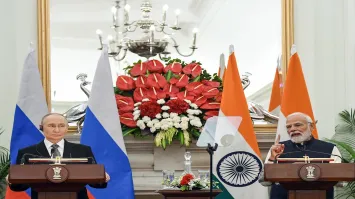
Crowds and cameras gathered at the Delhi airport as Vladimir Putin stepped off his aircraft and was received by Narendra Modi with a firm embrace that signalled the weight both leaders attach to a relationship tested by shifting global alignments. The state visit, framed by Moscow and New Delhi as an effort to reinforce political and economic cooperation, comes at a moment when both sides are seeking predictable partners amid geopolitical uncertainty.

Putin’s arrival on Thursday marked his first trip to the country in more than a year, timed to draw attention to long-standing strategic ties that have endured pressure from global sanctions on Russia and growing competition among major powers for influence in Asia. Modi’s greeting, captured widely by broadcasters, highlighted the government’s intention to maintain a working partnership with Moscow even as it deepens cooperation with Western governments on defence, technology and energy.

The two leaders are expected to focus on trade flows, defence equipment support, energy security arrangements and joint manufacturing proposals that have gained momentum since early 2024. Officials familiar with the agenda have pointed to Moscow’s push for expanded settlements in national currencies, aiming to mitigate complications arising from sanctions that have disrupted traditional payment channels. New Delhi has been looking for greater clarity on oil supply commitments, pricing transparency and long-term contracts, following fluctuations in global markets that prompted domestic refiners to diversify purchases.

Defence cooperation remains central to the partnership, though the balance has shifted over the past decade as New Delhi has widened procurement from the United States, France and other suppliers. Russia continues to service and upgrade a significant share of the armed forces’ equipment, and ongoing discussions cover spare-parts support, maintenance of legacy systems and joint development pathways that may offer greater flexibility than standalone purchases. Analysts tracking the talks say Moscow is keen to retain its foothold in the defence market while showcasing its willingness to adapt to collaborative production models.

Energy will feature prominently during the discussions as Russia seeks greater investment in its upstream projects and hopes to secure broader participation from New Delhi in pipeline and liquefied natural gas initiatives. Indian refiners have emerged as important buyers of Russian crude despite logistical and payment challenges, and both sides are expected to address delivery mechanisms that would reduce delays and improve predictability. Officials have also been reviewing possibilities for expanding cooperation in nuclear energy, where previous agreements have laid the groundwork for additional reactor units at existing sites.

Bilateral trade has risen sharply over the past two years, driven largely by energy imports, but New Delhi has expressed concerns about the wide imbalance, with exports to Russia trailing significantly. Commerce officials have been pushing for easier access for pharmaceuticals, agricultural goods and engineering products, arguing that a more balanced structure would strengthen the sustainability of the economic relationship. Russian representatives arriving with the delegation have proposed expanded use of logistics corridors passing through Central Asia, which they say would ease transport costs for exporters on both sides.

Regional security dynamics form another layer of the discussions, particularly Moscow’s role in Eurasia and its ties with Beijing. Diplomats note that New Delhi continues to walk a delicate line, maintaining cooperation with Russia while strengthening its partnerships across the Indo-Pacific. Strategic analysts caution that both sides must navigate sensitive points, including Moscow’s position on territorial disputes and broader alignments that could shape regional balances over the coming decade.

Putin’s schedule includes a ceremonial welcome, delegation-level talks and a review of key agreements under negotiation. Officials have indicated that deliverables may include frameworks on energy cooperation, updated defence industrial collaboration and initiatives supporting educational exchanges and technological research. Cultural diplomacy also features prominently, with both governments emphasising people-to-people connections that have historically underpinned the relationship.

The optics of the visit carry domestic significance for both leaders. Modi’s government seeks to project continuity in foreign policy through engagement with all major powers, underscoring its commitment to strategic autonomy. For Putin, the reception in New Delhi offers an opportunity to demonstrate that Russia retains influential partners beyond Europe and North America, reinforcing narratives about its engagement with Asia’s leading economies.

Analysts observing the visit note that the personal rapport between the two leaders has helped maintain channels of communication through periods of global stress. Their discussions routinely touch on multi-year strategic frameworks covering defence, energy, industrial cooperation and regional diplomacy, areas where incremental progress continues despite broader geopolitical complications.


Australia is rolling out a law that will bar under-16s from holding or creating accounts on major social media platforms — a first for any democracy — setting a possible precedent for other countries to follow. From 10 December 2025, services such as Facebook, Instagram, TikTok, Snapchat, YouTube, Reddit, X, Threads, Twitch and Kick must ensure no user under 16 is registered, or face fines of up […]

The European Commission imposed a €120 million penalty on X, formerly known as Twitter, citing multiple violations of the Digital Services Act — the bloc’s landmark digital marketplace and content-governance regulation. The penalty covers three specific breaches: the platform’s so-called “blue check” verification system, insufficient transparency in advertisements, and failure to provide adequate public data access for researchers. Brussels flagged the blue-tick verification change under Elon Musk […]

BEIJING, CHINA – Media OutReach Newswire – 5 December 2025 – Peng Liyuan, wife of Chinese President Xi Jinping, and Brigitte Macron, wife of French President Emmanuel Macron, visited the Beijing People’s Art Theatre on Thursday to learn about the theatre’s development and its cultural exchanges with the French theatre community. Following the visit, CGTN published an article highlighting the rich cultural and people-to-people exchanges in recent […]

Forecasts from major US banks suggest the bull market will remain intact in 2026, with some projecting the S&P 500 above 7,500 by year end. The latest Financial Times survey, covering nine major investment banks, reinforces this confidence with an average forecast of roughly 10% upside from current levels. I understand why that optimism exists. The US economy continues to outperform expectations, corporate earnings have held up, […]

A new specialised laboratory for testing and certifying sustainable aviation fuel is being set up in Fujairah, marking a significant expansion of the UAE’s ambitions to become a leading hub for low-carbon aviation fuels across the Middle East and North Africa. The project, developed by MENA Biofuels in partnership with Saybolt, is positioned as the first facility of its kind in the country dedicated to sustainable aviation fuel testing and is expected to strengthen the supply chain for carriers adopting cleaner fuel blends.

The laboratory will be located within the Fujairah Oil Industry Zone, one of the region’s key energy storage and logistics centres. According to the developers, the facility will operate under internationally recognised standards and provide independent verification and certification services for SAF produced in the UAE and the wider region. This will allow aviation fuel suppliers to meet the stringent quality and sustainability benchmarks required by global regulators and airlines, many of which are targeting large-scale SAF adoption over the coming decade.

MENA Biofuels and Saybolt have indicated that the lab is being designed to serve both domestic producers and international clients moving fuel through Fujairah’s terminals. Industry analysts note that Fujairah’s strategic location on the global maritime route linking the Gulf to Asia and Europe gives the new testing operation considerable potential to influence regional fuel flows. The developers said the initiative reflects growing demand among airlines for certified SAF, which is viewed as one of the most immediate pathways to reducing aviation emissions.

The UAE has been expanding investments in biofuels as part of its broader decarbonisation strategy, with several aviation stakeholders stepping up procurement of SAF blends for commercial flights. Etihad Airways and Emirates have both trialled SAF operations, while Abu Dhabi and Dubai authorities have emphasised the need for stronger regional production capacity. Industry data indicates that SAF supply remains constrained worldwide, making certification infrastructure a critical component for scaling up output. The new Fujairah lab aims to close a gap in regional capabilities by offering end-to-end testing that aligns with international requirements established by organisations such as ASTM International, which governs SAF specifications.

Saybolt, an inspection and testing group with long-standing operations in global energy markets, is expected to lead the technical management of the laboratory. Its role will involve implementing fuel-testing protocols, quality assurance systems and sustainability verification frameworks. Executives familiar with the arrangement said the partnership combines Saybolt’s technical expertise with MENA Biofuels’ regional network and logistics access. Market observers believe this gives the venture a strong foundation to support both emerging SAF producers and established energy companies evaluating diversification into aviation biofuels.

The decision to anchor the lab within the Fujairah Oil Industry Zone aligns with local authorities’ push to broaden the zone’s portfolio beyond crude and refined products. The zone already hosts significant tank storage, bunkering and refining infrastructure, and expanding into sustainable fuels aligns with the UAE’s national energy transition commitments. Investors and analysts have pointed to Fujairah’s ability to handle large volumes of fuel as an advantage for SAF certification, particularly for producers that require rapid turnaround on testing to meet airline delivery schedules.

Aviation industry figures have highlighted that the move addresses a structural bottleneck in the SAF market. Certification processes are often conducted in Europe or the United States, adding cost and delay for producers operating in the Gulf. By offering testing capacity locally, the Fujairah lab is expected to reduce lead times and encourage investment in regional SAF manufacturing. Some analysts say the initiative may draw interest from energy companies in neighbouring Gulf states exploring SAF pathways as part of their decarbonisation agendas.

Airline industry targets have accelerated demand for SAF, with global carriers collectively aiming for significant emissions reductions by 2030. Several Gulf-based airlines, including those operating through Abu Dhabi, Dubai and Sharjah, have pledged to expand their use of sustainable fuel blends once supply becomes more stable. SAF production in the region remains at an early stage, but energy firms have been evaluating waste-to-fuel pathways, renewable feedstocks and partnerships with technology providers to scale output. The establishment of credible certification capacity is viewed as an essential precursor to commercial production.

Hyundai Motor Group has unveiled its first mass-produced mobility robot platform, named MobED, at iREX 2025 in Tokyo. The compact, four-wheeled robot combines automotive-grade engineering with AI-driven autonomy to cater to a wide range of industrial and everyday applications. MobED incorporates a hardware architecture built around an “eccentric control mechanism,” allowing it to adjust posture and height dynamically across varied surfaces. This ensures stable navigation over uneven […]

A fully digital escrow service for vehicle ownership transfers has been introduced through a partnership between SlashData and the Integrated Transport Centre, marking a significant shift in how transactions between buyers and sellers are executed in the UAE. The rollout of the platform known as Shary signals an effort to reduce paperwork, lift administrative burdens, and strengthen confidence in a market where used-car transactions continue to expand. […]

The tech company behind Ubuntu is winding down its long-standing public wiki sites by August 2026 and launching a completely rebuilt wiki to address mounting concerns over content quality, security and usability. The existing public wikis — at wiki. ubuntu. com and help. ubuntu. com/community — have served the global Ubuntu community for more than two decades. But in a post titled “A new Ubuntu wiki, Part […]

A 25-basis-point reduction in the policy repo rate has set the stage for a notable shift in housing sentiment as the year draws to a close, giving the real estate sector a stronger footing after months of price escalation across major urban centres. Market participants described the cut as a timely boost for homebuyers facing rising borrowing costs and double-digit appreciation in property values through 2025, with many developers expecting the decision to influence purchase behaviour almost immediately.

The RBI move lifts realty outlook theme echoed through the sector as developers, housing finance executives and market analysts assessed the implications of lower lending rates on affordability and sales velocity. The cut follows earlier easing phases this year, forming a broader cycle aimed at supporting domestic demand while keeping inflation within the central bank’s comfort range. Housing markets have been particularly sensitive to borrowing costs, and the value proposition for aspiring homebuyers had tightened as average prices climbed around 10% across the seven largest cities, according to widely tracked industry assessments.

The central expectation among market analysts is that the rate cut could ease pressure on households evaluating home purchases in the affordable and mid-income categories. These segments have shown persistent demand through the year, supported by rising urban employment and continuing interest from younger households. Yet higher prices and limited correction in construction costs have constrained affordability. A lower repo rate opens the possibility of more competitive home loan pricing once lenders adjust their marginal cost of funds-based lending rates and benchmark-linked rates.

Banks are now under scrutiny for the pace at which they transmit the reduction to borrowers. Transmission has varied across lenders in earlier cycles, with some responding quickly and others adjusting rates more cautiously, depending on liquidity conditions and deposit costs. Senior executives in the mortgage market indicated that lending rate revisions are under active consideration and that competitive pressure would likely encourage faster alignment. A prompt pass-through is expected to be a decisive factor in determining whether the anticipated surge in sales materialises through the first quarter of 2026.

Developers are preparing for an uptick in enquiries, particularly from buyers who had deferred decisions amid upward price trends. Several large developers noted that ready-to-move inventory in key metros has been absorbed at an accelerated pace this year, leaving new launches in the mid-income category positioned to capture renewed interest. Many builders believe that households that had been undecided due to higher equated monthly instalments would reassess their position once banks adjust retail lending rates, potentially adding momentum to year-end bookings.

Luxury housing, which has played an outsized role in supporting revenue growth in the sector this year, is expected to maintain its strong performance into 2026. This segment has been less affected by interest rate movements, relying instead on wealth-driven demand and portfolio diversification among high-net-worth buyers. Developers pointed to sustained traction in high-value projects across major metros, supported by resilient stock market gains and stronger capital inflows into premium residential assets.

The affordability challenge, however, remains significant for many households despite the policy easing. Construction input costs have risen steadily over the year, and land prices in established urban clusters show no sign of correction. These factors have been passed on to consumers, compressing the share of buyers in the lower and mid-income categories who are able to meet both down-payment requirements and monthly repayment thresholds. The rate cut eases the burden but does not eliminate structural pressures, prompting some market economists to emphasise the need for calibrated price discipline and wider supply in budget-friendly categories.

Housing finance companies have also highlighted the potential for refinancing activity as borrowers explore opportunities to switch to lower-rate products. Such movement typically intensifies during periods of policy easing and can influence lender strategies as they work to retain existing customers. The scale of refinancing will depend on how individual lenders approach rate revisions and how aggressively they compete for home loan market share.

Manchester City and Etihad Airways unveiled a new immersive content piece, “Lights Out”, which places players Erling Haaland, Rayan Aït-Nouri and Nico O’Reilly inside a virtual version of the Yas Marina Circuit, blending advanced augmented-reality highlights and player-tracking data to re-imagine key moments from Manchester City’s season. The launch coincides with heightened interest in the 2025 Etihad Airways Abu Dhabi Grand Prix, adding a fresh digital spectacle to build fan excitement ahead of one of motorsport’s biggest weekends.

This marks the latest collaboration between the club and airline following their “Beyond Borders” campaign earlier this year, which first brought match highlights into stylised virtual worlds tied to Etihad’s expanding global destinations — notably highlighting new routes including Krabi, Hanoi and Sumatra. The “Lights Out” video replicates defining plays and celebrations from the 2024/25 campaign such as deft finishes and memorable goals, now reframed within the futuristic circuit environment of Yas Marina.

Beyond just replaying match footage, the content integrates virtual storytelling features. Fans witness Haaland’s trademark celebration as a robotic animation, while Aït-Nouri appears to race through Hanoi’s iconic Train Street — a nod to Etihad’s global network and its commitment to linking sport with travel experiences. This blend of sport and travel marketing reflects a broader trend among major clubs and sponsors seeking to expand engagement beyond traditional media into immersive digital formats.

For supporters of the Abu Dhabi Grand Prix, the timing amplifies the atmosphere surrounding the 2025 season finale. Organisers say this edition will be the largest yet, with enhanced fan experiences, expanded cultural access and expected turnout surpassing past years. The convergence of a high-stakes motorsport finale and a high-tech football release highlights how sports entities are increasingly cross-pollinating content across disciplines to tap into global fan bases.

Taiwan’s financial authorities have confirmed that the territory is preparing to introduce its first regulated stablecoin by the second half of 2026, marking a significant step in its oversight of digital assets. The move establishes a formal framework for issuers and signals a wider effort to balance financial innovation with stricter consumer safeguards.

The Financial Supervisory Commission said the project aims to create a compliant asset-backed token that can operate within a supervised environment. Officials outlined that the proposed model would require issuers to undergo licensing, maintain verifiable reserves and implement robust disclosure rules. The initiative forms part of a broader regulatory roadmap that includes enhanced governance standards for exchanges and custodians, supplemented by anti-money laundering protocols already legislated in earlier phases of Taiwan’s digital asset oversight.

Taiwan has seen increased retail interest in digital tokens over the past two years, accompanied by concerns about informal trading platforms and fragmented reserve practices. Authorities have been developing clearer definitions around virtual asset providers, following earlier commitments to draft bespoke legislation for the sector. The stablecoin proposal marks the first time regulators have publicly set a target date for a national, fully supervised token that can circulate in mainstream financial channels.

Officials involved in the planning process described the stablecoin framework as an attempt to reduce systemic vulnerabilities that arise from lightly governed instruments. They indicated that the 2026 timeline allows sufficient room for market consultation with local banks, fintech operators and blockchain firms. The authorities emphasised the need for transparency around backing assets, independent audits and liquidity arrangements to prevent redemption shocks during periods of market stress.

Taipei’s policy trajectory mirrors a wider shift across Asia, where governments have begun formalising rules for digital currencies amid concerns about financial stability and technological competitiveness. Japan’s stablecoin regulations came into force earlier, requiring issuers to be banks, trust companies or registered intermediaries. Singapore’s approach has focused on wallet security, reserve segregation and consumer risk warnings. Taiwan’s proposed regime appears to blend elements of both models, adapting them to domestic institutions and supervisory capacities.

Market analysts say the announcement demonstrates how regulators are transitioning from broad guidance to more detailed rule-making. They note that several local financial institutions have shown interest in blockchain-based settlement systems but have lacked the legal certainty required to develop pilot projects. A regulated stablecoin could allow banks to explore tokenised deposits, speed up cross-border payments and reduce settlement backlogs, provided the technology meets stringent compliance standards.

Developers and industry groups argue that clarity around governance will be crucial to gaining public trust. They expect Taiwan’s framework to include ring-fencing of reserves, real-time reporting tools and strong oversight of custodial arrangements. Several blockchain service providers in Taiwan have already contributed to consultation papers, advocating for interoperability with international systems and stronger penalties for misappropriation of client funds.

Policy advisers involved in the consultation say authorities are mindful of global regulatory pressure, as jurisdictions coordinate rules for financial stability and cross-market supervision. They note that Taiwan has studied overseas cases where unbacked or poorly audited stablecoins faced severe liquidity issues, prompting large-scale withdrawals and disruptive price swings. Officials believe a regulated model will help Taiwan avoid similar vulnerabilities and foster safer digital innovation.

Some opposition lawmakers have urged the commission to publish more technical details, particularly regarding the choice of reserve assets, settlement architecture and the criteria required to issue the token. They want clearer rules on redemptions, consumer rights and supervisory intervention during market volatility. Financial regulators responded that these elements remain under review and will be formalised following extended consultation with the private sector.

Industry observers expect the stablecoin to be structured as a fully collateralised token backed by high-quality liquid assets such as government bonds or cash equivalents. This design is intended to minimise counterparty risk and ensure immediate redemption at par value. Regulators are also exploring how to embed cybersecurity requirements and resilience testing into the licensing regime, responding to heightened concerns about digital infrastructure vulnerabilities.

VISHNU RAJA
RYO YAMADA
HITORI GOTOH
IKUYO KITA