Just in:
Promoting Common Human Development Through Exchanges and Mutual Learning Among Civilizations // Workday targets Honeydew purchase to unify AI metrics // Sabarimala booking discrepancies prompt sabotage angle probe // Saudi defences destroy three Houthi missiles targeting Riyadh // Russia permits retail cryptocurrency purchases under regulated framework // Ex-minister named accused in Messi visit fraud case // Phancy Announces Business Performance for the Nine Months Ended September 30, 2026 // Dubai Introduces SHARH, an AI-Powered Platform Helping Entrepreneurs Buy, Sell and Manage Businesses in the UAE // Saudi Arabia schedules multinational top-up tax for 2027 //
Centre grants aircraft cabin access for Sabarimala pilgrims’ irumudi
// Thailand’s Most Iconic New Year’s Celebration Returns: ICONSIAM Unveils “Amazing Thailand Countdown 2027” // Crypto market loses $150 billion amid broad sell-off // Dalilk Academy reaches 27 million, targets 100 million by 2030 // 2026 Tropical Rainforest Ecosystem Partners Conference Kicks off in Hainan // Yeebo Announces Interim Results for FY26/27 Revenue Increases by 45.5% to HK$806.7 Million Profit Attributable to Owners Surges 87.6% to HK$2,284.7 Million // ED searches five districts in probe against hawala // Toward a Shared Future for Humanity: Rethinking Civilizational Exchange // Padmini follows Padmaja for ‘ghar vapsi’ // Bail refused to 17-year old in Abhiram murder // Sui activates Hashi Bitcoin lending across partner network //

News related to
Low oil

China is preparing to draw on its extensive commercial crude stockpiles as instability linked to Iran threatens to tighten global supply, signalling a shift in how the world’s largest oil importer manages energy security under geopolitical strain.

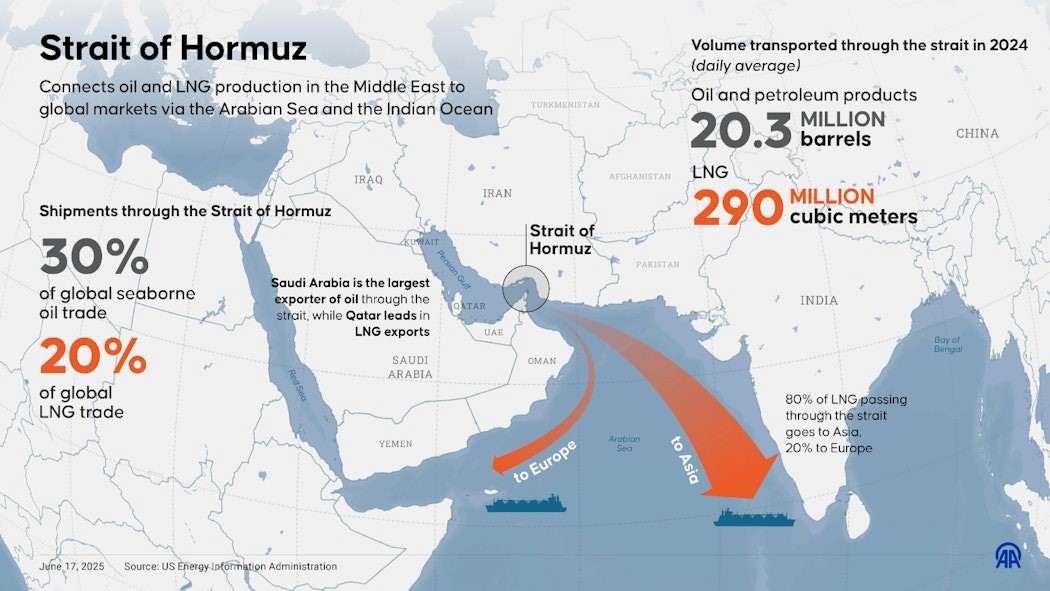
Energy consultancy FGE NexantECA indicates that Beijing is nearing a decision to utilise privately held and state-influenced reserves to cushion domestic markets against potential disruptions from escalating conflict in the Middle East. The move reflects growing concern that sustained tensions involving Iran could constrain exports through critical shipping routes, including the Strait of Hormuz, a chokepoint for a significant share of global oil flows.

China has accumulated vast inventories over the past decade, combining strategic petroleum reserves with commercial storage held by state-owned refiners and independent operators. Analysts estimate that total holdings run into hundreds of millions of barrels, giving authorities a substantial buffer to stabilise supply without immediately increasing imports at elevated prices.

The prospect of tapping these reserves comes as benchmark crude prices show heightened volatility, driven by fears of supply interruptions and insurance risks for tankers navigating Gulf waters. Traders have been pricing in the possibility of reduced Iranian exports, either through direct disruption or tighter enforcement of sanctions amid shifting geopolitical alignments.

Officials in Beijing have not publicly confirmed any imminent release, but market signals suggest preparatory steps are under way. Refining margins in Asia have narrowed, while import patterns indicate a degree of caution, with some buyers delaying cargoes or seeking alternative suppliers outside the Middle East. The strategic calculus appears focused on avoiding panic buying that could exacerbate price spikes.

China’s approach differs from coordinated releases led by the International Energy Agency, which typically involve government-controlled reserves. Instead, the country has increasingly relied on a hybrid system where commercial inventories can be mobilised through administrative guidance. This model allows for flexibility while maintaining a degree of opacity, limiting the market impact of official announcements.

Industry experts note that the scale of China’s stockpiles gives it a unique capacity to influence regional demand dynamics. A measured release could dampen immediate import requirements, easing pressure on global benchmarks. At the same time, sustained withdrawals would need to be balanced against the need to rebuild inventories, particularly if geopolitical risks persist.

The Iran factor remains central to the outlook. Despite sanctions, China has continued to import significant volumes of Iranian crude, often through indirect channels. Any escalation that disrupts these flows would force refiners to seek replacements from other producers, including Russia, Saudi Arabia and Iraq, potentially reshaping trade patterns across Asia.

Shipping constraints add another layer of complexity. Insurers have raised premiums for vessels operating in high-risk zones, while some operators are reconsidering routes to minimise exposure. These developments could tighten effective supply even if production levels remain unchanged, reinforcing the rationale for drawing on stored barrels.

Domestic considerations also play a role. China’s economic recovery has been uneven, with industrial activity and transport demand fluctuating. Authorities are keen to prevent energy costs from becoming a drag on growth, particularly as policymakers navigate broader challenges in the property sector and export markets. Using reserves offers a tool to smooth price shocks without resorting to aggressive monetary or fiscal measures.

The move aligns with a broader trend among major economies to reassess energy security strategies in an era of heightened geopolitical risk. Strategic stockpiles, once seen primarily as emergency buffers, are increasingly being deployed as active instruments of market management. China’s large-scale storage capacity positions it at the forefront of this shift.

Market participants are closely watching for signs of implementation. A sustained drawdown could influence price expectations, especially if combined with policy signals discouraging speculative buying. Conversely, a limited or symbolic release may have only a modest effect, serving more as a reassurance to domestic consumers than a decisive intervention.

Producers in the Middle East are also monitoring developments. Any reduction in Chinese import demand could affect export volumes and pricing strategies, particularly for grades competing directly with Iranian crude. At the same time, alternative suppliers may see opportunities to capture market share if disruptions intensify.


Arabian Post Staff -Dubai UAE’s central bank has approved a sweeping package aimed at strengthening financial institutions against mounting global and regional pressures, signalling a calibrated shift from precaution to structured resilience in one of the Gulf’s largest banking systems. The move, endorsed by the Board under the direction of the Chairman, introduces a Financial Institution Resilience Package designed to safeguard liquidity, enhance capital buffers and reinforce […]

Tesla is assessing temporary policy changes for its Supercharger network across Gulf countries following heightened regional security tensions linked to Iran, amid unverified claims circulating online that the company has already made charging free in the region. No official confirmation has been issued by Tesla or its chief executive Elon Musk that all Supercharger services in Gulf Cooperation Council markets have been made free of charge. Industry […]

By Nitya Chakraborty On Wednesday, the 18th day of the U.S.-Israel combo’s war against Iran, Trump got two bad news simultaneously which made him ponder on how to go about on his next forward strategy to ensure Iran’s submission to the U.S. might. The first news was the European governments have refused to respond to […]

The article Trump Is Facing His Moment Of Truth In Iran War With Isolation From NATO appeared first on Latest India news, analysis and reports on Newspack by India Press Agency).

China has announced emergency humanitarian assistance for Iran, Jordan, Lebanon and Iraq, signalling a widening diplomatic and relief effort across a region grappling with economic strain and security volatility. Beijing’s foreign ministry said the aid would target urgent humanitarian needs, including medical supplies, food assistance and reconstruction support in areas affected by conflict and economic disruption. The move reflects China’s growing engagement in Middle Eastern affairs, where […]

Supply chains across the Gulf are under mounting strain as escalating conflict in the Middle East disrupts shipping lanes and drives a sharp rise in insurance premiums, with business leaders warning of wider economic fallout and higher consumer prices. The Federation of GCC Chambers said companies across member states were facing severe logistical bottlenecks after maritime risks intensified in key transit routes, including the Strait of Hormuz […]

Escalating hostilities involving Iran have entered a third week, prompting growing unease across financial markets in the Gulf as investors recalibrate risk exposure amid fears of a prolonged conflict and wider regional spillover. Equity markets in the UAE have shown heightened volatility over the past several trading sessions, reflecting a cautious shift in sentiment as geopolitical uncertainty intensifies. Analysts say the sustained confrontation is beginning to influence […]

Advertisements

Greenlogue/AP Escalating conflict involving Iran has triggered sharp volatility across global energy markets, prompting a stark warning from the United Nations’ climate leadership that the turmoil exposes structural dependence on fossil fuels and reinforces the urgency of transitioning to cleaner energy systems. Simon Stiell, executive secretary of the United Nations Framework Convention on Climate Change, described the disruption as a clear demonstration of how geopolitical shocks tied […]

By Nantoo Banerjee Notwithstanding the assurance given in Parliament last week by Union Petroleum and Natural Gas Minister Hardeep Singh Puri on India’s ‘robust’ energy supplies, fuel and gas prices in the country are expected to shoot up soon in keeping with the global trend. The minister’s statement appears to be substantially political having little […]

The article Petro Products Prices In Import-Dependent India May Surge Further appeared first on Latest India news, analysis and reports on Newspack by India Press Agency).

Arabian Post Special Missile and drone strikes linked to the widening confrontation around Iran have forced Gulf governments to confront a reality long considered unlikely: the region’s economic hubs, energy infrastructure and aviation networks can no longer assume insulation from large-scale conflict. Airports, oil terminals and urban centres across the Gulf have experienced disruptions as Iranian projectiles and drones targeted sites tied to military or logistical support […]

Chicago soybean futures retreated on Monday as traders reassessed market optimism that had lifted prices to near two-year highs the previous week, with uncertainty over a possible delay in talks between United States President Donald Trump and China’s President Xi Jinping prompting fresh caution in agricultural markets. The decline in soybean prices followed strong gains driven by expectations that renewed diplomatic engagement between Washington and Beijing could […]

President Donald Trump’s call for China to deploy naval forces to protect shipping in the Strait of Hormuz has stirred a sensitive strategic debate in Beijing, drawing attention to the question of whether the world’s second-largest economy should assume a greater military role in safeguarding global trade routes. Trump argued that China, as one of the largest importers of Gulf energy supplies, should contribute naval assets to […]

Gulf Cooperation Council countries are reinforcing their role as a pivotal force in the global energy system, with new data showing that the region’s strategic mix of natural resources, advanced infrastructure and expanding energy investments continues to shape international markets. Figures compiled by the GCC Statistical Centre point to sustained energy output across the six-member bloc — Saudi Arabia, the United Arab Emirates, Kuwait, Qatar, Bahrain and […]

Britain’s counter-drone and air-defence units have shot down multiple Iranian drones across the Gulf theatre as London expands what it describes as a strictly defensive military posture, with ministers arguing the operations are aimed at protecting British personnel, allied states and vital regional infrastructure rather than joining any offensive campaign against Tehran. The latest intercepts come as tensions around the Gulf and the wider Middle East continue […]

SINGAPORE – Media OutReach Newswire – 16 March 2026 – Months before the current geopolitical crisis hit global markets, Asia Pacific (APAC) executives had begun shielding their businesses by shortening supply chains and focusing on regional trade. Forvis Mazars’ C-suite barometer 2026: Adapting in uncertainty shows this proactive approach, alongside with efficiency-driving AI investments, is now key to navigating today’s global challenges.
While the number of APAC leaders expecting revenue growth had dropped to 67% (down from 80% in 2025) ahead of this year, underlying business confidence had notably strengthened to 41% (up from 30% in 2025). This contrast, lower growth expectations yet stronger confidence, highlights a resilience paradox: leaders are separating financial outlook from global turmoil, actively reinventing their operations to endure anticipated shocks rather than waiting for conditions to improve.
Key findings for APAC:
  • Measured confidence amidst geopolitical volatility: Amidst ongoing geopolitical volatility, APAC leaders remain acutely aware of the shifting landscape. Notably, 29% cite geopolitical instability and social unrest as a top trend impacting their organisation over the next 12 months, outpacing the global average of 26% and tying with regulatory pressures. Consequently, growth expectations are tempered: while 83% still anticipate positive growth in 2026, this trails the global average of 92% and marks a decline from 84% in 2025.
  • Expansion turns inward: Driven by geopolitical and tariff risks, expansion plans have shifted to regional neighbours, with China (36%), Australia (29%) and Hong Kong (29%) as the top destinations.
  • AI is a net job creator: Defying global displacement fears, 43% of APAC leaders say AI has created new roles in their organisation, significantly outpacing the 28% who say it replaced them.
  • The sustainability gap: While 91% are confident in meeting reporting compliance, only 73% feel prepared to manage the actual physical impacts of climate change.
The APAC resilience paradox: Building structural resilience despite lower revenue expectations
The anticipated dip in revenue expectations was primarily driven by converging pressures that have only intensified: economic uncertainty, political instability and intensifying competition. Yet, this foresight did not dampen investment. In a clear sign that businesses are fortifying their foundations, investment in human capital remains strong across the region, with 63% of APAC respondents plan to increase spending on acquiring new talent and 68% intend to upskill their workforce.
APAC’s underlying optimism is supported by a high level of operational readiness. Even as geopolitical instability remains a top concern, 76% of executives express confidence in their organisation’s preparedness to manage it. This sentiment extends to navigating supply chain challenges (85%) and new regulatory requirements (91%), showing that leaders are turning global disruptors into manageable areas of control.

Rick Chan, Managing Partner Singapore, Head of Audit & Assurance APAC and Member of Group Governing Board, Forvis Mazars, observed, “Asia Pacific has always had to move fast. The region’s businesses are built on agility – on reading the market, adjusting quickly and staying close to customers. That DNA is proving invaluable right now. The data shows leaders are transitioning from short-term firefighting to building lasting resilience. By investing in localised supply chains and AI, they are taking highly practical steps to insulate their operations against escalating geopolitical risks and secure long-term growth.”
The strategic pivot: strengthening intra-regional trade
The barometer reveals a fundamental change in how APAC firms plan to grow. Rather than facing global trade barriers head-on, executives are pivoting to markets closer to home. The top three expansion destinationsareChina (36%), Australia (29%) and Hong Kong (29%).
This inward shift is a direct, data-driven response to rising global tensions. A striking 67% of APAC leaders who revised their expansion plans this year cited geopolitical instability as the primary driver, making it the top catalyst for changing global strategies. Furthermore, 42% cite costs and operational issues due to tariffs as their biggest challenge when entering new markets. Facing these dual threats, APAC businesses have pragmatically shortened their supply chains to secure growth in neighbouring markets where geopolitical and tariff risks are more manageable.

The growth engine: AI as a workforce catalyst
In an environment where operational margins are under pressure, AI has become a critical tool for efficiency. Notably, the data indicate that AI is a net job creator in the region. 43% of APAC C-suite leaders report that AI has already prompted the creation of new roles, compared to 28% who report job replacements.

While 47% of executives rank AI as their top technology priority, their approach is disciplined. APAC leaders are prioritising high-impact applications such as forecasting (65%), knowledge acquisition, banking and retrieval (61%), client services, recommendations, relationships (61%), and operational efficiency, including automation (60%). Interestingly, they are achieving these gains with leaner investment; 41% (versus 35% globally) allocate less than 10% of their budget to AI, suggesting a focus on cost-effective, high-return AI adoption.
The blind spot: the sustainability gap – compliance versus operational resilience
While the report highlights strategic maturity in technology and trade, it reveals a critical disconnect in sustainability. Although 91% of APAC executives express confidence in meeting sustainability reporting compliance, only 73% feel prepared to manage the actual physical and operational impacts of climate change. This disparity indicates that while they are confident in meeting regulatory expectations, the priority now is to bridge the gap between compliance and reality, specifically by strengthening supply chains and building physical resilience against tangible climate risks.
Chester Liew, Partner, Head of Risk Consulting & Sustainability, Forvis Mazars in Singapore, said, “High confidence in reporting compliance is an encouraging baseline, but paperwork does not protect operations. The foresight APAC leaders are demonstrating in navigating geopolitical risks must now be urgently applied to climate risks. With regulatory timelines providing some breathing room, the prudent next step is to pivot resources from disclosure to physical defence – ensuring that supply chains and physical assets can actually withstand extreme weather and emerging environmental shocks.”
Forvis Mazars’ 2026 C-suite barometer survey captures insights from 3,012 senior executives worldwide prior to the US-Israeli war with Iran in February 2026. This independent research was conducted in October and November 2025 and captures the views of C-suite leaders at for-profit organisations with annual revenues of over US$1 million across 40 countries, including 260 respondents from seven markets in the Asia-Pacific region: Australia, China, Hong Kong, India, Japan, Singapore and South Korea. Findings reflect executive sentiments at the time of fieldwork.

Hashtag: #ForvisMazars #ForvisMazarsSingapore #APACBusiness #BusinessOutlook2026 #ExecutiveInsights #LeadershipTrends #AIAdoption #DigitalTransformation #Sustainability #ClimateResilience


The issuer is solely responsible for the content of this announcement.

Forvis Mazars in Singapore

About Forvis Mazars in Singapore
Forvis Mazars Group SC is an independent member of Forvis Mazars Global, a leading professional services network. Operating as an internationally integrated partnership in over 100 countries and territories, Forvis Mazars Group specialises in audit, tax and advisory services. The partnership draws on the expertise and cultural understanding of over 40,000 professionals across the globe to assist clients of all sizes at every stage in their development. Forvis Mazars in Singapore is part of the Forvis Mazars Group. Our clientele benefits from the combined expertise of 400+ Singapore-based professionals and our international team.

About Forvis Mazars APAC
Present in Asia Pacific since 1997, Forvis Mazars operates in more than 15 countries and territories in the region and draws on the expertise of over 10,100 professionals in more than 60 offices. We work as one integrated team, leveraging expertise, scale and cultural understanding to deliver exceptional and tailored services in audit and accounting, as well as tax, financial advisory, outsourcing, consulting, sustainability and legal services.

| |

Switzerland’s federal government is preparing to determine how much additional capital UBS Group AG must hold as regulators complete a major overhaul of banking rules following the collapse of Credit Suisse. The decision, expected in April, will set the tone for one of the most significant regulatory shifts in the country’s financial sector since the emergency takeover that reshaped Swiss banking. Authorities are weighing stricter capital requirements […]

Arabian Post Staff -Dubai Aluminium Bahrain BSC, operator of the world’s largest single-site aluminium smelter, has begun a phased shutdown of part of its production capacity in an effort to conserve dwindling raw-material supplies as shipping routes in the Gulf face severe disruption. The company, widely known as Alba, confirmed that it has taken three production lines offline, representing about 19 per cent of its annual output […]

Rising oil prices linked to the war involving Iran are creating fresh economic strain for Indonesia just as millions prepare for the annual Eid al-Fitr travel surge, placing President Prabowo Subianto’s administration under mounting pressure to shield consumers from higher fuel costs.

Energy markets have been rattled by escalating conflict across the Persian Gulf, where attacks on shipping routes and oil infrastructure have disrupted global crude supplies. A large share of the world’s petroleum exports passes through the Strait of Hormuz, a narrow maritime corridor connecting Gulf producers with international markets. Disruption to tanker traffic through this chokepoint has pushed benchmark crude prices sharply higher, triggering fuel price increases across Asia and raising fears of supply shortages in import-dependent economies.

Indonesia faces particular vulnerability because it relies heavily on imported energy. Around a quarter of its crude oil and roughly a third of liquefied petroleum gas supplies originate in the Middle East. Shipping disruptions in the Gulf have already complicated trade flows, with tanker movements slowed by security risks and insurance costs rising for vessels operating in the region. Market volatility has driven crude prices beyond the psychological threshold of $100 per barrel, fuelling concern that further escalation could drive them even higher.

The timing of the price shock has heightened the challenge for Jakarta. Eid al-Fitr, marking the end of Ramadan, triggers one of the largest annual travel movements in the country as families journey from major cities to hometowns across the archipelago. State energy company Pertamina anticipates gasoline demand during the holiday period to climb by more than 10 per cent, intensifying pressure on supply chains already strained by global market turbulence.

Authorities have attempted to reassure the public that domestic fuel supplies remain sufficient. Officials say government stockpiles and logistics networks can support the expected surge in consumption during the festive season. At the same time, policymakers have signalled that subsidised fuel prices will remain unchanged until the Eid holidays conclude, a move designed to prevent abrupt increases in transport costs during the peak travel period.

Holding prices steady carries significant fiscal implications. Indonesia already devotes substantial resources to energy subsidies, allocating more than 380 trillion rupiah in the state budget to keep fuel and electricity costs manageable for households and businesses. Sustaining those subsidies while global oil prices rise could widen the fiscal deficit or force adjustments elsewhere in the budget.

Economists warn that prolonged turbulence in global oil markets may reverberate across the broader economy. Higher crude prices increase the cost of imports and can erode Indonesia’s trade balance, particularly because the country has transitioned from being an oil exporter to a net importer over the past two decades. Analysts estimate that each $10 increase in the price of oil could shave hundreds of millions of dollars from the country’s trade surplus while raising domestic inflationary pressures.

Currency markets have already reacted to the geopolitical shock. The rupiah has faced downward pressure amid investor concerns about rising energy import costs and potential fiscal strain from expanded subsidies. A weaker currency makes fuel imports more expensive, compounding the burden on state finances and increasing the risk that domestic prices may eventually need to adjust.

Officials are exploring alternative strategies to mitigate the impact. One approach involves diversifying crude imports away from the Middle East by securing additional shipments from suppliers such as the United States and other regions less affected by the conflict. Authorities are also considering longer-term measures including accelerated blending of biofuels and the expansion of renewable energy capacity to reduce dependence on imported oil.

Energy security has become a central concern for policymakers across Southeast Asia as the Gulf crisis unfolds. Countries throughout the region rely heavily on imported petroleum and have limited capacity to absorb sustained price shocks. Governments have begun introducing conservation measures, adjusting subsidies, and seeking alternative suppliers as they attempt to stabilise domestic markets.

Indonesia’s logistical challenges are magnified by its geography. The archipelago spans more than 17,000 islands, making fuel distribution complex even during stable market conditions. Sudden shifts in global prices can ripple quickly through domestic supply chains, affecting transportation costs, food prices, and broader consumer inflation.

Political pressures add another layer of complexity for the administration. Public sensitivity to fuel prices has historically been high, and previous attempts to reduce subsidies have sparked protests and social unrest. Managing the current crisis therefore requires balancing fiscal prudence with the need to maintain social stability and support economic growth.

Market analysts say the duration of the Middle East conflict will determine how severe the economic impact becomes. If disruptions to shipping lanes and energy infrastructure persist, global crude supplies could tighten further, pushing prices to levels that strain government budgets and household finances alike. A prolonged crisis could also prompt broader shifts in energy policy, encouraging faster investment in domestic energy resources and renewable alternatives.

Pressure from Washington for allies to help secure shipping lanes in West Asia has placed Tokyo in a delicate strategic position, with senior figures signalling that dispatching Japanese military vessels to the Middle East would face formidable political and legal barriers. Takayuki Kobayashi, policy chief of the ruling Liberal Democratic Party, stated that any move to send Japanese naval assets to escort commercial vessels through the Strait […]

Arabian Post Staff -Dubai Firefighters and emergency teams contained a blaze in the emirate of Fujairah after debris from an intercepted drone fell in the area on Saturday, authorities said, with no injuries reported. Officials confirmed that air-defence systems intercepted the unmanned aerial vehicle before it reached its intended target, but fragments from the interception landed on the ground and ignited a fire. Civil defence crews responded […]

Greenlogue/AP Thick clouds of smoke rising over fuel depots and refineries in Iran have triggered growing concern among scientists and public-health experts that the environmental impact of the ongoing US and Israeli military campaign could linger for decades. Fires sparked by strikes on energy infrastructure have released a complex mix of toxic pollutants into the atmosphere, raising fears of long-term contamination of air, soil and water across […]

New Delhi has pressed Tehran to allow more India-bound vessels to cross the Strait of Hormuz after two liquefied petroleum gas carriers carrying critical fuel supplies cleared the strategic waterway, highlighting the vulnerability of energy flows through one of the world’s most important maritime chokepoints.

Officials confirmed that two Indian-flagged LPG carriers, Shivalik and Nanda Devi, passed through the strait with cargo bound for ports in Gujarat, transporting roughly 92,700 tonnes of cooking gas. The shipments represent more than a day’s requirement for household LPG consumption, providing partial relief amid tightening supplies.

Government representatives indicated that discussions with Iranian authorities are continuing to secure safe transit for additional tankers waiting in the Persian Gulf. More than twenty vessels carrying crude oil and gas destined for India have been held up near the waterway during the standoff, raising concerns over prolonged disruptions to fuel deliveries.

The Strait of Hormuz, situated between Iran and Oman, handles about a fifth of global oil and liquefied natural gas shipments. Any disturbance along this narrow corridor has the potential to reverberate across global energy markets and shipping routes. Escalating tensions across West Asia have already led to attacks on several vessels and heightened security risks for commercial shipping in the region.

Iran’s decision to permit the two LPG carriers to sail through the strait marked an exception to restrictions imposed after military action targeting Iranian infrastructure triggered a broader confrontation. Tehran has maintained that vessels from most countries can navigate the passage but warned that ships from states viewed as hostile could face restrictions or heightened scrutiny.

Diplomatic engagement between New Delhi and Tehran played a role in securing the initial transit. Conversations between Prime Minister Narendra Modi and Iran’s president Masoud Pezeshkian, along with discussions between foreign ministers, focused on safeguarding energy shipments and the safety of nationals in the conflict-affected region.

India depends heavily on Middle Eastern suppliers for its energy needs. About 90 per cent of the country’s imported LPG originates from the region, while a substantial share of crude oil imports also passes through the Strait of Hormuz. That reliance has made the stability of the shipping lane central to the country’s energy security strategy.

Officials from the shipping ministry confirmed that Indian authorities are coordinating with regional partners and monitoring maritime traffic closely. Naval vessels deployed in the Gulf under Operation Sankalp have been keeping watch over merchant ships heading towards the subcontinent, providing situational awareness and escort support where necessary.

Energy analysts say the partial reopening of the route for Indian cargo illustrates the delicate balance between geopolitical confrontation and commercial necessity. Countries reliant on Gulf hydrocarbons have sought diplomatic channels to keep trade flowing even as military tensions complicate navigation in the region.

Oil markets reacted sharply to the conflict surrounding the strait, with benchmark crude prices surging amid fears of prolonged disruption to supply. Traders remain wary that even isolated incidents could affect tanker movements through the corridor, where narrow shipping lanes and heavy traffic leave little room for error.

The two LPG carriers now sailing toward the western coast highlight the importance of maintaining uninterrupted access to the strait. With domestic demand for cooking gas remaining high, authorities have prioritised household supply chains while assessing contingency measures for industrial users if shipments continue to face delays.

Shipping industry figures note that vessels have increasingly adopted precautionary routes or delayed departures until security conditions improve. Insurance costs for tankers operating in the Gulf have also climbed, reflecting the heightened risk environment created by missile strikes, drone attacks and naval deployments in surrounding waters.

Strategic calculations extend beyond immediate fuel deliveries. India has been strengthening diplomatic engagement with Gulf producers and maritime partners to ensure continued energy access during periods of instability. The country has also expanded storage capacity and diversified crude sources over the past decade to mitigate supply shocks.

Even with those measures, the Strait of Hormuz remains a critical artery for trade between the Gulf and Asia. Any sustained restriction would affect not only India but also large importers such as China, Japan and South Korea, which depend on the same route for oil and gas shipments.

By K Raveendran #Oil markets have entered a phase of acute uncertainty as military escalation involving strikes on Iran and the resulting closure of the Strait of Hormuz begin to reverberate through global energy supply chains. Within just over a week of the disruption, more than 12 million barrels of oil equivalent per day of […]

The article Analysts See Prolonged War Cutting Up To 70% Of Crude Output appeared first on Latest India news, analysis and reports on Newspack by India Press Agency).

Arabian Post Staff -Dubai Conflict involving Iran, Israel and the United States has entered a second week, prompting heightened caution across financial markets in the Gulf while investment banks operating in the region signal that their local operations remain in place despite escalating security warnings. Financial institutions active in the Gulf Cooperation Council have indicated that dealmaking teams and advisory units will continue functioning as normal even […]

VISHNU RAJA
RYO YAMADA
HITORI GOTOH
IKUYO KITA