Just in:

News related to
Low oil

Matein Khalid “We went eyeball to eyeball and the other guy blinked” – JFK said about Nikita Peasantovich Shoe Bangarov after Stalin’s henchman in the Red Terror back down in the Cuban missile crisis. Trump has gone eyeball to eyeball with the bond market and Xi Jinping but only the Dragon Empire’s Emperor for Life has blinked while the bond vigilantes have gone berserk in the netherworld […]

The Nigerian National Petroleum Company Limited is under increasing scrutiny following the suspension of its Naira-for-Crude policy, a move that has drawn sharp criticism from various stakeholders who argue it undermines local refinery operations and exacerbates economic challenges. Introduced in October 2024, the Naira-for-Crude initiative aimed to supply crude oil to domestic refineries in exchange for payment in Naira, thereby reducing reliance on foreign exchange and stabilizing […]

By Anjan Roy Just as Donald Trump’s tariffs had shaken the world and the financial markets, a sudden brake on their implementation had equally shocked leaders to market sloggers as much. President Trump had equally abruptly pushed back the time when his “reciprocal” tariffs were to kick in. He deferred it by ninety days and […]

Ajman Bank has divested its stake in Gulf Navigation Holding, concluding a series of direct share transactions valued at AED 173.4 million over the past month. Data from the Dubai Financial Market indicates that nine direct deals, each ranging between 2.6 million and 9 million shares, were executed since March 5. This move signifies the bank’s complete exit from its investment in the Dubai-based shipping company. Previously, […]

Global financial markets are experiencing significant volatility as the United States and China escalate their trade dispute, prompting investors to seek refuge in traditional safe-haven currencies. The Japanese yen and Swiss franc have notably strengthened, while risk-sensitive currencies such as the Australian dollar and Chinese yuan have faced substantial pressure.

The turmoil intensified following President Donald Trump’s decision to impose a 125% tariff on Chinese imports, a move that has overshadowed a 90-day suspension of tariffs for other nations. This action led to a swift response from China, which announced an 84% tariff on U.S. imports and lodged a new complaint with the World Trade Organization. These developments have heightened investor anxiety, leading to a pronounced shift towards assets perceived as safer.

In currency markets, the Japanese yen appreciated to 147.68 per dollar, nearing a five-month high, while the Swiss franc reached 0.87665 per dollar, marking a three-month peak. Conversely, the Australian dollar declined sharply, approaching levels not seen since the early stages of the COVID-19 pandemic. The Chinese yuan also experienced volatility, with the offshore rate nearing record lows at 7.3536 yuan per dollar.

Equity markets have mirrored these currency movements, with significant declines observed across major indices. The S&P 500 experienced a 0.90% drop, reaching one-month lows, while European stocks, represented by the Stoxx 600, fell approximately 4%. Asian markets were not spared, as Japan’s Nikkei tumbled as much as 2.3% in early trading. The heightened trade tensions have sparked fears of a global economic slowdown, prompting investors to reevaluate their risk exposure.

U.S. Treasury yields have also been affected, with the 10-year yield rising sharply. This increase is partly attributed to a lackluster three-year Treasury auction and concerns over the diminishing appeal of U.S. assets as safe havens. The dollar index, which measures the greenback against a basket of currencies, has declined, reflecting broader apprehensions about the U.S. economic outlook amid escalating trade disputes.

The corporate sector is feeling the impact of these developments. Companies such as Stellantis and Cleveland-Cliffs have announced job cuts in response to the uncertain trade environment. Many firms are delaying hiring and investment decisions, citing a lack of clear guidance from policymakers. Business leaders have expressed deep concern over the instability and unpredictability of current trade policies, emphasizing the need for a more consistent and transparent approach.

In the commodities market, gold prices have risen as investors seek safe-haven assets amid the market turmoil. Conversely, oil prices have remained relatively stable, despite the broader market volatility. Analysts attribute this stability to factors such as supply constraints and geopolitical considerations that are currently supporting oil prices.

Market analysts warn that the escalating trade confrontation between the U.S. and China could lead to further depreciation of the yuan and increased market instability. The potential for a full-scale trade war raises concerns about long-term global economic growth and investor confidence. The World Trade Organization has cautioned that prolonged trade disputes could result in significant declines in global GDP, underscoring the need for diplomatic efforts to resolve the tensions.

By Nitya Chakraborty What is happening to the “Neighbourhood First” policy of the Indian Prime Minister Narendra Modi in the year 2025? Modi is an expert in coining attractive slogans whether those finally work or not. For South Asia, he opted for Neighbourhood First and for South East Asia and ASEAN nations Act East. At […]

Global oil prices have fallen to their lowest levels in over four years, driven by escalating trade tensions and fears of a global economic slowdown. Brent crude dropped by 3.79% to $60.44 per barrel, while West Texas Intermediate declined by 4.13% to $57.12, marking their lowest points since February 2021. This decline follows the United States’ implementation of 104% tariffs on Chinese imports, after Beijing maintained its 34% retaliatory tariffs on U.S. goods. The escalating tit-for-tat measures have dampened hopes for a swift resolution, raising concerns about a deepening global recession and diminishing energy demand.

Compounding the situation, the Organization of the Petroleum Exporting Countries and its allies plan to increase output by 411,000 barrels per day in May, potentially leading to a supply surplus. Analysts warn that this move could further destabilize the market. Despite a slight easing from a 1.1 million-barrel decrease in U.S. crude inventories, overall sentiment remains bearish. Goldman Sachs forecasts further declines in oil prices through 2025 and 2026. Additionally, Russia’s ESPO Blend oil has, for the first time, dropped below the $60 Western price cap, underlining the global pressure on oil markets.

In Canada, oil and gas executives are adopting a cautious approach in response to the price slump. Doug Bartole, CEO of InPlay Oil, indicated that while immediate cutbacks in production or spending are not planned, sustained low prices, especially around $50 per barrel, could prompt strategic reassessments. InPlay recently completed a C$321 million acquisition of Alberta oil assets from Obsidian Energy, despite market uncertainties. Analysts from ATB Capital Markets have downgraded InPlay’s share target based on current low WTI price levels. Economist Peter Tertzakian noted that while major oil sands companies can sustain lower prices, smaller firms may need to adjust capital expenditures if the price slump continues. Meanwhile, Birchcliff Energy CEO Chris Carlsen highlighted a potential benefit for natural gas producers, as reduced oil drilling may decrease associated gas output, potentially tightening supply.

The sharp decline in oil prices poses significant challenges for Saudi Arabia’s ambitious Vision 2030 megaprojects, including the futuristic Neom city. Oil remains the backbone of the kingdom’s economy, despite efforts to diversify. With Brent crude recently falling to $62 a barrel and forecasts suggesting further declines due to global economic instability and increased OPEC+ output, the country faces a budget deficit and reduced oil-derived income. Saudi Aramco’s anticipated dividends have dropped significantly, compounding financial pressures. Analysts expect the government may scale back or delay lower-priority projects, focus on key investments like global events, or increase borrowing and taxation. Notably, plans for “The Line” have reportedly been reduced to a 1.5-mile stretch associated with the 2034 FIFA World Cup. Despite reassurances from Saudi officials, concerns persist that the ambitious Neom development, championed by Crown Prince Mohammed bin Salman, may need to be downsized unless oil revenues recover.

The U.S. administration’s tariff policies have been a significant factor in the market’s volatility. While some argue that the tariffs, impacting about 1% of the $28 trillion U.S. economy, are intended to shift global trade dynamics in favor of the United States and counter countries like China, others believe that the market’s reaction has been exaggerated. Despite the uproar, these tariffs would channel approximately $300 billion annually to the U.S. Treasury. Critics argue that the U.S., while the world’s largest importer, has a relatively low import-to-GDP ratio compared to other countries. They contend that China has more to lose in a trade war due to its export-reliant economy and employment structure. American public sentiment appears cautiously supportive of fair trade measures, especially against perceived Chinese industrial subsidies. Some suggest that markets should adopt a wait-and-see approach rather than panicking, likening the administration’s stance to the backlash faced by UK Prime Minister Liz Truss over her economic reform attempts, suggesting a resistance to market-driven pressure.

Falling oil prices, encouraged by policies aimed at reducing regulatory burdens, may bring lower gasoline costs but also discourage new oil production due to unprofitable pricing levels and economic uncertainty. Efforts to stimulate future energy production, such as expanding drilling access and reviving coal via executive order, are counterbalanced by cautious industry investment amidst global trade tensions. Additionally, March 2025 was the second-warmest on record globally, with Arctic sea ice hitting a near half-century low, continuing a concerning trend of climate anomalies. On the tech front, battery startup Bedrock Materials is shutting down due to competitiveness issues against cheaper lithium-ion technology from China. Meanwhile, Tesla alum Drew Baglino’s Heron Power is raising $50 million to develop advanced solid-state transformers, reflecting continued clean-tech investment. Furthermore, the Bezos Earth Fund and Global Methane Hub announced a $27.4 million initiative to identify and breed cattle and sheep that emit less methane, a step toward sustainable livestock farming. These developments reflect significant intersections between policy, environment, and innovation shaping global energy and climate landscapes.

Advertisements

The United Arab Emirates will enforce a 15% Domestic Minimum Top-up Tax on large multinational enterprises operating within its jurisdiction, effective for financial years commencing on or after January 1, 2025. This measure aligns with the Organisation for Economic Co-operation and Development’s Two-Pillar Solution, aiming to ensure that MNEs pay a minimum effective tax rate globally. The DMTT applies to MNEs with consolidated global revenues of €750 million or more in at least two of the four financial years preceding the tax period.

The UAE Ministry of Finance announced this initiative as part of its commitment to international tax standards and to bolster non-oil revenue streams. The DMTT is designed to prevent tax base erosion by ensuring that large MNEs contribute a fair share of taxes in the countries where they operate. This move follows the UAE’s introduction of a 9% corporate tax on business profits exceeding AED 375,000, implemented in June 2023. The new 15% tax specifically targets large MNEs, reflecting the UAE’s dedication to global tax transparency and fairness.

SINGAPORE – Media OutReach Newswire – 9 April 2025 – The highly anticipated Food & Hotel Asia – Food & Beverage (FHA-F&B) event officially opens today, reaffirming its position as Asia’s premier international food and beverage platform. With an expected 65,000 attendees from both local and international markets, FHA-F&B is set to once again unite industry professionals, culinary innovators, and industry leaders under one roof. The opening […]

Goldman Sachs Group Inc. has cautioned that Brent crude oil prices could plummet below $40 per barrel under extreme scenarios, as escalating trade tensions between the United States and China exacerbate fears of a global economic downturn. This warning follows the bank’s recent downward revision of its 2025 Brent crude forecast to $77 per barrel, a $5 reduction from earlier estimates, citing unexpected increases in oil inventories and sluggish demand growth from China.

The ongoing trade dispute has led to significant market volatility, with President Donald Trump’s administration imposing tariffs of up to 60% on Chinese goods and 25% on steel imports. These aggressive measures have rattled global markets, leading to a bear market for the S&P 500 and substantial losses across major indices, including the FTSE 100 and DAX.

In response to these developments, OPEC+, the alliance of the Organization of the Petroleum Exporting Countries and its partners, announced an unexpected production increase of 411,000 barrels per day starting in May. This move aims to discipline non-OPEC supply but has contributed to a surplus, further depressing oil prices.

Analysts at Goldman Sachs have outlined several scenarios that could lead to a sharp decline in oil prices. For instance, if Chinese oil demand remains flat, Brent crude could drop to $60 per barrel. Additionally, the imposition of a comprehensive 10% tariff on imported goods by the U.S. could drive prices down to $63 per barrel. A full reversal of OPEC’s additional production cuts of 2.2 million barrels per day could further push prices to $61 per barrel.

The repercussions of these developments are multifaceted. While consumers may benefit from lower fuel prices, energy companies, particularly those involved in U.S. shale production, face significant financial strain. Major firms such as Chevron, Occidental Petroleum, and Diamondback Energy have already experienced notable stock declines.

The broader economic implications are equally concerning. The combination of escalating trade tariffs and increased oil production has heightened fears of a global recession. Financial institutions, including JPMorgan, have raised their recession forecasts, reflecting the growing economic uncertainties.

Stock markets across the United Arab Emirates have witnessed notable declines, influenced by escalating global trade tensions and fluctuating oil prices. The Dubai Financial Market and the Abu Dhabi Securities Exchange have both been affected, reflecting broader regional economic concerns.

The DFM’s main index recorded a 3.1% drop, with Dubai Islamic Bank experiencing a 5.7% decline. Similarly, the ADX index fell by 2.6%, influenced by a 5% decrease in ADNOC Gas shares. These downturns align with a broader trend observed across Gulf Cooperation Council markets, as investors react to the intensifying trade disputes between major global economies.

U.S. President Donald Trump’s recent implementation of comprehensive tariffs has heightened fears of a global recession. In retaliation, China announced a 34% tariff on American goods, effective April 10. President Trump stated he would not engage in negotiations with China until the U.S. trade deficit is addressed. These developments have contributed to increased volatility in global markets, with the S&P 500 companies in the U.S. losing $5 trillion in value over two days.

Oil prices, a critical component of Gulf economies, have also been affected. Brent crude prices declined nearly 15% over five days to just over $64 per barrel, marking a 30% decrease from the previous year. This decline is well below the break-even point for many Middle Eastern oil producers, adding to the economic strain in the region.

The Saudi stock market has not been immune to these pressures. The Saudi benchmark index experienced a 6.8% drop, its sharpest fall since May 2020. Major financial institutions like Al Rajhi Bank and Saudi National Bank lost nearly 6%, while oil giant Saudi Aramco fell 5.3%. These declines underscore the pervasive impact of global trade tensions on the region’s financial markets.

Analysts suggest that Gulf nations may need to consider austerity measures and fiscal cutbacks in response to these economic challenges. The increased tariffs and declining oil revenues could compel governments to reassess their spending and economic strategies to navigate the turbulent financial landscape.

The broader implications of these developments are significant. The escalating trade war between the U.S. and China has the potential to disrupt global supply chains, affecting economies worldwide. For the Gulf region, which is heavily reliant on oil exports and international trade, the ramifications could be particularly severe.

Matein Khalid In a financial panic, investors sell what they can and not what they must. So the most ominous data points for me is the dramatic widening in US corporate credit/high yield spreads, which means Mr. Market is now certain that default risk will strangle capital markets as varied as auto finance, subprime mortgages, student loan and credit card receivables. The widening of Asian sovereign credit […]

Taiwan’s Financial Supervisory Commission has announced a temporary ban on short selling, effective from April 7 to April 11, in response to a significant market downturn triggered by newly imposed U.S. tariffs. This measure aims to stabilize the financial markets after the benchmark TAIEX index experienced a 12% decline since the beginning of April.

The U.S. administration, under President Donald Trump, recently imposed a 32% tariff on Taiwanese imports, citing concerns over trade imbalances. This action has had immediate repercussions on Taiwan’s export-driven economy, particularly affecting the semiconductor sector, which is a major contributor to the nation’s exports. In response, the FSC has increased the margin requirement for short selling from 90% to 130% and limited the volume of shares available for such transactions. These steps are intended to mitigate speculative trading and reduce market volatility.

President Lai Ching-te has stated that Taiwan does not intend to retaliate against the U.S. tariffs. Instead, the government plans to collaborate with other Asian nations and engage in negotiations with the United States to seek a reduction or elimination of the imposed tariffs. Lai emphasized Taiwan’s significant contribution to the U.S. economy and proposed increasing Taiwanese purchases of American goods as a strategy to address the trade deficit. A delegation led by the deputy premier, including trade and security officials, is set to initiate these discussions.

The global financial markets have also felt the impact of the U.S. tariffs. Major indices, including the S&P 500, Dow Jones, and Nasdaq, have experienced declines ranging from 2% to 2.5%. In Asia, markets have been particularly affected, with Hong Kong’s Hang Seng index dropping by 13.2% and Taiwan’s TAIEX falling by 9.7%. Commodity markets have not been spared, with oil prices decreasing by 2.7% and cryptocurrencies such as Bitcoin and Ether also experiencing losses.

Saudi Arabia’s Tadawul All Share Index experienced a significant decline, closing down 7.4% on Sunday, marking its steepest single-day drop since March 2020. This downturn erased over $130 billion in market value, reflecting investor concerns over the escalating oil price war and the kingdom’s economic adjustments. The sharp decline in TASI was primarily driven by the collapse of negotiations between the Organization of the Petroleum Exporting Countries […]

Goldman Sachs has increased the probability of a United States recession in the next 12 months to 45%, aligning with a wave of revised risk assessments by major investment banks as escalating trade tensions and tighter financial conditions unsettle global markets. The adjustment from Goldman’s previous estimate of 35% reflects the firm’s assessment that a sharp tightening in financial conditions and heightened policy uncertainty will significantly hinder […]

Oil prices have experienced a significant decline, reaching their lowest levels since April 2021, driven by escalating trade tensions between the United States and China, coupled with strategic decisions by OPEC+ regarding oil production. Brent crude futures dropped by $2.28, settling at $63.30 per barrel, while U.S. West Texas Intermediate crude decreased by $2.20 to $59.79 per barrel. This marks a continuation of a downward trend, with […]

Arabian Post Staff -Dubai The United States has imposed a series of tariffs on countries within the Middle East and North Africa region, aiming to address what the administration describes as long-standing unfair trade practices. While these measures are poised to affect various sectors, exemptions granted to oil exports are expected to mitigate the overall economic impact on the region’s leading exporters. Gulf Cooperation Council countries—including Saudi […]

The global shipping industry is experiencing significant upheaval following the implementation of extensive tariffs by U.S. President Donald Trump. These measures, including a 25% tariff on imports from Canada and Mexico and a 10% levy on Chinese goods, have disrupted international trade flows and introduced widespread economic uncertainty.

In anticipation of these tariffs, container vessel traffic to American ports surged by 12% last month, reaching a record 281 port calls in the week ending March 13, as reported by Ami Daniel of AI data provider Windward. This rush to ship goods ahead of the tariffs has complicated annual freight contract negotiations, set to begin on May 1, according to Norwegian analytics firm Xeneta. Asian shipping companies have responded by raising prices for routes to the U.S. to offset the expected tariffs on Chinese-built ships, as noted by Singapore-based Linerlytica.

The automotive sector has been notably affected. Jaguar Land Rover announced a temporary halt to exports of its British-made vehicles to the U.S. in response to the 25% import tariff. The company, which exports nearly a quarter of its 400,000 annual vehicle sales to the U.S., is assessing the financial impact and exploring options such as price increases for American consumers and boosting sales in other markets. Other UK-based automakers, including BMW, Rolls-Royce, and Ineos Automotive, are also evaluating their responses, with Ineos already raising U.S. prices.

The financial markets have reacted sharply to the tariff announcements. The Dow Jones Industrial Average and S&P 500 experienced significant declines over the past week, falling 7.9% and 9.1%, respectively, with the Dow dropping over 2,200 points on Friday alone. China responded with retaliatory 34% tariffs, escalating fears of a deepening trade war. Experts, including Moody’s chief economist Mark Zandi, warned that the tariffs could hinder productivity, damage the U.S.’ investment image, and prompt global allies to distance themselves from U.S. trade.

In the United Kingdom, Prime Minister Keir Starmer is considering a significant reset of the country’s economic policies in response to the U.S. tariffs. The FTSE 100 has plummeted over 7% in its worst week since the COVID-19 panic in March 2020. Amid fears of a prolonged recession, Starmer and Chancellor Rachel Reeves are reportedly contemplating raising taxes or altering fiscal rules to increase borrowing and stimulate growth, despite previous pledges to the contrary. British businesses, such as JLR, are already feeling the pressure, with the automotive sector particularly vulnerable due to its reliance on exports to the U.S.

The tariffs have also intensified discussions around supply chain deglobalization. Companies are reassessing their sourcing strategies, with potential shifts toward domestic production and alternative countries like Vietnam and India. This trend is driven by the need to mitigate the impact of tariffs and reduce reliance on any single country for manufacturing. However, such shifts are complex and require significant investment and time to implement.

The shipping industry is facing additional challenges due to the removal of the de minimis exemption for shipments under $800 from Canada, Mexico, and China. This change means that goods arriving by air will be subject to the new and existing tariffs, incur significant filing requirements and costs, and take longer to clear customs. This development could sharply reduce air cargo volumes from China to the U.S., leading to downward pressure on transpacific air cargo rates and potentially affecting the broader air cargo market.

Industry leaders are expressing concern over the escalating trade tensions. Billionaire Elon Musk expressed hopes for a future zero-tariff trade zone between North America and Europe. Meanwhile, leaders from the UK and France emphasized the importance of global cooperation and warned against the detrimental effects of trade wars. Italy’s economy minister cautioned against retaliatory actions and urged a rational response to safeguard Europe’s economic interests.

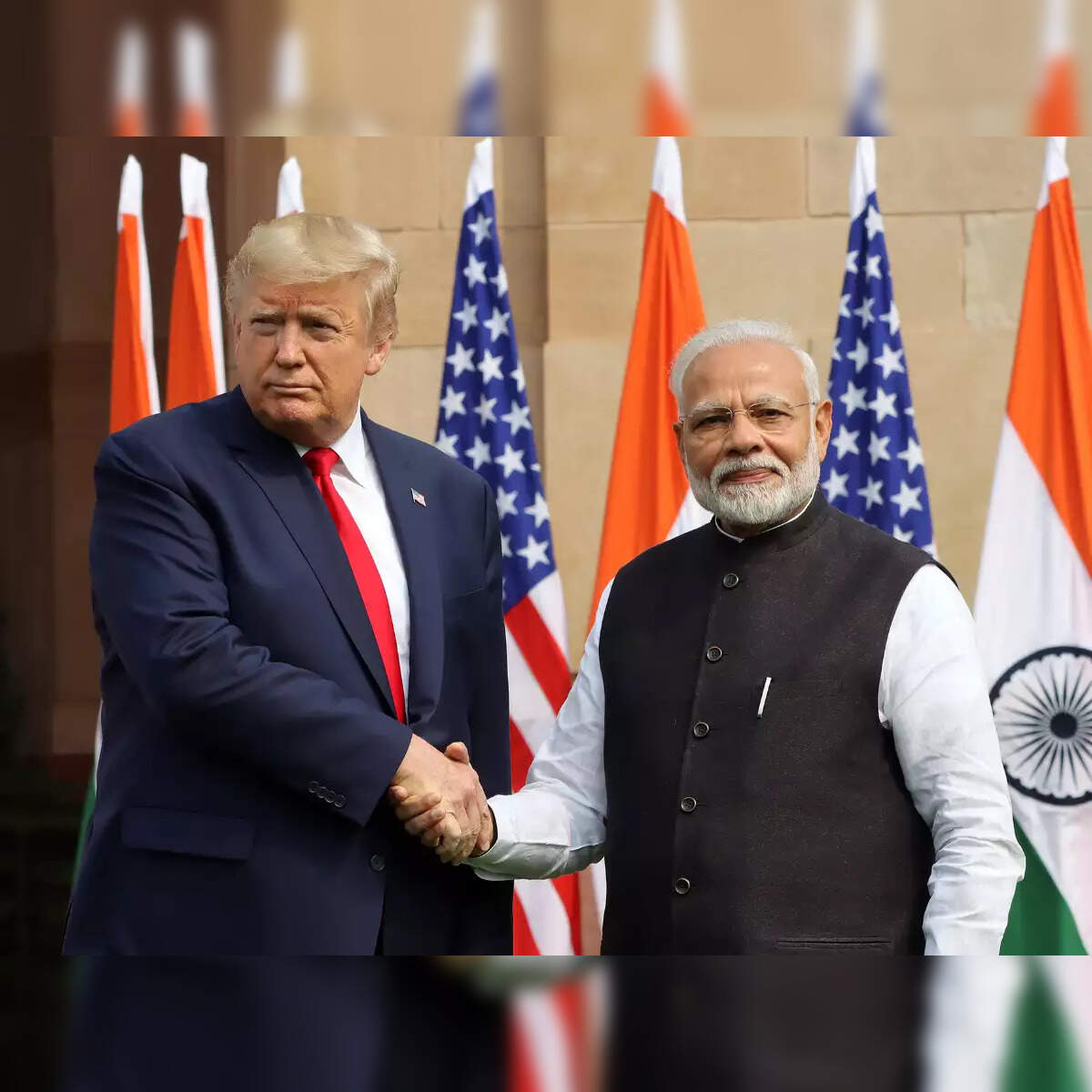
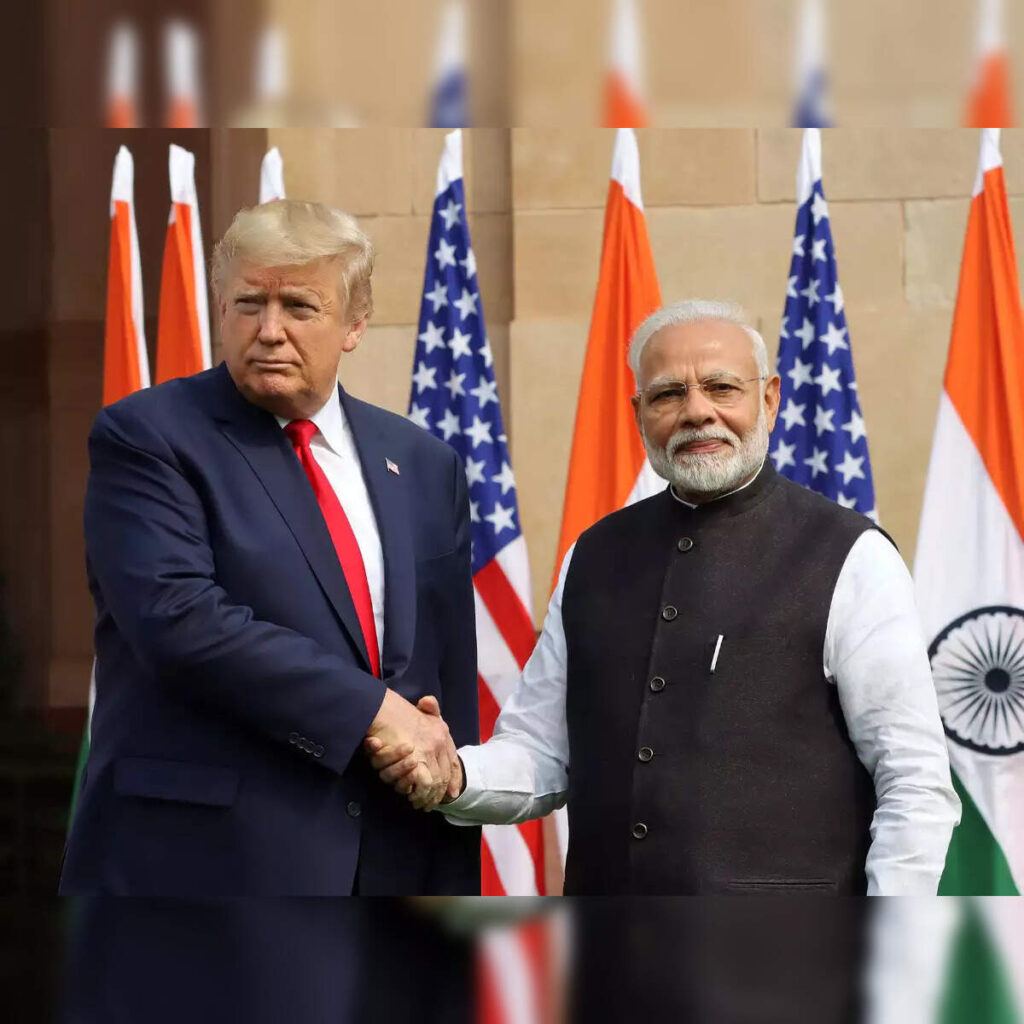
By K Raveendran Donald Trump and Narendra Modi never seem to tire of expressing admiration for each other, their mutual regard forming an odd but undeniable transnational political camaraderie. What binds them is not simply shared ideology but a similar worldview shaped by populism, nativism, and a flair for dramatic, often reckless, decision-making. Modi’s ‘Atmanirbhar […]

Saudi Arabia’s Capital Market Authority has announced that foreign investors are now permitted to invest in listed companies owning real estate in Mecca and Medina. This policy change, effective immediately, allows non-Saudis to acquire up to 49% of shares in these firms, aiming to attract foreign capital and enhance market liquidity in alignment with the Kingdom’s Vision 2030 economic diversification plan. Historically, non-Muslims have faced restrictions on […]

Oil markets witnessed a significant downturn as Brent crude, the global benchmark, tumbled over 13% in two days, settling just above $66 per barrel. This sharp decline follows the dual impact of OPEC+ unexpectedly increasing production and the imposition of new tariffs by President Donald Trump.

On April 4, 2025, Saudi Arabia led an initiative within OPEC+ to substantially boost oil output by 411,000 barrels per day starting in May. This move aims to penalize member countries like Kazakhstan and Iraq for consistently exceeding production quotas. The decision contributed to an 8% drop in oil prices, with Brent crude falling below $65 per barrel for the first time since 2021.

Concurrently, President Trump intensified trade tensions by imposing tariffs on imports from Canada, China, and Mexico. China responded with a retaliatory 34% tariff on U.S. imports, escalating fears of a global economic slowdown and further pressuring oil prices.

Goldman Sachs revised its 2025 oil price forecasts downward, cutting Brent crude to $69 and West Texas Intermediate to $66 per barrel. JPMorgan raised its global recession probability to 60%, up from 40%, reflecting growing concerns over economic stability.

The surge in supply and escalating trade disputes have led to significant losses in energy stocks. Major oil companies, including Chevron, APA, Occidental Petroleum, and Diamondback Energy, experienced notable declines. The Energy Select Sector SPDR ETF fell nearly 7% on the day and almost 13% for the week.

Analysts suggest that until production is significantly reduced, oil prices may continue to fall. The geopolitical backdrop includes U.S. relations with Saudi Arabia, key to both energy policy and diplomatic efforts related to Russia, Iran, and broader Middle East tensions.

In contrast, natural gas stocks have shown resilience, supported by rising LNG exports and less exposure to OPEC’s dynamics. Companies like EQT, Expand Energy , and Coterra Energy are highlighted as attractive investments due to geographic advantages and favorable valuations.

The current downward trend in oil prices is primarily driven by OPEC+’s decision to increase output and the introduction of U.S. tariffs. Analysts expect the tariffs to curb economic activity and demand for energy, weighing on oil prices. The bank also said higher-than-expected crude supply and a demand squeeze from softer U.S. economic activity and tariff escalation posed downside risks to oil price forecasts.

The Organization of the Petroleum Exporting Countries and its allies, known as OPEC+, decided on Monday to increase output for the first time since 2022, further pressuring crude prices. The group will make a small increase of 138,000 barrels per day from April, the first step in planned monthly increases to unwind its nearly 6 million bpd of cuts, equal to almost 6% of global demand.

The larger-than-expected decline in crude stocks supported the downward trend in oil prices, pointing to weakening demand in the U.S. The U.S. Energy Information Administration is expected to announce the official inventory data during the day.

The risks to oil prices remain tilted to the downside with new supply from OPEC+ and non-OPEC producers expected to push the market well into an oversupply. Brent prices on Wednesday fell to their lowest since December 2021 after U.S. crude inventories rose and in the wake of the decision by OPEC+ to increase their output quotas.

Oil prices had already been trading lower in the last few weeks, partly because of expectations that U.S. president Donald Trump could swiftly end Russia’s war in Ukraine. This, in turn, is likely to increase Russian oil output thanks to sanctions relief.

The benchmark previously dropped to $66.77 a barrel, the lowest since November. “The current downward trend in oil prices is primarily driven by OPEC+’s decision to increase output and the introduction of U.S. tariffs,” said Darren Lim, commodities strategist at Phillip Nova. He said another factor was President Donald Trump’s decision to pause all U.S. military aid to Ukraine after his Oval Office clash with President Volodymyr Zelenskiy last week.

Those politics are likely connected with the wheeling and dealing of Donald Trump, referring to the U.S. president’s calls for lower oil prices. U.S. tariffs of 25% on imports from Canada and Mexico took effect at 12:01 a.m. EST on Tuesday, with 10% tariffs on Canadian energy, while tariffs on imports of Chinese goods were increased to 20% from 10%. Analysts expect the tariffs to curb economic activity and demand for energy, weighing on oil prices.

The bank also said higher-than-expected crude supply and a demand squeeze from softer U.S. economic activity and tariff escalation posed downside risks to oil price forecasts. Chinese demand is also down, with a period of refinery maintenance looming, said Josh Callaghan, head of crude derivatives at Arrow Energy Markets.

Oil prices declined for a third day on Wednesday, as investors worried about OPEC+ plans to proceed with output increases in April, and U.S. President Donald Trump’s tariffs on Canada, China, and Mexico escalated trade tensions. Brent futures fell $1.02, or 1.44%, to $70.02 a barrel by 1149 GMT. U.S. West Texas Intermediate crude declined $1.33, or 1.95%, to $66.93 a barrel.


Gold-backed cryptocurrencies have experienced significant declines following the announcement of sweeping tariffs by President Donald Trump. These digital assets, which are pegged to the value of physical gold, initially surged to record highs as investors sought safe havens. However, they have since retreated, mirroring the broader market sell-off.

On April 3, 2025, President Trump unveiled a series of reciprocal tariffs, imposing a minimum of 10% on global imports and up to 49% on certain countries, including Vietnam. This move prompted immediate reactions across financial markets, with the Dow Jones Industrial Average plunging over 1,000 points, the Nasdaq dropping 3%, and the S&P 500 slumping 2.7%. The technology sector was notably affected, with major companies like Apple, Amazon, and Meta experiencing substantial losses. citeturn0news27turn0news29

In the commodities market, gold initially rallied, reaching an all-time high of $3,167.84 per ounce. This surge was driven by investors seeking refuge amid escalating trade tensions. However, the precious metal’s value soon declined, with spot gold prices falling 1.4% to $3,090.00. This reversal was attributed to investors liquidating positions to cover losses in other asset classes. citeturn0search2turn0search4

Gold-backed cryptocurrencies, which are digital tokens pegged to the price of gold, mirrored this trajectory. PAX Gold and Tether Gold both saw declines, with PAXG trading at $3,047.64, down 2.44%, and XAUT at $3,047.16, down 2.51%. These movements reflect the broader market’s volatility and investors’ shifting sentiments.

The cryptocurrency market as a whole was not immune to the turmoil. Bitcoin, the largest cryptocurrency by market capitalization, fell to the $82,000 level, marking a significant drop from its previous position near $88,000 prior to the tariff announcements. Altcoins such as Ethereum and Solana also experienced declines, with Ethereum dropping over 6% to fall back under $1,800. citeturn0search17turn0search20

Analysts suggest that the aggressive nature of the tariffs has heightened fears of a global trade war, leading to increased market volatility. The tariffs’ impact extended beyond equities and cryptocurrencies, affecting commodities like crude oil, which saw a 6.4% decline. Bond yields also dropped as investors moved towards safer assets.

Central banks’ recent activities have also played a role in the gold market’s dynamics. In February, institutions such as Poland and China increased their gold reserves, contributing to the metal’s price movements. However, the current market conditions have overshadowed these factors, with immediate reactions to trade policies taking precedence.

The Nasdaq Composite Index entered bear market territory on Friday, April 4, 2025, closing over 20% below its December peak. This significant downturn was precipitated by President Donald Trump’s imposition of a 10% tariff on all imports to the United States, with additional substantial levies targeting technology-centric nations such as China, Taiwan, and Vietnam. China’s swift retaliation, announcing a 34% tariff on all U.S. imports, intensified fears of a global recession and inflationary pressures.

Major U.S. stock indices experienced sharp declines. The S&P 500 fell approximately 2.5%, while the Dow Jones Industrial Average dropped nearly 2.45%, shedding 994.46 points to close at 39,551.47. Technology stocks bore the brunt of the sell-off, with Apple Inc. shares declining over 4%, following a nearly 10% drop the previous day. Nvidia and Broadcom each lost more than 7%, and Tesla shares plummeted almost 10%.

The newly announced tariffs, dubbed “Liberation Day” tariffs by the administration, include a universal 10% tariff on all imports and higher targeted tariffs for numerous countries. Economists warn that these measures could disrupt global supply chains, particularly impacting the technology sector, which relies heavily on components from China and Taiwan. The Semiconductor Industry Association expressed concern that the tariffs could stymie growth and innovation within the industry.

International responses were swift. The European Union signaled readiness to implement countermeasures, while the International Monetary Fund cautioned that escalating trade tensions pose significant risks to global economic stability. In the U.S., political figures across the spectrum voiced apprehension. Senate Majority Leader Mitch McConnell and Senator Ted Cruz criticized the tariffs, warning of potential harm to American workers and farmers.

Despite a robust March jobs report indicating the addition of 228,000 new jobs and a slight uptick in unemployment to 4.2%, market sentiment remained negative. Investors are now looking to Federal Reserve Chair Jerome Powell’s upcoming speech for insights into potential monetary policy adjustments in response to the escalating trade conflict.

The CBOE Volatility Index, a measure of market anxiety, surged to levels not seen since August 2024, reflecting heightened investor concern. Oil prices also declined significantly due to fears of reduced global demand amid the escalating trade tensions.

President Trump defended the tariff strategy, asserting that the measures are necessary to address longstanding trade imbalances and would ultimately benefit the U.S. economy. He urged investors to view the market downturn as a wealth opportunity.

By Subrata Majumder The entire world is deepening into geopolitical tensions and increasing uncertainty in trade following the announcement made by the U.S. President Donald Trump the new tariff rates on April 2. The U.S. slapped 27 percent import tariff on India. President Trump exhilarated this as “discounted replication”, despite India imposing 52 percent and […]
VISHNU RAJA
RYO YAMADA
HITORI GOTOH
IKUYO KITA