Just in:
Saudi fund assets forecast to cross $400 billion // DP World transports million containers through UAE corridors // Microsoft outage leaves Outlook and Teams users disconnected // Wizz Air half-year earnings sink as fuel costs surge // U.S. Democratic Leadership Starts Dialogue With Progressive Bloc For Joint Strategy // Court reinstates Police association rejig order // Crescent Enterprises venture arm funds Oyster Therapeutics development // Uforce reaches $6 billion valuation with British backing // From Dubai to the EU: how UAE-based crypto firms can expand under MiCA // Yicura BioMed Advances Dual Capital and Industrial Strategy: Completes First Closing of Series B Financing Led by Gobi Partners // Turkish Airlines adds Chengdu to mainland China services // LANDMARK Presents ‘Destination CENTRAL’: A District-Wide Celebration Inviting Global Travellers to Explore the Dynamism, Luxury, and Soul of Central // Electric and hybrid interest rises at Sharjah car market // ONYX Hospitality Group Unveils Plans for Amari Samui Resort and Villas, Elevating Its Premium Resort Offering on Koh Samui // Valarmathi restarts fast as teachers defy police // Ladakh Ban On Protests Ahead Of Election Is Uniquely Contentious // Ajman University MBA climbs to joint 13th regionally // How A Newly Elected Democratic Congress Could Reshape US–India Relations? // Forged court directives trigger probe into website blocking // L’OCCITANE Celebrates 50 Years Of Provençal Craftsmanship With Holiday 2026 Collection //

News related to
Low oil

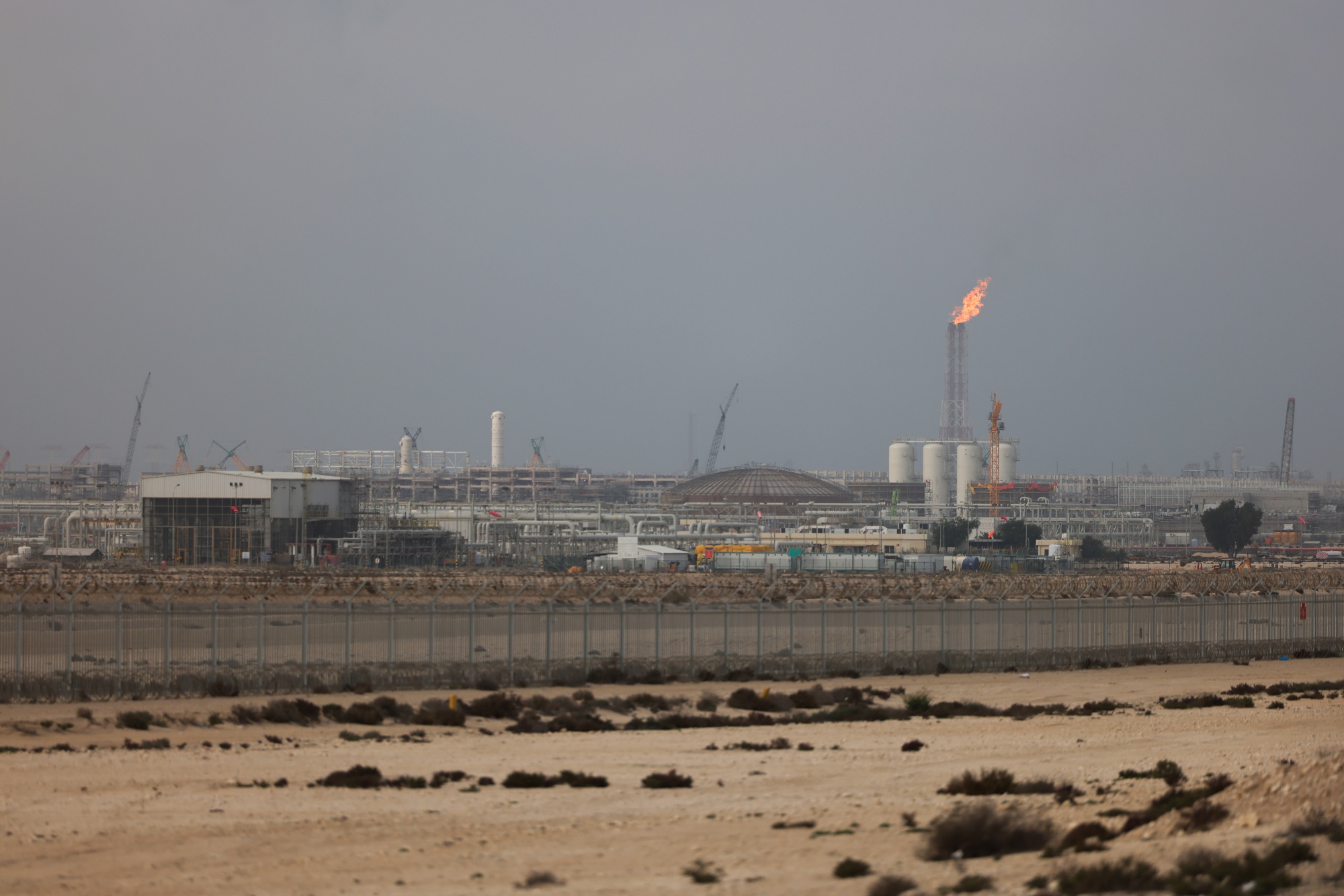
China has authorised state oil refiners to draw on commercial crude reserves as the Middle East war enters its sixth week, a move that points to mounting concern in Beijing over supply security, refinery operations and fuel stability in the world’s biggest crude importer. The decision marks a notable shift after reporting in March indicated that access to such reserves had been denied, underscoring how sharply the market backdrop has changed.

The policy adjustment comes as the conflict centred on Iran has disrupted flows through the Strait of Hormuz, a route that handled about 20 million barrels a day of crude and oil products in 2025 and remains one of the most critical chokepoints in global energy trade. The International Energy Agency said in March that the war had created the biggest supply disruption in oil market history, with flows through Hormuz falling from around 20 million barrels a day before the war to only a trickle.

For China, the timing is especially sensitive. State refiners have already been grappling with higher feedstock costs, disrupted shipping routes and a scramble for replacement barrels from outside the Gulf. Reuters reported in late March that Sinopec, the country’s largest refiner by capacity, had sought access to state reserves after deciding against buying Iranian crude, while also trimming refinery runs. Earlier reporting in mid-March said China had been building inventories rather than drawing them down, suggesting Beijing initially preferred to preserve stocks.

That stance now appears to have softened. Bloomberg reported on April 10 that authorities had given state refiners the green light to tap commercial reserves. While the precise volume and duration were not publicly disclosed, the move is significant because it signals Beijing is willing to use part of the country’s stock cushion to smooth supplies for domestic processing rather than rely solely on the spot market at a time of exceptional volatility.

The wider market has been under intense pressure even as talk of a ceasefire has briefly cooled futures prices. Reuters reported that physical crude markets in Europe and Africa remained extremely tight despite a temporary truce, with buyers in Asia and Europe competing aggressively for non-Middle East barrels. Another Reuters report said U. S. crude premiums had surged to record highs as importers sought alternatives to Gulf supplies. That matters for China because replacing lost or delayed Middle East cargoes has become more expensive just as refining margins in parts of Asia remain fragile.

Supply conditions deteriorated further this week after attacks on Saudi energy infrastructure cut output capacity by around 600,000 barrels a day and reduced throughput on the East-West Pipeline by about 700,000 barrels a day, according to Saudi state media cited by Reuters. The pipeline is vital because it allows exports to bypass Hormuz via the Red Sea. Damage there narrowed one of the few remaining alternative routes for Gulf producers trying to keep oil moving to Asian customers.

Asian refiners have already felt the strain. Reuters reported that seaborne crude imports into Asia in April were estimated at 19.22 million barrels a day, sharply below the three-month average of 25 million barrels a day. Although refined fuel prices eased after hopes of a truce, the same report said the market was still stressed and that it could take months for normality to return even if shipping improves. For Beijing, releasing commercial stocks is therefore less a dramatic emergency measure than a tactical effort to bridge a period of dislocation.

The decision also reflects China’s domestic balancing act. Authorities have been trying to keep fuel output steady even as weak underlying demand and higher crude costs squeeze refiners. Reuters reported on April 2 that officials had pressed independent refiners to maintain production despite the surge in oil prices and wartime disruption. That suggests Beijing is seeking to avoid sharp swings in fuel availability or industrial costs while preserving broader economic stability.

There is also a geopolitical layer. China has opposed any overtly force-based international response around Hormuz and has pushed for de-escalation at the United Nations, according to Reuters reporting on Security Council negotiations. At the same time, the reserve release shows that Beijing is preparing for a conflict that may not be resolved quickly and for shipping conditions that may remain uncertain even if diplomatic language softens.


Air travellers in Germany faced widespread disruption on Friday after Lufthansa cabin crew staged a one-day strike that the airline and airport officials said would force the cancellation of more than 520 flights and affect about 90,000 passengers, hitting the carrier’s Frankfurt and Munich hubs during a busy holiday return period. The walkout, called by the UFO cabin crew union, ran from 00:01 to 22:00 local time […]

Ethereum hovered near the $2,000 mark on Thursday after a choppy stretch that left the world’s second-largest cryptocurrency caught between stronger long-term supply dynamics and a fresh wave of geopolitical and macroeconomic uncertainty. Ether was trading around $2,178 during the session, after moving within an intraday range of roughly $2,167 to $2,264, underscoring the tight consolidation that has kept traders focused on whether the token can build […]

US unemployment benefit claims rose last week but stayed at levels that still point to a labour market holding together, even as investors and policymakers brace for a March inflation reading that could complicate the Federal Reserve’s next move. Initial claims for state unemployment benefits increased by 16,000 to 219,000 in the week ended April 4, according to Labor Department data released on Thursday. The prior week’s […]

Tokenised perpetual swaps tied to commodities and equities have surged into a new phase of growth, with weekly trading volume reaching about $31 billion as oil volatility and broader macro uncertainty pulled traders towards round-the-clock synthetic exposure. Oil contracts accounted for roughly $6.9 billion of that weekly turnover after geopolitical tensions rattled energy markets, while stock perpetual swaps climbed 908% to around $4.9 billion, underscoring how quickly […]

U. S. authorities have dismantled the domestic arm of a cyber-espionage network that officials say was run by APT28, the Russian military intelligence hacking group also known as Fancy Bear and Forest Blizzard, after it hijacked vulnerable internet routers to redirect traffic, steal credentials and sift victims for higher-value targets. The Justice Department said the FBI used a court-authorised technical operation to identify compromised routers on U. […]

South Africa’s net foreign reserves fell to $73.19 billion at the end of March from $75.84 billion in February, as the country’s gross reserves also dropped to $77.76 billion from $81.06 billion, according to central bank data released on Thursday. The decline came after a stronger February reading and marks a pullback from levels that had been supported earlier this year by higher reserve values and foreign-exchange […]

Advertisements

Sub-Saharan Africa’s growth is set to hold at 4.1% in 2026, but the World Bank has cut its earlier projection and warned that a more hostile external backdrop, led by conflict-linked jumps in fuel and fertiliser costs, is making the region’s recovery harder to sustain. The lender said the outlook had been revised down by 0.3 percentage points from its October 2025 estimate, even as governments across […]

S&P Global Ratings has lowered the Philippines’ outlook to stable from positive, while affirming its long-term sovereign credit rating at BBB+, saying the war in the Middle East has raised the risks facing the country’s external accounts and public finances. The move keeps the nation within investment-grade territory but signals that a near-term upgrade is now less likely as higher energy costs, inflation pressure and a weaker peso complicate the policy outlook.

The ratings agency said elevated oil prices are likely to widen the current-account deficit this year and weaken external buffers, even as it still expects the economy to expand at a healthy pace and the fiscal deficit to narrow over the next two years. S&P projected growth of 5.8% in 2026 after the economy expanded 4.4% in 2025, with softer momentum in the first half and a rebound later in the year.

The decision lands at a delicate moment for Manila. The Bangko Sentral ng Pilipinas warned this week that higher fuel costs were already feeding into broader prices after March inflation accelerated to 4.1%, above the central bank’s 2% to 4% target band and sharply higher than February’s 2.4%. Transport costs were the main driver, with diesel prices up 59.5% from a year earlier and gasoline up 27.3%, while core inflation also edged higher, suggesting second-round effects may be starting to build.

That inflation pulse helps explain why S&P has become more cautious. A country that depends heavily on imported fuel is especially exposed when conflict disrupts Middle East energy flows, and the Philippines has been among the Asian economies hit hardest by the latest oil shock. Reuters reported that Brent crude had risen 55% since the Iran war began on February 28, while the Philippine peso slid to record lows against the dollar, adding another layer of imported inflation pressure.

The external vulnerability is not new, but the conflict has made it harder to ignore. Philippine officials have been scrambling to secure energy supplies, including seeking assurances over safe passage for Philippine-flagged ships and fuel cargoes through the Strait of Hormuz. Manila has also explored alternative sources of crude and emergency measures to protect domestic supply, underlining how quickly a geopolitical crisis can turn into a ratings issue for an energy-importing economy.

For investors, the key point is that S&P did not cut the rating itself. The agency kept the BBB+ grade in place, indicating that it still sees underlying strengths in the economy, including growth potential, remittance support and expectations of gradual fiscal repair. That distinction matters. An outlook change signals rising risk over the medium term, but it is not the same as a downgrade, and it leaves room for the sovereign to stabilise if external pressures ease and macroeconomic management holds firm.

Still, the downgrade in outlook will sharpen attention on the government’s fiscal path. The Philippines has already lowered its medium-term growth targets to reflect the impact of Middle East tensions and shifts in US trade policy. Official forecasts now put 2025 growth at 5.5% to 6.5%, down from 6% to 8%, while targets for 2026 to 2028 have been narrowed to 6% to 7%. That softer growth backdrop makes deficit reduction harder, particularly if the state is forced to spend more on fuel relief, transport support or other measures to cushion households and businesses.

There are signs, however, that the fiscal picture is not uniformly worsening. Treasury data showed the budget deficit in February narrowed marginally from a year earlier, while year-to-date figures improved sharply because of stronger revenues and earlier remittance of dividends. S&P’s own statement suggests it still expects fiscal metrics to improve, even if the war has made that path more vulnerable to setbacks.

Beyond the government balance sheet, the social cost of the energy spike is becoming harder to miss. Reuters reported that some farmers in Benguet province were abandoning harvests because higher fuel, labour and transport costs made it uneconomic to bring produce to market. That kind of strain matters for credit analysis because it shows how an oil shock can move from shipping lanes and currency markets into household spending, food supply chains and political pressure for intervention.

Matein Khalid The US-Israel war with Iran has now stretched beyond five weeks, inflicting extensive damage on energy infrastructure, airports, ports and commercial and technology hubs across the six GCC states. The closure of the Strait of Hormuz to Gulf oil and gas exports is, in itself, an economic catastrophe. It forces the GCC to conclude that energy export security is not national security. Drone and missile attacks triggered a sharp […]

By Asad Mirza It seems that President Trump’s Tuesday morning Truth Social post, which threatened “a whole civilisation will die tonight” and raised the spectre of nuclear war, has jolted the American lawmakers, and it has begun a chorus of calls either for Trump’s impeachment or for his removal via the invocation of the 25th […]

The article Irrespective Of Two Week Ceasefire, Demand For Impeachment Of Trump Grows In U.S. Congress appeared first on Latest India news, analysis and reports on Newspack by India Press Agency).

Arabian Post Staff -Dubai Dubai shares posted their strongest one-day rise in more than a decade on Wednesday after a two-week ceasefire between the United States and Iran eased fears over a wider regional conflict, soothed concern over energy shipping routes and triggered a broad relief rally across Gulf markets. Dubai’s benchmark index jumped as much as 8.5% intraday, while Abu Dhabi’s main market also recorded its […]

Arabian Post Staff -Dubai Physical crude prices for immediate delivery have surged to levels close to $150 a barrel for some grades, leaving paper benchmarks lagging and exposing the depth of the supply strain caused by the Hormuz crisis. European and Asian refiners have been forced to pay sharply higher premiums for cargoes that can be processed now, as the disruption to flows through the Strait of […]

Arabian Post Staff -Dubai Airlines and energy traders are bracing for a prolonged squeeze in aviation fuel supplies even after the Strait of Hormuz reopened under a two-week ceasefire arrangement announced by US President Donald Trump, with the head of the International Air Transport Association warning that disruption to jet fuel availability could take months to unwind. Oil prices dropped sharply below $100 a barrel after the […]

Arabian Post Staff -Dubai Oil prices fell sharply on Tuesday after US President Donald Trump said he had agreed to a two-week ceasefire with Iran, tied to the immediate and safe reopening of the Strait of Hormuz, easing fears of a prolonged supply shock through one of the world’s most important energy chokepoints. Reuters reported Brent crude was down 13.3 per cent at $94.76 a barrel in […]

The head of the International Monetary Fund on Monday defined the direction of glbal economic travel with unusual clarity. “All roads now lead to higher prices and slower growth,” said managing director Kristalina Georgieva in an interview. The IMF had expected global growth of 3.3% in 2026. Six weeks of war centred on Iran and the disruption of the Strait of Hormuz have already forced a rethink. […]

Strong earnings, expanding EV infrastructure and a growing digital user base reflect OR’s ongoing transformation from traditional fuel retail to integrated mobility and lifestyle services — with OR positioning itself as a scalable platform for regional partnership across Asia.

BANGKOK, THAILAND – Media OutReach Newswire – 7 April 2026 – PTT Oil and Retail Business Public Company Limited (OR), Thailand’s largest energy and lifestyle retail operator, reported 2025 EBITDA of 20,357million baht (approximately USD 645 million), a 15.2% increase year-on-year, as net profit rose 47.8% to 11,304 million baht (approximately USD 357 million) despite a 9.0% decline in total revenue. The results reflect stronger cost management and a continued shift in the company’s growth strategy toward ecosystem-led expansion across mobility, retail and digital services.

Thailand's OR Shifts Beyond Fuel as Southeast Asia's EV Transition Gains Pace, Rolls Out 5-Year Investment Strategy

To support that expansion, OR has committed 58,000 million baht (approximately USD 1.84 billion) under a five-year investment plan running from 2026 to 2030. The plan prioritizes mobility infrastructure development, lifestyle platform enhancement, EV charging network expansion, and innovation investment — with the aim of consolidating OR’s position as an integrated mobility and consumer ecosystem operator across the region.

OR’s existing infrastructure provides a significant base from which to execute that strategy. The company’s nationwide service station network currently serves 3.9 million users per day, one of the consumer touchpoint frequencies in Thailand, with a target to reach 5 million daily users by 2030. The network integrates fuel retail, EV charging under the EV Station PluZ brand, food and beverage, health and wellness, and lifestyle services. Café Amazon, OR’s coffee chain, operates more than 4,600 outlets in Thailand and international markets, contributing to sustained consumer traffic across the network. Most recently, OR announced a joint venture with Centara to develop budget hotels at PTT Stations, targeting 70 to 80 rooms per site alongside existing amenities — a move that extends the network’s role from daily convenience into overnight hospitality.

OR is expanding EV Station PluZ further in step with its existing fuel network as electric vehicle uptake accelerates across Southeast Asia. The move reflects both the region’s shifting policy landscape and growing infrastructure demand, with OR positioning the mobility transition as a long-term growth opportunity and a gateway for partnership-driven market entry across the region.

OR’s digital platform reinforces the physical network’s reach. The blueplus+ loyalty application has accumulated 9.3 million registered members, with a target of 14 million by 2030. Beyond driving repeat visits, the platform gives OR granular visibility into consumer behavior across its entire ecosystem — enabling personalized engagement, cross-selling across business lines, and new revenue streams that a purely physical network could not unlock. With membership scale still growing, OR sees the model as a strong foundation for data-led consumer engagement as it pursues regional expansion across Asia.

OR is also in discussions regarding cross-border expansion models that would allow regional dealers, investors and operators to access its ecosystem infrastructure. OR is positioning itself to potential partners not as a conventional energy retailer but as an integrated lifestyle and mobility platform with the operational scale and digital capabilities to support localized deployment across diverse Asian markets.

“Our strategy is simple: to integrate and create synergy through a scalable and sizable model. We’ve built a profitable digital-physical ecosystem and are now seeking strategic partners to unlock growth in Asia’s fast-moving mobility and consumer sectors.,” said M.L. Peekthong Thongyai, Chief Executive Officer of PTT Oil and Retail Business Public Company Limited.

Hashtag: #OR

www.pttor.com

The issuer is solely responsible for the content of this announcement.

About OR

PTT Oil and Retail Business Public Company Limited (OR) is a leading Thai energy and retail company with operations across 10 countries. OR operates through four core business groups: Mobility Business, providing energy solutions via PTT Station, PTT Lubricants, PTT LPG, and EV Station PluZ; Lifestyle Business, featuring Café Amazon, one of Asia’s largest coffee chains, along with convenience stores and space management; Global Business, driving international growth with over 400 PTT Stations and over 300 Café Amazon outlets; and OR Innovation Business, developing new ventures and sustainable solutions through technology and innovation.

Romania is poised to keep borrowing costs unchanged as a fresh oil shock clouds the inflation outlook and leaves policymakers wary of loosening monetary conditions too early. The National Bank of Romania is widely expected to leave its benchmark interest rate at 6.5 per cent, preserving one of the European Union’s highest policy rates while consumer prices remain far above target and fiscal strains continue to weigh […]

Oil prices pushed higher on Tuesday as Donald Trump intensified pressure on Iran, sharpening investor anxiety over the fate of the Strait of Hormuz and the risk of a wider supply shock across global energy markets. Brent crude traded above $110 a barrel and US West Texas Intermediate rose past $113, extending a rally driven by fears that a prolonged disruption in the Gulf could squeeze flows […]

Arabian Post Staff -Dubai   Mounting economic damage from the Middle East war is set to push inflation higher and global growth lower, IMF managing director Kristalina Georgieva has warned, as the fund prepares to cut its growth outlook and raise its inflation projections in its World Economic Outlook due on April 14. The warning comes as the conflict has triggered what the International Energy Agency has […]

Arabian Post Staff -Dubai Iran said on Monday it wanted a durable end to the war with the United States and Israel rather than a temporary truce, rejecting pressure to reopen the Strait of Hormuz on Washington’s timetable as President Donald Trump warned the country could be “taken out” if it failed to meet his Tuesday night deadline for a deal. Tehran’s stance underscored how far apart […]

Khalifa Economic Zones Abu Dhabi has secured five new industrial and logistics projects worth AED147 million across Al Ain and Abu Dhabi, adding more than 84,000 square metres of development space and an estimated 500 jobs as the emirate presses ahead with its manufacturing and supply-chain expansion plans. Four of the projects are earmarked for KEZAD Al Ain, where they account for just over 37,400 square metres, […]

Arabian Post Staff -Dubai Donald Trump has said a Tuesday deadline for Iran to accept a deal remains final, sharpening a crisis that has already pushed energy markets higher, intensified diplomatic pressure and raised fresh concern over the risk of a broader Middle East conflict. Speaking on April 6 at the White House, the US president said Tehran had made what he described as a significant move […]

Arabian Post Staff -Dubai AirAsia X has raised ticket prices by between 31% and 40% and lifted fuel surcharges by as much as 20% after jet fuel costs surged following the Iran war, according to Group Chief Executive Officer Bo Lingam, underscoring how quickly conflict in the Middle East is feeding into Asian aviation costs and passenger fares. The Malaysia-based low-cost carrier said average jet fuel prices […]

VISHNU RAJA
RYO YAMADA
HITORI GOTOH
IKUYO KITA