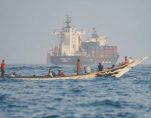
Arabian Post Staff -Dubai Shipping through the Strait of Hormuz fell sharply at the start of the week, with only four commodity vessels recorded transiting the strategic waterway on Monday as attacks across the Middle East intensified. Preliminary ship-tracking data from Kpler showed the Monday total was down from 10 vessels on Sunday, extending a prolonged decline in commercial traffic through a passage that remains central to […]
Arabian Post Staff -Dubai Oil prices rose on Tuesday as renewed attacks on Saudi Arabia and the continued shutdown of the kingdom’s East-West pipeline kept traders focused on the risk of further disruption to Middle East crude supplies. Brent crude climbed $1.24 to $106.93 a barrel, while US West Texas Intermediate gained $1.29 to $102.65 in Asian trading. The move followed another wave of Houthi attacks on […]
Arabian Post Staff -Dubai Wall Street is preparing for the Federal Reserve to raise interest rates this week for the first time since July 2023, after another surge in oil prices and stubborn inflation pushed market expectations decisively towards tighter policy. Interest-rate futures on Monday assigned roughly a 90% probability to a quarter-point increase at the Federal Open Market Committee’s September 15-16 meeting. A move of 25 […]
Chevron’s Australia president expects liquefied natural gas prices to remain elevated for about six months as war-driven disruption to Middle East supply keeps the global market tight. Balaji Krishnamurthy, who leads Chevron’s Australian operations, said at the Gastech conference in Bangkok on Monday that higher prices were likely to persist while the market adjusts to reduced Qatari exports and constrained shipping through the Strait of Hormuz. He […]
Calls by leading artificial intelligence executives to slow development of advanced models pressured Asian semiconductor shares on Monday, but investors and strategists said robust spending on computing infrastructure was likely to keep the longer-term AI investment cycle intact. Samsung Electronics fell as much as 4.1% in early trading, while South Korea’s SK Hynix dropped 5.8%. Japan’s Advantest declined 4.7% and Kioxia Holdings slid 9.3% as markets assessed […]
Iran’s Islamic Revolutionary Guard Corps said on Monday that its air defences had intercepted and destroyed an MQ-1 unmanned aircraft over the Strait of Hormuz, adding another disputed military incident to the escalating confrontation with the United States around the strategic waterway. The IRGC said its Aerospace Force used a new air-defence system operating under Iran’s integrated air-defence network to engage the aircraft above the strait. It […]
Arabian Post Staff -Dubai Oman has called for new liquefied natural gas export routes that can bypass the Strait of Hormuz, arguing that the months-long disruption to the Gulf’s main energy artery has exposed a critical weakness in global gas supply chains. Energy and Minerals Minister Salim bin Nasser Al Aufi told the Gastech conference in Bangkok on Monday that producers and consumers needed to examine infrastructure […]
President Donald Trump has urged Ukrainian President Volodymyr Zelenskyy to stop attacking Russian oil refineries, arguing that the strikes are worsening a global diesel shortage as fuel prices climb sharply in the United States. Trump said on Sunday that he had already spoken directly with Zelenskyy about the issue and wanted Ukraine to select other targets inside Russia. Speaking during a visit to Ireland, he said Ukrainian […]
ZHANGJIAKOU, HEBEI – Media OutReach Newswire – 13 September 2026 – In the third season of Village Voyage, CGTN host Julian Waghann from the United States and Mexican traveler Juan Carlos Cheang Guzmán journey across Zhangjiakou, a city in Hebei Province some 200 kilometers northwest of Beijing, to explore how its land and people are creating new possibilities for rural life. Known for its mountains, wide-open highlands and vibrant outdoor culture, boosted by the 2022 Beijing Winter Olympics, Zhangjiakou has emerged as a distinctive destination in northern China.
Village Voyage Season 3 Poster
This latest season takes viewers beyond the city‘s famous landmarks and into the countryside, where international travelers get their hands in the soil, learn traditional crafts and share everyday meals with local residents. Through these experiences, they discover a different side of rural China and the people who are helping shape its future.
Mountain pulse: A year-round outdoor playground
The mountains of Chongli in Zhangjiakou are more than the backdrop for the 2022 Beijing Winter Olympics. Once best known for their snow-covered slopes, they are increasingly becoming a year-round destination for outdoor activities.
“Winter is for skiing, but summer opens up a whole new world,” said a local outdoor guide.
Since the Winter Olympics, residents have been steadily unlocking the hills’ year-round potential: from mountain biking and trail running to hiking and camping. The mountains no longer fall dormant when the snow melts.
Julian and Juan pedal along forest trails, surrounded by mountain air and the scent of damp earth. At the Chongli 168 Ultra-Trail Race, they stand at the starting line as thousands of runners surge forward – a river of energy that sweeps up everyone watching.
For Juan, the scene strikes a familiar chord. “Mountains don’t have borders,” he said. “The urge to run and challenge yourself in the wild is something we share, whether in Latin America or here.”
Field-rooted well-being: Yoga that grew from the soil
Surrounded by farmland and an open sky, Yugouliang Village sits on a high plateau in northern Zhangjiakou. The village has gained attention for a distinctive form of outdoor yoga practiced among its fields. Unlike the wellness trends often associated with urban gyms and resorts, yoga here has grown naturally out of village life.
“Our yoga comes from farm work,” one villager explained. “It is part of how we live.” Between planting and harvesting, they stretch and breathe, finding stillness in the middle of open fields.
Julian and Juan first experienced another part of village life by making youmian, a local staple made from oats. They kneaded the dough and shaped it by hand, then headed into the fields, where they spread their mats on the earth and practiced yoga alongside local residents.
“This feels familiar,” Juan reflected. “No matter where we are, people want the same things – health, peace, security and a life that feels full.”
Yugouliang offers a different picture of rural China: not a place frozen in the past, but a community that has found its own rhythm and a new sense of well-being amid the fields.
Living heritage remains part of daily life
Located in the southern part of Zhangjiakou, Yuxian is known for its historic settlements, traditional architecture and folk arts. Its ancient buildings have also reached new audiences through popular culture. Some of its architecture has inspired locations in Black Myth: Wukong, the hit Chinese action role-playing game.
Yuxian paper-cutting is one of its best-known folk traditions. “Paper-cutting came from everyday people,” said a master of the craft. “It used to decorate farmhouse windows. Now it reaches the wider world.”
With that spirit in mind, Julian and Juan tried their hand at paper-cutting, fumbling with scissors to produce something far from perfect – but they feel, briefly, what it means to make art out of ordinary life. Here, heritage isn’t sealed behind glass. It’s passed from hand to hand, cut into paper and woven into the fabric of daily existence.
Where clean energy meets modern farming
If Yuxian’s ancient villages preserve the memories of the past, Desheng Village shows how rural communities are looking toward the future. Located in the highland farming region of northern Zhangjiakou, Desheng has embraced modern agriculture and solar power as part of its rural development.
Rows of solar panels stretch across the land, capturing sunlight that once only fed crops. Beneath them, modern greenhouses hum with temperature-controlled precision. It’s agriculture reimagined – and the benefits are tangible.
“We used to depend heavily on the weather,” one villager said “Now technology and sunlight give us new hope.”
Julian and Juan stepped into the greenhouses, picking ripe tomatoes and crisp cucumbers, tasting the sweetness of a harvest that no longer depends on luck. They saw how clean energy revenue flows back into the community – funding schools, roads and public spaces.
As night fell, they joined a bonfire gathering in the village square. Music, laughter and conversation filled the evening air. Around the fire, the visitors saw another side of rural development: a village changing with the times while maintaining the close-knit community spirit that has long defined local life.
More than a journey: Stories shaped by the land
For a new generation of travelers, immersive experiences are offering a more complete picture of rural China. In Zhangjiakou, the countryside is not defined by a single landscape or a single way of life. Chongli’s mountains pulse with year-round energy; Yugouliang’s fields offer a slower rhythm of life; Yuxian’s ancient villages keep traditional architecture and folk crafts alive; and Desheng shows how clean energy and modern agriculture can create new opportunities for rural communities.
Here, tradition and innovation coexist in the same villages, where ancient skills can find new audiences and modern technology can take root in centuries-old communities.
Every village has its own story. From mountain trails and open farmland to historic villages and modern greenhouses, Zhangjiakou reveals a northern Chinese countryside that is more diverse, dynamic and full of possibility than any single image can capture.
Visitors may come for the scenery. But by stepping into village life, they leave with something more lasting: a closer understanding of the people who live on this land, the traditions they carry forward and the future they are building together.
Hashtag: #CGTN
The issuer is solely responsible for the content of this announcement.
A commercial vessel was struck by a projectile in the Strait of Hormuz on Sunday, triggering a fire and an evacuation as fresh attacks intensified concerns over Middle East oil supplies. The United Kingdom Maritime Trade Operations said the vessel was hit while transiting the strategic waterway and that local authorities were assisting those on board. UKMTO initially said the extent of damage, the crew’s condition and […]
Arabian Post Staff -Dubai Saudi Arabia has temporarily stopped its East-West oil pipeline after multiple drone attacks damaged sections of the route, tightening pressure on crude exports as shipping disruptions intensify around the Strait of Hormuz and Red Sea. The Energy Ministry said the pipeline was shut as a precaution after strikes on September 10 in the Riyadh and Madinah regions. Several people were injured, while emergency […]
Ether remained confined to a narrow trading range after more than 116,000 tokens were withdrawn from cryptocurrency exchanges over 48 hours, a shift that reduced immediately available supply while traders watched whether the market could break through resistance around $2,500. The withdrawals, valued at roughly $300 million at prevailing prices, were highlighted by crypto analyst Ali Martinez. Exchange outflows can indicate that holders are moving assets into […]
Modi pressed Iranian President Masoud Pezeshkian to support freedom of navigation, uninterrupted commerce and the safety of seafarers as the two leaders met in New Delhi on Friday amid continuing conflict and shipping disruption across West Asia.
The talks, held on the sidelines of the BRICS summit, focused on bilateral relations and the regional security situation. India’s Prime Minister reiterated that disputes should be resolved through dialogue and diplomacy and called for sustained efforts to secure lasting peace and stability, according to an official statement issued after the meeting.
Modi specifically highlighted the need to safeguard freedom of navigation and commerce and the safety and well-being of seafarers. The issue has become a central concern for New Delhi as attacks on commercial vessels and disruption to maritime routes in the region have affected trade and put crews at risk.
The meeting was Modi and Pezeshkian’s second in less than two weeks. They had met on August 31 on the sidelines of the Shanghai Cooperation Organisation summit in Bishkek, where Modi also raised the protection of commercial shipping and seafarers and urged a diplomatic approach to the West Asia conflict.
Friday’s discussion came as the conflict involving Iran, the United States and Israel continued to place pressure on strategic waterways and supply routes. India has sought to maintain working relations with Iran while also preserving close ties with Israel and Arab states, making maritime security and regional stability important economic as well as diplomatic priorities.
At least 10 nationals of India have been killed in attacks on vessels transiting the region during the conflict. New Delhi has condemned attacks affecting Gulf countries, energy infrastructure and commercial shipping, while repeatedly calling for de-escalation and protection of civilians and maritime workers.
The maritime threat has sharpened concerns over energy shipments through Gulf waters that remain critical to India’s oil and gas imports.
Modi reinforced the same message earlier on Friday at the BRICS Business Forum, saying global trade could advance only when sea lanes were secure, supply routes remained open and seafarers were safe. He described India as a firm supporter of freedom of navigation and the safety of maritime crews.
Pezeshkian, who was making his first visit to India as president, used his participation in BRICS meetings to press for stronger economic cooperation among members and protection of legitimate trade from political and military pressure. He argued that the grouping’s strength would be demonstrated by converting economic capacity into functioning networks for trade, investment and joint financing.
The Iranian president also called for greater use of national currencies in trade among BRICS members and said Tehran was prepared to work as a strategic partner in energy and transport supply chains. His remarks reflected Iran’s effort to reduce exposure to sanctions and other constraints on cross-border commerce.
During the bilateral meeting, Modi thanked Iran for maintaining high-level participation in BRICS-related meetings despite difficult circumstances. He said the grouping could strengthen resilience, innovation, cooperation and sustainability among countries of the Global South.
The two leaders also reviewed broader bilateral ties and cooperation in multilateral organisations. Modi welcomed continuing coordination on issues of mutual interest within BRICS, where Iran is a full member alongside Brazil, Russia, India, China, South Africa and other states that have joined the expanded grouping.
The talks followed Pezeshkian’s participation in the Leaders’ Session of the BRICS Business Forum. Modi thanked him for attending and said engagement between the two countries should continue across bilateral and multilateral channels.
The New Delhi meeting also built on the August 31 discussions in Bishkek, when Pezeshkian told Modi that Tehran favoured a negotiated solution to its confrontation with the United States. Modi at that meeting expressed concern over escalating tensions and said civilians, civilian infrastructure, commercial shipping and seafarers should not be harmed.
Arabian Post Staff -Dubai UAE President Sheikh Mohamed bin Zayed Al Nahyan has called for stronger private-sector cooperation with Germany after attending a major business forum in Munich where companies from the two countries signed 30 agreements and commercial partnerships worth about €9.66 billion. Sheikh Mohamed told executives and investors at the Germany-UAE Business Forum on Friday that businesses would play a vital role in advancing the […]
Prime Minister Narendra Modi is hosting the BRICS summit in New Delhi with Russia and China displaying a closer strategic alignment, adding pressure to India’s effort to preserve strong ties with Moscow while managing a cautious thaw with Beijing and maintaining partnerships with the West. Russian President Vladimir Putin met Modi on Friday, a day before the leaders’ summit, and the two reviewed cooperation spanning trade, defence, […]
Iran is allowing exporters and importers greater use of cryptocurrencies, including Tether’s USDT and Bitcoin, for cross-border settlements as tighter US sanctions intensify pressure on trade and foreign-currency flows. The policy shift gives businesses more flexibility to repatriate export earnings outside the central bank’s official foreign-exchange platform and use those proceeds directly to pay for imports. Crypto transactions have become one route for moving value across borders […]
Arabian Post Staff -Dubai Yemen’s Houthi movement has seized Perim Island and Dhubab on the Bab al-Mandab, giving the Iran-aligned group control of key positions overlooking one of the world’s most important shipping chokepoints as fighting intensifies along the Red Sea coast. The advance followed the withdrawal of forces aligned with Yemen’s internationally recognised government and came a day after the Houthis captured the port city of […]
President Lee Jae Myung’s approval rating has fallen to a new low as opposition hardens against sending South Korean military assets to the Strait of Hormuz, intensifying pressure on his government while Washington urges Seoul to contribute to maritime security.
A National Barometer Survey released Thursday showed 43 per cent of respondents approved of Lee’s handling of state affairs, down seven percentage points from two weeks earlier, while 48 per cent disapproved. It was the first time disapproval exceeded approval in the biweekly poll since Lee took office in June 2025.
The same survey found 45 per cent opposed deploying military assets, including maritime patrol aircraft and support ships, to Hormuz, compared with 36 per cent who supported such a move. Opposition was strongest among respondents in their 40s and 50s and among supporters of Lee’s ruling Democratic Party, underscoring the domestic political risk surrounding any military contribution.
Seoul has repeatedly said no final decision has been made. Seong Ghi-hong, senior presidential secretary for public relations and communication, said Wednesday that the government had not finalised its policy and was “cautiously assessing” the issue. A Defence Ministry inspection team sent to the United Arab Emirates to examine conditions returned on Thursday.
The government has described the mission as an assessment rather than preparation for deployment. National Security Adviser Wi Sung-lac also said talks between Lee and French President Emmanuel Macron in Paris focused on possible contributions to maritime security and freedom of navigation, not on an agreement to send troops.
The debate has sharpened as US President Donald Trump presses allies to help secure Hormuz during the prolonged conflict with Iran. Trump has publicly criticised Seoul over its reluctance to support US efforts in the waterway, which carries a major share of the energy supplies used by South Korea and other Asian economies.
South Korean officials have denied that Washington imposed a deadline for a deployment. The presidential office has said Seoul is discussing practical ways to support peace, stability and free navigation with international partners, while weighing military readiness, legal requirements and the risks of deeper involvement in the conflict.
Any dispatch of troops would require approval from the National Assembly, where Lee’s Democratic Party holds a majority. That gives the government procedural room but does not remove the political cost of acting against a sizeable share of public opinion, including voters aligned with the ruling camp.
A separate Hangil Research survey conducted from September 5 to 7 found 47.1 per cent opposed deployment and 43 per cent supported it, a difference within the poll’s margin of error. Opposition rose to 55.5 per cent among Democratic Party supporters and 62.4 per cent among self-described liberals.
Lee’s broader ratings have also weakened for domestic reasons. A Realmeter survey released Monday put his approval at 37.4 per cent, down 1.5 percentage points over the week and the eighth consecutive weekly decline. The pollster linked the fall primarily to disputes over a cabinet reshuffle and housing-related policy changes rather than the Hormuz question alone.
Gallup Korea last week placed Lee’s approval at 40 per cent, with 51 per cent disapproving. Respondents who viewed him negatively most often cited real estate policy, followed by concerns about the economy and livelihoods and dissatisfaction with personnel appointments.
The Hormuz issue nevertheless adds a foreign-policy dilemma at a sensitive moment. South Korea depends heavily on imported energy, and disruption in the strait has already increased the strategic importance of keeping shipping routes open. At the same time, Iran has warned Seoul against military participation, saying such a move could be viewed as siding with US military action.
Shipping through Hormuz remains sharply below pre-war levels as the United States and Iran continue military and economic pressure around the waterway. The conflict has pushed oil prices higher and complicated supply planning across Asia, giving Seoul a direct economic interest in restoring safer passage without becoming drawn further into hostilities.
CALGARY, CANADA – Media OutReach Newswire – 10 September 2026 – Colossal Energy Fields Corp. (“Colossal Energy”) is pleased to announce the appointment of Warren Irwin as Special Advisor. With 40 years of financial markets, investment management, corporate finance and capital allocation experience, Mr. Irwin will provide strategic counsel to the Company’s management team and Board of Directors as it evaluates growth opportunities, financing alternatives and disciplined investment in projects related to oil and gas resources.
Mr. Irwin founded Rosseau Asset Management Ltd. in 1998, following several successful years in proprietary investing at Deutsche Bank Canada. Rosseau’s flagship fund, Rosseau LP, was established on December 31, 1998 and has earned a strong reputation for investment performance and disciplined, research-driven decision-making. In his time at Rosseau, Mr. Irwin has had extensive experience investing in offshore oil projects off the coasts of South America and Africa, and onshore projects throughout the world.
Prior to founding Rosseau, Mr. Irwin’s experience also includes corporate finance and mergers and acquisitions at CIBC Wood Gundy, credit analysis and fixed-income management at Scotia Capital Markets, and proprietary trading at Deutsche Bank Canada. Mr. Irwin holds a Bachelor of Mathematics from the University of Waterloo, is a Chartered Financial Analyst (CFA) and holds a Masters of Business Administration from the University of Western Ontario.
“Warren’s extensive financial, investment and capital-markets background along with his passion for offshore oil exploration will be a significant asset to Colossal Energy Fields,” said Curtis Cohen, Chairman of the Board of Directors of Colossal Energy.
“His analytical mindset, discipline, governance and professionalism will greatly strengthen funding resource opportunities, as well as capital allocation and long-term shareholder value.”
Colossal Energy’s commitment to sustainable, inclusive growth shines brightest in nations where its investments in energy access, community empowerment, and equitable development directly advance energy equity for all.
Hashtag: #ColossalEnergyFieldsCorp.
The issuer is solely responsible for the content of this announcement.
About Colossal Energy Fields Corp.
Colossal Energy Fields Corp is a Canadian oil and gas exploration company focused on exploration and production opportunities in Africa. Proven Upstream Pedigree. Colossal Energy has deep expertise in exploring offshore opportunities and developing near-to-producing field opportunities.
Washington and Tehran are hardening their positions for a prolonged confrontation, with no clear path to a ceasefire and Middle East energy flows still severely disrupted. President Donald Trump said on Wednesday that he expected the war to end only after the November 3 US midterm elections, while acknowledging that Washington was not actively seeking negotiations. His remarks came as the conflict entered its seventh month and […]
Arabian Post Staff -Dubai Saudi Arabia told OPEC that its crude production fell to 6.238 million barrels a day in August, the kingdom’s lowest monthly level since 1990, as renewed fighting involving the United States and Iran disrupted export routes. The figure, contained in OPEC’s September monthly oil market report, was almost 1.9 million barrels a day below the 8.135 million barrels reported for July. It also […]
US producer prices rose 5.4 per cent in the 12 months through August, accelerating from July and coming in slightly above market expectations, as higher energy costs pushed wholesale inflation to its strongest annual pace in months. The Producer Price Index for final demand increased 0.4 per cent from July on a seasonally adjusted basis, the Bureau of Labor Statistics said on Thursday. The monthly rise matched […]
The rupee weakened 25 paise to 95.33 against the US dollar on Thursday as elevated crude oil prices increased concern over India’s import bill and kept demand for dollars firm.
The currency came under pressure after Brent crude held above $100 a barrel amid continuing tensions in West Asia, reinforcing worries about higher energy costs for a country that imports more than three-quarters of its crude oil requirements. The rupee had settled at 95.1050 against the dollar on Wednesday after touching 95.2250 during the session.
Dealers said demand for dollars from oil importers, corporate debt repayments and hedging activity added to the pressure. State-run banks were also seen supplying dollars during trading, an action market participants associated with efforts by the Reserve Bank of India to limit excessive volatility in the foreign-exchange market.
Brent crude traded around $101-$102 a barrel during Asian hours after crossing the $100 mark on Wednesday. The move followed renewed military tensions involving the United States and Iran and heightened concern about shipping and energy supply through the Gulf, including routes linked to the Strait of Hormuz.
Higher oil prices are particularly significant for the rupee because petroleum imports are paid largely in dollars. A sustained rise in crude can widen India’s trade deficit, increase demand for foreign currency from refiners and add to inflationary pressure, creating a less favourable backdrop for the local currency.
The rupee has lost roughly 0.7 per cent over the previous two sessions, with traders saying the effect of higher oil prices has become more visible after the currency had initially shown resilience. The movement has also coincided with caution across Asian markets and pressure on domestic equities.
Benchmark share indices were subdued on Thursday after suffering sharp losses in the previous session. The Sensex had dropped 813.35 points, or 1.08 per cent, on Wednesday to close at 74,764.23, while the Nifty 50 fell 203.60 points, or 0.86 per cent, to 23,431.50. The sell-off reflected concern that expensive crude could complicate the inflation and growth outlook.
The Reserve Bank has intervened intermittently in the currency market during periods of sharp rupee weakness. Traders said dollar sales by state-run banks helped the currency recover from Wednesday’s intraday low, although market participants expected central-bank support to restrain volatility rather than reverse pressure created by oil prices and capital flows.
Foreign-exchange dealers were also monitoring overseas portfolio movements. Expectations of capital outflows and demand linked to corporate payments have increased near-term dollar requirements, while the dollar index remained close to 99 against a basket of major currencies, offering only limited relief to emerging-market currencies.
The rise in crude has revived concern over India’s external balances. A higher oil import bill can feed into the current-account deficit if export earnings and other inflows do not offset the additional cost. It can also increase costs for transport, manufacturing and other energy-intensive sectors, depending on the extent to which international prices are passed through domestically.
Domestic fuel prices have so far remained comparatively insulated from the latest jump in international crude, but refiners and oil-marketing companies face greater pressure when global prices rise sharply while retail prices are unchanged. That gap can affect corporate margins and, if sustained, increase the broader fiscal and inflationary policy challenge.
Bond and equity markets are also watching the oil move for its implications for monetary policy. Higher imported energy costs can make inflation management more difficult, while weaker risk appetite may intensify foreign portfolio selling. Traders said those factors could keep the rupee volatile even if the central bank continues to provide dollar liquidity during periods of disorderly movement.
Arabian Post Staff -Dubai The United Arab Emirates has strongly condemned Iran’s missile attack on Jordan, declaring it a flagrant violation of the kingdom’s sovereignty and a threat to its security and stability. The UAE Ministry of Foreign Affairs said on Wednesday that Abu Dhabi stood in full solidarity with the Hashemite Kingdom of Jordan and supported all measures taken to safeguard its security and stability. The […]