News related to
Low oil

OPEC’s crude oil production in August plummeted to its lowest level since January, primarily driven by a significant drop in output from Libya. According to a recent survey, Libya’s ongoing conflict and operational disruptions have sharply curtailed its oil production, contributing to the overall decrease in the organization’s output.

The survey, conducted by an industry analysis firm, reveals that OPEC’s total crude oil production averaged approximately 28.3 million barrels per day (bpd) in August. This marks a notable decline from the 29.1 million bpd recorded in July. Libya, a member of OPEC, saw its production fall by about 300,000 bpd to just over 800,000 bpd due to severe disruptions in its oil infrastructure. These disruptions are attributed to ongoing internal conflicts and blockades affecting key oil fields and export terminals.

The decrease in Libya’s output has had a ripple effect on OPEC’s overall production levels. The survey highlights that other OPEC members have maintained relatively stable production levels or have experienced only minor fluctuations. For instance, Saudi Arabia, the organization’s largest producer, and Iraq, the second-largest, have continued their production commitments in line with previous agreements. Saudi Arabia’s output remains close to 10.5 million bpd, while Iraq produces around 4.4 million bpd.

The impact of Libya’s reduced output is compounded by broader market dynamics. Global oil prices have shown volatility, influenced by fluctuating demand and geopolitical uncertainties. The drop in OPEC’s production underscores the challenges facing the organization as it navigates a complex global oil market characterized by varying national interests and economic pressures.

Analysts suggest that the production decline could influence global oil prices, potentially pushing them higher in response to the reduced supply. However, the extent of this impact will depend on several factors, including the pace at which Libya can restore its oil output and the response of other major oil producers outside OPEC.

The situation in Libya has been a critical factor in the organization’s production dynamics. Ongoing conflict and political instability have disrupted the country’s oil industry, which has historically been a significant contributor to OPEC’s total output. Efforts to stabilize the region and restore production are ongoing, but progress remains slow.

Additionally, the survey highlights that non-OPEC countries, including major producers like the United States and Russia, continue to influence global oil supply and demand trends. The production strategies of these countries play a crucial role in shaping the broader oil market, often counterbalancing the fluctuations within OPEC.

The August production data reflects the complexities of managing a global oil supply amid geopolitical uncertainties and market fluctuations. As OPEC seeks to address the challenges posed by Libya’s output and other external factors, the organization will likely continue to adapt its strategies in response to evolving global conditions.

The future outlook for OPEC’s production levels and global oil prices will depend on several factors, including geopolitical developments, market demand, and the effectiveness of stabilization efforts in Libya and other key regions. The ongoing monitoring of these dynamics will be essential for understanding the broader implications for the global oil market and the energy sector as a whole.

A joint venture between ADNOC Drilling and Alpha Dhabi has secured an expanded stake in Gordon Technologies, marking a significant development in the energy sector. This acquisition comes as part of an ongoing effort to enhance the technological capabilities of ADNOC’s oilfield services, reflecting a broader strategy to strengthen the company’s global presence. Gordon Technologies, a Texas-based firm specializing in Measurement While Drilling (MWD) technology, has been […]

Saudi Arabia is streamlining its investment framework to attract more foreign capital, aiming to enhance its position as a leading investment destination in the Middle East. The Kingdom’s recent regulatory overhaul is part of a broader strategy to diversify its economy beyond oil dependency and encourage international investors.

The Saudi government has unveiled a series of reforms designed to simplify the process for foreign investors. Key changes include faster approval times for investment projects, reduced bureaucratic hurdles, and more transparent procedures. These measures are expected to lower entry barriers and provide a more predictable business environment for global investors.

This regulatory shift aligns with Saudi Arabia’s Vision 2030 plan, which seeks to transform the nation’s economic landscape by fostering a more robust private sector and reducing its reliance on oil revenues. Vision 2030 is a comprehensive blueprint aimed at diversifying the economy, enhancing public sector efficiency, and developing key industries such as tourism, entertainment, and technology.

In addition to streamlining administrative processes, the Saudi government has introduced new incentives for investors. These include tax breaks, subsidies, and support for infrastructure development in high-priority sectors. By offering such incentives, Saudi Arabia hopes to attract a broad range of international businesses, from technology firms to manufacturing giants.

The Kingdom’s push to attract foreign investment comes amid increasing competition from neighboring countries that are also vying to position themselves as investment hubs. Nations such as the United Arab Emirates and Qatar have implemented their own strategies to lure global capital, making the regional investment landscape highly competitive.

Saudi Arabia’s efforts have already shown some positive outcomes. There has been a noticeable uptick in foreign direct investment (FDI) flows into the country, particularly in sectors that align with the Vision 2030 goals. The influx of foreign capital is not only bolstering the Saudi economy but also contributing to job creation and technological advancement.

Several multinational corporations have announced plans to expand their operations in Saudi Arabia, attracted by the improved investment climate. These companies are setting up new facilities and forming partnerships with local businesses, further integrating Saudi Arabia into the global economic network.

Despite these advancements, challenges remain. Investors still face some risks related to political and economic stability, and ongoing global economic uncertainties could impact investment flows. However, the Saudi government’s proactive approach and commitment to creating a favorable business environment are seen as significant steps toward mitigating these risks.

Saudi Arabia’s regulatory reforms represent a decisive move to solidify its status as a top investment destination. By addressing key barriers to entry and offering attractive incentives, the Kingdom is positioning itself to capture a larger share of global investment flows, thereby supporting its long-term economic transformation goals.

Oil prices declined on Monday as market participants adjusted their strategies in light of anticipated increases in OPEC+ production starting in October. The price of Brent crude fell to $86.20 per barrel, while West Texas Intermediate (WTI) dropped to $83.10 per barrel, reflecting the market’s response to new supply forecasts and ongoing concerns about global demand. The Organization of the Petroleum Exporting Countries and its allies (OPEC+) […]

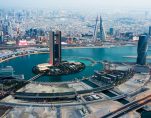
Bahrain has unveiled a new tax regulation requiring large multinational corporations to pay a minimum tax rate of 15%, effective from January 2025. This policy marks a significant shift in the Gulf nation’s economic strategy, aiming to align with global tax standards and diversify its revenue streams.

The decision comes in response to the ongoing international movement towards a unified global tax system. Bahrain’s move aligns with the Organisation for Economic Co-operation and Development (OECD) framework, which seeks to curb tax avoidance by imposing a minimum tax rate on large corporations worldwide. By adopting this policy, Bahrain joins a growing list of countries implementing measures to ensure fairer taxation practices and reduce the competitive advantage of low-tax jurisdictions.

Bahrain’s Finance Minister, Sheikh Salman bin Khalifa Al Khalifa, announced the tax reform, emphasizing that the new rate would enhance the nation’s economic stability and transparency. The reform targets multinational companies with annual revenues exceeding a specified threshold, focusing on sectors such as finance, technology, and manufacturing.

The introduction of this tax rate represents a notable departure from Bahrain’s previously favorable tax environment, which has been a significant attraction for foreign investments. The country’s economic diversification strategy, spearheaded by its Economic Vision 2030, aims to reduce reliance on oil revenues and bolster other sectors of the economy. This new tax policy is expected to generate substantial revenue, which will be reinvested into public services and infrastructure projects.

International businesses operating in Bahrain will need to adapt to the new tax regime by recalibrating their financial strategies and compliance practices. The tax rate is set to apply to both local and foreign entities meeting the revenue criteria, potentially affecting a broad spectrum of industries. Corporate leaders and financial analysts anticipate that this shift could influence Bahrain’s attractiveness as a business hub, though the government has reassured that it remains committed to maintaining a competitive business environment.

Economic experts suggest that Bahrain’s tax policy aligns with global efforts to tackle tax avoidance and ensure that multinational companies contribute a fair share of taxes. The OECD’s initiative, supported by over 130 countries, aims to create a level playing field in international taxation. Bahrain’s decision to implement this policy reflects its commitment to international tax norms and its desire to improve fiscal integrity.

The impact of this new tax policy will be closely monitored by businesses and economic analysts. While it may lead to adjustments in Bahrain’s business landscape, it also signals the country’s proactive approach in adapting to global economic trends. Companies with operations in Bahrain will need to prepare for the changes by updating their financial planning and tax compliance measures in the lead-up to 2025.

As Bahrain moves forward with this tax reform, it underscores a broader global shift towards more equitable tax systems. The nation’s commitment to implementing the 15% minimum tax rate highlights its strategic efforts to align with international standards and foster a more transparent and sustainable economic environment.

KUALA LUMPUR, MALAYSIA – Media OutReach Newswire – 2 September 2024 – The influence of presidential elections on financial markets is often temporary. Still, the psychological effect of elections on traders and investors can cause emotional and illogical behaviour, contributing to increased market swings. Apart from the White House, the Senate is also up for grabs this fall, and the balance of power inside the legislative branch […]

ACWA Power has successfully secured $2.6 billion in financing to advance three major solar projects in Saudi Arabia, underscoring the Kingdom’s commitment to expanding its renewable energy portfolio. The projects, expected to significantly boost the country’s solar power capacity, align with Saudi Arabia’s Vision 2030 initiative, which aims to reduce reliance on fossil fuels and increase the share of renewable energy in its energy mix. The deal, […]

Advertisements

Saudi Arabia and Ethiopia have launched a new business council to deepen economic cooperation and boost trade between the two nations. The Federation of Saudi Chambers made the announcement following the approval by the General Authority for Foreign Trade, underscoring the growing importance of bilateral ties between Riyadh and Addis Ababa. The newly established Saudi-Ethiopian Business Council is set to operate for the 2024-2028 term and will […]

Introducing 6 Adorable “mofusand X Sanrio characters Cuddly Cat Plushies + Meowtastic Mini Jars” Sets and “mofusand X Sanrio Plush Cuddle Buddies” for Double the Cuteness! HONG KONG SAR – Media OutReach Newswire – 29 August 2024 – The popular Japanese illustration mofusand, beloved for its endearing big eyes, playful poses and charming expressions, has captured the hearts of fans of all ages. This summer, 7-Eleven is […]

India is poised to benefit from an anticipated surge in monsoon rainfall next month, according to the latest weather forecasts. The meteorological department has predicted above-average precipitation for the concluding phase of the June-September monsoon season, offering a significant boost to agricultural productivity. This optimistic forecast comes as a relief to the nation’s farmers who have been grappling with fluctuating weather patterns affecting crop yields. The expected […]

Jebel Ali Port in Dubai has achieved its highest container throughput in a single month since 2015, marking a significant milestone for the UAE’s maritime industry. This surge comes amid a notable increase in non-oil foreign trade, driven by the nation’s strategic economic partnerships. The port’s container handling reached unprecedented levels, surpassing previous records and reflecting a robust growth trajectory in trade activities. This spike in volume […]

A clandestine figure identified as ‘Hector’ has emerged as a pivotal player in the Iranian oil trade, reshaping the global energy landscape. Operating under a veil of secrecy, Hector has orchestrated a complex web of transactions that challenges conventional oil market dynamics.

Hector’s influence extends across various regions, with reports indicating a sophisticated network facilitating the clandestine export of Iranian oil despite international sanctions. This network has reportedly employed innovative methods to bypass restrictions and maintain a steady flow of oil to markets that are otherwise difficult to penetrate.

A recent investigation unveiled that Hector’s operations involve an intricate system of shell companies and intermediaries. These entities, often based in jurisdictions with lax regulatory frameworks, obscure the true origin of the oil, allowing it to enter the global market without direct association with Iranian sources. This method not only aids in evading sanctions but also helps in maintaining competitive pricing, which has disrupted established market equilibrium.

The financial aspects of Hector’s operations are equally sophisticated. The trader has reportedly leveraged advanced financial instruments to launder money, further complicating efforts to track and curb illicit oil transactions. By utilizing cryptocurrency and other digital assets, Hector has managed to obscure financial trails, making it challenging for authorities to follow the money.

Hector’s network reportedly includes a range of actors from various sectors, including shipping companies, financial institutions, and political operatives. These collaborators play crucial roles in ensuring the smooth operation of the illicit trade, from logistics to financial transactions. The involvement of such a diverse group underscores the complexity of Hector’s operations and the breadth of his influence in the global oil market.

The implications of Hector’s activities extend beyond mere economic impacts. The ability to circumvent sanctions and manipulate market dynamics poses a significant challenge to international regulatory efforts. This situation underscores the need for more robust measures to address the evolving methods employed by entities engaged in illicit trade.

Energy analysts are closely monitoring the situation, noting that Hector’s operations could have far-reaching consequences for global oil markets. The disruption of traditional supply chains and the introduction of lower-priced oil from these illicit sources could lead to increased volatility in global oil prices. Moreover, the undermining of sanctions regimes could embolden other actors to pursue similar strategies, further complicating efforts to enforce international regulations.

In response to these developments, international bodies and national governments are ramping up their efforts to identify and dismantle such networks. Enhanced cooperation and intelligence-sharing among nations are seen as crucial steps in combating the sophisticated methods employed by traders like Hector. Additionally, there is a growing emphasis on improving financial transparency and regulatory oversight to close loopholes exploited by such actors.

As the global community grapples with these challenges, Hector’s case highlights the need for a multifaceted approach to addressing illicit trade in critical resources. The evolving tactics of secretive traders and the complexities of their operations demand a coordinated and innovative response from policymakers and enforcement agencies alike.

OPEC+ is on track to implement its scheduled oil output increase in October, even as global energy markets experience fluctuations due to disruptions in Libya and uncertain demand growth, particularly in China. The coalition, led by Saudi Arabia and Russia, plans to raise production by 180,000 barrels per day as part of an effort to gradually reverse the significant production cuts made earlier in the year.

This decision comes as the group navigates a complex landscape marked by lower-than-expected demand growth and ongoing supply issues. Libya, a key member of OPEC, has faced significant production setbacks due to internal conflicts, putting additional pressure on global oil supplies. Despite these challenges, OPEC+ aims to proceed with the output hike to maintain stability in the market.

Market analysts have expressed mixed reactions to the planned increase, citing concerns over the potential for oversupply in a market already grappling with sluggish demand. The slowdown in China, the world’s largest oil importer, has particularly raised alarms, as it could dampen the impact of any production hikes. Nevertheless, OPEC+ remains committed to its strategy, with the group’s leaders emphasizing the importance of a measured approach to balancing supply and demand.

Brent crude prices, a key benchmark for global oil, have shown volatility in response to these developments, recently hovering around $79 per barrel. The upcoming U.S. Federal Reserve decisions on interest rates are also being closely watched, as they could influence economic growth and, consequently, oil demand in the coming months.

OPEC+ will continue to monitor the situation closely, adjusting its strategy as necessary to respond to the evolving market conditions. This ongoing recalibration highlights the delicate balance the group must strike between supporting prices and ensuring sufficient supply to meet global needs.

SpiceJet’s stock has fallen sharply by over 6% following a directive from the Directorate General of Civil Aviation (DGCA) placing the airline under intensified scrutiny. The DGCA’s decision comes after identifying significant safety and financial issues during a recent inspection.

The aviation regulator’s enhanced oversight is a response to concerns about SpiceJet’s operational practices and financial stability. The DGCA’s inspection revealed numerous deficiencies, particularly in the airline’s adherence to safety protocols and maintenance procedures. These findings have prompted the regulator to impose stricter monitoring measures to ensure compliance with aviation safety standards.

SpiceJet, which has faced financial turmoil in recent years, has been struggling with mounting debts and operational challenges. The airline’s financial stress has been exacerbated by rising operational costs and a shrinking market share. The DGCA’s move reflects growing unease about the airline’s ability to address these issues effectively while maintaining safety standards.

The special audit conducted by the DGCA also highlighted concerns about SpiceJet’s fleet management and crew training. These issues, combined with the airline’s ongoing financial difficulties, have raised questions about its long-term viability and its capacity to sustain operations safely.

In response to the DGCA’s findings, SpiceJet has committed to implementing corrective measures to address the identified deficiencies. The airline has stated that it is working closely with the regulator to ensure all safety and operational standards are met. SpiceJet’s management has also pledged to improve its financial health through various restructuring efforts and cost-cutting measures.

Investors have reacted negatively to the news, leading to a significant drop in SpiceJet’s share price. The decline reflects market concerns about the airline’s ability to overcome its current challenges and restore investor confidence. Analysts have warned that continued regulatory scrutiny and financial instability could further impact the airline’s stock performance in the near term.

The DGCA’s decision underscores the critical importance of regulatory oversight in maintaining safety standards within the aviation industry. It also highlights the broader challenges faced by airlines in managing financial pressures while ensuring compliance with stringent safety regulations.

As SpiceJet navigates this turbulent period, the airline’s ability to address the DGCA’s concerns and stabilize its financial situation will be crucial in determining its future prospects. The outcome of this heightened surveillance will likely influence both the airline’s operational strategies and investor sentiment in the coming months.

By Nitya Chakraborty Former British Prime Minister Harold Wilson once said that a week is too long a time in politics. This was in the context of post-war turmoil in British politics. As regards India, it seems that the post 2024 Lok Sabha elections scenario is changing fast and the most affected has been the […]

Qatar is reportedly in advanced discussions to acquire a significant stake in a German refinery currently owned by Russia’s state-controlled oil company, Rosneft. This deal, if finalized, could see the Qatar Investment Authority (QIA) strengthen its already substantial investment portfolio, which includes a nearly 19% stake in Rosneft.

The negotiations involve Qatar being the last remaining bidder for the refinery assets, which were seized by the German government following the fallout from Russia’s military actions in Ukraine. The Qatari delegation has been actively engaged in high-level talks with German officials, with the potential acquisition seen as a strategic move to secure long-term energy interests in Europe.

Germany’s government, which previously took control of Rosneft’s operations in the country, is expected to support the transaction, given the geopolitical implications and the need to stabilize energy supplies in the region. This aligns with Germany’s broader strategy to reduce dependency on Russian energy while ensuring operational continuity at critical infrastructure sites.

Rosneft’s German assets have been under scrutiny as Europe seeks to disentangle itself from Russian energy influence, making Qatar’s interest particularly timely. The Qatari government’s deep ties with Russia and its financial muscle could provide the necessary leverage to close the deal.

Qatar’s pursuit of these assets underscores the Gulf nation’s ambition to expand its energy footprint in Europe, leveraging its vast wealth to gain strategic assets in key markets. The move also reflects the growing importance of energy security in a rapidly changing geopolitical landscape.

The ongoing negotiations are being closely watched by industry analysts, who see this potential acquisition as a significant development in the global energy sector, particularly in light of shifting alliances and the evolving dynamics of energy supply chains.

The deal, if completed, would further cement Qatar’s role as a critical player in the global energy market, positioning it alongside other major energy-exporting nations that are capitalizing on the changing geopolitical environment. The outcome of these negotiations could have far-reaching implications for the future of energy security in Europe and beyond.

Further updates on this evolving story are expected as the negotiations progress.

Latest All-in-One laundry solution by Samsung integrates a washer, dryer and various AI features that make it the brand’s most intelligent, efficient and environmentally conscious laundry combo to date. SINGAPORE – Media OutReach Newswire – 29 August 2024 – Samsung Electronics Singapore expanded their range of laundry solutions with the new Bespoke AI Laundry Combo™, its first All-in-One laundry solution that integrates a large capacity washer, a […]

Oil prices held steady after a period of volatility driven by escalating tensions in the Middle East and disruptions in Libyan production. Brent crude futures hovered around $78.25 per barrel, while U.S. West Texas Intermediate (WTI) maintained a price near $75.25. The market had reacted sharply to a significant drop in U.S. crude inventories, coupled with geopolitical concerns following the killing of key militant leaders and a […]

Wärtsilä has announced plans to develop a substantial 1.5 gigawatt (GW) power generation project in Kuwait, marking a significant investment in the country’s energy infrastructure. The proposed project is poised to enhance Kuwait’s power supply stability and support its growing energy demands. This ambitious initiative involves the construction of a state-of-the-art power plant, which will utilize Wärtsilä’s advanced technology to ensure efficient and reliable energy production. The […]

Saudi Arabia’s Public Investment Fund (PIF) has successfully secured a $15 billion revolving credit facility from a consortium of international banks. This move is a significant step in PIF’s ongoing efforts to bolster its financial capacity as it pursues an aggressive investment strategy aimed at diversifying the kingdom’s economy under the Vision 2030 plan.

The revolving credit facility, which allows the fund to borrow, repay, and borrow again up to the agreed limit, will provide PIF with greater financial flexibility as it looks to capitalize on investment opportunities across various sectors. This latest facility is in addition to the fund’s previous credit arrangements, marking a continuation of its strategy to leverage global financial markets to fund its initiatives.

PIF, which manages over $700 billion in assets, has been pivotal in spearheading Saudi Arabia’s economic diversification. The fund has made significant investments in technology, renewable energy, and other emerging industries, both within the kingdom and globally. With the new credit facility, PIF is expected to further expand its portfolio, focusing on sectors that align with the Vision 2030 goals, including tourism, entertainment, and clean energy.

The consortium of banks involved in the deal includes several of the world’s leading financial institutions, underscoring the confidence of international markets in PIF’s strategy and the broader economic reforms being undertaken in Saudi Arabia. The terms of the facility are reportedly favorable, reflecting PIF’s robust credit standing and the attractiveness of its investment portfolio.

This development is part of a broader trend where sovereign wealth funds are increasingly tapping into global financial markets to enhance their liquidity and investment capabilities. PIF’s strategy involves not only direct investments but also partnerships with international companies and institutions, aimed at bringing technology and expertise into Saudi Arabia.

As the kingdom continues its transformation, PIF’s ability to secure substantial credit facilities such as this one will be crucial in ensuring it can meet its ambitious targets. The fund’s investments are expected to play a key role in reducing Saudi Arabia’s reliance on oil revenues, fostering innovation, and creating new economic opportunities for the kingdom’s population.

This latest financial move is a clear indication of PIF’s growing influence in global markets and its commitment to achieving the long-term objectives of Vision 2030.

Wall Street’s outlook on crude oil for the coming year is growing increasingly cautious, as two major financial institutions, Goldman Sachs Group Inc. and Morgan Stanley, have downgraded their price forecasts. Both banks are now predicting lower average prices for Brent crude, reflecting concerns about rising global supplies, including potential increases from the OPEC+ alliance. Goldman Sachs has adjusted its forecast for Brent crude, predicting it will […]

    By Sushil Kutty   So India is a “big country” with a “big influence” on the Russian economy and Ukrainian President Volodymyr Zelenskiy wants India and Indians to “change their attitude” towards Russia. For then, there will be peace as Russian President Vladimir Putin will then end the war. Apparently, Zelenskiy doesn’t like Modi’s […]

  By P. Sreekumaran THIRUVANTHAPURAM: The release of the Hema Committee report on the problems plaguing the Malayalam film industry has exposed its ugly underbelly. It is a gory tale of sexual exploitation, illegal bans, discrimination, drug and alcohol abuse , wage disparity and in many cases inhuman working conditions. Details of the report first. The […]

OPEC+ faces a critical decision in the coming weeks as it evaluates whether to move forward with its planned oil production increases scheduled to begin in October. The decision is fraught with complexity, driven by a mix of economic, political, and market factors that could significantly influence global oil prices and economic stability. The planned increases stem from a decision made in June 2024, where OPEC+ members […]

VISHNU RAJA
RYO YAMADA
HITORI GOTOH
IKUYO KITA