Just in:
TCMA Advances ASEAN Cement Decarbonization with 14.4 Mt. of CO₂ Reductions // Google identifies autonomous AI systems conducting vulnerability attacks // Galaxy Resort Presents: “Plácido Domingo & José Carreras: The Legends United Opera Gala” // Ratio cut mooted to end teachers stir // Mangroves Documentary Premieres, Exploring How Cities and Wetlands Coexist // Broermann Medical Innovation Award 2026: Three Pioneers of Modern Obesity and Diabetes Therapies Honored // Optimizely breach exposes visitors across 178 organisations // UK privacy regulator flags GTA 6 phishing threats // Mexican journalists demand accountability after Acapulco reporter killed // South Korea weighs cash rewards for AI exam tips // ASEAN adopts binding pact on regional digital commerce // China’s Recombinant Collagen Technology Wins the INPD Innovative Manufacturing Process Award // Mubadala and Centerbridge secure £1.17bn Canaccord wealth agreement // Over 360 electricity distribution professionals meet in Seoul for CIRED’s first major event in the Asia-Pacific region // Kochi police arrest man over pitbull attack on wife after quarrel // Takaichi exchanges greetings with Chinese minister at Manila summit // Kuwait engages hostile drones as Bahrain intercepts attacks // Kodiyeri in-law attacks Vijayan, Govindan over leadership style // Phancy Launches Phai-A1 Language Model and Phai-M1 Video Generation Model // Reliance explores satellite manufacturing alliances for broadband network //

News related to
Range

iFLYTEK is stepping up its engagement in the Middle East, unveiling two flagship AI products at GITEX 2025 in Dubai as part of a broader strategy to localise its offerings and anchor its presence in the region.

The company’s showcase spans three core portfolios—AI Translation, AI Infrastructure and AI Solutions—tailored for Gulf markets, with particular emphasis on Arabic dialect support and secure deployment. Among the new offerings is the AI Translation Earbuds, designed to enable seamless multilingual communication, and the e-ink AINote 2 work device, both making their global debut at the event. The debut underscores iFLYTEK’s intent to go beyond product marketing, emphasising solutions that address regional business needs.

Vincent Zhan, Vice President of iFLYTEK, asserted that the company is focused “to deliver intelligent solutions that address real business challenges” rather than merely present tech demonstrations. The firm has already placed a local team in Dubai to oversee deployment, maintenance, and customer support. It also customised algorithms to handle multiple Arabic dialects, expecting that linguistic responsiveness will differentiate it from global rivals.

iFLYTEK’s portfolio for the event includes the Spark WallEX system, designed for intelligent space management, along with Spark Smart Blackboard and Spark GuideX. The firm says these are engineered to support a range of sectors, including education, healthcare, enterprise operations and government. Its “All-in-One AI Solution” is positioned as a secure infrastructure package for organisations seeking turnkey AI adoption.

The Middle East expansion is part of a larger international push. Outside Asia, iFLYTEK is targeting Europe, as trade tensions and regulatory pressures create incentives to diversify markets. It is reportedly planning offices in France and Hungary, with growth ambitions in Spain and Italy. In March 2025, Zhan cited tariffs in the US as influencing iFLYTEK’s decision to look more aggressively into Europe and the Gulf.

China’s AI giant also faces headwinds. It was placed on a US trade blacklist in 2019, making procurement of certain high-end components dependent on US approvals. To mitigate vulnerability, iFLYTEK has shifted many of its models to Huawei’s chip platforms. It developed its Xinghuo X1 large language model in partnership with Huawei, reportedly running entirely on domestic chips. The firm claims to have pushed chip efficiency from 20 per cent to nearly 80 per cent of equivalent U. S. hardware, though Huawei leadership acknowledges that domestic chips still lag behind by a generation.

Market observers note that iFLYTEK’s shift toward the Gulf aligns with governments in the UAE and Saudi Arabia pushing AI-first national strategies. However, the company must navigate regulatory, data residency and market competition risks. In the Gulf, local AI and language processing firms are emerging, and global players like Amazon and Microsoft are pressing deeper into the region.

iFLYTEK’s presence at major global events is integral to its positioning. In July 2025, at MWC Shanghai, it launched the Spark All-in-One AI Machine and Dual-Screen Translator 2.0—capable of handling translation across dozens of languages—to reinforce its push into enterprise AI. The company has also rolled out smart products such as the AINOTE Air 2 across Asia and Gulf markets, with strong uptake in multilingual productivity segments.

Rania Gule Over the past few months, silver prices have witnessed a strong rally — not only as a safe-haven asset alongside gold, but also due to fundamental factors rooted in industrial supply and demand dynamics. As of early October 2025, silver is trading around $48.65 per ounce in spot market data, while ETFs such as iShares SLV show a slightly lower net asset value (NAV), reflecting […]

Grayscale Investments has enabled staking on its Grayscale Ethereum Trust and Grayscale Ethereum Mini Trust, making them the first U. S.-listed spot exchange-traded products to support native staking functions. In tandem, its Solana trust has also activated staking, pending regulatory approval for an exchange listing.

The introduction means investors in ETHE and ETH can now earn staking rewards while retaining exposure to Ether’s spot price. Grayscale says staking operations will be managed via institutional custodians and a distributed network of validator providers. The firm emphasises that staking is passive, intending to support protocol security while offering additional yield.

ETHE and ETH are not registered under the Investment Company Act of 1940, placing them outside the conventional ETF regulatory regime. That structure allows flexibility but also exposes investors to different oversight and risk frameworks. GSOL, currently quoted over the counter, must undergo a formal uplisting process to align with exchange-traded product standards.

The regulatory environment has posed ongoing challenges for staking-enabled products. Earlier in 2025, the U. S. Securities and Exchange Commission delayed decisions on staking features in ether ETFs proposed by major issuers. The SEC has articulated concerns that staking may constitute an offer of securities, complicating how such products can be structured under existing law. Grayscale’s new move comes amid evolving guidance around liquid staking receipts and the broader regulatory calibration of crypto ETPs.

Grayscale currently controls approximately half of U. S. ETP-held Ethereum, and as of the end of September 2025, the firm reported around $35 billion in assets under management. The firm has already staked tens of thousands of ETH, deploying mechanisms to balance liquidity demands with staking commitments. It uses what it calls a “liquidity sleeve”—a pool of unstaked tokens and short-term financing—to meet redemption requests without forcing premature withdrawals from staking pools.

Analysts note that Ethereum staking yields in the market range around 2 per cent annually, while Solana’s higher inflation and protocol incentives can push staking returns to double digits. For yield-seeking investors, a staking-enabled ETP structure promises a more seamless way to tap into rewards without managing validator nodes or staking accounts directly.

Yet the innovation also carries risks: validator slashing penalties, network downtime, and the volatility of token prices remain material. Because Grayscale’s staking is passive, investors’ rewards reflect aggregated validator performance. The firm has committed to transparency through regular reports disclosing validator partnerships, staking activity, and operational metrics.

Annual leadership business series by Canon Singapore equips business leaders with strategies and a resilience-ready toolkit to navigate global and economic shifts impacting Singapore SINGAPORE – Media OutReach Newswire – 6 October 2025 – Canon today announced the return of the highly-anticipated annual Think Big Leadership Business Series in Singapore, designed to help businesses tackle challenges in an era of global uncertainty and technological disruption. This year’s […]

Arabian Post Staff -Dubai Chinese automakers have revived a barter-style trade with Iran, sending semi-assembled vehicles in exchange for containers of copper and zinc that feed China’s non-ferrous metals sector. This swap, involving no traditional cash payments, emerges as a creative workaround amid the constraints of sanctions and currency pathways. Every few months, a facility on the Yangtze churns out engines and chassis, which are sent to […]

SINGAPORE – Media OutReach Newswire – 6 October 2025 – Energea has introduced its Tangerine collection, a strategic mix of fresh innovations and popular products now enhanced with vibrant orange. Harmonizing with the iPhone 17 Pro and Pro Max’s new orange finish, this collection highlights the synergy between cutting-edge technology and thoughtful design. Introducing the latest collection in a bold orange shade, designed for a complete charging […]

Munich Airport reopened Saturday morning following a second shutdown in under 24 hours caused by drone activity near its runways, as Germany steps up its response to escalating airspace threats. Air traffic control first suspended operations late Thursday after multiple drone sightings prompted restrictions and cancellations. Authorities say 17 departing flights were grounded and 15 incoming flights diverted, with around 3,000 passengers left in limbo. Operations resumed […]

Advertisements

Strong demand and constrained inventory have pushed Dubai’s residential rents upward for several years. However, multiple indicators now suggest that 2026 will bring slower growth—perhaps even declines—in many segments of the market.

Headline figures already point to a deceleration. Yearly rental growth across residential properties in Dubai fell to about 8.5 percent by May 2025, down from 14.3 percent at the start of the year and 21.1 percent a year earlier. The long-term rental sector is under pressure as new supply enters the market: in the second quarter of 2025, long-term rental contracts fell 6.3 percent year on year, new contracts dropped nearly 8.9 percent, and overall rents declined 12.9 percent in quarterly comparison.

Analysts attribute the cooling largely to a surge in forthcoming housing supply. Some 150,000 new homes are expected to be completed between 2025 and 2027, representing a stock increase of nearly 20 percent in many parts of the market. Fitch Ratings projects residential property values could pull back by as much as 15 percent during late 2025 and into 2026, citing that the volume of handovers will likely outpace demand.

In the mid- and affordable segments, the impact may be most visible. Experts expect that communities with heavy handovers—such as Jumeirah Village Circle, Al Furjan, Dubai South, and surrounding areas—will experience downward pressure on asking rents. Nevertheless, prime areas like Downtown Dubai and Palm Jumeirah are forecast to continue seeing double-digit rent growth, buoyed by scarcity and sustained demand for luxury housing.

A tale of two markets is emerging. In central, premium sectors, landlords maintain leverage, while suburban and emergence zones will offer more negotiation room for tenants. Springfield Properties’ chief executive, Farooq Syed, observes that the large transaction volume and development pipeline into 2026 will provide tenants greater choice—especially in the apartment segment. Cushman & Wakefield Core’s head of research, Prathyusha Gurrapu, describes the trend as “clear signs of stabilisation,” especially outside the top-tier districts.

Beyond supply and demand dynamics, shifts are occurring in tenant preferences. Short-term and flexible lease arrangements continue to gain popularity, particularly among transient professionals and investors seeking yield. In Q2 2025, short-let occupancy remained strong—AirDXB, a key player in Dubai’s short-term rental market, achieved 90 percent occupancy compared to citywide averages around 63 percent. Technology trends are also creeping into real estate: blockchain-based platforms are being tested to automate rent payments and maintenance workflows.

On the investor side, yields remain attractive. Knight Frank reports residential yields are holding in the 5–7 percent range for apartments and 4.5–6 percent for villas and townhouses. But concerns are rising about overleveraged speculative investment, especially in lower-end segments. The Financial Times recently noted that many flippers—investors hoping to resell properties quickly for a profit—are already struggling to offload unfinished units as competition mounts.

Regulatory efforts may also temper volatility. Dubai’s Real Estate Regulatory Agency continues to push for transparency and consistent valuation practices, while the broader Dubai Land Department is moving toward digital registration and enhanced oversight. For tenants, the requirement to declare all occupants in Ejari contracts—an enforcement step introduced in 2025—tightens accountability in co-living arrangements.

Macro-economic fundamentals still support the market, albeit with caution. The emirate’s population passed 3.8 million in 2025, reflecting steady migration and growth—fuelling housing demand. Moreover, Dubai continues to attract global capital, drawn by tax benefits, infrastructure, economic diversification, and a relatively stable environment across the Gulf region.

Pressures are evident however. UBS’s 2025 index flagged Dubai at “bubble risk,” warning that rapid appreciation may not be sustainable without moderation. If large-scale oversupply hits the market at once, correction cycles may deepen in specific micro-markets.

By Manish Rai In his maiden speech in the United Nations General Assembly, Syria’s interim president, Ahmed al-Sharaa, called for lifting of international sanctions on Syria, becoming the first head of state from Syria to address the gathering in nearly 60 years. This signifies the first appearance of a Syrian president since Nureddin al-Atassi took office in 1967. Syrian President Sharra engaged in a series of bilateral […]

Aluminium Products Company of Saudi Arabia and Hong Kong–based Asia Aluminum Group have inked a master framework agreement to build the largest integrated downstream aluminium industrial complex in the Kingdom, with planned investment reaching up to USD 500 million. The initiative centres on three joint ventures covering aluminium extrusion, modular housing, and solar panel frame manufacturing. The agreement was signed in Hong Kong by ALUPCO Chief Executive […]

Global investment firm KKR has acquired a minority stake in ADNOC Gas Pipeline Assets LLC, reinforcing its commitment to Middle East energy infrastructure. ADNOC retains full operational control and ownership of the pipelines. KKR’s move builds on longstanding ties with Abu Dhabi’s national energy group. In 2019, KKR and BlackRock acquired a portion of ADNOC’s oil pipeline business in a landmark deal; that investment was later sold […]

Tesla has launched sales of its Cybertruck in Qatar, bolstering its Middle East expansion as the electric carmaker seeks growth beyond saturated U. S. and Chinese markets. The announcement was made via its social media channel on 3 October, following its earlier push into Saudi Arabia this year.

Underlining its Gulf ambitions, Tesla has already made the Cybertruck available in Saudi Arabia and the United Arab Emirates, and now Qatar joins as one of the first markets outside North America to offer the pickup. The company plans to support local sales with online ordering, pop-up showrooms, Supercharger stations, and service centres.

Tesla does not provide regional breakdowns for Cybertruck deliveries, but a U. S. recall filing notes that 46,096 units had been built between November 2023 and early 2025. Analysts say the Qatar move is timely, given Tesla faces weakening demand and intensifying rivalry in its core markets.

Qatar, meanwhile, has signalled ambition in building an EV framework. The country is working toward installing 1,000 public charging stations by 2025 and targeting 4,000 by 2035. A partnership between Tesla, the utility Kahramaa, and real estate projects like Doha Festival City aims to deploy Superchargers capable of delivering 250 kW charging, enabling about 200 miles of range in 15 minutes.

Tesla’s introduction in Qatar is part of a broader Gulf strategy that seeks to replicate its Saudi model—offering multiple variants of the Cybertruck tailored to regional conditions. For example, orders in Saudi Arabia include both All-Wheel Drive and Cyberbeast trims, with the Saudi AWD variant priced starting at around 434,990 Saudi Riyal.

However, Tesla is also reshaping its product line due to weak uptake. It has dropped the standalone rear-wheel-drive Cybertruck variant from its U. S. configurator, leaving only two higher-end models in the lineup. This shift signals that Tesla is consolidating its offerings to better match market demand.

Competition in the Gulf is mounting. Chinese manufacturers BYD and Zeekr are pushing aggressively into the region, and the U. S. EV maker Lucid—backed by Saudi Arabia’s sovereign wealth fund—poses a formidable local rival.

Tesla’s Q3 performance provided a temporary boost: the company reported record global deliveries, partly driven by a rush before the U. S. EV tax credit expired on 30 September. Yet analysts anticipate a steep drop in Q4 sales given the expiration of that incentive.

Tesla’s entry into Qatar underscores its strategic pivot toward markets where expansion potential remains, even as challenges loom in technology adaptation, climate conditions, and consumer uptake.

Stock market information for Bitcoin
Bitcoin is a crypto in the CRYPTO market.
The price is 122782.0 USD currently with a change of 1997.00 USD from the previous close.
The intraday high is 123928.0 USD and the intraday low is 119360.0 USD.

Bitcoin cleared the $120,000 mark on Friday, marking its strongest move in months as inflows into U. S. spot Bitcoin exchange-traded funds and fears of U. S. political gridlock spurred investor appetite.

The sharp rally saw Bitcoin rise toward levels not seen since August, with price action driven by mounting demand from institutional channels and growing speculative interest in its safe-haven appeal. Observers link the surge to accelerating purchases via ETFs, as well as elevated yields on derivative positions betting on further strength.

Citigroup this week trimmed its year-end Bitcoin forecast to $133,000, citing headwinds from a strengthening U. S. dollar and weak gold prices, while lifting expectations for Ethereum to $4,500 on the back of increasing inflows. The contrasting moves reflect a recalibration of expectations amid shifting capital flows in crypto markets.

Analysts tracking ETF inflows suggest that institutional adoption remains the catalyst for upward momentum. Bitwise reiterated a $200,000 target for Bitcoin in 2025, emphasising sustained demand from endowments, corporates, and sovereign treasuries. Meanwhile, Coindesk’s mid-year forecast placed a $150,000–$160,000 range as a probable zone should monetary policy ease.

Technical indicators show the path is not without resistance. Price models project a critical threshold at $117,000–$120,500: surpassing it decisively would confirm a bullish breakout, while failure to hold could trigger pullbacks toward $110,000 or lower support zones. Analysts caution that leveraged long positions may be vulnerable to liquidation should sentiment cool.

On-chain data shows accumulation by so-called “whales” has intensified over recent weeks, reinforcing the theory that major players are driving the advance. Machine-learning forecasting studies underscore that low, high, and opening price series remain the most informative variables for trend prediction, though the authors note models still struggle with sudden macro shocks.

MicroStrategy, a prominent corporate Bitcoin holder, has slowed its acquisitions. Its latest SEC filing disclosed a modest $22 million purchase, significantly down from earlier, more aggressive buys. That shift reflects a degree of caution in managing dilution risk and capital allocation.

Around the political landscape, speculation over a potential U. S. government shutdown elevated demand for non-traditional assets, while weak private sector job data has stoked hopes of a future rate cut by the U. S. central bank. Market participants are watching whether rate expectations shift further in favour of growth-assets like Bitcoin.

Valetax, a leading global provider of trading services, is proud to announce its participation as an Elite Sponsor at Forex Expo Dubai 2025, one of the world’s most prestigious financial events. The expo will take place on 6–7 October 2025 at the Dubai World Trade Centre, drawing traders, partners, and industry experts from across the globe. As an Elite Sponsor, Valetax is set to make a remarkable […]

Markets across the crypto derivatives space are on edge as Bitcoin and Ethereum options worth approximately $4.33 billion enter settlement today, setting the stage for heightened volatility in the near term.

On the Deribit platform, Bitcoin dominates the expiries, with about $3.5 billion notional value scheduled for settlement in roughly 30,200 contracts. Its put-to-call ratio stands at 1.23, suggesting more downside protection bets than bullish wagers. The so-called “max pain” level — the strike price at which the greatest number of contracts expire worthless — is pegged at $114,000, close to current trading levels and potentially acting as a magnet for price movement.

Ethereum’s portion comprises about $806.75 million, across 177,398 contracts, with a put-to-call ratio near 0.99, indicating a more balanced bias among traders. Its max pain is estimated at $4,500, just beneath recent market trading ranges.

Derivatives analysts caution that expiries of this size tend to exert short-term pressure on price behaviour, particularly as market makers and institutional actors roll, hedge or unwind positions ahead of settlement. In many past cycles, price action has gravitated toward max pain levels in the hours leading up to expiry.

Volatility expectations are reinforced by elevated implied volatility in both Bitcoin and Ethereum options markets. Some trading desks point to a compression of liquidity around strike clusters and warn that even modest directional flows may trigger outsized price swings.

Some market strategists argue that Bitcoin’s bearish tilt reflects growing hedging demand after price consolidation above major resistance zones. Meanwhile, Ethereum’s near-neutral PCR hints at structural hedging and profit-taking rather than outright directional bets.

Macro factors could amplify sensitivity. With markets digesting central bank policy signals, inflation indicators and equity market drift, crypto derivatives flows may act as a conduit for correlation shocks. That makes expiry day risk not purely technical but potentially reactive to broader sentiment shifts.

Earlier this month, a near-identical expiry event saw $4.3 billion in options settle, with BTC positioning yielding shortterm downside pressure and ETH holding more firmly near its pricing bands. That expiry foreshadowed a larger $18 billion BTC options expiry scheduled for 26 September, intensifying speculation on whether today’s event will prime momentum.

Market watchers are watching order-book depth near the $114,000 and $4,500 levels, as sharp absorption or rejection there may offer clues to directional bias post-expiry. In the absence of sustained trend breaks, much of the post-settlement period could hinge on whether institutions successfully reestablish exposure rather than exit.

Traders are also navigating strategy choices: rolling forward, closing positions, or rebalancing via delta hedges. The interplay of those flows may create forks in volatility—in which the first few hours post-expiry see directionless chop before a stronger move emerges.

Goldman Sachs and a subsidiary of the Abu Dhabi Investment Authority have entered into a co-investment alongside PAI Partners in Froneri, valuing the ice­cream conglomerate at around €15 billion, including debt. The transaction restructures PAI’s 50 per cent stake in Froneri by rolling it into a new vehicle, with ADIA as a “significant minority” and a Goldman-led continuation vehicle also taking a position.

PAI has formally completed the €3.6 billion equity transaction, creating a fresh ownership arrangement for its Froneri shareholding. The Goldman Sachs Alternatives instruments, deployed via a single-asset continuation vehicle, attracted oversubscription, while the ADIA subsidiary secured its role as co-investor. PAI emphasised the move underscores confidence in Froneri’s trajectory and enables further growth ambitions. The firm also appointed Weil as legal counsel for the transaction.

Froneri, launched in 2016 as a 50:50 joint venture between PAI’s R&R Ice Cream and Nestlé’s European ice cream operations, now reports annual revenues near €5.5 billion and over 12,000 employees across 25 markets. In 2019 it further expanded by acquiring Nestlé’s U. S. ice cream arm—bringing brands such as Häagen-Dazs, Drumstick, and Outshine into its portfolio. That acquisition elevated Froneri’s global presence and sharpened the competition with Unilever’s Ice Cream business, soon to be spun off as Magnum Ice Cream Company.

Nestlé is retaining its circa 50 per cent share in Froneri and has expressed support for this new capital injection and structural reset. PAI, on its part, expects the new format to help it maintain alignment with institutional investors while reaping long-term value from an asset already showing consistent growth.

The ADIA involvement aligns with the sovereign fund’s strategy to diversify into private equity and alternative investments. ADIA was among the most active sovereign wealth funds in the first nine months of 2025, particularly in co-investment deals and private equity events across global markets. Placing capital into a well–established consumer goods platform like Froneri helps balance its portfolio between growth and stability.

Continuation vehicles, such as the one orchestrated by Goldman Sachs in this case, have seen increasing adoption in private equity markets. They allow firms to extend holding periods for assets beyond the life of original funds, while offering liquidity options to existing limited partners. In this Froneri transaction, demand exceeded expectations—signalling investor appetite for high-quality consumer assets.

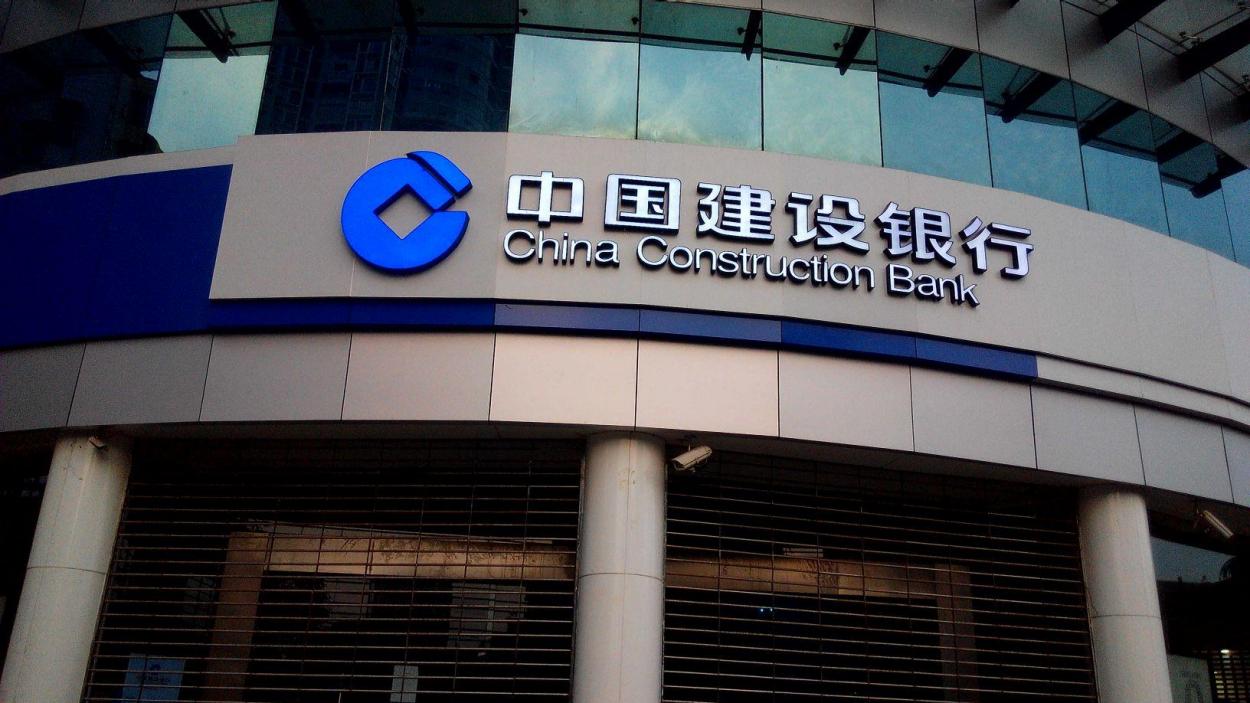
China’s largest state banks have committed over $3.75 billion in debt financing to Saudi Aramco’s Jafurah gas project, while Chinese investment funds have declined to take equity stakes in the venture, sources told Reuters.

The bulk of this funding comes from Bank of China, ICBC and China Construction Bank, each contributing around $1 billion, and Agricultural Bank of China adding roughly $750 million. This debt financing accounts for more than one-third of the total capital sought for what is expected to be the largest shale gas development outside the United States.

Aramco’s deal involves an $11 billion lease-and-leaseback agreement signed in August with a consortium led by Global Infrastructure Partners, an arm of BlackRock. Under the arrangement, a new entity called Jafurah Midstream Gas Company will lease processing assets to Aramco for 20 years. Aramco retains a 51 per cent stake, while the consortium holds the remaining 49 per cent.

Despite the opportunity to join the equity syndicate, several Chinese state-linked funds declined to participate, a move that sources attribute to heightened U. S.–China tensions. Beijing is said to have discouraged fund-level engagement with U. S.-affiliated private capital firms, even when such firms do not have overt U. S. exposure.

The Chinese banks’ decision to provide senior debt but avoid equity signals a calibrated strategic posture: backing the project financially without direct governance alignment with U. S.-linked investors.

Aramco’s broader ambition is to expand its gas production capacity by 60 per cent over 2021 levels by 2030. The Jafurah basin is estimated to contain 229 trillion standard cubic feet of raw gas and 75 billion stock tank barrels of condensate.

The BlackRock-led consortium is also negotiating additional capital of around $10.3 billion with a mix of debt instruments; participants in those talks include JPMorgan and Sumitomo Mitsui Banking Corporation. Those financial structures are intended to support the lease-and-leaseback model without ceding control of core infrastructure assets to external parties.

Within the Gulf, Chinese lenders’ prominent involvement in Jafurah’s financing echoes a broader trend. Analysts note that China is repositioning its role in Gulf energy infrastructure by leveraging its strengths in project debt and export credit rather than co-investment in U. S.-sponsored equity schemes.

Saudi Arabia is concurrently expanding its gas network. It has signed over $25 billion in contracts for the second phase of Jafurah development and further gas-network enhancements, including pipeline extensions of 4,000 km to increase capacity by 3.2 billion standard cubic feet per day. Chinese firms, such as Sinopec, are among the contractors participating in these projects.

For Aramco, the dual approach of securing large-scale debt from Chinese banks while partnering with international investors via the leaseback model helps it mobilise capital without relinquishing decisive control. The arrangement offers investors predictable tariff-based returns.

Chinese banks’ exposure gives them influence over covenant terms, loan pricing and repayment schedules. That leverage, without the burdens or political friction associated with equity, aligns with Beijing’s financial diplomacy toward strategic energy corridors.

The full constellation of debt and equity deals around Jafurah—and the dynamics among Gulf producers, Chinese state capital, and U. S.-linked private investors—will be among the key nodes shaping the next wave of energy infrastructure financing.

Austria’s armed forces have shifted from Microsoft Office to the open-source LibreOffice platform on approximately 16,000 desktops, a move framed by defence authorities as a step toward digital sovereignty rather than cost cutting. Michael Hillebrand, head of Directorate 6 ICT and Cyber, emphasised that data processing will now remain entirely in-house under strictly auditable systems. He told ORF radio that dependency on external cloud providers was considered […]

Dubai’s ride-hailing landscape has shifted dramatically as the UAE-based Zed app now encompasses 10,764 taxis across the emirate—equivalent to more than four in five licensed cabs. The move was enabled through strategic partnerships with Dubai Taxi Corporation and National Taxi, folding in the fleets of three major operators.

Under the new arrangement, DTC’s entire fleet and those of National Taxi and Kabi by Al Ghurair become bookable via the Zed platform, effectively making Zed the host of Dubai’s second-largest taxi fleet. Zed executives describe the expansion as a means of enhancing coverage, cutting cancellations, and lowering wait times, especially across areas traditionally underserved.

Badr Al Ghurair, Zed’s Chief Executive, emphasised the home-grown nature of the platform and its deep knowledge of Dubai’s commuting patterns: “this collaboration … further strengthens Dubai’s mobility ecosystem while ensuring that our communities have access to reliable, everyday transport solutions” he said. Abhinav Patwa, Zed’s EVP and Head, added that the alliances provide scale and reliability without losing sight of a customer-first approach.

The accord comes amid Dubai’s broader ambition of converting 80 per cent of taxi bookings to digital platforms—a target within reach through the emirate’s Smart City 2025 programme. The integrated fleet also introduces more electric and hybrid taxis into Zed’s pool, aligning with the city’s sustainability goals.

This consolidation represents a notable realignment in Dubai’s mobility market. For years, taxis and e-hailing apps operated largely in parallel, with limited overlap in booking channels. The new model bridges that divide, bringing traditional operators into the digital fold via a single platform. Analysts say the move may accelerate the decline in usage of standalone taxi apps and push rivals to forge similar alliances or risk falling behind.

Dubai Taxi Company, now a public joint stock firm under Law No. 21 of 2023, operates more than 10,000 vehicles, of which 6,200 taxis were folded into the agreement. Kabi by Al Ghurair contributed another 3,680 vehicles under the tie-up. According to RTA data, Dubai’s taxi sector expanded by 7 per cent in the first half of 2025 compared with the same period in 2024, signalling growing demand for urban mobility services.

Through the arrangement, newly commissioned taxis across the partner fleets will automatically integrate into Zed’s system—making service expansion incremental and scalable. Several of the added vehicles are electric or hybrid, helping Zed accelerate its greening efforts.

Passengers can now access all these taxis via Zed’s iOS and Android apps, with the platform continuing to offer features such as guaranteed on-time pickups for pre-booked premium rides. The enhanced capacity is expected to reduce wait times during peak hours, improve service in remote zones, and lower the incidence of ride cancellations.

Global investment giant KKR has acquired a minority stake in the entity leasing Abu Dhabi National Oil Company’s gas pipeline assets, bridging further into the Gulf’s energy infrastructure sphere. The financial terms were undisclosed; key rights and management powers remain with ADNOC. This marks a continuation of KKR’s partnership with ADNOC: in 2019, it invested in the oil pipeline business—then among the first foreign institutional investments into […]

Electronic Arts, creator of blockbuster franchises like “Battlefield” and “Madden NFL,” has agreed to be acquired by a consortium led by Saudi Arabia’s Public Investment Fund, private equity firm Silver Lake, and Jared Kushner’s Affinity Partners, in what would be the largest leveraged buyout in history. Under the terms, EA shareholders will receive $210 per share in cash, valuing the company at roughly $55 billion. The transaction […]

Riyadh has unveiled a bold draft plan to permit all non-resident foreign investors direct access to the main Saudi stock market, eliminating the need for the current Qualified Foreign Investor framework and abolishing swap agreements. The Capital Market Authority has opened a 30-day public consultation on the proposal, which, if adopted, would mark a major liberalisation in the Kingdom’s capital markets.

Under the draft, non-resident investors would no longer need to satisfy eligibility thresholds currently required for QFI status, and would be permitted to hold shares in listed companies in their own names. The plan would also phase out swap arrangements that allow foreign parties to obtain economic exposure to Saudi stocks without holding legal title. The consultation period runs until 31 October 2025.

The CMA says the changes aim to broaden the investor base, increase liquidity and attract a wider pool of capital. Foreign holdings in the main market had already reached SAR 412 billion by mid-2025, comprising more than 471 percent growth from SAR 72 billion in 2015. Non-resident capital under the QFI regime, combined with swap exposure, totals over SAR 528 billion.

The QFI system currently imposes strict entry criteria — one requirement is minimum assets under management of SAR 1.875 billion. QFIs also enjoy direct ownership and voting rights, whereas swap-based investors operate indirectly. Under the rules, non-resident foreign investors face a cap of 10 percent in any listed firm, while aggregate foreign ownership in a company is capped at 49 percent. Swap contracts are legally structured to grant economic benefits without formal shareholding rights under the depositary centre system.

Market analysts say lifting QFI restrictions could lower barriers for small and mid-sized international asset managers that presently cannot meet the QFI thresholds. “This is a structural shift — it moves Saudi from a screened-access regime to an open one,” commented a Gulf region investment strategist. Observers note, however, that tightening surveillance, settlement and disclosure mechanisms will be essential to managing risks of volatility and capital flight.

Under the draft, swap accounts held by foreign investors would need to be converted to direct shareholding accounts within a transition period of up to 12 months. The CMA also proposes adjustments to reporting, market conduct and corporate governance rules to ensure fairness.

The consultation draft aligns with broader reforms introduced in 2025, including simplification of account opening for some foreign investor categories, especially GCC-residents or overseas investors with prior residency in the region. That move had already signalled a gradual loosening of restrictions.

Equity markets in the Gulf contrast in openness. The UAE and Qatar allow broader foreign participation, while Saudi’s incumbent QFI plus swap structure has long been viewed as more restrictive. Proponents of liberalisation contend that full direct access may raise Saudi’s appeal as a regional hub and deepen cross-border portfolio flows.

Shared services hub to build on early momentum and further enhance all-in-one platform to empower financial advisory firms SINGAPORE – Media OutReach Newswire – 2 October 2025 – PROPEL with Singlife, the one-stop shared services hub for financial advisory firms, announces today that it has onboarded over 1,300 financial adviser representatives (FARs), just nine months after its official launch. PROPEL continues to solidify its position as the […]

HONG KONG SAR – Media OutReach Newswire – 2 October 2025 – In 2025, Hong Kong has already issued 51 rainstorm warnings, including four top-tier black rainstorm signals, highlighting the city’s increasing vulnerability to extreme weather. These severe weather events have not only disrupted daily life but also significantly impacted travel plans for many residents. As a leading travel insurance provider, Chubb Insurance Hong Kong (“Chubb Insurance”) […]

VISHNU RAJA
RYO YAMADA
HITORI GOTOH
IKUYO KITA