

News related to
Range

Japan will release an additional 20 days’ worth of oil reserves from May as Tokyo tries to shield domestic fuel supplies from continued disruption in the Middle East and reduce its exposure to shipments that pass through the Strait of Hormuz. Prime Minister Sanae Takaichi told a cabinet meeting on April 10 that the move would come from the public stockpile, adding to emergency releases already under way since mid-March.

The decision marks a further escalation in Japan’s energy contingency response at a time when the Strait of Hormuz remains under severe strain despite a two-week ceasefire between the United States and Iran. The waterway is one of the world’s most important oil chokepoints, and its disruption has hit Japan especially hard because the country depends on the Middle East for about 95% of its oil imports. Takaichi’s government has been racing to prevent shortages, stabilise prices and reassure refiners, transport operators and households that fuel will continue to flow.

Tokyo had already moved ahead on March 16 with the release of reserves equivalent to 50 days of consumption, combining privately held stocks with state reserves and supplies jointly held with producing nations. That initial step was announced before a formal coordinated action by the International Energy Agency, underscoring the urgency felt by Japanese officials as tanker traffic through Hormuz became severely constrained. The new plan adds another layer of insurance rather than replacing the earlier programme, signalling that authorities believe the market shock may last longer than first expected.

Officials say Japan still has considerable room to act. As of April 7, the country held reserves covering 228 days, including 143 days in the public stockpile. That buffer gives policymakers flexibility, but it also reflects the scale of the threat they see. Refiners have already been forced to adjust operations as crude availability tightens, and the government is attempting to manage not only total supply but also how fuel is distributed across the country. Concerns have centred on keeping essential sectors supplied first, particularly healthcare, transport, agriculture, fisheries and livestock production.

Japan’s strategy goes beyond drawing down reserves. Takaichi said the government expects that by May more than half of oil imports will be secured through routes that do not involve the Strait of Hormuz. That shift is central to Tokyo’s effort to avoid becoming hostage to a single maritime corridor while conflict risk remains elevated. Officials have not identified every supplier publicly, but the Ministry of Economy, Trade and Industry has indicated that Japan is seeking alternative barrels from a wide range of countries, including Malaysia, Azerbaijan, Brazil, Nigeria and Angola.

The United States is set to play a larger role in that reshaping of supply. A ministry document cited by Reuters said oil imports from the US in May would be four times higher than a year earlier. Japan imported about 189,000 barrels a day from the US in May last year, equal to roughly 8% of total crude purchases for that month. Tokyo is also drawing on Middle East supplies that can bypass Hormuz, including shipments from Saudi Arabia’s Red Sea outlet at Yanbu and from Fujairah in the United Arab Emirates. Those routes do not eliminate vulnerability, but they reduce reliance on the narrow strait at the centre of the crisis.

Domestic politics and inflation pressures are also shaping the response. Takaichi has paired the reserve releases with fuel price measures meant to keep retail gasoline around a nationwide average of ¥170 a litre, even if crude prices remain elevated. Officials have warned that a prolonged supply shock could otherwise push pump prices much higher and strain households as well as businesses already dealing with cost pressures. Finance Minister Satsuki Katayama has also flagged the fiscal burden of existing subsidy measures, suggesting that energy security is becoming not only a supply issue but a budgetary one.

Asian buyers of liquefied petroleum gas are stepping up purchases from the United States and other Atlantic Basin suppliers as disrupted Gulf shipments upend one of the region’s most important fuel trades. India and China, the two biggest Asian importers of Middle East LPG, are at the centre of the shift, with traders, analysts and shipbrokers saying the scramble for replacement cargoes has pushed spot premiums to unprecedented levels and forced governments and industry to rethink supply security.

The immediate trigger has been the collapse in exports from the Gulf after the outbreak of war in late February and the severe disruption of shipping through the Strait of Hormuz. Middle Eastern LPG exports fell 73% in March from the previous month to 419,000 barrels per day, according to Kpler data cited by Reuters. The squeeze sent April-loading spot premiums for propane and butane from the Gulf to record highs of $250 a tonne over March Saudi contract price swaps, while Saudi Aramco lifted its April official selling price for propane by $205 a tonne to $750 and for butane by $260 a tonne to $800.

That shock is now reshaping trade flows. Preliminary Kpler data show U. S. LPG exports are expected to rise to a record 2.7 million barrels per day in April, with about 1.8 million barrels per day heading to Asia, up 14% from March. Traders say cargoes are also being drawn from Canada, Norway, Argentina and Australia, but the United States has emerged as the principal swing supplier because of its sheer export scale. Marex’s Vasudev Balagopal told Reuters that major importers were actively diversifying beyond the Gulf, although brokers caution that U. S. export terminals were already running close to capacity before the conflict and cannot fully replace Middle East barrels on their own.

The substitution is costly and slow. U. S. Gulf terminal fees for propane and butane hit record levels in March, and cargoes from the Gulf Coast to Asia typically take more than 30 days to arrive, compared with roughly two weeks from the Middle East. Even where a ceasefire has allowed some movement through Hormuz, traders are treating the route as fragile and unpredictable. Reuters reported on April 11 that some tankers had begun exiting the Gulf after a truce, but hundreds of vessels remained stranded or delayed, underlining how quickly physical dislocation can outlast any diplomatic pause.

India’s position illustrates the strain most clearly. The country consumed 33.15 million metric tonnes of LPG last year, with imports covering about 60% of demand and roughly 90% of those imports sourced from the Middle East. State-backed retailers have kept prices for 14.2-kg domestic cylinders unchanged to protect households, even as commercial LPG prices were raised in April and the government diverted supplies away from industry to shield cooking-gas consumers. Reuters also reported that India increased domestic daily LPG output by 40% to 50,000 tonnes and secured 800,000 tonnes of replacement cargoes from the United States, Russia, Australia and elsewhere.

Officials in New Delhi are also using the shortage to accelerate a structural shift towards piped gas. Emergency powers have been invoked to direct limited LPG toward households, while expansion of city gas networks has been fast-tracked. India added 580,000 new household piped-gas connections in March, up sharply from a year earlier, and credit-rating agency ICRA estimates the policy push could cut LPG imports by 10% to 15% by 2030. The fiscal logic is clear: household LPG is sold at deeply subsidised rates, while piped gas is priced closer to the market, easing pressure on public finances as well as on import dependence.

China faces a different kind of pressure. There, LPG is not only a cooking fuel but also a crucial petrochemical feedstock. Rystad Energy estimates regional steam crackers lost about 135,000 barrels per day of LPG demand in March from February levels, with further declines expected in April and May. In China, propane dehydrogenation plants, already running at only 60% to 65% because of weak margins before the conflict, are expected to cut operating rates again as feedstock shortages bite. That matters beyond the energy sector because PDH plants make propylene, a building block for plastics and a wide range of manufactured goods.

Arabian Post Staff -Dubai Qatar Islamic Bank has been named Qatar’s best private bank at the Euromoney Private Banking Awards 2026, handing the lender a prominent endorsement in a market where domestic banks and international wealth managers are competing more aggressively for high-net-worth clients seeking personalised advice, Shari’a-compliant products and stronger digital access. Euromoney’s national winners list for Qatar names QIB as the country’s best private bank […]

Reserve Bank officials have sharpened their criticism of banks and foreign-exchange market makers after volatile rupee trading during the Middle East crisis, arguing that arbitrage activity between onshore and offshore markets worsened pressure on the currency and distorted price discovery at a delicate moment for the economy. The intervention marks a tougher regulatory message from Mumbai as policymakers try to contain imported inflation risks, calm hedging costs and restore order to a market jolted by oil shocks and shifting geopolitical headlines.

The backdrop is a bruising spell for the rupee. The currency sank to record lows in March as conflict-linked fears over energy supplies drove oil prices higher and triggered capital outflows from domestic assets. That slide left the central bank confronting a familiar dilemma: allow the exchange rate to absorb the shock or step in more forcefully to curb disorderly moves in a country heavily exposed to imported crude. Reuters reported that the rupee hit a record low around mid-March before the Reserve Bank stepped up support measures as traders fretted over the growth and inflation fallout from elevated oil prices.

Against that backdrop, the central bank moved on March 27 to tighten rules around banks’ foreign-exchange exposure. It imposed a $100 million cap on net open dollar-rupee positions in the onshore market and restricted banks’ ability to deal in non-deliverable forwards, measures aimed at curbing arbitrage between local and offshore markets that officials believed had become destabilising. Governor Sanjay Malhotra has since said the steps were temporary rather than a long-term retreat from market development or rupee internationalisation, but the regulatory intent was clear: volatility linked to rapidly expanding positions would no longer be tolerated.

Bloomberg reported on Sunday that a senior Reserve Bank official criticised market makers for aggravating the rupee’s weakness during the Middle East tensions, reinforcing the view that policymakers see some trading strategies not merely as opportunistic but as harmful to market functioning. Bloomberg had earlier quoted Deputy Governor T. Rabi Sankar as saying the arbitrage build-up led to an “artificial drying up” of dollar supply in the market, affecting prices. That language is notable because it suggests the regulator believes the issue went beyond normal speculative behaviour into a form of distortion that reduced liquidity when it was needed most.

Market participants have broadly accepted that the positions were sizeable. Reuters, citing industry estimates and clearing data, said consensus had settled around roughly $40 billion of arbitrage exposure, much of it built across the onshore and non-deliverable forward markets. By early April, banks had exited the bulk of those trades ahead of the Reserve Bank’s April 10 deadline. Clearing house data pointed to around $36 billion in NDF trades between April 1 and April 7, seen largely as part of the unwind. That process helped support the rupee at points, but it also created other distortions, including sharp moves in forward premiums and strained hedging conditions for importers.

For companies exposed to foreign-currency liabilities, the clean-up has been costly. Reuters said one-year dollar hedging costs jumped sharply, at one point posting the steepest rise since the global financial crisis, as importers rushed to lock in cover and market liquidity thinned. That matters because the regulatory cure, while aimed at curbing speculative pressure, can tighten financing and risk-management conditions for genuine commercial users. It is one reason some dealers have privately argued that while the central bank was justified in tackling excessive positioning, abrupt curbs can deepen dislocations in a market that depends on continuous two-way activity.

Still, the Reserve Bank appears willing to accept short-term disruption in exchange for regaining control of the policy signal. The rupee rallied through parts of early April as arbitrage positions were unwound and a temporary US-Iran ceasefire drove oil lower, with the currency at one stage strengthening into the 92-93 range against the dollar. Yet that recovery proved fragile. On April 9, the rupee slipped again as doubts over the truce resurfaced, Brent crude rebounded and wider risk sentiment weakened. For policymakers, that sequence underscored how quickly external shocks can overwhelm domestic market plumbing if positioning is allowed to build unchecked.

Broader lessons are now emerging for the financial system. One is that India’s increasingly connected currency market, spanning domestic forwards, exchange-traded futures and offshore NDFs, can improve price discovery in calm conditions but amplify stress when geopolitical shocks hit. Another is that the Reserve Bank remains prepared to intervene not only through spot-market support but also through conduct-based regulation when it thinks market behaviour is aggravating weakness. That stance may temper speculative excess, but it also raises questions about how much freedom banks will have to intermediate risk in future episodes of volatility.

Greenlogue/AP   Spring rain has reshaped the Aja Mountains in Hail into a greener, water-fed landscape, drawing fresh attention to one of the region’s best-known natural landmarks and reinforcing a wider push to turn northern Saudi Arabia’s scenery into a stronger tourism asset. Official reports on April 9 described vegetation spreading across ravines and valleys after rainfall, with seasonal grasses and wild plants softening the granite terrain […]

Hackers posing as trusted messaging and communications services have mounted a sustained surveillance campaign across the Middle East and North Africa, using fake app pages, phishing domains and a custom Android spyware known as ProSpy to target journalists, activists and political figures, according to a joint body of research published this week by Lookout, Access Now and SMEX. The operation, active since at least 2022 and documented […]

Wafacash and Money Fellows have signed a strategic partnership at GITEX Africa in Marrakech aimed at digitising Daret, the traditional savings circle widely used in Morocco, in a move both companies say could widen access to formal financial tools while preserving a long-standing social practice. The agreement marks Money Fellows’ formal push into Morocco and places Wafacash, a subsidiary of Attijariwafa Bank Group, at the centre of […]

Advertisements

Service My Car and PlusX Electric have formed a partnership aimed at making life easier for households in the UAE that own both petrol-powered vehicles and electric cars, as mobility providers race to adapt to a market that is adding EVs faster than the after-sales ecosystem has traditionally been built to handle. The agreement links a mainstream digital servicing platform with an EV-focused charging and support business, […]

Scientists tracking airborne particles over agricultural land in Oklahoma have identified medium-chain chlorinated paraffins, or MCCPs, in the atmosphere, marking what researchers describe as the first airborne detection of the chemical group in the Western Hemisphere. The finding has drawn attention because MCCPs are toxic industrial compounds under growing international scrutiny, and the researchers suspect the material may have reached the air from fertiliser made with treated […]

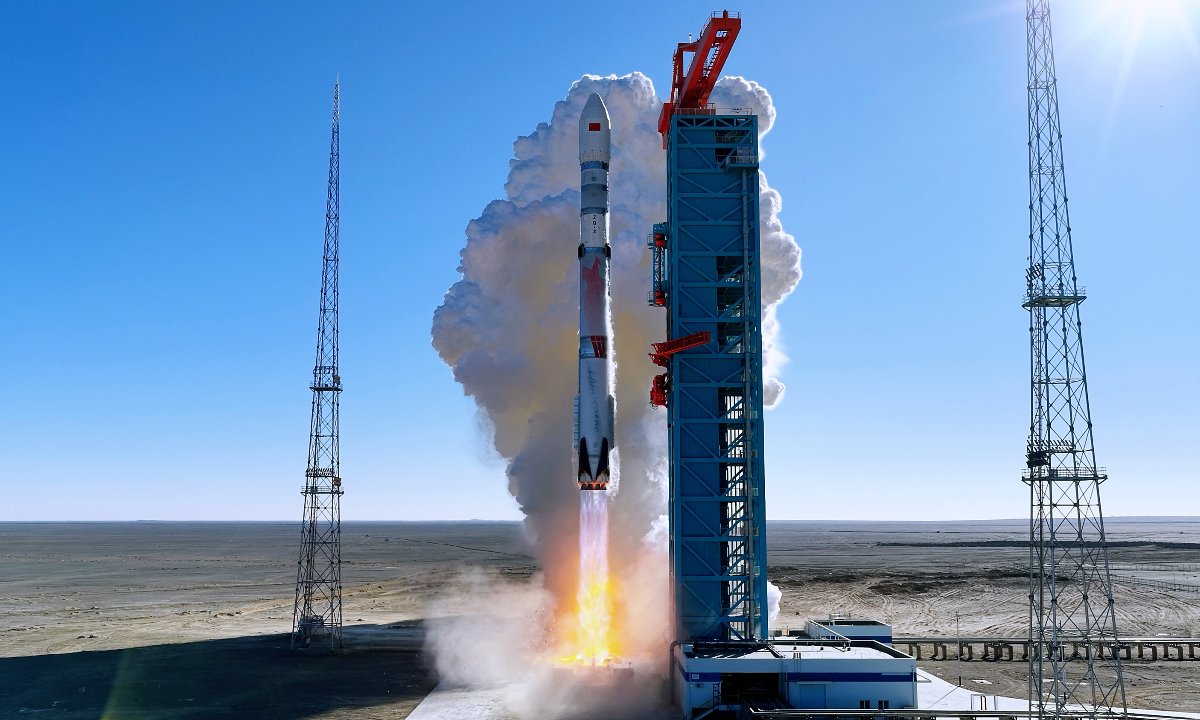
Beijing has pushed its reusable space programme a step further with the launch of an experimental spacecraft that state media described as a technology-verification mission, underlining how the country is trying to cut launch costs, raise flight tempo and broaden the range of missions it can carry out in orbit. The spacecraft was launched on 7 February aboard a Long March-2F rocket from the Jiuquan Satellite Launch Center in northwest China, in what was the fourth publicly disclosed mission of this type since 2020.

Chinese authorities released only a brief account of the flight, saying the spacecraft would verify reusable-spacecraft technologies and support the peaceful use of space. No official duration was given, and no details were provided on the systems being tested, the orbit reached or the vehicle’s configuration. That secrecy has become a hallmark of the programme and makes it difficult to judge exactly how far the technology has advanced, but the pattern of repeated flights suggests a sustained effort rather than a one-off demonstration.

Chronology matters here. China’s first disclosed flight in September 2020 lasted about two days. A second spacecraft launched in August 2022 stayed in orbit for 276 days before landing in May 2023. A third mission, launched in late 2023, returned in September 2024 after 268 days in orbit. Those longer flights point to growing confidence in long-duration autonomous operations, recovery procedures and mission endurance. Outside observers have often compared the craft with the United States’ X-37B-style approach to reusable uncrewed orbital vehicles, though Beijing has not publicly confirmed such comparisons.

This mission also fits into a much wider acceleration in Chinese space activity. On 7 April, China used a Long March-8 rocket from the Hainan commercial launch site to place 18 internet satellites into orbit for the Qianfan constellation. On 11 April, it carried out a sea launch using a Smart Dragon-3 rocket from waters off Guangdong, sending up a test satellite aimed at supporting satellite internet technology. Taken together, those launches show a programme expanding on several fronts at once: reusable vehicles, commercial launch infrastructure and large low-Earth-orbit communications networks.

Beyond low-Earth orbit, China is tying these advances to a broader national space agenda. Beijing is aiming for a crewed lunar landing by 2030 and is developing the Long March-10 rocket, the Mengzhou spacecraft and the Lanyue lunar lander for that effort. At the same time, the Chang’e-7 lunar probe is scheduled for launch in the second half of 2026. That means the reusable-spacecraft programme should be viewed less as an isolated experiment than as one part of an expanding architecture that spans launch systems, spacecraft design, lunar exploration and space-based connectivity.

Money and industrial policy are also shaping the picture. Reuters has reported that Beijing is funnelling more support towards private launch companies as it tries to build capacity for large satellite constellations and reduce reliance on state-owned providers alone. CAS Space has targeted fresh capital for reusable rocket research, while LandSpace and other firms are also turning to capital markets. Separate policy changes have given reusable-rocket developers a faster route to listing, provided they meet technical milestones, showing how closely commercial launch activity is now aligned with national strategic goals.

Yet the programme’s momentum should not be mistaken for mastery. China is advancing, but it is still chasing a lead established by SpaceX in frequent booster recovery and reflight. On 3 April, Space Pioneer said the maiden flight of its Tianlong-3 reusable rocket had failed, and Reuters reported that no Chinese firm had yet demonstrated the ability to recover and reuse a rocket’s main stage. LandSpace plans another recovery test for its Zhuque-3 rocket this year, while the Long March-12B reusable rocket completed a static firing test in January ahead of later flight missions. Progress is visible, but so are the engineering gaps.

Bitcoin and other major cryptocurrencies fell on Saturday after high-level talks between the United States and Iran in Islamabad ended without an agreement, puncturing a bout of market optimism that had followed a temporary ceasefire and hopes of a broader diplomatic settlement. U. S. Vice President J. D. Vance said the American delegation was leaving Pakistan after about 21 hours of negotiations without a breakthrough. Markets reacted […]

Sony Pictures has handed fresh momentum to its long-gestating Metal Gear Solid film, attaching directing duo Zach Lipovsky and Adam B. Stein to steer the adaptation of Konami’s espionage franchise, a move that signals the studio is trying again to bring one of gaming’s most cinematic properties to the big screen after years of stalled development. Trade reports say the project is set up at Columbia Pictures, […]

PEPE gave up ground after a sharp run-up ran into selling pressure near the $0.0000037-$0.0000038 range, with traders taking profits as excitement around a proposed US exchange-traded fund for the meme token failed to generate a lasting second leg higher. Market data on April 11 showed PEPE trading around $0.0000035, leaving it well below its 2024 peak and indicating that the latest burst of enthusiasm had not […]

Kamala Harris has said she is considering another run for the White House in 2028, offering her clearest public signal yet that she may seek a political comeback after losing the 2024 presidential election to Donald Trump. Speaking on Friday at the National Action Network convention in New York, the former vice-president responded to a question from Rev. Al Sharpton by saying, “I might, I might. I’m […]

Samsung Electronics is weighing a semiconductor packaging and testing project in Vietnam that could be valued at about $4 billion, a move that would deepen the country’s role in the global chip supply chain and expand Samsung’s manufacturing base in one of its most important overseas hubs. Reporting over the past two days has shown that the company is discussing a semiconductor project with Vietnamese authorities, while […]

Enhanced Labs has raised $1 million in a strategic pre-seed round as the decentralised finance startup seeks to widen access to structured yield products built on options and derivatives, moving beyond large crypto tokens towards a broader set of on-chain assets that includes tokenised real-world assets. The round was led by Maximum Frequency Ventures, with GSR, Selini, Flowdesk and angel investors also taking part, according to company […]

Metso has launched a new line of flip-flow screens aimed at one of the harder jobs in minerals processing and aggregates production: separating fine, dry and often moisture-laden material without pushing operators towards water-intensive screening. The Finland-based group said its new GFF Series is designed to improve classification accuracy, lower circulating loads and support more energy-efficient plant performance in both mining and sand manufacturing. The launch, announced […]

A critical security flaw in the Ninja Forms File Uploads add-on has put thousands of WordPress sites at risk, with researchers warning that attackers can exploit the bug without logging in and, in the worst case, gain remote code execution on a vulnerable server. The issue affects all versions up to and including 3.3.26, while version 3.3.27 has been identified as the fully patched release after an […]

Dubai International Financial Centre has rolled out a temporary package of economic support measures for businesses and retailers, offering flexible payment plans, licence-fee instalments and grace periods on selected administrative charges as the emirate’s financial hub seeks to cushion companies from a turbulent regional operating environment. The steps took effect immediately and were presented by the centre as a way to reduce short-term financial and operational pressure […]

Bank of Korea left its benchmark interest rate unchanged at 2.50 per cent on Friday, extending its policy pause to a seventh straight meeting as policymakers confronted a harder mix of rising price pressures, a weak won and a growth outlook darkened by higher energy costs and disruption linked to conflict in the Middle East.

The seven-member Monetary Policy Board said uncertainty had intensified and judged it appropriate to hold the base rate while assessing how the conflict, financial-market volatility and foreign-exchange swings feed through to the domestic economy. The central bank’s statement made clear that the policy dilemma has sharpened: inflation risks are moving up even as growth is expected to slow more than earlier forecast.

Governor Rhee Chang-yong, speaking after what Reuters reported was his final press conference before his term ends on April 20, said supply-side shocks from the Middle East were especially damaging for Asian economies reliant on imported energy. That matters acutely for South Korea, where policymakers are trying to prevent a renewed inflation cycle without choking activity at a time when sentiment has softened and some industries are already facing production constraints.

The rate hold had been widely anticipated. Reuters said all 31 economists in its poll expected no move at this meeting, reflecting a market consensus that the central bank had little room to ease and few grounds to tighten immediately. Instead, the decision underscored how monetary authorities in export-driven Asian economies are being forced to navigate a narrow path between external shocks and domestic fragilities.

At the centre of the debate is inflation. Official data showed consumer prices in March rose 2.2 per cent from a year earlier, up from 2.0 per cent in February, while core inflation, which excludes food and energy, also stood at 2.2 per cent. The Bank of Korea said petroleum prices had risen sharply and noted that short-term inflation expectations among the public edged up to 2.7 per cent. It now expects consumer inflation this year to exceed its February projection of 2.2 per cent by a meaningful margin, with core inflation also likely to come in above the earlier 2.1 per cent forecast.

That shift is important because the central bank had been able for months to argue that price growth was gradually stabilising near target. The worsening external backdrop has disrupted that narrative. The board said inflation is likely to move into the mid- to upper-2 per cent range as global oil prices and supply constraints lift import costs, though government price-stabilisation measures may soften part of the blow. Reuters reported that Seoul’s fuel-price caps, introduced last month for the first time in decades, helped restrain March inflation but are unlikely to provide a lasting shield if energy costs stay elevated.

Growth, meanwhile, is losing momentum. The central bank said the economy had been supported by strong exports, firmer consumption and continued job gains, but warned that downside pressure had increased since the outbreak of the Middle East conflict. It expects expansion this year to come in below the 2.0 per cent forecast issued in February, as higher energy prices and supply bottlenecks offset support from semiconductor exports and a supplementary budget. That combination leaves the Bank of Korea confronting an uncomfortable form of policy tension: weaker activity alongside stronger inflation.

The won has added to the pressure. The central bank said the currency weakened into the 1,500-won range against the US dollar as investors moved into safer assets and foreign investors sold domestic equities, before recovering some ground after a temporary ceasefire between the United States and Iran. A softer currency raises the local-currency cost of imported fuel and raw materials, complicating the inflation picture and limiting the case for any near-term rate cuts.

Financial markets reflected that cautious tone. Reuters reported that South Korea’s policy-sensitive three-year treasury bond futures erased early gains during the governor’s press conference, suggesting investors interpreted the message as more alert to inflation risks than to immediate growth support. Analysts cited by Reuters said the rebound in energy prices and the won’s weakness have narrowed the central bank’s room for manoeuvre, even if domestic demand still needs close watching.

South Korea is sending a special envoy to Iran as Seoul steps up efforts to secure passage for 26 South Korean-linked vessels stranded around the Strait of Hormuz, underscoring how a partial US-Iran ceasefire has done little to restore normal shipping through one of the world’s most critical energy chokepoints. Seoul’s foreign ministry has appointed former ambassador to Kuwait Chung Byung-ha for the mission, with the government […]

Tesla is developing a smaller, lower-cost electric sport utility vehicle in a move that could reopen its path into the mass market after years of focusing investor attention on autonomy, robotics and premium technology bets. People familiar with the plan told Reuters the company has approached suppliers in the past few weeks to discuss a compact SUV that would sit below its current line-up on size and […]

Air travellers in Germany faced widespread disruption on Friday after Lufthansa cabin crew staged a one-day strike that the airline and airport officials said would force the cancellation of more than 520 flights and affect about 90,000 passengers, hitting the carrier’s Frankfurt and Munich hubs during a busy holiday return period. The walkout, called by the UFO cabin crew union, ran from 00:01 to 22:00 local time […]

Arabian Post Staff -Dubai Louvre Abu Dhabi has launched a digital teaching platform that links museum objects directly to school subjects, widening the role of art in classrooms beyond history and humanities and giving teachers a new route to use cultural material in everyday lessons. The Museum Curriculum Portal has been rolled out as part of a broader Abu Dhabi effort to connect cultural institutions more closely […]

VISHNU RAJA
RYO YAMADA
HITORI GOTOH
IKUYO KITA



