Arabian Post Staff -Dubai Orange Jordan and Deutsche Gesellschaft für Internationale Zusammenarbeit have convened private-sector roundtables under the PASS programme, widening efforts to connect startups with established companies as Jordan pushes entrepreneurship-led job creation and digital growth. Three sessions were held in Amman, Irbid and Aqaba under the title Private Sector Roundtable – PASS Project, bringing together startups, corporate representatives and ecosystem partners to examine how young […]
Investment by leading industry institute supports Tracr’s evolution to becoming an independent, industry-wide platform for natural diamond provenance
LAS VEGAS, US – Media OutReach Newswire – 9 June 2026 – De Beers Group and GIA (Gemological Institute of America) today announced the signing of a definitive agreement for GIA to acquire a 30 per cent shareholding in Tracr, the De Beers Group-backed company behind the development of the pioneering diamond provenance blockchain-driven platform.
The agreement marks a significant milestone in Tracr’s evolution towards independence and reflects GIA’s confidence in the platform’s role as an industry-wide infrastructure to advance natural diamond provenance and traceability at scale.
GIA’s investment – which builds on a 2023 initiative to include diamond provenance information registered on Tracr’s platform on eligible GIA diamond grading reports – represents a significant step in this transition, reinforcing Tracr’s long-term credibility across the diamond value chain.
Al Cook, CEO of De Beers Group, said: “Consumers deserve to know where their diamonds come from and they should feel more confident in their understanding of each diamond’s source. At De Beers we have been providing provenance data on diamonds through Tracr for several years and we believe that delivering provenance should become an industry standard. Following our promise to open Tracr up to broad ownership, we are proud to be partnering with GIA as Tracr evolves into an independent, industry-wide platform. We will work alongside GIA to advance provenance transparency for the entire diamond sector.”
Pritesh Patel, President and CEO of GIA, said: “At GIA, our mission has always been rooted in trust, integrity, and consumer confidence. Our collaboration with Tracr over the past several years reinforced our belief that combining source-based blockchain provenance with GIA’s independent grading and identification expertise can help unlock a new level of transparency for the diamond industry. As Tracr continues to scale globally, we see a tremendous opportunity to deliver meaningful, verifiable provenance information from the source to the consumer. We are proud to deepen our commitment through this investment and help shape the next evolution of transparency, traceability, and trust across our industry.”
Jillian Wolk, CEO of Tracr, said: “The start of Tracr’s evolution into an independent platform, as a result of GIA’s investment, creates a strong foundation for the future. I am excited to continue scaling the platform and bringing more producers on board, which will support Tracr in enabling the individual journey of every registered diamond to come to life. Each stone carries its own narrative, defined by its source and the craftsmanship that has shaped it, and as Tracr continues to grow we have a fantastic opportunity to help reveal those unique stories.”
De Beers has been developing Tracr since 2018 and it is now a leading distributed diamond blockchain platform that starts at the source, registering diamonds at the point of recovery. In 2023, De Beers opened the platform to the wider diamond industry, positioning Tracr as an industry-wide, scalable solution for rough-to-polish verification of natural diamond provenance, which starts at a stone’s source.
Today, more than five million rough diamonds have been registered on Tracr at source, representing around two-thirds of De Beers’rough diamond production by value. Since January 2025, single country of origin for De Beers diamonds has been available on Tracr, with all newly sourced De Beers rough diamonds of one carat and above being registered on the platform.
The issuer is solely responsible for the content of this announcement.
About De Beers Group
Established in 1888, De Beers Group is the world’s leading diamond company with expertise in the exploration, mining, marketing and retailing of diamonds. Together with its joint venture partners, De Beers Group employs more than 20,000 people across the diamond pipeline and is the world’s largest diamond producer by value, with diamond mining operations in Botswana, Canada, Namibia and South Africa. Innovation sits at the heart of De Beers Group’s strategy as it develops a portfolio of offers that span the diamond value chain, including its jewellery houses, De Beers Jewellers and Forevermark, and other pioneering solutions such as diamond sourcing and traceability initiatives Tracr and GemFair. De Beers Group also provides leading services and technology to the diamond industry in the form of education and laboratory services via De Beers Institute of Diamonds and a wide range of diamond sorting, detection and classification technology systems via De Beers Group Ignite. De Beers Group is committed to ‘Building Forever,’ a holistic and integrated approach for creating a better future – where safety, human rights and ethical integrity continue to be paramount; where communities thrive and the environment is protected; and where there are equal opportunities for all. De Beers Group is a member of the Anglo-American plc group. For further information, visit www.debeersgroup.com.
About GIA An independent nonprofit organization, GIA (Gemological Institute of America), established in 1931, is recognized as the world’s foremost authority in gemology. GIA invented the famous 4Cs of Color, Clarity, Cut and Carat Weight and, in 1953, created the International Diamond Grading System™ which is recognized around the world as the standard for diamond quality.
Through research, education, gemological laboratory services and instrument development, the Institute is dedicated to ensuring the public trust in gems and jewelry by upholding the highest standards of integrity, academics, science and professionalism.
Digital gold has arrived in the Gulf. It still answers to the gram. 1. Two buyers, one price Walk through the Dubai Gold Souq on a busy evening and you will see two buyers who think they are doing completely different things. One is turning a 22-karat bangle over in his hand, watching the shopkeeper punch the day’s rate into a calculator. The other is standing a […]
The second edition of the popular topiary showcase introduces an interactive area starring Disney’s Frozen, and more beloved Disney and Pixar character dioramas including Toy Story 5 and Disney Princess
SINGAPORE – Media OutReach Newswire – 8 June 2026 – Disney magic blooms anew at Singapore’s premier horticultural destination Gardens by the Bay as the second edition of Disney Garden of Wonder, opens today. Featuring 23 vibrant topiaries inspired by beloved Disney and Pixar characters, the enchanting showcase transforms Floral Fantasy into a world of floral artistry and imagination through 14 March 2027.
Beauty and the Beast
Organised in collaboration with Disney and supported by the Singapore Tourism Board, Disney Garden of Wonder is inspired by Disney and Pixar stories that have charmed generations of fans around the world, inviting people of all ages to re-discover their favourite stories of courage, kindness, friendship and love through the beauty of plants. Following the success of its debut at Gardens by the Bay in 2024, the enthralling floral showcase returns in an even more special second edition.
Anna and Olaf from Frozen
Visitors can look forward to five themed areas:
Frozen, in which topiary versions of Anna, Elsa and Olaf preside over an enchanting snowy landscape, brought to life through themed lighting that imagines a frost-kissed world of wonder. Inspired by Elsa’s Ice Palace, visitors can step on a floor where magical snowflakes dance and respond to movement.
Disney princesses, where Rapunzel appears alongside her best friend Pascal the chameleon; Belle is with the Beast and their enchanted companions; and Jasmine is accompanied by her loyal tiger Rajah.
Hundred Acre Wood, where Winnie the Pooh, Eeyore, Piglet and Tigger gather in a cheerful party scene. Tigger bounces up and down while Piglet twirls, and visitors can picture themselves joining everyone at the table!
Toy Story 5, where Woody, Jessie and Buzz Lightyear appear as topiaries in a playful setting inspired by Bonnie’s Room, alongside displays of new characters Lilypad and Smarty Pants.
Go Local, a Singaporean-themed zone where Disney characters are reimagined in familiar local settings. Chip ‘n Dale perch atop a giant ice cream sandwich; Minnie Mouse and Daisy Duck share the spicy rice noodle dish laksa; and Mickey Mouse makes the traditional beverage teh tarik with Donald Duck.
Outside Floral Fantasy, a 4m-tall Sorcerer’s Apprentice Mickey marks the entrance and welcomes visitors to Gardens by the Bay.
The hand-assembled topiaries are crafted from more than 40 species of preserved and dried floral materials, which took more than 16,000 man hours.
Each material was selected for its colour, texture and form, helping to reflect each character’s features. Plenty of flowers are used for the Disney princesses for example, while Rapunzel’s hair is crafted from Stipa, a perennial grass that has fluffy or oat-like flowerheads.
The surrounding landscapes also use plant palettes that reflect the mood of each zone — sunflowers and marigolds reflect the honey-toned meadow setting of Winnie the Pooh, while lilies and roses bring out the romantic and jewel-toned settings of Disney Princess stories. Hydrangeas and dusty miller evoke the icy blues, whites and silvers of Frozen.
Throughout the duration of Garden of Wonder, visitors can enjoy select weekend Meet and Greet sessions with Mickey Mouse and Minnie Mouse in outfits inspired by Singapore’s national flower, the Vanda Miss Joaquim. Donald Duck and Daisy Duck will also join the experience on select weekends, dressed for a sunny getaway on our tropical island. Meet and Greet dates are available at www.gardensbythebay.com.sg/disneygardenofwonder.
Visitors can round off their experience with shopping at the gift shop, which carries items launching exclusively at Disney Garden of Wonder.
Disney Garden of Wonder
Date: 8 June 2026 to 14 March 2027
Time: 10am to 9pm
Venue: Floral Fantasy at Gardens by the Bay
Details: Tickets are priced at SG$24 for adults and SG$16 for children
Getting here: Take the MRT to Bayfront station. Alternatively, drop off at the Bayfront Plaza carpark via taxi or ride-hailing service. More information available here.
The issuer is solely responsible for the content of this announcement.
Gardens by the Bay
An integral part of Singapore’s “City in Nature” vision, Gardens by the Bay is a national garden and premier horticultural attraction that showcases the best of garden and floral artistry for all to enjoy. Spanning 101 hectares in the heart of Singapore’s downtown Marina Bay, it comprises three waterfront gardens – Bay South, Bay East, and Bay Central. Bay South, the largest at 54 hectares, officially opened on 29 June 2012.
Guided by the vision to be a world of gardens for all to own, enjoy and cherish, the Gardens’ extensive plant collection, ever-changing floral displays, and myriad of engaging programmes have captured the imagination of many, while its Gift of Gardens community initiative, with Mr Tharman Shanmugaratnam, President of the Republic of Singapore as Patron, reaches out to people from all walks of life.
Since opening, Gardens by the Bay has welcomed more than 115 million visitors and garnered numerous international accolades including the third Top Attraction in the World in Tripadvisor Travelers’ Choice Awards Best of the Best 2026, Outstanding Achievement in Sustainability at the Singapore Tourism Awards 2024, Best Theme Attraction at TTG Travel Awards 2022 and 2023, and Best Attraction Experience at the Singapore Tourism Awards 2019. The Gardens continues to refresh and refine its offerings, to be a place that everyone can enjoy – a garden where wonder blooms.
MACAU SAR – Media OutReach Newswire – 8 June 2026 – Galaxy Entertainment Group (GEG) proudly unveils “Dazzling Galaxy – Crystalline Art Exhibition” at GalaxyArt, the multipurpose arts and cultural hub at the group’s flagship luxury resort, Galaxy Macau. Centred on innovative translucent materials, the exhibition blends the richness of Eastern cultural heritage by conceptualising themes from nature, presenting a distinctive contemporary artistic style.
The exhibition brings together over 60 pieces of signature works alongside new creations, accentuating cross-disciplinary philosophy of “Technology + Art + Eastern Culture” to achieve glittering and transparent art works. Through the use of innovative, crystalline materials and immersive, accessible artistic language, Wu Daijie Art Studio redefines artistic expression to deliver avant-garde works that resonate deeply with audiences.
GalaxyArt, the artistic and cultural hub of Galaxy Macau, proudly presents the “Dazzling Galaxy – Crystalline Art Exhibition” exhibition, featuring over 60 art works. The exhibition is now open until September 13.
The Opening Ceremony was officiated by guests of honour, including Ms. Maria Helena de Senna Fernandes, Director of the Macao Government Tourism Office; Ms. Chan Lei Lei, Director of Macao Conservatory, Cultural Affairs Bureau of the Macau S.A.R. Government; Mr. Philip Cheng, Director of Galaxy Entertainment Group; and lead artist Wu Daijie.
The Opening Ceremony was held this morning, officiated by guests of honour, including Ms. Maria Helena de Senna Fernandes, Director of the Macao Government Tourism Office (2nd from right); Ms. Chan Lei Lei, Director of Macao Conservatory, Cultural Affairs Bureau of the Macau S.A.R. Government (2nd from left); Mr. Philip Cheng, Director of Galaxy Entertainment Group (1st from right); artist Wu Daijie (1st from left).
At the opening ceremony, Mr Philip Cheng, Director of Galaxy Entertainment Group, said: “Galaxy Entertainment Group continues to align with the Macao SAR Government’s “Tourism + Culture” initiative, working closely alongside the government and industry partners to create distinctive cultural and artistic experiences. Through dedicated efforts, we present a diverse range of unique events that offer fresh and exciting experiences for visitors from around the world. This exhibition bridges artistic expression with technological innovation, inspired by interpretations and imagination rooted in traditional Eastern culture. We believe that this brand-new exhibition will bring renewed vibrancy and creative energy to Macao’s arts and cultural scene this summer.”
Following the opening ceremony, the officiating guests visit the exhibition under docent introduction of lead artist Wu Daijie.
Lead artist Wu Daijie added: “Macau serves as the gateway for Chinese and Western interaction and a vital hub for cultural exchange within the Greater Bay Area. Galaxy Macau and GalaxyArt – world-class integrated resort and arts platform – continuously offer forward-thinking experiences. I am deeply honoured to present my exhibition here, which is not only a sharing of my personal artistic endeavours at this stage, but also a way to contribute to the popularisation of art.”
Structured around four thematic expressions, the exhibition unfolds a poetic journey through light, form and emotion. “Luminosity · The Spirit of Nature” captures the ethereal beauty of living beings, distilling their essence into luminous, crystallised forms that reflect the pure vibrancy of living creatures. “Luminosity · The Glow of Modernity” presents whimsical perfection and unlimited possibilities seen in fairy tales through light and shadows, creating striking, avant-garde visual narratives.
In “Luminosity – Beyond Void & Form,” the serene elegance of Zen philosophy is reinterpreted through a delicate interplay of classical and modern aesthetics, while “Luminosity – Flowing like Water” evokes fluidity and abundance, expressing grace, balance and openness.
A Vivid Transformation into Luminous Clarity
‘Ethereal Flow’, which includes a striking aerial installation and inspired by Laozi’s philosophy—evoking water’s quiet virtue of nurturing all without contention through a dazzling, immersive visual experience.
“Ethereal Flow” — a contemporary, fashion-forward series that includes a large-scale aerial installation – is the highlight in the “Luminosity · Flowing like Water” section series. Inspired by a classic passage from Laozi’s Tao Te Ching— “The highest goodness is like water; water benefits all things without contention, embodying the virtue of humility”—the work reflects the idea that true virtue, like water, nurtures and sustains all without striving. With its dynamic sense of scale and dazzling visual impact, the installation invites audiences to reflect on reality and the nature of humanity.
Ethereal Stone: A Modern Table – 4.2-metre-long and only eight pieces in the world – draws inspiration from the classic anecdote of Mi Fu reverently addressing a scholar’s rock, reflecting the deep-rooted Chinese tradition of stone appreciation and its unique cultural heritage.
“Ethereal Stone” and “Timeless Dialogue: Taihu Stone” is a collection of four pieces at the “Luminosity – Beyond Void & Form” section. The works draw inspiration from the classic anecdote of Mi Fu reverently addressing a scholar’s rock, reflecting the deep-rooted Chinese tradition of stone appreciation and its unique cultural heritage. Centred on the intricate beauty of Taihu stones, the works reinterpret their delicate, sculptural forms through a contemporary lens. By bringing traditional culture into dialogue with modern artistic expression, the series creates a poetic exchange across time. It also serves as a gentle reflection for today’s fast-paced society—encouraging a return to inner contemplation, and a rediscovery of cultural identity and humanistic spirit through the philosophies of Chinese tradition.
“Dazzling Galaxy – Crystalline Art Exhibition” – open now until September 13 at GalaxyArt – invites visitors to immerse themselves in a radiant convergence of innovation, culture and artistry, further enriching Galaxy Macau’s dynamic cultural landscape and reaffirming the award-winning luxury resort’s commitment to world-class creative experiences.
For more information about Galaxy Macau and GalaxyArt, please visit www.galaxymacau.com.
Hashtag: #GalaxyMacau
The issuer is solely responsible for the content of this announcement.
About Galaxy Macau Integrated Resort
Galaxy Macau, world-class luxury integrated resort, delivers the “Most Spectacular Entertainment and Leisure Destination in the World”. Developed at an investment of HK$43 billion, the property covers 1.1 million-square-meter of unique entertainment and leisure attractions that are unlike anything else in Macau. Nine award-winning world-class luxury hotels provide close to 5,000 rooms, suites and villas. They include Banyan Tree Macau, Galaxy Hotel™, Hotel Okura Macau, JW Marriott Hotel Macau, The Ritz-Carlton, Macau, Broadway Hotel, Raffles at Galaxy Macau, Andaz Macau, and Capella at Galaxy Macau. Unique to Galaxy Macau, the 75,000-square-meter Grand Resort Deck features the world’s longest Skytop Adventure Rapids at 575 metres, the largest Skytop Wave Pool with waves up to 1.5-metre high and 150-metre pristine white sand beach. Two five-star spas from Banyan Tree Spa Macau and The Ritz- Carlton Spa, Macau help guests relax and rejuvenate.
As the dining destination in Asia, Galaxy Macau offers a wide variety of gastronomic delights, exquisite experiences and ingredients of the finest quality with over 120 dining options from Michelin dining to authentic delicacies; Galaxy Promenade is the hottest shopping destination featuring the latest in fashion and curated experiences in Macau. Spanning over 100,000-square-meter, luxury flagship stores, lifestyle boutiques and our selection of labels are among the more than 200 world-renowned brands for a world-class shopping journey; Galaxy Cinemas, immersive thrills and luxurious comfort go hand in hand at Galaxy Cinemas. All 10 theatres are equipped with the latest audio-visual technology; CHINA ROUGE, one-of-a-kind deluxe lounge that evokes the glitz and glamor of Shanghai’s golden era with entertainment in luxury and style; and Foot Hub presents the traditional art of reflexology to make you feel more relaxed and revitalized. For Authentic Macau Flavours & Vibrant Asian Experiences, Broadway Macau – just a 90-second walk via a bridge from Galaxy Macau, has over 35 Authentic Macau & Asian Flavours at its Broadway Food Street. The 2,500-seat Broadway Theatre plays host to world-class entertainers and a diverse array of cultural events. Meeting, incentive and banquet groups are also well looked after with a portfolio of unique venues in Galaxy Macau and a professional service staff.
Galaxy International Convention Center (GICC) is the latest addition to the Group’s ever-expanding integrated resort precinct and will usher in a new era for the MICE industry in Macau. GICC is a world- class event venue featuring 40,000-square-meter of total flexible MICE, and a 16,000-seat Galaxy Arena – the largest indoor arena in Macau.
Dubai’s premium fitness market has gained a new large-format health club with the opening of FITCODE Q-East in Al Quoz, bringing a performance-led training, recovery and wellness model to one of the city’s emerging lifestyle districts. The flagship mixed health club spans nearly 24,000 sq ft at Q-East, a luxury destination positioned around creative, retail, food, entertainment and wellness concepts. The opening marks FITCODE’s third Dubai location […]
Facebook’s creator payment system has become entangled in Alberta’s separatist politics after an investigation identified overseas-run accounts impersonating local activists and publishing content that promoted breaking away from Canada. The accounts presented themselves as voices from inside Alberta’s independence movement, using names, profile images and language designed to appear local. Several were linked to operators outside Canada who appeared to be using divisive political material to attract […]
Arabian Post Staff -Dubai PIF and Talaat Moustafa Group Saudi for Real Estate Development have signed a memorandum of understanding to explore mixed-use real estate projects across Saudi Arabia, advancing the sovereign fund’s push to build liveable urban districts as part of its 2026-2030 strategy. The non-binding agreement covers potential co-operation at PIF-owned developments and projects across the kingdom, including residential, commercial, hospitality, retail and integrated urban […]
Air France-KLM has left open the possibility of taking a role in any takeover approach for easyJet, adding a strategic airline dimension to Castlelake’s early-stage interest in the Luton-based low-cost carrier. Chief Executive Ben Smith indicated that the Franco-Dutch airline group would consider contact from Castlelake if the investment firm sought a partner for a possible offer. His comments come as the US-based asset manager studies whether […]
Elon Musk’s reaction to a viral post on India’s falling fertility rate has pushed the country’s demographic transition into a wider global debate, as official data show the national total fertility rate at 1.9 children per woman, below the replacement benchmark of 2.1.
Musk responded on X to a post claiming that India’s birth rate had fallen below replacement level, writing that the trend had appeared “among those most educated” many years earlier. His comment drew attention because the Tesla and SpaceX chief has repeatedly argued that declining birth rates pose a long-term risk to economies, innovation and social stability.
The viral post said India’s fertility rate had fallen from 2.3 to 1.9 over a decade and cited Delhi’s rate at 1.2, among the lowest in the country. Official demographic data broadly support the decline, though the claim that the fall below replacement level has happened for the first time needs qualification. India’s total fertility rate stood at 1.9 in 2024, the same level recorded for 2023, meaning the country has already been below the conventional replacement threshold.
The latest figures mark a sharp departure from long-running anxieties about population growth. India, with an estimated population of more than 1.4 billion, overtook China as the world’s most populous country in 2023. Yet the fertility trend now points to a slower population expansion in the coming decades, with regional variation likely to shape labour supply, welfare planning and state-level fiscal priorities.
Delhi’s total fertility rate of 1.2 highlights the depth of the shift in urban centres, where higher education levels, later marriage, higher housing costs, career pressures and rising aspirations have contributed to smaller families. Several southern and western states have also remained below replacement level for years, while parts of northern and central India continue to record comparatively higher fertility.
Only a small group of states remains above the replacement threshold. Bihar, Uttar Pradesh, Madhya Pradesh, Rajasthan, Chhattisgarh and Jharkhand continue to report fertility levels above 2.1, keeping national population momentum alive even as most states move towards smaller family norms. The divergence has implications for political representation, public finance and migration, particularly as lower-fertility states age faster while higher-fertility states continue to add younger workers.
Demographers distinguish between a falling fertility rate and immediate population decline. India’s population will continue to grow for some time because of demographic momentum: a large base of people in reproductive age groups will keep births high even when the average number of children per woman falls. The larger policy issue is not a sudden fall in population, but the speed at which the age structure changes.
Musk’s intervention reflects a view he has voiced across countries, including Japan, South Korea, China and several European economies, where low fertility has triggered concerns about shrinking workforces and mounting pressure on pension and health systems. His comment on India stands out because the country has long been seen as a counterweight to ageing economies, with a large young population expected to support growth.
India’s demographic advantage remains substantial, but the window is not permanent. A lower fertility rate can help families invest more in each child’s education and health, while also reducing pressure on land, housing and public services. At the same time, it places greater urgency on job creation, women’s workforce participation, skilling, healthcare and pension coverage before the population ages more visibly.
Education plays a central role in the fertility shift. Women with greater access to schooling and employment tend to marry later and have fewer children. Urbanisation has reinforced the trend by raising the cost of child-rearing and changing family expectations. The pattern is not unique to India, but its scale is significant because of the country’s population size and uneven development across regions.
The decline also complicates older political narratives around population control. States that achieved lower fertility earlier have argued that they should not be penalised in future federal arrangements, while states with higher fertility still face pressure to improve education, healthcare and women’s economic participation. Any future delimitation of parliamentary seats is likely to bring these tensions into sharper focus.
Public health indicators add another layer to the debate. Lower fertility often accompanies improvements in child survival, maternal health and access to contraception. However, uneven access to quality healthcare, nutrition and education means the benefits are not distributed equally. Rural families, poorer households and marginalised communities may face different constraints from urban professional families choosing to have fewer children.
India’s policy challenge is therefore more complex than simply reversing a fertility decline or celebrating it. The country must prepare for a future in which some regions face ageing and labour shortages while others continue to supply young workers. That will require better migration planning, stronger urban infrastructure, more reliable social security and greater investment in human capital.
South Korea has moved to contain pressure on the won after the currency fell towards its weakest levels since the global financial crisis, with authorities warning that speculative trading and herd behaviour in the foreign exchange market would face firm intervention.
The response came after the won slipped past psychologically important levels against the dollar, intensifying concern among policymakers over inflation, capital flows and financial stability. Finance Minister Koo Yun-cheol convened senior economic officials and signalled that Seoul would act quickly if market moves became excessive, while the Bank of Korea and financial regulators kept watch on trading patterns across currency, bond and equity markets.
The won traded around the 1,520 range against the dollar after touching levels not seen for years, reflecting a mix of domestic and external pressures. Higher energy import costs, a strong dollar, portfolio outflows and demand for overseas investments have combined to weaken the currency despite South Korea’s current account surplus and continued strength in key export sectors.
Authorities are seeking to draw a line between normal market adjustment and disorderly moves that could spill into inflation expectations or funding conditions. Their measures are focused on sharper surveillance of foreign exchange transactions, closer coordination among financial agencies and readiness to respond to speculative flows that amplify one-way bets against the currency.
Seoul has avoided announcing broad capital controls, mindful of its ambition to deepen market access and secure developed-market recognition from global index providers. Instead, officials are relying on targeted stabilisation tools, verbal intervention and coordination with major institutional investors to smooth dollar demand. The National Pension Service remains central to those efforts because of the scale of its overseas investment activity and its potential impact on dollar-won liquidity.
The currency’s slide has complicated the Bank of Korea’s policy choices. Inflation rose to 3.1 per cent in May, the highest level in more than two years, pushed up by petroleum products and international travel costs. A weaker won increases the local-currency cost of imported fuel, food and raw materials, raising the risk that price pressures remain above the central bank’s 2 per cent target for longer than expected.
Rate policy now sits at the intersection of slowing growth, currency stability and household debt risks. A rate increase could support the won and restrain inflation, but it would add pressure on consumers and businesses already facing tighter financing conditions. Holding rates steady could protect domestic demand, but might leave the currency exposed if dollar strength persists or foreign investors continue to rebalance away from won assets.
Market pressure has also been shaped by South Korea’s stock market boom and its role in global technology supply chains. The country’s chipmakers and artificial intelligence-linked companies drew heavy investor interest, but sharp gains have also encouraged profit-taking and portfolio reallocation. When offshore investors sell equities or hedge exposure, demand for dollars can rise, adding to currency volatility.
Exporters have not provided the same level of support to the won that authorities might have expected during previous cycles. Companies with large overseas revenues have been cautious about converting dollar earnings, partly because of expectations of further currency weakness and partly because global investment plans require foreign currency holdings. That has deepened the imbalance between dollar demand and supply.
South Korea’s external position remains stronger than the currency’s movement alone suggests. The economy continues to benefit from semiconductor exports, sizeable foreign reserves and a sophisticated financial system. Yet the won has become more sensitive to swings in global risk appetite, partly because households, pension funds and institutional investors have increased overseas securities purchases over the past several years.
The government’s challenge is to calm markets without appearing to defend a fixed exchange-rate level. Officials have framed their intervention as an effort to prevent excessive volatility rather than reverse market fundamentals. That distinction matters because heavy-handed action could invite criticism from trading partners and undermine Seoul’s commitment to market liberalisation.
The United States and South Korea have already discussed currency stability, with both sides describing excessive volatility in the won as undesirable. Those consultations add a diplomatic layer to Seoul’s response, especially as South Korea balances foreign exchange concerns with large investment commitments abroad and shifting trade policy under Washington’s current tariff regime.
Iran’s World Cup players have been granted visas to enter the United States, easing a major logistical and diplomatic obstacle 10 days before their opening match against New Zealand in Los Angeles. A White House official said the players’ entry documents had been approved overnight after Iran’s ambassador to Mexico, Abolfazl Pasandideh, said the squad was still waiting for US visas. The clearance removes the most immediate […]
Arabian Post Staff -Dubai Revolut is exploring a secondary share sale that could lift its valuation to about $115 billion, setting up a fresh test of investor appetite for one of Europe’s most valuable private technology groups after a decisive regulatory breakthrough in the UK and a push into US banking. The potential transaction would allow existing shareholders, including employees and early backers, to sell stock without […]
Amazon has unveiled an upgraded version of its Proteus warehouse robot that can take plain-language instructions from workers, marking a major step in the company’s push to automate heavier tasks across its European fulfilment network. The next-generation Proteus was shown at Amazon’s Dartford fulfilment centre east of London as part of a wider investment programme of more than €10 billion, equal to about $11.6 billion, aimed at […]
Arabian Post Staff -Dubai Iran’s Revolutionary Guard said it had launched missile strikes on “enemy bases in the region” after US forces hit targets near the Strait of Hormuz, pushing Gulf states into a new security alert as sirens sounded in Kuwait and Bahrain. Guard commanders framed the operation as retaliation for US strikes on Iranian coastal positions around Sirik and Qeshm Island, both close to one […]
The idea of being self employed is often an appealing one. No boss hovering nearby while you work. No office politics that become divisive or horrific to work in. The added freedom of building a business based on your own goals and interests – it’s all very appealing and sounds excellent on paper, right? But is it actually easy? The honest answer isn’t as straightforward as a […]
Crypto markets were hit by a sharp wave of forced selling as about $155 million in leveraged long positions were liquidated within 60 minutes, deepening a broader sell-off that pushed Bitcoin and major tokens lower and exposed the risk built up across perpetual futures and margin trading platforms. The liquidation burst reflected a rapid unwinding of bullish bets after prices broke through key support levels, leaving heavily […]
HONG KONG SAR – Media OutReach Newswire – 5 June 2026 – A large high-level business delegation led by John Lee, Chief Executive of the Hong Kong Special Administrative Region (HKSAR), today (June 5) wrapped up its five-day visit to Kazakhstan and Uzbekistan respectively, achieving fruitful results of strengthening bilateral relations and deepening ties with Central Asia.
The delegation of over 70 business and institutional leaders from Hong Kong and the Chinese Mainland is the largest and most diverse overseas mission led by the current term of the HKSAR Government so far.
Hong Kong SAR’s Chief Executive, John Lee (fifth right) and the Advisor to the President of Uzbekistan on Strategic Development, Sardor Umurzakov (fourth right) witness the exchange of memoranda of understanding and co-operation agreements between government departments, enterprises and organisations from Hong Kong and Uzbekistan.
Speaking to the media in Uzbekistan yesterday (June 4), Mr Lee set out the three main objectives of the visit: further explore emerging markets and lay the foundation for long-term economic and trade development; strengthen government-to-government (G2G) relationships and promote closer bilateral co-operation; and build a “hub-to-hub” model of co-operation.
He said the visit had been successful, yielding achievements in eight areas, including:
Establishing high-level contacts and ties between the HKSAR Government and the Governments of Kazakhstan and Uzbekistan, and reaching consensus on co-operation in multiple areas;
A total of 96 co-operation agreements and memoranda of understanding (MoUs) were reached during the visit (61 with Kazakhstan, 35 with Uzbekistan), involving specific amounts exceeding US$1.65 billion in total;
The governments agreed to commence bilateral discussions on agreements in various areas;
Deepening project matching and research collaboration between Hong Kong and Central Asian region in areas including finance, innovation and technology (I&T), and aviation;
Demonstrating Hong Kong’s effective role as a platform for going global and achieving substantial results, with Hong Kong and Mainland enterprises joining forces in tapping new markets and bringing synergistic advantages into full play;
Facilitating more convenient people-to-people exchanges by promoting direct flights, aviation and transport co-operation, and extensions to the mutual visa-free period;
Promoting exchanges in education, talent and culture to further deepen people-to-people bonds; and
Advancing a hub-to-hub co-operation model to open up broader room for co-operation between Hong Kong and the Central Asian region.
While in Tashkent (June 3-5), Mr Lee met with local leaders, government officials and business representatives to deepen co-operation between Hong Kong and Uzbekistan in areas including trade, investment, finance, I&T, and people-to-people exchanges.
Mr Lee held meetings with the President of Uzbekistan, Shavkat Miromonovich Mirziyoyev, his Advisor on Strategic Development, Sardor Umurzakov, the Prime Minister, Abdulla Nigmatovich Aripov, as well as the Deputy Prime Minister, Jamshid Khodjayev, to exchange views on furthering mutual co-operation.
Mr Lee highlighted that under the “one country, two systems” principle, Hong Kong enjoys both the China advantage and the global advantage. He said that Hong Kong would continue to play its roles as a “super connector” and a “super value-adder” to further deepen co-operation and exchanges with Uzbekistan on various fronts in line with Uzbekistan’s goal of achieving high-quality development.
Hong Kong SAR’s Chief Executive, John Lee (left) meets with the President of Uzbekistan, Shavkat Miromonovich Mirziyoyev.
Earlier (June 3), Mr Lee met with the Minister of Foreign Affairs of Uzbekistan, Bakhtiyor Saidov, after which they jointly witnessed an exchange of notes between the two places on a mutual visa-free arrangement, which would allow a visa-free period of 30 days for visitors from both sides.
“Moreover, we are glad to have initialed the Air Services Agreement with Uzbekistan, and look forward to launching direct passenger flights between the two places soon,” Mr Lee said, during a high-level business dinner (June 4). The Chief Executive pointed out that Hong Kong and Uzbekistan are important trade and investment gateways to their respective regions – the Asia-Pacific and Central Asia.
“It helps that we are all believers in the Belt and Road (B&R) Initiative, a modern expression of the ancient Silk Road spirit,” Mr Lee said. “Today, China is Uzbekistan’s largest trading partner, and the two countries work closely on major infrastructure and connectivity projects that are revitalising the Silk Road. Hong Kong is a pivotal player in the B&R Initiative, thanks to our world-class professional and financial services expertise.”
The delegation also toured the IT Park Uzbekistan and the Center for Islamic Civilization before concluding its visit in Tashkent.
Bitget has added 15 tokenised stocks and exchange-traded funds as eligible margin assets for futures trading, extending the role of equity-linked digital assets from spot exposure into collateral management inside its unified trading system. The change took effect on June 4, UTC+8, and applies to the exchange’s Unified Trading Account and Multi-Asset Mode for USDT-M Futures. It allows users to deploy selected tokenised equities and ETFs as […]
Washington has moved to close a sensitive gap in its China technology controls after Trump administration officials concluded that overseas units of Chinese companies may have been able to buy Nvidia’s most advanced artificial intelligence chips without the export licences required for direct shipments to China. The Commerce Department’s Bureau of Industry and Security issued guidance on 31 May clarifying that licence requirements for advanced computing items […]
FIFA has barred supporters from bringing refillable water bottles into 2026 World Cup stadiums, turning fan safety and match-day costs into a flashpoint days before the tournament opens across the United States, Canada and Mexico. The governing body has revised its Stadium Code of Conduct to prohibit bottles, cups, jars and cans, including empty transparent reusable plastic bottles that had earlier been allowed. FIFA said the change […]
Microsoft Edge users have been urged to update their browsers after three security flaws tied to the Pwn2Own hacking contest were publicly detailed, including one vulnerability that could allow remote attackers to execute arbitrary code if a target opens a malicious page or file. The vulnerabilities, tracked as CVE-2026-45492, CVE-2026-45494 and CVE-2026-45495, affect Chromium-based Microsoft Edge and were credited to Orange Tsai of DEVCORE Research Team, one […]
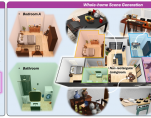
Kairos-HomeWorld is purpose built for embodied intelligence and represents the first unified framework capable of generating a complete, fully interactive home environment from a single text prompt. Extending indoor scene generation beyond individual rooms, it enables whole-home simulation in which every object is fully manipulable within an integrated simulation engine.
Kairos-HomeWorld employs a four-stage hierarchical architecture encompassing floorplan generation, 2D-to-3D lifting, recursive refinement, and manipulable object placement. This approach enables the production of globally coherent, physically accurate, and simulation-ready scenes. Each environment contains more than 15 manipulable objects and achieves a Footprint Object Density of 4.16, the highest among compared methods.
The accompanying open-source dataset is purpose-built for Chinese households, pairing 300,000 real residential floor plans with 5,000 fully furnished, simulation-ready homes and 50,000 physics-enabled interactive object assets. Already deployed in ACE ROBOTICS’ daily robot training, it significantly accelerates the simulation-to-reality transfer cycle.
SHANGHAI, CHINA – Media OutReach Newswire – 5 June 2026 – ACE ROBOTICS, in collaboration with the Multimedia Laboratory at The Chinese University of Hong Kong (CUHK) and Shenzhen Loop Area Institute, today announced the open-source release of Kairos-HomeWorld, the industry’s first unified World Model framework capable of generating full home-scale, object-level interactive 3D environments from a single text prompt. The solution addresses longstanding limitations in indoor scene generation, which has typically been restricted to single-room outputs with weak global consistency and limited interactivity. Kairos-HomeWorld overcomes these constraints by delivering structurally coherent, physically plausible, and functionally complete residential environments. These high-fidelity, large-scale simulations provide a robust foundation for advancing embodied intelligence applications and accelerating real-world robot training.
The long-term vision for embodied intelligence is the home environment. However, residential settings are inherently diverse and highly personalized, requiring robots to be trained across a broad range of realistic and differentiated scenarios before they can reliably operate in even a single household. High-fidelity simulation offers the most practical pathway to achieving this at scale, yet existing approaches typically involve a trade-off: synthetic environments lack realism, while scanned real-world scenes offer limited interactivity. Kairos-HomeWorld, together with its accompanying dataset, is designed to bridge this gap, delivering both realistic and interactive environments within a unified framework.
A four-stage architecture for whole-home, object-level generation Conventional approaches to indoor scene generation remain constrained to single-room outputs, often exhibiting weak global consistency, frequent physical inaccuracies, and limited or no interactivity. Kairos-HomeWorld takes a fundamentally different approach. It decomposes whole-home generation into a structured, four-stage process, redefining the underlying architectural paradigm from the ground up.
Stage 1 — Floor Plan Generation. A K-D tree-based approach translates real-world floor plans into a hierarchical text representation that can be efficiently processed by large language models (LLMs). This method mitigates common issues in conventional layout generation, including room overlaps and fragmented topologies, resulting in more coherent and structurally consistent spatial configurations.
Stage 2 — 2D-to-3D Lifting & Furniture Layout Generation. A “top-down global initialization combined with a first-person detail walkthrough” approach anchors the process to the 3D building shell generated in Stage 1. This methodology mitigates the geometric drift commonly associated with conventional 2D-to-3D lifting techniques, enabling more stable and spatially consistent scene generation.
Stage 3 — Recursive Refinement. A fine-tuned vision-language model performs iterative validation and correction, automatically identifying and resolving physical inconsistencies, such as obstructed doorways or object collisions. This recursive process materially reduces spatial errors, achieving among the lowest reported furniture-collision rates in the industry.
Stage 4 — Manipulable Object Placement. A surface-centric placement algorithm assigns each object detailed physical properties, including material composition, density, friction, and structural support relationships. Each generated scene incorporates an average of more than 15 manipulable objects and achieves a Footprint Object Density (FOD) of 4.16, a metric reflecting the concentration of items across furniture surfaces. All objects are natively compatible with simulation engines, enabling direct interaction for tasks such as grasping, movement, and stacking.
The resulting environments move beyond “viewable but not actionable” outputs. Their coherent spatial structure enables seamless, continuous navigation across multiple rooms, while objects embedded with realistic physical properties allow robots to simulate complex household tasks end-to-end. Taken together, this approach addresses key limitations in existing data pipelines, resolving the scarcity of high-quality 3D simulation data, the lack of realism in synthetic environments, and the limited interactivity of scanned scenes within a single unified framework.
The dataset: 300,000 real floor plans, 5,000 fully interactive homes, built for Chinese households ACE ROBOTICS and CUHK are open-sourcing a dataset of 300,000 structurally annotated residential floor plans, sourced from real-world listings and processed through a multi-stage automated pipeline. The pipeline vectorizes and labels key spatial elements, including door and window positions, room geometry, functional zoning, and connectivity. By comparison, widely used benchmarks such as RPLAN and ResPlan contain approximately 80,000 and 17,000 floor plans, respectively, underscoring the scale and comprehensiveness of the Kairos-HomeWorld dataset.
Building on this foundation, the dataset also includes 5,000 fully furnished residential environments, each featuring a complete furniture layout and an average of more than 15 physics-enabled, manipulable objects, powered by the PhysX-Omni model. All assets are sim-ready and can be directly imported into a simulation engine, enabling immediate use in interactive training scenarios.
Most existing open indoor-scene datasets are centered on North American and European residential formats, typically featuring open-plan kitchens, the absence of service balconies, and layouts and design elements that capture only a narrow segment of global housing. As a result, robots trained on these datasets often exhibit limited transferability when deployed in environments outside their scope. Kairos-HomeWorld ‘s dataset is purpose-built for Chinese households, with deliberate coverage of historically under-represented housing typologies. It spans a wide range of unit sizes, from approximately 30 m² (around 320 sq ft) studio apartments to residences exceeding 200 m² (approximately 2,150 sq ft). The dataset accurately reflects key architectural features common in these settings, including north-south cross-ventilated layouts, enclosed kitchens, dedicated service balconies, wet-and-dry-separated bathrooms, and entryway storage, as well as the irregular room configurations often found in older housing stock.
The dataset is being openly released to both academic and industry communities. Going forward, the team plans to expand its scope to include additional regions, interior styles, and interaction scenarios, further lowering barriers to real-world-ready training for embodied intelligence.
See it in action: one prompt to a fully interactive home Kairos-HomeWorld runs the full end-to-end pipeline, from initial text input to a fully interactive home environment, delivering global spatial consistency, physical realism, and seamless interactivity from a single prompt.
The system begins with a single-line prompt: “Generate a 90 m² (approximately 970 sq ft) two-bedroom apartment in neo-Chinese style.” Leveraging real floor plan data and its K-D tree representation, Kairos-HomeWorld first constructs an empty spatial layout aligned with real-world living patterns, incorporating cross-ventilation and well-defined functional zoning. Building on this foundation, a hierarchical “global layout plus first-person detail” approach furnishes the environment with stylistic coherence, while a PhysX-Omni rendering pass assigns full physical properties to all surfaces and objects, including articulated behavior, ensuring the scene is fully interactive and sim-ready.
A single natural-language instruction, “tidy the whole home”, is decomposed by the robot into a variety of discrete sub-tasks, executed sequentially along a complete navigation path spanning the living room, bedrooms, kitchen, bathroom, and dining area. The robot recognizes objects, plans efficient routes, and performs precise manipulation tasks, including articulated-object interactions for opening refrigerator and cabinet doors, fluid interactions for pouring laundry detergent, soft-body interactions for drawing curtains, irregular-object interactions for grasping apples, and gravity-based physical interactions for placing snacks.
Conventional simulation environments typically support navigation-focused training in isolation. By contrast, Kairos-HomeWorld integrates globally consistent spatial structures with objects that embody realistic physical properties. This enables robots to interact naturally with more than 15 object types, accurately modeling real-world dynamics such as collision, gravity, and friction, and to rehearse the full lifecycle of complex household tasks entirely within a virtual environment.
Across the industry, the same structural bottleneck, the scarcity of home-scale training data, is being addressed through multiple approaches. For example, Figure AI’s collaboration with Brookfield focuses on collecting human activity data across more than 100,000 residential units. Kairos-HomeWorld addresses this challenge through on-demand synthetic generation, delivering scalable training environments enhanced with object-level physical realism, capabilities that real-world data capture alone cannot fully provide.
In contrast, Kairos-HomeWorld delivers significantly lower costs and higher efficiency for household robot training. Powered by its world model, it can programmatically generate diverse Chinese home simulation scenes and physics-enabled interactive objects at scale.
Robots can complete a full range of household tasks training entirely within the virtual environment. New scene generation incurs near-zero marginal cost, eliminating substantial real-world testing expenses such as site operation and maintenance and furniture damage. Meanwhile, unconstrained by the limited stock of physical residential properties, it outperforms real-world data collection approaches in both training efficiency and scalable expansion.
Kairos-HomeWorld is already deployed in ACE ROBOTICS’ embodied intelligence training workflows, enabling full-pipeline simulation of long-horizon household tasks, including cross-room navigation and multi-room tidying. By allowing robots to rehearse complete task sequences in a virtual environment, the platform significantly shortens the simulation-to-reality transfer cycle. This approach lowers barriers to developing embodied intelligence systems and supports the accelerated, large-scale deployment of home robotics, particularly within the Chinese market. Kairos-HomeWorld is now available on GitHub.Hashtag: #ACEROBOTICS
The issuer is solely responsible for the content of this announcement.
About ACE ROBOTICS
Equipping robots with intelligent “brains” and engaging “souls”.
ACE ROBOTICS is a pioneering robotics company dedicated to advancing the field of embodied intelligence. Through breakthrough technological innovations and deep insights into embodied intelligence scenarios, we aim to empower robots with the ability to autonomously understand and explore the physical world, thereby accelerating their commercial implementation.
The company pioneered the ACE R&D paradigm and built a vision-based “environmental data engine, real-world cognition, embodied interaction generalization” technology chain. Using full spatiotemporal and multi-perspective environmental capture as its engine, along with Kairos 3.0 – China’s first open-source and commercially applicable world model – plus the Embodied Foundation Model as its technical backbone, ACE ROBOTICS addresses core industry challenges such as data scarcity, common sense gaps, poor generalization, and limited versatility. Simultaneously, the company unveiled its flagship A1 Embodied Super Brain Module, accelerating the large-scale commercial deployment of embodied intelligence across diverse scenarios.
ACE ROBOTICS is both a technology pioneer and an ecosystem builder. Through strategic cooperation with top hardware manufacturers, cloud service providers, and vertical scenario partners, we have broken through the “model-hardware-scenario” industrial deadlock, providing standardized and customized solutions that are driving the development of China’s embodied intelligence industry.
First Abu Dhabi Bank has entered a strategic partnership with Water. org and WaterEquity, placing capital behind an impact fund aimed at expanding access to safe water and sanitation across emerging markets. The Abu Dhabi lender has invested in the WaterEquity Everspring Fund, an open-ended vehicle designed to channel private capital into financial institutions and enterprises that serve low-income households and small businesses needing affordable water and […]




 https://www.debeersgroup.com/
 https://www.linkedin.com/company/debeersgroup/
 http://www.twitter.com/DeBeersGroup
 https://www.facebook.com/DeBeersGroupOfCompanies
 https://www.instagram.com/debeersgroup?igsh=ZWE5azY0bHF0Mm1u