News related to
Range

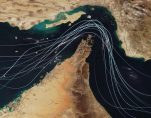
India summoned Pakistan’s top diplomat in New Delhi on Wednesday after naval vessels from the two countries collided in international waters of the northern Arabian Sea, escalating friction more than a year after their last military confrontation.

The Ministry of External Affairs said Pakistan’s Charge d’Affaires was called in and a strong protest lodged over what it described as “unacceptable and unprofessional conduct” by Pakistani naval units. The ministry said the conduct led to a collision with a unit of the Indian Navy and urged Pakistan’s authorities to ensure that military units exercise due care and observe existing bilateral agreements.

The collision occurred on Tuesday while a frontline warship from India was conducting what officials described as a routine surveillance mission. Officials from India said a Pakistan Navy vessel approached at high speed before the vessels collided. No major damage was reported, and there was no immediate public statement from Pakistan’s government or military responding to New Delhi’s account.

India also instructed its top diplomat in Islamabad to lodge a similar protest with Pakistan’s Foreign Ministry. The exchange elevated what could otherwise have remained a maritime safety incident into a formal diplomatic dispute between two nuclear-armed neighbours whose military contacts are governed by a series of confidence-building arrangements.

New Delhi said the episode breached a 1991 bilateral agreement covering military exercises, manoeuvres and troop movements. Under that agreement, naval ships and submarines of the two countries are required to remain at least three nautical miles apart in international waters to reduce the risk of accidents. India’s foreign ministry said the Charge d’Affaires had been asked to convey the need for all military units to respect those provisions and prevent a recurrence.

Pakistan had not, as of Wednesday afternoon, issued its own description of the encounter, leaving key operational details — including the precise movements of the vessels before impact — based on India’s official account. No ship names, casualty reports or detailed damage assessments were released publicly by either side.

The incident is the clearest publicly acknowledged military encounter between the neighbours since four days of hostilities in May 2025. That fighting followed an April 22 attack on tourists in Pahalgam, in Jammu and Kashmir, that killed 26 people. India blamed Pakistan for supporting cross-border terrorism, an allegation Islamabad rejected, and the crisis developed into missile, drone and artillery exchanges before both sides announced an understanding to halt the fighting.

Relations have remained strained since then despite the cessation of large-scale hostilities. Diplomatic ties had already been downgraded in 2019 amid disagreements over Kashmir, and neither country currently posts an ambassador in the other’s capital, with missions headed by Charges d’Affaires.

The latest protest focused narrowly on maritime conduct rather than broader political disputes. India’s statement did not announce retaliatory military measures or new diplomatic restrictions, and it called instead for compliance with the bilateral framework designed to prevent accidents between armed forces operating near one another.

The northern Arabian Sea is routinely used by both navies for patrols, exercises and surveillance. The 1991 agreement was intended to create practical safeguards at times of tension, alongside notification procedures for certain military activities. Its distance requirement gives commanders a defined separation standard when vessels or submarines from the two countries encounter each other beyond territorial waters.

The military relationship remains sensitive because both countries maintain forces across the Line of Control in Kashmir and continue to accuse each other of hostile activity. Their 2025 confrontation demonstrated how quickly a security incident can widen across domains, although neither government indicated on Wednesday that the naval collision had triggered wider force movements or changes in military posture.

Tuesday’s collision did not produce the kind of damage that would normally force a ship out of service, according to India’s account. The absence of reported casualties limited the immediate operational consequences, but the diplomatic summons ensured the episode received attention at the highest working level between the two foreign ministries.

SUSE has enabled its enterprise real-time Linux platform for LF Energy’s SEAPATH architecture, giving electricity grid operators and equipment vendors a commercially supported operating system option for virtualised digital substations. The integration, developed with open-source engineering specialist Savoir-faire Linux, combines SUSE Linux Enterprise Real Time with Kernel-based Virtual Machine, or KVM, virtualisation and cluster support. SUSE said the work makes it the first enterprise Linux vendor to […]

Hong Kong has placed a global gold trading hub at the centre of its first five-year economic plan, using the market as an entry point to expand commodity trading and broaden international use of the renminbi.

The 2026-2030 plan, released on Wednesday, calls for an integrated gold ecosystem covering storage, trading, clearing, refining and related financial services, while encouraging more renminbi-denominated commodity products. The government said it would strengthen links with mainland exchanges and attract international investors as it develops the city’s role as a global offshore renminbi centre.

It describes gold as an asset and envisages a one-stop storage, trading and clearing centre.

The strategy gives formal five-year backing to a gold-market expansion already under way. Hong Kong began trial operations of a central clearing and settlement system for gold in July and plans to launch the system formally in the first quarter of 2027. The administration is also seeking to expand storage capacity, improve refining capability and support more gold dealers and financial institutions in establishing operations in the city.

The plan says Hong Kong will explore renminbi-denominated gold and commodity markets and deepen co-operation with the Shanghai Gold Exchange and Shanghai Futures Exchange. It also aims to increase the range of products priced in the Chinese currency and encourage the use of renminbi for pricing and settlement in spot commodity transactions.

Chief Executive John Lee’s administration has framed the programme as part of a broader effort to strengthen Hong Kong’s position as an international financial centre while aligning more closely with China’s national development priorities. The five-year plan also seeks to enlarge the city’s offshore renminbi business, improve liquidity support and expand the range of renminbi bonds and other financial products.

Hong Kong remains the world’s largest offshore renminbi market. The government said offshore renminbi lending reached a record 935 billion yuan in 2025, while renminbi bond issuance reached 1 trillion yuan for a second consecutive year. The new plan proposes a dedicated offshore renminbi liquidity provision mechanism and wider use of the currency in trade, investment, financing and government expenditure.

Gold is intended to provide the first platform for a wider commodities push. The government said Hong Kong would use its status as an approved delivery point in the London Metal Exchange’s global warehousing network to develop trading, risk-management and financing services across additional commodities.

Since Hong Kong joined the LME warehousing network in 2025, approved storage space has exceeded 60,000 square metres and metal inventories have risen above 20,000 tonnes, according to the government. Authorities plan to facilitate more LME-approved warehouses in the Northern Metropolis and introduce a half-rate tax concession for physical commodity trading to attract additional market participants.

The Hong Kong Exchanges and Clearing group also plans to announce details this year for new renminbi-denominated, physically settled gold futures contracts. The government said the contracts are intended to strengthen the currency’s role in precious-metal pricing and provide another channel for international investors to gain renminbi exposure.

Other measures include possible tax concessions for qualifying gold and commodity activities, additional insurance capacity for gold storage and trading, and support for an industry-led trade association. Officials are also examining tokenised warehouse-receipt financing and blockchain-based systems that would allow commodity inventories to be used more flexibly as collateral.

The administration has set a target of lifting Hong Kong’s gold storage capacity to more than 2,000 tonnes within three years. It is also encouraging internationally qualified refiners to establish or expand local operations, with government agencies assisting interested companies in identifying sites and navigating regulatory requirements.

Closer integration with mainland markets is another element of the strategy. The plan calls for wider market access between Hong Kong and mainland gold markets and further collaboration with the Qianhai Mercantile Exchange, including development of renminbi-settled commodity futures, options and spot products.

India’s Securities and Exchange Board has given arbitrage mutual funds greater flexibility to manage hedged equity positions around the new closing auction, a step aimed at increasing institutional liquidity in the end-of-day price-setting mechanism.

The regulatory relaxation allows fund managers more room to adjust the cash and futures legs of arbitrage trades while participating in the Closing Auction Session, people familiar with the change said. The move is intended to encourage funds that collectively manage a large pool of equity-linked assets to place orders in the auction rather than largely completing transactions beforehand.

The change addresses a central weakness that has emerged since the auction system was introduced on August 3 for shares with futures and options contracts. Trading during the closing window has at times been thin, leaving prices vulnerable to sharp moves when large buy or sell orders enter a relatively shallow order book.

Arbitrage funds are viewed as a potentially important source of balancing liquidity because they hold shares in the cash market while maintaining offsetting short positions in futures. That structure can enable them to sell stock when the closing auction is dominated by buyers, or buy when supply is heavy, without necessarily taking a directional market view.

SEBI has not issued a public circular detailing the latest operational flexibility. Existing mutual-fund rules require arbitrage schemes to maintain at least 65% of assets in equity and equity-related instruments, while their strategy is built around offsetting positions designed to capture differences between cash and derivatives prices.

The regulator’s intervention comes as it separately reviews the mechanics of the Closing Auction Session after volatile expiry-day moves raised concerns over price discovery and derivatives settlement. A consultation paper issued on September 12 proposed changes to the way settlement prices are determined when futures and options expire.

One option under consideration would blend the volume-weighted average price from the final 30 minutes of continuous trading with prices established in the closing auction. Another would temporarily retain the earlier 30-minute volume-weighted average methodology for derivatives settlement while the auction develops deeper liquidity.

SEBI has also proposed restrictions on order cancellations outside a specified range around the reference price, a shorter post-auction derivatives trading window and changes to the publication of indicative index closing levels during the auction. Public comments on those proposals are open until October 3.

The Closing Auction Session replaced the previous method of setting closing prices for eligible stocks through the volume-weighted average of trades during the last 30 minutes of normal trading. Under the new framework, eligible cash-market stocks move into an auction process late in the session, while equity derivatives continue trading until 3.40 pm.

The auction is intended to concentrate end-of-day orders and produce a closing price based on the level at which the greatest quantity of shares can be matched. Similar mechanisms are used in several major global markets, particularly for large institutional orders and benchmark-tracking flows.

Early trading under the system, however, produced unusually wide gaps between cash-market closing prices and futures values on some days. Those differences caused sharp one-day movements in the net asset values of arbitrage funds because the cash and derivatives legs of their portfolios were marked using prices generated under different trading conditions.

Fund managers and market participants have argued that broader institutional participation is essential if the auction is to deliver stable price discovery. Arbitrage funds, with assets of roughly ₹3.5 trillion according to industry estimates, represent one of the largest pools capable of supplying two-way liquidity without relying on outright directional bets.

The mutual-fund industry has also examined changes to futures valuation that would better align derivatives prices with the auction-determined cash close. One proposal would derive a theoretical futures closing value from the final cash-market price and the prevailing cash-futures spread, reducing temporary valuation mismatches in arbitrage portfolios.

Arabian Post Staff -Dubai Fasset will become the first platform worldwide to list DDSC, the UAE dirham-backed stablecoin, under a new collaboration that will also allow users to swap the token with major dollar-backed stablecoins including USDC and USDT. The arrangement expands DDSC’s distribution beyond its initial institutional use and follows regulatory approvals that opened the way for the token to appear on selected platforms overseen by […]

DeRAMA Singapore’s Joint Postnatal Recovery Seminar explored how Singapore can strengthen postpartum support by combining professional care with established family and confinement traditions.

SINGAPORE – Media OutReach Newswire – 16 September 2026 – As more women enter motherhood later in life, postnatal care should be shaped around the individual and grounded in clinical evidence, medical experts said at DeRAMA Singapore’s Joint Postnatal Recovery Seminar. Held at The Singapore EDITION on 17 August 2026, the session brought together Dr Park Jeong-mi, Founder and Medical Director of Garden of Her Women’s Clinic in Korea, and Singapore based obstetrician and gynaecologist Dr Ho Ping Ling of Ascensus Health @ Mount Alvernia. Together they examined how postpartum practices have evolved in both countries, and how professional support can sit alongside traditional confinement customs.

Dr Park Jeong-mi and Dr Ho Ping Ling discussing the evolving postpartum recovery needs of modern mothers at DeRAMA Singapore's Joint Postnatal Recovery Seminar, held at The Singapore EDITION on 17 August 2026.
Dr Park Jeong-mi and Dr Ho Ping Ling discussing the evolving postpartum recovery needs of modern mothers at DeRAMA Singapore’s Joint Postnatal Recovery Seminar, held at The Singapore EDITION on 17 August 2026.

Supporting the Changing Needs of Modern Mothers

Singapore women are increasingly entering motherhood at a later age.

Dr Ho noted that mothers aged 35 and above may face a higher likelihood of pre-existing medical conditions, pregnancy complications and Caesarean delivery, each of which can affect how a woman recovers after childbirth. “There is no one-size-fits-all approach. All women deserve individualised care, regardless of whether they are younger or older mothers,” said Dr Ho.

Every mother’s needs, she added, should be assessed against her health, pregnancy journey, mode of delivery, family support and personal preferences. While the postpartum period is medically recognised as roughly six weeks, a full return to health may take longer from one woman to the next.

From Family-Based Care to a Professional Recovery System

Guests and members of the media at DeRAMA Singapore's Joint Postnatal Recovery Seminar, which explored the Korean and Singapore approaches to postnatal care.
Guests and members of the media at DeRAMA Singapore’s Joint Postnatal Recovery Seminar, which explored the Korean and Singapore approaches to postnatal care.

Dr Park shared that postpartum care in Korea, like Singapore, was traditionally provided at home by mothers, mothers-in-law and extended family members. However, the rise of nuclear families, greater workforce participation among women and reduced availability of family caregivers created a need for a more structured alternative.

This contributed to the development of the sanhujoriwon, or postpartum recovery centre, where mothers receive coordinated support for physical recovery, nutrition, breastfeeding and newborn care.

According to Dr Park, 85.5%1 of mothers in Korea now use a postpartum recovery centre after childbirth. While centres range from basic to premium facilities, they are generally regarded as an established part of the country’s postpartum journey rather than an occasional luxury service. Staff trained in maternal and newborn care are on hand around the clock.

Dr Park also shared that postpartum care in Korea has expanded beyond rest and nutrition. Modern recovery programmes may consider pain, swelling, musculoskeletal changes, sleep, breastfeeding and emotional wellbeing, with support adapted to the mother’s health and mode of delivery.

Singapore, by contrast, remains largely home-based in its approach, often drawing on relatives and confinement nannies. This offers valuable emotional and practical help, though the panel raised concerns about inconsistent training, uneven standards and the medical basis of certain confinement practices. Dr Ho observed that many long-held confinement rules stem from practices passed down over decades rather than medical evidence, pointing to the belief that mothers should avoid washing their hair or showering for long stretches, which she said runs counter to sound hygiene and infection control.

Making Structured Care More Accessible

A recurring theme was affordability, and how families might be better supported to access structured postnatal care. Dr Park noted that in Korea some centres are run with local government support at comparatively low cost, with maternal and newborn health vouchers helping to defray expenses. That model drew interest as a possible reference point for Singapore, where recovery centres began gaining acceptance only in recent years and remain out of reach for many families.

Dr Ho suggested there was room for local healthcare providers, public institutions and insurers to widen access, adding that stronger support for mothers could, in time, help lift Singapore’s birth rate. Both doctors also observed that families increasingly blend the two models, beginning at a centre before continuing recovery at home with trained or family support.

Looking Beyond the Delivery Room

The doctors concluded that postpartum care should not be viewed solely as a period of rest or a premium hospitality service. It is a critical stage of maternal and newborn health that can affect the wellbeing of the mother, child and wider family.

The seminar pointed to an opportunity for Singapore to weave professional, evidence-informed services into the family involvement and confinement traditions that mothers here already value, complementing them rather than pushing them aside.

By setting Korean and Singapore perspectives side by side, DeRAMA Singapore hopes to spark a broader national conversation, one that treats postnatal recovery not as an afterthought once a baby arrives, but as a stage where traditional practices, family involvement and professional care work together to support modern mothers.Hashtag: #DeRama


The issuer is solely responsible for the content of this announcement.

About DeRAMA Singapore

DeRAMA Singapore is the first international expansion of Her Garden DeRAMA, South Korea’s leading ultra-luxury postpartum care brand established in 2008, brought to the market and managed by Sserenity. Located inside Artyzen Hotel on Orchard Road, DeRAMA Singapore offers expert-led, bespoke postpartum recovery programmes for high-net-worth mothers seeking the highest standard of postnatal care. With 20 years of clinical protocol development and a Seoul clientele that includes globally recognised K-celebrity families, Sserenity brings an uncompromising standard of care to Singapore’s most discerning mothers.

For more information, visit

SOCAR plans to take a final investment decision by the end of 2026 on a petrochemical expansion in Türkiye valued at up to $7 billion, placing higher-value manufacturing at the centre of Azerbaijan’s effort to broaden its energy economy beyond crude oil and gas sales. The State Oil Company of the Republic of Azerbaijan is assessing new production units and upgrades to existing facilities at Petkim, its […]

Advertisements

Arabian Post Staff -Dubai Saudi Arabia is broadening international security contacts as Iran-backed Houthi forces consolidate positions along Yemen’s Red Sea coast, with Britain backing Riyadh and reports of Israeli intelligence co-operation emerging as the kingdom confronts missile, drone and maritime threats. The Saudi outreach has accelerated after Houthi forces captured territory and islands around the Bab el-Mandeb Strait, the narrow waterway linking the Red Sea with […]

The US Senate failed to advance the CLARITY Act on Tuesday, handing the cryptocurrency industry a major setback despite a late White House effort to challenge banking-sector warnings that stablecoin rewards could drain deposits and curb lending. The procedural vote ended 50-49 in favour of advancing the legislation, 10 votes short of the 60 required. Republican senators Jerry Moran, Rand Paul, Josh Hawley and Thom Tillis joined […]

Arabian Post Staff -Dubai Dubai has introduced a round-the-clock service at Dubai International Airport allowing eligible UAE citizens and residents to obtain an International Driving Permit within five minutes before travelling abroad. The service is available at the Customer Happiness Centre in Terminal 3 Arrivals and is open to people holding a valid UAE driving licence. It brings permit issuance directly into the airport environment, giving travellers […]

Arabian Post Staff -Dubai Emirates is expanding its A350 deployment and upgraded cabin footprint as strong winter bookings support additional capacity across its network following a better-than-expected summer. The Dubai-based airline said it had taken delivery of 18 aircraft since January, comprising 11 Airbus A350s and seven Boeing 777 freighters, with another six A350s scheduled to arrive before the end of December. Its A350s currently serve 30 […]

Djibouti has joined the Artemis Accords, becoming the 72nd country and eighth African nation to endorse the US-led principles for peaceful, transparent and coordinated civil space exploration. Djibouti’s ambassador to the United States, Mohamed Siad Douale, signed the accords on behalf of his government at NASA Headquarters in Washington on Monday, September 14. NASA Deputy Administrator Matt Anderson hosted the ceremony, which was also attended by US […]

The UAE has introduced an 11-day, 10-night tourism package linking all seven emirates, with the Grand Classic itinerary priced from Dh10,446 per person. The UAE Grand Tour platform went live on Monday, allowing travellers to book accommodation, private transport, guided sightseeing, selected meals and experiences through a single itinerary. The initiative was presented during Arabian Travel Market 2026 in Dubai and is intended to encourage visitors to […]

WRISE Prestige records over300% revenue growth in HK since end-2024, expands to more than 400 IWCs and advances a new professional standard combining human expertise, independence and AI

  • Assets under management increased by 927%, revenue grew by 301% and the number of clients increased by 382% compared with the end of 2024.
  • WRISE Prestige’s network has expanded to more than 400 Independent Wealth Consultants (IWCs) in Hong Kong.
  • The broader WRISE ecosystem has added capabilities spanning family office and wealth planning, corporate advisory, trust and legacy planning, structured products, international insurance and AI labs, while the IWC proposition evolves from Independent Wealth Consultant to Intelligent Wealth Consultant.

HONG KONG SAR – Media OutReach Newswire – 15 September 2026 – WRISE Prestige, a core business of WRISE Group serving affluent and high-net-worth clients through a network of wealth consultants, is set to celebrate its second anniversary in Hong Kong on 16 September, marking two years of rapid growth and the next chapter in its approach to wealth advisory.

Since the end of 2024, WRISE Prestige in Hong Kong has recorded 927% growth in assets under management (AUM), 301% growth in revenue and a 382% increase in the number of clients. Its Hong Kong network has also grown to more than 400 IWCs, reflecting rising demand for independent, people-led advice and broader access to integrated wealth solutions.

Two Years of Growth and an Expanding Wealth Ecosystem

Over the past two years, WRISE Prestige has broadened its role within the WRISE ecosystem, connecting clients with capabilities across different aspects of wealth and advisory. These include WRISE Capital for corporate finance and advisory services, WRISE Private for family office solutions and sophisticated wealth planning, and WRISE Master Trust for wealth structuring and legacy planning.

WRISE Prestige has broadened its solution capabilities in parallel, expanding its insurance spectrum from local offerings to Bermuda solutions and connecting clients with investment, banking, protection, trust and corporate advisory resources.

Client demand has become increasingly diverse, spanning liquidity, income, diversification, downside management, succession and cross-jurisdictional wealth planning. Structured products may be considered as part of client solutions where suitable, depending on risk tolerance and circumstances, illustrating the need for tailored risk-return outcomes rather than one-size-fits-all distribution.

The Group’s expanding regional footprint, including presences in Taipei, Shenzhen, Changsha, Chengdu, Wuxi and Vancouver, further strengthens WRISE Prestige’s ability to connect clients and wealth consultants with capabilities across markets.

From Independent Wealth Consultant to Intelligent Wealth Consultant

The evolution comes as Hong Kong’s wealth management industry reaches a new scale. According to the Securities and Futures Commission, AUM in Hong Kong’s private banking and private wealth management business rose 24% year-on-year to HK$12.9 trillion at the end of 2025.[1]

As wealth grows, the needs behind it are becoming increasingly complex. Clients require holistic advice connecting investments and protection with family governance, business interests, succession and intergenerational planning. They increasingly value sound judgement, independence, expertise, trust and connectivity to a wider wealth ecosystem.

WRISE Prestige believes this is expanding the role of the wealth consultant. Building on the foundations of independent wealth advisory, the IWC approach puts the individual at the centre, considering their family, business, aspirations, risks and legacy, while drawing on a broader ecosystem to address wealth more holistically. Within this approach, independence refers to an open-architecture model that gives wealth consultants the flexibility to consider solutions from a broad range of financial institutions and providers, rather than being tied to a single institution or product. This approach does not imply the absence of conflicts of interest; any applicable conflicts are managed and disclosed in accordance with relevant policies and regulatory requirements.

IWC is now entering its next chapter, evolving from Independent Wealth Consultant to Intelligent Wealth Consultant. The new proposition builds on the open-architecture approach, trusted human relationships and professional expertise that have defined IWC, while bringing together the research, analytical and efficiency capabilities of AI.

Technology can enhance how wealth consultants analyse information, generate insights and serve clients, while human judgement, accountability and relationships remain at the heart of wealth advice. The goal is not to replace wealth consultants with AI, but to empower them with greater capabilities to support better-informed, more holistic wealth decisions.

As part of this evolution, WRISE Prestige is also strengthening the professional development pathway for its IWC network through QLC, a structured professional assessment covering four specialist areas relevant to the evolving needs of high-net-worth clients: Family Office, Trust, Offshore Insurance and Advanced Investment. IWCs who complete the QLC examination will earn the designation of IWC-Certified, establishing a common foundation of professional knowledge and standards across the network. Following certification, IWCs can continue to develop through pathways recognising both professional expertise and business performance.

Henry Shin, CEO of WRISE Prestige Hong Kong, said: “The wealth management industry has continuously evolved, from traditional institution-led models, to the emergence of independent financial advice, and now towards a new generation of wealth advisory. We believe the next stage of this evolution is intelligence.

Intelligent Wealth Consultant brings together the independence and trust that have always been fundamental to wealth advice with professional expertise, human judgement, and the insights and analytical capabilities of artificial intelligence. This is not about replacing the human element with technology, but about empowering our consultants with technology to deliver deeper insights and help clients make more informed and holistic wealth decisions.

At WRISE Prestige, we aspire to take this evolution one step further, not simply to witness the transformation of our industry, but to work alongside the industry in helping shape best practices for the next generation of wealth advisory.”

Building the Next Chapter of Wealth Advisory

Looking ahead, WRISE Prestige expects wealth management to become more connected, technology-enabled and accessible. Its focus will remain on combining technology with human judgement and relationships, using technology to improve connectivity, insight and scalability while maintaining appropriate professional and regulatory standards.

Over the next two to three years, WRISE Prestige plans to expand its business-to-business capabilities and advance an Open-EAM architecture that connects IWCs, external asset manager partners and clients through the broader WRISE ecosystem. The architecture is intended to make it easier for wealth consultants and partners to access specialist capabilities across wealth management, banking, investments, protection, trust and corporate advisory services, supported by technology and the WRISE platform.

Through this approach, WRISE Prestige aims to create greater connectivity and scale for wealth consultants, more integrated choices for clients, and a stronger professional ecosystem for Hong Kong and the region. Its ambition for the next chapter is not only to grow its own platform, but also to contribute to the continued development of wealth advisory across the industry.

Hashtag: #WRISEGroup

The issuer is solely responsible for the content of this announcement.

About WRISE

WRISE is one of Asia’s fastest-growing financial firms, driven by strategic acquisitions of companies with deep expertise and solid foundations. With a strong presence across key financial hubs including Singapore, Hong Kong, Dubai, Tokyo, Shanghai, Shenzhen, Changsha, Chengdu, Wuxi, Taipei and Vancouver, WRISE is home to one of the largest networks of independent qualified advisors. With over 600 employees located globally, supported by an ecosystem of over 200 financial intermediaries and access to eight booking centres worldwide, WRISE ensures unparalleled service and expertise in navigating today’s financial landscape.

WRISE Group of companies include WRISE Wealth Management (Singapore), WRISE Wealth Management (Hong Kong), WRISE Wealth Management Middle East Ltd (DIFC, regulated by the DFSA), WRISE Prestige (Hong Kong), WRISE Prestige Securities (Hong Kong), WRISE Prestige Asset Management (Hong Kong), WRISE Capital (Hong Kong), WRISE Financial Services (Hong Kong), and affiliates including WeWrise Services.


Arabian Post Staff -Dubai Al-Futtaim Motors has begun two safety recall campaigns covering 6,933 Lexus LX500 and LX600 sport utility vehicles in the UAE, addressing separate engine software and transmission defects in models built in Japan between 2021 and 2024. The larger programme is being conducted in coordination with the Ministry of Economy and Tourism and requires affected owners to have their vehicles inspected or reprogrammed without […]

Arabian Post Staff -Dubai Saudi Arabia has identified about 114 million tonnes of mineralised ore containing rare earth elements and promising uranium concentrations at the Jabal Sayid project in Madinah, Energy Minister Prince Abdulaziz bin Salman has announced. Prince Abdulaziz disclosed the estimate on Monday during the 70th General Conference of the International Atomic Energy Agency in Vienna, placing the find at the centre of Riyadh’s drive […]

BRICS leaders have placed development priorities of emerging economies at the centre of their New Delhi agenda, endorsing stronger representation for the Global South while advancing cooperation on trade, technology, finance and sustainable growth.

Chinese President Xi Jinping used the 18th BRICS Summit to argue that countries should pursue development paths suited to their own national conditions, a message that overlapped with the summit’s broader emphasis on policy autonomy, inclusive growth and reform of global institutions.

Addressing the first leaders’ session on September 12, Xi marked 20 years of BRICS cooperation and said members had strengthened themselves through unity while preserving independence in choosing their economic and social models. He described BRICS as an increasingly important platform for emerging markets and developing countries.

The summit’s New Delhi Declaration gave that theme wider institutional form. Leaders called for a more representative international order, greater participation by developing countries in global decision-making and reforms to institutions including the United Nations, World Trade Organization and international financial architecture.

The declaration also reflected the diversity within the expanded grouping. Rather than prescribing a single model of development, BRICS leaders stressed national circumstances, differing capacities and the need for policy space, particularly in areas such as energy transition, industrialisation and climate action. That approach broadly matched Xi’s argument that development strategies should reflect domestic conditions rather than external templates.

Xi sought to extend the idea into technology policy. He proposed an initiative on artificial intelligence-enabled industrialisation, deeper cooperation in research and applications, and stronger industrial and supply-chain links. China also promoted open-source AI collaboration and international platforms intended to improve access to emerging technologies for developing economies.

Other leaders framed similar priorities through their own national perspectives. Prime Minister Narendra Modi emphasised resilience, innovation, cooperation and sustainability, the four themes of India’s 2026 BRICS chairship, and called for solutions developed within the grouping to serve a wider range of developing countries. He also urged members to translate summit commitments into practical programmes.

BRICS members agreed on measures spanning digital cooperation, food and energy security, health, trade facilitation and the use of local currencies in cross-border transactions. The declaration supported stronger payment connectivity while stopping short of endorsing a common BRICS currency.

The economic agenda also underlined the practical test facing the grouping. Members backed use of national currencies in trade and investment, stronger cooperation through the New Development Bank and efforts to improve financial resilience. Such measures are intended to widen financing options for developing economies without committing members to a single monetary framework or common currency.

The expanded bloc now brings together countries with sharply different political systems, strategic alignments and economic structures. That breadth gives BRICS a larger claim to represent developing-country concerns, but it also limits how far members can converge on detailed policy prescriptions. Analysts have noted differences over whether the group should remain primarily an economic and development forum or assume a stronger geopolitical role.

Those tensions were visible alongside the development agenda. Leaders opposed protectionism and unilateral economic measures, supported a stronger multilateral trading system and called for reforms that would increase the voice of developing countries. At the same time, members avoided turning the summit into a unified ideological platform, relying instead on consensus language broad enough to accommodate competing interests.

Xi’s second summit intervention on September 13 placed a “people-centred” development philosophy within a wider call for Global South cooperation. He urged progress on the UN Sustainable Development Goals, improvements to global climate governance and a consensus-based framework for governing artificial intelligence.

China’s approach also carries strategic implications. Beijing has increasingly used BRICS and other multilateral forums to promote its views on development, sovereignty and global governance. Some members share its criticism of unequal representation in international institutions, while others remain cautious about allowing BRICS to become identified with any single country’s geopolitical agenda.

Arabian Post Staff -Dubai Shipping through the Strait of Hormuz fell sharply at the start of the week, with only four commodity vessels recorded transiting the strategic waterway on Monday as attacks across the Middle East intensified. Preliminary ship-tracking data from Kpler showed the Monday total was down from 10 vessels on Sunday, extending a prolonged decline in commercial traffic through a passage that remains central to […]

A new round of 50 per cent US tariffs on Canadian goods took effect early Tuesday, adding the levy to 110 tariff items while removing 10 others from the list. The changes, effective from 12.01am Eastern Time on September 15, cover products including selected cheeses, motorboats, all-terrain vehicles, furniture, mattresses, lamps, aluminium products, paper goods and iron or steel structures. They form part of a package of […]

Bob Mackie, the Emmy- and Tony-winning designer who transformed television and stage costuming with flamboyant creations for Cher, Carol Burnett, died on Monday in Palm Springs, California. He was 87. A representative for Mackie said he died of pneumonia at 10.40am on September 14. His team announced his death through his official social media account, saying he had spent his life fulfilling his ambition to be a […]

The Employees’ Provident Fund Organisation has opened an official WhatsApp channel to distribute verified updates and service information to members, adding another digital route for communicating changes affecting provident fund and pension users.

EPFO announced the channel through its official account on X, sharing a direct joining link and QR code. The channel had more than 83,000 followers by Tuesday, reflecting early uptake among members seeking alerts on schemes, procedures, service changes and public notices.

The new channel, however, should not be confused with a transactional WhatsApp service. EPFO’s own digital platforms show that personal services such as checking an individual provident fund balance, viewing a passbook, filing claims or tracking claim status continue to be provided through authorised channels including the Member Passbook portal, Unified Member Portal and the UMANG application. The WhatsApp channel is designed primarily to broadcast information rather than display confidential account data.

That distinction is important because some descriptions circulating online have suggested that members can directly check balances or access account-specific information through the new channel. EPFO’s published service framework does not support that interpretation. The organisation separately offers balance enquiries by missed call and SMS for eligible members whose Universal Account Number, or UAN, is linked to the required records.

Members registered on the UAN portal can obtain their last contribution and provident fund balance by giving a missed call to 9966044425 from the mobile number registered with EPFO, provided the UAN is linked with at least one prescribed know-your-customer detail such as a bank account, Aadhaar or PAN. EPFO’s passbook portal also lists an SMS option using the format “EPFOHO UAN” with the relevant language code sent to 7738299899.

For a fuller range of services, EPFO directs members to UMANG. Official guidance lists facilities there including viewing the passbook, filing online claims, tracking claims, activating or obtaining a UAN, submitting Jeevan Pramaan and downloading a Pension Payment Order. The Unified Member Portal provides additional account and member functions after authentication.

The WhatsApp channel therefore expands EPFO’s communications reach rather than replacing those existing systems. Followers can receive official notices on a platform already used by millions of people for everyday messaging, potentially reducing dependence on users repeatedly checking websites or social media accounts for updates.

EPFO has increasingly used multiple digital channels to communicate with members and employers, including its website, X, YouTube, Instagram, Facebook and LinkedIn. Its employer portal currently directs users to those official accounts for news and updates, while its member-facing portals continue to handle authenticated services.

Members can follow a WhatsApp channel without exposing their phone number to other followers, but that privacy feature does not turn the channel into an authenticated account interface. Balance checks, claims and passbook access still require EPFO’s designated systems, where identity and account credentials are handled through verification processes.

The expansion also comes with a need for caution over impersonation and fraud. EPFO repeatedly warns members not to disclose Aadhaar numbers, PAN details, bank information, passwords, UAN credentials or one-time passwords in response to calls, messages, WhatsApp contacts or social media approaches. Its anti-fraud portal states that EPFO staff do not seek such personal or financial details through these channels.

Members joining the WhatsApp channel should therefore verify that they are using the link or QR code shared through EPFO’s official communication channels. A WhatsApp broadcast channel does not require users to send credentials to receive public updates, and any request for sensitive account information should be treated with suspicion.

For members who only want to stay informed about policy changes, deadlines, service interruptions or procedural guidance, the channel provides a convenient additional source. Those seeking personal account details must still use the authenticated EPFO systems or designated balance-enquiry services.

Arabian Post Staff -Dubai Silicon Central Mall has become the first operating hub for Keeta Drone’s food delivery service in Dubai, linking participating restaurants with customers around Dubai Silicon Oasis through approved autonomous flights. The service is operating after clearance from the Dubai Civil Aviation Authority, with customers able to place eligible food and beverage orders through the Keeta app. Drones depart from Silicon Central Mall and […]

Zurich Airport has moved two autonomous electric shuttle buses to Level 4 operation without a driver or safety monitor on board, shifting human oversight entirely to a remote control centre after an 18-month testing programme. The airport said the first fully automated runs began in early September, marking the latest stage of a pilot launched with autonomous-driving technology company WeRide in March 2025. The two Robobus vehicles […]

Eight major US banking trade groups have urged Senate leaders to tighten the CLARITY Act’s restrictions on stablecoin rewards, warning that a new regulatory “circuit breaker” would take effect only after damaging deposit outflows had already occurred. The warning came in a joint letter sent on Monday to Senate Majority Leader John Thune and Democratic Leader Chuck Schumer ahead of a procedural vote scheduled for Tuesday, September […]

VISHNU RAJA
RYO YAMADA
HITORI GOTOH
IKUYO KITA