News related to
Years

The UAE has unveiled the third edition of the Samsung Innovation Campus, a collaborative initiative between the UAE’s Artificial Intelligence, Digital Economy, and Remote Work Applications Office and Samsung Gulf Electronics. This new chapter is part of the broader UAE Artificial Intelligence Camp 2025, aiming to nurture a new generation of talent in artificial intelligence and related fields. The event marks another significant step in the UAE’s […]

Saudi Aramco has concluded an $11 billion deal for the lease and leaseback of its Jafurah natural gas processing facilities with a consortium led by Global Infrastructure Partners, a subsidiary of BlackRock. This significant agreement marks a major milestone in Aramco’s strategy to expand its natural gas production and diversify its energy portfolio.

The Jafurah field, located in the Eastern Province of Saudi Arabia, is one of the largest non-associated gas developments globally, with estimated reserves of 229 trillion standard cubic feet of raw gas and 75 billion barrels of condensate. Aramco has long prioritised Jafurah as a key part of its energy transition efforts and broader plans to bolster the Kingdom’s gas capacity, aiming for a 60% increase in gas production by 2030.

The consortium, which includes some of the world’s most prominent investment funds, will provide substantial capital to help accelerate the development of the Jafurah field. The deal enables Aramco to monetise its midstream assets while maintaining operational control over the gas reserves. This transaction is seen as a strategic move to finance the development of Saudi Arabia’s gas infrastructure without sacrificing long-term ownership or production rights.

Jafurah plays a pivotal role in Saudi Arabia’s Vision 2030, the ambitious blueprint to diversify its economy and reduce reliance on oil exports. With natural gas being seen as a cleaner alternative to oil, it is a cornerstone of the Kingdom’s strategy to increase domestic energy production and meet rising demand for electricity and industrial use.

Under the terms of the agreement, Aramco will continue to oversee the development and operation of the field, while the international consortium will take on responsibility for the infrastructure, including gas pipelines and processing plants. This partnership is seen as a win-win for both parties, as it enables Aramco to raise capital for further investments in energy projects, while the consortium gains access to one of the most valuable energy assets in the world.

GIP’s involvement in the deal signals its growing interest in the energy sector, particularly in large-scale infrastructure projects. The firm’s experience in managing complex, long-term investments in global infrastructure positions it well to handle the technical and financial challenges associated with Jafurah. As part of BlackRock’s broader investment strategy, the deal also aligns with the company’s focus on sustainable energy and infrastructure development.

The Jafurah field’s importance to Saudi Arabia’s economic future cannot be overstated. The natural gas produced from Jafurah will support the Kingdom’s power generation capacity, which is projected to increase significantly in the coming years. By tapping into the untapped potential of Jafurah, Aramco aims to reduce its reliance on crude oil for domestic power generation, freeing up more oil for export.

Saudi Arabia’s push for gas development has garnered attention from global investors, eager to tap into the Kingdom’s rich natural resources and growing energy sector. This agreement with GIP is a testament to the global interest in the Middle East’s energy markets, and the broader trend of institutional investors seeking long-term, stable returns from the region’s energy infrastructure.

The deal’s financial structure, involving both lease and leaseback elements, is designed to provide Aramco with flexibility while enabling the consortium to generate revenue from the gas assets over time. The leaseback aspect allows Aramco to retain ownership of the gas reserves, while the lease portion provides the consortium with a stable revenue stream from the operations of the Jafurah facilities.

Negotiations at the United Nations aimed at creating a legally-binding treaty to tackle global plastic pollution have once again stalled, leaving international efforts in disarray. This latest failure in the negotiations signals a growing sense of pessimism among key environmental advocates and policymakers who had hoped for substantial progress on what was once seen as a groundbreaking initiative. Three years ago, a historic agreement was reached by […]

Cohere has raised $500 million in new funding, propelling its valuation to an impressive $6.8 billion as the company accelerates its push to reshape enterprise AI. This significant investment will bolster its efforts to expand its security-first agentic AI platform, a product designed to enhance organizational productivity through advanced, secure artificial intelligence. The AI sector has seen rapid growth over the last few years, with businesses increasingly […]

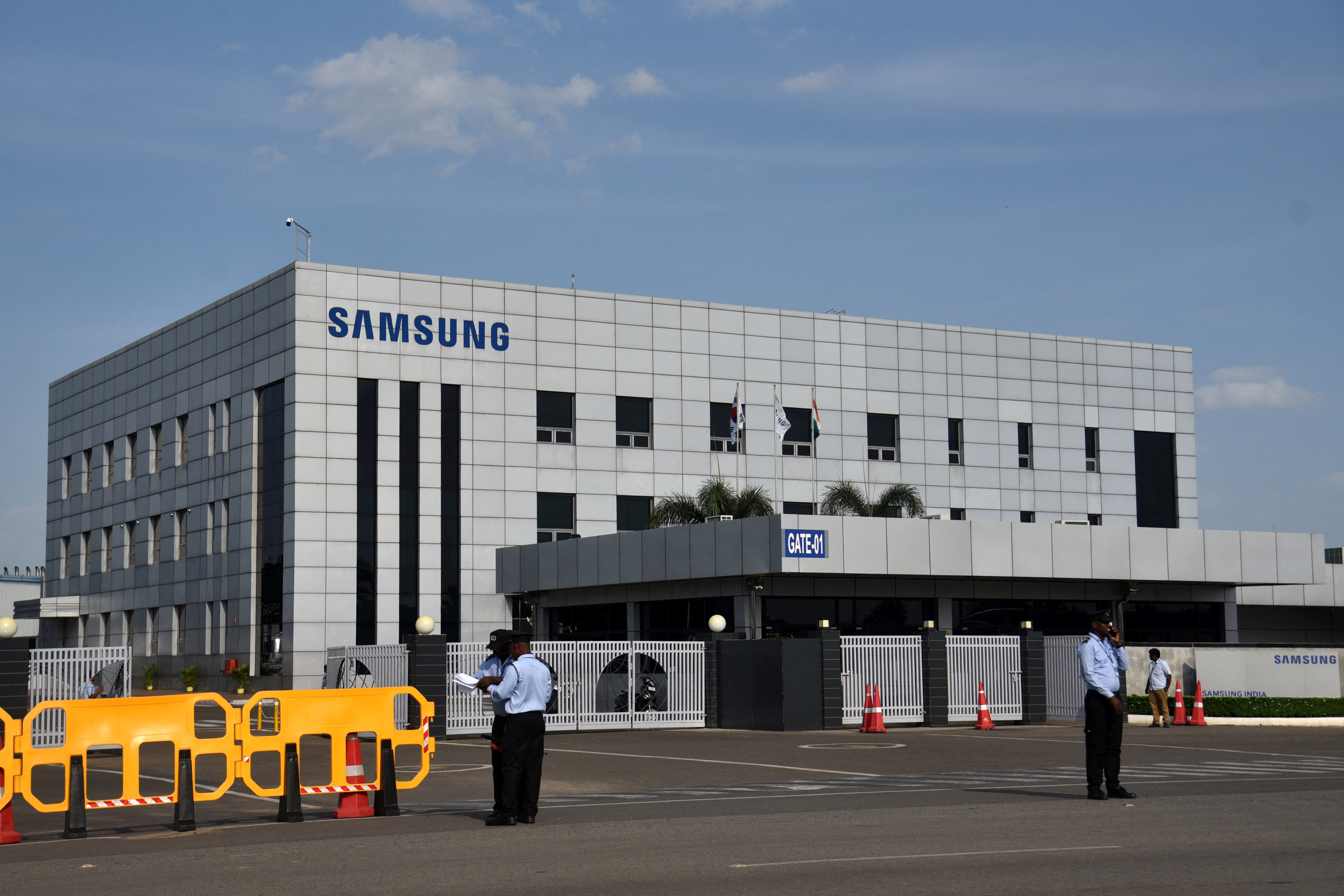
Samsung has commenced local production of laptops in India, marking a significant shift in its manufacturing strategy. The move follows growing trends in the global tech industry, where companies are increasingly decentralising their manufacturing to cater to regional markets and mitigate supply chain risks. The tech giant’s decision to set up its laptop assembly line in India comes as part of a broader push to diversify its production capabilities and tap into the country’s emerging manufacturing ecosystem.

The new facility, which is located in Noida, is expected to meet rising demand for Samsung laptops in India and other parts of Asia. The plant will focus on assembling a range of models, from entry-level to premium devices, with an emphasis on enhancing the supply of high-performance laptops. By doing so, Samsung aims to capitalise on the Indian government’s incentive schemes aimed at boosting local manufacturing and creating jobs in the sector.

India has become an increasingly attractive destination for global manufacturers due to its robust infrastructure, competitive labour costs, and a growing pool of skilled engineers and technicians. Samsung’s decision to invest in local laptop production highlights the country’s status as a strategic hub for tech companies looking to scale operations. The move also aligns with the Indian government’s vision of becoming a global manufacturing leader under the “Make in India” initiative, which encourages foreign companies to establish production bases in the country.

The South Korean company has been investing heavily in India over the past few years, with a significant focus on expanding its footprint in consumer electronics, particularly smartphones. The expansion of laptop production further strengthens its position in the Indian market, where the demand for personal computing devices has been steadily increasing. India, with its young population and rapid digitalisation, presents a lucrative market for tech companies. By establishing local manufacturing units, Samsung can not only meet this demand more effectively but also potentially lower the cost of its devices by reducing import duties and other logistical expenses.

Samsung’s Noida plant will be equipped with advanced manufacturing technology, allowing the company to ensure that its laptops meet international quality standards. The facility is expected to produce several million units annually, with an eye on both the domestic and export markets. This localisation strategy is expected to significantly cut down on shipping costs and delivery times, giving Samsung a competitive edge over other international brands that continue to import their devices into the country.

The move comes at a time when India is becoming increasingly attractive to global technology firms. Companies like Apple, Dell, and HP have already ramped up their manufacturing presence in India in recent years. India’s well-established electronics sector, supported by the government’s push to improve infrastructure and streamline regulatory processes, has led to a surge in foreign direct investment in the country’s tech manufacturing ecosystem.

Samsung’s expansion into laptop production also reflects the growing importance of India in the global supply chain. The country’s status as a low-cost production base, combined with its large consumer market, makes it an attractive location for companies looking to avoid the risks associated with heavy dependence on single countries, such as China. By shifting some of its manufacturing operations to India, Samsung can reduce its exposure to potential disruptions in China, which has long been the dominant player in global electronics manufacturing.

This shift is also likely to have broader implications for the Indian tech industry. With global giants like Samsung setting up local production lines, it is expected that the country will see an increase in the number of skilled jobs in the tech sector. Additionally, the growing demand for locally manufactured devices may spur innovation in the country’s tech ecosystem, encouraging the development of homegrown talent and technologies. This would not only strengthen India’s position as a manufacturing hub but also lay the foundation for the growth of its own tech startups.

Many SMEs start by asking how to make customers choose their brand. But the real question is—if customers don’t like a brand, there’s no reason for them to choose it. KUALA LUMPUR, MALAYSIA – Media OutReach Newswire – 18 August 2025 – To break through this challenge, it all comes down to one thing: building an emotional connection that wins hearts. Brand positioning means that when customers […]

TAIPEI, TAIWAN – Media OutReach Newswire – 16 August 2025 – Lung cancer continues to be the leading cause of cancer-related deaths worldwide. Yet, progress is within reach. In Taiwan, thanks to the National Lung Cancer Early Detection Program, the proportion of early-stage lung cancer cases continues to rise. Against this backdrop, HOPE Foundation for Cancer Care, one of the largest cancer-focused patient advocacy groups in Taiwan, […]

Advertisements

Iracemápolis, São Paulo – Media OutReach Newswire – 16 August 2025 – In the early hours of August 16 (Beijing time), GWM’s Brazil plant officially commenced operations, marked by a grand ceremony for the rollout of its first vehicle, the HAVAL H6 GT. The plant, located in Iracemápolis, São Paulo, was acquired from Daimler Group and has since been upgraded into an intelligent manufacturing base. As GWM’s […]

Dubai’s Burj Khalifa illuminated the night sky on Friday, August 15, 2025, with the vibrant hues of the Indian flag—saffron, white, and green—to commemorate India’s 79th Independence Day. The world’s tallest building became a beacon of unity and cultural pride, drawing large crowds of Indian expatriates and residents who gathered to witness the spectacular light show.

The Indian Consulate in Dubai confirmed that the display commenced at 7:50 PM local time, marking the occasion with a visual tribute that resonated deeply with the Indian community in the UAE. The illumination was accompanied by the instrumental rendition of India’s national anthem, “Jana Gana Mana,” amplifying the emotional significance of the moment.

Spectators, many of whom were capturing the event on their smartphones, expressed their pride and joy through cheers and applause. The display not only celebrated India’s independence but also underscored the strong and enduring ties between India and the United Arab Emirates. Social media platforms were abuzz with videos and messages, with many sharing the experience and extending their Independence Day wishes.

The Burj Khalifa’s annual tribute to India’s Independence Day has become a cherished tradition, symbolising the deep-rooted friendship between the two nations. This gesture is part of a broader initiative where the UAE’s landmarks light up in the colours of various countries’ flags to honour their national days, reflecting the UAE’s commitment to fostering international camaraderie and cultural appreciation.

In addition to the Burj Khalifa’s illumination, the Indian missions in the UAE organised flag-hoisting ceremonies and cultural events to mark the day. The Indian Consulate in Dubai held its flag-hoisting ceremony at 6:30 AM, while the Indian Embassy in Abu Dhabi conducted theirs at 7:15 AM, accommodating the early morning hours to avoid the intense summer heat. These ceremonies were attended by members of the Indian community, dignitaries, and friends of India, all coming together to celebrate the nation’s journey towards independence and its achievements over the years.

The celebrations were further enriched by cultural performances showcasing India’s diverse heritage, including traditional dances, music, and art exhibitions. These events provided an opportunity for attendees to connect with their cultural roots and share in the collective pride of India’s progress and unity.

Malian authorities have launched an extensive investigation into an alleged plot to destabilise the country, with the arrest of a French national and several high-ranking generals. The arrests come amidst mounting tension and accusations that foreign powers are attempting to undermine Mali’s stability. The government’s claims have drawn significant attention, as they allege involvement from foreign actors, raising concerns of escalating international interference in the country’s internal […]

Accumulated losses at Abu Dhabi-listed Invest Bank stand at AED 1.653 billion, equivalent to 51.6 per cent of its paid-up capital, slightly down from AED 1.69 billion reported in March 2025. The losses originate from legacy impairments dating back to the first quarter of 2018 and continue to erode the lender’s financial position.

The bank has launched efforts to stabilise its financial health by de-risking its balance sheet. At the same time, the Government of Sharjah, as the major shareholder, has injected capital aimed at bolstering liquidity—a strategic move that aims to shore up the bank’s resilience.

Looking back, Invest Bank reported more severe accumulated losses in earlier years. At the end of 2019, those losses amounted to AED 2.21 billion, roughly 70 per cent of capital—a stark contrast to the current levels. By the third quarter of 2022, the accumulated losses were AED 2.16 billion, or about 68.2 per cent of capital, largely due to persistent non-performing loans. In response, the bank implemented remediation measures, writing off AED 2.10 billion in accumulated losses by September 2023, bringing the ratio down to approximately 20 per cent of capital. That period also saw a significant share capital increase.

Combined, these figures reveal a notable, though gradual, trajectory of improvement—from 70 per cent of capital in 2019, easing to 20 per cent by late 2023, before creeping back up to 51.6 per cent in the year through March 2025.

The strategic role of the Government of Sharjah remains pivotal. Following its initial 50.07 per cent stake in 2019—acquired via a substantial capital injection—the emirate later transferred roughly 20.48 per cent of its shares to the Sharjah Social Security Fund at the end of December 2024, retaining around 70.06 per cent ownership. This shareholder reorganisation suggests an internal shift in governance structure, while financial backing continues.

Invest Bank is navigating a complex path of recovery. Its efforts to de-risk and recapitalise, combined with consistent shareholder support, offer a cautious optimism. But the level of accumulated losses still significantly exceeds capital, and ongoing remediation will be critical to restore full financial stability.

Oracle’s aggressive expansion in AI and cloud services has set the stage for a major shift in the tech industry, with analysts predicting the company could achieve a $1 trillion market valuation by 2030. As one of the largest tech giants globally, Oracle’s growth trajectory is bolstered by significant revenue gains and strategic partnerships, positioning it to challenge established players like Amazon Web Services and Microsoft Azure. […]

Wuhan, once at the centre of the global pandemic, is emerging as a key tourist destination. With an increasing focus on environmental sustainability and green infrastructure, the city is reinventing itself and positioning itself as a hub for cultural tourism in China.

The city is leveraging its unique geographical advantage, nestled between the Yangtze and Han rivers, with abundant lakes and natural spaces that have made it a prime candidate for eco-tourism. Wuhan’s local government has pushed to transform its tourism landscape by blending urban development with environmental preservation. This has resulted in increased green spaces, cleaner air, and a revitalised waterfront.

One of the key draws for tourists is Wuhan’s “green foundations”, which are central to its urban planning. In August 2025, the symposium “Green Foundations for a Hub City” highlighted the city’s progress in integrating nature with urban life. The event underscored Wuhan’s commitment to preserving its riverbanks, improving water quality, and fostering sustainable tourism practices. It is now home to beautifully restored parks, scenic riverfronts, and nature reserves that provide a serene escape for visitors.

The city is also known for its historical and cultural landmarks. The Yellow Crane Tower, perched on the banks of the East Lake, is a must-visit. Built over a thousand years ago, it remains a symbol of Wuhan’s deep cultural roots and has been meticulously preserved as a testament to the city’s rich history. The surrounding East Lake, one of China’s largest urban lakes, is a focal point for tourists, offering boat rides, hiking trails, and opportunities to experience Wuhan’s natural beauty.

Wuhan is also positioning itself as an arts and cultural hub. The city’s many museums and galleries, such as the Hubei Provincial Museum, provide visitors with a glimpse into the region’s history, while the bustling Wuchang District is home to vibrant street art and music scenes. The city’s transformation is not just about nature but also about cultivating a sense of creativity and modernity that appeals to both domestic and international tourists.

The shift in Wuhan’s tourism offerings is complemented by an emphasis on local cuisine. The city has long been known for its culinary offerings, including its famous hot dry noodles, which have been a staple for locals and tourists alike. Wuhan’s food scene has grown as new eateries focus on bringing innovative takes on traditional dishes. From street food vendors to upscale dining, the city’s food culture is an attraction in itself, drawing food enthusiasts from across the globe.

Wuhan is making significant strides in improving its infrastructure to accommodate the influx of tourists. The Wuhan Tianhe International Airport is expanding, with new international routes being added regularly. High-speed rail links further connect Wuhan to major cities across China, making it easier for visitors to explore the city. The government is also investing in better public transport networks, ensuring tourists can navigate the city with ease.

Despite its past association with the Covid-19 outbreak, Wuhan has worked diligently to foster a safe environment for tourists. Strict health and safety protocols are in place, with the local government promoting Wuhan as a safe and welcoming destination. This concerted effort is helping to reshape perceptions and attract visitors eager to discover what the city has to offer beyond its past.

Brian Armstrong, CEO of Coinbase, has outlined a bold vision for the future of finance, predicting that all assets, from stocks to real estate, will eventually transition onto the blockchain. This shift, according to Armstrong, will revolutionise the way financial transactions are conducted, making them faster, more efficient, and significantly cheaper. The move is expected to create a completely decentralised financial ecosystem, one where traditional intermediaries like banks may no longer play a central role.

Armstrong’s statement comes at a time when blockchain technology is gaining increasing traction among various sectors. While blockchain has long been associated with cryptocurrencies, Armstrong suggests its potential far exceeds digital currencies alone. He believes that within the next decade, the technology could become the backbone for managing and transferring all types of assets. This would include everything from equities and bonds to even more complex forms of ownership like real estate and intellectual property.

Blockchain’s ability to offer decentralisation and transparency, he argues, will be key to this transformation. As assets move onto the blockchain, they will become tokenised, meaning that rather than relying on centralised systems to manage ownership records, the blockchain will store and verify ownership in a secure, distributed ledger. According to Armstrong, this will eliminate the need for intermediaries, thereby reducing transaction fees and processing times.

Despite the significant potential, Armstrong acknowledges that this shift will not happen overnight. He envisions a gradual, step-by-step transition, with larger, more established companies leading the charge. These companies, he suggests, will start by leveraging blockchain technology to raise capital, such as through initial coin offerings or security token offerings, which could serve as models for others to follow.

One of the major hurdles to widespread adoption, Armstrong notes, is the regulatory landscape. Governments and regulators around the world have yet to fully define how blockchain-based assets will be governed, and this uncertainty could delay the integration of blockchain into traditional markets. However, Armstrong remains optimistic, citing the increasing number of regulators engaging with blockchain technology as a sign of progress. He believes that once clear frameworks are established, the technology will gain broader acceptance, even among conservative sectors like banking.

In addition to blockchain’s efficiency gains, Armstrong sees another major advantage: greater accessibility. One of the core tenets of blockchain technology is decentralisation, which could potentially provide more individuals with access to the financial markets. Traditional financial systems often rely on intermediaries, such as brokers and banks, that can impose high fees or create barriers to entry for those outside the traditional financial system. Blockchain’s decentralised nature, on the other hand, allows for peer-to-peer transactions that bypass these intermediaries, opening the doors to a more inclusive financial ecosystem.

The implications of a fully tokenised world are far-reaching. If Armstrong’s predictions hold true, the ability to fractionalise ownership through tokenisation could unlock trillions of dollars in previously illiquid assets. Real estate, for example, could be fractionalised into smaller, tradable units, making it more accessible to a broader base of investors. Similarly, assets such as fine art or rare collectibles could be more easily traded without the need for high transaction costs or complicated paperwork.

Armstrong argues that blockchain could also play a role in reducing fraud. Because each transaction is recorded on a public ledger, it would become nearly impossible to falsify ownership or alter the transaction history. This level of transparency would provide a higher degree of security for all parties involved, potentially driving further adoption by consumers and institutional investors alike.

While the shift to a fully blockchain-based financial ecosystem remains a vision for the future, there are already signs that the trend is gaining momentum. In the past few years, major financial institutions and investment firms have started to explore blockchain applications, from using it to facilitate cross-border payments to tokenising real estate portfolios. These early moves by large players, combined with the increasing interest from retail investors, signal that the path Armstrong envisions could be on the horizon.

Yet, challenges remain. The infrastructure required to support a fully on-chain economy, including high-performance blockchains capable of handling vast amounts of data, is still in development. Furthermore, the environmental impact of blockchain networks, particularly those that rely on proof-of-work consensus mechanisms, has raised concerns about sustainability. These issues will need to be addressed if blockchain is to truly become the ubiquitous technology that Armstrong envisions.


US markets have been hitting record levels this week, and the catalyst of growing conviction that the Federal Reserve will cut rates in September. The Dow surged 463 points on Wednesday, the S&P 500 notched another all-time high, and the Nasdaq also finished at a record for the second straight day. The optimism is being driven by a tamer-than-expected inflation report that has traders assigning a near […]

Peloton Interactive Inc. is gearing up to launch its most significant product upgrades in years, with plans to boost sales by introducing new hardware, fresh accessories, and cutting-edge artificial intelligence features. These moves come as the company strives to reassert itself in the competitive fitness market and rebuild consumer confidence after a series of financial setbacks and slowing growth. The company is set to unveil a revamped […]

US stocks experienced a notable decline on Thursday after a surge in wholesale inflation sent tremors through the market, putting an abrupt halt to a months-long rally that had propelled major indices to record highs. The Producer Price Index, a critical measure of wholesale inflation, posted its sharpest rise in three years, spooking investors and raising concerns about the resilience of the broader economy. The PPI climbed […]

By R. Suryamurthy When Prime Minister Narendra Modi ascends the Red Fort on August 15 to deliver his Independence Day address, the nation will be listening for the usual rhetoric of progress, resilience, and pride. This year, the subtext must be different. With a possible face-off with U.S. President Donald Trump looming at next month’s […]


Gold’s upward trajectory in the UAE is reshaping consumer behaviour, with rising prices shifting the market’s balance away from traditional jewellery purchases toward more affordable and strategic alternatives. Demand for ornamental gold continues to wane even as the metal remains highly prized for investment. Gold jewellery sales across the UAE plunged to their lowest in over two years during April to June 2025, at 7.7 tonnes—down 16 […]

SonicWall’s latest release features built-in Zero Trust, embedded warranty, and co-managed services empowering partners to deliver scalable, smart security with simplicity and confidence SINGAPORE – Media OutReach Newswire – 14 August 2025 – SonicWall today introduced nine new firewalls as part of its Generation 8 portfolio, taking a pivotal step in delivering a cybersecurity platform purpose-built for Managed Service Providers (MSPs), Managed Security Service Providers (MSSPs), and […]

Samsung Electronics has secured a significant contract with Tesla, valued at $16.5 billion, to produce the electric vehicle manufacturer’s next-generation AI6 chips. The chips will be manufactured at Samsung’s advanced fabrication facility in Taylor, Texas, marking a pivotal development in both companies’ strategic plans.

The eight-year agreement, confirmed by Tesla CEO Elon Musk, is set to commence in 2025 and extend through 2033. This deal represents a substantial commitment from Tesla to Samsung’s foundry capabilities, particularly as the semiconductor industry faces increasing demand for advanced chips.

The AI6 chips are designed to power Tesla’s Full Self-Driving systems, the Optimus humanoid robot, and future robotaxi fleets. This move follows Tesla’s decision to discontinue its in-house Dojo supercomputer project, redirecting focus towards optimized chip design and external partnerships for AI infrastructure.

Samsung’s Taylor facility, supported by $6.4 billion in U. S. CHIPS Act funding, will utilize the company’s 2-nanometer process technology to manufacture the AI6 chips. This collaboration aims to enhance Samsung’s foundry business, which has faced challenges in recent years, and to position the company as a competitive player in the advanced semiconductor market.

While the deal is a strategic win for Samsung, it also presents challenges. The production of 2nm chips is complex, and achieving high yield rates is critical. Additionally, the financial terms of the contract suggest that Samsung may initially operate at a loss, viewing the deal as an investment in long-term growth and industry positioning.

The partnership with Tesla is expected to bolster Samsung’s position in the global semiconductor industry, particularly in competition with Taiwan’s TSMC, a dominant player in the foundry market. The success of this venture will depend on the effective scaling of production capabilities and the ability to meet Tesla’s stringent performance requirements.

Abu Dhabi’s Department of Culture and Tourism has secured an exclusive deal to establish a series of Sphere entertainment venues across the Middle East and North Africa for a minimum of 10 years. The agreement, as disclosed by the US-based Sphere Entertainment Company, marks a significant milestone in the region’s entertainment landscape. The Sphere concept, first unveiled in Las Vegas in 2023, represents the cutting edge of […]

SINGAPORE – Media OutReach Newswire – 13 August 2025 – eazy Insurance is pleased to announce the acquisition of G&C General Pte Ltd, a family-run agency with a long history in Singapore’s retail insurance sector. This acquisition supports eazy’s broader expansion strategy while maintaining its focus on delivering consistent, client-oriented service. Integrating Traditional Service with Digital Access Existing clients can expect operational changes designed to enhance service […]

Hyperliquid, a decentralised exchange platform, has resolved a significant technical issue that temporarily hindered user access to its trading services. The glitch, reported by users in various online communities, involved a disruption that prevented some traders from executing orders and impacted the platform’s ability to update prices accurately. The malfunction, which occurred during a period of high trading volume, raised concerns about the reliability of the system, with some users expressing frustration over the lack of transparency and communication from the platform’s support team.

The issue first came to light after multiple reports surfaced from users who found themselves unable to place or complete transactions, while others faced price slippage due to delays in the system’s updates. The disruption coincided with a surge in demand for certain assets, leading to increased pressure on the platform’s infrastructure. Hyperliquid acknowledged the problem in a statement, revealing that it was related to a backend technical failure in its order-matching system, which handles the execution of trades.

Technical teams at Hyperliquid worked quickly to address the malfunction, with a fix implemented within several hours. The platform’s engineers carried out a series of updates to its infrastructure and order-matching logic, designed to prevent such issues from recurring. Hyperliquid assured its users that it was closely monitoring the situation and would continue to improve its systems to ensure a smooth trading experience in the future.

This glitch on Hyperliquid is part of a wider trend that has raised concerns about the stability of decentralised exchanges, which rely on smart contract-based mechanisms to execute transactions. While decentralised platforms are often touted as more secure and resistant to manipulation, they can face unique technical challenges that centralised exchanges do not. These issues range from software bugs to network congestion and other performance bottlenecks, particularly during periods of heightened activity.

In light of this disruption, many users have called for greater transparency from decentralised exchange platforms regarding their technical operations. Some have questioned whether such glitches could undermine trust in the decentralised finance space, which is increasingly seen as an alternative to traditional financial systems. The DeFi ecosystem has seen explosive growth in recent years, with millions of dollars flowing through platforms like Hyperliquid. However, incidents like this highlight the vulnerabilities inherent in even the most sophisticated blockchain-based systems.

Hyperliquid’s response to the outage, including the quick deployment of a fix, has been largely positive among the platform’s users, although many are still wary of potential future disruptions. Several traders noted that while the issue was resolved swiftly, the lack of clear communication from the platform during the downtime was a point of contention. Some have suggested that platforms like Hyperliquid could benefit from providing users with more detailed updates in real time, especially during periods of service disruption.

The incident has also sparked a broader conversation within the DeFi community about the need for better infrastructure and risk management protocols. Experts have pointed out that while decentralised exchanges offer innovative features such as privacy and self-custody of funds, their technological foundations must be solid enough to handle spikes in demand without compromising the user experience.

VISHNU RAJA
RYO YAMADA
HITORI GOTOH
IKUYO KITA
Just in:
Mangroves Documentary Premieres, Exploring How Cities and Wetlands Coexist // Mexican journalists demand accountability after Acapulco reporter killed // Microsoft restores cloud services after gateway software failure // Regulator demands answers on controversial power deal // JPMorgan restores transactions after banking payments disruption // Pink Economy report puts equal rights at the heart of Thailand’s road to Bangkok WorldPride 2030 // Ayara Kamala Reveals a Refreshed Vision for Wellness in Phuket // UK privacy regulator flags GTA 6 phishing threats // Danone expands consumer insight capabilities to accelerate nutrition innovation through Southeast Asia R&I Application Lab upgrade // Dubai airport passenger traffic drops 28.1% amid conflict // First Abu Dhabi Bank proposes AED15 billion share sale // Govt offers talks to protesting teachers after CM signal // Mangroves Documentary Premieres, Exploring How Cities and Wetlands Coexist // ASEAN adopts binding pact on regional digital commerce // Ukraine faces $32.6 billion financing gap amid legislative delays // Bora Group 3Q26: Revenue and Net Income Expansion Continues U.S. Manufacturing and Biologics Footprint Complete; Margin Expansion to Follow as Utilization Improves // Iran claims six-drone operation against US radar in Bahrain // Ramayana triggers high tourist traffic to Jatayu rock centre // Hong Kong schedules Gulf-Asia investment forum for 2027 // Galaxy Resort Presents: “Plácido Domingo & José Carreras: The Legends United Opera Gala” //