News related to
beyond

Tether has frozen $182 million worth of its USDT stablecoin across five wallets operating on the TRON blockchain, signalling an assertive enforcement step as the issuer tightens controls around illicit finance risks. The action was executed on January 11, 2026, and followed coordination with law-enforcement and compliance partners, according to people familiar with the move. The freeze places the affected balances beyond transfer or redemption, effectively neutralising […]

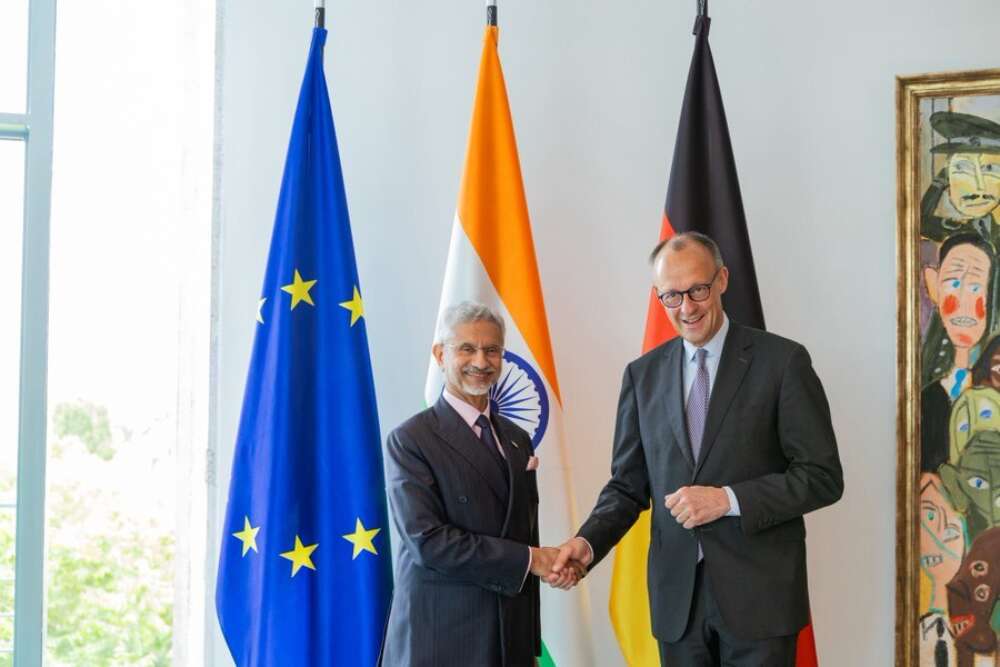
Germany’s opposition leader Friedrich Merz has suggested that a long-stalled trade agreement between the European Union and India could be clinched by the end of January, injecting momentum into negotiations that Brussels and New Delhi have struggled to close for more than a decade as global supply chains remain under strain from geopolitical frictions.

Speaking at a policy forum, Friedrich Merz said the bloc and India were “closer than many assume” to resolving key differences, adding that the economic case for a deal had sharpened after prolonged disruptions linked to strategic competition between major powers. His comments come as European manufacturers continue to grapple with uneven access to critical inputs following China’s tightening of export controls on minerals vital for electric vehicles, electronics and defence applications.

Negotiations for an EU–India free trade agreement were relaunched in 2022 after an eight-year hiatus, with both sides aiming to expand trade that exceeded €120 billion in goods and services last year. Officials involved in the talks say progress has been made on tariff reductions and rules governing digital trade, though sensitive areas such as agriculture, labour standards and intellectual property remain contentious. Merz’s remarks underscore a growing sense in Berlin and other capitals that the agreement has moved from a strategic aspiration to an economic necessity.

Germany, Europe’s largest economy, has been among the strongest advocates of diversifying trade ties beyond China, particularly after export controls imposed by Beijing on gallium, germanium and graphite created months of bottlenecks for automotive and renewable energy firms. Those controls, introduced amid the broader U. S.–China trade dispute, highlighted vulnerabilities in Europe’s dependence on a narrow set of suppliers for critical raw materials.

Executives in the auto sector say shortages of battery-grade materials last year forced production adjustments and delayed investment decisions. While some supply has since stabilised, industry groups argue that long-term resilience requires deeper partnerships with alternative producers and manufacturing hubs. India, with its expanding industrial base and policy push to attract foreign investment, has emerged as a central pillar of that strategy.

European officials note that the proposed agreement would not only cut tariffs—currently as high as 60 per cent on some vehicles entering India—but also establish clearer rules for public procurement and data flows. For India, the deal promises greater access to the European market for pharmaceuticals, textiles and IT services, while also encouraging technology transfer and skills development.

Trade analysts caution that closing the pact by late January would require political compromises on both sides. European negotiators have pressed for stronger environmental and labour commitments, while Indian counterparts have sought flexibility to protect small farmers and domestic manufacturers. Still, the geopolitical context is shifting calculations. The European Union has accelerated its “open strategic autonomy” agenda, seeking to balance openness with security of supply, and India has signalled willingness to align more closely with Western economies without abandoning its strategic independence.

Merz’s intervention also reflects domestic pressures within Germany, where exporters are seeking new growth markets as demand in China cools. German industry groups have repeatedly urged policymakers to prioritise agreements with fast-growing economies, arguing that delays risk ceding ground to competitors from East Asia and North America.

The broader backdrop includes intensifying scrutiny of China’s role in global supply chains. Beijing has defended its export controls as legitimate measures to safeguard national security and manage resources, but the ripple effects have reinforced calls in Europe for diversification. The European Commission has already launched initiatives to secure access to lithium, cobalt and rare earths through partnerships in Africa, Latin America and Asia, with India seen as both a market and a manufacturing partner.

Diplomats familiar with the EU–India talks say technical chapters are largely drafted, leaving political decisions to bridge remaining gaps. Any agreement would still need approval from member states and the European Parliament, a process that could extend beyond the negotiating deadline even if a political deal is struck.

Towering crocodilians that could rival buses in length once patrolled vast river systems cutting through what is now the Sahara, reshaping scientific understanding of prehistoric ecosystems and predator–prey dynamics during the early Cretaceous Period. Fossil evidence shows these reptiles were not merely oversized versions of today’s crocodiles but apex predators capable of taking on large dinosaurs in a landscape unrecognisable from the modern desert. The most striking […]

Moves to prohibit political donations made in cryptocurrency are gathering pace at Westminster, as lawmakers warn that digital assets could be exploited by hostile states and anonymous actors to influence elections and undermine democratic safeguards. Cross-party concern has sharpened following intelligence assessments that flagged the vulnerability of political finance rules to opaque funding channels. Legislators argue that while donations in cash and traditional banking systems are subject […]

Lowering the legal age of adulthood to 18 has been written into a far-reaching overhaul of the country’s civil legal framework, a step the authorities say is intended to align civil capacity with contemporary economic and social realities while widening opportunities for younger people to participate fully in the economy. The change is embedded in a newly issued Federal Decree Law promulgating the Civil Transactions Law, which […]

Arabian Post Staff -Dubai Saudi-based developer Dar Global has confirmed plans to launch two Trump-branded luxury developments in Riyadh and Jeddah with a combined value of about $10 billion, marking one of the most ambitious foreign-branded property ventures tied to the kingdom’s urban transformation drive. Chief executive Ziad El Chaar said the projects will anchor premium hospitality, residential and leisure offerings in locations central to Saudi Arabia’s […]

  Electronic Arts and the creative leadership behind The Sims franchise moved to steady community concerns after confirmation that the US games publisher is in talks over a potential $55 billion transaction involving Saudi Arabia’s Public Investment Fund, Jared Kushner’s Affinity Partners and private equity firm Silver Lake. While the proposed deal remains subject to regulatory approval and has not been finalised, unease has spread among players […]

Advertisements

  Samsung Electronics has warned that a tightening supply of memory chips risks pushing up prices for televisions, smartphones and home appliances, broadening the impact of a global shortage driven by surging demand for artificial intelligence hardware. The caution underscores how constraints in a core component are rippling across consumer electronics at a time when manufacturers are racing to invest in AI-centric products. Speaking on the outlook […]

Government authorities are moving to compel smartphone manufacturers to submit portions of their operating system source code for mandatory security audits, escalating a standoff with global technology companies that warn such a requirement could undermine intellectual property protections and user privacy. The proposal, under discussion within policy circles in New Delhi, reflects mounting concern about cyber intrusions, supply-chain vulnerabilities and the growing role of mobile devices in payments, governance and national security.

Officials familiar with the matter say the plan would require vendors selling smartphones in the country to make critical software components available for inspection by government-approved laboratories. The focus would be on core operating system layers, firmware and security modules rather than consumer-facing applications. Proponents argue that access to code is essential to verify whether hidden vulnerabilities, backdoors or insecure update mechanisms could be exploited by hostile actors.

The push has brought the government into direct tension with companies such as Apple and Samsung, whose devices dominate the premium and mass-market segments. Executives and industry representatives have privately conveyed resistance, arguing that exposing proprietary code, even to auditors bound by confidentiality, creates unacceptable risks of leaks and reverse engineering. They also contend that global platforms already undergo extensive third-party security testing and comply with international standards.

At the heart of the debate is whether national security imperatives justify a departure from prevailing global norms. Countries including China and Russia operate regimes that allow state scrutiny of technology products, though often under opaque processes that foreign firms say are difficult to reconcile with commercial safeguards. Western regulators have largely relied on certification frameworks, vulnerability disclosure programmes and cooperation with vendors rather than direct access to source code. India’s approach, if formalised, would place it closer to the former camp, potentially setting a precedent for other large emerging markets.

Government officials counter that smartphones have become gateways to sensitive data far beyond personal communications. Devices are routinely used for digital identity verification, financial transactions and access to public services. Any systemic weakness could have cascading effects. They also point to a rise in sophisticated cyber operations attributed by security researchers to state-linked groups, arguing that reliance on vendor assurances is no longer sufficient.

The proposal is understood to be steered by the Ministry of Electronics and Information Technology, which has expanded its remit in cybersecurity and digital governance. Policy discussions have examined models ranging from escrow-based code access, where source material is held by a trusted intermediary, to controlled on-site inspections without code being copied. Each option presents trade-offs between assurance and exposure.

Industry bodies warn that mandatory disclosure could chill investment and complicate product launches. Smartphone operating systems are developed on global codebases, updated frequently and protected by layers of licensing agreements with component suppliers. Altering that structure for a single market risks fragmenting development and delaying security patches. There are also concerns about reciprocity: once one jurisdiction demands code access, others may follow, multiplying compliance burdens.

Privacy advocates occupy an ambivalent position. Some support deeper scrutiny to ensure devices do not surreptitiously collect or transmit data. Others caution that state access to low-level software could itself become a vector for abuse if oversight is weak. They stress the need for transparent audit criteria, independent supervision and clear limits on how findings are used.

The commercial stakes are significant. India is one of the world’s largest smartphone markets by volume and a critical manufacturing hub under production-linked incentive schemes. Companies have invested heavily in assembly plants and local supply chains, betting on policy stability. A protracted dispute over code access could influence decisions on future capacity and research investment, even if an outright exit is unlikely.

  Control over personal photo archives stored in Apple’s iCloud has taken on sharper relevance as users look for greater autonomy over their data, and a small open-source project has emerged as a practical response to that demand. icloudpd, a Python-based command-line utility, allows users to download and synchronise photos and videos from iCloud to local storage, offering an alternative to Apple’s tightly integrated ecosystem. Developed originally […]

Arabian Post Staff -Dubai Saudi Arabia has moved to open its real estate market to foreign ownership, marking one of the most consequential shifts in the Kingdom’s investment policy as it seeks to diversify its economy and deepen capital inflows beyond hydrocarbons. The reform allows non-Saudis to buy a broad range of properties, including residential, commercial, agricultural and industrial assets, with the option to purchase land for […]

Photon HQ has released an open-source iMessage Kit that allows developers to automate Apple’s messaging system on macOS, a move that broadens access to a platform long guarded by Apple’s tightly controlled ecosystem. The toolkit enables programmatic interaction with iMessage through local databases and system scripting, opening the door to AI-driven assistants, workflow automation and experimental messaging tools that previously sat beyond the reach of independent developers. […]

China’s commerce authorities have set out plans to reinforce the country’s legal and regulatory architecture governing trade, placing export controls and supply-chain risk management at the centre of economic policy for the year ahead. The agenda, outlined by the Ministry of Commerce of the People’s Republic of China, reflects Beijing’s determination to shield domestic industries from external shocks while maintaining its position as a pivotal node in global manufacturing and logistics networks.

Officials said the push will focus on tightening the legal framework that underpins foreign trade, improving the design and enforcement of export control mechanisms, and strengthening early-warning systems to guard against disruptions. The ministry described supply-chain resilience as a strategic priority, arguing that legal certainty and predictable controls are essential to sustaining economic stability amid persistent geopolitical tensions and shifting global demand.

Export controls have become a particularly sensitive policy lever for China as advanced technologies, critical minerals and dual-use goods face growing scrutiny worldwide. Over the past two years, Beijing has expanded the scope of its export control regime, introducing licensing requirements and compliance obligations that mirror, in some respects, measures imposed by other major economies. Officials now say further refinement is needed to close loopholes, clarify enforcement standards and ensure that rules are aligned with broader industrial and security objectives.

The commerce ministry’s policy outline also emphasises the need to improve coordination among regulators, customs authorities and law-enforcement agencies. By streamlining oversight and information-sharing, Beijing aims to reduce regulatory fragmentation that businesses have long complained adds cost and uncertainty to cross-border operations. Officials argue that a more coherent system will help enterprises navigate compliance requirements while allowing the state to respond more swiftly to emerging risks.

Legal experts in China note that the emphasis on statutory clarity signals a shift away from ad hoc administrative guidance towards more formalised rules. This approach, they say, could provide companies with clearer expectations, particularly foreign-invested firms that often struggle to interpret policy signals. At the same time, stronger legal backing for export controls may give regulators broader discretion to act when national security concerns are invoked.

The policy direction comes as global supply chains continue to recalibrate. Trade frictions, sanctions regimes and technology restrictions have prompted multinational companies to reassess sourcing strategies, diversify production bases and build redundancy into logistics networks. China, while seeking to retain its manufacturing dominance, has also encouraged domestic firms to reduce exposure to external vulnerabilities by investing in upstream capabilities and alternative markets.

Officials have framed the new priorities as part of a broader effort to balance openness with security. While reaffirming commitments to trade facilitation and market access, the commerce ministry stressed that safeguarding key sectors and technologies remains non-negotiable. This dual emphasis reflects guidance from top leadership that economic policy must serve both development and security goals, a theme repeatedly highlighted in speeches by Xi Jinping.

Industry analysts say the strengthened export control regime is likely to have uneven effects across sectors. Producers of high-tech components, rare earths and advanced materials may face tighter scrutiny, while exporters of consumer goods could see limited direct impact. However, the broader compliance environment may become more demanding, requiring companies to invest in legal expertise, internal controls and supply-chain mapping.

Foreign chambers of commerce in China have previously urged authorities to ensure transparency and proportionality in export control enforcement. Businesses worry that ambiguous rules or retroactive application could disrupt contracts and undermine confidence. The commerce ministry has sought to address these concerns by signalling that legal reforms will be accompanied by clearer guidance and procedural safeguards, though details on implementation timelines remain limited.

Beyond export controls, the policy outline highlights risk prevention across trade finance, logistics and overseas investment. Officials pointed to the need for monitoring mechanisms that can detect stress points early, whether arising from financial volatility, shipping bottlenecks or regulatory changes abroad. Strengthening such systems, they argue, will help Chinese firms adapt more quickly and reduce the likelihood of cascading disruptions.


Walmart plans to scale its drone delivery programme with Alphabet-owned Wing, aiming to serve about 40 million people across the United States by 2027 as it pushes automated logistics deeper into everyday retail. The expansion is designed to shorten delivery times for small items to under 30 minutes and sharpen competition with Amazon in fast fulfilment. The retailer intends to add drone operations to roughly 150 additional […]

JPMorgan Chase has played down claims that stablecoins pose a systemic threat to the banking sector, diverging from warnings issued by banking trade groups that argue the growth of yield-bearing digital tokens could drain deposits and undermine credit creation across the United States. The debate intensified after the American Bankers Association sent a letter to the U. S. Senate cautioning that certain stablecoins, particularly those offering interest […]

Ethereum co-founder Vitalik Buterin has warned that decentralised stablecoins, long promoted as a trust-minimised alternative to fiat-backed tokens, continue to suffer from deep structural weaknesses that have yet to be resolved. His assessment underscores persistent concerns around price benchmarks, oracle security and incentive design, at a time when stablecoins are becoming more central to crypto markets and policy debates. Buterin’s comments centre on the challenge of maintaining […]

Arabian Post Staff -Dubai Nintendo has opened preorders for a new Light Purple and Light Green Joy-Con 2 controller set priced at $100, expanding the accessory line-up for the forthcoming Switch 2 ahead of a February 12 release. The controllers are listed across major retailers including Amazon, Best Buy, Target and GameStop, signalling a coordinated retail push as Nintendo prepares the next phase of its hardware cycle. […]

  A widening gap between alarmist rhetoric and practical policymaking around artificial intelligence is threatening investment and innovation, according to Jensen Huang, who has urged governments, industry and the public to move beyond what he describes as “AI doomerism”. Speaking amid accelerating deployment of large-scale models across industries, the chief executive of Nvidia said exaggerated fears were distorting debate and already discouraging capital flows into technologies with […]

Arabian Post Staff -Dubai Dubai is positioning itself as a magnet for global content creators, with the Dubai Chamber of Digital Economy setting out the emirate’s pitch as a base where talent, technology and market access converge. The chamber says Dubai’s ability to attract specialised creative professionals, alongside its digital infrastructure and business-friendly regulation, has become a decisive advantage for creators who depend on high-end production teams […]

Meta has secured access to as much as 6.6 gigawatts of nuclear power through a cluster of agreements with established utilities and advanced reactor developers, underscoring how the energy demands of artificial intelligence are rewriting the investment playbook for Big Tech and the power sector alike. The arrangements, involving power supply and development pathways with Vistra, Constellation, TerraPower and Oklo, aim to underpin Meta’s expanding network of […]

A newly identified vulnerability affecting Google’s Gemini artificial intelligence system has heightened concerns about the exposure of Gmail users to sophisticated phishing and account compromise, sharpening the debate around how large language models interpret and act on hidden instructions embedded in everyday digital content. Security researchers and policy analysts say the issue stems from indirect prompt injection, a technique that allows malicious instructions to be concealed inside […]

Bangkok’s long-held reputation as the “Detroit of the East” is under strain as the global shift towards electric vehicles reshapes South-East Asia’s industrial map, with Vietnam emerging as a more agile rival built around a powerful domestic champion. For half a century, Thailand’s automotive sector has been the backbone of its manufacturing economy, contributing about a tenth of national output and supporting hundreds of thousands of jobs […]

GameStop has begun shutting down hundreds of brick-and-mortar outlets across the United States, signalling another sharp contraction in the physical videogame retail business as consumer spending patterns and distribution models continue to evolve. The videogame retailer, once a ubiquitous presence in shopping malls and high streets, has confirmed that a significant number of stores have been closed or earmarked for closure as part of an ongoing rationalisation […]

Binance has moved deeper into the intersection of digital assets and traditional finance by introducing perpetual contracts linked to gold and silver, offering round-the-clock trading and USDT settlement as the exchange broadens its derivatives portfolio beyond cryptocurrencies. The launch positions the platform to tap demand from traders seeking continuous exposure to precious metals without the constraints of conventional market hours. The new products, described by the exchange […]

VISHNU RAJA
RYO YAMADA
HITORI GOTOH
IKUYO KITA
Just in:
Eternal Beauty Holdings Releases the “2026 Hong Kong Daily Mood Index and Fragrance Trends White Paper” // WellEra and Capella Bring Together the Science of Wellness and the Art of Hospitality at Thailand’s First Capella-Branded Residences // Oil markets are celebrating an Iran peace deal that hasn’t been signed // Oil Markets May Have Turned Democratic Temporarily, But Supply Risks Persist // Flydubai Dammam cancellations continue as Etihad maintains suspensions // House Republicans divert Hegseth impeachment resolution to committee // Helsing prepares Berlin debut for military targeting software // Microsoft challenges proposed US restrictions on Chinese optical components // OpenAI quarterly sales reach $10 billion as losses widen // Dubai leads investment preferences in UAE residents survey // Antalya route offers UAE Iranians new Tehran connection // Unseen planetary neighbour shifts giant world’s orbit from view // Nvidia presents GR00T 2 for demonstration-trained robot tasks // Court questions varsity rigidity over student suspensions // China Offers Clean Technologies To India To Deal With Severe Air Pollution In Delhi // India weighs replacing ageing wind turbines to raise generation // Washington, New Delhi And The Pannun Lawsuit // Google introduces specialised TPU systems with AMD processors // South Korea levies unprecedented penalties on bond auction dealers // HKSTP Achieves Fruitful Success at Inaugural Participation in Singapore Urban Mobility Week 2026 //