News related to
beyond

SINGAPORE – Media OutReach Newswire – 4 December 2025 – Pursuing higher education abroad represents a significant financial commitment. According to a report by The Straits Times, annual tuition fees at top global universities can range from US$30,000 to US$50,000. Total expenditure for a four-year programme, including accommodation and living costs, exceeding S$500,000 in destinations such as the United States, United Kingdom and Australia. In comparison, international […]

The government of Saudi Arabia expects its borrowing to increase next year, driven by ongoing financing needs and a broad backdrop of monetary easing, according to a projection by CI Capital. The analysis suggests that softer interest rates and tightening liquidity could compel Riyadh to tap debt markets once again to meet fiscal and development commitments. Total government spending in the approved 2026 budget stands at 1.31 […]

By K Raveendran The steady erosion of trust between political parties and the Election Commission has become one of the more troubling developments in India’s democratic life, revealing an institutional drift that carries implications well beyond a single electoral cycle. The body entrusted with safeguarding the integrity of elections is expected to serve as an […]

The article An Election Commission That Treats Critics As Enemies Has No Place In Democracy appeared first on Latest India news, analysis and reports on Newspack by India Press Agency).

SINGAPORE – Media OutReach Newswire – 3 December 2025 – As Singapore’s economy continues to evolve, the pursuit of education is no longer a linear journey. For many learners, choosing between full-time and part-time study has become a pivotal decision, one that shapes long-term career prospects, financial planning, and personal development. At the Singapore Institute of Management (SIM), flexibility is a core commitment. Offering over 140 full-time […]

The grip of Chromium on the global browser ecosystem has grown so wide that many users now assume every modern browser is built on Google’s open-source architecture. That perception has taken root partly because major names such as Microsoft Edge, Opera, Brave, Vivaldi and Arc all rely on Chromium’s Blink rendering engine, creating a sense that browsing itself has become synonymous with Google-aligned foundations. The dominance is […]

Arabian Post Staff -Dubai Saudi Arabia approved its 2026 state budget, confirming total government expenditure at 1.31 trillion riyals and setting revenues at approximately 1.15 trillion riyals, signalling a planned deficit of 165 billion riyals—equivalent to 3.3 percent of gross domestic product. The projected spending level is only marginally lower than the 2025 outlay, reflecting a continued commitment to funding national priorities and long-term economic diversification. Forecasts […]

Smartphone makers in India have been instructed by the telecom ministry to preload a government-owned cybersecurity app on all new devices sold in the country, blocking users from deleting the application once installed. Under a directive issued on November 28, companies such as Apple, Samsung, Vivo, Oppo and Xiaomi have been given a 90-day window to ensure all handset models destined for India include the Sanchar Saathi app. For devices already in the retail pipeline or those awaiting sale, manufacturers must deliver the app via over-the-air software updates and ensure it appears prominently during first-use setup.

Authorities say the app plays a key role in telecom security by giving users tools to verify device authenticity through IMEI checks, report suspected thefts or fraud, and block lost or stolen phones. Since the app’s launch in January 2025, government data indicates it has helped recover over 700,000 lost devices and block millions of connections flagged as fraudulent. Officials argue that this move is critical to counter growing misuse of duplicate or tampered IMEI numbers—a problem that fuels scams and the resale of stolen phones across India’s vast second-hand device market.

This mandate marks the first time the government has required a permanently installed, non-removable application on all smartphones sold in the country. The decision reflects a broader tightening of regulatory oversight over telecom infrastructure and device authenticity, drawing parallels with security measures in other jurisdictions.

The requirement has triggered sharp criticism from technology companies and privacy advocates alike. For example, the policy of Apple prohibits pre-installation of third-party or government apps prior to device sale—an approach that could force the company to either seek exemptions or find workarounds. Industry representatives have warned that the mandate may strain compliance operations, increase production costs, and undermine relationships with handset vendors.

Beyond logistical concerns, digital rights groups argue the rule tramples on user consent and privacy. Critics contend that embedding a state-run app with potentially broad access on every phone amounts to unwarranted surveillance and sets a troubling precedent. Some lawmakers and civil liberties advocates dubbed the move “a Big Brother measure,” warning that once entrenched, such mandates could be expanded further, eroding individual privacy without adequate data-protection safeguards.

Advertisements

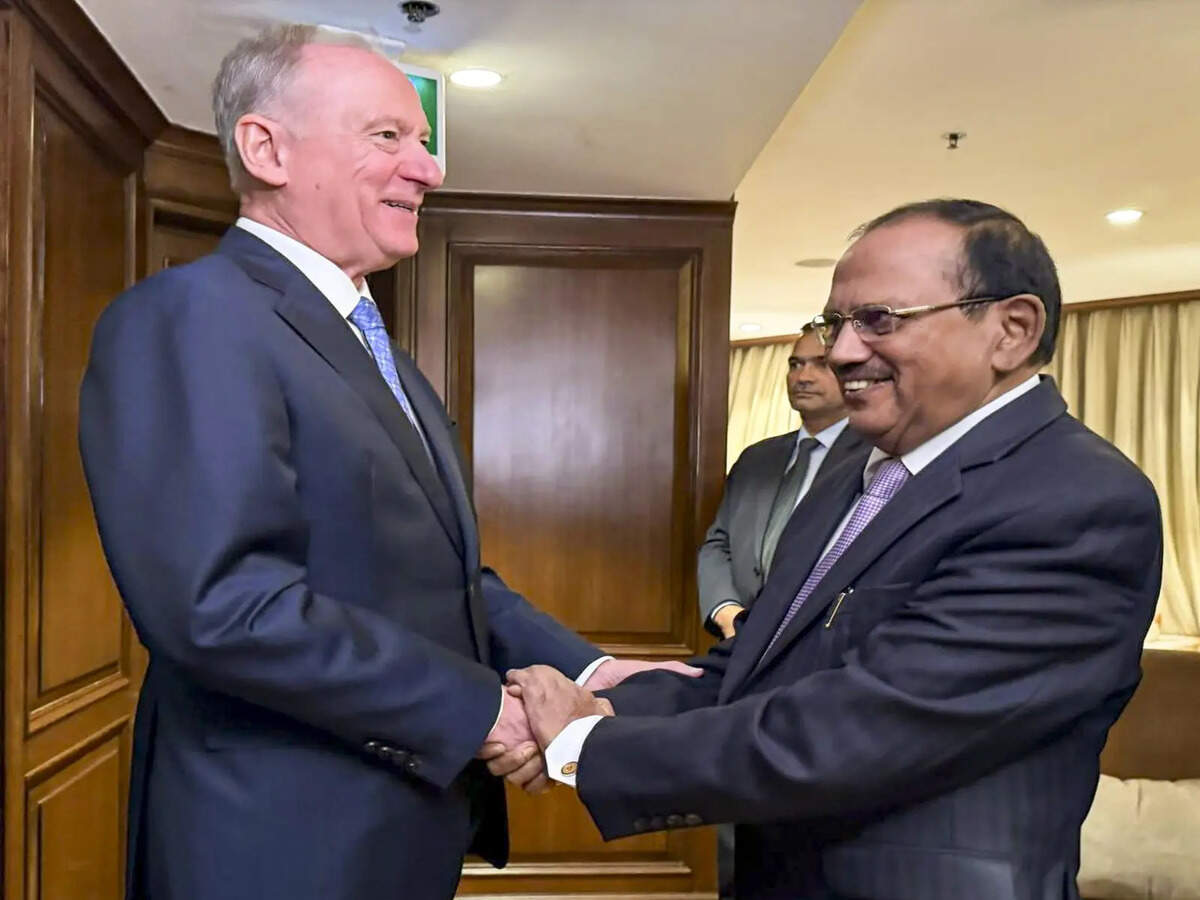
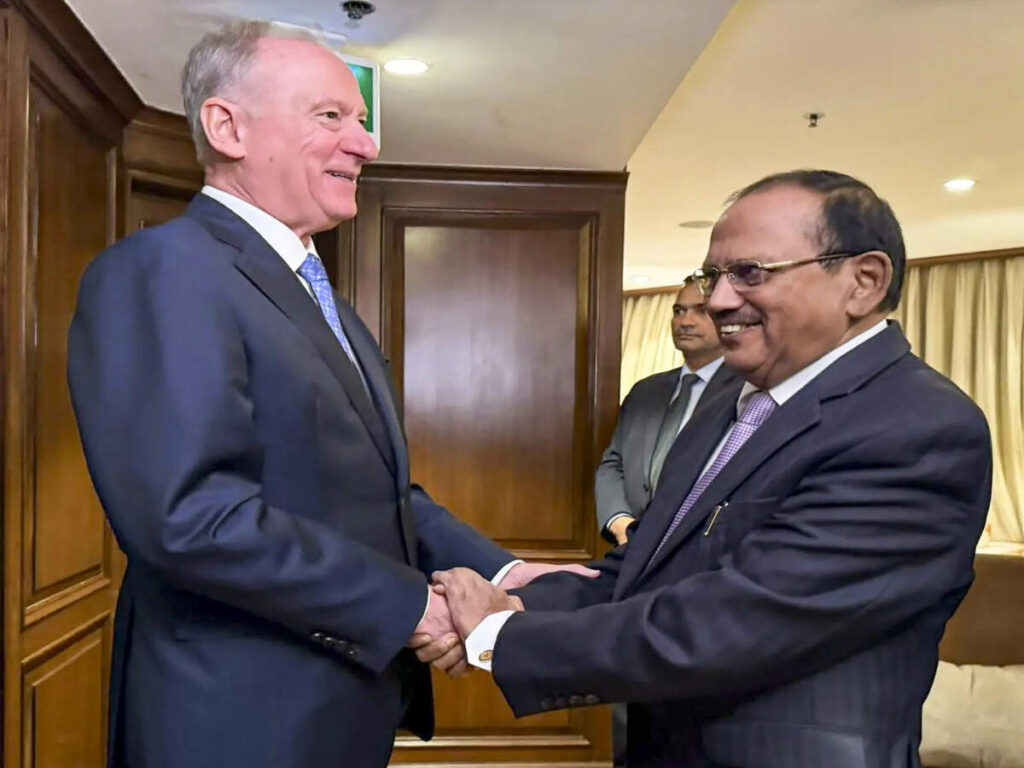
Russian President Vladimir Putin arrived in New Delhi for a two-day visit aimed at reviving and expanding energy and defence cooperation with India. His agenda includes proposals for increased Russian oil exports alongside renewed offers of missile systems and fighter jets, as part of efforts to restore ties challenged by global pressure on Moscow.

The visit coincides with heightened scrutiny of India’s oil and weapon imports from Russia, but also signals Moscow’s determination to deepen the “special and privileged strategic partnership” with New Delhi. Kremlin officials, including Russia’s deputy prime minister overseeing trade, emphasised that the India-Russia forum planned around the summit would explore ways to diversify bilateral trade, extend industrial cooperation and foster joint investments across high-technology and raw-material sectors.

On offer are new arms deals including advanced air-defence platforms and additional batches of combat aircraft. Negotiations are expected to cover the procurement of more units of the S-400 missile system and potential acquisition of fifth-generation Su-57 jets and the next-generation S-500 air-defence shield. Although India has widened its defence procurement sources over recent years, Moscow remains one of its leading suppliers, bolstered by long-standing familiarity and legacy hardware in the armed forces. Analysts note that these proposed arms deals would reaffirm Russia’s influence in India’s defence posture, even as New Delhi attempts to balance Western and Russian dependencies.

Energy cooperation is another key pillar. Russia is offering discounted crude oil supplies under new trade arrangements, including through intermediaries and possibly via joint ventures or extraction projects in Russia’s Far East and Arctic regions. This appears geared toward circumventing Western sanctions on Russian energy exports, while ensuring that India retains access to competitively priced hydrocarbons. At the same time, Indian officials are conscious of growing trade imbalances caused by large-scale Russian imports and have flagged the need to augment Indian exports to Russia, particularly in equipment, raw materials and food products.

Efforts to revive large-scale trade go beyond energy and defence. The India-Russia forum accompanying the summit is expected to chart cooperation in civil nuclear projects, space technology, and high-tech industrial ventures. Signals from the Russian side underscore a long-term vision of a resilient, multifaceted partnership rooted in historical ties. While geopolitical pressures from Western capitals and tariffs on Indian goods pose real challenges, both Moscow and New Delhi appear keen to insulate their bilateral engagement from external strains.

Tesla is advancing a bold push toward delivering unsupervised Full Self-Driving to customers before the end of 2025, riding on technological progress, regulatory shifts and a faster rollout of robotaxi services. CEO Elon Musk recently reiterated the company’s commitment to achieving true autonomy, underpinning Tesla’s ambition to transform mobility globally. The company’s roadmap has gained momentum as its robotaxi programme — launched in June 2025 in Austin, […]

Saudi Arabia’s sovereign wealth fund is seeking to deepen ties with Japanese investors as it reshapes its investment strategy away from sprawling real-estate megaprojects toward sectors deemed more viable in the near term.

The Public Investment Fund, valued at roughly $925 billion, unveiled a plan to expand investments in Japan from $11.5 billion between 2017–2024 to a projected $27 billion by 2030, according to remarks by its governor, Yasir Al-Rumayyan, at a business summit in Tokyo. He described Japanese companies as “one of the largest partners for Saudi Arabia,” and said the kingdom hopes to “bring more and more Japanese companies” on board.

This outreach comes alongside a major overhaul of PIF’s priorities. Plans for large-scale real estate ventures—previously central under the Vision 2030 plan—are being put on the back foot as delays and write-downs erode investor confidence. The new strategy pivots toward sectors such as logistics, mineral extraction, religious tourism and artificial intelligence, with greater emphasis on data infrastructure and industries promising quicker returns.

Some megaprojects under Vision 2030, including the much-publicised desert city NEOM and a planned mountain-based winter sports hub, have faced repeated delays and mounting costs, prompting analysts to question their long-term viability. PIF’s 2024 annual report shows impairments on several high-profile investments that have weighed on returns, and strategic rebalancing appears aimed at stabilising the fund’s financial outlook.

The renewed focus on logistics underscores Saudi Arabia’s ambition to become a global supply-chain hub bridging Asia, Europe and Africa. Mineral extraction targets the kingdom’s considerable reserves of rare earths and critical minerals, seen as vital for future technology supply chains. Religious tourism aims to leverage steady demand for pilgrimage to holy sites, while investments in artificial intelligence and data infrastructure, led by PIF-backed firm Humain, reflect the kingdom’s drive to build a diversified economy beyond hydrocarbons.

Financial markets and global investors have welcomed the pivot as more pragmatic and potentially less risky than monumental real-estate bets. Yet critics caution that shifting to more conventional sectors may diminish the transformative potential originally promised under Vision 2030. The challenge now lies in whether the new strategy can deliver on its growth and diversification goals while restoring investor confidence.

HONG KONG SAR – Media OutReach Newswire – 2 December 2025 – APC Group, a leading specialty chemicals and process solutions provider in Asia Pacific and the Middle East, today announced the acquisition of i-Chem Solution Sdn Bhd, a specialist in industrial water treatment and wastewater treatment. This partnership strengthens APC Group’s Water Management segment and creates a single-source provider of end‑to‑end water solutions—combining chemicals, equipment, engineering, […]

Self-hosting — running and maintaining software on privately controlled servers instead of relying on cloud providers — is drawing growing interest among developers and organisations, with Linux users often leading the shift. What began as a niche practice among privacy-conscious hobbyists is evolving into a broader movement driven by demand for data control, cost efficiencies and long-term stability. At the heart of this trend lies a grounding […]

A surge in hardware innovation has reshaped expectations for portable gaming, and the strongest performers of 2026 reflect that shift. The field has expanded beyond traditional performance leaders, drawing in machines engineered with desktop-class GPUs, advanced cooling architecture, and AI-enhanced optimisation layers that push mobile gaming to new thresholds. The landscape is defined by three broad categories: raw-power flagships that prioritise maximum performance, balanced contenders designed for […]

Security analysts working on China-linked cyber espionage have deepened scrutiny of two Beijing-based organisations that appear to support the country’s intelligence infrastructure. The Beijing Institute of Electronics Technology and Application and its subsidiary Beijing Sanxin Times Technology Co., Ltd. are now under particular focus for allegedly supplying advanced steganography tools and network-penetration services to agencies tied to the Ministry of State Security.

BIETA has built a decades-long publication record in information hiding research, with around 40–46 percent of its 87 peer-reviewed papers between 1991 and 2023 devoted to steganography methods. Observers note that those outputs align with covert-communication and data-exfiltration requirements typical of state espionage missions. CIII, meanwhile, boasts copyright registrations for software capable of disguising malicious code within images, audio and video files, and has offered foreign-developed network simulation and penetration-testing tools that are frequently repurposed by advanced persistent threat actors.

Officials familiar with the intelligence landscape argue that BIETA and CIII function less like independent private firms and more like technology-enablement arms of China’s state-security apparatus. Evidence cited includes overlapping leadership — several BIETA executives have held or continue to hold roles within organisations tightly linked to the MSS — and a shared location: BIETA’s headquarters sit adjacent to the MSS First Research Institute in Beijing, a facility believed to be behind China’s mass surveillance infrastructure in regions such as Xinjiang.

The role of front organisations like BIETA and CIII expands beyond development of steganographic tools. According to analysts, these firms provide a bridge between Western technical innovation and China’s intelligence needs by acting as intermediaries for acquiring or licensing foreign cybersecurity and network-monitoring products. Through such supply-chain activity, capabilities like deep network simulation, cyber-range training and payload obfuscation may be imported under the guise of legitimate commercial transactions.

Linking BIETA and CIII’s activities to actual APT campaigns remains difficult, in part because those campaigns rely on clandestine infrastructure and rarely include public attribution. Nevertheless security researchers point to historical patterns: Chinese-linked APTs have employed image, audio and video steganography to deploy malware or smuggle exfiltrated data; such techniques were documented in operations as far back as 2013. These precedents match the capabilities now associated with BIETA and CIII’s publicly disclosed research and product catalogue.

Last year’s exposure of another contractor, i‑Soon, offered insight into how the wider ecosystem operates: leaked internal communications and product manuals revealed use of malware management platforms tied to major intrusion campaigns against governments and companies globally. That development affirmed concerns that front organisations could serve as staging grounds for supply-chain attacks, with steganographic delivery mechanisms functioning as invisible carriers for payloads.

New York City agencies are mobilising emergency flood response as a coastal storm is expected to bring a brief snow-to-rain transition early Tuesday, likely creating slick roads and risks of localised flooding. The forecast from the National Weather Service shows any snow in the city at sunrise will quickly turn to rain, with the bulk of snowfall shifting to inland regions such as the Hudson Valley, northern […]

Mounting evidence from across the technology sector shows that some of the world’s largest platforms continue to struggle with code quality, raising questions about long-term sustainability as companies balance rapid feature deployment with structural reliability. The growing reliance on AI-assisted development tools and accelerated shipping cycles is fuelling technical debt across major firms, prompting calls from engineers, analysts, and former executives for a recalibration of priorities. The […]

DALI, CHINA – Media OutReach Newswire – 1 December 2025 – At the 2025 Intangible Cultural Heritage(ICH) brand promotion week held from Sunday to Friday in Dali, which was organized by the Ministry of Culture and Tourism, over 120 heritage brands demonstrated how traditional craftsmanship can be integrated with contemporary design. Caption: A woman experiences the tie-dye technique of Bai ethnic groupin a dyehouse in Zhoucheng Village […]

Technology brand CUKTECH brings two innovative products to Filipino consumers: its first car charger and a dual-cable power bank, designed to meet diverse local charging needs through advanced technology and user-focused design. MANILA, PHILIPPINES – Media OutReach Newswire – 1 December 2025 – CUKTECH recently launched two products in the Philippine market: the 10 Car Charger with retractable cable and the CP24 Power Bank with built-in cables. […]

BALI, INDONESIA – Media OutReach Newswire – 1 December 2025 – In a year defined by rising environmental pressures and rapid shifts in global markets, the ACES Awards 2025 recognised a leader whose work continues to shape the future of responsible business across Asia. Dr. Jay receives her prestigious ESG Pioneer Award at the ACES Awards 2025, presented by the distinguished Deputy Minister of Tourism, Ni Luh […]

Abu Dhabi is preparing to host what organisers describe as the world’s largest debut media and entertainment gathering, with the BRIDGE Summit 2025 scheduled to run from 8–10 December at the Abu Dhabi National Exhibition Centre. The summit is expected to draw more than 60,000 participants from around the globe and bring together over 400 speakers and 300 exhibitors under a single roof.

Organisers envisage BRIDGE as an immersive platform that merges content, technology, culture, and commerce, structured across seven thematic tracks: Media; Creator Economy; Music; Gaming; Tech & AI; Marketing; and Picture — the latter covering film, streaming, and visual storytelling. The schedule includes more than 300 activities: roughly 200 panels, 50 workshops and interactive showcases, masterclasses and matchmaking zones designed to connect creators, investors, policymakers and media platforms.

Participation confirmed by high-profile figures signals the summit’s global ambition. International actor, filmmaker and DJ Idris Elba will join the line-up, bringing his cross-sector experience in entertainment and advocacy to the Summit’s discussions. Alongside traditional media heavyweights and cultural leaders, the Summit aims to spotlight emerging voices in the digital creator economy. The Creator Economy track alone is slated to feature more than 80 global contributors across 50 sessions investigating how influence, ownership and monetisation are reshaping creative industries worldwide.

Central to the Summit’s narrative is the challenge facing modern media: trust, credibility and sustainability. As traditional broadcast gives way to streaming and social platforms, and as generative AI reshapes production, issues of editorial independence, content verification, audience dynamics and revenue stability are moving to the forefront. The Media track is expected to convene over 100 global editors, founders, policymakers and investors to discuss funding models, algorithmic distribution, content integrity and the very ethics of influence in media today. The Summit’s ambition is to provoke debate and propose frameworks that can guide media’s future in an era of rapid technological disruption.

Beyond content and discussion, BRIDGE is designed as a marketplace for partnerships — blending culture, commerce and policy. Conversations already under way include cross-sector collaborations between media companies, tech firms, venture capital, and energy and infrastructure players. For example, recent talks involving global tech leadership have highlighted an alignment of media innovation with digital infrastructure capacity and clean energy, reflecting how foundational resources are becoming integral to media’s next frontier.

For countries and organisations navigating the tension between creative independence, monetisation and regulatory frameworks, the Summit offers a testbed. Delegates include creators seeking sustainable revenue, investors eyeing cultural-sector returns, technology firms exploring policy-driven AI integration, and governments looking to harness media’s influence in soft power projection. That diversity suggests the Summit could influence not just entertainment and content markets, but regulatory norms, global standards, and potentially the geopolitics of information dissemination.

Attendance projections and speaker rosters aside, the Summit’s scale poses logistical and structural challenges. Managing 60,000 attendees across multiple tracks, workshops and networking zones demands rigorous coordination. Questions around equitable representation — of global South artists, independent creators and regional media voices versus established global brands — remain. Observers are watching whether BRIDGE can balance commercial ambition with inclusivity and whether media integrity and creative freedom will be genuine priorities.

If execution aligns with vision, BRIDGE Summit 2025 could mark a turning point for the media and entertainment industry — reimagining how content, community, technology and commerce converge in the coming decade.


Travel demand across the Gulf is undergoing a distinctive shift as Saud Arabia and Bahrain emerge as the region’s fastest-growing outbound markets. Airport usage data compiled by Dragonpass shows that Saudi travel volumes increased by 36 per cent this summer, with June marking its busiest month ever. Meanwhile Bahrain posted a 208 per cent year-on-year rise, the sharpest growth among Gulf Cooperation Council nations and a clear signal of expanding mobility across the region.

The surge in air travel across these Gulf states reflects a combination of expanded airport capacity, evolving travel behaviour and government efforts to reposition their countries as regional travel hubs. Saudi Arabia’s growth aligns with its strategic development blueprint under Saudi Vision 2030, which aims to promote tourism and business travel alongside infrastructure investment. Bahrain’s dramatic increase illustrates its emergence as a regional connector, reinforcing its role in the Gulf’s evolving aviation and tourism ecosystem.

The upturn is not limited to those two. Other Gulf states including Qatar and Oman also recorded notable increases—travel volumes in Qatar rose by 198.9 per cent year-on-year, while Oman saw an 89.2 per cent boost as its airport infrastructure and heritage-led tourism gained traction. At the same time the region’s historical hub United Arab Emirates witnessed a 21 per cent decline over the summer, a reversal that observers attribute to shifting travel patterns and growing competition from its neighbours.

Beyond sheer volume, travel habits are evolving. A rising number of travellers across the Gulf are opting for premium airport services such as lounge access, signalling growing demand for comfort and convenience. Bahrain now leads globally on lounge-use, with 1.35 per cent of passengers utilising premium facilities — a rate ahead of major global aviation hubs. Saudi Arabia placed second in the region at 0.86 per cent.

Analysts suggest that this shift is driven by a combination of rising disposable incomes, increased business travel, and a changing perception of intra-Gulf mobility from a necessity to a lifestyle and leisure choice. Expansion of airport capacity, new routes and better services have made air travel more accessible and attractive than before. In Saudi Arabia, expanding infrastructure investment under Vision 2030 has increased flight connectivity and lifted capacity constraints. In Bahrain, efforts to position the nation as a regional aviation hub seem to be bearing fruit as the kingdom leverages its strategic geographic location and growing investment in tourism.

The broader context signals a reconfiguration of Gulf air travel dynamics. As smaller Gulf states and Saudi Arabia ramp up capacity and services, they are drawing passengers who might previously have transited through traditional hubs such as the UAE. This pattern points to intensifying intra-Gulf competition in aviation and travel services, accompanied by a shift in consumer preferences toward convenience, comfort and variety.

By K Raveendran An evolving convergence of political intent and economic pragmatism is giving fresh momentum to the India–Russia relationship, placing the forthcoming summit in New Delhi as a significant moment in a partnership that has already weathered decades of geopolitical shifts. The visit of President Vladimir Putin, framed within the terminology of a ‘Special […]


The article Delhi Summit To See A New Strategic Reset In India-Russia Partnership appeared first on Latest India news, analysis and reports on Newspack by India Press Agency).

HONG KONG SAR – Media OutReach Newswire – 28 November 2025 – HONMA Golf Limited (“HONMA”; together with its subsidiaries, the “Group”; HKEx stock code: 6858), one of the world’s most prestigious golf brands, announces its consolidated interim results for the six months ended 30 September 2025 (the “Period”). Financial Highlights In the face of a slowing global economy, heightened policy uncertainty and intensified competition across the […]

By Ashok Nilakantan Ayers SILICON VALLEY / SAN FRANSISCO / CALIFORNIA: The numbers are staggering. Microsoft has spent over $20 billion building data centres stuffed with the most powerful computer chips ever made. Meta is burning through billions more, weaving artificial intelligence into Instagram, WhatsApp, and Facebook. Google and Amazon are locked in a cloud-computing […]

The article The Great AI Gold Rush By US Big Tech Companies Through Huge Investment appeared first on Latest India news, analysis and reports on Newspack by India Press Agency).

VISHNU RAJA
RYO YAMADA
HITORI GOTOH
IKUYO KITA