News related to
beyond

Saudi Energy Minister Prince Abdulaziz bin Salman told delegates at the St Petersburg Economic Forum on 19 June that OPEC+ has evolved into a “key guarantor” of global oil prices and market stability. The alliance’s capacity to respond to evolving economic and geopolitical realities distinguishes it as an effective and trustworthy instrument for safeguarding the sector. At the forum, Prince Abdulaziz emphasised that OPEC+ adapts proactively to prevailing […]

Barclays has appointed Farzad Billimoria as head of its private bank for the United Arab Emirates, strengthening its foothold in a region experiencing rapid wealth creation. Based in Dubai, Billimoria will report directly to Annabelle Bryde, head of Private Bank International, commencing his role on 1 July pending regulatory approval. Billimoria brings 30 years of financial services expertise, most recently serving as Senior Executive Officer and head […]

Tata Consultancy Services confirmed its systems and user infrastructure remain uncompromised following the cyberattack that struck the retailer Marks & Spencer. At its annual shareholder meeting on 19 June, independent director Keki Mistry emphasised, “As no TCS systems or users were compromised, none of our other customers are impacted,” noting the ongoing M&S investigation does not extend to TCS systems.

M&S, which disclosed the cyber incident in April, continues to navigate significant disruption. The attack, attributed to the “highly sophisticated and targeted” Scattered Spider hacking group, reportedly utilised stolen help‑desk credentials from a TCS contractor. This led to the theft of personal data and forced the retailer to suspend online clothing sales for weeks—their online operations remain impaired, with recovery expected to extend into July.

Financial impact estimates remain stark. M&S anticipates a £300 million loss in operating profit, with weekly losses highlighted at approximately £40 million spanning clothing and food services. The retailer has drawn on its robust financial footing—boasting over £400 million in net funds before the incident—to support recovery measures. Insurance claims and cost containment strategies aim to offset roughly half of the losses.

The attack’s disruption extended to in‑store services, including payment systems and “meal‑deal” availability at stations, where stocks dwindled and meal‑deal offers were suspended. M&S CEO Stuart Machin described the incident as triggered by human error, stating that attackers duped a contractor’s help‑desk staff via social engineering tactics. Although M&S has not disclosed ransom payment details, hackers reportedly issued a ransom demand to Machin directly, claiming ransomware deployment across the retailer’s servers.

TCS had been internally probing whether its systems served as the breach gateway, an inquiry reportedly scheduled for completion by the end of May. With Mistry’s public assurance, TCS now distances itself from fault, while confirming its services to other clients—including the UK Co‑op—remained unaffected.

Beyond TCS, UK retailers Co‑op and Harrods have suffered similar breaches in recent weeks, prompting government authorities to call cybercrime “serious organised crime” and urge businesses to elevate cybersecurity priorities. The National Cyber Security Centre is rolling out new software security guidance for the sector.

M&S leadership has kick‑started accelerated IT modernisation, fast‑tracking system upgrades they had planned over two years into the next six months to strengthen defences. CEO Machin reaffirmed the retailer’s resilience, underlining transparency in communication and ongoing support to customers during the disruption.

While TCS’s reassurance quells immediate concerns among its client base, reputational challenges linger. Cybersecurity analysts warn that such high‑profile breaches erode trust in outsourcing vendors. Mumbai‑based brokerage Nirmal Bang commented that linkage to the attack would be “quite embarrassing” for TCS.

TCS’s absence of any formal probe initiation by regulators signals regulatory leniency. However, this episode spotlights the vulnerabilities inherent in third‑party access chains. As M&S works to restore its online footprint and TCS reaffirms its integrity, both firms face ongoing scrutiny over their cybersecurity governance.

Zurich-based 21Shares AG has extended its reach in the Nordic financial market by adding five cryptocurrency exchange-traded products to Nasdaq Stockholm, taking its total offerings on the Swedish exchange to ten. The newly cross-listed products—Uniswap, Avalanche, Bitcoin Gold, Solana Core Staking and Ethereum Core —join the firm’s existing Bitcoin, Ethereum, Solana, XRP and Bitcoin Core ETPs.

This move reflects mounting interest among both retail and institutional investors in regulated access to a broader range of digital assets via established trading venues. With the latest additions, 21Shares reinforces its position as a leading provider of physically backed, transparent crypto investment products in Europe.

Mandy Chiu, Head of Financial Product Development at 21Shares, highlighted that the expansion enables investors to craft more bespoke portfolios. “By offering a broader selection of single‑asset and thematic crypto ETPs, we’re empowering investors to build more customised and resilient portfolios through a familiar exchange environment,” she said. Nasdaq’s European ETF & ETP head, Helena Wedin, welcomed the new suite, noting such innovation as shaping the future of capital markets.

The newly listed ETPs offer exposure to distinct niches within the crypto ecosystem. AUNI provides a stake in Uniswap, the leading decentralised exchange. AVAX tracks Avalanche, a platform noted for its scalability. BOLD focuses on Bitcoin Gold—a fork designed to democratise mining. CSOL delivers both Solana price exposure and staking yield, while ETHC covers Ethereum’s core asset. These additions allow investors to target specific segments, from DeFi protocols to next‑generation blockchains and staking-enabled assets.

All 21Shares ETPs are physically collateralised and traded under regulated frameworks, removing the burden of wallet management and key custody. Fees range from 0.21% to 2.50% annually, offering a competitive alternative to direct crypto exchange transactions. The firm’s products are also listed on Euronext Paris, Amsterdam, London and SIX Swiss Exchange, contributing to a diversified pan-European presence.

This latest development comes as Europe prepares for implementation of the Markets in Crypto‑Assets Regulation, aimed at standardising crypto oversight. More listings on regulated exchanges help issuers align with the evolving regulatory landscape.

21Shares’ strategy compares with best-in-class players in traditional finance pushing crypto integration. From Bitcoin and Ethereum to platforms like Solana and Avalanche, the firm’s growing suite meets demand both for mainstream exposure and thematic investment strategies.

Despite these advances, some challenges persist. Liquidity conditions for less‑traded tokens such as Bitcoin Gold can be thin, and tracking discrepancies may emerge between product performance and spot prices. Fees, while competitive, can vary significantly: niche products may carry noticeably higher rates, impacting returns.

Nevertheless, for investors seeking regulated and familiar vehicles, the benefits are tangible. ETPs provide access through existing brokerages, transparency under established compliance standards and relief from the technical complexity of self-custody.

This expansion also underscores Nasdaq Stockholm’s evolving role as a hub for crypto‑linked financial instruments. Stockholm’s regulatory environment and market infrastructure make it attractive for issuers and investors alike. The increased product diversity enhances its appeal to both domestic and regional markets.

Beyond booming local interest, 21Shares continues to push forward globally. In the US, the firm is pursuing approvals for a suite of spot crypto exchange-traded funds—including for Solana, XRP, Dogecoin, Polkadot, and Sui—as it seeks to replicate its European success. Additionally, its ARK 21Shares Bitcoin ETF underwent a 3‑for‑1 stock split on 16 June to enhance accessibility.

Since launching the first physically backed crypto ETP in 2018, 21Shares has built a track record of innovation and adaptation. Backed by deep market expertise and proprietary custody systems, the company now manages approximately US $9.15 billion in assets under management. Leadership changes—including new CEO Russell Barlow—reflect an evolving operational structure focused on scalability.


Murena has introduced Murena Find, a privacy-first search engine embedded in its latest /e/OS 3.0 update, delivering an ad‑free, no‑tracking search experience powered by Qwant. Designed to launch without user configuration, the engine ensures searches remain private while maintaining quality results. As part of /e/OS 3.0, Murena Find is one of several significant upgrades aimed at fortifying users’ privacy. Alongside enhancements such as weekly privacy reports, end‑to‑end encrypted vaults, […]

The market capitalisation of tokenised Real‑World Assets has soared to over $23 billion, marking a surge of more than 260% since the start of the year, with private credit and US Treasury tokens accounting for the bulk of the growth.

Leading the charge, tokenised private credit comprises roughly 58% of the total market, while tokenised US Treasuries make up about 34% of the overall valuation. The dramatic expansion reflects increasing demand for on‑chain exposure to established asset classes beyond cryptocurrencies, as investors seek yield and diversification within a regulated digital framework.

Market participants have highlighted the clarity in evolving regulatory frameworks as a crucial catalyst. The enhanced transparency and legal recognition of tokenised assets in jurisdictions such as Abu Dhabi Global Market are encouraging institutional players to engage more actively. Concurrently, technology platforms and traditional finance firms are racing to establish token issuance and trading infrastructure.

One of the most prominent sector players, Securitize Inc., provides a full-stack platform enabling compliant tokenisation across asset types. As of May 2025, the firm has issued over $4 billion on‑chain, including $2.8 billion in tokenised US Treasury exposure, commanding more than 70% share of tokenised US Treasury products. Its leadership on tokenised private credit is also significant, with major asset managers like Apollo and BlackRock utilising the platform for their tokenised offerings.

Private credit, defined as non‑bank lending embedded in project, corporate, and direct lending vehicles, has long been one of the fastest‑growing alternative asset classes. Currently valued at an estimated $2–3 trillion globally, private credit forms a natural fit for tokenisation, enabling fractionated access, faster settlement, and enhanced transparency. By bridging direct lending with blockchain infrastructure, tokenisation platforms are opening access to smaller investors and unlocking liquidity for traditionally illiquid instruments.

US Treasury tokens have also gained rapid traction. In October 2024, Abu Dhabi‑based Realize launched a tokenised US Treasury ETF fund targeting $200 million assets. This initiative marked the first tokenised Treasury fund domiciled in Abu Dhabi Global Market, reflecting the growing confidence in sovereign debt tokens.

Growth to date appears driven by institutional interest, but emerging trends suggest growing participation from global wealth firms, family offices, and retail platforms. Securitize has onboarded numerous institutional investors and is planning retail channels in collaboration with custodians like Anchorage Digital, BitGo, and Copper.

Regulatory clarity is playing a defining role. US leadership from figures such as Securitize’s CEO appearing before House Financial Services, along with the Commodities Futures Trading Commission and Securities and Exchange Commission’s deliberations, is building a foundation for mainstream adoption. Internationally, regulatory sandbox setups—like Abu Dhabi’s—are providing live environments for tokenised asset experimentation.

As the total market cap moves beyond $23 billion, key drivers include mature tokenisation platforms, growing regulator engagement, and rising investor demand for yield-bearing digital assets within compliant frameworks. Whether private credit and Treasury tokens continue to dominate depends on lasting improvements in interoperability, standardisation, and token issuance efficiency.

Going forward, momentum may attract tokenisation of other asset types—real estate, commodities, infrastructure debt and equity. Yet challenges such as secondary market liquidity, cross‑chain compatibility, and investor education remain to be addressed. Leading infrastructure providers and asset managers appear intent on solving these, which may mutate tokenised RWAs from a niche tool into a mainstream financial innovation.

Greenlogue/AP Mubadala Investment Company and the Abu Dhabi Projects and Infrastructure Centre have formalised a partnership designed to accelerate the emirate’s infrastructure agenda. The agreement, inked during the opening of the Abu Dhabi Infrastructure Summit 2025, establishes a broad cooperation blueprint aimed at advancing key development projects. The accord commits both entities to conduct thorough feasibility studies and share knowledge to assess the viability of proposed ventures. It also […]

Advertisements

Saudi Arabia’s Capital Market Authority has greenlit three initial public offerings on the Tadawul Parallel Market, signalling sustained investor interest and broadening of the kingdom’s capital markets. The regulator authorised offerings for Zahr Al Khuzama Aluminium Company, Quality Education Company and Sahat Almajd Company Trading on 18 June 2025. The combined volume of shares to be sold stands at approximately 6.175 million, constituting stakes ranging from 11 […]

Senior officials in Washington have quietly activated contingency plans for military strikes against Iranian nuclear facilities, marking a dramatic shift in US posture amid escalating Israeli–Iranian hostilities. According to multiple reports, including Bloomberg and Reuters, the White House and Defence Department are preparing the operational infrastructure needed to engage Tehran directly.

President Donald Trump, speaking on 18 June outside the White House, offered only ambiguity: “I may do it. I may not do it… nobody knows what I’m going to do.” Meanwhile, senior US generals, defence secretaries and intelligence chiefs are said to be readying federal agencies for a possible weekend strike. Forces in the Middle East have been repositioned; aircraft and ships have been moved from bases such as Al‑Udeid in Qatar and Bahrain’s Fifth Fleet port to reduce vulnerabilities.

Sources indicate that the primary target could be Iran’s underground Fordow uranium enrichment plant — a hardened bunker facility situated within a mountain and long deemed beyond Israel’s military reach without US bunker‑busting capacity. With Israel continuing airstrikes on Iran as part of ‘Operation Rising Lion’, analysts assess that a US strike would dramatically escalate the conflict.

Within the White House, debate is intensifying. The New York Times and Washington Post report that Trump, influenced by hawkish advisors such as Senator Lindsey Graham and defence chiefs, has signed off on strike plans but is awaiting final approval. His delay aims to allow Iran a final diplomatic window — offering a chance to curb uranium enrichment before force is used.

Opposition persists even within Trump’s own camp. A divide between hawks, advocating for decisive action, and MAGA-aligned isolationists, including Vice President Vance and media figure Tucker Carlson, highlights the internal tug-of-war shaping presidential decision‑making. Trump has underscored this dynamic: advisors like Gen. Dan Caine and CIA Director John Ratcliffe have pressed for a more aggressive stance, while isolationists urge restraint.

Politically, the administration faces calls for a formal congressional mandate. Critics argue the Constitution requires authorisation for military action beyond self‑defence; proponents counter the urgency of neutralising Iran’s perceived nuclear threat demands swift action.

Diplomacy continues in parallel. The UK, France and Germany are convening in Geneva to press Iran on de-escalation — a track the US has distanced itself from. Tehran has responded with warnings to Washington, promising strong retaliation if US forces become involved.

Markets have reacted with caution. Observers note fears of a broader Middle East conflict, amplified oil price volatility, and rising inflationary risks tied to increased military spending. Central banks, notably the Federal Reserve and Bank of England, must weigh geopolitical shocks alongside inflation outlooks.

On the ground, Israeli airstrikes have continued across Iran, targeting nuclear infrastructure including Arak and Natanz, with over 1,100 sites reportedly struck since mid‑June. Iran has launched multiple missile barrages at Israeli territory; civilian casualties are said to be in the hundreds on both sides.

The timing of any US strike remains uncertain. Sources cite a possible weekend window, with final orders likely to be issued at the last moment. Pentagon leadership, including SecDef Hegseth and Gen. Caine, are expected to have operational control, while the president retains final authority.

As conflicting pressures swirl — military readiness, strategic diplomacy, domestic political debates — all eyes are on whether President Trump will strike at Iran’s underground sites or continue hedging amid rising global risk.

Damac Chelsea Residences is more than just a real estate project — it’s a long-term investment in lifestyle, brand equity, and high-growth potential. Situated in the prime seafront district of Dubai Maritime City, this development by DAMAC Properties brings the prestige of Chelsea Football Club to Dubai’s property scene. As branded residences become one of the most in-demand asset classes worldwide, investors are turning their eyes toward Chelsea Residences by […]

Cost estimates suggest manufacturing and assembling an iPhone entirely in the United States would push retail prices well beyond current norms, potentially reaching up to USD 3,500. Analysts point to steep labour costs, the absence of a mature electronics supply chain, and existing tariffs as primary drivers behind the inflation. Bill of materials for an iPhone 16 Pro is around USD 550, with assembly and testing adding approximately USD 30 when […]

A coalition of South Korea’s top 100 firms generated an economic contribution of 1,615.2 trillion won in 2024, marking a 3.9 percent rise from the previous year, according to CEO Score data released on 18 June. Samsung Electronics led the charge with a 7 percent increase to 157.5 trillion won, accounting for 9.8 percent of the total haul.

This growth reflects an integrated model of wealth distribution across stakeholders—suppliers, workers, government, shareholders and communities. Total sales of these firms reached 2,122.4 trillion won, growing 6.6 percent year-on-year, underlining the deep economic interlinkages driving expansion.

Hyundai Motor secured the second position with a contribution of 115.2 trillion won, followed by Kia at 86.6 trillion won, which spectacularly posted the steepest increase thanks to surging supplier payments. Among the top ten contributors were LG Electronics, Hyundai Mobis, GS Caltex, SK Energy, Posco, Samsung C&T and LG Chem. In contrast, LG Energy Solution saw a pronounced drop of 28.3 percent to 19.2 trillion won, weighed down by lower stakeholder payouts.

Industry breakdown highlights that electronics and IT firms contributed about 370 trillion won, followed by petrochemicals at 312 trillion won and the auto sector at 303.5 trillion won. Construction, shipbuilding, steel and distribution made further sizeable additions, reflecting a diverse industrial base.

The dominance of chaebol giants—especially Samsung—continues unabated. Samsung and its affiliates, constituting nearly a quarter of national GDP, help drive national innovation and exports. Beyond scale, these conglomerates are embracing strategic shifts. Government figures show a record R&D investment of 83.6 trillion won by South Korean firms, with Samsung alone ploughing 30.2 trillion won into innovation, followed by SK hynix at 4.5 trillion won, Hyundai at 4.3 trillion won, and LG Electronics at 3.4 trillion won.

Despite stepping up R&D budgets by 15.3 percent, only 40 domestic firms made the global top 2,000 by R&D outlays, compared to 681 in the US and 524 in China—underscoring scope for further thrust in innovation. Within semiconductors, South Korea continues to hold a dominant global footprint, commanding approximately 60 percent of the DRAM market and 52.6 percent of NAND, led by Samsung and SK hynix. Notably, SK hynix claimed 36 percent of DRAM market share in Q1 2025, overtaking Samsung’s 34 percent.

This data reveals a dual narrative: chaebol behemoths remain the backbone of the economy, but a growing reliance on innovation and global competitiveness is reshaping the corporate landscape. Hyundai’s pivot to electric vehicles, Kia’s ramped-up supplier integration and LG’s diversification into chemicals and energy solutions are emblematic of this shift.

However, concentration risk persists. Samsung and its affiliates form a significant share of GDP and exports, but reliance on a limited set of heavyweights may expose the economy to global headwinds. The comparative lag in R&D-intensive mid-sized firms risks stifling long-term resilience.

Nevertheless, public policy is responding. Regulatory tweaks aimed at supporting corporate research and streamlining licensing protocols, alongside financial incentives and infrastructure development, suggest a proactive stance to broaden innovation beyond the chaebol core.

As South Korea navigates economic turbulence—from fluctuating global demand to supply chain uncertainties and U.S.–China tech tensions—the measured expansion of stakeholder-driven value and intensification of R&D efforts signal a strategic repositioning.

JD.com is preparing to deploy a regulated stablecoin through its Hong Kong arm as part of a significant expansion into digital payments. Its subsidiary, Jingdong Coinlink Technology Hong Kong, entered the Hong Kong Monetary Authority’s stablecoin sandbox in July 2024. The project is testing tokens pegged to the Hong Kong dollar and other major currencies, aiming for a wider rollout in the fourth quarter of 2025.

Tests performed by JD Coinlink have covered cross-border payment mechanisms, retail use cases—initially in JD Global’s Hong Kong and Macau markets—and investment applications on a public blockchain, ensuring transparency and regulatory compliance. JD is targeting integration across its extensive e-commerce ecosystem, including fast‑settling transactions for global trade, M&A deals, B2B settlements and consumer checkouts.

Richard Liu, JD’s founder and chairman, highlighted the company’s aim to secure stablecoin licences across major currency jurisdictions, citing the potential to cut cross‑border payment costs by up to 90 per cent and reduce settlement times to approximately 10 seconds. Liu underlined that once B2B applications prove viable, JD intends to broaden the stablecoin’s use to everyday consumer purchases within its platform.

The HKMA granted licences only to firms demonstrating robust risk controls and consumer protections. Under the Stablecoins Ordinance, which passed on 21 May 2025, issuers using or referencing the Hong Kong dollar must obtain formal approval and meet stringent obligations including reserve backing, redemption rights, transparent governance and segregation of client assets.

Jingdong Coinlink is complemented by parallel efforts to issue an offshore yuan stablecoin, though its launch hinges on regulatory authorisation from mainland authorities. This aligns with wider interest in the stablecoin market: Ant Group is also pursuing Hong Kong licences, and Western giants including JPMorgan, PayPal and Standard Chartered are racing to launch stablecoins.

Hong Kong’s regulatory clarity gives JD.com and its peers a regional advantage. The sandbox initiative, begun in March 2024, enabled live testing under HKMA supervision prior to licence application. With the Ordinance’s full force due on 1 August 2025, JD appears well aligned to capitalise on a rapidly evolving framework.

JD’s stablecoin will be issued on a public blockchain, enabling open verification of issuance volume and reserve data. CEO Liu Peng confirmed that the second phase of testing concluded in May, focusing on cross-border, retail and investment use cases. Assuming regulatory approval, licensing and integration plans are on track for Q4 2025.

These efforts form part of JD’s broader strategy to become a fintech powerhouse. The company recently expanded in food delivery and consumer finance, acknowledging a “lost” five‑year stretch of innovation. Its current push builds on JD’s in‑house blockchain infrastructure—Zhizhen Chain—which already facilitates roughly US $7 billion annually in supply‑chain finance.

Industry analysts observe that JD’s combination of logistics, e‑commerce reach and blockchain technology positions it uniquely among digital‑asset issuers. With nearly 600 million active users and operations spanning over 20 countries, the company could accelerate stablecoin adoption by integrating token payments into its merchant network.

As global stablecoin activity accelerates—fuelled by regulatory developments like the U.S. GENIUS Act and Hong Kong’s licensing framework—JD.com may emerge as one of Asia’s first large-scale retail-facing stablecoin providers.

Depending on its licensing trajectory, JD plans to list its stablecoin on regulated exchanges and deploy it on a public blockchain in Q4 2025. Beyond the HKD coin, the company is developing offshore yuan functionality, pending mainland approval.

By K Raveendran With the likelihood of a diplomatic solution appearing increasingly distant, West Asia is now clearly veering toward a longer and more intense confrontation, one that may significantly reshape economic, geopolitical, and energy dynamics not only in the Middle East but globally. What was initially perceived as a retaliatory exchange following months of […]

BANGKOK, THAILAND – Media OutReach Newswire – 10 June 2025 – Get ready to turn your Bangkok getaway into a rewarding adventure—in every sense of the word! The ONESIAM Global Grand Giveaway, Siam Piwat’s flagship tourism campaign, is making a grand comeback for its second year from June 20 to September 30, 2025, and is set to bring even more exclusive rewards, elevated experiences, and jaw-dropping prizes […]

Fitch Ratings upgraded Ghana’s long‑term foreign currency sovereign rating from “restricted default” to “B‑” on 16 June, accompanied by a stable outlook. The move reflects substantial progress in debt restructuring after the West African nation normalised relations with a large majority of its external commercial creditors. Ghana’s economy endured its most severe crisis in decades, driven by collapses in its cocoa and gold sectors. The government’s proactive restructuring […]

China’s central bank governor, Pan Gongsheng, announced at the Lujiazui Forum on 18 June that a dedicated international operations centre for the e‑CNY will be established in Shanghai. The move signals Beijing’s renewed push to extend the digital yuan’s reach in global transactions and shift the balance of currency power. Pan described stablecoins and central bank digital currencies as “reshaping cross‑border payments”, emphasising that global financial infrastructure needs […]

The United Arab Emirates has cautioned against a dangerous spiral between Israel and Iran, as its foreign minister strongly warned that “uncalculated and reckless steps” might spread beyond the conflict zones. Sheikh Abdullah bin Zayed Al Nahyan expressed deep concern over escalating military actions that risk drawing in neighbouring states and aggravating regional instability, the UAE Foreign Ministry said on Tuesday. Abu Dhabi’s heightened alarm follows a sharp intensification of hostilities. […]

Dubai-listed Deyaar Development has announced ambitions to achieve sales of nearly AED 2 billion from its Downtown Residences project in Business Bay, CEO Saeed Mohammed Al Qatami confirmed to CNBC Arabia. The mammoth twin‑tower, rising over 110 storeys and reaching 445 metres in height, is slated to commence construction in the fourth quarter of 2025. Completion is targeted for the end of 2030, with the project offering 522 residences, including one‑ to […]

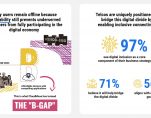
New research from CloudMosa shows digital inclusion is shifting from CSR to a core business strategy – and telcos stand to gain if they move quickly Majority (97%) of telco leaders say digital inclusion is now central to their business strategy, driven primarily by the need to bridge the digital divide (71%) With 92% of respondents seeing a strong alignment with government affordability initiatives as a key […]

The U.S. Senate has enacted the GENIUS Act, the first-ever federal framework for regulating dollar‑pegged stablecoins, with a decisive 68–30 bipartisan vote on 17 June 2025. Eighteen Democrats joined Republicans in supporting the legislation, which now advances to the House and is expected to reshape Washington’s digital asset rules.

The bill mandates that stablecoin issuers back tokens with liquid assets such as U.S. Treasuries, require regular financial disclosures and adhere to anti‑money‑laundering measures. It grants banks the authority to issue stablecoins, while explicitly restricting executive branch officials and legislators from sharing in their profits—a direct response to concerns over conflicts of interest.

A surge in crypto-sector investment in political campaigns appears to have shifted momentum. Industry spending topped $119 million in support of pro‑crypto congressional candidates during the 2024 cycle. Lobbyists then intensified efforts to engage Democratic lawmakers, viewed as essential for reaching the 60-vote threshold in the evenly divided Senate.

Internal communications among Democratic operatives reveal strategic alignment with crypto backers. In a private group chat described in reporting by the Lever, coalition members acknowledged that, despite ethical concerns, opposing the industry would be “political suicide.” One member reportedly observed that any amendment targeting Trump‑family conflicts would be “DOA,” suggesting token amendments offered for optics rather than impact.

Legislators including Senator Elizabeth Warren have voiced misgivings, arguing that the bill inadequately shields consumers or addresses risks associated with big‑tech or foreign‑issued stablecoins. She contends it grants too much leeway to the likes of former President Donald Trump’s crypto ventures, such as the Trump memecoin and World Liberty Financial.

The crypto lobby’s efforts have extended beyond campaign funding to retention of influential political operatives. Coinbase, for instance, recently appointed veteran Democratic strategist David Plouffe to its advisory board, joining a roster of insiders from both parties. Observers note this reflects crypto’s emerging status as a “politically competitive” constituency.

The political dynamic has shifted decisively. As AP reports, Democrats are balancing distrust of Trump-linked crypto enterprises with newfound recognition of the sector’s electoral influence. Backing the GENIUS Act became for many a strategic necessity, notwithstanding deep ideological resistance to deregulation.

The Senate vote occurred amid broader legislative discussions. The CLARITY Act—aimed at clarifying agency jurisdiction across the SEC and CFTC—is under consideration in the House Financial Services Committee. Some lawmakers propose merging the stablecoin and authority-defining bills, though others caution it could delay the GENIUS Act’s passage.

Crypto industry leaders view the GENIUS Act as a critical precursor to more comprehensive legislation. Ledger’s Head of Global Policy, Seth Hertline, described the Senate’s action as “a political bellwether” for the sector’s broader legislative agenda.

The bill’s passage also intersects with Trump’s personal crypto interests. His family’s stablecoin projects have sparked accusations of profiteering and lobbying for relaxed oversight. Critics warn that current legislative safeguards fall short of preventing conflicts of interest.

The next phase lies in the House, where Republican leadership must reconcile the Senate’s GENIUS Act with its own STABLE Act or integrate it into broader regulatory plans. Some Republicans advocate adding provisions to limit central bank digital currency initiatives, though such measures may complicate Senate approval.

Major stablecoin issuers such as Tether and Circle —together controlling over $200 billion in supply—stand to gain regulatory clarity and legitimacy if the GENIUS Act becomes law. Recent moves by major corporates, including JPMorgan’s planned stablecoin on Coinbase’s Base chain and indications that Amazon and Walmart are exploring token issuance, signal growing private‑sector enthusiasm.

As the House deliberates, questions remain whether the Senate’s bipartisan vote marks the start of a fully fleshed-out U.S. crypto regulatory regime—or the culmination of a high-stakes battle between policy integrity and political pragmatism.

LeetCode’s Java ecosystem is evolving beyond mere algorithmic correctness, with a growing emphasis on code quality metrics such as readability, maintainability, and performance profiling. Practitioners are advancing from writing bare-bones solutions to refining their work through rigorous complexity analysis and structured refactoring. LeetCode-in-Java, a prominent community resource hosting over 300 Java-based interview questions, lists the time complexity and space usage for each problem, aiding developers in benchmarking […]

Coinbase has formally requested approval from the U.S. Securities and Exchange Commission to offer tokenised equities in the country. The scheme would let users buy and trade digital tokens representing company shares, potentially enabling 24/7, faster, and lower-cost equity trading by leveraging blockchain technology. If successful, Coinbase could directly compete with established brokerages such as Robinhood and Charles Schwab.

This strategic initiative marks a pivotal expansion beyond crypto into traditional financial markets. Coinbase’s chief legal officer Paul Grewal described the push as a “huge priority,” emphasising the potential to establish a regulated framework for tokenised securities. To proceed, the company is seeking a “no-action letter” or an exemptive relief from the SEC—mechanisms that would allow official clearance to operate without enforcement action.

The tokenisation of shares aims to reduce transaction costs, accelerate settlement and expand market accessibility. Proponents believe that blockchain-based equities could revolutionise trading. However, global regulators have flagged challenges including low secondary-market liquidity and absence of unified global standards.

Coinbase’s renewed interest follows a prior attempt to introduce a tokenised version of its own stock at the time of its 2020 direct listing—an effort ultimately blocked by the SEC. Now, with the SEC’s evolving crypto task force and indications of a more favourable regulatory environment under the Trump-appointed leadership of acting chair Mark Uyeda, Coinbase envisages a window of opportunity.

Institutional enthusiasm appears to be rising, with CFO Alesia Haas noting that prior regulatory obstacles—“brick walls,” as she put it—may now be negotiable. CEO Brian Armstrong similarly asserted the potential for round-the-clock trading innovation and applauded engagement with the SEC’s crypto task force.

Despite this optimism, regulatory hurdles remain. Coinbase is not registered as a broker-dealer, and any platform facilitating trading in tokenized equities must satisfy existing legal requirements. The SEC had previously sued Coinbase in 2023, alleging the company operated an unregistered brokerage—a lawsuit later dismissed in 2025 under the Trump-appointed SEC leadership.

If granted a no-action letter, Coinbase would gain regulatory assurance that trading tokenised equities is compliant under current laws—a reassurance deemed critical to advance institutional adoption in the sector. Some industry commentators suggest that while tokenised equities are gaining traction internationally, U.S. regulatory clarity is key to unlocking broader institutional uptake.

Globally, exchanges like those operated by Kraken are already piloting tokenised shares—known as xStocks—in international markets outside the U.S.. These moves reflect a broader shift: analysts such as Colin Butler of Polygon have predicted tokenised real‑world assets could reach a market potential of up to $30 trillion in the long term.

Within the U.S., Coinbase has sought to shape the regulatory conversation. In March, the company submitted 36 detailed recommendations to SEC Commissioner Hester Peirce, articulating a blueprint for distinguishing between digital commodities and digital securities, and calling for secondary-market clarity. The SEC also hosted roundtable discussions earlier this year with industry participants on asset tokenisation, including former Coinbase counsel Alex Zozos.

Securing approval would align Coinbase with a mosaic of international initiatives exploring tokenised share trading, potentially enabling U.S. investors to trade equities with crypto-like efficiency. Yet adoption remains tied to demonstration of adequate liquidity, interoperability, and regulatory consistency—areas where global standards are still evolving.

While no timing for product rollout has been disclosed, Paul Grewal stressed that obtaining a no-action letter is essential to injecting confidence into institutional investors, paving the way for a new class of regulated digital securities.

For decades, waterfront property in the Gulf region has been a byword for status and spectacle. From the palm-shaped islands of Dubai to the man-made canals of Lusail and the glistening marinas of Manama, waterfront developments have consistently defined the upper tier of the residential real estate market. They’ve also served as visual shorthand for national ambition and economic growth. But as Gulf cities mature — and […]

VISHNU RAJA
RYO YAMADA
HITORI GOTOH
IKUYO KITA