News related to
beyond

The first-ever full-scale solo exhibition by Udom Taephanich, sets a new milestone for Thai contemporary art on the global stage. BANGKOK, THAILAND – Media OutReach Newswire – 11 July 2025 – ICONSIAM, the global landmark on the Chao Phraya River, is forging ahead with its mission to become a Must-Visit Global Art Destination, reinforcing its commitment to offering exclusive art experiences while empowering Thai artists to shine […]

The Bank of England is evaluating the role of stablecoins in wholesale payments and tokenised asset infrastructure via its UK Digital Securities Sandbox, at a pivotal juncture for financial market innovation. Sasha Mills, Executive Director of Financial Market Infrastructure, outlined this approach during her keynote at City Week in London on 2 July. The central bank is focusing on blending stability, regulatory clarity, and interoperability as it reshapes post-trade and settlement systems.

Mills emphasised that the digitalisation of wholesale financial markets—driven by tokenisation, distributed ledger technology, smart contracts and programmable ledgers—has the potential to enhance market depth, reduce friction, and mobilise capital more efficiently. Yet she stressed that any emerging system must preserve the bedrock of financial stability: confidence in finality of settlement and risk parity across new and legacy platforms.

The Digital Securities Sandbox has emerged as a cornerstone of the Bank’s strategy. Since its inception, the sandbox has attracted both incumbents and new market entrants. A notable early application has been the UK Government’s Digital Gilt pilot—nicknamed DIGIT—where debt issuance occurs on a distributed ledger. Mills noted it has catalysed broader interest in using tokenisation to simplify asset mobility, enable intraday repo operations and improve collateral utilisation.

Crucially, the Bank is exploring the integration of stablecoins within this sandbox framework. While central bank money remains the preferred settlement asset, Mills described the Bank’s position as “open‑minded” to stablecoins’ potential utility in wholesale markets. The Bank plans to provide further clarity on stablecoin roles and standards later this year.

In its consultation approach to systemic stablecoins—launched with a discussion document in November 2023—the central bank is considering reforms such as permitting a percentage of reserves to be held in high-quality liquid assets, rather than unremunerated central bank balances. It is also contemplating transitional holding limits: for individuals, between £10,000 and £20,000; for businesses, up to £10 million. These measures aim to curb stability risks from sudden large outflows.

Beyond stablecoins, tokenised deposits are highlighted as a promising vehicle to merge regulatory safeguards of traditional deposits with the efficiency of real-time, on‑chain settlement. Mills confirmed the Bank is working to integrate tokenised deposits across DSS initiatives and its broader National Payments Vision.

Complementing these developments, the Bank continues to elevate its core infrastructure. Its Real‑Time Gross Settlement system is undergoing major upgrades under the RT2 programme. Upcoming enhancements include broader access, extended operating hours, and a synchronisation interface. This interface is designed to facilitate conditional settlement—in which transfers within the RTGS can be synchronised with transactions on external DLT systems.

The Bank has joined the BIS Innovation Hub’s DLT Innovation Challenge to test whether wholesale central bank money can be transacted and settled on external programmable ledgers. Mills described this as an experiment into how wholesale central bank monies, stablecoins, and tokenised deposits can co-exist safely.

The BoE maintains that a mixed infrastructure ecosystem—where traditional and emerging systems operate side by side—is the foreseeable outcome. Ensuring interoperability across public and private, permissioned and permissionless ledgers is essential to prevent liquidity fragmentation and support seamless transfer of capital. Public blockchains may offer connectivity solutions, provided they meet security and regulatory standards.

Mills cautioned that while technological adoption is important, regulators must integrate hard-earned lessons on confidence and stability. “Money requires confidence to support economic activity and growth in good times and bad,” she said, warning that failures in settlement finality could erode trust and trigger cascading market events.

With its “secondary innovation objective”, the Bank is actively reviewing existing regulations that pose barriers to digital finance, engaging continuously with industry participants. The DSS, tokenised deposits, upgraded RTGS, stablecoin framework, and experimental alignment with DLT signal a coordinated strategy to modernise UK wholesale finance.

OPEC+ plans to finalise a 2.2 million-barrel-per-day supply restoration by September and is deliberating halting further production increases from October onwards, delegates have indicated. Source participants say the cartel has scheduled a final monthly increment of approximately 550,000 bpd in September, completing the planned unwinding of cuts. Following that, discussions have begun around suspending additional increases—especially the roughly 1.66 million bpd tied to later phases of the rollback—potentially pausing as early […]

Columbia University and Brookhaven National Laboratory researchers have unveiled a groundbreaking method to engineer intricate three‑dimensional nanostructures entirely through DNA self‑assembly in aqueous environments. This technique, underpinned by an innovative algorithm called MOSES, promises to shift current paradigms in nanomanufacturing, with potential applications in optical computing, neuromorphic hardware, biotechnology and beyond. At the heart of this advance are DNA‑based “voxels”—octahedral units formed by folding DNA strands into […]

GATES Inc. is deploying blockchain technology to enable foreign investors to buy stakes in a portfolio of income-generating properties worth US $75 million in central Tokyo through the Oasys network. The initiative is part of a broader strategy to modernise how overseas buyers participate in Japan’s real estate market.

The pilot scheme will issue digital tokens representing fractional ownership in a basket of premium commercial and residential assets, held via an overseas special-purpose vehicle to ensure regulatory compliance. GATES CEO Yushi Sekino described the move as “building next‑generation investment infrastructure that allows global investors easy access to Japanese assets.”

GATES has signalled an ambitious scaling plan to encompass US $200 billion worth of real estate tokens—a fraction but strategic segment of Japan’s entire US $20.5 trillion market. Such a leap reflects growing institutional interest in tokenisation of real‑world assets worldwide, with projections valuing the tokenised bond and equity space at US $18 trillion by 2033.

Blockchain advocates argue this model eliminates traditional intermediaries—brokers, legal firms, language translators—while lowering costs and administrative burdens. GATES will enable the platform to carry out token issuance, secondary trades and compliance checks on-chain. This allows small-scale global investors to transact in real time, without navigating Japanese legal complexities directly.

Oasys, a layer‑1 blockchain originally built with gaming in mind, has repositioned itself toward tokenising real‑world assets, including property and intellectual property rights. Ryo Matsubara, Oasys Representative Director, emphasised that “Japanese content, whether game IP or other cultural assets, commands high global value,” thus reinforcing their pivot to real‑world asset tokenisation.

The first phase focuses on Tokyo, but GATES plans roll‑out to other major international markets including the United States, Europe and Southeast Asia. Future stages may target tokenised rights to Japanese media and entertainment franchises, unlocking new investment channels for cultural IP.

Global benchmarks suggest tokenised real estate is gaining speed: Dubai anticipates a US $16 billion market by 2033, while international banks and tech firms increasingly pilot similar schemes. CoinDesk highlighted that GATES is the first major Japanese real estate company to attempt a tokenisation project of this magnitude.

Yet challenges remain. Japanese regulatory frameworks governing securities—including digital asset classification—are still evolving. Local legal consultation remains essential, especially in structuring overseas vehicles to comply with the Financial Instruments and Exchange Act. Additionally, investor appetite outside Asia and Europe will hinge on clarity in custody, asset valuation methods, and secondary‑market liquidity.

Independent analysts note that tokenisation promises more than simplified access; it may improve transparency, tracking and governance by embedding ownership and contract details onto an immutable ledger. Such benefits could, over time, boost asset yields and reduce fraud risk.

However, critics caution that regulatory and technological bottlenecks, combined with customary conservatism in Japanese real‑estate investment, could slow adoption. So many see the success of this pilot in Tokyo as crucial evidence for scaling up to the US $200 billion target.

With GATES pursuing a Nasdaq listing and reporting revenue of roughly US $145 million in 2024, the company has both resources and strategic backing to drive forward. If Tokyo’s pilot succeeds, the combination of blockchain infrastructure and overseas special‑purpose vehicle structures could point the way for similar strategies across Asia and beyond.

While tokenisation of Japanese real estate may appear niche, the project could presage a broader redefinition of how global capital flows into property markets—promising greater access, efficiency and digital-native investment models.

For the winners of the 2025 Golden Bull Award, the answer is clear: vision, agility, and a drive to challenge the norm. KUALA LUMPUR, MALAYSIA – Media OutReach Newswire – 10 July 2025 – These are high-performing companies and trailblazers. This year’s winners are leading the way through innovation, from adopting AI and strengthening cybersecurity to integrating ESG values into their core operations. They show us that […]

Four sources confirm that Saudi Aramco is negotiating to acquire 2 million tonnes per annum of liquefied natural gas from Commonwealth LNG’s planned Cameron, Louisiana export facility. This addition would bring Commonwealth closer to its ambition of locking in 8 mtpa from its total 9.5 mtpa capacity, enhancing its commercial viability and drawing it nearer to a final investment decision by year‑end. Commonwealth LNG, backed by private equity firm Kimmeridge, […]

Advertisements

Charles Group has entered a $1 billion strategic partnership with the US-based Patel Family Office to co-develop a digital investment platform targeting real estate and infrastructure assets across the UK, GCC, India and the SAARC region. The memorandum of understanding, signed at the Global Wealth Conference 2025 hosted by the Sovereign Wealth Fund Institute at London’s Mansion House, was finalised in the Egyptian Hall and witnessed by over […]

Suhail bin Mohammed Al Mazrouei, Minister of Energy and Infrastructure, reaffirmed the UAE’s full backing for OPEC+ mechanisms, underlining the nation’s commitment to sustaining equilibrium in global oil markets through capacity expansion and coordinated policy.

At the 9th OPEC International Seminar in Vienna on 9 July, Al Mazrouei praised OPEC+ for its collective decision‑making model, which he said ensures production responds to actual market demand rather than price speculation. He noted that the UAE’s strategic investments in expanding production capacity reflect a readiness to release additional oil when consumption trends warrant, providing a stabilising buffer to global supply. The minister highlighted that this expansion aligns with prudent leadership foresight aimed at reinforcing market resilience.

He emphasised that there has been no substantial rise in inventories despite several months of gradual production increases. “Even with the increases…we haven’t seen a major buildup in inventories, which means the market needed those barrels,” he stated. This observation supports broader OPEC+ data showing that successive monthly output increments have been absorbed by demand, a trend that the UAE believes underlines the rationality behind its expanded quota.

Since April, OPEC+ has reversed approximately 2.17 million barrels per day of voluntary output cuts via a phased rollout: 138,000 bpd in April, then 411,000 bpd in each of May, June and July, followed by a proposed 548,000 bpd increase for August – a move reflecting growing market confidence. Notably, the UAE is set to complete a 300,000 bpd quota increase by September, a benchmark reached ahead of the original 2026 timeline as OPEC+ expedited its capacity hike schedule.

Analysts suggest that such robust production gains could recover roughly 2.5 per cent of global demand by September. Al Mazrouei remarked that the UAE’s investments will strengthen its role within OPEC+ and that once additional capacity comes online, it will serve as a crucial stabilising factor during demand shifts.

He further argued that focusing solely on oil price levels is insufficient. Rather, OPEC+ aims to strike a sustainable balance that encourages long‑term investment. “We need the price to be right for investments to happen,” he said, warning of the consequences of underinvestment across producers.

Current market dynamics appear to confirm this approach: data from mid‑June and early July indicate that inventories across OECD nations remained stable despite the production uptick, confirming demand absorption remains robust. That observation, Al Mazrouei suggested, validates the pace of OPEC+ supply restoration and diminishes concern about a looming oversupply.

While output is increasing, policy is cautious. The Group of Eight core OPEC+ members—Saudi Arabia, Russia, UAE, Kuwait, Oman, Iraq, Kazakhstan and Algeria—are proceeding in measured increments. Al Mazrouei underscored that OPEC+ continues to meet monthly via ministerial and committee reviews, carefully calibrating production relative to shifting market fundamentals.

Beyond ensuring balance, the UAE’s production capacity expansion also carries strategic benefits. Having secured a higher individual quota, the country aims to restore and extend its market share. This reinforcement was acknowledged by external observers, including Richard Bronze of Energy Aspects, who noted “the UAE is benefiting from this speeding up of the quota increases” within a context of broader OPEC+ output acceleration.

Despite concerns about slowing economies in key importers, including China, and rising US trade tensions, OPEC+ retains a cautiously optimistic outlook. Prices in July experienced modest one‑per‑cent gains near $69 per barrel following the announcement of the August supply increase—an indicator that demand continues to absorb the additional volumes.

Nevertheless, OPEC+ remains vigilant about macroeconomic risks. Commentators have warned that demand softness later this year, driven by uncertainties in global growth and trade policies, could pressurise prices. Al Mazrouei echoed that view, stressing that short‑term supply increases must be accompanied by stable investment in oil infrastructure to prevent future shortages.

Persistent coordinated production strategy is a central theme from the Vienna seminar. Ministers emphasised OPEC+’s response to shifting fundamentals rather than geopolitical or speculative impulses. With the group moving to complete the unwind of emergency cuts, markets will closely monitor whether global demand continues to match supply advances.

San Francisco–based ZeroEntropy has emerged at the forefront of a crucial yet underrepresented segment in artificial intelligence: retrieval‑augmented generation. The startup, co‑founded by Moroccan engineer Ghita Houir Alami and CTO Nicolas Pipitone, has raised $4.2 million in seed funding to refine how large language models access contextually relevant data. This investment underscores growing investor conviction that LLM performance hinges on the quality of retrieved information, not just model […]

Accra Regional Police have arrested Emmanuel Akanpatiba, a principal figure in a motorbike theft syndicate accused of stealing at least 12 motorbikes across the region. The arrest marks a significant breakthrough in a complex network operating within Accra’s metropolitan zones. Police said Akanpatiba was detained on 24 June following a tip-off after a red Royal motorbike—registration M‑25 CW 367—was reported stolen from a Madina residence. The arresting team acted […]

Monday stress is more than a passing feeling—it leaves a measurable imprint on the body, according to a large-scale longitudinal study that has identified elevated cortisol levels in people experiencing anticipatory anxiety at the start of the week. The research, which tracked hair cortisol concentrations over extended periods, offers compelling evidence that societal rhythms and ingrained weekly schedules may biologically reinforce anxiety patterns linked to the beginning […]

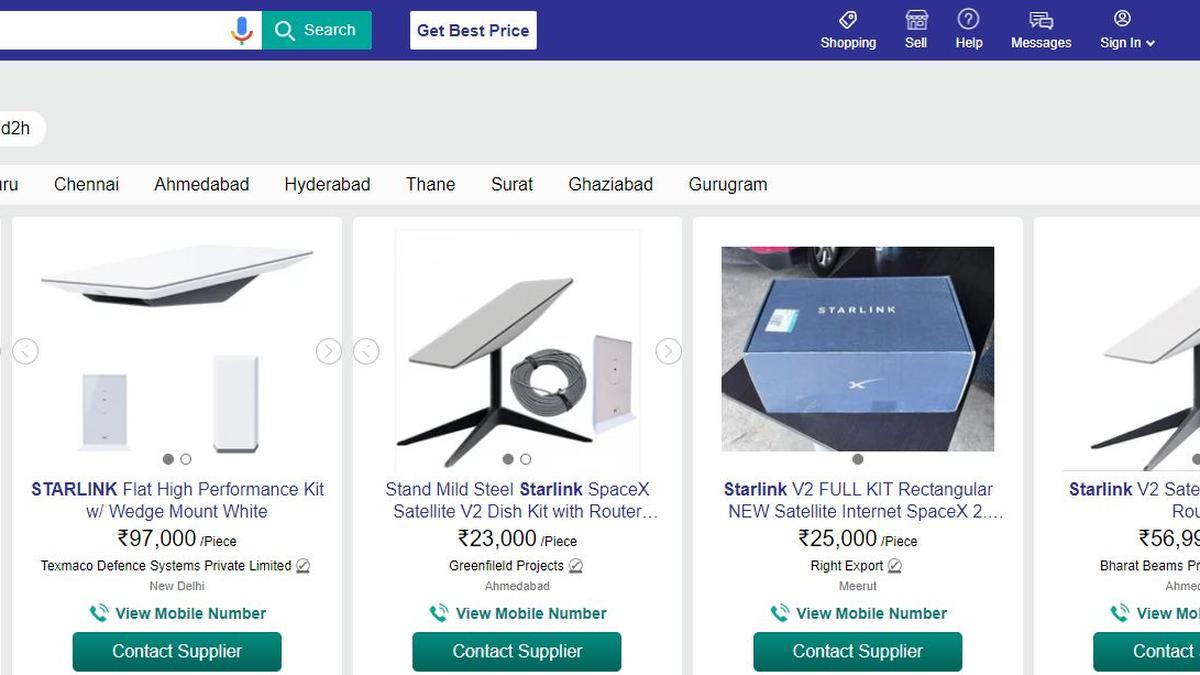
Elon Musk’s satellite‑internet venture has obtained its space regulator’s final approval to launch commercial services, removing the only remaining legal obstacle after securing a telecom licence last month. This paves the way for Starlink to become the third satellite broadband operator in India, alongside Eutelsat‑OneWeb and Reliance Jio‑SES.

The Department of Telecommunications issued Starlink the Global Mobile Personal Communication by Satellite permit in early June, marking a pivotal step towards nationwide commercial deployment. Space regulator IN‑SPACe has now finalised its authorisation—pending Starlink’s formal acceptance and countersignature—bringing the company on par with its established rivals.

Starlink must still secure dedicated spectrum, construct ground infrastructure, and complete stringent security trials before service can commence. Officials indicate the spectrum will be allocated administratively rather than via auction, aligning with Starlink’s position over competing demands that included those from Reliance Jio.

The security evaluation phase remains critical. Indian authorities have insisted that all satellite‑based traffic must transit through domestic gateways and comply with legal interception protocols. Supply chain localisation and gateway siting near international borders will also be mandated. Past concerns over unauthorised Starlink usage in border regions prompted increased scrutiny by the ministry of home affairs and Department of Telecommunications earlier this year.

Starlink joins an increasingly competitive satellite broadband landscape. Eutelsat‑OneWeb received its GMPCS licence in August 2021 and full permissions in late 2023, while Jio‑SES obtained its telecom licence in March 2022 and space clearance by mid‑2024. Meanwhile, Amazon’s Project Kuiper awaits its approvals.

Local telecom giants are now preparing partnerships with satellite providers to enhance connectivity. Bharti Airtel and Reliance Jio signed pacts with Starlink earlier this year to deliver broadband across remote regions once authorisations were finalised. These alliances reflect a broader push by India to extend digital infrastructure to underserved rural and mountainous communities, where roughly 40 percent of the population remains without reliable internet access.

Starlink’s global network now spans over 6,750 satellites and serves diverse markets from Antarctica to developing Asia. In India, the company faces challenges adapting to the country’s famously low data prices, with mobile rates among the world’s cheapest. Each operator must also comply with provisions demanding indigenisation of at least 20 percent of ground infrastructure and multilayered security approval regimes.

As New Delhi aligns satellite spectrum policy—including assigning bandwidth for five‑year terms at a fee capped at 4 percent of adjusted gross revenue—operators will negotiate additional urban or rural levies and infrastructure contributions. Communications Minister Jyotiraditya Scindia’s consultations with SpaceX executives signal sustained governmental interest in leveraging satellite technologies to bolster India’s digital ambitions.

Starlink’s entry marks a significant shift in India’s telecom ecosystem. It promises to elevate broadband penetration in neglected geographies while testing the resilience of India’s stringent regulatory and security frameworks. The speed at which Starlink secures spectrum, builds its ground presence, and satisfies national interception mandates will determine how soon millions of users beyond urban centres experience high-speed satellite internet.

SUSE has unveiled its Sovereign Premium Support, a support service designed to meet stringent demands for digital sovereignty across the European Union. Named as such to reflect both its locality and commitment, the service offers EU-based support engineers and service managers, along with data storage confined to networks within the EU, guaranteeing compliance with regional regulations and data privacy expectations. Geopolitical shifts, evolving regulations and rising concerns […]

Asia‑Pacific digital‑native firms attracted USD 15.4 billion in artificial intelligence investment in 2024, a figure reported by IDC that underscores a shift towards deeper commitments and strategic growth, even as the volume of deals declined.

Capital concentration has intensified as larger funding rounds become the norm. IDC analysts found that while the number of funded AI startups has dropped, the average investment per deal has risen markedly—reflecting investors’ preference for enterprises closer to market maturity rather than early-stage ventures.

China, South Korea, Japan and India remain at the forefront of investment flows. These major markets, with their diverse tech ecosystems and supportive policies, continue to lead, though Southeast Asian nations are gaining traction as both AI adopters and innovators.

Generative AI, a wave propelled by breakthrough models in natural-language processing and image creation, is swiftly ascending as the dominant investment theme across Asia‑Pacific. IDC forecasts that GenAI allocations will more than double by 2028, reaching USD 54.5 billion and forging a new frontier for enterprise transformation.

There is mounting evidence that corporations are pivoting from rhetoric to implementation. Only 29 percent of digital‑native businesses have scaled AI organisation‑wide, yet more than 42 percent now actively pursue co‑innovation partnerships with technology vendors to integrate AI across operations. These collaborative efforts are reshaping collaboration models between AI startups and incumbents.

Costs associated with infrastructure and data security continue to shape investment flows. Enterprise-grade AI demands not only computational muscle but also robust governance frameworks to mitigate risks such as bias, intellectual property leakage and regulatory non‑compliance. Data from the region show that 34 percent of organisations have embedded governance within generative AI software development, an advanced step beyond policy‑level oversight.

Cloud infrastructure providers are doubling down on AI support across Asia‑Pacific. Amazon Web Services announced a USD 13 billion expansion in Australia and over USD 5 billion for a Taiwan region, alongside large‑scale investments in Singapore, Malaysia and Japan. AWS claims the region’s cloud spending will reach USD 250 billion in 2025, largely driven by AI demands.

This inflow of cloud capital is critical in overcoming entry barriers. Local language support, data sovereignty and integration capabilities have become competitive differentiators for these platforms—Microsoft Azure, Google Cloud and Alibaba Cloud are aggressively pursuing similar capacity expansion. Southeast Asia, in particular, is emerging as the fastest–growing regional cloud market globally.

Startups are adapting to investors’ sharper focus on maturity and scalability. Fewer low‑valuation seed rounds are appearing; instead, late‑stage funding for companies with clear product‑market fit, real revenue streams and enterprise traction is dominating. This trend reflects an increasingly risk‑averse capital environment that emphasises depth over breadth.

The build‑up of AI infrastructure is dovetailing with rising regulatory attention. With supervision frameworks being rolled out around sensitive sectors such as finance and healthcare, investors are seeking startups equipped with compliance capabilities. For instance, financial‑services firms are prioritising traceability and governance as mission‑critical components for future‑ready AI deployment.

In geographical terms, growth hotspots vary by stage of AI ecosystem development. China leads in institutional funding and government-backed initiatives. Japan and South Korea benefit from combined strengths in industrial automation, robotics and semiconductor production. India’s vibrant startup landscape is gaining attention, particularly in generative AI and enterprise software. Meanwhile, nations such as Indonesia and Malaysia are attracting more attention as AI adoption becomes a priority for government digitalisation agendas.

Challenges persist. High‑cost infrastructure, skilled‑talent shortages and fragmented regulatory regimes pose constraints. Yet the rise of public‑private coalitions and university‑industry alliances is beginning to address these gaps—skills acceleration programmes are proliferating, and data‑sharing frameworks are gaining traction.

Investors are now looking past headline metrics to evaluate alignment with national AI strategies, such as Japan’s AI strategy and India’s push for indigenous innovation. Locally relevant models—capable of understanding linguistic diversity, cultural contexts, and industry‑specific workflows—are increasingly being favoured over globalised, one‑size‑fits‑all solutions.

This funding environment has spurred momentum in adjacent areas. Edge computing, AI‑enabled cybersecurity, AI‑driven supply‑chain optimisation and health‑tech verticals are emerging as new battlegrounds for both startups and incumbents. These sub‑domains are drawing fresh rounds of investment and pilot partnerships.

Policy trends are also influential. Governments across Asia‑Pacific are advancing data protection frameworks, AI ethics norms and public‑sector adoption plans—all contributing to clearer roadmaps for private‑sector engagement. The interlinking of regulatory reform and capital deployment is strengthening ecosystem resilience.

Investor sentiment remains cautiously optimistic. Surveys suggest that, despite macroeconomic headwinds and geopolitical risk, most executives view cloud and AI as avenues to cost reduction, efficiency gains and differentiation. As AWS’s APAC vice‑president remarked, “AI is the biggest market opportunity since cloud in 2006,” signalling sustained confidence in long‑term upside.


Ruvi AI, a blockchain-based utility token enhanced with artificial intelligence, is garnering considerable attention, with analysts forecasting returns that echo the early days of Ethereum. The presale has raised over $2.2 million, with approximately 180 million tokens sold and more than 2,000 holders already onboard. Priced at $0.015 during Phase 2, the token is expected to rise to $0.07 post-presale, offering investors a near five-fold gain before public trading begins. Market watchers anticipate a $1 valuation after listing—a potential 66× return—or even projections of 104× to 137× in a full bull market.

Security and transparency are strong points. Ruvi AI has undergone a third-party audit from CyberScope, confirming its smart contracts are free from vulnerabilities. A partnership with WEEX Exchange ensures liquidity once the token hits public markets, addressing key investor concerns.

Beyond hype, Ruvi AI distinguishes itself through concrete use cases. In marketing, its AI-driven tools enable precise ad targeting and smarter budget allocation. Within entertainment, blockchain-secured payments and AI audience analytics support content creators. The token also addresses fintech, with applications in fraud detection and secure transactions.

VIP tiers offer additional incentives: Tier 2 at $750 with a 40% bonus, Tier 3 at $2,100 with 60%, and Tier 5 at $9,600 with 100%. These tiers significantly enhance token allocation and potential returns.

Comparisons to established platforms underscore the excitement. Analysts position Ruvi AI as more purpose‑driven than meme coins like Shiba Inu, and liken its structure and transparency to Ethereum’s early roadmap. It is also being cast as a challenger to Ripple and Tron, thanks to its utility-first model and robust security credentials.

Despite enthusiastic projections, sceptics warn that such forecasts often rely on promotional narratives and may underestimate typical crypto volatility. Many articles encouraging investment are sponsored, necessitating cautious interpretation and thorough due diligence.

Market analysts note that Ruvi AI’s clear presale roadmap—starting at $0.015, locked at $0.07, with target of $1—offers an unusually transparent growth trajectory for early investors. Still, experts emphasise that projections of 66× to 137× assume robust market conditions and widespread adoption of AI‑enabled blockchain technology.

Institutional interest is still nascent, yet alignment with AI and blockchain sectors reflects broader tech trends. Continued platform development, ecosystem partnerships, and adoption by key industries will be crucial to validating current projections.

Emirates Airline has formalised a strategic alliance with Crypto. com aimed at integrating Crypto. com Pay into its digital payment systems, underscoring a strong commitment to security and regulatory compliance. The partnership, set to activate next year, was marked by a Memorandum of Understanding signed by Adnan Kazim, Emirates’ Deputy President and Chief Commercial Officer, alongside Mohammed Al Hakim, President of Crypto. com’s UAE operations. The signing took place under the witness of Sheikh Ahmed bin Saeed Al Maktoum, Chairman and Chief Executive of Emirates Airline & Group, and Michael Doersam, Emirates’ Chief Financial & Group Services Officer.

Emirates’ leadership highlighted the rationale behind the move: embracing the growing demand among tech-savvy travellers and aligning with Dubai’s broader ambition to lead in financial innovation. Adnan Kazim emphasised the airline’s dedication to “meeting evolving customer preferences” and offering travelers more flexibility in payments. The integration also positions Emirates to engage with a younger demographic increasingly comfortable with digital currencies.

Crypto. com echoed this forward-looking sentiment. Eric Anziani, President and COO, described the agreement as a catalyst for wider cryptocurrency adoption in consumer finance. He welcomed Emirates as “an exceptional partner,” stressing that the integration will push momentum across the digital asset sector in the Gulf region.

The MoU outlines not only the technical integration of Crypto. com Pay but also joint marketing initiatives to increase awareness and encourage uptake. Emirates and Crypto. com intend to launch promotional campaigns aimed at customers, educating them on the convenience and security of paying with digital assets.

This collaboration reflects a broader trend within the UAE, where regulators have implemented a notable framework to encourage blockchain innovation while maintaining robust investor protection and financial system integrity. Dubai, in particular, has seen a surge in cryptocurrency utility across multiple sectors, including property, retail, and telecommunications. The MoU aligns with this ecosystem, reinforcing Dubai’s vision to be a global hub for crypto innovation.

Financial experts observing the region note that infrastructure investments, regulatory clarity, and consumer interest have driven a significant crypto inflow—valued at approximately US$34 billion between July 2023 and June 2024—suggesting strong institutional confidence. Adoption of digital payments by major consumer-facing corporations such as Emirates is seen as a transformative step in normalising cryptocurrencies as mainstream payment options.

Emirates’ approach to this partnership has been cautious yet calculated. Emphasis on security, compliance, and regulatory alignment indicates a measured strategy that places integrity at the forefront. The airline assures customers that the integration will meet “the highest security and compliance standards,” a crucial reassurance in light of global scrutiny surrounding crypto-related risks.

This is not Emirates’ first foray into strategic payment alliances. Earlier this year, the airline partnered with American Express Middle East to enhance offerings for small and medium‑sized enterprises across the Middle East and North Africa regions. The Crypto. com collaboration signals a parallel move into the emerging digital asset sphere, indicating Emirates’ growing appetite for financial innovation beyond traditional banking channels.

Industry analysts observe that including crypto payments could broaden Emirates’ appeal among adventurous travellers and those engaged in the digital economy. For Crypto. com, the partnership adds to a burgeoning presence in the GCC, enabling the company to showcase real-use cases with a prestigious flag-carrier.

The path ahead involves critical integration steps, including system upgrades, staff training, customer education, and regulatory coordination. Both parties have set a goal for full deployment by next year, providing a practical timeline for technology deployment and market engagement strategies.

SINGAPORE – Media OutReach Newswire – 9 July 2025 – PROPEL with Singlife, the one-stop shared services hub for financial advisory firms, has been named the winner of the highly coveted Insurtech Initiative of the Year – Singapore award at the 10th Insurance Asia Awards, in recognition of its contributions to the insurance industry in Singapore. This accolade – a first for PROPEL since its official launch […]

To choose the best creative agency in Dubai, which is located in the center of the innovation hub of the Middle East, it is not enough to just choose a vendor; rather, it is necessary to choose a brand partner for the long term.  The city of Dubai, which is one of the most competitive, multicultural, and technologically advanced marketplaces in the world, demands advertising firms that […]

Continues to see strong growth in traditional powerhouse sectors such as automotive, technology and e-commerce Sees new opportunities in Malaysia for growth in life sciences and healthcare as well as new energy DHL is well-positioned to support Malaysia’s trade and logistics ambitions with expanded investments and capabilities KUALA LUMPUR, MALAYSIA – Media OutReach Newswire – 9 July 2025 – DHL, the world’s leading logistics provider, has reaffirmed […]

Parsons Corporation has been appointed by Dubai’s Roads and Transport Authority as the Project Management Consultant for the forthcoming Metro Blue Line, under a five-year agreement. The firm will lead design evaluation, procurement facilitation, construction oversight, testing and commissioning, ending with the handover of the system. The line is projected to enter service by September 2029, covering 30 km with 14 stations, and is a core part of Dubai’s D33 Economic Agenda geared towards completing the city’s next-generation transport network by 2033.

The Metro Blue Line, spanning from Centrepoint on the Red Line through Creek station on the Green Line and reaching Academic City, is expected to serve up to 320 000 passengers daily. It will connect key zones such as Mirdif, Dubai Silicon Oasis, Creek Harbour and Festival City, reinforcing the mobility framework outlined in the 2040 Urban Master Plan.

Pioneering the metro’s expansion, the Blue Line received approval on 24 November 2023 from Dubai’s Vice President and Ruler, reflecting a total investment of AED 18 billion. This strategic vision anticipated a launch coinciding with the metro’s 20th anniversary.

Parsons brings to this contract more than 80 years of global infrastructure and transport systems expertise, and over six decades of regional presence. In Dubai, the firm has supported RTA projects since 2005—from the Metro Red and Green lines and Route 2020 to the Intelligent Traffic Systems Centre and Infinity Bridge—delivering over 100 roads, bridges and tunnels.

Chief among Parsons’ tasks is aligning technical design with RTA standards, streamlining tender processes, supervising contractor performance, and ensuring operational readiness through rigorous testing. Their involvement utilises advanced project controls to ensure on-time, safe delivery—a critical measure as Dubai moves toward its D33 viability targets.

In his capacity as President, Infrastructure EMEA, Pierre Santoni emphasised the importance of Parsons’ long-standing local partnership and its commitment to delivering “innovative technology” and “world‑class transportation systems” in collaboration with the RTA team.

Malek Ramadan Mishmish, Director of Rail Planning and Project Development at the RTA, welcomed Parsons aboard, citing their established delivery record in the emirate and reaffirming Dubai’s aspiration to embrace “smart and sustainable transportation” in line with its ambitions to become the world’s “smartest and happiest city”.

The Blue Line is positioned to deepen the integration of Dubai’s transport ecosystem, with interchange stations at Centrepoint and Creek enabling connectivity across the Red, Green and Blue lines, and future linkages into the Etihad Rail network. As an element of the broader D33 Economic Agenda and the 2040 Urban Master Plan, it is expected to redefine sustainable urban mobility and support anticipated demographic expansion.

Risks inherent to large-scale infrastructure development include potential for budget escalation, complex oversight and synchronization with civil contractors. However, Parsons’ selection underscores the RTA’s continued confidence in its capacity to deliver against these challenges, building on its proven project delivery lineage in Dubai.

With completion forecast by 2029, the Blue Line aims to expand the daily ridership beyond current figures—around 755,000 across the Red and Green lines in 2024—with 320,000 passengers expected to onboard the new route alone.

Dubai‑based hospitality firm Tashas Group is entering a rapid new phase of expansion across the Middle East and South Africa, with founder Natasha Sideris spearheading a strategy that balances boutique charm with accelerated growth. Operating 40 venues in five countries—including 18 in South Africa, 17 across the UAE, three in Saudi Arabia, and single locations in Bahrain and the UK—the group plans to open a further 15 […]

HONG KONG SAR – Media OutReach Newswire – 8 July 2025 – In a bold move to meet soaring global demand for faster, leaner e-commerce fulfillment, Printbelle today announced major expansions to its production capabilities and product catalog, positioning itself as a leading force in the print-on-demand (POD) revolution. The company’s advanced 10,000㎡ facility in Fujian now delivers over 850 customizable products with 24–72 hour production times—helping […]

Google has released Gemini CLI, a terminal‑based interface that brings the Gemini 2.5 Pro model directly into developers’ shell environments, offering a powerful AI‑driven coding assistant alongside content generation and research capabilities. Sign‑in with a personal Google account grants users a free Gemini Code Assist licence, entitling them to an industry‑leading free tier of 60 model requests per minute and up to 1,000 requests per day—previously priced around $200/month for equivalent access […]

VISHNU RAJA
RYO YAMADA
HITORI GOTOH
IKUYO KITA