News related to
data

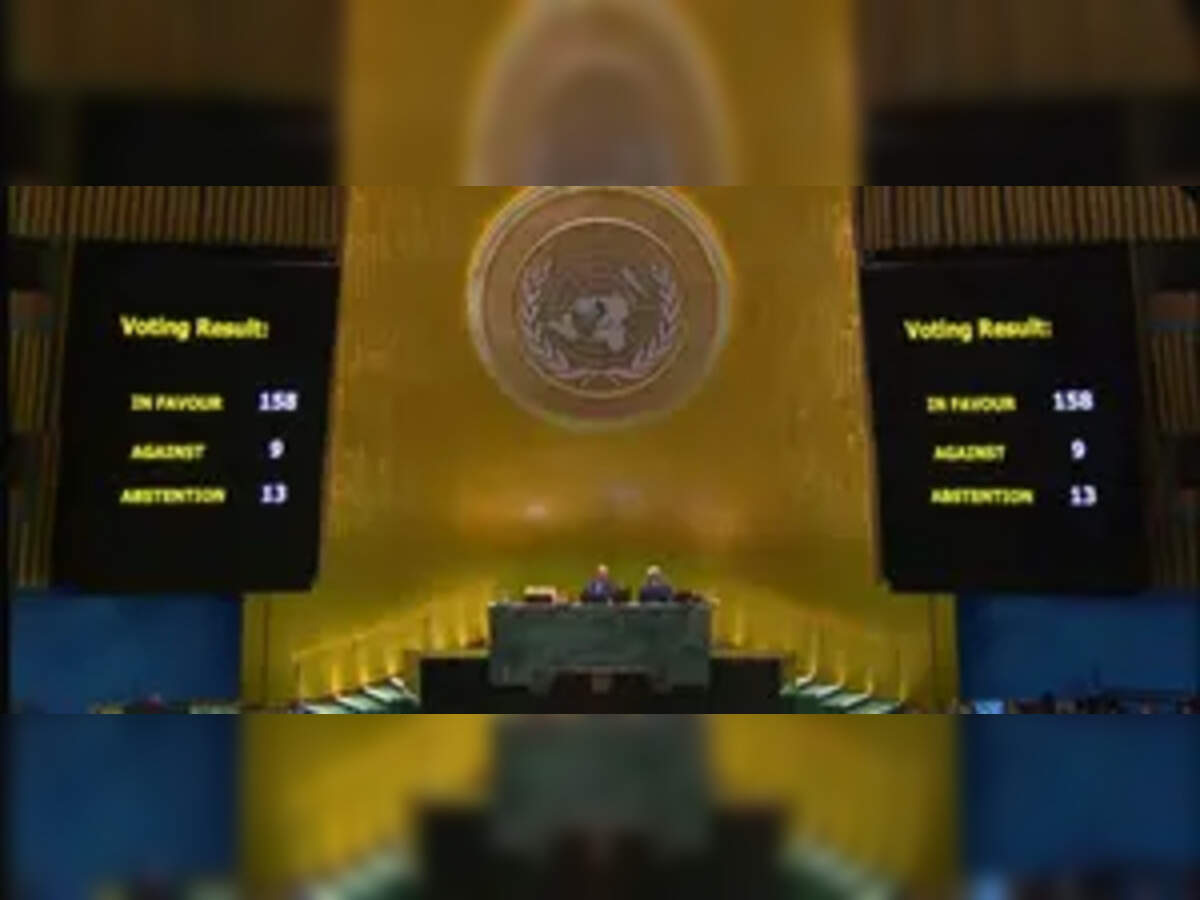
By Nitya Chakraborty On Thursday June 12, Indian diplomacy under the Prime Minister Narendra Modi reached its lowest ebb when India abstained in the United Nations General Assembly from a vote on a resolution demanding an immediate, unconditional and permanent ceasefire in Gaza. The 193 member UN general assembly passed the resolution overwhelmingly with 149 […]

Major corporations Walmart and Amazon are understood to be mulling the launch of their own stablecoins as part of a broader trend among retailers and tech companies seeking to streamline payment systems and reduce transaction costs. With the U.S. Congress advancing the GENIUS Act—legislation to regulate stablecoin issuance—the moment now appears opportune for these private-sector experiments.

Both Walmart and Amazon are reportedly evaluating the regulatory environment and potential use cases for proprietary stablecoins. Sources suggest these could be integrated with payment platforms, loyalty schemes and digital marketplaces. Such a move would allow these companies to bypass conventional card rails and intermediaries that currently levy high fees on merchants and slow settlement times.

Walmart’s ongoing fintech ambitions align with the exploration of stablecoin applications. The retailer has already lobbied for regulatory changes aimed at bringing greater competition into credit card networks, indicating a broader shift towards alternative payment mechanisms. Amazon, though in the preliminary assessment stage, is also understood to be considering whether a branded stablecoin might enhance the convenience of online transactions.

The GENIUS Act currently under Senate review is central to this evolution. It delineates a framework for “permitted payment stablecoin issuers” and mandates reserve requirements, redemption rules and federal oversight. While enabling banks, non-banks and subsidiaries to issue stablecoins, it permits notable flexibility across different sectors.

Critics are already voicing concerns. Legislators such as Senator Elizabeth Warren and Rep. Maxine Waters caution against allowing large non-financial firms to enter the payments landscape, fearing an erosion of banking safeguards and potential intensified corporate dominance. Academic voices, including law professor Hilary Allen, warn that Big Tech’s entry into finance could “entrench corporate power” and compromise consumer data privacy.

A key sticking point lies in a proposed amendment to prohibit non-financial corporations from issuing stablecoins unless they meet stringent criteria around financial stability, data protection and consumer welfare. This amendment would cover tech behemoths like Amazon, Meta and Apple. In contrast, proponents argue that allowing these companies in could foster innovation and enhance market competition.

Merchant industries are lobbying hard for clarity. The Merchants Payments Coalition argues that a stablecoin framework could disrupt the dominance of established payment networks and deliver substantial cost savings. Stakeholders have highlighted how cross-border payments could benefit from low-cost, near-instant settlement, echoing the broader fintech industry’s embrace of stablecoins as programmable rails for digital commerce.

Opposition remains robust, however. Critics warn that unbridled stablecoin issuance by non-financial corporations could introduce systemic risks. The GENIUS Act’s provisions are aimed at managing these risks through requirements for reserves, transparency, anti-money laundering compliance and state-federal coordination. Still, there is unease that enforcement mechanisms may not sufficiently address deep-seated concerns over financial stability and consumer safety.

Proponents believe stablecoins could transform how commerce operates, by speeding up settlements, reducing fees and enabling more fluid integration across digital platforms. With adoption driven by both large merchants and smaller enterprises, the innovation rather than consolidation of money systems could mark a significant shift.

Walmart and Amazon appear poised to test these boundaries. As the GENIUS Act moves closer to a Senate floor vote, the exact role that private-sector stablecoins will play remains uncertain. The decision by Congress to permit non-bank issuers is a strategic pivot, opening regulatory pathways that could redefine how money flows through the global payments ecosystem.

Sharjah Publishing City Free Zone has been awarded the globally recognised “Great Place to Work” certification for the second year running, underscoring its commitment to cultivating a top-tier workplace. The accolade, granted by an independent authority with over three decades of experience in measuring workplace culture, reflects outstanding performance across key employee experience metrics.

Employees gave the organisation exceptionally high ratings, with 94 per cent satisfaction in workplace hospitality, 90 per cent approval of leadership behaviour, 87 per cent for engagement and 86 per cent in innovation. Equity and fairness also scored strongly—over 70 per cent in relevant categories. A remarkable 99 per cent of staff reported feeling physically safe at work and welcomed upon arrival, while 96 per cent noted unbiased, gender-neutral treatment and approachable management. These figures speak to a supportive environment where employees feel secure, valued and motivated.

Behind these high scores lies a deliberate strategy focused on trust-building, transparent leadership and collaborative culture. Through the Great Place to Work® Trust Model™, SPC’s approach places employees as the cornerstone of its service delivery model. The environment it fosters not only benefits staff morale but also translates into superior customer experience, reflected in prompt and efficient services.

The achievement is particularly notable given the scale of SPC’s operations. The free zone hosts more than 9,600 businesses spanning over 40 countries, including more than 1,500 publishers and investors, and is a vital hub for educational and cultural content creation. Its ecosystem supports not only publishing but also broader creative, technological and entrepreneurial sectors.

SPC’s origins date back to its launch in 2017 under the guidance of Dr Sheikh Sultan bin Muhammed Al Qasimi, Ruler of Sharjah, as the world’s first dedicated publishing free zone. From the outset, it was positioned to capitalise on Sharjah’s increasing appeal as a global cultural and knowledge-based economy, offering 100 per cent foreign ownership, full capital repatriation and a broad spectrum of licensing activities.

Since its establishment, SPC has continuously upgraded both its work environment and customer services. In May 2024, it introduced 24/7 operational support and guaranteed a three-business-day turnaround for bank account openings. It also pioneered an AI-enabled “instant licence” system in collaboration with Sharjah’s Investor Services Centre, delivering trade licences in under five minutes. These initiatives demonstrate its dedication to efficiency and tech-enabled service delivery.

The free zone’s appeal stretches well beyond the publishing community. Over 2,000 Indian-owned businesses operate in SPC, drawn by its strategic location and integrated support infrastructure. These enterprises benefit from a platform that promotes global expansion and cross-border reach. SPC has also diversified licensing options to include e‑commerce, cybersecurity, AI, biotech and robotics, reflecting its ambition to cater for a wide range of creative and technological ventures.

Yet SPC has not been without critique. Some business owners on public forums have expressed frustration over service quality and administrative delays during setup. One Reddit user described licences issued “once you get the hang of things” albeit noting initial frustrations, while another labelled the free zone as “incredibly frustrating to deal with” but acknowledged smooth operation post-launch. These mixed reviews highlight areas for SPC to improve consistency in customer experience and operational support.

Despite these occasional criticisms, SPC remains a top choice for entrepreneurs and SMEs. An MoU with Amazon UAE in August 2024 aims to aid free zone businesses in scaling digitally and accessing Amazon’s e‑commerce network. Additionally, partnerships with financial institutions like Mashreq Bank provide priority banking services and support to its licensees.

The second consecutive Great Place to Work certification confirms SPC’s rising profile within Sharjah’s broader economic ecosystem. It aligns with Sharjah’s strategy to diversify its economy through nurturing creative, cultural and knowledge-based industries. Leadership at SPC points to this workplace accolade as affirming its role in attracting and retaining talent, as well as driving innovation in service delivery.

Dubai’s Roads & Transport Authority has confirmed the Blue Line of the Metro will begin operations on 9 September 2029, coinciding deliberately with the 20th anniversary of the Red Line’s inauguration on 9 September 2009, signalling a significant milestone in the city’s transport evolution. The 30 km line will feature 14 stations, linking residential and commercial hubs such as Al Jaddaf, Dubai Silicon Oasis, and Dubai Academic City, and is projected to […]

5 Finalists Each in the Bread & Viennoiseries and Cake Categories Compete for Top Honours SELANGOR, MALAYSIA – Media OutReach Newswire – 13 June 2025 – The Anchor Pastry Challenge 2025, organised by Anchor Food Professionals Malaysia & Brunei, celebrated Malaysia’s most promising young pastry chefs, offering them a platform to showcase creativity and technical mastery. Winners of the Cake Category, alongside Chef Jean-François Arnaud, Head Judge […]

Apple has unveiled a breakthrough open‑source framework, Containerization, during its WWDC 2025 keynote, enabling developers to create, run and manage Linux containers directly on macOS. The Container CLI, a companion command‑line tool, operates each container as a lightweight virtual machine, bypassing the need for third‑party platforms like Docker. This marks a strategic shift in Apple’s support for cross‑platform workflows, particularly for developers working on server‑side and cloud‑native […]

Northern German state Schleswig‑Holstein has initiated a sweeping migration from Microsoft’s proprietary ecosystem—including Windows, Office 365, SharePoint, Exchange, and Active Directory—to open-source platforms like Linux, LibreOffice, Nextcloud, Open‑Xchange, and Thunderbird. The policy will affect some 30,000 public-sector desktops and aims to bolster digital security, cut licensing costs and strengthen data sovereignty amid escalating concerns over foreign influence. Dirk Schrödter, Minister for Digitalisation, underscored the move as critical to ensuring […]

Advertisements

U.S. Securities and Exchange Commission chair Paul Atkins has formally withdrawn several cryptocurrency-focused rule proposals initiated under former chair Gary Gensler, representing a decisive shift in regulatory strategy.

At the centre of the SEC’s action are two major proposals: amendments to Exchange Act Rule 3b‑16, which sought to classify decentralized finance protocols as securities exchanges, and the implementation of enhanced custody requirements under the Investment Advisers Act for client crypto assets. The withdrawal, confirmed on 13 June 2025, reflects a broader deregulatory drive under the current administration.

Rule 3b‑16 had been poised to expand the SEC’s definition of “exchange” to include systems bringing together buyers and sellers of securities via smart contracts and other DeFi mechanisms. The proposal would have subjected many decentralised platforms to full regulatory oversight, unsettling industry participants and drawing criticism from blockchain developers and legal experts. Many in the crypto sector argued the move would permanently conflate DeFi infrastructure with traditional securities exchanges, hampering innovation.

The custody rule aimed to require investment advisers to deposit all client crypto assets with “qualified custodians” such as banks or registered broker‑dealers. That would have effectively sidelined many crypto-native custodians that don’t meet these standards. Proponents cited the need for robust safeguards, while opponents warned the rule would force clients into a narrow pool of custodians and increase costs.

The SEC’s withdrawal announcement emphasised that it will not pursue finalisation of these proposals and may “consider new rulemaking in the future.” The reversals are part of a broader retreat from Gensler-era initiatives, including planned ESG reporting mandates and cybersecurity obligations. Acting chair Mark Uyeda had suspended both the DeFi exchange and custody rules in March, and this withdrawal gives that decision official effect.

Market reaction was swift. Coinbase’s chief legal officer, Paul Grewal, declared on X that the agency had scrapped “3b16, qualified custodian, and all other unfinished Gensler rule proposals.” Crypto platforms welcomed the rollback, viewing it as a reaffirmation of self‑custody and decentralised financial innovation.

Institutional stakeholders also voiced support. Brian Laverdure, Senior VP of Digital Assets and Innovation Policy at ICBA, noted the agency’s publication had “withdraws several NPRMs” including definition of “exchange” changes and safeguarding rules, sending confidence ripples through community banks and investment advisers.

The shift in posture follows President Donald Trump’s commitment to reducing regulatory burdens on markets. In tandem, SEC staff and FINRA dismantled a long-standing 2019 joint statement on broker‑dealer custody of digital asset securities on 15 May, paving the way for regulated intermediaries to offer crypto custody services under established rules.

The SEC’s deregulatory drive is echoed in recent comments from Uyeda, who in March announced the agency might scrap or significantly amend crypto custody rules introduced during the previous administration. He emphasised a pivot towards “effective and cost‑efficient regulations that respect the limits of our statutory authority”.

Critics caution that this pivot could expose clients to risks. While standards for DeFi governance, custodial integrity, and cybersecurity remain under voluntary frameworks, there are concerns that stripping formal oversight could open institutional and retail investors to vulnerabilities. Legal analysts predict renewed debate over the SEC’s authority to classify new financial structures as securities.

DeFi proponents, for their part, argue the withdrawal presents an opportunity. With regulatory certainty withdrawn, startups and developers may double down on innovation, integrating hybrid compliance models that rely on decentralised autonomy rather than central oversight. Meanwhile, traditional custodians and broker‑dealers are expected to enter the crypto space more aggressively, now freed from the obligation of specialist “qualified custodian” status.

Remaining questions include whether Congress will move to impose legislative frameworks on digital assets and whether the SEC will pursue fresh proposals under a different legal theory. Commissioner Hester Peirce has signalled support for further dialogue and interpretative guidance, reinforcing a more incremental, consultative regulatory model.

The SEC is now scheduled to hold stakeholder forums and public consultations in the coming months. Industry watchers are closely tracking these developments to assess whether the rollback represents a long-term deregulatory reorientation or a temporary reprieve preceding fresh oversight efforts.


A surge in Adversary‑in‑the‑Middle phishing attacks exploiting Phishing‑as‑a‑Service frameworks has been recorded in 2025, allowing cybercriminals to systematically bypass multi‑factor authentication and harvest corporate credentials at industrial scale. Researchers from Sekoia and Barracuda warn that tools like Tycoon 2FA, EvilProxy and Sneaky 2FA are being rapidly refined, embedding advanced evasion techniques and automation that make detection increasingly challenging. AiTM phishing campaigns leverage reverse proxies that intercept login credentials and […]

Dubai has unveiled a landmark recruitment drive, inviting skilled expatriates to fill key roles across public-sector departments with monthly salaries reaching AED 40,000. The official Dubai Careers Portal currently lists ten positions spanning healthcare, education, IT, infrastructure, social welfare and urban planning, signalling a strategic move to diversify talent in government ranks. Audit Manager roles in energy and industry auditing, Air Traffic Controller posts at Dubai International Airport, […]

A leading news magazine has issued an unreserved apology after provoking ire with an airplane cartoon linked to the tragic Air India crash on 12 June in Ahmedabad, when flight AI171 went down shortly after take‑off carrying over 240 passengers. The sketch, which many saw as insensitive and lacking compassion, appeared in the aftermath of the catastrophe—and has since drawn widespread condemnation. The cartoon, featuring a minimalist aeroplane […]

E‑commerce platform Shopify will launch a pilot in late June allowing select U.S. and European merchants to accept USDC stablecoin payments, marking its first native integration of crypto payments into the platform-wide setup. Developed in partnership with Coinbase and integrated through Stripe, the initiative leverages Coinbase’s Base blockchain and supports essential e‑commerce features, including refunds, chargebacks and delayed payment capture.

The opt‑out model means USDC acceptance will be enabled by default for participating merchants, who can also access up to 0.5 per cent cashback on USDC transactions. Shopify CEO Tobias Lütke, also a Coinbase board member, highlighted that the platform aspires to expand the pilot to all merchants across the U.S. and Europe by end‑2025.

Coinbase head of blockchain Jesse Pollak described the level of integration as “holy crap” compared to existing solutions, noting that the custom protocol built on Base addresses operational challenges previously unmet by third‑party crypto plug‑ins. Stripe’s role is central in embedding stablecoin functionality into Shopify Payments, enabling merchants to receive USDC or convert funds into local currency seamlessly.

Stablecoins such as USDC offer the stability of a dollar‑pegged asset while enabling near‑instant, low‑cost transactions via Layer‑2 networks like Base. Stripe cites a surge in monthly stablecoin payment volume from $2 billion to $6.3 billion over the past two years. Shopify’s integration now brings that rail within reach of over a million merchants based in 34 countries.

The e‑commerce industry’s attention to stablecoins has intensified, with major financial institutions and tech companies—including Visa, PayPal, JPMorgan, Deutsche Bank, Apple, Meta, Airbnb and Google—either building or experimenting with stablecoin infrastructure. Shopify’s entry at this scale signals a significant shift in digital commerce towards crypto‑native settlement methods.

Operationally, the rollout addresses common e‑commerce pain points. The bespoke smart contract protocol supports standard payment flows—authorisation, capture, refund, tax processing and inventory reservation—aligning cryptocurrency transactions with merchant back‑end operations.

Merchants can choose to receive USDC directly into their crypto wallets or automatically convert to local currency with zero foreign‑exchange fees. Additionally, U.S. customers will start receiving a 1 per cent cashback incentive on USDC payments later this year.

Industry analysts suggest that embedding stablecoin capability into mainstream platforms like Shopify could accelerate global digital currency adoption. It lowers technical barriers for merchants and broadens spending options for customers holding crypto assets.

While credit cards and traditional rails remain dominant, the integration demonstrates that stablecoin payments are maturing into a reliable option for commercial transactions. The pilot will effectively test merchant and consumer appetite for crypto payments on a large scale.

Pending successful outcomes, Shopify plans to roll out access to all merchants using Shopify Payments across the U.S. and Europe by the end of 2025, with potential further extension globally.

Foxconn’s latest customs data confirms that from 1 March to 31 May 2025, an overwhelming 97 per cent of all iPhones assembled in India were destined for the United States, totalling $3.2 billion in exports—nearly double the 50 per cent average seen throughout 2024. May alone accounted for almost $1 billion, the second‑highest monthly export value ever recorded—just behind March’s $1.3 billion. This sharp shift reflects Apple’s concerted effort to navigate escalating U.S. tariffs targeting Chinese […]

Crypto WINNAZ has rolled out an on‑chain yield engine aimed at meme coins, promising returns between 20× and 300× for participants who lock tokens into its lottery‑style prize pool starting 15 June. The initiative seeks to inject utility into tokens that traditionally rely on community hype, offering holders an alternative to sell‑driven volatility.

Meme coins have long suffered from a fundamental flaw: lacking intrinsic utility, they depend solely on speculative interest. This often leads to boom‑and‑bust cycles that leave latecomers holding the bag. Crypto WINNAZ’s model, however, introduces a structured yield mechanism. Participants lock in their meme coins, entering a provably fair lottery that rewards winners with a share of the prize pool—effectively turning stagnant holdings into yield‑bearing positions.

By embedding this financial gameplay at the smart‑contract level, WINNAZ separates itself from conventional meme‑coin launches that prioritise hype over structure. Industry analysts note this innovation addresses the “utility gap” that plagues such assets. Instead of value being purely speculative, holders gain access to periodic payouts, creating behavioural incentives around long‑term holding and moderating the hyper‑volatility typical of pump‑and‑dump schemes.

The timing of the launch coincides with broader meme‑coin ecosystem trends. Platforms such as Solana’s Pump.​fun and Justin Sun’s SunPump have pioneered meme‑coin launch infrastructure, underscoring growing demand for structured token launch engines. WINNAZ adds to the wave by focusing on yield—a pivot emphasised in a 2024 sector analysis which identified “launchpads” and liquidity engines as defining features of the current meme‑coin cycle.

Critics highlight potential risks: lottery models entail asymmetric payoff structures that may favour early or large liquidity contributors. Smaller investors face low probabilities of winning, and on‑chain yield frameworks have occasionally been undermined by exploit attempts. Crypto WINNAZ asserts its lottery contracts are transparent and secured via third‑party audits, although full external verification is pending.

Front‑line voices in the sector emphasise the importance of incentives aligned with holder interests. An HTX Research report on meme‑coin platform evolution underscores that sustainability hinges on blending cultural momentum with financial structure. WINNAZ exemplifies this hybrid, pairing community excitement with measurable yield.

Market reception to the launch announcement is mixed. Early presale interest suggests enthusiasm among yield‑chasing investors, yet sceptics note that without broader ecosystem integration—such as staking utility, cross‑chain interoperability or DAO governance—the yield engine may function fleetingly as a novelty.

Crypto WINNAZ has unveiled a roadmap that outlines evolving functionality, including integration with DeFi protocols and launchpad collaborations. These enhancements could expand utility beyond prize pools and foster secondary‑market liquidity, a recognised challenge for meme coins according to analytics platforms like Artemis, which found meme tokens delivered returns six times higher than average in 30‑day windows, but often lack persistent demand.

As part of its social engagement strategy, WINNAZ is introducing community initiatives and giveaways, aiming to sustain interest across diverse token sub‑communities. In line with developer insights from meme‑coin launch ecosystems, community traction is critical to underpinning utility mechanisms.

Crypto WINNAZ’s experiment brings together two volatile elements: meme‑coin culture and on‑chain yield mechanics. If successful, this hybrid defines a new meme‑coin archetype—one where token holders are rewarded for participation, not just speculation. Its launch could prompt rival projects to consider similar on‑chain utility frameworks when building meme economies.

Emaar Properties today unveiled VYOM, its global digital platform for reselling homes, offering users a streamlined, secure and transparent alternative to conventional resale methods. The platform enables homeowners and investors to list properties, upload images and directly manage buyer inquiries through a single online portal, granting full autonomy over the resale process. Emaar’s founder, Mohamed Ali Alabbar, described VYOM as more than a tool—it represents a shift in resale […]

Bridging French and Hong Kong innovation ecosystems to supercharge global tech development HONG KONG SAR / PARIS,FRANCE – Media OutReach Newswire – 13 June 2025 – Hong Kong Science and Technology Parks Corporation (HKSTP) is leading 18 of Hong Kong’s brightest innovators in AI and robotics, healthtech, greentech and fintech in its first-ever delegation to VivaTech 2025, Europe’s largest startup and tech showcase held in Paris. The […]

IFA Hotels & Resorts, the hospitality arm of Dubai-listed International Financial Advisors Holding Company, has received board approval to increase its capital. The move, sanctioned on 11 June, aims to address borrowings totalling more than KWD 17.3 million, according to the parent company’s announcement. The proposed capital raise follows IFA Hotels’ earlier struggles with mounting liabilities. Listing on the Kuwait Stock Exchange, IFA Hotels specialises in developing, managing and […]

UAE’s economy is set to expand by 4.6% in 2025, bolstered by a strong non‑oil core and a gradual return in oil output, according to projections from the World Bank’s June “Global Economic Prospects” edition. This represents a 0.6‑point upward revision from January. The outlook for 2026 has also been upgraded to 4.9%, with growth anticipated to hold at that level in 2027. At the heart of […]

A new maritime alliance took shape on 12 June 2025 as AD Ports Group and the Arab Shipbuilding & Repair Yard Company signed three Heads of Terms, solidifying their collaboration in marine services across Bahrain, in a ceremony attended by H.H. Shaikh Nasser bin Hamad Al Khalifa, His Majesty’s Representative for Humanitarian Works and Youth Affairs and Chairman of Bapco Energies. The agreements build upon the operational success of ASRY Marine, […]

Qatar has embarked on the printing stage of an ambitious architectural endeavour, deploying what are now the world’s largest 3D construction printers to build two public schools. Spearheaded by UCC Holding alongside the Public Works Authority, Ashghal, the project forms part of a broader plan to erect 14 new educational facilities under a public–private partnership, but these two structures alone span 40,000 m²—roughly 40 times larger than any previous 3D‑printed building worldwide.

Two custom-built BODXL printers supplied by Denmark’s COBOD each measure 50 m in length, 30 m in width and 15 m in height—dimensions comparable to a Boeing 737 hangar—making them the largest construction printers ever deployed. The twin schools, each covering 20,000 m² on 100 × 100 m plots, are two-storey edifices designed to showcase scalable, next-gen educational infrastructure.

Extensive preparatory work preceded the launch, including site development, printer assembly and more than 100 full‑scale test prints at a Doha-based trial site using a BOD2 printer. These trials refined concrete mix formulations suited to Qatar’s hot climate and developed bespoke nozzles to enhance precision. In May 2025, UCC engineers trained with COBOD specialists in print sequencing, structural layering and on‑site quality management, cementing Qatar’s local expertise in advanced construction technology.

The project offers clear environmental and operational benefits over conventional construction. By reducing raw material waste, lowering concrete consumption and cutting carbon emissions, 3D printing aligns with sustainable development goals. On‑site production cuts transport requirements and supply chain risk, while round‑the‑clock printing—including overnight operations—helps avoid thermal stress, minimises dust and noise and accelerates timelines.

Architectural design draws inspiration from Qatar’s landscape: sweeping, dune‑inspired curves are possible only through 3D printing’s geometric flexibility—a feat difficult and costly via traditional means. Scheduled to be completed by December 2025, the initiative is expected to redefine sustainable infrastructure while fortifying Qatar’s position as a global innovation hub.

Co‑founder of COBOD, Henrik Lund‑Nielsen, remarked that this marks both a technological milestone and an environmental turning point in building methodology. A spokesperson at UCC Holding said the venture “sets a global benchmark” in construction, as Qatar continues to drive pioneering engineering projects across the Gulf.

Stock markets across Asia plunged as global investors rushed to safe-haven assets following a military strike by Israel on Iran’s nuclear and ballistic missile facilities, intensifying geopolitical tensions in the Middle East. U.S. equity futures dropped sharply, while commodity prices surged—fuelled by fears of supply disruption and escalating conflict.

Crude oil futures reacted violently, with Brent surging about 9 % to approximately US $75.36 per barrel and West Texas Intermediate climbing to US $74.20, both marking the largest daily gains in months. Goldman strategists and energy analysts attributed the spike to risk premiums linked to potential retaliation and threats to regional infrastructure, especially across the Strait of Hormuz.

Precious metals and defensive currencies were also swept up in the panic. Spot gold rose by around 1.5 % to trade near US $3,434 per ounce, inching closer to its April record peak of US $3,500. The Swiss franc strengthened by roughly 0.4 % to reach two‑month highs against the U.S. dollar, while the yen appreciated by about 0.3 %—classic indicators of risk-off sentiment.

Asia’s leading equity indices suffered notable losses: Tokyo’s Nikkei 225 fell between 1.2 % and 1.4 %, Seoul’s Kospi dropped about 1.1 %, and Hong Kong’s Hang Seng declined roughly 0.8 %. U.S. S&P 500 E‑mini futures and Nasdaq futures plunged between 1.7 % and 1.8 %, while Pan‑European STOXX 50 futures slid around 1.6 %.

In India, the Nifty 50 and Sensex tumbled approximately 1.2 %, with the oil and gas sector leading losses thanks to narrower refining margins and soaring crude prices. Stocks of Bharat Petroleum, Indian Oil Corporation and HPCL each shed between 3.5 % and 6 %. Airline stocks, already shaken by a recent Air India crash near Ahmedabad, declined further as travel costs and uncertainty weighed heavily.

Debt markets saw a flight to quality. U.S. Treasury bonds rallied, pushing the 10‑year yield down to around 4.31–4.35 %, its lowest in a month. Currency markets mirrored these moves: the dollar index rose around 0.5 %, while the euro and sterling retreated slightly.

Analysts suggested the next moves hinge on Iran’s response. Charu Chanana, chief strategist at Saxo, noted that if tensions ignite, safe-haven demand and commodity volatility will likely persist. Matthew Haupt from Wilson Asset Management described this as a “classical risk‑off move,” adding that duration and scale of Tehran’s likely response will shape market impact.

This episode compounds earlier market strains. The global economy already faces headwinds from volatile U.S. trade policy and high inflation, while negotiations over Iran’s nuclear programme have stalled. A planned sixth round of talks in Oman was overshadowed as military actions overshadowed diplomacy.

Market indicators suggest traders are swiftly reducing risk exposure ahead of the weekend. Tony Sycamore from IG forecast continued selling in equities, saying that prudent investors will likely trim positions until further clarity emerges.

Energy market strategists warned of wider contagion. According to Saul Kavonic of MST Marquee, unless Iran specifically targets major oil infrastructure, supply impact remains limited—but persistent unrest could be enough to constrain output and flow through the region.

HONG KONG SAR – Media OutReach Newswire – 13 June 2025 – The International Automotive & Supply Chain Expo (Hong Kong) 2025 opened on June 12, bringing together global industry leaders. Seizing this strategic opportunity in Hong Kong, Dongfeng Motor is showcasing its technological edge and promoting nine flagship models covering both passenger and commercial vehicle segments. Dongfeng Motor aims to rank among the top three Chinese […]

Swiss pharmaceutical firm Roche has advanced its antibiotic candidate, zosurabalpin, into Phase 3 clinical trials, representing a potential landmark in the fight against Gram-negative bacterial infections. Targeting carbapenem-resistant Acinetobacter baumannii, the drug could mark the first approval of a novel antibiotic class in more than 50 years. Zosurabalpin, a tethered macrocyclic peptide developed in collaboration with Harvard University, disrupts the outer lipopolysaccharide membrane essential for bacterial survival. […]

Organisations grappling with escalating cyber threats are increasingly turning to open‑source Security Operations Center tools to establish proactive, cost‑effective defences. These solutions deliver SIEM, threat detection, incident response, and network monitoring capabilities while offering transparency, flexibility, and community‑driven innovation. Open‑source SOC platforms such as Security Onion, Wazuh, Graylog Open, TheHive and MISP form a modular toolkit that security teams can tailor to specific environments. Security Onion provides […]

VISHNU RAJA
RYO YAMADA
HITORI GOTOH
IKUYO KITA