News related to
data

Vivaldi has emphatically confirmed that it will not integrate artificial intelligence tools into its core web browser experience. Jon von Tetzchner, the company’s chief executive, made the position unequivocal: AI-driven chatbots, summarisation engines or form‑filling suggestion tools will not be added “until more rigorous ways to do those things are available”. He cautioned that such features risk turning active browsing into passive consumption, transforming users into spectators rather than […]

OKB, the native token of the OKX exchange, surged past the $200 threshold in the wake of a sweeping tokenomics overhaul and landmark ecosystem upgrades. These strategic shifts have reshaped the token’s role within the OKX ecosystem, igniting both market interest and institutional focus.

A decisive blow to token supply was delivered on 13 August 2025, when OKX executed a one‑off burn of approximately 65 million OKB—equivalent to around $7.3 billion—effectively halving circulating supply and capping total supply at 21 million tokens. The smart‑contract upgrade also eliminated future minting or discretionary burns, solidifying this deflationary model.

That scarcity shock triggered an explosive price rally. OKB vaulted from roughly $45 to a range between $135 and $200, with reported gains of 160–170% in the immediate aftermath. Trading volumes followed suit, rising sharply—in some accounts by as much as 383%, with daily turnover exceeding $1 billion.

Parallel to the token burn, OKX launched its upgraded X Layer blockchain, powered by Polygon’s CDK and zkEVM technology. This infrastructure now delivers throughput of 5,000 transactions per second, near‑zero gas fees and enhanced Ethereum compatibility, positioning OKB as the exclusive gas token across OKX Wallet, Exchange and Pay services. By migrating more than 90% of OKB tokens to X Layer and phasing out Ethereum Layer‑1 and OKTChain, OKX has consolidated liquidity and simplified its token architecture.

OKX also introduced a $100 million X Layer Ecosystem Fund to support developers and drive adoption in areas such as DeFi, payments and real‑world assets, while exploring entry into regulated markets in Europe and pursuing an IPO in the U. S..

Analysts caution that the token’s meteoric rise has pushed key technical indicators into overbought territory. Yet, many argue that OKB’s redefined scarcity model and expanded utility offer a structural foundation for sustained value, rather than a fleeting speculative euphoria.

Amid lingering regulatory uncertainties, particularly across Asian markets, investor sentiment remains firm. Continued strength may hinge on user migration to X Layer and the successful rollout of incentive initiatives and application-building support.

A client‑side remote code execution flaw in Google Web Designer for Windows poses a severe threat, allowing attackers to inject malicious CSS into configuration files to subvert internal APIs and seize full control of affected systems. The bug impacts every build prior to version 16.4.0.0711, and a fix has already been deployed in that release. Security researcher Bálint Magyar publicly disclosed the vulnerability, tracked as CVE‑2025‑4613, by demonstrating […]

Okta Threat Intelligence has uncovered a widespread campaign exploiting malicious online ads to tempt hotel and vacation rental professionals into disclosing access credentials. Attackers have been deploying paid search advertisements on platforms such as Google Search, impersonating familiar hospitality service providers. These deceptive ads lead victims to counterfeit login portals of cloud‑based property management and guest messaging systems, with the goal of harvesting usernames, passwords and one‑time authentication codes.

The adverts specifically mimic legitimate service providers—Okta researchers identified at least thirteen hospitality‑focused brands being spoofed. Rather than redirecting users to authentic company sites, these ads channel them to typosquatted domains that host visually convincing but fraudulent login pages. Through these pages, attackers collect credentials and MFA codes, undercutting security even when multi‑factor authentication is in place.

The phishing sites also incorporate tracking capabilities—collecting geolocation, session data, bot detection metrics and analytics—to better tailor the campaign and measure its effectiveness.

This strategy exemplifies the growing menace of malvertising, where advertisements themselves become vectors for malware distribution or phishing. Malwarebytes data reflects dramatic growth in such campaigns: a 42 per cent month‑on‑month escalation in fall 2023, followed by another rise of 41 per cent between July and September. Malicious ads frequently appear alongside legitimate search results, granting them apparent credibility and increasing the chance of successful deception.

Experts point out the dual advantage these tactics offer to threat actors: extensive reach through ad networks and a veneer of trust derived from the proximity to legitimate search results.

The hospitality sector faces unique vulnerabilities as hotels and rental operators increasingly rely on cloud systems to manage bookings, guest interactions and operational workflows. With projections indicating that by 2028 some 76 per cent of travel and tourism revenues will be generated online, these sectors have become especially tempting targets.

This campaign represents a convergence of two escalating cybersecurity concerns: the explosive growth of malvertising and the rising exposure of hospitality infrastructure to credential-based attacks. While the ads serve as the initial lure, the fraudulent credential capture enables potential downstream compromises across cloud services that manage guest data, reservations and even messaging systems.

For hotel and rental operators, the implications are severe—a breach of access credentials might cascade into broader system intrusions, guest data exposure and operational disruption. Preventive measures should include rigorous verification of URLs before entering credentials, vigilant monitoring of sponsored search results for impostor ads, widespread staff awareness and training, and robust technical controls like domain-based message authentication and behavioural anomaly detection.

Journalistic integrity demands careful cross-verification of details. Okta’s findings were drawn from their threat intelligence and threat detection capabilities tailored to enterprise identity environments. Malvertising trends are substantiated by independent cybersecurity data from industry researchers such as Malwarebytes. The convergence of these findings draws a consistent picture: the hospitality industry must brace for sophisticated phishing campaigns delivered via the same channels they rely on for marketing.

A new AI-driven system developed by researchers at the University of Colorado Boulder is screening open-access publications for signs of predatory behaviour, and has already flagged more than 1,000 questionable titles. The AI platform combs through metadata—such as website design, domain registration, editorial board listings, grammar quality and citation patterns—to identify red flags. From a sample of about 15,200 journals, the system initially marked over 1,400 as […]

By Nitya Chakraborty Prime Minister Narendra Modi’s bilateral talks with the Chinese President Xi Jinping on Sunday at Tianjin in China on the sidelines of Shanghai Cooperation Organisation (SCO) summit have sent some very positive signals which may herald the evolution of an independent foreign policy of India voicing the interests of the Global South. […]

MACAU SAR – Media OutReach Newswire – 1 September 2025 – In a landmark move to deepen regional ties and expand its international footprint, Galaxy Entertainment Group (hereinafter as “GEG”) proudly announces the opening of a new overseas office in Singapore. This strategic initiative marks a new chapter in GEG’s growth trajectory and underscores its commitment to promoting Macau as the “World Centre of Tourism and Leisure” […]

Advertisements

Tuta has added a user-controlled key verification feature that brings heightened assurance to encrypted email and calendar exchanges. The feature allows senders and receivers to confirm the authenticity of public encryption keys—either by scanning a QR code or comparing a verification code—before communication begins. Once verified, the client safeguards future exchanges by ensuring the key remains unchanged, alerting users to any unexpected alteration that might signal interception. […]

StuDIYo Lab, a design‑technology and woodworking centre for young learners based in Dubai, has entered into a five‑year memorandum of understanding with the Bhubaneswar City Knowledge Innovation Cluster Foundation, under the Office of the Principal Scientific Adviser to the Government of India. The agreement sets a clear trajectory for rolling out maker‑based education, inclusive workshops, bootcamps and vocational training across India and the UAE.

The collaboration begins by launching School Innovation Labs in targeted Indian states. Over the next six months, the partners plan to establish up to four pilot labs, train some 20 educators, and engage over 500 learners. The agenda emphasizes accessibility for underserved groups, including tribal communities and neurodiverse participants, aiming to extend the reach of creative, skill‑based education beyond urban centres.

As part of the initiative, vocational programmes will be tailored specifically for women and youth, while inclusive workshops will cater to special‑needs learners. Innovation and entrepreneurship bootcamps are also planned to nurture student‑led startups and ideas.

This partnership represents a strategic convergence of StuDIYo Lab’s international pedagogical expertise and BCKIC’s deep grassroots network in India, reflecting a commitment to equitable and experiential learning. Capt. G. S. R., Adviser to the foundation, and Lina Sadek, founder and CEO of StuDIYo Lab, were present during the signing of the MoU in August 2025.

StuDIYo Lab has earned the Certified Autism Center™ designation, a mark of its dedication to inclusive environments and creative engagement for sensory‑sensitive individuals. The CAC accreditation underscores the lab’s commitment to accessibility and may enhance the quality and inclusivity of programmes deployed under the new agreement.

BCKIC has a track record of forging multi‑sector partnerships to support innovation, sustainable livelihoods, and inclusive growth across communities. Its ecosystem‑building efforts have previously included collaborations with educational institutions, startups, NGOs and research organisations.

This latest MoU follows a pattern of strategic alliances BCKIC has been cultivating. Earlier in August 2025, BCKIC signed a pact with AIIMS Bhubaneswar and KIIT‑TBI to support healthcare innovation, start‑up incubation and the development of joint Centres of Excellence. The new partnership with StuDIYo Lab signals an expansion of its mandate into design-oriented and maker-based learning pathways.

The timing reflects growing attention to bridging practical skill development with innovation ecosystems. By emphasising maker labs, vocational training, and inclusion across demographic and geographic lines, the pact contributes to a broader agenda of democratizing access to creative and technological learning.

This alliance also opens doors for corporate social responsibility initiatives from Middle Eastern and philanthropic partners, creating a channel for investment into inclusive educational infrastructure and innovation in India.

With its applied learning model and certified inclusivity, StuDIYo Lab brings a distinctive approach that complements BCKIC’s innovation cluster framework. The aim is to replicate scalable, equitable education solutions across diverse Indian regions—encompassing tribal, rural, urban and neurodiverse communities alike.

The experimental nature of the pilot labs and the focused goals for learner and teacher engagement indicate a test-and-scale strategy. If successful, this could form a template for expanding maker-based, design-driven learning nationwide.

By linking UAE’s expertise in accessible, hands-on learning with a credible Indian innovation ecosystem actor, the partnership may serve as a model of cross-border collaboration in education—a bridge between global pedagogy and local implementation at scale.


TECOM Group has committed AED 1.6 billion to acquire 138 land plots totalling 33 million sq ft from Dubai Holding Asset Management. The move enlarges the Group’s land portfolio to over 209 million sq ft and directly addresses strong customer demand for industrial space at Dubai Industrial City, which currently operates at 99 per cent occupancy. The acquisition reinforces TECOM Group’s role as a key contributor to the industrial sector within the UAE, aligning with national economic objectives such […]

Greenlogue/AP The United Arab Emirates is elevating its contribution to the global clean‑energy shift through an ambitious expansion of solar generation capacity, backed by major state and private entities, spanning domestic projects and international initiatives. Domestically, the Al Dhafra Solar PV project near Abu Dhabi, boasting a capacity of 2 GW, remains one of the world’s largest single‑site solar power plants and significantly bolsters the UAE’s installed solar capacity […]

Choithrams Is Turning Everyday Shopping into Lifesaving Support at Choithrams.com and across outlets in UAE to support WFP’s nutrition programme for schoolchildren DUBAI, UNITED ARAB EMIRATES – EQS Newswire – 1 September 2025 – Choithrams (www.Choithrams.com), Dubai’s leading supermarket chain, and the United Nations World Food Programme (WFP) are launching the latest edition of the “End Hunger with Goodness” campaign to support school meal programmes across the […]

Dubai is poised to welcome a wave of new educational institutions in the 2025–26 academic year, with 25 private schools, early childhood centres, and universities slated to open their doors. This initiative is designed to add more than 11,700 school seats and 2,400 places at early childhood centres, significantly expanding learning options for families across the emirate.

Investors continue to express strong confidence in Dubai’s education sector. The new openings include six private schools offering a diversity of curricula—ranging from British to American and International Baccalaureate styles—16 early childhood centres, and three internationally renowned universities. These developments align closely with Dubai’s Education 33 strategy, which aims to elevate the emirate as a global centre for quality education and to boost its socio-economic growth.

The higher education expansion includes flagship additions: the Indian Institute of Management Ahmedabad, the American University of Beirut, and Fakeeh College for Medical Sciences. IIM Ahmedabad stands out with its global presence and reputation for top-tier business and management programmes, AUB holds a strong international ranking, and Fakeeh College brings expertise in medical sciences to the Dubai education landscape.

GEMS Education is also making headlines with the upcoming launch of the GEMS School of Research and Innovation in August 2025. Situated in Dubai Sports City, this school is being billed as Dubai’s most expensive to date, with a build cost of approximately US$100 million. It will follow the British National Curriculum and focus heavily on artificial intelligence, offering world-class facilities including an Olympic‑standard 50‑metre swimming pool and helipad. School fees are expected to be the highest in the country.

Regulatory oversight remains a critical component of Dubai’s educational expansion. The Knowledge and Human Development Authority has approved a 2.35 per cent Education Cost Index for tuition fee adjustments in for-profit private schools for 2025–26, based on audited financials. The ECI covers teacher and staff salaries, support services, and facility rentals. Established institutions—those operating for over three years—may apply for fee increases up to this limit, subject to KHDA review and quality assurance criteria.

This expansion comes amid growing enrolment demands. Sources suggest that student numbers across the UAE’s K‑12 segment are expected to rise sharply, with a forecast of over 150,000 new students by 2027. By 2040, higher education enrollment is also expected to more than double, necessitating an additional 10–15 branch campuses to cater to demand.

Dubai’s private education sector currently encompasses 331 early childhood centres, 233 private schools, and 44 higher education institutions. The forthcoming additions will further diversify program offerings and increase accessibility across the education spectrum.

Beyond capacity, this expansion reinforces strategic priorities. The new institutions are expected to support Dubai’s ambition to scale up educational tourism, foster a generation equipped for future-facing sectors, and reinforce its status as a major global economic and educational hub.

Borouge Plc confirmed shareholder approval at its 29 August General Assembly Meeting for an interim dividend of US$660 million, equating to 8.1 fils per share. The move underscores sustained financial strength driven by robust pricing premia, disciplined cost management and strategic inventory realisation.

The corporation reaffirmed its intention to deliver a total dividend of 16.2 fils per share for 2025—a rise from 15.88 fils in 2024—with the final instalment of 8.1 fils set to be disbursed in the first quarter of 2026. Since its IPO in June 2022, Borouge has returned US$4.24 billion in dividends, equating to a 30 per cent total shareholder return.

Chief executive Hazeem Sultan Al Suwaidi emphasised that the dividend distribution reflects the company’s “consistent track record of strong shareholder returns,” grounded in disciplined cost oversight, steady pricing margins and robust operations. He also pointed to progress toward forming Borouge Group International in early 2026 and remarked that the company remains committed to delivering resilient performance and one of the highest dividend returns on the ADX.

Financial results for the first half of the year reinforce the dividend decision. Borouge posted a net profit of US$474 million, lifted by sustained volumes, favourable pricing premia and cost efficiencies. Operationally, the pivotal Borouge 4 mega‑project has surpassed 90 per cent completion and is on target for delivery by the end of 2026. Upon completion, it will add 1.4 million tonnes of annual polyolefin capacity, unlocking substantial embedded value for shareholders.

Further details of the company’s broader strategic direction were outlined. Borouge Group International, the planned global entity, is on track for completion in the first quarter of 2026, with regulatory filings and integration processes already under way. The newly formed firm is projected to become a US$60 billion global petrochemicals powerhouse and the world’s fourth‑largest polyolefins company. Following completion, the intention is to maintain an annual minimum dividend of 16.2 fils per share through to at least 2030, subject to approval.

Earlier, Borouge had signalled its intent to distribute this interim dividend when the board proposed a US$663 million interim payout on 30 July, equivalent to 8.1 fils per share, inviting shareholders to convene on 29 August. Market commentary from the second quarter further framed the dividend rationale: net profit reached US$193 million in Q2, buoyed by the timely execution of the Borouge 3 turnaround—completed ahead of schedule and within budget. EBITDA stood at US$440 million with a margin of 34 per cent, reinforcing the company’s resilience amid asset maintenance.

SEOUL, SOUTH KOREA – Media OutReach Newswire – 1 September 2025 – Aon plc (NYSE: AON), a leading global professional services firm, today announced Bonjay Koo has been appointed Enterprise Client Leader, Asia Pacific in South Korea effective September 1. Bonjay Koo In this strategic role, Koo will be responsible for the delivery of integrated Risk Capital and Human Capital solutions to Aon’s enterprise and large multinational […]

Meta’s bold $14.3 billion investment in a 49 per cent stake in data‑labeling firm Scale AI—designed to accelerate its AI advancement—has quickly encountered turbulence. Only months into the venture, key technical leaders from Scale AI and veteran Meta researchers have exited, while concerns over data quality and internal culture clashes have prompted some Meta teams to turn to rival providers. Meta appointed Scale AI’s founder, Alexandr Wang, to oversee its […]

Bilateral non-oil trade between the UAE and India surged past US $37.6 billion in the first half of 2025, marking a 33.9 per cent increase compared with the same period in the previous year. The UAE’s Foreign Trade Minister, Dr Thani bin Ahmed Al Zeyoudi, highlighted during his Mumbai visit the pivotal role of the Comprehensive Economic Partnership Agreement in propelling this growth. Discussions focused on expanding cooperation across pharmaceuticals, food and logistics, alongside Bharat Mart, a 2.7 million sq ft trade complex in Jebel Ali Free Zone designed for Indian exporters to reach markets across the Middle East, Africa and Europe.

Trade figures underscore that CEPA has significantly deepened economic ties. In 2024, non-oil trade between the two nations topped US $65 billion, reflecting a 19.7 per cent increase from 2023 and more than doubling the 2020 tally of US $27.9 billion. UAE investments in India reached around US $17 billion by late 2023, while Indian investments in the UAE climbed to approximately US $8 billion—total mutual investment topping US $25 billion, with the UAE accounting for 70 per cent of that figure.

This dynamic was further backed by the UAE-India CEPA Council’s Start-up Series, which has drawn more than 10,000 applications from Indian entrepreneurs since its launch in June 2025. The initiative, showcased in New Delhi by Ahmed Aljneibi, has made stops at leading institutions including Banaras Hindu University and the Master’s Union School of Business, offering mentorship, regulatory guidance and pathways for cross-border scale-up.

The strategic focus on innovation also extends beyond startups. Sheraa, Sharjah’s entrepreneurship centre, and Startup Middle East signed a memorandum to establish an India Startup Hub in Sharjah, aimed at facilitating the entry of Indian ventures into the UAE market and strengthening regional innovation ecosystems.

Policy measures in the UAE are evolving to match this economic outreach. Amendments to more than 40 laws, most notably the Commercial Companies Law enabling 100 per cent foreign ownership, are part of a broader strategy to double the non-oil economy—from US $381 billion to US $762 billion—by 2030. Foreign trade is viewed as central to achieving that ambition, with the UAE’s connectivity, infrastructure and logistics network seen as vital assets for Indian businesses seeking wider regional access.

CEPA’s architecture underscores its comprehensive approach: since its implementation in May 2022, tariffs on more than 80 per cent of Indian exports to the UAE have been reduced or eliminated immediately, benefiting sectors from gems and jewellery to pharmaceuticals and automobiles. Additional gains accrue from streamlined customs protocols, regulatory harmonisation and a joint committee addressing market-access and technical barriers.

Experts point to CEPA as transformative for both economies. Indian gems and jewellery exports more than doubled from US $4.9 billion to US $8 billion in fiscal year 2024, aided by duty removals. Labour-intensive industries such as textiles, leather, footwear, sports goods, plastics, furniture, engineering goods, agricultural produce and food items have also gained momentum, while regulatory alignment has accelerated entry of generic drugs and medical devices, boosting health-sector cooperation and supply-chain resilience.

Further integration is visible in emerging fintech and logistics initiatives. Bharat Mart reinforces logistical synergy, while the nascent Virtual Trade Corridor, fintech sandboxes and experiments such as India’s MagRail pilot demonstrate growing interoperability in digital trade and compliance systems.

At the political level, the CEPA enters its third year this February. Al Zeyoudi noted that India remains the UAE’s second-largest non-oil export destination, accounting for 13.5 per cent of total non-oil exports in 2024—a 75.2 per cent rise year-on-year. Conversely, the UAE is India’s third-largest trading partner and a major investor, illustrating the strategic depth CEPA has added to bilateral ties.

Mastercard and Circle have deepened their collaboration to enable settlement of transactions in USDC and EURC stablecoins for acquirers and merchants across Eastern Europe, the Middle East and Africa. Arab Financial Services and Eazy Financial Services are among the first institutions to access this capability, which integrates stablecoin payments into Mastercard’s established global network.

The initiative marks a clear shift towards tokenised money. Mastercard’s President for EEMEA, Dimitrios Dosis, emphasised the ambition to bring stablecoins into mainstream finance by investing in infrastructure, governance and partnerships, while leveraging the company’s longstanding expertise in security and compliance. Kash Razzaghi, Chief Business Officer at Circle, framed the move as a step towards “borderless, real‑time commerce,” seeking to make USDC as ubiquitous as traditional payments.

Arab Financial Services highlighted the tangible value of the new model: improved liquidity, operational efficiencies and dramatically reduced friction in high‑volume reconciliations. Eazy Financial Services underscored how the expanded settlement option aligns with its mission to offer faster, more secure, and efficient payment solutions, setting a fresh standard for digital settlements in EEMEA.

This development builds on existing collaborations such as crypto payment card solutions with the likes of Bybit and S1LKPAY, which already use USDC for settlement in the region. Mastercard further extends its stablecoin portfolio beyond USDC and EURC, already supporting USDG, FIUSD and PYUSD across various use‑cases spanning remittances, B2B, and payouts via platforms like Mastercard Move and the Multi‑Token Network, underpinned by its Crypto Credential and Crypto Secure frameworks.

Financial infrastructure experts view the rollout as particularly meaningful for emerging markets. World Bank data indicates cross‑border transfer costs remain high—around 8% on average—far exceeding the UN’s Sustainable Development Goal threshold of 3%. Introducing stablecoin settlement is expected to trim costs, accelerate transfers, and bolster working capital and currency resilience for small and medium businesses.

Analyses point to early adopters witnessing significant gains: settlement speeds up by 30%, and liquidity costs drop around 20%, according to some reports. Mastercard’s compliance infrastructure, combined with evolving regulatory frameworks like the European MiCA and US GENIUS Act, fosters institutional trust in this digital settlement evolution.

Circle is working to fortify USDC’s global footprint beyond this initiative. Its broader strategy includes partnerships with Finastra to plug USDC into traditional payment hubs, OKX for zero‑fee USDC conversions, and ventures with SBI Group and Ripple in Asia—all aimed at building liquidity, interoperability and widespread adoption.

By K Raveendran There are increasing signals that Trump’s weaponised tariffs will most likely be his nemesis. A US court of appeals has thrown out his tariffs against other nations, ruling that he exceeded his authority in declaring an emergency to justify the draconian measures. The development is more than a legal setback; it strikes […]

Nigeria’s energy shortfall continues to constrict economic potential, affecting millions of homes and businesses, prompting a call from Ronald Adams—Chairman of the off‑grid impact fund All On and Managing Director of Shell Nigeria Exploration and Production Company —for substantial private investment to close the gap. Addressing business leaders at the Lagos Chamber of Commerce and Industry’s 2025 International Business Conference & Expo, Adams highlighted that over 80 million Nigerians lack […]

Sui Network and Alibaba Cloud have unveiled an artificial intelligence‑powered coding assistant for the Move programming language, embedded directly within ChainIDE to enhance developer experience from the outset.

An AI assistant has been introduced into ChainIDE, Sui’s flagship development environment, enabling developers to generate Move code through natural language prompts in English, Chinese and Korean. The assistant provides intelligent autocompletion, real‑time security checks, automated documentation and readily available templates—features engineered to smooth out common roadblocks in smart contract development.

This integration aligns with the growing convergence of AI and blockchain innovation, offering a unified environment where developers can focus more on creativity and less on syntax or language barriers.

Market reception has been positive. The SUI token’s price climbed between one and 2.1 percent following the announcement, reaching approximately $3.44, signalling investor confidence despite a generally bearish crypto climate.

Behind the integration lies a broader strategy to lower entry barriers for Move developers—particularly non-English speakers, who constitute a significant portion of the global Web3 community. By offering multilingual support, the tool opens the door for wider participation across Asia and beyond.

Industry observers suggest that this could translate into increased developer engagement and boosted ecosystem activity. The intelligent tooling is expected to streamline dApp deployment, reduce development cycles and yield more robust, secure code—even for newcomers to blockchain development.

Emerging data underscores this potential. Preliminary reports indicate a possible 40 percent uplift in developer activity within the Sui ecosystem, alongside rising application deployment and on‑chain usage. When combined with enhanced tooling and cloud infrastructure from Alibaba Cloud, this surge can help catalyse a flywheel effect: more developers, more dApps, more users, stronger demand for SUI through gas fees and staking.

Alibaba Cloud contributes more than software. The alliance includes node infrastructure support and enterprise‑grade scalability capabilities, reinforcing the network’s ability to handle higher transaction volumes and support institutional use cases.

Security remains a key consideration. The assistant’s real‑time vulnerability detection helps flag potential issues such as reentrancy risks or inefficiencies before deployment. Yet concerns persist about overreliance on AI-generated code, emphasising the importance of combining automation with developer oversight.

Institutional momentum continues to build. Swiss custodial services and SUI‑centric investment vehicles have entered the ecosystem, signalling growing trust. Meanwhile, developer outreach events in financial hubs such as Hong Kong, Singapore and Dubai are helping showcase Sui’s AI‑enhanced toolkit to enterprises and Web3 innovators.

Fenerbahce have parted ways with José Mourinho, bringing to an end his tenure as head coach of the Turkish giants just two days after the team failed to advance past Benfica in the Champions League play‑off. The club confirmed the decision, describing it as mutual, and extended their appreciation for his contributions to the first team since the 2024–25 season. Mourinho’s dismissal underscores the significance Fenerbahce placed […]

A sophisticated cyber‑espionage operation is exploiting Windows shortcut files disguised alongside seemingly genuine PDF newsletters to surreptitiously infiltrate institutions across Asia and the Middle East. This deeply orchestrated campaign has been attributed to APT‑37, a North Korean‑linked group known for precision targeting. Threat actors dispatch archives containing a PDF titled “National Intelligence Research Society Newsletter” together with a malicious companion: an LNK file that mirrors the PDF’s […]

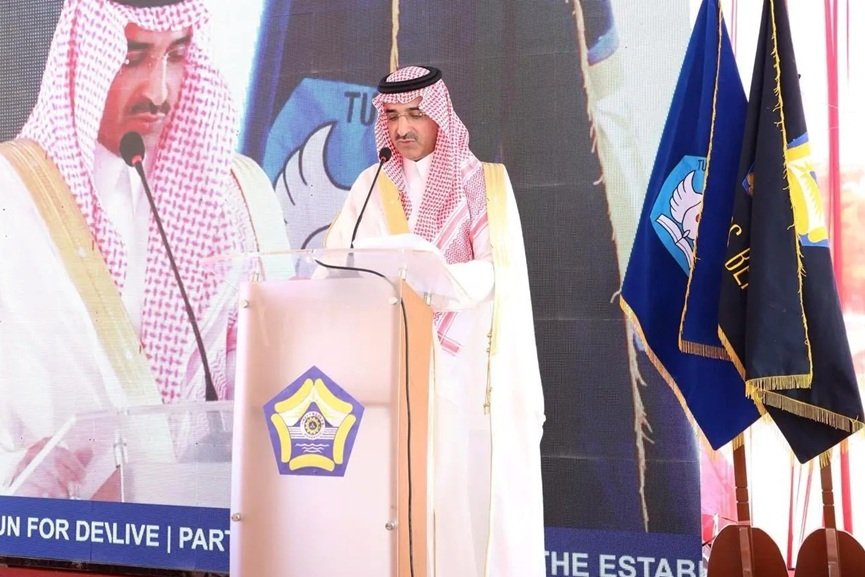
A new teaching and research hospital at the University of Bengkulu opened its doors this week, backed by a $22 million concessional loan from the Saudi Fund for Development. The facility is expected to bolster healthcare delivery and medical training in the region, reinforcing nearly five decades of strategic collaboration between SFD and Indonesia.

Sultan bin Abdulrahman Al-Marshad, Chief Executive Officer of SFD, presided over the inauguration on Friday, joined by Dr Retno Agustina Ekaputri, Rector of the University of Bengkulu, and Ir H Mian, Vice-Governor of Bengkulu Province. The hospital promises expanded healthcare access for local communities while serving as an academic hub for medical students and professionals.

At the ceremony, Al-Marshad emphasised that the facility represents “an important milestone in strengthening healthcare services for the people of Bengkulu and beyond,” highlighting the nearly 49-year trajectory of cooperation between SFD and Indonesia and affirming their mutual commitment to advancing the Sustainable Development Goals.

Functioning as both a medical facility and a teaching and research institution, the hospital is poised to enhance the region’s health system resilience, improve community health outcomes, and deliver hands-on training for new generations of medical staff.

Since its initial engagement in Indonesia in 1976, SFD has financed 12 development projects through over $396 million in loans, spanning healthcare, education, infrastructure and other vital sectors.

These initiatives illustrate a model of long-term development partnerships, tailored to local priorities while reinforcing broader global development objectives.

Al-Marshad’s visit also recalls a prior milestone when he laid the foundation stone for the hospital as part of a cluster of projects, including educational campuses in Jakarta and East Java, during his 2022 trip—an early indicator of the project’s eventual realisation. That plan had projected serving over 328,000 beneficiaries annually across Indonesia.

VISHNU RAJA
RYO YAMADA
HITORI GOTOH
IKUYO KITA