News related to
data

Tether’s USDT stablecoin has experienced significant expansion over the past year, with its market capitalisation rising by 37% to surpass $150 billion. Daily transfer volumes have increased by 90%, and the estimated user base has grown by 51%, according to CEO Paolo Ardoino.

These figures underscore USDT’s dominant position in the $238 billion stablecoin market, where it accounts for over 60% of the total market share. The surge in daily transfer volumes, now exceeding $90 billion, reflects heightened activity across both decentralised finance platforms and centralised exchanges.

The user base has expanded notably, with an estimated 46 million new wallets added in the first quarter of 2025 alone. This growth is attributed to increased adoption among retail and institutional investors seeking stable, dollar-pegged assets for trading and cross-border transactions.

Tether’s strategic initiatives have played a role in this expansion. The company’s acquisition of a 70% stake in Latin American agriculture and energy firm Adecoagro aims to integrate stablecoins into commodity trading, extending USDT’s utility beyond digital assets. This move aligns with Tether’s broader strategy to embed stablecoins into real-world financial ecosystems.

In terms of reserves, Tether has reported holding over $120 billion in U.S. Treasuries, positioning it among the largest holders globally. The company also holds more than 100,000 bitcoins and over 50 tons of gold, reinforcing its commitment to backing USDT with substantial assets.

Regulatory developments have also influenced Tether’s operations. The U.S. Senate’s advancement of the GENIUS Act, which introduces stricter oversight for stablecoin issuers, has prompted Tether to enhance its compliance measures. The act includes provisions for audits, prohibitions on yield offerings, and strengthened anti-money-laundering protocols.

Greenlogue/AP Abu Dhabi’s sovereign investor Mubadala and the Abu Dhabi National Energy Company have finalised the acquisition of an 875-megawatt combined-cycle gas-fired power plant at the Talimarjan Power Complex in Uzbekistan, marking a significant step in the ongoing privatisation of the Central Asian country’s energy sector. Each entity now holds a 40 per cent stake in the TPP1 gas-fired plant through a newly created project company, Talimarjan […]

Investcorp Capital, the Abu Dhabi Securities Exchange-listed alternative investment firm, has concluded the sale of 12 multifamily residential properties across five US states for approximately $550 million. The transactions, executed over several months beginning in 2024, encompassed the complete liquidation of a multifamily portfolio. Despite prevailing challenges in the US housing market, including elevated mortgage rates and economic uncertainties, the firm reported securing the exits at a […]

Gridora, a new infrastructure platform supported by ADQ, the Investment Holding Company , and Modon Holding, has formalised its first major collaboration by signing a memorandum of understanding with the Abu Dhabi Projects and Infrastructure Centre . This partnership aims to streamline the planning and execution of key transport infrastructure projects within the emirate. The MoU sets a strategic framework for cooperation, enabling Gridora and ADPIC to […]

Saudi Arabia’s sovereign wealth fund, the Public Investment Fund , is evaluating an initial public offering for its wholly-owned technology arm, Saudi Information Technology Company , as part of broader efforts to bolster the kingdom’s economic diversification strategy. According to individuals familiar with the matter, PIF has approached investment banks to submit proposals for roles in a potential share sale of SITE. The discussions are in preliminary […]

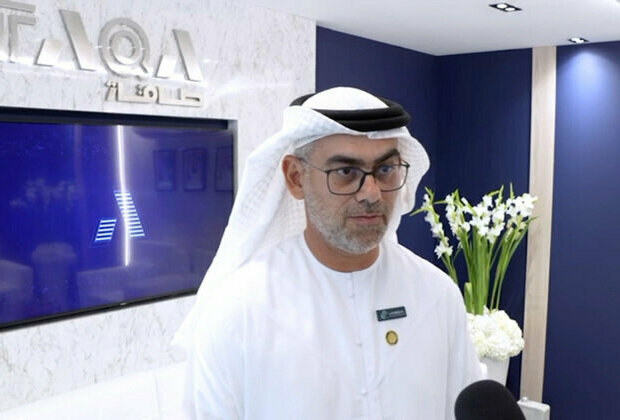
Abu Dhabi National Energy Company has unveiled plans to invest more than AED37 billion to meet the escalating power demands of the emirate’s expanding data centre and artificial intelligence infrastructure. The announcement was made by Group CEO and Managing Director Jasim Husain Thabet during the World Utilities Congress 2025.

This substantial investment is integral to TAQA’s strategy to deliver clean, certified, and reliable energy to critical infrastructure. The company aims to support Abu Dhabi’s ambition to become a global hub for digital innovation and AI development.

TAQA’s market capitalisation stands at approximately AED360 billion, positioning it among the top five companies in electricity generation, transmission, and water desalination across Europe, Africa, and the Middle East. Operating in 25 countries, TAQA has doubled its electricity production capacity to 56 gigawatts over the past four years, surpassing the total electricity consumption of the United Kingdom.

The company’s growth strategy includes significant international acquisitions. TAQA recently partnered with Mubadala to acquire an 875-megawatt gas-powered electricity station in Uzbekistan, aiding the country’s energy transition and opening new markets in Central Asia. Additionally, TAQA has acquired Transmission Investment, a leading UK-based energy and utility investment platform, enhancing its capabilities in offshore transmission services and infrastructure development.

In collaboration with Masdar, where TAQA holds a major stake, the company is developing 5 gigawatts of solar energy supported by 19 gigawatt-hours of battery storage. This integrated solar and battery system is designed to deliver a continuous supply of 1 gigawatt for 24 hours, marking it as the largest project of its kind globally.

TAQA plans to invest AED75 billion by 2030 to triple its electricity generation capacity to 150 gigawatts. Part of this strategy includes developing water desalination plants with a combined capacity of 1.3 billion gallons per day, with two-thirds utilising highly efficient reverse osmosis technology.

The company is also exploring acquisition opportunities in the United States, identifying it as a key market for expansion. TAQA aims to spend around $20 billion between 2023 and 2030 on organic and inorganic growth, targeting 150 gigawatts of capacity by the end of that period, up from around 56 gigawatts currently.

AVIS sets a safety precedent, becoming Singapore’s sole car rental firm certified to ISO 45001, meeting global standards. SINGAPORE – Media OutReach Newswire – 30 May 2025 – AVIS Singapore is the only car rental company in the country to have achieved ISO 45001 certification in December 2024, an international standard equivalent to Singapore’s bizSAFE Star, demonstrating its commitment to the highest levels of occupational health and […]

Advertisements

Google has officially launched Stitch, a generative AI tool designed to streamline user interface design and frontend development. This new offering replaces the Galileo AI service, which will be discontinued on June 20, 2025. Stitch leverages Google’s Gemini 2.5 models to transform text prompts and images into functional UI designs and corresponding code. Announced at the Google I/O 2025 developer conference, Stitch allows users to input natural […]

Akshay Dosaj and Asif Rashid  The UAE’s small and medium-sized enterprises (SMEs) sector is poised for substantial expansion, with projections estimating nearly one million businesses by 2030. As these enterprises navigate a competitive and dynamic environment, mergers and acquisitions (M&A) have become essential strategies for sustainable growth. To maximize these opportunities, SMEs need tailored solutions and expert guidance to achieve their growth ambitions and align with the […]

The Gulf nations offer more than growth potential. For VinFast, it presents a well-timed opportunity to expand into a region that’s actively investing in clean transportation while remaining open to new players. HANOI, VIETNAM – Media OutReach Newswire – 29 May 2025 – Gulf countries are reinventing themselves, quickly. They are now investing in cleaner energy, modern infrastructure, and long-term economic resilience. National strategies like UAE Vision […]

Messaging platform Telegram has successfully raised $1.7 billion through a convertible bond issuance, aiming to refinance existing debt and bolster its financial position. The five-year notes offer a 9% annual coupon and include a provision allowing bondholders to convert their holdings into equity at a 20% discount if Telegram proceeds with an initial public offering before maturity.

A significant portion of the proceeds, approximately $955 million, is earmarked to repurchase outstanding bonds from a 2021 issuance set to mature in March 2026. Telegram had previously repurchased around $400 million of this debt using internal funds. The remaining funds from the new bond sale will support the company’s operational expansion and strategic initiatives.

The bond offering attracted substantial interest from institutional investors. Existing backers like BlackRock and Abu Dhabi’s Mubadala Investment Company participated, alongside new entrants such as hedge fund Citadel. The high yield and potential for equity conversion made the bonds particularly appealing to investors seeking both income and growth opportunities.

Telegram’s financial performance has shown marked improvement. In 2024, the company reported a profit of $540 million on revenues of $1.4 billion, a significant turnaround from a loss of $173 million on $342 million in revenue the previous year. Projections for 2025 indicate a profit exceeding $700 million on revenues of $2 billion, driven by diversified income streams including advertising, in-app purchases, and premium subscriptions.

A notable contributor to Telegram’s revenue growth is a $300 million partnership with Elon Musk’s artificial intelligence firm, xAI. Under this agreement, Telegram will distribute xAI’s chatbot, Grok, within its platform, receiving compensation in both cash and equity. This collaboration signifies Telegram’s foray into integrating advanced AI technologies to enhance user engagement and service offerings.

Despite these financial strides, Telegram faces legal challenges. CEO Pavel Durov is currently under investigation in France for allegedly failing to cooperate with authorities probing illegal activities on the platform. Durov, who has been released on bail, is restricted from leaving France without official permission. His request to travel to the United States for investor meetings was denied by French prosecutors, citing insufficient justification. Durov maintains that Telegram has complied with all legal obligations and expresses uncertainty over the basis of the charges.

These legal issues have not deterred investor confidence. The successful bond issuance reflects a strong belief in Telegram’s growth trajectory and financial stability. The company’s user base continues to expand, with over 1 billion monthly active users and a doubling of paid subscribers to more than 15 million in the past year.

HONG KONG SAR – Media OutReach Newswire – 29 May 2025 – Rail leaders of global sustainable development consultancy Arup from across the Asia Pacific region shared their insights into the future of rail at Asia Pacific Rail 2025, ranging from the role of transit-oriented development in funding rail infrastructure, the use of the latest green and smart technology in transit systems, station transformation, and customer journey […]

A schism within the Organic Maps community has led to the creation of CoMaps, a forked project driven by governance and trust concerns. The decision to diverge from Organic Maps, an open-source navigation app, reflects deeper tensions about project management, decision-making transparency, and community engagement, issues that have become increasingly relevant in open-source ecosystems worldwide. Organic Maps has gained a loyal following for its offline map capabilities, […]

A fully operational computer system that runs entirely within a web browser is reshaping the way users interact with technology, removing the need for traditional hardware or software installations. This breakthrough in cloud computing and browser technology delivers a complete operating system environment accessible from virtually any device with internet connectivity, opening new possibilities for both individual users and organisations. The web-based operating system offers a comprehensive […]

By P. Sudhir Yaqeen Hammad, a 12-year-old Palestinian girl, was shredded into pieces by an Israeli missile attack on her residence. Yaqeen has been aptly called the Anne Frank of Gaza. Like Anne, who kept a diary in an attic in a Holocaust-ravaged, Nazi-occupied neighbourhood, Yaqeen documented the horrors around her. Her diaries – digital […]

A major security breach has compromised the Cetus Protocol, a decentralised exchange operating on the Sui blockchain, resulting in the loss of approximately $260 million in digital assets. The exploit has raised serious concerns about the security of decentralised finance platforms and the robustness of blockchain-based trading systems. The breach was identified when users reported irregularities in transaction processing and unexpected asset movements within the Cetus ecosystem. […]

Morgan Stanley has firmly denied accusations from the Dutch Public Prosecution Service alleging the financial giant evaded tax on dividends worth nearly $1 billion more than ten years ago. The dispute centres on complex tax structures employed by the bank that Dutch authorities contend were designed to avoid paying the appropriate tax on substantial dividend income. Dutch prosecutors assert that the investment bank engaged in schemes dating […]

Microsoft has launched a new terminal-based text editor designed to work seamlessly on both Windows and Linux platforms, aiming to simplify coding and text editing directly within the command line interface. This move reflects growing demand for efficient, lightweight tools that integrate naturally into developers’ existing workflows without the need for extensive retraining. The new editor, which arrived without significant fanfare, leverages familiar keyboard shortcuts that many […]

Solana’s cryptocurrency token has experienced a notable price surge, driven primarily by an inflow exceeding $1.1 billion to exchanges during May. This substantial movement of funds has attracted significant attention within the digital asset community, highlighting the growing interest in Solana amid an increasingly volatile market environment. The influx of tokens onto exchanges typically signals heightened trading activity, often preceding sharp price movements, and in Solana’s case, it appears to have been a catalyst for recent upward momentum.

The past weeks have seen a consolidation phase for Solana’s price, characterised by fluctuating trading volumes and cautious investor sentiment. However, May’s exchange inflow data reveals a sharp contrast, indicating a renewed wave of buying and selling pressure. This influx surpasses figures recorded in previous months, reflecting intensified activity from institutional players and retail investors alike. Analysts point out that such large-scale transfers to exchanges often suggest an intent to capitalise on price volatility, either through profit-taking or strategic accumulation.

Solana’s blockchain platform, known for its high throughput and fast transaction speeds, has gained traction beyond its original niche, appealing to a broader base of developers and users. Its ecosystem supports a wide range of decentralised applications, including DeFi protocols and NFTs, which have collectively contributed to increasing token demand. Industry experts attribute Solana’s recent price gains not only to market speculation but also to fundamental growth in network usage and ecosystem expansion.

Market participants closely monitor the inflow and outflow trends of tokens on exchanges as indicators of potential price directions. The reported $1.1 billion inflow represents tokens transferred from wallets to trading platforms, signalling that holders are preparing to trade. This can be interpreted in various ways: it may represent holders positioning themselves to sell and realise profits, or conversely, traders gearing up to buy or hedge positions amid market uncertainty.

Broader market conditions have influenced Solana’s trajectory as well. The cryptocurrency sector has witnessed uneven performance across different assets, with some coins consolidating while others rally sharply. Bitcoin’s fluctuating dominance and regulatory developments have introduced layers of complexity into trading decisions. Against this backdrop, Solana’s price action stands out due to the volume and scale of exchange inflows, setting it apart from many peers.

Further analysis of blockchain data confirms that the inflows were concentrated over several large transactions, often linked to known institutional wallets and prominent traders. This pattern contrasts with typical retail trading behaviour, which tends to be characterised by numerous smaller transfers. The presence of institutional activity points to growing confidence in Solana’s potential for medium-term gains, despite lingering concerns over market volatility and regulatory scrutiny.

Solana’s technological edge is often cited as a key factor supporting its valuation. The platform utilises a novel proof-of-history mechanism combined with proof-of-stake consensus, enabling it to process thousands of transactions per second with low fees. This scalability advantage is critical in sustaining the network’s appeal amid growing congestion issues faced by some competing blockchains. The surge in exchange inflows may partly reflect investor anticipation of further adoption driven by these technical strengths.

However, the rapid influx of tokens to exchanges also raises questions about market stability. Large sell-offs following such inflows could lead to increased price swings, challenging traders and investors to navigate the volatility carefully. Some market analysts warn that while the current price rise appears robust, it may be vulnerable to corrections if selling pressure intensifies or if broader market sentiment deteriorates.

Solana’s recent developments extend beyond price movements and token flows. The network has announced partnerships and upgrades aimed at enhancing security and interoperability, which could underpin longer-term growth. These initiatives include collaborations with major fintech firms and integration with cross-chain protocols, designed to broaden Solana’s accessibility and utility. Such advancements bolster the narrative that the project is moving beyond speculative trading into a more mature phase of ecosystem development.

The token’s growing use in decentralised finance applications adds an additional layer of interest for investors. DeFi platforms on Solana have attracted liquidity providers through competitive yields and efficient transaction processing, making them popular alternatives to Ethereum-based solutions burdened by higher fees. This trend has helped sustain demand for SOL tokens, supporting price levels despite wider market fluctuations.

Regulatory scrutiny remains an ongoing challenge for the cryptocurrency industry, including Solana. Various jurisdictions continue to debate rules concerning token classifications, trading practices, and investor protections. How regulators approach emerging blockchain technologies could significantly affect Solana’s market dynamics. Investors are closely watching for clarity that could either open new opportunities or impose restrictions affecting token liquidity and valuation.

Investor sentiment towards Solana reflects a balance of optimism and caution. While the large-scale exchange inflows and fundamental network growth signal promising prospects, market participants acknowledge the inherent risks posed by external economic factors, potential regulatory changes, and technological competition. The interplay of these forces will likely shape Solana’s price trajectory in the weeks ahead.


Saudi Aramco has secured $5 billion through a three-part bond sale, signalling its commitment to leveraging debt markets to sustain growth and maintain financial stability amidst declining oil revenues. The bond issuance, comprising five-, ten-, and thirty-year tranches, attracted strong investor interest, with spreads tightening significantly from initial guidance, reflecting confidence in the company’s creditworthiness despite a challenging energy market landscape. The bond sale follows a 4.6% […]

Kuwait’s fiscal deficit is projected to average 8.9% of GDP between 2025 and 2028, a significant increase from the estimated 2% in 2024, according to S&P Global Ratings. This deterioration is attributed to subdued oil prices and persistently high government expenditures, particularly on wages and subsidies, which together account for approximately 70% of total spending. S&P anticipates Brent crude oil prices to average $65 per barrel in […]

ADNOC Drilling has entered into an agreement to acquire a 70% stake in SLB’s land drilling rigs business in Kuwait and Oman for $112 million. The joint venture encompasses eight fully operational land rigs—two in Kuwait and six in Oman—currently under contract with the respective national oil companies. The transaction, pending customary regulatory approvals, is anticipated to close in the first quarter of 2026. ADNOC Drilling plans […]

OPEC and its allies, collectively known as OPEC+, have reaffirmed their existing oil production targets through 2026, opting to maintain current supply restraints despite ongoing market volatility and internal disagreements over future quotas.

During a virtual ministerial meeting on Wednesday, the 22-member alliance confirmed that the group-wide production cuts, initially set in 2022, will remain in place. These cuts include a 2 million barrels per day reduction agreed upon in November 2022, along with additional voluntary cuts totaling 3.85 million bpd by eight key producers—Saudi Arabia, Russia, the United Arab Emirates, Kuwait, Iraq, Algeria, Oman, and Kazakhstan. The voluntary cuts are structured in two layers: a 1.65 million bpd reduction extended through the end of 2026 and a 2.2 million bpd cut scheduled to expire in March 2025.

The alliance’s decision to uphold these targets comes amid a backdrop of fluctuating oil prices and concerns over global demand. Brent crude futures have hovered around $65 per barrel, a significant drop from earlier highs, influenced by factors such as increased production from non-OPEC countries and economic uncertainties stemming from global trade tensions.

A more contentious discussion is set to take place on Saturday, when the eight core OPEC+ members implementing voluntary cuts will convene to decide on July production levels. These countries have been gradually unwinding the 2.2 million bpd cut since April, with increases of 411,000 bpd implemented in both May and June. The group is expected to consider a similar hike for July, potentially accelerating the rollback of cuts and impacting global oil supply dynamics.

Abu Dhabi’s sovereign wealth fund Mubadala Investment Company has raised $1 billion through a 10-year U.S. dollar-denominated Islamic bond, or sukuk, marking its first debt issuance of the year. The bonds, issued via its financing arm Mamoura Diversified Global Holding, were priced at 60 basis points over U.S. Treasuries, tightening from initial guidance of 95 basis points, following robust investor demand.

The offering attracted orders exceeding $4.75 billion, leading to a fivefold oversubscription, underscoring strong investor confidence in Mubadala’s creditworthiness and the appeal of Islamic finance instruments. This issuance follows Mubadala’s previous sukuk sale in October, where it raised 1 billion dirhams through a five-year bond.

The sukuk employs a wakalah structure, utilizing a portfolio of publicly listed shares as underlying assets, a first for a UAE-origin sukuk. This innovative approach reflects a shift towards more flexible and equity-based structures in Islamic finance, potentially setting a precedent for future issuances in the region.

Mubadala’s latest financial results indicate a 9.1% increase in assets under management, reaching 1.2 trillion dirhams, driven by strategic investments in sectors such as technology, manufacturing, and private credit. As the second-largest state investment fund in Abu Dhabi, following the Abu Dhabi Investment Authority, Mubadala plays a pivotal role in the emirate’s economic diversification efforts.

VISHNU RAJA
RYO YAMADA
HITORI GOTOH
IKUYO KITA
Just in:
xCube Access Welcomes Entrust Capital Limited  Expanding Access to Professional Portfolio Management // As AI Reshapes Education, Singapore Convenes Global Dialogue on the Future of Early Childhood Education // XRG secures agreement for $1.45bn Australian LNG stake // DIP Holding targets Dh1.12 IPO price and $529m proceeds // Vingroup And Legends Global Announce Strategic Partnership For VinFast – Trong Dong Stadium // Ondine Capital Announces First Close of Fund III to Drive AI and Semiconductor Innovation // Bank99 launches business accounts through Austrian postal network // Assembly ruckus trial begins after 11 years // AI trust gap reveals distinct retail priorities: Divergent paths to consumer growth in Hong Kong and the GBA // Anthropic to prohibit persistent abuse of Claude chatbot // Democrats secure Senate majority after Republican election losses // Arrow Electronics showcases technologies advancing intelligent robotics, mobility and digital infrastructure // ONYX Hospitality Group Expands Strategic Partnerships through ONYX Rewards // America On Edge: November 3 Mid Term Polls Outcome May Weaken Trump // XTransfer and Bank of China (Hong Kong) Announce Partnership at Hong Kong FinTech Week // Probe ordered into new bar licences // Apollo broadens Abu Dhabi partnership through Mubadala Capital stake // ADIPEC leaders urge investment in global energy networks // mamun raises US$3 million to finance cross-border trade between the Gulf and Asia // Binance SAFU bitcoin holdings halve after security breach //