Just in:
Ta’ziz finalises $1.39bn funding for Ruwais industrial facilities // xCube Access Welcomes Entrust Capital Limited  Expanding Access to Professional Portfolio Management // BJP’s Aggressive Response Exposes Anxiety Over Opposition Unity // Burying Head In “India Made Poverty Reduction” Data Is Dangerous // After Reaching 7 Million Users in the Philippines, Skyro Launches Transparent Cash Loans in Malaysia // Utilities pursue ₹1,992 cr in unpaid bills // Asia Left Behind: Ten international companies have yet to report delivering on their cage-free egg pledges across the region // Arrow Electronics showcases technologies advancing intelligent robotics, mobility and digital infrastructure // ADIA and partners establish $1.4 billion aviation venture // Hong Kong mandates crypto transaction disclosures to tax authorities // Democrats capture Senate majority with seven Republican seats // AI trust gap reveals distinct retail priorities: Divergent paths to consumer growth in Hong Kong and the GBA // Oil and chip shares retreat after Democratic victories // U.S. Mid Term Result Is A Clear Verdict Against Trump’s Authoritarianism // Emirates Group records AED 4.1 billion half-year profit // Pinarayi faults UDF over mounting road crashes // Anthropic to prohibit persistent abuse of Claude chatbot // Cloudflare unveils Zero Wire vulnerability intelligence service // Cyberport Venture & Capital Forum 2026 Grand Opening // Dubai boat show confirms international shipyard line-up for November //

News related to
data

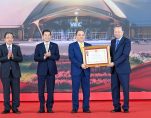
HANOI, VIETNAM – Media OutReach Newswire – 19 August 2025 – Vingroup was awarded the First-Class Labor Order in recognition of its exceptional achievements in developing the National Exhibition and Convention Center. This prestigious award acknowledges the Group’s breakthrough efforts and determination in completing the project 15 months ahead of schedule, celebrating the 80th National Day of the Socialist Republic of Vietnam and making a significant contribution […]

SINGAPORE – Media OutReach Newswire – 19 August 2025 – With the demand for accountancy and finance professionals growing amid Singapore’s transition to a digital and sustainable economy, the Institute of Singapore Chartered Accountants (ISCA) today launched a $2 million Career Support Programme to help jobseekers and mid-career individuals pivot confidently into the accountancy profession. Unveiled by Ms Indranee Rajah, Minister in the Prime Minister’s Office, Second […]

HANOI, VIETNAM – Media OutReach Newswire – 19 August 2025 – To mark the 80th anniversary of the National Day of the Socialist Republic of Vietnam, Vingroup inaugurated and broke ground on six major projects across the country. The highlight was the inauguration ceremony of the National Exhibition and Convention Center in Dong Anh, Hanoi, alongside five other landmark projects in the fields of socio-economic infrastructure, transportation, […]

China has lifted export restrictions on rare earth minerals and fertilisers to India, easing supply pressures across high-tech, agricultural, and infrastructure sectors. The curbs, linked to national security concerns amid lingering border tensions, were rescinded following high-level diplomacy. Indian supplies of essential rare earth magnets—vital for electronics, renewable energy, and defence manufacturing—along with fertilisers and tunnel-boring equipment, are now poised to increase.

Lines of communication between the two capitals have reopened. During the latest India-China border talks, Chinese officials pledged to address New Delhi’s urgent demands, including expedited access to these items. Rare earth exports to India were previously down by 58 per cent compared to January levels, signalling a serious disruption for industries dependent on these critical inputs.

Manufacturing sectors—spanning automobiles, electronics, renewable energy, and defence—stand to benefit directly. These industries were particularly vulnerable due to India’s heavy reliance on Chinese rare earths and fertilisers; the absence of domestic magnet production compounded the supply gap despite India holding the world’s fifth-largest rare earth reserves.

Officials confirmed that China has begun implementing the export changes, with shipments of fertilisers, rare earth magnets, and tunnel-boring machines already underway. The commitments were made by a visiting Chinese Foreign Minister during discussions with Indian counterparts, setting the stage for smoother deliveries ahead of an upcoming high-level summit.

This trade shift follows months of disruption. Earlier in the year, China imposed stringent licensing requirements and delays on rare earth exports—especially seven heavy rare earth elements—affecting global supply chains. That move had compounded export issues affecting not only India but also manufacturers in Europe and the United States, underlining the strategic importance of rare earth materials.

On the fertiliser front, China had halted exports of specialty fertilisers for several months, causing concern across India’s high-value agriculture sector. Indian agribusinesses endured supply constraints as processes such as inspections and inspections delays were used to restrict deliveries. India responded with a resilient mix of domestic ramp-ups, diversification of import sources, and building strategic stockpiles—mitigation that has now yielded tangible benefits.

Diplomatic analysts interpret China’s decision as a calibrated move toward stabilising bilateral trade, particularly ahead of expected discussions at an international summit. While the easing of restrictions is welcomed, longstanding geopolitical mistrust and unresolved border issues suggest that the normalization remains cautious. This trade reprieve signals a pragmatic shift, but not a full thaw in relations.

India, meanwhile, is accelerating its critical minerals strategy. Domestic initiatives—including exploration incentives, production-linked schemes, and global partnerships—are being fast-tracked to reduce strategic dependencies. The National Critical Mineral Mission, launched earlier this year, continues to mobilise efforts across the supply chain, while overseas resource acquisitions and collaborations are gaining momentum.

Scientists are testing a technique that could reshape the cornea using electricity instead of lasers, offering a potential alternative to traditional laser surgery. Early experiments with rabbit corneas have demonstrated the method can correct vision in minutes without any incisions—a promising development that may redefine the future of refractive correction. At the American Chemical Society Fall meeting, held from 17-21 August 2025, research led by Michael Hill […]

A growing crisis unfolds in Saint-Louis as families uprooted from the Langue de Barbarie peninsula remain in precarious limbo at the Khar Yalla site, more than nine years after coastal erosion rendered their homes uninhabitable. Despite the introduction of temporary shelters at Diougop under the SERRP programme, many displaced persons continue to confront chronic hardship, vulnerability and the erosion of hope. Dozens of families originally from Guet-Ndar, […]

Four technology firms from Australia, Nigeria, the UAE and the Netherlands have signed a Memorandum of Understanding to launch a joint venture named AfricAI, aimed at creating enterprise-grade artificial intelligence solutions specifically designed for Africa’s diverse markets. The pact marks a strategic push for digital sovereignty and localised innovation across the continent. Lakeba Group of Australia, Next Digital of Nigeria, AqlanX of the UAE and Agentic Dynamic […]

Advertisements

A 13-year-old boy has died following a shooting at a home in Pimicikamak Cree Nation, and a 17-year-old has been charged with manslaughter. RCMP from the Cross Lake detachment responded at about 5:40 p. m. on Saturday after reports of gunfire. The victim was transported to a local nursing station, where he was pronounced dead. The 17-year-old was arrested at the scene and a firearm seized, police […]

The combined platform supports agribusinesses in meeting EU Deforestation Regulation (EUDR) and ESG requirements with end-to-end transparency across key commodities. SINGAPORE – Media OutReach Newswire – 19 August 2025 – Agridence Grp Holdings Pte. Ltd. (“Agridence”), a Singapore-based leader in digital agri-commodity supply chain solutions, announced its acquisition of farmer connect, a European compliance and traceability platform. This acquisition comes alongside Agridence’s newly secured investment, enabling the […]

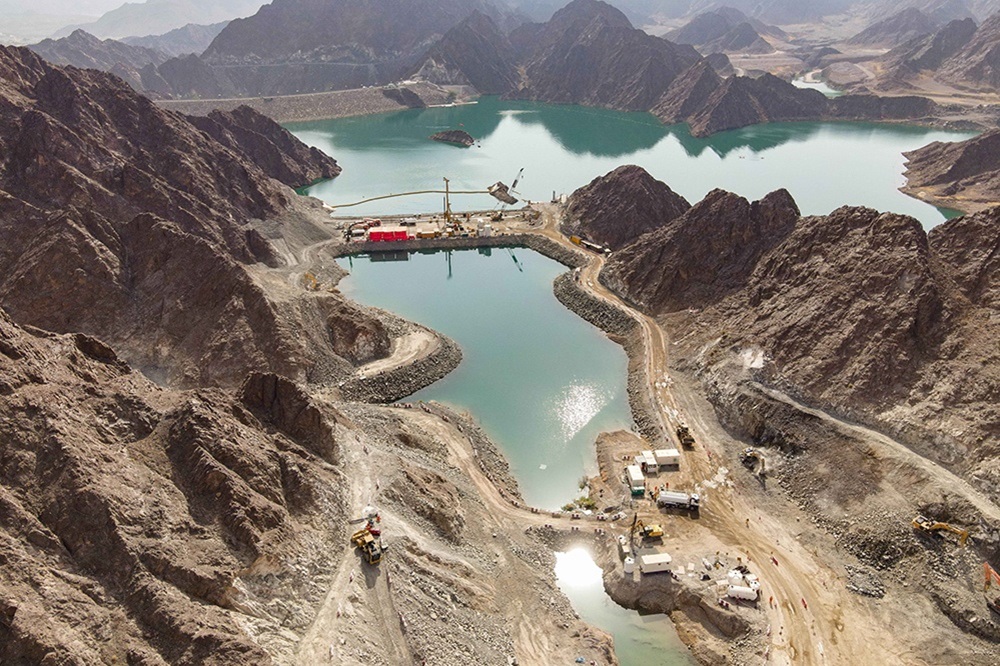
Dubai has begun trial operations of its pumped-storage hydroelectric plant in Hatta, delivering electricity into the city’s grid. The facility, which has already generated more than 17,900 MWh during testing, will free up surplus power beyond Hatta’s 39 MW local demand for export. Emirates 247 cites HE Saeed Mohammed Al Tayer, MD & CEO of the Dubai Electricity and Water Authority, confirming the start of electricity exports from the plant during his site visit.

The Hatta plant boasts a 250 MW generation capacity, 1,500 MWh of storage, and is designed to last up to 80 years—backed by a Dh1.42 billion investment. Underground construction includes two 110-tonne water valves, a command-and-control centre and an upper dam spanning 210,000 sqm, built with compressed concrete walls measuring 72 m and 37 m high.

DEWA’s scheme aligns closely with emirate-wide initiatives under the Clean Energy Strategy 2050 and the Net-Zero Carbon Emissions Strategy 2050, which aim for 100 percent clean energy supply by mid-century.

Trial operations of this pioneering project began earlier in the year, with operational tests launched in January 2025. DEWA confirmed the plant was 96.82 percent complete around that time and anticipated beginning energy exports in April 2025.

The hydropower station employs a cyclic system: during off-peak hours, clean electricity from the Mohammed bin Rashid Al Maktoum Solar Park is used to pump water from the lower reservoir to the upper dam. When demand spikes, water flows back through a 1.2 km tunnel, converting stored potential energy into kinetic energy to drive turbines. The conversion process delivers electricity to the grid in as little as 90 seconds, with a turnaround efficiency of 78.9 percent.

Hatta lies roughly 140 km south-east of central Dubai in the Hajar Mountains. The project includes an innovative design featuring two 125 MW Francis-type pump turbines capable of reversible operation—a technical solution by a consortium led by ANDRITZ Hydro, STRABAG and ÖZKAR, contracted in 2019.

This pumped-storage facility is the first of its kind in the Gulf region and a flagship example of how heat-resistant hydropower systems may outperform large-scale battery storage in desert climates.

During his visit, Al Tayer toured the station’s subterranean power station, inspected the upper dam’s compressed concrete walls, and oversaw functional tests of the pumping and generation mechanism. The station’s speedy response time and storage efficiency are designed to bolster Dubai’s grid resilience while reducing reliance on fossil fuel generation.

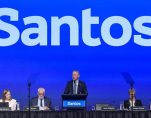
Australia’s Santos revealed that a takeover proposal valued at US $18.7 billion, spearheaded by a consortium under the Abu Dhabi National Oil Company, will not be concluded by the extended 22 August deadline and now faces a delay of at least four weeks. The investment group, including ADNOC’s XRG arm, Abu Dhabi Development Holding Company and private equity firm Carlyle, cited the need to finalise regulatory and due diligence clearances across multiple jurisdictions—including Australia, Papua New Guinea and the United States—before completing a binding scheme implementation agreement.

Santos confirmed that negotiations remain “collaborative” yet incomplete, with both parties still to secure agreement on acceptable terms for a binding SIA. Given the outstanding conditions, signing before the end of the week appears unlikely.

The implications for Santos’ investors were swift: its shares slid up to 3.5 per cent, reaching A$7.68—a five-week low—marking it as one of the ASX 200’s most notable underperformers.

The bid, if executed, would become Australia’s largest-ever all-cash corporate takeover. Santos’ enterprise value, factoring in net debt, stands at approximately A$36.4 billion, signalling a major transaction in the energy sector.

Industry analysts emphasise that regulatory approvals remain the most significant obstacles. Australia’s Foreign Investment Review Board, in particular, presents a critical test given the strategic sensitivity of energy infrastructure. Papuan New Guinea and U. S. authorities also must grant clearance.

James Hood of Regal Funds Management expressed palpable market unease, observing that the share price response reflects “increased risk and uncertainty.” Kaushal Ramesh from Rystad Energy characterised the execution of a deal of this magnitude as “never going to be an easy transaction”, especially with national energy security and regulatory scrutiny in play. Another investor, Jamie Hannah of Van Eck, reiterated that the key challenge isn’t procedural but regulatory—from the FIRB in Australia.

As a result of the delay, Santos will release its interim earnings on 25 August, instead of the previously planned 20 August.

Interest in the Pikka oil project in Alaska—expected to commence production mid-2026—adds further strategic weight to Santos’ asset base and may influence regulatory and investor perspectives on the transaction.

The United Arab Emirates registered some US$25.4 billion in mergers and acquisitions through the first six months of 2025, making up approximately 43 per cent of all M&A transactions across the Middle East and North Africa—which totalled US$58.7 billion during the period, according to data from EY’s latest MENA M&A Insights report.

MENA deal-making demonstrated robust momentum in the first half of 2025, with 425 transactions reflecting a 31 per cent increase in volume and a 19 per cent rise in overall value compared with the same period in 2024, as EY’s analysis shows.

Cross-border activity surged, accounting for 55 per cent of all deals by number and 78 per cent by value—marking the highest cross-border level in the past five years. Key sectors driving these overseas transactions included chemicals and technology, which together represented two-thirds of cross-border deal value. Among the most significant was the US$16.5 billion deal in which Borealis AG and OMV AG acquired a 64 per cent stake in Borouge plc.

Domestic deal-making remained energetic too. Homegrown transactions constituted 45 per cent of all deals by volume and 22 per cent of the total value, amounting to 192 deals worth US$12.8 billion—an impressive 94 per cent year-on-year rise in value. The technology and diversified industrial products sectors were prominent in this category. A standout deal was AI and cloud services firm Group 42’s acquisition of a 40 per cent stake in Khazna Data Centres for US$2.2 billion.

EY’s MENA EY-Parthenon Leader, Brad Watson, emphasised that the mid-year results underline how resilient and dynamic the region’s M&A market is. He pointed to sustained appeal for investors, underpinned by stable oil prices, infrastructure expansion and a strategic emphasis on growth industries such as technology, chemicals, and industry. I n particular, he noted that the UAE continues to attract significant global capital, thanks to its strong regulatory environment and push for economic diversification, alongside growing collaborative ties with Europe, Asia, and North America.

When compared with mid-2024 performance, the jump is clear. In the first half of last year, the MENA region recorded 321 deals valued at US$49.2 billion. That represented only a modest 1 per cent increase in volume and 12 per cent growth in value over the prior year. Deal values in the UAE and the Kingdom of Saudi Arabia accounted for US$9.8 billion out of that total.

Looking at the broader picture, 2024 closed with 701 MENA M&A deals worth US$92.3 billion, reflecting a 3 per cent rise in deal volume and 7 per cent gain in value compared with 2023. Cross-border transactions were the primary engine, making up 52 per cent of deal volume and 74 per cent of value.

The UAE’s growing prominence in M&A stems from both deliberate policy reforms and strategic positioning. Domestic investors, notably sovereign wealth funds and government-related entities such as ADIA and Mubadala, have been highly active across both home-market and international transactions. At the same time, global investors have responded favourably to the region’s economic diversification efforts, regulatory clarity, and infrastructural thrust.

TAIPEI, TAIWAN – Media OutReach Newswire – 19 August 2025 – Solid State Storage Technology Corporation (SSSTC) proudly announces the launch of the SSSTC CA8 Series, the world’s first industrial M.2 SSD built with BiCS FLASH™ generation 8 3D flash memory technology and a PCIe® Gen5 x4 interface. Offered in the industry-standard M.2 2280 form factor, the SSSTC CA8 Series is available in 512 GB, 1 TB, […]

French authorities have initiated dialogue with Mali to secure the immediate release of a French national working at the embassy in Bamako, whose detention Bamako’s military regime justifies with allegations of involvement in a destabilisation plot. The French foreign ministry has dismissed these allegations as baseless, emphasising that the detained individual is entitled to protections under the Vienna Convention on Diplomatic Relations. French officials argue that the […]

Cyber-security researchers have exposed a covert malware distribution effort exploiting pirated software download sites to deliver a modular loader known as HijackLoader, bypassing key defences such as ad-blockers and Microsoft Defender SmartScreen. The campaign has been traced to illegal download pages and SEO-poisoned sites that continue to evade detection, putting users at elevated risk. HijackLoader, first identified in 2023, has rapidly evolved into a multi-module loader capable […]

An executive order signed on 30 July 2025 will suspend the long-standing “de minimis” exemption for all international shipments valued under $800, starting 29 August. This removes the duty-free benefit that major cross-border platforms like Shein and Temu relied upon, prompting both to announce price adjustments and restructure shipping models. Online marketplaces specialising in ultra-low-cost goods are scrambling to recalibrate. Temu has already halted direct shipments from […]

A bold partnership between the Central Bank of the UAE and Presight, the AI arm of G42, is unfolding a new era in financial infrastructure. The joint venture will embed artificial intelligence across core systems – spanning digital currency, instant and real-time payments, card services and open finance platforms – designed, built, and managed within the UAE. The agreement places AI at the heart of systems such as the Central Bank Digital Currency, Instant Payments, Domestic Card Scheme, National Card Switch, Real-Time Gross Settlement, and Open Finance network.

The initiative underpins the Financial Infrastructure Transformation Programme, a sweeping architectural modernisation blueprint launched by CBUAE in February 2023, with full deployment anticipated by 2026. Where CBUAE once relied on external vendors for supervisory technology and data systems, the new venture shifts toward a sovereign, AI-driven approach.

Ebrahim Obaid Al Zaabi, Assistant Governor for Monetary Policy and Financial Stability, characterised the venture as a strategic move “to ensure the UAE’s financial market infrastructure remains resilient, secure, efficient and future-ready.” He also noted that merging FIT’s leadership with Presight’s technological prowess will reinforce the UAE’s financial ecosystem and underpin national economic stability, strengthening its position as a global financial centre.

Thomas Pramotedham, Chief Executive of Presight, described the venture as a “decisive leap forward,” stating that by “focusing exclusively on AI-driven financial solutions, we are creating a sovereign finance technology powerhouse that will redefine how financial markets operate—faster, with applied intelligence, and more securely than ever before.”

Already, FIT has delivered functional platforms like Instant Payments and the Jaywan card scheme, with CBDC infrastructure currently under development. The venture now takes over these critical functions — charged with developing, maintaining and safeguarding them under a sovereign, AI-backed framework.

Beyond financial rails, this AI integration offers promise across several performance benchmarks: settlement speed, fraud detection, transparency, and cost efficiency all stand to improve. These enhancements align with broader technological sovereignty goals: reducing dependence on foreign providers, enhancing cybersecurity responsiveness, and supporting fintech innovation with locally administered smart infrastructure.

In a parallel development, the Emirates Institute of Finance’s Innovation Hub has entered into a Memorandum of Understanding with HSBC, Al Maryah Community Bank, Presight, and Core42 to explore applications of both traditional and generative AI across banking. The objective is to augment operational efficiency, strengthen cybersecurity, and enrich customer service within the banking sector.

In the broader academic and regulatory sphere, scholars have analysed the transformative potential of AI in finance, alongside its risks: regulatory opacity, bias, data privacy issues, systemic vulnerabilities, and ethical concerns. Recent studies advocate for explainability, human oversight, auditability, and adaptive, principled governance frameworks to safeguard trust while fostering innovation.

By embedding AI at the infrastructure layer, the UAE initiative intersects with these academic prescriptions — though realisation of such ideals will hinge on effective governance, transparency, and operational resilience. As financial systems globalise and grow increasingly complex, ensuring AI’s reliable, accountable implementation will determine whether this model achieves its promise.


Millennials and Gen Zs lead the charge in proactive wealth planning; Gen Zs also have the highest expectations towards receiving an inheritance SINGAPORE – Media OutReach Newswire – 19 August 2025 – A new report by Etiqa Insurance Singapore spotlights growing trends in intergenerational wealth transfer, with 77% of Singaporeans prioritising leaving a financial legacy to future generations. With two-thirds of Singaporeans having either received, transferred or […]

Cambridge Dictionary has added over 6,000 entries to its online lexicon this year, including the slang “skibidi,” alongside other terms that reflect internet-era linguistic shifts. Lexical programme manager Colin McIntosh emphasised that each word chosen shows signs of enduring use, based on analysis via the Cambridge English Corpus containing more than two billion instances of written and spoken English. “Skibidi” entered the dictionary with a flexible definition […]

China’s reliance on fossil fuels has been steadily declining despite increasing energy demand, marking a significant shift in the nation’s energy landscape. Coal and gas consumption saw a dip in 2025, even during a scorching July, as the government continues to prioritise clean energy sources. This is a clear sign that China’s aggressive push towards renewable energy and energy efficiency is beginning to take effect, even as the country faces unprecedented challenges in meeting its growing power needs.

Data from the National Energy Administration revealed that, in the first half of 2025, coal usage in the energy mix fell by 5% compared to the same period last year, while natural gas consumption also showed signs of contraction. The most striking development came in the power sector, where a surge in renewable energy production, particularly from solar and wind sources, helped to reduce dependency on fossil fuels.

China’s power demand soared during the summer, driven by an intense heatwave that gripped much of the country. However, the country was able to meet this surge without resorting to its usual fossil fuel-heavy energy production methods. This is partly due to the rapid expansion of its renewable energy capacity, which reached new records in both wind and solar power generation in 2025. The NEA reported that China’s total renewable energy capacity crossed 1,200 gigawatts for the first time, a crucial milestone that reflects the country’s commitment to a cleaner and more sustainable energy future.

One key driver of this change is China’s substantial investment in renewable infrastructure. The government allocated over $60 billion to clean energy projects in 2025, focusing heavily on expanding solar farms and offshore wind installations along the coast. At the same time, China has been making significant strides in energy storage technologies, which are crucial for maintaining grid stability as renewable sources, particularly solar, are intermittent.

While China remains the world’s largest coal producer and consumer, the shift towards clean energy is undeniable. The country’s coal-fired power plants, once the backbone of its energy sector, are now being gradually phased out or repurposed for lower-carbon technologies. The transition has been especially evident in regions like Inner Mongolia, where coal consumption has sharply decreased as wind and solar energy projects have taken root.

Industry experts point to a combination of factors driving this shift. First, there is the national government’s ambitious target of reaching carbon neutrality by 2060. Second, the economic pressures on coal mining companies, many of which are facing increasing scrutiny over environmental and public health concerns, are playing a role in reducing coal’s dominance. Moreover, local governments have introduced incentives for businesses to adopt cleaner energy solutions, further encouraging the transition away from fossil fuels.

The reduction in coal and gas use has also been bolstered by the rise of electric vehicles, which now account for a significant portion of the energy demand in urban centres. China’s push to become a global leader in EV manufacturing has contributed to the decrease in fossil fuel consumption in the transportation sector, where electricity now plays an increasingly prominent role.

However, while the momentum towards renewable energy is clear, challenges remain. One pressing issue is the reliability of the grid, especially in remote areas where renewable generation can be less consistent. The government is addressing this concern with the expansion of transmission infrastructure designed to transport power from renewable-heavy regions like the north and west to energy-hungry areas like the east and south.

While the clean energy push is a notable success, fossil fuels still account for a large portion of China’s energy mix. This means that the country remains vulnerable to price fluctuations in global energy markets, as seen in 2024 when rising global gas prices temporarily hindered efforts to reduce fossil fuel reliance.

Greenlogue/AP Suqia, the UAE’s national water charity, continues to solidify its global humanitarian efforts, reaching nearly one million people in Tanzania with clean drinking water. In partnership with the Emirates Red Crescent and backed by a grant from HH Sheikh Mohammed bin Rashid Al Maktoum, this initiative aims to address water scarcity, one of the most pressing issues facing communities in East Africa. The project, a part […]

  LibreOffice now supports AI-driven image generation via a new extension that bridges the office suite with the Stable Diffusion system, enabling users to create visuals directly from textual descriptions without leaving the application. A compact, purpose-built introduction prompts users to describe a scene, then uses Stable Horde, a collaborative network of volunteer-run Stable Diffusion servers, to generate an image. This functionality allows immediate integration of visuals […]

Federal lawmakers are grappling with a surge of feedback following the Senate’s release of its discussion draft of the Responsible Financial Innovation Act, aimed at defining the regulatory framework for digital assets. With a compressed input window and wide-ranging submissions from banking associations, regulators and web3 groups, attention has quickly centred on stablecoin interest—an area of mounting concern.

Provisions introduced by the House’s CLARITY Act placed digital assets under Commodity Futures Trading Commission oversight, but the Senate’s RFI Act grants the Securities and Exchange Commission primary regulatory authority over so-called “ancillary assets” while still permitting CFTC consultation on specific rules. The RFI Act also empowers banks to engage in activities such as custody, lending, market-making and even operating blockchain nodes, alongside instructing the SEC to craft a new rule to determine what constitutes an investment contract, potentially supplanting the decades-old Howey Test.

While the SEC-centric approach aims to resolve ambiguity in digital asset regulation, banking groups are alarmed by what they describe as a critical loophole in the GENIUS Act—the stablecoin law recently enacted. Although the GENIUS Act forbade stablecoin issuers themselves from paying interest on token holdings, it does not explicitly block affiliated intermediaries from offering yield-like rewards. This is of particular relevance to Coinbase, which ends its joint issuance role in USDC but still enables clients to earn approximately 4.1 percent via “rewards” on their holdings.

Major banking associations, including the American Bankers Association and the Bank Policy Institute among others, have urged Congress to plug this gap. Their position is clear: yielding through affiliates risks siphoning deposits from traditional banks, potentially destabilising credit provision and triggering deposit outflows that could amount to trillions.

Coinbase disputes accusations of exploiting the loophole, characterising its model as a legitimate separation between issuers and intermediaries. Nonetheless, concerns endure that such practices undercut the intent of the GENIUS Act, which aimed to draw boundaries between stablecoin issuers and banking functions.

Meanwhile, the RFI Act has divided opinion in the Senate. Democratic senators, led by Senator Elizabeth Warren, warn that redefining digital assets as “ancillary” could erode critical investor protections and financial stability. They argue that the bill would weaken the SEC’s regulatory role and expose taxpayer-backed protections such as FDIC insurance to undue risk.

On the industry front, the GENIUS Act did usher in uniform rules for payment stablecoins, mandating full backing with low-risk assets, monthly reserve disclosures, and independent audits—including attestations from CEOs or CFOs. Yet critics caution that the law stops short of safeguarding against systemic threats or conflicts of interest, particularly noting exemptions that may benefit subsidiaries of large tech firms or powerful political figures.

Academic analysis underscores the broader implications: stablecoins are increasingly viewed as pivotal to a new era of banking, often referred to as “Banking 2.0,” given their potential to enhance global transaction speed, reduce fraud and integrate new financial mechanisms—yet they also carry real risks if regulatory gaps persist.

As the Senate culture shifts from discussion to legislation, the RFI Act’s comment deadline—set for 5 August—has crystallised the debate. The responses could shape whether a stablecoin interest ban via intermediaries is codified, and determine the future balance of power between the SEC and CFTC, between innovation and investor protection, and between crypto-enabled finance and the conventional banking system.

Cocoa processing in Ivory Coast saw a significant decline in July, with the nation’s cocoa grind dropping by 31.2% compared to the same period last year. According to figures released by the Ivory Coast Exporters’ Association, the volume of cocoa ground during the month amounted to just 39,301 metric tons, marking a sharp fall from the 57,125 metric tons processed in July 2023. This downturn has raised […]

VISHNU RAJA
RYO YAMADA
HITORI GOTOH
IKUYO KITA