News related to
data

California has achieved a significant milestone in its transition towards sustainable transportation. The state now boasts 178,549 public and shared private electric vehicle chargers, surpassing the approximately 120,000 gasoline nozzles by 48%. This development underscores California’s commitment to expanding its EV infrastructure, facilitating the adoption of zero-emission vehicles. Governor Gavin Newsom highlighted this achievement, emphasizing the state’s dedication to providing consumers with more charging options. He noted […]

Cryptocurrency exchange FTX has disqualified approximately 392,000 customer claims after users failed to verify their identities by the March 3 deadline, potentially nullifying claims exceeding $2.5 billion. This action affects a substantial portion of creditors seeking restitution following FTX’s collapse in November 2022.

FTX creditor advocate Sunil Kavuri estimates that claims under $50,000, totaling around $655 million, and larger claims amounting to approximately $1.9 billion are subject to disqualification due to Know Your Customer violations. The KYC process, a standard compliance measure in the financial industry, requires users to provide personal identification information to prevent fraud and money laundering.

FTX’s bankruptcy proceedings have been complex and protracted. In October 2024, U.S. Bankruptcy Judge John Dorsey approved the company’s wind-down plan, allowing FTX to utilize up to $16.5 billion in recovered assets to fully repay customers. The plan prioritized customers with claims of $50,000 or less, aiming to reimburse 98% of such claimants within 60 days of the plan’s effective date.

The repayment process commenced on February 18, 2025, targeting the “convenience class” of creditors with claims under $50,000. Distributions were facilitated through cryptocurrency firms Kraken and BitGo, with customers expected to receive funds within one to three business days. FTX Recovery Trust Plan Administrator John J. Ray III acknowledged the significance of this milestone but emphasized the ongoing nature of recovery efforts.

The next phase of repayments is scheduled to begin on May 30, 2025, addressing larger claims exceeding $50,000. FTX has amassed an $11.4 billion cash reserve to fund these payments. Bankruptcy attorney Andrew Dietderich informed the court that while minor creditors have started receiving payments, the first distribution to major debt holders is set for late May.

Despite these efforts, some creditors have expressed dissatisfaction with the repayment terms. Concerns have been raised about reimbursements being based on cryptocurrency valuations from November 2022, when prices were significantly lower. For instance, Bitcoin was trading at approximately $16,000 during that period, compared to its current value exceeding $100,000. This discrepancy means that creditors might receive only 10–25% of their crypto’s current value.

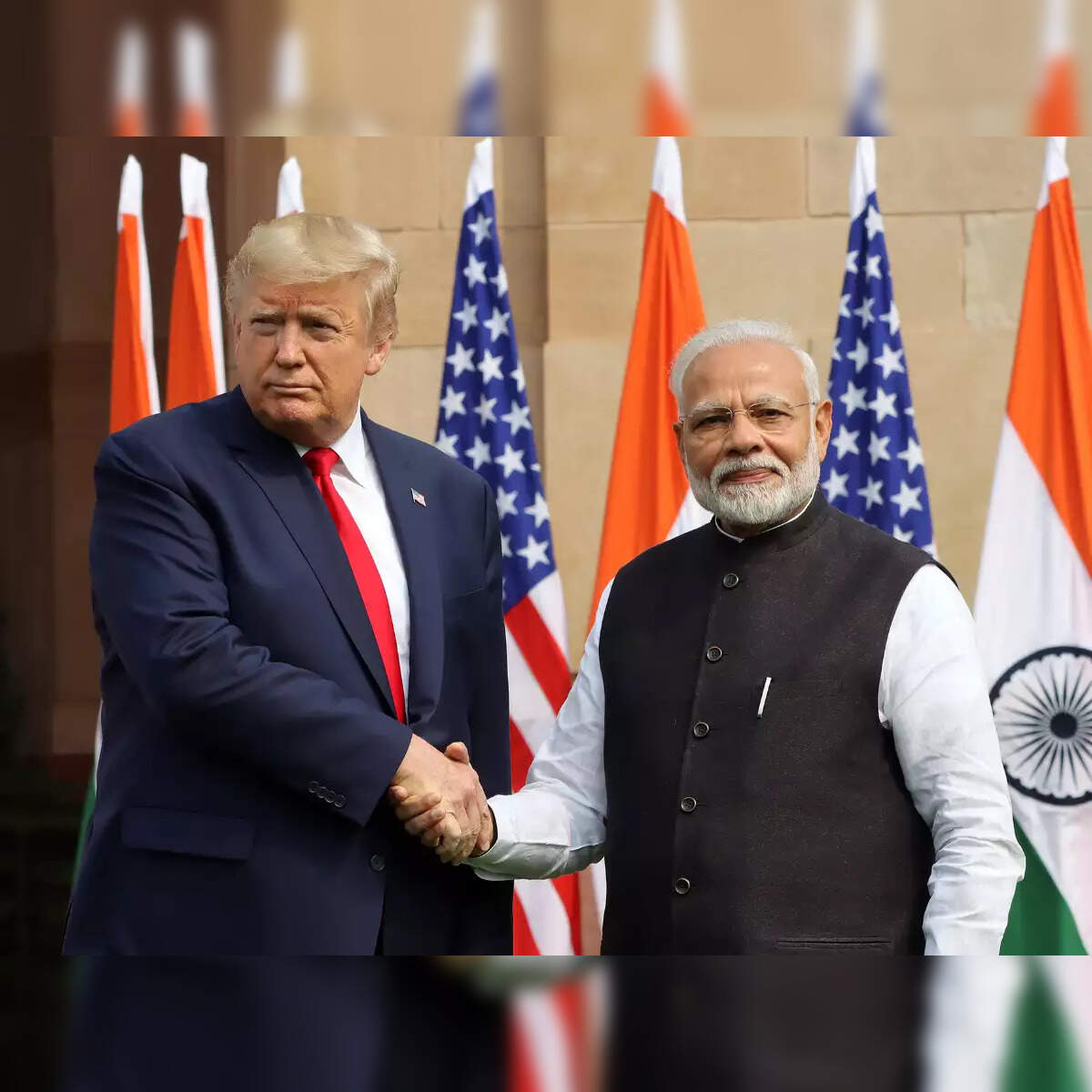
By K Raveendran Donald Trump and Narendra Modi never seem to tire of expressing admiration for each other, their mutual regard forming an odd but undeniable transnational political camaraderie. What binds them is not simply shared ideology but a similar worldview shaped by populism, nativism, and a flair for dramatic, often reckless, decision-making. Modi’s ‘Atmanirbhar […]

Saudi Arabia’s Capital Market Authority has announced that foreign investors are now permitted to invest in listed companies owning real estate in Mecca and Medina. This policy change, effective immediately, allows non-Saudis to acquire up to 49% of shares in these firms, aiming to attract foreign capital and enhance market liquidity in alignment with the Kingdom’s Vision 2030 economic diversification plan. Historically, non-Muslims have faced restrictions on […]

Oil markets witnessed a significant downturn as Brent crude, the global benchmark, tumbled over 13% in two days, settling just above $66 per barrel. This sharp decline follows the dual impact of OPEC+ unexpectedly increasing production and the imposition of new tariffs by President Donald Trump.

On April 4, 2025, Saudi Arabia led an initiative within OPEC+ to substantially boost oil output by 411,000 barrels per day starting in May. This move aims to penalize member countries like Kazakhstan and Iraq for consistently exceeding production quotas. The decision contributed to an 8% drop in oil prices, with Brent crude falling below $65 per barrel for the first time since 2021.

Concurrently, President Trump intensified trade tensions by imposing tariffs on imports from Canada, China, and Mexico. China responded with a retaliatory 34% tariff on U.S. imports, escalating fears of a global economic slowdown and further pressuring oil prices.

Goldman Sachs revised its 2025 oil price forecasts downward, cutting Brent crude to $69 and West Texas Intermediate to $66 per barrel. JPMorgan raised its global recession probability to 60%, up from 40%, reflecting growing concerns over economic stability.

The surge in supply and escalating trade disputes have led to significant losses in energy stocks. Major oil companies, including Chevron, APA, Occidental Petroleum, and Diamondback Energy, experienced notable declines. The Energy Select Sector SPDR ETF fell nearly 7% on the day and almost 13% for the week.

Analysts suggest that until production is significantly reduced, oil prices may continue to fall. The geopolitical backdrop includes U.S. relations with Saudi Arabia, key to both energy policy and diplomatic efforts related to Russia, Iran, and broader Middle East tensions.

In contrast, natural gas stocks have shown resilience, supported by rising LNG exports and less exposure to OPEC’s dynamics. Companies like EQT, Expand Energy , and Coterra Energy are highlighted as attractive investments due to geographic advantages and favorable valuations.

The current downward trend in oil prices is primarily driven by OPEC+’s decision to increase output and the introduction of U.S. tariffs. Analysts expect the tariffs to curb economic activity and demand for energy, weighing on oil prices. The bank also said higher-than-expected crude supply and a demand squeeze from softer U.S. economic activity and tariff escalation posed downside risks to oil price forecasts.

The Organization of the Petroleum Exporting Countries and its allies, known as OPEC+, decided on Monday to increase output for the first time since 2022, further pressuring crude prices. The group will make a small increase of 138,000 barrels per day from April, the first step in planned monthly increases to unwind its nearly 6 million bpd of cuts, equal to almost 6% of global demand.

The larger-than-expected decline in crude stocks supported the downward trend in oil prices, pointing to weakening demand in the U.S. The U.S. Energy Information Administration is expected to announce the official inventory data during the day.

The risks to oil prices remain tilted to the downside with new supply from OPEC+ and non-OPEC producers expected to push the market well into an oversupply. Brent prices on Wednesday fell to their lowest since December 2021 after U.S. crude inventories rose and in the wake of the decision by OPEC+ to increase their output quotas.

Oil prices had already been trading lower in the last few weeks, partly because of expectations that U.S. president Donald Trump could swiftly end Russia’s war in Ukraine. This, in turn, is likely to increase Russian oil output thanks to sanctions relief.

The benchmark previously dropped to $66.77 a barrel, the lowest since November. “The current downward trend in oil prices is primarily driven by OPEC+’s decision to increase output and the introduction of U.S. tariffs,” said Darren Lim, commodities strategist at Phillip Nova. He said another factor was President Donald Trump’s decision to pause all U.S. military aid to Ukraine after his Oval Office clash with President Volodymyr Zelenskiy last week.

Those politics are likely connected with the wheeling and dealing of Donald Trump, referring to the U.S. president’s calls for lower oil prices. U.S. tariffs of 25% on imports from Canada and Mexico took effect at 12:01 a.m. EST on Tuesday, with 10% tariffs on Canadian energy, while tariffs on imports of Chinese goods were increased to 20% from 10%. Analysts expect the tariffs to curb economic activity and demand for energy, weighing on oil prices.

The bank also said higher-than-expected crude supply and a demand squeeze from softer U.S. economic activity and tariff escalation posed downside risks to oil price forecasts. Chinese demand is also down, with a period of refinery maintenance looming, said Josh Callaghan, head of crude derivatives at Arrow Energy Markets.

Oil prices declined for a third day on Wednesday, as investors worried about OPEC+ plans to proceed with output increases in April, and U.S. President Donald Trump’s tariffs on Canada, China, and Mexico escalated trade tensions. Brent futures fell $1.02, or 1.44%, to $70.02 a barrel by 1149 GMT. U.S. West Texas Intermediate crude declined $1.33, or 1.95%, to $66.93 a barrel.


The Dubai International Aquatics Championships are set to feature the open water swimming and water polo competitions this weekend at the Hamdan Sports Complex. These events, scheduled for April 5 and 6, are part of the month-long championship running from March 21 to April 20, 2025. Organized in collaboration with the UAE Swimming Federation and local academies, the DIAC has attracted over 3,000 athletes from more than […]

A magnitude 6.9 earthquake struck off the coast of New Britain’s Kimbe town in Papua New Guinea at approximately 9:04 pm local time on April 4, 2025. The United States Geological Survey reported that the earthquake’s epicenter was located about 120 miles east of Kimbe, at a shallow depth of six miles. The Pacific Tsunami Warning Center issued alerts for potential tsunami waves ranging from one to […]

Advertisements

The semiconductor industry experienced a remarkable surge in 2024, with annual revenues climbing approximately 25% to reach $683 billion. This growth was predominantly fueled by escalating demand for artificial intelligence applications, particularly high-bandwidth memory used in AI graphics processing units . The memory segment, buoyed by HBM, saw a 74% year-over-year increase, significantly contributing to the industry’s overall rebound from a challenging 2023. SK hynix reported record-breaking […]

The escalating trade conflict between the United States and China has introduced significant shifts in global trade dynamics, presenting both opportunities and challenges for Indian exporters. The U.S. administration’s imposition of substantial tariffs on Chinese imports has prompted China to retaliate with its own set of tariffs, affecting a broad spectrum of goods. This tit-for-tat exchange has disrupted established supply chains, leading American importers to seek alternative sources for various products.

Indian exporters are poised to benefit from this realignment, particularly in sectors where India has a competitive edge. Industries such as agriculture, engineering, textiles, chemicals, and leather are witnessing increased interest from U.S. buyers aiming to diversify their supply chains away from China. Ajay Sahai, Director General of the Federation of Indian Export Organisations , noted that U.S. buyers are approaching Indian companies with manufacturing operations in China, requesting them to supply from their Indian facilities due to the prevailing uncertainties.

The agricultural sector stands to gain notably, with products like soybeans and seafood emerging as viable alternatives to Chinese exports. Similarly, the engineering and machine tools industries are experiencing heightened demand, as American companies look to mitigate the impact of increased tariffs on Chinese machinery. The textiles and garments sector is also seeing a surge in orders, capitalizing on India’s established reputation in these markets.

However, this shift is not without its challenges. The increased tariffs on Chinese goods have led to concerns about the potential for these products to be redirected to other markets, including India, at lower prices. This scenario raises the specter of dumping, which could adversely affect domestic manufacturers. Crisil, a global analytics company, has highlighted that as the U.S. imposes higher tariffs on Chinese imports, there is a heightened possibility of these surplus goods being diverted to countries like India, potentially disrupting local industries.

In response to these developments, the Indian government is actively engaging with exporters to assess the evolving landscape and identify strategies to capitalize on emerging opportunities. Efforts are underway to enhance manufacturing capabilities, streamline regulatory processes, and improve infrastructure to better position Indian products in the global market. The government’s proactive stance aims to not only seize the openings created by the U.S.-China trade tensions but also to safeguard domestic industries from potential negative spillovers.

KUALA LUMPUR, MALAYSIA – Media OutReach Newswire – 5 April 2025 – Octa, a global broker since 2011, recently received the FXDailyInfo award as ‘The Most Innovative Broker 2025’. This accolade yet again highlights Octa’s focus on incrementally improving its proprietary trading platform, OctaTrader. Financial portal FXDailyInfo recognised Octa as ‘The Most Innovative Broker 2025’. With this award under its belt, Octa broker has already gained 10 […]

Emirati trainer Saeed bin Suroor is set to field Godolphin’s seasoned contenders, Dubai Future and Passion and Glory, in the Group 2 Dubai Gold Cup at Meydan Racecourse on Saturday, 5 April 2025. The Dubai Gold Cup, a 3,200-meter turf race, boasts a purse of $1 million and is a highlight of the Dubai World Cup meeting, which offers a total prize pool of $30.5 million.

Dubai Future, a nine-year-old gelding, returns to the track after a 14-month hiatus. Bin Suroor has expressed confidence in Dubai Future’s readiness, noting, “Dubai Future is having his first start for a while, although I have been really pleased with his work. He has gone well at Meydan before and I’m hoping for another good run.” The gelding has previously demonstrated his capabilities with three wins at Meydan and a notable victory in the Group 3 Nad Al Sheba Trophy on 21 February 2025.

Passion and Glory, another of Bin Suroor’s trainees, has also shown promise on the international stage. Reflecting on their performances, Bin Suroor remarked, “It was amazing to finally win the Bahrain Trophy after trying for a few years and to have the runner-up as well as a fantastic bonus. Dubai Future and Passion and Glory obviously both put in exceptional performances.”

The Dubai World Cup meeting is renowned for attracting top-tier talent from around the globe. Sheikh Rashed bin Dalmook Al Maktoum, Chairman of the Dubai Racing Club, highlighted the event’s prestige, stating, “We have received some outstanding nominations for the 29th Dubai World Cup meeting from all corners of the globe. This is a testament both to the outstanding facilities for horses at Meydan Racecourse and the strength of the Dubai World Cup meeting, one of the best days of racing on the global calendar.”

Bin Suroor’s impressive record includes nine victories in the $12 million Dubai World Cup race. He has emphasized the significance of the event, saying, “The race meeting was created to become the best in the world and it has exceeded all expectations.” His notable wins feature the legendary Dubai Millennium in 2000 and Thunder Snow, who made history as the first horse to win the race twice.

Tether, the issuer of the world’s largest stablecoin, is evaluating the creation of a new digital currency designed to comply with forthcoming U.S. regulations. CEO Paolo Ardoino indicated that while USDT will maintain its focus on emerging markets, the proposed stablecoin would cater specifically to the U.S. market.

Ardoino emphasized Tether’s commitment to regulatory compliance, stating that the company is actively engaging with U.S. lawmakers to help shape stablecoin legislation. He noted Tether’s willingness to adapt its operations to align with legal frameworks, ensuring the company’s continued operation within the law.

The U.S. Congress is currently deliberating several bills aimed at regulating stablecoins. Notably, the STABLE Act, co-introduced by Representative Bryan Steil, proposes that stablecoin issuers maintain reserves consisting solely of high-quality liquid assets, such as U.S. Treasury bills and insured deposits. Ardoino confirmed Tether’s involvement in discussions regarding this legislation, highlighting the company’s proactive approach to compliance.

In addition to legislative engagement, Tether is expanding its global footprint. The company is finalizing the relocation of its headquarters to El Salvador after obtaining a digital asset service provider license there. This move aligns with El Salvador’s ambitions to become a digital currency trading hub, following its establishment of Bitcoin as legal tender.

Tether is also exploring opportunities beyond its traditional offerings. The company recently announced a partnership with Phoenix Group PLC to launch a Dirham -pegged stablecoin in the United Arab Emirates. This initiative aims to provide financial stability to individuals in high-inflation countries and enhance remittance services.

Tether is considering deeper involvement in the sports industry. The company holds a 5% stake in Italian Serie A soccer club Juventus and is open to increasing its investment if the current owners decide to sell more shares. This potential investment reflects Tether’s strategy to leverage its platform and user base to support global brands, particularly in emerging markets.

The United States economy added 228,000 jobs in March 2025, surpassing analysts’ expectations and indicating a robust labour market. This growth was notably higher than the anticipated 130,000 positions, reflecting resilience despite looming trade uncertainties. The unemployment rate edged up to 4.2% from 4.1% in February, primarily due to an increased number of individuals entering the workforce. Significant employment gains were observed in the healthcare sector, which […]

India is intensifying biosecurity measures across poultry farms and wildlife sanctuaries in response to the expanding reach of the H5N1 avian influenza virus, which has now affected domestic poultry, wild birds, and several mammalian species, including big cats and domestic cats.

The Ministry of Fisheries, Animal Husbandry and Dairying has issued directives to all states to bolster surveillance and implement stringent biosecurity protocols. This action follows reports of the virus infecting a diverse range of species, raising concerns about its evolving nature and potential implications for both animal and human health.

In Andhra Pradesh, eight outbreaks of highly pathogenic H5N1 bird flu were reported in farms and backyard poultry, leading to the death or culling of approximately 602,000 birds. These incidents underscore the virus’s persistent threat to the poultry industry.

The virus’s impact has extended beyond avian species. In Maharashtra, three tigers and a leopard succumbed to H5N1 at a rescue centre in Nagpur, prompting the central government to issue a red alert for zoos and animal rescue centres nationwide. Authorities have been urged to implement immediate measures to prevent further outbreaks among captive wildlife.

India’s first cases of H5N1 in domestic cats were confirmed in Madhya Pradesh’s Chhindwara district. The infected cats exhibited symptoms such as high fever, loss of appetite, and lethargy before dying within one to three days. Scientists identified 27 mutations in the virus found in these cats, highlighting the need for enhanced surveillance across domestic poultry, wild birds, and mammals, including pets and humans.

The cross-species transmission of H5N1 is not limited to India. Globally, the virus has been detected in various mammalian species, including tigers, leopards, and domestic cats, raising concerns about its ability to jump species barriers. In the United States, outbreaks have been reported among house cats, while in Canada, a teenage girl was severely affected by the virus, indicating its potential risk to human health.

In response to these developments, the Indian government is collaborating with international health organizations to monitor the situation closely. Efforts are underway to study the virus’s mutations and assess the risk of human transmission. Public health advisories have been issued, cautioning against contact with sick or dead birds and emphasizing the importance of hygiene and protective measures for those handling poultry.

Gold-backed cryptocurrencies have experienced significant declines following the announcement of sweeping tariffs by President Donald Trump. These digital assets, which are pegged to the value of physical gold, initially surged to record highs as investors sought safe havens. However, they have since retreated, mirroring the broader market sell-off.

On April 3, 2025, President Trump unveiled a series of reciprocal tariffs, imposing a minimum of 10% on global imports and up to 49% on certain countries, including Vietnam. This move prompted immediate reactions across financial markets, with the Dow Jones Industrial Average plunging over 1,000 points, the Nasdaq dropping 3%, and the S&P 500 slumping 2.7%. The technology sector was notably affected, with major companies like Apple, Amazon, and Meta experiencing substantial losses. citeturn0news27turn0news29

In the commodities market, gold initially rallied, reaching an all-time high of $3,167.84 per ounce. This surge was driven by investors seeking refuge amid escalating trade tensions. However, the precious metal’s value soon declined, with spot gold prices falling 1.4% to $3,090.00. This reversal was attributed to investors liquidating positions to cover losses in other asset classes. citeturn0search2turn0search4

Gold-backed cryptocurrencies, which are digital tokens pegged to the price of gold, mirrored this trajectory. PAX Gold and Tether Gold both saw declines, with PAXG trading at $3,047.64, down 2.44%, and XAUT at $3,047.16, down 2.51%. These movements reflect the broader market’s volatility and investors’ shifting sentiments.

The cryptocurrency market as a whole was not immune to the turmoil. Bitcoin, the largest cryptocurrency by market capitalization, fell to the $82,000 level, marking a significant drop from its previous position near $88,000 prior to the tariff announcements. Altcoins such as Ethereum and Solana also experienced declines, with Ethereum dropping over 6% to fall back under $1,800. citeturn0search17turn0search20

Analysts suggest that the aggressive nature of the tariffs has heightened fears of a global trade war, leading to increased market volatility. The tariffs’ impact extended beyond equities and cryptocurrencies, affecting commodities like crude oil, which saw a 6.4% decline. Bond yields also dropped as investors moved towards safer assets.

Central banks’ recent activities have also played a role in the gold market’s dynamics. In February, institutions such as Poland and China increased their gold reserves, contributing to the metal’s price movements. However, the current market conditions have overshadowed these factors, with immediate reactions to trade policies taking precedence.

The Nasdaq Composite Index entered bear market territory on Friday, April 4, 2025, closing over 20% below its December peak. This significant downturn was precipitated by President Donald Trump’s imposition of a 10% tariff on all imports to the United States, with additional substantial levies targeting technology-centric nations such as China, Taiwan, and Vietnam. China’s swift retaliation, announcing a 34% tariff on all U.S. imports, intensified fears of a global recession and inflationary pressures.

Major U.S. stock indices experienced sharp declines. The S&P 500 fell approximately 2.5%, while the Dow Jones Industrial Average dropped nearly 2.45%, shedding 994.46 points to close at 39,551.47. Technology stocks bore the brunt of the sell-off, with Apple Inc. shares declining over 4%, following a nearly 10% drop the previous day. Nvidia and Broadcom each lost more than 7%, and Tesla shares plummeted almost 10%.

The newly announced tariffs, dubbed “Liberation Day” tariffs by the administration, include a universal 10% tariff on all imports and higher targeted tariffs for numerous countries. Economists warn that these measures could disrupt global supply chains, particularly impacting the technology sector, which relies heavily on components from China and Taiwan. The Semiconductor Industry Association expressed concern that the tariffs could stymie growth and innovation within the industry.

International responses were swift. The European Union signaled readiness to implement countermeasures, while the International Monetary Fund cautioned that escalating trade tensions pose significant risks to global economic stability. In the U.S., political figures across the spectrum voiced apprehension. Senate Majority Leader Mitch McConnell and Senator Ted Cruz criticized the tariffs, warning of potential harm to American workers and farmers.

Despite a robust March jobs report indicating the addition of 228,000 new jobs and a slight uptick in unemployment to 4.2%, market sentiment remained negative. Investors are now looking to Federal Reserve Chair Jerome Powell’s upcoming speech for insights into potential monetary policy adjustments in response to the escalating trade conflict.

The CBOE Volatility Index, a measure of market anxiety, surged to levels not seen since August 2024, reflecting heightened investor concern. Oil prices also declined significantly due to fears of reduced global demand amid the escalating trade tensions.

President Trump defended the tariff strategy, asserting that the measures are necessary to address longstanding trade imbalances and would ultimately benefit the U.S. economy. He urged investors to view the market downturn as a wealth opportunity.

MIAMI, USA – Media OutReach Newswire – 4 April 2025 – Bigo Live’s Harmony Showdown talent competition will come to a thrilling conclusion on April 9, 2025, at BIGO Fest: Miami Live. Organized by global social livestreaming platform Bigo Live, Harmony Showdown is a head-to-head talent competition featuring musical acts and performers coached by celebrities with rigorous eliminations determined by fan voting. From an initial pool of […]

By Subrata Majumder The entire world is deepening into geopolitical tensions and increasing uncertainty in trade following the announcement made by the U.S. President Donald Trump the new tariff rates on April 2. The U.S. slapped 27 percent import tariff on India. President Trump exhilarated this as “discounted replication”, despite India imposing 52 percent and […]

Malta’s Financial Intelligence Analysis Unit has levied a €1.1 million fine against cryptocurrency exchange OKX’s local subsidiary for significant breaches of anti-money laundering regulations. The penalty follows an onsite compliance examination conducted in April 2023, which uncovered several failures deemed “serious and systematic” by the FIAU.

The FIAU’s investigation revealed that OKX’s business risk assessment failed to adequately evaluate potential money laundering risks associated with the products it offered. This deficiency impaired the company’s ability to implement effective measures to mitigate such risks.

In response to the FIAU’s findings, OKX has reportedly taken steps to address the identified shortcomings. The company has implemented remedial measures to enhance its AML compliance framework, aiming to prevent future violations.

Beijing has announced the imposition of a 34% tariff on all imports from the United States, effective April 10, 2025, in direct response to the sweeping tariffs introduced by U.S. President Donald Trump. The Chinese Ministry of Finance stated that this measure aims to counteract what it perceives as unjust and protectionist policies from Washington.

This development follows President Trump’s declaration of “Liberation Day” on April 2, during which he unveiled a universal 10% tariff on all foreign imports, with higher rates for specific countries. China was notably targeted with an additional 34% tariff, bringing the total levy on Chinese goods to 54%. The U.S. administration justified these tariffs as necessary to rectify longstanding trade imbalances and to protect domestic industries.

In a statement, China’s Ministry of Finance condemned the U.S. actions, urging Washington to immediately withdraw the imposed tariffs to prevent further escalation. The ministry emphasized that China’s countermeasures are a legitimate response to safeguard its national interests and the multilateral trading system.

The U.S. tariffs have been met with criticism from various quarters. Economists have expressed concerns over the methodology used to calculate these tariffs, arguing that the approach is overly simplistic and could lead to unintended economic consequences. They warn that such measures might not effectively address trade deficits and could harm consumers through increased prices.

The business community is also bracing for the impact of these tariffs. In New York City, retailers are encouraging consumers to make purchases before the new tariffs lead to price increases. Products such as electronics, appliances, and automobiles are expected to see significant price hikes, prompting a surge in sales ahead of the tariff implementation.

China’s retaliatory tariffs are anticipated to affect a wide range of U.S. exports, including agricultural products, automobiles, and technology goods. This move is expected to have significant implications for American farmers and manufacturers who rely heavily on the Chinese market. Analysts predict that the escalating trade war could disrupt global supply chains and dampen economic growth in both countries.

Market maker Wintermute has come under scrutiny following significant price fluctuations in several altcoins, notably ACT, which experienced a sharp decline of approximately 53% on April 1, 2025. This downturn has raised questions about Wintermute’s trading strategies and their impact on the cryptocurrency market.

On April 1, ACT’s value plummeted by nearly 53%, triggering discussions about potential market manipulation. Observers noted that Wintermute executed substantial sell-offs of ACT and other meme coins, leading to rapid price declines. In response, Wintermute’s CEO, Evgeny Gaevoy, denied intentional market manipulation, stating that their actions were reactive and aimed at arbitraging Automated Market Maker pools.

Further analysis revealed that out of 27 tokens launched on Binance in 2025, only three were profitable, with an average loss of 44% across the board. This trend has intensified scrutiny of the exchange’s listing practices and the role of market makers like Wintermute in influencing token performance.

In another development, the stablecoin FDUSD briefly depegged to $0.8726 following unfounded bankruptcy rumors. Capitalizing on this, Wintermute reportedly acquired 31 million FDUSD at the reduced price and later redeemed them at par value, resulting in an estimated profit exceeding $3 million.

Governments worldwide have recouped nearly $2 billion in unpaid taxes and penalties following the Panama Papers revelations, which exposed extensive networks of offshore accounts and shell companies used for tax evasion and money laundering. The 2016 leak of 11.5 million documents from Panamanian law firm Mossack Fonseca has led to significant financial recoveries and ongoing investigations across multiple countries. In Spain, authorities have recovered over €200 million, […]

South Korea’s Constitutional Court has unanimously upheld the impeachment of President Yoon Suk Yeol, officially removing him from office. The decision follows Yoon’s controversial declaration of martial law in December 2024, which led to widespread political turmoil and public outcry. Acting Chief Justice Moon Hyung-bae stated that Yoon’s actions constituted a “serious challenge to democracy” and a “grave betrayal of the people’s trust.” He emphasized that the […]

Bitcoin’s network hashrate has achieved a new all-time high, reflecting a surge in mining activity and bolstered network security. As of March 24, 2025, the hashrate peaked at 1,088.76 exahashes per second , surpassing previous records and indicating significant growth in computational power dedicated to the network.

This milestone coincides with Bitcoin’s price surpassing the $100,000 threshold, reaching a peak of $103,259 before stabilizing around $102,648. The price surge has been partly attributed to political developments, including President-elect Donald Trump’s appointment of Paul Atkins, a pro-crypto figure, to lead the Securities and Exchange Commission .

The correlation between Bitcoin’s hashrate and its market price has been a topic of analysis among industry experts. Historically, an increase in hashrate has often preceded price appreciation, as miners’ confidence in the network’s profitability grows. Conversely, a rising price can incentivize more miners to join the network, further increasing the hashrate. This interplay suggests a symbiotic relationship where each factor can drive the other.

The recent surge in hashrate indicates a substantial increase in mining activity. This growth enhances the network’s security by making it more resilient to potential attacks. However, it also intensifies competition among miners, leading to higher operational costs and potential profit margin compression.

In response to these dynamics, some mining companies have adopted strategies to mitigate financial pressures. For instance, major U.S. miners have been stockpiling Bitcoin to navigate thinning profit margins amid escalating competition and operational costs. Companies like Mara Holdings, Riot Platforms, and CleanSpark have collectively raised over $3.7 billion since November 2024, leveraging the cryptocurrency’s price surge to bolster their reserves.

VISHNU RAJA
RYO YAMADA
HITORI GOTOH
IKUYO KITA