News related to
global

The social-media platform X has introduced a dedicated “Handle Marketplace” that allows paying subscribers to request usernames tied to inactive accounts, marking a significant shift in its monetisation strategy. Under the scheme, Premium Plus and Premium Business users can browse a catalogue of unused handles and make claim requests under varying terms. Eligible subscribers will see available usernames divided into two tiers: “Priority” handles, which include full […]

Tokyo’s financial regulator is advancing a proposal that would permit domestic banks to directly invest in cryptocurrencies such as Bitcoin and operate crypto exchanges, marking a significant shift from earlier restrictions. The Financial Services Agency is set to present its plans to the Financial System Council—an advisory body to the prime minister—later this month.

Under the existing regime promulgated in 2020, Japanese banks have been effectively barred from acquiring and holding digital assets for investment purposes, owing to concerns about volatility and financial-stability risk. The new regulatory blueprint would align crypto asset holdings by banks with traditional financial instruments such as stocks and government bonds, while introducing capital and risk-management requirements tailored to the asset class.

According to data cited by the FSA, Japan’s crypto account holdings have climbed past 12 million as of February 2025—a roughly 3.5-fold increase over five years. The surge in retail interest is growing pressure on regulators to provide greater clarity and institutional-grade infrastructure. Amid this backdrop, the proposed reforms aim to usher in a more integrated digital-asset ecosystem under the purview of regulated financial institutions.

The FSA’s initiative encompasses three key pillars: Firstly, banks would be authorised to purchase and hold unbacked crypto assets for trading or investment, subject to strict internal controls and exposure limits.  Secondly, bank groups may register as licensed “cryptocurrency exchange operators,” effectively allowing them to offer trading and custody services in-house rather than relying solely on third-party platforms.  Thirdly, the FSA plans to shift oversight of digital assets from the current Payment Services Act regime into the Financial Instruments and Exchange Act framework, thereby affording crypto the same legal mould as securities.

Banking groups in Japan are already responding. Three of the country’s largest financial institutions—Mitsubishi UFJ Financial Group, Sumitomo Mitsui Financial Group and Mizuho Financial Group—have announced a joint plan to issue a yen-pegged stablecoin for corporate settlements, signalling a broader shift into digital assets.

Supporters of the reforms argue that allowing regulated banks to engage with crypto assets will bolster investor protections, improve custody and transactional infrastructure, and widen market access. “This reform will treat cryptocurrencies similar to other investible asset classes under bank supervision,” noted one industry analyst. However, sceptics caution that the volatility of cryptocurrencies remains elevated and that exposure must be managed carefully to prevent end-user or systemic risk.

Regulatory design will therefore place a heavy emphasis on limiting banks’ direct holdings of digital assets relative to their capital base, imposing heightened disclosure and governance mandates. One working-group paper recommends that banks maintain separate risk-allocations and stress-testing frameworks for crypto, akin to those used for foreign-exchange or commodity trading desks.

The tax and legal context are also evolving. Japan is preparing to introduce a flat 20 % capital-gains tax on crypto assets as part of its 2025 reforms, and certain tokens are slated to be reclassified as securities under the FIEA. These measures are designed to reduce uncertainty for institutional participants and global investors seeking regulated exposure to digital assets.

Market participants appear cautiously optimistic. Some regional banks are exploring pilot custody services for institutional clients, while fintech firms anticipate greater collaboration with mainstream banks as eligibility expands. On the flip side, legacy concerns persist: past hacks and exchange failures have left regulators and consumers wary of governance failures and inadequate transparency.

The world’s largest cryptocurrency, Bitcoin, vaulted above $111,000 after a steep dip earlier this week, triggering sharp gains across major tokens including Ethereum, XRP and Solana. On-chain metrics signalled accumulating momentum while traditional equity markets in Asia registered fresh highs, boosting risk-assets overall.

Bitcoin climbed to around $111,223, representing a gain of approximately 3.7% within 24 hours, after briefly touching a low near $103,602. Other digital assets followed: Ethereum reached roughly $4,062, XRP $2.47 and Solana approximately $193.33, with 24-hour gains of between 3% and 5%.

Analysts highlight several factors underpinning this recovery. On-chain data show the realised value-to-transaction ratio for Bitcoin has declined — a historical marker of heightened accumulation rather than passive holding. A crypto-analytics firm noted that “strong declines in the RVTS have preceded major bull phases, as they indicate that Bitcoin is being used, accumulated, and transferred — not just held.”

Broader market dynamics provided further tailwinds. In Japan, the Nikkei 225 index soared past 49,000 for the first time, advancing the year-to-date gain to 25%. The move followed media reports indicating that the country’s leading opposition party plans to join coalitions which position its fiscal-dove leader for the prime ministership — one with a policy inclination towards low interest rates and expansionary fiscal measures.

Meanwhile, China’s third-quarter gross domestic product growth of 4.8% year-on-year narrowly exceeded forecasts of 4.7%, providing support for risk assets globally.

Beyond macro-signals, institutional behaviours also deserve attention. A leading publicly listed company with large Bitcoin holdings, Strategy, has signalled fresh crypto purchases — adding a layer of institutional demand to the structural thesis.

Within the crypto space, major platforms tied to tokenisation and stable-coin activity are also part of the narrative. Analysts at Galaxy Digital emphasise three structural drivers: increased AI-capex from tokenised assets, accelerating stable-coin infrastructure, and the migration of real-world assets onto blockchain networks. These are seen as propositions that may sustain momentum beyond short-term price moves.

Yet, market participants remain cautious. Liquidity remains thin and residual risks — such as further macro headwinds, regulatory tightening or a reversal in risk appetite — continue to warrant vigilance. As one analyst put it: “The near-term message is caution — respect thinner liquidity, post-crash psychology and a ‘wall of worry’ mood. The medium-term message is resilience.”

Within altcoins, XRP is gaining renewed focus ahead of potential ETF-related developments, while Solana is benefitting from its association with on-chain tokenisation flows. Market-data platform CoinGecko shows that XRP trades at around $2.46, with volume flows increasing as sentiment rebuilds.

Riyadh — The inaugural edition of FIBO Arabia drew a total of 12,399 participants from regional and international markets to the three-day expo at the Riyadh Front Exhibition & Conference Center, signalling a notable step in Saudi Arabia’s push to define itself as a wellness and fitness hub in the Middle East.

The event, held under the theme “For a Strong and Healthy Society” and aligned with the kingdom’s Vision 2030 agenda, was conducted under the strategic partnership of the Ministry of Investment, the Ministry of Sport and the Ministry of Health. More than 80 exhibitors from around 18 countries participated, while attendees were presented with more than 50 industry-leading speakers across live arenas and conference forums.

One of the centre-piece announcements was the launch of the first Fitness Sector Development Report for the Kingdom, spearheaded by the Ministry of Sport in collaboration with advisory firm CAA Portas. The report projects the domestic fitness industry could expand to a value of SAR 15.5 billion by 2030, driven by policy reforms, investor interest and a growing consumer base.

International brands such as Technogym, Life Fitness, Keiser Corporation and Therabody featured in the line-up, underscoring the global interest in the kingdom’s wellness market. The conference programme included global fitness strategist Herman Rutgers and Morgan Stanley’s Alexey Naumov among its headline speakers.

Speakers and industry insiders described the event as a sign that the Gulf region is moving into a higher gear in terms of wellness infrastructure, investment and consumer engagement. “The success of FIBO Arabia’s inaugural edition reflects both the strength of Saudi Arabia’s wellness economy and the appetite for innovation, collaboration and growth across the industry,” said Vasyl Zhygalo, Managing Director of RX Middle East and Emerging Markets.

A particularly prominent feature of the expo was its emphasis on inclusivity and community participation. Female-led sessions and anecdotes of women athletes such as Nelly Attar — recognised as the first Arab woman to climb K2 — and Saudi fitness professional Rawan Al Saadi featured in discussions on access, empowerment and facility design. Meanwhile, event organisers hosted a variety of live arenas: a Performance Arena, a Strength Arena, a Tech Arena, a Calisthenics Arena, and a Group Fitness Arena powered by Les Mills.

Business-to-business networking and investment matchmaking were core to the strategy. The ecosystem included gym operators, wellness technology firms, nutrition solution providers and investors seeking access to opportunities in the region. One panel commented on how the kingdom’s younger demographic, rising female participation, and regulatory support combine to make the market appealing. The Fitness Sector Development Report cites private-sector expansion and policy reform among the key growth drivers.

Notably, the event’s timing and format reflect a regional pivot from traditional oil-led growth toward wellness, lifestyle and economy diversification. Saudi Arabia’s commitment to developing its ecosystem was underscored through both government support and the presence of global industry players. Industry experts observed that the applied technology, live experiences and cross-border brand involvement distinguish FIBO Arabia from earlier regional trade shows in the fitness sector.

Visitor figures of 12,399 set a baseline for the event’s future editions. The organisers have already announced that FIBO Arabia will return to the same venue from 29 September to 1 October 2026.

BANGKOK, THAILAND – Media OutReach Newswire – 20 October 2025 – The grandest fashion event of the year, “Siam Paragon Bangkok International Fashion Week 2025” (BIFW2025), concluded with a resounding success after four spectacular days that ignited the regional fashion scene. Featuring 11 groundbreaking runway shows from Thailand’s top designers and brands, the event drew an impressive turnout of fashion industry leaders, celebrities, and style enthusiasts, with […]

HONG KONG SAR – Media OutReach Newswire – 20 October 2025 – The CEIBS Global EMBA (GEMBA) programme has been ranked No. 2 in the world in the Financial Times 2025 Executive MBA Ranking, marking its sixth consecutive year among the global top two and its fourth consecutive year as the world’s highest-ranked stand-alone EMBA programme. As China’s first English-language Executive MBA, established in 1995, this milestone […]

Sun King, a leading renewable energy firm, is poised to make significant strides in solar manufacturing, with its CEO, T. Patrick Walsh, announcing an ambitious target to establish new production plants by 2026. The company’s aggressive expansion plans aim to bolster solar panel production and position Sun King at the forefront of the renewable energy sector. Walsh’s announcement underscores the company’s commitment to addressing the global demand […]

Advertisements

By K Raveendran     When Google announced that Visakhapatnam would be home to its $15 billion project to build the company’s first artificial intelligence hub in India, the news landed like a thunderclap across the southern states. For Andhra Pradesh, it was nothing short of a jackpot — a once-in-a-generation opportunity to rewrite the […]

The article Google’s AI Hub: Visakhapatnam’s Jackpot, South India’s Heartburn appeared first on Latest India news, analysis and reports on Newspack by India Press Agency).

Greenlogue/AP The agricultural industry is undergoing a transformation, driven by the rise of green automation. As the global demand for food increases, farmers and tech innovators are turning to advanced technologies to increase productivity while maintaining sustainable practices. Green automation encompasses a wide range of smart tools—from autonomous robots and drones to sensors and artificial intelligence—designed to optimise farming processes, reduce environmental impact, and promote resource efficiency. […]

The UAE Ministry of Education has entered a new partnership with Core42, a leading company in advanced technological solutions, aiming to accelerate digital learning across the country. This collaboration marks a significant step in the UAE’s broader strategy to modernise its education system and integrate innovative technologies into classrooms nationwide.

Under the Memorandum of Understanding signed by both parties, the Ministry and Core42 will jointly focus on enhancing the digital infrastructure in schools, universities, and other educational institutions. This partnership is set to foster digital literacy, streamline educational processes, and introduce advanced technological tools that can significantly improve the learning experience. The Ministry’s initiative is aligned with its ongoing efforts to diversify and digitalise the national education landscape.

The UAE has been increasingly prioritising the integration of digital technologies within education as part of its long-term goals. The collaboration with Core42 comes at a crucial time as the nation works towards adapting its education system to meet the challenges and opportunities presented by digitalisation. By tapping into Core42’s expertise, the UAE hopes to provide its educational institutions with cutting-edge tools and systems that will prepare students for the future of work, which will undoubtedly be more technology-driven.

Core42, known for its innovative approach to digital solutions, will bring its wealth of experience in developing and implementing advanced tech-driven educational platforms. This will include custom-built software solutions, interactive tools, and data-driven systems that improve not only learning outcomes but also operational efficiency. The company’s work is expected to play a key role in addressing the increasing demand for online and hybrid learning models in response to evolving global educational trends.

The Ministry’s vision is to ensure that both educators and students have the necessary tools to succeed in an increasingly digital world. This vision includes not just integrating digital tools for learning, but also upskilling educators to effectively use these technologies. The partnership with Core42 will focus on creating tailored professional development programmes for teachers, allowing them to enhance their digital teaching capabilities. This approach seeks to bridge the gap between traditional and modern pedagogies, ensuring that both students and educators can thrive in an ever-changing digital environment.

The collaboration will also focus on leveraging data analytics to monitor progress, tailor curricula to individual student needs, and provide actionable insights into educational outcomes. By incorporating AI and machine learning into the learning process, the Ministry and Core42 aim to create personalised learning experiences that adapt to each student’s pace and learning style. This will be complemented by real-time feedback mechanisms, enabling educators to make informed decisions that foster student success.

The MoU also includes the development of digital platforms that will support a more interactive and engaging educational experience. Core42’s expertise in software development and user experience design will be crucial in creating platforms that are both intuitive and effective for students of all ages. The focus will be on ensuring that these platforms are accessible, user-friendly, and capable of supporting diverse learning needs, from primary schools to higher education institutions.

The UAE’s education system has been undergoing significant reforms in recent years, with a growing emphasis on integrating technology into learning. Initiatives like this partnership with Core42 are a clear indication of the country’s commitment to building a world-class educational infrastructure that can support its ambitious vision for the future.

Feenie Khan didn’t set out to disrupt an industry. She set out to make a plate for her daughter and for anyone who wanted to see their way of eating represented. It began with a practical fix: a plate that keeps textures true and meals composed. From that small decision came Feenie’s Table, a design that reads as simple at first glance and quietly questions what “standard” […]

HONG KONG SAR – Media OutReach Newswire – 18 October 2025 – Joyful Alliance, a Singapore-headquartered investment firm, today announced it will propose the development of the Wakayama Integrated Onsen Resort to the Wakayama City Government. The two parties officially signed the memorandum of cooperation on October 17. Joyful Alliance will propose an Integrated Onsen Resort development in Wakayama City, Japan, projected to attract millions of visitors […]

Scientists at the Swiss start-up FinalSpark have succeeded in running rudimentary computations through lab-grown human brain organoids — millimetre-scale clumps of neurons — offering a new frontier in low-energy “wetware” computing. The organoids, once fed with nutrients and electrically stimulated, exhibit signals that researchers hope could one day rival traditional silicon chips. FinalSpark begins by reprogramming donor skin cells into induced pluripotent stem cells, then guiding them […]

Bahrain’s Beyon Cyber and global cybersecurity firm Haven Cyber Technologies have entered a strategic Memorandum of Understanding to deploy advanced AI-powered Security Operations Centres across the UK and internationally, integrating Beyon’s Orryx AI platform into Haven’s managed services portfolio. Under the agreement, Haven will adopt the Orryx AI platform through its UK subsidiary, ITC Secure, and embed agentic AI workflows into its threat detection and response operations. […]

Sharjah Economic Development Department and Sharjah Digital Department have introduced an AI-powered Trade Name Issuance Service at GITEX Global 2025 that can cut name issuance time by as much as 98 per cent. The initiative, built into the DS Assistant tool on the Digital Sharjah platform, analyses business activity data and generates compliant trade name suggestions without human intervention.

The system assesses a company’s industry, preferred naming style and regulations, then offers tailored naming options. By automating the approval workflow, it dramatically reduces processing delays and human error. Officials say this service marks the world’s first fully AI-based trade name issuance mechanism.

Hamad Ali Abdallah Al Mahmoud, Chairman of SEDD and member of the Sharjah Executive Council, said the move underscores the emirate’s goal to streamline business setup and reinforce its position as a regional innovation hub. He noted that SEDD is deepening collaboration with other government entities to expand digital transformation across regulatory and business services.

The service dovetails with broader efforts at the Sharjah Government Pavilion to showcase human-centred digital governance. Among other highlights at GITEX, the Hamriyah Free Zone Authority unveiled a Remote Company Formation project using a Vision LLM to validate identities and documents via live video calls. SDD’s pavilion also featured infrastructure systems for energy management, smart building monitoring and citizen-oriented digital welfare platforms.

Across the UAE, government agencies at GITEX are unveiling AI systems to modernise public services. Dubai Customs launched its “Voice of Customer” platform, which ingests feedback from multiple channels, applies sentiment analysis, and converts insights into action points to improve operations. The platform supports strategic decision-making by flagging emerging client concerns in real time.

Meanwhile, the broader GITEX 2025 agenda focused heavily on sovereign AI, data sovereignty and smart city ecosystems. The event drew over 6,800 exhibitors, 2,000 startups and delegates from 180 countries. Tech firms rolled out next-generation AI, quantum computing and biotechnology solutions aimed at accelerating public sector transformation.

Analysts view Sharjah’s trade name issuance system as filling a niche in the process of company formation—one that has typically remained manual and fragmented in many jurisdictions. By embedding naming rules, business-activity semantics and regulatory checks into algorithmic logic, the system could reduce friction for entrepreneurs. Yet its success will depend on the AI’s ability to interpret diverse naming preferences, local culture, language nuance and prevent politically or culturally sensitive outputs.

Apparel Group and Arabian Alesaar Group have struck a retail alliance to introduce 24 international brands across more than 9,000 sqm at the forthcoming Al Shubaily Grand Mall in Saudi Arabia. The agreement positions the partners to capture demand in one of the region’s fastest-growing markets and expands Apparel Group’s strategic footprint in the Kingdom.

Under the partnership, Apparel Group will bring a mix of fashion, lifestyle, beauty and F&B brands including Calvin Klein, Tommy Hilfiger, Birkenstock, Skechers, Crocs, Levi’s, Charles & Keith, Rituals, Tim Hortons, and Cold Stone Creamery among others. The range spans apparel, footwear, beauty and food & beverage, combining merchandise that appeals across categories. The deal is intended to dovetail with Saudi Arabia’s retail and tourism ambitions.

Apparel Group already has a significant presence in the Kingdom. It recently opened three new R&B outlets in Dhahran, Riyadh Gallery and Nakheel Mall — bringing the total number of R&B stores to 165 across the Middle East and India. The Nakheel location covers 2,500 sqm, making it one of the largest in Riyadh. The R&B concept covers men’s, women’s and children’s wear, footwear, accessories and home products. The expansion underscores the group’s goal of penetrating deeper into the Saudi market.

Chief Executive Officer Neeraj Teckchandani commented that the tie-up with Arabian Alesaar represents a strategic milestone in the group’s Saudi journey and will enable customers to engage with brands that combine global appeal with local relevance. He reiterated that Apparel Group is prioritising experiential retail, mall partnerships and omnichannel integration in its growth plan.

Market watchers see the deal as aligned with the accelerating growth of Saudi retail infrastructure. Analysts note that more than 30 new malls are in development across the Kingdom over the next few years, creating opportunities for global retail brands and investors. Apparel Group has earlier signed MoUs with mall developers such as Point and Mall of Dhahran to secure anchoring positions in new properties.

The partnership also reflects Apparel Group’s broader regional expansion strategy. The group now operates over 2,300 stores across 14 countries, representing more than 85 brands. It has been actively signing new labels in fashion, beauty, home and F&B segments to diversify its portfolio and diminish reliance on any single category.

Astra Nova has secured USD 48.3 million in a funding round aimed at accelerating its development of no-code, AI-driven tools for creators in the Web3 entertainment space. The capital will bolster expansion into new regions and deepen integrations among its ecosystem of mini-apps, games and community tools.

The bulk of the funding, approximately USD 41.6 million, came through a strategic investment round, building on prior backing from firms including Outlier Ventures and Middle East family offices. Astra Nova intends to deploy the funds toward global scaling, regulatory readiness and product enhancements.

Astra Nova’s core proposition rests on TokenPlay AI, a platform that enables creators to launch blockchain-enabled micro-apps without writing code. Powered by Alibaba Cloud infrastructure, it is designed to let developers spin up interactive communities and gamified utilities rapidly. In addition, Astra Nova operates NovaToon, Deviants: Fight Club, and BlackPass, all of which already draw user traction.

Crucially, major brands are integrating with Astra Nova ahead of its token launch. Shiba Inu, one of the most active crypto communities, is deploying mini-apps through TokenPlay AI, and the Simon’s Cat IP is also building live integrations. These are not mere announcements: the integrations are functional and active, driving transaction volume even before the token is fully in circulation.

Astra Nova’s native token, $RVV, is scheduled for issuance on 18 October. The token is intended as the foundational utility currency within the ecosystem, underpinning in-app upgrades, advertising, subscriptions, and community incentives. Transaction fees from ecosystem activity are programmed to trigger buybacks of $RVV, creating a feedback loop to support tokenomics.

Backing for the project includes strategic support from NEOM, NVIDIA’s Inception programme, and Alibaba Cloud. NVIDIA’s involvement is particularly significant: it provides access to GPU and AI computing capabilities that are critical to Astra Nova’s adaptive storytelling and intelligent NPC infrastructure. Alibaba Cloud offers global infrastructure scale, while NEOM’s partnership underscores sovereign interest in aligning the startup with Saudi Arabia’s broader AI and tech ambitions.

Astra Nova’s metrics already indicate early scale: the company claims more than 250,000 creators on its waitlist for TokenPlay AI, cumulative user reach across its live products exceeding 500,000, and 200,000 daily active users across the ecosystem. The ARPG built on Unreal Engine 5 has surpassed 100,000 playtest downloads, reinforcing early demand and user engagement.

Analysts see the model’s strength in its orchestration of multiple components—creator tooling, community building, content, and gaming—into a unified framework supported by AI and blockchain. The pre-launch traction with IPs such as Shiba Inu and Simon’s Cat gives the ecosystem a runway of activity even from day zero of token issuance.


Matein Khalid Stock exchange folklore in pre-1929 Jazz Age New York has one priceless insight for me – “you be buying when they are crying, you be selling when they are yelling”. So as I scan the markets, I realized that the mother of all yelling is taking place in the AI arena and its decibel count is loudest where the ignorance about its nuances is the […]

Two ultra-luxury freehold developments on prestigious Wireless Road officially named Upper House Residences Bangkok and The Wireless Residences by Upper House BANGKOK, THAILAND – Media OutReach Newswire – 17 October 2025 – City Dynamic, a joint venture between City Realty and Swire Properties, and Swire Hotels proudly announce a strategic partnership to bring the internationally acclaimed Upper House brand to Bangkok. This collaboration introduces Upper House Residences […]

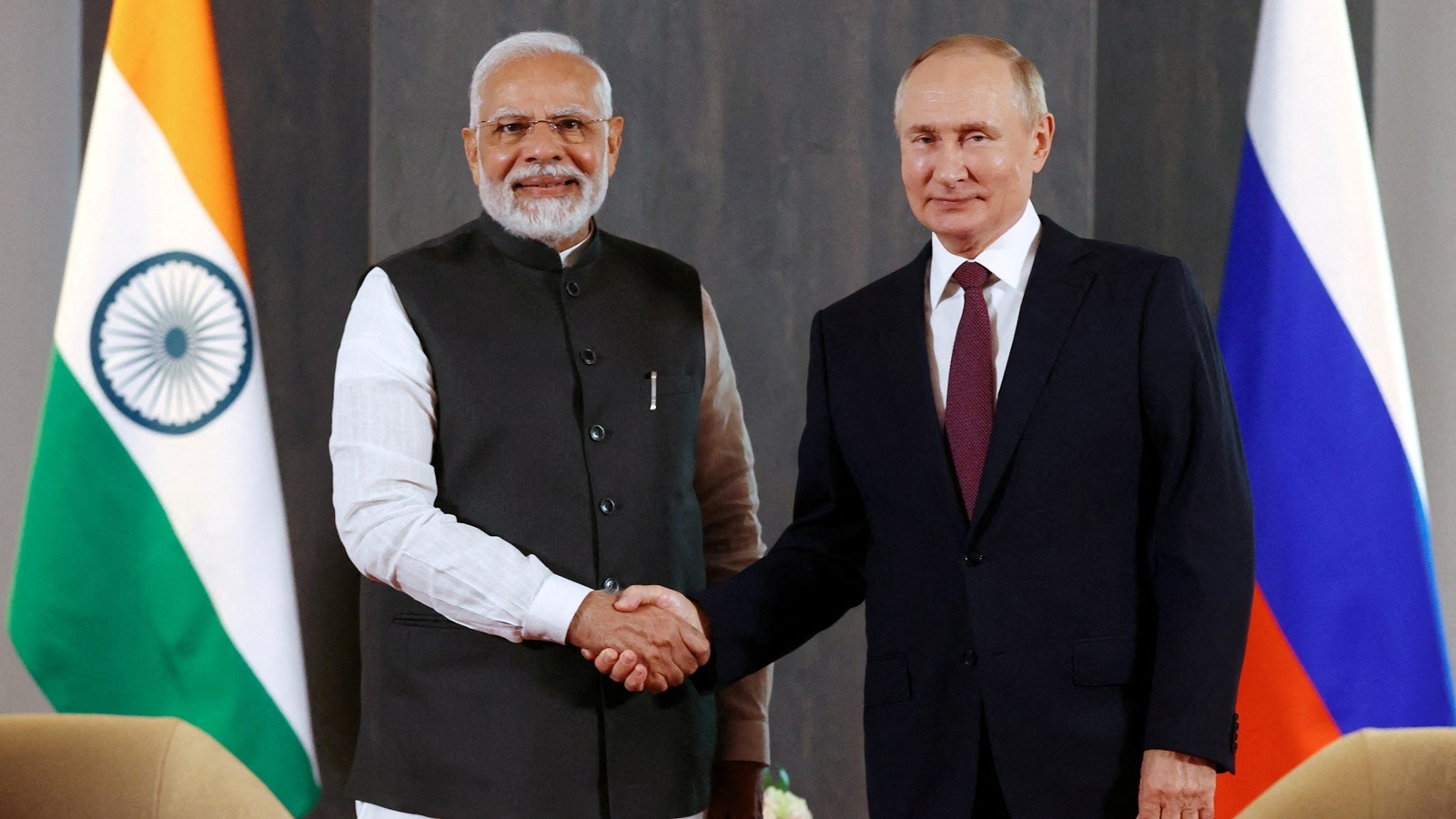
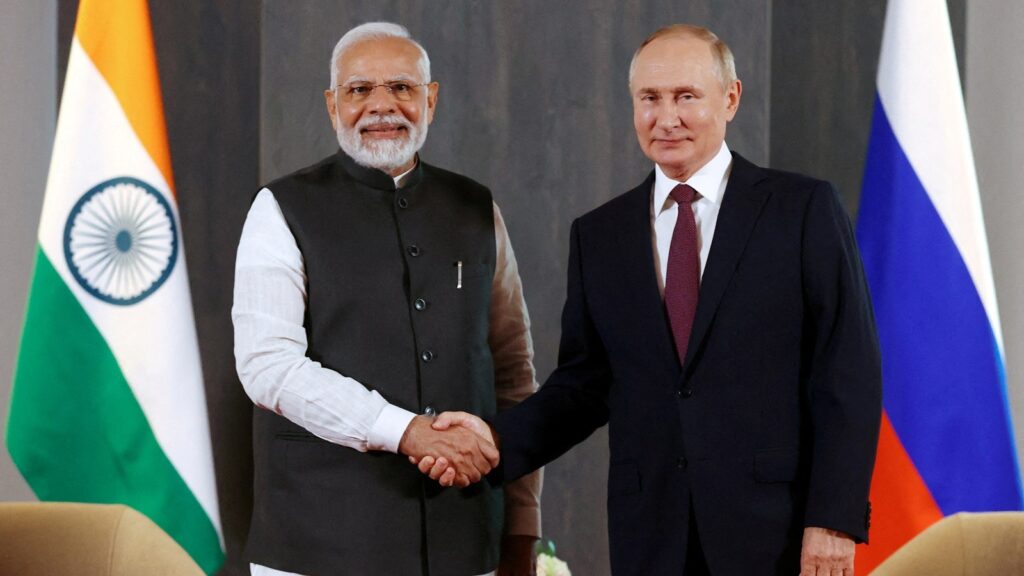
By Nitya Chakraborty Prime Minister Narendra Modi’s diplomatic woes are mounting as Russian President Vladimir Putin’s proposed visit to India on December 5 and 6 is approaching. US President Donald Trump is determined to ensure substantial reduction in Indian imports of Russian oil by November and this has been linked with the progress of the […]
The article Narendra Modi’s Mounting Dilemma Over President Putin’s Visit To India In December appeared first on Latest India news, analysis and reports on Newspack by India Press Agency).

Gold surged past $4,300 per ounce this week, setting fresh records as investors turned decisively to safe-haven assets amid mounting geopolitical strain and expectations of forthcoming U. S. rate cuts. The run has intensified scrutiny over gold’s role in modern portfolios—and reopened questions about the value of what critics label a “sterile” asset. Spot gold climbed about 2.5 per cent to $4,316.99, while December futures peaked at […]

Hyderabad-based Megha Engineering & Infrastructures Ltd has clinched a $225.5 million contract from Kuwait Oil Company to build, operate and maintain a gas sweetening and sulphur recovery facility in Kuwait’s oilfields. The deal spans engineering, procurement and construction, followed by a five-year operations and maintenance phase, with an option for KOC to buy back the facility. Under the agreement, MEIL must complete construction within 790 days, after […]

Over $250 million has been wiped out from leveraged positions across major cryptocurrency markets within the last 60 minutes, according to real-time tracker alerts. The bulk of the liquidations hit long bets, triggering a sharp lash of volatility that rattled traders across exchanges.

Data from multiple crypto-analytics feeds show that Bitcoin and Ethereum bore the brunt of the forced closures, with long positions cascading under mounting downward pressure. The alerts indicate that around $200 million of that total was liquidated in just the preceding 15 minutes. Margin calls and automatic stop-loss triggers have sharply pared back open interest.

Market participants point to a combination of lower-than-expected macro signals and heightened global risk aversion as catalysts for the sudden liquidation wave. Macro equity markets have seen risk assets fall under pressure over the past sessions, prompting a spillover into speculative crypto positions. The added strain from derivatives exposure amplified the move.

Crypto exchange data show that Binance, Bybit and OKX recorded the highest volumes of liquidations, especially in their perpetual futures markets. On Binance alone, over $80 million in long positions may have been forcibly closed, according to traders cross-checking the on-chain and order-book flows. Ethereum perpetuals also registered substantial losses, particularly in mid- and high-leverage tiers.

Analysts observing funding rates and open interest across exchanges have flagged an abrupt deleveraging. The funding rates for many altcoins flipped negative, signalling that the short side was gaining dominance as leverage unwound. Open interest across high-risk tokens dropped by 15 – 20 % in many cases, suppressing liquidity and heightening slippage.

Several algorithmic trading desks and quant funds experienced knock-on effects. As large liquidations pulled prices lower, stop orders cascaded, exacerbating the decline in thin markets. Some trading firms reported losses due to slippage and forced exits—even though positions were hedged—with automated strategies failing to escape the downdraft in time.

A few larger holders, often designated as ‘whales’, appear to have opportunistically repositioned. Some have placed bids closer to now-discounted levels in anticipation of a bounce; others reduced exposure altogether. On-chain indicators suggest increased inflows to stablecoin pools and accumulation in non-spot holdings, hinting at a cautious redeployment rather than wholesale exit.

Institutional interest remains muted amid the turmoil. According to contacts in digital-asset fund management, most institutions were already operating with limited leverage and hedges in place. Few entered new positions during the seizure of volatility, and many paused trades to watch whether support levels would hold.

Abu Dhabi’s MDGH GMTN priced a one-billion dirham Reg S five-year bond at par, carrying a coupon of 4.20 per cent. The issuer tightened guidance from an initial 4.45 per cent, and book orders surpassed AED 4.7 billion, not counting joint lead manager interest, signalling strong investor demand.

The unsecured bond is guaranteed by Mamoura Diversified Global Holding, with settlement set for 23 October and a planned listing on the London Stock Exchange Main Market. Fitch is expected to assign an “AA” rating in line with Mamoura’s sovereign backing. The issuance was led by a syndicate including Abu Dhabi Commercial Bank, Bank of China, Citi, Emirates NBD Capital, First Abu Dhabi Bank, Goldman Sachs International, HSBC, Industrial and Commercial Bank of China, National Bank of Kuwait and Standard Chartered.

This city-currency issue follows a $750 million ten-year dollar bond issued less than ten days earlier by MDGH, priced at about 55 basis points over U. S. Treasuries under the same guarantee structure. That transaction underlined the group’s growing presence in global markets.

MDGH is wholly owned by Mubadala Investment Company and plays a central role in Abu Dhabi’s strategy to diversify its economic base. In its 2024 financials, the company reported revenues of AED 39,528 million and a net profit attributable to owners of AED 37,376 million, with total assets reaching AED 596,168 million.

Credit agencies currently align Mamoura’s rating with the sovereign, with Fitch affirming an “AA” rating and stable outlook in late 2023. Moody’s and S&P assign comparable ratings of Aa2 and AA respectively.

Analysts note that the new issue shows how Abu Dhabi-linked issuers are able to tap demand for high-grade Gulf debt amid tighter global credit markets. The bond’s tight pricing and oversubscription point to strong appetite among fixed-income investors for Gulf credits backed by sovereign guarantees.

VISHNU RAJA
RYO YAMADA
HITORI GOTOH
IKUYO KITA