News related to
global

Intercontinental Exchange, which owns the New York Stock Exchange, is committing up to $2 billion in Polymarket, valuing the event-prediction platform at about $8 billion before the investment. ICE will serve as a global distributor of Polymarket’s event-driven data and will collaborate on tokenisation and related infrastructure.

Polymarket is gearing up for its return to U. S. markets following a multi-year regulatory hiatus. The firm acquired QCEX, a derivatives exchange and clearinghouse with CFTC licensure, for $112 million, enabling it to operate under U. S. regulation. The Commodity Futures Trading Commission has granted a no-action letter for event contracts, clearing a path for U. S. users to trade again.

Born in 2020 under the leadership of CEO Shayne Coplan, Polymarket permits users to wager on outcomes by purchasing “Yes” or “No” tokens. The market price implies a probability. Winning tokens settle at $1, while losing ones expire worthless. All trades occur via peer-to-peer smart contracts built on the Polygon blockchain.

Polymarket saw a surge in profile during the 2024 U. S. presidential campaign, when trading volume on election markets surpassed $3 billion. Its probability signals have since been picked up by mainstream outlets and financial analysts as indicators of public sentiment and forecasting.

ICE’s strategic investment reflects growing institutional interest in prediction markets. With control over NYSE infrastructure and deep data capabilities, ICE aims to monetise sentiment analytics and integrate such signals alongside traditional financial indicators. ICE has maintained that the investment will not materially affect its 2025 financials.

Coplan has acknowledged the significance of the tie-up, saying the partnership “marks a major step in bringing prediction markets into the financial mainstream.” Jeffrey Sprecher, ICE’s CEO, praised the union as an alignment between legacy market infrastructure and next-generation decentralised finance innovation.

Observers suggest that navigating regulatory risk is central to Polymarket’s success. Its three-year exit from U. S. users followed a 2022 settlement with the CFTC over unregistered derivatives operations. That settlement barred U. S. users from accessing the platform, and investigations into U. S. usage had been a cloud over the company. With the regulatory clearance and ICE backing, Polymarket is now executing a comeback in the U. S. domain.

Polymarket also attracted backing from 1789 Capital, a venture fund backed by Donald Trump Jr., which joined its advisory board earlier this year. Kalshi, a peer prediction market, won a favorable court ruling against the CFTC last year, setting precedents that influence Polymarket’s legal and operational landscape. The broader industry is watching closely, as the success or failure of this bet by ICE may signal whether prediction markets can transition from niche crypto tools to mainstream financial instruments.

Shayne Coplan, born in 1998 and a former dropout from New York University, is now recognised as the youngest self-made billionaire under the Bloomberg index following the deal. His trajectory illustrates the accelerating nexus among finance, tech and speculative market platforms.

Gold-backed digital tokens such as Paxos’s PAXG and Tether’s XAUT have shown greater resilience than much of the crypto market during a sweeping $19 billion liquidation event that struck major cryptocurrencies. While Bitcoin and Ether tumbling inflicted heavy losses across leveraged positions, these gold-pegged tokens either held value or gained modestly, driven by the ongoing rally in physical gold.

Bitcoin dropped about 8.5 per cent over 24 hours, and the broader crypto index fell roughly 12.75 per cent, but PAXG dropped a mere 0.23 per cent to around $3,998, while XAUT rose by 0.2 per cent to $4,010. That divergence reflects gold’s strength: the metal closed near $4,018 per troy ounce, bolstered by safe-haven demand in volatile markets.

The combined market capitalisation of gold-pegged tokens has now crossed $3 billion, with PAXG, XAUT and KAU as leading issuers. Trading volumes also surged, reaching about $640 million in a single day, reflecting investor flight into more stable digital assets. These tokens have returned over 50 per cent year to date, mirroring gold’s gain in 2025.

Gold’s atmosphere of strength rests on several pillars: strong inflows into physically backed gold ETFs, weakening U. S. dollar dynamics, inflation hedge demand and rising geopolitical fragility. The World Gold Council reports that global ETF holdings have now reached $472 billion, marking one of the strongest quarters ever in gold history.

Yet caution signs are mounting. Analysts and the World Gold Council warn the gold market may be entering overextended territory. With gold having risen across multiple weeks, technical indicators suggest the metal might be overbought and primed for a pullback. In particular, extreme deviation above its 40-week average raises the prospect of a reversal.

Adding fuel to this narrative is the entry of tokenisation infrastructure and institutional backing. Nasdaq-listed Prestige Wealth has raised $150 million to create a treasury vehicle for Tether’s gold reserves, aiming to layer blockchain transparency onto gold ownership. Meanwhile, the World Gold Council has floated a “Pooled Gold Interests” initiative in partnership with Linklaters and Hilltop Walk to democratise fractional ownership and tradability of vault-backed bullion.

Dubai — The Syrian Pavilion will make its first appearance at GITEX Expand North Star 2025, opening from 12 to 15 October, under the banner “Syria is Online.” This marks a milestone in Syria’s efforts to reconnect with the international innovation community and attract investment for its fledgling tech ecosystem.

The pavilion is being organised by SYNC, the Syria-Next Conference network, and backed by the Syrian Business Council and the U. S.–Syria Business Council. It aims to provide Syrian startups a platform to showcase digital solutions, engage in pitching sessions, facilitate panel discussions, and establish connections with global investors and industry partners.

Bassel Yassine Ojjeh, Chairman of SYNC and project lead for the pavilion, stated that the initiative intends to generate 25,000 tech-related jobs over five years through strengthened collaboration and external funding. He emphasised that GITEX offers “a vital step … to showcase Syrian talent and build partnerships that open doors for a new generation shaping the digital future.”

The pavilion will include startup pitch showcases, interactive tech talks, and networking forums. It plans to highlight projects in sectors such as fintech, AI, e-commerce, digital health and creative tech. Several Syrian entrepreneurs have already submitted entries, and a curated selection will present on the main stages of Expand North Star.

The move aligns with a broader expansion of national pavilions in this year’s GITEX edition. Brazil is participating as the Country Partner, and new delegations from Serbia, Hong Kong, Canada and Ecuador are set to join the global tech showcase. The event is expected to host over 1,800 startups and 1,000 investors managing over USD 1 trillion AUM, turning Dubai into a tech capital for dealflow.

Despite decades of conflict and economic sanctions, Syria retains a reservoir of technical talent across its population, especially among youth and diaspora communities. SYNC was founded with the objective of bridging Syrian innovators in Silicon Valley and the diaspora with on-ground talent, thereby facilitating collaboration, mentorship, and capital flows. The 2025 edition of SYNC was held in Damascus earlier this year, bringing together local technologists and overseas experts to discuss ecosystem development.

Still, Syrian tech ambitions face significant headwinds. Infrastructure deficits, internet connectivity constraints, regulatory uncertainties, difficulties in accessing cross-border payment systems, and war-induced economic fragmentation continue to challenge the sector’s scalability. International sanctions and distrust around financial compliance also complicate foreign investment.

To mitigate these risks, the pavilion’s backers aim to frame Syria’s entry into the tech market as more than symbolic. Organisers say they are structuring due diligence frameworks, matchmaking with vetted investors, and post-event follow-up mechanisms to sustain momentum beyond the exhibition.

BEIJING, CHINA – Media OutReach Newswire – 11 October 2025 – An article published by CGTN highlights China’s upcoming Global Leaders’ Meeting on Women in Beijing, marking 30 years since the 1995 Beijing Declaration. It reviews China’s progress in women’s empowerment under Xi Jinping’s leadership and its global contributions to gender equality, while noting persistent worldwide challenges to achieving women’s full advancement. Thirty years ago, the Beijing […]

By Nitya Chakraborty There is a big possibility of renewal of India-US bilateral ties impacting the ongoing trade talks following the proposed one on one meeting between the Indian Prime Minister Narendra Modi and the U.S. President Donald Trump during their presence in Kuala Lumpur to attend the summit of ASEAN members on October 26 […]

The article Trump-Modi Meet At ASEAN Summit In Malaysia Can Remove Irritants In Indo-US Ties appeared first on Latest India news, analysis and reports on Newspack by India Press Agency).

China’s expanded export controls on rare-earth materials have jolted global semiconductor supply chains, with firms scrambling to assess vulnerabilities while the United States countered by threatening a sweeping 100 % tariff and new software export curbs. The Chinese Ministry of Commerce broadened restrictions to 12 elements and extended licensing requirements to include mining, refining and recycling equipment—pressing that any dual-use or defence-tied requests will be denied. Foreign […]

DP World has struck a joint venture with Tashkent Invest, a firm under the Tashkent City Administration, to build and manage a multimodal logistics terminal in the Yangi Avlod Special Industrial Zone in the Yangihayot district on the outskirts of Tashkent. Under the deal, DP World will own 85 percent of the venture and Tashkent Invest will contribute 15 percent. The overall investment across three phases is […]

Advertisements

HANOI, VIETNAM – Media OutReach Newswire – 11 October 2025 – VinFast has officially become the first automobile brand in Vietnam to surpass 100,000 vehicle sales within the first three quarters of a single year. The milestone follows 11 consecutive months as the nation’s best-selling carmaker, underscoring VinFast’s unchallenged leadership in the domestic automotive market. VinFast sets national record, surpasses 100,000 vehicles sold in just three quarters […]

Cryptocurrency markets endured a historic collapse as leveraged positions were liquidated en masse – over 1.6 million traders wiped out $19.13 billion in bets within 24 hours, data from Coinglass shows.

The crash accelerated sharply after U. S. President Donald Trump announced an additional 100 per cent tariff on Chinese imports and threatened export controls on critical software, heightening fears of a full-blown trade war. Bitcoin plunged more than 12 per cent from its recent highs, briefly sliding below $102,000 before rebounding above $113,000.

Before the sell-off, Bitcoin had breached a new all-time peak above $125,000, buoyed by institutional inflows into crypto exchange-traded funds. Governments and institutional investors had viewed digital assets as a hedge amid macroeconomic uncertainty.

Today’s market rout, however, exposed the fragility of overleveraged positions in a thinly capitalised market. In a single hour on Friday, more than $7 billion of liquidations occurred. The top losses were seen among long positions, particularly in Bitcoin and Ethereum derivatives, which accounted for a substantial share of the forced unwinds.

Institutional players and high-net-worth traders were swept up in the cascade. Market watchers noted that order books lacked the depth to absorb such a severe shock, triggering knock-on effects through futures and perpetual swap markets.

Beyond crypto, equity indices faltered under the weight of renewed global risk aversion. The S&P 500 dropped 2.7 percent, while tech stocks, sensitive to trade tensions, bore steep losses.

Some analysts likened the event to a “black swan” moment for crypto markets — a sudden shock revealing systemic vulnerabilities in a still nascent asset class. Traders operating with high leverage, little hedging, and aggressive margin policies found themselves particularly exposed.

Efforts to assess contagion effects to traditional finance are underway. Banks offering crypto derivatives and prime brokers are now scrutinising counterparty risks. Regulators in several jurisdictions may use today’s crash to justify stricter margin and leverage rules for crypto trading.

Reviewing policy implications, the tariff escalation marks a sharp pivot in U. S.–China trade strategy. Trump framed the measures as retaliation for China’s export curbs on rare earth metals, which are critical for tech manufacturing. The move signals willingness to escalate economic confrontation, with markets already pricing in broader disruption to global supply chains.

Despite the volatility, some investors are still betting on long-term resilience of digital assets. The week before the crash saw a record $5.95 billion flow into global crypto ETFs, led by U. S. allocations, suggesting that capital rotation into crypto remains strong over medium timeframes.

Liquidity providers and market makers face fresh trials. Some have temporarily withdrawn from funding markets or widened spreads to mitigate risk exposure. In highly volatile hours, arbitrage desks and algorithmic liquidity engines contributed to exaggerated price swings.

Wider sentiment has turned cautious: on-chain analytics show a rise in stablecoin inflows to exchanges, possibly reflecting flight from risk. Options markets registered growing demand for deep out-of-the-money puts, as traders brace for further downside.

Abu Dhabi — EDGE entity FADA has completed a week-long “Space Roadshow” across six Emirati educational institutions, aiming to galvanise youth interest in space sciences and strengthen the UAE’s space ecosystem. The roadshow, conducted in collaboration with the UAE Space Agency and Space42, carried the theme “Living in Space” and comprised workshops, interactive sessions, and networking opportunities touching on Earth observation, satellite communications, CubeSat technologies and astronaut […]

HAIKOU, CHINA – Media OutReach Newswire – 11 October 2025 – From September 28 to October 8, Haikou, the capital of China’s Hainan Province, won global attention with its colorful public art activities. Nearly 150 events, including lawn concerts, opera salons and street parades, have transformed this “Land of International Performing Arts” in the East into a boundless palace of art. Caption: A bird’s-eye view of the […]

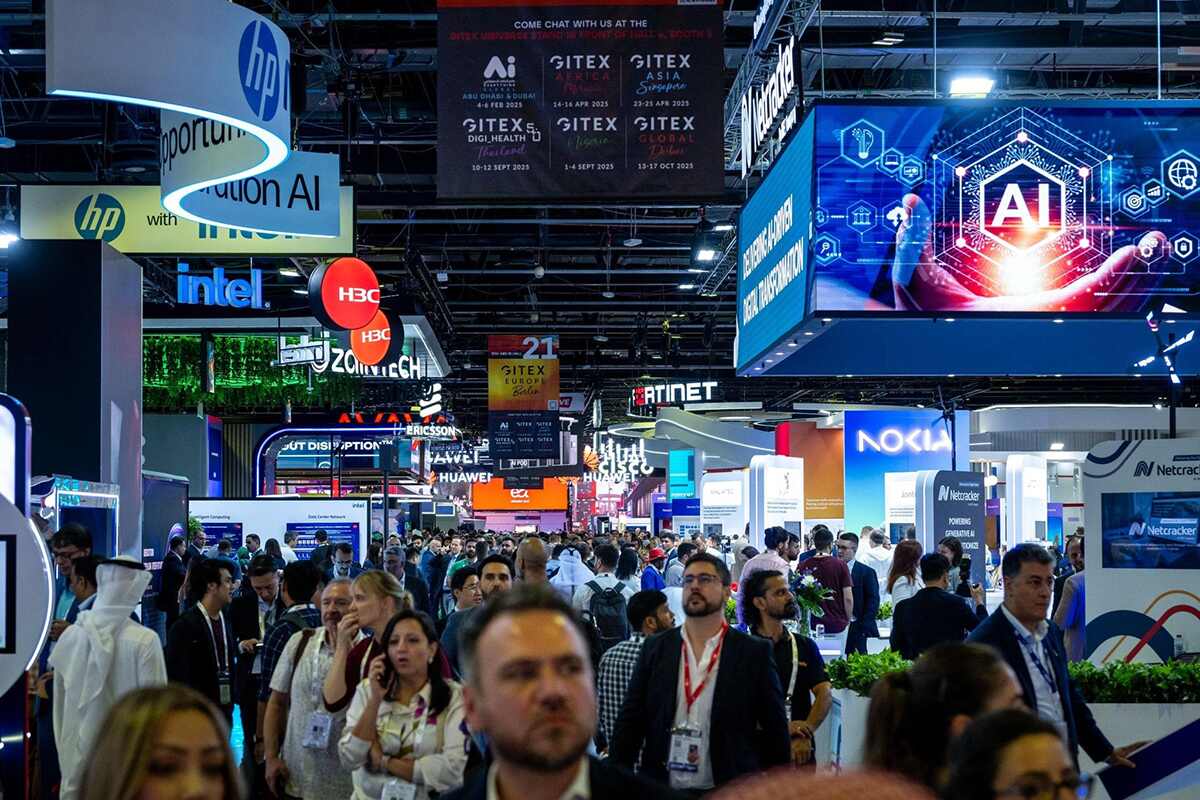
Dubai — DOOGEE is rolling out a bold “Tech For Nature” showcase at GITEX GLOBAL 2025, positioning itself at the intersection of rugged devices and sustainability. From 13 to 17 October, the company will host its exhibit at booth A40 in Hall 13, where its outdoor-oriented hardware and eco-aware design features will be on full display.

DOOGEE describes the exhibit as centred around its “Tech Impact” zone, a curated space meant to demonstrate how its devices can withstand extreme conditions while serving the needs of explorers, scientists, and rescue personnel. The lineup includes models engineered for shock, heat, immersion, and drops — with features aimed at bridging utility and resilience.

Among the highlight products is the V Max Play, which pairs a high-capacity battery with a 200 MP main camera and integrates a mini projector for on-the-go displays. DOOGEE also plans to exhibit the S200 Ultra, built with aluminium-titanium alloy framing and a rear display for rapid glanceable information. Wearables and peripheral devices are similarly designed for outdoor resilience: the Anywise W1 Pro watch offers dual-band GPS, 5ATM water resistance, and offline map capability, while BoneAir Swim provides bone conduction audio under IP68 waterproof rating.

The firm frames “Tech For Nature” as both a mission and a product philosophy—suggesting that its devices should “coexist with nature” rather than merely tolerate it. In its public communications, DOOGEE emphasises use of sustainable materials and energy-efficient design elements. For instance, it references the use of recycled coffee grounds in casing composites and UV-responsive surfaces that shift hues with ambient light.

DOOGEE is no stranger to rugged or niche technology showcases. Earlier in 2025, the company participated in GITEX Europe, where it spotlighted AI-enhanced rugged devices and wearables built for industrial and outdoor environments. The Dubai event, by contrast, marks its largest commitment yet to the consumer-facing “outdoor tech” narrative.

Analysts note that DOOGEE is entering a competitive space where brands like CAT, Ulefone, and Blackview already target the rugged market segment. To distinguish itself, DOOGEE appears to lean into hybrid positioning: ruggedness plus eco credentials. “The idea is to appeal to users who don’t want to sacrifice environmental sensibility for durability,” commented one industry observer.

GITEX GLOBAL 2025 is itself a major platform: this 45th edition of the event draws participants across AI, quantum, data centres, and startup ecosystems. DOOGEE’s exhibit is aligned with the trend of hardware firms emphasizing sustainability, resilience, and experience-driven product showcases.

Visitors at booth A40 will have hands-on access to the full “Tech For Nature” suite, including tablets, phones, wearables, and audio gear. DOOGEE is also promoting discounts on first orders for attendees and encouraging media and partners to trial devices on-location. Beyond demonstration, the firm is signalling intention to gear up distribution and service channels in regions where demand for rugged outdoor gear is rising.

Dubai’s GITEX GLOBAL 2025 is turning the spotlight on East Africa as a rising force in the artificial intelligence landscape, with regional governments and private players leveraging the event to signal ambition across infrastructure, AI research and startup ecosystems. More than 6,800 tech enterprises and 2,000 startups from 180 countries will convene in Dubai from 13 to 17 October under the GITEX banner, showcasing breakthroughs in biotech, […]

Qualcomm has confirmed its acquisition of Arduino, the Italian open-source electronic prototyping platform used by more than 33 million developers worldwide, in a move intended to deepen the chipmaker’s stake in edge computing and AI development. Under terms not disclosed publicly, Arduino will retain its brand, tools and mission, while joining Qualcomm’s broader technology and development ecosystem. As part of the deal, the two firms unveiled the […]

Matein Khalid Private equity and money center banks on Wall Street are in free fall even as the private credit market is in classic contagion mode, without a lender of the last resort for overleveraged shadow banks/hedge funds whose illiquid assets now disappear into Wall Street’s structured vehicles blackholes. Peekaboo Finance 101! When Citigroup and Brent crude both fall 8% in a synchronized bearish death dive, I […]

HANOI, VIETNAM – Media OutReach Newswire – 10 October 2025 – The Vietnamese music scene is experiencing an unprecedented seismic event: G-DRAGON has assented to fan demands, officially announcing a second performance for his highly anticipated G-DRAGON 2025 WORLD TOUR [Übermensch] IN HANOI. The decision to add a second show on Sunday, November 9, at the 8Wonder Ocean City follows a ticket phenomenon that has redefined the […]

A coalition of leading banks including Bank of America, Goldman Sachs, Deutsche Bank, BNP Paribas, Santander, Barclays, TD Bank, MUFG, UBS and Citi has unveiled a joint exploratory effort to design a blockchain-based stablecoin pegged to G7 currencies. The banks say the asset would maintain a fixed 1:1 value relative to existing fiat currencies, issued on public blockchains.

The initiative enters a financial landscape intensely focused on regulation, institutional adoption, and the evolving dynamics between corporate and sovereign digital currencies. According to statements from the banks, the plan is still in its early phase, focused on technical design and governance frameworks before market launch.

Under the plan, participating banks would cooperate on shared standards for transparency, reserve backing, compliance, and interoperability across financial systems. The banks emphasise that regulatory alignment will be central, particularly given heightened scrutiny in major jurisdictions. Some participants have intimated that this consortium initiative is intended to forestall fragmentation in the stablecoin space and ensure that banks maintain influence over the structure of digital money networks.

Sources familiar with the project note that discussions centre on multiple core challenges: how to segregate reserves to maintain full backing, how to deal with liquidity and redemption demands, how to interface with central bank digital currencies without cannibalising them, and how to meet anti-money laundering and know-your-customer mandates.

This bank-led initiative aligns with a broader pattern: European banks recently formed a consortium to launch a euro-denominated stablecoin under MiCAR compliance, aiming to counter the dominance of U. S. dollar–based tokens. That project includes ING, UniCredit, CaixaBank, and others.

Analysts say the involvement of global banks is a signal that stablecoins are no longer confined to fintechs or crypto firms. Goldman Sachs has forecast that the stablecoin market could expand into the trillions of dollars over time. Banks are increasingly seeing stablecoins as tools to support liquidity management, payments, and tokenised financial infrastructure.

The dominance of U. S. dollar–backed stablecoins is also one driver of such moves. A Standard Chartered forecast predicts that the total stablecoin savings held globally could climb to $1.22 trillion by 2028, a shift that could disintermediate banks in emerging markets.

Critics caution that bank-issued stablecoins must avoid replicating past financial crises: if redemption runs occur, banks issuers must be prepared to redeem at par value in all circumstances, including stress periods. Proper separation of reserves, legal structuring to prevent creditor claims on reserve pools, and independent auditing will be crucial. Regulatory authorities will need to decide whether bank-issued stablecoins should be treated as depository liabilities or securities.

Some central banks may view such bank initiatives as competitive to their CBDC ambitions. Others in regulation may welcome the partnership as allowing private-sector innovation within compliant guardrails. The outcome could reshape how payments and money move across borders.

By Girish Linganna In a move that would have seemed unthinkable just a few years ago, Taliban Foreign Minister Amir Khan Muttaqi arrived in New Delhi on October 9 for an eight-day official visit that marks a watershed moment in India’s foreign policy. His meetings with External Affairs Minister S. Jaishankar, followed by visits to […]
The article The Price Of Pragmatism: What India Gains (And Loses) By Courting The Taliban appeared first on Latest India news, analysis and reports on Newspack by India Press Agency).

India is dispatching over 450 technology firms and startups to GITEX Global 2025 in Dubai, anchoring the India Pavilion under the aegis of ESC. The pavilion will span multiple halls and spotlight more than 100 Indian enterprises across sectors such as AI, cybersecurity, cloud computing, IoT, smart mobility, fintech and digital infrastructure. Organisations will also engage in high-stakes networking, investor roundtables and B2B matchmaking.

GITEX Global 2025, running from 13 to 17 October at the Dubai World Trade Centre, draws more than 6,800 tech companies and some 2,000 startups from about 180 countries. It is expected to be the largest edition to date, integrating themes such as physical AI, quantum computing, biomedicine and semiconductor innovation. Across the co-located Expand North Star event, over 1,200 investors managing assets exceeding US$1.1 trillion will scout opportunities among scale-ups and unicorns.

The India Pavilion marks a concerted push to convert India–UAE strategic frameworks into tangible tech commerce. With the India–UAE Comprehensive Economic Partnership Agreement and the Local Currency Settlement System operational, cross-border ICT trade has surged. Bilateral trade crossed US$100 billion during fiscal year 2024–25, and electronics exports alone reached US$3.7 billion, positioning the UAE as a key destination for Indian hardware shipments.

At a preparatory briefing, Kamal Vachani, ESC’s regional director for Dubai, described the pavilion as more than a display — “a living showcase of India’s tech prowess and growing synergy with the UAE.” ESC’s CEO, Gurmeet Singh, noted that many participating companies are MSMEs or first-time exporters, and that the pavilion aligns with India’s ambition to emerge as a global electronics hub.

India’s strategy at GITEX goes beyond sheer numbers. Firms are bringing solutions purpose-built for global markets — from smart city platforms to blockchain-enabled supply chains. The pavilion will host curated sessions on cross-border compliance, regulatory alignment, and scalable deployment across Middle Eastern and African markets.

For the UAE, the event reinforces its vision of acting as a global nexus for innovation and capital. Major corporate names such as G42, e&, IBM, AMD, Huawei, Microsoft, Oracle and Amazon Web Services will anchor the exhibitions. New entrants including Cerebras, Tata Electronics, Qualcomm and Tenstorrent will attempt to break in. The show also emphasises future-critical infrastructure: hyperscale data centres, quantum systems, and semiconductor roadmaps are front and centre.

Globally, one of the event’s linchpin themes is the maturation of AI into domain-specific systems. The AI Semicon track will address sovereign technology imperatives in chip design, while the Quantum Expo will present fault-tolerant architectures. At the intersection of AI and healthcare, companies like Mammoth Biosciences and Paradromics will illustrate how gene-editing and neurotech are being reimagined. Robotics firms will showcase humanoid prototypes and autonomous “robocars,” underscoring the pivot to “physical AI.”

Strategic partnerships form a parallel narrative. India and the UAE are finalising memorandum exchanges via the UAE-India Business Council to deepen collaboration across fintech, logistics, digital infrastructure and state-level investment. The CEPA Start-up Series launched earlier this year in New Delhi underscores a joint intent to foster innovation-led cross-border growth.

HANOI, VIETNAM – Media OutReach Newswire – 10 October 2025 – This November, Hanoi is set to become more than just a destination for Vietnamese music fans. The city will turn into the emotional center of Asia as K-pop’s “King” G-DRAGON brings his 2025 WORLD TOUR [Übermensch] to 8Wonder Ocean City. The event marks a new milestone for Vietnam on the global concert scene and signals the […]

Cameroonian fintech startup REasy has secured a $1.8 million pre-seed investment to expand its cross-border payment and trade infrastructure for small and medium enterprises. The funding was led by Ingressive Capital, Launch Africa, 54 Collective and Digital Africa, alongside fintech angels including Christophe Chausson, Mathias Léopoldie and Joël Nana Kontchou. REasy intends to deploy the capital toward technology development, regulatory licensing across new markets and accelerated customer […]

Macau has unveiled an integrated resort-hospital at Studio City, combining high-end medical services with entertainment in a move aimed at redefining medical tourism. The facility, operated by Hong Kong’s iRad in partnership with Melco Resorts, features on-site MRI and CT capabilities within a 15,000 sq ft footprint — a first of its kind globally.

This development marks a deliberate pivot in Macau’s strategy to reduce its dependence on gambling revenues by cultivating alternate growth sectors. The resort hospital offers health screening, diagnostic imaging, longevity treatments, aesthetic services and medical concierge offerings, positioning itself as a premium healthcare destination linked to leisure.

Melco’s chairman and CEO, Lawrence Ho, described the facility as both “the world’s first and Macau’s only hospital with MRI and CT facilities within an integrated resort,” emphasising its alignment with the local government’s “1+4” economic diversification framework. The facility is located inside Studio City, one of Melco’s flagship casino-resorts.

The Macau administration has endorsed the venture as part of a broader push to transform the city into “one centre” that integrates tourism, medical services and other growth industries. The hospital is expected to attract visitors who might extend their stays and spend more across the city’s hospitality and leisure ecosystem.

While the resort hospital is a novel concept, Macau already maintains a public health infrastructure comprising three hospitals: Conde S. Januário, Kiang Wu and Macau University of Science and Technology Hospital. The new facility, however, is unique in being embedded within a casino resort environment and dedicated primarily to elective, wellness and diagnostic services.

Industry observers note that iRad’s entry signals confidence in the region’s potential to capture high-value medical travellers — especially those seeking convenience, privacy and a fusion of health and leisure experiences. Hong Kong’s leading imaging diagnostics group, iRad, became part of Black Spade Capital’s portfolio in 2021, positioning it to spearhead this cross-border integration.

Some specialists caution that success will depend on regulatory approvals, insurance linkages, and quality accreditation. Converting high net-worth travellers into medical tourists requires trust in outcomes, cost transparency and continuity of care. Macau’s public hospitals already contend with capacity pressures; the resort hospital will need to clarify patient referral protocols and emergency support linkages.

Saudi Arabia’s sovereign wealth fund, the Public Investment Fund, has scaled back work on a number of planned share sales inside the kingdom, people with knowledge of the matter said, indicating shifting strategy amid weak valuations and soft investor appetite. Bloomberg first reported the development, and its reporting aligns with assessments in market commentary. Executives and advisers close to the red-sea fund say that a subdued climate […]

The Government of Sharjah, rated Ba1/BBB–/AAA by Moody’s, S&P and Lianhe respectively, has mandated several major banks to explore a new Panda Bond issuance in China’s onshore bond market. The Finance Department has appointed Bank of China as lead underwriter and bookrunner, with Crédit Agricole, JP Morgan Chase, ICBC, China Bohai Bank, Citic Securities, the Export-Import Bank of China, and Shenwan Hongyuan Securities acting as joint lead underwriters and bookrunners.

This initiative marks Sharjah’s second foray into the Panda Bond space; it first tapped the Chinese domestic bond market in February 2018 with a RMB 2 billion issue, becoming the Middle East’s first Panda issuer. That issuance carried a coupon rate of 5.8 per cent and matured in 2021.

Market participants say Sharjah’s renewed interest signals increasing appetite among Gulf issuers for renminbi funding, especially given the growing scale of China’s interbank bond market and its accessibility to international issuers. The Panda market is seen as a way to diversify funding sources away from traditional dollar or euro issuance, while deepening engagement with China’s capital markets.

Observers note that the list of joint bookrunners and underwriters—including both Chinese and Western entities—reflects a strategic bridging between global and Chinese investor bases. Bank of China’s role as lead suggests that Chinese financial institutions will play a key role in structuring and distributing the bonds to domestic accounts. The presence of Crédit Agricole and JP Morgan, meanwhile, may facilitate cross-border investor participation.

Industry sources expect the issuance to follow the standard procedure under China’s bond regulations governing overseas issuers. This includes registration with NAFMII, compliance with disclosure requirements, and pricing via roadshows to institutional investors in China. The timeline, tenor and final coupon structure have not yet been disclosed, but sources familiar with the matter suggest Sharjah is seeking favourable market conditions to launch.

Issuers of Panda Bonds have historically benefitted from lower yields relative to comparable offshore RMB options, thanks to the liquidity and depth of China’s domestic markets. That said, success depends heavily on investor confidence in the issuer’s credit profile, transparency in the bond documentation, and the relative attractiveness of coupon spreads over domestic benchmarks.

Sharjah’s credit ratings present both strengths and challenges. Its triple-A rating from Lianhe bolsters credibility in the Chinese market. However, its non-investment grade rating from Moody’s and S&P may weigh on perceptions among global investors. How Sharjah positions itself to bridge that gap will be critical, particularly in roadshow messaging and bond structuring.

This development arrives at a time when Panda bond issuance is gaining momentum. The Asian Infrastructure Investment Bank, for example, raised CNY 2 billion in its latest two-year Panda issuance, achieving oversubscription and attracting new investor accounts. The New Development Bank further expanded its onshore footprint earlier this year, issuing RMB 7 billion under its registered Panda Bond Programme.

VISHNU RAJA
RYO YAMADA
HITORI GOTOH
IKUYO KITA