News related to
global

A surge of new initiatives is underway across the UAE ahead of the upcoming global heart-health campaign, as health authorities intensify efforts to curb cardiovascular risks among residents. The Ministry of Health and Prevention is urging citizens to monitor blood pressure and cholesterol levels, adopt healthier diets and exercise regimens, and steer clear of tobacco, underscoring that cardiovascular disease remains the leading cause of death globally. Officials […]

HANGZHOU, CHINA – Media OutReach Newswire – 27 September 2025 – As east China’s digital tech hub Hangzhou is gearing up for the 4th Global Digital Trade Expo (September 25–29), a globally watched digital gala centered on “deep integration of digital trade and AI,” many would wonder who are the creators of the world-leading computing infrastructure, large models, embodied intelligent robots, and over 100 AI application scenarios […]

By K Raveendran The global oil market is once again caught between geopolitics and fundamentals, as a new set of developments forces traders, producers, and consumers to recalibrate expectations. With the United States and the European Union signalling a hardening of positions on Russian oil, and with the Middle East simmering in heightened tensions, Brent […]

The article World Oil Flows At A Critical Juncture As India, US Try To Hammer Out A Deal appeared first on Latest India news, analysis and reports on Newspack by India Press Agency).

The Dubai Financial Services Authority has issued a decision notice barring HDFC Bank’s Dubai International Financial Centre branch from onboarding or engaging new clients, citing deficiencies in its onboarding procedures and promotional practices.

Under the DFSA’s directive dated 25 September 2025, the branch is prohibited from soliciting or conducting any business with clients who had not already completed the onboarding process by that date. The restrictions span across a range of financial services: advising on financial products, arranging investment deals, arranging or advising credit, custody services, and engaging in financial promotions.

HDFC Bank has confirmed the measure, stating the branch’s Dubai operations are not “material to [the] overall business or financial position.” It said it has initiated steps to engage with the DFSA and address the regulator’s concerns.

Existing customers of the DIFC branch remain unaffected by the decision, and clients who had already been offered services may still be served.

The DFSA’s public register confirms the restrictions imposed on HDFC DIFC under Article 75 of the Regulatory Law 2004.

Concern over HDFC’s UAE operations has been mounting since investigations linked to the mis-selling of Credit Suisse Additional Tier-1 bonds surfaced. High-net-worth non-resident Indian investors alleged that HDFC’s UAE arms had pushed leveraged exposure to these risky instruments without adequate disclosure. When Credit Suisse’s AT1 bonds were written down in 2023, several clients in the Middle East faced losses and margin calls.

Regulatory scrutiny has coalesced around whether the branch’s client onboarding systems sufficiently aligned with the stricter DIFC regime for assessing and classifying “professional clients.”

Observers note that the regulatory move at HDFC’s DIFC arm fits a broader trend in the UAE: ensuring that financial institutions operating in its free zones adhere to rigorous compliance standards. While the central bank has in recent months fined other banks and suspended new customer intake over Sharia or anti-money laundering violations, this is a rare case targeting the onboarding practices of a foreign bank’s offshore branch.

Market analysts suggest the restriction could dampen HDFC’s ambitions in the Gulf region. The DIFC branch caters largely to high-net-worth and institutional clients, a growing segment across the Middle East.

Analysts also note that, though the branch is currently a limited part of HDFC’s global footprint, reputational damage and extended regulatory enforcement could constrict cross-border investment programmes tied to its UAE hub.

HDFC’s next steps include formal remediation under DFSA oversight, and the bank will need to demonstrate that its compliance and client due diligence processes meet the regulator’s expectations. Meanwhile, the directive will remain active until the DFSA issues a written amendment or revocation.

By Salah Uddin Shoaib Choudhury Bangladesh is entering one of the most dangerous phases of its history. At the centre of this looming crisis is the unelected regime of Muhammad Yunus, which is presenting itself abroad as democratic and reformist while systematically dismantling the country’s defence and intelligence structure. Behind the veneer of Nobel fame and global endorsements lies a far darker reality: Yunus’ growing alignment with […]

Beacon Media, the entertainment venture co-founded by wellness advocate Dr Deepak Chopra, has joined forces with MovieVerse Studios — the mainstream content arm of IN10 Media Network — to launch a content alliance aimed at elevating storytellers across the Global South. The partnership seeks to establish a “borderless content ecosystem” connecting Hollywood, India, the Middle East, Africa and Latin America — with a prospective audience reach exceeding […]

Abu Dhabi raised $1 billion from a three-year bond sale at 3.625 per cent, about 10 basis points over U. S. Treasuries, and simultaneously issued $2 billion in a 10-year tranche at 4.25 per cent, 18 basis points over Treasuries, drawing a combined order book of over $16 billion. The Reg S senior unsecured bonds will be rated AA by S&P and Fitch, matching the issuer’s credit […]

Advertisements

Emergent today announced it has secured a total of USD 30 million in funding, led by a USD 23 million Series A round from Lightspeed, marking a strategic push into the Middle East and North Africa region. The Bengaluru-based startup, founded in 2025, is already claiming USD 15 million in annual recurring revenue within 90 days of launch, underlining strong investor confidence in its rapid growth model. […]

Wikimedia Foundation and affiliates have unveiled a schedule of online orientation sessions to support prospective applicants for Wikimania 2026, which will be held in Paris from 21 to 25 July. The sessions aim to guide participants through the application process, clarify selection criteria and offer live Q&A support. Organisers will host the orientation in six languages: French, Spanish, English I, English II, and Arabic. All sessions will […]

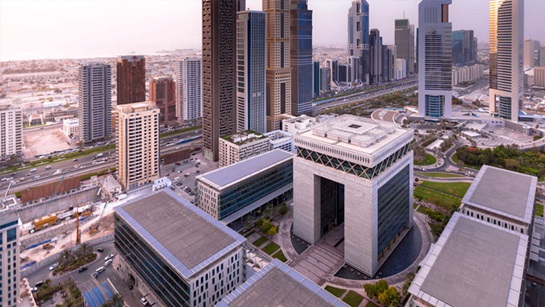
Dubai has secured a position among the world’s top four FinTech centres, according to the latest Global Financial Centres Index published on 25 September, signalling a pivotal shift in the emirate’s financial technology trajectory.

The GFCI report places Dubai at 11th globally in the overall ranking of financial centres, but underscores its standing as one of the most dynamic hubs for FinTech innovation. The Dubai International Financial Centre has played a central role in driving this transformation.

DIFC now houses over 1,500 companies focused on AI, FinTech, and innovation, making it the region’s largest cluster of its kind. These firms have collectively raised more than US$4.2 billion in funding, strengthening the UAE’s appeal as a destination for growth-stage tech ventures. Sheikh Maktoum bin Mohammed bin Rashid Al Maktoum, First Deputy Ruler of Dubai and Minister of Finance, credited the rise to the strategic goals of the Dubai Economic Agenda D33 and to Dubai’s business-friendly infrastructure and regulatory regime.

Essa Kazim, Governor of the DIFC, stressed that the momentum reflects long-term planning and deep investment. He noted that positioning Dubai among the top global FinTech players has required calibrated incentives, robust legal frameworks, and international partnerships. Arif Amiri, Chief Executive Officer of the DIFC Authority, said the locale’s success stems from synergy among institutional support, talent attraction, and ecosystem-building efforts.

Dubai’s ascent in the FinTech league emerges amid intensifying global competition. Traditional financial centres such as London, Singapore, and Hong Kong continue to maintain strong footholds, leveraging established networks, global institutions, and mature regulatory systems. Yet Dubai’s rapid rise indicates that newer hubs with nimble regulation and aggressive incentives can leapfrog in the tech-driven financial services landscape.

The GFCI 38 ranking shows Dubai overtaking several peers in the Gulf and Asia, with the city gaining one rank to 11th place overall and closing gaps in score metrics used to assess competitiveness, such as human capital, reputation, and business environment. The GFCI emphasises that “expected future significance” is one of the domains in which Dubai leads globally—an indication that market participants foresee further growth in its influence.

Fortescue has sealed a flurry of contracts to deploy 300 to 400 zero-emission haul trucks at its Pilbara operations and to bolster its renewable energy capacity with the full acquisition of a Spanish wind tech company. The shifts represent a decisive scaling of its “Real Zero by 2030” ambition.

Under the new agreements, Chinese manufacturer XCMG will supply up to half of the electric 240-tonne haul truck fleet, with deliveries phased between 2028 and 2030. The remaining trucks will be produced by Liebherr, under an amended version of an earlier deal. The contracts build on an earlier framework signed in 2024 for battery-electric ancillary mining equipment.
XCMG itself refers to the Fortescue order as the largest export order for green mining equipment from China to date. The trucks may include autonomous features and use advanced software, similar to those operating in China’s open-pit mines.
Fortescue is also finalising its full takeover of Nabrawind, a Spanish wind tower and turbine technology company in which it held a minority stake since 2023. With full ownership, Fortescue plans to integrate Nabrawind’s self-lifting tower designs with turbines supplied by Envision Energy, aiming to deploy up to 2.1 GW of installed wind capacity in its Pilbara “East Pilbara generation hub.” The first wind energy is expected online by 2028, pending regulatory approval.

To support its Decarbonisation roadmap, Fortescue has signed supply agreements with several other Chinese clean-tech firms: BYD will supply energy storage systems; LONGi will provide photovoltaic modules; and Envision will deliver turbines and smart energy solutions. Fortescue describes the partnerships as a “multilateral collaboration” to access the best manufacturing capacity globally.
Andrew Forrest, the company’s Executive Chairman, emphasised that China’s ability to scale green technologies rapidly makes it a key partner in Fortescue’s strategy. He remarked that industry should “glue back” international cooperation through practical alliances rather than mere rhetoric. The company also continues to operate its R&D arm, Fortescue Zero, which is tasked with integrating and optimising power systems across its fleet and operations.

However, the pivot towards Chinese suppliers has already prompted adjustments to the Liebherr arrangement. Fortescue has scaled back Liebherr’s role to supplying at minimum half the haul trucks, down from its originally envisaged share, reallocating greater share to XCMG. Analyses suggest the move is intended to diversify risk, ensure supply chain resilience, and meet aggressive deployment timelines.
The decision also appears to reflect broader challenges in the green hydrogen sector: Fortescue has walked away from planned hydrogen projects in Arizona and Queensland, absorbing write-downs, and is now emphasizing electrification and green iron production instead. Internal restructuring and leadership turnover at Fortescue Zero have raised questions about execution, but the company underscores that the new strategy remains intact.

The Union Cabinet has cleared a major scheme under the Department of Scientific and Industrial Research and the Council of Scientific and Industrial Research to infuse ₹2,277.397 crore into capacity building and human resource development in science and technology over the 2021–22 to 2025–26 span.

The “Capacity Building and Human Resource Development ” scheme will be implemented by CSIR and will extend support to research and development institutions, national laboratories, Institutes of National Importance, Institutes of Eminence and universities across the country. It aims to nurture talent in fields spanning science, technology, engineering, medicine and mathematics.

Officials describe the initiative as a strategic instrument to shore up India’s research ecosystem. It offers four sub-programmes: doctoral and postdoctoral fellowships; an extramural research scheme including Emeritus and Bhatnagar Fellowships; awards for scientific excellence; and grants to promote travel and symposia.

Science and Technology Minister Jitendra Singh stated that the scheme will “strengthen the research and development ecosystem by training researchers, nurturing scientific talent and promoting innovation to build a future-ready India.” Under this plan, promising scientists will receive institutional support through mentoring, infrastructure access and networking opportunities.

The government places renewed emphasis on bridging gaps in the researcher base. India currently ranks 39th in the Global Innovation Index, and the authorities expect the new scheme to push that further upward. Higher numbers of researchers per million population, more publications, and stronger institutional linkages are cited as expected outcomes.

Within CSIR, the umbrella programme is designed to consolidate scattered efforts and reduce duplication. Many laboratories and institutes already run fellowships or grant schemes; under CBHRD, these are to be aligned, coordinated and accelerated. CSIR is now in its 84th year of operation and oversees the umbrella scheme.

One critical ambition is to stem brain drain, particularly among early-stage researchers. The fellowship provisions and funding for travel and international collaboration are meant to give Indian-based scientists incentives to stay. Experts in the policy space note that merit, institutional support and continuity of funding will be decisive in preventing talent outflow.

A potential challenge lies in implementation. Institutions in more remote or underserved regions may lack existing capacity in infrastructure or mentoring frameworks. Ensuring equitable distribution of resources will test administrative agility. Monitoring and evaluation mechanisms will be crucial to track how funds are deployed and whether intended outcomes are achieved.

Beyond the scheme, India is deploying complementary initiatives. For example, the National Quantum Mission—approved earlier—allocates over ₹6,000 crore to develop quantum technology capabilities from 2023 to 2031. This too hinges on a pool of highly qualified researchers and labs equipped for frontier science.

The CBHRD scheme also dovetails with India’s Sustainable Development Goals in science and technology, aiming to boost research intensity and capacity across states and institutions. Coordinated investments and policy coherence may drive systemic transformation in the scientific sector.

Critics caution that past announcements in the research domain often fall short in sustaining funding beyond initial phases. Long-term maintenance, recurring costs, infrastructure upkeep and human capital churn are likely stress points. The success of this scheme will depend on consistent funding flows, institutional accountability, and adaptability.


India has engaged with Washington over the U. S. decision to impose a one-time $100,000 fee on new H-1B visa applications, warning that the move threatens the mobility of skilled professionals and could strain bilateral trade ties.

The External Affairs Ministry affirmed it would continue talks with relevant stakeholders in the United States, emphasising that talent exchange has underpinned innovation and growth in both economies. The government noted that the new rule may disproportionately affect Indian nationals, since they constitute a significant share of the H-1B pool.

The White House announced that the fee will apply only to fresh petitions filed from September 21, 2025 onwards, not to renewals or existing visa holders. The administration framed this shift as part of efforts to prevent misuse of the visa system and prioritise higher-wage, high-skilled cases.

India’s reaction underscores deep concerns within its technology sector—many firms rely on U. S. operations staffed via H-1B sponsorship. Analysts estimate that the fee hike could reduce IT margins by 4–13 percent depending on visa intensity, while Indian IT stocks saw steep declines following the announcement.

At the same time, India is navigating friction on trade. U. S. tariffs levied on Indian goods—particularly a 50 percent cumulative duty tied to India’s oil imports from Russia—are already under scrutiny in bilateral talks. Officials assert that the visa and trade issues will be addressed as interconnected elements of the broader U. S.–India partnership.

During meetings on the sidelines of the U. N. General Assembly, India’s Foreign Minister and Commerce Minister held discussions with their U. S. counterparts, reinforcing that continued engagement is essential to manage tensions. The Indian side has also said that relevant domestic departments are evaluating options concerning the impact of the tariffs.

Despite the pushback, some U. S. industry figures support the new fee. Leaders at firms such as Nvidia, OpenAI and Netflix have welcomed the shift as a mechanism to prioritise high-value talent. Others, including JPMorgan’s CEO, have warned it risks driving skilled workers to competing nations. U. S. medical associations are lobbying for exemptions, arguing that the steep cost could impede physician recruitment, particularly in underserved areas.

India’s Finance Ministry has called for heightened monitoring of the economic fallout, citing possible impacts on remittance inflows and service exports. The ministry has described the short term as manageable but warned of long-term risks if the regime remains in place.

Within India’s tech industry, there has been a strategic pivot. Companies have invested over $1 billion in onshore training and hiring in the U. S., reducing dependence on H-1B deployment. Industry bodies argue that this shift could help absorb the shock should visa access tighten further.

Still, experts caution that such mitigation has limits. Smaller firms and startups that depend on cross-border talent mobility may feel the squeeze most acutely. Some analysts suggest that alternative destinations, including Canada, South Korea and the UK, may be more appealing to Indian professionals seeking global opportunities.

Huawei AgenticRAN Redefines the Value of Wireless Networks SHANGHAI, CHINA – Media OutReach Newswire – 26 September 2025 – As global 5G-A commercialization picks up speed, Eric Zhao, Vice President and Chief Marketing Officer of Huawei’s Wireless Solution, delivered a speech titled “AgenticRAN: Create Unlimited with Limited”. This was the first in-depth explanation of the AgenticRAN architecture: Based on the Three Critical Factors of “Effectiveness, Reliability, and […]

SINGAPORE – Media OutReach Newswire – 26 September 2025 – Singapore lawyers will soon be able to gain specialised skills in family office advisory through a strategic partnership between the Wealth Management Institute (WMI) and the Law Society of Singapore. This multi-year training initiative aims to equip Singapore’s 6,500 practising lawyers with specialised skills to serve the rapidly growing family office sector. Training agreement signed on 26 […]

TOKYO, JAPAN – Media OutReach Newswire – 26 September 2025 – Azbil Corporation (Tokyo Stock Exchange Code: 6845) announced its participation as a Gold sponsor and exhibitor at Data Centre World Asia (DCWA) 2025. As Asia’s largest data center show, part of Tech Week Singapore, DCWA will take place on October 8 and 9, 2025 at the Marina Bay Sands Expo & Convention Centre. The event is […]

Abu Dhabi-based XRG P. J. S. C. has finalised its acquisition of an 11.7 percent equity interest in Phase 1 of the Rio Grande LNG project in Brownsville, Texas, marking the company’s first natural gas investment in the United States. The purchase was made through a joint-venture structure involving Global Infrastructure Partners, an investment vehicle affiliated with BlackRock. Phase 1 of Rio Grande LNG is one of […]

Nasdaq Dubai has admitted a US$450 million Sukuk issued by Arada Developments LLC under Arada Sukuk 2 Limited’s US$1 billion trust certificate programme. The securities carry a maturity in 2030 and were priced at a profit rate of 7.150 percent. The offering drew orders in excess of US$2 billion, representing over four times oversubscription. The listing increases Arada’s cumulative Sukuk outstanding on the exchange to US$1.5 billion […]

Arabian Post Staff -Dubai Dubai-based lifestyle and hospitality conglomerate FIVE Holdings has secured a $460 million revolving credit facility that will be used to repay its $350 million green bond ahead of schedule and free up capital for further growth. The facility, arranged with Commercial Bank of Dubai, AAIB and Santander, enables the group to retire its green bond three years before it matures, leaving it with […]

GROW’s new platform equips advisers with advanced tools and delivers a seamless wealth-building experience for clients SINGAPORE – Media OutReach Newswire – 26 September 2025 – GROW with Singlife (“GROW”), an integrated investment platform under leading financial services company Singlife, has launched its enhanced adviser and client platform – marking a key milestone in its strategy to scale wealth solutions and elevate adviser-client experience in Singapore. The […]

Abu Dhabi — The Strategic Directions Committee of the UAE Research Programme for Rain Enhancement Science has completed a midterm site visit to Mohamed bin Zayed University of Artificial Intelligence, assessing progress on its Cycle 5 project “Identification of Clouds’ Microphysical Seedability in an Actionable Manner.” Led by Prof. Daniel Rosenfeld of the Hebrew University of Jerusalem, the initiative is executed in partnership with the National Centre […]

The Export-Import Bank of the United States has authorised over $100 million in financing guarantees to support two flagship digital infrastructure projects in Côte d’Ivoire. The package includes a $66 million guarantee for a national data centre and $47 million for technology exports intended to digitalise the Ministry of Commerce and Industry. The deals, approved in August under EXIM’s China and Transformational Exports Program, were formally unveiled […]

President Duma Boko has declared that his government intends to secure a controlling share in De Beers by the end of October, pushing Botswana to renegotiate its position in the global diamond supply chain. The move comes as Anglo American, the majority owner of De Beers, appears ready to divest its 85 percent stake. Botswana currently holds 15 percent of De Beers and jointly operates the mining […]

Dubai’s Roads and Transport Authority has unveiled a new strategic focus for the 5th Dubai World Challenge for Self-Driving Transport, scheduled for 2027: smart integrated infrastructure. Mattar Al Tayer, Director-General and Chairman of the Board of Executive Directors of the RTA, said the competition will pivot to challenges that bind sensing, connectivity and analytics to urban infrastructure across Dubai.

At the closing of the Dubai World Congress for Self-Driving Transport held at the Dubai World Trade Centre, RTA inked four key agreements with Emaar Properties, Al Futtaim Group, and the winners of the 2025 challenge—WeRide and Deutsche Bahn consortium, together with Zelos Technology—to deploy and test autonomous systems in Festival City, Creek Harbour and other strategic urban zones. Al Tayer affirmed that the move aligns with Dubai’s ambition to serve as a global testbed for mobility innovation.

This year’s theme shifts from discrete vehicle-centric competition to a systems-level mandate: entrants will be judged on how well their solutions embed into city-wide networks of sensors, roads, communication links and data platforms. The RTA framework calls for designs that anticipate traffic dynamics, weather variations and public transit interaction, while maintaining safety, resilience and sustainability.

Over 3,000 participants and more than 80 expert speakers participated in the Congress, spanning government, academia and industry. The gathering marked the formal launch of the 2027 edition. The Congress also highlighted Dubai’s strategic goal that by 2030, one quarter of all journeys within the emirate will be autonomous or smart-enabled—an ambition already embedded in the RTA’s transport roadmap.

Stakeholders see this shift as an essential maturation of the challenge format. Rather than focusing only on individual vehicle prototypes, the next competition will test ecosystem coherence and scalability across urban modules. According to industry analysts, the new direction presses participants to align with evolving demands in mobility, where digital and physical layers must fuse.

Dubai’s prior edition in 2025 carried the theme “Dubai Autonomous Transport Zone,” pushing contestants to integrate multiple autonomous mobility modes in defined neighbourhoods. That foundation now gives way to a broader remit, with RTA officials stressing that smart infrastructure is the backbone for reliability and public acceptance of self-driving systems.

The agreements struck with developers and past challenge winners will see pilots in zones like Festival City and Creek Harbour, where road layouts, sensor grids and vehicle operations will be tested side by side. RTA counts on these field deployments to validate technical performance, operational cost and citizen experience before full-scale adoption.

Critics caution that the complexity of integrating diverse systems—communications, edge computing, failsafe control layers—could raise cost, regulatory and interoperability risks. Some stakeholders argue the success of the 2027 challenge will depend on whether entrants can navigate not only technical but institutional challenges across urban agencies and telecommunications providers.

For technology firms and research groups, the new emphasis offers both opportunity and challenge. It rewards proposals able to harmonise hardware, software, data and governance. Observers expect to see consortia spanning telecom operators, municipal agencies, AI firms, and road infrastructure specialists.

VISHNU RAJA
RYO YAMADA
HITORI GOTOH
IKUYO KITA