Just in:
Elephant calf on death line airlifted for treatment in Gujarat // Dubai details five-year visa benefits for returning visitors // The “1st Greater Bay Area Health and Longevity Summit & Awards Ceremony” concludes successfully in Macao // Miss Universe Hong Kong Jen Zhou Departs for Puerto Rico to Compete in the 75th Miss Universe World Final // Private varsities bill all set to face the axe // Motorola introduces Signature 27 flagship priced at $1,599 // TVM –Mangaluru Vande Bharat claims top spot // Ningbo Consensus on Collaborative Development released at 2026 Global Mayors Dialogue · Ningbo // Ousted top Kochi cop gets IG post // OpenAI abandons secrecy agreements for future data centres // Battle Uttar Pradesh Will Be Tougher For Yogi Than Expected // Geely’s i-HEV Intelligent Hybrid Technology Offers a New Direction Vision for Gasoline-Powered Vehicles // OpenAI introduces GPT-6 Cyber with restricted security access // CM disputes Vijayan’s claims // Microfinance case trouble for Vellappally // Emaar approves Development buyout ahead of planned delisting // Geely’s i-HEV Intelligent Hybrid Technology Offers a New Direction for Gasoline-Powered Vehicles // CR Longdation Aethereal Cybersecurity × Global Cybersecurity Alliance (GCSA) Join Hands to Establish the “AI and Cybersecurity Research Centre” // Beyond the exhibition floor: How robots, AI and networks are moving into the real world // Millions Of Indians May Soon Be Deprived Of Government Assistance //

News related to
global

SHENZHEN, CHINA – Media OutReach Newswire – 5 September 2025 – On September 3, ASIA FRUIT LOGISTICA opened at AsiaWorld-Expo in Hong Kong. BGY Fruits, China’s leading fruit retail chain, participated alongside its subsidiary Jin Chengtai, continuing its annual presence at the event. Through consistent participation, BGY Fruits showcases its strengths in supply chain integration and brand development to global partners and potential clients—further advancing its strategy […]

Matein Khalid Gold’s 38% surge in 2025 to as high as 3570 an ounce in the New York spot market is not just about central bank anti-dollar reserve accumulation, expectations of a Fed rate cut at the September FOMC or inflation/deficit angst but also a very rational response to President Trump’s repeated assaults on the political independence of the Federal Reserve, which raises the likelihood of deliberate […]

Financial management is certainly an ordeal for any business, be it a massive corporation or a small company that is just starting out. To some extent, with practical knowledge and math skills it is possible to do accounting even in Google Sheets. Still, modern software with automation functions accelerates this process by a considerable amount. More and more accounting solutions are making their appearance on the market, […]

By Dr Arun Mitra Unending armed conflicts are unfolding across various regions of the world. As a result the global security is perhaps facing a degree of uncertainty not witnessed since the Second World War. Crisis-ridden capitalist institutions may outwardly appear powerful and dominant, yet their inability to resolve the pressing problems of the people […]

BEIJING, CHINA – Media OutReach Newswire – 4 September 2025 – On August 27, Mengniu Dairy (2319.HK) released its interim results for 2025, reporting revenue of RMB 41.57 billion for the first half of the year, with operating profit reaching RMB 3.54 billion—an increase of 13.4% year-on-year. Thanks to the company’s ongoing implementation of lean management practices, Mengniu also achieved a 46.2% year-on-year growth in operating cash […]

Central bankers rarely admit defeat. But Jerome Powell’s latest remarks left little doubt: the Federal Reserve now sees the labour market faltering before inflation is fully tamed. This shift in focus – from bringing down prices to protecting jobs – marks a profound change in the policy backdrop. For investors, it is a wake-up call. For two years, the dominant story was inflation. Central banks tightened aggressively […]

A team at the La Jolla Institute for Immunology has achieved a landmark breakthrough by unveiling the first three-dimensional structure of a viral protein deeply embedded in our DNA. Using cryo-electron microscopy, researchers captured the full architecture of the HERV‑K envelope glycoprotein, a relic of ancient viral integration now implicated in cancer, autoimmune and neurodegenerative diseases. This unprecedented insight marks the earliest structural characterisation of a human endogenous retrovirus […]

Advertisements

Beautyworld Middle East will run from 27 to 29 October 2025 at the Dubai World Trade Centre, drawing an extensive global delegation of beauty professionals to explore innovations across the full spectrum of the industry. Organised by Messe Frankfurt Middle East, the event has become the region’s preeminent platform for unveiling trends, forging partnerships, and showcasing global brands and breakthrough technologies. Projected attendance data highlights the scale […]

Truecaller has unveiled a bold upgrade to its caller identification service, introducing AI‑driven context that helps users understand not only who is calling but why — delivering a richer, real‑time calling experience. The newly released feature instantly provides AI summaries of user feedback, flags suspected scams, identifies likely spam, and even classifies the nature of calls — such as delivery, customer support or insurance — as the […]

Northern Ireland stands to benefit significantly from growing economic and technological ties with India, as boosted trade, tariff relief, and joint research initiatives begin to materialise. A free-trade agreement between India and the United Kingdom promises a settlement that could deliver a multi-million-pound boost to Northern Ireland’s economy, particularly in advanced engineering, technology, and services. At the same time, enhanced academic and innovation partnerships are expanding the region’s opportunities.

Northern Ireland’s technology, services and manufacturing sectors are especially poised for growth under the new trade agreement, which includes substantial tariff reductions and near-elimination on key exports such as medical devices and engineering goods. Analysis shows that the deal is expected to generate around £50 million in economic benefit for the province. The agreement also unlocks access to India’s growing services market, opening new pathways for Northern Irish firms to scale internationally and enhance competitiveness.

Simultaneously, India and the UK have elevated their broader strategic engagement, having signed the Comprehensive Economic and Trade Agreement on 24 July 2025. This landmark deal opened India’s government procurement market—worth £38 billion annually—to UK businesses for the first time, offering additional opportunities for Northern Ireland firms in technology, infrastructure and innovation services sectors. Negotiations had culminated in May 2025, after extensive rounds that resolved issues including visas, whisky, automobiles and pharmaceuticals.

Beyond trade, there is growing momentum in research collaboration. Imperial College London has launched a global science hub in Bengaluru, aiming to deepen its research alliances across AI, climate resilience, food security and antimicrobial resistance. Such initiatives highlight the intensifying India–UK scientific partnership, which Northern Ireland research institutions could tap into—particularly given the province’s established strengths in digital innovation and software engineering, with major global tech firms like Microsoft, Nvidia and SAP already present.

The launch of a joint India–Ireland Joint Economic Commission, as agreed by Indian External Affairs Minister S Jaishankar and Irish counterparts, further sets the stage for elevated economic and tech engagement involving Northern Ireland. The commission aims to enhance trade, investment and technology linkages; discussions have also included cybersecurity, artificial intelligence, fintech, semiconductors and higher education cooperation. Moreover, a new Indian consulate in Belfast reflects deepening diplomatic and commercial engagement with the region.

Northern Ireland benefits not only economically but also in innovation ecosystems. The UK–India Technology and Security Initiative, launched in July 2024, emphasises strategic collaboration across seven core areas including semiconductors, AI, quantum, biotech and advanced materials. The initiative is being overseen and reviewed by senior officials from both nations, reinforcing a structured framework for bilateral tech partnerships and supply-chain resilience; Northern Irish tech organisations with capabilities in cybersecurity, data analytics and smart infrastructure are well-positioned to participate.

These developments dovetail with the broader UK-wide free-trade agenda and strategic dialogues. India is the United Kingdom’s fastest-growing trade partner, with goods trade up to £17.8 billion in 2024 and services trade exceeding £24 billion—both substantial increases from pre-pandemic levels. Yet, awareness among UK firms, including in Northern Ireland, remains low, with only a small fraction actively exporting to India, despite high willingness among Indian consumers to pay premiums for UK products. Areas such as advanced engineering, manufacturing, and innovation services remain ripe for expansion.

Northern Ireland’s existing attributes further reinforce its readiness. The region hosts a cluster of world-class tech operations, supported by local firms such as Kainos and FD Technologies, and connectivity to universities and innovation centres. Access to India’s large and diverse markets—combined with policy support under the free-trade agreement—sets the scene for emerging partnerships in fintech, med-tech, smart infrastructure, and green technologies.

Finally, though not specific to Northern Ireland, institutions such as the UK India Business Council provide advisory networks and policy advocacy that can help local businesses navigate market entry, regulatory frameworks, and collaboration models with Indian partners across sectors including digital innovation, life sciences and advanced manufacturing.


ADNOC Logistics and Services plc has secured strong institutional backing through a $317 million placement of approximately 222 million shares—equivalent to about 3 percent of its issued capital—with demand reaching seven times the offering, ranking among the region’s most heavily oversubscribed secondary share sales. The transaction lifts ADNOC L&S’s free float from 19 percent to 22 percent, significantly enhancing trading liquidity and widening its appeal to institutional […]

Abu Dhabi’s Hub71 has just onboarded its most AI‑centric cohort yet, inviting 26 startups that have collectively raised more than USD 223 million—marking the highest funding milestone in the initiative’s history, a testament to growing investor confidence and Abu Dhabi’s elevated position in the global AI landscape. The majority of this intake—over eighty per cent—are AI‑driven ventures focused on tackling high‑impact challenges across HealthTech, FinTech, and ClimateTech. Their arrival not […]

A $2.62 billion, 10‑year credit facility has been secured by Khazna Data Centres, underwritten by a consortium led by Abu Dhabi Commercial Bank and First Abu Dhabi Bank, providing a substantial boost to the company’s strategy for regional and global expansion. The funds are earmarked to accelerate build‑out of high‑capacity data hubs across the Middle East and North Africa, with a clear focus on supporting high‑demand, AI‑intensive infrastructure. […]

Arabian Post Staff DP World has agreed to manage the logistics operations for Atlantis, The Palm and Atlantis The Royal, overseeing daily on‑demand delivery of perishables, dry goods and speciality items across nearly 7,000 pallets, supported by temperature‑controlled storage, inventory management and real‑time tracking systems. The transaction positions DP World to address the complexity of luxury‑hotel supply chains, enabling the resorts to uphold high service standards as they serve thousands of […]

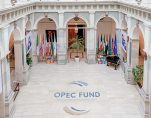
A pivotal online gathering on Sunday will determine whether the Organisation of the Petroleum Exporting Countries and its allies proceed with further oil production increases or hold current levels. The group has already rolled back its earlier cuts by 2.5 million barrels per day, equivalent to around 2.4 per cent of global demand, and is now assessing whether to unwind the next 1.65 million bpd tranche ahead of schedule.

Markets responded to the impending meeting with cautious anticipation. Brent crude fell modestly, trading near $67 a barrel, while U. S. West Texas Intermediate hovered around $63–$64. Analysts, including those at ANZ, flagged that any additional supply could deepen the surplus during a typically weak demand season. The softening outlook has already rippled through equity markets: major oil producers and service firms such as APA, Occidental, Halliburton and Schlumberger saw their shares slip between 3 and 5 per cent.

Since April, OPEC+ has pursued an aggressive unwind of output curbs. Initial increases began with modest tranches but have since accelerated: April saw the first rise, followed by consistent monthly boosts—from 411,000 bpd in May, June and July to 548,000 bpd for August and 547,000 bpd for September. These decisions reflect strategic moves to regain market share amidst growing competition, especially from U. S. shale producers, and external pressures, including public calls from the U. S. administration to increase global supply.

Despite these ramped-up supplies, prices have retained considerable strength—hovering around the $70 mark—bolstered by low inventory levels and geopolitical constraints, particularly sanctions on Russia and Iran. Analysts at the Commonwealth Bank of Australia observe that OPEC+ now appears comfortable with Brent trading in the $60–$65 range, a level that could pressure U. S. shale operations by narrowing profit margins.

Meanwhile, data from the American Petroleum Institute indicated an unexpected rise of 622,000 barrels in U. S. crude stocks, counter to forecasts, adding another layer of downward pressure on prices. The situation reflects a delicate balance: rising supply meets lukewarm demand, particularly as global economic growth shows signs of softening in key regions like China, India and Brazil.

Executive voices within OPEC+ remain tight-lipped. No official statements were forthcoming from Riyadh or other capitals prior to the weekend meeting. Analysts remain split: some believe the group will maintain its current stance through October, exercising caution amid market saturation concerns. Others argue that continued increases are part of a calculated strategy to defend or expand market share well into next year.

Anthropic has secured a monumental US $13 billion Series F funding round, propelling its post-money valuation to approximately US $183 billion and firmly establishing itself as one of the highest valued private startups globally. The round was spearheaded by Iconiq Capital, Fidelity Management & Research, and Lightspeed Venture Partners, with the Qatar Investment Authority joining as a “significant” investor alongside an impressive roster of global financial institutions and sovereign wealth funds.

Anthropic’s valuing nearly tripled since March, climbing from US $61.5 billion, when it completed a US $3.5 billion Series E raise earlier in 2025. This leap reflects the surging investor appetite for generative AI developers, despite growing debates over tech spending sustainability.

Anthropic’s growth trajectory is underpinned by its financial performance. The company’s run-rate revenue soared from roughly US $1 billion at the start of 2025 to over US $5 billion by August. The enterprise customer base now tops 300,000, with so-called “large accounts” expanding nearly seven-fold in just one year.

The rise of Claude Code, Anthropic’s developer-centric AI tool launched fully in May 2025, has been especially impactful. It currently generates over US $500 million in run-rate revenue, and usage has surged more than ten-fold within three months.

Anthropic’s research credentials and product roadmap also underpin its valuation. In August, the company rolled out Opus 4.1, an upgrade tailored to agentic tasks, coding, and reasoning. Its rapid expansion, focus on AI safety, and growing international footprint were cited by investors as further proof of its potential.

The participation of the Qatar Investment Authority marks a notable chapter in Gulf sovereign wealth funds’ deepening role in AI financing. While Anthropic did not disclose the precise QIA investment amount, it was highlighted as a “significant” backer in the funding syndicate. QIA’s April 2025 holdings were estimated at around US $557 billion, underscoring the strategic weight that such sovereign investments carry in global tech markets.

This infusion of capital will enable Anthropic to scale its enterprise operations, intensify its AI safety research, and accelerate international growth of its Claude platform. Amazon, already a stakeholder, may deploy the funding to expand its cloud infrastructure support for Anthropic, particularly through AWS Project Rainier. Analysts note this could meaningfully boost Anthropic’s spending on cloud services, with projections suggesting an uptick to as much as US $5 billion by 2026.

Amid this whirlwind of funding and growth, some experts caution about the long-term sustainability of such capital-intensive AI ventures. Infrastructure demands for large language model development can rival those of tech giants like Google, Microsoft, or Meta.

Saudi Aramco is poised to issue U. S.‑dollar denominated sukuk within September in a bid to fortify its financial position amid subdued oil prices. The company aims to raise between $3 billion and $4 billion through Shariah‑compliant bonds, according to insiders familiar with the matter.

Aramco’s timing underscores a strategic response to heightened volatility in oil markets. The company’s dividend payouts remain intact—$21.1 billion in Q2 and still on track for an $85.4 billion annual total—demonstrating a commitment to returns despite pressure on profit margins. The sukuk issuance follows a $5 billion conventional bond sale in May, as indicated by Aramco’s sukuk prospectus filing with the London Stock Exchange on 30 May. That filing allows up to one year for issuance, signalling flexibility in debt deployment.

Despite the fall in crude prices, Aramco’s gearing remains among the lowest in the global oil industry—a point highlighted during the company’s August earnings call. That financial cushion gives it room to tap capital markets when conditions are favourable.

The sukuk issuance aligns with broader Kingdom‑level bond activity. Saudi Arabia has raised $5.5 billion through a dual‑tranche sukuk offering, comprising a $2.25 billion five‑year tranche and a $3.25 billion ten‑year tranche—sold at spreads of 65 bps and 75 bps over U. S. Treasuries respectively, substantially tighter than initial guidance. Investor demand exceeded $17 billion.

Aramco’s anticipated issuance would tap into the same deep liquidity pool, appealing to Islamic finance and ESG‑oriented investors while preserving fiscal discipline. This approach mirrors the Kingdom’s strategy to diversify its funding base and reduce reliance on hydrocarbons. The proceeds are likely to support refinancing, cost‑management efforts, and strategic asset redeployment.

In parallel, measures such as an $11 billion lease‑and‑leaseback deal for Jafurah gas processing assets with a BlackRock‑led consortium, reflect efforts to raise liquidity without reducing shareholder returns. CFO Ziad Al‑Murshed emphasised the aim to “redirect capital away from low‑return assets to core operations” during the earnings briefing.

This financial planning arrives at a time when Aramco continues to face earnings pressure—second‑quarter profit fell by 22 per cent—but the dividend pledge remains firm, maintaining investor confidence.

Football legends and leaders amazed by the city’s dim sum and stunning Victoria Harbour views on top of Hong Kong’s potential as a global sporting hub for industry advancement HONG KONG SAR – Media OutReach Newswire – 4 September 2025 – Hong Kong, has established itself as Asia’s premier showcase for football, having held a series of high-profile events – from Manchester United Tour of Asia 2025 […]

China’s solar industry, particularly its polysilicon segment, is experiencing a defining shift. Six leading solar makers reported a combined loss of Rmb20.2 billion during the first half of 2025, prompting regulatory intervention to stem overcapacity and destructive price competition.

In early September, GCL Technology Holdings confirmed that investors can anticipate clarity soon on a plan to restructure the polysilicon industry—potentially this year. Chief Financial Officer Yang Wenzhong indicated that GCL may invest its own capital into the effort but is proceeding with caution amid financial uncertainty.

The core of this restructuring lies in a proposed RMB50 billion pooling of funds by top producers like GCL and Tongwei. The aim is to acquire and retire roughly one-third of existing production capacity, targeting approximately one million metric tonnes of lower-quality output. This supply reduction could help raise prices and restore downstream solar panel maker profitability.

Government authorities are reinforcing this market realignment through direct meetings with industry representatives. In August, China’s Industry Ministry held its second session in two months, urging the sector to eliminate outdated manufacturing capacity and curb “low-price disorderly competition” as part of a broader effort to reverse deflationary trends.

The policy response reflects concern over global glut: in 2024, China produced 588 GW of solar capacity while global demand stood at 451 GW, leaving utilisation at just 54%. Analysts estimate that up to 20–30% or more of solar manufacturing capacity must exit the market to reestablish profitability.

This state-guided consolidation faces substantial obstacles. Local governments that have boosted regional development through subsidies, tax breaks and favourable land deals for solar manufacturers may resist decommissioning facilities tied to local GDP and employment. Even if a cartel is formed, analysts warn that members might sneak back into production once prices rebound.

While the outlook remains complex, sentiment among investors appears cautiously optimistic. Markets showed tentative improvement after reports of progress in industry coordination and price gains surfaced. Trina’s commentary on earnings, describing polysilicon as “the first step of anti-involution,” hints at broader hopes for a turnaround.

Global attention is intensifying. Successful restructuring could reinforce China’s dominance—already controlling around 90% of global solar cell capacity—while disrupting cheap exports that have pressured international markets. But a failed effort could compound challenges in other overcapacity-prone sectors such as electric vehicles or shipbuilding.

Longi, another solar powerhouse, is also adapting. Its founder, Li Zhenguo, has relinquished daily management to focus on R&D, including back‑contact cell and green hydrogen technology. The shift comes amid sustained losses and an 80% decline in its share price since 2021, as analysts predict that overcapacity will persist through 2028.

China’s solar supply chain—from polysilicon to panels—is at an industrial crossroads. The restructuring effort is perhaps the boldest policy move yet to recalibrate supply with demand. But its success hinges on overcoming entrenched regional interests, ensuring disciplined industry behaviour, and catalysing sustainable demand growth.

A looming technical hurdle has landed Bitcoin in precarious territory as veteran trader Peter Brandt cautions that the asset must reclaim the $117,570 level to avoid triggering a bearish reversal known as a double‑top formation. This warning comes amid growing supply pressure and heightened selling activity, marking a defining moment for market direction.

Bitcoin is grappling with the aftermath of a substantial sell‑off, attributed to a major “whale” sale of 24,000 BTC—worth an estimated $2.7 billion—which has intensified caution among traders. Brandt emphasised that such sizable supply events cannot be overlooked, stressing that market tops are often formed through supply or distribution.

Market observers note that Bitcoin’s price now hovers in a seven‑week double‑top pattern, a configuration often associated with impending declines if price resistance remains unbroken. Brandt maintains a strictly neutral stance, drawing attention to the chart’s technical signals rather than issuing a directional forecast.

On‑chain metrics compound the caution. The Taker Buy/Sell Ratio, a measure of buying and selling pressure, has fallen to its lowest point since May 2018—a worrying sign of sustained selling momentum. In addition, Bitcoin’s ability to reclaim $117,570 will play a pivotal role in determining whether bullish momentum holds or falters.

Yet, institutional backing offers a counterbalance to technical concerns. Spot Bitcoin ETFs have attracted considerable institutional inflows, indicating that Bitcoin’s role within global finance continues to strengthen. JPMorgan has also highlighted that Bitcoin appears undervalued relative to gold, estimating that fair‑value models place it approximately $16,000 higher, around $126,000, supported by decreasing volatility and growing corporate treasury holdings.

Technical signals remain mixed. While the double‑top pattern persists as a warning, some analysts underscore Bitcoin’s resilience. Swissblock Technologies, for example, asserts that on‑chain indicators show no decisive bearish divergence, suggesting that the broader trend could still favour upward movement. Others, including Jacob King of WhaleWire, point to past double‑top patterns—such as those in 2017, 2019, and 2021—that preceded steep corrections, reinforcing the need for caution if support fails. Should Bitcoin break above the $117,570 threshold, some analysts suggest that $125,000 or beyond could become realistic targets.

Meanwhile, market activity has remained volatile. Bitcoin is trading in the range of approximately $109,000 to $112,000, with intraday swings reflecting persistent uncertainty. Traders are closely watching for shifts in momentum, knowing that a break above resistance could reignite bullish sentiment, while failure could deepen losses.

Amid these developments, the broader narrative treads between technical fragility and growing financial legitimacy. As Bitcoin straddles this crossroads, its next directional move may be shaped as much by whether it can muster the strength to surpass $117,570 as by the strength of institutional confidence and macroeconomic tailwinds.

Dubai Chambers, together with the International Chamber of Commerce and its World Chambers Federation, introduced a new digital platform designed to elevate the performance of chambers of commerce worldwide. Unveiled at the 14th World Chambers Congress in Melbourne, the Chamber Benchmarking Tool offers structured data analysis, best-practice comparisons and a repository of global insights to help chambers advance operational standards.

The launch was witnessed by over 1,200 chamber officials representing more than 100 countries, reaffirming the tool’s role as a global platform for strategic exchange.

The Chamber Benchmarking Tool evaluates performance across seven principal functions of chamber institutions—spanning economic research and business intelligence, advocacy and policy representation, trade and investment facilitation, workforce training and support, networking, advisory services and legal or dispute resolution. These are assessed alongside eight dimensions of operational excellence, including strategic alignment, innovation, governance and financial impact.

Mohammad Ali Rashed Lootah, President and CEO of Dubai Chambers, described the initiative as emblematic of the emirate’s ambition to lead in institutional innovation, enabling chambers to elevate their value to business communities through streamlined services and resilient strategies. John W. H. Denton AO, Secretary‑General of the ICC, hailed the tool as a “milestone,” praising Dubai Chambers for their leadership in bringing the platform to fruition.

Built from research examining 19 diverse chambers, the tool rests on a foundation of empirical insight. It offers a data-driven framework of self-assessment, enabling chambers to compare their metrics against anonymised regional and global averages and receive tailored strategic guidance drawn from global case studies.

Developed in confidence under ICC‑WCF’s secure, cloud‑based infrastructure, the platform ensures high standards of data confidentiality. Only aggregated benchmarking results are shared publicly, with each chamber’s data kept private unless explicit consent is granted.

The tool assigns two access roles: the ‘chamber steward’, who leads data submission, assessment completion and case‑study creation; and ‘chamber staff’, who receive view‑only access to performance dashboards, insights and the best‑practice library.

Participation remains voluntary and open to all types of chambers—whether national, regional, thematic or international—particularly those connected to the ICC‑WCF network. Non‑members may apply for membership to gain access.

Chambers that perform well in given categories become eligible to develop case studies, using an integrated creator to document initiative details, global trends addressed, outcomes and lessons learned. Authors may enrich submissions with supporting documents, media, and contact details. Approved case studies are added to the global repository, fostering peer learning and strategic inspiration.

With an emphasis on continuous improvement, the platform allows chambers to refresh their assessments annually—or after major organisational shifts—and to update roles and responsibilities over time, ensuring the tool remains current with evolving strategic priorities.

Beyond benchmarking, the platform is a strategic intelligence system. Chambers gain access to emerging trends, visibility into gaps and growth opportunities, and direction for innovation and future readiness. It fosters cross‑border collaboration, data‑led decision‑making and collective excellence across the global chamber ecosystem.

Cairo will host Ai Everything Middle East & Africa from 10 to 12 February 2026, establishing itself as the region’s premier destination for artificial intelligence innovation and collaboration. Supported by Egypt’s National Artificial Intelligence Strategy and ranking among the top 10 countries globally in AI and machine learning—unique among African nations—Egypt is leveraging this event to consolidate its ambition as a regional AI powerhouse. Organised under the GITEX […]

BitMine Immersion Technologies now controls nearly 1.87 million ETH, equivalent to about 1.55 per cent of total Ether supply, along with substantial cryptocurrency and cash reserves. The Las Vegas‑based miner‑turned‑treasury manager has emerged as the largest corporate holder of Ether globally, with holdings valued at close to $9 billion. The firm’s robust position underscores its aggressive strategy in digital‑asset accumulation amid growing institutional interest in Ethereum.

The surge in holdings is underpinned by a flurry of recent purchases, including an addition of approximately 153,000 ETH—a $656 million acquisition—bringing the total to about 1.867 million ETH, valued above $8 billion at current market rates. Such moves position BitMine well on its strategic pathway toward aiming for 5 per cent of total Ether supply. The Ethereum holdings are complemented by 192 Bitcoin and roughly $635 million in unencumbered cash, contributing to a combined crypto plus cash asset base nearing $9 billion. BitMine now stands as the foremost Ethereum treasury company, and ranks second among global crypto treasuries—behind Strategy Inc., which holds significantly larger Bitcoin reserves.

BitMine’s assertive accumulation follows its ETH treasury launch in late June and has accelerated through August and early September. Institutional confidence appears to have grown in step, evidenced by continued investment from ARK Invest, whose latest injection exceeded $15 million, raising total backing above $300 million.

Chairman Tom Lee casts the company’s strategy in historical perspective, likening Ethereum’s ascendant role to financial innovation following the United States’ departure from the gold standard in 1971. He described Ether’s trajectory as a “supercycle”, with emerging regulatory frameworks such as SEC Project Crypto and the GENIUS Act unlocking transformative potential for blockchain finance.

The market response has mirrored BitMine’s bullish posture. Its stock price has jumped nearly 41 per cent over the last month, trading in the mid‑$40 range at the time of the announcement, and showing intraday gains of over 1 per cent.

BitMine’s ascent is emblematic of a broader shift among corporates toward Ethereum as a treasury asset. Firms like SharpLink Gaming, Bit Digital, GameSquare, and The Ether Machine are following suit, each holding significant ETH reserves—some exceeding $100 million. Collectively, institutional ETH treasuries now represent an ecosystem worth billions, with BitMine firmly at the forefront.

That growing interest is tied to Ethereum’s technical strength: its native support for staking, smart contracts, stablecoins, and NFTs. These features enable yield generation and diversified application, attracting corporate treasurers seeking productive digital assets. As the co‑founder of Figment observed, staking is emerging as “the centre of global banking for digital assets,” while ETH’s productive capacity makes it a strategic asset rather than speculative holding.

Still, the aggressive accumulation navigates potential risks. Scale offers liquidity and negotiating leverage, but also exposure to market volatility and custodial challenges in event of operational failures. Security lapses or market shocks could carry amplified consequences given the size of holdings.

Turkey’s sovereign wealth fund is pressing ahead with a planned sale of dollar‑denominated bonds on Wednesday after weighing a delay during a sharp stock‑market sell‑off triggered by a court decision affecting the main opposition party’s leadership. The Turkiye Wealth Fund is poised to issue both five‑year and ten‑year notes, guided initially at yields of approximately 7.625 per cent and 8.375 per cent, respectively. The decision to proceed […]

VISHNU RAJA
RYO YAMADA
HITORI GOTOH
IKUYO KITA
Just in:
Xi Jinping Preparing For A Trilateral Summit With Trump And Putin At APEC Summit On Nov 18-19 // Dubai details five-year visa benefits for returning visitors // Miss Universe Hong Kong Jen Zhou Departs for Puerto Rico to Compete in the 75th Miss Universe World Final // Battle Uttar Pradesh Will Be Tougher For Yogi Than Expected // Elephant calf on death line airlifted for treatment in Gujarat // OpenAI abandons secrecy agreements for future data centres // Ningbo Consensus on Collaborative Development released at 2026 Global Mayors Dialogue · Ningbo // Beyond the exhibition floor: How robots, AI and networks are moving into the real world // Emaar approves Development buyout ahead of planned delisting // UK air traffic outage inflicted £33m financial losses // TVM –Mangaluru Vande Bharat claims top spot // e-Crime Bureau Signs Cybersecurity Partnership With Smart Africa, Reinforcing Its Global Expansion // Excise chief shunted out in bar licence dispute // The “1st Greater Bay Area Health and Longevity Summit & Awards Ceremony” concludes successfully in Macao // Private varsities bill all set to face the axe // Geely’s i-HEV Intelligent Hybrid Technology Offers a New Direction for Gasoline-Powered Vehicles // Millions Of Indians May Soon Be Deprived Of Government Assistance // Technology shares plunge as Nasdaq enters correction // Geely’s i-HEV Intelligent Hybrid Technology Offers a New Direction Vision for Gasoline-Powered Vehicles // Microfinance case trouble for Vellappally //