By Nitya Chakraborty The annual summit of World Economic Forum began in the Alpine hills of Davos in Switzerland on January 19 with the European leaders and the businessmen rattled over the confrontationist approach taken by the U.S. President Donald Trump on Greenland annexation. After imposing 10 per cent tariff on the EU countries taking […]
HONG KONG SAR – Media OutReach Newswire – 19 January 2026 – Storefriendly Self Storage Group held an award presentation ceremony at Storefriendly Tower (Peninsula West) in Lai Chi Kok and was honoured with an Excellent grade in the Management aspect of BEAM Plus EB V2.1 Selective Scheme by Portfolio Assessment Mechanism. The award was presented by Dr CHEUNG Tin-cheung, SBS (Chairman of Hong Kong Green Building Council Limited), recognising the Group’s sustained commitment and performance in advancing sustainable building operations management—through robust governance, structured systems, and consistent execution.
A Milestone in Sustainable Operations & Facility Management
Storefriendly stated: “Achieving this Excellent rating reinforces our commitment to ESG goals. By optimizing our operations management, we ensure that our self-storage facilities are not only efficient but also environmentally responsible, providing our customers with a superior and greener storage experience.”
Selective Scheme Focuses on Building Performance Across Key Assessment Areas
BEAM Plus EB reviews a building’s sustainability performance through multiple assessment areas, including Site, Management, Materials & Waste, Energy Use, Water, Indoor Environmental Quality, and Innovation. Within these, the Management aspect places strong emphasis on responsible management practices and measures that promote the sustainable operation of building spaces. Achieving an Excellent rating in this aspect further validates Storefriendly’s ongoing investment and results in day-to-day operations management and its broader sustainability strategy.
Integrating Smart Technology with Green Logistics
Storefriendly continues to invest in cutting-edge technology—including AI-powered customer service systems and Safety Box. By combining smart access controls with energy-efficient facility management, the Group enhances both security and operational performance. This HKGBC recognition serves as a roadmap for the Group’s future, as it strives to modernize the mini storage industry with forward-thinking, sustainable solutions for both personal and business clients.
The following five Storefriendly Tower properties have been certified by HKGBC and included in the Existing Buildings portfolio assessment: 1. Storefriendly Tower (Peninsula East): 82 Hung To Road, Kwun Tong 2. Storefriendly Tower (Metropolis East): 13 Yip Cheong Street, Fanling, New Territories 3. Storefriendly Tower (Island East): 8 A Kung Ngam Village Road, Shau Kei Wan 4. Storefriendly Tower (Peninsula West): 850-870 Lai Chi Kok Road, Cheung Sha Wan 5. Storefriendly Tower (Metropolis West): 22-28 Tai Chung Road, Tsuen Wan
Hashtag: #Storefriendly
The issuer is solely responsible for the content of this announcement.
About Storefriendly Self Storage Group
Founded in 2002, Storefriendly Self Storage Group is one of Asia’s leading self-storage brands, with operations across Hong Kong, Macau, Singapore, and Taiwan. The Group operates over 90 branches and more than 40,000 storage units. Over half of its branches are self-owned properties, conveniently located and equipped with 24-hour smart access and comprehensive security systems, providing safe and flexible storage solutions for both individual and business customers. The Group continues to invest in technology—including AI-powered customer service, wine storage, and smart safety boxes—to elevate service quality through innovation and deliver an enhanced storage experience.
Arabian Post Staff -Dubai Dubai Municipality has invited bids from prequalified developers and consortiums for a key phase of the Dubai Strategic Sewerage Tunnels programme, signalling momentum on one of the emirate’s largest long-term infrastructure undertakings aimed at overhauling wastewater collection and transfer. The authority said requests for proposal have been issued for the Phase II Links Package of the project, which is designed to connect outlying […]
Greenlogue/AP Abu Dhabi’s flagship Al Dhafra Solar Photovoltaic Independent Power Plant has secured long-term refinancing through a major green bond issuance worth US$870.75 million, underscoring the emirate’s ambition to anchor clean energy financing in global capital markets. The transaction was announced during Abu Dhabi Sustainability Week 2026 by a consortium led by Abu Dhabi National Energy Company PJSC, working alongside Emirates Water and Electricity Company, Abu Dhabi […]
Greenlogue/AP A consortium led by Abu Dhabi Future Energy Company Masdar has achieved financial close for Oman’s first utility-scale solar power project integrated with battery energy storage, marking a significant step in the Sultanate’s clean energy transition and long-term decarbonisation strategy. The project, located in the Wilayat of Manah in the Ad Dakhiliyah Governorate, is designed to supply enough electricity to power about 33,000 homes while avoiding […]
Starkey Middle East and Africa used the Emirates Otolaryngology Conference and Exhibition in Dubai to spotlight Omega AI, a hearing-aid platform positioned around clearer user feedback, discreet design and expanded connectivity, as manufacturers compete to make assistive devices easier to live with day to day. The showcase underlined how incremental hardware cues and software intelligence are becoming central to adoption, not just clinical performance. At the stand […]
By Nitya Chakraborty The Washington talks for discussing the future of Greenland failed on Wednesday with the foreign ministers of Denmark and Greenland returning back home with the message from White House that Greenland rightfully belongs to USA and Trump will be deciding on the timing of its takeover. The U.S. does not care for […]
BANGKOK, THAILAND – Media OutReach Newswire – 16 January 2026– ONYX Hospitality Group, a leading Southeast Asian hospitality management company specialising in hotels, resorts, serviced apartments, and luxury residences, is proud to announce its new partnership with Yee Fung Group to operate Y Hotel Nanshan in Shenzhen, People’s Republic of China.
ONYX Hospitality Group oversees renowned brands including Amari, OZO, Shama, and Oriental Residence across key destinations in the Asia–Pacific region. This agreement marks another significant milestone in strengthening ONYX’s presence in the Chinese market. Scheduled to open in Q4 2026, the hotel supports ONYX’s long-term growth strategy as it works toward its target of managing more than 75 properties by 2030.
Mr Yuthachai Charanachitta, Chief Executive Officer of ONYX Hospitality Group, commented: “This collaboration reflects the strong confidence Yee Fung Group has in ONYX, following our successful partnership in managing Y Hotel Hong Kong. It represents a significant step forward in building on that success and further expanding ONYX’s presence in the Greater China market. At the same time, this partnership reinforces ONYX’s position as a distinctive ‘Regional Player’, well-positioned for stable and sustainable growth across the region.”
Y Hotel Nanshan Shenzhen featuring 82 thoughtfully designed guest rooms and suites, located within YEE FUNG PLACE on a strategically significant site surrounded by key national infrastructure. The area is supported by five major national sea and land ports, including Shekou, Chiwan and Mawan, servicing more than 150 shipping routes. It is also situated at the heart of one of China’s leading innovation and industrial hubs, home to sectors such as integrated circuits, artificial intelligence, biomedicine and the marine economy, alongside more than 50 specialised industrial parks.
Y Hotel NanshanShenzhen is ideally suited for leisure travellers, offering convenient accessibility just 35 minutes from Shenzhen Baoan International Airport and 31 minutes from Shenzhen North Railway Station, and only 650 metres from Lilin Subway Station. The surrounding area features vibrant food markets and nightlife destinations such as Nanyi Fang, Shekou Sea World, Green World and Houhai, as well as cultural and recreational attractions including Shenzhen Poly Theatre, Shenzhen Talent Park, Nanshan Museum, Nanshan Park and Shenzhen Bay Park. Guests will also find leading shopping centres nearby, including Walmart, Xinhe Shopping Plaza, Garden City, Haiya Mega Mall, Coastal City and Shenzhen Bay MixC.
Furthermore, the hotel is located close to the headquarters of major national technology companies such as ZTE, Tencent, Huawei, Alibaba, Han’s Laser and Mindray, as well as Shenzhen University, positioning it as both a relaxing retreat and a strategic hub for business travellers seeking comfort alongside a distinctive lifestyle experience.Hashtag: #ONYXHospitalityGroup #YeeFungGroup #YHotel #HospitalityManagement #HotelManagement #LifestyleHotel
The issuer is solely responsible for the content of this announcement.
About ONYX Hospitality Group:
ONYX Hospitality Group, a reputable force in Southeast Asia’s hospitality industry, operates a collection of comprehensive yet complementary brands – Amari, OZO, Shama and Oriental Residence – catering to the distinctive needs of discerning business and leisure travellers in Southeast Asia where their expertise lies. In addition to its brand portfolio, ONYX Hospitality Group also operates additional hospitality services across spa and food and beverage. With over five decades of management experience, the company extends its innovative solutions throughout the region, upholding internationally recognised standards and ensuring optimal operational manoeuvrability. By fostering enduring relationships with like-minded business partners, ONYX Hospitality Group delivers unparalleled experiences in a dynamic and competitive market, meeting the ever-evolving demands of travellers.
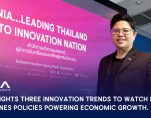
BANGKOK , THAILAND – Media OutReach Newswire – 16 January 2026 – The National Innovation Agency (Public Organization), or NIA, under the Ministry of Higher Education, Science, Research and Innovation (MHESI), is encouraging Thai entrepreneurs to keep a close eye on three key innovation trends for 2026: technology trends, market trends, and consumer trends. NIA also unveiled four major innovation policy directions: promoting investment in innovative businesses, strengthening innovation linkages across sectors, advancing regional innovation development, and enhancing national innovation competencies. These policies aim to accelerate the growth, capability development, and diffusion of innovative businesses, positioning them as key drivers of Thailand’s sustainable economic and social development.
Dr. Krithpaka Boonfueng, Executive Director of NIA
Dr. Krithpaka Boonfueng, Executive Director of NIA, said that rapid advances in artificial intelligence, escalating geopolitical tensions across multiple regions, trade decoupling and reciprocal tariff measures that create uncertainty in the global economy and value chains, as well as environmental issues and natural disasters, were major forces shaping change in 2025. ‘Innovation’ remains a critical tool for coping with these disruptions and uncertainties.
Looking ahead to 2026, Thai entrepreneurs will need to continue closely monitoring and adapting to change. Key innovation trends present both opportunities and challenges, starting with technology trends that help reduce costs and build long-term competitiveness. Notable technologies include Agentic AI, which can autonomously perform tasks such as customer chat responses, sales closure, order management, queue booking, price comparison, and automated purchasing; Hyper-Automation, which integrates bots and systems to reduce repetitive tasks, improve efficiency and accuracy, and enable real-time data-driven decision-making; and Carbon Accounting, which is becoming essential for SMEs involved in exports or global supply chains. Businesses are increasingly required to measure carbon footprints across energy use, production, logistics, and waste, in response to stricter global regulations such as the EU’s CBAM and Thailand’s forthcoming Climate Change Act.
Business trends highlight growth opportunities across several sectors. These include Health and Wellness, covering not only treatment but also prevention and therapy, particularly for working-age populations facing stress, office syndrome, and sleep disorders. Opportunities span physical therapy clinics, aromatherapy and sleep-aid products, herbal supplements, wellness tourism, yoga, and meditation. Another fast-growing area is the Pet Economy, as the Thai pet market continues to expand despite economic headwinds. This sector now includes holistic and organic pet food, fresh pet meals, fashion apparel, multifunctional pet furniture, and premium services such as pet spas, hotels, and condominiums. Additionally, Green and Circular Businesses are gaining traction, with upcycling and recycling ventures transforming waste and local materials into higher-value products. Although costs may be higher, sustainability-driven products can command premium prices, creating opportunities for community-based SMEs through innovative design aligned with environmental and fashion trends.
Consumer trends reveal a shift toward value-for-money and self-care. Hyper-Personalization is increasingly important, as consumers seek products tailored to individual needs, supported by advanced data analytics—such as supplements based on blood test results or skincare customized to personal skin conditions. Silver Solutions address the needs of Thailand’s aging society, with services focused on convenience, safety, and quality of life, including home modifications, slow-life travel programs, and assisted healthcare services. Meanwhile, Muketing or the Magic Economy reflects the enduring role of belief, spirituality, and cultural traditions in Thai society, creating economic value through religious tourism, spiritually inspired products, and design-driven items that blend art with faith.
Dr. Krithpaka added that NIA’s long-term mission is to transform Thailand into an innovation-driven economy, with startups and innovation-based entrepreneurs at its core. This requires the creation of new industries to drive growth and position Thailand as an “Innovation Nation” through three key objectives: developing innovations based on advanced and deep technologies that are difficult to replicate; creating high-value products and services rooted in creativity and cultural capital; and preparing a highly skilled workforcecapable of keeping pace with rapid technological change and evolving demographic and labor market structures.NIA works closely with domestic and international partners in its role as a Focal Conductor of Innovation, supporting innovative businesses through the 4G framework: Groom (incubation and capability building), Grant (funding support), Growth (market expansion and access to capital), and Global (international market entry).In 2026, NIA will drive Thailand’s economy and society through four key innovation policy pillars.
The first focuses on promoting investment in innovative businesses, offering a range of financial mechanisms including grants for early-stage ventures and co-investment schemes for growth-stage firms, such as corporate co-funding, public venture mechanisms (NIA Venture), global investment link programs, and capital gains tax exemptions to support startup fundraising.The second pillar emphasizes innovation linkages, strengthening collaboration between academia and industry to translate research into real-world applications through acceleration programs, innovation hubs, ecosystem platforms, tax incentives, and future mechanisms such as intellectual property financing.The third pillar supports regional innovation development, enhancing local economies and quality of life through Social Innovation Driving units (SID), Open Innovation programs, City and Community Challenge, Social Innovation Villages, and Ninmungkornth The Reality, which inspires new or small entrepreneurs to become local economic champions.The final pillar aims to enhance national innovation competencies, cultivating innovation mindsets, technological and business skills, entrepreneurial thinking, and global readiness across youth, startups, SMEs, and organizations. Key initiatives include STEAM4INNOVATOR, Startup Thailand League, NIA Academy training programs, and productivity-focused projects such as INNOProductivity for SMEs, aligned with international innovation management standards like ISO 56001.
Through these integrated efforts, NIA seeks to strengthen Thailand’s innovation ecosystem and ensure that innovative businesses can grow resiliently and compete on the global stage.
United States authorities will suspend the processing of immigrant visas for applicants from 75 countries later this month, marking a significant tightening of the pathway to permanent residency as Washington undertakes a sweeping review of immigration screening and eligibility rules. The move, announced by the US Department of State, applies only to immigrant visas and does not affect non-immigrant categories such as tourist, student or business visas, […]
HONG KONG SAR – Media OutReach Newswire – 15 January 2026 – HKU Business School unveiled the “Hong Kong Economic Policy Green Paper 2026” (“Green Paper”). This comprehensive document delves into various facets of Hong Kong’s economic domain, covering everything from trade finance and Hong Kong’s role in the Greater Bay Area (GBA) startup ecosystem to green finance, the IP economy, social and shareholder value for Hong Kong-listed companies, and pressing social issues such as housing affordability and overcrowding in emergency departments. Moreover, with the emergence of AI, the Green Paper examines the impact of AI on the labour market, cybersecurity, and the development of a Web 3.0 ecosystem.
This is the fifth edition of the Hong Kong Economic Policy Green Paper, released by HKU Business School, with the aim of providing recommendations on how Hong Kong can effectively tackle these challenges.
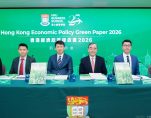
HKU Business School today unveils the Hong Kong Economic Policy Green Paper 2026. From left: Prof. Huiyin Ouyang, Associate Professor in Innovation and Information Management of HKU Business School, Prof. Dragon Tang, Professor in Finance in HKU Business School, Professor Hongbin CAI, Dean and Chair of Economics of HKU Business School, Prof. Richard Wong, Provost and Deputy Vice-Chancellor of The University of Hong Kong and Director, Hong Kong Institute of Economics and Business Strategy, Prof. Heiwai Tang, Associate Vice-President of The University of Hong Kong and Associate Dean of HKU Business School, and Dr. Tingting Fan, Principal Lecturer in Marketing of HKU Business School.
Prof. Richard Wong, Provost and Deputy Vice-Chancellor of The University of Hong Kong and Director, Hong Kong Institute of Economics and Business Strategy said, “This Green Paper was released after months of rigorous research by the scholars from HKU Business School. Grounded in an academic perspective and guided by a pragmatic, problem-solving approach, we have conducted objective analyses and in-depth investigations into core issues and real-world challenges currently facing Hong Kong’s development in political and economic operations, people’s livelihood, and industrial upgrading. Our aim is to provide the Government and relevant authorities with valuable insights and actionable policy recommendations.”
Professor Hongbin Cai, Dean and Chair of Economics of HKU Business School, said, “As a ‘super-connector’ bridging China and the world, Hong Kong’s unique role remains indispensable. Looking ahead, Hong Kong must deeply integrate into China’s national development plans, and also take a more prominent role on the international stage, with an in-depth understanding of the global market and active engagement with its international collaborators.
With campuses in Beijing, Shanghai, and Shenzhen, and an expanding presence in Vietnam and Europe, HKU Business School embodies our unique proposition: deeply rooted in Hong Kong, fully engaged with the Chinese Mainland, and truly international. This year’s Green Paper reflects our dedication to inspiring solutions based on rigorous research. As a world-class institute of higher education, we are committed to enabling Hong Kong to further unleash its core values and usher in a new era of high-quality development.”
Prof. Heiwai Tang, Associate Vice-President of The University of Hong Kong and Associate Dean of HKU Business School, added, “This Green Paper features research papers from ten teams of scholars with diverse backgrounds and varied expertise. Based on profound insights into Hong Kong’s development, they offer unique and targeted policy recommendations, building a rich and multifaceted framework of issues for the Green Paper. At the same time, behind these research achievements lies the scholars’ deep affection for and sense of responsibility toward Hong Kong.”
Regarding how digital technology can boost Hong Kong’s trade finance, he emphasised: “Both data and industry feedback clearly demonstrate the core value of trade finance. However, we need more synergy in the trade finance ecosystem and to catch up in digitisation. To address this, we must strengthen the governance and standard promotion of digital trade platforms and tools, deepen the cross-border interoperability of trade data, expand the functions of the Hong Kong Export Credit Insurance Corporation, focus on high-value-added trade enterprises, extend the coverage of Free Trade and Double Taxation Avoidance agreements, and promote responsible stablecoin adoption and Renminbi internationalisation.”
Prof. Dragon Tang, Professor in Finance at HKU Business School, stated, “Hong Kong is uniquely positioned to lead in the integration of blockchain technology within green finance, exemplified by our pioneering issuance of the world’s first tokenised green bonds, totalling HKD 6 billion in February 2024. With green finance representing a critical avenue for sustainable development, the global market is projected to grow significantly, emphasising the importance of transparency and trust. To capitalise on this opportunity, we must enhance our blockchain infrastructure, establish clear regulatory standards, and promote cross-border integration with initiatives like Core Climate. By leveraging blockchain’s capabilities, we can significantly reduce costs, improve transparency, and engage a broader investor base, ultimately driving our transition to a sustainable finance future.”
Prof. Huiyin Ouyang, Associate Professor in Innovation and Information Management, HKU Business School, commented on her study, saying, “Two weeks post-implementation of the hospital fee reform, the media reported no significant change in emergency department crowding, which aligns with what our analysis predicted. Overcrowding isn’t simply about patient behaviour – it’s a structural issue. Demographics are shifting, capacity is constrained, and alternative treatment options remain limited. What we now need is a careful, systematic evaluation of the fee changes. Where are vulnerable patients going for care? Are some patients delaying treatment? What unintended effects are emerging? Effective reform requires pairing fee adjustments with expanded primary care access. We can’t solve a capacity problem with pricing alone.”
Dr. Tingting Fan, Principal Lecturer in Marketing at HKU Business School, presented as well, spoke on her study and asked, “Why did Pop Mart go public in Hong Kong but register IP in Singapore? Or why was Molly ‘born’ in Hong Kong but did not go viral from Hong Kong? Why have local companies not managed to turn these homegrown IPs into major business triumphs? Learning from the past and looking forward, Hong Kong can leverage its financial market, legal system, as well as talents to build a comprehensive IP industry infrastructure and become an IP hub.”
The Green Paper includes ten articles; the key points are as follows:
Empowering Merchandise Trade Finance with Digital Technology in Hong Kong Author: Prof. Heiwai Tang, Associate Vice-President (Global), The University of Hong Kong; Associate Dean (External Relations), HKU Business School; Associate Director, Hong Kong Institute of Economics and Business Strategy; Victor and William Fung Professor in Economics
Trade is an essential lifeline for Hong Kong; its total merchandise trade was three times the city’s HKD3.2 trillion GDP in 2024. Trade finance is thus equally important, yet research shows that the total loans extended for trade finance have been declining.
As geopolitical and technological shifts reshape trade, Hong Kong must upgrade its trade finance services. With consumer-goods trade shifting to smaller, more frequent orders and shorter cycles, financial institutions need to streamline approvals and develop flexible products for e-commerce and logistics-driven cash cycles. Banks also need to digitise core processes in fund settlement. The article cautions that platforms directly connecting mainland manufacturers with overseas buyers disintermediate Hong Kong’s traditional hub-and-spoke role.
To address this, the article suggests the government leverage digital technologies to elevate the adoption of Hong Kong’s digital trade platforms through unifying core digital trade functions. Moreover, speeding up interoperability of trade data platforms with the Chinese Mainland and other economies will enable seamless data exchange.
Rebuilding Hong Kong as the Catalyst to the Greater Bay Area (GBA) Startup Ecosystem Prof. Alberto Moel, Professor of Practice in Finance, HKU Business School Prof. Joseph Chan, Associate Professor of Practice in Management and Strategy, HKU Business School; Associate Director, Centre for Innovation and Entrepreneurship
Offering a quantitative analysis of the evolution of Hong Kong’s startup landscape, the article found that post-2019 activity has slowed, mirroring global venture capital trends, with most failing to grow beyond 50 employees due to scarce late-stage capital despite early-stage availability. While fintech and logistics dominate and AI/blockchain grow quickly, deep tech lags—authors view this as temporary and highlight Hong Kong’s alignment in financial innovation, regtech, and GBA supply chains to attract investment and support corporate transformation.
To strengthen Hong Kong as the GBA’s premier startup hub and international financial centre, the article recommends nine policies—including fixing funding gaps, closing academia-market divides through industry-focused research for tech transfer, attracting/retaining talent, integrating Northern Metropolis with GBA supply chains, pivoting to high-value services, and drawing large tech platforms to incubate local startups.
The Applications of Blockchain in Green Finance: Hong Kong’s Experience and Opportunities Author: Prof. Dragon Tang, Professor in Finance, HKU Business School; Associate Director, Centre for Financial Innovation and Development
The green finance market has entered an important new phase. Hong Kong became the world’s first issuer of sovereign tokenised green bond when it priced an HKD800 million one-year note in February 2023. Despite this, Hong Kong faces several challenges in the practical implementation of using blockchain to advance green finance. This is due to the limited interoperability between blockchain platforms and existing financial infrastructure, which hinders cross-market transactions. Real-time settlement for tokenised assets is also difficult because of scalability constraints.
The article argues that the future success of blockchain development in green finance will depend on progress in three areas: standardisation, scalability, and security. Clear regulatory frameworks and common technical protocols are needed to provide legal certainty and interoperability across platforms. While collaboration among regulators, technology providers, and energy-market participants can align rules for tokenisation. Blockchain can also connect Hong Kong’s Core Climate platform with overseas counterparts, as cross-border integration is crucial to the inherently international nature of climate finance.
Can Hong Kong be an IP hub for Future Labubu? An Overview of Hong Kong’s IP Industry Dr. Tingting Fan, Principal Lecturer in Marketing, HKU Business School Prof. Heiwai Tang, Associate Vice-President (Global), The University of Hong Kong; Associate Dean (External Relations), HKU Business School; Associate Director, Hong Kong Institute of Economics and Business Strategy; Victor and William Fung Professor in Economics
As Labubu’s success turns the spotlight on the growing importance of the IP industry, the authors propose that this can inspire more creators and businesses to invest in branding, licensing, and cross-border collaborations. This can also attract policymakers’ attention to the emerging IP sector as a key driver of innovation and economic growth.
To position Hong Kong as a leading regional IP trading centre, the authors recommend that stakeholders—including IP developers, entrepreneurs, and government agencies—coordinate efforts across key areas. These include building a robust IP financing ecosystem, such as through government-issued IP bonds replicating the green finance model; enhancing infrastructure and platforms to support IP development; developing specialised talent and professional services in the IP sector; promoting IP initiatives throughout the Greater Bay Area; and strengthening IP protection alongside a solid legal framework.
Thematic Research: Maximisation of Social Value and Shareholder Value – Insights from Hong Kong-listed Companies Across Sectors Author: Prof. Sean Chang, Associate Professor of Practice in Finance, HKU Business School
Through a triangulation research approach, the article examines how social policies, international frameworks, and corporate social responsibility influence a company’s valuation and capital budgeting decisions. Using insights from major Hong Kong-listed companies across nine sectors—spanning transport, utilities, financials, banking, conglomerates, technology, real estate, consumer, and hotel servicing—the research highlights CSR’s role in enhancing long-term firm performance.
Key findings show that corporate risk assessment, company valuation, and stock performance are significantly influenced by CSR-linked socially responsible investing (SRI) factors. Hong Kong-specific social values, such as equality and sustainability, shape investor preferences, guiding finance managers to tailor solutions and adapt regulatory standards. While conventional metrics remain dominant, incorporating social value boosts long-term firm value by building shareholder trust and mitigating risks; companies can pursue CSR projects financed via SRI bonds to create dual economic and societal benefits.
The study recommends embedding core values like equality and sustainability into corporate strategies, aligning budgeting processes with social objectives to pinpoint investments yielding both returns and positive impacts, and urging Hong Kong-listed firms to sustain capital budgeting aligned with enduring societal values.
Housing Affordability and Homeownership in Hong Kong, 1985-2023 Mr. Allen W. Huang, Student Researcher, Hong Kong Future Economy Institute Mr. Alex Ngau, Research Associate, Hong Kong Future Economy Institute Prof. Michael B. Wong, Assistant Professor in Economics, Management and Strategy, HKU Business School
Hong Kong’s housing market has grown increasingly unaffordable, hindering upward mobility for younger generations. Main findings from the research reveal that since the 2002 suspension of the Home Ownership Scheme (HOS), homeownership has declined sharply, rendering private housing “impossibly unaffordable” for median-income households. A wide public-private rent gap drives young people to accept lower-paying or part-time jobs to qualify for public rental housing (PRH), distorting labour supply, stifling human capital investment, and fuelling a surge in adult co-living with parents; younger cohorts (born 1980-1999) face far lower access to public housing and ownership than prior generations at the same age.
Taking Hong Kong Island as an example, between 2003 and 2024, the rent-to-income ratio for a typical 400-sq-ft private unit jumped from 35% to 60% of median household income, peaking at 65% in 2015 and 2019—far exceeding the UN-Habitat and World Bank’s 30% affordability threshold. Public housing rents stayed dramatically lower at just 7%–11% of median household income from 1985 to 2024. For home purchases, it now takes 18.2 years of median income to buy a 500-sq-ft private unit (up from 7.4 years in 2003), placing it in the “impossibly unaffordable” zone per the Demographia International Housing Affordability report, where ≤3.0 years is considered affordable and 9.0+ years is impossibly unaffordable. After the 2002 Home Ownership Scheme suspension, even subsidised HOS units now require 15.8 years of income on Hong Kong Island (up from 7.4 years in 2007), shifting them from moderately unaffordable to severely or impossibly unaffordable in urban cores.
To reverse these trends, the authors recommend ramping up production of high-quality ownership units, easing resale and leasing restrictions on existing subsidised sale flats to boost residential mobility and enable “trading up” the housing ladder, setting housing price and affordability targets over mere supply goals, and adopting responsive mechanisms to balance demand and supply.
Beyond Crisis Management: Structural Reform for the Overcrowding in Hong Kong’s Emergency Departments Prof. Huiyin Ouyang, Associate Professor in Innovation and Information Management, HKU Business School Ms. Yiran Zhang, PhD student, HKU Business School
Hong Kong’s public emergency departments (EDs) handle over 2.14 million annual attendances. This crisis, exacerbated by an ageing population, results from a structural mismatch: the majority of the attendances are for non-emergency conditions, leading to staff burnout and compromised care.
The article proposes three comprehensive structural reforms. First, improving operational efficiency with accurate wait time information systems is crucial. Second, increasing the ED fee (categories III–V) aims to divert non-critical patients. Success for this hinges on assumptions about patient responses, particularly how varied population segments will react to the price signal. International evidence raises concerns, showing that higher ED fees can reduce overall utilisation, but with the decrease primarily occurring among price-sensitive groups who may risk delays in receiving serious care. Therefore, for this reform to succeed, the public must have genuine access to alternative care pathways that can accommodate acute but non-emergency needs outside regular business hours, with pricing acceptable to price-sensitive populations. Third, AI can augment the workforce and manage demand (e.g., through telemedicine).
Ultimately, sustainable reform demands robust evaluation, political courage, and a commitment to address root causes, not just symptoms.
Initial Efforts to Empirically Measure AI Activity and Its Impacts on Hong Kong’s Labour Market Prof. Alan Kwan, Associate Professor in Finance, HKU Business School Prof. Mingzhu Tai, Associate Professor in Finance, HKU Business School; Associate Director, Institute of Behavioural and Decision Science Mr. Zihan Wang, Master student, HKU Business School
In an effort to empirically measure the impact of AI on Hong Kong’s labour force, the researchers observe that firms with a higher adoption of AI experience lower headcount growth. However, the scale of impact appears small in the city, which could be due to several potential reasons. One of these is the different composition of Hong Kong’s labour force compared with other countries. For instance, Hong Kong has a high proportion of finance or managerial talent, which is harder to displace; the city also features older or more elite workers. On the other hand, much of the impact of AI, particularly generative AI, is on the less elite and younger populations.
As such, the authors recommend policymakers produce more labour market statistics that track the impact of AI, particularly by occupation. On the rate of AI adoption in Hong Kong through innovation, the authors find that the city is heavily skewed towards research, but not commercialisation. This means that the quality and quantity of academic research is not translating to commercial use. To address this decoupling, the authors propose that the government tweak its existing early-stage startup funding platforms to encourage streamlining and higher utilisation of existing government resources.
The Impact of Generative Artificial Intelligence on Cybersecurity in Hong Kong Author: Prof. Michael Chau, Professor in Innovation and Information Management, HKU Business School
As GenAI can produce human-like text, code, images, and audio, cybersecurity crimes have become easier and faster to perpetrate. Not only have data leaks and hacks into security systems led to significant financial losses in Hong Kong, but they also hurt confidence in the city’s digital infrastructure.
The article recommends using AI to fortify Hong Kong’s cyber defence, such as using biometric verification and deepfake detection technologies, especially in areas involving critical infrastructure and high financial stakes. It is also important to prevent data leakage and other threats in using GenAI.
Hong Kong’s Next Growth: Pioneering the Web 3.0 Ecosystem Prof. Yulin Fang, Professor in Innovation and Information Management, HKU Business School; Director, Institute of Digital Economy and Innovation Mr. Yangchen Mou, PhD student, HKU Business School
Given the inherent risks in Web 3.0 operational models—most notably within Decentralised Finance (DeFi) systems—striking a balance between fostering the development of the Web 3.0 ecosystem and implementing appropriate regulation to maintain financial stability is and should be a key priority for Hong Kong authorities. To support this, the article categorises the industry into three distinct systems—Centralised Finance (CeFi), the integration of Traditional Finance and Centralised Finance (TradFi-CeFi), and Decentralised Finance (DeFi)—and put forward targeted policy recommendations for each.
For the CeFi system, the authors recommend creating a more conducive environment for development by refining specialised auditing frameworks, promoting a local Web 3.0 talent certification system, and introducing global leading CeFi institutions to the local market. For the TradFi-CeFi system, they suggest upgrading audit standards for traditional firms holding digital assets and upskilling traditional finance professionals with Web 3.0 expertise. In contrast, for the DeFi system, which carries higher inherent risks and poses greater regulatory challenges, the authors advise authorities to adopt a prudent stance while keeping monitoring its latest technological developments.
The full version of the Green Paper can be accessed here. Hi-res photos are available here.
Hashtag: #HKUBS
The issuer is solely responsible for the content of this announcement.
About HKU Business School
Established in 2001, HKU Business School is one of the youngest and most dynamic members of The University of Hong Kong (HKU). The School strives to nurture first-class business leaders and foster academic and relevant research that serves the needs of Hong Kong, China and the rest of the world in the new Asia-led economy. As a top international business school, the School has established its place as a globally impactful institution that leads the way through timely thought leadership, pioneering research, and educational excellence. Deeply rooted in Hong Kong and fully engaged with China, the School’s world-class faculty equip students with global knowledge and perspectives.
HKU Business School offers business education across a full range of disciplines, while achieving remarkable growth in faculty strength and research capabilities. The School ranks Asia’s No.1 in Financial Times’ Aggregated Research Ranking for two consecutive years, 2024 and 2025, while the University of Hong Kong ranked 11th in the world and No. 1 in Asia according to the QS World University Rankings 2026. The School has strategic partnerships with world-renowned universities and corporate partners, providing market-oriented content, superior learning, and instrumental resources.
To better serve our students and alumni in various cities and regions, and to facilitate collaboration opportunities with business communities around the globe, HKU Business School has established a unique international network that extends to Beijing, Shanghai, Shenzhen and Ho Chi Minh City.
HKU Business School is fully accredited by the European Quality Improvement Systems (EQUIS) and the Association to Advance Collegiate Schools of Business (AACSB).
PETALING JAYA, MALAYSIA – Media OutReach Newswire – 15 January 2026– CDL Academy Sdn. Bhd. (CDL Academy), the learning and development arm of YTL Cement Group, and Universiti Teknologi Malaysia (UTM) have signed a Memorandum of Understanding (MoU) on 9 January 2026 to strengthen collaboration in talent development, applied learning, and sustainable construction practices for Malaysia’s engineering sector.
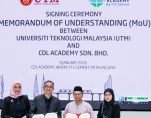
(from left to right): Datuk Aziyah Mohamed, Co-chairman of CDL Academy Sdn. Bhd., Dato’ Sr. Mohd Zaid Zakaria, Chairman of CDL Academy Sdn. Bhd., Prof. Dr. Mohd Shafry Bin Mohd Rahim, Vice-Chancellor of Universiti Teknologi Malaysia, and Associate Professor Ir. Dr. Noor Nabilah Sarbini, Director, Forensic Engineering Centre of Universiti Teknologi Malaysia during the Memorandum of Understanding signing ceremony between CDL Academy Sdn. Bhd. and Universiti Teknologi Malaysia.
The MoU was signed by UTM Vice Chancellor Prof. Dr. Mohd Shafry Mohd Rahim and CDL Academy Chairman Dato’ Sr. Mohd Zaid Zakaria. It formalises the ongoing partnership between the two organisations and aims to provide students with industry exposure and practical experience, preparing them for careers in the construction sector.
Under the agreement, UTM and CDL Academy will pursue initiatives including professional training programmes, student internships, academic exchanges, workshops, seminars, and innovation projects in green building materials, advanced construction technologies, and cost management solutions.
Universiti Teknologi Malaysia (UTM) is Malaysia’s premier university for engineering, science, and technology, committed to building partnerships that enrich research output and provide students with real-world learning opportunities. The collaboration with CDL Academy exemplifies UTM’s efforts to equip graduates with the skills and experience needed to contribute effectively to the nation’s development.
Since its inception in 2019, CDL Academy has delivered over 100 seminars and learning engagements, benefiting more than 10,000 participants across the construction and engineering ecosystem. The collaboration with UTM expands these efforts, supporting the development of industry-ready graduates and addressing emerging needs in sustainable construction and advanced building technologies.
The MoU will be in effect for three years, with opportunities for renewal. Coordinators from both parties will oversee programme development to ensure measurable outcomes for students, researchers, and the construction industry. Hashtag: #YTLCement, #CDLAcademy, #UTM, #ESG, #Sustainability, #Construction, #SustainableConstruction
The issuer is solely responsible for the content of this announcement.
CDL Academy Sdn Bhd
CDL Academy Sdn. Bhd. is the professional learning and development platform of the YTL Cement Group, established to support training and talent development within the construction industry. CDL Academy focuses on developing well-trained, industry-ready professionals through structured training and practical knowledge-sharing.
Beyond technical disciplines, CDL Academy serves as a hub for knowledge exchange, innovation and collaboration. It brings together practitioners, academics and universities, as well as industry leaders, industry associations and governing bodies through training programmes, seminars, workshops and strategic partnerships.
Through its commitment to quality education and best-practice sharing, CDL Academy aims to contribute to strengthening industry talent pipelines, supporting university–industry collaboration, and supporting the long-term advancement and sustainability of the construction ecosystem.
Universiti Teknologi Malaysia (UTM)
Universiti Teknologi Malaysia (UTM) is a premier public research university in Malaysia, specialising in engineering, science and technology. Located in Johor Bahru and with a campus in Kuala Lumpur, UTM is committed to producing globally competitive graduates and advancing cutting-edge research that addresses national and global challenges.
Apple will pay an estimated $1 billion a year for access to Gemini’s large language models, instantly extending Google’s AI reach across one of the most powerful consumer ecosystems on the planet. I believe the Apple-Google AI alliance marks the moment artificial intelligence stops being a story about potential and starts becoming a story about profits. For more than a decade, investors rewarded ambition, vision and experimentation. […]
HO CHI MINH CITY, VIETNAM – Media OutReach Newswire – 12 January 2026 – Ho Chi Minh City Development Commercial Bank (HDBank, ticker symbol: HDB) has successfully issued a second tranche of international green bonds worth US$50 million to the Dutch Entrepreneurial Development Bank (FMO) and British International Investment (BII), the UK’s development finance institution and impact investor, completing its $100 million international green bond initiative in 2025.
HDBank’s international green bond programme strengthens funding diversification and supports sustainable, green and inclusive finance initiatives in Vietnam.
The announcement was made at “The USD100 Million Green Bond Issuance Disclosure Ceremony” recently held between HDBank and its green bond investors including FMO, BII and the International Finance Corporation (IFC) – a member of the World Bank Group in the presence of the Deputy Consul General of the Netherlands and representatives from the British Consulate General in Ho Chi Minh City.
The bonds included $30 million privately issued to FMO and $20 million to BII. The first tranche was issued to IFC, which facilitated the participation of FMO and BII in the second tranche.
The bonds have a three-year term, are non-convertible and unsecured and issued without warrants.
Nguyen Huu Dang, HDBank’s CEO, said: “Sustainable development goals lie at the heart of HDBank’s strategy, which is centred on delivering the best value for customers, partners and the community. This international green bond initiative marks an important stepping stone on our journey towards achieving those goals.”
The issuance help diversify HDBank’s funding sources, support its sustainable growth strategy and create a foundation for it to continue attracting additional international capital for green finance, sustainable development and inclusive finance initiatives in Vietnam.
This, in turn, helps customers access capital to deploy solar energy projects, electric vehicles, green buildings, and other energy-saving solutions.
Projects financed by the green bond proceeds must undergo rigorous screening, meet environmental and social risk management requirements, and comply with eligibility criteria under the Bank’s Sustainable Finance Framework. These projects are expected to reduce approximately 102,000 tons of CO₂ over 10 years, improve environmental quality and contribute to Vietnam’s Net Zero 2050 commitment.
Weichuan Xu, IFC’s lead for the Financial Institutions Group in Vietnam, Cambodia and Lao PDR, said the issuance marked a significant step in expanding HDBank’s climate finance portfolio and advancing Vietnam’s economic and social progress.
“The funds raised will support projects that foster sustainable industries, generate jobs and strengthen communities,” he added.
Representatives from FMO and BII also highlighted the transaction as a strong signal of the growing readiness and potential of Vietnam’s sustainable finance ecosystem, helping attract more capital for climate-responsible projects.
With this milestone, HDBank reinforces its commitment to sustainable finance and the long-term prosperity of its customers, partners and the community, while expanding its presence on the global financial map.
Hashtag: #HDBank
The issuer is solely responsible for the content of this announcement.
New targets outlined for 2030 following the successful conclusion of the 25×25 sustainability targets
HONG KONG SAR and SHANGHAI, CHINA – Media OutReach Newswire – 12 January 2026 – Hang Lung Properties Limited (SEHK stock code: 00101) (“Hang Lung” or the “Company”) today announces a new phase in its sustainability journey, unveiling 20 refreshed 2030 targets that build on its success in achieving its 25 x 25 Sustainability Targets.
Launched in 2021, the 25 x 25 targets defined Hang Lung’s agenda to the end of 2025 across four priorities: Climate Resilience, Resource Management, Wellbeing, and Sustainable Transactions. The Company has achieved its earlier ambitions, and exceeded targets related to greenhouse gas emissions reduction, renewable energy, and energy efficiency. Establishing such a concrete and robust set of targets also helped the Company develop practices in sustainability innovation and continual improvement.
Building on this success, now with expanded data, greater organizational maturity, and heightened ambition, Hang Lung’s refreshed 2030 targets reflect its position as an industry leader in sustainability.
The 20 targets for 2030 continue to be organized under the four priorities that define Hang Lung’s approach to sustainability, including the below highlights:
Climate Resilience: Among the first real estate companies in Asia to have near- and long-term targets fully aligned with the Science Based Target initiative’s Buildings Criteria and its emission reduction pathway (1.5°C). Also, Hang Lung is the first real estate company in Asia to establish a Climate Value-at-Risk target.
Resource Management: The first real estate company in Asia to formulate a target for biodiversity net gain (10%) on all new development projects and major renovations, supporting urban ecosystems and enhancing green spaces.
Wellbeing: Generate at least HK$40 million in social value through community investments.
Sustainable Transactions: Collaborate with tenants representing 25% of our leased floor area through our sustainability partnerships program.
Collaboration across the value chain remains central to Hang Lung’s approach, extending beyond traditional metrics. Hang Lung aims to partner with suppliers and tenants through quantifiable targets to drive progress upstream and downstream. In addition, the Company is committed to supporting innovation in standards development to facilitate impactful sustainability initiatives across sectors and jurisdictions.
Mr. Adriel Chan, Chair of Hang Lung Properties and Chair of the Sustainability Steering Committee, commented: “We are excited to embark on this next phase of our sustainability journey, reflecting Hang Lung’s growing role not just as a leader in sustainability action, but also in sustainability thought leadership. By working closely with partners across our value chain, we are confident that we can deliver on these commitments and continue to foster excellence in sustainable development in Asia.”
Mr. John Haffner, Deputy Director – Sustainability, added: “Over the past several years, we have seen how ambitious targets focus our efforts and help develop a culture of innovation. Building on our achievements and lessons learned, our 2030 targets are sharper and more data-driven, and will help us achieve greater impact in our communities.”
Full details of the 25 x 25 wrap-up and the new 2030 targets will be shared in Hang Lung’s 2025 Sustainability Report to be released in March. The report will provide further insights into the Company’s achievements, lessons learned, and emerging plans to support the refreshed 2030 targets, inviting partners and the wider public to join forces in shaping a sustainable future.
Appendix Overview of 2030 Sustainability Goals and Targets
Priority
2030 Goals
2030 Targets
Climate Resilience
Reduce carbon footprint in line with science and adapt to a changing climate
1. In-use operational emissions: 56.1% per m2 reduction in scope 1, 2 and 3 in-use operational GHG emissions of owned and leased buildings from a 2023 base year.
2. Upfront embodied emissions: 42% reduction in upfront embodied emissions from a 2023 base year.
3. Renewable electricity: 70% of our landlord’s electricity consumption across the portfolio provided by renewable electricity.
4. Adaptation: 10% reduction in our Climate Value-at-Risk compared to the absence of implemented adaptation measures.
Resource Management
Drive efficient and circular use of natural resources and help regenerate nature
5. Energy Use Intensity: 10% reduction in the landlord’s energy use intensity from a 2023 base year.
6. Operational Waste: 35% recycling of municipal solid waste generated from operating properties.
7. Construction Waste: 90% recycling of construction waste generated from construction sites.
8. Water: 8% reduction in freshwater intensity from a 2023 base year.
9. Biodiversity: 10% biodiversity net gain on all new development projects and major renovations with landscape renovation.
Wellbeing
Foster safe, inclusive and healthy spaces that enhance quality of life for all stakeholders
10. Health and safety: Maintain zero work-related fatalities, serious injuries, and occupational diseases for employees and contractors. Maintain a Lost Time Injury Rate of 1.5 or below for employees and contractors.
11. Indoor air quality: Maintain, more than 90% of the time, PM2.5, TVOC and CO2 levels below levels defined in the RESET Air standard.
12. Employee engagement: Maintain an employee engagement survey rating greater than or equal to the 75th percentile.
13. Diversity: At least 5% of our workforce across the portfolio is comprised of people from diverse backgrounds.*
14. Diversity: Maintain Female-to-Male pay ratio of 1:1; maintain gender balance in management positions.
15. Social impact: Create at least HK$40 million in social value through our community investments.
Sustainable Transactions
Collaborate with key stakeholders across our value chain to advance our sustainability priorities
16. Tenant electricity intensity: Benchmarking provided to 100% of tenants across the Chinese Mainland portfolio and work with tenants towards a 10% reduction in their electricity intensity from a 2023 base year.
17. Tenants: Tenants representing 25% of our leased floor area in applicable Chinese Mainland and Hong Kong properties participate in our tenant sustainability partnerships program.
18. Suppliers: Regularly conduct ESG risk screening for 100% of active suppliers and provide ESG assessments for suppliers covering 50% of spending.
19. Procurement: 15% of spending on operational procurement qualifies as sustainable procurement.
20. Standards development: Undertake at least three innovative initiatives in standards development to help accelerate learning and sustainability impact.
* Our definition of diverse background includes people with disabilities and ethnic minorities.
Hashtag: #HangLungProperties
The issuer is solely responsible for the content of this announcement.
About Hang Lung Properties
Hang Lung Properties Limited (SEHK stock code: 00101) creates compelling spaces that enrich lives. Headquartered in Hong Kong and Shanghai, the Company manages a portfolio of over 3.5 million square meters of retail, office, residential, and hotel properties across Hong Kong and mainland China.
The Company’s diverse portfolio in Hong Kong includes office towers and malls in prime districts, as well as luxury residential developments in prestigious areas. In mainland China, under the signature “66” brand, the Company’s mixed-use and retail developments are regarded as premium landmarks, strategically located in the hearts of key cities of Shanghai, Shenyang, Jinan, Wuxi, Tianjin, Dalian, Kunming, Wuhan, and Hangzhou.
The Company is recognized for pioneering sustainability in the real estate industry, with an MSCI ESG rating of AA and inclusion on CDP “A List” for Climate Change. The Company powers 80% of its operating properties in the Mainland with renewable energy, with a net zero commitment by 2050.
By Nantoo Banerjee The theatres of state-sponsored piracy are expanding, from the traditional Red Sea, Gulf of Oman, Somali Basin to the Black Sea and now the Atlantic. The recent US seizure of Russian-flagged oil tanker, Marinera, originally known as the Bella-1, after pursuing the vessel for weeks across the Atlantic, may be considered as […]
Greenlogue/AP Abu Dhabi Future Energy Company PJSC – Masdar has signed a long-term power purchase agreement for a 150-megawatt solar photovoltaic project in Angola, marking its first contracted power deal in the country and extending the company’s African portfolio at a time when regional governments are accelerating grid expansion and energy diversification. The agreement covers the Quipungo Solar PV project, located in Angola’s southern region, and was […]
Arabian Post Staff -Dubai Nintendo has opened preorders for a new Light Purple and Light Green Joy-Con 2 controller set priced at $100, expanding the accessory line-up for the forthcoming Switch 2 ahead of a February 12 release. The controllers are listed across major retailers including Amazon, Best Buy, Target and GameStop, signalling a coordinated retail push as Nintendo prepares the next phase of its hardware cycle. […]
By Nitya Chakraborty U.S. commerce secretary Howard Lutnick’s stunning podcast on Thursday claiming that the bilateral India-US trade deal was almost ready but was not signed as Prime Minister did not call the U.S. President Donald Trump as was expected by the Americans. This lack of proper gesture on the part of the Indian PM […]
Greenlogue/AP Dhafrah PV2 Energy Company, the Abu Dhabi-based owner of the Al Dhafrah PV2 solar photovoltaic plant, has priced an $870.75 million green bond with a final spread of 100 basis points over US Treasuries, tightening decisively from initial price thoughts in the T+130 bps area as demand built through the bookbuild. The Regulation S benchmark-sized, amortising Eurobond carries a coupon of 5.794%, re-offered at par, and […]
UGREEN has moved deeper into the artificial intelligence race for consumer storage with the unveiling of its NASync iDX 6011 and iDX 6011 Pro at CES 2026, positioning the devices as a rethink of how people search for and manage personal and small-business data. Rather than relying on folder structures, filenames or rigid metadata, the new network-attached storage systems introduce an AI-driven search layer designed to surface […]
China’s consumer prices climbed at their fastest pace in nearly three years in December while factory-gate deflation eased, adding to evidence that price pressures are stabilising even as demand remains uneven across the economy.
China prices show firmer momentum
Data released by the National Bureau of Statistics showed annual consumer price inflation accelerating to its strongest level since early 2022, driven by higher food costs and a gradual recovery in some service categories. At the same time, producer prices fell at a slower pace, marking a further moderation in factory-gate deflation that has weighed on corporate margins for much of the past year.
The figures offer a nuanced picture for policymakers in Beijing. Households have faced prolonged price weakness amid a sluggish property sector and cautious consumer spending, while manufacturers have struggled with excess capacity and weak external demand. December’s readings suggest those deflationary forces may be losing intensity, though not disappearing altogether.
Food prices were a key driver of the headline consumer inflation increase. Pork prices rose on a low base after earlier declines, while seasonal demand pushed up costs for fresh vegetables and other staples. Core inflation, which strips out volatile food and energy components, also edged higher, pointing to tentative improvement in underlying demand rather than a one-off spike.
Economists noted that service prices, including travel and leisure, showed firmer momentum as domestic tourism and entertainment spending improved toward the year-end. However, discretionary retail categories remained mixed, reflecting ongoing household caution and the lingering impact of earlier job-market softness.
On the production side, the producer price index stayed in negative territory but posted a smaller year-on-year decline than in previous months. The easing was linked to stabilising commodity prices, modest improvement in industrial demand and policy efforts to curb destructive price competition in sectors facing overcapacity. Heavy industries such as steel and chemicals continued to face pressure, while technology manufacturing showed more resilience.
The data come as authorities seek to balance growth support with financial stability. The government has rolled out targeted fiscal measures, including infrastructure spending and tax relief for smaller firms, while encouraging banks to channel credit toward advanced manufacturing and green industries. Monetary policy has remained accommodative, with the central bank signalling readiness to fine-tune liquidity conditions if deflation risks persist.
Officials at the People’s Bank of China have repeatedly stressed the need to avoid both deflation and excessive stimulus that could inflate asset bubbles. The December inflation readings strengthen the argument that incremental measures are gaining traction, though the pace of recovery remains modest by historical standards.
Market reaction to the data was measured. Equity investors focused on the prospect of improving corporate pricing power, while bond yields remained anchored by expectations that policy support would continue. Currency markets showed little volatility, reflecting the broader view that China’s recovery will be gradual rather than abrupt.
Structural factors continue to shape the inflation outlook. Demographic changes, a high household savings rate and productivity gains have all contributed to subdued price growth over the past decade. Analysts argue that reversing entrenched deflationary expectations will require sustained income growth and clearer signals of confidence in the labour market.
At the same time, external factors could influence the trajectory. Global energy prices have been volatile, and geopolitical tensions have the potential to disrupt supply chains. Any renewed surge in commodity costs would feed into producer prices first, with a lagged effect on consumers.
HCMC, VIETNAM – Media OutReach Newswire – 8 January 2026 – For years, ESG occupied an ambiguous position in the global discourse. It was widely acknowledged, frequently discussed, yet often postponed, something to be integrated gradually, when conditions allowed. Today, that ambiguity has vanished. ESG has become a hard requirement for cities, assets, and investments that aim to survive in a rapidly changing world.
According to research by Knight Frank, demand for sustainable real estate is being led decisively by younger generations. A significant majority of respondents in its Next Generation Survey indicated they are willing to pay up to 20 percent more for environmentally friendly products. More importantly, this preference is already translating into action: 63 percent of Millennials have invested in sustainable portfolios, compared with just 35 percent of Baby Boomers.
At the very top of the wealth pyramid, ultra-high-net-worth individuals are setting explicit targets to reduce their personal carbon emissions. Real estate, among the most carbon-intensive and capital-heavy asset classes, is therefore under direct pressure to evolve. At the same time, institutional investors are placing growing emphasis on social outcomes, from workplace wellbeing to broader community health. Assets that fail to meet these expectations increasingly face liquidity risk.
In this context, ESG is now widely understood as a form of future-proofing. Like a massive ship altering course in open waters, the global real estate industry may take time to visibly change direction. But once the new trajectory is set, those that fail to adapt will inevitably be left behind.
The Limits of Retrofitted Sustainability
Yet most cities were never designed for this moment. Built for speed, density, and economic efficiency, they now struggle to reconcile legacy structures with contemporary ESG demands. The prevailing response has been retrofitting, adding green technologies, improving energy efficiency, or introducing pockets of open space where possible.
These measures are necessary, but they reveal a fundamental limitation. ESG, when layered onto an outdated urban model, can only go so far. There is a ceiling to how sustainable a city can become if its foundations were never meant to support that vision.
This raises a more radical question: What if ESG were not an upgrade, but the starting point? What if a city were conceived entirely around environmental balance, social wellbeing, and long-term governance from its very first blueprint?
An answer to that question is emerging, not from Europe or North America, but from Vietnam.
Vinhomes Green Paradise and the Idea of “ESG++ from the Ground Up”
On the southern edge of Ho Chi Minh City, where land meets sea, Vingroup is developing what many observers consider one of the world’s rare examples of a truly next-generation urban model, Vinhomes Green Paradise.
This is not a conventional large-scale real estate project with sustainability features added along the way. It is a city built entirely on the logic of ESG, what some experts have begun to describe as “ESG++ from the ground up”.
The location itself tells the first chapter of that story. Vinhomes Green Paradise is framed by the East Sea and a vast mangrove ecosystem recognized by UNESCO as a World Biosphere Reserve. Spanning more than 75,000 hectares, the Can Gio mangrove forest is one of Southeast Asia’s most important natural assets, functioning as a carbon sink, a biodiversity haven, and a natural coastal defense system.
Rather than pushing against this environment, the project is shaped by it.
Covering 2,870 hectares, Vinhomes Green Paradise maintains a construction density of just 16 percent. The overwhelming majority of land is dedicated to green space and water. A 121-kilometer coastline defines the city’s interface with the sea, while at its heart lies an 800-hectare natural seawater lagoon, an ecological and civic centerpiece rarely seen even among the world’s most ambitious coastal cities.
Here, nature is not an amenity. It is infrastructure.
A Global Contender for the Cities of the Future
Because of this foundational approach, Vinhomes Green Paradise is increasingly viewed as a strong Asian contender, often described as a “hidden gem”, in global initiatives recognizing future-ready urban developments.
Environmental integration alone, however, does not define the project. Its aspiration extends equally to technology, governance, and human experience.
Designed as a fully integrated smart city, Vinhomes Green Paradise applies IoT, big data, and artificial intelligence across urban management, operations, and environmental monitoring. The objective is not technological spectacle, but a city that operates intelligently, efficiently, and transparently, one that adapts in real time to how people live, move, and interact.
If the environment forms the foundation and technology provides the nervous system, people are unmistakably at the center of Vinhomes Green Paradise.
The project’s social infrastructure is planned as a cohesive ecosystem rather than a collection of isolated amenities. Healthcare is anchored by Vinmec, in collaboration with Cleveland Clinic, bringing international clinical standards into everyday urban life. Education is delivered through Vinschool alongside Brighton College, ensuring continuity from early education to globally benchmarked schooling.
The city’s vision extends across generations. Purpose-built senior living, cultural venues, and public spaces are seamlessly integrated. A seven-hectare waterfront theater establishes a cultural anchor, while sports and recreation are elevated through two championship 18-hole golf courses designed by firms founded by Tiger Woods and Robert Trent Jones. Large-scale entertainment and lifestyle destinations further contribute to a city that is not only sustainable, but vibrant.
According to Arnaud Ginolin, Managing Director of Boston Consulting Group in Vietnam, Vinhomes Green Paradise brings together all the elements required to establish a new global benchmark, one that balances sustainability with dynamism and ESG principles with holistic human experience.
Vietnam’s Statement to the World
In the first nine months of 2025, Vietnam recorded more than 58,000 successful real estate transactions, doubling year on year. In Hanoi and Ho Chi Minh City, primary residential prices have reached historic highs, compressing opportunities and pushing investors toward new frontiers.
Can Gio has emerged as one of those frontiers. Once viewed as a geographic dead end, the district is now being repositioned as Ho Chi Minh City’s strategic gateway to the sea. Search interest has surged, and capital flows from northern Vietnam are increasingly directed southward.
Infrastructure is the catalyst behind this transformation. Planned high-speed rail will connect central Ho Chi Minh City to Can Gio in just minutes. The long-awaited Can Gio Bridge is set to remove persistent bottlenecks. New interregional road links, port developments, and proximity to Long Thanh International Airport are integrating the area into regional and global trade networks.
What was once peripheral is becoming strategic.
In an era when many of the world’s great cities are struggling to reinvent themselves, Vietnam is offering a different answer: Build differently from the start. Use ESG not as a corrective tool, but as a foundation.
Vinhomes Green Paradise is therefore a statement, about where the next ideas in urban living may come from, and how sustainability, human wellbeing, and long-term value can be aligned rather than traded off.
While the ESG conversation has long been dominated by Western capitals, one of its most ambitious realizations is taking shape in Southeast Asia, guided by willingness to rethink the fundamentals of urban life.
Greenlogue/AP Dubai-based Alcazar is edging closer to acquiring Egypt’s Gabel El-Zeit wind farm after submitting the highest bid among contenders, according to people familiar with the negotiations. Discussions are under way with the country’s sovereign wealth fund and the Ministry of Electricity and Renewable Energy on a transaction valued at about $350 million, with officials indicating that talks could be wrapped up before the end of the […]



 https://www.store-friendly.com/en/



 https://www.linkedin.com/company/onyx-hospitality-group/
 https://www.facebook.com/ONYXHospitalityGroup
 https://www.instagram.com/onyxhospitalitygroup/