News related to
green

Saudi Arabia’s flagship New Murabba project is poised to become a major investment hub, with plans to attract capital in technology, real estate, and construction sectors. Michael Dyke, the CEO of New Murabba, announced the initiative at the Fortune Global Forum in Riyadh, marking a significant step forward in the kingdom’s diversification strategy.

Launched in 2023 by Crown Prince Mohammed bin Salman, the New Murabba project is part of Saudi Arabia’s broader Vision 2030, aimed at reducing the nation’s reliance on oil revenues by fostering new industries and boosting economic growth. The initiative aims to transform the heart of Riyadh into a sprawling mixed-use urban area, poised to redefine the cityscape with a mix of residential, commercial, and entertainment offerings.

The project will cover an area of 19 square kilometres, positioning it as one of the largest urban developments globally. Its scale is unprecedented, making it one of the most ambitious projects in Saudi Arabia’s recent history. The new district is expected to accommodate over 100,000 residents and create hundreds of thousands of jobs in various sectors, significantly contributing to Riyadh’s economic development.

One of the key areas that Dyke highlighted during his speech at the forum is the focus on technology. The New Murabba project aims to integrate cutting-edge technological innovations into its design and infrastructure. The development will feature smart city technologies, including AI-driven systems for traffic management, energy conservation, and public services. Moreover, the project is expected to foster a thriving ecosystem for tech startups and established companies, making it an attractive destination for both domestic and international tech investors.

The project’s real estate and construction sectors will also play a pivotal role. With residential spaces, luxury hotels, office towers, and retail outlets planned, the project is designed to meet the needs of a diverse range of residents, businesses, and tourists. This focus on mixed-use developments aims to create a self-sustaining urban area, with a heavy emphasis on sustainability and green architecture. Additionally, the construction phase alone is expected to generate significant economic activity, providing a substantial number of jobs in the kingdom’s building sector.

New Murabba’s strategic location within Riyadh further boosts its potential as a central business and cultural district. It will be positioned in close proximity to key landmarks, including the King Abdulaziz Historical Centre and the King Saud University, enhancing its accessibility and making it a focal point for both locals and visitors. The project’s proximity to the King Khalid International Airport is also expected to make it a prime location for international businesses, especially in the tech and tourism industries.

The Saudi government’s backing of the New Murabba initiative signals a strong commitment to its diversification efforts. As part of the Vision 2030 programme, the kingdom is looking to foster a more sustainable and diversified economy, moving away from its dependence on oil exports. This development aligns with broader trends in urbanisation across the Middle East, where large-scale projects are shaping the future of cities and driving economic change.

The investment opportunities presented by New Murabba are expected to attract a wide range of investors from various sectors. For real estate developers, the sheer scale of the project represents an unparalleled opportunity. For technology firms, the integration of smart city technologies offers a unique environment in which to develop and test innovative solutions. Meanwhile, the construction sector stands to benefit greatly from the demand for infrastructure and buildings, with the long-term potential for growth in both residential and commercial spaces.

With the Saudi government’s push for private sector involvement, the New Murabba project is expected to be a catalyst for further investments in the kingdom. The involvement of international investors and companies will be crucial to its success, with the project acting as a gateway to other opportunities within Saudi Arabia’s growing economy.

Greenlogue/AP Schneider Electric is charting a new course in the realm of energy and automation by positioning artificial intelligence -integrated data centres as central to the sustainability of digital infrastructures. The company unveiled its latest vision for these AI-driven hubs at its Global Innovation Summit in Copenhagen, marking a pivotal moment in its commitment to driving the global digital energy transition. During the summit, CEO Olivier Blum […]

Inaugural “Hong Kong Student Ambassador Programme for Chinese Medicine and Health Care” Graduation Ceremony Students Showcase Their Learning Outcomes HONG KONG SAR – Media OutReach Newswire – 26 October 2025 – Beijing Tong Ren Tang Chinese Medicine Company Limited (“Beijing Tong Ren Tang”) (3613.HK) yesterday hosted the 10th anniversary retrospective exhibition of its “Tong Ren Tang Stroke Prevention Campaign” community health activity at its Tai Po Production […]

India is positioning itself as a global food supplier using Dubai as the logistical gateway, according to statements made by Chief Minister N. Chandrababu Naidu of Andhra Pradesh during his visit to the UAE. He declared that India’s strengths in agriculture, horticulture, aquaculture and logistics will enable the country to serve “the global community” through Dubai’s market access.

Naidu spoke of the UAE city’s strategic connectivity and global reach as ideal for scaling Indian-food exports. He noted that the Andhra Pradesh government is aiming to reduce logistics costs by integrating inland waterways, railways, road and seaports, and by spending around 14 per cent of the state’s GDP on logistics infrastructure as part of the drive to increase efficiency. His role as chief minister of Andhra Pradesh places him at the centre of an ambitious push to offer the state as a manufacturing and supply-chain hub with Indian agriculture at its core.

The announcement comes amid a broader investment road-show in which Naidu met with senior policymakers and business leaders in the UAE to discuss partnerships across multiple sectors, including food processing, green energy, AI and infrastructure. During a dialogue in Dubai the chief minister stated that India will supply food to the global community through Dubai as a hub, adding that he met ministers, family-business leaders and airlines executives during the visit. He praised the Indian diaspora for their contributions and flagged the state’s goal of making the new capital Amaravati a “green and blue city” built around water, greenery and advanced infrastructure.

Andhra Pradesh’s food-processing ambitions are a central plank of the strategy. The state government has invited investment from UAE food-conglomerates to scale cocoa cultivation, chocolate manufacturing, aquaculture and related logistics. The Chinese food-industry trend of “value-added exports” is echoed by India’s attempt to move beyond raw agricultural exports towards packaged, processed and high-logistics-integrated supply chains.

From a trade perspective, positioning Dubai as a re-export hub can offer Indian producers quicker access to Middle East, African and European markets. Dubai’s status as a global logistics and trading hub gives India the opportunity to piggy-back on existing infrastructure and reach. It also offers investors assurances of regulatory, financial and physical connectivity.

However, a number of challenges stand in the way. India already faces structural issues in agriculture: fragmented landholdings, variable productivity, post-harvest losses, and high domestic logistics costs. While Naidu cites a logistics cost of about 14 per cent of GDP for Andhra Pradesh, the national average remains higher and such a figure implies major optimisation ahead. The use of Dubai as a hub also raises questions of tariff regimes, transit duties, warehousing handling cost and competition from other international producers using the Gulf as re-export platforms.

Critics also point to the risk of over-promising on export capacity. India’s agriculture export ratio remains modest relative to the size of its production, and moving up the value chain into globally competitive processed foods will require investment in cold-chain infrastructure, quality standards and market-specific certifications. The reliance on a single state’s announcement may also raise concerns about federal coordination and falling short of expectations if broader national agricultural reforms lag.

Dr Imran Khalid In an era when the global economy staggers under the weight of inflation, trade wars, and geopolitical fractures, China’s Communist Party has just unveiled a roadmap that feels less like a policy document and more like a quiet revolution. The fourth plenary session of the 20th Central Committee, which wrapped up in Beijing on October 23, adopted recommendations for the 15th Five-Year Plan, covering […]

KINSHASA, CONGO – Media OutReach Newswire – 25 October 2025 – The Government of Kinshasa, the capital of the Democratic Republic of the Congo, and Vingroup (Vietnam) have signed a Memorandum of Understanding (MoU) to collaborate on research and development of large-scale urban projects and green mobility. The agreement marks an important milestone in the cooperation between Vietnam and Democratic Republic of the Congo, reflecting the shared […]

HANOI, VIETNAM – Media OutReach Newswire – 24 October 2025 – 8Wonder Winter 2025 officially announces its full lineup, featuring global music icon Alicia Keys, “the songbird of America” with 17 prestigious GRAMMY Awards; K-pop’s new-generation phenomenon aespa; “the limitless voice” Dimash; and top Vietnamese artists Van Mai Huong, HIEUTHUHAI, and Maydays. With a grand scale, the “Symphony of Stars” concert, taking place on December 6 at […]

Advertisements

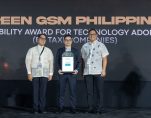
MANILA, PHILIPPINES – Media OutReach Newswire – 24 October 2025 – Green GSM has been honored with the E-Mobility Award for Technology Adoption by the Electric Vehicle Association of the Philippines (EVAP), recognizing its outstanding contribution to promoting electric mobility and supporting the country’s transition to sustainable transportation. Green GSM honored with E-Mobility Award at the 13th Philippine Electric Vehicle Summit (PEVS). The 13th Philippine Electric Vehicle […]

Dubai-based investment platform Green Dome Investments has signed a binding agreement to acquire the entire equity stake in cold-chain specialist Transcorp International for AED 225 million. The transaction is subject to customary regulatory approvals and is expected to complete in the coming weeks.

GDI’s shareholder backing includes SISCO Holding, the Saudi-listed infrastructure investment company that holds a 31.67 per cent stake in GDI. SISCO will contribute AED 75 million towards the acquisition price, with the remainder to be financed through equity from GDI’s shareholders. Transcorp, founded in 2013, operates across the UAE, Saudi Arabia and Qatar and has built a substantial cold-chain logistics footprint, including warehousing, transportation and last-mile delivery for temperature-sensitive cargo in 50 key cities across the Gulf region, supported by more than 1,000 employees.

GDI’s strategy for the deal is driven by its desire to accelerate growth in the fast-growing temperature-controlled supply-chain segment in the Gulf Cooperation Council markets. The investment complements its existing logistics arm, Elite Co., which focuses on fulfilment, middle-mile and last-mile services, and will now incorporate Transcorp’s cold-chain infrastructure and expertise. According to GDI’s chairman, the acquisition gives the group a stronger presence in Saudi Arabia and positions it to capitalise on what is described as one of the fastest-growing logistics segments in the region.

From a financial performance viewpoint, Transcorp reported revenues of AED 60.8 million in 2022, AED 75.8 million in 2023 and AED 109.4 million in 2024.. Its compound annual growth rate across that period has reportedly been strong, reflecting rising demand in cold-chain services tied to e-commerce, pharmaceuticals and food-service sectors in the GCC. The acquisition therefore aligns with broader regional trends in logistics expansion, infrastructure investment under national initiatives and growing interest from institutional investors in supply-chain resilience.

Analysts note that the deal is part of a wave of consolidation in the Gulf logistics market, especially in niche segments such as temperature-controlled transport and last-mile fulfilment. By integrating Transcorp into its logistics ecosystem, GDI stands to enhance its service offering, widen geographic reach and deepen its customer base. However, risks remain. Integration of operations across multiple jurisdictions and alignment of management, systems and culture will demand careful oversight. The transaction’s successful execution will hinge on regulatory approvals, seamless operational integration and the maintenance of service quality levels which are critical in cold-chain logistics.

From SISCO’s perspective, the investment into GDI underscores its strategy of enabling portfolio companies to capture growth opportunities that bolster long-term value creation. SISCO’s backing of AED 75 million represents a material commitment and underscores confidence in GDI’s growth roadmap. The deal also reinforces the increasing role of Saudi institutional capital in regional logistics expansion, in line with broader economic diversification efforts.

For customers and clients in the logistics market, the enlarged platform that emerges from this transaction could offer more integrated solutions—from cold-storage warehousing and temperature-controlled freight to last-mile delivery capabilities—across multiple Gulf countries. That could translate into improved efficiency, faster delivery cycles and access to a broader network for firms in high-growth sectors such as e-commerce, healthcare and retail. On the flip side, the enlarged scale could bring complexity in operations and may put pressure on margins if the competitive dynamics intensify or if cost inflation rises.

SINGAPORE – Media OutReach Newswire – 24 October 2025 – Apical was awarded the Sustainable Supply Chain Partnership Award – Singapore at the ESGBusiness Awards 2025 in Kuala Lumpur, Malaysia. The honour recognises Apical’s leadership in building a responsible, deforestation-free palm oil sourcing model that supports inclusive growth across its value chain. The award highlights Apical2030, the company’s long-term sustainability strategy, built on four pillars: Transformative Partnerships, […]

The automaker Tesla, Inc. is recalling 63,619 units of its Cybertruck in the United States after regulatory scrutiny identified a software-driven fault that causes the front parking lights to exceed allowable brightness levels, potentially impairing the vision of on-coming drivers. The recall covers vehicles produced between November 13, 2023 and October 11, 2025 and running software versions earlier than 2025.38.3. Federal safety regulators including the National Highway […]

Moscow has authorised the use of cryptocurrencies in cross-border payments for trade, marking a significant departure from previous policy. The Ministry of Finance of the Russian Federation and the Bank of Russia have reached an agreement to legalise digital-asset settlements in foreign trade transactions, while simultaneously tightening regulatory oversight of the wider crypto market.

Finance Minister Anton Siluanov said the step was necessary because imports are already being paid for with crypto assets and the existing regulatory framework was inadequate. He emphasised that the legalisation would be accompanied by “proper legislative regulation” to restore order in the sector.

Under the new framework, firms engaged in exports and imports will be able to transact using cryptocurrencies—but only via authorised channels that meet stringent anti-money-laundering and know-your-customer standards. The shift builds on an earlier “experimental legal regime” that allowed limited crypto use in foreign trade and by select investors.

The Bank of Russia remains cautious. Its governor Elvira Nabiullina continues to resist full recognition of cryptocurrencies as a means of payment domestically, and proposed restricting use to cross-border trade and wealthy “qualified” investors under licensed firms.

Market analysts interpret the decision in the context of pressures from Western sanctions, which have constrained access to global payment systems. The move is seen as part of Russia’s strategy to bolster trade flows, particularly in energy and commodities, by bypassing traditional channels.

Still, legalisation is selective rather than broad. The regime applies for now only to foreign-trade transactions; the domestic use of cryptocurrency for everyday payments or retail investments remains prohibited. The Bank of Russia argues allowing wide retail access poses “financial and social” risks.

For domestic investors, the path to broader engagement remains narrow. Earlier this year the regulator proposed allowing only those with assets above 100 million roubles or annual incomes above 50 million roubles to participate in a crypto-investment experiment.

Industry players say the legalisation will create new opportunities. Top banks—such as Sberbank and Alfa‑Bank—had warned that millions of Russians hold crypto assets despite being excluded from the formal regime. They argued the grey market status of holdings was a risk for the broader financial system.

Critics caution that regulatory oversight and enforcement will be key. The Prosecutor-General’s Office, under Alexander Gutsan, highlighted that the new framework includes tools to monitor transactions linked to corruption, terrorism, extremism, and illicit financial flows.

Observers outside Russia are weighing potential ripple effects. Some suggest the policy could encourage other sanctioned or emerging-market nations to adopt crypto-based trade settlement models, challenging the dominance of traditional systems such as SWIFT.

For Russian exporters and importers, the shift may offer relief from constrained access to Western-dominated financing and payment networks. Nonetheless, firms must still operate within Bank of Russia-endorsed platforms and are subject to rigorous compliance oversight—so adoption may remain cautious in the near term.

From the government’s perspective the move attempts to draw the large informal crypto-market inside the regulatory perimeter. Holding of crypto assets by Russian users has been estimated in the hundreds of billions of roubles, according to central bank data.

Uunderscoring HGC’s Dedication to Embed ESG into Business Operation HONG KONG SAR – Media OutReach Newswire – 23 October 2025 – HGC Global Communications (“HGC” or the “Group”), a fully-fledged ICT service provider and network operator with extensive global coverage, today announced it has been awarded “The Outstanding Award of ESG 2025”, making it the only telecom operator in Hong Kong recognized this award in 2025. This […]

For years, the cryptocurrency debate has centred on price. Every discussion returned to charts, volatility, and market speculation. The fixation on value swings has distracted from a much more important story. The future of digital finance is not about price movement. It is about infrastructure. Regulated stablecoins are emerging as the foundation of a new global financial system. They combine the trust of established currencies with the […]

JAKARTA, INDONESIA – Media OutReach Newswire – 21 October 2025 – SCG participated in the Forbes Global CEO Conference 2025: THE WORLD PIVOTS in Jakarta, Indonesia, which was organized under the theme “Sustainable Philanthropy.” The conference brought together business leaders from around the world to exchange visions on driving sustainable business practices amid the changing global economic, technological, and environmental landscape. Photo credit: Forbes Global CEO Conference […]

The government of British Columbia has introduced legislation that would permanently ban new crypto-mining operations from connecting to the provincial grid via BC Hydro, and impose formal limits on power access for AI and data-centre operators. The bill, known as the Energy Statutes Amendment Act, aims to steer the province’s clean-electricity supply toward mining, LNG and natural-resource industries viewed as higher-priority than the high-load crypto sector.

Under the new framework, BC Hydro will no longer approve fresh power-grid connections for crypto-mining facilities. The moratorium first established in 2022 is now set to become law. In parallel, beginning in late 2025 the province will introduce an allocation process for electricity demanded by AI and data-centres: only a capped amount of power will be available to those sectors, and they must compete for it under stricter criteria.

Government officials say the shift reflects a need to address surging grid-demand from emerging industries and to ensure that public electricity resources deliver broad economic and employment benefits. Premier David Eby said the move will help the province “move faster” on major transmission infrastructure and support industrial growth in a planned megaproject in the northwest. Energy and Climate Solutions Minister Adrian Dix added: “Our new allocation framework will prioritise vital growth in sectors like mining, natural gas and lowest-emission LNG, while ensuring our clean energy is directed to projects that deliver the greatest benefit to British Columbians.”

The backdrop encompasses the looming construction of the North Coast Transmission Line, a roughly $6 billion project designed to bring new clean-electricity capacity to the province’s sparsely-electrified northwest. That infrastructure is central to the government’s strategy of prioritising industrial connections over speculative, high-load users such as crypto-mining farms.

Industry analysts have mixed reactions. Supporters say the policy reflects sound planning in a jurisdiction dependent on hydroelectric power and facing increasing pressure from multiple large-scale electricity users. They note that the high energy-intensity of crypto-mining—with relatively modest job creation and economic multiplier effects—makes it a less compelling candidate compared with mining, LNG, hydrogen and industrial AI. On the other hand, critics warn that the framework gives the government wide discretionary power, potentially reducing transparency and favouring incumbents. As one Green-party MLA noted: “With no detail on this framework or the criteria for decision-making in Bill 31, we are concerned that the minister will be the one making these consequential determinations under the influence of friends or lobbyists.”

The government has indicated that data-centres and AI firms will still be eligible for power, but will face competition under the new mechanism: for example, BC Hydro reportedly will allocate only about 300 megawatts for AI and 100 megawatts for data-centre use every two years. Those thresholds will represent a major scaling down in open-access grid connections for such technology users and signal a shift away from first-come, first-served power allocations.

For prospective crypto-miners, the measure marks a turning point. Major mining projects that had anticipated low-cost Canadian hydro power will face altered calculus: either repurpose for non-crypto uses, or relocate to jurisdictions with more open grid access. This may induce capital flight or slow the growth of a nascent mining industry in the province. Conversely, proponents of the policy argue it will preserve affordability for households and existing industrial users by preventing unmanaged load growth.

The government’s timing is also notable. The bill not only formalises the ban on new crypto-mining connections, but synchronises with the broader policy shift to accelerate the NCTL and re-shape grid access rules. Construction is scheduled to begin in 2026 and extend into the early 2030s. For the grid, this means a period of constrained supply allocation while demand from resource-intensive projects expands.

Community and Indigenous groups have been emphasising that increased industrial electrification must occur in consultation and benefit-sharing with First Nations. The legislation allows for First Nations co-ownership of the transmission line and signals a broader reconciliation dimension to the infrastructure strategy.

In the crypto-community the reaction is sharp. Firms and investors note that BC’s abundant hydro power was a major attraction to set up mining operations at scale. With the ban in place, developers will need to evaluate stranded-asset risk or shift to other Canadian provinces or international venues. Some warn that innovation in GPU- and AI-mining overlap may find itself constrained as power availability tightens.

From a global lens, British Columbia joins a growing cohort of jurisdictions imposing stricter controls on high-energy crypto-activities and re-examining how emerging tech intersects with energy policy. The regulation underscores the tension between rapid tech growth and public-utility responsibilities in regions reliant on renewables and constrained transmission.

CHAOZHOU, CHINA – Media OutReach Newswire – 21 October 2025 – From November 28th to 30th, the city will host the 23rd Teochew International Convention, welcoming Teochew people from around the world and sharing the city’s cultural story on a global stage. Leveraging this opportunity, Chaozhou has prioritized engagement with the global Teochew diaspora, mobilizing the strength of overseas communities and entrepreneurs to enhance development capacity and […]

Chicago-based hospitality group Hyatt Hotels Corporation has entered into a management agreement to bring its full-service Regency brand to Lusaka, Zambia. The five-star property, to be known as Hyatt Regency Lusaka The Pamodzi, will undergo substantial refurbishment and reopen in 2026 under the new branding. The deal partners Hyatt with affiliates of ASB Hotel Properties and Albwardy Investments, placing the landmark previously called The Pamodzi Hotel at the centre […]

Greenlogue/AP The 28th edition of the trade-fair and conference platform Ecomondo 2025 will convene from 4 to 7 November at the Rimini Expo Centre, Italy, with a reinforced international agenda that organisers expect will draw more than 1,000 exhibitors and upwards of 100,000 visitors. This year’s event is emphasising several strategic growth areas: climate-tech innovation, digitalisation in resource management, blue economy and Mediterranean-Africa partnerships. The organising body, […]

Greenlogue/AP The agricultural industry is undergoing a transformation, driven by the rise of green automation. As the global demand for food increases, farmers and tech innovators are turning to advanced technologies to increase productivity while maintaining sustainable practices. Green automation encompasses a wide range of smart tools—from autonomous robots and drones to sensors and artificial intelligence—designed to optimise farming processes, reduce environmental impact, and promote resource efficiency. […]

HONG KONG SAR – Media OutReach Newswire – 18 October 2025 – Joyful Alliance, a Singapore-headquartered investment firm, today announced it will propose the development of the Wakayama Integrated Onsen Resort to the Wakayama City Government. The two parties officially signed the memorandum of cooperation on October 17. Joyful Alliance will propose an Integrated Onsen Resort development in Wakayama City, Japan, projected to attract millions of visitors […]

A team of scientists has stabilised a high-performing sodium compound that could unlock safer, cheaper and greener solid-state batteries, putting sodium one step nearer mainstream use in electromobility and grid storage. The breakthrough hinges on a metastable form of sodium hydridoborate, which the researchers heated to the brink of crystallisation and then quenched to lock in a high-conductivity phase. This novel phase exhibits ionic conductivity at least […]

Gulf Cooperation Council states are positioning themselves to tap into the projected $2 trillion global sports tourism market by 2030, with a new PwC Middle East study underlining the region’s evolving role from event host to year-round destination.

According to the report Game on for the GCC – Turning sporting ambition into lasting tourism impact, the region already boasts world-class events such as the 2022 FIFA World Cup in Qatar and a string of Formula 1 races, and now aims to leverage that prestige to build sustained tourism flows.

The global sports tourism market is estimated to account for 10 percent of all tourism spending and is expected to surpass $2 trillion by 2030. GCC nations are racing to convert episodic sporting moments into immersive fan experiences, integrated visitor journeys and continuous attraction pipelines.

Saudi Arabia is emerging as the region’s most aggressive investor in sport, with projections that its domestic sports economy may grow from about $8 billion to $22.4 billion by 2030—creating around 39,000 jobs and adding over $13 billion to GDP. The Kingdom’s Vision 2030 reforms emphasise sports as a diversifier of its oil-dependent economy.

Across the GCC, national governments, sovereign wealth funds, private investment and public-private partnerships are converging. According to PwC’s Global Sports Survey 2024, the Middle East now commands 24 percent of global sports investments, a notable shift in capital flows toward the Gulf.

To sustain momentum, the report argues, GCC states must go beyond marquee events and build a resilient sports tourism ecosystem. That means aligning infrastructure, regulation, destination branding, transport and hospitality standards—not just for big events but for ongoing seasonal and niche attractions.

Qatar’s experience is instructive. The 2022 World Cup is estimated to have generated between $2.3 billion and $4.1 billion in tourism spending and broadcast revenues, contributing $1.6 billion to $2.4 billion in GDP impact. But the challenge is to retain visitor engagement in non-World Cup years.

In that respect, the PwC analysis calls for “sport-led destinations” combining competition, culture and entertainment. The aim is to extend visitor stays, unlock repeat visitation and cross-sell other forms of tourism—heritage, wellness, sustainability and cultural experiences.

Women’s sports are emerging as a key growth frontier. In the GCC, 85 percent of sports executives expect double-digit growth in women’s sports revenues over the coming years. Investment in female participation, media rights and sponsorship is viewed as critical to widening the revenue base.

Yet several constraints loom. Many Gulf states rely heavily on imported talent in event operations, face seasonal desert climates, and must balance aggressive development with long-term maintenance costs. Ensuring accessibility, connectivity and visa ease are also essential for maintaining global appeal.

One forward move: GCC officials have greenlit a Schengen-style unified tourist visa scheme to allow seamless travel across member states—an effort aimed at boosting cross-border “bleisure” travel and strengthening regional integration of tourism flows.

Meanwhile, event diversification is underway. Saudi Arabia recently launched the Esports Nations Cup, with the inaugural edition slated for Riyadh in November 2026, expecting participation from over 100 nations and some 1,500 players across multiple titles. The country’s wider gaming and esports strategy is aligned with broader youth, technology and cultural industry goals.

MAF Sukuk Ltd is launching a US$500 million, 10-year sukuk under Regulation S, with initial price thoughts set around US Treasuries plus 125 basis points. The securities will be backed by Majid Al Futtaim Properties as the obligor, while parent Majid Al Futtaim Holding offers a guarantee.

The offering adopts a wakala/murabaha structure and is expected to carry credit ratings of “BBB/BBB”, aligned with those of the guarantor. HSBC is acting as lead structuring bank, with the purpose of the funding geared towards expansion and refinancing of property development activities.

Majid Al Futtaim Holding, in its most recent credit review, retains its BBB rating and stable outlook, reflecting its scale of operations and diversified asset base. Fitch affirmed the rating in November 2024, citing growth across revenue and EBITDA. Majid Al Futtaim’s internal guidance confirms that capital allocation remains within the thresholds consistent with its BBB leverage metrics.

Investors familiar with corporate sukuk in the Gulf region view the 125 basis point spread as moderately tight for a 10-year tenor, particularly for a non-sovereign issuer in the real estate sector. The parent guarantee is crucial to bolster credit comfort, given that the issuer is a property development arm.

In recent years, Majid Al Futtaim has deployed Islamic capital markets for its financing needs. Its 2023 green bond issuance of US$500 million was aimed at refinancing an AED 800 million bond commitment, underlining a strategy to blend sustainability credentials with its capital structure. The group similarly has historically issued hybrid capital securities and sukuk in its debt portfolio.

The latest sukuk will be listed via MAF Sukuk Ltd, which already carries a BBB long-term rating. The listing via a special purpose issuer isolates the structure from direct group operations, while the parent guarantee transfers credit risk back to the overarching entity.

Major risks for the deal rest on cyclical pressures in real estate markets, tenant defaults, and development cost inflation. Majid Al Futtaim Properties has disclosed in its base prospectus the possibility of cost overruns, land title constraints, and tenant concentration as material risks. The group also faces competitive dynamics in its markets where some rivals are state-backed.

Mohamed Futtah, a regional fixed-income strategist, commented that “a 10-year sukuk at T+125bp for a BBB group guarantee is ambitious, but could succeed under strong demand, especially from Gulf and Asia Islamic investors seeking yield in a rate environment that is otherwise compressed.”

VISHNU RAJA
RYO YAMADA
HITORI GOTOH
IKUYO KITA