Publicly listed companies now hold approximately 1.3 million Bitcoin, an increase of 31% over 14 months, although most of the expansion came from a single company, according to new figures released by blockchain analytics firm CryptoQuant. Strategy, the Bitcoin investment company chaired by Michael Saylor, accounted for 71% of the increase in corporate holdings, highlighting the growing concentration of digital assets among listed businesses despite wider adoption […]
LiveWire Group, the electric motorcycle manufacturer controlled by Harley-Davidson, has warned that it may be unable to continue operating over the next year, citing mounting financial pressures and insufficient liquidity. The company disclosed the warning on Thursday alongside third-quarter results, saying recurring operating losses, negative operating cash flows and anticipated funding requirements raised substantial doubt about its ability to remain a going concern. It is examining financing […]
Texas regulators have suspended permits linked to new data centres as Governor Greg Abbott seeks to curb a construction boom that has provoked voter opposition ahead of November’s midterm elections. The Texas Commission on Environmental Quality confirmed this month that it had paused permits for construction and infrastructure directly supporting data centres. The commission provided its account after a watchdog examination of permitting records highlighted possible gaps […]
Led by Blockchain Capital, the funding will accelerate the expansion of PhotonPay’s stablecoin-centric Financial OS, connecting stablecoin liquidity with global fiat networks to unlock digital assets for everyday corporate operations and cross-border settlement.
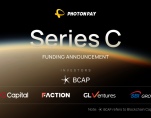
HONG KONG SAR – Media OutReach Newswire – 29 October 2026 – PhotonPay today announced the closing of a $40 million Series C funding round led by Blockchain Capital, with participation from new investor SBI Group and follow-on investments from existing investors IDG Capital, GL Ventures, and Lightspeed Faction. Blacksheep Technology acted as exclusive financial advisor to PhotonPay on the transaction.
The new capital will support the expansion of PhotonPay’s stablecoin-centric Financial Operating System (Financial OS), with investment focused on enhancing multi-asset wallet capabilities, expanding global card issuing, strengthening local clearing infrastructure in key markets, and developing an agent-ready financial execution layer.
As of August 2026, PhotonPay’s annualized transaction volume reached US$65 billion. The company has secured 34 payment and financial licenses and regulatory authorizations across the Americas, Europe and Asia, and serves over 200,000 business customers across more than 200 countries and territories.
As stablecoins move beyond crypto-native use cases into corporate treasury, settlement and commercial spending, PhotonPay sees the next phase of global finance not as a choice between stablecoins and fiat currencies, but as the convergence of both. Its Financial OS connects on-chain liquidity with the banking, clearing and card networks businesses rely on for everyday operations.
“Moving money across borders in seconds means little if it still takes days to put that capital to work,” said Lewison Chen, Founder and CEO of PhotonPay. “Stablecoins are accelerating global money movement, while local clearing and global card issuing connect that liquidity to local settlement and everyday business spending. Our Financial OS brings these capabilities together, making the underlying infrastructure far less visible to businesses, even as it becomes more essential than ever.”
“At the same time, business software is becoming increasingly autonomous,” Chen added. “AI is shifting financial workflows from people manually operating fragmented tools toward systems that understand business intent and coordinate execution across assets, accounts and financial rails. That creates the foundation for agentic commerce. Stablecoins change how money moves. AI changes how it gets put to work. But commerce is still what money is for.”
Moving Money Across Assets and Markets
PhotonPay’s Financial OS brings together multi-asset wallets, global money movement, foreign exchange, local clearing, and global card issuing through an integrated API-first architecture. This unified system gives businesses access to the financial capabilities they need to manage and deploy funds across markets.
Stablecoins sit at the core of this architecture. PhotonPay’s multi-asset wallet connects stablecoin liquidity with fiat balances, integrating asset conversion, foreign exchange, and local clearing into a single connected workflow. This enables businesses to move funds across supported on-chain and traditional financial networks, turning digital asset liquidity into purchasing power for local payments and everyday corporate spending.
Supporting this dual-rail infrastructure is PhotonPay’s established global financial network. Businesses can open local collection accounts in 17 key markets and receive funds in more than 60 currencies. On the payout side, the network supports over 100 payment routes across local clearing systems, bank transfers, and digital wallets, including payouts to 74 major local e-wallets. Approximately 97% of payout transactions reach recipients within hours or on the same day, with 68% arriving in real time.
Global card issuing extends these capabilities into programmable business spending. Through PhotonPay’s APIs, businesses and platforms can issue virtual and physical cards, configure granular spending controls, and embed card payments directly into their software and automated workflows. Over the past 12 months, PhotonPay issued 4.4 million cards, up 275% YoY.
Beyond its first-party payment solutions, PhotonPay makes its infrastructure available through embedded finance, enabling technology platforms to natively integrate global accounts, payments, and card issuing into their own products. The company now serves more than 100 enterprise and platform partners, extending the reach of its Financial OS into industry-specific workflows.
From Financial Intent to Agentic Commerce
As AI agents assume active operational roles, financial infrastructure must evolve beyond API access to enable programmable, policy-governed execution. It requires systems capable of translating high-level instructions into coordinated financial actions, with deterministic controls governing how those actions are executed.
In May 2026, PhotonPay and Mastercard completed a live agentic payment demonstration using a tokenized PhotonPay card, validating AI-initiated transactions across existing global card networks.
Building on this milestone, PhotonPay is developing standardized financial interfaces designed for developers and AI agents. With planned support for the Model Context Protocol (MCP), PhotonPay aims to make account information, balances, card functions, and payments accessible as composable financial primitives, allowing AI agents to securely retrieve context and initiate financial workflows within defined authorization boundaries.
To govern this agent-ready layer, PhotonPay is developing a policy-based execution framework designed to enforce programmable authorization rules, spending limits, and transaction-level controls. The framework is intended to enable AI agents to coordinate financial tasks across supported accounts and assets, while ensuring that execution remains subject to explicit, enforceable policies set by businesses.
PhotonPay is also advancing its AI-assisted risk review capabilities, designed to identify complex cases for human assessment. Together, these initiatives reflect a foundational principle of autonomous finance: AI may interpret intent and coordinate tasks, but financial execution must remain governed by verifiable authorization, deterministic controls, and auditable records.
“Connecting financial networks is only the beginning. The real breakthrough is abstracting that complexity behind a unified, programmable financial layer, so businesses and AI agents can move from intent to execution within clearly defined boundaries,” said Chen.
Simple on the Surface, Deep by Design
The promise of a Financial OS is simplicity: enabling businesses to manage assets, route money, and execute payments through a unified financial operating layer. Yet delivering that simplicity requires deep financial infrastructure beneath the surface.
While stablecoins accelerate borderless value transfer, turning that liquidity into local settlement, supplier payments, and corporate spending still depends on established banking relationships, domestic clearing rails, foreign exchange infrastructure, and global card networks. Each market brings its own regulatory and operational requirements.
For PhotonPay, building a Financial OS means abstracting these fragmented global networks into a programmable, interconnected financial system. The objective is not to eliminate financial complexity, but to manage it within the underlying infrastructure, so businesses can operate without having to navigate these systems themselves.
“AI can simplify how businesses interact with financial services, but it cannot replace the infrastructure required to deliver them,” said JP Pi, Chief Compliance Officer at PhotonPay. “Establishing local financial capabilities takes years of investment, institutional partnerships, and regulatory engagement. Software or AI models alone cannot replicate that depth. The simplicity businesses experience is the result of that heavy lifting, not a substitute for it.”
PhotonPay has engineered a financial foundation spanning both stablecoin and fiat rails, connecting multi-asset conversion with local clearing networks. Institutional partnerships with J.P. Morgan, Standard Chartered, and DBS, alongside connections to domestic payment systems such as Brazil’s Pix and Mexico’s SPEI, form the backbone of this network.
The new capital will enable PhotonPay to strengthen its local clearing and compliance infrastructure in existing markets while expanding into new jurisdictions, scaling the reach of its Financial OS across corporate spending, embedded finance, and agentic commerce.
“Businesses want one provider that can handle their payments across currencies and markets, whether they’re using bank transfers, stablecoins or cards. Lewison and his team have spent a decade building the banking relationships, licenses and local payment infrastructure to deliver that. We believe PhotonPay’s ability to bring these capabilities together gives it a strong advantage as businesses adopt stablecoins for everyday payments.” – BCAP,Yuanhan Li,Partner
“As stablecoins become increasingly integrated into global payment systems, bridging digital assets with traditional financial infrastructure will be essential to unlocking their real-world potential. PhotonPay’s established global payment network and its vision for a stablecoin-centric Financial OS align closely with SBI Group’s strategy to advance digital financial infrastructure and expand the practical adoption of digital assets. We look forward to supporting PhotonPay’s continued growth and exploring opportunities for strategic collaboration across the SBI Group ecosystem.” – Eiichiro So, CEO & Managing Director of SBI Ven Capital
The issuer is solely responsible for the content of this announcement.
About PhotonPay
Founded in Hong Kong in 2015, PhotonPay is a global fintech company building a next-generation, stablecoin-centric Financial Operating System (Financial OS). Its API-first architecture brings together multi-asset wallets supporting stablecoins and fiat currencies, global money movement, foreign exchange, global card issuing, embedded finance, and local clearing infrastructure, connecting digital and traditional financial rails within an integrated financial system.
PhotonPay operates 16 offices worldwide, employs nearly 600 people, and holds 34 payment and financial licenses and regulatory authorizations across the Americas, Europe and Asia. The company serves businesses across more than 200 countries and territories.
Arabian Post Staff -Dubai More than 250 senior maritime executives are expected in Dubai on 12 November for the inaugural Seatrade Maritime UAE Summit, where shipping disruption, supply chain resilience and changes in global trade will dominate discussions. Seatrade Maritime is organising the gathering with DP World as host partner at Madinat Jumeirah. The programme will include the unveiling of the 2026 Leading Maritime Cities report prepared […]
Arabian Post Staff -Dubai The United Arab Emirates and Canada have signed a Comprehensive Economic Partnership Agreement to lower trade barriers and encourage bilateral investment. The agreement was signed in Ottawa on 27 October by UAE Minister of Foreign Trade Dr Thani bin Ahmed Al Zeyoudi and Canada’s Minister of International Trade Maninder Sidhu. Abu Dhabi Crown Prince Sheikh Khaled bin Mohamed bin Zayed Al Nahyan and […]
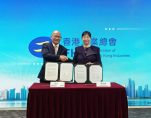
HONG KONG SAR – Media OutReach Newswire – 29 October 2026 – From October 19 to 20, an economic and trade delegation from Hainan Province paid a visit to Hong Kong. The delegation signed memoranda of cooperation respectively withThe Chinese Manufacturers’ Association of Hong Kong(CMA)and the Federation of Hong Kong Industries(FHKI) to advance pragmatic cross-border collaboration between Hainan and Hong Kong in trade and investment, manufacturing industrial chains and professional services.
Signing ceremony for the cooperation memoranda
During its stay in Hong Kong, the delegation visited the CCPIT Representative Office in Hong Kong. It held discussions with CMA and co-hosted the Hainan Free Trade Port (Hong Kong) Economic and Trade Cooperation Exchange Meeting with FHKI. The event showcased the policies, key industrial layout and investment opportunities of the Hainan Free Trade Port (FTP), and arranged one-on-one business matchmaking between Hainan and Hong Kong enterprises.
Wang Yuyuan, Vice President of the China Council for the Promotion of International Trade Hainan Sub-council (CCPIT Hainan) and China Chamber of International Commerce Hainan Chamber of Commerce, noted that since the official launch of island-wide special customs operations at the Hainan FTP on December 18, 2025, 174,000 new enterprises have been registered, representing a year-on-year surge of 95.9 percent. Newly established foreign-invested enterprises rose by 35.8 percent year on year. In the first half of this year, inbound and outbound tourist arrivals exceeded 70 million, up 28 percent year on year, with the number of visa-free entry countries expanding to 88. From January to August, the province’s total goods import and export volume hit 250 billion yuan, growing by 61.5 percent year on year. Hainan is rapidly emerging as a critical gateway connecting China with the rest of the world and a prime channel for two-way investment.
According to CCPIT Hainan, Hong Kong ranks as a major source of foreign investment for Hainan. In the first half of this year, Hainan registered 1,303 new foreign-invested enterprises, an increase of 38.62 percent year on year, with Hong Kong-funded enterprises accounting for the lion’s share. Hainan has issued offshore RMB local government bonds in Hong Kong for four consecutive years, with a cumulative issuance volume reaching 18 billion yuan.
CMA is one of Hong Kong’s most representative non-profit industrial and commercial bodies, with around 3,000 member enterprises. It has long provided members with business services including exhibitions, brand promotion, testing and certification. FHKI, one of Hong Kong’s four major chambers of commerce, has approximately 2,000 corporate members. It focuses on boosting the sustained development of Hong Kong industry and manufacturing through policy advocacy, business matchmaking, certification services and youth talent cultivation.
The two memoranda explicitly stipulate that the two sides will establish a regular liaison mechanism, build a long-term cooperation platform covering information sharing, business matchmaking, exhibition collaboration and professional services, and provide solid support for pragmatic business cooperation between Hainan and Hong Kong enterprises.
Source: China Council for the Promotion of International Trade Hainan Provincial Committee (CCPIT Hainan)
Hashtag: #CPITHainan
The issuer is solely responsible for the content of this announcement.
The London Metal Exchange is exploring plans to convert metal inventories held in Hong Kong warehouses into digital assets that businesses could use to secure financing, as the city develops its commodities trading infrastructure. The exchange confirmed that its proposal remains at an exploratory stage and focuses on off-warrant metal, a category of warehouse inventory not covered by the standard title documents used in its established trading […]
Arabian Post Staff -Dubai Abu Dhabi Global Market (ADGM) has issued dedicated guidance governing cryptocurrency mining operations, becoming the first international financial centre in the region to establish comprehensive commercial licensing and governance expectations for the sector. The guidance, published by ADGM’s Registration Authority, establishes crypto mining as a licensable commercial activity rather than a regulated financial service. It applies to businesses conducting mining operations within or […]
Chief Minister V. D. Satheesan warned the Assembly that mounting liabilities accumulated by KIIFB could have resulted in the attachment of the Secretariat and district Collectorates if its operations had continued unchecked. Addressing the Assembly during discussions on supplementary budgetary demands, Satheesan accus…
The Kerala Cabinet on Wednesday ordered a vigilance investigation into alleged irregularities in the Kerala Infrastructure Investment Fund Board (KIIFB), bringing its land acquisition transactions and appointments under scrutiny despite strong opposition from the Left Democratic Front (LDF). The decision follows the f…
Opposition leader Pinarayi Vijayan on Wednesday accused the Kerala government of pursuing a sustained campaign against the Kerala Infrastructure Investment Fund Board (KIIFB), alleging that Chief Minister V D Satheesan was disregarding its contribution to infrastructure development. Addressing a press conference in Th…
Robinhood Markets will introduce Ripple’s dollar-backed RLUSD stablecoin to its retail trading app later this year, expanding an institutional partnership despite its involvement in a competing digital dollar, USDG. The companies announced on Tuesday that RLUSD was already available on Robinhood Chain and Bitstamp, the cryptocurrency exchange owned by Robinhood. They also outlined plans to use the token for institutional settlement through the XRP Ledger, alongside arrangements […]
Munich-based Proxima Fusion has signed two agreements with Japanese technology companies to develop essential components for its planned fusion reactors, extending its manufacturing partnerships as it prepares to build a demonstration machine in Germany.
The memorandums of understanding, signed in Tokyo on Wednesday during German Chancellor Friedrich Merz’s visit to Japan, cover superconducting materials and equipment for heating and fuelling plasma. Proxima will collaborate with Fujikura on high-temperature superconducting tape and with Kyoto Fusioneering on specialised reactor systems.
The agreements are preliminary arrangements rather than binding purchase orders or commitments to construct manufacturing facilities. Financial terms and delivery schedules have not been disclosed, leaving the scale of any eventual procurement dependent on further negotiations and technical work.
Under the Fujikura agreement, the companies will examine the feasibility of establishing a factory in the German state of Lower Saxony to manufacture high-temperature superconducting tape, known as HTS tape. The material is used to make powerful magnets that confine extremely hot plasma inside fusion machines.
Proxima estimates that its Alpha demonstration stellarator will require approximately 20,000 kilometres of tape. Each subsequent Stellaris commercial power plant would need around 40,000 kilometres, making dependable manufacturing capacity central to its development plans.
The collaboration follows Proxima’s September memorandum of understanding with Lower Saxony concerning a large-scale European production facility. The proposed project’s first two phases envisage investment of approximately €140 million through 2029, with public and private financing expected to contribute equally. The state has identified €21 million as its intended contribution.
The latest Fujikura arrangement concerns feasibility work and does not establish that the proposed factory has secured final financing, regulatory approvals or a construction timetable. Fujikura already manufactures superconducting tape and supplies other fusion developers, giving it industrial experience in a material whose production requires demanding quality controls.
Fujikura announced in September a separate long-term agreement to supply more than 10,000 kilometres of superconducting tape to US-based Commonwealth Fusion Systems for its planned ARC power plants. That contract also involves expansion of the Japanese manufacturer’s production capacity.
Proxima’s second agreement brings Kyoto Fusioneering into work on gyrotrons, devices that generate high-power microwaves to heat plasma, and fuel-cycle technology used to manage the hydrogen isotopes required for fusion reactions. Both systems are essential to operating a reactor beyond the magnetic confinement stage.
Kyoto Fusioneering is also expected to contribute technology to Germany’s national Fusion Hubs programme, which was launched with an initial €125 million in research funding. The collaboration connects a Japanese supplier specialising in fusion engineering with Proxima’s reactor development and Germany’s broader industrial research effort.
The company has experience developing plasma-heating equipment and integrated fuel-handling technologies. Its engineering activities include work on gyrotrons and experimental systems designed to test processes needed for future fusion plants. The agreement with Proxima does not itself constitute a confirmed equipment delivery.
Proxima develops stellarators, a type of fusion device that uses carefully shaped magnetic fields to hold plasma in place. Its approach differs from the tokamak configuration pursued by several other fusion developers, although both depend on advanced magnets and systems capable of sustaining demanding operating conditions.
The company’s Alpha demonstrator is intended to operate in the early 2030s and test whether its stellarator design can achieve net energy gain from fusion. Its Stellaris concept is intended as a subsequent electricity-producing plant at Gundremmingen, the site of a former nuclear power station in Bavaria.
Proxima raised €411 million in July to support its development programme. The company emerged from the Max Planck Institute for Plasma Physics in 2023 and has assembled partnerships with engineering and manufacturing businesses as it moves towards constructing its first major machine.
Neither the Alpha timetable nor the commercial ambitions establish that fusion electricity production has been demonstrated at an economically viable scale. Substantial engineering, testing and regulatory work remains before a commercial plant can supply electricity to the grid.
The company’s manufacturing strategy also reflects the substantial quantities of specialised materials required for stellarator construction. Superconducting tape must meet stringent performance specifications, including its ability to carry large electrical currents while exposed to strong magnetic fields and extremely low temperatures.
Fujikura and Kyoto Fusioneering were already listed among participants in Proxima’s Alpha Alliance, an industrial network bringing together companies with expertise in materials, components and reactor engineering. The new memorandums identify more specific areas for cooperation within that wider group.
ZHUHAI, CHINA – Media OutReach Newswire – 26 August 2026 – Recently, Frost & Sullivan, a globally renowned market research and consulting firm, awarded GREE Electric Appliances a certificate, recognizing that “GREE Ranked No. 1 Globally by Sales Volume of Premium Residential Air Conditioners in 2025”. The certification confirms that, based on research into the global Premium residential air conditioning market and measured by sales revenue from Premium residential air conditioners in 2025, GREE ranked first globally.
Certification of Frost & Sullivan
According to data from Frost & Sullivan, GREE’s leading position in the global Premium residential air conditioning market is built upon comprehensive superiority in core product performance. Consumers in the Premium segment do not pay merely for a “higher price tag”, instead, they choose products that offer superior usage experiences, more durable and stable operation, and outstanding energy-saving performance. GREE’s widespread recognition in this market is fundamentally rooted in its years of deep cultivation in energy efficiency technology, noise reduction technology, and comfortable airflow technologies. These technologies have passed the most demanding user tests across diverse scenarios in different countries and regions.
Winning recognition in the global premium market ultimately relies on what the product itself says. GREE’s reputation for quality among global consumers stems from sustained investments in core technologies, superior user experiences, and user value over many years.
To address the harsh challenges posed by diverse global climates, GREE independently developed a matrix of core compressor technologies covering all climatic zones. The Timo series, equipped with G-Boost single-stage enthalpy-adding compressors, was specifically developed for extremely hot regions like the Middle East. It remains reliable operation even at ambient temperature of 68℃, achieving non-declining cooling performance at 54℃. The Airy series pioneered the commercialization of ultra-wide frequency rotary compressors, capable of continuous heating for 10 hours without defrosting, improving the seasonal energy efficiency ratio (SEER) by 9.5% to 16.7%. The S-cool series, equipped with G-Hyper dual-cylinder two-stage compressors, was crafted for extremely cold regions such as Northern Europe and North America. It operates stably within an ultra-wide temperature range of -40℃ to 54℃, achieving industry breakthroughs of “non-declining heating at -25℃ and non-declining cooling at 46℃”. These three compressor technologies provide “all-climate comfort” solutions for users in different climate belts through their respective differentiated technical paths.
Picture of G-strom
In key dimensions of user experience, GREE also addresses consumer pain points with hardcore technology. The newly launched 2026 “Ai Silent King” features GREE’s self-developed AI energy-saving chip. Paired with artificial intelligence algorithms, it saves energy from the moment it is turned on, improving annual energy efficiency by 23%. Meanwhile, GREE’s SilenzX series air conditioners achieve ultra-low sound pressure levels of just 29 dB(A) for the outdoor unit and 15 dB(A) for the indoor unit—far below the industry average. This achievement earned the Gold Medal at the 51st International Exhibition of Inventions of Geneva, marking GREE’s leadership in the field of noise reduction technology globally.
From compressors to whole unit systems, from AI energy saving to quiet technology, GREE has built the core competitiveness of Premium products through solid technological accumulation and continuous innovation breakthroughs, creating truly high-quality air experiences for global users.
As of July, GREE holds 50 “world-leading” technologies. From residential air conditioners to central air conditioning systems, from single-refrigerant systems to solutions covering all climatic zones, GREE has constructed a complete, autonomous, and controllable technology matrix. It is this systemic innovative capability that allows GREE to maintain rapid response and technical adaptation capabilities in the face of differentiated needs across global markets.
Currently, GREE products serve more than 190 countries and regions worldwide. By adhering to serving users with core technologies and high-quality service, GREE continues to meet people’s pursuit of a better life. Honors are witnesses to the past, and innovation is the eternal coordinate. Standing at a new starting point, GREE Electric Appliances will continue to drive high-quality development through independent innovation, moving from “scale leadership” to “value guidance,” and from “Chinese Manufacturing” to “Global Brand”, thus achieving “Made in China, Loved by the World”.
Hashtag: #GREE
The issuer is solely responsible for the content of this announcement.
China could become the global leader in advanced artificial intelligence models by 2030 while matching or challenging other countries across strategically important technologies, according to a new assessment by Bloomberg Intelligence.
The forecast identifies large language models, which underpin generative AI applications, as an area where China is particularly well positioned to establish leadership. It also anticipates that Chinese companies and research institutions will become at least competitive across other critical technology sectors, potentially reshaping the balance of technological capabilities between Beijing and Washington.
The assessment comes as Chinese AI developers narrow the performance gap with American competitors despite restrictions on access to advanced semiconductors. Improvements in model efficiency, expanding domestic computing infrastructure and competitive pricing have strengthened China’s position in the global market.
Bloomberg Intelligence senior analyst Robert Lea identified a sharp improvement in Chinese model performance earlier this month. Leading Chinese systems trailed their American counterparts by approximately 3% on benchmark scores, compared with around 9% in May and 15% earlier this year.
That narrowing gap followed the September introduction of DeepSeek’s V4.1 Flash model, which demonstrated further advances in reasoning and computational efficiency. The findings suggest that restrictions on sophisticated American chips have not prevented Chinese developers from improving their systems.
The projections nevertheless remain conditional on technological progress, investment and commercial adoption over the next four years. Competitive performance in individual benchmarks does not necessarily establish overall leadership, particularly when computing capacity, profitability and enterprise deployment are considered.
China’s expanding capabilities are already influencing international adoption patterns. Models developed by DeepSeek, Alibaba and Moonshot AI have attracted developers seeking alternatives to comparatively expensive proprietary systems offered by American technology companies.
Data from OpenRouter, a platform providing access to multiple AI models, showed Chinese systems gaining substantial shares of usage during 2026. However, the figures represent activity through that platform rather than the entire global market, where direct subscriptions and enterprise contracts remain significant.
Chinese developers have also benefited from distributing models with openly available weights, allowing businesses and programmers to customise systems without depending entirely on proprietary services. This approach has encouraged international experimentation and strengthened adoption among cost-conscious users.
American companies retain important advantages, particularly in advanced semiconductor access, large-scale computing infrastructure and commercial relationships with enterprise customers. OpenAI, Anthropic and Google continue investing heavily in frontier models and the infrastructure required to train increasingly sophisticated systems.
Financial performance illustrates the distinction between technological competitiveness and commercial success. Anthropic disclosed revenue of $16.3 billion for the first half of 2026, compared with $1.2 billion during the corresponding period a year earlier, reflecting strong demand for its enterprise services.
Chinese developers face greater pressure on pricing, with intense domestic competition limiting opportunities to convert growing usage into sustainable earnings. Lower-cost models can accelerate adoption while simultaneously reducing margins available to finance future development.
Semiconductor manufacturing remains another constraint. Washington’s export controls restrict Chinese access to certain advanced processors and manufacturing equipment, although domestic suppliers including Huawei are developing alternatives intended to support national computing requirements.
China’s response increasingly combines domestic chip development with software optimisation. Researchers have demonstrated that improvements in training methods, architecture and inference efficiency can reduce dependence on the most powerful available hardware.
Beijing is also pursuing greater integration between artificial intelligence and telecommunications infrastructure. A three-year programme issued by the Ministry of Industry and Information Technology in June established targets for autonomous networks, computing access and specialised AI applications through 2028.
The programme envisages significant breakthroughs in core technologies by 2030, alongside improved coordination between communications networks, computing resources and intelligent services. Its objectives complement broader efforts to establish domestic technological capabilities.
Regulatory developments could influence the international availability of Chinese technology. Authorities proposed export restrictions this month covering 23 categories of AI technology, including language models, autonomous agents, chip designs and computing clusters.
The draft measures would potentially subject transfers of certain model weights, source code and advanced technologies to government approval. Their final scope and implementation remain undetermined.
China’s Ministry of Commerce has presented the proposals as part of a wider effort to regulate strategically sensitive technology transfers. The consultation also covers technologies beyond artificial intelligence, reflecting the government’s expanding attention to intellectual property and national security.
For overseas developers using Chinese models, the eventual rules could affect access to advanced systems and associated technical resources, depending on the restrictions adopted and the thresholds applied to particular technologies.
Peru’s exports are projected to reach $110.794 billion by the end of 2026, an increase of 21.16% over the previous year, as higher mineral prices and strong international demand lift the country’s overseas sales. The Lima Chamber of Commerce released the forecast based on estimates prepared by its Institute for Foreign Trade Research and Development (Idexcam), identifying mining as the principal contributor to the anticipated expansion. The […]
India is considering sweeping changes to investment rules governing its $180 billion National Pension System, potentially allowing fund managers greater exposure to lower-rated corporate debt, alternative assets and other financial instruments as authorities seek to deepen domestic capital markets.
The proposed overhaul would expand investment opportunities for pension funds while maintaining safeguards for retirement savings. The Pension Fund Regulatory and Development Authority (PFRDA) is examining changes to the framework that determines how contributions are allocated across government securities, corporate bonds, equities and alternative investments.
The exercise comes as the regulator reassesses investment restrictions that have traditionally favoured highly rated debt and relatively conservative portfolios. Greater flexibility could channel additional institutional capital towards companies, infrastructure projects and investment vehicles that currently face restrictions on accessing pension money.
No final decision has been announced on the proposed changes, and the precise investment limits, eligibility requirements and implementation timetable remain subject to regulatory consideration.
The authority established a Strategic Asset Allocation and Risk Governance committee in January to undertake a comprehensive examination of investment guidelines. Its mandate includes reviewing permissible asset classes, portfolio diversification, valuation practices, liquidity management and safeguards against excessive risk concentration.
The committee has also been tasked with comparing the pension system’s investment architecture with international practices and recommending adjustments that reflect changing domestic financial markets.
One area under examination concerns the credit quality of debt securities eligible for pension investment. Existing regulations impose rating requirements designed to protect subscribers against defaults and deterioration in the financial condition of borrowers.
Relaxing some restrictions could expand demand for corporate bonds beyond the highest-rated issuers, potentially improving financing opportunities for companies that struggle to attract long-term institutional investors.
Such changes would nevertheless expose pension portfolios to additional credit risks. Lower-rated securities generally offer higher yields to compensate investors for greater uncertainty over repayment, making effective credit assessment and portfolio supervision particularly important.
Alternative investments represent another area of potential expansion. These can include infrastructure investment trusts, real estate investment trusts, securitised instruments and regulated alternative investment funds, subject to the applicable scheme guidelines.
The existing framework already permits limited exposure to several such instruments. For certain subscriber investment choices, alternative assets are restricted to 5% of the portfolio, illustrating the cautious approach adopted towards less conventional investments.
An expansion would require careful consideration of liquidity, valuation transparency and the ability of pension managers to exit investments when necessary.
The regulator’s review specifically addresses valuation standards for alternative investment funds and strategies for managing assets that cannot readily be sold. These questions are significant because retirement funds must balance long investment horizons against subscribers’ withdrawal requirements.
The possible changes could also affect the corporate bond market, where greater participation by pension funds would provide an additional source of long-term financing.
However, the eventual market impact would depend on the permitted allocations, the credit standards adopted and investment decisions made by individual fund managers. Regulatory permission would not necessarily translate into immediate purchases of newly eligible securities.
The pension system has accumulated substantial assets as contributions from government employees, corporate workers and individual subscribers have increased.
Government figures put National Pension System assets under management at approximately ₹15.95 lakh crore at the end of March 2026. The separately administered Atal Pension Yojana held approximately ₹51,400 crore.
The scale of these savings makes investment policy an important consideration for both financial market development and retirement security.
Existing guidelines distinguish between government and non-government subscribers, with different investment patterns and restrictions applying to particular schemes.
Non-government subscribers can exercise greater control over their portfolios through available investment choices, while default arrangements for government employees operate under prescribed allocation rules.
The authority has already demonstrated its willingness to broaden eligible investments within established safeguards.
A regulatory circular issued in May permitted pension funds to purchase rupee-denominated bonds issued by the New Development Bank, adding the institution to an existing list of eligible multilateral lenders.
That amendment retained the applicable minimum AA credit rating requirement and maturity conditions, underscoring the distinction between expanding eligible securities and lowering credit standards.
The regulator’s broader review also covers performance benchmarks, accountability mechanisms and asset-liability management practices. These determine how investment results are assessed and whether portfolio risks remain compatible with long-term pension obligations.
The committee’s mandate further includes examining concentration limits, operational risks and sustainability considerations within pension investment decisions, alongside measures intended to strengthen oversight of participating fund managers.
South Korean cryptocurrency exchange Bithumb has confirmed a cyberattack on its internal employee communications system, exposing personal information and prompting an investigation into whether customer data was compromised. The exchange discovered unauthorised access to its mobile groupware system on Tuesday and disclosed the incident on Wednesday, as financial regulators examined separate security breaches at brokerage Daishin Securities and asset manager Mirae Asset Global Investments. Bithumb said the […]
Dubai has approved a development programme exceeding Dh2 billion alongside new population planning and digital government policies, as authorities seek to align economic expansion with infrastructure capacity and residents’ needs. Sheikh Hamdan bin Mohammed bin Rashid Al Maktoum, Crown Prince of Dubai, Deputy Prime Minister and Minister of Defence of the UAE, chaired Tuesday’s Executive Council meeting at Emirates Towers, where the three initiatives were endorsed. The […]
General Motors will transfer its stock market listing from the New York Stock Exchange to Nasdaq on November 17, aligning its market identity with an expanding emphasis on artificial intelligence, autonomous driving and software-driven vehicles. The Detroit-based automaker announced the decision on Tuesday, confirming that its shares will continue trading on the NYSE until November 16 before moving to the Nasdaq Global Select Market. The company will […]
Arabian Post Staff -Dubai Dubai-based ENOC Group has extended its aviation technical services agreement with Indonesia’s PT Pertamina Patra Niaga for another three years, maintaining cooperation on aircraft refuelling safety, fuel quality and operational standards at Indonesian aviation facilities. The renewed agreement, announced on Tuesday, covers annual inspections, technical guidance, operational assistance and specialised training. It builds on a three-year arrangement established in 2023 and a commercial […]
Kerala’s proposed cooperative sector airline will reach another milestone on Wednesday when its promoters formally hand over the venture’s registration certificate and bylaws to the state government in Thiruvananthapuram. The proposed airline, tentatively named Co-Keralam, is being developed through the Keralam Civil…
Kerala’s proposed cooperative sector airline will reach another milestone on Wednesday when its promoters formally hand over the venture’s registration certificate and bylaws to the state government in Thiruvananthapuram. The proposed airline, tentatively named Co-Keralam, is being developed through the Keralam Civil…



 https://www.photonpay.com