News related to
network

Dubai-based Emirates NBD PJSC is poised to acquire a 60 per cent stake in India’s RBL Bank via a $3 billion investment, marking the largest foreign direct investment ever recorded in India’s banking sector. The move, announced on 18 October 2025, is structured through a preferential share issuance of up to 959.04 million shares at ₹280 each and is subject to regulatory approvals.

RBL Bank’s management expects the deal to close within five to eight months, positioning the infusion within the current financial year, according to statements made by the lender’s leadership. Emirates NBD will assume promoter status at RBL, gaining board-nomination rights and solidifying its long-term presence in the Indian market.

The deal comes as India’s financial sector registers a surge in cross-border deals, with total deal-value reaching approximately $8 billion from January to September 2025—a 127 per cent increase over the same period last year. For its part, RBL Bank, a private lender headquartered in Mumbai with assets estimated at ₹1.46 trillion and a customer base of over 15 million, will benefit from the capital uplift and expanded ecosystem access.

Emirates NBD’s group chief executive, Shayne Nelson, said the investment underscores the bank’s confidence in India’s financial services growth trajectory and reflects its ambition to leverage RBL’s domestic franchise alongside Emirates NBD’s regional reach. RBL’s managing director & CEO, R Subramaniakumar, described the alliance as providing “an enormous opportunity” to move from mid-sized to large-bank status in India, reinforcing its ambitions to enter wealth management and strengthen corporate and retail lending.

Under the terms of the agreement, Emirates NBD will first subscribe to a preferential issue up to 60 per cent of RBL Bank, and then launch a mandatory open offer to public shareholders of up to 26 per cent at the same ₹280 per share price. The final stake will depend on maximum permissible foreign-investment limits and minimum public shareholding norms. The Indian regulatory framework allows up to 74 per cent foreign investment in private banks, but typically limits individual foreign investors to a maximum of 15 per cent unless an exemption is granted by the Reserve Bank of India, which is reported to have given informal backing to the deal.

Analysts say the deal is transformative for both parties: RBL stands to enhance its capital adequacy ratio—projected around 40 per cent post-transaction—and may scale up its corporate banking, digital payments and branch network expansion, tapping into ties between India and the Middle East. For Emirates NBD, the acquisition consolidates its Indian market access and complements its existing footprint in the Middle East, North Africa and Turkey.

Challenges remain. The transaction is subject to regulatory approvals in India and requires compliance with public-shareholding rules, which could complicate the open-offer structure. In addition, RBL has grappled with governance concerns in the past—its former CEO stepped down abruptly in 2021 following regulatory scrutiny—which means integrating under a foreign majority owner will require careful management of culture, controls and strategic alignment.

Observers suggest the deal may set a precedent for greater foreign involvement in India’s mid-sized banking sector, with implications for capital flows, market consolidation and competition. Brokers in Mumbai noted that the infusion of “confidence capital” into RBL could unlock higher credit growth and improve investor perception of the Indian private-banking sector. Meanwhile, the broader wave of cross-border activity, including Japanese and UAE groups entering Indian banks, highlights the shifting dynamics of the India-Middle East-Europe economic corridor.

HONG KONG SAR – Media OutReach Newswire – 20 October 2025 – The second annual Global Youth Powerhouse Summit 2025, organized by the Hong Kong Youth Professional Global Advocacy, officially took place today. The Summit has convened over 200 young professionals, government leaders, and corporate executives from Southeast Asia, the Middle East, and the Greater Bay Area, with over 5000 global participants from over 30 countries joining […]

The Dubai-based airline Emirates has formally marked 25 years of its flight operations to Uganda, signalling both a milestone in the company’s growth in East Africa and its deeper entrenchment in the Ugandan travel market. Since its first landing in 2000, the carrier reports transporting 2.8 million passengers on 15,900 flights between Uganda’s capital region and Dubai. At launch, the service flew three times weekly, routed via […]

Greenlogue/AP The 28th edition of the trade-fair and conference platform Ecomondo 2025 will convene from 4 to 7 November at the Rimini Expo Centre, Italy, with a reinforced international agenda that organisers expect will draw more than 1,000 exhibitors and upwards of 100,000 visitors. This year’s event is emphasising several strategic growth areas: climate-tech innovation, digitalisation in resource management, blue economy and Mediterranean-Africa partnerships. The organising body, […]

The world’s largest cryptocurrency, Bitcoin, vaulted above $111,000 after a steep dip earlier this week, triggering sharp gains across major tokens including Ethereum, XRP and Solana. On-chain metrics signalled accumulating momentum while traditional equity markets in Asia registered fresh highs, boosting risk-assets overall.

Bitcoin climbed to around $111,223, representing a gain of approximately 3.7% within 24 hours, after briefly touching a low near $103,602. Other digital assets followed: Ethereum reached roughly $4,062, XRP $2.47 and Solana approximately $193.33, with 24-hour gains of between 3% and 5%.

Analysts highlight several factors underpinning this recovery. On-chain data show the realised value-to-transaction ratio for Bitcoin has declined — a historical marker of heightened accumulation rather than passive holding. A crypto-analytics firm noted that “strong declines in the RVTS have preceded major bull phases, as they indicate that Bitcoin is being used, accumulated, and transferred — not just held.”

Broader market dynamics provided further tailwinds. In Japan, the Nikkei 225 index soared past 49,000 for the first time, advancing the year-to-date gain to 25%. The move followed media reports indicating that the country’s leading opposition party plans to join coalitions which position its fiscal-dove leader for the prime ministership — one with a policy inclination towards low interest rates and expansionary fiscal measures.

Meanwhile, China’s third-quarter gross domestic product growth of 4.8% year-on-year narrowly exceeded forecasts of 4.7%, providing support for risk assets globally.

Beyond macro-signals, institutional behaviours also deserve attention. A leading publicly listed company with large Bitcoin holdings, Strategy, has signalled fresh crypto purchases — adding a layer of institutional demand to the structural thesis.

Within the crypto space, major platforms tied to tokenisation and stable-coin activity are also part of the narrative. Analysts at Galaxy Digital emphasise three structural drivers: increased AI-capex from tokenised assets, accelerating stable-coin infrastructure, and the migration of real-world assets onto blockchain networks. These are seen as propositions that may sustain momentum beyond short-term price moves.

Yet, market participants remain cautious. Liquidity remains thin and residual risks — such as further macro headwinds, regulatory tightening or a reversal in risk appetite — continue to warrant vigilance. As one analyst put it: “The near-term message is caution — respect thinner liquidity, post-crash psychology and a ‘wall of worry’ mood. The medium-term message is resilience.”

Within altcoins, XRP is gaining renewed focus ahead of potential ETF-related developments, while Solana is benefitting from its association with on-chain tokenisation flows. Market-data platform CoinGecko shows that XRP trades at around $2.46, with volume flows increasing as sentiment rebuilds.

Riyadh — The inaugural edition of FIBO Arabia drew a total of 12,399 participants from regional and international markets to the three-day expo at the Riyadh Front Exhibition & Conference Center, signalling a notable step in Saudi Arabia’s push to define itself as a wellness and fitness hub in the Middle East.

The event, held under the theme “For a Strong and Healthy Society” and aligned with the kingdom’s Vision 2030 agenda, was conducted under the strategic partnership of the Ministry of Investment, the Ministry of Sport and the Ministry of Health. More than 80 exhibitors from around 18 countries participated, while attendees were presented with more than 50 industry-leading speakers across live arenas and conference forums.

One of the centre-piece announcements was the launch of the first Fitness Sector Development Report for the Kingdom, spearheaded by the Ministry of Sport in collaboration with advisory firm CAA Portas. The report projects the domestic fitness industry could expand to a value of SAR 15.5 billion by 2030, driven by policy reforms, investor interest and a growing consumer base.

International brands such as Technogym, Life Fitness, Keiser Corporation and Therabody featured in the line-up, underscoring the global interest in the kingdom’s wellness market. The conference programme included global fitness strategist Herman Rutgers and Morgan Stanley’s Alexey Naumov among its headline speakers.

Speakers and industry insiders described the event as a sign that the Gulf region is moving into a higher gear in terms of wellness infrastructure, investment and consumer engagement. “The success of FIBO Arabia’s inaugural edition reflects both the strength of Saudi Arabia’s wellness economy and the appetite for innovation, collaboration and growth across the industry,” said Vasyl Zhygalo, Managing Director of RX Middle East and Emerging Markets.

A particularly prominent feature of the expo was its emphasis on inclusivity and community participation. Female-led sessions and anecdotes of women athletes such as Nelly Attar — recognised as the first Arab woman to climb K2 — and Saudi fitness professional Rawan Al Saadi featured in discussions on access, empowerment and facility design. Meanwhile, event organisers hosted a variety of live arenas: a Performance Arena, a Strength Arena, a Tech Arena, a Calisthenics Arena, and a Group Fitness Arena powered by Les Mills.

Business-to-business networking and investment matchmaking were core to the strategy. The ecosystem included gym operators, wellness technology firms, nutrition solution providers and investors seeking access to opportunities in the region. One panel commented on how the kingdom’s younger demographic, rising female participation, and regulatory support combine to make the market appealing. The Fitness Sector Development Report cites private-sector expansion and policy reform among the key growth drivers.

Notably, the event’s timing and format reflect a regional pivot from traditional oil-led growth toward wellness, lifestyle and economy diversification. Saudi Arabia’s commitment to developing its ecosystem was underscored through both government support and the presence of global industry players. Industry experts observed that the applied technology, live experiences and cross-border brand involvement distinguish FIBO Arabia from earlier regional trade shows in the fitness sector.

Visitor figures of 12,399 set a baseline for the event’s future editions. The organisers have already announced that FIBO Arabia will return to the same venue from 29 September to 1 October 2026.

HONG KONG SAR – Media OutReach Newswire – 20 October 2025 – The CEIBS Global EMBA (GEMBA) programme has been ranked No. 2 in the world in the Financial Times 2025 Executive MBA Ranking, marking its sixth consecutive year among the global top two and its fourth consecutive year as the world’s highest-ranked stand-alone EMBA programme. As China’s first English-language Executive MBA, established in 1995, this milestone […]

Advertisements

BEIJING, CHINA – Media OutReach Newswire – 19 October 2025 – A thousand years ago, delivering fresh lychees from southern China to the capital, Chang’an, took over a week—and exhausted entire relays of horses. Today, the same journey takes just 24 hours. This dramatic change illustrates the rise of China’s modern logistics network: a nationwide system connecting producers, markets, and households with unprecedented speed and scale. Three […]

Greenlogue/AP The agricultural industry is undergoing a transformation, driven by the rise of green automation. As the global demand for food increases, farmers and tech innovators are turning to advanced technologies to increase productivity while maintaining sustainable practices. Green automation encompasses a wide range of smart tools—from autonomous robots and drones to sensors and artificial intelligence—designed to optimise farming processes, reduce environmental impact, and promote resource efficiency. […]

Scientists at the Swiss start-up FinalSpark have succeeded in running rudimentary computations through lab-grown human brain organoids — millimetre-scale clumps of neurons — offering a new frontier in low-energy “wetware” computing. The organoids, once fed with nutrients and electrically stimulated, exhibit signals that researchers hope could one day rival traditional silicon chips. FinalSpark begins by reprogramming donor skin cells into induced pluripotent stem cells, then guiding them […]

Astra Nova has secured USD 48.3 million in a funding round aimed at accelerating its development of no-code, AI-driven tools for creators in the Web3 entertainment space. The capital will bolster expansion into new regions and deepen integrations among its ecosystem of mini-apps, games and community tools.

The bulk of the funding, approximately USD 41.6 million, came through a strategic investment round, building on prior backing from firms including Outlier Ventures and Middle East family offices. Astra Nova intends to deploy the funds toward global scaling, regulatory readiness and product enhancements.

Astra Nova’s core proposition rests on TokenPlay AI, a platform that enables creators to launch blockchain-enabled micro-apps without writing code. Powered by Alibaba Cloud infrastructure, it is designed to let developers spin up interactive communities and gamified utilities rapidly. In addition, Astra Nova operates NovaToon, Deviants: Fight Club, and BlackPass, all of which already draw user traction.

Crucially, major brands are integrating with Astra Nova ahead of its token launch. Shiba Inu, one of the most active crypto communities, is deploying mini-apps through TokenPlay AI, and the Simon’s Cat IP is also building live integrations. These are not mere announcements: the integrations are functional and active, driving transaction volume even before the token is fully in circulation.

Astra Nova’s native token, $RVV, is scheduled for issuance on 18 October. The token is intended as the foundational utility currency within the ecosystem, underpinning in-app upgrades, advertising, subscriptions, and community incentives. Transaction fees from ecosystem activity are programmed to trigger buybacks of $RVV, creating a feedback loop to support tokenomics.

Backing for the project includes strategic support from NEOM, NVIDIA’s Inception programme, and Alibaba Cloud. NVIDIA’s involvement is particularly significant: it provides access to GPU and AI computing capabilities that are critical to Astra Nova’s adaptive storytelling and intelligent NPC infrastructure. Alibaba Cloud offers global infrastructure scale, while NEOM’s partnership underscores sovereign interest in aligning the startup with Saudi Arabia’s broader AI and tech ambitions.

Astra Nova’s metrics already indicate early scale: the company claims more than 250,000 creators on its waitlist for TokenPlay AI, cumulative user reach across its live products exceeding 500,000, and 200,000 daily active users across the ecosystem. The ARPG built on Unreal Engine 5 has surpassed 100,000 playtest downloads, reinforcing early demand and user engagement.

Analysts see the model’s strength in its orchestration of multiple components—creator tooling, community building, content, and gaming—into a unified framework supported by AI and blockchain. The pre-launch traction with IPs such as Shiba Inu and Simon’s Cat gives the ecosystem a runway of activity even from day zero of token issuance.

Bitcoin’s price dropped below $105,000 early Friday in London trading, recovering marginally later but signalling mounting pressure in crypto markets. Bloomberg data showed a fall of as much as 3 percent before a modest bounce. The slide comes after a week of heightened volatility that has dragged digital-asset valuations lower.

The crypto sector has shed billions. Total market capitalisation fell to its lowest point since July, as institutional and leveraged positions faced heavy liquidations. Ethereum, the second-largest token, also fell sharply, trading under $3,800.

One key driver has been intensifying stress in U. S. regional banks. Shares of Zions Bancorp plunged after it disclosed a $50 million loan impairment, while Western Alliance is embroiled in fraud allegations tied to borrowers. Those troubles have sparked a “flight to safety” across risk assets, nudging investors away from speculative trades.

The collapse in derivatives markets was steep: over $1 billion in long and short positions were wiped out in rolling liquidations, especially on exchanges with aggressive leverage mechanics. The drop below the 200-day moving average—around $107,500—has undermined a long-term support zone, fuelling further anxiety among traders.

At the same time, trading volume surged. Weekly volume for Bitcoin hit its highest level since March, suggesting heavy participation even amid panic. Some analysts see that as a sign of re-accumulation by institutional players, though it remains unclear whether those inflows will stabilise prices.

Technical watchers are eyeing potential floor zones near $100,000, while others suggest $88,000 could act as an “open target” if selling accelerates. Meanwhile, on-chain data reveals that wallets holding between 100 and 1,000 BTC—sometimes called “shark wallets”—are accumulating aggressively, marking the fastest rate of inflow since 2013. Those trends echo previous panic phases, which often preceded longer rallies.

Some observers caution that Bitcoin’s repeated failure to behave as a “safe harbour” during market stress undermines one of its selling points. Still, others argue that the fundamentals remain intact—citing diminishing supply on exchanges, renewed institutional interest, and the durability of blockchain infrastructure.

Volatility is unlikely to subside soon. The week ahead includes major U. S. economic data releases and potential policy statements from central banks that could sway risk sentiment. In parallel, geopolitical frictions—particularly over trade and supply chains—may further rattle markets already in flux.

Hyderabad-based Megha Engineering & Infrastructures Ltd has clinched a $225.5 million contract from Kuwait Oil Company to build, operate and maintain a gas sweetening and sulphur recovery facility in Kuwait’s oilfields. The deal spans engineering, procurement and construction, followed by a five-year operations and maintenance phase, with an option for KOC to buy back the facility. Under the agreement, MEIL must complete construction within 790 days, after […]

Space42 has inked a memorandum of understanding with e& UAE to co-develop Vehicle-to-Everything systems that will underpin autonomous mobility and smart city infrastructure across the UAE. The pact seeks to marry Space42’s Sovereign Mobility Cloud and autonomous vehicle expertise with e& UAE’s 5.5G connectivity, edge computing and secure communications, forming a foundation for 6G-era applications. The collaboration will see both firms launch pilot projects, help shape regulatory […]

PHU QUOC, VIETNAM – Media OutReach Newswire – 17 October 2025 – Sun Group officially launched Sun PhuQuoc Airways at a ceremony in Hanoi on October 15, marking the debut of Vietnam’s first ‘resort airline’ model, designed to seamlessly connect Phu Quoc with travellers around the world. An Airline Named After an Island Sun PhuQuoc Airways is the first Vietnamese airline named after an island, reflecting Sun […]

Over $250 million has been wiped out from leveraged positions across major cryptocurrency markets within the last 60 minutes, according to real-time tracker alerts. The bulk of the liquidations hit long bets, triggering a sharp lash of volatility that rattled traders across exchanges.

Data from multiple crypto-analytics feeds show that Bitcoin and Ethereum bore the brunt of the forced closures, with long positions cascading under mounting downward pressure. The alerts indicate that around $200 million of that total was liquidated in just the preceding 15 minutes. Margin calls and automatic stop-loss triggers have sharply pared back open interest.

Market participants point to a combination of lower-than-expected macro signals and heightened global risk aversion as catalysts for the sudden liquidation wave. Macro equity markets have seen risk assets fall under pressure over the past sessions, prompting a spillover into speculative crypto positions. The added strain from derivatives exposure amplified the move.

Crypto exchange data show that Binance, Bybit and OKX recorded the highest volumes of liquidations, especially in their perpetual futures markets. On Binance alone, over $80 million in long positions may have been forcibly closed, according to traders cross-checking the on-chain and order-book flows. Ethereum perpetuals also registered substantial losses, particularly in mid- and high-leverage tiers.

Analysts observing funding rates and open interest across exchanges have flagged an abrupt deleveraging. The funding rates for many altcoins flipped negative, signalling that the short side was gaining dominance as leverage unwound. Open interest across high-risk tokens dropped by 15 – 20 % in many cases, suppressing liquidity and heightening slippage.

Several algorithmic trading desks and quant funds experienced knock-on effects. As large liquidations pulled prices lower, stop orders cascaded, exacerbating the decline in thin markets. Some trading firms reported losses due to slippage and forced exits—even though positions were hedged—with automated strategies failing to escape the downdraft in time.

A few larger holders, often designated as ‘whales’, appear to have opportunistically repositioned. Some have placed bids closer to now-discounted levels in anticipation of a bounce; others reduced exposure altogether. On-chain indicators suggest increased inflows to stablecoin pools and accumulation in non-spot holdings, hinting at a cautious redeployment rather than wholesale exit.

Institutional interest remains muted amid the turmoil. According to contacts in digital-asset fund management, most institutions were already operating with limited leverage and hedges in place. Few entered new positions during the seizure of volatility, and many paused trades to watch whether support levels would hold.

Citizens Bank has launched coverage of SharpLink Gaming, assigning it a “market outperform” rating and a price target of $50, implying upside in excess of 200 percent from current levels.

The bank’s analysis hinges on SharpLink’s positioning as a publicly traded entity that actively manages an Ether treasury, combining yield-bearing deployment strategies with equity-market mechanisms to enhance value. Citizens projects that ETH’s long-term price trajectory, together with SharpLink’s operational model, could underpin substantial growth.

Citizens expects SharpLink’s net asset value to rise as the company compounds returns from staking, liquid restaking, and other on-chain yield strategies. The bank cites management’s capacity to issue equity above NAV or repurchase shares when trading below NAV as a leverage point for shareholder value.

SharpLink is led by Ethereum co-founder Joseph Lubin, who serves as Chairman, and Joseph Chalom, formerly of BlackRock, as Co-CEO. The bank underscores this combination of crypto ecosystem pedigree and traditional capital markets acumen as a competitive advantage.

In its report, Citizens forecasts ETH could exceed $7,000 by 2026, potentially pushing beyond $20,000 by 2030, and argues that SharpLink offers one of the few pure-play equity vehicles tied to Ether exposure. The bank describes SharpLink’s operating model as a “flywheel” in which yield-generated returns accelerate NAV per share, further facilitating growth capital.

Citizens’ valuation assigns a premium multiple to SharpLink’s NAV, justified by management execution and the structural optionality inherent in an actively managed ETH treasury. The report points to the possibility that investor recognition of this optionality could drive valuation multiple expansion.

SharpLink has also taken steps consistent with the thesis. It has initiated a share buyback programme, repurchasing approximately 939,000 shares at an average price of $15.98, and the board has authorised up to $1.5 billion in share repurchases for capital allocation flexibility. In tandem, SharpLink disclosed it holds around $3.6 billion in ETH, nearly all staked to produce yield.

Meanwhile, B. Riley has initiated coverage of SharpLink with a “Buy” rating and a $32 target, casting some contrast in outlook. B. Riley emphasises that the company’s discount to modified NAV is attractive — currently trading at 0.8× mNAV — and expects upward re-rating to 1.5× mNAV within 12 months, contingent on ETH accumulation and damping equity issuance dilution.

SINGAPORE – Media OutReach Newswire – 16 October 2025 – Primech Holdings Ltd. (“Primech” or the “Company”), a leader in AI-powered hygienic robotics, today announced the signing of a strategic Memorandum of Understanding with GAIB, the economic layer for AI infrastructure. The partnership establishes a framework to tokenize Primech’s HYTRON autonomous cleaning robots and enable next-generation AI Robotics-as-a-Service (ARaaS) business models that open new capital pathways and […]

By Girish Linganna The prisoner-hostage exchange between Israel and Hamas has been completed successfully, and many are calling it a major victory for peace. Twenty Israeli hostages returned home in exchange for about 2,000 Palestinian prisoners, aid started flowing back into Gaza, and guns fell silent after months of devastating conflict. But anyone familiar with […]

The article A House Built On Sand: The Fault Lines In Trump’s 20 Point Gaza Peace Plan appeared first on Latest India news, analysis and reports on Newspack by India Press Agency).

CJ Hetherington, CEO of Limitless Labs, has accused Binance of demanding 8 per cent of his project’s token supply and a multimillion-dollar deposit as conditions for listing. Binance, in a forceful rebuttal, called the allegations false and defamatory, and hinted at legal recourse.

Hetherington shared purported internal communications that outlined Binance’s demands: 1 % of the token supply for a day-one airdrop, 3 % for subsequent airdrops over six months, 1 % reserved for marketing, and another 3 % allocated to the BNB HODLer programme. He claimed Binance also asked for a $250,000 security deposit and required around $2 million in BNB as collateral. In total, he argued, these terms effectively extracted 8 % of total tokens in exchange for a listing.

Binance responded swiftly via its official X handle, stating it “does not profit” from token listings and that the content of Hetherington’s posts is “false and defamatory.” The exchange emphasised that it does not charge listing fees and that any required security deposits are typically refundable within one to two years. Binance also denied allegations of token dumping by its executives, calling them “entirely untrue and unsubstantiated.”

The exchange further asserted that Hetherington’s disclosures breached confidentiality, undermining trust and transparency in industry processes. It reserved the right to pursue legal action for what it characterised as unauthorised disclosures.

The dispute has drawn responses from industry observers. Mike Dudas, founder of 6MV, stated on X that he has seen Binance listing proposals with nearly identical terms in the past month and was able to talk about them because he did not sign a nondisclosure agreement. He implied the arrangement described by Hetherington reflects a recurring model.

Crypto analyst Howard Peng, by contrast, criticised Hetherington for publicising the discussions and labelled the move immature. Peng urged projects dissatisfied with listing proposals to walk away and suggested exploring alternative exchanges.

Binance founder Changpeng “CZ” Zhao also weighed in, arguing that successful projects should attract listings without paying “fees.” He wrote that if a project must “beg an exchange to list,” it indicates weak demand and could invite scrutiny from within the community.

The exchange’s defence comes amid broader regulatory scrutiny of centralised exchanges and their listing practices. Some market participants argue that hidden costs and opaque listing criteria undermine fairness and can stifle innovation, especially for emerging projects. Others maintain that exchanges are entitled to protective mechanisms—such as collateral or token commitments—to mitigate risk and ensure project stability.

Multiple posts flooding social media demand accountability—users call for a regulator-led probe, the CEO’s arrest, and deep scrutiny of Binance’s internal systems. The outcry follows recent chaos around synthetic tokens USDe, BNSOL, and wBETH, which lost their pegs on Binance amid massive liquidations. Compensation is flowing, but the narrative now centers on whether the crash was a desperate scramble or a deeply orchestrated exploit.

When Binance announced it would pay $283 million to users affected by depegging and associated liquidations, it framed the move as a goodwill gesture to restore stability. The payout applies to users whose positions used USDe, BNSOL, or wBETH as collateral between 21:36 UTC and 22:16 UTC on October 10. The exchange said compensation covers the difference between liquidation price and market price at 00:00 UTC on October 11, plus fees. It also promised to improve its risk-control systems and change how its indices weigh collateral assets..

These remedial steps, however, have not assuaged skeptics. Analysts at Uphold argued the event was no accident: they see the crash as a coordinated exploit of a vulnerability in Binance’s unified margin system, in which USDe, BNSOL, and wBETH were accepted as collateral. Because the exchange valued collateral based on internal order-book data instead of aggregated external prices, they say the system could be manipulated from within the venue itself. That, they believe, allowed an attacker to locally crash prices and trigger a cascade of liquidations.

One widely cited theory points to timing. Binance announced on October 6 it would update its pricing mechanisms to rely more on external oracles, with the changes scheduled for October 14. The incident happened on October 10—right in the middle of that eight-day window. In effect, critics argue, the exchange had acknowledged the flaw but had not yet implemented the fix, leaving a vulnerability no one should have touched. On-chain data shows USDe dropped to as low as $0.65 on Binance while remaining near parity across other markets, and wBETH and BNSOL showed similar divergence. The fact that only these three tokens—and only on Binance—were massively disrupted raises the specter that this was a targeted strike, not a systemic weak spot.

The theory gains further support from social media researchers. A thread by a user called “ElonTrades” describes how roughly $60–90 million of USDe was dumped on Binance to manipulate its order book, triggering forced liquidations in unified-account positions. That thread also links to outsized short positions opened elsewhere in anticipation of a broad market drop. Combined, the strategy would allow the attacker to profit while setting off mayhem across crypto markets.

Binance has rejected claims of an external exploit. In its public statement, the company argues that extreme market volatility predated the depegs, and that local platform issues amplified rather than initiated the crash. It also suggests some of the price distortions stemmed from interface display glitches—tokens with very small values were rendered as zero on users’ screens—while others reflect execution of long-dormant limit orders. The company contends liquidation volume occurring on its platform was only a fraction of broader market activity.

Even some industry voices have pushed back against blanket condemnation of Binance. One analyst told reporters that attributing the crash entirely to internal failure is premature, and that extreme leverage and macro market turmoil may have interacted with, not originated from, the exchange’s anomalies.

Yet the optics are harsh and the damage is real. The crypto community remains intensely uneasy. Many traders point to how precisely the exploit—or crash—focused on three collateral tokens, how it preceded a planned patch, and how quickly the stains were cleaned up by compensation. To many, the $283 million seems less like accountability than a strategic PR move to calm markets and buy time.

BNB, the exchange’s native token, soared after the compensation announcement, reaching a high near $1,370. That rally suggests some market participants interpreted the payout as a signal that Binance could backstop risks if needed. But it has not quelled deeper anxieties: users are now demanding full transparency about trades, collateral decisions, and the CEO’s role in risk oversight.

Amanda, a margin trader who lost funds in the incident, told crypto forums: “This wasn’t a market tantrum. The order flow was too precise, too surgical. It felt like someone pulled the plug on us.” Other users posted examples of margin calls executed within fractions of seconds after the depeg, with little time or warning to react.

The sequence of events presents too many coincidences: a pricing flaw known and scheduled for repair, large collateral-related token dumps executed mid-window, massive liquidations cascading in an insular system, and a rapid compensation move. Taken together, the evidence aligns with a narrative of design-level risk exploited rather than location-level chaos.

If the worst scenario proves true—that Binance’s unified margin design was manipulable from inside its own infrastructure—the implications ripple far beyond a single crash. Centralized exchanges, hailed for their convenience and liquidity, might now be exposed as fragile ecosystems. Traders could demand stricter oversight, regulators more frequent audits, and entire collateral frameworks could be reassessed.

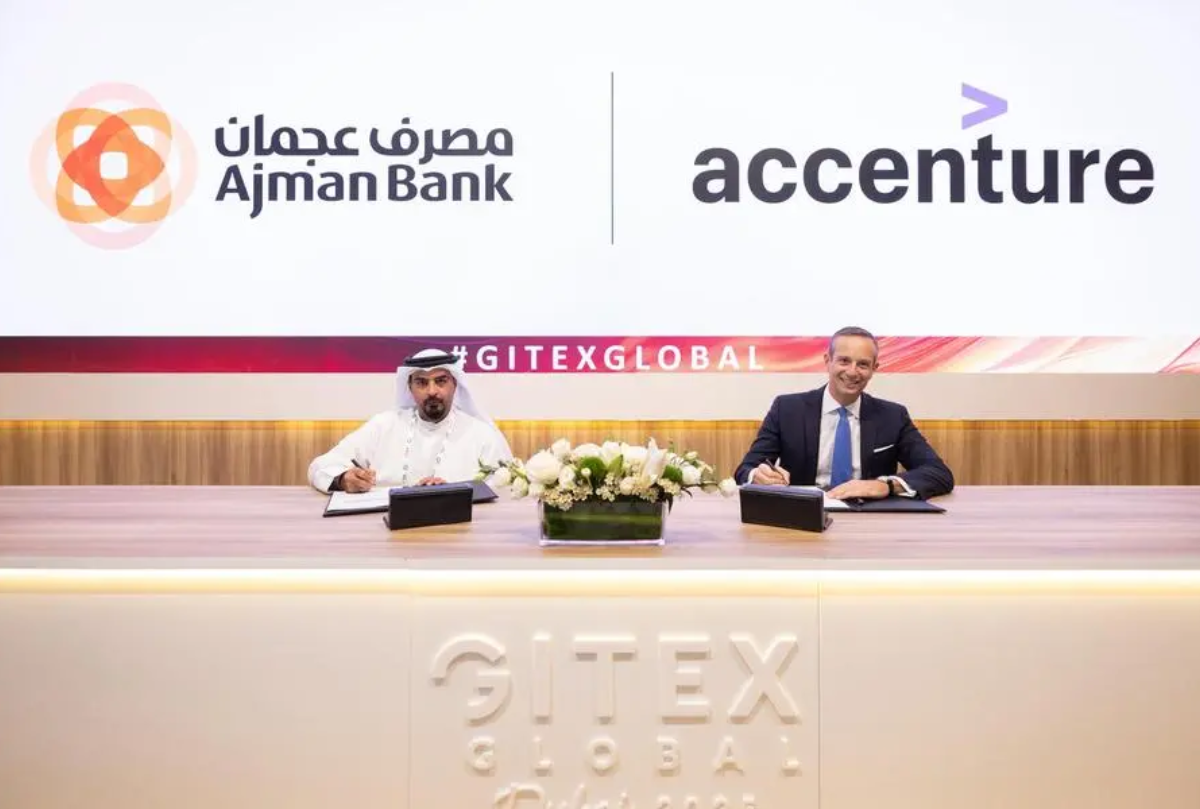
The Ajman Department of Finance unveiled a suite of smart payment services at GITEX Global 2025, signalling its bid to position the emirate at the forefront of digital government finance solutions. The offerings include integration of the UAE’s national payment card “Jaywan”, a buy-now-pay-later option via its AjmanPay portal, and a unified financial management platform dubbed “Estidama system”.

Marwan Ahmed Al Ali, Director General of the Department of Finance in Ajman, said the new services aim to provide “flexible payment options” tailored to “all segments of society” and boost the emirate’s digital transformation agenda. The launch was attended by senior government and private-sector officials during the event.

The Jaywan card—launched by the Central Bank of the UAE to reduce reliance on global card networks—has now been linked with AjmanPay, allowing users to make payments via ATMs, e-commerce platforms and point-of-sale terminals. The Department also launched a zero-interest instalment option to facilitate fee payments and transactions in instalments or deferred payments.

The Estidama system is presented as a next-generation cloud-based platform comprising four interconnected modules that manage budgeting, initiative planning, financial execution and reporting. It promises to unify financial operations across the Ajman government, enhancing transparency and control over public spending.

Officials emphasised that these steps align with broader national efforts to digitise financial infrastructure. By integrating Jaywan into Ajman’s government payments, the emirate is tapping into the UAE’s goal of financial sovereignty and reducing dependence on foreign card networks.

Partnership with First Abu Dhabi Bank underpins the linking of Jaywan with AjmanPay, showcasing public–private collaboration in driving fintech infrastructure. The Department described the move as a qualitative addition to its digital ecosystem, reflecting its commitment to “innovation in government payment systems”.

During GITEX, Ajman’s government platform is also showcasing AI, data analytics, and other advanced technologies in financial resource management. The participation underscores the emirate’s aim to benchmark itself in the regional competition over smart city and digital government credentials.

South Korea’s Financial Intelligence Unit has authorised a change in GOPAX’s executive leadership, clearing the way for Binance’s acquisition of 67 per cent of the local exchange and formally restoring its presence in the country. The decision comes after over two years of regulatory review and internal scrutiny.

The executive registration approval by the FIU establishes Binance as the controlling shareholder of GOPAX, resolving a key hurdle that had delayed the deal since its initiation in early 2023. By acquiescing to the change, South Korean authorities have allowed Binance’s re-entry into one of Asia’s most active cryptocurrency ecosystems.

When Binance first acquired the majority stake in GOPAX in February 2023, it sought to stabilise the exchange following a liquidity crisis tied to frozen customer deposits connected to the GoFi yield product. That crisis was traced to exposure to Genesis Global Capital, whose own collapse triggered withdrawals being halted. Binance undertook a capital injection to support GOPAX’s recovery while awaiting formal regulatory sign-off on executive changes.

The FIU’s prior hesitancy centred on concerns that Binance’s international compliance record could clash with South Korea’s anti-money laundering oversight. Legal pressure from U. S. authorities, including enforcement actions and substantial fines, had raised red flags among domestic regulators. But the FIU’s acceptance now signals that uncertainties over Binance’s compliance credentials have been sufficiently addressed.

Under South Korean law, exchanges must report changes in executive or representative roles to the FIU, which effectively acts as a gatekeeper in approving foreign capital in the local crypto sector. No separate screening mechanism exists for major shareholders, making the executive registration process a de facto test of suitability. Delays in this case were reportedly driven by repeated demands for supplemental documentation by regulators.

GOPAX is one of only five exchanges in South Korea authorised to conduct cash-crypto transactions under strict regulatory norms. With Binance now in control, GOPAX could compete more aggressively against dominant local players such as Upbit and Bithumb. Yet entrenched banking relationships and compliance frameworks will still pose barriers to market share gains.

The approval reflects a shift in Korea’s regulatory posture toward greater openness—especially for exchanges that have resolved international legal disputes. Binance’s own settlements regarding AML and market conduct issues appear to have alleviated domestic regulatory apprehension. The acceptance also underscores the FIU’s judgment that Binance’s structural changes and compliance assurances now align with South Korea’s regulatory expectations.

A new wave of supply-chain assaults has seen North Korean hackers publish more than 300 malicious npm packages, infecting developer systems with sophisticated malware that steals credentials and crypto assets. The campaign, known as “Contagious Interview,” exploits the trust developers place in open-source tools by cloaking malware inside packages mimicking legitimate ones.

The Socket Threat Research Team disclosed that attackers uploaded 338 malicious npm modules, collectively downloaded over 50,000 times, many featuring a newly observed loader named XORIndex. About 27 of them remain active in the npm registry. Within those packages, XORIndex collects host metadata and downloads a second-stage payload, BeaverTail, which in turn leverages a backdoor called InvisibleFerret to maintain persistence and exfiltrate data. This expansion follows a preceding June surge of 35 malicious modules using a HexEval loader.

Researchers emphasise that Contagious Interview is not a static campaign but a dynamic interplay between defenders and adversaries. As packages are taken down, attackers quickly reissue variants under fresh aliases or change loader techniques. The latest 67-package load pushed last month illustrates this cat-and-mouse escalation: the new modules alone exceeded 17,000 downloads. Attackers have mixed XORIndex and HexEval in parallel deployments, suggesting modular development and adaptability.

The campaign’s social engineering backbone remains key. Actors pose as recruiters or HR contacts on platforms like LinkedIn, targeting software engineers or job-seekers. They offer interview assignments that require cloning a GitHub or Bitbucket repository, with the malicious npm module embedded deep in the project. Because many developers run these projects outside sandboxed environments, the malicious loader quietly executes and bridges the gap to full system compromise.

Analysts attribute Contagious Interview to DPRK-aligned threat groups tracked under names such as CL-STA-0240, DeceptiveDevelopment, Tenacious Pungsan and Void Dokkaebi. The methodology aligns with patterns shown by the Lazarus Group and its affiliates, as attackers continue to weaponise open source ecosystems for espionage and financial theft. XorIndex and HexEval share infrastructure and tactics, including encrypted communication with command-and-control servers. In several cases, submitters of the malicious packages have crafted repository names containing “interview,” reflecting the campaign motif.

Beyond npm, the campaign’s reach extends: some modules reference Bitbucket repositories, and similar tactics have appeared in PyPI package attacks. The broader goal appears dual: accessing developer environments to steal intellectual property or credentials and siphoning cryptocurrencies from wallets detected on compromised machines.

Security firms and registry maintainers have responded with takedown requests and account suspensions. Socket reported removing six live HexEval-based modules earlier this year, and the npm security team has collaborated to suspend associated accounts. But defenders admit the reactive posture is fragile; attack waves resurface within hours.

VISHNU RAJA
RYO YAMADA
HITORI GOTOH
IKUYO KITA